
Justice and Equality

Henry Lawson
A Derry on a Cove
’Twas in the felon’s dock he stood, his eyes were black and blue;
His voice with grief was broken, and his nose was broken, too;
He muttered, as that broken nose he wiped upon his cap—
‘It’s orfal when the p’leece has got a derry on a chap.
‘I am a honest workin’ cove, as any bloke can see,
‘It’s just because the p’leece has got a derry, sir, on me;
‘Oh, yes, the legal gents can grin, I say it ain’t no joke—
‘It’s cruel when the p’leece has got a derry on a bloke.’
‘Why don’t you go to work?’ he said (he muttered, ‘Why don’t you?’).
‘Yer honer knows as well as me there ain’t no work to do.
‘And when I try to find a job I’m shaddered by a trap—
‘It’s awful when the p’leece has got a derry on a chap.’
I sigh’d and shed a tearlet for that noble nature marred,
But, ah! the Bench was rough on him, and gave him six months’ hard.
He only said, ‘Beyond the grave you’ll cop it hot, by Jove!
‘There ain’t no angel p’leece to get a derry on a cove.’
Read more →
293

John Greenleaf Whittier
To Pennsylvania
O STATE prayer-founded! never hung
Such choice upon a people's tongue,
Such power to bless or ban,
As that which makes thy whisper Fate,
For which on thee the centuries wait,
And destinies of man!
Across thy Alleghanian chain,
With groanings from a land in pain,
The west-wind finds its way:
Wild-wailing from Missouri's flood
The crying of thy children's blood
Is in thy ears to-day!
And unto thee in Freedom's hour
Of sorest need God gives the power
To ruin or to save;
To wound or heal, to blight or bless
With fertile field or wilderness,
A free home or a grave!
Then let thy virtue match the crime,
Rise to a level with the time;
And, if a son of thine
Betray or tempt thee, Brutus-like
For Fatherland and Freedom strike
As Justice gives the sign.
Wake, sleeper, from thy dream of ease,
The great occasion's forelock seize;
And let the north-wind strong,
And golden leaves of autumn, be
Thy coronal of Victory
And thy triumphal song.
Read more →
292
Henry Lawson
A Prouder Man Than You
If you fancy that your people came of better stock than mine,
If you hint of higher breeding by a word or by a sign,
If you're proud because of fortune or the clever things you do --
Then I'll play no second fiddle: I'm a prouder man than you!
If you think that your profession has the more gentility,
And that you are condescending to be seen along with me;
If you notice that I'm shabby while your clothes are spruce and new --
You have only got to hint it: I'm a prouder man than you!
If you have a swell companion when you see me on the street,
And you think that I'm too common for your toney friend to meet,
So that I, in passing closely, fail to come within your view --
Then be blind to me for ever: I'm a prouder man than you!
If your character be blameless, if your outward past be clean,
While 'tis known my antecedents are not what they should have been,
Do not risk contamination, save your name whate'er you do -`
Birds o' feather fly together': I'm a prouder bird than you!
Keep your patronage for others! Gold and station cannot hide
Friendship that can laugh at fortune, friendship that can conquer pride!
Offer this as to an equal -- let me see that you are true,
And my wall of pride is shattered: I am not so proud as you!
Read more →
291
John Greenleaf Whittier
The Men Of Old
WELL speed thy mission, bold Iconoclast!
Yet all unworthy of its trust thou art,
If, with dry eye, and cold, unloving heart,
Thou tread'st the solemn Pantheon of the Past,
By the great Future's dazzling hope made blind
To all the beauty, power, and truth behind.
Not without reverent awe shouldst thou put by
The cypress branches and the amaranth blooms,
Where, with clasped hands of prayer, upon their tombs
The effigies of old confessors lie,
God's witnesses; the voices of His will,
Heard in the slow march of the centuries still!
Such were the men at whose rebuking frown,
Dark with God's wrath, the tyrant's knee went down;
Such from the terrors of the guilty drew
The vassal's freedom and the poor man's due.
St. Anselm (may he rest forevermore
In Heaven's sweet peace!) forbade, of old, the sale
Of men as slaves, and from the sacred pale
Hurled the Northumbrian buyers of the poor.
To ransom souls from bonds and evil fate
St. Ambrose melted down the sacred plate, —
Image of saint, the chalice, and the pix,
Crosses of gold, and silver candlesticks.
'Man is worth more than temples!' he replied
To such as came his holy work to chide.
And brave Cesarius, stripping altars bare,
And coining from the Abbey's golden hoard
The captive's freedom, answered to the prayer
Or threat of those whose fierce zeal for the Lord
Stifled their love of man, — 'An earthen dish
The last sad supper of the Master bore:
Most miserable sinners! do ye wish
More than your Lord, and grudge His dying poor
What your own pride and not His need requires?
Souls, than these shining gauds, He values more;
Mercy, not sacrifice, His heart desires!'
O faithful worthies! resting far behind
In your dark ages, since ye fell asleep,
Much has been done for truth and human-kind;
Shadows are scattered wherein ye groped blind;
Man claims his birthright, freer pulses leap
Through peoples driven in your day like sheep;
Yet, like your own, our age's sphere of light,
Though widening still, is walled around by night;
With slow, reluctant eye, the Church has read,
Skeptic at heart, the lessons of its Head;
Counting, too oft, its living members less
Than the wall's garnish and the pulpit's dress;
World-moving zeal with power to bless and feed
Life's fainting pilgrims, to their utter need,
Instead of bread, holds out the stone of creed;
Sect builds and worships where its wealth and pride
And vanity stand shrined and deified,
Careless that in the shadow of its walls
God's living temple into ruin falls.
We need, methinks, the prophet-hero still,
Saints true of life, and martyrs strong of will,
To tread the land, even now, as Xavier trod
The streets of God, barefoot, with his bell,
Proclaiming freedom in the name of God,
And startling tyrants with the fear of hell!
Soft words, smooth prophecies, are doubtless well;
But to rebuke the age's popular crime,
We need the souls of fire, the hearts of that old time!
Read more →
291
John Greenleaf Whittier
To The Memory Of Charles B. Storrs
Thou hast fallen in thine armor,
Thou martyr of the Lord
With thy last breath crying 'Onward!'
And thy hand upon the sword.
The haughty heart derideth,
And the sinful lip reviles,
But the blessing of the perishing
Around thy pillow smiles!
When to our cup of trembling
The added drop is given,
And the long-suspended thunder
Falls terribly from Heaven,-When
a new and fearful freedom
Is proffered of the Lord
To the slow-consuming Famine,
The Pestilence and Sword!
When the refuges of Falsehood
Shall be swept away in wrath,
And the temple shall be shaken,
With its idol, to the earth,
Shall not thy words of warning
Be all remembered then?
And thy now unheeded message
Burn in the hearts of men?
Oppression's hand may scatter
Its nettles on thy tomb,
And even Christian bosoms
Deny thy memory room;
For lying lips shall torture
Thy mercy into crime,
And the slanderer shall flourish
As the bay-tree for a time.
But where the south-wind lingers
On Carolina's pines,
Or falls the careless sunbeam
Down Georgia's golden mines;
Where now beneath his burthen
The toiling slave is driven;
Where now a tyrant's mockery
Is offered unto Heaven;
Where Mammon hath its altars
Wet o'er with human blood,
And pride and lust debases
The workmanship of God,-There
shall thy praise be spoken,
Redeemed from Falsehood's ban,
When the fetters shall be broken,
And the slave shall be a man!
Joy to thy spirit, brother!
A thousand hearts are warm,
A thousand kindred bosoms
Are baring to the storm.
What though red-handed Violence
With secret Fraud combine?
The wall of fire is round us,
Our Present Help was thine.
Lo, the waking up of nations,
From Slavery's fatal sleep;
The murmur of a Universe,
Deep calling unto Deep!
Joy to thy spirit, brother!
On every wind of heaven
The onward cheer and summons
Of Freedom's voice is given!
Glory to God forever!
Beyond the despot's will
The soul of Freedom liveth
Imperishable still.
The words which thou hast uttered
Are of that soul a part,
And the good seed thou hast scattered
Is springing from the heart.
In the evil days before us,
And the trials yet to come,
In the shadow of the prison,
Or the cruel martyrdom,-We
will think of thee, O brother!
And thy sainted name shall be
In the blessing of the captive,
And the anthem of the free.
Read more →
289
John Greenleaf Whittier
The King's Missive
UNDER the great hill sloping bare
To cove and meadow and Common lot,
In his council chamber and oaken chair,
Sat the worshipful Governor Endicott.
A grave, strong man, who knew no peer
In the pilgrim land, where he ruled in fear
Of God, not man, and for good or ill
Held his trust with an iron will.
He had shorn with his sword the cross from out
The flag, and cloven the May-pole down,
Harried the heathen round about,
And whipped the Quakers from town to town.
Earnest and honest, a man at need
To burn like a torch for his own harsh creed,
He kept with the flaming brand of his zeal
The gate of the holy common weal.
His brow was clouded, his eye was stern,
With a look of mingled sorrow and wrath;
'Woe's me!' he murmured: 'at every turn
The pestilent Quakers are in my path!
Some we have scourged, and banished some,
Some hanged, more doomed, and still they come,
Fast as the tide of yon bay sets in,
Sowing their heresy's seed of sin.
'Did we count on this? Did we leave behind
The graves of our kin, the comfort and ease
Of our English hearths and homes, to find
Troublers of Israel such as these?
Shall I spare? Shall I pity them? God forbid!
I will do as the prophet to Agag did
They come to poison the wells of the Word,
I will hew them in pieces before the Lord!'
The door swung open, and Rawson the clerk
Entered, and whispered under breath,
'There waits below for the hangman's work
A fellow banished on pain of death-Shattuck,
of Salem, unhealed of the whip,
Brought over in Master Goldsmith's ship
At anchor here in a Christian port,
With freight of the devil and all his sort!'
Twice and thrice on the chamber floor
Striding fiercely from wall to wall,
'The Lord do so to me and more,'
The Governor cried, 'if I hang not all!
Bring hither the Quaker.' Calm, sedate,
With the look of a man at ease with fate,
Into that presence grim and dread
Came Samuel Shattuck, with hat on head.
'Off with the knave's hat!' An angry hand
Smote down the offence; but the wearer said,
With a quiet smile, 'By the king's command
I bear his message and stand in his stead.'
In the Governor's hand a missive he laid
With the royal arms on its seal displayed,
And the proud man spake as he gazed thereat,
Uncovering, 'Give Mr. Shattuck his hat.'
He turned to the Quaker, bowing low,-'
The king commandeth your friends' release;
Doubt not he shall be obeyed, although
To his subjects' sorrow and sin's increase.
What he here enjoineth, John Endicott,
His loyal servant, questioneth not.
You are free! God grant the spirit you own
May take you from us to parts unknown.'
So the door of the jail was open cast,
And, like Daniel, out of the lion's den
Tender youth and girlhood passed,
With age-bowed women and gray-locked men.
And the voice of one appointed to die
Was lifted in praise and thanks on high,
And the little maid from New Netherlands
Kissed, in her joy, the doomed man's hands.
And one, whose call was to minister
To the souls in prison, beside him went,
An ancient woman, bearing with her
The linen shroud for his burial meant.
For she, not counting her own life dear,
In the strength of a love that cast out fear,
Had watched and served where her brethren died,
Like those who waited the cross beside.
One moment they paused on their way to look
On the martyr graves by the Common side,
And much scourged Wharton of Salem took
His burden of prophecy up and cried
'Rest, souls of the valiant! Not in vain
Have ye borne the Master's cross of pain;
Ye have fought the fight, ye are victors crowned,
With a fourfold chain ye have Satan bound!'
The autumn haze lay soft and still
On wood and meadow and upland farms;
On the brow of Snow Hill the great windmill
Slowly and lazily swung its arms;
Broad in the sunshine stretched away,
With its capes and islands, the turquoise bay;
And over water and dusk of pines
Blue hills lifted their faint outlines.
The topaz leaves of the walnut glowed,
The sumach added its crimson fleck,
And double in air and water showed
The tinted maples along the Neck;
Through frost flower clusters of pale star-mist,
And gentian fringes of amethyst,
And royal plumes of golden-rod,
The grazing cattle on Centry trod.
But as they who see not, the Quakers saw
The world about them; they only thought
With deep thanksgiving and pious awe
On the great deliverance God had wrought.
Through lane and alley the gazing town
Noisily followed them up and down;
Some with scoffing and brutal jeer,
Some with pity and words of cheer.
One brave voice rose above the din.
Upsall, gray with his length of days,
Cried from the door of his Red Lion Inn
'Men of Boston, give God the praise
No more shall innocent blood call down
The bolts of wrath on your guilty town.
The freedom of worship, dear to you,
Is dear to all, and to all is due.
'I see the vision of days to come,
When your beautiful City of the Bay
Shall be Christian liberty's chosen home,
And none shall his neighbor's rights gainsay.
The varying notes of worship shall blend
And as one great prayer to God ascend,
And hands of mutual charity raise
Walls of salvation and gates of praise.'
So passed the Quakers through Boston town,
Whose painful ministers sighed to see
The walls of their sheep-fold falling down,
And wolves of heresy prowling free.
But the years went on, and brought no wrong;
With milder counsels the State grew strong,
As outward Letter and inward Light
Kept the balance of truth aright.
The Puritan spirit perishing not,
To Concord's yeomen the signal sent,
And spake in the voice of the cannon-shot
That severed the chains of a continent.
With its gentler mission of peace and good-will
The thought of the Quaker is living still,
And the freedom of soul he prophesied
Is gospel and law where the martyrs died.
Read more →
285
Henry Lawson
Otherside
Somewhere in the mystic future, on the road to Paradise,
There’s a very pleasant country that I’ve dreamed of once or twice,
It has inland towns, and cities by the ocean’s rocky shelves,
But the people of the country differ somewhat from ourselves;
It is many leagues beyond us, and they call it Otherside.
And there is among its people more Humanity than Pride.
Now, a social system never was complete, without a flaw,
And among the Othersiders there is love and gold and war.
But if one is fairly beaten he can turn upon the track,
For in such a case there isn’t any shame in going back;
And a broken-hearted mortal never thinks of suicide,
For he finds amongst his brothers more Humanity than Pride.
And the lords of that creation never scoff at simple things,
Never scorn the lad who’s tethered to his mother’s apron-strings.
He will speak of “home” and “mother” without shame when he’s inclined,
Yet the blow he strikes in battle mostly leaves a mark behind.
They are brave against invasion; they can die in Otherside,
Though there is among the people more Humanity than Pride.
Poets sing in simple language that a child might understand,
Yet their songs are sung for ages by the elders of the land;
And the people know that Freedom never shall be wanting guards,
For the foremost in the vanguard waves the banner of the Bards.
O the poets march together, and at home in peace abide,
For there is amongst the people more Humanity than Pride.
And when I am very weary, ’neath a load of “worldly care”,
There are times when I’ve a longing just to hump my bluey there;
But alone I could not reach it, for the track is barred to one—
I must take the nations with me—all mankind must go, or none—
And we’d trample one another on the way to Otherside,
For I find among my brothers less Humanity than Pride.
Read more →
281

Robert W. Service
The Healer
"Tuberculosis should not be,"
The old professor said.
"If folks would hearken unto me
'Twould save a million dead.
Nay, no consumptive needs to die,
--A cure have I.
"From blood of turtle I've distilled
An elixir of worth;
Let every sufferer be thrilled
And sing for joy of earth;
Yet every doctor turns his back
And calls me quack.
"Alas! They do not want to cure,
For sickness is their meat;
So persecution I endure,
And die in dark defeat:
Ye lungers, listen to my call!
--I'll save you all."
The old Professor now is dead,
And turtles of the sea,
Knowing their blood they need not shed,
Are festive in their glee:
While sanitoriums are crammed
With legions dammed.
Read more →
277
Henry Lawson
The Australian Marseillaise
Sing the strong, proud song of Labour,
Toss the ringing music high;
Liberty’s a nearer neighbour
Than she was in days gone by.
Workmen’s weary wives and daughters
Sing the songs of liberty;
Men hail men across the waters,
Men reply across the sea.
We are marching on and onward
To the silver-streak of dawn,
To the dynasty of mankind
We are marching on.
Long the rich have been protected
By the walls that can’t endure;
By the walls that they erected
To divide them from the poor.
Crumbling now, they should not trust them,
For their end is drawing near;
Walls of Cant and walls of Custom,
Walls of Ignorance and Fear.
Tyrants, grip your weapons firmer,
Grip them firmly by the helves;
For the poor begin to murmur
Loudly now among themselves.
Hear us dare to say that Heaven
Gave us equal rights with you,
Dare to say the world was given
Unto all and not the few.
Tell us that the law has risen,
Make us bend beneath its sway,
Throw our leaders into prison,
Wrong us in the light of day.
Drive us to our dens, forgetting
All our woe as greed forgets,
While our weapons we are whetting
On your levelled bayonets.
Treat us like the beasts you’d make us,
Pen us close in wretched sties.
’Til our patience shall forsake us,
And like wolves we will arise.
Louder still for this shall rattle
Rifle shots, and sword blades ring
On the blood-wet fields of battle
In the days of reckoning.
We shall rise to prove us human,
Worthy of a human life,
When our starved and maddened women
Lead our armies on to strife.
When our war hymns wake the valleys,
And the rushing missiles shriek
From your barricaded alleys,
’Til your cannon cease to speak.
Then when Mammon Castle crashes
To the earth and trampled lies,
Then from out the blood and ashes
True Republics shall arise.
Then the world shall rest a season
(First since first the world began)
In the reign of right and reason
And the dynasty of man.
Read more →
275
John Greenleaf Whittier
To Englishmen
You flung your taunt across the wave;
We bore it as became us,
Well knowing that the fettered slave
Left friendly lips no option save
To pity or to blame us.
You scoffed our plea. 'Mere lack of will,
Not lack of power,' you told us:
We showed our free-state records; still
You mocked, confounding good and ill,
Slave-haters and slaveholders.
We struck at Slavery; to the verge
Of power and means we checked it;
Lo! — presto, change! its claims you urge,
Send greetings to it o'er the surge,
And comfort and protect it.
But yesterday you scarce could shake,
In slave-abhorring rigor,
Our Northern palms for conscience' sake:
To-day you clasp the hands that ache
With 'walloping the nigger!'
O Englishmen! — in hope and creed,
In blood and tongue our brothers!
We too are heirs of Runnymede;
And Shakespeare's fame and Cromwell's deed
Are not alone our mother's.
'Thicker than water,' in one rill
Through centuries of story
Our Saxon blood has flowed, and still
We share with you its good and ill,
The shadow and the glory.
Joint heirs and kinfolk, leagues of wave
Nor length of years can part us:
Your right is ours to shrine and grave,
The common freehold of the brave,
The gift of saints and martyrs.
Our very sins and follies teach
Our kindred frail and human:
We carp at faults with bitter speech,
The while, for one unshared by each,
We have a score in common.
We bowed the heart, if not the knee,
To England's Queen, God bless her!
We praised you when your slaves went free:
We seek to unchain ours. Will ye
Join hands with the oppressor?
And is it Christian England cheers
The bruiser, not the bruisëd?
And must she run, despite the tears
And prayers of eighteen hundred years,
Amuck in Slavery's crusade?
Oh, black disgrace! Oh, shame and loss
Too deep for tongue to phrase on!
Tear from your flag its holy cross,
And in your van of battle toss
The pirate's skull-bone blazon!
Read more →
274
Henry Lawson
Freedom on the Wallaby
Australia's a big country
An' Freedom's humping bluey,
An' Freedom's on the wallaby
Oh! don't you hear 'er cooey?
She's just begun to boomerang,
She'll knock the tyrants silly,
She's goin' to light another fire
And boil another billy.
Our fathers toiled for bitter bread
While loafers thrived beside 'em,
But food to eat and clothes to wear,
Their native land denied 'em.
An' so they left their native land
In spite of their devotion,
An' so they came, or if they stole,
Were sent across the ocean.
Then Freedom couldn't stand the glare
O' Royalty's regalia,
She left the loafers where they were,
An' came out to Australia.
But now across the mighty main
The chains have come ter bind her –
She little thought to see again
The wrongs she left behind her.
Our parents toil'd to make a home –
Hard grubbin 'twas an' clearin' –
They wasn't crowded much with lords
When they was pioneering.
But now that we have made the land
A garden full of promise,
Old Greed must crook 'is dirty hand
And come ter take it from us.
So we must fly a rebel flag,
As others did before us,
And we must sing a rebel song
And join in rebel chorus.
We'll make the tyrants feel the sting
O' those that they would throttle;
They needn't say the fault is ours
If blood should stain the wattle!
Read more →
272
Robert W. Service
The Bandit
Upon his way to rob a Bank
He paused to watch a fire;
Though crowds were pressing rank on rank
He pushed a passage nigher;
Then sudden heard, piercing and wild,
The screaming of a child.
A Public Enemy was he,
A hater of the law;
He looked around for bravery
But only fear he saw;
Then to the craven crowds amaze
He plunged into the blaze.
How anguished was the waiting spell
Of horror and of pain!
Then--then from out that fiery hell
He staggered forth again:
The babe was safe, in blankets wrapt,
The man flame lapt.
His record was an evil one,
Of violence and sin.
No good on earth he'd ever done,
Yet--may he Heaven win!
A gangster he . . . Is it not odd?
--With guts of God.
Read more →
273

D.H. Lawrence
Boaz Asleep
Boaz, overcome with weariness, by torchlight
made his pallet on the threshing floor
where all day he had worked, and now he slept
among the bushels of threshed wheat.
The old man owned wheatfields and barley,
and though he was rich, he was still fair-minded.
No filth soured the sweetness of his well.
No hot iron of torture whitened in his forge.
His beard was silver as a brook in April.
He bound sheaves without the strain of hate
or envy. He saw gleaners pass, and said,
Let handfuls of the fat ears fall to them.
The man's mind, clear of untoward feeling,
clothed itself in candor. He wore clean robes.
His heaped granaries spilled over always
toward the poor, no less than public fountains.
Boaz did well by his workers and by kinsmen.
He was generous, and moderate. Women held him
worthier than younger men, for youth is handsome,
but to him in his old age came greatness.
An old man, nearing his first source, may find
the timelessness beyond times of trouble.
And though fire burned in young men's eyes,
to Ruth the eyes of Boaz shone clear light.
Read more →
272
Henry Lawson
The Labour Agitator
LET the liar call me liar,
And the robber call me thief.
They can only fan the fire
That is born of my belief.
While I’m speaking, while I’m writing,
To reform the wrongful laws,
Well I know that I am fighting
For the grand old Cause.
See the army of the rebels
Marching on for evermore.
We are countless as the pebbles
That are strewn along the shore.
Agitating, agitating,
Till the Truth has sealed the fate
Of the wrongs that I am hating
With the grand old Hate.
Though no battle banner rustles
In a smoke that blurs the blue,
As when “heroes” poured from Brussels
To the field of Waterloo,
Though we do not hear the rattle
Of the rifles in the wars,
There is glory in the battle
For the grand old Cause.
See the army of the rebels
Marching on for evermore.
We are countless as the pebbles
That are strewn along the shore.
Agitating, agitating,
Till the Truth has sealed the fate
Of the wrongs that I am hating
With the grand old Hate.
No! I look not to the reaping
In the dynasty of men,
For I know that I’ll be sleeping
In a slandered grave e’er then.
Till his right to man is given
We’ll rebel, and we’ll rebel
As we would rebel in heaven
If it proved a hell.
See the army of the rebels
Marching on for evermore.
We are countless as the pebbles
That are strewn along the shore.
Agitating, agitating,
Till the Truth has sealed the fate
Of the wrongs that I am hating
With the grand old Hate.
No! There’s neither creed nor nation
Where the Labour flag’s unfurled,
For the Labour agitation
Breaks the barriers of the world.
Let the rulers fly in terror
With their scornful lips uncurled,
One by one the gods of error
From their thrones are hurled.
See the army of the rebels
Marching on for evermore.
We are countless as the pebbles
That are strewn along the shore.
Agitating, agitating,
Till the Truth has sealed the fate
Of the wrongs that I am hating
With the grand old Hate.
Read more →
269
Robert W. Service
Hot Digitty Dog
Hot digitty dog! Now, ain't it queer,
I've been abroad for over a year;
Seen a helluva lot since then,
Killed, I reckon, a dozen men;
Six was doubtful, but six was sure,
Three in Normandy, three in the Ruhr.
Four I got with a hand grenade,
Two I shot in a midnight raid:
Oh, I ain't sorry, except perhaps
To think that my jerries wasn't japs.
Hot digitty dog! Now ain't it tough;
I oughta be handed hero stuff -
Bands and banquets, and flags and flowers,
Speeches, peaches, confetti showers;
"Welcome back to the old home town,
Colour Sargent Josephus Brown.
Fought like a tiger, one of our best,
Medals and ribands on his chest.
cheers for a warrior, fresh from the fight . . ."
Sure I'd 'a got 'em - - had I been white.
Hot digitty dog! It's jist too bad,
Gittin' home an' nobody gald;
Sneakin' into the Owl Drug Store
Nobody knowin' me any more;
Admirin' my uniform fine and fit -
Say, I've certainly changed a bit
From the lanky lad who used to croon
To a battered banjo in Shay's Saloon;
From the no-good nigger who runned away
After stickin' his knife into ol' man Shay.
They's a lynched me, for he was white,
But he raped my sister one Sunday night;
So I did what a proper man should do,
And I sunk his body deep in the slough.
Oh, he taunted me to my dark disgrace,
Called me a nigger, spat in my face;
So I buried my jack-knife in his heart,
Laughin' to see the hot blood start;
Laughin' still, though it's long ago,
And nobody's ever a-gonna know.
Nobody's ever a-gonna tell
How Ol' Man Shay went straight to hell;
nobody's gonna make me confess -
And what is a killin' more or less.
My skin may be black, but by Christ! I fight;
I've slain a dozen, and each was white,
And none of 'em ever did me no harm,
And my conscience is clear - I've no alarm;
So I'll go where I sank Ol' Man Shay in the bog,
And spit in the water . . . Hot digitty dog!
Read more →
268

Henry Wadsworth Longfellow
Tales Of A Wayside Inn : Part 2. The Sicilian's Tale; The Bell of Atri
At Atri in Abruzzo, a small town
Of ancient Roman date, but scant renown,
One of those little places that have run
Half up the hill, beneath a blazing sun,
And then sat down to rest, as if to say,
'I climb no farther upward, come what may,'--
The Re Giovanni, now unknown to fame,
So many monarchs since have borne the name,
Had a great bell hung in the market-place,
Beneath a roof, projecting some small space,
By way of shelter from the sun and rain.
Then rode he through the streets with all his train,
And, with the blast of trumpets loud and long,
Made proclamation, that whenever wrong
Was done to any man, he should but ring
The great bell in the square, and he, the King,
Would cause the Syndic to decide thereon.
Such was the proclamation of King John.
How swift the happy days in Atri sped,
What wrongs were righted, need not here be said.
Suffice it that, as all things must decay,
The hempen rope at length was worn away,
Unravelled at the end, and, strand by strand,
Loosened and wasted in the ringer's hand,
Till one, who noted this in passing by,
Mended the rope with braids of briony,
So that the leaves and tendrils of the vine
Hung like a votive garland at a shrine.
By chance it happened that in Atri dwelt
A knight, with spur on heel and sword in belt,
Who loved to hunt the wild-boar in the woods,
Who loved his falcons with their crimson hoods,
Who loved his hounds and horses, and all sports
And prodigalities of camps and courts;--
Loved, or had loved them; for at last, grown old,
His only passion was the love of gold.
He sold his horses, sold his hawks and hounds,
Rented his vineyards and his garden-grounds,
Kept but one steed, his favorite steed of all,
To starve and shiver in a naked stall,
And day by day sat brooding in his chair,
Devising plans how best to hoard and spare.
At length he said: 'What is the use or need
To keep at my own cost this lazy steed,
Eating his head off in my stables here,
When rents are low and provender is dear?
Let him go feed upon the public ways;
I want him only for the holidays.'
So the old steed was turned into the heat
Of the long, lonely, silent, shadeless street;
And wandered in suburban lanes forlorn,
Barked at by dogs, and torn by brier and thorn.
One afternoon, as in that sultry clime
It is the custom in the summer time,
With bolted doors and window-shutters closed,
The inhabitants of Atri slept or dozed;
When suddenly upon their senses fell
The loud alarm of the accusing bell!
The Syndic started from his deep repose,
Turned on his couch, and listened, and then rose
And donned his robes, and with reluctant pace
Went panting forth into the market-place,
Where the great bell upon its cross-beams swung,
Reiterating with persistent tongue,
In half-articulate jargon, the old song:
'Some one hath done a wrong, hath done a wrong!'
But ere he reached the belfry's light arcade
He saw, or thought he saw, beneath its shade,
No shape of human form of woman born,
But a poor steed dejected and forlorn,
Who with uplifted head and eager eye
Was tugging at the vines of briony.
'Domeneddio!' cried the Syndic straight,
'This is the Knight of Atri's steed of state!
He calls for justice, being sore distressed,
And pleads his cause as loudly as the best.'
Meanwhile from street and lane a noisy crowd
Had rolled together like a summer cloud,
And told the story of the wretched beast
In five-and-twenty different ways at least,
With much gesticulation and appeal
To heathen gods, in their excessive zeal.
The Knight was called and questioned; in reply
Did not confess the fact, did not deny;
Treated the matter as a pleasant jest,
And set at naught the Syndic and the rest,
Maintaining, in an angry undertone,
That he should do what pleased him with his own.
And thereupon the Syndic gravely read
The proclamation of the King; then said:
'Pride goeth forth on horseback grand and gay,
But cometh back on foot, and begs its way;
Fame is the fragrance of heroic deeds,
Of flowers of chivalry and not of weeds!
These are familiar proverbs; but I fear
They never yet have reached your knightly ear.
What fair renown, what honor, what repute
Can come to you from starving this poor brute?
He who serves well and speaks not, merits more
Than they who clamor loudest at the door.
Therefore the law decrees that as this steed
Served you in youth, henceforth you shall take heed
To comfort his old age, and to provide
Shelter in stall, and food and field beside.'
The Knight withdrew abashed; the people all
Led home the steed in triumph to his stall.
The King heard and approved, and laughed in glee,
And cried aloud: 'Right well it pleaseth me!
Church-bells at best but ring us to the door;
But go not in to mass; my bell doth more:
It cometh into court and pleads the cause
Of creatures dumb and unknown to the laws;
And this shall make, in every Christian clime,
The Bell of Atri famous for all time.'
Read more →
267

Horácio
BkIII:XXIV Destructive Wealth
Though you’re richer than the untouched
riches of Araby, than wealthy India,
and you fill the land, and inshore
waters, with your deposits of builders’ rubble:
if dread Necessity fixes
her adamantine nails in your highest rooftops,
you’ll not free your spirit from fear,
nor free your very being from the noose of death.
Better to live like Scythians
in the Steppes, whose wagons haul their movable homes,
that’s custom, or the fierce Getae,
whose unallocated acres produce their fruits,
their harvests of rye, in common,
where cultivation’s not decided for more than
a year, and when one turn is done,
it’s carried on by other hands, as a duty.
There, as their own, the unselfish
women raise those children who have lost their mothers:
and the richly dowered wife never
rules her husband, or believes in shining lovers.
Their greatest dowry’s their parents’
virtue, and their own chastity, which is careful
of another’s husband, in pure
loyalty, sin is wrong and death’s its penalty.
O whoever would end impious
killing, and civil disorder, and would desire
to have ‘City Father’ inscribed
on their statues, let them be braver, and rein in
unbridled licence, and win fame
among posterity: since we, alas, for shame,
filled with envy, hate chaste virtue,
and only seek it when it’s hidden from our eyes.
What use are sad lamentations,
if crime is never suppressed by its punishment?
What use are all these empty laws
without the behaviour that should accompany them?
if neither those parts of the Earth
enclosed by heat, nor those far confines of the North,
snow frozen solid on the ground,
deter the trader, if cunning sailors conquer
the stormy seas, if poverty,
is considered a great disgrace, and directs us
to do and to bear everything,
and abandon the arduous paths of virtue?
Let’s send our jewels, our precious
stones, our destructive gold, to the Capitol, while
the crowd applauds, and raises its strident clamour,
or ship them to the nearest sea,
as causes of our deepest ills,
if we truly repent of all our wickedness.
Let the source of our perverted
greed be lost, and then let our inadequate minds
be trained in more serious things.
The inexperienced noble youth is unskilled
at staying in the saddle, he
fears to hunt, and he’s much better at playing games,
whether you order him to fool
with a Greek hoop, or you prefer forbidden dice,
while his father’s perjured trust cheats
his partner and his friends, hurrying to amass
money for his unworthy heir.
While it’s true that in this way his ill-gotten gains
increase, yet there’s always something
lacking in a fortune forever incomplete.
Read more →
266
Robert W. Service
The Prisoner
Upspoke the culprit at the bar,
Conducting his own case:
'Your Lordship, I have gone to far,
But grant me of your grace.
As I was passing by a shop
I saw my arm go out,
And though I begged of it to stop,
It stole beyond a doubt.
'But why should my whole body be
Condemned to dungeon grim,
For what in fact was only the
Transgression of a limb?
So here before the Court I stand,
And beg in Justice' name:
Please penalise my arm and hand,
But not my frame.'
Outspoke the Judge with voice of ice,
Although a smile he hid:
'Quite right! You should not pay the price
For what one member did.
Your reasoning I must admit;
Your arm should gaol expect . . .
Three months! And if you follow it
The Court does not object.'
The culprit smiled with sudden charm,
Then to the Court's dismay,
Quickly removed a wooden arm
And went away.
Read more →
264
Robert W. Service
Segregation
I stood beside the silken rope,
Five dollars in my hand,
And waited in my patient hope
To sit anear the Band,
And hear the famous Louie play
The best hot trumpet of today.
And then a waiter loafing near
Says in a nasty tone:
"Old coon, we don't want darkies here,
Beat it before you're thrown."
So knowin' nothin' I could do
I turned to go and--there was Lou.
I think he slapped that Dago's face;
His voice was big an' loud;
An' then he leads me from my place
Through all that tony crowd.
World-famous Louie by the hand
Took me to meet his famous Band.
"Listen, you folks," I heard him say.
"Here's Grand-papa what's come.
Savin' he teached me how to play,
I mighta been a bum.
Come on, Grand-pop, git up an' show
How you kin trumpet Ol' Black Joe."
Tremblin' I played before his Band:
You should have heard the cheers.
Them swell folks gave me such a hand
My cheeks was wet wi' tears . . .
An' now I'm off to tell the wife
The proudest night o' all ma life.
Read more →
264
Henry Lawson
The Briny Grave
You wonder why so many would be buried in the sea,
In this world of froth and bubble,
But I don’t wonder, for it seems to me
That it saves such a lot of trouble.
And there ain’t no undertaker—
Oh! there ain’t no order that your friends can give
On the quiet to the coffin-maker—
To a gimcrack coffin-maker,
They make no differ twixt the absentee swell
And the clerk that cut from a “shortage”—
Oh! there ain’t no pauper funer-el,
And there ain’t no “impressive cortege.”
It may be a chap from the for’ard crowd,
Or a member of the British Peerage,
But they sew his nibs in a canvas shroud
Just the same as the bloke from the steerage—
As that poor bloke from the steerage.
There ain’t no need for a gravedigger there,
For you dig your own grave! Lord love yer!
And there ain’t no use for a headstone fair
When the waters close above yer!
The little headstone where they come to weep,
May be right for the land’s dry-rotters,
But you rest just as sound when you’re anchored deep
With the pigiron at your trotters—
(Our fathers had iron at their trotters).
The sea is democratic the wide world round,
And it don’t give a hang for no man,
There ain’t no Church of England burial ground,
Nor yet there ain’t no Roman.
Orthodox and het’rodox by wreck-strewn cliffs,
At peace in the stormiest weather,
Might bob up and down like two brother “stiffs,”
And rest in one shark together—
And mix up their bones together.
The bare-headed skipper is as good any day
As an authorised shifter of sin is,
And the tear of shipmate is better anyway
Than the tear of the next-of-kin is.
It saves your friends, and it fills your needs,
It is best when all is reckoned,
And she can’t come there in her widder weeds,
With her eyes on a likely second—
And a spot for the likely second.
Read more →
265
John Greenleaf Whittier
Hymn For The Opening Of Thomas Starr King’s House Of Worship, 1864
Amidst these glorious works of Thine,
The solemn minarets of the pine,
And awful Shasta's icy shrine,-
Where swell Thy hymns from wave and gale,
And organ-thunders never fail,
Behind the cataract's silver veil,
Our puny walls to Thee we raise,
Our poor reed-music sounds Thy praise:
Forgive, O Lord, our childish ways!
For, kneeling on these altar-stairs,
We urge Thee not with selfish prayers,
Nor murmur at our daily cares.
Before Thee, in an evil day,
Our country's bleeding heart we lay,
And dare not ask Thy hand to stay;
But, through the war-cloud, pray to Thee
For union, but a union free,
With peace that comes of purity!
That Thou wilt bare Thy arm to, save
And, smiting through this Red Sea wave,
Make broad a pathway for the slave!
For us, confessing all our need,
We trust nor rite nor word nor deed,
Nor yet the broken staff of creed.
Assured alone that Thou art good
To each, as to the multitude,
Eternal Love and Fatherhood,-
Weak, sinful, blind, to Thee we kneel,
Stretch dumbly forth our hands, and feel
Our weakness is our strong appeal.
So, by these Western gates of Even
We wait to see with Thy forgiven
The opening Golden Gate of Heaven!
Suffice it now. In time to be
Shall holier altars rise to Thee,-Thy
Church our broad humanity
White flowers of love its walls shall climb,
Soft bells of peace shall ring its chime,
Its days shall all be holy time.
A sweeter song shall then be heard,--
The music of the world's accord
Confessing Christ, the Inward Word!
That song shall swell from shore to shore,
One hope, one faith, one love, restore
The seamless robe that Jesus wore.
Read more →
258
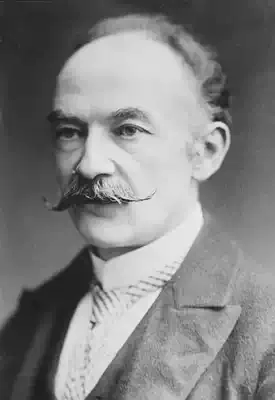
Thomas Hardy
The Stranger's Song
(As sung by Mr. Charles Charrington in the play of "The Three Wayfarers")
O MY trade it is the rarest one,
Simple shepherds all--
My trade is a sight to see;
For my customers I tie, and take 'em up on high,
And waft 'em to a far countree!
My tools are but common ones,
Simple shepherds all--
My tools are no sight to see:
A little hempen string, and a post whereon to swing,
Are implements enough for me!
To-morrow is my working day,
Simple shepherds all--
To-morrow is a working day for me:
For the farmer's sheep is slain, and the lad who did it ta'en,
And on his soul may God ha' mer-cy!
Read more →
258
John Greenleaf Whittier
To A Southern Statesman
IS this thy voice whose treble notes of fear
Wail in the wind? And dost thou shake to hear,
Actæon-like, the bay of thine own hounds,
Spurning the leash, and leaping o'er their bounds?
Sore-baffled statesman! when thy eager hand,
With game afoot, unslipped the hungry pack,
To hunt down Freedom in her chosen land,
Hadst thou no fear, that, erelong, doubling back,
These dogs of thine might snuff on Slavery's track?
Where's now the boast, which even thy guarded tongue,
Cold, calm, and proud, in the teeth o' the Senate flung,
O'er the fulfilment of thy baleful plan,
Like Satan's triumph at the fall of man?
How stood'st thou then, thy feet on Freedom planting,
And pointing to the lurid heaven afar,
Whence all could see, through the south windows slanting,
Crimson as blood, the beams of that Lone Star!
The Fates are just; they give us but our own;
Nemesis ripens what our hands have sown.
There is an Eastern story, not unknown,
Doubtless, to thee, of one whose magic skill
Called demons up his water-jars to fill;
Defty and silently, they did his will,
But, when the task was done, kept pouring still.
In vain with spell and charm the wizard wrought,
Faster and faster were the buckets brought,
Higher and higher rose the flood around,
Till the fiends clapped their hands above their master drowned!
So, Carolinian, it may prove with thee,
For God still overrules man's schemes, and takes
Craftiness in its self-set snare, and makes
The wrath of man to praise Him. It may be,
That the roused spirits of Democracy
May leave to freer States the same wide door
Through which thy slave-cursed Texas entered in,
From out the blood and fire, the wrong and sin,
Of the stormed city and the ghastly plain,
Beat by hot hail, and wet with bloody rain,
The myriad-handed pioneer may pour,
And the wild West with the roused North combine
And heave the engineer of evil with his mine.
Read more →
257

Charlotte Brontë
Pilate's Wife's Dream
I've quenched my lamp, I struck it in that start
Which every limb convulsed, I heard it fall
The
crash blent with my sleep, I saw depart
Its light, even as I woke, on yonder wall;
Over against my bed, there shone a gleam
Strange, faint, and mingling also with my dream.
It sunk, and I am wrapt in utter gloom;
How far is night advanced, and when will day
Retinge the dusk and livid air with bloom,
And fill this void with warm, creative ray ?
Would I could sleep again till, clear and red,
Morning shall on the mountaintops
be spread!
I'd call my women, but to break their sleep,
Because my own is broken, were unjust;
They've wrought all day, and wellearned
slumbers steep
Their labours in forgetfulness, I trust;
Let me my feverish watch with patience bear,
Thankful that none with me its sufferings share.
Yet, Oh, for light ! one ray would tranquilise
My nerves, my pulses, more than effort can;
I'll draw my curtain and consult the skies:
These trembling stars at dead of night look wan,
Wild, restless, strange, yet cannot be more drear
Than this my couch, shared by a nameless fear.
All blackone
great cloud, drawn from east to west,
Conceals the heavens, but there are lights below;
Torches burn in Jerusalem, and cast
On yonder stony mount a lurid glow.
I see men stationed there, and gleaming spears;
A sound, too, from afar, invades my ears.
Dull, measured, strokes of axe and hammer ring
From street to street, not loud, but through the night
Distinctly heardand
some strange spectral thing
Is now uprearedand,
fixed against the light
Of the pale lamps; defined upon that sky,
It stands up like a column, straight and high.
I see it all
I
know the dusky sign
A
cross on Calvary, which Jews uprear
While Romans watch; and when the dawn shall shine
Pilate, to judge the victim will appear,
Pass sentenceyield
him up to crucify;
And on that cross the spotless Christ must die.
Dreams, then, are truefor
thus my vision ran;
Surely some oracle has been with me,
The gods have chosen me to reveal their plan,
To warn an unjust judge of destiny:
I, slumbering, heard and saw; awake I know,
Christ's coming death, and Pilate's life of woe.
I do not weep for Pilatewho
could prove
Regret for him whose cold and crushing sway
No prayer can soften, no appeal can move;
Who tramples hearts as others trample clay,
Yet with a faltering, an uncertain tread,
That might stir up reprisal in the dead.
Forced to sit by his side and see his deeds;
Forced to behold that visage, hour by hour,
In whose gaunt lines, the abhorrent gazer reads
A triple lust of gold, and blood, and power;
A soul whom motives, fierce, yet abject, urge
Rome's servile slave, and Judah's tyrant scourge.
How can I love, or mourn, or pity him ?
I, who so long my fettered hands have wrung;
I, who for grief have wept my eyesight
dim;
Because, while life for me was bright and young,
He robbed my youthhe
quenched my life's fair ray
He
crushed my mind, and did my freedom slay.
And at this houralthough
I be his wife
He
has no more of tenderness from me
Than any other wretch of guilty life;
Less, for I know his household privacy
I
see him as he iswithout
a screen;
And, by the gods, my soul abhors his mien !
Has he not sought my presence, dyed in blood
Innocent,
righteous blood, shed shamelessly ?
And have I not his red salute withstood ?
Aye,when,
as erst, he plunged all Galilee
In dark bereavementin
affliction sore,
Mingling their very offerings with their gore.
Then came hein
his eyes a serpentsmile,
Upon his lips some false, endearing word,
And, through the streets of Salem, clanged the while,
His slaughtering, hacking, sacrilegious sword
And
I, to see a man cause men such woe,
Trembled with ire
I
did not fear to show.
And now, the envious Jewish priests have brought
Jesuswhom
they in mockery call their king
To have, by this grim power, their vengeance wrought;
By this mean reptile, innocence to sting.
Oh ! could I but the purposed doom avert,
And shield the blameless head from cruel hurt!
Accessible is Pilate's heart to fear,
Omens will shake his soul, like autumn leaf;
Could he this night's appalling vision hear,
This just man's bonds were loosed, his life were safe,
Unless that bitter priesthood should prevail,
And make even terror to their malice quail.
Yet if I tell the dreambut
let me pause.
What dream ? Erewhile the characters were clear,
Graved on my brainat
once some unknown cause
Has dimmed and rased the thoughts, which now appear,
Like a vague remnant of some bypast
scene;
Not
what will be, but what, long since, has been.
I suffered many things, I heard foretold
A dreadful doom for Pilate,lingering
woes,
In far, barbarian climes, where mountains cold
Built up a solitude of trackless snows,
There, he and grisly wolves prowled side by side,
There he lived famishedthere
methought he died;
But not of hunger, nor by malady;
I saw the snow around him, stained with gore;
I said I had no tears for such as he,
And, lo ! my cheek is wetmine
eyes run o'er;
I weep for mortal suffering, mortal guilt,
I weep the impious deedthe
blood selfspilt.
More I recall not, yet the vision spread
Into a world remote, an age to come
And
still the illumined name of Jesus shed
A light, a clearness, through the enfolding gloom
And
still I saw that sign, which now I see,
That cross on yonder brow of Calvary.
What is this Hebrew Christ ? To me unknown,
His lineagedoctrinemissionyet
how clear,
Is Godlike
goodness, in his actions shewn !
How straight and stainless is his life's career !
The ray of Deity that rests on him,
In my eyes makes Olympian glory dim.
The world advances, Greek, or Roman rite
Suffices not the inquiring mind to stay;
The searching soul demands a purer light
To guide it on its upward, onward way;
Ashamed of sculptured gods
Religion
turns
To where the unseen Jehovah's altar burns.
Our faith is rottenall
our rites defiled,
Our temples sullied, and methinks, this man,
With his new ordinance, so wise and mild,
Is come, even as he says, the chaff to fan
And sever from the wheat; but will his faith
Survive the terrors of tomorrow's
death ?
* * * * *
I feel a firmer trusta
higher hope
Rise in my soulit
dawns with dawning day;
Lo ! on the Temple's roofon
Moriah's slope
Appears at length that clear, and crimson ray,
Which I so wished for when shut in by night;
Oh, opening skies, I hail, I bless your light !
Part, clouds and shadows ! glorious Sun appear !
Part, mental gloom ! Come insight from on high !
Dusk dawn in heaven still strives with daylight clear,
The longing soul, doth still uncertain sigh.
Oh ! to behold the truththat
sun divine,
How doth my bosom pant, my spirit pine !
This day, time travails with a mighty birth,
This day, Truth stoops from heaven and visits earth,
Ere night descends, I shall more surely know
What guide to follow, in what path to go;
I wait in hope
I
wait in solemn fear,
The oracle of Godthe
soletrue
Godto
hear.
Read more →
251