
Youth

Henry Lawson
The Gathering of the Brown-Eyed
The brown eyes came from Asia, where all mystery is true,
Ere the masters of Soul Secrets dreamed of hazel, grey, and blue;
And the Brown Eyes came to Egypt, which is called the gypsies’ home,
And the Brown Eyes went from Egypt and Jerusalem to Rome.
There was strife amongst the Brown Eyes for the false things and the true;
There was war amongst the Brown Eyes for the old gods and the new;
But the old gods live for ever, and their goddesses are bright
In the temples of Old Passions with the Brown Eyes of the White.
The Brown Eyes east, by Africa, they saw and conquered Spain,
And the Brown Eyes marched as Christians till a Brown Eye met a Dane,
The Dane had Brown-Eyed children who in blue eyes took delight—
And a son of blue-eyed sailors, brown-eyed, reads the stars to-night.
Oh, Knowledge from Old Deserts, where the great stars rocked the world!
Oh, courage from grim seaboards, where the Viking ships were hurled!
The clear skin of the Norseman, and the desert strength and sight,
The power to fathom mankind, and the glorious gift to write!
We can look in souls of women, aye! and let them know we do;
We can fix the false eyes earthward; we can meet and match the true;
We can startle Voice from Silence, and from Darkness flash the Light—
And the eyes to fathom Asia are the Brown Eyes of the White.
There’s a legend in the nations that all Brown Eyes once were true,
But were taught in love and warfare by the sinful shades of blue;
There’s a story amongst sinners that all Brown Eyes once were kind,
Till the Steel-Blue struck the Red-Fire in a hatred that was blind.
But the Brown Eyes are the saddest at the death of Love and Truth.
And the Brown Eyes are the grandest and the dreamiest of Youth.
They have risen in rebellion unto leadership sublime—
And the grey-eyed queens of women loved, and love them for all time!
Brown Eyes never married Brown Eyes but unhappiness held sway,
For the real mates of the Brown Eyes have for ever been the grey.
But though Brown Eyes quarrel hotly, though their very souls be wrenched,
Never Blue-Eye wronged a Brown-Eye but the Brown-Eye was avenged!
Through the breadth of wide Australia, waiting desert-like and vast,
We have sent our Brown-Eyed children, who are multiplying fast.
Patriots, picture-writers, sages, fill the Brown-Eyed rolls to-night—
’Tis the gathering from all ages of the Brown-Eyed of the White.
301

James Whitcomb Riley
Philiper Flash
Young Philiper Flash was a promising lad,
His intentions were good--but oh, how sad
For a person to think
How the veriest pink
And bloom of perfection may turn out bad.
Old Flash himself was a moral man,
And prided himself on a moral plan,
Of a maxim as old
As the calf of gold,
Of making that boy do what he was told.
And such a good mother had Philiper Flash;
Her voice was as soft as the creamy plash
Of the milky wave
With its musical lave
That gushed through the holes of her patent churn-dash;--
And the excellent woman loved Philiper so,
She could cry sometimes when he stumped his toe,--
And she stroked his hair
With such motherly care
When the dear little angel learned to swear.
Old Flash himself would sometimes say
That his wife had 'such a ridiculous way,-She'd,
humor that child
Till he'd soon be sp'iled,
And then there'd be the devil to pay!'
And the excellent wife, with a martyr's look,
Would tell old Flash himself 'he took
No notice at all
Of the bright-eyed doll
Unless when he spanked him for getting a fall!'
Young Philiper Flash, as time passed by,
Grew into 'a boy with a roguish eye':
He could smoke a cigar,
And seemed by far
The most promising youth.--'He's powerful sly,
Old Flash himself once told a friend,
'Every copper he gets he's sure to spend--
And,' said he, 'don't you know
If he keeps on so
What a crop of wild oats the boy will grow!'
But his dear good mother knew Philiper's ways
So--well, she managed the money to raise;
And old Flash himself
Was 'laid on the shelf,'
(In the manner of speaking we have nowadays).
For 'gracious knows, her darling child,
If he went without money he'd soon grow wild.'
So Philiper Flash
With a regular dash
'Swung on to the reins,' and went 'slingin' the cash.'
As old Flash himself, in his office one day,
Was shaving notes in a barberous way,
At the hour of four
Death entered the door
And shaved the note on his life, they say.
And he had for his grave a magnificent tomb,
Though the venturous finger that pointed 'Gone Home,'
Looked white and cold
From being so bold,
As it feared that a popular lie was told.
Young Philiper Flash was a man of style
When he first began unpacking the pile
Of the dollars and dimes
Whose jingling chimes
Had clinked to the tune of his father's smile;
And he strewed his wealth with such lavish hand,
His rakish ways were the talk of the land,
And gossipers wise
Sat winking their eyes
(A certain foreboding of fresh surprise).
A 'fast young man' was Philiper Flash,
And wore 'loud clothes' and a weak mustache,
And 'done the Park,'
For an 'afternoon lark,'
With a very fast horse of 'remarkable dash.'
And Philiper handled a billiard-cue
About as well as the best he knew,
And used to say
'He could make it pay
By playing two or three games a day.'
And Philiper Flash was his mother's joy,
He seemed to her the magic alloy
That made her glad,
When her heart was sad,
With the thought that 'she lived for her darling boy.'
His dear good mother wasn't aware
How her darling boy relished a 'tare.'--
She said 'one night
He gave her a fright
By coming home late and ACTING tight.'
Young Philiper Flash, on a winterish day,
Was published a bankrupt, so they say--
And as far as I know
I suppose it was so,
For matters went on in a singular way;
His excellent mother, I think I was told,
Died from exposure and want and cold;
And Philiper Flash,
With a horrible slash,
Whacked his jugular open and went to smash.
300
James Whitcomb Riley
The Same Old Story
The same old story told again--
The maiden droops her head,
The ripening glow of her crimson cheek
Is answering in her stead.
The pleading tone of a trembling voice
Is telling her the way
He loved her when his heart was young
In Youth's sunshiny day:
The trembling tongue, the longing tone,
Imploringly ask why
They can not be as happy now
As in the days gone by.
And two more hearts, tumultuous
With overflowing joy,
Are dancing to the music
Which that dear, provoking boy
Is twanging on his bowstring,
As, fluttering his wings,
He sends his love-charged arrows
While merrily be sings:
'Ho! ho! my dainty maiden,
It surely can not be
You are thinking you are master
Of your heart, when it is me.'
And another gleaming arrow
Does the little god's behest,
And the dainty little maiden
Falls upon her lover's breast.
'The same old story told again,'
And listened o'er and o'er,
Will still be new, and pleasing, too,
Till 'Time shall be no more.'
296

Gwendolyn Brooks
We Real Cool
The Pool Players.
Seven at the Golden Shovel.
We real cool. We
Left school. We
Lurk late. We
Strike straight. We
Sing sin. We
Thin gin. We
Jazz June. We
Die soon.
Seven at the Golden Shovel.
We real cool. We
Left school. We
Lurk late. We
Strike straight. We
Sing sin. We
Thin gin. We
Jazz June. We
Die soon.
292

Emily Jane Brontë
The Elder's Rebuke
'Listen! When your hair, like mine,
Takes a tint of silver gray;
When your eyes, with dimmer shine,
Watch life's bubbles float away:
When you, young man, have borne like me
The weary weight of sixty-three,
Then shall penance sore be paid
For those hours so wildly squandered;
And the words that now fall dead
On your ear, be deeply pondered—
Pondered and approved at last:
But their virtue will be past!
'Glorious is the prize of Duty,
Though she be 'a serious power';
Treacherous all the lures of Beauty,
Thorny bud and poisonous flower!
'Mirth is but a mad beguiling
Of the golden-gifted time;
Love—a demon-meteor, wiling
Heedless feet to gulfs of crime.
'Those who follow earthly pleasure,
Heavenly knowledge will not lead;
Wisdom hides from them her treasure,
Virtue bids them evil-speed!
'Vainly may their hearts repenting.
Seek for aid in future years;
Wisdom, scorned, knows no relenting;
Virtue is not won by fears.'
Thus spake the ice-blooded elder gray;
The young man scoffed as he turned away,
Turned to the call of a sweet lute's measure,
Waked by the lightsome touch of pleasure:
Had he ne'er met a gentler teacher,
Woe had been wrought by that pitiless preacher.
286

Horácio
BkIII:XII Neobule, to Herself
Girls are wretched who can’t allow free play to love, or drown their cares
with sweet wine, those who, terrified, go around in fear of a tongue
lashing from one of their uncles.
Neobule, Cytherea’s winged boy snatches your wool stuff away
and your work, your devotion to busy Minerva, whenever
shining Liparean Hebrus,
that lover of yours, has bathed his oiled shoulders in Tiber’s waters,
even better a horseman than Bellerephon, never beaten
through slowness of fists or of feet,
clever too at spearing the deer, as they pour, in a startled herd,
across the wide open spaces, and quick to come at the wild boar
as it lurks in the dense thicket.
270

Ogden Nash
A Lady Who Thinks She Is Thirty
Unwillingly Miranda wakes,
Feels the sun with terror,
One unwilling step she takes,
Shuddering to the mirror.
Miranda in Miranda's sight
Is old and gray and dirty;
Twenty-nine she was last night;
This morning she is thirty.
Shining like the morning star,
Like the twilight shining,
Haunted by a calendar,
Miranda is a-pining.
Silly girl, silver girl,
Draw the mirror toward you;
Time who makes the years to whirl
Adorned as he adored you.
Time is timelessness for you;
Calendars for the human;
What's a year, or thirty, to
Loveliness made woman?
Oh, Night will not see thirty again,
Yet soft her wing, Miranda;
Pick up your glass and tell me, then--
How old is Spring, Miranda?
268

Robert W. Service
The Fool
"But it isn't playing the game," he said,
And he slammed his books away;
"The Latin and Greek I've got in my head
Will do for a duller day."
"Rubbish!" I cried; "The bugle's call
Isn't for lads from school."
D'ye think he'd listen? Oh, not at all:
So I called him a fool, a fool.
Now there's his dog by his empty bed,
And the flute he used to play,
And his favourite bat . . . but Dick he's dead,
Somewhere in France, they say:
Dick with his rapture of song and sun,
Dick of the yellow hair,
Dicky whose life had but begun,
Carrion-cold out there.
Look at his prizes all in a row:
Surely a hint of fame.
Now he's finished with, -- nothing to show:
Doesn't it seem a shame?
Look from the window! All you see
Was to be his one day:
Forest and furrow, lawn and lea,
And he goes and chucks it away.
Chucks it away to die in the dark:
Somebody saw him fall,
Part of him mud, part of him blood,
The rest of him -- not at all.
And yet I'll bet he was never afraid,
And he went as the best of 'em go,
For his hand was clenched on his broken blade,
And his face was turned to the foe.
And I called him a fool . . . oh how blind was I!
And the cup of my grief's abrim.
Will Glory o' England ever die
So long as we've lads like him?
So long as we've fond and fearless fools,
Who, spurning fortune and fame,
Turn out with the rallying cry of their schools,
Just bent on playing the game.
A fool! Ah no! He was more than wise.
His was the proudest part.
He died with the glory of faith in his eyes,
And the glory of love in his heart.
And though there's never a grave to tell,
Nor a cross to mark his fall,
Thank God! we know that he "batted well"
In the last great Game of all.
263

John Greenleaf Whittier
The Hero
'O for a knight like Bayard,
Without reproach or fear;
My light glove on his casque of steel,
My love-knot on his spear!
'O for the white plume floating
Sad Zutphen's field above,
The lion heart in battle,
The woman's heart in love!
'O that man once more were manly,
Woman's pride, and not her scorn
That once more the pale young mother
Dared to boast `a man is born'!
'But, now life's slumberous current
No sun-bowed cascade wakes;
No tall, heroic manhood
The level dulness breaks.
'O for a knight like Bayard,
Without reproach or fear!
My light glove on his casque of steel
My love-knot on his spear!'
Then I said, my own heart throbbing
To the time her proud pulse beat,
'Life hath its regal natures yet,
True,
tender, brave, and sweet!
'Smile not, fair unbeliever!
One man, at least, I know,
Who might wear the crest of Bayard
Or Sydney's plume of snow.
'Once, when over purple mountains
Died away the Grecian sun,
And the far Cyllenian ranges
Paled and darkened, one by one,
'Fell the Turk, a bolt of thunder,
Cleaving all the quiet sky,
And against his sharp steel lightnings
Stood the Suliote but to die.
'Woe for the weak and halting!
The crescent blazed behind
A curving line of sabres
Like fire before the wind!
'Last to fly, and first to rally,
Rode he of whom I speak,
When, groaning in his bridle path,
Sank down like a wounded Greek.
'With the rich Albanian costume
Wet with many a ghastly stain,
Gazing on earth and sky as one
Who might not gaze again!
'He looked forward to the mountains,
Back on foes that never spare,
Then flung him from his saddle,
And place the stranger there.
''Allah! hu!' Through flashing sabres,
Through a stormy hail of lead,
The good Thessalian charger
Up the slopes of olives sped.
'Hot spurred the turbaned riders;
He almost felt their breath,
Where a mountain stream rolled darkly down
Between the hills and death.
'One brave and manful struggle,
He
gained the solid land,
And the cover of the mountains,
And the carbines of his band!'
'It was very great and noble,'
Said the moist-eyed listener then,
'But one brave deed makes no hero;
Tell me what he since hath been!'
'Still a brave and generous manhood,
Still and honor without stain,
In the prison of the Kaiser,
By the barricades of Seine.
'But dream not helm and harness
The sign of valor true;
Peace bath higher tests of manhood
Than battle ever knew.
'Wouldst know him now? Behold him,
The Cadmus of the blind,
Giving the dumb lip language,
The idiot clay a mind.
'Walking his round of duty
Serenely day by day,
With the strong man's hand of labor
And childhood's heart of play.
'True as the knights of story,
Sir Lancelot and his peers,
Brave in his calm endurance
As they in tilt of spears.
'As waves in stillest waters,
As stars in noonday skies,
All that wakes to noble action
In his noon of calmness lies.
'Wherever outraged Nature
Asks word or action brave,
Wherever struggles labor,
Wherever groans a slave,
'Wherever rise the peoples,
Wherever sinks a throne,
The throbbing heart of Freedom finds
An answer in his own.
'Knight of a better era,
Without reproach or fear!
Said I not well that Bayards
And Sidneys still are here?
263

Christina Rossetti
The Bourne
Underneath the growing grass,
Underneath the living flowers,
Deeper than the sound of showers:
There we shall not count the hours
By the shadows as they pass.
Youth and health will be but vain,
Beauty reckoned of no worth:
There a very little girth
Can hold round what once the earth
Seemed too narrow to contain.
Underneath the living flowers,
Deeper than the sound of showers:
There we shall not count the hours
By the shadows as they pass.
Youth and health will be but vain,
Beauty reckoned of no worth:
There a very little girth
Can hold round what once the earth
Seemed too narrow to contain.
259
Henry Lawson
I only woke this morning
To find the world is fair—
I’m going on for forty,
With scarcely one grey hair;
I’m going on for forty,
Where man’s strong life begins,
With scarce a sign of crows’ feet,
In spite of all my sins.
Then here’s the living Forties!
The Forties! The Forties!
Then here’s the living Forties!
We’re good for ten years more.
The teens were black and bitter,
A smothered boyhood’s grave—
A farm-drudge in the drought-time,
A weary workshop slave.
But twenty years have laid them,
And all the world is fair—
We’ll find time in the Forties,
To have some boyhood there.
Then here’s the wide, free Forties—
The Forties! The Forties!
Then here’s the wide, free Forties!
We’re good for ten years more!
The twenties they were noble,
The bravest years, I think;
’Twas man to man in trouble,
In working and in drink;
’Twas man to man in fighting,
For money or for praise.
And we’ll find in the Forties
Some more Bohemian days.
Then here’s the wiser Forties!
The Forties! The Forties!
Then here’s the wiser Forties!
We’re good for ten years more.
The thirties were the fate years;
I fought behind the scenes.
The thirties were more cruel
And blacker than the teens;
I held them not but bore them—
They were no years of mine;
But they are going from me,
For I am thirty-nine.
So here’s the stronger Forties!
The Forties! The Forties!
And here’s the good old Forties!
We’re good for ten years more.
I’m going on for forty,
With scarcely one grey hair;
I’m going on for forty,
Where man’s strong life begins,
With scarce a sign of crows’ feet,
In spite of all my sins.
Then here’s the living Forties!
The Forties! The Forties!
Then here’s the living Forties!
We’re good for ten years more.
The teens were black and bitter,
A smothered boyhood’s grave—
A farm-drudge in the drought-time,
A weary workshop slave.
But twenty years have laid them,
And all the world is fair—
We’ll find time in the Forties,
To have some boyhood there.
Then here’s the wide, free Forties—
The Forties! The Forties!
Then here’s the wide, free Forties!
We’re good for ten years more!
The twenties they were noble,
The bravest years, I think;
’Twas man to man in trouble,
In working and in drink;
’Twas man to man in fighting,
For money or for praise.
And we’ll find in the Forties
Some more Bohemian days.
Then here’s the wiser Forties!
The Forties! The Forties!
Then here’s the wiser Forties!
We’re good for ten years more.
The thirties were the fate years;
I fought behind the scenes.
The thirties were more cruel
And blacker than the teens;
I held them not but bore them—
They were no years of mine;
But they are going from me,
For I am thirty-nine.
So here’s the stronger Forties!
The Forties! The Forties!
And here’s the good old Forties!
We’re good for ten years more.
259
Robert W. Service
The Rover
Oh, how good it is to be
Foot-loose and heart-free!
Just my dog and pipe and I, underneath the vast sky;
Trail to try and goal to win, white road and cool inn;
Fields to lure a lad afar, clear spring and still star;
Lilting feet that never tire, green dingle, fagot fire;
None to hurry, none to hold, heather hill and hushed fold;
Nature like a picture book, laughing leaf and bright brook;
Every day a jewel bright, set serenely in the night;
Every night a holy shrine, radiant for a day divine.
Weathered cheek and kindly eye, let the wanderer go by.
Woman-love and wistful heart, let the gipsy one depart.
For the farness and the road are his glory and his goad.
Oh, the lilt of youth and Spring! Eyes laugh and lips sing.
Yea, but it is good to be
Foot-loose and heart-free!
II
Yet how good it is to come
Home at last, home, home!
On the clover swings the bee, overhead's the hale tree;
Sky of turquoise gleams through, yonder glints the lake's blue.
In a hammock let's swing, weary of wandering;
Tired of wild, uncertain lands, strange faces, faint hands.
Has the wondrous world gone cold? Am I growing old, old?
Grey and weary . . . let me dream, glide on the tranquil stream.
Oh, what joyous days I've had, full, fervid, gay, glad!
Yet there comes a subtile change, let the stripling rove, range.
From sweet roving comes sweet rest, after all, home's best.
And if there's a little bit of woman-love with it,
I will count my life content, God-blest and well spent. . . .
Oh but it is good to be
Foot-loose and heart-free!
Yet how good it is to come
Home at last, home, home!
Foot-loose and heart-free!
Just my dog and pipe and I, underneath the vast sky;
Trail to try and goal to win, white road and cool inn;
Fields to lure a lad afar, clear spring and still star;
Lilting feet that never tire, green dingle, fagot fire;
None to hurry, none to hold, heather hill and hushed fold;
Nature like a picture book, laughing leaf and bright brook;
Every day a jewel bright, set serenely in the night;
Every night a holy shrine, radiant for a day divine.
Weathered cheek and kindly eye, let the wanderer go by.
Woman-love and wistful heart, let the gipsy one depart.
For the farness and the road are his glory and his goad.
Oh, the lilt of youth and Spring! Eyes laugh and lips sing.
Yea, but it is good to be
Foot-loose and heart-free!
II
Yet how good it is to come
Home at last, home, home!
On the clover swings the bee, overhead's the hale tree;
Sky of turquoise gleams through, yonder glints the lake's blue.
In a hammock let's swing, weary of wandering;
Tired of wild, uncertain lands, strange faces, faint hands.
Has the wondrous world gone cold? Am I growing old, old?
Grey and weary . . . let me dream, glide on the tranquil stream.
Oh, what joyous days I've had, full, fervid, gay, glad!
Yet there comes a subtile change, let the stripling rove, range.
From sweet roving comes sweet rest, after all, home's best.
And if there's a little bit of woman-love with it,
I will count my life content, God-blest and well spent. . . .
Oh but it is good to be
Foot-loose and heart-free!
Yet how good it is to come
Home at last, home, home!
258

D.H. Lawrence
Virgin Youth
Now and again
All my body springs alive,
And the life that is polarised in my eyes,
That quivers between my eyes and mouth,
Flies like a wild thing across my body,
Leaving my eyes half-empty, and clamorous,
Filling my still breasts with a flush and a flame,
Gathering the soft ripples below my breast
Into urgent, passionate waves,
And my soft, slumbering belly
Quivering awake with one impulse of desire,
Gathers itself fiercely together;
And my docile, fluent arms
Knotting themselves with wild strength
To clasp—what they have never clasped.
Then I tremble, and go trembling
Under the wild, strange tyranny of my body,
Till it has spent itself,
And the relentless nodality of my eyes reasserts itself,
Till the bursten flood of life ebbs back to my eyes,
Back from my beautiful, lonely body
Tired and unsatisfied.
245
Robert W. Service
Good-Bye, Little Cabin
O dear little cabin, I've loved you so long,
And now I must bid you good-bye!
I've filled you with laughter, I've thrilled you with song,
And sometimes I've wished I could cry.
Your walls they have witnessed a weariful fight,
And rung to a won Waterloo:
But oh, in my triumph I'm dreary to-night -Good-
bye, little cabin, to you!
Your roof is bewhiskered, your floor is a-slant,
Your walls seem to sag and to swing;
I'm trying to find just your faults, but I can't --
You poor, tired, heart-broken old thing!
I've seen when you've been the best friend that I had,
Your light like a gem on the snow;
You're sort of a part of me -- Gee! but I'm sad;
I hate, little cabin, to go.
Below your cracked window red raspberries climb;
A hornet's nest hangs from a beam;
Your rafters are scribbled with adage and rhyme,
And dimmed with tobacco and dream.
"Each day has its laugh", and "Don't worry, just work".
Such mottoes reproachfully shine.
Old calendars dangle -- what memories lurk
About you, dear cabin of mine!
I hear the world-call and the clang of the fight;
I hear the hoarse cry of my kind;
Yet well do I know, as I quit you to-night,
It's Youth that I'm leaving behind.
And often I'll think of you, empty and black,
Moose antlers nailed over your door:
Oh, if I should perish my ghost will come back
To dwell in you, cabin, once more!
How cold, still and lonely, how weary you seem!
A last wistful look and I'll go.
Oh, will you remember the lad with his dream!
The lad that you comforted so.
The shadows enfold you, it's drawing to-night;
The evening star needles the sky:
And huh! but it's stinging and stabbing my sight --
God bless you, old cabin, good-bye!
240
Robert W. Service
The Rhyme Of The Restless Ones
We couldn't sit and study for the law;
The stagnation of a bank we couldn't stand;
For our riot blood was surging, and we didn't need much urging
To excitements and excesses that are banned.
So we took to wine and drink and other things,
And the devil in us struggled to be free;
Till our friends rose up in wrath, and they pointed out the path,
And they paid our debts and packed us o'er the sea.
Oh, they shook us off and shipped us o'er the foam,
To the larger lands that lure a man to roam;
And we took the chance they gave
Of a far and foreign grave,
And we bade good-by for evermore to home.
And some of us are climbing on the peak,
And some of us are camping on the plain;
By pine and palm you'll find us, with never claim to bind us,
By track and trail you'll meet us once again.
We are the fated serfs to freedom -- sky and sea;
We have failed where slummy cities overflow;
But the stranger ways of earth know our pride and know our worth,
And we go into the dark as fighters go.
Yes, we go into the night as brave men go,
Though our faces they be often streaked with woe;
Yet we're hard as cats to kill,
And our hearts are reckless still,
And we've danced with death a dozen times or so.
And you'll find us in Alaska after gold,
And you'll find us herding cattle in the South.
We like strong drink and fun, and, when the race is run,
We often die with curses in our mouth.
We are wild as colts unbroke, but never mean.
Of our sins we've shoulders broad to bear the blame;
But we'll never stay in town and we'll never settle down,
And we'll never have an object or an aim.
No, there's that in us that time can never tame;
And life will always seem a careless game;
And they'd better far forget -Those
who say they love us yet --
Forget, blot out with bitterness our name.
241
Henry Lawson
Let’s Be Fools To-Night
We, three men of commerce,
Striving wealth to raise,
See but little promise
In the coming days;
Though our hearts are brittle,
Hardened near to stone,
We can think a little
Of the seasons flown.
Lily days and rose days:
Youthful days so bright;
We were fools in those days,
Let’s be fools to-night.
We, three men of commerce,
Men of business we,
Gave but little promise
Of what we would be
When we wandered urchins—
Foes of law and rule—
Fearing only birchings
And the village school.
Lily days and rose days,
Boyhood’s days so bright;
We were fools in those days,
Let’s be fools to-night.
We, three men of commerce,
Men of business we,
Gave but little promise
Of ability
When we lived in riot;
Never drew the line,
Hating peace and quiet,
Loving maids and wine.
Days when money goes—days
When men’s hearts are right;
We were fools in those days,
Let’s be fools to-night.
We must wear to-morrow
All our worldly marks,
Calm looks for our sorrow,
Stern looks for our clerks,
Who, from trouble shrinking,
Tasting earthly joys,
Hate us, little thinking
Ever we were boys.
Days when kindness flows—days
When men’s hearts are white;
We’ve been wise since those days,
Let’s be fools to-night.
237
D.H. Lawrence
A Youth Mowing
There are four men mowing down by the Isar;
I can hear the swish of the scythe-strokes, four
Sharp breaths taken: yea, and I
Am sorry for what's in store.
The first man out of the four that's mowing
Is mine, I claim him once and for all;
Though it's sorry I am, on his young feet, knowing
None of the trouble he's led to stall.
As he sees me bringing the dinner, he lifts
His head as proud as a deer that looks
Shoulder-deep out of the corn; and wipes
His scythe-blade bright, unhooks
The scythe-stone and over the stubble to me.
Lad, thou hast gotten a child in me,
Laddie, a man thou'lt ha'e to be,
Yea, though I'm sorry for thee.
233
Robert W. Service
The Petit Vieux
"Sow your wild oats in your youth," so we're always told;
But I say with deeper sooth: "Sow them when you're old."
I'll be wise till I'm about seventy or so:
Then, by Gad! I'll blossom out as an ancient beau.
I'll assume a dashing air, laugh with loud Ha! ha! . . .
How my grandchildren will stare at their grandpapa!
Their perfection aureoled I will scandalize:
Won't I be a hoary old sinner in their eyes!
Watch me, how I'll learn to chaff barmaids in a bar;
Scotches daily, gayly quaff, puff a fierce cigar.
I will haunt the Tango teas, at the stage-door stand;
Wait for Dolly Dimpleknees, bouquet in my hand.
Then at seventy I'll take flutters at roulette;
While at eighty hope I'll make good at poker yet;
And in fashionable togs to the races go,
Gayest of the gay old dogs, ninety years or so.
"Sow your wild oats while you're young," that's what you are told;
Don't believe the foolish tongue -- sow 'em when you're old.
Till you're threescore years and ten, take my humble tip,
Sow your nice tame oats and then . . . Hi, boys! Let 'er rip.
231
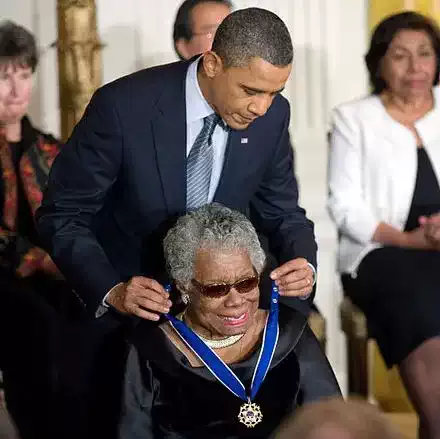
Maya Angelou
Men
When I was young, I used to
Watch behind the curtains
As men walked up and down the street. Wino men, old men.
Young men sharp as mustard.
See them. Men are always
Going somewhere.
They knew I was there. Fifteen
Years old and starving for them.
Under my window, they would pauses,
Their shoulders high like the
Breasts of a young girl,
Jacket tails slapping over
Those behinds,
Men.
One day they hold you in the
Palms of their hands, gentle, as if you
Were the last raw egg in the world. Then
They tighten up. Just a little. The
First squeeze is nice. A quick hug.
Soft into your defenselessness. A little
More. The hurt begins. Wrench out a
Smile that slides around the fear. When the
Air disappears,
Your mind pops, exploding fiercely, briefly,
Like the head of a kitchen match. Shattered.
It is your juice
That runs down their legs. Staining their shoes.
When the earth rights itself again,
And taste tries to return to the tongue,
Your body has slammed shut. Forever.
No keys exist.
Then the window draws full upon
Your mind. There, just beyond
The sway of curtains, men walk.
Knowing something.
Going someplace.
But this time, I will simply
Stand and watch.
Maybe.
204
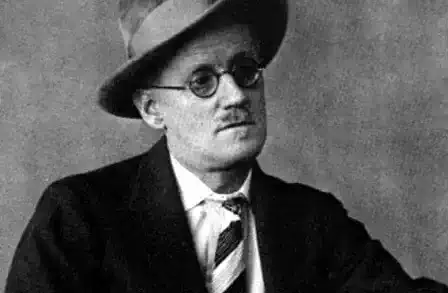
James Joyce
Bid Adieu to Maidenhood
Bid adieu, adieu, adieu,
Bid adieu to girlish days,
Happy Love is come to woo
Thee and woo thy girlish ways—
The zone that doth become thee fair,
The snood upon thy yellow hair,
When thou hast heard his name upon
The bugles of the cherubim
Begin thou softly to unzone
Thy girlish bosom unto him
And softly to undo the snood
That is the sign of maidenhood.
193

Siegfried Sassoon
The Troops
Dim, gradual thinning of the shapeless gloom
Shudders to drizzling daybreak that reveals
Disconsolate men who stamp their sodden boots
And turn dulled, sunken faces to the sky
Haggard and hopeless. They, who have beaten down
The stale despair of night, must now renew
Their desolation in the truce of dawn,
Murdering the livid hours that grope for peace.
Yet these, who cling to life with stubborn hands,
Can grin through storms of death and find a gap
In the clawed, cruel tangles of his defence.
They march from safety, and the bird-sung joy
Of grass-green thickets, to the land where all
Is ruin, and nothing blossoms but the sky
That hastens over them where they endure
Sad, smoking, flat horizons, reeking woods,
And foundered trench-lines volleying doom for doom.
O my brave brown companions, when your souls
Flock silently away, and the eyeless dead
Shame the wild beast of battle on the ridge,
Death will stand grieving in that field of war
Since your unvanquished hardihood is spent.
And through some mooned Valhalla there will pass
Battalions and battalions, scarred from hell;
The unreturning army that was youth;
The legions who have suffered and are dust.
133
Previous
Page 3