
Freedom

Robert W. Service
The Release
To-day within a grog-shop near
I saw a newly captured linnet,
Who beat against his cage in fear,
And fell exhausted every minute;
And when I asked the fellow there
If he to sell the bird were willing,
He told me with a careless air
That I could have it for a shilling.
And so I bought it, cage and all
(Although I went without my dinner),
And where some trees were fairly tall
And houses shrank and smoke was thinner,
The tiny door I open threw,
As down upon the grass I sank me:
Poor little chap! How quick he flew . . .
He didn't even wait to thank me.
Life's like a cage; we beat the bars,
We bruise our breasts, we struggle vainly;
Up to the glory of the stars
We strain with flutterings ungainly.
And then -- God opens wide the door;
Our wondrous wings are arched for flying;
We poise, we part, we sing, we soar . . .
Light, freedom, love. . . . Fools call it -- Dying.
276

Henry Lawson
The Australian Marseillaise
Sing the strong, proud song of Labour,
Toss the ringing music high;
Liberty’s a nearer neighbour
Than she was in days gone by.
Workmen’s weary wives and daughters
Sing the songs of liberty;
Men hail men across the waters,
Men reply across the sea.
We are marching on and onward
To the silver-streak of dawn,
To the dynasty of mankind
We are marching on.
Long the rich have been protected
By the walls that can’t endure;
By the walls that they erected
To divide them from the poor.
Crumbling now, they should not trust them,
For their end is drawing near;
Walls of Cant and walls of Custom,
Walls of Ignorance and Fear.
Tyrants, grip your weapons firmer,
Grip them firmly by the helves;
For the poor begin to murmur
Loudly now among themselves.
Hear us dare to say that Heaven
Gave us equal rights with you,
Dare to say the world was given
Unto all and not the few.
Tell us that the law has risen,
Make us bend beneath its sway,
Throw our leaders into prison,
Wrong us in the light of day.
Drive us to our dens, forgetting
All our woe as greed forgets,
While our weapons we are whetting
On your levelled bayonets.
Treat us like the beasts you’d make us,
Pen us close in wretched sties.
’Til our patience shall forsake us,
And like wolves we will arise.
Louder still for this shall rattle
Rifle shots, and sword blades ring
On the blood-wet fields of battle
In the days of reckoning.
We shall rise to prove us human,
Worthy of a human life,
When our starved and maddened women
Lead our armies on to strife.
When our war hymns wake the valleys,
And the rushing missiles shriek
From your barricaded alleys,
’Til your cannon cease to speak.
Then when Mammon Castle crashes
To the earth and trampled lies,
Then from out the blood and ashes
True Republics shall arise.
Then the world shall rest a season
(First since first the world began)
In the reign of right and reason
And the dynasty of man.
275

Emily Dickinson
Much Madness is divinest Sense
Much Madness is divinest Sense -
To a discerning Eye -
Much Sense - the starkest Madness `
Tis the Majority
In this, as All, prevail -
Assent - and you are sane -
Demur - you`re straightaway dangerous -
And handled with a Chain -
To a discerning Eye -
Much Sense - the starkest Madness `
Tis the Majority
In this, as All, prevail -
Assent - and you are sane -
Demur - you`re straightaway dangerous -
And handled with a Chain -
275
Robert W. Service
Flight
On silver sand where ripples curled
I counted sea-gulls seven;
Shy, secret screened from all the world,
And innocent as heaven.
They did not of my nearness know,
For dawn was barely bright,
And they were still, like spots of snow
In that pale, pearly light.
Then one went forth unto the sea
That rippled up in gold,
And there were rubies flashing free
From out its wing-unfold;
It ducked and dived in pretty play,
The while the other six
So gravely sat it seemed that they
Were marvelled by its tricks.
Then with a sudden flurry each
Down-rushed to join its mate,
And in a flash that sickle beach
With rapture was elate.
With joy they pranked till everyone
Was diamonded with spray,
Then flicked with flame to greet the sun
They rose and winged away.
But with their going, oh, the surge
Of loss they left in me!
For in my heart was born the urge,
The passion to be free.
And where each dawn with terror brings
Some tale of bale and blight,
Who would not envy silver wings,
The sea-gull in its flight!
Let me not know the soils of woe
That chain this stricken earth;
Let me forget the fear and fret
That bind men from their birth;
Let me be the one with wind and sun,
With earth and sky and sea. . . .
Oh, let me teach in living speech
God's glory - Liberty.
271
Henry Lawson
Freedom on the Wallaby
Australia's a big country
An' Freedom's humping bluey,
An' Freedom's on the wallaby
Oh! don't you hear 'er cooey?
She's just begun to boomerang,
She'll knock the tyrants silly,
She's goin' to light another fire
And boil another billy.
Our fathers toiled for bitter bread
While loafers thrived beside 'em,
But food to eat and clothes to wear,
Their native land denied 'em.
An' so they left their native land
In spite of their devotion,
An' so they came, or if they stole,
Were sent across the ocean.
Then Freedom couldn't stand the glare
O' Royalty's regalia,
She left the loafers where they were,
An' came out to Australia.
But now across the mighty main
The chains have come ter bind her –
She little thought to see again
The wrongs she left behind her.
Our parents toil'd to make a home –
Hard grubbin 'twas an' clearin' –
They wasn't crowded much with lords
When they was pioneering.
But now that we have made the land
A garden full of promise,
Old Greed must crook 'is dirty hand
And come ter take it from us.
So we must fly a rebel flag,
As others did before us,
And we must sing a rebel song
And join in rebel chorus.
We'll make the tyrants feel the sting
O' those that they would throttle;
They needn't say the fault is ours
If blood should stain the wattle!
272
Henry Lawson
Outside
I want to be lighting my pipe on deck,
With my baggage safe below—
I want to be free of the crowded quay,
While the steamer’s swinging slow.
I want to be free of treachery,
And of sordid joys and griefs—
To be out of sight of the faces white,
And the waving of handkerchiefs.
I want to be making my ship-board friends,
I want to be free of the past—
I want to be laughing with kindred souls,
While the Heads are opening fast.
I want to be sailing far to-day,
On the tracks where the rovers go,
To feel the heave of the deck, and draw
The breath that the rovers know.
270
Robert W. Service
The Joy Of Being Poor
I
Let others sing of gold and gear, the joy of being rich;
But oh, the days when I was poor, a vagrant in a ditch!
When every dawn was like a gem, so radiant and rare,
And I had but a single coat, and not a single care;
When I would feast right royally on bacon, bread and beer,
And dig into a stack of hay and doze like any peer;
When I would wash beside a brook my solitary shirt,
And though it dried upon my back I never took a hurt;
When I went romping down the road contemptuous of care,
And slapped Adventure on the back -- by Gad! we were a pair;
When, though my pockets lacked a coin, and though my coat was old,
The largess of the stars was mine, and all the sunset gold;
When time was only made for fools, and free as air was I,
And hard I hit and hard I lived beneath the open sky;
When all the roads were one to me, and each had its allure . . .
Ye Gods! these were the happy days, the days when I was poor.
II
Or else, again, old pal of mine, do you recall the times
You struggled with your storyettes, I wrestled with my rhymes;
Oh, we were happy, were we not? -- we used to live so "high"
(A little bit of broken roof between us and the sky);
Upon the forge of art we toiled with hammer and with tongs;
You told me all your rippling yarns, I sang to you my songs.
Our hats were frayed, our jackets patched, our boots were down at heel,
But oh, the happy men were we, although we lacked a meal.
And if I sold a bit of rhyme, or if you placed a tale,
What feasts we had of tenderloins and apple-tarts and ale!
And yet how often we would dine as cheerful as you please,
Beside our little friendly fire on coffee, bread and cheese.
We lived upon the ragged edge, and grub was never sure,
But oh, these were the happy days, the days when we were poor.
III
Alas! old man, we're wealthy now, it's sad beyond a doubt;
We cannot dodge prosperity, success has found us out.
Your eye is very dull and drear, my brow is creased with care,
We realize how hard it is to be a millionaire.
The burden's heavy on our backs -- you're thinking of your rents,
I'm worrying if I'll invest in five or six per cents.
We've limousines, and marble halls, and flunkeys by the score,
We play the part . . . but say, old chap, oh, isn't it a bore?
We work like slaves, we eat too much, we put on evening dress;
We've everything a man can want, I think . . . but happiness.
Come, let us sneak away, old chum; forget that we are rich,
And earn an honest appetite, and scratch an honest itch.
Let's be two jolly garreteers, up seven flights of stairs,
And wear old clothes and just pretend we aren't millionaires;
And wonder how we'll pay the rent, and scribble ream on ream,
And sup on sausages and tea, and laugh and loaf and dream.
And when we're tired of that, my friend, oh, you will come with me;
And we will seek the sunlit roads that lie beside the sea.
We'll know the joy the gipsy knows, the freedom nothing mars,
The golden treasure-gates of dawn, the mintage of the stars.
We'll smoke our pipes and watch the pot, and feed the crackling fire,
And sing like two old jolly boys, and dance to heart's desire;
We'll climb the hill and ford the brook and camp upon the moor . . .
Old chap, let's haste, I'm mad to taste the Joy of Being Poor.
269
Robert W. Service
Contentment
Bed and bread are all I need
In my happy day;
Love of Nature is my creed,
Unto her I pray;
Sun and sky my spirit feed
On my happy way.
To no man I bow the head,
None may master me;
I will eat my crust of bread
Lauding liberty;
And upon my truckle bed
Glory to be free.
You who grab for sordid gold,
You who fight for fame,
Shiny dross your fingers hold,
Empty is your aim.
--Soon we fatten graveyard mould,
Rich and poor the same.
So from world of want and woe
I retreat with dread;
Tuned to Nature glad I go
With my bite of bread:
Praising God I lay me low
On my truckle bed.
269
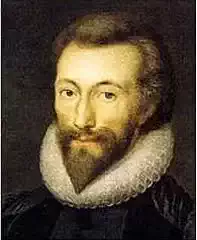
John Donne
Holy Sonnet XIV: Batter my heart
Batter my heart, three-personed God; for You
As yet but knock, breathe, shine, and seek to mend;
That I may rise and stand, o'erthrow me,'and bend
Your force to break, blow, burn, and make me new.
I, like an usurped town, to'another due,
Labor to'admit You, but O, to no end;
Reason, Your viceroy'in me, me should defend,
But is captived, and proves weak or untrue.
Yet dearly'I love You,'and would be loved fain,
But am betrothed unto Your enemy.
Divorce me,'untie or break that knot again;
Take me to You, imprison me, for I
Except You'enthrall me, never shall be free,
Nor ever chaste, except You ravish me.
265

John Greenleaf Whittier
Voice Of New England
UP the hillside, down the glen,
Rouse the sleeping citizen;
Summon out the might of men!
Like a lion growling low,
Like a night-storm rising slow,
Like the tread of unseen foe;
It is coming, it is nigh!
Stand your homes and altars by;
On your own free thresholds die.
Clang the bells in all your spires;
On the gray hills of your sires
Fling to heaven your signal-fires.
From Wachuset, lone and bleak,
Unto Berkshire's tallest peak,
Let the flame-tougued heralds speak.
Oh, for God and duty stand,
Heart to heart and hand to hand,
Round the old graves of the land.
Whoso shrinks or falters now,
Whoso to the yoke would bow,
Brand the craven on his brow!
Freedom's soil hath only place
For a free and fearless race,
None for traitors false and base.
Perish party, perish clan;
Strike together while ye can,
Like the arm of one strong man.
Like that angel's voice sublime,
Heard above a world of crime,
Crying of the end of time;
With one heart and with one mouth,
Let the North unto the South
Speak the word befitting both:
'What though Issachar be strong!
Ye may load his back with wrong
Overmuch and over long:
'Patience with her cup o'errun,
With her weary thread outspun,
Murmurs that her work is done.
'Make our Union-bond a chain,
Weak as tow in Freedom's strain
Link by link shall snap in twain.
'Vainly shall your sand-wrought rope
Bind the starry cluster up,
Shattered over heaven's blue cope!
'Give us bright though broken rays,
Rather than eternal haze,
Clouding o'er the full-orbed blaze.
'Take your land of sun and bloom;
Only leave to Freedom room
For her plough, and forge, and loom;
'Take your slavery-blackened vales;
Leave us but our own free gales,
Blowing on our thousand sails.
'Boldly, or with treacherous art,
Strike the blood-wrought chain apart;
Break the Union's mighty heart;
'Work the ruin, if ye will;
Pluck upon your heads an ill
Which shall grow and deepen still.
'With your bondman's right arm bare,
With his heart of black despair,
Stand alone, if stand ye dare!
'Onward with your fell design;
Dig the gulf and draw the line:
Fire beneath your feet the mine:
'Deeply, when the wide abyss
Yawns between your land and this,
Shall ye feel your helplessness.
'By the hearth, and in the bed,
Shaken by a look or tread,
Ye shall own a guilty dread.
'And the curse of unpaid toil,
Downward through your generous soil
Like a fire shall burn and spoil.
'Our bleak hills shall bud and blow,
VInes our rocks shall overgrow,
Plenty in our valleys flow; —
'And when vengeance clouds your skies,
Hither shall ye turn your eyes,
As the lost on Paradise!
'We but ask our rocky strand,
Freedom's true and brother band,
Freedom's strong and honest hand;
'Valleys by the slave untrod,
And the Pilgrim's mountain sod,
Blessed of our fathers' God!'
265
Robert W. Service
A Rolling Stone
There's sunshine in the heart of me,
My blood sings in the breeze;
The mountains are a part of me,
I'm fellow to the trees.
My golden youth I'm squandering,
Sun-libertine am I;
A-wandering, a-wandering,
Until the day I die.
I was once, I declare, a Stone-Age man,
And I roomed in the cool of a cave;
I have known, I will swear, in a new life-span,
The fret and the sweat of a slave:
For far over all that folks hold worth,
There lives and there leaps in me
A love of the lowly things of earth,
And a passion to be free.
To pitch my tent with no prosy plan,
To range and to change at will;
To mock at the mastership of man,
To seek Adventure's thrill.
Carefree to be, as a bird that sings;
To go my own sweet way;
To reck not at all what may befall,
But to live and to love each day.
To make my body a temple pure
Wherein I dwell serene;
To care for the things that shall endure,
The simple, sweet and clean.
To oust out envy and hate and rage,
To breathe with no alarm;
For Nature shall be my anchorage,
And none shall do me harm.
To shun all lures that debauch the soul,
The orgied rites of the rich;
To eat my crust as a rover must
With the rough-neck down in the ditch.
To trudge by his side whate'er betide;
To share his fire at night;
To call him friend to the long trail-end,
And to read his heart aright.
To scorn all strife, and to view all life
With the curious eyes of a child;
From the plangent sea to the prairie,
From the slum to the heart of the Wild.
From the red-rimmed star to the speck of sand,
From the vast to the greatly small;
For I know that the whole for good is planned,
And I want to see it all.
To see it all, the wide world-way,
From the fig-leaf belt to the Pole;
With never a one to say me nay,
And none to cramp my soul.
In belly-pinch I will pay the price,
But God! let me be free;
For once I know in the long ago,
They made a slave of me.
In a flannel shirt from earth's clean dirt,
Here, pal, is my calloused hand!
Oh, I love each day as a rover may,
Nor seek to understand.
To enjoy is good enough for me;
The gipsy of God am I;
Then here's a hail to each flaring dawn!
And here's a cheer to the night that's gone!
And may I go a-roaming on
Until the day I die!
Then every star shall sing to me
Its song of liberty;
And every morn shall bring to me
Its mandate to be free.
In every throbbing vein of me
I'll feel the vast Earth-call;
O body, heart and brain of me
Praise Him who made it all!
263
Emily Dickinson
If this is fading
If this is "fading"
Oh let me immediately "fade"!
If this is "dying"
Bury me, in such a shroud of red!
If this is "sleep,"
On such a night
How proud to shut the eye!
Good Evening, gentle Fellow men!
Peacock presumes to die!
Oh let me immediately "fade"!
If this is "dying"
Bury me, in such a shroud of red!
If this is "sleep,"
On such a night
How proud to shut the eye!
Good Evening, gentle Fellow men!
Peacock presumes to die!
261

Christina Rossetti
Amor Mundi
'Oh, where are you going with your love-locks flowing
On the west wind blowing along this valley track?'
'The downhill path is easy, come with me an' it please ye,
We shall escape the uphill by never turning back.'
So they two went together in glowing August weather,
The honey-breathing heather lay to their left and right;
And dear she was to doat on, her swift feet seemed to float on
The air like soft twin pigeons too sportive to alight.
'Oh, what is that in heaven where grey cloud-flakes are seven,
Where blackest clouds hang riven just at the rainy skirt?'
'Oh, that's a meteor sent us, a message dumb, portentous,—
An undeciphered solemn signal of help or hurt.'
'Oh, what is that glides quickly where velvet flowers grow thickly,
Their scent comes rich and sickly?'—'A scaled and hooded worm.'
'Oh, what's that in the hollow, so pale I quake to follow?'
'Oh, that's a thin dead body which waits th' eternal term.'
'Turn again, O my sweetest,—turn again, false and fleetest:
This way whereof thou weetest I fear is hell's own track.'
'Nay, too steep for hill-mounting,—nay, too late for cost-counting:
This downhill path is easy, but there's no turning back.'
260
Robert W. Service
Plebeian Plutocrat
I own a gorgeous Cadillac,
A chauffeur garbed in blue;
And as I sit behind his back
His beefy neck I view.
Yet let me whisper, though you may
Think me a queer old cuss,
From Claude I often sneak away
To board a bus.
A democrat, I love the crowd,
The bustle and the din;
The market wives who gab aloud
As they go out and in.
I chuckle as I pay my dime,
With mien meticulous:
You can't believe how happy I'm;
Aboard a bus.
The driver of my Cadillac
Has such a haughty sneer;
I'm sure he would give me the sack
If he beheld me here.
His horror all my friends would share
Could they but see me thus:
A gleeful multi-millionaire
Aboard a bus.
262
Robert W. Service
The Rover
Oh, how good it is to be
Foot-loose and heart-free!
Just my dog and pipe and I, underneath the vast sky;
Trail to try and goal to win, white road and cool inn;
Fields to lure a lad afar, clear spring and still star;
Lilting feet that never tire, green dingle, fagot fire;
None to hurry, none to hold, heather hill and hushed fold;
Nature like a picture book, laughing leaf and bright brook;
Every day a jewel bright, set serenely in the night;
Every night a holy shrine, radiant for a day divine.
Weathered cheek and kindly eye, let the wanderer go by.
Woman-love and wistful heart, let the gipsy one depart.
For the farness and the road are his glory and his goad.
Oh, the lilt of youth and Spring! Eyes laugh and lips sing.
Yea, but it is good to be
Foot-loose and heart-free!
II
Yet how good it is to come
Home at last, home, home!
On the clover swings the bee, overhead's the hale tree;
Sky of turquoise gleams through, yonder glints the lake's blue.
In a hammock let's swing, weary of wandering;
Tired of wild, uncertain lands, strange faces, faint hands.
Has the wondrous world gone cold? Am I growing old, old?
Grey and weary . . . let me dream, glide on the tranquil stream.
Oh, what joyous days I've had, full, fervid, gay, glad!
Yet there comes a subtile change, let the stripling rove, range.
From sweet roving comes sweet rest, after all, home's best.
And if there's a little bit of woman-love with it,
I will count my life content, God-blest and well spent. . . .
Oh but it is good to be
Foot-loose and heart-free!
Yet how good it is to come
Home at last, home, home!
Foot-loose and heart-free!
Just my dog and pipe and I, underneath the vast sky;
Trail to try and goal to win, white road and cool inn;
Fields to lure a lad afar, clear spring and still star;
Lilting feet that never tire, green dingle, fagot fire;
None to hurry, none to hold, heather hill and hushed fold;
Nature like a picture book, laughing leaf and bright brook;
Every day a jewel bright, set serenely in the night;
Every night a holy shrine, radiant for a day divine.
Weathered cheek and kindly eye, let the wanderer go by.
Woman-love and wistful heart, let the gipsy one depart.
For the farness and the road are his glory and his goad.
Oh, the lilt of youth and Spring! Eyes laugh and lips sing.
Yea, but it is good to be
Foot-loose and heart-free!
II
Yet how good it is to come
Home at last, home, home!
On the clover swings the bee, overhead's the hale tree;
Sky of turquoise gleams through, yonder glints the lake's blue.
In a hammock let's swing, weary of wandering;
Tired of wild, uncertain lands, strange faces, faint hands.
Has the wondrous world gone cold? Am I growing old, old?
Grey and weary . . . let me dream, glide on the tranquil stream.
Oh, what joyous days I've had, full, fervid, gay, glad!
Yet there comes a subtile change, let the stripling rove, range.
From sweet roving comes sweet rest, after all, home's best.
And if there's a little bit of woman-love with it,
I will count my life content, God-blest and well spent. . . .
Oh but it is good to be
Foot-loose and heart-free!
Yet how good it is to come
Home at last, home, home!
258
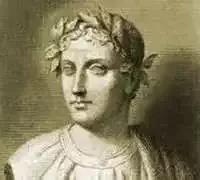
Horácio
BkII:XX Poetic Immortality
A poet of dual form, I won’t be carried
through the flowing air on weak or mundane wings,
nor will I linger down here on earth,
for any length of time: beyond envy,
I’ll leave the cities behind. It’s not I, born
of poor parents, it’s not I, who hear your voice,
beloved Maecenas, I who’ll die,
or be encircled by Stygian waters.
Even now the rough skin is settling around
my ankles, and now above them I’ve become
a snow-white swan, and soft feathers are
emerging over my arms and shoulders.
Soon, a melodious bird, and more famous
than Icarus, Daedalus’ son, I’ll visit
Bosphorus’ loud shores, Gaetulian
Syrtes, and the Hyperborean plains.
Colchis will know me, so will the Scythians,
who pretend to show no fear of Italian
troops, and the Geloni: Spain will learn
from me, the expert, and those who drink Rhone.
No dirges at my insubstantial funeral,
no elegies, and no unseemly grieving:
suppress all the clamour, not for me
the superfluous honour of a tomb.
253
Robert W. Service
Freedom's Fool
To hell with Government I say;
I'm sick of all the piddling pack.
I'd like to scram, get clean away,
And never, nevermore come back.
With heart of hope I long to go
To some lost island of the sea,
And there get drunk with joy to know
No one on earth is over me.
There will be none to say me nay,
So from my lexicon I can
Obliterate the word "obey",
And mock the meddling laws of man.
The laws of Nature and of God
Are good enough for guys like me,
Who scorn to kiss the scarlet rod
Of office and authority.
No Stars and Stripes nor Union Jack,
Nor tri-colour nor crimson rag
Shall claim my love, I'll turn my back
On every land, on every flag.
My banner shall be stainless white,
An emblem of the Golden Rule,
Yet for its freedom I will fight
And die - like any other fool.
Oh Government's a bitter pill!
No force or fear shall forge my fate;
I'll bow to no communal will,
For I myself shall be the State.
Uncurst by man-curb and control,
my Isle shall be emparadised,
And I will re-possess my soul . . .
Mad Anarchist! - Well, wasn't Christ?
254
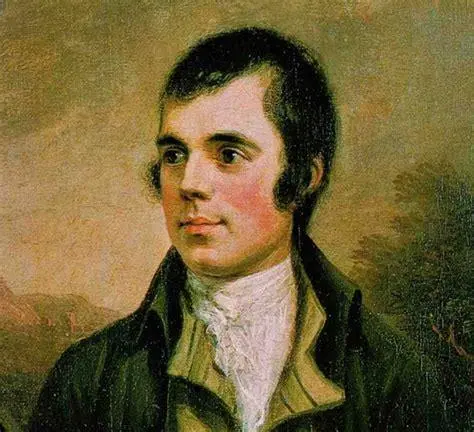
Robert Burns
Scots, Wha Hae Wi' Wallace Bled
Scots, wha hae wi' Wallace bled,
Scots, wham Bruce has aften led,
Welcome to your gory bed,
Or to victory!
Now's the day, and now's the hour;
See the front o' battle lour,
See approach proud Edward's power—
Chains and slavery!
Wha will be a traitor-knave?
Wha can fill a coward's grave?
Wha sae base as be a slave?
Let him turn and flee!
Wha for Scotland's king and law
Freedom's sword will strongly draw,
Freeman stand or freeman fa',
Let him follow me!
By oppression's woes and pains,
By your sons in servile chains,
We will drain our dearest veins,
But they shall be free!
Lay the proud usurpers low!
Tyrants fall in ev'ry foe!
Liberty's in ev'ry blow!
Let us do or die!
254
John Greenleaf Whittier
The Relic
TOKEN Of friendship true and tried,
From one whose fiery heart of youth
With mine has beaten, side by side,
For Liberty and Truth;
With honest pride the gift I take,
And prize it for the giver's sake.
But not alone because it tells
Of generous hand and heart sincere;
Around that gift of friendship dwells
A memory doubly dear;
Earth's noblest aim, man's holiest thought,
With that memorial frail inwrought!
Pure thoughts and sweet like flowers unfold,
And precious memories round it cling,
Even as the Prophet's rod of old
In beauty blossoming:
And buds of feeling, pure and good,
Spring from its cold unconscious wood.
Relic of Freedom's shrine! a brand
Plucked from its burning! let it be
Dear as a jewel from the hand
Of a lost friend to me!
Flower of a perished garland left,
Of life and beauty unbereft!
Oh, if the young enthusiast bears,
O'er weary waste and sea, the stone
Which crumbled from the Forum's stairs,
Or round the Parthenon;
Or olive-bough from some wild tree
Hung over old Thermopylæ:
If leaflets from some hero's tomb,
Or moss-wreath torn from ruins hoary;
Or faded flowers whose sisters bloom
On fields renowned in story;
Or fragment from the Alhambra's crest,
Or the gray rock by Druids blessed;
Sad Erin's shamrock greenly growing
Where Freedom led her stalwart kern,
Or Scotia's 'rough bur thistle' blowing
On Bruce's Bannockburn;
Or Runnymede's wild English rose,
Or lichen plucked from Sempach's snows!
If it be true that things like these
To heart and eye bright visions bring,
Shall not far holier memories
To this memorial cling?
Which needs no mellowing mist of time
To hide the crimson stains of crime!
Wreck of a temple, unprofaned;
Of courts where Peace with Freedom trod,
Lifting on high, with hands unstained,
Thanksgiving unto God;
Where Mercy's voice of love was pleading
For human hearts in bondage bleeding!
Where, midst the sound of rushing feet
And curses on the night-air flung,
That pleading voice rose calm and sweet
From woman's earnest tongue;
And Riot turned his scowling glance,
Awed, from her tranquil countenance!
That temple now in ruin lies!
The fire-stain on its shattered wall,
And open to the changing skies
Its black and roofless hall,
It stands before a nation's sight
A gravestone over buried Right!
But from that ruin, as of old,
The fire-scorched stones themselves are crying,
And from their ashes white and cold
Its timbers are replying!
A voice which slavery cannot kill
Speaks from the crumbling arches still!
And even this relic from thy shrine,
O holy Freedom! hath to me
A potent power, a voice and sign
To testify of thee;
And, grasping it, methinks I feel
A deeper faith, a stronger zeal.
And not unlike that mystic rod,
Of old stretched o'er the Egyptian wave,
Which opened, in the strength of God,
A pathway for the slave,
It yet may point the bondman's way,
And turn the spoiler from his prey.
253
Christina Rossetti
A Royal Princess
I, a princess, king-descended, decked with jewels, gilded, drest,
Would rather be a peasant with her baby at her breast,
For all I shine so like the sun, and am purple like the west.
Two and two my guards behind, two and two before,
Two and two on either hand, they guard me evermore;
Me, poor dove, that must not coo—eagle that must not soar.
All my fountains cast up perfumes, all my gardens grow
Scented woods and foreign spices, with all flowers in blow
That are costly, out of season as the seasons go.
All my walls are lost in mirrors, whereupon I trace
Self to right hand, self to left hand, self in every place,
Self-same solitary figure, self-same seeking face.
Then I have an ivory chair high to sit upon,
Almost like my father's chair, which is an ivory throne;
There I sit uplift and upright, there I sit alone.
Alone by day, alone by night, alone days without end;
My father and my mother give me treasures, search and spend—
O my father! O my mother! have you ne'er a friend?
As I am a lofty princess, so my father is
A lofty king, accomplished in all kingly subtilties,
Holding in his strong right hand world-kingdoms' balances.
He has quarrelled with his neighbours, he has scourged his foes;
Vassal counts and princes follow where his pennon goes,
Long-descended valiant lords whom the vulture knows,
On whose track the vulture swoops, when they ride in state
To break the strength of armies and topple down the great:
Each of these my courteous servant, none of these my mate.
My father counting up his strength sets down with equal pen
So many head of cattle, head of horses, head of men;
These for slaughter, these for breeding, with the how and when.
Some to work on roads, canals; some to man his ships;
Some to smart in mines beneath sharp overseers' whips;
Some to trap fur-beasts in lands where utmost winter nips.
Once it came into my heart, and whelmed me like a flood,
That these too are men and women, human flesh and blood;
Men with hearts and men with souls, though trodden down like mud.
Our feasting was not glad that night, our music was not gay:
On my mother's graceful head I marked a thread of grey,
My father frowning at the fare seemed every dish to weigh.
I sat beside them sole princess in my exalted place,
My ladies and my gentlemen stood by me on the dais:
A mirror showed me I look old and haggard in the face;
It showed me that my ladies all are fair to gaze upon,
Plump, plenteous-haired, to every one love's secret lore is known,
They laugh by day, they sleep by night; ah me, what is a throne?
The singing men and women sang that night as usual,
The dancers danced in pairs and sets, but music had a fall,
A melancholy windy fall as at a funeral.
Amid the toss of torches to my chamber back we swept;
My ladies loosed my golden chain; meantime I could have wept
To think of some in galling chains whether they waked or slept.
I took my bath of scented milk, delicately waited on,
They burned sweet things for my delight, cedar and cinnamon,
They lit my shaded silver lamp, and left me there alone.
A day went by, a week went by. One day I heard it said:
'Men are clamouring, women, children, clamouring to be fed;
Men like famished dogs are howling in the streets for bread.'
So two whispered by my door, not thinking I could hear,
Vulgar naked truth, ungarnished for a royal ear;
Fit for cooping in the background, not to stalk so near.
But I strained my utmost sense to catch this truth, and mark:
'There are families out grazing like cattle in the park.'
'A pair of peasants must be saved even if we build an ark.'
A merry jest, a merry laugh, each strolled upon his way;
One was my page, a lad I reared and bore with day by day;
One was my youngest maid as sweet and white as cream in May.
Other footsteps followed softly with a weightier tramp;
Voices said: 'Picked soldiers have been summoned from the camp
To quell these base-born ruffians who make free to howl and stamp.'
'Howl and stamp?' one answered: 'They made free to hurl a stone
At the minister's state coach, well aimed and stoutly thrown.'
'There's work then for the soldiers, for this rank crop must be mown.'
'One I saw, a poor old fool with ashes on his head,
Whimpering because a girl had snatched his crust of bread:
Then he dropped; when some one raised him, it turned out he was dead.'
'After us the deluge,' was retorted with a laugh:
'If bread's the staff of life, they must walk without a staff.'
'While I've a loaf they're welcome to my blessing and the chaff.'
These passed. The king: stand up. Said my father with a smile:
'Daughter mine, your mother comes to sit with you awhile,
She's sad to-day, and who but you her sadness can beguile?'
He too left me. Shall I touch my harp now while I wait,—
(I hear them doubling guard below before our palace gate—)
Or shall I work the last gold stitch into my veil of state;
Or shall my woman stand and read some unimpassioned scene,
There's music of a lulling sort in words that pause between;
Or shall she merely fan me while I wait here for the queen?
Again I caught my father's voice in sharp word of command:
'Charge!' a clash of steel: 'Charge again, the rebels stand.
Smite and spare not, hand to hand; smite and spare not, hand to hand.'
There swelled a tumult at the gate, high voices waxing higher;
A flash of red reflected light lit the cathedral spire;
I heard a cry for faggots, then I heard a yell for fire.
'Sit and roast there with your meat, sit and bake there with your bread,
You who sat to see us starve,' one shrieking woman said:
'Sit on your throne and roast with your crown upon your head.'
Nay, this thing will I do, while my mother tarrieth,
I will take my fine spun gold, but not to sew therewith,
I will take my gold and gems, and rainbow fan and wreath;
With a ransom in my lap, a king's ransom in my hand,
I will go down to this people, will stand face to face, will stand
Where they curse king, queen, and princess of this cursed land.
They shall take all to buy them bread, take all I have to give;
I, if I perish, perish; they to-day shall eat and live;
I, if I perish, perish; that's the goal I half conceive:
Once to speak before the world, rend bare my heart and show
The lesson I have learned which is death, is life, to know.
I, if I perish, perish; in the name of God I go.
252
Henry Lawson
The Iron Wedding Rings
In these days of peace and money, free to all the Commonweal,
There are ancient dames in Buckland wearing wedding rings of steel;
Wedding rings of steel and iron, worn on wrinkled hands and old,
And the wearers would not give them, not for youth nor wealth untold.
In the days of black oppression, when the best abandoned hope,
And all Buckland crouched in terror of the prison and the rope,
Many fair young wives in Buckland prayed beside their lonely beds
For the absent ones who knew not where to lay their outlawed heads.
But a whisper went through Buckland, to the rebels only known,
That the man across the border had a chance to hold his own.
There were men that came in darkness, quiet, grim and travel-worn,
And, by twos, and threes, the young men stole away to join Kinghorn.
Slipping powder-horns and muskets from beneath the floors and thatch,
There were boys who kissed their mothers ere they softly dropped the latch;
There were hunters' wives in backwoods who sat strangely still and white
Till the dawn, because their men-folk went a-hunting in the night.
But the rebels needed money, and so, through the Buckland hills,
Came again, by night, the gloomy men of monosyllables;
And the ladies gave their jewels to be smuggled out and sold,
And the homely wives of Buckland gave their wedding rings of gold.
And a Buckland smith in secret, and in danger, in his shed
Made them rings of baser metals (from the best he had, to lead),
To be gilt and worn to market, or to meetings where they.prayed,
Lest the spies should get an inkling, and the husbands be betrayed.
Then a silence fell on Buckland; there was peace throughout the land,
And a loyalty that puzzled all the captains in command;
There was too much Law and Order for the men who weren't blind,
And the greatest of the king's men wasn't easy in his mind.
They were hunting rebels, certes, and the troops were understood
To be searching for a stronghold like a needle in a wood;
But whene'er the king was prayed for in the meeting-houses, then
It was strange with how much unction ancient sinners cried "Ah-men!"
Till at last, when all was quiet, through the gloomy Buckland hills
Once again there came those furtive men of monosyllables;
And their message was – "Take warning what the morrow may reveal,
Death and Freedom may be married with a wedding ring of steel."
In the morning, from the marshes, rose the night-mist, cold and damp,
From the shipping in the harbour and the sleeping royal camp;
From the lanes and from the by-streets and the high streets of the town,
And above the hills of Buckland, where the rebel guns looked down.
And the first one sent a message to the camp to fight or yield,
And the wintry sun looked redly on a bloody battlefield;
Till the man from 'cross the border marched through Buckland once again,
With a charter for the people and ten thousand fighting men.
There are ancient dames in Buckland with old secrets to reveal,
Wearing wedding rings of iron, wearing wedding rings of steel;
And their tears drop on the metal when their thoughts are far away
In the past where their young husbands died on Buckland field that day.
251
John Greenleaf Whittier
John Underhill
A score of years had come and gone
Since the Pilgrims landed on Plymouth stone,
When Captain Underhill, bearing scars
From Indian ambush and Flemish wars,
Left three-hilled Boston and wandered down,
East by north, to Cocheco town.
With Vane the younger, in counsel sweet,
He had sat at Anna Hutchinson's feet,
And, when the bolt of banishment fell
On the head of his saintly oracle,
He had shared her ill as her good report,
And braved the wrath of the General Court.
He shook from his feet as he rode away
The dust of the Massachusetts Bay.
The world might bless and the world might ban,
What did it matter the perfect man,
To whom the freedom of earth was given,
Proof against sin, and sure of heaven?
He cheered his heart as he rode along
With screed of Scripture and holy song,
Or thought how he rode with his lances free
By the Lower Rhine and the Zuyder-Zee,
Till his wood-path grew to a trodden road,
And Hilton Point in the distance showed.
He saw the church with the block-house nigh,
The two fair rivers, the flakes thereby,
And, tacking to windward, low and crank,
The little shallop from Strawberry Bank;
And he rose in his stirrups and looked abroad
Over land and water, and praised the Lord.
Goodly and stately and grave to see,
Into the clearing's space rode he,
With the sun on the hilt of his sword in sheath,
And his silver buckles and spurs beneath,
And the settlers welcomed him, one and all,
From swift Quampeagan to Gonic Fall.
And he said to the elders: 'Lo, I come
As the way seemed open to seek a home.
Somewhat the Lord hath wrought by my hands
In the Narragansett and Netherlands,
And if here ye have work for a Christian man,
I will tarry, and serve ye as best I can.
'I boast not of gifts, but fain would own
The wonderful favor God hath shown,
The special mercy vouchsafed one day
On the shore of Narragansett Bay,
As I sat, with my pipe, from the camp aside,
And mused like Isaac at eventide.
'A sudden sweetness of peace I found,
A garment of gladness wrapped me round;
I felt from the law of works released,
The strife of the flesh and spirit ceased,
My faith to a full assurance grew,
And all I had hoped for myself I knew.
'Now, as God appointeth, I keep my way,
I shall not stumble, I shall not stray;
He hath taken away my fig-leaf dress,
I wear the robe of His righteousness;
And the shafts of Satan no more avail
Than Pequot arrows on Christian mail.'
'Tarry with us,' the settlers cried,
'Thou man of God, as our ruler and guide.'
And Captain Underhill bowed his head.
'The will of the Lord be done!' he said.
And the morrow beheld him sitting down
In the ruler's seat in Cocheco town.
And he judged therein as a just man should;
His words were wise and his rule was good;
He coveted not his neighbor's land,
From the holding of bribes he shook his hand;
And through the camps of the heathen ran
A wholesome fear of the valiant man.
But the heart is deceitful, the good Book saith,
And life hath ever a savor of death.
Through hymns of triumph the tempter calls,
And whoso thinketh he standeth falls.
Alas! ere their round the seasons ran,
There was grief in the soul of the saintly man.
The tempter's arrows that rarely fail
Had found the joints of his spiritual mail;
And men took note of his gloomy air,
The shame in his eye, the halt in his prayer,
The signs of a battle lost within,
The pain of a soul in the coils of sin.
Then a whisper of scandal linked his name
With broken vows and a life of blame;
And the people looked askance on him
As he walked among them sullen and grim,
Ill at ease, and bitter of word,
And prompt of quarrel with hand or sword.
None knew how, with prayer and fasting still,
He strove in the bonds of his evil will;
But he shook himself like Samson at length,
And girded anew his loins of strength,
And bade the crier go up and down
And call together the wondering town.
Jeer and murmur and shaking of head
Ceased as he rose in his place and said
'Men, brethren, and fathers, well ye know
How I came among you a year ago,
Strong in the faith that my soul was freed
From sin of feeling, or thought, or deed.
'I have sinned, I own it with grief and shame,
But not with a lie on my lips I came.
In my blindness I verily thought my heart
Swept and garnished in every part.
He chargeth His angels with folly; He sees
The heavens unclean. Was I more than these?
'I urge no plea. At your feet I lay
The trust you gave me, and go my way.
Hate me or pity me, as you will,
The Lord will have mercy on sinners still;
And I, who am chiefest, say to all,
Watch and pray, lest ye also fall.'
No voice made answer: a sob so low
That only his quickened ear could know
Smote his heart with a bitter pain,
As into the forest he rode again,
And the veil of its oaken leaves shut down
On his latest glimpse of Cocheco town.
Crystal-clear on the man of sin
The streams flashed up, and the sky shone in;
On his cheek of fever the cool wind blew,
The leaves dropped on him their tears of dew,
And angels of God, in the pure, sweet guise
Of flowers, looked on him with sad surprise.
Was his ear at fault that brook and breeze
Sang in their saddest of minor keys?
What was it the mournful wood-thrush said?
What whispered the pine-trees overhead?
Did he hear the Voice on his lonely way
That Adam heard in the cool of day?
Into the desert alone rode he,
Alone with the Infinite Purity;
And, bowing his soul to its tender rebuke,
As Peter did to the Master's look,
He measured his path with prayers of pain
For peace with God and nature again.
And in after years to Cocheco came
The bruit of a once familiar name;
How among the Dutch of New Netherlands,
From wild Danskamer to Haarlem sands,
A penitent soldier preached the Word,
And smote the heathen with Gideon's sword!
And the heart of Boston was glad to hear
How he harried the foe on the long frontier,
And heaped on the land against him barred
The coals of his generous watch and ward.
Frailest and bravest! the Bay State still
Counts with her worthies John Underhill.
250
Christina Rossetti
Love From The North
I had a love in soft south land,
Beloved through April far in May;
He waited on my lightest breath,
And never dared to say me nay.
He saddened if my cheer was sad,
But gay he grew if I was gay;
We never differed on a hair,
My yes his yes, my nay his nay.
The wedding hour was come, the aisles
Were flushed with sun and flowers that day;
I pacing balanced in my thoughts:
'It's quite too late to think of nay.'—
My bridegroom answered in his turn,
Myself had almost answered 'yea:'
When through the flashing nave I heard
A struggle and resounding 'nay.'
Bridemaids and bridegroom shrank in fear,
But I stood high who stood at bay:
'And if I answer yea, fair Sir,
What man art thou to bar with nay?'
He was a strong man from the north,
Light-locked, with eyes of dangerous grey:
'Put yea by for another time
In which I will not say thee nay.'
He took me in his strong white arms,
He bore me on his horse away
O'er crag, morass, and hairbreadth pass,
But never asked me yea or nay.
He made me fast with book and bell,
With links of love he makes me stay;
Till now I've neither heart nor power
Nor will nor wish to say him nay.
244