
Fear and Anxiety

Emily Dickinson
I tried to think a lonelier Thing
I tried to think a lonelier Thing
Than any I had seen-
Some Polar Expiation-An Omen in the Bone
Of Death's tremendous nearness-
I probed Retrieverless things
My Duplicate-to borrow-
A Haggard Comfort springs
From the belief that Somewhere-
Within the Clutch of Thought-
There dwells one other Creature
Of Heavenly Love-forgot-
I plucked at our Partition
As One should pry the Walls-
Between Himself-and Horror's Twin-
Within Opposing Cells-
I almost strove to clasp his Hand,
Such Luxury-it grew-
That as Myself-could pity Him-
Perhaps he-pitied me-
247

Henry Lawson
The Motor Car
The motor car is sullen, like a thing that should not be;
The motor car is master of Smart Society.
’Twas born of sweated genius and collared by a clown;
’Twas planned by Retribution to ride its riders down.
And straight for Caesar’s Column,
It runs to Caesar’s Column,
Last section, Caesar’s Column
To ride its riders down!
The motor car is shame-struck, for greed and misery,
For mad and hopeless self-lust, and the sins that need not be.
The motor car is vicious, for its conscience makes it so,
It aye would smash the victims while it runs the riders low.
And straight for Caesar’s Column,
Its goal is Caesar’s Column,
It longs for Caesar’s Column
To lay its riders low.
The motor car is maddened like a horse that’s had a fright,
The shameful day behind it and the Coming of the Night!
It flees across the country and it flees back to the town
And straight for Caesar’s Column to run its riders down.
And straight for Caesar’s Column,
What ho! for Caesar’s Column!
Hurrah! for Caesar’s Column!
To seal its riders down.
The motor car is reckless like a gambler losing fast;
The motor car’s in terror of the Future—and the Past;
The motor car is worn out and has passed Sin’s boundary by,
And is bound for Caesar’s Column where to pile its riders high.
It’s bound for Caesar’s Column
And marked for Caesar’s Column,
And doomed for Caesar’s Column
To pile its riders high.
The motor car is brainless, and scornful of all tears,
Its dust is in our faces, its giggle in our ears,
Its harsh laugh is the last laugh of the last lost soul alone,
’Tis nearing Caesar’s Column to set self-damned in stone.
Change here for Caesar’s Column!
All out for Caesar’s Column!
Past Hope—and Caesar’s Column
To lodge self-damned in stone.
I don’t know how ’twill happen, or when ’twill come to pass,
But folk shall yet pass sanely by river, tree and grass;
By homesteads and farm wagons, they’ll ride each pleasant mile,
And back from Caesar’s Column where the world went mad awhile.
And back from Caesar’s Column
With lessons from the Column;
Grown sane at Caesar’s Column
To save the world awhile.
243
Emily Dickinson
I had not minded—Walls
I had not minded—Walls—
Were Universe—one Rock—
And fr I heard his silver Call
The other side the Block—
I'd tunnel—till my Groove
Pushed sudden thro' to his—
Then my face take her Recompense—
The looking in his Eyes—
But 'tis a single Hair—
A filament—a law—
A Cobweb—wove in Adamant—
A Battlement—of Straw—
A limit like the Veil
Unto the Lady's face—
But every Mesh—a Citadel—
And Dragons—in the Crease—
242

Anonymous
Hush a By Baby
Hush-a-by Baby
On the tree top,
When the wind blows
The cradle will rock;
When the bough breaks
The cradle will fall,
Down tumbles baby,
Cradle, and all.
On the tree top,
When the wind blows
The cradle will rock;
When the bough breaks
The cradle will fall,
Down tumbles baby,
Cradle, and all.
239
Emily Dickinson
'Twas like a Maelstrom, with a notch
'Twas like a Maelstrom, with a notch,
That nearer, every Day,
Kept narrowing its boiling Wheel
Until the Agony
Toyed coolly with the final inch
Of your delirious Hem-
And you dropt, lost,
When something broke-
And let you from a Dream-
As if a Goblin with a Gauge-
Kept measuring the Hours-
Until you felt your Second
Weigh, helpless, in his Paws-
And not a Sinew-stirred-could help,
And sense was setting numb-
When God-remembered-and the Fiend
Let go, then, Overcome-
As if your Sentence stood-pronounced-
And you were frozen led
From Dungeon's luxury of Doubt
To Gibbets, and the Dead-
And when the Film had stitched your eyes
A Creature gasped "Reprieve"!
Which Anguish was the utterest-then-
To perish, or to live?
238
Anonymous
To Her Sea-faring Lover
SHALL I thus ever long, and be no whit the neare?
And shall I still complain to thee, the which me will not hear?
Alas! say nay! say nay! and be no more so dumb,
But open thou thy manly mouth and say that thou wilt come:
Whereby my heart may think, although I see not thee,
That thou wilt come--thy word so sware--if thou a live man be.
The roaring hugy waves they threaten my poor ghost,
And toss thee up and down the seas in danger to be lost.
Shall they not make me fear that they have swallowed thee?
--But as thou art most sure alive, so wilt thou come to me.
Whereby I shall go see thy ship ride on the strand,
And think and say Lo where he comes and Sure here will he land:
And then I shall lift up to thee my little hand,
And thou shalt think thine heart in ease, in health to see me stand.
And if thou come indeed (as Christ thee send to do!)
Those arms which miss thee now shall then embrace [and hold] thee too:
Each vein to every joint the lively blood shall spread
Which now for want of thy glad sight doth show full pale and dead.
But if thou slip thy troth, and do not come at all,
As minutes in the clock do strike so call for death I shall:
To please both thy false heart and rid myself from woe,
That rather had to die in troth than live forsaken so!
235

Robert W. Service
Cowardice
Although you deem it far from nice,
And it perchance may hurt you,
Let me suggest that cowardice
Can masquerade as virtue;
And many a maid remains a maid
Because she is afraid.
And many a man is chaste because
He fears the house of sin;
And though before the door he pause,
He dare not enter in:
So worse than being dissolute
At home he plays the flute.
And many an old cove such as I
Is troubled with the jitters,
And being as he's scared to die
Gives up his gin and bitters;
While dreading stomach ulcers he
Chucks dinner for high tea.
Well, we are wise. When life begins
To look so dour and dark
'Tis good to jettison our sins
And keep afloat the bark:
But don't let us claim lack of vice
For what's plumb cowardice!
232
Robert W. Service
Innocence
The height of wisdom seems to me
That of a child;
So let my ageing vision be
Serene and mild.
The depth of folly, I aver,
Is to fish deep
In that dark pool of science where
Truth-demons sleep.
Let me not be a bearded sage
Seeing too clear;
In issues of the atom age
Man-doom I fear.
So long as living's outward show
To me is fair,
What lies behind I do not know,
And do not care.
Of woeful fears of future ill
That earth-folk haunt,
Let me, as radiant meadow rill,
Be ignorant.
Aye, though a sorry dunce I be
In learning's school,
Lord, marvellously make of me
Your Happy Fool!
232
Robert W. Service
My Coffin
Deeming that I was due to die
I framed myself a coffin;
So full of graveyard zeal was I,
I set the folks a-laughing.
I made it snugly to my fit,
My joinering was honest;
And sometimes in it I would sit,
And fancy I was non est.
I stored it on my cabin shelf
Forever to remind me,
When I was tickled with myself,
That Death was close behind me.
Let's be prepared, I used to say,
E're in the Dark we launch us:
And so with boding day by day
I kept me coffin-conscious.
Then came that winter dark as doom,
No firing wood had I;
My shack was icy as a tomb
And I was set to die.
But e'er the losing of my wits
I saw that coffin there,
S smashing the damned thing to bits
I made a gorgeous flare.
I never saw a flame so bright,
So goldenly divine,
As starred the blackness of the night
That boneyard box of mine.
And now I go forth coffin-shy,
With no more carnal fears,
For radiantly sure am I
I'll stack a hundred years.
231

John Greenleaf Whittier
The New Wife and the Old
Dark the halls, and cold the feast,
Gone the bridemaids, gone the priest.
All is over, all is done,
Twain of yesterday are one!
Blooming girl and manhood gray,
Autumn in the arms of May!
Hushed within and hushed without,
Dancing feet and wrestlers' shout;
Dies the bonfire on the hill;
All is dark and all is still,
Save the starlight, save the breeze
Moaning through the graveyard trees,
And the great sea-waves below,
Pulse of the midnight beating slow.
From the brief dream of a bride
She hath wakened, at his side.
With half-uttered shriek and start,
Feels
she not his beating heart?
And the pressure of his arm,
And his breathing near and warm?
Lightly from the bridal bed
Springs that fair dishevelled head,
And a feeling, new, intense,
Half of shame, half innocence,
Maiden fear and wonder speaks
Through her lips and changing cheeks.
From the oaken mantel glowing,
Faintest light the lamp is throwing
On the mirror's antique mould,
High-backed chair, and wainscot old,
And, through faded curtains stealing,
His dark sleeping face revealing.
Listless lies the strong man there,
Silver-streaked his careless hair;
Lips of love have left no trace
On that hard and haughty face;
And that forehead's knitted thought
Love's soft hand hath not unwrought.
'Yet,' she sighs, 'he loves me well,
More than these calm lips will tell.
Stooping to my lowly state,
He hath made me rich and great,
And I bless him, though he be
Hard and stern to all save me!'
While she speaketh, falls the light
O'er her fingers small and white;
Gold and gem, and costly ring
Back the timid lustre fling,
Love's
selectest gifts, and rare,
His proud hand had fastened there.
Gratefully she marks the glow
From those tapering lines of snow;
Fondly o'er the sleeper bending
His black hair with golden blending,
In her soft and light caress,
Cheek and lip together press.
Ha!-that start of horror! why
That wild stare and wilder cry,
Full of terror, full of pain?
Is there madness in her brain?
Hark! that gasping, hoarse and low,
'Spare me,-spare me,-let me go!'
God have mercy!-icy cold
Spectral hands her own enfold,
Drawing silently from them
Love's fair gifts of gold and gem.
'Waken! save me!' still as death
At her side he slumbereth.
Ring and bracelet all are gone,
And that ice-cold hand withdrawn;
But she hears a murmur low,
Full of sweetness, full of woe,
Half a sigh and half a moan
'Fear not! give the dead her own!'
Ah!-the dead wife's voice she knows!
That cold hand whose pressure froze,
Once in warmest life had borne
Gem and band her own hath worn.
'Wake thee! wake thee!' Lo, his eyes
Open with a dull surprise.
In his arms the strong man folds her,
Closer to his breast he holds her;
Trembling limbs his own are meeting,
And he feels her heart's quick beating
'Nay, my dearest, why this fear?'
'Hush!' she saith, 'the dead is here!'
'Nay, a dream,-an idle dream.'
But before the lamp's pale gleam
Tremblingly her hand she raises.
There no more the diamond blazes,
Clasp of pearl, or ring of gold,'
Ah!' she sighs, 'her hand was cold!'
Broken words of cheer he saith,
But his dark lip quivereth,
And as o'er the past he thinketh,
From his young wife's arms he shrinketh;
Can those soft arms round him lie,
Underneath his dead wife's eye?
She her fair young head can rest
Soothed and childlike on his breast,
And in trustful innocence
Draw new strength and courage thence;
He, the proud man, feels within
But the cowardice of sin!
She can murmur in her thought
Simple prayers her mother taught,
And His blessed angels call,
Whose great love is over all;
He, alone, in prayerless pride,
Meets the dark Past at her side!
One, who living shrank with dread
From his look, or word, or tread,
Unto whom her early grave
Was as freedom to the slave,
Moves him at this midnight hour,
With the dead's unconscious power!
Ah, the dead, the unforgot!
From their solemn homes of thought,
Where the cypress shadows blend
Darkly over foe and friend,
Or in love or sad rebuke,
Back upon the living look.
And the tenderest ones and weakest,
Who their wrongs have borne the meekest,
Lifting from those dark, still places,
Sweet and sad-remembered faces,
O'er the guilty hearts behind
An unwitting triumph find.
231
Emily Dickinson
This Consciousness that is aware
This Consciousness that is aware
Of Neighbors and the Sun
Will be the one aware of Death
And that itself alone
Is traversing the interval
Experience between
And most profound experiment
Appointed unto Men-
How adequate unto itself
Its properties shall be
Itself unto itself and none
Shall make discovery.
Adventure most unto itself
The Soul condemned to be-
Attended by a single Hound
Its own identity.
226

D.H. Lawrence
Snake
A snake came to my water-trough
On a hot, hot day, and I in pyjamas for the heat,
To drink there.
In the deep, strange-scented shade of the great dark carob-tree
I came down the steps with my pitcher
And must wait, must stand and wait, for there he was at the trough before
me.
He reached down from a fissure in the earth-wall in the gloom
And trailed his yellow-brown slackness soft-bellied down, over the edge of
the stone trough
And rested his throat upon the stone bottom,
And where the water had dripped from the tap, in a small clearness,
He sipped with his straight mouth,
Softly drank through his straight gums, into his slack long body,
Silently.
Someone was before me at my water-trough,
And I, like a second comer, waiting.
He lifted his head from his drinking, as cattle do,
And looked at me vaguely, as drinking cattle do,
And flickered his two-forked tongue from his lips, and mused a moment,
And stooped and drank a little more,
Being earth-brown, earth-golden from the burning bowels of the earth
On the day of Sicilian July, with Etna smoking.
The voice of my education said to me
He must be killed,
For in Sicily the black, black snakes are innocent, the gold are venomous.
And voices in me said, If you were a man
You would take a stick and break him now, and finish him off.
But must I confess how I liked him,
How glad I was he had come like a guest in quiet, to drink at my water-trough
And depart peaceful, pacified, and thankless,
Into the burning bowels of this earth?
Was it cowardice, that I dared not kill him? Was it perversity, that I longed to talk to
him? Was it humility, to feel so honoured?
I felt so honoured.
And yet those voices:
If you were not afraid, you would kill him!
And truly I was afraid, I was most afraid, But even so, honoured still more
That he should seek my hospitality
From out the dark door of the secret earth.
He drank enough
And lifted his head, dreamily, as one who has drunken,
And flickered his tongue like a forked night on the air, so black,
Seeming to lick his lips,
And looked around like a god, unseeing, into the air,
And slowly turned his head,
And slowly, very slowly, as if thrice adream,
Proceeded to draw his slow length curving round
And climb again the broken bank of my wall-face.
And as he put his head into that dreadful hole,
And as he slowly drew up, snake-easing his shoulders, and entered farther,
A sort of horror, a sort of protest against his withdrawing into that horrid black hole,
Deliberately going into the blackness, and slowly drawing himself after,
Overcame me now his back was turned.
I looked round, I put down my pitcher,
I picked up a clumsy log
And threw it at the water-trough with a clatter.
I think it did not hit him,
But suddenly that part of him that was left behind convulsed in undignified haste.
Writhed like lightning, and was gone
Into the black hole, the earth-lipped fissure in the wall-front,
At which, in the intense still noon, I stared with fascination.
And immediately I regretted it.
I thought how paltry, how vulgar, what a mean act!
I despised myself and the voices of my accursed human education.
And I thought of the albatross
And I wished he would come back, my snake.
For he seemed to me again like a king,
Like a king in exile, uncrowned in the underworld,
Now due to be crowned again.
And so, I missed my chance with one of the lords
Of life.
And I have something to expiate:
A pettiness.
224
Emily Dickinson
I tie my Hat—I crease my Shawl
I tie my Hat—I crease my Shawl—
Life's little duties do—precisely—
As the very least
Were infinite—to me—
I put new Blossoms in the Glass—
And throw the old—away—
I push a petal from my gown
That anchored there—I weigh
The time 'twill be till six o'clock
I have so much to do—
And yet—Existence—some way back—
Stopped—struck—my tickling—through—
We cannot put Ourself away
As a completed Man
Or Woman—When the Errand's done
We came to Flesh—upon—
There may be—Miles on Miles of Nought—
Of Action—sicker far—
To simulate—is stinging work—
To cover what we are
From Science—and from Surgery—
Too Telescopic Eyes
To bear on us unshaded—
For their—sake—not for Ours—
'Twould start them—
We—could tremble—
But since we got a Bomb—
And held it in our Bosom—
Nay—Hold it—it is calm—
Therefore—we do life's labor—
Though life's Reward—be done—
With scrupulous exactness—
To hold our Senses—on—
225
Emily Dickinson
The Doomed—regard the Sunrise
The Doomed—regard the Sunrise
With different Delight—
Because—when next it burns abroad
They doubt to witness it—
The Man—to die—tomorrow—
Harks for the Meadow Bird—
Because its Music stirs the Axe
That clamors for his head—
Joyful—to whom the Sunrise
Precedes Enamored—Day—
Joyful—for whom the Meadow Bird
Has ought but Elegy!
With different Delight—
Because—when next it burns abroad
They doubt to witness it—
The Man—to die—tomorrow—
Harks for the Meadow Bird—
Because its Music stirs the Axe
That clamors for his head—
Joyful—to whom the Sunrise
Precedes Enamored—Day—
Joyful—for whom the Meadow Bird
Has ought but Elegy!
222
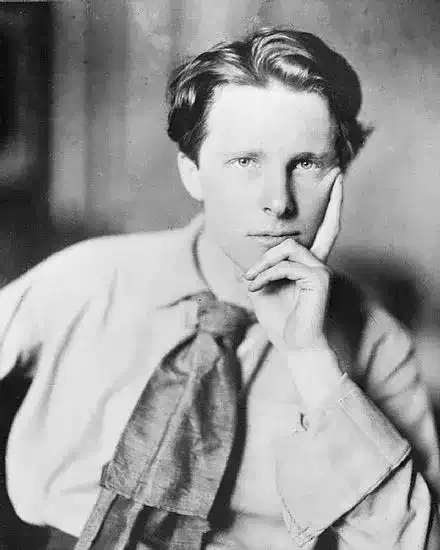
Rupert Brooke
Flight
Voices out of the shade that cried,
And long noon in the hot calm places,
And children's play by the wayside,
And country eyes, and quiet faces --
All these were round my steady paces.
Those that I could have loved went by me;
Cool gardened homes slept in the sun;
I heard the whisper of water nigh me,
Saw hands that beckoned, shone, were gone
In the green and gold. And I went on.
For if my echoing footfall slept,
Soon a far whispering there'd be
Of a little lonely wind that crept
From tree to tree, and distantly
Followed me, followed me. . . .
But the blue vaporous end of day
Brought peace, and pursuit baffled quite,
Where between pine-woods dipped the way.
I turned, slipped in and out of sight.
I trod as quiet as the night.
The pine-boles kept perpetual hush;
And in the boughs wind never swirled.
I found a flowering lowly bush,
And bowed, slid in, and sighed and curled,
Hidden at rest from all the world.
Safe! I was safe, and glad, I knew!
Yet -- with cold heart and cold wet brows
I lay. And the dark fell. . . . There grew
Meward a sound of shaken boughs;
And ceased, above my intricate house;
And silence, silence, silence found me. . . .
I felt the unfaltering movement creep
Among the leaves. They shed around me
Calm clouds of scent, that I did weep;
And stroked my face. I fell asleep.
218

Christina Rossetti
A Chill
What can lambkins do
All the keen night through?
Nestle by their woolly mother
The careful ewe.
What can nestlings do
In the nightly dew?
Sleep beneath their mother's wing
Till day breaks anew.
If in a field or tree
There might only be
Such a warm soft sleeping-place
Found for me!
All the keen night through?
Nestle by their woolly mother
The careful ewe.
What can nestlings do
In the nightly dew?
Sleep beneath their mother's wing
Till day breaks anew.
If in a field or tree
There might only be
Such a warm soft sleeping-place
Found for me!
216
Robert W. Service
The Telegraph Operator
I will not wash my face;
I will not brush my hair;
I "pig" around the place-There's
nobody to care.
Nothing but rock and tree;
Nothing but wood and stone,
Oh, God, it's hell to be
Alone, alone, alone!
Snow-peaks and deep-gashed draws
Corral me in a ring.
I feel as if I was
The only living thing
On all this blighted earth;
And so I frowst and shrink,
And crouching by my hearth
I hear the thoughts I think.
I think of all I miss--
The boys I used to know;
The girls I used to kiss;
The coin I used to blow:
The bars I used to haunt;
The racket and the row;
The beers I didn't want
(I wish I had 'em now).
Day after day the same,
Only a little worse;
No one to grouch or blame--
Oh, for a loving curse!
Oh, in the night I fear,
Haunted by nameless things,
Just for a voice to cheer,
Just for a hand that clings!
Faintly as from a star
Voices come o'er the line;
Voices of ghosts afar,
Not in this world of mine;
Lives in whose loom I grope;
Words in whose weft I hear
Eager the thrill of hope,
Awful the chill of fear.
I'm thinking out aloud;
I reckon that is bad;
(The snow is like a shroud)--
Maybe I'm going mad.
Say! wouldn't that be tough?
This awful hush that hugs
And chokes one is enough
To make a man go "bugs".
There's not a thing to do;
I cannot sleep at night;
No wonder I'm so blue;
Oh, for a friendly fight!
The din and rush of strife;
A music-hall aglow;
A crowd, a city, life--
Dear God, I miss it so!
Here, you have moped enough!
Brace up and play the game!
But say, it's awful tough--
Day after day the same
(I've said that twice, I bet).
Well, there's not much to say.
I wish I had a pet,
Or something I could play.
Cheer up! don't get so glum
And sick of everything;
The worst is yet to come;
God help you till the Spring.
God shield you from the Fear;
Teach you to laugh, not moan.
Ha! ha! it sounds so queer--
Alone, alone, alone!
217
Emily Dickinson
There's a certain Slant of light (258)
There's a certain Slant of light,
Winter Afternoons--
That oppresses, like the Heft
Of Cathedral Tunes--
Heavenly Hurt, it gives us--
We can find no scar,
But internal difference,
Where the Meanings, are--
None may teach it--Any-'
Tis the Seal Despair--
An imperial affliction
Sent us of the air--
When it comes, the Landscape listens-Shadows--
hold their breath--
When it goes, 'tis like the Distance
On the look of Death--
204
Christina Rossetti
Heart’s Chill Between
I did not chide him, though I knew
That he was false to me.
Chide the exhaling of the dew,
The ebbing of the sea,
The fading of a rosy hue,—
But not inconstancy.
Why strive for love when love is o'er?
Why bind a restive heart?—
He never knew the pain I bore
In saying: 'We must part;
Let us be friends and nothing more.'
—Oh, woman's shallow art!
But it is over, it is done,—
I hardly heed it now;
So many weary years have run
Since then, I think not how
Things might have been,—but greet each one
With an unruffled brow.
What time I am where others be,
My heart seems very calm—
Stone calm; but if all go from me,
There comes a vague alarm,
A shrinking in the memory
From some forgotten harm.
And often through the long, long night,
Waking when none are near,
I feel my heart beat fast with fright,
Yet know not what I fear.
Oh how I long to see the light,
And the sweet birds to hear!
To have the sun upon my face,
To look up through the trees,
To walk forth in the open space
And listen to the breeze,—
And not to dream the burial-place
Is clogging my weak knees.
Sometimes I can nor weep nor pray,
But am half stupefied:
And then all those who see me say
Mine eyes are opened wide
And that my wits seem gone away—
Ah, would that I had died!
Would I could die and be at peace,
Or living could forget!
My grief nor grows nor doth decrease,
But ever is:—and yet
Methinks, now, that all this shall cease
Before the sun shall set.
207
Robert W. Service
Poor Kid
Mumsie and Dad are raven dark
And I am lily blonde.
''Tis strange,' I once heard nurse remark,
'You do not correspond.'
And yet they claim me as their own,
Born of their flesh and bone.
To doubt their parenthood I dread,
But now to girlhood grown,
The thought is haunting in my head
That I am not their own:
If so, my radiant bloom of youth
Would wither in the truth.
'Twould give me anguish deep to know
A fondling babe was I;
And that a maid in wedless woe
Left me to live or die:
I'd rather Mother lied and lied
To save my pride.
I love them both and they love me;
I am their all, they say.
Yet though the sweetest home have we,
To know I'm theirs I pray.
If not, please dear ones, never tell . . .
The truth would be of hell.
205
Robert W. Service
Lost
"Black is the sky, but the land is white-(
O the wind, the snow and the storm!)-Father,
where is our boy to-night?
Pray to God he is safe and warm."
"Mother, mother, why should you fear?
Safe is he, and the Arctic moon
Over his cabin shines so clear-Rest
and sleep, 'twill be morning soon."
"It's getting dark awful sudden. Say, this is mighty queer!
Where in the world have I got to? It's still and black as a tomb.
I reckoned the camp was yonder, I figured the trail was here-Nothing!
Just draw and valley packed with quiet and gloom;
Snow that comes down like feathers, thick and gobby and gray;
Night that looks spiteful ugly--seems that I've lost my way.
"The cold's got an edge like a jackknife--it must be forty below;
Leastways that's what it seems like--it cuts so fierce to the bone.
The wind's getting real ferocious; it's heaving and whirling the snow;
It shrieks with a howl of fury, it dies away to a moan;
Its arms sweep round like a banshee's, swift and icily white,
And buffet and blind and beat me. Lord! it's a hell of a night.
"I'm all tangled up in a blizzard. There's only one thing to do-Keep
on moving and moving; it's death, it's death if I rest.
Oh, God! if I see the morning, if only I struggle through,
I'll say the prayers I've forgotten since I lay on my mother's breast.
I seem going round in a circle; maybe the camp is near.
Say! did somebody holler? Was it a light I saw?
Or was it only a notion? I'll shout, and maybe they'll hear-No!
the wind only drowns me--shout till my throat is raw.
"The boys are all round the camp-fire wondering when I'll be back.
They'll soon be starting to seek me; they'll scarcely wait for the light.
What will they find, I wonder, when they come to the end of my track-A
hand stuck out of a snowdrift, frozen and stiff and white.
That's what they'll strike, I reckon; that's how they'll find their pard,
A pie-faced corpse in a snowbank--curse you, don't be a fool!
Play the game to the finish; bet on your very last card;
Nerve yourself for the struggle. Oh, you coward, keep cool!
I'm going to lick this blizzard; I'm going to live the night.
It can't down me with its bluster--I'm not the kind to be beat.
On hands and knees will I buck it; with every breath will I fight;
It's life, it's life that I fight for--never it seemed so sweet.
I know that my face is frozen; my hands are numblike and dead;
But oh, my feet keep a-moving, heavy and hard and slow;
They're trying to kill me, kill me, the night that's black overhead,
The wind that cuts like a razor, the whipcord lash of the snow.
Keep a-moving, a-moving; don't, don't stumble, you fool!
Curse this snow that's a-piling a-purpose to block my way.
It's heavy as gold in the rocker, it's white and fleecy as wool;
It's soft as a bed of feathers, it's warm as a stack of hay.
Curse on my feet that slip so, my poor tired, stumbling feet;
I guess they're a job for the surgeon, they feel so queerlike to lift-I'll
rest them just for a moment--oh, but to rest is sweet!
The awful wind cannot get me, deep, deep down in the drift."
"Father, a bitter cry I heard,
Out of the night so dark and wild.
Why is my heart so strangely stirred?
'Twas like the voice of our erring child."
"Mother, mother, you only heard
A waterfowl in the locked lagoon-Out
of the night a wounded bird-Rest
and sleep, 'twill be morning soon."
Who is it talks of sleeping? I'll swear that somebody shook
Me hard by the arm for a moment, but how on earth could it be?
See how my feet are moving--awfully funny they look-Moving
as if they belonged to a someone that wasn't me.
The wind down the night's long alley bowls me down like a pin;
I stagger and fall and stagger, crawl arm-deep in the snow.
Beaten back to my corner, how can I hope to win?
And there is the blizzard waiting to give me the knockout blow.
Oh, I'm so warm and sleepy! No more hunger and pain.
Just to rest for a moment; was ever rest such a joy?
Ha! what was that? I'll swear it, somebody shook me again;
Somebody seemed to whisper: "Fight to the last, my boy."
Fight! That's right, I must struggle. I know that to rest means death;
Death, but then what does death mean? --ease from a world of strife.
Life has been none too pleasant; yet with my failing breath
Still and still must I struggle, fight for the gift of life.
* * * * *
Seems that I must be dreaming! Here is the old home trail;
Yonder a light is gleaming; oh, I know it so well!
The air is scented with clover; the cattle wait by the rail;
Father is through with the milking; there goes the supper-bell.
* * * * *
Mother, your boy is crying, out in the night and cold;
Let me in and forgive me, I'll never be bad any more:
I'm, oh, so sick and so sorry: please, dear mother, don't scold-It's
just your boy, and he wants you. . . . Mother, open the door. . . .
"Father, father, I saw a face
Pressed just now to the window-pane!
Oh, it gazed for a moment's space,
Wild and wan, and was gone again!"
"Mother, mother, you saw the snow
Drifted down from the maple tree
(Oh, the wind that is sobbing so!
Weary and worn and old are we)-Only
the snow and a wounded loon-Rest
and sleep, 'twill be morning soon."
202
Christina Rossetti
The Wind Has Such A Rainy Sound
The wind has such a rainy sound
Moaning through the town,
The sea has such a windy sound, -
Will the ships go down?
The apples in the orchard
Tumble from their tree. -
Oh will the ships go down, go down,
In the windy sea?
Moaning through the town,
The sea has such a windy sound, -
Will the ships go down?
The apples in the orchard
Tumble from their tree. -
Oh will the ships go down, go down,
In the windy sea?
197
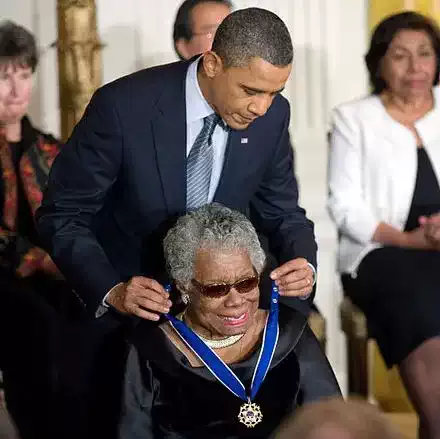
Maya Angelou
Insomniac
There are some nights when
sleep plays coy,
aloof and disdainful.
And all the wiles
that I employ to win
its service to my side
are useless as wounded pride,
and much more painful.
sleep plays coy,
aloof and disdainful.
And all the wiles
that I employ to win
its service to my side
are useless as wounded pride,
and much more painful.
192

Wilfred Owen
The Show
My soul looked down from a vague height with Death,
As unremembering how I rose or why,
And saw a sad land, weak with sweats of dearth,
Gray, cratered like the moon with hollow woe,
And fitted with great pocks and scabs of plaques.
Across its beard, that horror of harsh wire,
There moved thin caterpillars, slowly uncoiled.
It seemed they pushed themselves to be as plugs
Of ditches, where they writhed and shrivelled, killed.
By them had slimy paths been trailed and scraped
Round myriad warts that might be little hills.
From gloom's last dregs these long-strung creatures crept,
And vanished out of dawn down hidden holes.
(And smell came up from those foul openings
As out of mouths, or deep wounds deepening.)
On dithering feet upgathered, more and more,
Brown strings towards strings of gray, with bristling spines,
All migrants from green fields, intent on mire.
Those that were gray, of more abundant spawns,
Ramped on the rest and ate them and were eaten.
I saw their bitten backs curve, loop, and straighten,
I watched those agonies curl, lift, and flatten.
Whereat, in terror what that sight might mean,
I reeled and shivered earthward like a feather.
And Death fell with me, like a deepening moan.
And He, picking a manner of worm, which half had hid
Its bruises in the earth, but crawled no further,
Showed me its feet, the feet of many men,
And the fresh-severed head of it, my head.
176