
Memories and Recollections

Christina Rossetti
Monna Innominata: A Sonnet of Sonnets
Lo dì che han detto a' dolci amici addio. - Dante
Amor, con quanto sforzo oggi mi vinci! - Petrarca
Come back to me, who wait and watch for you:--
Or come not yet, for it is over then,
And long it is before you come again,
So far between my pleasures are and few.
While, when you come not, what I do I do
Thinking "Now when he comes," my sweetest when:"
For one man is my world of all the men
This wide world holds; O love, my world is you.
Howbeit, to meet you grows almost a pang
Because the pang of parting comes so soon;
My hope hangs waning, waxing, like a moon
Between the heavenly days on which we meet:
Ah me, but where are now the songs I sang
When life was sweet because you call'd them sweet?
2
Era già 1'ora che volge il desio. - Dante
Ricorro al tempo ch' io vi vidi prima. - Petrarca
I wish I could remember that first day,
First hour, first moment of your meeting me,
If bright or dim the season, it might be
Summer or winter for aught I can say;
So unrecorded did it slip away,
So blind was I to see and to foresee,
So dull to mark the budding of my tree
That would not blossom yet for many a May.
If only I could recollect it, such
A day of days! I let it come and go
As traceless as a thaw of bygone snow;
It seem'd to mean so little, meant so much;
If only now I could recall that touch,
First touch of hand in hand--Did one but know!
3
O ombre vane, fuor che ne l'aspetto! - Dante
Immaginata guida la conduce. - Petrarca
I dream of you to wake: would that I might
Dream of you and not wake but slumber on;
Nor find with dreams the dear companion gone,
As summer ended summer birds take flight.
In happy dreams I hold you full in sight,
I blush again who waking look so wan;
Brighter than sunniest day that ever shone,
In happy dreams your smile makes day of night.
Thus only in a dream we are at one,
Thus only in a dream we give and take
The faith that maketh rich who take or give;
If thus to sleep is sweeter than to wake,
To die were surely sweeter than to live,
Though there be nothing new beneath the sun.
4
Poca favilla gran fliamma seconda. - Dante
Ogni altra cosa, ogni pensier va fore,
E sol ivi con voi rimansi amore. - Petrarca
I lov'd you first: but afterwards your love
Outsoaring mine, sang such a loftier song
As drown'd the friendly cooings of my dove.
Which owes the other most? my love was long,
And yours one moment seem'd to wax more strong;
I lov'd and guess'd at you, you construed me--
And lov'd me for what might or might not be
Nay, weights and measures do us both a wrong.
For verily love knows not "mine" or "thine;"
With separate "I" and "thou" free love has done,
For one is both and both are one in love:
Rich love knows nought of "thine that is not mine;"
Both have the strength and both the length thereof,
Both of us, of the love which makes us one.
5
Amor che a nullo amato amar perdona. - Dante
Amor m'addusse in sì gioiosa spene. - Petrarca
O my heart's heart, and you who are to me
More than myself myself, God be with you,
Keep you in strong obedience leal and true
To Him whose noble service setteth free,
Give you all good we see or can foresee,
Make your joys many and your sorrows few,
Bless you in what you bear and what you do,
Yea, perfect you as He would have you be.
So much for you; but what for me, dear friend?
To love you without stint and all I can
Today, tomorrow, world without an end;
To love you much and yet to love you more,
As Jordan at his flood sweeps either shore;
Since woman is the helpmeet made for man.
6
Or puoi la quantitate
Comprender de l'amor che a te mi scalda. - Dante
Non vo' che da tal nodo mi scioglia. - Petrarca
Trust me, I have not earn'd your dear rebuke,
I love, as you would have me, God the most;
Would lose not Him, but you, must one be lost,
Nor with Lot's wife cast back a faithless look
Unready to forego what I forsook;
This say I, having counted up the cost,
This, though I be the feeblest of God's host,
The sorriest sheep Christ shepherds with His crook.
Yet while I love my God the most, I deem
That I can never love you overmuch;
I love Him more, so let me love you too;
Yea, as I apprehend it, love is such
I cannot love you if I love not Him,
I cannot love Him if I love not you.
7
Qui primavera sempre ed ogni frutto. - Dante
Ragionando con meco ed io con lui. - Petrarca
"Love me, for I love you"--and answer me,
"Love me, for I love you"--so shall we stand
As happy equals in the flowering land
Of love, that knows not a dividing sea.
Love builds the house on rock and not on sand,
Love laughs what while the winds rave desperately;
And who hath found love's citadel unmann'd?
And who hath held in bonds love's liberty?
My heart's a coward though my words are brave
We meet so seldom, yet we surely part
So often; there's a problem for your art!
Still I find comfort in his Book, who saith,
Though jealousy be cruel as the grave,
And death be strong, yet love is strong as death.
8
Come dicesse a Dio: D'altro non calme. - Dante
Spero trovar pietà non che perdono. - Petrarca
"I, if I perish, perish"--Esther spake:
And bride of life or death she made her fair
In all the lustre of her perfum'd hair
And smiles that kindle longing but to slake.
She put on pomp of loveliness, to take
Her husband through his eyes at unaware;
She spread abroad her beauty for a snare,
Harmless as doves and subtle as a snake.
She trapp'd him with one mesh of silken hair,
She vanquish'd him by wisdom of her wit,
And built her people's house that it should stand:--
If I might take my life so in my hand,
And for my love to Love put up my prayer,
And for love's sake by Love be granted it!
9
O dignitosa coscienza e netta! - Dante
Spirto più acceso di virtuti ardenti. - Petrarca
Thinking of you, and all that was, and all
That might have been and now can never be,
I feel your honour'd excellence, and see
Myself unworthy of the happier call:
For woe is me who walk so apt to fall,
So apt to shrink afraid, so apt to flee,
Apt to lie down and die (ah, woe is me!)
Faithless and hopeless turning to the wall.
And yet not hopeless quite nor faithless quite,
Because not loveless; love may toil all night,
But take at morning; wrestle till the break
Of day, but then wield power with God and man:--
So take I heart of grace as best I can,
Ready to spend and be spent for your sake.
10
Con miglior corso e con migliore stella. - Dante
La vita fugge e non s'arresta un' ora. - Petrarca
Time flies, hope flags, life plies a wearied wing;
Death following hard on life gains ground apace;
Faith runs with each and rears an eager face,
Outruns the rest, makes light of everything,
Spurns earth, and still finds breath to pray and sing;
While love ahead of all uplifts his praise,
Still asks for grace and still gives thanks for grace,
Content with all day brings and night will bring.
Life wanes; and when love folds his wings above
Tired hope, and less we feel his conscious pulse,
Let us go fall asleep, dear friend, in peace:
A little while, and age and sorrow cease;
A little while, and life reborn annuls
Loss and decay and death, and all is love.
11
Vien dietro a me e lascia dir le genti. - Dante
Contando i casi della vita nostra. - Petrarca
Many in aftertimes will say of you
"He lov'd her"--while of me what will they say?
Not that I lov'd you more than just in play,
For fashion's sake as idle women do.
Even let them prate; who know not what we knew
Of love and parting in exceeding pain,
Of parting hopeless here to meet again,
Hopeless on earth, and heaven is out of view.
But by my heart of love laid bare to you,
My love that you can make not void nor vain,
Love that foregoes you but to claim anew
Beyond this passage of the gate of death,
I charge you at the Judgment make it plain
My love of you was life and not a breath.
12
Amor, che ne la mente mi ragiona. - Dante
Amor vien nel bel viso di costei. - Petrarca
If there be any one can take my place
And make you happy whom I grieve to grieve,
Think not that I can grudge it, but believe
I do commend you to that nobler grace,
That readier wit than mine, that sweeter face;
Yea, since your riches make me rich, conceive
I too am crown'd, while bridal crowns I weave,
And thread the bridal dance with jocund pace.
For if I did not love you, it might be
That I should grudge you some one dear delight;
But since the heart is yours that was mine own,
Your pleasure is my pleasure, right my right,
Your honourable freedom makes me free,
And you companion'd I am not alone.
13
E drizzeremo gli occhi al Primo Amore. - Dante
Ma trovo peso non da le mie braccia. - Petrarca
If I could trust mine own self with your fate,
Shall I not rather trust it in God's hand?
Without Whose Will one lily doth not stand,
Nor sparrow fall at his appointed date;
Who numbereth the innumerable sand,
Who weighs the wind and water with a weight,
To Whom the world is neither small nor great,
Whose knowledge foreknew every plan we plann'd.
Searching my heart for all that touches you,
I find there only love and love's goodwill
Helpless to help and impotent to do,
Of understanding dull, of sight most dim;
And therefore I commend you back to Him
Whose love your love's capacity can fill.
14
E la Sua Volontade è nostra pace. - Dante
Sol con questi pensier, con altre chiome. - Petrarca
Youth gone, and beauty gone if ever there
Dwelt beauty in so poor a face as this;
Youth gone and beauty, what remains of bliss?
I will not bind fresh roses in my hair,
To shame a cheek at best but little fair,--
Leave youth his roses, who can bear a thorn,--
I will not seek for blossoms anywhere,
Except such common flowers as blow with corn.
Youth gone and beauty gone, what doth remain?
The longing of a heart pent up forlorn,
A silent heart whose silence loves and longs;
The silence of a heart which sang its songs
While youth and beauty made a summer morn,
Silence of love that cannot sing again.
420
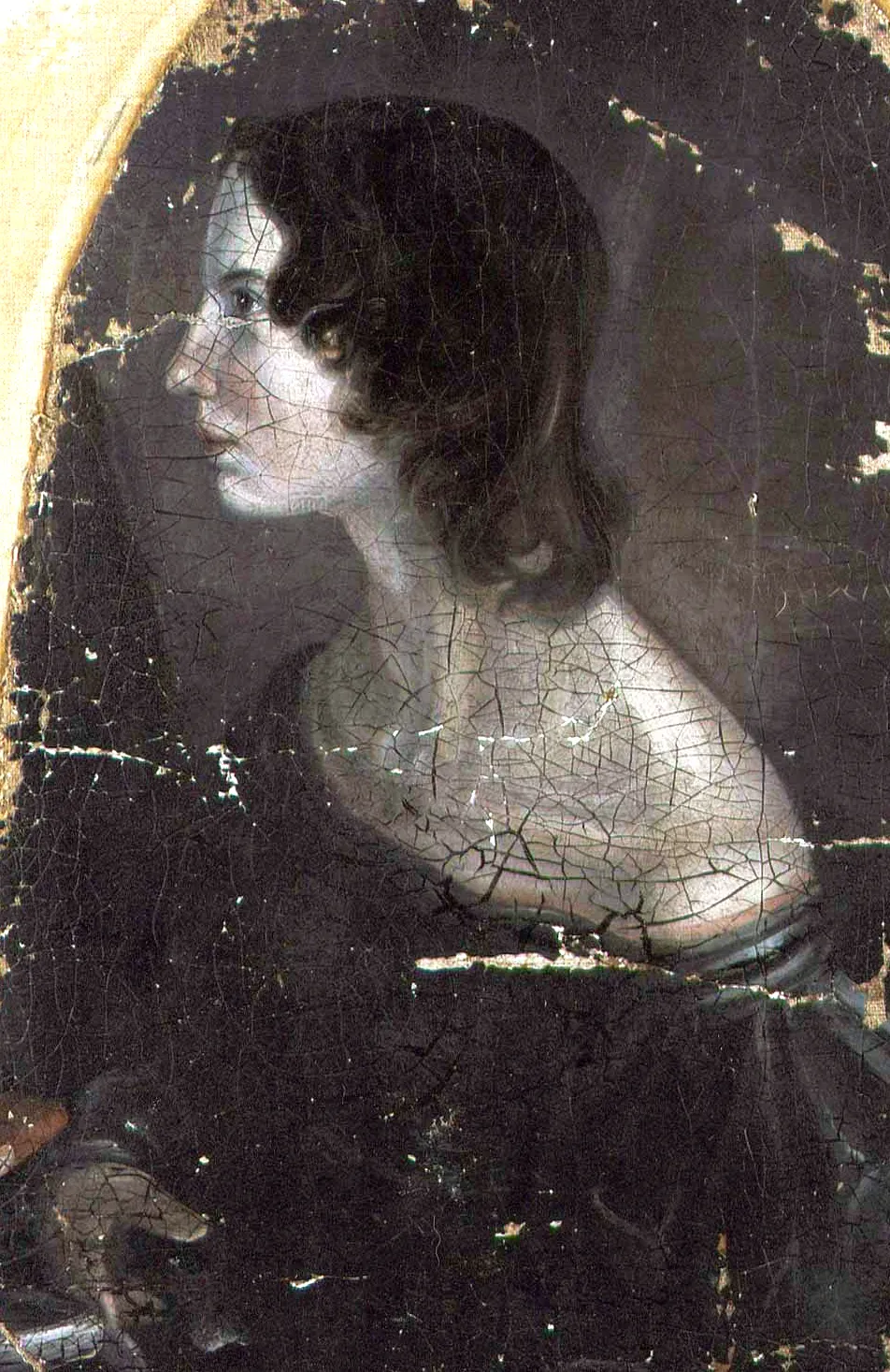
Emily Jane Brontë
Loud Without the Wind Was Roaring
Loud without the wind was roaring
Through th' autumnal sky;
Drenching wet, the cold rain pouring,
Spoke of winter nigh.
All too like that dreary eve,
Did my exiled spirit grieve.
Grieved at first, but grieved not long,
Sweet—how softly sweet!—it came;
Wild words of an ancient song,
Undefined, without a name.
'It was spring, and the skylark was singing';
Those words they awakened a spell;
They unlocked a deep fountain, whose springing,
Nor absence, nor distance can quell.
In the gloom of a cloudy November
They uttered the music of May;
They kindled the perishing ember
Into fervour that could not decay.
Awaken, o'er all my dear moorland,
West-wind, in thy glory and pride!
Oh! call me from valley and lowland,
To walk by the hill-torrent's side!
It is swelled with the first snowy weather;
The rocks they are icy and hoar,
And sullenly waves the long heather,
And the fern leaves are sunny no more.
There are no yellow stars on the mountain
The bluebells have long died away
From the brink of the moss-bedded fountain—
From the side of the wintry brae.
But lovelier than corn-fields all waving
In emerald, and vermeil, and gold,
Are the heights where the north-wind is raving,
And the crags where I wandered of old.
It was morning: the bright sun was beaming;
How sweetly it brought back to me
The time when nor labour nor dreaming
Broke the sleep of the happy and free!
But blithely we rose as the dawn-heaven
Was melting to amber and blue,
And swift were the wings to our feet given,
As we traversed the meadows of dew.
For the moors! For the moors, where the short grass
Like velvet beneath us should lie!
For the moors! For the moors, where each high pass
Rose sunny against the clear sky!
For the moors, where the linnet was trilling
Its song on the old granite stone;
Where the lark, the wild sky-lark, was filling
Every breast with delight like its own!
What language can utter the feeling
Which rose, when in exile afar,
On the brow of a lonely hill kneeling,
I saw the brown heath growing there?
It was scattered and stunted, and told me
That soon even that would be gone:
It whispered, 'The grim walls enfold me,
I have bloomed in my last summer's sun.'
But not the loved music, whose waking
Makes the soul of the Swiss die away,
Has a spell more adored and heartbreaking
Than, for me, in that blighted heath lay.
The spirit which bent 'neath its power,
How it longed—how it burned to be free!
If I could have wept in that hour,
Those tears had been heaven to me.
Well—well; the sad minutes are moving,
Though loaded with trouble and pain;
And some time the loved and the loving
Shall meet on the mountains again!
420

Johann Wolfgang von Goethe
To Charlotte
'MIDST the noise of merriment and glee,
'Midst full many a sorrow, many a care,
Charlotte, I remember, we remember thee,
How, at evening's hour so fair,
Thou a kindly hand didst reach us,
When thou, in some happy place
Where more fair is Nature s face,
Many a lightly-hidden trace
Of a spirit loved didst teach us.
Well 'tis that thy worth I rightly knew,--
That I, in the hour when first we met,
While the first impression fill'd me yet,
Call'd thee then a girl both good and true.
Rear'd in silence, calmly, knowing nought,
On the world we suddenly are thrown;
Hundred thousand billows round us sport;
All things charm us--many please alone,
Many grieve us, and as hour on hour is stealing,
To and fro our restless natures sway;
First we feel, and then we find each feeling
By the changeful world-stream borne away.
Well I know, we oft within us find
Many a hope and many a smart.
Charlotte, who can know our mind?
Charlotte, who can know our heart?
Ah! 'twould fain be understood, 'twould fain o'erflow
In some creature's fellow-feelings blest,
And, with trust, in twofold measure know
All the grief and joy in Nature's breast.
Then thine eye is oft around thee cast,
But in vain, for all seems closed for ever.
Thus the fairest part of life is madly pass'd
Free from storm, but resting never:
To thy sorrow thou'rt to-day repell'd
By what yesterday obey'd thee.
Can that world by thee be worthy held
Which so oft betray'd thee?
Which, 'mid all thy pleasures and thy pains,
Lived in selfish, unconcern'd repose?
See, the soul its secret cells regains,
And the heart--makes haste to close.
Thus found I thee, and gladly went to meet thee;
"She's worthy of all love!" I cried,
And pray'd that Heaven with purest bliss might greet thee,
Which in thy friend it richly hath supplied.
419

Emily Dickinson
A precious—mouldering pleasure
A precious—mouldering pleasure—'tis—
To meet an Antique Book—
In just the Dress his Century wore—
A privilege—I think—
His venerable Hand to take—
And warming in our own—
A passage back—or two—to make—
To Times when he—was young—
His quaint opinions—to inspect—
His thought to ascertain
On Themes concern our mutual mind—
The Literature of Man—
What interested Scholars—most—
What Competitions ran—
When Plato—was a Certainty—
And Sophocles—a Man—
When Sappho—was a living Girl—
And Beatrice wore
The Gown that Dante—deified—
Facts Centuries before
He traverses—familiar—
As One should come to Town—
And tell you all your Dreams—were true—
He lived—where Dreams were born—
His presence is Enchantment—
You beg him not to go—
Old Volume shake their Vellum Heads
And tantalize—just so—
417

Rudyard Kipling
For To Admire
The Injian Ocean sets an' smiles
So sof', so bright, so bloomin' blue;
There aren't a wave for miles an' miles
Excep' the jiggle from the screw.
The ship is swep', the day is done,
The bugle's gone for smoke and play;
An' black agin' the settin' sun
The Lascar sings, "Hum deckty hai!" ["I'm looking out."]
For to admire an' for to see,
For to be'old this world so wide --
It never done no good to me,
But I can't drop it if I tried!
I see the sergeants pitchin' quoits,
I 'ear the women laugh an' talk,
I spy upon the quarter-deck
The orficers an' lydies walk.
I thinks about the things that was,
An' leans an' looks acrost the sea,
Till spite of all the crowded ship
There's no one lef' alive but me.
The things that was which I 'ave seen,
In barrick, camp, an' action too,
I tells them over by myself,
An' sometimes wonders if they're true;
For they was odd -- most awful odd --
But all the same now they are o'er,
There must be 'eaps o' plenty such,
An' if I wait I'll see some more.
Oh, I 'ave come upon the books,
An' frequent broke a barrick rule,
An' stood beside an' watched myself
Be'avin' like a bloomin' fool.
I paid my price for findin' out,
Nor never grutched the price I paid,
But sat in Clink without my boots,
Admirin' 'ow the world was made.
Be'old a crowd upon the beam,
An' 'umped above the sea appears
Old Aden, like a barrick-stove
That no one's lit for years an' years!
I passed by that when I began,
An' I go 'ome the road I came,
A time-expired soldier-man
With six years' service to 'is name.
My girl she said, "Oh, stay with me!"
My mother 'eld me to 'er breast.
They've never written none, an' so
They must 'ave gone with all the rest --
With all the rest which I 'ave seen
An' found an' known an' met along.
I cannot say the things I feel,
And so I sing my evenin' song:
For to admire an' for to see,
For to be'old this world so wide --
It never done no good to me,
But I can't drop it if I tried!
416

Henry Wadsworth Longfellow
The Phantom Ship. (Birds Of Passage. Flight The First)
In Mather's Magnalia Christi,
Of the old colonial time,
May be found in prose the legend
That is here set down in rhyme.
A ship sailed from New Haven,
And the keen and frosty airs,
That filled her sails at parting,
Were heavy with good men's prayers.
'O Lord! if it be thy pleasure'--
Thus prayed the old divine-'
To bury our friends in the ocean,
Take them, for they are thine!'
But Master Lamberton muttered,
And under his breath said he,
'This ship is so crank and walty
I fear our grave she will be!'
And the ships that came from England,
When the winter months were gone,
Brought no tidings of this vessel
Nor of Master Lamberton.
This put the people to praying
That the Lord would let them hear
What in his greater wisdom
He had done with friends so dear.
And at last their prayers were answered:--
It was in the month of June,
An hour before the sunset
Of a windy afternoon,
When, steadily steering landward,
A ship was seen below,
And they knew it was Lamberton, Master,
Who sailed so long ago.
On she came, with a cloud of canvas,
Right against the wind that blew,
Until the eye could distinguish
The faces of the crew.
Then fell her straining topmasts,
Hanging tangled in the shrouds,
And her sails were loosened and lifted,
And blown away like clouds.
And the masts, with all their rigging,
Fell slowly, one by one,
And the hulk dilated and vanished,
As a sea-mist in the sun!
And the people who saw this marvel
Each said unto his friend,
That this was the mould of their vessel,
And thus her tragic end.
And the pastor of the village
Gave thanks to God in prayer,
That, to quiet their troubled spirits,
He had sent this Ship of Air.
417

John Keats
Sonnet: After Dark Vapors Have Oppress'd Our Plains
After dark vapors have oppress'd our plains
For a long dreary season, comes a day
Born of the gentle South, and clears away
From the sick heavens all unseemly stains.
The anxious month, relieved of its pains,
Takes as a long-lost right the feel of May;
The eyelids with the passing coolness play
Like rose leaves with the drip of Summer rains.
The calmest thoughts came round us; as of leaves
Budding -- fruit ripening in stillness -- Autumn suns
Smiling at eve upon the quiet sheaves --
Sweet Sappho's cheek -- a smiling infant's breath --
The gradual sand that through an hour-glass runs --
A woodland rivulet -- a Poet's death.
417

Edna St. Vincent Millay
I Dreamed I Moved Among The Elysian Fields
I dreamed I moved among the Elysian fields,
In converse with sweet women long since dead;
And out of blossoms which that meadow yields
I wove a garland for your living head.
Danai, that was the vessel for a day
Of golden Jove, I saw, and at her side,
Whom Jove the Bull desired and bore away,
Europa stood, and the Swan's featherless bride.
All these were mortal women, yet all these
Above the ground had had a god for guest;
Freely I walked beside them and at ease,
Addressing them, by them again addressed,
And marvelled nothing, for remembering you,
Wherefore I was among them well I knew.
416
Emily Dickinson
This was in the White of the Year
This was in the White of the YearThat-
was in the Green-
Drifts were as difficult then to think
As Daisies now to be seen-
Looking back is best that is left
Or if it be-before-
Retrospection is Prospect's half,
Sometimes, almost more.
was in the Green-
Drifts were as difficult then to think
As Daisies now to be seen-
Looking back is best that is left
Or if it be-before-
Retrospection is Prospect's half,
Sometimes, almost more.
413
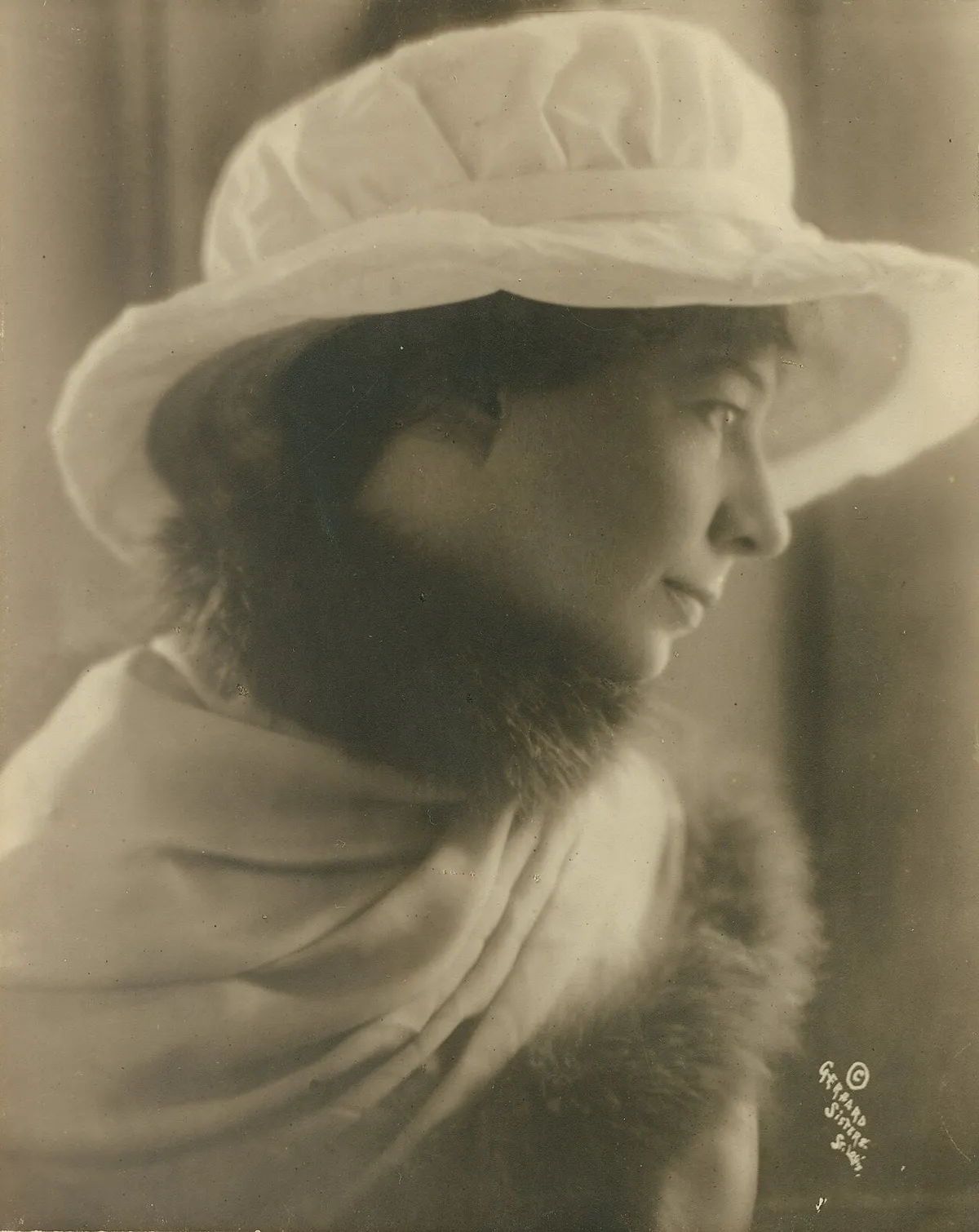
Sara Teasdale
Sunset: St. Louis
Hushed in the smoky haze of summer sunset,
When I came home again from far-off places,
How many times I saw my western city
Dream by her river.
Then for an hour the water wore a mantle
Of tawny gold and mauve and misted turquoise
Under the tall and darkened arches bearing
Gray, high-flung bridges.
Against the sunset, water-towers and steeples
Flickered with fire up the slope to westward,
And old warehouses poured their purple shadows
Across the levee.
High over them the black train swept with thunder,
Cleaving the city, leaving far beneath it
Wharf-boats moored beside the old side-wheelers
Resting in twilight.
414
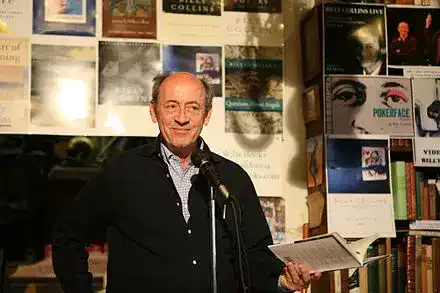
Billy Collins
Nostalgia
Remember the 1340's? We were doing a dance called the Catapult.
You always wore brown, the color craze of the decade,
and I was draped in one of those capes that were popular,
the ones with unicorns and pomegranates in needlework.
Everyone would pause for beer and onions in the afternoon,
and at night we would play a game called "Find the Cow."
Everything was hand-lettered then, not like today.
Where has the summer of 1572 gone? Brocade and sonnet
marathons were the rage. We used to dress up in the flags
of rival baronies and conquer one another in cold rooms of stone.
Out on the dance floor we were all doing the Struggle
while your sister practiced the Daphne all alone in her room.
We borrowed the jargon of farriers for our slang.
These days language seems transparent a badly broken code.
The 1790's will never come again. Childhood was big.
People would take walks to the very tops of hills
and write down what they saw in their journals without speaking.
Our collars were high and our hats were extremely soft.
We would surprise each other with alphabets made of twigs.
It was a wonderful time to be alive, or even dead.
I am very fond of the period between 1815 and 1821.
Europe trembled while we sat still for our portraits.
And I would love to return to 1901 if only for a moment,
time enough to wind up a music box and do a few dance steps,
or shoot me back to 1922 or 1941, or at least let me
recapture the serenity of last month when we picked
berries and glided through afternoons in a canoe.
Even this morning would be an improvement over the present.
I was in the garden then, surrounded by the hum of bees
and the Latin names of flowers, watching the early light
flash off the slanted windows of the greenhouse
and silver the limbs on the rows of dark hemlocks.
As usual, I was thinking about the moments of the past,
letting my memory rush over them like water
rushing over the stones on the bottom of a stream.
I was even thinking a little about the future, that place
where people are doing a dance we cannot imagine,
a dance whose name we can only guess.
413

Carl Sandburg
In a Back Alley
Remembrance for a great man is this.
The newsies are pitching pennies.
And on the copper disk is the man’s face.
Dead lover of boys, what do you ask for now?
The newsies are pitching pennies.
And on the copper disk is the man’s face.
Dead lover of boys, what do you ask for now?
412

Alexander Pope
Argus
When wise Ulysses, from his native coast
Long kept by wars, and long by tempests toss'd,
Arrived at last, poor, old, disguised, alone,
To all his friends, and ev'n his Queen unknown,
Changed as he was, with age, and toils, and cares,
Furrow'd his rev'rend face, and white his hairs,
In his own palace forc'd to ask his bread,
Scorn'd by those slaves his former bounty fed,
Forgot of all his own domestic crew,
The faithful Dog alone his rightful master knew!
Unfed, unhous'd, neglected, on the clay
Like an old servant now cashier'd, he lay;
Touch'd with resentment of ungrateful man,
And longing to behold his ancient lord again.
Him when he saw he rose, and crawl'd to meet,
('Twas all he could) and fawn'd and kiss'd his feet,
Seiz'd with dumb joy; then falling by his side,
Own'd his returning lord, look'd up, and died!
412

Ella Wheeler Wilcox
A Leaf
Somebody said, in the crowd, last eve,
That you were married, or soon to be.
I have not thought of you, I believe,
Since last we parted. Let me see:
Five long Summers have passed since then –
Each has been pleasant in its own way –
And you are but one of a dozen men
Who have played the suitor a Summer day.
But, nevertheless, when I heard your name,
Coupled with some one’s, not my own,
There burned in my bosom a sudden flame,
That carried me back to the day that is flown.
I was sitting again by the laughing brook,
With you at my feet, and the sky above,
And my heart was fluttering under your look –
The unmistakable look of Love.
Again your breath, like a South wind, fanned
My cheek, where the blushes came and went;
And the tender clasp of your strong, warm hand
Sudden thrills through my pulses sent.
Again you were mine by Love’s decree:
So for a moment it seemed last night,
When somebody mentioned your name to me.
Just for the moment I thought you mine –
Loving me, wooing me, as of old.
The tale remembered seemed half divine –
Though I held it lightly enough when told.
The past seemed fairer than when it was near,
As ‘blessings brighten when taking flight, ’
And just for the moment I held you near –
When somebody mentioned your name last night.
412
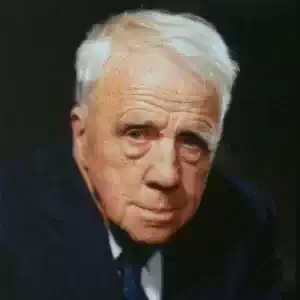
Robert Frost
A Cliff Dwelling
There sandy seems the golden sky
And golden seems the sandy plain.
No habitation meets the eye
Unless in the horizon rim,
Some halfway up the limestone wall,
That spot of black is not a stain
Or shadow, but a cavern hole,
Where someone used to climb and crawl
To rest from his besetting fears.
I see the callus on his soul
The disappearing last of him
And of his race starvation slim,
Oh years ago - ten thousand years.
410
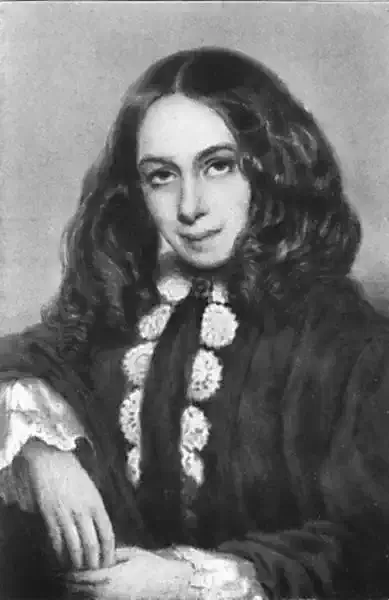
Elizabeth Barrett Browning
Sonnet XXXIII: Yes, Call Me by My Pet-Name!
Yes, call me by my pet-name! let me hear
The name I used to run at, when a child,
From innocent play, and leave the cowslips piled,
To glance up in some face that proved me dear
With the look of its eyes. I miss the clear
Fond voices which, being drawn and reconciled
Into the music of Heaven's undefiled,
Call me no longer. Silence on the bier,
While I call God--call God!--So let thy mouth
Be heir to those who are now exanimate.
Gather the north flowers to complete the south,
And catch the early love up in the late.
Yes, call me by that name,--and I, in truth,
With the same heart, will answer and not wait.
410
Ella Wheeler Wilcox
The Saddest Hour
The saddest hour of anguish and of loss
Is not that season of supreme despair
When we can find no least light anywhere
To gild the dread, black shadow of the Cross;
Not in that luxury of sorrow when
We sup on salt of tears, and drink the gall
Of memories of days beyond recall—
Of lost delights that cannot come again.
But when, with eyes that are no longer wet,
We look out on the great, wide world of men,
And, smiling, lean toward a bright to-morrow,
Then backward shrink, with sudden keen regret,
To find that we are learning to forget:
Ah! then we face the saddest hour of sorrow.
410

Walt Whitman
Once I Pass'd Through A Populous City
ONCE I pass'd through a populous city, imprinting my brain, for
future use, with its shows, architecture, customs, and
traditions;
Yet now, of all that city, I remember only a woman I casually met
there, who detain'd me for love of me;
Day by day and night by night we were together,--All else has long
been forgotten by me;
I remember, I say, only that woman who passionately clung to me;
Again we wander--we love--we separate again;
Again she holds me by the hand--I must not go!
I see her close beside me, with silent lips, sad and tremulous.
411

Claude Mckay
I Shall Return
I shall return again; I shall return
To laugh and love and watch with wonder-eyes
At golden noon the forest fires burn,
Wafting their blue-black smoke to sapphire skies.
I shall return to loiter by the streams
That bathe the brown blades of the bending grasses,
And realize once more my thousand dreams
Of waters rushing down the mountain passes.
I shall return to hear the fiddle and fife
Of village dances, dear delicious tunes
That stir the hidden depths of native life,
Stray melodies of dim remembered runes.
I shall return, I shall return again,
To ease my mind of long, long years of pain.
406

William Butler Yeats
The Municipal Gallery Revisited
AROUND me the images of thirty years:
An ambush; pilgrims at the water-side;
Casement upon trial, half hidden by the bars,
Guarded; Griffith staring in hysterical pride;
Kevin O'Higgins' countenance that wears
A gentle questioning look that cannot hide
A soul incapable of remorse or rest;
A revolutionary soldier kneeling to be blessed;
An Abbot or Archbishop with an upraised hand
Blessing the Tricolour. 'This is not,' I say,
'The dead Ireland of my youth, but an Ireland
The poets have imagined, terrible and gay.'
Before a woman's portrait suddenly I stand,
Beautiful and gentle in her Venetian way.
I met her all but fifty years ago
For twenty minutes in some studio.
III
Heart-smitten with emotion I Sink down,
My heart recovering with covered eyes;
Wherever I had looked I had looked upon
My permanent or impermanent images:
Augusta Gregory's son; her sister's son,
Hugh Lane, 'onlie begetter' of all these;
Hazel Lavery living and dying, that tale
As though some ballad-singer had sung it all;
Mancini's portrait of Augusta Gregory,
'Greatest since Rembrandt,' according to John Synge;
A great ebullient portrait certainly;
But where is the brush that could show anything
Of all that pride and that humility?
And I am in despair that time may bring
Approved patterns of women or of men
But not that selfsame excellence again.
My mediaeval knees lack health until they bend,
But in that woman, in that household where
Honour had lived so long, all lacking found.
Childless I thought, 'My children may find here
Deep-rooted things,' but never foresaw its end,
And now that end has come I have not wept;
No fox can foul the lair the badger swept --
VI
(An image out of Spenser and the common tongue).
John Synge, I and Augusta Gregory, thought
All that we did, all that we said or sang
Must come from contact with the soil, from that
Contact everything Antaeus-like grew strong.
We three alone in modern times had brought
Everything down to that sole test again,
Dream of the noble and the beggar-man.
VII
And here's John Synge himself, that rooted man,
'Forgetting human words,' a grave deep face.
You that would judge me, do not judge alone
This book or that, come to this hallowed place
Where my friends' portraits hang and look thereon;
Ireland's history in their lineaments trace;
Think where man's glory most begins and ends,
And say my glory was I had such friends.
407
Edna St. Vincent Millay
Scrub
If I grow bitterly,
Like a gnarled and stunted tree,
Bearing harshly of my youth
Puckered fruit that sears the mouth;
If I make of my drawn boughs
An Inshospitable House,
Out of which I nevery pry
Towards the water and the sky,
Under which I stand and hide
And hear the day go by outside;
It is that a wind to strong
Bent my back when I was young,
It is that I fear the rain
Lest it blister me again.
406
William Butler Yeats
The Winding Stair And Other Poems
IN MEMORY OF EVA GORE-BOOTH AND CON MARKIEWICZ
THE light of evening, Lissadell,
Great windows open to the south,
Two girls in silk kimonos, both
Beautiful, one a gazelle.
But a raving autumn shears
Blossom from the summer's wreath;
The older is condemned to death,
Pardoned, drags out lonely years
Conspiring among the ignorant.
I know not what the younger dreams --
Some vague Utopia -- and she seems,
When withered old and skeleton-gaunt,
An image of such politics.
Many a time I think to seek
One or the other out and speak
Of that old Georgian mansion, mix
pictures of the mind, recall
That table and the talk of youth,
Two girls in silk kimonos, both
Beautiful, one a gazelle.
Dear shadows, now you know it all,
All the folly of a fight
With a common wrong or right.
The innocent and the beautiful.
Have no enemy but time;
Arise and bid me strike a match
And strike another till time catch;
Should the conflagration climb,
Run till all the sages know.
We the great gazebo built,
They convicted us of guilt;
Bid me strike a match and blow.
408
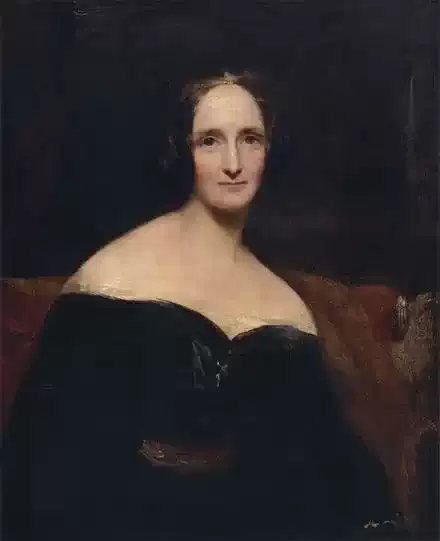
Percy Bysshe Shelley
Time Long Past
Like the ghost of a dear friend dead
Is Time long past.
A tone which is now forever fled,
A hope which is now forever past,
A love so sweet it could not last,
Was Time long past.
There were sweet dreams in the night
Of Time long past:
And, was it sadness or delight,
Each day a shadow onward cast
Which made us wish it yet might last--
That Time long past.
There is regret, almost remorse,
For Time long past.
'Tis like a child's belovèd corse
A father watches, till at last
Beauty is like remembrance, cast
From Time long past.
407
Claude Mckay
Commemoration
When first your glory shone upon my face
My body kindled to a mighty flame,
And burnt you yielding in my hot embrace
Until you swooned to love, breathing my name.
And wonder came and filled our night of sleep,
Like a new comet crimsoning the sky;
And stillness like the stillness of the deep
Suspended lay as an unuttered sigh.
I never again shall feel your warm heart flushed,
Panting with passion, naked unto mine,
Until the throbbing world around is hushed
To quiet worship at our scented shrine.
Nor will your glory seek my swarthy face,
To kindle and to change my jaded frame
Into a miracle of godlike grace,
Transfigured, bathed in your immortal flame.
405