
Death and Mourning

Christina Rossetti
An End
Love, strong as Death, is dead.
Come, let us make his bed
Among the dying flowers:
A green turf at his head;
And a stone at his feet,
Whereon we may sit
In the quiet evening hours.
He was born in the Spring,
And died before the harvesting:
On the last warm summer day
He left us; he would not stay
For Autumn twilight cold and grey.
Sit we by his grave, and sing
He is gone away.
To few chords and sad and low
Sing we so:
Be our eyes fixed on the grass
Shadow-veiled as the years pass
While we think of all that was
In the long ago.
Read more →
233

Robert W. Service
The Convalescent
. . . So I walked among the willows very quietly all night;
There was no moon at all, at all; no timid star alight;
There was no light at all, at all; I wint from tree to tree,
And I called him as his mother called, but he nivver answered me.
Oh I called him all the night-time, as I walked the wood alone;
And I listened and I listened, but I nivver heard a moan;
Then I found him at the dawnin', when the sorry sky was red:
I was lookin' for the livin', but I only found the dead.
Sure I know that it was Shamus by the silver cross he wore;
But the bugles they were callin', and I heard the cannon roar.
Oh I had no time to tarry, so I said a little prayer,
And I clasped his hands together, and I left him lyin' there.
Now the birds are singin', singin', and I'm home in Donegal,
And it's Springtime, and I'm thinkin' that I only dreamed it all;
I dreamed about that evil wood, all crowded with its dead,
Where I knelt beside me brother when the battle-dawn was red.
Where I prayed beside me brother ere I wint to fight anew:
Such dreams as these are evil dreams; I can't believe it's true.
Where all is love and laughter, sure it's hard to think of loss . . .
But mother's sayin' nothin', and she clasps -- a silver cross.
Read more →
233

Henry Lawson
Reedy River
Ten miles down Reedy River
A pool of water lies,
And all the year it mirrors
The changes in the skies,
And in that pool's broad bosom
Is room for all the stars;
Its bed of sand has drifted
O'er countless rocky bars.
Around the lower edges
There waves a bed of reeds,
Where water rats are hidden
And where the wild duck breeds;
And grassy slopes rise gently
To ridges long and low,
Where groves of wattle flourish
And native bluebells grow.
Beneath the granite ridges
The eye may just discern
Where Rocky Creek emerges
From deep green banks of fern;
And standing tall between them,
The grassy she-oaks cool
The hard, blue-tinted waters
Before they reach the pool.
Ten miles down Reedy River
One Sunday afternoon,
I rode with Mary Campbell
To that broad, bright lagoon;
We left our horses grazing
Till shadows climbed the peak,
And strolled beneath the she-oaks
On the banks of Rocky Creek.
Then home along the river
That night we rode a race,
And the moonlight lent a glory
To Mary Campbell's face;
And I pleaded for our future
All through that moonlight ride,
Until our weary horses
Drew closer side by side.
Ten miles from Ryan's Crossing
And five miles below the peak,
I built a little homestead
On the banks of Rocky Creek;
I cleared the land and fenced it
And ploughed the rich, red loam,
And my first crop was golden
When I brought my Mary home.
Now still down Reedy River
The grassy she-oaks sigh,
And the water-holes still mirror
The pictures in the sky;
And over all for ever
Go sun and moon and stars,
While the golden sand is drifting
Across the rocky bars
But of the hut I builded
There are no traces now.
And many rains have levelled
The furrows of the plough;
And my bright days are olden,
For the twisted branches wave
And the wattle blossoms golden
On the hill by Mary's grave.
Read more →
234
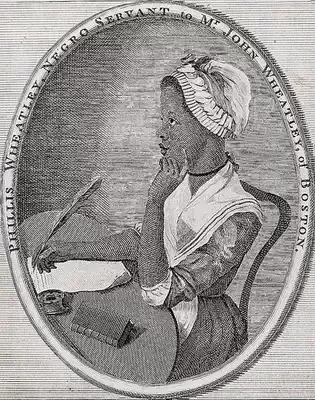
Phillis Wheatley
To A Lady On The Death Of The Three Relations
WE trace the pow'r of Death from tomb to tomb,
And his are all the ages yet to come.
'Tis his to call the planets from on high,
To blacken Phoebus, and dissolve the sky;
His too, when all in his dark realms are hurl'd,
From its firm base to shake the solid world;
His fatal sceptre rules the spacious whole,
And trembling nature rocks from pole to pole.
Awful he moves, and wide his wings are spread:
Behold thy brother number'd with the dead!
From bondage freed, the exulting spirit flies
Beyond Olympus, and these starry skies.
Lost in our woe for thee, blest shade, we mourn
In vain; to earth thou never must return.
Thy sisters too, fair mourner, feel the dart
Of Death, and with fresh torture rend thine heart.
Weep not for them, and leave the world behind.
As a young plant by hurricanes up torn,
So near its parent lies the newly born--
But 'midst the bright ehtereal train behold
It shines superior on a throne of gold:
Then, mourner, cease; let hope thy tears restrain,
Smile on the tomb, and sooth the raging pain.
On yon blest regions fix thy longing view,
Mindless of sublunary scenes below;
Ascend the sacred mount, in thought arise,
And seek substantial and immortal joys;
Where hope receives, where faith to vision springs,
And raptur'd seraphs tune th' immortal strings
To strains extatic. Thou the chorus join,
And to thy father tune the praise divine.
Read more →
232
Robert W. Service
My Coffin
Deeming that I was due to die
I framed myself a coffin;
So full of graveyard zeal was I,
I set the folks a-laughing.
I made it snugly to my fit,
My joinering was honest;
And sometimes in it I would sit,
And fancy I was non est.
I stored it on my cabin shelf
Forever to remind me,
When I was tickled with myself,
That Death was close behind me.
Let's be prepared, I used to say,
E're in the Dark we launch us:
And so with boding day by day
I kept me coffin-conscious.
Then came that winter dark as doom,
No firing wood had I;
My shack was icy as a tomb
And I was set to die.
But e'er the losing of my wits
I saw that coffin there,
S smashing the damned thing to bits
I made a gorgeous flare.
I never saw a flame so bright,
So goldenly divine,
As starred the blackness of the night
That boneyard box of mine.
And now I go forth coffin-shy,
With no more carnal fears,
For radiantly sure am I
I'll stack a hundred years.
Read more →
231

Anonymous
Episode
IT was heavy hap for that hero young
on his lord beloved to look and find him
lying on earth with life at end,
sorrowful sight. But the slayer too,
awful earth-dragon, empty of breath,
lay felled in fight, nor, fain of its treasure,
could the writhing monster rule it more.
For edges of iron had ended its days,
hard and battle-sharp, hammers' leaving;
and that flier-afar had fallen to ground
hushed by its hurt, its hoard all near,
no longer lusty aloft to whirl
at midnight, making its merriment seen,
proud of its prizes: prone it sank
by the handiwork of the hero-king.
Forsooth among folk but few achieve,
-- though sturdy and strong, as stories tell me,
and never so daring in deed of valor, --
the perilous breath of a poison-foe
to brave, and to rush on the ring-board hall,
whenever his watch the warden keeps
bold in the barrow. Beowulf paid
the price of death for that precious hoard;
and each of the foes had found the end
of this fleeting life.
Befell erelong
that the laggards in war the wood had left,
trothbreakers, cowards, ten together,
fearing before to flourish a spear
in the sore distress of their sovran lord.
Now in their shame their shields they carried,
armor of fight, where the old man lay;
and they gazed on Wiglaf. Wearied he sat
at his sovran's shoulder, shieldsman good,
to wake him with water. Nowise it availed.
Though well he wished it, in world no more
could he barrier life for that leader-of-battles
nor baffle the will of all-wielding God.
Doom of the Lord was law o'er the deeds
of every man, as it is to-day.
Grim was the answer, easy to get,
from the youth for those that had yielded to fear!
Wiglaf spake, the son of Weohstan, --
mournful he looked on those men unloved: --
"Who sooth will speak, can say indeed
that the ruler who gave you golden rings
and the harness of war in which ye stand
-- for he at ale-bench often-times
bestowed on hall-folk helm and breastplate,
lord to liegemen, the likeliest gear
which near of far he could find to give, --
threw away and wasted these weeds of battle,
on men who failed when the foemen came!
Not at all could the king of his comrades-in-arms
venture to vaunt, though the Victory-Wielder,
God, gave him grace that he got revenge
sole with his sword in stress and need.
To rescue his life, 'twas little that I
could serve him in struggle; yet shift I made
(hopeless it seemed) to help my kinsman.
Its strength ever waned, when with weapon I struck
that fatal foe, and the fire less strongly
flowed from its head. -- Too few the heroes
in throe of contest that thronged to our king!
Now gift of treasure and girding of sword,
joy of the house and home-delight
shall fail your folk; his freehold-land
every clansman within your kin
shall lose and leave, when lords highborn
hear afar of that flight of yours,
a fameless deed. Yea, death is better
for liegemen all than a life of shame!"
Read more →
231
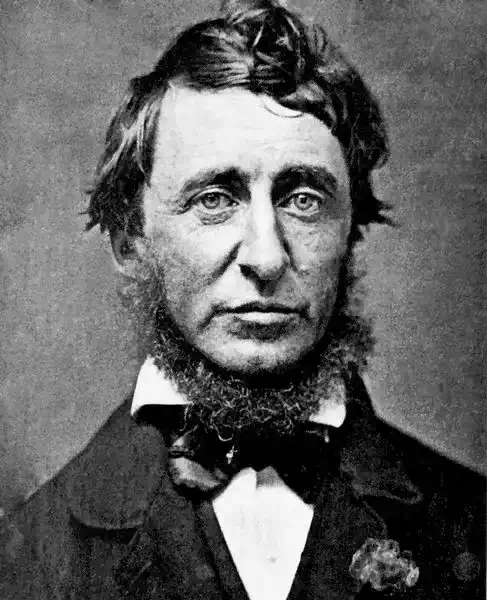
Henry David Thoreau
Epitaph On The World
Here lies the body of this world,
Whose soul alas to hell is hurled.
This golden youth long since was past,
Its silver manhood went as fast,
An iron age drew on at last;
'Tis vain its character to tell,
The several fates which it befell,
What year it died, when 'twill arise,
We only know that here it lies.
Read more →
230
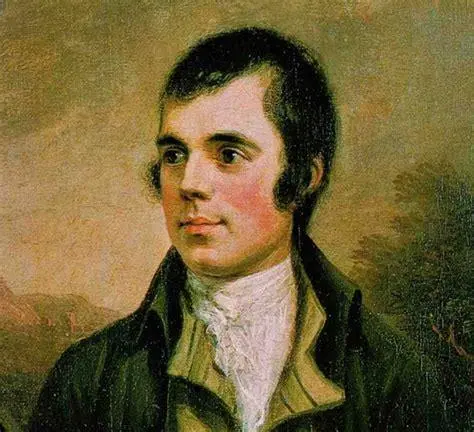
Robert Burns
Lament of Mary, Queen of Scots, On the Approach of Spring
Now Nature hangs her mantle green
On every blooming tree,
And spreads her sheets o' daises white
Out o'er the grassy lea
Now Pheebus cheers the crystal streams,
And glads the azure skies;
But nought can glad the weary wight
That fast in durance lies.
Now laverocks wake the merry morn
Aloft on dewy wing;
The merle, in his noontide bow'r,
Makes woodland echoes ring;
The mavis wild ai' mony a note,
Sings drowsy day to reast
In love and freedom they rejoice,
Wi' care nor thrall opprest.
Now blooms the lily by the bank,
The primrose down the brae;
The hawthorn's budding in the glen,
And milk-white is the slae:
The meanest hind in fair Scotland
May rove their sweets amang;
But I, the Queen of a' Scotland,
Maun lie in prison strang.
I was the Queen o' bonie France,
Where happy I hae been;
Fu' lightly raise I in the morn,
As blythe lay down at e'en:
And I'm the sov'reign of Scotland,
And mony a traitor there;
Yet here I lie in foreign bands,
And never-ending care.
But as for thee, thou false woman,
My sister and my fae,
Grim Vengeance yet shall whet a sword
That thro' thy soul shall gae;
The weeping blood in woman's breast
Was never known to thee;
Nor th' balm that draps on wounds of woe
Frae woman's pitying e'e.
My son! my son! may kinder stars
Upon thy fortune shine;
And may those pleasures gild thy reign,
That ne'er wad blink on mine!
God keep thee frae my mother's faes,
Or turn their hearts to thee:
And where thou meet'st thy mother's friend,
Remember him for me!
O! soon, to me, may Summer suns
Nae mair light up the morn!
Nae mair to me the Autumn winds
Wave o'er the yellow corn?
And, in the narrow house of death,
Let Winter round me rave;
And the next flow'rs that deck the Spring,
Bloom on my peaceful grave!
Read more →
230
Christina Rossetti
At Home
When I was dead, my spirit turned
To seek the much-frequented house:
I passed the door, and saw my friends
Feasting beneath green orange boughs;
From hand to hand they pushed the wine,
They sucked the pulp of plum and peach;
They sang, they jested, and they laughed,
For each was loved of each.
I listened to thier honest chat:
Said one: "To-morrow we shall be
Plod plod along the featureless sands,
And coasting miles and miles of sea."
Said one: "Before the turn of tide
We will achieve the eyrie-seat."
Said one: "To-morrow shall be like
To-day, but much more sweet."
"To-morrow," said they, strong with hope,
And dwelt upon the pleasant way:
"To-morrow," cried they, one and all,
While no one spoke of yesterday.
Their life stood full at blessed noon;
I, only I, had passed away:
"To-morrow and to-day," they cried;
I was of yesterday.
I shivered comfortless, but cast
No chill across the table-cloth;
I, all-forgotten, shivered, sad
To stay, and yet to part how loth:
I passed from the familiar room,
I who from love had passed away,
Like the remembrance of a guest
That tarrieth but a day.
Read more →
228
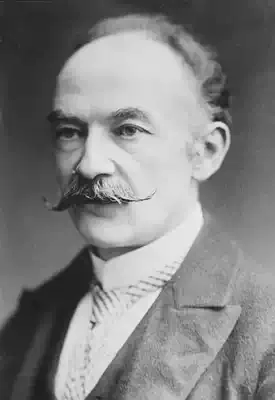
Thomas Hardy
I have lived with Shades
I
I have lived with Shades so long,
So long have talked to them,
I sped to street and throng,
That sometimes they
In their dim style
Will pause awhile
To hear my say;
II
And take me by the hand,
And lead me through their rooms
In the To-Be, where Dooms
Half-wove and shapeless stand:
And show from there
The dwindled dust
And rot and rust
Of things that were.
III
"Now turn," they said to me
One day: "Look whence we came,
And signify his name
Who gazes thence at thee" --
-- "Nor name nor race
Know I, or can,"
I said, "Of man
So commonplace."
IV
"He moves me not at all:
I note no ray or jot
Of rareness in his lot,
Or star exceptional.
Into the dim
Dead throngs around
He'll sink, nor sound
Be left of him."
V
"Yet," said they, "his frail speech,
Hath accents pitched like thine --
Thy mould and his define
A likeness each to each --
But go! Deep pain
Alas, would be
His name to thee,
And told in vain!"
Read more →
229

Spike Milligan
The Soldiers at Lauro
Young are our dead
Like babies they lie
The wombs they blest once
Not healed dry
And yet - too soon
Into each space
A cold earth falls
On colder face.
Quite still they lie
These fresh-cut reeds
Clutched in earth
Like winter seeds
But they will not bloom
When called by spring
To burst with leaf
And blossoming
They sleep on
In silent dust
As crosses rot
And helmets rust.
Read more →
229

Emily Dickinson
This Consciousness that is aware
This Consciousness that is aware
Of Neighbors and the Sun
Will be the one aware of Death
And that itself alone
Is traversing the interval
Experience between
And most profound experiment
Appointed unto Men-
How adequate unto itself
Its properties shall be
Itself unto itself and none
Shall make discovery.
Adventure most unto itself
The Soul condemned to be-
Attended by a single Hound
Its own identity.
Read more →
226
Anonymous
Beowulf (Episode )
HROTHGAR spake, helmet-of-Scyldings: --
"Ask not of pleasure! Pain is renewed
to Danish folk. Dead is Aeschere,
of Yrmenlaf the elder brother,
my sage adviser and stay in council,
shoulder-comrade in stress of fight
when warriors clashed and we warded our heads,
hewed the helm-boars; hero famed
should be every earl as Aeschere was!
But here in Heorot a hand hath slain him
of wandering death-sprite. I wot not whither,
proud of the prey, her path she took,
fain of her fill. The feud she avenged
that yesternight, unyieldingly,
Grendel in grimmest grasp thou killedst, --
seeing how long these liegemen mine
he ruined and ravaged. Reft of life,
in arms he fell. Now another comes,
keen and cruel, her kin to avenge,
faring far in feud of blood:
so that many a thane shall think, who e'er
sorrows in soul for that sharer of rings,
this is hardest of heart-bales. The hand lies low
that once was willing each wish to please.
Land-dwellers here and liegemen mine,
who house by those parts, I have heard relate
that such a pair they have sometimes seen,
march-stalkers mighty the moorland haunting,
wandering spirits: one of them seemed,
so far as my folk could fairly judge,
of womankind; and one, accursed,
in man's guise trod the misery-track
of exile, though huger than human bulk.
Grendel in days long gone they named him,
folk of the land; his father they knew not,
nor any brood that was born to him
of treacherous spirits. Untrod is their home;
by wolf-cliffs haunt they and windy headlands,
fenways fearful, where flows the stream
from mountains gliding to gloom of the rocks,
underground flood. Not far is it hence
in measure of miles that the mere expands,
and o'er it the frost-bound forest hanging,
sturdily rooted, shadows the wave.
By night is a wonder weird to see,
fire on the waters. So wise lived none
of the sons of men, to search those depths!
Nay, though the heath-rover, harried by dogs,
the horn-proud hart, this holt should seek,
long distance driven, his dear life first
on the brink he yields ere he brave the plunge
to hide his head: 'tis no happy place!
Thence the welter of waters washes up
wan to welkin when winds bestir
evil storms, and air grows dusk,
and the heavens weep. Now is help once more
with thee alone! The land thou knowst not,
place of fear, where thou findest out
that sin-flecked being. Seek if thou dare!
I will reward thee, for waging this fight,
with ancient treasure, as erst I did,
with winding gold, if thou winnest back."
Read more →
225
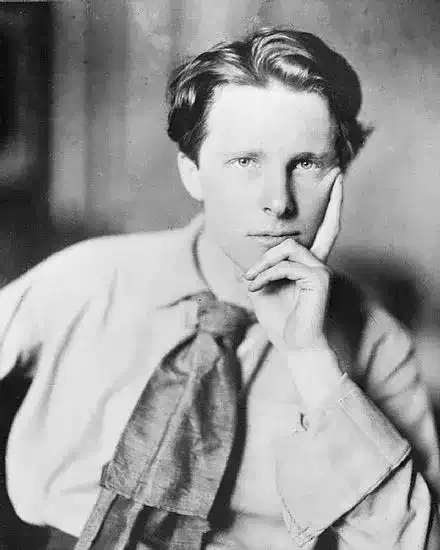
Rupert Brooke
Dust
When the white flame in us is gone,
And we that lost the world's delight
Stiffen in darkness, left alone
To crumble in our separate night;
When your swift hair is quiet in death,
And through the lips corruption thrust
Has stilled the labour of my breath --
When we are dust, when we are dust! --
Not dead, not undesirous yet,
Still sentient, still unsatisfied,
We'll ride the air, and shine, and flit,
Around the places where we died,
And dance as dust before the sun,
And light of foot, and unconfined,
Hurry from road to road, and run
About the errands of the wind.
And every mote, on earth or air,
Will speed and gleam, down later days,
And like a secret pilgrim fare
By eager and invisible ways,
Nor ever rest, nor ever lie,
Till, beyond thinking, out of view,
One mote of all the dust that's I
Shall meet one atom that was you.
Then in some garden hushed from wind,
Warm in a sunset's afterglow,
The lovers in the flowers will find
A sweet and strange unquiet grow
Upon the peace; and, past desiring,
So high a beauty in the air,
And such a light, and such a quiring,
And such a radiant ecstasy there,
They'll know not if it's fire, or dew,
Or out of earth, or in the height,
Singing, or flame, or scent, or hue,
Or two that pass, in light, to light,
Out of the garden, higher, higher. . . .
But in that instant they shall learn
The shattering ecstasy of our fire,
And the weak passionless hearts will burn
And faint in that amazing glow,
Until the darkness close above;
And they will know -- poor fools, they'll know! --
One moment, what it is to love.
Read more →
226
Anonymous
The Dowie Houms of Yarrow
LATE at een, drinkin' the wine,
And ere they paid the lawin',
They set a combat them between,
To fight it in the dawin'.
'O stay at hame, my noble lord!
O stay at hame, my marrow!
My cruel brother will you betray,
On the dowie houms o' Yarrow.'
'O fare ye weel, my lady gay!
O fare ye weel, my Sarah!
For I maun gae, tho' I ne'er return
Frae the dowie banks o' Yarrow.'
She kiss'd his cheek, she kamed his hair,
As she had done before, O;
She belted on his noble brand,
An' he 's awa to Yarrow.
O he 's gane up yon high, high hill--
I wat he gaed wi' sorrow--
An' in a den spied nine arm'd men,
I' the dowie houms o' Yarrow.
'O are ye come to drink the wine,
As ye hae doon before, O?
Or are ye come to wield the brand,
On the dowie banks o' Yarrow?'
'I am no come to drink the wine,
As I hae don before, O,
But I am come to wield the brand,
On the dowie houms o' Yarrow.'
Four he hurt, an' five he slew,
On the dowie houms o' Yarrow,
Till that stubborn knight came him behind,
An' ran his body thorrow.
'Gae hame, gae hame, good brother John,
An' tell your sister Sarah
To come an' lift her noble lord,
Who 's sleepin' sound on Yarrow.'
'Yestreen I dream'd a dolefu' dream;
I ken'd there wad be sorrow;
I dream'd I pu'd the heather green,
On the dowie banks o' Yarrow.'
She gaed up yon high, high hill--
I wat she gaed wi' sorrow--
An' in a den spied nine dead men,
On the dowie houms o' Yarrow.
She kiss'd his cheek, she kamed his hair,
As oft she did before, O;
She drank the red blood frae him ran,
On the dowie houms o' Yarrow.
'O haud your tongue, my douchter dear,
For what needs a' this sorrow?
I'll wed you on a better lord
Than him you lost on Yarrow.'
'O haud your tongue, my father dear,
An' dinna grieve your Sarah;
A better lord was never born
Than him I lost on Yarrow.
'Tak hame your ousen, tak hame your kye,
For they hae bred our sorrow;
I wiss that they had a' gane mad
When they cam first to Yarrow.'
Read more →
225
Emily Dickinson
The Doomed—regard the Sunrise
The Doomed—regard the Sunrise
With different Delight—
Because—when next it burns abroad
They doubt to witness it—
The Man—to die—tomorrow—
Harks for the Meadow Bird—
Because its Music stirs the Axe
That clamors for his head—
Joyful—to whom the Sunrise
Precedes Enamored—Day—
Joyful—for whom the Meadow Bird
Has ought but Elegy!
Read more →
223
Robert W. Service
Sinister Sooth
You say I am the slave of Fate
Bound by unalterable laws.
I harken, but your words I hate,
Your damnable Effect and Cause.
If there's no hope for happy Chance
Give me the bliss of ignorance.
You say my life ends with the tomb;
This brain, my mind machine, will rot;
Its many million cells that room
My personality and thought
Will in the Dark Destroyer's term
Provide a banquet for the worm.
You say--yet though your wisdom wells,
To it I am unreconciled;
My mind admits, my heart rebels . . .
O let me listen like a child
To Him who spoke with blessed breath
From bench of toil in Nazareth!
Read more →
222

D.H. Lawrence
Service of all the Dead
Between the avenues of cypresses,
All in their scarlet cloaks, and surplices
Of linen, go the chaunting choristers,
The priests in gold and black, the villagers.
And all along the path to the cemetery
The round, dark heads of men crowd silently
And black-scarved faces of women-folk, wistfully
Watch at the banner of death, and the mystery.
And at the foot of a grave a father stands
With sunken head, and forgotten, folded hands;
And at the foot of a grave a woman kneels
With pale shut face, and neither hears not feels
The coming of the chaunting choristers
Between the avenues of cypresses,
The silence of the many villagers,
The candle-flames beside the surplices.
Read more →
222

William Wordsworth
A Slumber Did My Spirit Seal
A slumber did my spirit seal
I had no human fears:
She seemed a thing that could not feel
The touch of earthly years.
No motion has she now, no force;
She neither hears nor sees;
Rolled round in earth's diurnal course,
With rocks, and stones, and trees.
Read more →
222
Robert W. Service
My Mate
I've been sittin' starin', starin' at 'is muddy pair of boots,
And tryin' to convince meself it's 'im.
(Look out there, lad! That sniper -- 'e's a dysey when 'e shoots;
'E'll be layin' of you out the same as Jim.)
Jim as lies there in the dug-out wiv 'is blanket round 'is 'ead,
To keep 'is brains from mixin' wiv the mud;
And 'is face as white as putty, and 'is overcoat all red,
Like 'e's spilt a bloomin' paint-pot -- but it's blood.
And I'm tryin' to remember of a time we wasn't pals.
'Ow often we've played 'ookey, 'im and me;
And sometimes it was music-'alls, and sometimes it was gals,
And even there we 'ad no disagree.
For when 'e copped Mariar Jones, the one I liked the best,
I shook 'is 'and and loaned 'im 'arf a quid;
I saw 'im through the parson's job, I 'elped 'im make 'is nest,
I even stood god-farther to the kid.
So when the war broke out, sez 'e: "Well, wot abaht it, Joe?"
"Well, wot abaht it, lad?" sez I to 'im.
'Is missis made a awful fuss, but 'e was mad to go,
('E always was 'igh-sperrited was Jim).
Well, none of it's been 'eaven, and the most of it's been 'ell,
But we've shared our baccy, and we've 'alved our bread.
We'd all the luck at Wipers, and we shaved through Noove Chapelle,
And . . . that snipin' barstard gits 'im on the 'ead.
Now wot I wants to know is, why it wasn't me was took?
I've only got meself, 'e stands for three.
I'm plainer than a louse, while 'e was 'andsome as a dook;
'E always WAS a better man than me.
'E was goin' 'ome next Toosday; 'e was 'appy as a lark,
And 'e'd just received a letter from 'is kid;
And 'e struck a match to show me, as we stood there in the dark,
When . . . that bleedin' bullet got 'im on the lid.
'E was killed so awful sudden that 'e 'adn't time to die.
'E sorto jumped, and came down wiv a thud.
Them corpsy-lookin' star-shells kept a-streamin' in the sky,
And there 'e lay like nothin' in the mud.
And there 'e lay so quiet wiv no mansard to 'is 'ead,
And I'm sick, and blamed if I can understand:
The pots of 'alf and 'alf we've 'ad, and ZIP! like that -- 'e's dead,
Wiv the letter of 'is nipper in 'is 'and.
There's some as fights for freedom and there's some as fights for fun,
But me, my lad, I fights for bleedin' 'ate.
You can blame the war and blast it, but I 'opes it won't be done
Till I gets the bloomin' blood-price for me mate.
It'll take a bit o' bayonet to level up for Jim;
Then if I'm spared I think I'll 'ave a bid,
Wiv 'er that was Mariar Jones to take the place of 'im,
To sorter be a farther to 'is kid.
Read more →
221
Phillis Wheatley
On The Death Of A Youn Gentleman
WHO taught thee conflict with the pow'rs of night,
To vanquish satan in the fields of light?
Who strung thy feeble arms with might unknown,
How great thy conquest, and how bright thy crown!
War with each princedom, throne, and pow'r is o'er,
The scene is ended to return no more.
O could my muse thy seat on high behold,
How deckt with laurel, how enrich'd with gold!
O could she hear what praise thine harp employs,
How sweet thine anthems, how divine thy joys!
What heav'nly grandeur should exalt her strain!
What holy raptures in her numbers reign!
To sooth the troubles of the mind to peace,
To still the tumult of life's tossing seas,
To ease the anguish of the parents heart,
What shall my sympathizing verse impart?
Where is the balm to heal so deep a wound?
Where shall a sov'reign remedy be found?
Look, gracious Spirit, from thine heav'nly bow'r,
And thy full joys into their bosoms pour;
The raging tempest of their grief control,
And spread the dawn of glory through the soul,
To eye the path the saint departed trod,
And trace him to the bosom of his God.
Read more →
219
Phillis Wheatley
To His Honour the Lieutenant-Governor
All-Conquering Death! by thy resistless pow'r,
Hope's tow'ring plumage falls to rise no more!
Of scenes terrestrial how the glories fly,
Forget their splendors, and submit to die!
Who ere escap'd thee, but the saint of old
Beyond the flood in sacred annals told,
And the great sage, whom fiery coursers drew
To heav'n's bright portals from Elisha's view;
Wond'ring he gaz'd at the refulgent car,
Then snatch'd the mantle floating on the air.
From Death these only could exemption boast,
And without dying gain'd th' immortal coast.
Not falling millions sate the tyrant's mind,
Nor can the victor's progress be confin'd.
But cease thy strife with Death, fond Nature, cease:
He leads the virtuous to the realms of peace;
His to conduct to the immortal plains,
Where heav'n's Supreme in bliss and glory reigns.
There sits, illustrious Sir, thy beauteous spouse;
A gem-blaz'd circle beaming on her brows.
Hail'd with acclaim among the heav'nly choirs,
Her soul new-kindling with seraphic fires,
To notes divine she tunes the vocal strings,
While heav'n's high concave with the music rings.
Virtue's rewards can mortal pencil paint?
No--all descriptive arts, and eloquence are faint;
Nor canst thou, Oliver, assent refuse
To heav'nly tidings from the Afric muse.
As soon may change thy laws, eternal fate,
As the saint miss the glories I relate;
Or her Benevolence forgotten lie,
Which wip'd the trick'ling tear from Misry's eye.
Three amiable Daughters who died when just arrived to Womens Estate.
Whene'er the adverse winds were known to blow,
When loss to loss * ensu'd, and woe to woe,
Calm and serene beneath her father's hand
She sat resign'd to the divine command.
No longer then, great Sir, her death deplore,
And let us hear the mournful sigh no more,
Restrain the sorrow streaming from thine eye,
Be all thy future moments crown'd with joy!
Nor let thy wishes be to earth confin'd,
But soaring high pursue th' unbodied mind.
Forgive the muse, forgive th' advent'rous lays,
That fain thy soul to heav'nly scenes would raise.
Read more →
220
Anonymous
The Seven Virgins
ALL under the leaves and the leaves of life
I met with virgins seven,
And one of them was Mary mild,
Our Lord's mother of Heaven.
'O what are you seeking, you seven fair maids,
All under the leaves of life?
Come tell, come tell, what seek you
All under the leaves of life?'
'We're seeking for no leaves, Thomas,
But for a friend of thine;
We're seeking for sweet Jesus Christ,
To be our guide and thine.'
'Go down, go down, to yonder town,
And sit in the gallery,
And there you'll see sweet Jesus Christ
Nail'd to a big yew-tree.'
So down they went to yonder town
As fast as foot could fall,
And many a grievous bitter tear
From the virgins' eyes did fall.
'O peace, Mother, O peace, Mother,
Your weeping doth me grieve:
I must suffer this,' He said,
'For Adam and for Eve.
'O Mother, take you John Evangelist
All for to be your son,
And he will comfort you sometimes,
Mother, as I have done.'
'O come, thou John Evangelist,
Thou'rt welcome unto me;
But more welcome my own dear Son,
Whom I nursed on my knee.'
Then He laid His head on His right shoulder,
Seeing death it struck Him nigh--
'The Holy Ghost be with your soul,
I die, Mother dear, I die.'
O the rose, the gentle rose,
And the fennel that grows so green!
God give us grace in every place
To pray for our king and queen.
Furthermore for our enemies all
Our prayers they should be strong:
Amen, good Lord; your charity
Is the ending of my song.
Read more →
218
Christina Rossetti
A Better Ressurection
I have no wit, no words, no tears;
My heart within me like a stone
Is numbed too much for hopes or fears.
Look right, look left, I dwell alone;
I lift mine eyes, but dimmed with grief
No everlasting hills I see;
My life is in the falling leaf:
O Jesus, quicken me.
My life is like a faded leaf,
My harvest dwindled to a husk:
Truly my life is void and brief
And tedious in the barren dusk;
My life is like a frozen thing,
No bud nor greenness can I see:
Yet rise it shall--the sap of spring;
O Jesus, rise in me.
My life is like a broken bowl,
A broken bowl that cannot hold
One drop of water for my soul
Or cordial in the searching cold;
Cast in the fire the perished thing;
Melt and remould it, till it be
A royal cup for Him, my King:
O Jesus, drink of me.
Read more →
218