
Death and Mourning

Robert W. Service
Rhyme For My Tomb
Here lyeth one
Who loved the sun;
Who lived with zest,
Whose work was done,
Reward, dear Lord,
Thy weary son:
May he be blest
With peace and rest,
Nor wake again,
Amen.
Read more →
241
Robert W. Service
Dark Trinity
Said I to Pain: "You would not dare
Do ill to me."
Said Pain: "Poor fool! Why should I care
Whom you may be?
To clown and king alike I bring
My meed of bane;
Why should you shirk my chastening?"
Said Pain.
Said I to Grief: "No tears have I,
Go on your way."
Said Grief: "Why should I pass you by,
While others pay?
All men must know the way of woe,
From saint to thief,
And tears were meant to overflow,"
Said Grief.
Said I to Death: "From ail and fret
Grant me relief."
Said Death: "I know you are beset
By Pain and Grief.
But my good will you must await
Since human breath
To suffering is consecrate,"
Said Death.
Said I to God: "Pale Sister Grief,
Bleak Brother Pain,
Bedevil me beyond belief,
And Death's unfain . . ."
Said God: "Curse not that blessed Three,
Poor human clod!
Have faith! Believe the One with Me,"
Said God.
Read more →
238

Emily Jane Brontë
Encouragement
I do not weep; I would not weep;
Our mother needs no tears:
Dry thine eyes, too; 'tis vain to keep
This causeless grief for years.
What though her brow be changed and cold,
Her sweet eyes closed for ever?
What though the stone-the darksome mould
Our mortal bodies sever?
What though her hand smooth ne'er again
Those silken locks of thine?
Nor, through long hours of future pain,
Her kind face o'er thee shine?
Remember still, she is not dead;
She sees us, sister, now;
Laid, where her angel spirit fled,
'Mid heath and frozen snow.
And from that world of heavenly light
Will she not always bend
To guide us in our lifetime's night,
And guard us to the end?
Thou knowest she will; and thou mayst mourn
That we are left below:
But not that she can ne'er return
To share our earthly woe.
Read more →
239
Robert W. Service
Trixie
Dogs have a sense beyond our ken -
At least my little Trixie had:
Tail-wagging when I laughed, and when
I sighed, eyes luminously sad.
And if I planned to go away,
She'd know, oh, days and days before:
Aye, dogs I think are sometimes fey,
They seem to sense our fate in store.
Now take the case of old Tome Low;
With flowers each week he'd call on me.
Dear Trixie used to love him so,
With joyous jump upon his knee.
Yet when he wandered in one day,
Her hair grew sudden stark with dread;
She growled, she howled, she ran away . . .
Well, ten hours later Tom was dead.
Aye, dogs hear sounds we cannot hear,
And dogs see sights we cannot see;
And that is why I took the fear
That one day she would glare at me
As if a Shape cowered on my bead,
And with each hair on end she'd creep
Beneath the couch and whine with dread . . .
And so I've had her put to sleep.
Now Trixie's gone, the only one
Who loved me in my lonely life,
And here I wait, my race nigh run,
My ill too grievous for the knife.
My hand of ice she'll never lick,
My heedless mask she'll never see:
No heartbreak - just a needle prick. . . .
Oh, Doctor, do the same for me!
Read more →
239

Emily Dickinson
To make One's Toilette-after Death
To make One's Toilette-after Death
Has made the Toilette cool
Of only Taste we cared to please
Is difficult, and still
That's easier-than Braid the Hair-
And make the Bodice gay-
When eyes that fondled it are wrenched
By Decalogues-away-
Read more →
239

Christina Rossetti
Fluttered Wings
The splendour of the kindling day,
The splendor of the setting sun,
These move my soul to wend its way,
And have done
With all we grasp and toil amongst and say.
The paling roses of a cloud,
The fading bow that arches space,
These woo my fancy toward my shroud,
Toward the place
Of faces veil’d, and heads discrown’d and bow’d.
The nation of the awful stars,
The wandering star whose blaze is brief,
These make me beat against the bars
Of my grief;
My tedious grief, twin to the life it mars.
O fretted heart toss’d to and fro,
So fain to flee, so fain to rest!
All glories that are high or low,
East or west,
Grow dim to thee who art so fain to go.
Read more →
239
Robert W. Service
Missis Moriarty's Boy
Missis Moriarty called last week, and says she to me, says she:
"Sure the heart of me's broken entirely now -- it's the fortunate woman you are;
You've still got your Dinnis to cheer up your home, but me Patsy boy where is he?
Lyin' alone, cold as a stone, kilt in the weariful wahr.
Oh, I'm seein' him now as I looked on him last, wid his hair all curly and bright,
And the wonderful, tenderful heart he had, and his eyes as he wint away,
Shinin' and lookin' down on me from the pride of his proper height:
Sure I'll remember me boy like that if I live to me dyin' day."
And just as she spoke them very same words me Dinnis came in at the door,
Came in from McGonigle's ould shebeen, came in from drinkin' his pay;
And Missis Moriarty looked at him, and she didn't say anny more,
And she wrapped her head in her ould black shawl, and she quietly wint away.
And what was I thinkin', I ask ye now, as I put me Dinnis to bed,
Wid him ravin' and cursin' one half of the night, as cold by his side I sat;
Was I thinkin' the poor ould woman she was wid her Patsy slaughtered and dead?
Was I weepin' for Missis Moriarty? I'm not so sure about that.
Missis Moriarty goes about wid a shinin' look on her face;
Wid her grey hair under her ould black shawl, and the eyes of her mother-mild;
Some say she's a little bit off her head; but annyway it's the case,
Her timper's so swate that you nivver would tell she'd be losin' her only child.
And I think, as I wait up ivery night for me Dinnis to come home blind,
And I'm hearin' his stumblin' foot on the stair along about half-past three:
Sure there's many a way of breakin' a heart, and I haven't made up me mind -Would
I be Missis Moriarty, or Missis Moriarty me?
Read more →
238
Robert W. Service
The Widower
Oh I have worn my mourning out,
And on her grave the green grass grows;
So I will hang each sorry clout
High in the corn to scare the crows.
And I will buy a peacock tie,
And coat of cloth of Donegal;
Then to the Farmer's Fair I'll hie
And peek in at the Barley Ball.
But though the fiddlers saw a jig
I used to foot when I was wed,
I'll walk me home and feed the pig,
And go a lonesome man to bed.
So I will wait another year,
As any decent chap would do,
Till I can think without a tear
Of her whose eyes were cornflower blue.
Then to the Harvest Ball I'll hie,
And I will wear a flower-sprigged vest;
For Maggie has a nut-brown eyes,
And we will foot it with the best.
And if kind-minded she should be
To wife me - 'tis the will if God . . .
But Oh the broken heart f me
For her who lies below the sod!
Read more →
238

Phillis Wheatley
On The Death Of J. C. An Infant
NO more the flow'ry scenes of pleasure rife,
Nor charming prospects greet the mental eyes,
No more with joy we view that lovely face
Smiling, disportive, flush'd with ev'ry grace.
The tear of sorrow flows from ev'ry eye,
Groans answer groans, and sighs to sighs reply;
What sudden pangs shot thro' each aching heart,
When, Death, thy messenger dispatch'd his dart?
Thy dread attendants, all-destroying Pow'r,
Hurried the infant to his mortal hour.
Could'st thou unpitying close those radiant eyes?
Or fail'd his artless beauties to surprise?
Could not his innocence thy stroke controul,
Thy purpose shake, and soften all thy soul?
The blooming babe, with shades of Death o'erspread,
No more shall smile, no more shall raise its head,
But, like a branch that from the tree is torn,
Falls prostrate, wither'd, languid, and forlorn.
"Where flies my James?" 'tis thus I seem to hear
The parent ask, "Some angel tell me where
"He wings his passage thro' the yielding air?"
Methinks a cherub bending from the skies
Observes the question, and serene replies,
"In heav'ns high palaces your babe appears:
"Prepare to meet him, and dismiss your tears."
Shall not th' intelligence your grief restrain,
And turn the mournful to the cheerful strain?
Cease your complaints, suspend each rising sigh,
Cease to accuse the Ruler of the sky.
Parents, no more indulge the falling tear:
Let Faith to heav'n's refulgent domes repair,
There see your infant, like a seraph glow:
What charms celestial in his numbers flow
Melodious, while the foul-enchanting strain
Dwells on his tongue, and fills th' ethereal plain?
Enough--for ever cease your murm'ring breath;
Not as a foe, but friend converse with Death,
Since to the port of happiness unknown
He brought that treasure which you call your own.
The gift of heav'n intrusted to your hand
Cheerful resign at the divine command:
Not at your bar must sov'reign Wisdom stand.
Read more →
239

Henry Lawson
Do You Think That I Do Not Know?
They say that I never have written of love,
As a writer of songs should do;
They say that I never could touch the strings
With a touch that is firm and true;
They say I know nothing of women and men
In the fields where Love's roses grow,
And they say I must write with a halting pen
Do you think that I do not know?
When the love-burst came, like an English Spring,
In days when our hair was brown,
And the hem of her skirt was a sacred thing
And her hair was an angel's crown.
The shock when another man touched her arm,
Where the dancers sat round in a row;
The hope and despair, and the false alarm
Do you think that I do not know?
By the arbour lights on the western farms,
You remember the question put,
While you held her warm in your quivering arms
And you trembled from head to foot.
The electric shock from her finger tips,
And the murmuring answer low,
The soft, shy yielding of warm red lips
Do you think that I do not know?
She was buried at Brighton, where Gordon sleeps,
When I was a world away;
And the sad old garden its secret keeps,
For nobody knows to-day.
She left a message for me to read,
Where the wild wide oceans flow;
Do you know how the heart of a man can bleed
Do you think that I do not know?
I stood by the grave where the dead girl lies,
When the sunlit scenes were fair,
And the white clouds high in the autumn skies,
And I answered the message there.
But the haunting words of the dead to me
Shall go wherever I go.
She lives in the Marriage that Might Have Been
Do you think that I do not know?
They sneer or scoff, and they pray or groan,
And the false friend plays his part.
Do you think that the blackguard who drinks alone
Knows aught of a pure girl's heart?
Knows aught of the first pure love of a boy
With his warm young blood aglow,
Knows aught of the thrill of the world-old joy
Do you think that I do not know?
They say that I never have written of love,
They say that my heart is such
That finer feelings are far above;
But a writer may know too much.
There are darkest depths in the brightest nights,
When the clustering stars hang low;
There are things it would break his strong heart to write
Do you think that I do not know?
Read more →
239
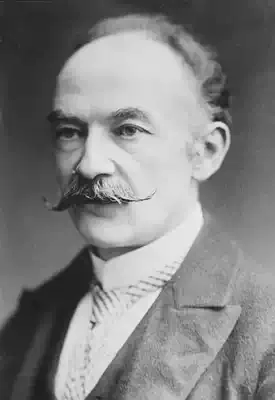
Thomas Hardy
In Tenebris
Wintertime nighs;
But my bereavement-pain
It cannot bring again:
Twice no one dies.
Flower-petals flee;
But since it once hath been,
No more that severing scene
Can harrow me.
Birds faint in dread:
I shall not lose old strength
In the lone frost's black length:
Strength long since fled!
Leaves freeze to dun;
But friends cannot turn cold
This season as of old
For him with none.
Tempests may scath;
But love cannot make smart
Again this year his heart
Who no heart hath.
Black is night's cope;
But death will not appal
One, who past doubtings all,
Waits in unhope.
Read more →
237

Dylan Thomas
A Process in the Weather of the Heart
A process in the weather of the heart
Turns damp to dry; the golden shot
Storms in the freezing tomb.
A weather in the quarter of the veins
Turns night to day; blood in their suns
Lights up the living worm.
A process in the eye forwarns
The bones of blindness; and the womb
Drives in a death as life leaks out.
A darkness in the weather of the eye
Is half its light; the fathomed sea
Breaks on unangled land.
The seed that makes a forest of the loin
Forks half its fruit; and half drops down,
Slow in a sleeping wind.
A weather in the flesh and bone
Is damp and dry; the quick and dead
Move like two ghosts before the eye.
A process in the weather of the world
Turns ghost to ghost; each mothered child
Sits in their double shade.
A process blows the moon into the sun,
Pulls down the shabby curtains of the skin;
And the heart gives up its dead.
Read more →
236
Christina Rossetti
Sweet Death
The sweetest blossoms die.
And so it was that, going day by day
Unto the church to praise and pray,
And crossing the green churchyard thoughtfully,
I saw how on the graves the flowers
Shed their fresh leaves in showers,
And how their perfume rose up to the sky
Before it passed away.
The youngest blossoms die.
They die, and fall and nourish the rich earth
From which they lately had their birth;
Sweet life, but sweeter death that passeth by
And is as though it had not been:—
All colors turn to green:
The bright hues vanish, and the odours fly,
The grass hath lasting worth.
And youth and beauty die.
So be it, O my God, Thou God of truth:
Better than beauty and than youth
Are Saints and Angels, a glad company;
And Thou, O lord, our Rest and Ease,
Are better far than these.
Why should we shrink from our full harvest? why
Prefer to glean with Ruth?
Read more →
236

D.H. Lawrence
A Passing Bell
Mournfully to and fro, to and fro the trees are waving;
What did you say, my dear?
The rain-bruised leaves are suddenly shaken, as a child
Asleep still shakes in the clutch of a sob—
Yes, my love, I hear.
One lonely bell, one only, the storm-tossed afternoon is braving,
Why not let it ring?
The roses lean down when they hear it, the tender, mild
Flowers of the bleeding-heart fall to the throb—
It is such a little thing!
A wet bird walks on the lawn, call to the boy to come and look,
Yes, it is over now.
Call to him out of the silence, call him to see
The starling shaking its head as it walks in the grass—
Ah, who knows how?
He cannot see it, I can never show it him, how it shook—
Don’t disturb him, darling.
—Its head as it walked: I can never call him to me,
Never, he is not, whatever shall come to pass.
No, look at the wet starling.
Read more →
237

Ogden Nash
Kipling's Vermont
The summer like a rajah dies,
And every widowed tree
Kindles for Congregationalist eyes
An alien suttee.
Read more →
236
D.H. Lawrence
The Bride
My love looks like a girl to-night,
But she is old.
The plaits that lie along her pillow
Are not gold,
But threaded with filigree silver,
And uncanny cold.
She looks like a young maiden, since her brow
Is smooth and fair,
Her cheeks are very smooth, her eyes are closed.
She sleeps a rare
Still winsome sleep, so still, and so composed.
Nay, but she sleeps like a bride, and dreams her dreams
Of perfect things.
She lies at last, the darling, in the shape of her dream,
And her dead mouth sings
By its shape, like the thrushes in clear evenings.
Read more →
236
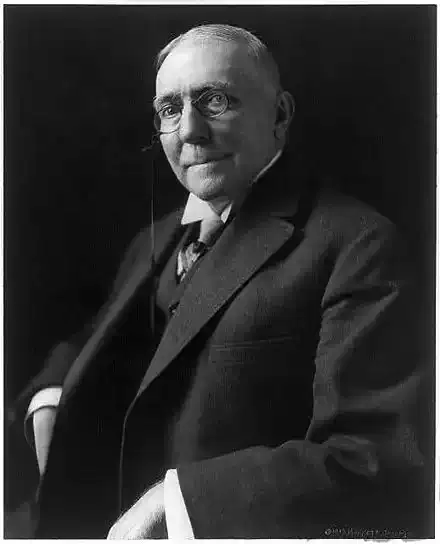
James Whitcomb Riley
May I Not Weep With You
Let me come in where you sit weeping—aye,
Let me, who have not any child to die,
Weep with you for the little one whose love
I have known nothing of.
The little arms that slowly, slowly loosed
Then- pressure round your neck—the hands you vised
To kiss—such arms—such hands—I never knew,
May I not weep with you?
Fain would I be of service—say something
Between the tears, that would be comforting,
But Oh! so sadder than yourself am I,
Who have not any child to die!
Read more →
233
Emily Jane Brontë
At Castle Wood
The day is done, the winter sun
Is setting in its sullen sky;
And drear the course that has been run,
And dim the hearts that slowly die.
No star will light my coming night;
No morn of hope for me will shine;
I mourn not heaven would blast my sight,
And I ne'er longed for joys divine.
Through life's hard task I did not ask
Celestial aid, celestial cheer;
I saw my fate without its mask,
And met it too without a tear.
The grief that pressed my aching breast
Was heavier far than earth can be;
And who would dread eternal rest
When labour's hour was agony?
Dark falls the fear of this despair
On spirits born of happiness;
But I was bred the mate of care,
The foster-child of sore distress.
No sighs for me, no sympathy,
No wish to keep my soul below;
The heart is dead in infancy,
Unwept-for let the body go.
Read more →
234
Robert W. Service
Sailor Son
When you come home I'll not be round
To welcome you.
They'll take you to a grassy mound
So neat and new;
Where I'll be sleeping--O so sound!
The ages through.
I'll not be round to broom the hearth,
To feed the chicks;
And in the wee room of your birth
Your bed to fix;
Rose room that knew your baby mirth
Your tiny tricks.
I'll not be round . . . The garden still
With bees will hum;
To cheerful you the throstle's bill
Will not be dumb;
The rambler rose will overspill
When you will come.
Bird, bee and bloom, they'll greet you all
With scented sound;
Yet though the joy of your footfall
Will thrill the ground
Your mother with her old grey shawl-Will
not be round.
Read more →
234
D.H. Lawrence
Giorno dei Morti
Along the avenue of cypresses,
All in their scarlet cloaks and surplices
Of linen, go the chanting choristers,
The priests in gold and black, the villagers. . .
And all along the path to the cemetery
The round dark heads of men crowd silently,
And black-scarved faces of womenfolk, wistfully
Watch at the banner of death, and the mystery.
And at the foot of a grave a father stands
With sunken head, and forgotten, folded hands;
And at the foot of a grave a mother kneels
With pale shut face, nor either hears nor feels
The coming of the chanting choristers
Between the avenue of cypresses,
The silence of the many villagers,
The candle-flames beside the surplices.
Read more →
234
Christina Rossetti
Sound Sleep
Some are laughing, some are weeping;
She is sleeping, only sleeping.
Round her rest wild flowers are creeping;
There the wind is heaping, heaping
Sweetest sweets of Summer's keeping.
By the corn-fields ripe for reaping.
There are lilies, and there blushes
The deep rose, and there the thrushes
Sing till latest sunlight flushes
In the west; a fresh wind brushes
Through the leaves while evening hushes.
There by day the lark is singing
And the grass and weeds are springing;
There by night the bat is winging;
There for ever winds are bringing
Far-off chimes of church-bells ringing.
Night and morning, noon and even,
Their sound fills her dreams with Heaven:
The long strife at lent is striven:
Till her grave-bands shall be riven
Such is the good portion given
To her soul at rest and shriven.
Read more →
234
Robert W. Service
The Portrait
The portrait there above my bed
They tell me is a work of art;
My Wife,--since twenty years she's dead:
Her going nearly broke my heart.
Alas! No little ones we had
To light our hearth with joy and glee;
Yet as I linger lone and sad
I know she's waiting me.
The picture? Sargent painted it,
And it has starred in many a show.
Her eyes are on me where I sit,
And follow me where'er I go.
She'll smile like that when I am gone,
And I am frail and oh so ill!
Aye, when I'm waxen, cold and wan,
Lo! She'll be smiling still.
So I have bade them slash in strips
That relic of my paradise.
Let flame destroy those lovely lips
And char the starlight of her eyes!
No human gaze shall ever see
Her beauty,--stranger heart to stir:
Nay, her last smile shall be for me,
My last look be for her.
Read more →
234
Robert W. Service
Rose Leaves
When they shall close my careless eyes
And look their last upon my face,
I fear that some will say: "her lies
A man of deep disgrace;
His thoughts were bare, his words were brittle,
He dreamed so much, he did so little.
When they shall seal y coffin lid
And this worn mask I know as ME,
Shall from the sight of man be hid
To all eternity -
Some one may say: "His sins were many,
His virtues - really, had he any?"
When I shall lie beneath my tomb,
Oh do not grave it with my name
But let one rose-bush o'er me bloom,
And heedless of my shame,
With velvet shade and loving laugh,
In petals write my epitaph.
Read more →
234
Emily Dickinson
Like her the Saints retire
Like her the Saints retire,
In their Chapeaux of fire,
Martial as she!
Like her the Evenings steal
Purple and Cochineal
After the Day!
"Departed"-both-they say!
i.e. gathered away,
Not found,
Argues the Aster still-
Reasons the Daffodil
Profound!
Read more →
234