
Death and Mourning
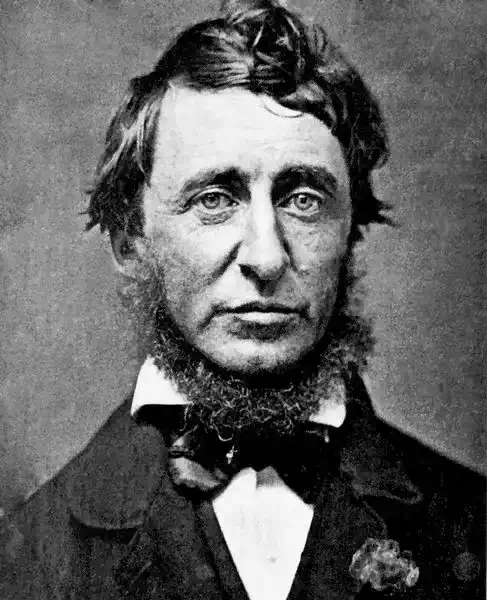
Henry David Thoreau
Sic Vita
I am a parcel of vain strivings tied
By a chance bond together,
Dangling this way and that, their links
Were made so loose and wide,
Methinks,
For milder weather.
A bunch of violets without their roots,
And sorrel intermixed,
Encircled by a wisp of straw
Once coiled about their shoots,
The law
By which I'm fixed.
A nosegay which Time clutched from out
Those fair Elysian fields,
With weeds and broken stems, in haste,
Doth make the rabble rout
That waste
The day he yields.
And here I bloom for a short hour unseen,
Drinking my juices up,
With no root in the land
To keep my branches green,
But stand
In a bare cup.
Some tender buds were left upon my stem
In mimicry of life,
But ah! the children will not know,
Till time has withered them,
The woe
With which they're rife.
But now I see I was not plucked for naught,
And after in life's vase
Of glass set while I might survive,
But by a kind hand brought
Alive
To a strange place.
That stock thus thinned will soon redeem its hours,
And by another year,
Such as God knows, with freer air,
More fruits and fairer flowers
Will bear,
While I droop here.
Read more →
251

Emily Dickinson
The Sun kept setting—setting—still
The Sun kept setting—setting—still
No Hue of Afternoon—
Upon the Village I perceived
From House to House 'twas Noon—
The Dusk kept dropping—dropping—still
No Dew upon the Grass—
But only on my Forehead stopped—
And wandered in my Face—
My Feet kept drowsing—drowsing—still
My fingers were awake—
Yet why so little sound—Myself
Unto my Seeming—make?
How well I knew the Light before—
I could see it now—
'Tis Dying—I am doing—but
I'm not afraid to know—
Read more →
250

Robert W. Service
Lobster For Lunch
His face was like a lobster red,
His legs were white as mayonnaise:
"I've had a jolly lunch," he said,
That Englishman of pleasant ways.
"Thy do us well at our hotel:
In England food is dull these days."
"We had a big langouste for lunch.
I almost ate the whole of it.
And now I'll smoke and read my Punch,
And maybe siesta a bit;
And then I'll plunge into the sea
And get an appetite for tea."
We saw him plunge into the sea,
With jolly laugh, his wife and I.
"George does enjoy his food," said she;
"In Leeds lobsters are hard to buy.
How lucky we to have a chance
To spend our holiday in France!"
And so we watched him swim and swim
So far and far we scarce could see,
Until his balding head grew dim;
And then there came his children three,
And we all waited there for him, -
Ah yes, a little anxiously.
But George, alas! came never back.
Of him they failed to find a trace;
His wife and kids are wearing black,
And miss a lot his jolly face . . .
But oh how all the lobsters laugh,
And write in wrack his epitaph.
Read more →
248

Christina Rossetti
Baby Lies So Fast Asleep
Baby lies so fast asleep
That we cannot wake her:
Will the angels clad in white
Fly from heaven to take her?
Baby lies so fast asleep
That no pain can grieve her;
Put a snowdrop in her hand,
Kiss her once and leave her.
Read more →
247

Anonymous
The Queen's Marie
MARIE HAMILTON 's to the kirk gane,
Wi' ribbons in her hair;
The King thought mair o' Marie Hamilton
Than ony that were there.
Marie Hamilton 's to the kirk gane
Wi' ribbons on her breast;
The King thought mair o' Marie Hamilton
Than he listen'd to the priest.
Marie Hamilton 's to the kirk gane,
Wi' gloves upon her hands;
The King thought mair o' Marie Hamilton
Than the Queen and a' her lands.
She hadna been about the King's court
A month, but barely one,
Till she was beloved by a' the King's court
And the King the only man.
She hadna been about the King's court
A month, but barely three,
Till frae the King's court Marie Hamilton,
Marie Hamilton durstna be.
The King is to the Abbey gane,
To pu' the Abbey tree,
To scale the babe frae Marie's heart;
But the thing it wadna be.
O she has row'd it in her apron,
And set it on the sea--
'Gae sink ye or swim ye, bonny babe,
Ye'se get nae mair o' me.'
Word is to the kitchen gane,
And word is to the ha',
And word is to the noble room
Amang the ladies a',
That Marie Hamilton 's brought to bed,
And the bonny babe 's miss'd and awa'.
Scarcely had she lain down again,
And scarcely fa'en asleep,
When up and started our gude Queen
Just at her bed-feet;
Saying--'Marie Hamilton, where 's your babe?
For I am sure I heard it greet.'
'O no, O no, my noble Queen!
Think no sic thing to be;
'Twas but a stitch into my side,
And sair it troubles me!'
'Get up, get up, Marie Hamilton:
Get up and follow me;
For I am going to Edinburgh town,
A rich wedding for to see.'
O slowly, slowly rase she up,
And slowly put she on;
And slowly rade she out the way
Wi' mony a weary groan.
The Queen was clad in scarlet,
Her merry maids all in green;
And every town that they cam to,
They took Marie for the Queen.
'Ride hooly, hooly, gentlemen,
Ride hooly now wi' me!
For never, I am sure, a wearier burd
Rade in your companie.'--
But little wist Marie Hamilton,
When she rade on the brown,
That she was gaen to Edinburgh town,
And a' to be put down.
'Why weep ye so, ye burgess wives,
Why look ye so on me?
O I am going to Edinburgh town,
A rich wedding to see.'
When she gaed up the tolbooth stairs,
The corks frae her heels did flee;
And lang or e'er she cam down again,
She was condemn'd to die.
When she cam to the Netherbow port,
She laugh'd loud laughters three;
But when she came to the gallows foot
The tears blinded her e'e.
'Yestreen the Queen had four Maries,
The night she'll hae but three;
There was Marie Seaton, and Marie Beaton,
And Marie Carmichael, and me.
'O often have I dress'd my Queen
And put gowd upon her hair;
But now I've gotten for my reward
The gallows to be my share.
'Often have I dress'd my Queen
And often made her bed;
But now I've gotten for my reward
The gallows tree to tread.
'I charge ye all, ye mariners,
When ye sail owre the faem,
Let neither my father nor mother get wit
But that I'm coming hame.
'I charge ye all, ye mariners,
That sail upon the sea,
That neither my father nor mother get wit
The dog's death I'm to die.
'For if my father and mother got wit,
And my bold brethren three,
O mickle wad be the gude red blude
This day wad be spilt for me!
'O little did my mother ken,
The day she cradled me,
The lands I was to travel in
Or the death I was to die!
Read more →
247
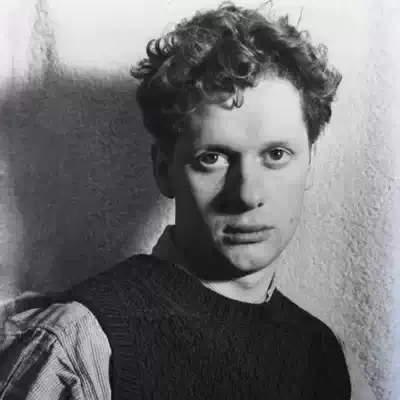
Dylan Thomas
After the Funeral (In memory of Ann Jones)
After the funeral, mule praises, brays,
Windshake of sailshaped ears, muffle-toed tap
Tap happily of one peg in the thick
Grave's foot, blinds down the lids, the teeth in black,
The spittled eyes, the salt ponds in the sleeves,
Morning smack of the spade that wakes up sleep,
Shakes a desolate boy who slits his throat
In the dark of the coffin and sheds dry leaves,
That breaks one bone to light with a judgment clout'
After the feast of tear-stuffed time and thistles
In a room with a stuffed fox and a stale fern,
I stand, for this memorial's sake, alone
In the snivelling hours with dead, humped Ann
Whose hodded, fountain heart once fell in puddles
Round the parched worlds of Wales and drowned each sun
(Though this for her is a monstrous image blindly
Magnified out of praise; her death was a still drop;
She would not have me sinking in the holy
Flood of her heart's fame; she would lie dumb and deep
And need no druid of her broken body).
But I, Ann's bard on a raised hearth, call all
The seas to service that her wood-tongud virtue
Babble like a bellbuoy over the hymning heads,
Bow down the walls of the ferned and foxy woods
That her love sing and swing through a brown chapel,
Blees her bent spirit with four, crossing birds.
Her flesh was meek as milk, but this skyward statue
With the wild breast and blessed and giant skull
Is carved from her in a room with a wet window
In a fiercely mourning house in a crooked year.
I know her scrubbed and sour humble hands
Lie with religion in their cramp, her threadbare
Whisper in a damp word, her wits drilled hollow,
Her fist of a face died clenched on a round pain;
And sculptured Ann is seventy years of stone.
These cloud-sopped, marble hands, this monumental
Argument of the hewn voice, gesture and psalm
Storm me forever over her grave until
The stuffed lung of the fox twitch and cry Love
And the strutting fern lay seeds on the black sill.
Read more →
248

D.H. Lawrence
Sorrow
Why does the thin grey strand
Floating up from the forgotten
Cigarette between my fingers,
Why does it trouble me?
Ah, you will understand;
When I carried my mother downstairs,
A few times only, at the beginning
Of her soft-foot malady,
I should find, for a reprimand
To my gaiety, a few long grey hairs
On the breast of my coat; and one by one
I let them float up the dark chimney.
Read more →
248
Emily Dickinson
T was just this time last year I died.
'T was just this time last year I died.
I know I heard the corn,
When I was carried by the farms,-It
had the tassels on.
I thought how yellow it would look
When Richard went to mill;
And then I wanted to get out,
But something held my will.
I thought just how red apples wedged
The stubble's joints between;
And carts went stooping round the fields
To take the pumpkins in.
I wondered which would miss me least,
And when Thanksgiving came,
If father'd multiply the plates
To make an even sum.
And if my stocking hung too high,
Would it blur the Christmas glee,
That not a Santa Claus could reach
The altitude of me?
But this sort grieved myself, and so
I thought how it would be
When just this time, some perfect year,
Themselves should come to me.
Read more →
246
Emily Dickinson
Love—is that Later Thing than Death
Love—is that later Thing than Death—
More previous—than Life—
Confirms it at its entrance—And
Usurps it—of itself—
Tastes Death—the first—to hand the sting
The Second—to its friend—
Disarms the little interval—
Deposits Him with God—
Then hovers—an inferior Guard—
Lest this Beloved Charge
Need—once in an Eternity—
A smaller than the Large—
Read more →
248

Jonathan Swift
Elegy Upon Tiger
Her dead lady's joy and comfort,
Who departed this life
The last day of March, 1727:
To the great joy of Bryan
That his antagonist is gone.
And is poor Tiger laid at last so low?
O day of sorrow! -Day of dismal woe!
Bloodhounds, or spaniels, lap-dogs, 'tis all one,
When Death once whistles -snap! -away they're gone.
See how she lies, and hangs her lifeless ears,
Bathed in her mournful lady's tears!
Dumb is her throat, and wagless is her tail,
Doomed to the grave, to Death's eternal jail!
In a few days this lovely creature must
First turn to clay, and then be changed to dust.
That mouth which used its lady's mouth to lick
Must yield its jaw-bones to the worms to pick.
That mouth which used the partridge-wing to eat
Must give its palate to the worms to eat.
Methinks I see her now in Charon's boat
Bark at the Stygian fish which round it float;
While Cerberus, alarmed to hear the sound,
Makes Hell's wide concave bellow all around.
She sees him not, but hears him through the dark,
And valiantly returns him bark for bark.
But now she trembles -though a ghost, she dreads
To see a dog with three large yawning heads.
Spare her, you hell-hounds, case your frightful paws,
And let poor Tiger 'scape your furious jaws.
Let her go safe to the Elysian plains,
Where Hylax barks among the Mantuan swains;
There let her frisk about her new-found love:
She loved a dog when she was here above.
The Epitaph
Here lies beneath this marble
An animal could bark, or warble:
Sometimes a bitch, sometimes a bird,
Could eat a tart, or eat a t -.
Read more →
245
Emily Dickinson
I am alive—I guess
I am alive—I guess—
The Branches on my Hand
Are full of Morning Glory—
And at my finger's end—
The Carmine—tingles warm—
And if I hold a Glass
Across my Mouth—it blurs it—
Physician's—proof of Breath—
I am alive—because
I am not in a Room—
The Parlor—Commonly—it is—
So Visitors may come—
And lean—and view it sidewise—
And add "How cold—it grew"—
And "Was it conscious—when it stepped
In Immortality?"
I am alive—because
I do not own a House—
Entitled to myself—precise—
And fitting no one else—
And marked my Girlhood's name—
So Visitors may know
Which Door is mine—and not
Read more →
245
Horácio
BkI:XXIV A Lament For Quintilius
What limit, or restraint, should we show at the loss
of so dear a life? Melpomene, teach me, Muse,
a song of mourning, you, whom the Father granted
a clear voice, the sound of the lyre.
Does endless sleep lie heavy on Quintilius,
now? When will Honour, and unswerving Loyalty,
that is sister to Justice, and our naked Truth,
ever discover his equal?
Many are the good men who weep for his dying,
none of them, Virgil, weep more profusely than you.
Piously, you ask the gods for him, alas, in vain:
not so was he given to us.
Even if you played on the Thracian lyre, listened
to by the trees, more sweetly than Orpheus could,
would life then return, to that empty phantom,
once Mercury, with fearsome wand,
who won’t simply re-open the gates of Fate
at our bidding, has gathered him to the dark throng?
It is hard: but patience makes more tolerable
whatever wrong’s to be righted.
Read more →
246
D.H. Lawrence
Blue
The earth again like a ship steams out of the dark sea over
The edge of the blue, and the sun stands up to see us glide
Slowly into another day; slowly the rover
Vessel of darkness takes the rising tide.
I, on the deck, am startled by this dawn confronting
Me who am issued amazed from the darkness, stripped
And quailing here in the sunshine, delivered from haunting
The night unsounded whereon our days are shipped.
Feeling myself undawning, the day’s light playing upon me,
I who am substance of shadow, I all compact
Of the stuff of the night, finding myself all wrongly
Among the crowds of things in the sunshine jostled and racked.
I with the night on my lips, I sigh with the silence of death;
And what do I care though the very stones should cry me unreal, though the clouds
Shine in conceit of substance upon me, who am less than the rain.
Do I know the darkness within them? What are they but shrouds?
The clouds go down the sky with a wealthy ease
Casting a shadow of scorn upon me for my share in death; but I
Hold my own in the midst of them, darkling, defy
The whole of the day to extinguish the shadow I lift on the breeze.
Yea, though the very clouds have vantage over me,
Enjoying their glancing flight, though my love is dead,
I still am not homeless here, I’ve a tent by day
Of darkness where she sleeps on her perfect bed.
And I know the host, the minute sparkling of darkness
Which vibrates untouched and virile through the grandeur of night,
But which, when dawn crows challenge, assaulting the vivid motes
Of living darkness, bursts fretfully, and is bright:
Runs like a fretted arc-lamp into light,
Stirred by conflict to shining, which else
Were dark and whole with the night.
Runs to a fret of speed like a racing wheel,
Which else were aslumber along with the whole
Of the dark, swinging rhythmic instead of a-reel.
Is chafed to anger, bursts into rage like thunder;
Which else were a silent grasp that held the heavens
Arrested, beating thick with wonder.
Leaps like a fountain of blue sparks leaping
In a jet from out of obscurity,
Which erst was darkness sleeping.
Runs into streams of bright blue drops,
Water and stones and stars, and myriads
Of twin-blue eyes, and crops
Of floury grain, and all the hosts of day,
All lovely hosts of ripples caused by fretting
The Darkness into play.
Read more →
245
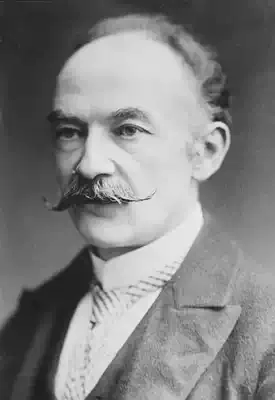
Thomas Hardy
The Tree: An Old Man's Story
I
Its roots are bristling in the air
Like some mad Earth-god's spiny hair;
The loud south-wester's swell and yell
Smote it at midnight, and it fell.
Thus ends the tree
Where Some One sat with me.
II
Its boughs, which none but darers trod,
A child may step on from the sod,
And twigs that earliest met the dawn
Are lit the last upon the lawn.
Cart off the tree
Beneath whose trunk sat we!
III
Yes, there we sat: she cooed content,
And bats ringed round, and daylight went;
The gnarl, our seat, is wrenched and sunk,
Prone that queer pocket in the trunk
Where lay the key
To her pale mystery.
IV
"Years back, within this pocket-hole
I found, my Love, a hurried scrawl
Meant not for me," at length said I;
"I glanced thereat, and let it lie:
The words were three -
'Beloved, I agree.'
V
"Who placed it here; to what request
It gave assent, I never guessed.
Some prayer of some hot heart, no doubt,
To some coy maiden hereabout,
Just as, maybe,
With you, Sweet Heart, and me."
VI
She waited, till with quickened breath
She spoke, as one who banisheth
Reserves that lovecraft heeds so well,
To ease some mighty wish to tell:
"'Twas I," said she,
"Who wrote thus clinchingly.
VII
"My lover's wife--aye, wife!--knew nought
Of what we felt, and bore, and thought . . .
He'd said: 'I wed with thee or die:
She stands between, 'tis true. But why?
Do thou agree,
And--she shalt cease to be.'
VIII
"How I held back, how love supreme
Involved me madly in his scheme
Why should I say? . . . I wrote assent
(You found it hid) to his intent . . .
She--DIED . . . But he
Came not to wed with me.
IX
"O shrink not, Love!--Had these eyes seen
But once thine own, such had not been!
But we were strangers . . . Thus the plot
Cleared passion's path.--Why came he not
To wed with me? . . .
He wived the gibbet-tree."
X
- Under that oak of heretofore
Sat Sweetheart mine with me no more:
By many a Fiord, and Strom, and Fleuve
Have I since wandered . . . Soon, for love,
Distraught went she -
'Twas said for love of me.
Read more →
246
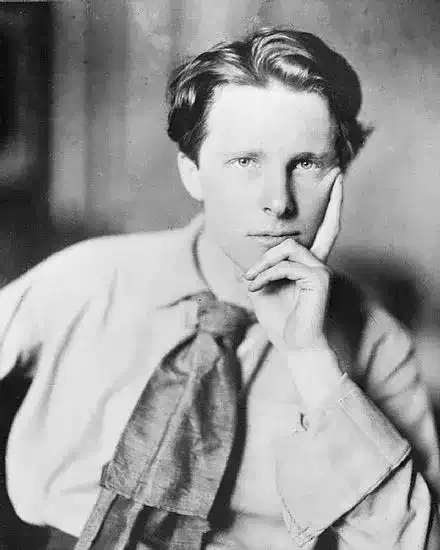
Rupert Brooke
Tiare Tahiti
Mamua, when our laughter ends,
And hearts and bodies, brown as white,
Are dust about the doors of friends,
Or scent ablowing down the night,
Then, oh! then, the wise agree,
Comes our immortality.
Mamua, there waits a land
Hard for us to understand.
Out of time, beyond the sun,
All are one in Paradise,
You and Pupure are one,
And Tau, and the ungainly wise.
There the Eternals are, and there
The Good, the Lovely, and the True,
And Types, whose earthly copies were
The foolish broken things we knew;
There is the Face, whose ghosts we are;
The real, the never-setting Star;
And the Flower, of which we love
Faint and fading shadows here;
Never a tear, but only Grief;
Dance, but not the limbs that move;
Songs in Song shall disappear;
Instead of lovers, Love shall be;
For hearts, Immutability;
And there, on the Ideal Reef,
Thunders the Everlasting Sea!
And my laughter, and my pain,
Shall home to the Eternal Brain.
And all lovely things, they say,
Meet in Loveliness again;
Miri's laugh, Teipo's feet,
And the hands of Matua,
Stars and sunlight there shall meet,
Coral's hues and rainbows there,
And Teura's braided hair;
And with the starred `tiare's' white,
And white birds in the dark ravine,
And `flamboyants' ablaze at night,
And jewels, and evening's after-green,
And dawns of pearl and gold and red,
Mamua, your lovelier head!
And there'll no more be one who dreams
Under the ferns, of crumbling stuff,
Eyes of illusion, mouth that seems,
All time-entangled human love.
And you'll no longer swing and sway
Divinely down the scented shade,
Where feet to Ambulation fade,
And moons are lost in endless Day.
How shall we wind these wreaths of ours,
Where there are neither heads nor flowers?
Oh, Heaven's Heaven! -- but we'll be missing
The palms, and sunlight, and the south;
And there's an end, I think, of kissing,
When our mouths are one with Mouth. . . .
`Tau here', Mamua,
Crown the hair, and come away!
Hear the calling of the moon,
And the whispering scents that stray
About the idle warm lagoon.
Hasten, hand in human hand,
Down the dark, the flowered way,
Along the whiteness of the sand,
And in the water's soft caress,
Wash the mind of foolishness,
Mamua, until the day.
Spend the glittering moonlight there
Pursuing down the soundless deep
Limbs that gleam and shadowy hair,
Or floating lazy, half-asleep.
Dive and double and follow after,
Snare in flowers, and kiss, and call,
With lips that fade, and human laughter
And faces individual,
Well this side of Paradise! . . .
There's little comfort in the wise.
Papeete, February
Read more →
244

William Wordsworth
Song at the Feast of Brougham Castle upon the Restoration o
, High in the breathless Hall the Minstrel sate,
And Emont's murmur mingled with the Song.--
The words of ancient time I thus translate,
A festal strain that hath been silent long:--
"From town to town, from tower to tower,
The red rose is a gladsome flower.
Her thirty years of winter past,
The red rose is revived at last;
She lifts her head for endless spring,
For everlasting blossoming:
Both roses flourish, red and white:
In love and sisterly delight
The two that were at strife are blended,
And all old troubles now are ended.--
Joy! joy to both! but most to her
Who is the flower of Lancaster!
Behold her how She smiles to-day
On this great throng, this bright array!
Fair greeting doth she send to all
From every corner of the hall;
But chiefly from above the board
Where sits in state our rightful Lord,
A Clifford to his own restored!
"They came with banner, spear, and shield;
And it was proved in Bosworth-field.
Not long the Avenger was withstood--
Earth helped him with the cry of blood:
St. George was for us, and the might
Of blessed Angels crowned the right.
Loud voice the Land has uttered forth,
We loudest in the faithful north:
Our fields rejoice, our mountains ring,
Our streams proclaim a welcoming;
Our strong-abodes and castles see
The glory of their loyalty.
"How glad is Skipton at this hour--
Though lonely, a deserted Tower;
Knight, squire, and yeoman, page and groom,
We have them at the feast of Brough'm.
How glad Pendragon--though the sleep
Of years be on her!--She shall reap
A taste of this great pleasure, viewing
As in a dream her own renewing.
Rejoiced is Brough, right glad, I deem,
Beside her little humble stream;
And she that keepeth watch and ward
Her statelier Eden's course to guard;
They both are happy at this hour,
Though each is but a lonely Tower:--
But here is perfect joy and pride
For one fair House by Emont's side,
This day, distinguished without peer,
To see her Master and to cheer--
Him, and his Lady-mother dear!
"Oh! it was a time forlorn
When the fatherless was born--
Give her wings that she may fly,
Or she sees her infant die!
Swords that are with slaughter wild
Hunt the Mother and the Child.
Who will take them from the light?
--Yonder is a man in sight--
Yonder is a house--but where?
No, they must not enter there.
To the caves, and to the brooks,
To the clouds of heaven she looks;
She is speechless, but her eyes
Pray in ghostly agonies.
Blissful Mary, Mother mild,
Maid and Mother undefiled,
Save a Mother and her Child!
"Now who is he that bounds with joy
On Carrock's side, a Shepherd-boy?
No thoughts hath he but thoughts that pass
Light as the wind along the grass.
Can this be He who hither came
In secret, like a smothered flame?
O'er whom such thankful tears were shed
For shelter, and a poor man's bread!
God loves the Child; and God hath willed
That those dear words should be fulfilled,
The Lady's words, when forced away
The last she to her Babe did say:
"My own, my own, thy fellow-guest
I may not be; but rest thee, rest,
For lowly shepherd's life is best!"
"Alas! when evil men are strong
No life is good, no pleasure long.
The Boy must part from Mosedale's groves,
And leave Blencathara's rugged coves,
And quit the flowers that summer brings
To Glenderamakin's lofty springs;
Must vanish, and his careless cheer
Be turned to heaviness and fear.
--Give Sir Lancelot Threlkeld praise!
Hear it, good man, old in days!
Thou tree of covert and of rest
For this young Bird that is distrest;
Among thy branches safe he lay,
And he was free to sport and play,
When falcons were abroad for prey.
"A recreant harp, that sings of fear
And heaviness in Clifford's ear!
I said, when evil men are strong,
No life is good, no pleasure long,
A weak and cowardly untruth!
Our Clifford was a happy Youth,
And thankful through a weary time,
That brought him up to manhood's prime.
--Again he wanders forth at will,
And tends a flock from hill to hill:
His garb is humble; ne'er was seen
Such garb with such a noble mien;
Among the shepherd-grooms no mate
Hath he, a Child of strength and state!
Yet lacks not friends for simple glee,
Nor yet for higher sympathy.
To his side the fallow-deer
Came and rested without fear;
The eagle, lord of land and sea,
Stooped down to pay him fealty;
And both the undying fish that swim
Through Bowscale-tarn did wait on him;
The pair were servants of his eye
In their immortality;
And glancing, gleaming, dark or bright,
Moved to and fro, for his delight.
He knew the rocks which Angels haunt
Upon the mountains visitant;
He hath kenned them taking wing:
And into caves where Faeries sing
He hath entered; and been told
By Voices how men lived of old.
Among the heavens his eye can see
The face of thing that is to be;
And, if that men report him right,
His tongue could whisper words of might.
--Now another day is come,
Fitter hope, and nobler doom;
He hath thrown aside his crook,
And hath buried deep his book;
Armour rusting in his halls
On the blood of Clifford calls,--
'Quell the Scot,' exclaims the Lance--
Bear me to the heart of France,
Is the longing of the Shield--
Tell thy name, thou trembling field;
Field of death, where'er thou be,
Groan thou with our victory!
Happy day, and mighty hour,
When our Shepherd, in his power,
Mailed and horsed, with lance and sword,
To his ancestors restored
Like a re-appearing Star,
Like a glory from afar
First shall head the flock of war!"
Alas! the impassioned minstrel did not know
How, by Heaven's grace, this Clifford's heart was framed:
How he, long forced in humble walks to go,
Was softened into feeling, soothed, and tamed.
Love had he found in huts where poor men lie;
His daily teachers had been woods and rills,
The silence that is in the starry sky,
The sleep that is among the lonely hills.
In him the savage virtue of the Race,
Revenge and all ferocious thoughts were dead:
Nor did he change; but kept in lofty place
The wisdom which adversity had bred.
Glad were the vales, and every cottage-hearth;
The Shepherd-lord was honoured more and more;
And, ages after he was laid in earth,
"The good Lord Clifford" was the name he bore.
Read more →
244
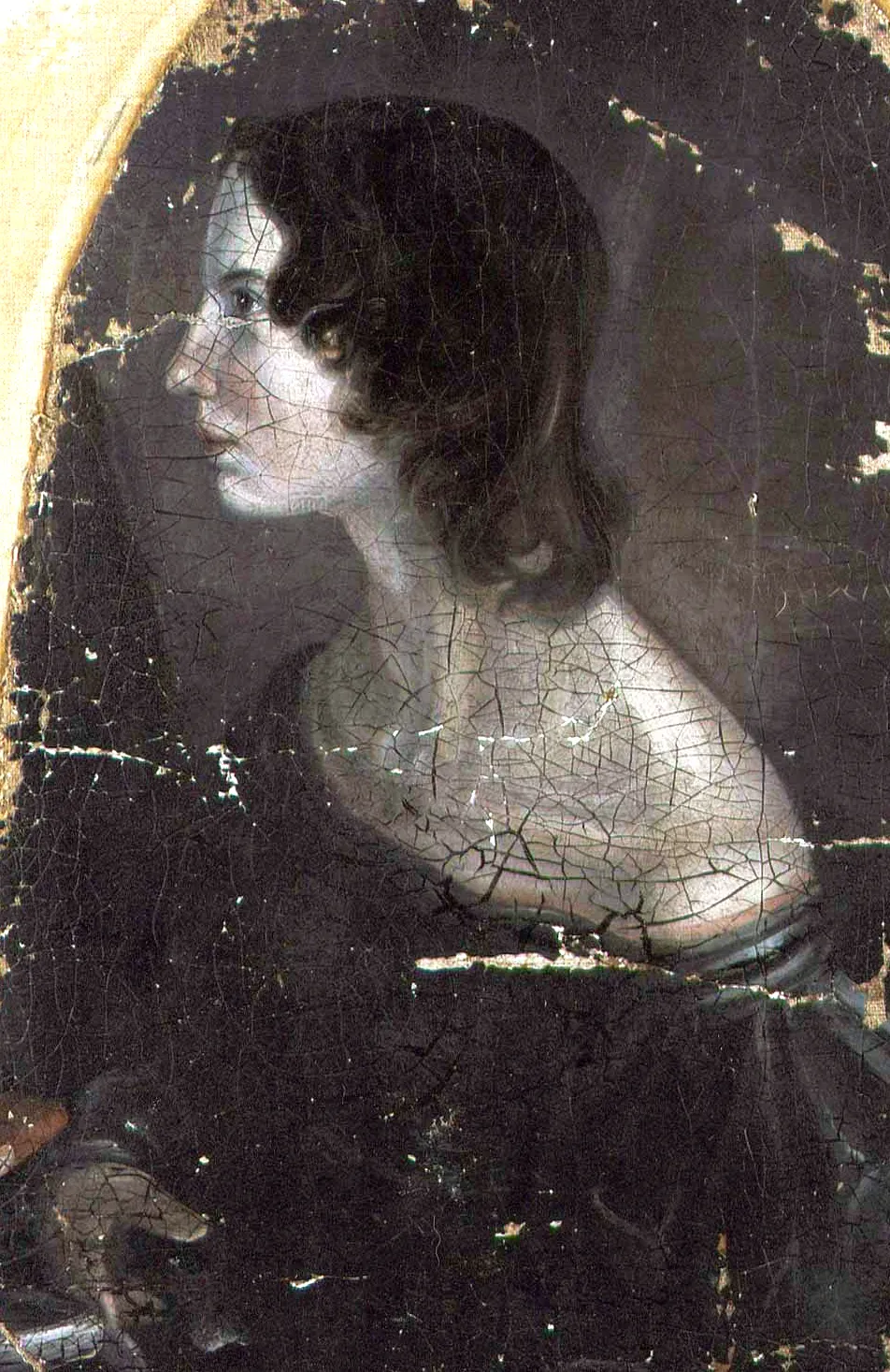
Emily Jane Brontë
Come, Walk With Me
Come, walk with me,
There's only thee
To bless my spirit now -
We used to love on winter nights
To wander through the snow;
Can we not woo back old delights?
The clouds rush dark and wild
They fleck with shade our mountain heights
The same as long ago
And on the horizon rest at last
In looming masses piled;
While moonbeams flash and fly so fast
We scarce can say they smiled -
Come walk with me, come walk with me;
We were not once so few
But Death has stolen our company
As sunshine steals the dew -
He took them one by one and we
Are left the only two;
So closer would my feelings twine
Because they have no stay but thine
'Nay call me not - it may not be
Is human love so true?
Can Friendship's flower droop on for years
And then revive anew?
No, though the soil be wet with tears,
How fair soe'er it grew
The vital sap once perished
Will never flow again
And surer than that dwelling dread,
The narrow dungeon of the dead
Time parts the hearts of men -'
Read more →
243
Emily Dickinson
New feet within my garden go
New feet within my garden go-
New fingers stir the sod-
A Troubadour upon the Elm
Betrays the solitude.
New children play upon the green-
New Weary sleep below-
And still the pensive Spring returns-
And still the punctual snow!
Read more →
242
Thomas Hardy
Mad Judy
When the hamlet hailed a birth
Judy used to cry:
When she heard our christening mirth
She would kneel and sigh.
She was crazed, we knew, and we
Humoured her infirmity.
When the daughters and the sons
Gathered them to wed,
And we like-intending ones
Danced till dawn was red,
She would rock and mutter, "More
Comers to this stony shore!"
When old Headsman Death laid hands
On a babe or twain,
She would feast, and by her brands
Sing her songs again.
What she liked we let her do,
Judy was insane, we knew.
Read more →
244
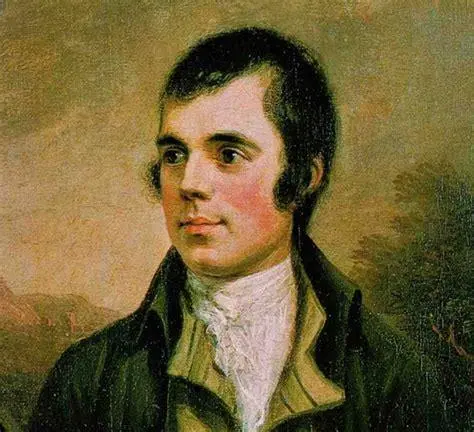
Robert Burns
Poor Mailie's Elegy
Lament in rhyme, lament in prose,
Wi' saut tears tricklin down your nose;
Our bardie's fate is at a close,
Past a' remead!
The last, sad cape-stane o' his woes;
Poor Mailie's dead!
It's no the loss o' warl's gear,
That could sae bitter draw the tear,
Or mak our bardie, dowie, wear
The mourning weed:
He's lost a friend an' neebor dear
In Mailie dead.
Thro' a' the town she trotted by him;
A lang half-mile she could descry him;
Wi kindly bleat, when she did spy him,
She ran wi' speed:
A friend mair faithfu' ne'er cam nigh him,
Than Mailie dead.
I wat she was a sheep o' sense,
An' could behave hersel' wi' mense:
I'll say't, she never brak a fence,
Thro' thievish greed.
Our bardie, lanely, keeps the spence
Sin' Mailie's dead.
Or, if he wanders up the howe,
Her livin image in her yowe
Comes bleating till him, owre the knowe,
For bits o' bread;
An' down the briny pearls rowe
For Mailie dead.
She was nae get o' moorland tips,
Wi' tauted ket, an' hairy hips;
For her forbears were brought in ships,
Frae 'yont the Tweed.
A bonier fleesh ne'er cross'd the clips
Than Mailie's dead.
Wae worth the man wha first did shape
That vile, wanchancie thing - a raip!
It maks guid fellows girn an' gape,
Wi' chokin dread;
An' Robin's bonnet wave wi' crape
For Mailie dead.
O, a' ye bards on bonie Doon!
An' wha on Ayr your chanters tune!
Come, join the melancholious croon
O' Robin's reed!
His heart will never get aboon -
His Mailie's dead!
Read more →
242
Dylan Thomas
Then Was My Neophyte
Then was my neophyte,
Child in white blood bent on its knees
Under the bell of rocks,
Ducked in the twelve, disciple seas
The winder of the water-clocks
Calls a green day and night.
My sea hermaphrodite,
Snail of man in His ship of fires
That burn the bitten decks,
Knew all His horrible desires
The climber of the water sex
Calls the green rock of light.
Who in these labyrinths,
This tidethread and the lane of scales,
Twine in a moon-blown shell,
Escapes to the flat cities' sails
Furled on the fishes' house and hell,
Nor falls to His green myths?
Stretch the salt photographs,
The landscape grief, love in His oils
Mirror from man to whale
That the green child see like a grail
Through veil and fin and fire and coil
Time on the canvas paths.
He films my vanity.
Shot in the wind, by tilted arcs,
Over the water come
Children from homes and children's parks
Who speak on a finger and thumb,
And the masked, headless boy.
His reels and mystery
The winder of the clockwise scene
Wound like a ball of lakes
Then threw on that tide-hoisted screen
Love's image till my heartbone breaks
By a dramatic sea.
Who kills my history?
The year-hedged row is lame with flint,
Blunt scythe and water blade.
'Who could snap off the shapeless print
From your to-morrow-treading shade
With oracle for eye?'
Time kills me terribly.
'Time shall not murder you,' He said,
'Nor the green nought be hurt;
Who could hack out your unsucked heart,
O green and unborn and undead?'
I saw time murder me.
Read more →
242

Henry Wadsworth Longfellow
Delia. (Birds Of Passage. Flight The Fifth)
Sweet as the tender fragrance that survives,
When martyred flowers breathe out their little lives,
Sweet as a song that once consoled our pain,
But never will be sung to us again,
Is thy remembrance. Now the hour of rest
Hath come to thee. Sleep, darling; it is best.
Read more →
240
Anonymous
Ubi sunt qui ante nos fuerunt?
Were beth they that biforen us weren,
Houndes ladden and havekes beren,
And hadden feld and wode?
The riche levedies in hoere bour,
That wereden gold in hoere tressour,
With hoere brightte rode;
Eten and drounken, and maden hem glad;
Hoere lif was al with gamen i-lad,
Men kneleden hem biforen;
They beren hem wel swithe heye;
And in a twincling of an eye
Hoere soules weren forloren.
Were is that lawhing and that song,
That trayling and that proude gong,
Tho havekes and tho houndes?
Al that joye is went away,
That wele is comen to weylaway,
To manye harde stoundes.
Hoere paradis they nomen here,
And nou they lyen in helle i-fere;
The fuir hit brennes hevere:
Long is ay, and long is o,
Long is wy, and long is wo;
Thennes ne cometh they nevere.
Read more →
240
Robert W. Service
Little Moccasins
Come out, O Little Moccasins, and frolic on the snow!
Come out, O tiny beaded feet, and twinkle in the light!
I'll play the old Red River reel, you used to love it so:
Awake, O Little Moccasins, and dance for me to-night!
Your hair was all a gleamy gold, your eyes a corn-flower blue;
Your cheeks were pink as tinted shells, you stepped light as a fawn;
Your mouth was like a coral bud, with seed pearls peeping through;
As gladdening as Spring you were, as radiant as dawn.
Come out, O Little Moccasins! I'll play so soft and low,
The songs you loved, the old heart-songs that in my mem'ry ring;
O child, I want to hear you now beside the campfire glow!
With all your heart a-throbbing in the simple words you sing.
For there was only you and I, and you were all to me;
And round us were the barren lands, but little did we fear;
Of all God's happy, happy folks the happiest were we. . . .
(Oh, call her, poor old fiddle mine, and maybe she will hear!)
Your mother was a half-breed Cree, but you were white all through;
And I, your father was -- but well, that's neither here nor there;
I only know, my little Queen, that all my world was you,
And now that world can end to-night, and I will never care.
For there's a tiny wooden cross that pricks up through the snow:
(Poor Little Moccasins! you're tired, and so you lie at rest.)
And there's a grey-haired, weary man beside the campfire glow:
(O fiddle mine! the tears to-night are drumming on your breast.)
Read more →
242