
Death and Mourning

George Herbert
A Dialogue-Anthem
Alas, poor Death! Where is thy glory?
Where is thy famous force, thy ancient sting?
Alas, poor mortal, void of story!
Go spell and read how I have killed thy King.
Poor Death! And who was hurt thereby?
Thy curse being laid on Him makes thee accurst.
Let losers talk, yet thou shalt die;
These arms shall crush thee.
Spare not, do thy worst.
I shall be one day better than before;
Thou so much worse, that thou shalt be no more.
Read more →
259

Phillis Wheatley
A Funeral Poem On The Death Of C. E. An Infant Of Twelve Months
THROUGH airy roads he wings his instant flight
To purer regions of celestial light;
Enlarg'd he sees unnumber'd systems roll,
Beneath him sees the universal whole,
Planets on planets run their destin'd round,
And circling wonders fill the vast profound.
Th' ethereal now, and now th' empyreal skies
With growing splendors strike his wond'ring eyes:
The angels view him with delight unknown,
Press his soft hand, and seat him on his throne;
Then smilling thus: "To this divine abode,
"The seat of saints, of seraphs, and of God,
"Thrice welcome thou." The raptur'd babe replies,
"Thanks to my God, who snatch'd me to the skies,
"E'er vice triumphant had possess'd my heart,
"E'er yet the tempter had beguil d my heart,
"E'er yet on sin's base actions I was bent,
"E'er yet I knew temptation's dire intent;
"E'er yet the lash for horrid crimes I felt,
"E'er vanity had led my way to guilt,
"But, soon arriv'd at my celestial goal,
"Full glories rush on my expanding soul."
Joyful he spoke: exulting cherubs round
Clapt their glad wings, the heav'nly vaults resound.
Say, parents, why this unavailing moan?
Why heave your pensive bosoms with the groan?
To Charles, the happy subject of my song,
A brighter world, and nobler strains belong.
Say would you tear him from the realms above
By thoughtless wishes, and prepost'rous love?
Doth his felicity increase your pain?
Or could you welcome to this world again
The heir of bliss? with a superior air
Methinks he answers with a smile severe,
"Thrones and dominions cannot tempt me there."
But still you cry, "Can we the sigh borbear,
"And still and still must we not pour the tear?
"Our only hope, more dear than vital breath,
"Twelve moons revolv'd, becomes the prey of death;
"Delightful infant, nightly visions give
"Thee to our arms, and we with joy receive,
"We fain would clasp the Phantom to our breast,
"The Phantom flies, and leaves the soul unblest."
To yon bright regions let your faith ascend,
Prepare to join your dearest infant friend
In pleasures without measure, without end.
Read more →
259

Anonymous
A Lyke-Wake Dirge
THIS ae nighte, this ae nighte,
--Every nighte and alle,
Fire and fleet and candle-lighte,
And Christe receive thy saule.
When thou from hence away art past,
--Every nighte and alle,
To Whinny-muir thou com'st at last;
And Christe receive thy saule.
If ever thou gavest hosen and shoon,
--Every nighte and alle,
Sit thee down and put them on;
And Christe receive thy saule.
If hosen and shoon thou ne'er gav'st nane
--Every nighte and alle,
The whinnes sall prick thee to the bare bane;
And Christe receive thy saule.
From Whinny-muir when thou may'st pass,
--Every nighte and alle,
To Brig o' Dread thou com'st at last;
And Christe receive thy saule.
From Brig o' Dread when thou may'st pass,
--Every nighte and alle,
To Purgatory fire thou com'st at last;
And Christe receive thy saule.
If ever thou gavest meat or drink,
--Every nighte and alle,
The fire sall never make thee shrink;
And Christe receive thy saule.
If meat or drink thou ne'er gav'st nane,
--Every nighte and alle,
The fire will burn thee to the bare bane;
And Christe receive thy saule.
This ae nighte, this ae nighte,
--Every nighte and alle,
Fire and fleet and candle-lighte,
And Christe receive thy saule.
Read more →
258

Emily Dickinson
After great pain, a formal feeling comes -- (341)
After great pain, a formal feeling comes --
The Nerves sit ceremonious, like Tombs
The stiff Heart questions, was it He, that bore,
And Yesterday, or Centuries before?
The Feet, mechanical, go round --
Of Ground, or Air, or Ought --
A Wooden way
Regardless grown,
A Quartz contentment, like a stone --
This is the Hour of Lead --
Remembered, if outlived,
As Freezing persons, recollect the Snow --
First -- Chill -- then Stupor -- then the letting go --
Read more →
259
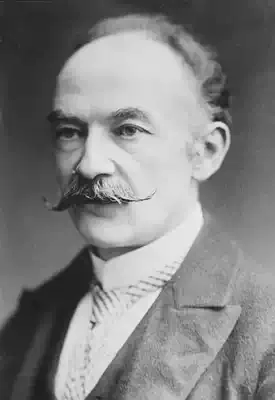
Thomas Hardy
Her Late Husband (King's-Hintock, -.)
"No--not where I shall make my own;
But dig his grave just by
The woman's with the initialed stone -
As near as he can lie -
After whose death he seemed to ail,
Though none considered why.
"And when I also claim a nook,
And your feet tread me in,
Bestow me, under my old name,
Among my kith and kin,
That strangers gazing may not dream
I did a husband win."
"Widow, your wish shall be obeyed;
Though, thought I, certainly
You'd lay him where your folk are laid,
And your grave, too, will be,
As custom hath it; you to right,
And on the left hand he."
"Aye, sexton; such the Hintock rule,
And none has said it nay;
But now it haps a native here
Eschews that ancient way . . .
And it may be, some Christmas night,
When angels walk, they'll say:
"'O strange interment! Civilized lands
Afford few types thereof;
Here is a man who takes his rest
Beside his very Love,
Beside the one who was his wife
In our sight up above!'"
Read more →
257
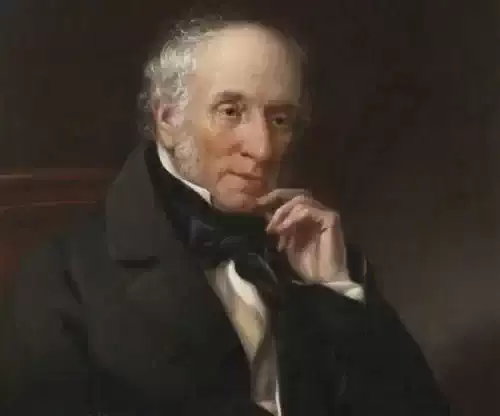
William Wordsworth
Ellen Irwin
Fair Ellen Irwin, when she sate
Upon the braes of Kirtle,
Was lovely as a Grecian maid
Adorned with wreaths of myrtle;
Young Adam Bruce beside her lay,
And there did they beguile the day
With love and gentle speeches,
Beneath the budding beeches.
From many knights and many squires
The Bruce had been selected;
And Gordon, fairest of them all,
By Ellen was rejected.
Sad tidings to that noble Youth!
For it may be proclaimed with truth,
If Bruce hath loved sincerely,
That Gordon loves as dearly.
But what are Gordon's form and face,
His shattered hopes and crosses,
To them, 'mid Kirtle's pleasant braes,
Reclined on flowers and mosses?
Alas that ever he was born!
The Gordon, couched behind a thorn,
Sees them and their caressing;
Beholds them blest and blessing.
Proud Gordon, maddened by the thoughts
That through his brain are travelling,
Rushed forth, and at the heart of Bruce
He launched a deadly javelin!
Fair Ellen saw it as it came,
And, starting up to meet the same,
Did with her body cover
The Youth, her chosen lover.
And, falling into Bruce's arms,
Thus died the beauteous Ellen,
Thus, from the heart of her True-love,
The mortal spear repelling.
And Bruce, as soon as he had slain
The Gordon, sailed away to Spain;
And fought with rage incessant
Against the Moorish crescent.
But many days, and many months,
And many years ensuing,
This wretched Knight did vainly seek
The death that he was wooing.
So, coming his last help to crave,
Heart-broken, upon Ellen's grave
His body he extended,
And there his sorrow ended.
Now ye, who willingly have heard
The tale I have been telling,
May in Kirkconnel churchyard view
The grave of lovely Ellen:
By Ellen's side the Bruce is laid;
And, for the stone upon his head,
May no rude hand deface it,
And its forlorn "Hie jacet"!
Read more →
256

Henry Lawson
The Babies of Walloon
He was lengthsman on the railway, and his station scarce deserved
That “pre-eminence in sorrow” of the Majesty he served,
But as dear to him and precious were the gifts reclaimed so soon—
Were the workman’s little daughters who were buried near Walloon.
Speak their names in tones that linger, just as though you held them dear;
There are eyes to which the mention of those names will bring a tear.
Little Kate and Bridget, straying in an autumn afternoon,
Were attracted by the lilies in the water of Walloon.
All is dark to us. The angels sing perhaps in Paradise
Of the younger sister’s danger, and the elder’s sacrifice;
But the facts were hidden from us, when the soft light from the moon
Glistened on the water-lilies o’er the Babies at Walloon.
Ah! the children love the lilies, while we elders are inclined
To the flowers that have poison for the body and the mind.
Better for the “strongly human” to have done with life as soon,
Better perish for a lily like the Babies of Walloon.
For they gather flowers early on the river far away,
Where the everlasting lilies keep their purity for aye,
And while summer brings our lilies to the run and the lagoon
May our children keep the legend of the Babies of Walloon.
Read more →
257
Thomas Hardy
The Stranger's Song
(As sung by Mr. Charles Charrington in the play of "The Three Wayfarers")
O MY trade it is the rarest one,
Simple shepherds all--
My trade is a sight to see;
For my customers I tie, and take 'em up on high,
And waft 'em to a far countree!
My tools are but common ones,
Simple shepherds all--
My tools are no sight to see:
A little hempen string, and a post whereon to swing,
Are implements enough for me!
To-morrow is my working day,
Simple shepherds all--
To-morrow is a working day for me:
For the farmer's sheep is slain, and the lad who did it ta'en,
And on his soul may God ha' mer-cy!
Read more →
258

Robert W. Service
Gangrene
So often in the mid of night
I wake me in my bed
With utter panic of affright
To find my feet are dead;
And pace the floor to easy my pain
And make them live again.
The folks at home are so discreet;
They see me walk and walk
To keep the blood-flow in my feet,
And though they never talk
I've heard them whisper: 'Mother may
Have them cut off some day.'
Cut off my feet! I'd rather die . . .
And yet the years of pain,
When in the darkness I will lie
And pray to God in vain,
Thinking in agony: Oh why
Can doctors not annul our breath
In honourable death?
Read more →
256

D.H. Lawrence
Elegy
Since I lost you, my darling, the sky has come near,
And I am of it, the small sharp stars are quite near,
The white moon going among them like a white bird among snow-berries,
And the sound of her gently rustling in heaven like a bird I hear.
And I am willing to come to you now, my dear,
As a pigeon lets itself off from a cathedral dome
To be lost in the haze of the sky, I would like to come,
And be lost out of sight with you, and be gone like foam.
For I am tired, my dear, and if I could lift my feet,
My tenacious feet from off the dome of the earth
To fall like a breath within the breathing wind
Where you are lost, what rest, my love, what rest!
Read more →
257

Christina Rossetti
Twist Me A Crown Of Wind-Flowers
Twist me a crown of wind-flowers;
That I may fly away
To hear the singers at their song,
And players at their play.
Put on your crown of wind-flowers:
But whither would you go?
Beyond the surging of the sea
And the storms that blow.
Alas! your crown of wind-flowers
Can never make you fly:
I twist them in a crown to-day,
And to-night they die.
Read more →
256
Robert W. Service
Death In The Arctic
I
I took the clock down from the shelf;
"At eight," said I, "I shoot myself."
It lacked a minute of the hour,
And as I waited all a-cower,
A skinful of black, boding pain,
Bits of my life came back again. . . .
"Mother, there's nothing more to eat --
Why don't you go out on the street?
Always you sit and cry and cry;
Here at my play I wonder why.
Mother, when you dress up at night,
Red are your cheeks, your eyes are bright;
Twining a ribband in your hair,
Kissing good-bye you go down-stair.
Then I'm as lonely as can be.
Oh, how I wish you were with me!
Yet when you go out on the street,
Mother, there's always lots to eat. . . ."
II
For days the igloo has been dark;
But now the rag wick sends a spark
That glitters in the icy air,
And wakes frost sapphires everywhere;
Bright, bitter flames, that adder-like
Dart here and there, yet fear to strike
The gruesome gloom wherein they lie,
My comrades, oh, so keen to die!
And I, the last -- well, here I wait
The clock to strike the hour of eight. . . .
"Boy, it is bitter to be hurled
Nameless and naked on the world;
Frozen by night and starved by day,
Curses and kicks and clouts your pay.
But you must fight! Boy, look on me!
Anarch of all earth-misery;
Beggar and tramp and shameless sot;
Emblem of ill, in rags that rot.
Would you be foul and base as I?
Oh, it is better far to die!
Swear to me now you'll fight and fight,
Boy, or I'll kill you here to-night. . . ."
III
Curse this silence soft and black!
Sting, little light, the shadows back!
Dance, little flame, with freakish glee!
Twinkle with brilliant mockery!
Glitter on ice-robed roof and floor!
Jewel the bear-skin of the door!
Gleam in my beard, illume my breath,
Blanch the clock face that times my death!
But do not pierce that murk so deep,
Where in their sleeping-bags they sleep!
But do not linger where they lie,
They who had all the luck to die! . . .
"There is nothing more to say;
Let us part and go our way.
Since it seems we can't agree,
I will go across the sea.
Proud of heart and strong am I;
Not for woman will I sigh;
Hold my head up gay and glad:
You can find another lad. . . ."
IV
Above the igloo piteous flies
Our frayed flag to the frozen skies.
Oh, would you know how earth can be
A hell -- go north of Eighty-three!
Go, scan the snows day after day,
And hope for help, and pray and pray;
Have seal-hide and sea-lice to eat;
Melt water with your body's heat;
Sleep all the fell, black winter through
Beside the dear, dead men you knew.
(The walrus blubber flares and gleams --
O God! how long a minute seems!) . . .
"Mary, many a day has passed,
Since that morn of hot-head youth.
Come I back at last, at last,
Crushed with knowing of the truth;
How through bitter, barren years
You loved me, and me alone;
Waited, wearied, wept your tears --
Oh, could I atone, atone,
I would pay a million-fold!
Pay you for the love you gave.
Mary, look down as of old --
I am kneeling by your grave." . . .
V
Olaf, the Blonde, was first to go;
Bitten his eyes were by the snow;
Sightless and sealed his eyes of blue,
So that he died before I knew.
Here in those poor weak arms he died:
"Wolves will not get you, lad," I lied;
"For I will watch till Spring come round;
Slumber you shall beneath the ground."
Oh, how I lied! I scarce can wait:
Strike, little clock, the hour of eight! . . .
"Comrade, can you blame me quite?
The horror of the long, long night
Is on me, and I've borne with pain
So long, and hoped for help in vain.
So frail am I, and blind and dazed;
With scurvy sick, with silence crazed.
Beneath the Arctic's heel of hate,
Avid for Death I wait, I wait.
Oh if I falter, fail to fight,
Can you, dear comrade, blame me quite?" . . .
VI
Big Eric gave up months ago.
But seldom do men suffer so.
His feet sloughed off, his fingers died,
His hands shrunk up and mummified.
I had to feed him like a child;
Yet he was valiant, joked and smiled,
Talked of his wife and little one
(Thanks be to God that I have none),
Passed in the night without a moan,
Passed, and I'm here, alone, alone. . . .
"I've got to kill you, Dick.
Your life for mine, you know.
Better to do it quick,
A swift and sudden blow.
See! here's my hand to lick;
A hug before you go --
God! but it makes me sick:
Old dog, I love you so.
Forgive, forgive me, Dick --
A swift and sudden blow. . . ."
VII
Often I start up in the dark,
Thinking the sound of bells to hear.
Often I wake from sleep: "Oh, hark!
Help . . . it is coming . . . near and near."
Blindly I reel toward the door;
There the snow billows bleak and bare;
Blindly I seek my den once more,
Silence and darkness and despair.
Oh, it is all a dreadful dream!
Scurvy and cold and death and dearth;
I will awake to warmth and gleam,
Silvery seas and greening earth.
Life is a dream, its wakening,
Death, gentle shadow of God's wing. . . .
"Tick, little clock, my life away!
Even a second seems a day.
Even a minute seems a year,
Peopled with ghosts, that press and peer
Into my face so charnel white,
Lit by the devilish, dancing light.
Tick, little clock! mete out my fate:
Tortured and tense I wait, I wait. . . ."
VIII
Oh, I have sworn! the hour is nigh:
When it strikes eight, I die, I die.
Raise up the gun -- it stings my brow --
When it strikes eight . . . all ready . . . now -
* * * * *
Down from my hand the weapon dropped;
Wildly I stared. . . .
THE CLOCK HAD STOPPED.
IX
Phantoms and fears and ghosts have gone.
Peace seems to nestle in my brain.
Lo! the clock stopped, I'm living on;
Heart-sick I was, and less than sane.
Yet do I scorn the thing I planned,
Hearing a voice: "O coward, fight!"
Then the clock stopped . . . whose was the hand?
Maybe 'twas God's -- ah well, all's right.
Heap on me darkness, fold on fold!
Pain! wrench and rack me! What care I?
Leap on me, hunger, thirst and cold!
I will await my time to die;
Looking to Heaven that shines above;
Looking to God, and love . . . and love.
X
Hark! what is that? Bells, dogs again!
Is it a dream? I sob and cry.
See! the door opens, fur-clad men
Rush to my rescue; frail am I;
Feeble and dying, dazed and glad.
There is the pistol where it dropped.
"Boys, it was hard -- but I'm not mad. . . .
Look at the clock -- it stopped, it stopped.
Carry me out. The heavens smile.
See! there's an arch of gold above.
Now, let me rest a little while --
Looking to God and Love . . .and Love . . ."
Read more →
254
Emily Dickinson
We can but follow to the Sun
We can but follow to the Sun-
As oft as He go down
He leave Ourselves a Sphere behind'
Tis mostly-following-
We go no further with the Dust
Than to the Earthen Door-
And then the Panels are reversed-
And we behold-no more.
Read more →
254

Mirza Ghalib
I have seen almost all the possible Troubles in my life
I have seen almost all the possible Troubles in my life,
The last one that I have to face is the Death.
255

Henry Wadsworth Longfellow
The Two Angels. (Birds Of Passage. Flight The First)
Two angels, one of Life and one of Death,
Passed o'er our village as the morning broke;
The dawn was on their faces, and beneath,
The sombre houses hearsed with plumes of smoke.
Their attitude and aspect were the same,
Alike their features and their robes of white;
But one was crowned with amaranth, as with flame,
And one with asphodels, like flakes of light.
I saw them pause on their celestial way;
Then said I, with deep fear and doubt oppressed,
'Beat not so loud, my heart, lest thou betray
The place where thy beloved are at rest!'
And he who wore the crown of asphodels,
Descending, at my door began to knock,
And my soul sank within me, as in wells
The waters sink before an earthquake's shock.
I recognized the nameless agony,
The terror and the tremor and the pain,
That oft before had filled or haunted me,
And now returned with threefold strength again.
The door I opened to my heavenly guest,
And listened, for I thought I heard God's voice;
And, knowing whatsoe'er he sent was best,
Dared neither to lament nor to rejoice.
Then with a smile, that filled the house with light,
'My errand is not Death, but Life,' he said;
And ere I answered, passing out of sight,
On his celestial embassy he sped.
'T was at thy door, O friend! and not at mine,
The angel with the amaranthine wreath,
Pausing, descended, and with voice divine,
Whispered a word that had a sound like Death.
Then fell upon the house a sudden gloom,
A shadow on those features fair and thin;
And softly, from that hushed and darkened room,
Two angels issued, where but one went in.
All is of God! If he but wave his hand,
The mists collect, the rain falls thick and loud,
Till, with a smile of light on sea and land,
Lo! he looks back from the departing cloud.
Angels of Life and Death alike are his;
Without his leave they pass no threshold o'er;
Who, then, would wish or dare, believing this,
Against his messengers to shut the door?
Read more →
253
D.H. Lawrence
Monologue of a Mother
This is the last of all, this is the last!
I must hold my hands, and turn my face to the fire,
I must watch my dead days fusing together in dross,
Shape after shape, and scene after scene from my past
Fusing to one dead mass in the sinking fire
Where the ash on the dying coals grows swiftly, like heavy moss.
Strange he is, my son, whom I have awaited like a loyer,
Strange to me like a captive in a foreign country, haunting
The confines and gazing out on the land where the wind is free;
White and gaunt, with wistful eyes that hover
Always on the distance, as if his soul were chaunting
The monotonous weird of departure away from me.
Like a strange white bird blown out of the frozen seas,
Like a bird from the far north blown with a broken wing
Into our sooty garden, he drags and beats
From place to place perpetually, seeking release
From me, from the hand of my love which creeps up, needing
His happiness, whilst he in displeasure retreats.
I must look away from him, for my faded eyes
Like a cringing dog at his heels offend him now,
Like a toothless hound pursuing him with my will,
Till he chafes at my crouching persistence, and a sharp spark flies
In my soul from under the sudden frown of his brow,
As he blenches and turns away, and my heart stands still.
This is the last, it will not be any more.
All my life I have borne the burden of myself,
All the long years of sitting in my husband’s house,
Never have I said to myself as he closed the door:
“Now I am caught!—You are hopelessly lost, O Self,
You are frightened with joy, my heart, like a frightened mouse.”
Three times have I offered myself, three times rejected.
It will not be any more. No more, my son, my son!
Never to know the glad freedom of obedience, since long ago
The angel of childhood kissed me and went. I expected
Another would take me,—and now, my son, O my son,
I must sit awhile and wait, and never know
The loss of myself, till death comes, who cannot fail.
Death, in whose service is nothing of gladness, takes me:
For the lips and the eyes of God are behind a veil.
And the thought of the lipless voice of the Father shakes me
With fear, and fills my eyes with the tears of desire,
And my heart rebels with anguish as night draws nigher.
Read more →
253
Christina Rossetti
Dead In The Cold, A Song-Singing Thrush
Dead in the cold, a song-singing thrush,
Dead at the foot of a snowberry bush, -
Weave him a coffin of rush,
Dig him a grave where the soft mosses grow,
Raise him a tombstone of snow.
Read more →
253
Emily Dickinson
Upon Concluded Lives
Upon Concluded Lives
There's nothing cooler falls-
Than Life's sweet Calculations-
The mixing Bells and Palls-
Make Lacerating Tune-
To Ears the Dying Side'
Tis Coronal-and FuneralSaluting-
in the Road-
Read more →
252
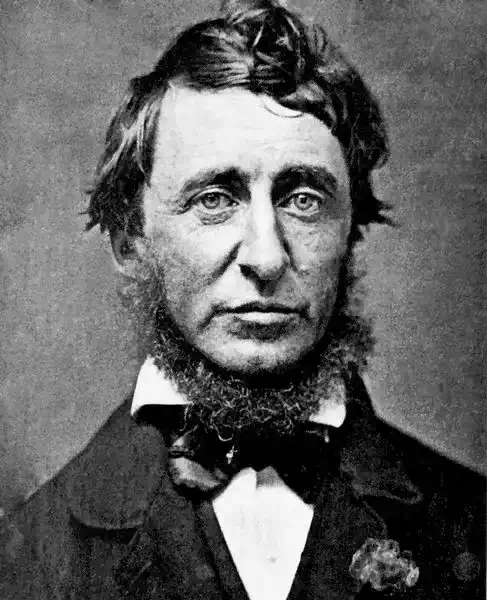
Henry David Thoreau
Sic Vita
I am a parcel of vain strivings tied
By a chance bond together,
Dangling this way and that, their links
Were made so loose and wide,
Methinks,
For milder weather.
A bunch of violets without their roots,
And sorrel intermixed,
Encircled by a wisp of straw
Once coiled about their shoots,
The law
By which I'm fixed.
A nosegay which Time clutched from out
Those fair Elysian fields,
With weeds and broken stems, in haste,
Doth make the rabble rout
That waste
The day he yields.
And here I bloom for a short hour unseen,
Drinking my juices up,
With no root in the land
To keep my branches green,
But stand
In a bare cup.
Some tender buds were left upon my stem
In mimicry of life,
But ah! the children will not know,
Till time has withered them,
The woe
With which they're rife.
But now I see I was not plucked for naught,
And after in life's vase
Of glass set while I might survive,
But by a kind hand brought
Alive
To a strange place.
That stock thus thinned will soon redeem its hours,
And by another year,
Such as God knows, with freer air,
More fruits and fairer flowers
Will bear,
While I droop here.
Read more →
251
Thomas Hardy
To An Orphan Child
A Whimsey
AH, child, thou art but half thy darling mother's;
Hers couldst thou wholly be,
My light in thee would outglow all in others;
She would relive to me.
But niggard Nature's trick of birth
Bars, lest she overjoy,
Renewal of the loved on earth
Save with alloy.
The Dame has no regard, alas, my maiden,
For love and loss like mine--
No sympathy with mind-sight memory-laden;
Only with fickle eyne.
To her mechanic artistry
My dreams are all unknown,
And why I wish that thou couldst be
But One's alone!
Read more →
251
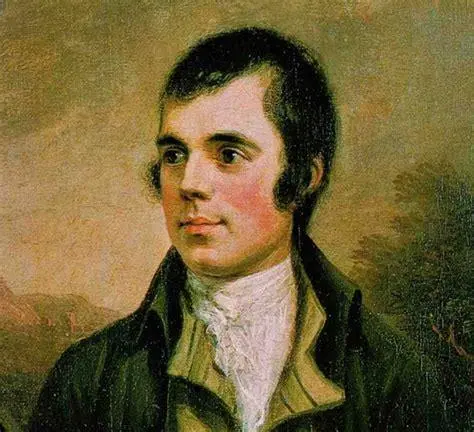
Robert Burns
Lament for Culloden
THE lovely lass o' Inverness,
Nae joy nor pleasure can she see;
For e'en and morn she cries, 'Alas!'
And aye the saut tear blin's her e'e:
'Drumossie moor, Drumossie day,
A waefu' day it was to me!
For there I lost my father dear,
My father dear and brethren three.
'Their winding-sheet the bluidy clay,
Their graves are growing green to see;
And by them lies the dearest lad
That ever blest a woman's e'e!
Now wae to thee, thou cruel lord,
A bluidy man I trow thou be;
For monie a heart thou hast made sair,
That ne'er did wrang to thine or thee.'
Read more →
250
Emily Dickinson
A Shade upon the mind there passes
A Shade upon the mind there passes
As when on Noon
A Cloud the mighty Sun encloses
Remembering
That some there be too numb to notice
Oh God
Why give if Thou must take away
The Loved?
Read more →
250
Robert W. Service
Heart O' The North
And when I come to the dim trail-end,
I who have been Life's rover,
This is all I would ask, my friend,
Over and over and over:
A little space on a stony hill
With never another near me,
Sky o' the North that's vast and still,
With a single star to cheer me;
Star that gleams on a moss-grey stone
Graven by those who love me --
There would I lie alone, alone,
With a single pine above me;
Pine that the north wind whinneys through -Oh,
I have been Life's lover!
But there I'd lie and listen to
Eternity passing over.
Read more →
251
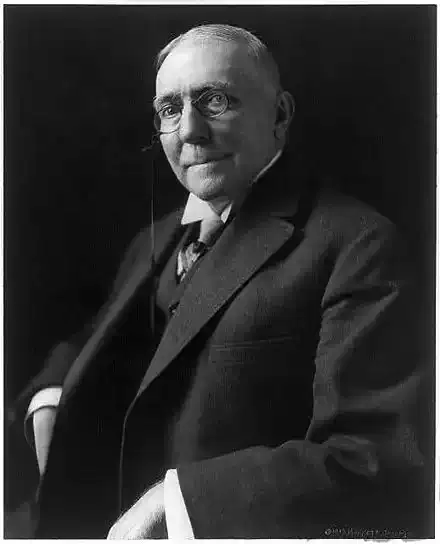
James Whitcomb Riley
The Singer
While with Ambition's hectic flame
He wastes the midnight oil,
And dreams, high-throned on heights of fame,
To rest him from his toil,-
Death's Angel, like a vast eclipse,
Above him spreads her wings,
And fans the embers of his lips
To ashes as he sings.
Read more →
249