
Death and Mourning

Henry Lawson
The Briny Grave
You wonder why so many would be buried in the sea,
In this world of froth and bubble,
But I don’t wonder, for it seems to me
That it saves such a lot of trouble.
And there ain’t no undertaker—
Oh! there ain’t no order that your friends can give
On the quiet to the coffin-maker—
To a gimcrack coffin-maker,
They make no differ twixt the absentee swell
And the clerk that cut from a “shortage”—
Oh! there ain’t no pauper funer-el,
And there ain’t no “impressive cortege.”
It may be a chap from the for’ard crowd,
Or a member of the British Peerage,
But they sew his nibs in a canvas shroud
Just the same as the bloke from the steerage—
As that poor bloke from the steerage.
There ain’t no need for a gravedigger there,
For you dig your own grave! Lord love yer!
And there ain’t no use for a headstone fair
When the waters close above yer!
The little headstone where they come to weep,
May be right for the land’s dry-rotters,
But you rest just as sound when you’re anchored deep
With the pigiron at your trotters—
(Our fathers had iron at their trotters).
The sea is democratic the wide world round,
And it don’t give a hang for no man,
There ain’t no Church of England burial ground,
Nor yet there ain’t no Roman.
Orthodox and het’rodox by wreck-strewn cliffs,
At peace in the stormiest weather,
Might bob up and down like two brother “stiffs,”
And rest in one shark together—
And mix up their bones together.
The bare-headed skipper is as good any day
As an authorised shifter of sin is,
And the tear of shipmate is better anyway
Than the tear of the next-of-kin is.
It saves your friends, and it fills your needs,
It is best when all is reckoned,
And she can’t come there in her widder weeds,
With her eyes on a likely second—
And a spot for the likely second.
Read more →
265

Christina Rossetti
Cobwebs
It is a land with neither night nor day,
Nor heat nor cold, nor any wind, nor rain,
Nor hills nor valleys; but one even plain
Stretches thro' long unbroken miles away:
While thro' the sluggish air a twilight grey
Broodeth; no moons or seasons wax and wane,
No ebb and flow are there among the main,
No bud-time no leaf-falling there for aye,
No ripple on the sea, no shifting sand,
No beat of wings to stir the stagnant space,
And loveless sea: no trace of days before,
No guarded home, no time-worn restingplace
No future hope no fear forevermore.
Read more →
263
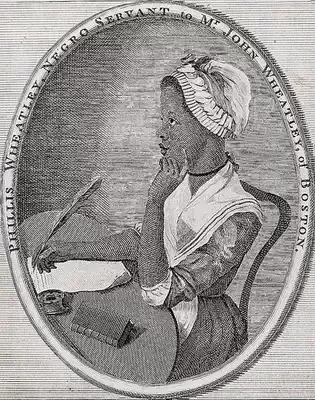
Phillis Wheatley
To A Gentleman And Lady On The Death Of The Lady's Brother And Sister
ON Death's domain intent I fix my eyes,
Where human nature in vast ruin lies:
With pensive mind I search the drear abode,
Where the great conqu'ror has his spoils bestow'd;
There there the offspring of six thousand years
In endless numbers to my view appears:
Whole kingdoms in his gloomy den are thrust,
And nations mix with their primeval dust:
Insatiate still he gluts the ample tomb;
His is the present, his the age to come.
See here a brother, here a sister spread,
And a sweet daughter mingled with the dead.
But, Madam, let your grief be laid aside,
And let the fountain of your tears be dry'd,
In vain they flow to wet the dusty plain,
Your sighs are wafted to the skies in vain,
Your pains they witness, but they can no more,
While Death reigns tyrant o'er this mortal shore.
The glowing stars and silver queen of light
At last must perish in the gloom of night:
Resign thy friends to that Almighty hand,
Which gave them life, and bow to his command;
Thine Avis give without a murm'ring heart,
Though half thy soul be fated to depart.
To shining guards consign thine infant care
To waft triumphant through the seas of air:
Her soul enlarg'd to heav'nly pleasure springs,
She feeds on truth and uncreated things.
Methinks I hear her in the realms above,
And leaning forward with a filial love,
Invite you there to share immortal bliss
Unknown, untasted in a state like this.
With tow'ring hopes, and growing grace arise,
And seek beatitude beyond the skies.
Read more →
266
Christina Rossetti
Why Did Baby Die?
Why did baby die,
Making Father sigh,
Mother cry?
Flowers, that bloom to die,
Make no reply
Of ‘why?’
But bow and die.
Read more →
262

Robert W. Service
The Living Dead
Since I have come to years sedate
I see with more and more acumen
The bitter irony of Fate,
The vanity of all things human.
Why, just to-day some fellow said,
As I surveyed Fame's outer portal:
"By gad! I thought that you were dead."
Poor me, who dreamed to be immortal!
But that's the way with many men
Whose name one fancied time-defying;
We thought that they were dust and then
We found them living by their dying.
Like dogs we penmen have our day,
To brief best-sellerdom elected;
And then, "thumbs down," we slink away
And die forgotten and neglected.
Ah well, my lyric fling I've had;
A thousand bits of verse I've minted;
And some, alas! were very bad,
And some, alack! were best unprinted.
But if I've made my muse a bawd
(Since I am earthy as a ditch is),
I'll answer humbly to my God:
Most men at times have toyed with bitches.
Yes, I have played with Lady Rhyme,
And had a long and lovely innings;
And when the Umpire calls my time
I'll blandly quit and take my winnings.
I'll hie me to some Sleepydale,
And feed the ducks and pat the poodles,
And prime my paunch with cakes and ale,
And blether with the village noodles.
And then some day you'll idly scan
The Times obituary column,
And say: "Dear me, the poor old man!"
And for a moment you'll look solemn.
"So all this time he's been alive -
In realms of rhyme a second-rater . . .
But gad! to live to ninety-five:
Let's toast his ghost - a sherry, waiter!"
Read more →
262
Henry Lawson
Old Tunes
When friends are listening round me, Jack, to hear my dying breath,
And I am lying in a sleep they say will end in death,
Don’t notice what the doctor says—and let the nurse complain——
I’ll tell you how to rouse me if I’ll ever wake again.
Just you bring in your fiddle, Jack, and set your heart in tune,
And strike up “Annie Laurie”, or “The Rising of the Moon”;
And if you see no token of a rising in my throat,
You’ll need to brace your mouth, old man—I’m booked by Charon’s boat.
And if you are not satisfied that I am off the scene,
Strike up “The Marseillaise”, or else “The Wearing of the Green”;
And should my fingers tremble not, then I have crossed the line,
But keep your fingers steady, Jack, and strike up “Auld Lang Syne”.
Read more →
262
Robert W. Service
Joey
I thought I would go daft when Joey died.
He was my first, and wise beyond his years.
For nigh a hundred nights I cried and cried,
Until my weary eyes burned up my tears.
Willie and Rosie tried to comfort me:
A woeful, weeping family were we.
I was a widow with no friends at all,
Ironing men's shirts to buy my kiddies grub;
And then one day a lawyer came to call,
Me with my arms deep in the washing-tub.
The gentleman who ran poor Joey down
Was willing to give us a thousand poun'.
What a godsend! It meant goodbye to care,
The fear of being dumped out on the street.
Rosie and Willie could have wool to wear,
And more than bread and margerine to eat . . .
To Joey's broken little legs we owe
Our rescue from a fate of want and woe.
How happily he hurried home to me,
Bringing a new-baked, crisp-brown loaf of bread.
The headlights of the car he did not see,
And when help came they thought that he was dead.
He stared with wonder from a face so wan . . .
A long, last look and he was gone,--was gone.
We've comfort now, and yet it hurts to know
We owe our joy to little, laughing Joe.
Read more →
263

Emily Dickinson
Wait till the Majesty of Death
Wait till the Majesty of Death
Invests so mean a brow!
Almost a powdered Footman
Might dare to touch it now!
Wait till in Everlasting Robes
That Democrat is dressed,
Then prate about "Preferment"-
And "Station," and the rest!
Around this quiet Courtier
Obsequious Angels wait!
Full royal is his Retinue!
Full purple is his state!
A Lord, might dare to lift the Hat
To such a Modest Clay
Since that My Lord, "the Lord of Lords"
Receives unblushingly!
Read more →
263
Emily Dickinson
The face I carry with me—last
The face I carry with me—last—
When I go out of Time—
To take my Rank—by—in the West—
That face—will just be thine—
I'll hand it to the Angel—
That—Sir—was my Degree—
In Kingdoms—you have heard the Raised—
Refer to—possibly.
He'll take it—scan it—step aside—
Return—with such a crown
As Gabriel—never capered at—
And beg me put it on—
And then—he'll turn me round and round—
To an admiring sky—
As one that bore her Master's name—
Sufficient Royalty!
Read more →
263
Emily Dickinson
She died—this was the way she died
She died—this was the way she died.
And when her breath was done
Took up her simple wardrobe
And started for the sun.
Her little figure at the gate
The Angels must have spied,
Since I could never find her
Upon the mortal side.
Read more →
263
Christina Rossetti
One Day
I will tell you when they met:
In the limpid days of Spring;
Elder boughs were budding yet,
Oaken boughs looked wintry still,
But primrose and veined violet
In the mossful turf were set,
While meeting birds made haste to sing
And build with right good will.
I will tell you when they parted:
When plenteous Autumn sheaves were brown,
Then they parted heavy-hearted;
The full rejoicing sun looked down
As grand as in the days before;
Only they had lost a crown;
Only to them those days of yore
Could come back nevermore.
When shall they meet? I cannot tell,
Indeed, when they shall meet again,
Except some day in Paradise:
For this they wait, one waits in pain.
Beyond the sea of death love lies
For ever, yesterday, to-day;
Angels shall ask them, 'Is it well?'
And they shall answer, 'Yea.'
Read more →
259
Christina Rossetti
The Ghost’s Petition
'There's a footstep coming: look out and see,'
'The leaves are falling, the wind is calling;
No one cometh across the lea.'—
'There's a footstep coming; O sister, look.'—
'The ripple flashes, the white foam dashes;
No one cometh across the brook.'—
'But he promised that he would come:
To-night, to-morrow, in joy or sorrow,
He must keep his word, and must come home.
'For he promised that he would come:
His word was given; from earth or heaven,
He must keep his word, and must come home.
'Go to sleep, my sweet sister Jane;
You can slumber, who need not number
Hour after hour, in doubt and pain.
'I shall sit here awhile, and watch;
Listening, hoping, for one hand groping
In deep shadow to find the latch.'
After the dark, and before the light,
One lay sleeping; and one sat weeping,
Who had watched and wept the weary night.
After the night, and before the day,
One lay sleeping; and one sat weeping—
Watching, weeping for one away.
There came a footstep climbing the stair;
Some one standing out on the landing
Shook the door like a puff of air—
Shook the door, and in he passed.
Did he enter? In the room centre
Stood her husband: the door shut fast.
'O Robin, but you are cold—
Chilled with the night-dew: so lily-white you
Look like a stray lamb from our fold.
'O Robin, but you are late:
Come and sit near me—sit here and cheer me.'—
(Blue the flame burnt in the grate.)
'Lay not down your head on my breast:
I cannot hold you, kind wife, nor fold you
In the shelter that you love best.
'Feel not after my clasping hand:
I am but a shadow, come from the meadow
Where many lie, but no tree can stand.
'We are trees which have shed their leaves:
Our heads lie low there, but no tears flow there;
Only I grieve for my wife who grieves.
'I could rest if you would not moan
Hour after hour; I have no power
To shut my ears where I lie alone.
'I could rest if you would not cry;
But there's no sleeping while you sit weeping—
Watching, weeping so bitterly.'—
'Woe's me! woe's me! for this I have heard.
Oh night of sorrow!—oh black to-morrow!
Is it thus that you keep your word?
'O you who used so to shelter me
Warm from the least wind—why, now the east wind
Is warmer than you, whom I quake to see.
'O my husband of flesh and blood,
For whom my mother I left, and brother,
And all I had, accounting it good,
'What do you do there, underground,
In the dark hollow? I'm fain to follow.
What do you do there?—what have you found?'—
'What I do there I must not tell:
But I have plenty: kind wife, content ye:
It is well with us—it is well.
'Tender hand hath made our nest;
Our fear is ended, our hope is blended
With present pleasure, and we have rest.'—
'Oh, but Robin, I'm fain to come,
If your present days are so pleasant;
For my days are so wearisome.
'Yet I'll dry my tears for your sake:
Why should I tease you, who cannot please you
Any more with the pains I take?'
Read more →
261
Emily Dickinson
Sweet-safe-Houses
Sweet-safe-HousesGlad-
gay-Houses-
Sealed so stately tight-
Lids of Steel-on Lids of Marble-
Locking Bare feet out-
Brooks of Plush-in Banks of Satin
Not so softly fall
As the laughter-and the whisper-
From their People Pearl-
No Bald Death-affront their Parlors-
No Bold Sickness come
To deface their Stately TreasuresAnguish-
and the Tomb-
Hum by-in Muffled Coaches-
Lest they-wonder WhyAny-
for the Press of SmilingInterrupt-
to die-
Read more →
260
Emily Dickinson
Of nearness to her sundered Things
Of nearness to her sundered Things
The Soul has special times-
When Dimness-looks the OddityDistinctness-
easy-seems-
The Shapes we buried, dwell about,
Familiar, in the Rooms-
Untarnished by the Sepulchre,
The Mouldering Playmate comes-
In just the Jacket that he wore-
Long buttoned in the Mold
Since we-old mornings, Children-played
Divided-
by a world-
The Grave yields back her Robberies-
The Years, our pilfered Things-
Bright Knots of Apparitions
Salute us, with their wings-
As we-it were-that perished
Themself-
had just remained till we rejoin them-
And 'twas they, and not ourself
That mourned.
Read more →
261

Anonymous
Episode
"THE bloody swath of Swedes and Geats
and the storm of their strife, were seen afar,
how folk against folk the fight had wakened.
The ancient king with his atheling band
sought his citadel, sorrowing much:
Ongentheow earl went up to his burg.
He had tested Hygelac's hardihood,
the proud one's prowess, would prove it no longer,
defied no more those fighting-wanderers
nor hoped from the seamen to save his hoard,
his bairn and his bride: so he bent him again,
old, to his earth-walls. Yet after him came
with slaughter for Swedes the standards of Hygelac
o'er peaceful plains in pride advancing,
till Hrethelings fought in the fenced town.
Then Ongentheow with edge of sword,
the hoary-bearded, was held at bay,
and the folk-king there was forced to suffer
Eofor's anger. In ire, at the king
Wulf Wonreding with weapon struck;
and the chieftain's blood, for that blow, in streams
flowed 'neath his hair. No fear felt he,
stout old Scylfing, but straightway repaid
in better bargain that bitter stroke
and faced his foe with fell intent.
Nor swift enough was the son of Wonred
answer to render the aged chief;
too soon on his head the helm was cloven;
blood-bedecked he bowed to earth,
and fell adown; not doomed was he yet,
and well he waxed, though the wound was sore.
Then the hardy Hygelac-thane,
when his brother fell, with broad brand smote,
giants' sword crashing through giants'-helm
across the shield-wall: sank the king,
his folk's old herdsman, fatally hurt.
There were many to bind the brother's wounds
and lift him, fast as fate allowed
his people to wield the place-of-war.
But Eofor took from Ongentheow,
earl from other, the iron-breastplate,
hard sword hilted, and helmet too,
and the hoar-chief's harness to Hygelac carried,
who took the trappings, and truly promised
rich fee 'mid folk, -- and fulfilled it so.
For that grim strife gave the Geatish lord,
Hrethel's offspring, when home he came,
to Eofor and Wulf a wealth of treasure,
Each of them had a hundred thousand
in land and linked rings; nor at less price reckoned
mid-earth men such mighty deeds!
And to Eofor he gave his only daughter
in pledge of grace, the pride of his home.
"Such is the feud, the foeman's rage,
death-hate of men: so I deem it sure
that the Swedish folk will seek us home
for this fall of their friends, the fighting-Scylfings,
when once they learn that our warrior leader
lifeless lies, who land and hoard
ever defended from all his foes,
furthered his folk's weal, finished his course
a hardy hero. -- Now haste is best,
that we go to gaze on our Geatish lord,
and bear the bountiful breaker-of-rings
to the funeral pyre. No fragments merely
shall burn with the warrior. Wealth of jewels,
gold untold and gained in terror,
treasure at last with his life obtained,
all of that booty the brands shall take,
fire shall eat it. No earl must carry
memorial jewel. No maiden fair
shall wreathe her neck with noble ring:
nay, sad in spirit and shorn of her gold,
oft shall she pass o'er paths of exile
now our lord all laughter has laid aside,
all mirth and revel. Many a spear
morning-cold shall be clasped amain,
lifted aloft; nor shall lilt of harp
those warriors wake; but the wan-hued raven,
fain o'er the fallen, his feast shall praise
and boast to the eagle how bravely he ate
when he and the wolf were wasting the slain."
So he told his sorrowful tidings,
and little he lied, the loyal man
of word or of work. The warriors rose;
sad, they climbed to the Cliff-of-Eagles,
went, welling with tears, the wonder to view.
Found on the sand there, stretched at rest,
their lifeless lord, who had lavished rings
of old upon them. Ending-day
had dawned on the doughty-one; death had seized
in woful slaughter the Weders' king.
There saw they, besides, the strangest being,
loathsome, lying their leader near,
prone on the field. The fiery dragon,
fearful fiend, with flame was scorched.
Reckoned by feet, it was fifty measures
in length as it lay. Aloft erewhile
it had revelled by night, and anon come back,
seeking its den; now in death's sure clutch
it had come to the end of its earth-hall joys.
By it there stood the stoups and jars;
dishes lay there, and dear-decked swords
eaten with rust, as, on earth's lap resting,
a thousand winters they waited there.
For all that heritage huge, that gold
of bygone men, was bound by a spell,
so the treasure-hall could be touched by none
of human kind, -- save that Heaven's King,
God himself, might give whom he would,
Helper of Heroes, the hoard to open, --
even such a man as seemed to him meet.
Read more →
259
Emily Dickinson
If this is fading
If this is "fading"
Oh let me immediately "fade"!
If this is "dying"
Bury me, in such a shroud of red!
If this is "sleep,"
On such a night
How proud to shut the eye!
Good Evening, gentle Fellow men!
Peacock presumes to die!
Read more →
261
Anonymous
Clerk Saunders
Whan bells war rung, an mass was sung,
A wat a' man to bed were gone,
Clark Sanders came to Margret's window,
With mony a sad sigh and groan.
"Are ye sleeping, Margret," he says,
"Or are ye waking, presentlie?
Give me my faith and trouthe again,
A wat, trew-love, I gied to thee."
"Your faith and trouth ye's never get,
Nor our trew love shall never twain,
Till ye come with me in my bower,
And kiss me both cheek and chin."
"My mouth it is full cold, Margret,
It has the smell now of the ground;
And if I kiss thy comely mouth,
Thy life-days will not be long.
"Cocks are crowing a merry mid-larf,
I wat the wild fule boded day;
Gie me my faith and trouthe again,
And let me fare me on my way."
"Thy faith and trouth thou shall na get,
Nor our trew love shall never twin,
Till ye tell me what comes of women
Awat that dy's in strong traveling."
"Their beds are made in the heavens high,
Down at the foot of our good Lord's knee,
Well set about wi gilly-flowers,
A wat sweet company for to see.
"O cocks are crowing a merry middlarf,
A wat the wilde foule boded day;
The salms of Heaven will be sung,
And ere now I'le be misst away."
Up she has tain a bright long wand,
And she has straked her trouth thereon;
She has given it him out at the shot-window,
Wi many a sad sigh and heavy groan.
"I thank you, Margret, I thank you, Margret,
And I thank you hartilie;
Gine ever the dead come for the quick,
Be sure, Margret, I'll come again for thee."
It's hose an shoon an gound alane
She clame the wall and followed him,
Untill she came to a green forest,
On this she lost the sight of him.
"Is their any room at your head, Sanders?
Is their any room at your feet?
Or any room at your twa sides?
Whare fain, fain woud I sleep."
"Their is na room at my head, Margret,
Their is na room at my feet;
There is room at my twa sides,
For ladys for to sleep.
"Cold meal is my covering owre,
But an my winding sheet;
My bed it is full low, I say,
Down among the hongerey worms I sleep.
"Cold meal is my covering owre,
But an my winding sheet;
The dew it falls na sooner down
Then ay it is full weet."
Read more →
261
Emily Dickinson
Till Death—is narrow Loving
Till Death—is narrow Loving—
The scantest Heart extant
Will hold you till your privilege
Of Finiteness—be spent—
But He whose loss procures you
Such Destitution that
Your Life too abject for itself
Thenceforward imitate—
Until—Resemblance perfect—
Yourself, for His pursuit
Delight of Nature—abdicate—
Exhibit Love—somewhat—
Read more →
260

William Butler Yeats
Her Dream
I dreamed as in my bed I lay,
All night's fathomless wisdom come,
That I had shorn my locks away
And laid them on Love's lettered tomb:
But something bore them out of sight
In a great tumult of the air,
And after nailed upon the night
Berenice's burning hair.
Read more →
262
Christina Rossetti
The Bourne
Underneath the growing grass,
Underneath the living flowers,
Deeper than the sound of showers:
There we shall not count the hours
By the shadows as they pass.
Youth and health will be but vain,
Beauty reckoned of no worth:
There a very little girth
Can hold round what once the earth
Seemed too narrow to contain.
Read more →
259

William Shakespeare
Sonnet 74: But be contented when that fell arrest
But be contented when that fell arrest
Without all bail shall carry me away;
My life hath in this line some interest,
Which for memorial still with thee shall stay.
When thou reviewest this, thou dost review
The very part was consecrate to thee,
The earth can have but earth, which is his due;
My spirit is thine the better part of me.
So then thou hast but lost the dregs of life,
The prey of worms, my body being dead,
The coward conquest of a wretch's knife,
Too base of thee to be rememberèd,
The worth of that is that which it contains,
And that is this, and this with thee remains.
Read more →
260

Henry Wadsworth Longfellow
Suspiria
Take them, O Death! and bear away
Whatever thou canst call thine own!
Thine image, stamped upon this clay,
Doth give thee that, but that alone!
Take them, O Grave! and let them lie
Folded upon thy narrow shelves,
As garments by the soul laid by,
And precious only to ourselves!
Take them, O great Eternity!
Our little life is but a gust
That bends the branches of thy tree,
And trails its blossoms in the dust!
Read more →
260
Robert W. Service
Pooch
Nurse, won't you let him in?
He's barkin' an' scratchen' the door,
Makin' so dreffel a din
I jest can't sleep any more;
Out there in the dark an' the cold,
Hark to him scrape an' whine,
Breakin' his heart o' gold,
Poor little pooch o' mine.
Nurse, I was sat in ma seat
In front o' the barber shop,
When there he was lickin' ma feet
As if he would never stop;
Then all of a sudden I see
That dog-catcher moseyin' by:
"Whose mongrel is that?" says he;
"It's ma pedigree pup," says I.
Nurse, he was starved an' a-stray,
But his eyes was plumbful o' trust.
How could I turn him away?
I throwed him a bit o' a crust,
An' he choked as he gluped it up,
Then down at ma feet he curled:
Poor little pitiful pup!
Hadn't a friend in the world.
Nurse, I was friendless too,
So we was makin' a pair.
I'm black as a cast-off shoe,
But that li'le dog didn't care.
He loved me as much as though
Ma skin was pearly an' white:
Somehow dogs seem to know
When a man's heart's all right.
Nurse, we was thick as thieves;
Nothin' could pry us apart,
An' now to hear how he grieves
Is twistin' a knife in ma heart.
As I worked at ma shoe-shine stand
He'd watch me wi' eyes o' love,
A-wigglin' an' lickin' ma hand
Like I was a god above.
Nurse, I sure had no luck
That night o' the rain an' then fog;
There was that thunderin' truck,
And right in the way - ma dog.
Oh, I was a fool, I fear;
It's harder to think than to feel . . .
I dashed in, flung the pup clear,
But - I went under the wheel. . . .
Nurse, it's a-gittin' dark;
Guess ma time's about up:
Don't seem to hear him bark,
Poor, broken-hearted pup! . . .
Why, here he is, darn his skin!
Lickin' ma face once more:
How did the cuss get in?
Musta' busted the door.
God, I'm an ol' black coon,
But You ain't conscious o' race.
I gotta be goin' soon,
I'll be meetin' You face to face.
I'se been sinful, dice an' hooch,
But Lordy, before I die
I'se a-prayin': "Be good to ma pooch" . . .
That's all - little mutt, good-bye.
Read more →
259
Robert W. Service
Jim
Never knew Jim, did you? Our boy Jim?
Bless you, there was the likely lad;
Supple and straight and long of limb,
Clean as a whistle, and just as glad.
Always laughing, wasn't he, dad?
Joy, pure joy to the heart of him,
And, oh, but the soothering ways he had,
Jim, our Jim!
But I see him best as a tiny tot,
A bonny babe, though it's me that speaks;
Laughing there in his little cot,
With his sunny hair and his apple cheeks.
And my! but the blue, blue eyes he'd got,
And just where his wee mouth dimpled dim
Such a fairy mark like a beauty spot -
That was Jim.
Oh, the war, the war! How my eyes were wet!
But he says: "Don't be sorrowing, mother dear;
You never knew me to fail you yet,
And I'll be back in a year, a year."
'Twas at Mons he fell, in the first attack;
For so they said, and their eyes were dim;
But I laughed in their faces: "He'll come back,
Will my Jim."
Now, we'd been wedded for twenty year,
And Jim was the only one we'd had;
So when I whispered in father's ear,
He wouldn't believe me -- would you, dad?
There! I must hurry . . . hear him cry?
My new little baby. . . . See! that's him.
What are we going to call him? Why,
Jim, just Jim.
Jim! For look at him laughing there
In the same old way in his tiny cot,
With his rosy cheeks and his sunny hair,
And look, just look . . . his beauty spot
In the selfsame place. . . . Oh, I can't explain,
And of course you think it's a mother's whim,
But I know, I know it's my boy again,
Same wee Jim.
Just come back as he said he would;
Come with his love and his heart of glee.
Oh, I cried and I cried, but the Lord was good;
From the shadow of Death he set Jim free.
So I'll have him all over again, you see.
Can you wonder my mother-heart's a-brim?
Oh, how happy we're going to be!
Aren't we, Jim?
Read more →
258