
Death and Mourning
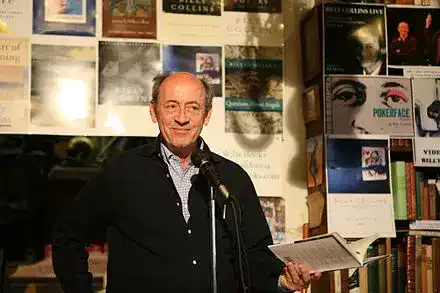
Billy Collins
The Iron Bridge
I am standing on a disused iron bridge
that was erected in 1902,
according to the iron plaque bolted into a beam,
the year my mother turned one.
Imagine--a mother in her infancy,
and she was a Canadian infant at that,
one of the great infants of the province of Ontario.
But here I am leaning on the rusted railing
looking at the water below,
which is flat and reflective this morning,
sky-blue and streaked with high clouds,
and the more I look at the water,
which is like a talking picture,
the more I think of 1902
when workmen in shirts and caps
riveted this iron bridge together
across a thin channel joining two lakes
where wildflowers blow along the shore now
and pairs of swans float in the leafy coves.
1902--my mother was so tiny
she could have fit into one of those oval
baskets for holding apples,
which her mother could have lined with a soft cloth
and placed on the kitchen table
so she could keep an eye on infant Katherine
while she scrubbed potatoes or shelled a bag of peas,
the way I am keeping an eye on that cormorant
who just broke the glassy surface
and is moving away from me and the iron bridge,
swiveling his curious head,
slipping out to where the sun rakes the water
and filters through the trees that crowd the shore.
And now he dives,
disappears below the surface,
and while I wait for him to pop up,
I picture him flying underwater with his strange wings,
as I picture you, my tiny mother,
who disappeared last year,
flying somewhere with your strange wings,
your wide eyes, and your heavy wet dress,
kicking deeper down into a lake
with no end or name, some boundless province of water.
Read more →
274

Emily Dickinson
'Twas warm—at first—like Us
'Twas warm—at first—like Us—
Until there crept upon
A Chill—like frost upon a Glass—
Till all the scene—be gone.
The Forehead copied Stone—
The Fingers grew too cold
To ache—and like a Skater's Brook—
The busy eyes—congealed—
It straightened—that was all—
It crowded Cold to Cold—
It multiplied indifference—
As Pride were all it could—
And even when with Cords—
'Twas lowered, like a Weight—
It made no Signal, nor demurred,
But dropped like Adamant.
Read more →
274

D.H. Lawrence
The Ship of Death
I
Now it is autumn and the falling fruit
and the long journey towards oblivion.
The apples falling like great drops of dew
to bruise themselves an exit from themselves.
And it is time to go, to bid farewell
to one's own self, and find an exit
from the fallen self.
II
Have you built your ship of death, O have you?
O build your ship of death, for you will need it.
The grim frost is at hand, when the apples will fall
thick, almost thundrous, on the hardened earth.
And death is on the air like a smell of ashes!
Ah! can't you smell it?
And in the bruised body, the frightened soul
finds itself shrinking, wincing from the cold
that blows upon it through the orifices.
III
And can a man his own quietus make
with a bare bodkin?
With daggers, bodkins, bullets, man can make
a bruise or break of exit for his life;
but is that a quietus, O tell me, is it quietus?
Surely not so! for how could murder, even self-murder
ever a quietus make?
IV
O let us talk of quiet that we know,
that we can know, the deep and lovely quiet
of a strong heart at peace!
How can we this, our own quietus, make?
V
Build then the ship of death, for you must take
the longest journey, to oblivion.
And die the death, the long and painful death
that lies between the old self and the new.
Already our bodies are fallen, bruised, badly bruised,
already our souls are oozing through the exit
of the cruel bruise.
Already the dark and endless ocean of the end
is washing in through the breaches of our wounds,
Already the flood is upon us.
Oh build your ship of death, your little ark
and furnish it with food, with little cakes, and wine
for the dark flight down oblivion.
VI
Piecemeal the body dies, and the timid soul
has her footing washed away, as the dark flood rises.
We are dying, we are dying, we are all of us dying
and nothing will stay the death-flood rising within us
and soon it will rise on the world, on the outside world.
We are dying, we are dying, piecemeal our bodies are dying
and our strength leaves us,
and our soul cowers naked in the dark rain over the flood,
cowering in the last branches of the tree of our life.
VII
We are dying, we are dying, so all we can do
is now to be willing to die, and to build the ship
of death to carry the soul on the longest journey.
A little ship, with oars and food
and little dishes, and all accoutrements
fitting and ready for the departing soul.
Now launch the small ship, now as the body dies
and life departs, launch out, the fragile soul
in the fragile ship of courage, the ark of faith
with its store of food and little cooking pans
and change of clothes,
upon the flood's black waste
upon the waters of the end
upon the sea of death, where still we sail
darkly, for we cannot steer, and have no port.
There is no port, there is nowhere to go
only the deepening blackness darkening still
blacker upon the soundless, ungurgling flood
darkness at one with darkness, up and down
and sideways utterly dark, so there is no direction any more
and the little ship is there; yet she is gone.
She is not seen, for there is nothing to see her by.
She is gone! gone! and yet
somewhere she is there.
Nowhere!
VIII
And everything is gone, the body is gone
completely under, gone, entirely gone.
The upper darkness is heavy as the lower,
between them the little ship
is gone
It is the end, it is oblivion.
IX
And yet out of eternity a thread
separates itself on the blackness,
a horizontal thread
that fumes a little with pallor upon the dark.
Is it illusion? or does the pallor fume
A little higher?
Ah wait, wait, for there's the dawn
the cruel dawn of coming back to life
out of oblivion
Wait, wait, the little ship
drifting, beneath the deathly ashy grey
of a flood-dawn.
Wait, wait! even so, a flush of yellow
and strangely, O chilled wan soul, a flush of rose.
A flush of rose, and the whole thing starts again.
X
The flood subsides, and the body, like a worn sea-shell
emerges strange and lovely.
And the little ship wings home, faltering and lapsing
on the pink flood,
and the frail soul steps out, into the house again
filling the heart with peace.
Swings the heart renewed with peace
even of oblivion.
Oh build your ship of death. Oh build it!
for you will need it.
For the voyage of oblivion awaits you.
Read more →
272
Emily Dickinson
I cried at Pity—not at Pain
I cried at Pity—not at Pain—
I heard a Woman say
"Poor Child"—and something in her voice
Convicted me—of me—
So long I fainted, to myself
It seemed the common way,
And Health, and Laughter, Curious things—
To look at, like a Toy—
To sometimes hear "Rich people" buy
And see the Parcel rolled—
And carried, I supposed—to Heaven,
For children, made of Gold—
But not to touch, or wish for,
Or think of, with a sigh—
And so and so—had been to me,
Had God willed differently.
I wish I knew that Woman's name—
So when she comes this way,
To hold my life, and hold my ears
For fear I hear her say
She's "sorry I am dead"—again—
Just when the Grave and I—
Have sobbed ourselves almost to sleep,
Our only Lullaby—
Read more →
273

Robert Burns
Highland Mary
Ye banks, and braes, and streams around
The castle o' Montgomery,
Green be your woods, and fair your flowers,
Your waters never drumlie!
There Simmer first unfald her robes,
And there the langest tarry:
For there I took the last Fareweel
O' my sweet Highland Mary.
How sweetly bloom'd the gay, green birk,
How rich the hawthorn's blossom;
As underneath their fragrant shade,
I clasp'd her to my bosom!
The golden Hours, on angel wings,
Flew o'er me and my Dearie;
For dear to me as light and life
Was my sweet Highland Mary.
Wi' mony a vow, and lock'd embrace,
Our parting was fu' tender;
And pledging aft to meet again,
We tore oursels asunder:
But Oh, fell Death's untimely frost,
That nipt my Flower sae early!
Now green's the sod, and cauld's the clay,
That wraps my Highland Mary!
O pale, pale now, those rosy lips
I aft hae kiss'd sae fondly!
And clos'd for ay, the sparkling glance,
That dwalt on me sae kindly!
And mouldering now in silent dust,
That heart that lo'ed me dearly!
But still within my bosom's core
Shall live my Highland Mary.
Read more →
274

Dylan Thomas
Among Those Killed in the Dawn Raid Was a Man Aged a Hundred
When the morning was waking over the war
He put on his clothes and stepped out and he died,
The locks yawned loose and a blast blew them wide,
He dropped where he loved on the burst pavement stone
And the funeral grains of the slaughtered floor.
Tell his street on its back he stopped a sun
And the craters of his eyes grew springshots and fire
When all the keys shot from the locks, and rang.
Dig no more for the chains of his grey-haired heart.
The heavenly ambulance drawn by a wound
Assembling waits for the spade's ring on the cage.
O keep his bones away from the common cart,
The morning is flying on the wings of his age
And a hundred storks perch on the sun's right hand.
Read more →
272

George Herbert
The Dawning
Awake, sad heart, whom sorrow ever drowns ;
Take up thine eyes, which feed on earth ;
Unfold thy forehead, gathered into frowns ;
Thy Saviour comes, and with Him mirth :
Awake, awake,
And with a thankful heart His comforts take.
But thou dost still lament, and pine, and cry,
And feel His death, but not His victory.
Arise, sad heart ; if thou dost not withstand,
Christ's resurrection thine may be ;
Do not by hanging down break from the hand
Which, as it riseth, raiseth thee :
Arise, Arise;
And with His burial linen drie thine eyes.
Christ left His grave-clothes, that we might, when grief
Draws tears or blood, not want a handkerchief.
Read more →
273
Emily Dickinson
Color—Caste—Denomination
Color—Caste—Denomination—
These—are Time's Affair—
Death's diviner Classifying
Does not know they are—
As in sleep—All Hue forgotten—
Tenets—put behind—
Death's large—Democratic fingers
Rub away the Brand—
If Circassian—He is careless—
If He put away
Chrysalis of Blonde—or Umber—
Equal Butterfly—
They emerge from His Obscuring—
What Death—knows so well—
Our minuter intuitions—
Deem unplausible—
Read more →
270

Edna St. Vincent Millay
Elegy Before Death
There will be rose and rhododendron
When you are dead and under ground;
Still will be heard from white syringas
Heavy with bees, a sunny sound;
Still will the tamaracks be raining
After the rain has ceased, and still
Will there be robins in the stubble,
Brown sheep upon the warm green hill.
Spring will not ail nor autumn falter;
Nothing will know that you are gone,
Saving alone some sullen plough-land
None but yourself sets foot upon;
Saving the may-weed and the pig-weed
Nothing will know that you are dead,—
These, and perhaps a useless wagon
Standing beside some tumbled shed.
Oh, there will pass with your great passing
Little of beauty not your own,—
Only the light from common water,
Only the grace from simple stone!
Read more →
270
Edna St. Vincent Millay
Sonnets 08: And You As Well Must Die, Beloved Dust
And you as well must die, beloved dust,
And all your beauty stand you in no stead;
This flawless, vital hand, this perfect head,
This body of flame and steel, before the gust
Of Death, or under his autumnal frost,
Shall be as any leaf, be no less dead
Than the first leaf that fell,--this wonder fled.
Altered, estranged, disintegrated, lost.
Nor shall my love avail you in your hour.
In spite of all my love, you will arise
Upon that day and wander down the air
Obscurely as the unattended flower,
It mattering not how beautiful you were,
Or how beloved above all else that dies.
Read more →
270
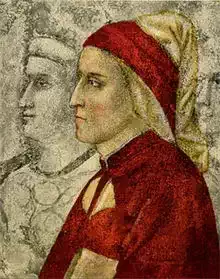
Dante Alighieri
Inferno Canto03
Per me si va ne la città dolente,
per me si va ne l'etterno dolore,
per me si va tra la perduta gente .
THROUGH ME THE WAY INTO THE SUFFERING CITY,
THROUGH ME THE WAY TO THE ETERNAL PAIN,
THROUGH ME THE WAY THAT RUNS AMONG THE LOST.
Giustizia mosse il mio alto fattore:
fecemi la divina podestate,
la somma sapienza e 'l primo amore .
JUSTICE URGED ON MY HIGH ARTIFICER;
MY MAKER WAS DIVINE AUTHORITY,
THE HIGHEST WISDOM, AND THE PRIMAL LOVE.
Dinanzi a me non fuor cose create
se non etterne, e io etterno duro.
Lasciate ogne speranza, voi ch'intrate ".
BEFORE ME NOTHING BUT ETERNAL THINGS
WERE MADE, AND I ENDURE ETERNALLY.
ABANDON EVERY HOPE, WHO ENTER HERE.
Queste parole di colore oscuro
vid'io scritte al sommo d'una porta;
per ch'io: «Maestro, il senso lor m'è duro ».
These words-their aspect was obscure-I read
inscribed above a gateway, and I said:
"Master, their meaning is difficult for me."
Ed elli a me, come persona accorta:
«Qui si convien lasciare ogne sospetto;
ogne viltà convien che qui sia morta .
And he to me, as one who comprehends:
"Here one must leave behind all hesitation;
here every cowardice must meet its death.
Noi siam venuti al loco ov'i' t'ho detto
che tu vedrai le genti dolorose
c'hanno perduto il ben de l'intelletto ».
For we have reached the place of which I spoke,
where you will see the miserable people,
those who have lost the good of the intellect."
E poi che la sua mano a la mia puose
con lieto volto, ond'io mi confortai,
mi mise dentro a le segrete cose .
And when, with gladness in his face, he placed
his hand upon my own, to comfort me,
he drew me in among the hidden things.
Quivi sospiri, pianti e alti guai
risonavan per l'aere sanza stelle,
per ch'io al cominciar ne lagrimai .
Here sighs and lamentations and loud cries
were echoing across the starless air,
so that, as soon as I set out, I wept.
Diverse lingue, orribili favelle,
parole di dolore, accenti d'ira,
voci alte e fioche, e suon di man con elle
Strange utterances, horrible pronouncements,
accents of anger, words of suffering,
and voices shrill and faint, and beating hands
facevano un tumulto, il qual s'aggira
sempre in quell'aura sanza tempo tinta,
come la rena quando turbo spira .
all went to make a tumult that will whirl
forever through that turbid, timeless air,
like sand that eddies when a whirlwind swirls.
E io ch'avea d'error la testa cinta,
dissi: «Maestro, che è quel ch'i' odo?
e che gent'è che par nel duol sì vinta ?».
And I-my head oppressed by horror-said:
"Master, what is it that I hear? Who are
those people so defeated by their pain?"
Ed elli a me: «Questo misero modo
tegnon l'anime triste di coloro
che visser sanza 'nfamia e sanza lodo .
And he to me: "This miserable way
is taken by the sorry souls of those
who lived without disgrace and without praise.
Mischiate sono a quel cattivo coro
de li angeli che non furon ribelli
né fur fedeli a Dio, ma per sé fuoro .
They now commingle with the coward angels,
the company of those who were not rebels
nor faithful to their God, but stood apart.
Caccianli i ciel per non esser men belli,
né lo profondo inferno li riceve,
ch'alcuna gloria i rei avrebber d'elli ».
The heavens, that their beauty not be lessened,
have cast them out, nor will deep Hell receive themeven
the wicked cannot glory in them."
E io: «Maestro, che è tanto greve
a lor, che lamentar li fa sì forte?».
Rispuose: «Dicerolti molto breve .
And I: "What is it, master, that oppresses
these souls, compelling them to wail so loud?"
He answered: "I shall tell you in few words.
Questi non hanno speranza di morte
e la lor cieca vita è tanto bassa,
che 'nvidiosi son d'ogne altra sorte .
Those who are here can place no hope in death,
and their blind life is so abject that they
are envious of every other fate.
Fama di loro il mondo esser non lassa;
misericordia e giustizia li sdegna:
non ragioniam di lor, ma guarda e passa ».
The world will let no fame of theirs endure;
both justice and compassion must disdain them;
let us not talk of them, but look and pass."
E io, che riguardai, vidi una 'nsegna
che girando correva tanto ratta,
che d'ogne posa mi parea indegna ;
And I, looking more closely, saw a banner
that, as it wheeled about, raced on-so quick
that any respite seemed unsuited to it.
e dietro le venìa sì lunga tratta
di gente, ch'i' non averei creduto
che morte tanta n'avesse disfatta .
Behind that banner trailed so long a file
of people-I should never have believed
that death could have unmade so many souls.
Poscia ch'io v'ebbi alcun riconosciuto,
vidi e conobbi l'ombra di colui
che fece per viltade il gran rifiuto .
After I had identified a few,
I saw and recognized the shade of him
who made, through cowardice, the great refusal.
Incontanente intesi e certo fui
che questa era la setta d'i cattivi,
a Dio spiacenti e a' nemici sui .
At once I understood with certainty:
this company contained the cowardly,
hateful to God and to His enemies.
Questi sciaurati, che mai non fur vivi,
erano ignudi e stimolati molto
da mosconi e da vespe ch'eran ivi .
These wretched ones, who never were alive,
went naked and were stung again, again
by horseflies and by wasps that circled them.
Elle rigavan lor di sangue il volto,
che, mischiato di lagrime, a' lor piedi
da fastidiosi vermi era ricolto .
The insects streaked their faces with their blood,
which, mingled with their tears, fell at their feet,
where it was gathered up by sickening worms.
E poi ch'a riguardar oltre mi diedi,
vidi genti a la riva d'un gran fiume;
per ch'io dissi: «Maestro, or mi concedi
And then, looking beyond them, I could see
a crowd along the bank of a great river;
at which I said: "Allow me now to know
ch'i' sappia quali sono, e qual costume
le fa di trapassar parer sì pronte,
com'io discerno per lo fioco lume ».
who are these people-master-and what law
has made them seem so eager for the crossing,
as I can see despite the feeble light."
Ed elli a me: «Le cose ti fier conte
quando noi fermerem li nostri passi
su la trista riviera d'Acheronte ».
And he to me: "When we have stopped along
the melancholy shore of Acheron,
then all these matters will be plain to you."
Allor con li occhi vergognosi e bassi,
temendo no 'l mio dir li fosse grave,
infino al fiume del parlar mi trassi .
At that, with eyes ashamed, downcast, and fearing
that what I said had given him offense,
I did not speak until we reached the river.
Ed ecco verso noi venir per nave
un vecchio, bianco per antico pelo,
gridando: «Guai a voi, anime prave !
And here, advancing toward us, in a boat,
an aged man-his hair was white with yearswas
shouting: "Woe to you, corrupted souls!
Non isperate mai veder lo cielo:
i' vegno per menarvi a l'altra riva
ne le tenebre etterne, in caldo e 'n gelo .
Forget your hope of ever seeing Heaven:
I come to lead you to the other shore,
to the eternal dark, to fire and frost.
E tu che se' costì, anima viva,
pàrtiti da cotesti che son morti».
Ma poi che vide ch'io non mi partiva ,
And you approaching there, you living soul,
keep well away from these-they are the dead."
But when he saw I made no move to go,
disse: «Per altra via, per altri porti
verrai a piaggia, non qui, per passare:
più lieve legno convien che ti porti ».
he said: "Another way and other harborsnot
here-will bring you passage to your shore:
a lighter craft will have to carry you."
E 'l duca lui: «Caron, non ti crucciare:
vuolsi così colà dove si puote
ciò che si vuole, e più non dimandare ».
My guide then: "Charon, don't torment yourself:
our passage has been willed above, where One
can do what He has willed; and ask no more."
Quinci fuor quete le lanose gote
al nocchier de la livida palude,
che 'ntorno a li occhi avea di fiamme rote .
Now silence fell upon the wooly cheeks
of Charon, pilot of the livid marsh,
whose eyes were ringed about with wheels of flame.
Ma quell'anime, ch'eran lasse e nude,
cangiar colore e dibattero i denti,
ratto che 'nteser le parole crude .
But all those spirits, naked and exhausted,
had lost their color, and they gnashed their teeth
as soon as they heard Charon's cruel words;
Bestemmiavano Dio e lor parenti,
l'umana spezie e 'l loco e 'l tempo e 'l seme
di lor semenza e di lor nascimenti .
they execrated God and their own parents
and humankind, and then the place and time
of their conception's seed and of their birth.
Poi si ritrasser tutte quante insieme,
forte piangendo, a la riva malvagia
ch'attende ciascun uom che Dio non teme .
Then they forgathered, huddled in one throng,
weeping aloud along that wretched shore
which waits for all who have no fear of God.
Caron dimonio, con occhi di bragia,
loro accennando, tutte le raccoglie;
batte col remo qualunque s'adagia .
The demon Charon, with his eyes like embers,
by signaling to them, has all embark;
his oar strikes anyone who stretches out.
Come d'autunno si levan le foglie
l'una appresso de l'altra, fin che 'l ramo
vede a la terra tutte le sue spoglie ,
As, in the autumn, leaves detach themselves,
first one and then the other, till the bough
sees all its fallen garments on the ground,
Aen.VI.
similemente il mal seme d'Adamo
gittansi di quel lito ad una ad una,
per cenni come augel per suo richiamo .
similarly, the evil seed of Adam
descended from the shoreline one by one,
when signaled, as a falcon-called-will come.
Così sen vanno su per l'onda bruna,
e avanti che sien di là discese,
anche di qua nuova schiera s'auna .
So do they move across the darkened waters;
even before they reach the farther shore,
new ranks already gather on this bank.
«Figliuol mio», disse 'l maestro cortese,
«quelli che muoion ne l'ira di Dio
tutti convegnon qui d'ogne paese :
"My son," the gracious master said to me,
"those who have died beneath the wrath of God,
all these assemble here from every country;
e pronti sono a trapassar lo rio,
ché la divina giustizia li sprona,
sì che la tema si volve in disio .
and they are eager for the river crossing
because celestial justice spurs them on,
so that their fear is turned into desire.
Quinci non passa mai anima buona;
e però, se Caron di te si lagna,
ben puoi sapere omai che 'l suo dir suona ».
No good soul ever takes its passage here;
therefore, if Charon has complained of you,
by now you can be sure what his words mean."
Finito questo, la buia campagna
tremò sì forte, che de lo spavento
la mente di sudore ancor mi bagna .
And after this was said, the darkened plain
quaked so tremendously-the memory
of terror then, bathes me in sweat again.
La terra lagrimosa diede vento,
che balenò una luce vermiglia
la qual mi vinse ciascun sentimento ;
A whirlwind burst out of the tear-drenched earth,
a wind that crackled with a bloodred light,
a light that overcame all of my senses;
e caddi come l'uom cui sonno piglia.
and like a man whom sleep has seized, I fell.
Read more →
270
Emily Dickinson
The bustle in a house
The bustle in a house
The morning after death
Is solemnest of industries
Enacted upon earth,-
The sweeping up the heart,
And putting love away
We shall not want to use again
Until eternity.
Read more →
270
Emily Dickinson
Unit, like Death, for Whom?
Unit, like Death, for Whom?
True, like the Tomb,
Who tells no secret
Told to Him-
The Grave is strict-
Tickets admit
Just two-the Bearer-
And the Borne-
And seat-just One-
The Living-tell-
The Dying-but a Syllable-
The Coy Dead-None-
No Chatter-here-no tea-
So Babbler, and Bohea-stay there-
But Gravity-and Expectation-and Fear-
A tremor just, that All's not sure.
Read more →
270
Emily Dickinson
No Crowd that has occurred
No Crowd that has occurred
Exhibit-I suppose
That General Attendance
That Resurrection-does-
Circumference be full-
The long restricted Grave
Assert her Vital Privilege-
The Dust-connect-and live-
On Atoms-features place-
All Multitudes that were
Efface in the Comparison-
As Suns-dissolve a star
Solemnity-prevail-
Its Individual Doom
Possess each separate ConsciousnessAugust-
Absorbed-Numb-
What Duplicate-exist-
What Parallel can be-
Of the Significance of This-
To Universe-and Me?
Read more →
271

Christina Rossetti
A Dream
Once in a dream (for once I dreamed of you)
We stood together in an open field;
Above our heads two swift-winged pigeons wheeled,
Sporting at ease and courting full in view.
When loftier still a broadening darkness flew,
Down-swooping, and a ravenous hawk revealed;
Too weak to fight, too fond to fly, they yield;
So farewell life and love and pleasures new.
Then as their plumes fell fluttering to the ground,
Their snow-white plumage flecked with crimson drops,
I wept, and thought I turned towards you to weep:
But you were gone; while rustling hedgerow tops
Bent in a wind which bore to me a sound
Of far-off piteous bleat of lambs and sheep.
Read more →
271
Emily Dickinson
Crumbling is not an instant's Act
Crumbling is not an instant's Act
A fundamental pause
Dilapidation's processes
Are organized Decays.
'Tis first a Cobweb on the Soul
A Cuticle of Dust
A Borer in the Axis
An Elemental Rust-
Ruin is formal-Devil's work
Consecutive and slow-
Fail in an instant, no man did
Slipping-is Crash's law.
Read more →
269

William Wordsworth
Elegiac Stanzas
Lulled by the sound of pastoral bells,
Rude Nature's Pilgrims did we go,
From the dread summit of the Queen
Of mountains, through a deep ravine,
Where, in her holy chapel, dwells
"Our Lady of the Snow."
The sky was blue, the air was mild;
Free were the streams and green the bowers;
As if, to rough assaults unknown,
The genial spot had 'ever' shown
A countenance that as sweetly smiled--
The face of summer-hours.
And we were gay, our hearts at ease;
With pleasure dancing through the frame
We journeyed; all we knew of care--
Our path that straggled here and there;
Of trouble--but the fluttering breeze;
Of Winter--but a name.
If foresight could have rent the veil
Of three short days--but hush--no more!
Calm is the grave, and calmer none
Than that to which thy cares are gone,
Thou Victim of the stormy gale;
Asleep on ZURICH'S shore!
O GODDARD! what art thou?--a name--
A sunbeam followed by a shade!
Nor more, for aught that time supplies,
The great, the experienced, and the wise:
Too much from this frail earth we claim,
And therefore are betrayed.
We met, while festive mirth ran wild,
Where, from a deep lake's mighty urn,
Forth slips, like an enfranchised slave,
A sea-green river, proud to lave,
With current swift and undefiled,
The towers of old LUCERNE.
We parted upon solemn ground
Far-lifted towards the unfading sky;
But all our thoughts were 'then' of Earth,
That gives to common pleasures birth;
And nothing in our hearts we found
That prompted even a sigh.
Fetch, sympathising Powers of air,
Fetch, ye that post o'er seas and lands,
Herbs, moistened by Virginian dew,
A most untimely grave to strew,
Whose turf may never know the care
Of 'kindred' human hands!
Beloved by every gentle Muse
He left his Transatlantic home:
Europe, a realised romance,
Had opened on his eager glance;
What present bliss!--what golden views!
What stores for years to come!
Though lodged within no vigorous frame,
His soul her daily tasks renewed,
Blithe as the lark on sun-gilt wings
High poised--or as the wren that sings
In shady places, to proclaim
Her modest gratitude.
Not vain is sadly-uttered praise;
The words of truth's memorial vow
Are sweet as morning fragrance shed
From flowers 'mid GOLDAU'S ruins bred;
As evening's fondly-lingering rays,
On RIGHI'S silent brow.
Lamented Youth! to thy cold clay
Fit obsequies the Stranger paid;
And piety shall guard the Stone
Which hath not left the spot unknown
Where the wild waves resigned their prey--
And 'that' which marks thy bed.
And, when thy Mother weeps for Thee,
Lost Youth! a solitary Mother;
This tribute from a casual Friend
A not unwelcome aid may lend,
To feed the tender luxury,
The rising pang to smother.
Read more →
267
Emily Dickinson
Those who have been in the Grave the longest
Those who have been in the Grave the longest-
Those who begin Today-
Equally perish from our Practise-
Death is the other way-
Foot of the Bold did least attempt it
It-
is the White Exploit-
Once to achieve, annuls the power
Once to communicate-
Read more →
266
Dylan Thomas
Now
Now
Say nay,
Man dry man,
Dry lover mine
The deadrock base and blow the flowered anchor,
Should he, for centre sake, hop in the dust,
Forsake, the fool, the hardiness of anger.
Now
Say nay,
Sir no say,
Death to the yes,
the yes to death, the yesman and the answer,
Should he who split his children with a cure
Have brotherless his sister on the handsaw.
Now
Say nay,
No say sir
Yea the dead stir,
And this, nor this, is shade, the landed crow,
He lying low with ruin in his ear,
The cockrel's tide upcasting from the fire.
Now
Say nay,
So star fall,
So the ball fail,
So solve the mystic sun, the wife of light,
The sun that leaps on petals through a nought,
the come-a-cropper rider of the flower.
Now
Say nay
A fig for
The seal of fire,
Death hairy-heeled and the tapped ghost in wood,
We make me mystic as the arm of air,
The two-a-vein, the foreskin, and the cloud.
Read more →
266

Robert W. Service
Teddy Bear
O Teddy Bear! with your head awry
And your comical twisted smile,
You rub your eyes -- do you wonder why
You've slept such a long, long while?
As you lay so still in the cupboard dim,
And you heard on the roof the rain,
Were you thinking . . . what has become of him?
And when will he play again?
Do you sometimes long for a chubby hand,
And a voice so sweetly shrill?
O Teddy Bear! don't you understand
Why the house is awf'ly still?
You sit with your muzzle propped on your paws,
And your whimsical face askew.
Don't wait, don't wait for your friend . . . because
He's sleeping and dreaming too.
Aye, sleeping long. . . . You remember how
He stabbed our hearts with his cries?
And oh, the dew of pain on his brow,
And the deeps of pain in his eyes!
And, Teddy Bear! you remember, too,
As he sighed and sank to his rest,
How all of a sudden he smiled to you,
And he clutched you close to his breast.
I'll put you away, little Teddy Bear,
In the cupboard far from my sight;
Maybe he'll come and he'll kiss you there,
A wee white ghost in the night.
But me, I'll live with my love and pain
A weariful lifetime through;
And my Hope: will I see him again, again?
Ah, God! If I only knew!
Read more →
265
Emily Dickinson
Where I have lost, I softer tread
Where I have lost, I softer tread-
I sow sweet flower from garden bed-
I pause above that vanished head
And mourn.
Whom I have lost, I pious guard
From accent harsh, or ruthless word-
Feeling as if their pillow heard,
Though stone!
When I have lost, you'll know by this-
A Bonnet black-A dusk surplice-
A little tremor in my voice
Like this!
Why, I have lost, the people know
Who dressed in flocks of purest snow
Went home a century ago
Next Bliss!
Read more →
264
William Wordsworth
To A Sexton
Let thy wheel-barrow alone--
Wherefore, Sexton, piling still
In thy bone-house bone on bone?
'Tis already like a hill
In a field of battle made,
Where three thousand skulls are laid;
These died in peace each with the other,--
Father, sister, friend, and brother.
Mark the spot to which I point!
From this platform, eight feet square,
Take not even a finger-joint:
Andrew's whole fire-side is there.
Here, alone, before thine eyes,
Simon's sickly daughter lies,
From weakness now, and pain defended,
Whom he twenty winters tended.
Look but at the gardener's pride--
How he glories, when he sees
Roses, lilies, side by side,
Violets in families!
By the heart of Man, his tears,
By his hopes and by his fears,
Thou, too heedless, art the Warden
Of a far superior garden.
Thus then, each to other dear,
Let them all in quiet lie,
Andrew there, and Susan here,
Neighbours in mortality.
And, should I live through sun and rain
Seven widowed years without my Jane,
O Sexton, do not then remove her,
Let one grave hold the Loved and Lover!
Read more →
265

Anonymous
The Bonny Earl of Murray
YE Highlands and ye Lawlands,
O where hae ye been?
They hae slain the Earl of Murray,
And hae laid him on the green.
Now wae be to thee, Huntley!
And whairfore did ye sae!
I bade you bring him wi' you,
But forbade you him to slay.
He was a braw gallant,
And he rid at the ring;
Ana the bonny Earl of Murray,
O he might hae been a king!
He was a braw gallant,
And he play'd at the ba';
And the bonny Earl of Murray
Was the flower amang them a'!
He was a braw gallant,
And he play'd at the gluve;
And the bonny Earl of Murray,
O he was the Queen's luve!
O lang will his Lady
Look owre the Castle Downe,
Ere she see the Earl of Murray
Come sounding through the town!
Read more →
264
Dylan Thomas
I, In My Intricate Image
I
I, in my intricate image, stride on two levels,
Forged in man's minerals, the brassy orator
Laying my ghost in metal,
The scales of this twin world tread on the double,
My half ghost in armour hold hard in death's corridor,
To my man-iron sidle.
Beginning with doom in the bulb, the spring unravels,
Bright as her spinning-wheels, the colic season
Worked on a world of petals;
She threads off the sap and needles, blood and bubble
Casts to the pine roots, raising man like a mountain
Out of the naked entrail.
Beginning with doom in the ghost, and the springing marvels,
Image of images, my metal phantom
Forcing forth through the harebell,
My man of leaves and the bronze root, mortal, unmortal,
I, in my fusion of rose and male motion,
Create this twin miracle.
This is the fortune of manhood: the natural peril,
A steeplejack tower, bonerailed and masterless,
No death more natural;
Thus the shadowless man or ox, and the pictured devil,
In seizure of silence commit the dead nuisance.
The natural parallel.
My images stalk the trees and the slant sap's tunnel,
No tread more perilous, the green steps and spire
Mount on man's footfall,
I with the wooden insect in the tree of nettles,
In the glass bed of grapes with snail and flower,
Hearing the weather fall.
Intricate manhood of ending, the invalid rivals,
Voyaging clockwise off the symboled harbour,
Finding the water final,
On the consumptives' terrace taking their two farewells,
Sail on the level, the departing adventure,
To the sea-blown arrival.
II
They climb the country pinnacle,
Twelve winds encounter by the white host at pasture,
Corner the mounted meadows in the hill corral;
They see the squirrel stumble,
The haring snail go giddily round the flower,
A quarrel of weathers and trees in the windy spiral.
As they dive, the dust settles,
The cadaverous gravels, falls thick and steadily,
The highroad of water where the seabear and mackerel
Turn the long sea arterial
Turning a petrol face blind to the enemy
Turning the riderless dead by the channel wall.
(Death instrumental,
Splitting the long eye open, and the spiral turnkey,
Your corkscrew grave centred in navel and nipple,
The neck of the nostril,
Under the mask and the ether, they making bloody
The tray of knives, the antiseptic funeral;
Bring out the black patrol,
Your monstrous officers and the decaying army,
The sexton sentinel, garrisoned under thistles,
A cock-on-a-dunghill
Crowing to Lazarus the morning is vanity,
Dust be your saviour under the conjured soil.)
As they drown, the chime travels,
Sweetly the diver's bell in the steeple of spindrift
Rings out the Dead Sea scale;
And, clapped in water till the triton dangles,
Strung by the flaxen whale-weed, from the hangman's raft,
Hear they the salt glass breakers and the tongues of burial.
(Turn the sea-spindle lateral,
The grooved land rotating, that the stylus of lightning
Dazzle this face of voices on the moon-turned table,
Let the wax disk babble
Shames and the damp dishonours, the relic scraping.
These are your years' recorders. The circular world stands still.)
III
They suffer the undead water where the turtle nibbles,
Come unto sea-stuck towers, at the fibre scaling,
The flight of the carnal skull
And the cell-stepped thimble;
Suffer, my topsy-turvies, that a double angel
Sprout from the stony lockers like a tree on Aran.
Be by your one ghost pierced, his pointed ferrule,
Brass and the bodiless image, on a stick of folly
Star-set at Jacob's angle,
Smoke hill and hophead's valley,
And the five-fathomed Hamlet on his father's coral
Thrusting the tom-thumb vision up the iron mile.
Suffer the slash of vision by the fin-green stubble,
Be by the ships' sea broken at the manstring anchored
The stoved bones' voyage downward
In the shipwreck of muscle;
Give over, lovers, locking, and the seawax struggle,
Love like a mist or fire through the bed of eels.
And in the pincers of the boiling circle,
The sea and instrument, nicked in the locks of time,
My great blood's iron single
In the pouring town,
I, in a wind on fire, from green Adam's cradle,
No man more magical, clawed out the crocodile.
Man was the scales, the death birds on enamel,
Tail, Nile, and snout, a saddler of the rushes,
Time in the hourless houses
Shaking the sea-hatched skull,
And, as for oils and ointments on the flying grail,
All-hollowed man wept for his white apparel.
Man was Cadaver's masker, the harnessing mantle,
Windily master of man was the rotten fathom,
My ghost in his metal neptune
Forged in man's mineral.
This was the god of beginning in the intricate seawhirl,
And my images roared and rose on heaven's hill.
Read more →
265