
Death and Mourning

Emily Dickinson
A Solemn thing within the Soul
A Solemn thing within the Soul
To feel itself get ripe-
And golden hang-while farther up-
The Maker's Ladders stop-
And in the Orchard far below-
You hear a Being-drop-
A Wonderful-to feel the Sun
Still toiling at the Cheek
You thought was finished-
Cool of eye, and critical of Work-
He shifts the stem-a little-
To give your Core-a look-
But solemnest-to know
Your chance in Harvest moves
A little nearer-Every Sun
The Single-to some lives.
Read more →
287
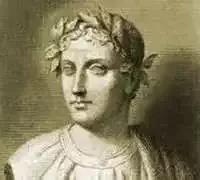
Horácio
BkII:XIV Eheu Fugaces
Oh how the years fly, Postumus, Postumus,
they’re slipping away, virtue brings no respite
from the wrinkles that furrow our brow,
impending old age, Death the invincible:
not even, my friend, if with three hundred bulls
every day, you appease pitiless Pluto,
jailor of three-bodied Geryon,
who imprisons Tityos by the sad
stream, that every one of us must sail over,
whoever we are that enjoy earth’s riches,
whether we’re wealthy, or whether we are
the most destitute of humble farmers.
In vain we’ll escape from bloodiest warfare,
from the breakers’ roar in the Adriatic,
in vain, on the autumn seas, we’ll fear
the southerly that shatters our bodies:
We’re destined to gaze at Cocytus, winding,
dark languid river: the infamous daughters
of Danaus: and at Sisyphus,
son of Aeolus, condemned to long toil.
We’re destined to leave earth, home, our loving wife,
nor will a single tree, that you planted here,
follow you, it’s briefly-known master,
except for the much-detested cypress.
A worthier heir will drink your Caecuban,
that cellar a hundred keys are protecting,
and stain the street with a vintage wine,
finer than those at the Pontiff’s table.
Read more →
289
Emily Dickinson
We do not play on Graves
We do not play on Graves-
Because there isn't RoomBesides-
it isn't even-it slants
And People come-
And put a Flower on it-
And hang their faces so
We're
fearing that their Hearts will drop-
And crush our pretty play-
And so we move as far
As Enemies-away-
Just looking round to see how far
It is-Occasionally-
Read more →
288
Emily Dickinson
All but Death, can be Adjusted
All but Death, can be Adjusted-
Dynasties repaired
Systems-
settled in their SocketsCitadels-
dissolved-
Wastes of Lives-resown with Colors
By Succeeding SpringsDeath-
unto itself-Exception-
Is exempt from Change-
Read more →
286
Emily Dickinson
Suspense—is Hostiler than Death
Suspense—is Hostiler than Death—
Death—tho'soever Broad,
Is Just Death, and cannot increase—
Suspense—does not conclude—
But perishes—to live anew—
But just anew to die—
Annihilation—plated fresh
With Immortality—
Read more →
287

Anonymous
Lully, Lulley
Lully, lulley, lully, lulley,
The faucon hath borne my make away.
He bare him up, he bare him down,
He bare him into an orchard brown.
In that orchard there was an halle
That hanged with purpill and pall.
And in that hall there was a bede;
It was hanged with gold so rede.
And in that bed there lithe a knight,
His woundes bleding day and night.
By that bede side kneleth a may,
And she wepeth both night and day.
And by that bede side there stondeth a stone,
Corpus Christi wreten there on.
Read more →
286

Robert W. Service
It Is Later Than You Think
Lone amid the cafe's cheer,
Sad of heart am I to-night;
Dolefully I drink my beer,
But no single line I write.
There's the wretched rent to pay,
Yet I glower at pen and ink:
Oh, inspire me, Muse, I pray,
It is later than you think!
Hello! there's a pregnant phrase.
Bravo! let me write it down;
Hold it with a hopeful gaze,
Gauge it with a fretful frown;
Tune it to my lyric lyre . . .
Ah! upon starvation's brink,
How the words are dark and dire:
It is later than you think.
Weigh them well. . . . Behold yon band,
Students drinking by the door,
Madly merry, bock in hand,
Saucers stacked to mark their score.
Get you gone, you jolly scamps;
Let your parting glasses clink;
Seek your long neglected lamps:
It is later than you think.
Look again: yon dainty blonde,
All allure and golden grace,
Oh so willing to respond
Should you turn a smiling face.
Play your part, poor pretty doll;
Feast and frolic, pose and prink;
There's the Morgue to end it all,
And it's later than you think.
Yon's a playwright -- mark his face,
Puffed and purple, tense and tired;
Pasha-like he holds his place,
Hated, envied and admired.
How you gobble life, my friend;
Wine, and woman soft and pink!
Well, each tether has its end:
Sir, it's later than you think.
See yon living scarecrow pass
With a wild and wolfish stare
At each empty absinthe glass,
As if he saw Heaven there.
Poor damned wretch, to end your pain
There is still the Greater Drink.
Yonder waits the sanguine Seine . . .
It is later than you think.
Lastly, you who read; aye, you
Who this very line may scan:
Think of all you planned to do . . .
Have you done the best you can?
See! the tavern lights are low;
Black's the night, and how you shrink!
God! and is it time to go?
Ah! the clock is always slow;
It is later than you think;
Sadly later than you think;
Far, far later than you think.
Read more →
286
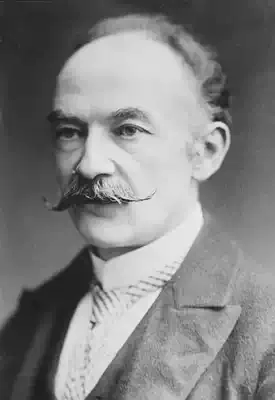
Thomas Hardy
Cardinal Bembo's Epitaph on Raphael
Here's one in whom Nature feared--faint at such vying -
Eclipse while he lived, and decease at his dying.
284
Emily Dickinson
All overgrown by cunning moss
All overgrown by cunning moss,
All interspersed with weed,
The little cage of "Currer Bell"
In quiet "Haworth" laid.
Gathered from many wanderings-
Gethsemane can tell
Thro' what transporting anguish
She reached the Asphodel!
Soft falls the sounds of Eden
Upon her puzzled ear-
Oh what an afternoon for Heaven,
When "Bronte" entered there!
Read more →
285
Emily Dickinson
I got so I could take his name
I got so I could take his name
Without-
Tremendous gain-
That Stop-sensation-on my Soul-
And Thunder-in the Room-
I got so I could walk across
That Angle in the floor,
Where he turned so, and I turned-how-
And all our Sinew tore-
I got so I could stir the Box-
In which his letters grew
Without that forcing, in my breath-
As Staples-driven through-
Could dimly recollect a Grace-
I think, they call it "God"-
Renowned to ease Extremity-
When Formula, had failed-
And shape my HandsPetition's
way,
Tho' ignorant of a word
That Ordination-utters-
My Business, with the Cloud,
If any Power behind it, be,
Not subject to Despair-
It care, in some remoter way,
For so minute affair
As Misery-
Itself, too vast, for interrupting-more-
Read more →
284
Emily Dickinson
Twas Crisis—All the length had passed
'Twas Crisis—All the length had passed—
That dull—benumbing time
There is in Fever or Event—
And now the Chance had come—
The instant holding in its claw
The privilege to live
Or warrant to report the Soul
The other side the Grave.
The Muscles grappled as with leads
That would not let the Will—
The Spirit shook the Adamant—
But could not make it feel.
The Second poised—debated—shot—
Another had begun—
And simultaneously, a Soul
Escaped the House unseen—
Read more →
285
Emily Dickinson
That after Horror—that 'twas us
That after Horror—that 'twas us—
That passed the mouldering Pier—
Just as the Granite Crumb let go—
Our Savior, by a Hair—
A second more, had dropped too deep
For Fisherman to plumb—
The very profile of the Thought
Puts Recollection numb—
The possibility—to pass
Without a Moment's Bell—
Into Conjecture's presence—
Is like a Face of Steel—
That suddenly looks into ours
With a metallic grin—
The Cordiality of Death—
Who drills his Welcome in—
Read more →
283

William Butler Yeats
The Delphic Oracle Upon Plotinus
Behold that great Plotinus swim,
Buffeted by such seas;
Bland Rhadamanthus beckons him,
But the Golden Race looks dim,
Salt blood blocks his eyes.
Scattered on the level grass
Or winding through the grove
plato there and Minos pass,
There stately Pythagoras
And all the choir of Love.
Read more →
282

John Greenleaf Whittier
To Lydia Maria Child
ON READING HER POEM IN 'THE STANDARD.'
The sweet spring day is glad with music,
But through it sounds a sadder strain;
The worthiest of our narrowing circle
Sings Loring's dirges o'er again.
O woman greatly loved! I join thee
In tender memories of our friend;
With thee across the awful spaces
The greeting of a soul I send!
What cheer hath he? How is it with him?
Where lingers he this weary while?
Over what pleasant fields of Heaven
Dawns the sweet sunrise of his smile?
Does he not know our feet are treading
The earth hard down on Slavery's grave?
That, in our crowning exultations,
We miss the charm his presence gave?
Why on this spring air comes no whisper
From him to tell us all is well?
Why to our flower-time comes no token
Of lily and of asphodel?
I feel the unutterable longing,
Thy hunger of the heart is mine;
I reach and grope for hands in darkness,
My ear grows sharp for voice or sign.
Still on the lips of all we question
The finger of God's silence lies;
Will the lost hands in ours be folded?
Will the shut eyelids ever rise?
O friend! no proof beyond this yearning,
This outreach of our hearts, we need;
God will not mock the hope He giveth,
No love He prompts shall vainly plead.
Then let us stretch our hands in darkness,
And call our loved ones o'er and o'er;
Some day their arms shall close about us,
And the old voices speak once more.
No dreary splendors wait our coming
Where rapt ghost sits from ghost apart;
Homeward we go to Heaven's thanksgiving,
The harvest-gathering of the heart.
Read more →
283
Emily Dickinson
A throe upon the features
A throe upon the features-
A hurry in the breath-
An ecstasy of parting
Denominated "Death"-
An anguish at the mention
Which when to patience grown,
I've known permission given
To rejoin its own.
Read more →
282
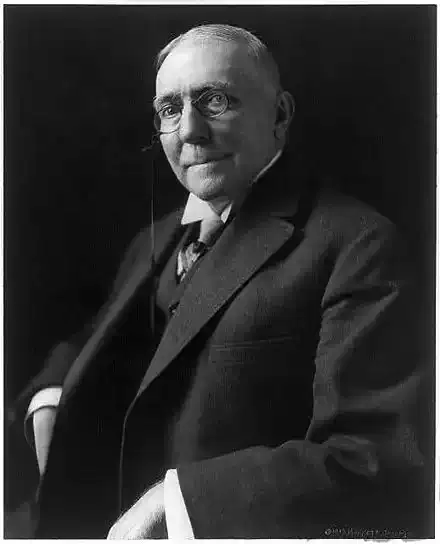
James Whitcomb Riley
When Bessie Died
If from your own the dimpled hands had slipped,
And ne'er would nestle in your palm again;
If the white feet into the grave had tripped--'
When Bessie died--
We braided the brown hair, and tied
It just as her own little hands
Had fastened back the silken strands
A thousand times-- the crimson bit
Of ribbon woven into it
That she had worn with childish pride--
Smoothed down the dainty bow-- and cried
When Bessie died.
When Bessie died--
We drew the nursery blinds aside,
And as the morning in the room
Burst like a primrose into bloom,
Her pet canary's cage we hung
Where she might hear him when he sung--
And yet not any note he tried,
Though she lay listening folded-eyed.
When Bessie died--
We writhed in prayer unsatisfied:
We begged of God, and He did smile
In silence on us all the while;
And we did see Him, through our tears,
Enfolding that fair form of hers,
She laughing back against His love
The kisses had nothing of--
And death to us He still denied,
When Bessie died--
When Bessie died.
Read more →
282
Anonymous
Episode
THEN fashioned for him the folk of Geats
firm on the earth a funeral-pile,
and hung it with helmets and harness of war
and breastplates bright, as the boon he asked;
and they laid amid it the mighty chieftain,
heroes mourning their master dear.
Then on the hill that hugest of balefires
the warriors wakened. Wood-smoke rose
black over blaze, and blent was the roar
of flame with weeping (the wind was still),
till the fire had broken the frame of bones,
hot at the heart. In heavy mood
their misery moaned they, their master's death.
Wailing her woe, the widow old,
her hair upbound, for Beowulf's death
sung in her sorrow, and said full oft
she dreaded the doleful days to come,
deaths enow, and doom of battle,
and shame. -- The smoke by the sky was devoured.
The folk of the Weders fashioned there
on the headland a barrow broad and high,
by ocean-farers far descried:
in ten days' time their toil had raised it,
the battle-brave's beacon. Round brands of the pyre
a wall they built, the worthiest ever
that wit could prompt in their wisest men.
They placed in the barrow that precious booty,
the rounds and the rings they had reft erewhile,
hardy heroes, from hoard in cave, --
trusting the ground with treasure of earls,
gold in the earth, where ever it lies
useless to men as of yore it was.
Then about that barrow the battle-keen rode,
atheling-born, a band of twelve,
lament to make, to mourn their king,
chant their dirge, and their chieftain honor.
They praised his earlship, his acts of prowess
worthily witnessed: and well it is
that men their master-friend mightily laud,
heartily love, when hence he goes
from life in the body forlorn away.
Thus made their mourning the men of Geatland,
for their hero's passing his hearth-companions:
quoth that of all the kings of earth,
of men he was mildest and most beloved,
to his kin the kindest, keenest for praise.
Read more →
281

Henry Lawson
The Ballad of the Black-Sheep
A black-sheep, from England, who worked on the run –
Riding where the stockmen ride –
He sat by the hut when the day’s work was done –
Lone huts where the black sheep bide.
“I’m tired of my life!” to his lone self said he,
“My girl and my country are both done with me!”
“I’m tired of my life!” to the wide scrubs said he –
“My girl and my country are long done with me!”
He took from a packet a portrait and curl –
Such things as the exiles keep –
And sadly he gazed at the face of the girl –
Lost girl of a lost black-sheep.
“I’ll go where there’s fighting and die there!” said he;
“My girl and my country are well rid of me.
“I’ll go where there’s fighting and die there,” said he;
“For heart-break and country that’s well rid of me!”
He rode with a thousand, he rode with the best –
Riding as bushmen ride –
Who’d ridden alone on the wastes of the West –
Wide wastes where the drought-fiends bide,
They rode as they’d ride to an up-country ball,
And the laugh of the black-sheep was lightest of all!
The road was a shambles, the hill was a hell –
Red rosed where the reckless ride –
And he with the foremost lay torn by a shell –
(Die hard where your father died!)
“the death of a rebel!” he laughed as he groaned –
“for the land that adoptee – the land that disowned!”
the death of a black-sheep! – they laugh as they groan –
for the lands that adopt and the lands that disown!
Read more →
281

Edna St. Vincent Millay
Sonnets 10: Oh, My Beloved, Have You Thought Of This
Oh, my beloved, have you thought of this:
How in the years to come unscrupulous Time,
More cruel than Death, will tear you from my kiss,
And make you old, and leave me in my prime?
How you and I, who scale together yet
A little while the sweet, immortal height
No pilgrim may remember or forget,
As sure as the world turns, some granite night
Shall lie awake and know the gracious flame
Gone out forever on the mutual stone;
And call to mind that on the day you came
I was a child, and you a hero grown?—
And the night pass, and the strange morning break
Upon our anguish for each other's sake!
Read more →
280

William Wordsworth
Extempore Effusion upon the Death of James Hogg
. When first, descending from the moorlands,
I saw the Stream of Yarrow glide
Along a bare and open valley,
The Ettrick Shepherd was my guide.
When last along its banks I wandered,
Through groves that had begun to shed
Their golden leaves upon the pathways,
My steps the Border-minstrel led.
The mighty Minstrel breathes no longer,
'Mid mouldering ruins low he lies;
And death upon the braes of Yarrow,
Has closed the Shepherd-poet's eyes:
Nor has the rolling year twice measured,
From sign to sign, its stedfast course,
Since every mortal power of Coleridge
Was frozen at its marvellous source;
The rapt One, of the godlike forehead,
The heaven-eyed creature sleeps in earth:
And Lamb, the frolic and the gentle,
Has vanished from his lonely hearth.
Like clouds that rake the mountain-summits,
Or waves that own no curbing hand,
How fast has brother followed brother,
From sunshine to the sunless land!
Yet I, whose lids from infant slumber
Were earlier raised, remain to hear
A timid voice, that asks in whispers,
"Who next will drop and disappear?"
Our haughty life is crowned with darkness,
Like London with its own black wreath,
On which with thee, O Crabbe! forth-looking,
I gazed from Hampstead's breezy heath.
As if but yesterday departed,
Thou too art gone before; but why,
O'er ripe fruit, seasonably gathered,
Should frail survivors heave a sigh?
Mourn rather for that holy Spirit,
Sweet as the spring, as ocean deep;
For Her who, ere her summer faded,
Has sunk into a breathless sleep.
No more of old romantic sorrows,
For slaughtered Youth or love-lorn Maid!
With sharper grief is Yarrow smitten,
And Ettrick mourns with her their Poet dead.
Read more →
281

George Herbert
Mortification
How soon doth man decay!
When clothes are taken from a chest of sweets
To swaddle infants, whose young breath
Scarce knows the way;
Those clouts are little winding-sheets,
Which do consign and send them unto Death.
When boyes go first to bed,
They step into their voluntarie graves;
Sleep binds them fast; onely their breath
Makes them not dead:
Successive nights, like rolling waves,
Convey them quickly who are bound for Death.
When Youth is frank and free,
And calls for musick, while his veins do swell,
All day exchanging mirth and breath
In companie,
That musick summons to the knell
Which shall befriend him at the house of Death.
When man grows staid and wise,
Getting a house and home, where he may move
Within the circle of his breath,
Schooling his eyes,
That dumbe inclosure maketh love
Unto the coffin, that attends his death.
When Age grows low and weak,
Marking his grave, and thawing ev'ry year,
Till all do melt and drown his breath
When he would speak,
A chair or litter shows the biere
Which shall convey him to the house of Death.
Man, ere he is aware,
Hath put together a solemnitie,
And drest his hearse, while he has breath
As yet to spare;
Yet, Lord, instruct us so to die,
That all these dyings may be LIFE in DEATH.
Read more →
281
Henry Lawson
The Water Lily
A lonely young wife
In her dreaming discerns
A lily-decked pool
With a border of ferns,
And a beautiful child,
With butterfly wings,
Trips down to the edge of the water and sings:
‘Come, mamma! come!
‘Quick! follow me—
‘Step out on the leaves of the water-lily!’
And the lonely young wife,
Her heart beating wild,
Cries, ‘Wait till I come,
‘Till I reach you, my child!’
But the beautiful child
With butterfly wings
Steps out on the leaves of the lily and sings:
‘Come, mamma! come!
‘Quick! follow me!
‘And step on the leaves of the water-lily!
And the wife in her dreaming
Steps out on the stream,
But the lily leaves sink
And she wakes from her dream.
Ah, the waking is sad,
For the tears that it brings,
And she knows ’tis her dead baby’s spirit that sings:
‘Come, mamma! come!
‘Quick! follow me!
‘Step out on the leaves of the water-lily!’
Read more →
282
Henry Lawson
The Glass On The Bar
Three bushmen one morning rode up to an inn,
And one of them called for the drinks with a grin;
They'd only returned from a trip to the North,
And, eager to greet them, the landlord came forth.
He absently poured out a glass of Three Star.
And set down that drink with the rest on the bar.
`There, that is for Harry,' he said, `and it's queer,
'Tis the very same glass that he drank from last year;
His name's on the glass, you can read it like print,
He scratched it himself with an old piece of flint;
I remember his drink -- it was always Three Star' --
And the landlord looked out through the door of the bar.
He looked at the horses, and counted but three:
`You were always together -- where's Harry?' cried he.
Oh, sadly they looked at the glass as they said,
`You may put it away, for our old mate is dead;'
But one, gazing out o'er the ridges afar,
Said, `We owe him a shout -- leave the glass on the bar.'
They thought of the far-away grave on the plain,
They thought of the comrade who came not again,
They lifted their glasses, and sadly they said:
`We drink to the name of the mate who is dead.'
And the sunlight streamed in, and a light like a star
Seemed to glow in the depth of the glass on the bar.
And still in that shanty a tumbler is seen,
It stands by the clock, ever polished and clean;
And often the strangers will read as they pass
The name of a bushman engraved on the glass;
And though on the shelf but a dozen there are,
That glass never stands with the rest on the bar.
Read more →
280

Robert Burns
The Death and Dying Words of Poor Mailie
The Author's Only Pet Yowe
An Unco Mournfu' Tale
As Mailie, an' her lambs thegither,
Was ae day nibbling on the tether,
Upon her cloot she coost a hitch,
An owre she warsl'd in the ditch:
There, groaning, dying, she did lie,
When Hughoc he cam doytin by.
Wi' glowrin een, and lifted han's
Poor Hughoc like a statue stan's;
He saw her days were near-hand ended,
But, wae's my heart! he could na mend it!
He gaped wide, but naething spak,
At length poor Mailie silence brak.
"O thou, whase lamentable face
Appears to mourn my woefu' case!
My dying words attentive hear,
An' bear them to my Master dear.
"Tell him, if e'er again he keep
As muckle gear as buy a sheep -
O, bid him never tie them mair,
Wi' wicked strings o' hemp or hair!
But ca' them out to park or hill,
An' let them wander at their will:
So may his flock increase, an' grow
To scores o' lambs, an' packs o' woo'!
"Tell him, he was a Master kin',
An' aye was guid to me an' mine;
An now my dying charge I gie him,
My helpless lambs, I trust them wi' him.
"O, bid him save their harmless lives,
Frae dogs, an' tods, an' butchers' knives!
But gie them guid cow-milk their fill,
Till they be fit to fend themsel';
An' tent them duly, e'en an' morn,
Wi' taets o' hay an' ripps o' corn.
"An' may they never learn the gates,
Of ither vile, wanrestfu' pets -
To slink thro' slaps, an' reave an' steal
At stacks o' pease, or stocks o' kail!
So may they, like their great forbears,
For mony a year come thro' the shears:
So wives will gie them bits o' bread,
An bairns greet for them when they're dead.
"My poor toop-lamb, my son an' heir,
O, bid him breed him up wi' care!
An' if he live to be a beast,
To pit some havins in his breast!
An' warn him - what I winna name -
To stay content wi' yowes at hame;
An' no to rin an' wear his cloots,
Like ither meseless, graceless brutes.
"An' neist, my yowie, silly thing,
Gude keep thee frae a tether string!
O, may thou ne'er forgather up,
Wi' ony blastit, moorland toop;
But aye keep mind to moop an' mell,
Wi' sheep o' credit like thysel'!
"And now, my bairns, wi' my last breath,
I lea'e my blessin wi' you baith:
An' when you think upo' your mither,
Mind to be kind to ane anither.
"Now, honest Hughoc, dinna fail,
To tell my master a' my tale;
An' bid him burn this cursed tether,
An' for thy pains thou'se get my blather."
This said, poor Mailie turn'd her head,
An' closed her een amang the dead!
Read more →
275