
Death and Mourning
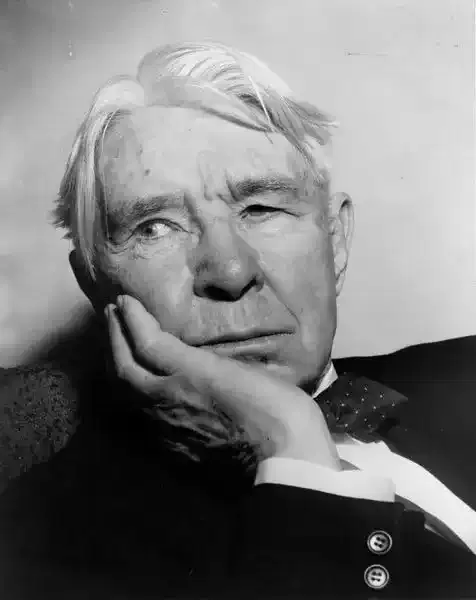
Carl Sandburg
Troths
Yellow dust on a bumble
bee's wing,
Grey lights in a woman's
asking eyes,
Red ruins in the changing
sunset embers:
I take you and pile high
the memories.
Death will break her claws
on some I keep.
Read more →
299

George Herbert
Church Monuments
While that my soul repairs to her devotion,
Here I intomb my flesh, that it betimes
May take acquaintance of this heap of dust;
To which the blast of death's incessant motion,
Fed with the exhalation of our crimes,
Drives all at last. Therefore I gladly trust
My body to this school, that it may learn
To spell his elements, and find his birth
Written in dusty heraldry and lines;
Which dissolution sure doth best discern,
Comparing dust with dust, and earth with earth.
These laugh at jet and marble put for signs,
To sever the good fellowship of dust,
And spoil the meeting. What shall point out them,
When they shall bow, and kneel, and fall down flat
To kiss those heaps, which now they have in trust?
Dear flesh, while I do pray, learn here thy stem
And true descent, that when thou shalt grow fat
And wanton in thy cravings, thou mayst know
That flesh is but the glass which holds the dust
That measures all our time; which also shall
Be crumbled into dust. Mark, here below
How tame these ashes are, how free from lust,
That thou mayst fit thyself against thy fall.
Read more →
298

John Donne
Hym To God, My God In My Sickness
Since I am coming to that holy room,
Where, with thy choir of saints for evermore,
I shall be made thy music; as I come
I tune the instrument here at the door,
And what I must do then, think here before.
Whilst my physicians by their love are grown
Cosmographers, and I their map, who lie
Flat on this bed, that by them may be shown
That this is my south-west discovery,
[lang l]Per fretum febris[lang e], by these straits to die,
pmdv3 n='33-11'> I joy, that in these straits I see my west;
For, though their currents yield return to none,
What shall my west hurt me? As west and east
In all flat maps (and I am one) are one,
So death doth touch the resurrection.
Is the Pacific Sea my home? Or are
The eastern riches? Is Jerusalem?
Anyan, and Magellan, and Gibraltar,
All straits, and none but straits, are ways to them,
Whether where Japhet dwelt, or Cham, or Shem.
We think that Paradise and Calvary,
Christ's cross, and Adam's tree, stood in one place;
Look, Lord, and find both Adams met in me;
As the first Adam's sweat surrounds my face,
May the last Adam's blood my soul embrace.
So, in his purple wrapp'd, receive me, Lord;
By these his thorns, give me his other crown;
And as to others' souls I preach'd thy word,
Be this my text, my sermon to mine own:
'Therefore that he may raise, the Lord throws down.'
Read more →
295

Emily Dickinson
If He dissolve—then—there is nothing
If He dissolve—then—there is nothing—more—
Eclipse—at Midnight—
It was dark—before—
Sunset—at Easter—
Blindness—on the Dawn—
Faint Star of Bethlehem—
Gone down!
Would but some God—inform Him—
Or it be too late!
Say—that the pulse just lisps—
The Chariots wait—
Say—that a little life—for His—
Is leaking—red—
His little Spaniel—tell Him!
Will He heed?
Read more →
295

Henry Wadsworth Longfellow
The Golden Legend: V. A Covered Bridge At Lucerne
_Prince Henry_. God's blessing on the architects who build
The bridges o'er swift rivers and abysses
Before impassable to human feet,
No less than on the builders of cathedrals,
Whose massive walls are bridges thrown across
The dark and terrible abyss of Death.
Well has the name of Pontifex been given
Unto the Church's head, as the chief builder
And architect of the invisible bridge
That leads from earth to heaven.
_Elsie_ How dark it grows!
What are these paintings on the walls around us?
_Prince Henry_ The Dance Macaber!
_Elsie_ What?
_Prince Henry_ The Dance of Death!
All that go to and fro must look upon it,
Mindful of what they shall be, while beneath,
Among the wooden piles, the turbulent river
Rushes, impetuous as the river of life,
With dimpling eddies, ever green and bright,
Save where the shadow of this bridge falls on it.
_Elsie._ O, yes! I see it now!
_Prince Henry_ The grim musician
Leads all men through the mazes of that dance,
To different sounds in different measures moving;
Sometimes he plays a lute, sometimes a drum,
To tempt or terrify.
_Elsie_ What is this picture?
_Prince Henry_ It is a young man singing to a nun,
Who kneels at her devotions, but in kneeling
Turns round to look at him, and Death, meanwhile,
Is putting out the candles on the altar!
_Elsie_ Ah, what a pity 't is that she should listen
to such songs, when in her orisons
She might have heard in heaven the angels singing!
_Prince Henry_ Here he has stolen a jester's cap and bells,
And dances with the Queen.
_Elsie_ A foolish jest!
_Prince Henry_ And here the heart of the new-wedded wife,
Coming from church with her beloved lord,
He startles with the rattle of his drum.
_Elsie_ Ah, that is sad! And yet perhaps 't is best
That she should die, with all the sunshine on her,
And all the benedictions of the morning,
Before this affluence of golden light
Shall fade into a cold and clouded gray,
Then into darkness!
_Prince Henry_ Under it is written,
'Nothing but death shall separate thee and me!'
_Elsie._ And what is this, that follows close upon it?
_Prince Henry_ Death, playing on a ducimer. Behind him,
A poor old woman, with a rosary,
Follows the sound, and seems to wish her feet
Were swifter to o'ertake him. Underneath,
The inscription reads, 'Better is Death than Life.'
_Elsie._ Better is Death than Life! Ah yes! to thousands
Death plays upon a dulcimer, and sings
That song of consolation, till the air
Rings with it, and they cannot choose but follow
Whither he leads. And not the old alone,
But the young also hear it, and are still.
_Prince Henry_ Yes, in their sadder moments. 'T is the sound
Of their own hearts they hear, half full of tears,
Which are like crystal cups, half filled with water.
Responding to the pressure of a finger
With music sweet and low and melancholy.
Let us go forward, and no longer stay
In this great picture-gallery of Death!
I hate it! ay, the very thought of it!
_Elsie._ Why is it hateful to you?
_Prince Henry._ For the reason
That life, and all that speaks of life, is lovely,
And death, and all that speaks of death, is hateful.
_Elsie._ The grave is but a covered bridge,
leading from light to light, through a brief darkness!
_Prince Henry (emerging from the bridge)._ I breathe again more
freely! Ah, how pleasant
To come once more into the light of day,
Out of that shadow of death! To hear again
The hoof-beats of our horses on firm ground,
And not upon those hollow planks, resounding
With a sepulchral echo, like the clods
On coffins in a churchyard! Yonder lies
The Lake of the Four Forest-Towns, apparelled
In light, and lingering, like a village maiden,
Hid in the bosom of her native mountains,
Then pouring all her life into another's,
Changing her name and being! Overhead,
Shaking his cloudy tresses loose in air,
Rises Pilatus, with his windy pines.
(_They pass on_.)
* * * * *
THE DEVIL'S BRIDGE.
* * * * *
PRINCE HENRY _and_ ELSIE _crossing, with attendants._
_Guide._ This bridge is called the Devil's Bridge.
With a single arch, from ridge to ridge,
It leaps across the terrible chasm
Yawning beneath us, black and deep,
As if, in some convulsive spasm,
the summits of the hills had cracked,
and made a road for the cataract,
That raves and rages down the steep!
_Lucifer (under the bridge)._ Ha! ha!
_Guide._ Never any bridge but this
Could stand across the wild abyss;
All the rest, of wood or stone,
By the Devil's hand were overthrown.
He toppled crags from the precipice,
And whatsoe'er was built by day
In the night was swept away;
None could stand but this alone.
_Lucifer (under the bridge)._ Ha! ha!
_Guide._ I showed you in the valley a boulder
Marked with the imprint of his shoulder;
As he was bearing it up this way,
A peasant, passing, cried, 'Herr Je!'
And the Devil dropped it in his fright,
And vanished suddenly out of sight!
_Lucifer (under the bridge)._ Ha! ha!
_Guide._ Abbot Giraldus of Einsiedel,
For pilgrims on their way to Rome,
Built this at last, with a single arch,
Under which, on its endless march,
Runs the river, white with foam,
Like a thread through the eye of a needle.
And the Devil promised to let it stand,
Under compact and condition
That the first living thing which crossed
Should be surrendered into his hand,
And be beyond redemption lost.
_Lucifer (under the bridge)._ Ha! ha! perdition!
_Guide._ At length, the bridge being all completed,
The Abbot, standing at its head,
Threw across it a loaf of bread,
Which a hungry dog sprang after,
And the rocks reechoed with peals of laughter
To see the Devil thus defeated!
(_They pass on_)
_Lucifer_ (_under the bridge_) Ha! ha! defeated!
For journeys and for crimes like this
To let the bridge stand o'er the abyss!
* * * * *
THE ST. GOTHARD PASS.
* * * * *
_Prince Henry._ This is the highest point. Two ways the rivers
Leap down to different seas, and as they roll
Grow deep and still, and their majestic presence
Becomes a benefaction to the towns
They visit, wandering silently among them,
Like patriarchs old among their shining tents.
_Elsie._ How bleak and bare it is! Nothing but mosses
Grow on these rocks.
_Prince Henry._ Yet are they not forgotten;
Beneficent Nature sends the mists to feed them.
_Elsie._ See yonder little cloud, that, borne aloft
So tenderly by the wind, floats fast away
Over the snowy peaks! It seems to me
The body of St. Catherine, borne by angels!
_Prince Henry._ Thou art St. Catherine, and invisible angels
Bear thee across these chasms and precipices,
Lest thou shouldst dash thy feet against a stone!
_Elsie._ Would I were borne unto my grave, as she was,
Upon angelic shoulders! Even now
I Seem uplifted by them, light as air!
What sound is that?
_Prince Henry_. The tumbling avalanches!
_Elsie_ How awful, yet how beautiful!
_Prince Henry_. These are
The voices of the mountains! Thus they ope
Their snowy lips, and speak unto each other,
In the primeval language, lost to man.
_Elsie_. What land is this that spreads itself beneath us?
_Prince Henry_ Italy! Italy!
_Elsie_ Land of the Madonna!
How beautiful it is! It seems a garden
Of Paradise!
_Prince Henry_. Nay, of Gethsemane
To thee and me, of passion and of prayer!
Yet once of Paradise. Long years ago
I wandered as a youth among its bowers,
And never from my heart has faded quite
Its memory, that, like a summer sunset,
Encircles with a ring of purple light
All the horizon of my youth.
_Guide_. O friends!
The days are short, the way before us long;
We must not linger, if we think to reach
The inn at Belinzona before vespers!
(_They pass on_.)
* * * * *
AT THE FOOT OF THE ALPS.
* * * * *
_A halt under the trees at noon_.
_Prince Henry_ Here let us pause a moment in the trembling
Shadow and sunshine of the roadside trees,
And, our tired horses in a group assembling,
Inhale long draughts of this delicious breeze
Our fleeter steeds have distanced our attendants;
They lag behind us with a slower pace;
We will await them under the green pendants
Of the great willows in this shady place.
Ho, Barbarossa! how thy mottled haunches
Sweat with this canter over hill and glade!
Stand still, and let these overhanging branches
Fan thy hot sides and comfort thee with shade!
_Elsie._ What a delightful landscape spreads before us,
Marked with a whitewashed cottage here and there!
And, in luxuriant garlands drooping o'er us,
Blossoms of grapevines scent the sunny air.
_Prince Henry._ Hark! what sweet sounds are those, whose accents holy
Fill the warm noon with music sad and sweet!
_Elsie._ It is a band of pilgrims, moving slowly
On their long journey, with uncovered feet.
_Pilgrims (chaunting the Hymn of St. Hildebert)_
Me receptet Sion illa,
Sion David, urbs tranquilla,
Cujus faber auctor lucis,
Cujus portae lignum crucis,
Cujus claves lingua Petri,
Cujus cives semper laeti,
Cujus muri lapis vivus,
Cujus custos Rex festivus!
_Lucifer (as a Friar in the procession)._ Here am I, too, in the
pious band,
In the garb of a barefooted Carmelite dressed!
The soles of my feet are as hard and tanned
As the conscience of old Pope Hildebrand,
The Holy Satan, who made the wives
Of the bishops lead such shameful lives.
All day long I beat my breast,
And chaunt with a most particular zest
The Latin hymns, which I understand
Quite as well, I think, as the rest.
And at night such lodging in barns and sheds,
Such a hurly-burly in country inns,
Such a clatter of tongues in empty heads,
Such a helter-skelter of prayers and sins!
Of all the contrivances of the time
For sowing broadcast the seeds of crime,
There is none so pleasing to me and mine
As a pilgrimage to some far-off shrine!
_Prince Henry._ If from the outward man we judge the inner,
And cleanliness is godliness, I fear
A hopeless reprobate, a hardened sinner,
Must be that Carmelite now passing near.
_Lucifer._ There is my German Prince again,
Thus far on his journey to Salern,
And the lovesick girl, whose heated brain
Is sowing the cloud to reap the rain;
But it's a long road that has no turn!
Let them quietly hold their way,
I have also a part in the play.
But first I must act to my heart's content
This mummery and this merriment,
And drive this motley flock of sheep
Into the fold, where drink and sleep
The jolly old friars of Benevent.
Of a truth, it often provokes me to laugh
To see these beggars hobble along,
Lamed and maimed, and fed upon chaff,
Chanting their wonderful piff and paff,
And, to make up for not understanding the song,
Singing it fiercely, and wild, and strong!
Were it not for my magic garters and staff,
And the goblets of goodly wine I quaff,
And the mischief I make in the idle throng,
I should not continue the business long.
_Pilgrims (chaunting)._ In hac uibe, lux solennis,
Ver aeternum, pax perennis,
In hac odor implens caelos,
In hac semper festum melos!
_Prince Henry._ Do you observe that monk among the train,
Who pours from his great throat the roaring bass,
As a cathedral spout pours out the rain,
And this way turns his rubicund, round face?
_Elsie._ It is the same who, on the Strasburg square,
Preached to the people in the open air.
_Prince Henry._ And he has crossed o'er mountain, field, and fell,
On that good steed, that seems to bear him well,
The hackney of the Friars of Orders Gray,
His own stout legs! He, too, was in the play,
Both as King Herod and Ben Israel.
Good morrow, Friar!
_Friar Cuthbert._ Good morrow, noble Sir!
_Prince Henry._ I speak in German, for, unless I err,
You are a German.
_Friar Cuthbert._ I cannot gainsay you.
But by what instinct, or what secret sign,
Meeting me here, do you straightway divine
That northward of the Alps my country lies?
_Prince Henry._ Your accent, like St, Peter's, would betray you,
Did not your yellow beard and your blue eyes,
Moreover, we have seen your face before,
And heard you preach at the Cathedral door
On Easter Sunday, in the Strasburg square
We were among the crowd that gathered there,
And saw you play the Rabbi with great skill,
As if, by leaning o'er so many years
To walk with little children, your own will
Had caught a childish attitude from theirs,
A kind of stooping in its form and gait,
And could no longer stand erect and straight.
Whence come you now?
_Friar Cuthbert._ From the old monastery
Of Hirschau, in the forest; being sent
Upon a pilgrimage to Benevent,
To see the image of the Virgin Mary,
That moves its holy eyes, and sometimes speaks,
And lets the piteous tears run down its cheeks,
To touch the hearts of the impenitent.
_Prince Henry._ O, had I faith, as in the days gone by,
That knew no doubt, and feared no mystery!
_Lucifer (at a distance)._ Ho, Cuthbert! Friar Cuthbert!
_Friar Cuthbert._ Farewell, Prince!
I cannot stay to argue and convince.
_Prince Henry._ This is indeed the blessed Mary's land,
Virgin and Mother of our dear Redeemer!
All hearts are touched and softened at her name;
Alike the bandit, with the bloody hand,
The priest, the prince, the scholar, and the peasant,
The man of deeds, the visionary dreamer,
Pay homage to her as one ever present!
And even as children, who have much offended
A too indulgent father, in great shame,
Penitent, and yet not daring unattended
To go into his presence, at the gate
Speak with their sister, and confiding wait
Till she goes in before and intercedes;
So men, repenting of their evil deeds,
And yet not venturing rashly to draw near
With their requests an angry father's ear,
Offer to her their prayers and their confession,
And she for them in heaven makes intercession.
And if our Faith had given us nothing more
Than this example of all womanhood,
So mild, so merciful, so strong, so good,
So patient, peaceful, loyal, loving, pure,
This were enough to prove it higher and truer
Than all the creeds the world had known before.
_Pilgrims (chaunting afar off)_. Urbs ccelestis, urbs beata,
Supra petram collocata,
Urbs in portu satis tuto
De longinquo te saluto,
Te saluto, te suspiro,
Te affecto, te requiro!
* * * * *
THE INN AT GENOA.
* * * * *
_A terrace overlooking the sea. Night._
_Prince Henry._ It is the sea, it is the sea,
In all its vague immensity,
Fading and darkening in the distance!
Silent, majestical, and slow,
The white ships haunt it to and fro,
With all their ghostly sails unfurled,
As phantoms from another world
Haunt the dim confines of existence!
But ah! how few can comprehend
Their signals, or to what good end
From land to land they come and go!
Upon a sea more vast and dark
The spirits of the dead embark,
All voyaging to unknown coasts.
We wave our farewells from the shore,
And they depart, and come no more,
Or come as phantoms and as ghosts.
Above the darksome sea of death
Looms the great life that is to be,
A land of cloud and mystery,
A dim mirage, with shapes of men
Long dead, and passed beyond our ken.
Awe-struck we gaze, and hold our breath
Till the fair pageant vanisheth,
Leaving us in perplexity,
And doubtful whether it has been
A vision of the world unseen,
Or a bright image of our own
Against the sky in vapors thrown.
_Lucifer (singing from the sea)_. Thou didst not make it, thou
canst not mend it,
But thou hast the power to end it!
The sea is silent, the sea is discreet,
Deep it lies at thy very feet;
There is no confessor like unto Death!
Thou canst not see him, but he is near;
Thou needest not whisper above thy breath,
And he will hear;
He will answer the questions,
The vague surmises and suggestions,
That fill thy soul with doubt and fear!
_Prince Henry_. The fisherman, who lies afloat,
With shadowy sail, in yonder boat,
Is singing softly to the Night!
But do I comprehend aright
The meaning of the words he sung
So sweetly in his native tongue?
Ah, yes! the sea is still and deep.
All things within its bosom sleep!
A single step, and all is o'er;
A plunge, a bubble, and no more;
And thou, dear Elsie, wilt be free
From martyrdom and agony.
_Elsie (coming from her chamber upon the terrace)._
The night is calm and cloudless,
And still as still can be,
And the stars come forth to listen
To the music of the sea.
They gather, and gather, and gather,
Until they crowd the sky,
And listen, in breathless silence,
To the solemn litany.
It begins in rocky caverns,
As a voice that chaunts alone
To the pedals of the organ
In monotonous undertone;
And anon from shelving beaches,
And shallow sands beyond,
In snow-white robes uprising
The ghostly choirs respond.
And sadly and unceasing
The mournful voice sings on,
And the snow-white choirs still answer
Christe eleison!
_Prince Henry._ Angel of God! thy finer sense perceives
Celestial and perpetual harmonies!
Thy purer soul, that trembles and believes,
Hears the archangel's trumpet in the breeze,
And where the forest rolls, or ocean heaves,
Cecilia's organ sounding in the seas,
And tongues of prophets speaking in the leaves.
But I hear discord only and despair,
And whispers as of demons in the air!
* * * * *
AT SEA.
* * * * *
_Il Padrone._ The wind upon our quarter lies,
And on before the freshening gale,
That fills the snow-white lateen sail,
Swiftly our light felucca flies.
Around, the billows burst and foam;
They lift her o'er the sunken rock,
They beat her sides with many a shock,
And then upon their flowing dome
They poise her, like a weathercock!
Between us and the western skies
The hills of Corsica arise;
Eastward, in yonder long, blue line,
The summits of the Apennine,
And southward, and still far away,
Salerno, on its sunny bay.
You cannot see it, where it lies.
_Prince Henry._ Ah, would that never more mine eyes
Might see its towers by night or day!
_Elsie._ Behind us, dark and awfully,
There comes a cloud out of the sea,
That bears the form of a hunted deer,
With hide of brown, and hoofs of black,
And antlers laid upon its back,
And fleeing fast and wild with fear,
As if the hounds were on its track!
_Prince Henry._ Lo! while we gaze, it breaks and falls
In shapeless masses, like the walls
Of a burnt city. Broad and red
The fires of the descending sun
Glare through the windows, and o'erhead,
Athwart the vapors, dense and dun,
Long shafts of silvery light arise,
Like rafters that support the skies!
_Elsie._ See! from its summit the lurid levin
Flashes downward without warning,
As Lucifer, son of the morning,
Fell from the battlements of heaven!
_Il Padrone._ I must entreat you, friends, below!
The angry storm begins to blow,
For the weather changes with the moon.
All this morning, until noon,
We had baffling winds, and sudden flaws
Struck the sea with their cat's-paws.
Only a little hour ago
I was whistling to Saint Antonio
For a capful of wind to fill our sail,
And instead of a breeze he has sent a gale.
Last night I saw St. Elmo's stars,
With their glimmering lanterns, all at play
On the tops of the masts and the tips of the spars,
And I knew we should have foul weather to-day.
Cheerily, my hearties! yo heave ho!
Brail up the mainsail, and let her go
As the winds will and Saint Antonio!
Do you see that Livornese felucca,
That vessel to the windward yonder,
Running with her gunwale under?
I was looking when the wind o'ertook her,
She had all sail set, and the only wonder
Is that at once the strength of the blast
Did not carry away her mast.
She is a galley of the Gran Duca,
That, through the fear of the Algerines,
Convoys those lazy brigantines,
Laden with wine and oil from Lucca.
Now all is ready, high and low;
Blow, blow, good Saint Antonio!
Ha! that is the first dash of the rain,
With a sprinkle of spray above the rails,
Just enough to moisten our sails,
And make them ready for the strain.
See how she leaps, as the blasts o'ertake her,
And speeds away with a bone in her mouth!
Now keep her head toward the south,
And there is no danger of bank or breaker.
With the breeze behind us, on we go;
Not too much, good Saint Antonio!
Read more →
296
Emily Dickinson
'Tis good-the looking back on Grief
'Tis good-the looking back on Grief-
To re-endure a Day-
We thought the Mighty Funeral-
Of All Conceived Joy-
To recollect how Busy Grass
Did meddle-one by one-
Till all the Grief with Summer-waved
And none could see the stone.
And though the Woe you have Today
Be larger-As the Sea
Exceeds its Unremembered DropThey're
Water-equally-
Read more →
295
Henry Wadsworth Longfellow
The Haunted Chamber. (Birds Of Passage. Flight The Third)
Each heart has its haunted chamber,
Where the silent moonlight falls!
On the floor are mysterious footsteps,
There are whispers along the walls!
And mine at times is haunted
By phantoms of the Past
As motionless as shadows
By the silent moonlight cast.
A form sits by the window,
That is not seen by day,
For as soon as the dawn approaches
It vanishes away.
It sits there in the moonlight
Itself as pale and still,
And points with its airy finger
Across the window-sill.
Without before the window,
There stands a gloomy pine,
Whose boughs wave upward and downward
As wave these thoughts of mine.
And underneath its branches
Is the grave of a little child,
Who died upon life's threshold,
And never wept nor smiled.
What are ye, O pallid phantoms!
That haunt my troubled brain?
That vanish when day approaches,
And at night return again?
What are ye, O pallid phantoms!
But the statues without breath,
That stand on the bridge overarching
The silent river of death?
Read more →
297
Emily Dickinson
Dropped into the Ether Acre
Dropped into the Ether Acre-
Wearing the Sod Gown-
Bonnet of Everlasting LacesBrooch-
frozen on-
Horses of Blonde-and Coach of Silver-
Baggage a strapped Pearl-
Journey of Down-and Whip of Diamond-
Riding to meet the Earl-
Read more →
295

Jonathan Swift
A Satirical Elegy on the Death of a Late Famous General
"His Grace! impossible! what, dead!
Of old age too, and in his bed!
And could that mighty warrior fall,
And so inglorious, after all?
Well, since he's gone, no matter how,
The last loud trump must wake him now;
And, trust me, as the noise grows stronger,
He'd wish to sleep a little longer.
And could he be indeed so old
As by the newspapers we're told?
Threescore, I think, is pretty high;
'Twas time in conscience he should die!
This world he cumber'd long enough;
He burnt his candle to the snuff;
And that's the reason, some folks think,
He left behind so great a stink.
Behold his funeral appears,
Nor widows' sighs, nor orphans' tears,
Wont at such times each heart to pierce,
Attend the progress of his hearse.
But what of that? his friends may say,
He had those honours in his day.
True to his profit and his pride,
He made them weep before he died
Come hither, all ye empty things!
Ye bubbles rais'd by breath of kings!
Who float upon the tide of state;
Come hither, and behold your fate!
Let pride be taught by this rebuke,
How very mean a thing's a duke;
From all his ill-got honours flung,
Turn'd to that dirt from whence he sprung"
Read more →
295

Robert W. Service
Young Fellow My Lad
"Where are you going, Young Fellow My Lad,
On this glittering morn of May?"
"I'm going to join the Colours, Dad;
They're looking for men, they say."
"But you're only a boy, Young Fellow My Lad;
You aren't obliged to go."
"I'm seventeen and a quarter, Dad,
And ever so strong, you know."
* * * *
"So you're off to France, Young Fellow My Lad,
And you're looking so fit and bright."
"I'm terribly sorry to leave you, Dad,
But I feel that I'm doing right."
"God bless you and keep you, Young Fellow My Lad,
You're all of my life, you know."
"Don't worry. I'll soon be back, dear Dad,
And I'm awfully proud to go."
* * * *
"Why don't you write, Young Fellow My Lad?
I watch for the post each day;
And I miss you so, and I'm awfully sad,
And it's months since you went away.
And I've had the fire in the parlour lit,
And I'm keeping it burning bright
Till my boy comes home; and here I sit
Into the quiet night.
* * * *
"What is the matter, Young Fellow My Lad?
No letter again to-day.
Why did the postman look so sad,
And sigh as he turned away?
I hear them tell that we've gained new ground,
But a terrible price we've paid:
God grant, my boy, that you're safe and sound;
But oh I'm afraid, afraid."
* * * *
"They've told me the truth, Young Fellow My Lad:
You'll never come back again:
(Oh God! the dreams and the dreams I've had,
and the hopes I've nursed in vain!)
For you passed in the night, Young Fellow My Lad,
And you proved in the cruel test
Of the screaming shell and the battle hell
That my boy was one of the best.
"So you'll live, you'll live, Young Fellow My Lad,
In the gleam of the evening star,
In the wood-note wild and the laugh of the child,
In all sweet things that are.
And you'll never die, my wonderful boy,
While life is noble and true;
For all our beauty and hope and joy
We will owe to our lads like you."
Read more →
294
Emily Dickinson
How many times these low feet staggered
How many times these low feet staggered-
Only the soldered mouth can tell
Try-
can you stir the awful rivet
Try-
can you lift the hasps of steel!
Stroke the cool forehead-hot so often
Lift-
if you care-the listless hair-
Handle the adamantine fingers
Never a thimble-more-shall wear-
Buzz the dull flies-on the chamber window
Brave-
shines the sun through the freckled pane
Fearless-
the cobweb swings from the ceiling-
Indolent Housewife-in Daisies-lain!
Read more →
293
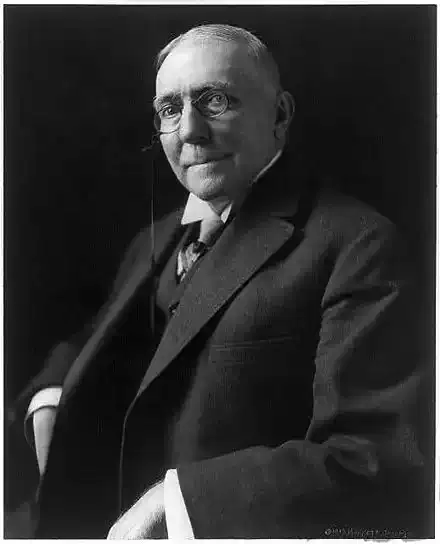
James Whitcomb Riley
Harlie
Fold the little waxen hands
Lightly. Let your warmest tears
Speak regrets, but never fears,--
Heaven understands!
Let the sad heart, o'er the tomb,
Lift again and burst in bloom
Fragrant with a prayer as sweet
As the lily at your feet.
Bend and kiss the folded eyes--
They are only feigning sleep
While their truant glances peep
Into Paradise.
See, the face, though cold and white,
Holds a hint of some delight
E'en with Death, whose finger-tips
Rest upon the frozen lips.
When, within the years to come,
Vanished echoes live once more--
Pattering footsteps on the floor,
And the sounds of home,--
Let your arms in fancy fold
Little Harlie as of old--
As of old and as he waits
At the City's golden gates.
Read more →
293
Carl Sandburg
Last Answers
I wrote a poem on the mist
And a woman asked me what I meant by it.
I had thought till then only of the beauty of the mist,
how pearl and gray of it mix and reel,
And change the drab shanties with lighted lamps at evening
into points of mystery quivering with color.
I answered:
The whole world was mist once long ago and some day
it will all go back to mist,
Our skulls and lungs are more water than bone and tissue
And all poets love dust and mist because all the last answers
Go running back to dust and mist.
Read more →
292
George Herbert
Life
I made a posie, while the day ran by:
Here will I smell my remnant out, and tie
My life within this band.
But time did becken to the flowers, and they
By noon most cunningly did steal away
And wither'd in my hand.
My hand was next to them, and then my heart:
I took, without more thinking, in good part
Times gentle admonition:
Who did so sweetly deaths sad taste convey
Making my minde to smell my fatall day;
Yet sugring the suspicion.
Farewell deare flowers, sweetly your time ye spent,
Fit, while ye liv'd, for smell or ornament,
And after death for cures.
I follow straight without complaints or grief,
Since if my sent be good, I care not, if
It be as short as yours.
Read more →
292
Emily Dickinson
Of Tolling Bell I ask the cause?
Of Tolling Bell I ask the cause?
"A Soul has gone to Heaven"
I'm answered in a lonesome tone-
Is Heaven then a Prison?
That Bells should ring till all should know
A Soul had gone to Heaven
Would seem to me the more the way
A Good News should be given.
Read more →
291
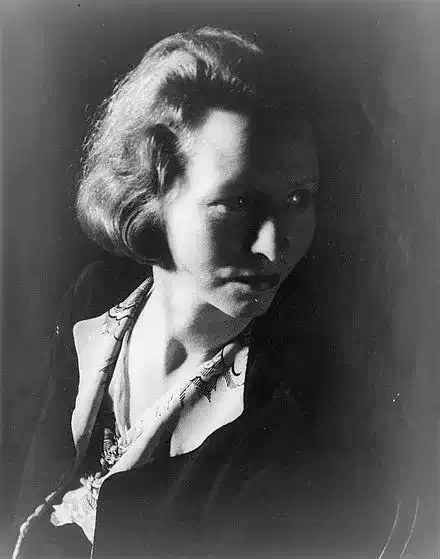
Edna St. Vincent Millay
Dirge
Boys and girls that held her dear,
Do your weeping now;
All you loved of her lies here.
Brought to earth the arrogant brow,
And the withering tongue
Chastened; do your weeping now.
Sing whatever songs are sung,
Wind whatever wreath,
For a playmate perished young,
For a spirit spent in death.
Boys and girls that held her dear,
All you loved of her lies here.
Read more →
289
Emily Dickinson
On this wondrous sea
On this wondrous sea
Sailing silently,
Ho! Pilot, ho!
Knowest thou the shore
Where no breakers roar-
Where the storm is o'er?
In the peaceful west
Many the sails at rest-
The anchors fast-
Thither I pilot thee-
Land Ho! Eternity!
Ashore at last!
Read more →
290
Henry Wadsworth Longfellow
Consolation. (To M. Duperrier, Gentleman Of Aix In Provence, On The Death Of His Daughter)
Will then, Duperrier, thy sorrow be eternal?
And shall the sad discourse
Whispered within thy heart, by tenderness paternal,
Only augment its force?
Thy daughter's mournful fate, into the tomb descending
By death's frequented ways,
Has it become to thee a labyrinth never ending,
Where thy lost reason strays?
I know the charms that made her youth a benediction:
Nor should I be content,
As a censorious friend, to solace thine affliction
By her disparagement.
But she was of the world, which fairest things exposes
To fates the most forlorn;
A rose, she too hath lived as long as live the roses,
The space of one brief morn.
* * * * *
Death has his rigorous laws, unparalleled, unfeeling;
All prayers to him are vain;
Cruel, he stops his ears, and, deaf to our appealing,
He leaves us to complain.
The poor man in his hut, with only thatch for cover,
Unto these laws must bend;
The sentinel that guards the barriers of the Louvre
Cannot our kings defend.
To murmur against death, in petulant defiance,
Is never for the best;
To will what God doth will, that is the only science
That gives us any rest.
Read more →
289
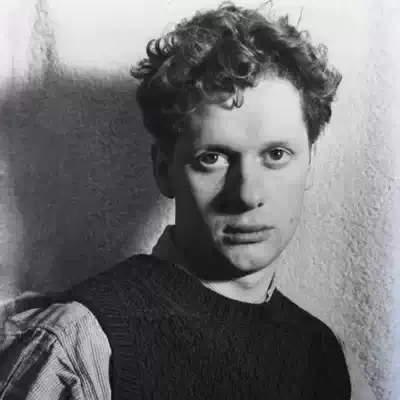
Dylan Thomas
Lie Still, Sleep Becalmed
Lie still, sleep becalmed, sufferer with the wound
In the throat, burning and turning. All night afloat
On the silent sea we have heard the sound
That came from the wound wrapped in the salt sheet.
Under the mile off moon we trembled listening
To the sea sound flowing like blood from the loud wound
And when the salt sheet broke in a storm of singing
The voices of all the drowned swam on the wind.
Open a pathway through the slow sad sail,
Throw wide to the wind the gates of the wandering boat
For my voyage to begin to the end of my wound,
We heard the sea sound sing, we saw the salt sheet tell.
Lie still, sleep becalmed, hide the mouth in the throat,
Or we shall obey, and ride with you through the drowned.
Read more →
290

Anonymous
O Death, O Death, Rock Me Asleep
O Death, O Death, rock me asleep,
Bring me to quiet rest;
Let pass my weary guiltless ghost
Out of my careful breast.
Toll on, thou passing bell;
Ring out my doleful knell;
Thy sound my death abroad will tell,
For I must die,
There is no remedy.
My pains, my pains, who can express?
Alas, they are so strong!
My dolours will not suffer strength
My life for to prolong.
Toll on, thou passing bell;
Ring out my doleful knell;
Thy sound my death abroad will tell,
For I must die,
There is no remedy.
Alone, alone in prison strong
I wail my destiny:
Woe worth this cruel hap that I
Must taste this misery!
Toll on, thou passing bell;
Ring out my doleful knell;
Thy sound my death abroad will tell,
For I must die,
There is no remedy.
Farewell, farewell, my pleasures past!
Welcome, my present pain!
I feel my torment so increase
That life cannot remain.
Cease now, thou passing bell,
Ring out my doleful knoll,
For thou my death dost tell:
Lord, pity thou my soul!
Death doth draw nigh,
Sound dolefully:
For now I die,
I die, I die.
Read more →
289
Emily Dickinson
Sexton! My Master's sleeping here
Sexton! My Master's sleeping here.
Pray lead me to his bed!
I came to build the Bird's nest,
And sow the Early seed-
That when the snow creeps slowly
From off his chamber door-
Daisies point the way there-
And the Troubadour.
Read more →
289
Emily Dickinson
I've seen a Dying Eye
I've seen a Dying Eye
Run round and round a Room-
In search of Something-as it seemed-
Then Cloudier become-
And then-obscure with Fog-
And then-be soldered down
Without disclosing what it be
'Twere blessed to have seen-
Read more →
290

John Greenleaf Whittier
Marguerite
MASSACHUSETTS BAY, 1760.
THE robins sang in the orchard, the buds into
blossoms grew;
Little of human sorrow the buds and the robins
knew!
Sick, in an alien household, the poor French
neutral lay;
Into her lonesome garret fell the light of the April
day,
Through the dusty window, curtained by the spider's
warp and woof,
On the loose-laid floor of hemlock, on oaken ribs
of roof,
The bedquilt's faded patchwork, the teacups on the
stand,
The wheel with flaxen tangle, as it dropped from
her sick hand.
What to her was the song of the robin, or warm
morning light,
As she lay in the trance of the dying, heedless of
sound or sight?
Done was the work of her bands, she had eaten her
bitter bread;
The world of the alien people lay behind her dim
and dead.
But her soul went back to its child-time; she saw
the sun o'erflow
With gold the Basin of Minas, and set over
Gaspereau;
The low, bare flats at ebb-tide, the rush of the sea
at flood,
Through inlet and creek and river, from dike to
upland wood;
The gulls in the red of morning, the fish-hawk's
rise and fall,
The drift of the fog in moonshine, over the dark
coast-wall.
She saw the face of her mother, she heard the song
she sang;
And far off, faintly, slowly, the bell for vespers
rang.
By her bed the hard-faced mistress sat, smoothing
the wrinkled sheet,
Peering into the face, so helpless, and feeling the
ice-cold feet.
With a vague remorse atoning for her greed and
long abuse,
By care no longer heeded and pity too late for use.
Up the stairs of the garret softly the son of the
mistress stepped,
Leaned over the head-board, covering his face with
his hands, and wept.
Outspake the mother, who watched him sharply,
with brow a-frown
'What! love you the Papist, the beggar, the
charge of the town?'
Be she Papist or beggar who lies here, I know
and God knows
I love her, and fain would go with her wherever
she goes!
'O mother! that sweet face came pleading, for
love so athirst.
You saw but the town-charge; I knew her God's
angel at first.'
Shaking her gray head, the mistress hushed down
a bitter cry;
And awed by the silence and shadow of death
drawing nigh,
She murmured a psalm of the Bible; but closer
the young girl pressed,
With the last of her life in her fingers, the cross
to her breast.
'My son, come away,' cried the mother, her voice
cruel grown.
'She is joined to her idols, like Ephraim; let her
alone!'
But he knelt with his hand on her forehead, his
lips to her ear,
And he called back the soul that was passing
'Marguerite, do you hear?'
She paused on the threshold of Heaven; love, pity,
surprise,
Wistful, tender, lit up for an instant the cloud of
her eyes.
With his heart on his lips he kissed her, but never
her cheek grew red,
And the words the living long for he spake in the
ear of the dead.
And the robins sang in the orchard, where buds to
blossoms grew;
Of the folded hands and the still face never the
robins knew!
Read more →
291
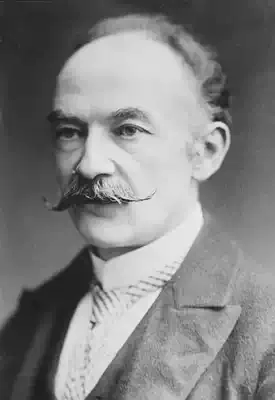
Thomas Hardy
Her Dilemma
THE two were silent in a sunless church,
Whose mildewed walls, uneven paving-stones,
And wasted carvings passed antique research;
And nothing broke the clock's dull monotones.
Leaning against a wormy poppy-head,
So wan and worn that he could scarcely stand,
--For he was soon to die,--he softly said,
"Tell me you love me!"--holding hard her hand.
She would have given a world to breathe "yes" truly,
So much his life seemed hanging on her mind,
And hence she lied, her heart persuaded throughly,
'Twas worth her soul to be a moment kind.
But the sad need thereof, his nearing death,
So mocked humanity that she shamed to prize
A world conditioned thus, or care for breath
Where Nature such dilemmas could devise.
Read more →
289