
Death and Mourning
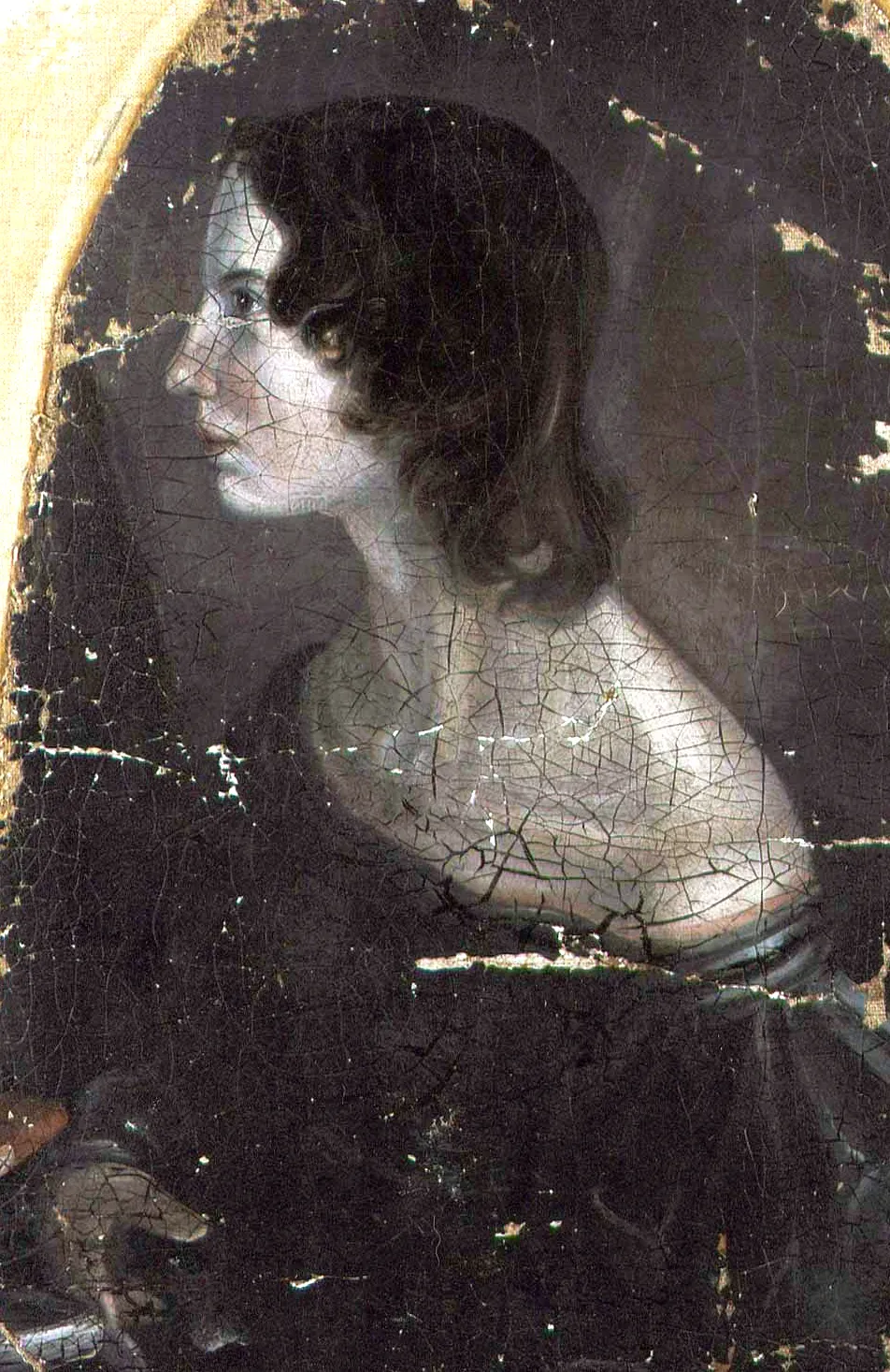
Emily Jane Brontë
R. Alcona to J. Brenzaida
Cold in the earth, and the deep snow piled above thee!
Far, far removed, cold in the dreary grave!
Have I forgot, my Only Love, to love thee,
Severed at last by Time's all-wearing wave?
Now, when alone, do my thoughts no longer hover
Over the mountains on Angora's shore;
Resting their wings where heath and fern-leaves cover
That noble heart for ever, ever more?
Cold in the earth, and fifteen wild Decembers
From those brown hills have melted into spring--
Faithful indeed is the spirit that remembers
After such years of change and suffering!
Sweet Love of youth, forgive if I forget thee
While the World's tide is bearing me along:
Sterner desires and darker hopes beset me,
Hopes which obscure but cannot do thee wrong.
No other Sun has lightened up my heaven;
No other Star has ever shone for me:
All my life's bliss from thy dear life was given
All my life's bliss is in the grave with thee.
But when the days of golden dreams had perished
And even Despair was powerless to destroy,
Then did I learn how existence could be cherished,
Strengthened and fed without the aid of joy;
Then did I check the tears of useless passion,
Weaned my young soul from yearning after thine;
Sternly denied its burning wish to hasten
Down to that tomb already more than mine!
And even yet, I dare not let it languish,
Dare not indulge in Memory's rapturous pain;
Once drinking deep of that divinest anguish,
How could I seek the empty world again?
(March 3, 1845)
Read more →
308

Henry Wadsworth Longfellow
In The Churchyard At Tarrytown
Here lies the gentle humorist, who died
In the bright Indian Summer of his fame!
A simple stone, with but a date and name,
Marks his secluded resting-place beside
The river that he loved and glorified.
Here in the autumn of his days he came,
But the dry leaves of life were all aflame
With tints that brightened and were multiplied.
How sweet a life was his; how sweet a death!
Living, to wing with mirth the weary hours,
Or with romantic tales the heart to cheer;
Dying, to leave a memory like the breath
Of summers full of sunshine and of showers,
A grief and gladness in the atmosphere.
Read more →
307
Henry Wadsworth Longfellow
The Chamber Over The Gate
Is it so far from thee
Thou canst no longer see,
In the Chamber over the Gate,
That old man desolate,
Weeping and wailing sore
For his son, who is no more?
O Absalom, my son!
Is it so long ago
That cry of human woe
From the walled city came,
Calling on his dear name,
That it has died away
In the distance of to-day?
O Absalom, my son!
There is no far or near,
There is neither there nor here,
There is neither soon nor late,
In that Chamber over the Gate,
Nor any long ago
To that cry of human woe,
O Absalom, my son!
From the ages that are past
The voice sounds like a blast,
Over seas that wreck and drown,
Over tumult of traffic and town;
And from ages yet to be
Come the echoes back to me,
O Absalom, my son!
Somewhere at every hour
The watchman on the tower
Looks forth, and sees the fleet
Approach of the hurrying feet
Of messengers, that bear
The tidings of despair.
O Absalom, my son!
He goes forth from the door
Who shall return no more.
With him our joy departs;
The light goes out in our hearts;
In the Chamber over the Gate
We sit disconsolate.
O Absalom, my son!
That 't is a common grief
Bringeth but slight relief;
Ours is the bitterest loss,
Ours is the heaviest cross;
And forever the cry will be
'Would God I had died for thee,
O Absalom, my son!'
Read more →
309
Henry Wadsworth Longfellow
The Black Knight. (From The German Of Uhland)
'Twas Pentecost, the Feast of Gladness,
When woods and fields put off all sadness,
Thus began the King and spake:
So from the halls
Of ancient Hofburgh's walls,
A luxuriant Spring shall break.
Drums and trumpets echo loudly,
Wave the crimson banners proudly,
From balcony the King looked on;
In the play of spears,
Fell all the cavaliers,
Before the monarch's stalwart son.
To the barrier of the fight
Rode at last a sable Knight.
Sir Knight! your name and scutcheon say!
Should I speak it here,
Ye would stand aghast with fear;
I am a Prince of mighty sway!
When he rode into the lists,
The arch of heaven grew black with mists,
And the castle 'gan to rock.
At the first blow,
Fell the youth from saddle-bow,
Hardly rises from the shock.
Pipe and viol call the dances,
Torch-light through the high hall glances;
Waves a mighty shadow in;
With manner bland
Doth ask the maiden's hand,
Doth with her the dance begin;
Danced in sable iron sark,
Danced a measure weird and dark,
Coldly clasped her limbs around.
From breast and hair
Down fall from her the fair
Flowerets, faded, to the ground.
To the sumptuous banquet came
Every Knight and every Dame.
'Twixt son and daughter all distraught,
With mournful mind
The ancient King reclined,
Gazed at them in silent thought.
Pale the children both did look,
But the guest a beaker took;
Golden wine will make you whole!
The children drank,
Gave many a courteous thank;
Oh, that draught was very cool!
Each the father's breast embraces,
Son and daughter; and their faces
Colourless grow utterly.
Whichever way
Looks the fear-struck father grey,
He beholds his children die.
Woe! the blessed children both
Takest thou in the joy of youth;
Take me, too, the joyless father!
Spake the grim Guest,
From his hollow, cavernous breast,
Roses in the spring I gather!
Read more →
309
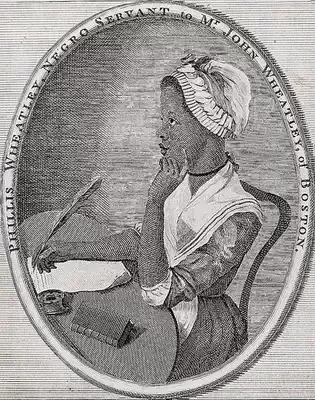
Phillis Wheatley
To A Lady And Her Children, On The Death Of Her Son And Their Brother
O'ERWHELMING sorrow now demands my song:
From death the overwhelming sorrow sprung.
What flowing tears? What hearts with grief opprest?
What sighs on sighs heave the fond parent's breast?
The brother weeps, the hapless sisters join
Th' increasing woe, and swell the crystal brine;
The poor, who once his gen'rous bounty fed,
Droop, and bewail their benefactor dead.
In death the friend, the kind companion lies,
And in one death what various comfort dies!
Th' unhappy mother sees the sanguine rill
Forget to flow, and nature's wheels stand still,
But see from earth his spirit far remov'd,
And know no grief recals your best-belov'd:
He, upon pinions swifter than the wind,
Has left mortality's sad scenes behind
For joys to this terrestial state unknown,
And glories richer than the monarch's crown.
Of virtue's steady course the prize behold!
What blissful wonders to his mind unfold!
But of celestial joys I sing in vain:
Attempt not, muse, the too advent'rous strain.
No more in briny show'rs, ye friends around,
Or bathe his clay, or waste them on the ground:
Still do you weep, still wish for his return?
How cruel thus to wish, and thus to mourn?
No more for him the streams of sorrow pour,
But haste to join him on the heav'nly shore,
On harps of gold to tune immortal lays,
And to your God immortal anthems raise.
Read more →
308
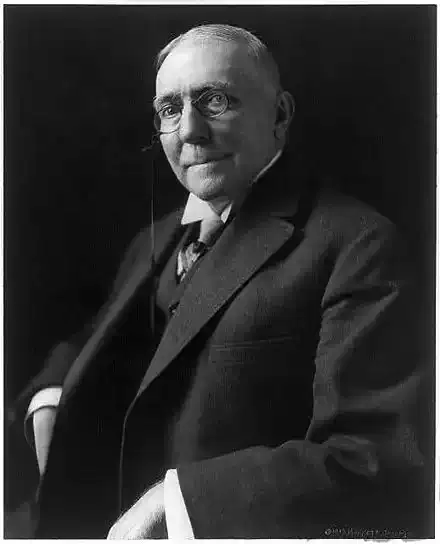
James Whitcomb Riley
In The Dark
O in the depths of midnight
What fancies haunt the brain!
When even the sigh of the sleeper
Sounds like a sob of pain.
A sense of awe and of wonder
I may never well define,--
For the thoughts that come in the shadows
Never come in the shine.
The old clock down in the parlor
Like a sleepless mourner grieves,
And the seconds drip in the silence
As the rain drips from the eaves.
And I think of the hands that signal
The hours there in the gloom,
And wonder what angel watchers
Wait in the darkened room.
And I think of the smiling faces
That used to watch and wait,
Till the click of the clock was answered
By the click of the opening gate.--
They are not there now in the evening--
Morning or noon--not there;
Yet I know that they keep their vigil,
And wait for me Somewhere.
Read more →
305

Ella Wheeler Wilcox
Mockery
Why do we grudge our sweets so to the living
Who, God knows, find at best too much of gall,
And then with generous, open hands kneel, giving
Unto the dead our all?
Why do we pierce the warm hearts, sin or sorrow,
With idle jests, or scorn, or cruel sneers,
And when it cannot know, on some to-morrow,
Speak of its woe through tears?
What do the dead care, for the tender token—
The love, the praise, the floral offerings?
But palpitating, living hearts are broken
For want of just these things.
Read more →
306

Emily Dickinson
You'll find—it when you try to die
You'll find—it when you try to die—
The Easier to let go—
For recollecting such as went—
You could not spare—you know.
And though their places somewhat filled—
As did their Marble names
With Moss—they never grew so full—
You chose the newer names—
And when this World—sets further back—
As Dying—say it does—
The former love—distincter grows—
And supersedes the fresh—
And Thought of them—so fair invites—
It looks too tawdry Grace
To stay behind—with just the Toys
We bought—to ease their place—
Read more →
304

Christina Rossetti
The One Certainty
Vanity of vanities, the Preacher saith,
All things are vanity. The eye and ear
Cannot be filled with what they see and hear.
Like early dew, or like the sudden breath
Of wind, or like the grass that withereth,
Is man, tossed to and fro by hope and fear:
So little joy hath he, so little cheer,
Till all things end in the long dust of death.
To-day is still the same as yesterday,
To-morrow also even as one of them;
And there is nothing new under the sun:
Until the ancient race of Time be run,
The old thorns shall grow out of the old stem,
And morning shall be cold and twilight grey.
Read more →
304
Emily Dickinson
'Tis not that Dying hurts us so
'Tis not that Dying hurts us so'
Tis Living-hurts us more-
But Dying-is a different way-
A Kind behind the Door-
The Southern Custom-of the Bird-
That ere the Frosts are due-
Accepts a better LatitudeWe-
are the Birds-that stay.
The Shrivers round Farmers' doors-
For whose reluctant Crumb-
We stipulate-till pitying Snows
Persuade our Feathers Home.
Read more →
305

William Butler Yeats
Death
NOR dread nor hope attend
A dying animal;
A man awaits his end
Dreading and hoping all;
Many times he died,
Many times rose again.
A great man in his pride
Confronting murderous men
Casts derision upon
Supersession of breath;
He knows death to the bone --
Man has created death.
Read more →
306
James Whitcomb Riley
When Old Jack Died
I.
When old Jack died, we staid from school (they said,
At home, we needn't go that day), and none
Of us ate any breakfast--only one,
And that was Papa--and his eyes were red
When he came round where we were, by the shed
Where Jack was lying, half way in the sun
And half way in the shade. When we begun
To cry out loud, Pa turned and dropped his head
And went away; and Mamma, she went back
Into the kitchen. Then, for a long while,
All to ourselves, like, we stood there and cried.
We thought so many good things of Old Jack,
And funny things--although we didn't smile--We
couldn't only cry when Old Jack died.
II.
When Old Jack died, it seemed a human friend
Had suddenly gone from us; that some face
That we had loved to fondle and embrace
From babyhood, no more would condescend
To smile on us forever. We might bend
With tearful eyes above him, interlace
Our chubby fingers o'er him, romp and race,
Plead with him, call and coax--aye, we might send
The old halloo up for him, whistle, hist,
(If sobs had let us) or, as wildly vain,
Snapped thumbs, called 'speak,' and he had not replied;
We might have gone down on our knees and kissed
The tousled ears, and yet they must remain
Deaf, motionless, we knew--when Old Jack died.
III.
When Old Jack died, it seemed to us, some way,
That all the other dogs in town were pained
With our bereavement, and some that were chained,
Even, unslipped their collars on that day
To visit Jack in state, as though to pay
A last, sad tribute there, while neighbors craned
Their heads above the high board fence, and deigned
To sigh 'Poor dog!' remembering how they
Had cuffed him, when alive, perchance, because,
For love of them he leaped to lick their hands--
Now, that he could not, were they satisfied?
We children thought that, as we crossed his paws,
And o'er his grave, 'way down the bottom-lands,
Wrote 'Our First Love Lies Here,' when Old Jack died.
Read more →
305
Emily Dickinson
I never felt at Home—Below
I never felt at Home—Below—-
And in the Handsome Skies
I shall not feel at Home—I know—
I don't like Paradise—
Because it's Sunday—all the time—
And Recess—never comes—
And Eden'll be so lonesome
Bright Wednesday Afternoons—
If God could make a visit—
Or ever took a Nap—
So not to see us—but they say
Himself—a Telescope
Perennial beholds us—
Myself would run away
From Him—and Holy Ghost—and All—
But there's the "Judgement Day"!
Read more →
305
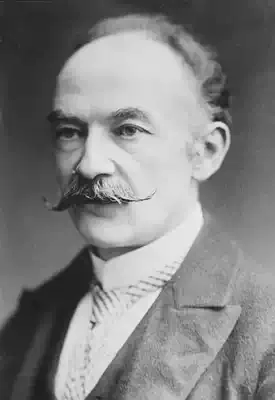
Thomas Hardy
A Wife in London (December, )
I--The Tragedy
She sits in the tawny vapour
That the City lanes have uprolled,
Behind whose webby fold on fold
Like a waning taper
The street-lamp glimmers cold.
A messenger's knock cracks smartly,
Flashed news is in her hand
Of meaning it dazes to understand
Though shaped so shortly:
He--has fallen--in the far South Land . . .
II--The Irony
'Tis the morrow; the fog hangs thicker,
The postman nears and goes:
A letter is brought whose lines disclose
By the firelight flicker
His hand, whom the worm now knows:
Fresh--firm--penned in highest feather -
Page-full of his hoped return,
And of home-planned jaunts by brake and burn
In the summer weather,
And of new love that they would learn.
Read more →
303

Henry Lawson
Ballad Of The Drover
Across the stony ridges,
Across the rolling plain,
Young Harry Dale, the drover,
Comes riding home again.
And well his stock-horse bears him,
And light of heart is he,
And stoutly his old pack-horse
Is trotting by his knee.
Up Queensland way with cattle
He travelled regions vast;
And many months have vanished
Since home-folk saw him last.
He hums a song of someone
He hopes to marry soon;
And hobble-chains and camp-ware
Keep jingling to the tune.
Beyond the hazy dado
Against the lower skies
And yon blue line of ranges
The homestead station lies.
And thitherward the drover
Jogs through the lazy noon,
While hobble-chains and camp-ware
Are jingling to a tune.
An hour has filled the heavens
With storm-clouds inky black;
At times the lightning trickles
Around the drover's track;
But Harry pushes onward,
His horses' strength he tries,
In hope to reach the river
Before the flood shall rise.
The thunder from above him
Goes rolling o'er the plain;
And down on thirsty pastures
In torrents falls the rain.
And every creek and gully
Sends forth its little flood,
Till the river runs a banker,
All stained with yellow mud.
Now Harry speaks to Rover,
The best dog on the plains,
And to his hardy horses,
And strokes their shaggy manes;
`We've breasted bigger rivers
When floods were at their height
Nor shall this gutter stop us
From getting home to-night!'
The thunder growls a warning,
The ghastly lightnings gleam,
As the drover turns his horses
To swim the fatal stream.
But, oh! the flood runs stronger
Than e'er it ran before;
The saddle-horse is failing,
And only half-way o'er!
When flashes next the lightning,
The flood's grey breast is blank,
And a cattle dog and pack-horse
Are struggling up the bank.
But in the lonely homestead
The girl will wait in vain He'll
never pass the stations
In charge of stock again.
The faithful dog a moment
Sits panting on the bank,
And then swims through the current
To where his master sank.
And round and round in circles
He fights with failing strength,
Till, borne down by the waters,
The old dog sinks at length.
Across the flooded lowlands
And slopes of sodden loam
The pack-horse struggles onward,
To take dumb tidings home.
And mud-stained, wet, and weary,
Through ranges dark goes he;
While hobble-chains and tinware
Are sounding eerily.
The floods are in the ocean,
The stream is clear again,
And now a verdant carpet
Is stretched across the plain.
But someone's eyes are saddened,
And someone's heart still bleeds
In sorrow for the drover
Who sleeps among the reeds.
Read more →
302

Anonymous
Dominus Illuminatio Mea
IN the hour of death, after this life's whim,
When the heart beats low, and the eyes grow dim,
And pain has exhausted every limb--
The lover of the Lord shall trust in Him.
When the will has forgotten the lifelong aim,
And the mind can only disgrace its fame,
And a man is uncertain of his own name--
The power of the Lord shall fill this frame.
When the last sigh is heaved, and the last tear shed,
And the coffin is waiting beside the bed,
And the widow and child forsake the dead--
The angel of the Lord shall lift this head.
For even the purest delight may pall,
And power must fail, and the pride must fall,
And the love of the dearest friends grow small--
But the glory of the Lord is all in all.
Read more →
301
Henry Wadsworth Longfellow
Tales Of A Wayside Inn : Part 3. The Musician's Tale; The Mother's Ghost
Svend Dyring he rideth adown the glade;
I myself was young!
There he hath wooed him so winsome a maid;
Fair words gladden so many a heart.
Together were they for seven years,
And together children six were theirs.
Then came Death abroad through the land,
And blighted the beautiful lily-wand.
Svend Dyring he rideth adown the glade,
And again hath he wooed him another maid,
He hath wooed him a maid and brought home a bride,
But she was bitter and full of pride.
When she came driving into the yard,
There stood the six children weeping so hard.
There stood the small children with sorrowful heart;
From before her feet she thrust them apart.
She gave to them neither ale nor bread;
'Ye shall suffer hunger and hate,' she said.
She took from them their quilts of blue,
And said: 'Ye shall lie on the straw we strew.'
She took from them the great waxlight;
'Now ye shall lie in the dark at night.'
In the evening late they cried with cold;
The mother heard it under the mould.
The woman heard it the earth below:
'To my little children I must go.'
She standeth before the Lord of all:
'And may I go to my children small?'
She prayed him so long, and would not cease,
Until he bade her depart in peace.
'At cock-crow thou shalt return again;
Longer thou shalt not there remain!'
She girded up her sorrowful bones,
And rifted the walls and the marble stones.
As through the village she flitted by,
The watch-dogs howled aloud to the sky.
When she came to the castle gate,
There stood her eldest daughter in wait.
'Why standest thou here, dear daughter mine?
How fares it with brothers and sisters thine?'
'Never art thou mother of mine,
For my mother was both fair and fine.
'My mother was white, with cheeks of red,
But thou art pale, and like to the dead.'
'How should I be fair and fine?
I have been dead; pale cheeks are mine.
'How should I be white and red,
So long, so long have I been dead?'
When she came in at the chamber door,
There stood the small children weeping sore.
One she braided, another she brushed,
The third she lifted, the fourth she hushed.
The fifth she took on her lap and pressed,
As if she would suckle it at her breast.
Then to her eldest daughter said she,
'Do thou bid Svend Dyring come hither to me.'
Into the chamber when he came
She spake to him in anger and shame.
'I left behind me both ale and bread;
My children hunger and are not fed.
'I left behind me quilts of blue;
My children lie on the straw ye strew.
'I left behind me the great waxlight;
My children lie in the dark at night.
'If I come again unto your hall,
As cruel a fate shall you befall!
'Now crows the cock with feathers red;
Back to the earth must all the dead.
'Now crows the cock with feathers swart;
The gates of heaven fly wide apart.
'Now crows the cock with feathers white;
I can abide no longer to-night.'
Whenever they heard the watch-dogs wail,
They gave the children bread and ale.
Whenever they heard the watch-dogs bay,
They feared lest the dead were on their way.
Whenever they heard the watch-dogs bark;
I myself was young!
They feared the dead out there in the dark.
Fair words gladden so many a heart.
Read more →
300
James Whitcomb Riley
Our Little Girl
Her heart knew naught of sorrow,
Nor the vaguest taint of sin-'
Twas an ever-blooming blossom
Of the purity within:
And her hands knew only touches
Of the mother's gentle care,
And the kisses and caresses
Through the interludes of prayer.
Her baby-feet had journeyed
Such a little distance here,
They could have found no briers
In the path to interfere;
The little cross she carried
Could not weary her, we know,
For it lay as lightly on her
As a shadow on the snow.
And yet the way before us--
O how empty now and drear!--
How ev'n the dews of roses
Seem as dripping tears for her!
And the song-birds all seem crying,
As the winds cry and the rain,
All sobbingly,--'We want--we want
Our little girl again!'
Read more →
302
James Whitcomb Riley
When The Hearse Comes Back
A thing 'at's 'bout as tryin' as a healthy man kin meet
Is some poor feller's funeral a-joggin' 'long the street:
The slow hearse and the hosses-- slow enough, to say at least,
Fer to even tax the patience of gentleman deceased!
The low scrunch of the gravel-- and the slow grind of the wheels--,
The slow, slow go of ev'ry woe 'at ev'rybody feels!
So I ruther like the contrast when I hear the whip-lash crack
A quickstep fer the hosses,
When the
Hearse
Comes
Back!
Meet it goin' to'rds the cimet'ry, you'll want to drap yer eyes--
But ef the plumes don't fetch you, it'll ketch you otherwise-You'll
haf to see the caskit, though you'd ort to look away
And 'conomize and save yer sighs fer any other day!
Yer sympathizin' won't wake up the sleeper from his rest--
Yer tears won't thaw them hands o' his 'at's froze acrost his breast!
And this is why-- when airth and sky's a gittin blurred and black--
I like the flash and hurry
When the
Hearse
Comes
Back!
It's not 'cause I don't 'preciate it ain't no time fer jokes,
Ner 'cause I' got no common human feelin' fer the folks--;
I've went to funerals myse'f, and tuk on some, perhaps--
Fer my hearth's 'bout as mal'able as any other chap's--,
I've buried father, mother-- But I'll haf to jes' git you
To 'excuse me,' as the feller says--. The p'int I'm drivin' to
Is simply when we're plum broke down and all knocked out o' whack,
It he'ps to shape us up like,
When the
Hearse
Comes
Back!
The idy! Wadin round here over shoe-mouth deep in woe,
When they's a graded 'pike o' joy and sunshine don't you know!
When evening strikes the pastur', cows'll pull out fer the bars,
And skittish-like from out the night'll prance the happy stars.
And so when my time comes to die, and I've got ary friend
'At wants expressed my last request-- I'll mebby, rickommend
To drive slow, ef they haf to, goin' 'long the out'ard track,
But I'll smile and say, 'You speed 'em
When the
Hearse
Comes
Back!'
Read more →
301

John Greenleaf Whittier
The Lost Occasion
Some die too late and some too soon,
At early morning, heat of noon,
Or the chill evening twilight. Thou,
Whom the rich heavens did so endow
With eyes of power and Jove's own brow,
With all the massive strength that fills
Thy home-horizon's granite hills,
With rarest gifts of heart and head
From manliest stock inherited,
New England's stateliest type of man,
In port and speech Olympian;
Whom no one met, at first, but took
A second awed and wondering look
(As turned, perchance, the eyes of Greece
On Phidias' unveiled masterpiece);
Whose words in simplest homespun clad,
The Saxon strength of Caedmon's had,
With power reserved at need to reach
The Roman forum's loftiest speech,
Sweet with persuasion, eloquent
In passion, cool in argument,
Or, ponderous, falling on thy foes
As fell the Norse god's hammer blows,
Crushing as if with Talus' flail
Through Error's logic-woven mail,
And failing only when they tried
The adamant of the righteous side,-Thou,
foiled in aim and hope, bereaved
Of old friends, by the new deceived,
Too soon for us, too soon for thee,
Beside thy lonely Northern sea,
Where long and low the marsh-lands spread,
Laid wearily down thy August head.
Thou shouldst have lived to feel below
Thy feet Disunion's fierce upthrow;
The late-sprung mine that underlaid
Thy sad concessions vainly made.
Thou shouldst have seen from Sumter's wall
The star-flag of the Union fall,
And armed rebellion pressing on
The broken lines of Washington!
No stronger voice than thine had then
Called out the utmost might of men,
To make the Union's charter free
And strengthen law by liberty.
How had that stern arbitrament
To thy gray age youth's vigor lent,
Shaming ambition's paltry prize
Before thy disillusioned eyes;
Breaking the spell about thee wound
Like the green withes that Samson bound;
Redeeming in one effort grand,
Thyself and thy imperilled land!
Ah, cruel fate, that closed to thee,
O sleeper by the Northern sea,
The gates of opportunity!
God fills the gaps of human need,
Each crisis brings its word and deed.
Wise men and strong we did not lack;
But still, with memory turning back,
In the dark hours we thought of thee,
And thy lone grave beside the sea.
Above that grave the east winds blow,
And from the marsh-lands drifting slow
The sea-fog comes, with evermore
The wave-wash of a lonely shore,
And sea-bird's melancholy cry,
As Nature fain would typify
The sadness of a closing scene,
The loss of that which should have been.
But, where thy native mountains bare
Their foreheads to diviner air,
Fit emblem of enduring fame,
One lofty summit keeps thy name.
For thee the cosmic forces did
The rearing of that pyramid,
The prescient ages shaping with
Fire, flood, and frost thy monolith.
Sunrise and sunset lay thereon
With hands of light their benison,
The stars of midnight pause to set
Their jewels in its coronet.
And evermore that mountain mass
Seems climbing from the shadowy pass
To light, as if to manifest
Thy nobler self, thy life at best!
Read more →
301
John Greenleaf Whittier
R. S. S., At Deer Island On The Merrimac
Make, for he loved thee well, our Merrimac,
From wave and shore a low and long lament
For him, whose last look sought thee, as he went
The unknown way from which no step comes back.
And ye, O ancient pine-trees, at whose feet
He watched in life the sunset's reddening glow,
Let the soft south wind through your needles blow
A fitting requiem tenderly and sweet!
No fonder lover of all lovely things
Shall walk where once he walked, no smile more glad
Greet friends than his who friends in all men had,
Whose pleasant memory, to that Island clings,
Where a dear mourner in the home he left
Of love's sweet solace cannot be bereft.
Read more →
301
James Whitcomb Riley
At Crown Hill
Leave him here in the fresh
greening grasses and trees
And the symbols of love, and the solace of these-
The saintly white lilies and blossoms he keeps
In endless caress as
he breathlessly sleeps.
The tears of our eyes wrong the scene of his rest,
For the sky's at its clearest-the sun's at its best-
The earth at its greenest- its wild bud and bloom
At its sweetest-and sweetest its honey'd perfume.
Home! Home!-Leave him here in his lordly estate,
And with never a tear as we turn from the gate!
Turn back to the home that will know him no more,-
The vines at the window-the sun through the door,-
Nor sound of his voice, nor the light of his face!...
But the birds will sing on, and the rose, in his place,
Will tenderly smile til we daringly feign
He is home with us still, though the tremulous rain
Of our tears reappear, and again all is bloom,
And all prayerless we sob in the long-darkened room.
Heaven portions it thus-the old mystery dim,-
It is midnight to us-it is morning to him
Read more →
301
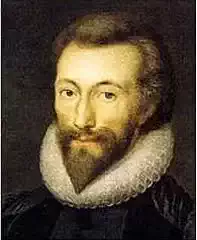
John Donne
Elegy:The End of Funeral Elegies
MADAM—
That I might make your cabinet my tomb,
And for my fame, which I love next my soul,
Next to my soul provide the happiest room,
Admit to that place this last funeral scroll.
Others by wills give legacies, but I
Dying, of you do beg a legacy.
My fortune and my will this custom break,
When we are senseless grown to make stones speak,
Though no stone tell thee what I was, yet thou
In my grave's inside seest what thou art now,
Yet thou 'rt not yet so good ; till death us lay
To ripe and mellow there, we're stubborn clay.
Parents make us earth, and souls dignify
Us to be glass ; here to grow gold we lie.
Whilst in our souls sin bred and pamper'd is,
Our souls become worm-eaten carcases.
Read more →
300
James Whitcomb Riley
Over The Eyes Of Gladness
'The voice of One hath spoken,
And the bended reed is bruised--
The golden bowl is broken,
And the silver cord is loosed.'
Over the eyes of gladness
The lids of sorrow fall,
And the light of mirth is darkened
Under the funeral pall.
The hearts that throbbed with rapture
In dreams of the future years,
Are wakened from their slumbers,
And their visions drowned in tears.
. . . . . . .
Two buds on the bough in the morning--
Twin buds in the smiling sun,
But the frost of death has fallen
And blighted the bloom of one.
One leaf of life still folded
Has fallen from the stem,
Leaving the symbol teaching
There still are two of them,--
For though--through Time's gradations,
The LIVING bud may burst,--
The WITHERED one is gathered,
And blooms in Heaven first.
Read more →
299