
Death and Mourning
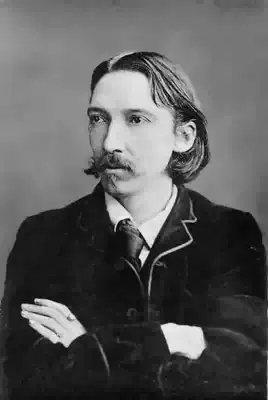
Robert Louis Stevenson
Now When The Number Of My Years
NOW when the number of my years
Is all fulfilled, and I
From sedentary life
Shall rouse me up to die,
Bury me low and let me lie
Under the wide and starry sky.
Joying to live, I joyed to die,
Bury me low and let me lie.
Clear was my soul, my deeds were free,
Honour was called my name,
I fell not back from fear
Nor followed after fame.
Bury me low and let me lie
Under the wide and starry sky.
Joying to live, I joyed to die,
Bury me low and let me lie.
Bury me low in valleys green
And where the milder breeze
Blows fresh along the stream,
Sings roundly in the trees -
Bury me low and let me lie
Under the wide and starry sky.
Joying to live, I joyed to die,
Bury me low and let me lie.
Read more →
320

Emily Dickinson
It don't sound so terrible—quite—as it did
It don't sound so terrible—quite—as it did—
I run it over—"Dead", Brain, "Dead."
Put it in Latin—left of my school—
Seems it don't shriek so—under rule.
Turn it, a little—full in the face
A Trouble looks bitterest—
Shift it—just—
Say "When Tomorrow comes this way—
I shall have waded down one Day."
I suppose it will interrupt me some
Till I get accustomed—but then the Tomb
Like other new Things—shows largest—then—
And smaller, by Habit—
It's shrewder then
Put the Thought in advance—a Year—
How like "a fit"—then—
Murder—wear!
Read more →
316
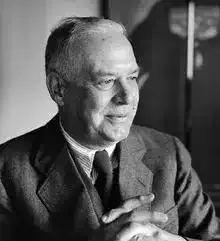
Wallace Stevens
Madame la Fleurie
Weight him down, O side-stars, with the great weightings of
the end.
Seal him there. He looked in a glass of the earth and thought
he lived in it.
Now, he brings all that he saw into the earth, to the waiting
parent.
His crisp knowledge is devoured by her, beneath a dew.
Weight him, weight, weight him with the sleepiness of the
moon.
It was only a glass because he looked in it. It was nothing he
could be told.
It was a language he spoke, because he must, yet did not know.
It was a page he had found in the handbook of heartbreak.
The black fugatos are strumming the blackness of black...
The thick strings stutter the finial gutturals.
He does not lie there remembering the blue-jay, say the jay.
His grief is that his mother should feed on him, himself and
what he saw,
In that distant chamber, a bearded queen, wicked in her dead
light.
Read more →
319
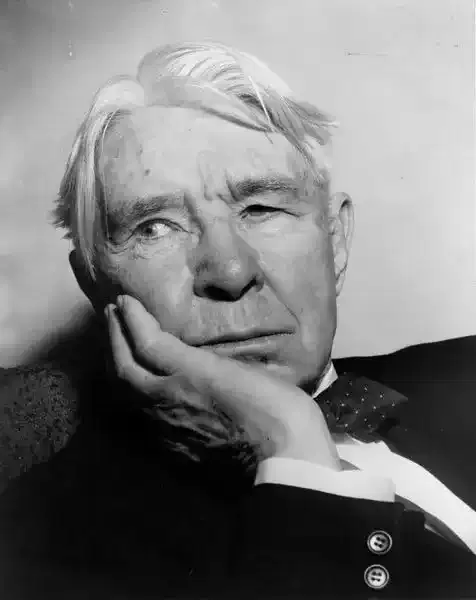
Carl Sandburg
To A Dead Man
Over the dead line we have called to you
To come across with a word to us,
Some beaten whisper of what happens
Where you are over the dead line
Deaf to our calls and voiceless.
The flickering shadows have not answered
Nor your lips sent a signal
Whether love talks and roses grow
And the sun breaks at morning
Splattering the sea with crimson.
Read more →
317

Dylan Thomas
Ears in the Turrets Hear
Ears in the turrets hear
Hands grumble on the door,
Eyes in the gables see
The fingers at the locks.
Shall I unbolt or stay
Alone till the day I die
Unseen by stranger-eyes
In this white house?
Hands, hold you poison or grapes?
Beyond this island bound
By a thin sea of flesh
And a bone coast,
The land lies out of sound
And the hills out of mind.
No birds or flying fish
Disturbs this island’s rest.
Ears in this island hear
The wind pass like a fire,
Eyes in this island see
Ships anchor off the bay.
Shall I run to the ships
With the wind in my hair,
Or stay till the day I die
And welcome no sailor?
Ships, hold you poison or grapes?
Hands grumble on the door,
Ships anchor off the bay,
Rain beats the sand and slates.
Shall I let in the stranger,
Shall I welcome the sailor,
Or stay till the day I die?
Hands of the stranger and holds of the ships,
Hold you poison or grapes?
Read more →
318
Carl Sandburg
Crimson
Crimson is the slow smolder of the cigar end I hold,
Gray is the ash that stiffens and covers all silent the fire.
(A great man I know is dead and while he lies in his coffin a gone flame I sit here in
cumbering shadows and smoke and watch my thoughts come and go.)
Read more →
316

William Butler Yeats
Oil And Blood
IN tombs of gold and lapis lazuli
Bodies of holy men and women exude
Miraculous oil, odour of violet.
But under heavy loads of trampled clay
Lie bodies of the vampires full of blood;
Their shrouds are bloody and their lips are wet.
Read more →
317
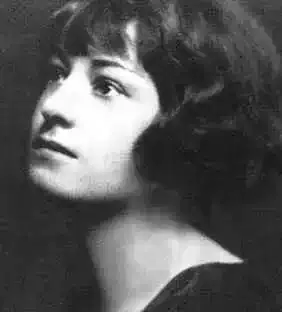
Dorothy Parker
The Immortals
If you should sail for Trebizond, or die,
Or cry another name in your first sleep,
Or see me board a train, and fail to sigh,
Appropriately, I'd clutch my breast and weep.
And you, if I should wander through the door,
Or sin, or seek a nunnery, or save
My lips and give my cheek, would tread the floor
And aptly mention poison and the grave.
Therefore the mooning world is gratified,
Quoting how prettily we sigh and swear;
And you and I, correctly side by side,
Shall live as lovers when our bones are bare
And though we lie forever enemies,
Shall rank with Abelard and Heloise.
Read more →
315
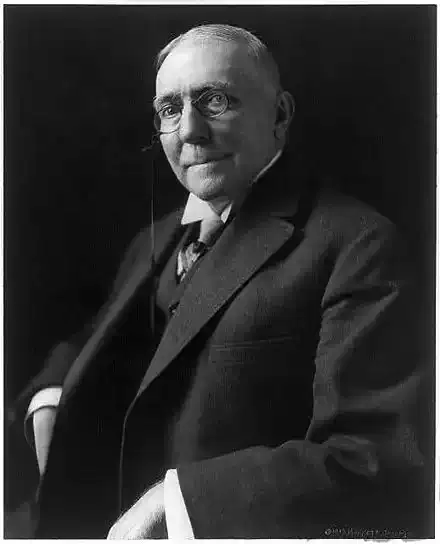
James Whitcomb Riley
Three Dead Friends
Always suddenly they are gone--
The friends we trusted and held secure--
Suddenly we are gazing on,
Not a _smiling_ face, but the marble-pure
Dead mask of a face that nevermore
To a smile of ours will make reply--
The lips close-locked as the eyelids are-Gone--
swift as the flash of the molten ore
A meteor pours through a midnight sky,
Leaving it blind of a single star.
Tell us, O Death, Remorseless Might!
What is this old, unescapable ire
You wreak on us?--from the birth of light
Till the world be charred to a core of fire!
We do no evil thing to you--
We seek to evade you--that is all--
That is your will--you will not be known
Of men. What, then, would you have us do?--
Cringe, and wait till your vengeance fall,
And your graves be fed, and the trumpet blown?
You desire no friends; but _we_--O we
Need them so, as we falter here,
Fumbling through each new vacancy,
As each is stricken that we hold dear.
One you struck but a year ago;
And one not a month ago; and one-(
God's vast pity!)--and one lies now
Where the widow wails, in her nameless woe,
And the soldiers pace, with the sword and gun,
Where the comrade sleeps, with the laureled brow.
And what did the first?--that wayward soul,
Clothed of sorrow, yet nude of sin,
And with all hearts bowed in the strange control
Of the heavenly voice of his violin.
Why, it was music the way he _stood_,
So grand was the poise of the head and so
Full was the figure of majesty!--
One heard with the eyes, as a deaf man would,
And with all sense brimmed to the overflow
With tears of anguish and ecstasy.
And what did the girl, with the great warm light
Of genius sunning her eyes of blue,
With her heart so pure, and her soul so white--
What, O Death, did she do to you?
Through field and wood as a child she strayed,
As Nature, the dear sweet mother led;
While from her canvas, mirrored back,
Glimmered the stream through the everglade
Where the grapevine trailed from the trees to wed
Its likeness of emerald, blue and black.
And what did he, who, the last of these,
Faced you, with never a fear, O Death?
Did you hate _him_ that he loved the breeze,
And the morning dews, and the rose's breath?
Did you hate him that he answered not
Your hate again--but turned, instead,
His only hate on his country's wrongs?
Well--you possess him, dead!--but what
Of the good he wrought? With laureled head
He bides with us in his deeds and songs.
Laureled, first, that he bravely fought,
And forged a way to our flag's release;
Laureled, next--for the harp he taught
To wake glad songs in the days of peace--
Songs of the woodland haunts he held
As close in his love as they held their bloom
In their inmost bosoms of leaf and vine--
Songs that echoed, and pulsed and welled
Through the town's pent streets, and the sick child's room,
Pure as a shower in soft sunshine.
Claim them, Death; yet their fame endures,
What friend next will you rend from us
In that cold, pitiless way of yours,
And leave us a grief more dolorous?
Speak to us!--tell us, O Dreadful Power!--
Are we to have not a lone friend left?--
Since, frozen, sodden, or green the sod,--
In every second of every hour,
_Some one_, Death, you have left thus bereft,
Half inaudibly shrieks to God.
Read more →
315

Henry Wadsworth Longfellow
The Burial Of The Poet
In the old churchyard of his native town,
And in the ancestral tomb beside the wall,
We laid him in the sleep that comes to all,
And left him to his rest and his renown.
The snow was falling, as if Heaven dropped down
White flowers of Paradise to strew his pall;--
The dead around him seemed to wake, and call
His name, as worthy of so white a crown.
And now the moon is shining on the scene,
And the broad sheet of snow is written o'er
With shadows cruciform of leafless trees,
As once the winding-sheet of Saladin
With chapters of the Koran; but, ah! more
Mysterious and triumphant signs are these.
Read more →
315
Dorothy Parker
Prayer For A Prayer
Dearest one, when I am dead
Never seek to follow me.
Never mount the quiet hill
Where the copper leaves are still,
As my heart is, on the tree
Standing at my narrow bed.
Only of your tenderness,
Pray a little prayer at night.
Say: "I have forgiven nowI,
so weak and sad; O Thou,
Wreathed in thunder, robed in light,
Surely Thou wilt do no less."
Read more →
315

John Donne
Holy Sonnet VII: At The Round Earth's Imagined Corners Blow
At the round earth's imagined corners blow
Your trumpets, angels, and arise, arise
From death, you numberless infinities
Of souls, and to your scattered bodies go,
All whom the flood did, and fire shall, overthrow,
All whom war, dearth, age, agues, tyrannies,
Despair, law, chance, hath slain, and you whose eyes
Shall behold God, and never taste death's woe.
But let them sleep, Lord, and me mourn a space,
For, if above all these my sins abound,
'Tis late to ask abundance of Thy grace,
When we are there. Here on this lowly ground
Teach me how to repent; for that's as good
As if Thou'dst sealed my pardon, with Thy blood.
Read more →
316
William Butler Yeats
A Drunken Man's Praise Of Sobriety
COME swish around, my pretty punk,
And keep me dancing still
That I may stay a sober man
Although I drink my fill.
Sobriety is a jewel
That I do much adore;
And therefore keep me dancing
Though drunkards lie and snore.
O mind your feet, O mind your feet,
Keep dancing like a wave,
And under every dancer
A dead man in his grave.
No ups and downs, my pretty,
A mermaid, not a punk;
A drunkard is a dead man,
And all dead men are drunk.
Read more →
314
Henry Wadsworth Longfellow
By The Seaside : Sir Humphrey Gilbert
Southward with fleet of ice
Sailed the corsair Death;
Wild and gast blew the blast,
And the east-wind was his breath.
His lordly ships of ice
Glisten in the sun;
On each side, like pennons wide,
Flashing crystal streamlets run.
His sails of white sea-mist
Dripped with silver rain;
But where he passed there were cast
Leaden shadows o'er the main.
Eastward from Campobello
Sir Humphrey Gilbert sailed;
Three days or more seaward he bore,
Then, alas! the land-wind failed.
Alas! the land-wind failed,
And ice-cold grew the night;
And nevermore, on sea or shore,
Should Sir Humphrey see the light.
He sat upon the deck,
The Book was in his hand;
'Do not fear! Heaven is as near,'
He said, 'by water as by land!'
In the first watch of the night,
Without a signal's sound,
Out of the sea, mysteriously,
The fleet of Death rose all around.
The moon and the evening star
Were hanging in the shrouds;
Every mast, as it passed,
Seemed to rake the passing clouds.
They grappled with their prize,
At midnight black and cold!
As of a rock was the shock;
Heavily the ground-swell rolled.
Southward through day and dark,
They drift in cold embrace,
With mist and rain, o'er the open main;
Yet there seems no change of place.
Southward, forever southward,
They drift through dark and day;
And like a dream, in the Gulf-Stream
Sinking, vanish all away.
Read more →
313

William Shakespeare
Fairy Land v
FULL fathom five thy father lies;
Of his bones are coral made;
Those are pearls that were his eyes:
Nothing of him that doth fade,
But doth suffer a sea-change
Into something rich and strange.
Sea-nymphs hourly ring his knell:
Ding-dong.
Hark! now I hear them-Ding-
dong, bell!
Read more →
313

John Greenleaf Whittier
An Easter Flower Gift
O dearest bloom the seasons know,
Flowers of the Resurrection blow,
Our hope and faith restore;
And through the bitterness of death
And loss and sorrow, breathe a breath
Of life forevermore!
The thought of Love Immortal blends
With fond remembrances of friends;
In you, O sacred flowers,
By human love made doubly sweet,
The heavenly and the earthly meet,
The heart of Christ and ours!
Read more →
310

Henry Lawson
The Day Before I Die
There's such a lot of work to do, for such a troubled head!
I’m scribbling this against a book, with foolscap round, in bed.
It strikes me that I’ll scribble much in this way by and by,
And write my last lines so perchance the day before I die.
There’s lots of things to come and go, and I, in careless rhyme,
And drink and love (it wastes the most) have wasted lots of time.
There’s so much good work to be done it makes me sure that I
Will be the sorriest for my death, the day before I die.
But, lift me dear, for I am tired, and let me taste the wine—
And lay your cheek a little while on this lined cheek of mine.
I want to say I love you so—your patient love is why
I’ll have such little time, you know, the day before I die.
Read more →
310
Henry Wadsworth Longfellow
Tales Of A Wayside Inn : Part 3. The Spanish Jew's Tale; Azrael
King Solomon, before his palace gate
At evening, on the pavement tessellate
Was walking with a stranger from the East,
Arrayed in rich attire as for a feast,
The mighty Runjeet-Sing, a learned man,
And Rajah of the realms of Hindostan.
And as they walked the guest became aware
Of a white figure in the twilight air,
Gazing intent, as one who with surprise
His form and features seemed to recognize;
And in a whisper to the king he said:
'What is yon shape, that, pallid as the dead,
Is watching me, as if he sought to trace_
In the dim light the features of my face?'
The king looked, and replied: 'I know him well;
It is the Angel men call Azrael,
'T is the Death Angel; what hast thou to fear?'
And the guest answered: 'Lest he should come near,
And speak to me, and take away my breath!
Save me from Azrael, save me from death!
O king, that hast dominion o'er the wind,
Bid it arise and bear me hence to Ind.'
The king gazed upward at the cloudless sky,
Whispered a word, and raised his hand on high,
And lo! the signet-ring of chrysoprase
On his uplifted finger seemed to blaze
With hidden fire, and rushing from the west
There came a mighty wind, and seized the guest
And lifted him from earth, and on they passed,
His shining garments streaming in the blast,
A silken banner o'er the walls upreared,
A purple cloud, that gleamed and disappeared.
Then said the Angel, smiling: 'If this man
Be Rajah Runjeet-Sing of Hindostan,
Thou hast done well in listening to his prayer;
I was upon my way to seek him there.'
Read more →
311

Robert W. Service
Someone's Mother
Someone's Mother trails the street
Wrapt in rotted rags;
Broken slippers on her feet
Drearily she drags;
Drifting in the bitter night,
Gnawing gutter bread,
With a face of tallow white,
Listless as the dead.
Someone's Mother in the dim
Of the grey church wall
Hears within a Christmas hymn,
One she can recall
From the h so long ago,
When divinely far,
in the holy alter glow
She would kneel in prayer.
Someone's Mother, huddled there,
Had so sweet a dream;
Seemed the sky was Heaven's stair,
Golden and agleam,
Robed in gown Communion bright,
Singingly she trod
Up and up the stair of light,
And thee was waiting - God.
Someone's Mother cowers down
By the old church wall;
Soft above the sleeping town
Snow begins to fall;
Now her rags are lily fair,
but unproud is she:
Someone's Mother is not there . . .
Lo! she climbs the starry stair
Only angels see.
Read more →
311
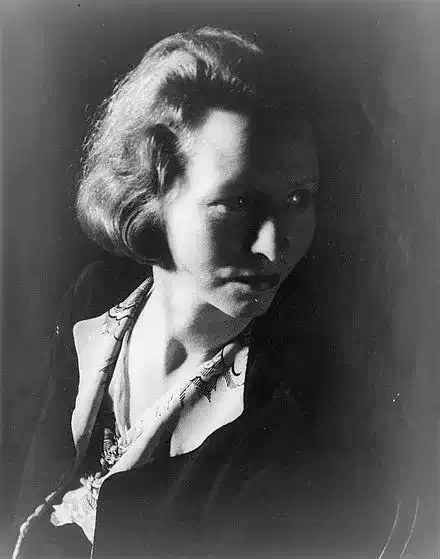
Edna St. Vincent Millay
Kin To Sorrow
Am I kin to Sorrow,
That so oft
Falls the knocker of my door——
Neither loud nor soft,
But as long accustomed,
Under Sorrow's hand?
Marigolds around the step
And rosemary stand,
And then comes Sorrow—
And what does Sorrow care
For the rosemary
Or the marigolds there?
Am I kin to Sorrow?
Are we kin?
That so oft upon my door—
Oh, come in!
Read more →
309
Emily Dickinson
Sweet, to have had them lost
Sweet, to have had them lost
For news that they be saved-
The nearer they departed Us
The nearer they, restored,
Shall stand to Our Right Hand-
Most precious and the Dead-
Next precious
Those that rose to go-
Then thought of Us, and stayed.
Read more →
310
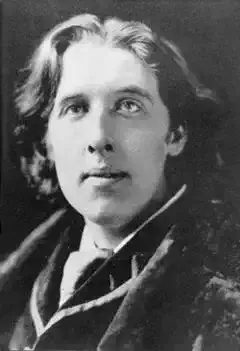
Oscar Wilde
Ballade De Marguerite
(NORMANDE.)
I AM weary of lying within the chase
When the knights are meeting in market-place.
Nay, go not thou to the red-roofed town
Lest the hooves of the war-horse tread thee down.
But I would not go where the Squires ride,
I would only walk by my Lady's side.
Alack! and alack! thou art over bold,
A Forester's son may not eat off gold.
Will she love me the less that my Father is seen,
Each Martinmas day in a doublet green?
Perchance she is sewing at tapestrie,
Spindle and loom are not meet for thee.
Ah, if she is working the arras bright
I might ravel the threads by the fire-light.
Perchance she is hunting of the deer,
How could you follow o'er hill and meer?
Ah, if she is riding with the court,
I might run beside her and wind the morte.
Perchance she is kneeling in S. Denys,
(On her soul may our Lady have gramercy!)
Ah, if she is praying in lone chapelle,
I might swing the censer and ring the bell.
Come in my son, for you look sae pale,
The father shall fill thee a stoup of ale.
But who are these knights in bright array?
Is it a pageant the rich folks play?
'Tis the King of England from over sea,
Who has come unto visit our fair countrie.
But why does the curfew toll sae low
And why do the mourners walk a-row?
O 'tis Hugh of Amiens my sister's son
Who is lying stark, for his day is done.
Nay, nay, for I see white lilies clear,
It is no strong man who lies on the bier.
O 'tis old Dame Jeannette that kept the hall,
I knew she would die at the autumn fall.
Dame Jeannette had not that gold-brown hair,
Old Jeannette was not a maiden fair.
O 'tis none of our kith and none of our kin,
(Her soul may our Lady assoil from sin!)
But I hear the boy's voice chaunting sweet,
'Elle est morte, la Marguerite.'
Come in my son and lie on the bed,
And let the dead folk bury their dead.
O mother, you know I loved her true:
O mother, hath one grave room for two?
Read more →
311
Henry Wadsworth Longfellow
In The Churchyard At Tarrytown
Here lies the gentle humorist, who died
In the bright Indian Summer of his fame!
A simple stone, with but a date and name,
Marks his secluded resting-place beside
The river that he loved and glorified.
Here in the autumn of his days he came,
But the dry leaves of life were all aflame
With tints that brightened and were multiplied.
How sweet a life was his; how sweet a death!
Living, to wing with mirth the weary hours,
Or with romantic tales the heart to cheer;
Dying, to leave a memory like the breath
Of summers full of sunshine and of showers,
A grief and gladness in the atmosphere.
Read more →
307
James Whitcomb Riley
By Her White Bed
By her white bed I muse a little space:
She fell asleep--not very long ago,--
And yet the grass was here and not the snow--
The leaf, the bud, the blossom, and--her face!-Midsummer's
heaven above us, and the grace
Of Lovers own day, from dawn to afterglow;
The fireflies' glimmering, and the sweet and low
Plaint of the whip-poor-wills, and every place
In thicker twilight for the roses' scent.
Then _night_.--She slept--in such tranquility,
I walk atiptoe still, nor _dare_ to weep,
Feeling, in all this hush, she rests content--
That though God stood to wake her for me, she
Would mutely plead: 'Nay, Lord! Let _him_ so sleep.'
Read more →
307