
Death and Mourning

Emily Dickinson
If I should die
If I should die,
And you should live-
And time should gurgle on-
And morn should beam-
And noon should burn-
As it has usual done-
If Birds should build as early
And Bees as bustling go-
One might depart at option
From enterprise below!
'Tis sweet to know that stocks will stand
When we with Daisies lie-
That Commerce will continue-
And Trades as briskly fly-
It makes the parting tranquil
And keeps the soul serene-
That gentlemen so sprightly
Conduct the pleasing scene!
Read more →
330
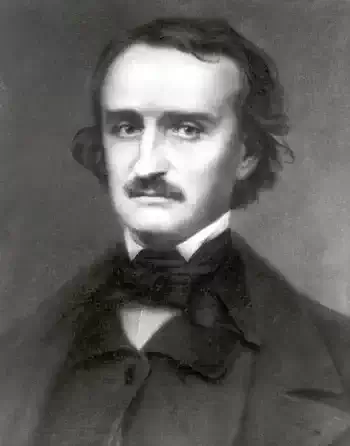
Edgar Allan Poe
For Annie
Thank Heaven! the crisis
The
danger is past,
And the lingering illness
Is over at last
And
the fever called "Living"
Is conquered at last.
Sadly, I know
I am shorn of my strength,
And no muscle I move
As I lie at full length
But
no matter!-I feel
I am better at length.
And I rest so composedly,
Now, in my bed
That any beholder
Might fancy me dead
Might
start at beholding me,
Thinking me dead.
The moaning and groaning,
The sighing and sobbing,
Are quieted now,
With that horrible throbbing
At heart:- ah, that horrible,
Horrible throbbing!
The sickness- the nausea
The
pitiless pain
Have
ceased, with the fever
That maddened my brain
With
the fever called "Living"
That burned in my brain.
And oh! of all tortures
That torture the worst
Has abated- the terrible
Torture of thirst
For the naphthaline river
Of Passion accurst:
I
have drunk of a water
That quenches all thirst:
Of a water that flows,
With a lullaby sound,
From a spring but a very few
Feet under ground
From
a cavern not very far
Down under ground.
And ah! let it never
Be foolishly said
That my room it is gloomy
And narrow my bed;
For man never slept
In a different bed
And,
to sleep, you must slumber
In just such a bed.
My tantalized spirit
Here blandly reposes,
Forgetting, or never
Regretting its roses
Its
old agitations
Of myrtles and roses:
For now, while so quietly
Lying, it fancies
A holier odor
About it, of pansies
A
rosemary odor,
Commingled with pansies
With
rue and the beautiful
Puritan pansies.
And so it lies happily,
Bathing in many
A dream of the truth
And the beauty of AnnieDrowned
in a bath
Of the tresses of Annie.
She tenderly kissed me,
She fondly caressed,
And then I fell gently
To sleep on her breast
Deeply
to sleep
From the heaven of her breast.
When the light was extinguished,
She covered me warm,
And she prayed to the angels
To keep me from harm
To
the queen of the angels
To shield me from harm.
And I lie so composedly,
Now, in my bed,
(Knowing her love)
That you fancy me dead
And
I rest so contentedly,
Now, in my bed,
(With her love at my breast)
That you fancy me dead
That
you shudder to look at me,
Thinking me dead.
But my heart it is brighter
Than all of the many
Stars in the sky,
For it sparkles with AnnieIt
glows with the light
Of the love of my AnnieWith
the thought of the light
Of the eyes of my Annie.
Read more →
329
Henry Van Dyke
The Window
All night long, by a distant bell,
The passing hours were notched
On the dark, while her breathing rose and fell,
And the spark of life I watched
In her face was glowing or fading, -- who could tell? --
And the open window of the room,
With a flare of yellow light,
Was peering out into the gloom,
Like an eye that searched the night.
Oh, what do you see in the dark, little window, and why do you fear?
"I see that the garden is crowded with creeping forms of fear:
Little white ghosts in the locust-tree, that wave in the night-wind's breath,
And low in the leafy laurels the larking shadow of death."
Sweet, clear notes of a waking bird
Told of the passing away
Of the dark, -- and my darling may have heard;
For she smiled in her sleep, while the ray
Of the rising dawn spoke joy without a word,
Till the splendor born in the east outburned
The yellow lamplight, pale and thin,
And the open window slowly turned
To the eye of the morning, looking in.
Oh, what do you see in the room, little window, that makes you so bright?
"I see that a child is asleep on her pillow, soft and white,
With the rose of life on her tips, and the breath of life in her breast,
And the arms of God around her as she quietly takes her rest."
Read more →
328

Dylan Thomas
The Conversation of Prayer
The conversation of prayers about to be said
By the child going to bed and the man on the stairs
Who climbs to his dying love in her high room,
The one not caring to whom in his sleep he will move
And the other full of tears that she will be dead,
Turns in the dark on the sound they know will arise
Into the answering skies from the green ground,
From the man on the stairs and the child by his bed.
The sound about to be said in the two prayers
For the sleep in a safe land and the love who dies
Will be the same grief flying. Whom shall they calm?
Shall the child sleep unharmed or the man be crying?
The conversation of prayers about to be said
Turns on the quick and the dead, and the man on the stair
To-night shall find no dying but alive and warm
In the fire of his care his love in the high room.
And the child not caring to whom he climbs his prayer
Shall drown in a grief as deep as his made grave,
And mark the dark eyed wave, through the eyes of sleep,
Dragging him up the stairs to one who lies dead.
Read more →
327
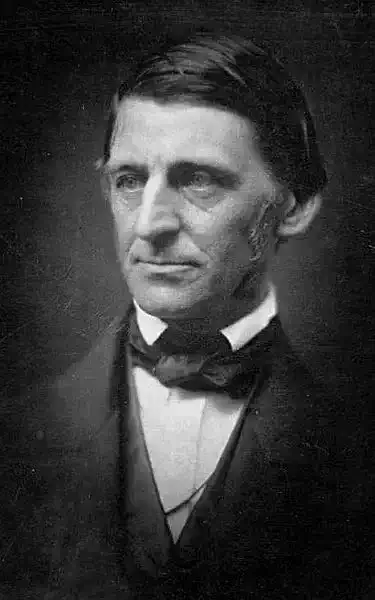
Ralph Waldo Emerson
Dirge
Knows he who tills this lonely field
To reap its scanty corn,
What mystic fruit his acres yield
At midnight and at morn?
In the long sunny afternoon,
The plain was full of ghosts,
I wandered up, I wandered down,
Beset by pensive hosts.
The winding Concord gleamed below,
Pouring as wide a flood
As when my brothers long ago,
Came with me to the wood.
But they are gone,— the holy ones,
Who trod with me this lonely vale,
The strong, star-bright companions
Are silent, low, and pale.
My good, my noble, in their prime,
Who made this world the feast it was,
Who learned with me the lore of time,
Who loved this dwelling-place.
They took this valley for their toy,
They played with it in every mood,
A cell for prayer, a hall for joy,
They treated nature as they would.
They colored the horizon round,
Stars flamed and faded as they bade,
All echoes hearkened for their sound,
They made the woodlands glad or mad.
I touch this flower of silken leaf
Which once our childhood knew
Its soft leaves wound me with a grief
Whose balsam never grew.
Hearken to yon pine warbler
Singing aloft in the tree;
Hearest thou, O traveller!
What he singeth to me?
Not unless God made sharp thine ear
With sorrow such as mine,
Out of that delicate lay couldst thou
The heavy dirge divine.
Go, lonely man, it saith,
They loved thee from their birth,
Their hands were pure, and pure their faith,
There are no such hearts on earth.
Ye drew one mother's milk,
One chamber held ye all;
A very tender history
Did in your childhood fall.
Ye cannot unlock your heart,
The key is gone with them;
The silent organ loudest chants
The master's requiem.
Read more →
326
Emily Dickinson
I like a look of Agony
I like a look of Agony,
Because I know it's true-
Men do not sham Convulsion,
Nor simulate, a Throe-
The Eyes glaze once-and that is Death-
Impossible to feign
The Beads upon the Forehead
By homely Anguish strung.
Read more →
325

Henry Wadsworth Longfellow
Song Of The Silent Land. (From The German Of Salis)
Into the Silent Land!
Ah! who shall lead us thither?
Clouds in the evening sky more darkly gather,
And shattered wrecks lie thicker on the strand.
Who leads us with a gentle hand
Thither, O thither,
Into the Silent Land?
Into the Silent Land!
To you, ye boundless regions
Of all perfection! Tender morning-visions
Of beauteous souls! The Future's pledge and band!
Who in Life's battle firm doth stand,
Shall bear Hope's tender blossoms
Into the Silent Land!
O Land! O Land!
For all the broken-hearted
The mildest herald by our faith allotted,
Beckons, and with inverted torch doth stand
To lead us with a gentle hand
Into the land of the great Departed,
Into the Silent Land!
Read more →
326
Edgar Allan Poe
The Valley Of Unrest
Once it smiled a silent dell
Where the people did not dwell;
They had gone unto the wars,
Trusting to the mild-eyed stars,
Nightly, from their azure towers,
To keep watch above the flowers,
In the midst of which all day
The red sunlight lazily lay.
Now each visitor shall confess
The sad valley's restlessness.
Nothing there is motionless
Nothing
save the airs that brood
Over the magic solitude.
Ah, by no wind are stirred those trees
That palpitate like the chill seas
Around the misty Hebrides!
Ah, by no wind those clouds are driven
That rustle through the unquiet Heaven
Uneasily, from morn till even,
Over the violets there that lie
In myriad types of the human eye
Over
the lilies there that wave
And weep above a nameless grave!
They wave:- from out their fragrant tops
Eternal dews come down in drops.
They weep:- from off their delicate stems
Perennial tears descend in gems.
Read more →
326
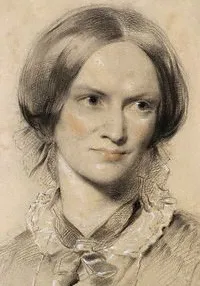
Charlotte Brontë
Mementos
ARRANGING longlocked
drawers and shelves
Of cabinets, shut up for years,
What a strange task we've set ourselves !
How still the lonely room appears !
How strange this mass of ancient treasures,
Mementos of past pains and pleasures;
These volumes, clasped with costly stone,
With print all faded, gilding gone;
These fans of leaves, from Indian trees
These
crimson shells, from Indian seas
These
tiny portraits, set in rings
Once,
doubtless, deemed such precious things;
Keepsakes bestowed by Love on Faith,
And worn till the receiver's death,
Now stored with cameos, china, shells,
In this old closet's dusty cells.
I scarcely think, for ten long years,
A hand has touched these relics old;
And, coating each, slowformed,
appears,
The growth of green and antique mould.
All in this house is mossing over;
All is unused, and dim, and damp;
Nor light, nor warmth, the rooms discover
Bereft
for years of fire and lamp.
The sun, sometimes in summer, enters
The casements, with reviving ray;
But the long rains of many winters
Moulder the very walls away.
And outside all is ivy, clinging
To chimney, lattice, gable grey;
Scarcely one little red rose springing
Through the green moss can force its way.
Unscared, the daw, and starling nestle,
Where the tall turret rises high,
And winds alone come near to rustle
The thick leaves where their cradles lie.
I sometimes think, when late at even
I climb the stair reluctantly,
Some shape that should be well in heaven,
Or ill elsewhere, will pass by me.
I fear to see the very faces,
Familiar thirty years ago,
Even in the old accustomed places
Which look so cold and gloomy now.
I've come, to close the window, hither,
At twilight, when the sun was down,
And Fear, my very soul would wither,
Lest something should be dimly shown.
Too much the buried form resembling,
Of her who once was mistress here;
Lest doubtful shade, or moonbeam trembling,
Might take her aspect, once so dear.
Hers was this chamber; in her time
It seemed to me a pleasant room,
For then no cloud of grief or crime
Had cursed it with a settled gloom;
I had not seen death's image laid
In shroud and sheet, on yonder bed.
Before she married, she was blest
Blest
in her youth, blest in her worth;
Her mind was calm, its sunny rest
Shone in her eyes more clear than mirth.
And when attired in rich array,
Light, lustrous hair about her brow,
She yonder sata
kind of day
Lit upwhat
seems so gloomy now.
These grim oak walls, even then were grim;
That old carved chair, was then antique;
But what around looked dusk and dim
Served as a foil to her fresh cheek;
Her neck, and arms, of hue so fair,
Eyes of unclouded, smiling, light;
Her soft, and curled, and floating hair,
Gems and attire, as rainbow bright.
Reclined in yonder deep recess,
Ofttimes she would, at evening, lie
Watching the sun; she seemed to bless
With happy glance the glorious sky.
She loved such scenes, and as she gazed,
Her face evinced her spirit's mood;
Beauty or grandeur ever raised
In her, a deepfelt
gratitude.
But of all lovely things, she loved
A cloudless moon, on summer night;
Full oft have I impatience proved
To see how long, her still delight
Would find a theme in reverie.
Out on the lawn, or where the trees
Let in the lustre fitfully,
As their boughs parted momently,
To the soft, languid, summer breeze.
Alas ! that she should e'er have flung
Those pure, though lonely joys away
Deceived
by false and guileful tongue,
She gave her hand, then suffered wrong;
Oppressed, illused,
she faded young,
And died of grief by slow decay.
Open that casketlook
how bright
Those jewels flash upon the sight;
The brilliants have not lost a ray
Of lustre, since her wedding day.
But seeupon
that pearly chain
How
dim lies time's discolouring stain !
I've seen that by her daughter worn:
For, e'er she died, a child was born;
A child that ne'er its mother knew,
That lone, and almost friendless grew;
For, ever, when its step drew nigh,
Averted was the father's eye;
And then, a life impure and wild
Made him a stranger to his child;
Absorbed in vice, he little cared
On what she did, or how she fared.
The love withheld, she never sought,
She grew uncherishedlearnt
untaught;
To her the inward life of thought
Full soon was open laid.
I know not if her friendlessness
Did sometimes on her spirit press,
But plaint she never made.
The bookshelves
were her darling treasure,
She rarely seemed the time to measure
While she could read alone.
And she too loved the twilight wood,
And often, in her mother's mood,
Away to yonder hill would hie,
Like her, to watch the setting sun,
Or see the stars born, one by one,
Out of the darkening sky.
Nor would she leave that hill till night
Trembled from pole to pole with light;
Even then, upon her homeward way,
Longlong
her wandering steps delayed
To quit the sombre forest shade,
Through which her eerie pathway lay.
You ask if she had beauty's grace ?
I know notbut
a nobler face
My eyes have seldom seen;
A keen and fine intelligence,
And, better still, the truest sense
Were in her speaking mien.
But bloom or lustre was there none,
Only at moments, fitful shone
An ardour in her eye,
That kindled on her cheek a flush,
Warm as a red sky's passing blush
And quick with energy.
Her speech, too, was not common speech,
No wish to shine, or aim to teach,
Was in her words displayed:
She still began with quiet sense,
But oft the force of eloquence
Came to her lips in aid;
Language and voice unconscious changed,
And thoughts, in other words arranged,
Her fervid soul transfused
Into the hearts of those who heard,
And transient strength and ardour stirred,
In minds to strength unused.
Yet in gay crowd or festal glare,
Grave and retiring was her air;
'Twas seldom, save with me alone,
That fire of feeling freely shone;
She loved not awe's nor wonder's gaze,
Nor even exaggerated praise,
Nor even notice, if too keen
The curious gazer searched her mien.
Nature's own green expanse revealed
The world, the pleasures, she could prize;
On free hillside,
in sunny field,
In quiet spots by woods concealed,
Grew wild and fresh her chosen joys,
Yet Nature's feelings deeply lay
In that endowed and youthful frame;
Shrined in her heart and hid from day,
They burned unseen with silent flame;
In youth's first search for mental light,
She lived but to reflect and learn,
But soon her mind's maturer might
For stronger task did pant and yearn;
And stronger task did fate assign,
Task that a giant's strength might strain;
To suffer long and ne'er repine,
Be calm in frenzy, smile at pain.
Pale with the secret war of feeling,
Sustained with courage, mute, yet high;
The wounds at which she bled, revealing
Only by altered cheek and eye;
She bore in silencebut
when passion
Surged in her soul with ceaseless foam,
The storm at last brought desolation,
And drove her exiled from her home.
And silent still, she straight assembled
The wrecks of strength her soul retained;
For though the wasted body trembled,
The unconquered mind, to quail, disdained.
She crossed the seanow
lone she wanders
By Seine's, or Rhine's, or Arno's flow;
Fain would I know if distance renders
Relief or comfort to her woe.
Fain would I know if, henceforth, ever,
These eyes shall read in hers again,
That light of love which faded never,
Though dimmed so long with secret pain.
She will return, but cold and altered,
Like all whose hopes too soon depart;
Like all on whom have beat, unsheltered,
The bitter blasts that blight the heart.
No more shall I behold her lying
Calm on a pillow, smoothed by me;
No more that spirit, worn with sighing,
Will know the rest of infancy.
If still the paths of lore she follow,
'Twill be with tired and goaded will;
She'll only toil, the aching hollow,
The joyless blank of life to fill.
And oh ! full oft, quite spent and weary,
Her hand will pause, her head decline;
That labour seems so hard and dreary,
On which no ray of hope may shine.
Thus the pale blight of time and sorrow
Will shade with grey her soft, dark hair
Then comes the day that knows no morrow,
And death succeeds to long despair.
So speaks experience, sage and hoary;
I see it plainly, know it well,
Like one who, having read a story,
Each incident therein can tell.
Touch not that ring, 'twas his, the sire
Of that forsaken child;
And nought his relics can inspire
Save memories, sindefiled.
I, who sat by his wife's deathbed,
I, who his daughter loved,
Could almost curse the guilty dead,
For woes, the guiltless proved.
And heaven did cursethey
found him laid,
When crime for wrath was rife,
Coldwith
the suicidal blade
Clutched in his desperate gripe.
'Twas near that long deserted hut,
Which in the wood decays,
Death's axe, selfwielded,
struck his root,
And lopped his desperate days.
You know the spot, where three black trees,
Lift up their branches fell,
And moaning, ceaseless as the seas,
Still seem, in every passing breeze,
The deed of blood to tell.
They named him mad, and laid his bones
Where holier ashes lie;
Yet doubt not that his spirit groans,
In hell's eternity.
But, lo ! night, closing o'er the earth,
Infects our thoughts with gloom;
Come, let us strive to rally mirth,
Where glows a clear and tranquil hearth
In some more cheerful room.
Read more →
326
Emily Dickinson
There's something quieter than sleep
There's something quieter than sleep
Within this inner room!
It wears a sprig upon its breast-
And will not tell its name.
Some touch it, and some kiss it-
Some chafe its idle hand-
It has a simple gravity
I do not understand!
I would not weep if I were they-
How rude in one to sob!
Might scare the quiet fairy
Back to her native wood!
While simple-hearted neighbors
Chat of the "Early dead"We-
prone to periphrasis
Remark that Birds have fled!
Read more →
325
Emily Dickinson
They dropped like flakes
They dropped like flakes, they dropped like stars,
Like petals from a rose,
When suddenly across the lune
A wind with fingers goes.
They perished in the seamless grass,-No
eye could find the place;
But God on his repealless list
Can summon every face
Read more →
325

Ella Wheeler Wilcox
Always At Sea
Always at sea I think about the dead.
On barques invisible they seem to sail
The self-same course; and from the decks cry 'Hail'!
Then I recall old words that they have said,
And see their faces etched upon the mist-
Dear faces I have kissed.
Always the dead seem very close at sea.
The coarse vibrations of the earth debar
Our spirit friends from coming where we are.
But through God's ether, unimpeded, free,
They wing their way, the ocean deeps above-
And find the hearts that love.
Always at sea my dead come very near.
A growing host; some old in spirit lore,
And some who crossed to find the other shore
But yesterday. All, all, I see and hear
With inner senses, while the voice of faith
Proclaims-there is no death.
Read more →
323
Henry Wadsworth Longfellow
Voices Of The Night : Footsteps of Angels
When the hours of Day are numbered,
And the voices of the Night
Wake the better soul, that slumbered,
To a holy, calm delight;
Ere the evening lamps are lighted,
And, like phantoms grim and tall,
Shadows from the fitful firelight
Dance upon the parlor wall;
Then the forms of the departed
Enter at the open door;
The beloved, the true-hearted,
Come to visit me once more;
He, the young and strong, who cherished
Noble longings for the strife,
By the roadside fell and perished,
Weary with the march of life!
They, the holy ones and weakly,
Who the cross of suffering bore,
Folded their pale hands so meekly,
Spake with us on earth no more!
And with them the Being Beauteous,
Who unto my youth was given,
More than all things else to love me,
And is now a saint in heaven.
With a slow and noiseless footstep
Comes that messenger divine,
Takes the vacant chair beside me,
Lays her gentle hand in mine.
And she sits and gazes at me
With those deep and tender eyes,
Like the stars, so still and saint-like,
Looking downward from the skies.
Uttered not, yet comprehended,
Is the spirit's voiceless prayer,
Soft rebukes, in blessings ended,
Breathing from her lips of air.
Oh, though oft depressed and lonely,
All my fears are laid aside,
If I but remember only
Such as these have lived and died!
Read more →
323
Emily Dickinson
To die
To die--takes just a little while--
They say it doesn't hurt-It's
only fainter--by degrees--
And then--it's out of sight--
A darker Ribbon--for a Day--
A Crape upon the Hat--
And then the pretty sunshine comes--
And helps us to forget--
The absent--mystic--creature--
That but for love of us--
Had gone to sleep--that soundest time--
Without the weariness--
Read more →
322
Emily Dickinson
Two Travellers perishing in Snow
Two Travellers perishing in Snow
The Forests as they froze
Together heard them strengthening
Each other with the words
That Heaven if Heaven-must contain
What Either left behind
And then the cheer too solemn grew
For language, and the wind
Long steps across the features took
That Love had touched the Morn
With reverential Hyacinth-
The taleless Days went on
Till Mystery impatient drew
And those They left behind
Led absent, were procured of Heaven
As Those first furnished, said-
Read more →
323
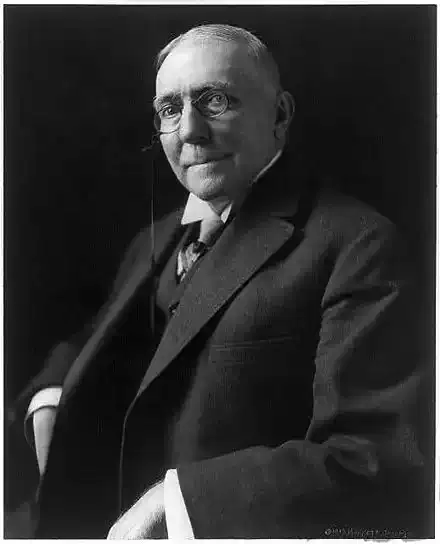
James Whitcomb Riley
The Stepmother
First she come to our house,
Tommy run and hid;
And Emily and Bob and me
We cried jus' like we did
When Mother died,--and we all said
'At we all wisht 'at we was dead!
And Nurse she couldn't stop us,
And Pa he tried and tried,--
We sobbed and shook and wouldn't look,
But only cried and cried;
And nen someone--we couldn't jus'
Tell who--was cryin' same as us!
Our Stepmother! Yes, it was her,
Her arms around us all-'
Cause Tom slid down the bannister
And peeked in from the hall.--
And we all love her, too, because
She's purt nigh good as Mother was!
Read more →
320

John Donne
Hero and Leander
Both robb'd of air, we both lie in one ground ;
Both whom one fire had burnt, one water drown'd
321
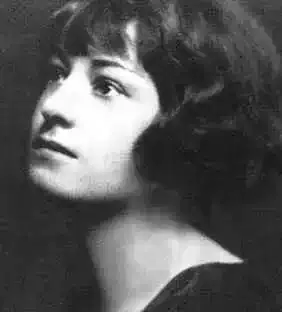
Dorothy Parker
Salome's Dancing-Lesson
She that begs a little boon
(Heel and toe! Heel and toe!)
Little gets- and nothing, soon.
(No, no, no! No, no, no!)
She that calls for costly things
Priceless finds her offerings
What's
impossible to kings?
(Heel and toe! Heel and toe!)
Kings are shaped as other men.
(Step and turn! Step and turn!)
Ask what none may ask again.
(Will you learn? Will you learn?)
Lovers whine, and kisses pall,
Jewels tarnish, kingdoms fall
Death's
the rarest prize of all!
(Step and turn! Step and turn!)
Veils are woven to be dropped.
(One, two, three! One, two, three!)
Aging eyes are slowest stopped.
(Quietly! Quietly!)
She whose body's young and cool
Has no need of dancing-school-
Scratch a king and find a fool!
(One, two, three! One, two, three!)
Read more →
321
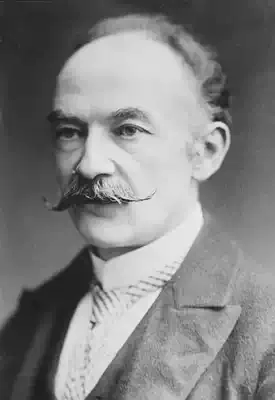
Thomas Hardy
Thoughts of Phena
at news of her death
Not a line of her writing have I
Not a thread of her hair,
No mark of her late time as dame in her dwelling, whereby
I may picture her there;
And in vain do I urge my unsight
To conceive my lost prize
At her close, whom I knew when her dreams were upbrimming with light
And with laughter her eyes.
What scenes spread around her last days,
Sad, shining, or dim?
Did her gifts and compassions enray and enarch her sweet ways
With an aureate nimb?
Or did life-light decline from her years,
And mischances control
Her full day-star; unease, or regret, or forebodings, or fears
Disennoble her soul?
Thus I do but the phantom retain
Of the maiden of yore
As my relic; yet haply the best of her--fined in my brain
It may be the more
That no line of her writing have I,
Nor a thread of her hair,
No mark of her late time as dame in her dwelling, whereby
I may picture her there.
March .
Read more →
321
Emily Dickinson
How fortunate the Grave
How fortunate the Grave-
All Prizes to obtain-
Successful certain, if at last,
First Suitor not in vain.
Read more →
320
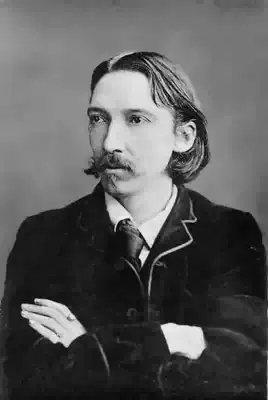
Robert Louis Stevenson
God Gave To Me A Child In Part
GOD gave to me a child in part,
Yet wholly gave the father's heart:
Child of my soul, O whither now,
Unborn, unmothered, goest thou?
You came, you went, and no man wist;
Hapless, my child, no breast you kist;
On no dear knees, a privileged babbler, clomb,
Nor knew the kindly feel of home.
My voice may reach you, O my dear-
A father's voice perhaps the child may hear;
And, pitying, you may turn your view
On that poor father whom you never knew.
Alas! alone he sits, who then,
Immortal among mortal men,
Sat hand in hand with love, and all day through
With your dear mother wondered over you.
Read more →
321
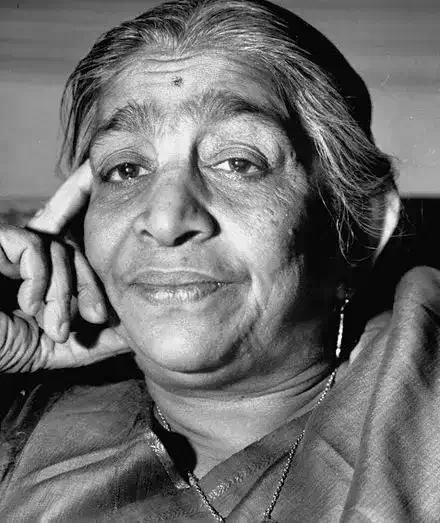
Sarojini Naidu
Corn Grinders
O little mouse, why dost thou cry
While merry stars laugh in the sky?
Alas! alas! my lord is dead!
Ah, who will ease my bitter pain?
He went to seek a millet-grain
In the rich farmer's granary shed;
They caught him in a baited snare,
And slew my lover unaware:
Alas! alas! my lord is dead.
O little deer, why dost thou moan,
Hid in thy forest-bower alone?
Alas! alas! my lord is dead!
Ah! who will quiet my lament?
At fall of eventide he went
To drink beside the river-head;
A waiting hunter threw his dart,
And struck my lover through the heart.
Alas! alas! my lord is dead.
O little bride, why dost thou weep
With all the happy world asleep?
Alas! alas! my lord is dead!
Ah, who will stay these hungry tears,
Or still the want of famished years,
And crown with love my marriage-bed?
My soul burns with the quenchless fire
That lit my lover's funeral pyre:
Alas! alas! my lord is dead.
Read more →
320
Emily Dickinson
It ceased to hurt me, though so slow
It ceased to hurt me, though so slow
I could not feel the Anguish go-
But only knew by looking back-
That something-had benumbed the Track-
Nor when it altered, I could say,
For I had worn it, every day,
As constant as the Childish frock-
I hung upon the Peg, at night.
But not the Grief-that nestled close
As needles-ladies softly press
To Cushions Cheeks-
To keep their place-
Nor what consoled it, I could trace-
Except, whereas 'twas WildernessIt's
better-almost Peace-
Read more →
319

Anonymous
Sir Patrick Spence
The king sits in Dumferling toune,
Drinking the blude-reid wine:
"O whar will I get guid sailor,
To sail this schip of mine?"
Up and spak an eldern knicht,
Sat at the kings richt kne:
"Sir Patrick Spence is the best sailor
That sails upon the se."
The king has written a braid letter,
And signd it wi his hand,
And sent it to Sir Patrick Spence,
Was walking on the sand.
The first line that Sir Patrick red,
A loud lauch lauched he;
The next line that Sir Patrick red,
The teir blinded his ee.
"O wha is this has don this deid,
This ill deid don to me,
To send me out this time o' the yeir,
To sail upon the se!
"Mak hast, mak haste, my mirry men all,
Our guid schip sails the morne:"
"O say na sae, my master deir,
For I feir a deadlie storme.
"Late late yestreen I saw the new moone,
Wi the auld moone in hir arme,
And I feir, I feir, my deir master,
That we will cum to harme."
O our Scots nobles wer richt laith
To weet their cork-heild schoone;
Bot lang owre a' the play wer playd,
Thair hats they swam aboone.
O lang, lang may their ladies sit,
Wi thair fans into their hand,
Or eir they se Sir Patrick Spence
Cum sailing to the land.
O lang, lang may the ladies stand,
Wi thair gold kems in their hair,
Waiting for thair ain deir lords,
For they'll se thame na mair.
Haf owre, haf owre to Aberdour,
It's fiftie fadom deip,
And thair lies guid Sir Patrick Spence,
Wi the Scots lords at his feit.
Read more →
319