
Death and Mourning
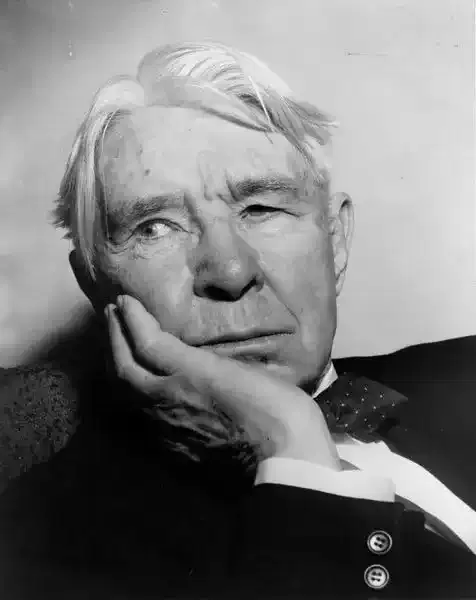
Carl Sandburg
The Year
I
A storm of white petals,
Buds throwing open baby fists
Into hands of broad flowers.
II
Red roses running upward,
Clambering to the clutches of life
Soaked in crimson.
III
Rabbles of tattered leaves
Holding golden flimsy hopes
Against the tramplings
Into the pits and gullies.
IV
Hoarfrost and silence:
Only the muffling
Of winds dark and lonesome--
Great lullabies to the long sleepers.
Read more →
345

William Wordsworth
Lucy Gray
Oft I had heard of Lucy Gray:
And, when I crossed the wild,
I chanced to see at break of day
The solitary child.
No mate, no comrade Lucy knew;
She dwelt on a wide moor,
--The sweetest thing that ever grew
Beside a human door!
You yet may spy the fawn at play,
The hare upon the green;
But the sweet face of Lucy Gray
Will never more be seen.
"To-night will be a stormy night--
You to the town must go;
And take a lantern, Child, to light
Your mother through the snow."
"That, Father! will I gladly do:
'Tis scarcely afternoon--
The minster-clock has just struck two,
And yonder is the moon!"
At this the Father raised his hook,
And snapped a faggot-band;
He plied his work;--and Lucy took
The lantern in her hand.
Not blither is the mountain roe:
With many a wanton stroke
Her feet disperse the powdery snow,
That rises up like smoke.
The storm came on before its time:
She wandered up and down;
And many a hill did Lucy climb:
But never reached the town.
The wretched parents all that night
Went shouting far and wide;
But there was neither sound nor sight
To serve them for a guide.
At day-break on a hill they stood
That overlooked the moor;
And thence they saw the bridge of wood,
A furlong from their door.
They wept--and, turning homeward, cried,
"In heaven we all shall meet;"
--When in the snow the mother spied
The print of Lucy's feet.
Then downwards from the steep hill's edge
They tracked the footmarks small;
And through the broken hawthorn hedge,
And by the long stone-wall;
And then an open field they crossed:
The marks were still the same;
They tracked them on, nor ever lost;
And to the bridge they came.
They followed from the snowy bank
Those footmarks, one by one,
Into the middle of the plank;
And further there were none!
--Yet some maintain that to this day
She is a living child;
That you may see sweet Lucy Gray
Upon the lonesome wild.
O'er rough and smooth she trips along,
And never looks behind;
And sings a solitary song
That whistles in the wind.
Read more →
346

Emily Dickinson
Death is a Dialogue between
Death is a Dialogue between
The Spirit and the Dust.
"Dissolve" says Death-The Spirit "Sir
I have another Trust"-
Death doubts it-Argues from the Ground-
The Spirit turns away
Just laying off for evidence
An Overcoat of Clay.
Read more →
342
Emily Dickinson
He told a homely tale
He told a homely tale
And spotted it with tears-
Upon his infant face was set
The Cicatrice of years-
All crumpled was the cheek
No other kiss had known
Than flake of snow, divided with
The Redbreast of the Barn-
If Mother-in the Grave-
Or Father-on the Sea-
Or Father in the Firmament-
Or Brethren, had he-
If Commonwealth below,
Or Commonwealth above
Have missed a Barefoot CitizenI've
ransomed it-alive-
Read more →
340
Emily Dickinson
The Chemical conviction
The Chemical conviction
That Nought be lost
Enable in Disaster
My fractured Trust-
The Faces of the Atoms
If I shall see
How more the Finished Creatures
Departed me!
Read more →
340
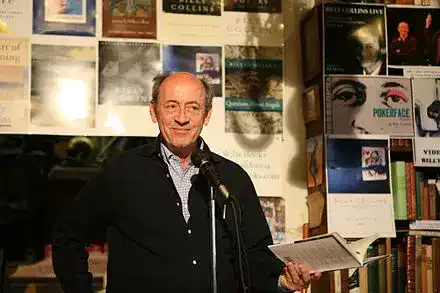
Billy Collins
Picnic, Lightning
It is possible to be struck by a
meteor or a single-engine plane while
reading in a chair at home. Pedestrians
are flattened by safes falling from
rooftops mostly within the panels of
the comics, but still, we know it is
possible, as well as the flash of
summer lightning, the thermos toppling
over, spilling out on the grass.
And we know the message can be
delivered from within. The heart, no
valentine, decides to quit after
lunch, the power shut off like a
switch, or a tiny dark ship is
unmoored into the flow of the body's
rivers, the brain a monastery,
defenseless on the shore. This is
what I think about when I shovel
compost into a wheelbarrow, and when
I fill the long flower boxes, then
press into rows the limp roots of red
impatiens -- the instant hand of Death
always ready to burst forth from the
sleeve of his voluminous cloak. Then
the soil is full of marvels, bits of
leaf like flakes off a fresco,
red-brown pine needles, a beetle quick
to burrow back under the loam. Then
the wheelbarrow is a wilder blue, the
clouds a brighter white, and all I
hear is the rasp of the steel edge
against a round stone, the small
plants singing with lifted faces, and
the click of the sundial as one hour
sweeps into the next.
Read more →
342

John Donne
On The Progress Of The Soul...
Forget this rotten world, and unto thee
Let thine own times as an old story be.
Be not concern'd; study not why, nor when;
Do not so much as not believe a man.
For though to err, be worst, to try truths forth
Is far more business than this world is worth.
I'he world is but a carcass; thou art fed
By it, but as a worm, that carcass bred;
And why shouldst thou, poor worm, consider more,
When this world will grow better than before,
Than those thy fellow-worms do think upon
That carcass's last resurrection?
Forget this world, and scarce think of it so,
As of old clothes, cast off a year ago.
To be thus stupid is alacrity;
Men thus lethargic have best memory.
Look upward; that's towards her, whose happy state
We now lament not, but congratulate.
She, to whom all this world was but a stage,
Where all sat heark'ning how her youthful age
Should be employ'd, because in all she did
Some figure of the golden times was hid.
Who could not lack, what'er this world could give,
Because she was the form, that made it live;
Nor could complain that this world was unfit
To be stay'd in, then when she was in it;
She, that first tried indifferent desires
By virtue, and virtue by religious fires;
She, to whose person paradise adher'd,
As courts to princes; she, whose eyes enspher'd
Star-light enough t' have made the South control,
(Had she been there) the star-full Northern Pole;
She, she is gone; she is gone; when thou knowest this,
What fragmentary rubbish this world is
Thou knowest, and that it is not worth a thought;
He honours it too much that thinks it nought.
Think then, my soul, that death is but a groom,
Which brings a taper to the outward room,
Whence thou spiest first a little glimmering light,
And after brings it nearer to thy sight;
For such approaches doth heaven make in death.
Think thyself labouring now with broken breath,
And think those broken and soft notes to be
Division, and thy happiest harmony.
Think thee laid on thy death-bed, loose and slack,
And think that but unbinding of a pack,
To take one precious thing, thy soul, from thence.
Think thyself parch'd with fever's violence;
Anger thine ague more, by calling it
Thy physic; chide the slackness of the fit.
Think that thou hear'st thy knell, and think no more,
But that, as bells call'd thee to church before,
So this to the Triumphant Church calls thee.
Think Satan's sergeants round about thee be,
And think that but for legacies they thrust;
Give one thy pride, to'another give thy lust;
Give them those sins which they gave thee before,
And trust th' immaculate blood to wash thy score.
Think thy friends weeping round, and think that they
Weep but because they go not yet thy way.
Think that they close thine eyes, and think in this,
That they confess much in the world amiss,
Who dare not trust a dead man's eye with that
Which they from God and angels cover not.
Think that they shroud thee up, and think from thence
They reinvest thee in white innocence.
Think that thy body rots, and (if so low,
Thy soul exalted so, thy thoughts can go)
Think thee a prince, who of themselves create
Worms, which insensibly devour their state.
Think that they bury thee, and think that rite
Lays thee to sleep but a Saint Lucy's night.
....
Read more →
342
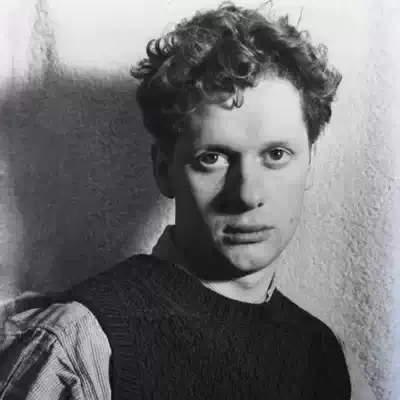
Dylan Thomas
If my head hurt a hair's foot
'If my head hurt a hair's foot
Pack back the downed bone. If the unpricked ball of my breath
Bump on a spout let the bubbles jump out.
Sooner drop with the worm of the ropes round my throat
Than bully ill love in the clouted scene.
'All game phrases fit your ring of a cockfight:
I'll comb the snared woods with a glove on a lamp,
Peck, sprint, dance on fountains and duck time
Before I rush in a crouch the ghost with a hammer, air,
Strike light, and bloody a loud room.
'If my bunched, monkey coming is cruel
Rage me back to the making house. My hand unravel
When you sew the deep door. The bed is a cross place.
Bend, if my journey ache, direction like an arc or make
A limp and riderless shape to leap nine thinning months.'
'No. Not for Christ's dazzling bed
Or a nacreous sleep among soft particles and charms
My dear would I change my tears or your iron head.
Thrust, my daughter or son, to escape, there is none, none, none,
Nor when all ponderous heaven's host of waters breaks.
'Now to awake husked of gestures and my joy like a cave
To the anguish and carrion, to the infant forever unfree,
O my lost love bounced from a good home;
The grain that hurries this way from the rim of the grave
Has a voice and a house, and there and here you must couch and cry.
'Rest beyond choice in the dust-appointed grain,
At the breast stored with seas. No return
Through the waves of the fat streets nor the skeleton's thin ways.
The grave and my calm body are shut to your coming as stone,
And the endless beginning of prodigies suffers open.'
Read more →
338
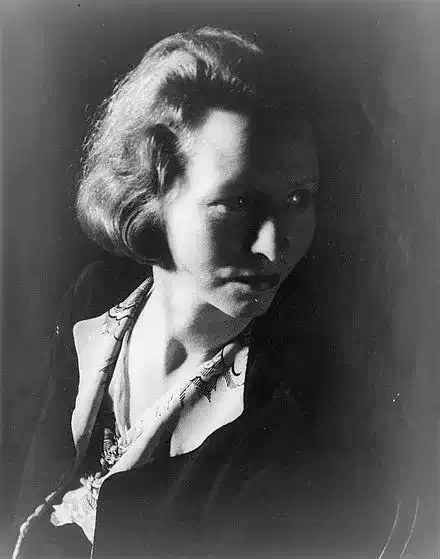
Edna St. Vincent Millay
Conscientious Objector
I shall die, but
that is all that I shall do for Death.
I hear him leading his horse out of the stall;
I hear the clatter on the barn-floor.
He is in haste; he has business in Cuba,
business in the Balkans, many calls to make this morning.
But I will not hold the bridle
while he clinches the girth.
And he may mount by himself:
I will not give him a leg up.
Though he flick my shoulders with his whip,
I will not tell him which way the fox ran.
With his hoof on my breast, I will not tell him where
the black boy hides in the swamp.
I shall die, but that is all that I shall do for Death;
I am not on his pay-roll.
I will not tell him the whereabout of my friends
nor of my enemies either.
Though he promise me much,
I will not map him the route to any man's door.
Am I a spy in the land of the living,
that I should deliver men to Death?
Brother, the password and the plans of our city
are safe with me; never through me Shall you be overcome.
Read more →
338
Edna St. Vincent Millay
To A Poet That Died Young
Minstrel, what have you to do
With this man that, after you,
Sharing not your happy fate,
Sat as England's Laureate?
Vainly, in these iron days,
Strives the poet in your praise,
Minstrel, by whose singing side
Beauty walked, until you died.
Still, though none should hark again,
Drones the blue-fly in the pane,
Thickly crusts the blackest moss,
Blows the rose its musk across,
Floats the boat that is forgot
None the less to Camelot.
Many a bard's untimely death
Lends unto his verses breath;
Here's a song was never sung:
Growing old is dying young.
Minstrel, what is this to you:
That a man you never knew,
When your grave was far and green,
Sat and gossipped with a queen?
Thalia knows how rare a thing
Is it, to grow old and sing;
When a brown and tepid tide
Closes in on every side.
Who shall say if Shelley's gold
Had withstood it to grow old?
Read more →
337
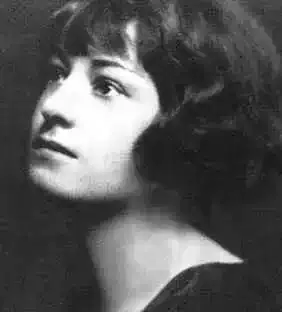
Dorothy Parker
The White Lady
I cannot rest, I cannot rest
In straight and shiny wood,
My woven hands upon my breast-The
dead are all so good!
The earth is cool across their eyes;
They lie there quietly.
But I am neither old nor wise;
They do not welcome me.
Where never I walked alone before,
I wander in the weeds;
And people scream and bar the door,
And rattle at their beads.
We cannot rest, we never rest
Within a narrow bed
Who still must love the living best-Who
hate the pompous dead!
Read more →
334
Emily Dickinson
Mine—by the Right of the White Election!
Mine—by the Right of the White Election!
Mine—by the Royal Seal!
Mine—by the Sign in the Scarlet prison—
Bars—cannot conceal!
Mine—here—in Vision—and in Veto!
Mine—by the Grave's Repeal—
Tilted—Confirmed—
Delirious Charter!
Mine—long as Ages steal!
Read more →
336
Edna St. Vincent Millay
Chorus
Give away her gowns,
Give away her shoes;
She has no more use
For her fragrant gowns;
Take them all down,
Blue, green, blue,
Lilac, pink, blue,
From their padded hangers;
She will dance no more
In her narrow shoes;
Sweep her narrow shoes
From the closet floor.
Read more →
336
John Donne
Holy Sonnet VI: This Is My Playes Last Scene
This is my playes last scene, here heavens appoint
My pilgrimages last mile; and my race
Idly, yet quickly runne, hath this last pace,
My spans last inch, my minutes latest point,
And gluttonous death, will instantly unjoynt
My body, and soule, and I shall sleepe a space,
But my'ever-waking part shall see that face,
Whose feare already shakes my every joynt;
Then, as my soule, to'heaven her first seate, takes flight,
And earth-borne body, in the earth shall dwell,
So, fall my sinnes, that all may have their right,
To where they're bred, and would presse me, to hell.
Impute me righteous, thus purg'd of evill,
For thus I leave the world, the flesh, the devill.
Read more →
334
Emily Dickinson
One dignity delays for all
One dignity delays for all-
One mitred Afternoon-
None can avoid this purple-
None evade this Crown!
Coach, it insures, and footmen-
Chamber, and state, and throng-
Bells, also, in the village
As we ride grand along!
What dignified Attendants!
What service when we pause!
How loyally at parting
Their hundred hats they raise!
Her pomp surpassing ermine
When simple You, and I,
Present our meek escutheon
And claim the rank to die!
Read more →
334
Emily Dickinson
I ment to find her when I came
I meant to find her when I came;
Death had the same design;
But the success was his, it seems,
And the discomfit mine.
I meant to tell her how I longed
For just this single time;
But Death had told her so the first,
And she had hearkened him.
To wander now is my abode;
To rest,--to rest would be
A privilege of hurricane
To memory and me.
Read more →
336

Alexander Pope
The Dying Christian to His Soul
Vital spark of heav’nly flame!
Quit, O quit this mortal frame:
Trembling, hoping, ling’ring, flying,
O the pain, the bliss of dying!
Cease, fond Nature, cease thy strife,
And let me languish into life.
Hark! they whisper; angels say,
Sister Spirit, come away!
What is this absorbs me quite?
Steals my senses, shuts my sight,
Drowns my spirits, draws my breath?
Tell me, my soul, can this be death?
The world recedes; it disappears!
Heav’n opens on my eyes! my ears
With sounds seraphic ring!
Lend, lend your wings! I mount! I fly!
O Grave! where is thy victory?
O Death! where is thy sting?
Read more →
336

Anonymous
The Braes o'Yarrow
Late at e'en, drinking the wine,
And ere they paid the lawing,
They set a combat them between,
To fight it in the dawing.
'What though ye be my sister's lord
We'll cross our swords to-morrow.'
'What though my wife your sister be,
I'll meet ye then on Yarrow.'
'O stay at hame, my ain gude lord!
O stay, my ain dear marrow!
My cruel brither will you betray
On the dowie banks of Yarrow.'
'O fare ye weel, my lady dear!
And put aside your sorrow;
For if I gae, I'll sune return
Frae the bonny banks o' Yarrow.'
She kiss'd his cheek, she kaimed his hair,
As oft she'd done before, O;
She belted him with his gude brand,
And he's awa' to Yarrow.
When he gaed up the Tennies bank,
As he gaed mony a morrow,
Nine armed men lay in a den
On the dowie braes o' Yarrow.
'O come ye here to hunt or hawk
The bonny Forest thorough?
Or come ye here to wield your brand
Upon the banks o' Yarrow?'
'I come not here to hunt or hawk
As oft I've dune before, O,
But I come here to wield my brand
Upon the banks o' Yarrow.
'If ye attack me nine to ane,
That God may send ye sorrow!--
Yet will I fight while stand I may,
On the bonny banks o' Yarrow.'
Two has he hurt, and three has slain,
On the bloody braes o' Yarrow;
But the stubborn knight crept in behind,
And pierced his body thorough.
'Gae hame, gae hame, you brither John,
And tell your sister sorrow,--
To come and lift her leafu' lord
On the dowie banks o' Yarrow.'
Her brither John gaed ower the hill,
As oft he'd dune before, O;
There he met his sister dear,
Cam' rinnin' fast to Yarrow.
'I dreamt a dream last night,' she says,
'I wish it binna sorrow;
I dreamt I pu'd the heather green
Wi' my true love on Yarrow.'
'I'll read your dream, sister,' he says,
'I'll read it into sorrow;
Ye're bidden go take up your love,
He's sleeping sound on Yarrow.'
She's torn the ribbons frae her head
That were baith braid and narrow;
She's kilted up her lang claithing,
And she's awa' to Yarrow.
She's ta'en him in her arms twa,
And gi'en him kisses thorough;
She sought to bind his many wounds,
But he lay dead on Yarrow.
'O haud your tongue,' her father says,
'And let be a' your sorrow;
I'll wed you to a better lord
Than him you lost on Yarrow.'
'O haud your tongue, father,' she says,
'Far warse ye make my sorrow;
A better lord could never be
Than him that lies on Yarrow.'
She kiss'd his lips, she kaimed his hair,
As aft she'd dune before, O;
And there with grief her heart did break
Upon the banks o' Yarrow.
Read more →
335
Carl Sandburg
Death Snips Proud Men
DEATH is stronger than all the governments because
the governments are men and men die and then
death laughs: Now you see 'em, now you don't.
Death is stronger than all proud men and so death
snips proud men on the nose, throws a pair of
dice and says: Read 'em and weep.
Death sends a radiogram every day: When I want
you I'll drop in--and then one day he comes with a
master-key and lets himself in and says: We'll
go now.
Death is a nurse mother with big arms: 'Twon't hurt
you at all; it's your time now; just need a
long sleep, child; what have you had anyhow
better than sleep?
Read more →
332

Walter de la Mare
The Keys of Morning
While at her bedroom window once,
Learning her task for school,
Little Louisa lonely sat
In the morning clear and cool,
She slanted her small bead-brown eyes
Across the empty street,
And saw Death softly watching her
In the sunshine pale and sweet.
His was a long lean sallow face;
He sat with half-shut eyes,
Like a old sailor in a ship
Becalmed 'neath tropic skies.
Beside him in the dust he had set
His staff and shady hat;
These, peeping small, Louisa saw
Quite clearly where she sat -
The thinness of his coal-black locks,
His hands so long and lean
They scarcely seemed to grasp at all
The keys that hung between:
Both were of gold, but one was small,
And with this last did he
Wag in the air, as if to say,
"Come hither, child, to me!"
Louisa laid her lesson book
On the cold window-sill;
And in the sleepy sunshine house
Went softly down, until
She stood in the half-opened door,
And peeped. But strange to say
Where Death just now had sunning sat
Only a shadow lay:
Just the tall chimney's round-topped cowl,
And the small sun behind,
Had with its shadow in the dust
Called sleepy Death to mind.
But most she thought how strange it was
Two keys that he should bear,
And that, when beckoning, he should wag
The littlest in the air.
Read more →
332
Emily Dickinson
Death Leaves Us homesick, Who Behind
Death leaves Us homesick, who behind,
Except that it is gone
Are ignorant of its Concern
As if it were not born.
Through all their former Places, we
Like Individuals go
Who something lost, the seeking for
Is all that's left them, now—
Read more →
333
Dorothy Parker
Requiescat
Tonight my love is sleeping cold
Where none may see and none shall pass.
The daisies quicken in the mold,
And richer fares the meadow grass.
The warding cypress pleads the skies,
The mound goes level in the rain.
My love all cold and silent lies
Pray God it will not rise again!
Read more →
330

Gwendolyn Brooks
the rites for Cousin Vit
Carried her unprotesting out the door.
Kicked back the casket-stand. But it can't hold her,
That stuff and satin aiming to enfold her,
The lid's contrition nor the bolts before.
Oh oh. Too much. Too much. Even now, surmise,
She rises in the sunshine. There she goes,
Back to the bars she knew and the repose
In love-rooms and the things in people's eyes.
Too vital and too squeaking. Must emerge.
Even now she does the snake-hips with a hiss,
Slops the bad wine across her shantung, talks
Of pregnancy, guitars and bridgework, walks
In parks or alleys, comes haply on the verge
Of happiness, haply hysterics. Is.
Read more →
329
Emily Dickinson
This heart that broke so long
This heart that broke so long-
These feet that never flagged-
This faith that watched for star in vain,
Give gently to the dead-
Hound cannot overtake the Hare
That fluttered panting, here-
Nor any schoolboy rob the nest
Tenderness builded there.
Read more →
331