

Poems in this topic
Death and Mourning

Homero
The Iliad: Book 19
The Iliad: Book 19
Now when Dawn in robe of saffron was hasting from the streams of
Oceanus, to bring light to mortals and immortals, Thetis reached the
ships with the armour that the god had given her. She found her son
fallen about the body of Patroclus and weeping bitterly. Many also
of his followers were weeping round him, but when the goddess came
among them she clasped his hand in her own, saying, "My son, grieve as
we may we must let this man lie, for it is by heaven's will that he
has fallen; now, therefore, accept from Vulcan this rich and goodly
armour, which no man has ever yet borne upon his shoulders."
As she spoke she set the armour before Achilles, and it rang out
bravely as she did so. The Myrmidons were struck with awe, and none
dared look full at it, for they were afraid; but Achilles was roused
to still greater fury, and his eyes gleamed with a fierce light, for
he was glad when he handled the splendid present which the god had
made him. Then, as soon as he had satisfied himself with looking at
it, he said to his mother, "Mother, the god has given me armour,
meet handiwork for an immortal and such as no living could have
fashioned; I will now arm, but I much fear that flies will settle upon
the son of Menoetius and breed worms about his wounds, so that his
body, now he is dead, will be disfigured and the flesh will rot."
Silver-footed Thetis answered, "My son, be not disquieted about this
matter. I will find means to protect him from the swarms of noisome
flies that prey on the bodies of men who have been killed in battle.
He may lie for a whole year, and his flesh shall still be as sound
as ever, or even sounder. Call, therefore, the Achaean heroes in
assembly; unsay your anger against Agamemnon; arm at once, and fight
with might and main."
As she spoke she put strength and courage into his heart, and she
then dropped ambrosia and red nectar into the wounds of Patroclus,
that his body might suffer no change.
Then Achilles went out upon the seashore, and with a loud cry called
on the Achaean heroes. On this even those who as yet had stayed always
at the ships, the pilots and helmsmen, and even the stewards who
were about the ships and served out rations, all came to the place
of assembly because Achilles had shown himself after having held aloof
so long from fighting. Two sons of Mars, Ulysses and the son of
Tydeus, came limping, for their wounds still pained them; nevertheless
they came, and took their seats in the front row of the assembly. Last
of all came Agamemnon, king of men, he too wounded, for Coon son of
Antenor had struck him with a spear in battle.
When the Achaeans were got together Achilles rose and said, "Son
of Atreus, surely it would have been better alike for both you and me,
when we two were in such high anger about Briseis, surely it would
have been better, had Diana's arrow slain her at the ships on the
day when I took her after having sacked Lyrnessus. For so, many an
Achaean the less would have bitten dust before the foe in the days
of my anger. It has been well for Hector and the Trojans, but the
Achaeans will long indeed remember our quarrel. Now, however, let it
be, for it is over. If we have been angry, necessity has schooled
our anger. I put it from me: I dare not nurse it for ever;
therefore, bid the Achaeans arm forthwith that I may go out against
the Trojans, and learn whether they will be in a mind to sleep by
the ships or no. Glad, I ween, will he be to rest his knees who may
fly my spear when I wield it."
Thus did he speak, and the Achaeans rejoiced in that he had put away
his anger.
Then Agamemnon spoke, rising in his place, and not going into the
middle of the assembly. "Danaan heroes," said he, "servants of Mars,
it is well to listen when a man stands up to speak, and it is not
seemly to interrupt him, or it will go hard even with a practised
speaker. Who can either hear or speak in an uproar? Even the finest
orator will be disconcerted by it. I will expound to the son of
Peleus, and do you other Achaeans heed me and mark me well. Often have
the Achaeans spoken to me of this matter and upbraided me, but it
was not I that did it: Jove, and Fate, and Erinys that walks in
darkness struck me mad when we were assembled on the day that I took
from Achilles the meed that had been awarded to him. What could I
do? All things are in the hand of heaven, and Folly, eldest of
Jove's daughters, shuts men's eyes to their destruction. She walks
delicately, not on the solid earth, but hovers over the heads of men
to make them stumble or to ensnare them.
"Time was when she fooled Jove himself, who they say is greatest
whether of gods or men; for Juno, woman though she was, beguiled him
on the day when Alcmena was to bring forth mighty Hercules in the fair
city of Thebes. He told it out among the gods saying, 'Hear me all
gods and goddesses, that I may speak even as I am minded; this day
shall an Ilithuia, helper of women who are in labour, bring a man
child into the world who shall be lord over all that dwell about him
who are of my blood and lineage.' Then said Juno all crafty and full
of guile, 'You will play false, and will not hold to your word.
Swear me, O Olympian, swear me a great oath, that he who shall this
day fall between the feet of a woman, shall be lord over all that
dwell about him who are of your blood and lineage.'
"Thus she spoke, and Jove suspected her not, but swore the great
oath, to his much ruing thereafter. For Juno darted down from the high
summit of Olympus, and went in haste to Achaean Argos where she knew
that the noble wife of Sthenelus son of Perseus then was. She being
with child and in her seventh month, Juno brought the child to birth
though there was a month still wanting, but she stayed the offspring
of Alcmena, and kept back the Ilithuiae. Then she went to tell Jove
the son of Saturn, and said, 'Father Jove, lord of the lightning- I
have a word for your ear. There is a fine child born this day,
Eurystheus, son to Sthenelus the son of Perseus; he is of your
lineage; it is well, therefore, that he should reign over the
Argives.'
"On this Jove was stung to the very quick, and in his rage he caught
Folly by the hair, and swore a great oath that never should she
again invade starry heaven and Olympus, for she was the bane of all.
Then he whirled her round with a twist of his hand, and flung her down
from heaven so that she fell on to the fields of mortal men; and he
was ever angry with her when he saw his son groaning under the cruel
labours that Eurystheus laid upon him. Even so did I grieve when
mighty Hector was killing the Argives at their ships, and all the time
I kept thinking of Folly who had so baned me. I was blind, and Jove
robbed me of my reason; I will now make atonement, and will add much
treasure by way of amends. Go, therefore, into battle, you and your
people with you. I will give you all that Ulysses offered you
yesterday in your tents: or if it so please you, wait, though you
would fain fight at once, and my squires shall bring the gifts from my
ship, that you may see whether what I give you is enough."
And Achilles answered, "Son of Atreus, king of men Agamemnon, you
can give such gifts as you think proper, or you can withhold them:
it is in your own hands. Let us now set battle in array; it is not
well to tarry talking about trifles, for there is a deed which is as
yet to do. Achilles shall again be seen fighting among the foremost,
and laying low the ranks of the Trojans: bear this in mind each one of
you when he is fighting."
Then Ulysses said, "Achilles, godlike and brave, send not the
Achaeans thus against Ilius to fight the Trojans fasting, for the
battle will be no brief one, when it is once begun, and heaven has
filled both sides with fury; bid them first take food both bread and
wine by the ships, for in this there is strength and stay. No man
can do battle the livelong day to the going down of the sun if he is
without food; however much he may want to fight his strength will fail
him before he knows it; hunger and thirst will find him out, and his
limbs will grow weary under him. But a man can fight all day if he
is full fed with meat and wine; his heart beats high, and his strength
will stay till he has routed all his foes; therefore, send the
people away and bid them prepare their meal; King Agamemnon will bring
out the gifts in presence of the assembly, that all may see them and
you may be satisfied. Moreover let him swear an oath before the
Argives that he has never gone up into the couch of Briseis, nor
been with her after the manner of men and women; and do you, too, show
yourself of a gracious mind; let Agamemnon entertain you in his
tents with a feast of reconciliation, that so you may have had your
dues in full. As for you, son of Atreus, treat people more righteously
in future; it is no disgrace even to a king that he should make amends
if he was wrong in the first instance."
And King Agamemnon answered, "Son of Laertes, your words please me
well, for throughout you have spoken wisely. I will swear as you would
have me do; I do so of my own free will, neither shall I take the name
of heaven in vain. Let, then, Achilles wait, though he would fain
fight at once, and do you others wait also, till the gifts come from
my tent and we ratify the oath with sacrifice. Thus, then, do I charge
you: take some noble young Achaeans with you, and bring from my
tents the gifts that I promised yesterday to Achilles, and bring the
women also; furthermore let Talthybius find me a boar from those
that are with the host, and make it ready for sacrifice to Jove and to
the sun."
Then said Achilles, "Son of Atreus, king of men Agamemnon, see to
these matters at some other season, when there is breathing time and
when I am calmer. Would you have men eat while the bodies of those
whom Hector son of Priam slew are still lying mangled upon the
plain? Let the sons of the Achaeans, say I, fight fasting and
without food, till we have avenged them; afterwards at the going
down of the sun let them eat their fill. As for me, Patroclus is lying
dead in my tent, all hacked and hewn, with his feet to the door, and
his comrades are mourning round him. Therefore I can take thought of
nothing save only slaughter and blood and the rattle in the throat
of the dying."
Ulysses answered, "Achilles, son of Peleus, mightiest of all the
Achaeans, in battle you are better than I, and that more than a
little, but in counsel I am much before you, for I am older and of
greater knowledge. Therefore be patient under my words. Fighting is
a thing of which men soon surfeit, and when Jove, who is wars steward,
weighs the upshot, it may well prove that the straw which our
sickles have reaped is far heavier than the grain. It may not be
that the Achaeans should mourn the dead with their bellies; day by day
men fall thick and threefold continually; when should we have
respite from our sorrow? Let us mourn our dead for a day and bury them
out of sight and mind, but let those of us who are left eat and
drink that we may arm and fight our foes more fiercely. In that hour
let no man hold back, waiting for a second summons; such summons shall
bode ill for him who is found lagging behind at our ships; let us
rather sally as one man and loose the fury of war upon the Trojans."
When he had thus spoken he took with him the sons of Nestor, with
Meges son of Phyleus, Thoas, Meriones, Lycomedes son of Creontes,
and Melanippus, and went to the tent of Agamemnon son of Atreus. The
word was not sooner said than the deed was done: they brought out
the seven tripods which Agamemnon had promised, with the twenty
metal cauldrons and the twelve horses; they also brought the women
skilled in useful arts, seven in number, with Briseis, which made
eight. Ulysses weighed out the ten talents of gold and then led the
way back, while the young Achaeans brought the rest of the gifts,
and laid them in the middle of the assembly.
Agamemnon then rose, and Talthybius whose voice was like that of a
god came to him with the boar. The son of Atreus drew the knife
which he wore by the scabbard of his mighty sword, and began by
cutting off some bristles from the boar, lifting up his hands in
prayer as he did so. The other Achaeans sat where they were all silent
and orderly to hear the king, and Agamemnon looked into the vault of
heaven and prayed saying, "I call Jove the first and mightiest of
all gods to witness, I call also Earth and Sun and the Erinyes who
dwell below and take vengeance on him who shall swear falsely, that
I have laid no hand upon the girl Briseis, neither to take her to my
bed nor otherwise, but that she has remained in my tents inviolate. If
I swear falsely may heaven visit me with all the penalties which it
metes out to those who perjure themselves."
He cut the boar's throat as he spoke, whereon Talthybius whirled
it round his head, and flung it into the wide sea to feed the
fishes. Then Achilles also rose and said to the Argives, "Father Jove,
of a truth you blind men's eyes and bane them. The son of Atreus had
not else stirred me to so fierce an anger, nor so stubbornly taken
Briseis from me against my will. Surely Jove must have counselled
the destruction of many an Argive. Go, now, and take your food that we
may begin fighting."
On this he broke up the assembly, and every man went back to his own
ship. The Myrmidons attended to the presents and took them away to the
ship of Achilles. They placed them in his tents, while the
stable-men drove the horses in among the others.
Briseis, fair as Venus, when she saw the mangled body of
Patroclus, flung herself upon it and cried aloud, tearing her
breast, her neck, and her lovely face with both her hands. Beautiful
as a goddess she wept and said, "Patroclus, dearest friend, when I
went hence I left you living; I return, O prince, to find you dead;
thus do fresh sorrows multiply upon me one after the other. I saw
him to whom my father and mother married me, cut down before our city,
and my three own dear brothers perished with him on the self-same day;
but you, Patroclus, even when Achilles slew my husband and sacked
the city of noble Mynes, told me that I was not to weep, for you
said you would make Achilles marry me, and take me back with him to
Phthia, we should have a wedding feast among the Myrmidons. You were
always kind to me and I shall never cease to grieve for you."
She wept as she spoke, and the women joined in her lament-making
as though their tears were for Patroclus, but in truth each was
weeping for her own sorrows. The elders of the Achaeans gathered round
Achilles and prayed him to take food, but he groaned and would not
do so. "I pray you," said he, "if any comrade will hear me, bid me
neither eat nor drink, for I am in great heaviness, and will stay
fasting even to the going down of the sun."
On this he sent the other princes away, save only the two sons of
Atreus and Ulysses, Nestor, Idomeneus, and the knight Phoenix, who
stayed behind and tried to comfort him in the bitterness of his
sorrow: but he would not be comforted till he should have flung
himself into the jaws of battle, and he fetched sigh on sigh, thinking
ever of Patroclus. Then he said
"Hapless and dearest comrade, you it was who would get a good dinner
ready for me at once and without delay when the Achaeans were
hasting to fight the Trojans; now, therefore, though I have meat and
drink in my tents, yet will I fast for sorrow. Grief greater than this
I could not know, not even though I were to hear of the death of my
father, who is now in Phthia weeping for the loss of me his son, who
am here fighting the Trojans in a strange land for the accursed sake
of Helen, nor yet though I should hear that my son is no more- he
who is being brought up in Scyros- if indeed Neoptolemus is still
living. Till now I made sure that I alone was to fall here at Troy
away from Argos, while you were to return to Phthia, bring back my son
with you in your own ship, and show him all my property, my
bondsmen, and the greatness of my house- for Peleus must surely be
either dead, or what little life remains to him is oppressed alike
with the infirmities of age and ever present fear lest he should
hear the sad tidings of my death."
He wept as he spoke, and the elders sighed in concert as each
thought on what he had left at home behind him. The son of Saturn
looked down with pity upon them, and said presently to Minerva, "My
child, you have quite deserted your hero; is he then gone so clean out
of your recollection? There he sits by the ships all desolate for
the loss of his dear comrade, and though the others are gone to
their dinner he will neither eat nor drink. Go then and drop nectar
and ambrosia into his breast, that he may know no hunger."
With these words he urged Minerva, who was already of the same mind.
She darted down from heaven into the air like some falcon sailing on
his broad wings and screaming. Meanwhile the Achaeans were arming
throughout the host, and when Minerva had dropped nectar and
ambrosia into Achilles so that no cruel hunger should cause his
limbs to fail him, she went back to the house of her mighty father.
Thick as the chill snow-flakes shed from the hand of Jove and borne on
the keen blasts of the north wind, even so thick did the gleaming
helmets, the bossed shields, the strongly plated breastplates, and the
ashen spears stream from the ships. The sheen pierced the sky, the
whole land was radiant with their flashing armour, and the sound of
the tramp of their treading rose from under their feet. In the midst
of them all Achilles put on his armour; he gnashed his teeth, his eyes
gleamed like fire, for his grief was greater than he could bear. Thus,
then, full of fury against the Trojans, did he don the gift of the
god, the armour that Vulcan had made him.
First he put on the goodly greaves fitted with ancle-clasps, and
next he did on the breastplate about his chest. He slung the
silver-studded sword of bronze about his shoulders, and then took up
the shield so great and strong that shone afar with a splendour as
of the moon. As the light seen by sailors from out at sea, when men
have lit a fire in their homestead high up among the mountains, but
the sailors are carried out to sea by wind and storm far from the
haven where they would be- even so did the gleam of Achilles' wondrous
shield strike up into the heavens. He lifted the redoubtable helmet,
and set it upon his head, from whence it shone like a star, and the
golden plumes which Vulcan had set thick about the ridge of the
helmet, waved all around it. Then Achilles made trial of himself in
his armour to see whether it fitted him, so that his limbs could
play freely under it, and it seemed to buoy him up as though it had
been wings.
He also drew his father's spear out of the spear-stand, a spear so
great and heavy and strong that none of the Achaeans save only
Achilles had strength to wield it; this was the spear of Pelian ash
from the topmost ridges of Mt. Pelion, which Chiron had once given
to Peleus, fraught with the death of heroes. Automedon and Alcimus
busied themselves with the harnessing of his horses; they made the
bands fast about them, and put the bit in their mouths, drawing the
reins back towards the chariot. Automedon, whip in hand, sprang up
behind the horses, and after him Achilles mounted in full armour,
resplendent as the sun-god Hyperion. Then with a loud voice he
chided with his father's horses saying, "Xanthus and Balius, famed
offspring of Podarge- this time when we have done fighting be sure and
bring your driver safely back to the host of the Achaeans, and do
not leave him dead on the plain as you did Patroclus."
Then fleet Xanthus answered under the yoke- for white-armed Juno had
endowed him with human speech- and he bowed his head till his mane
touched the ground as it hung down from under the yoke-band. "Dread
Achilles," said he, "we will indeed save you now, but the day of
your death is near, and the blame will not be ours, for it will be
heaven and stern fate that will destroy you. Neither was it through
any sloth or slackness on our part that the Trojans stripped Patroclus
of his armour; it was the mighty god whom lovely Leto bore that slew
him as he fought among the foremost, and vouchsafed a triumph to
Hector. We two can fly as swiftly as Zephyrus who they say is fleetest
of all winds; nevertheless it is your doom to fall by the hand of a
man and of a god."
When he had thus said the Erinyes stayed his speech, and Achilles
answered him in great sadness, saying, "Why, O Xanthus, do you thus
foretell my death? You need not do so, for I well know that I am to
fall here, far from my dear father and mother; none the more, however,
shall I stay my hand till I have given the Trojans their fill of
fighting."
So saying, with a loud cry he drove his horses to the front.
Translated by Samuel Butler
Now when Dawn in robe of saffron was hasting from the streams of
Oceanus, to bring light to mortals and immortals, Thetis reached the
ships with the armour that the god had given her. She found her son
fallen about the body of Patroclus and weeping bitterly. Many also
of his followers were weeping round him, but when the goddess came
among them she clasped his hand in her own, saying, "My son, grieve as
we may we must let this man lie, for it is by heaven's will that he
has fallen; now, therefore, accept from Vulcan this rich and goodly
armour, which no man has ever yet borne upon his shoulders."
As she spoke she set the armour before Achilles, and it rang out
bravely as she did so. The Myrmidons were struck with awe, and none
dared look full at it, for they were afraid; but Achilles was roused
to still greater fury, and his eyes gleamed with a fierce light, for
he was glad when he handled the splendid present which the god had
made him. Then, as soon as he had satisfied himself with looking at
it, he said to his mother, "Mother, the god has given me armour,
meet handiwork for an immortal and such as no living could have
fashioned; I will now arm, but I much fear that flies will settle upon
the son of Menoetius and breed worms about his wounds, so that his
body, now he is dead, will be disfigured and the flesh will rot."
Silver-footed Thetis answered, "My son, be not disquieted about this
matter. I will find means to protect him from the swarms of noisome
flies that prey on the bodies of men who have been killed in battle.
He may lie for a whole year, and his flesh shall still be as sound
as ever, or even sounder. Call, therefore, the Achaean heroes in
assembly; unsay your anger against Agamemnon; arm at once, and fight
with might and main."
As she spoke she put strength and courage into his heart, and she
then dropped ambrosia and red nectar into the wounds of Patroclus,
that his body might suffer no change.
Then Achilles went out upon the seashore, and with a loud cry called
on the Achaean heroes. On this even those who as yet had stayed always
at the ships, the pilots and helmsmen, and even the stewards who
were about the ships and served out rations, all came to the place
of assembly because Achilles had shown himself after having held aloof
so long from fighting. Two sons of Mars, Ulysses and the son of
Tydeus, came limping, for their wounds still pained them; nevertheless
they came, and took their seats in the front row of the assembly. Last
of all came Agamemnon, king of men, he too wounded, for Coon son of
Antenor had struck him with a spear in battle.
When the Achaeans were got together Achilles rose and said, "Son
of Atreus, surely it would have been better alike for both you and me,
when we two were in such high anger about Briseis, surely it would
have been better, had Diana's arrow slain her at the ships on the
day when I took her after having sacked Lyrnessus. For so, many an
Achaean the less would have bitten dust before the foe in the days
of my anger. It has been well for Hector and the Trojans, but the
Achaeans will long indeed remember our quarrel. Now, however, let it
be, for it is over. If we have been angry, necessity has schooled
our anger. I put it from me: I dare not nurse it for ever;
therefore, bid the Achaeans arm forthwith that I may go out against
the Trojans, and learn whether they will be in a mind to sleep by
the ships or no. Glad, I ween, will he be to rest his knees who may
fly my spear when I wield it."
Thus did he speak, and the Achaeans rejoiced in that he had put away
his anger.
Then Agamemnon spoke, rising in his place, and not going into the
middle of the assembly. "Danaan heroes," said he, "servants of Mars,
it is well to listen when a man stands up to speak, and it is not
seemly to interrupt him, or it will go hard even with a practised
speaker. Who can either hear or speak in an uproar? Even the finest
orator will be disconcerted by it. I will expound to the son of
Peleus, and do you other Achaeans heed me and mark me well. Often have
the Achaeans spoken to me of this matter and upbraided me, but it
was not I that did it: Jove, and Fate, and Erinys that walks in
darkness struck me mad when we were assembled on the day that I took
from Achilles the meed that had been awarded to him. What could I
do? All things are in the hand of heaven, and Folly, eldest of
Jove's daughters, shuts men's eyes to their destruction. She walks
delicately, not on the solid earth, but hovers over the heads of men
to make them stumble or to ensnare them.
"Time was when she fooled Jove himself, who they say is greatest
whether of gods or men; for Juno, woman though she was, beguiled him
on the day when Alcmena was to bring forth mighty Hercules in the fair
city of Thebes. He told it out among the gods saying, 'Hear me all
gods and goddesses, that I may speak even as I am minded; this day
shall an Ilithuia, helper of women who are in labour, bring a man
child into the world who shall be lord over all that dwell about him
who are of my blood and lineage.' Then said Juno all crafty and full
of guile, 'You will play false, and will not hold to your word.
Swear me, O Olympian, swear me a great oath, that he who shall this
day fall between the feet of a woman, shall be lord over all that
dwell about him who are of your blood and lineage.'
"Thus she spoke, and Jove suspected her not, but swore the great
oath, to his much ruing thereafter. For Juno darted down from the high
summit of Olympus, and went in haste to Achaean Argos where she knew
that the noble wife of Sthenelus son of Perseus then was. She being
with child and in her seventh month, Juno brought the child to birth
though there was a month still wanting, but she stayed the offspring
of Alcmena, and kept back the Ilithuiae. Then she went to tell Jove
the son of Saturn, and said, 'Father Jove, lord of the lightning- I
have a word for your ear. There is a fine child born this day,
Eurystheus, son to Sthenelus the son of Perseus; he is of your
lineage; it is well, therefore, that he should reign over the
Argives.'
"On this Jove was stung to the very quick, and in his rage he caught
Folly by the hair, and swore a great oath that never should she
again invade starry heaven and Olympus, for she was the bane of all.
Then he whirled her round with a twist of his hand, and flung her down
from heaven so that she fell on to the fields of mortal men; and he
was ever angry with her when he saw his son groaning under the cruel
labours that Eurystheus laid upon him. Even so did I grieve when
mighty Hector was killing the Argives at their ships, and all the time
I kept thinking of Folly who had so baned me. I was blind, and Jove
robbed me of my reason; I will now make atonement, and will add much
treasure by way of amends. Go, therefore, into battle, you and your
people with you. I will give you all that Ulysses offered you
yesterday in your tents: or if it so please you, wait, though you
would fain fight at once, and my squires shall bring the gifts from my
ship, that you may see whether what I give you is enough."
And Achilles answered, "Son of Atreus, king of men Agamemnon, you
can give such gifts as you think proper, or you can withhold them:
it is in your own hands. Let us now set battle in array; it is not
well to tarry talking about trifles, for there is a deed which is as
yet to do. Achilles shall again be seen fighting among the foremost,
and laying low the ranks of the Trojans: bear this in mind each one of
you when he is fighting."
Then Ulysses said, "Achilles, godlike and brave, send not the
Achaeans thus against Ilius to fight the Trojans fasting, for the
battle will be no brief one, when it is once begun, and heaven has
filled both sides with fury; bid them first take food both bread and
wine by the ships, for in this there is strength and stay. No man
can do battle the livelong day to the going down of the sun if he is
without food; however much he may want to fight his strength will fail
him before he knows it; hunger and thirst will find him out, and his
limbs will grow weary under him. But a man can fight all day if he
is full fed with meat and wine; his heart beats high, and his strength
will stay till he has routed all his foes; therefore, send the
people away and bid them prepare their meal; King Agamemnon will bring
out the gifts in presence of the assembly, that all may see them and
you may be satisfied. Moreover let him swear an oath before the
Argives that he has never gone up into the couch of Briseis, nor
been with her after the manner of men and women; and do you, too, show
yourself of a gracious mind; let Agamemnon entertain you in his
tents with a feast of reconciliation, that so you may have had your
dues in full. As for you, son of Atreus, treat people more righteously
in future; it is no disgrace even to a king that he should make amends
if he was wrong in the first instance."
And King Agamemnon answered, "Son of Laertes, your words please me
well, for throughout you have spoken wisely. I will swear as you would
have me do; I do so of my own free will, neither shall I take the name
of heaven in vain. Let, then, Achilles wait, though he would fain
fight at once, and do you others wait also, till the gifts come from
my tent and we ratify the oath with sacrifice. Thus, then, do I charge
you: take some noble young Achaeans with you, and bring from my
tents the gifts that I promised yesterday to Achilles, and bring the
women also; furthermore let Talthybius find me a boar from those
that are with the host, and make it ready for sacrifice to Jove and to
the sun."
Then said Achilles, "Son of Atreus, king of men Agamemnon, see to
these matters at some other season, when there is breathing time and
when I am calmer. Would you have men eat while the bodies of those
whom Hector son of Priam slew are still lying mangled upon the
plain? Let the sons of the Achaeans, say I, fight fasting and
without food, till we have avenged them; afterwards at the going
down of the sun let them eat their fill. As for me, Patroclus is lying
dead in my tent, all hacked and hewn, with his feet to the door, and
his comrades are mourning round him. Therefore I can take thought of
nothing save only slaughter and blood and the rattle in the throat
of the dying."
Ulysses answered, "Achilles, son of Peleus, mightiest of all the
Achaeans, in battle you are better than I, and that more than a
little, but in counsel I am much before you, for I am older and of
greater knowledge. Therefore be patient under my words. Fighting is
a thing of which men soon surfeit, and when Jove, who is wars steward,
weighs the upshot, it may well prove that the straw which our
sickles have reaped is far heavier than the grain. It may not be
that the Achaeans should mourn the dead with their bellies; day by day
men fall thick and threefold continually; when should we have
respite from our sorrow? Let us mourn our dead for a day and bury them
out of sight and mind, but let those of us who are left eat and
drink that we may arm and fight our foes more fiercely. In that hour
let no man hold back, waiting for a second summons; such summons shall
bode ill for him who is found lagging behind at our ships; let us
rather sally as one man and loose the fury of war upon the Trojans."
When he had thus spoken he took with him the sons of Nestor, with
Meges son of Phyleus, Thoas, Meriones, Lycomedes son of Creontes,
and Melanippus, and went to the tent of Agamemnon son of Atreus. The
word was not sooner said than the deed was done: they brought out
the seven tripods which Agamemnon had promised, with the twenty
metal cauldrons and the twelve horses; they also brought the women
skilled in useful arts, seven in number, with Briseis, which made
eight. Ulysses weighed out the ten talents of gold and then led the
way back, while the young Achaeans brought the rest of the gifts,
and laid them in the middle of the assembly.
Agamemnon then rose, and Talthybius whose voice was like that of a
god came to him with the boar. The son of Atreus drew the knife
which he wore by the scabbard of his mighty sword, and began by
cutting off some bristles from the boar, lifting up his hands in
prayer as he did so. The other Achaeans sat where they were all silent
and orderly to hear the king, and Agamemnon looked into the vault of
heaven and prayed saying, "I call Jove the first and mightiest of
all gods to witness, I call also Earth and Sun and the Erinyes who
dwell below and take vengeance on him who shall swear falsely, that
I have laid no hand upon the girl Briseis, neither to take her to my
bed nor otherwise, but that she has remained in my tents inviolate. If
I swear falsely may heaven visit me with all the penalties which it
metes out to those who perjure themselves."
He cut the boar's throat as he spoke, whereon Talthybius whirled
it round his head, and flung it into the wide sea to feed the
fishes. Then Achilles also rose and said to the Argives, "Father Jove,
of a truth you blind men's eyes and bane them. The son of Atreus had
not else stirred me to so fierce an anger, nor so stubbornly taken
Briseis from me against my will. Surely Jove must have counselled
the destruction of many an Argive. Go, now, and take your food that we
may begin fighting."
On this he broke up the assembly, and every man went back to his own
ship. The Myrmidons attended to the presents and took them away to the
ship of Achilles. They placed them in his tents, while the
stable-men drove the horses in among the others.
Briseis, fair as Venus, when she saw the mangled body of
Patroclus, flung herself upon it and cried aloud, tearing her
breast, her neck, and her lovely face with both her hands. Beautiful
as a goddess she wept and said, "Patroclus, dearest friend, when I
went hence I left you living; I return, O prince, to find you dead;
thus do fresh sorrows multiply upon me one after the other. I saw
him to whom my father and mother married me, cut down before our city,
and my three own dear brothers perished with him on the self-same day;
but you, Patroclus, even when Achilles slew my husband and sacked
the city of noble Mynes, told me that I was not to weep, for you
said you would make Achilles marry me, and take me back with him to
Phthia, we should have a wedding feast among the Myrmidons. You were
always kind to me and I shall never cease to grieve for you."
She wept as she spoke, and the women joined in her lament-making
as though their tears were for Patroclus, but in truth each was
weeping for her own sorrows. The elders of the Achaeans gathered round
Achilles and prayed him to take food, but he groaned and would not
do so. "I pray you," said he, "if any comrade will hear me, bid me
neither eat nor drink, for I am in great heaviness, and will stay
fasting even to the going down of the sun."
On this he sent the other princes away, save only the two sons of
Atreus and Ulysses, Nestor, Idomeneus, and the knight Phoenix, who
stayed behind and tried to comfort him in the bitterness of his
sorrow: but he would not be comforted till he should have flung
himself into the jaws of battle, and he fetched sigh on sigh, thinking
ever of Patroclus. Then he said
"Hapless and dearest comrade, you it was who would get a good dinner
ready for me at once and without delay when the Achaeans were
hasting to fight the Trojans; now, therefore, though I have meat and
drink in my tents, yet will I fast for sorrow. Grief greater than this
I could not know, not even though I were to hear of the death of my
father, who is now in Phthia weeping for the loss of me his son, who
am here fighting the Trojans in a strange land for the accursed sake
of Helen, nor yet though I should hear that my son is no more- he
who is being brought up in Scyros- if indeed Neoptolemus is still
living. Till now I made sure that I alone was to fall here at Troy
away from Argos, while you were to return to Phthia, bring back my son
with you in your own ship, and show him all my property, my
bondsmen, and the greatness of my house- for Peleus must surely be
either dead, or what little life remains to him is oppressed alike
with the infirmities of age and ever present fear lest he should
hear the sad tidings of my death."
He wept as he spoke, and the elders sighed in concert as each
thought on what he had left at home behind him. The son of Saturn
looked down with pity upon them, and said presently to Minerva, "My
child, you have quite deserted your hero; is he then gone so clean out
of your recollection? There he sits by the ships all desolate for
the loss of his dear comrade, and though the others are gone to
their dinner he will neither eat nor drink. Go then and drop nectar
and ambrosia into his breast, that he may know no hunger."
With these words he urged Minerva, who was already of the same mind.
She darted down from heaven into the air like some falcon sailing on
his broad wings and screaming. Meanwhile the Achaeans were arming
throughout the host, and when Minerva had dropped nectar and
ambrosia into Achilles so that no cruel hunger should cause his
limbs to fail him, she went back to the house of her mighty father.
Thick as the chill snow-flakes shed from the hand of Jove and borne on
the keen blasts of the north wind, even so thick did the gleaming
helmets, the bossed shields, the strongly plated breastplates, and the
ashen spears stream from the ships. The sheen pierced the sky, the
whole land was radiant with their flashing armour, and the sound of
the tramp of their treading rose from under their feet. In the midst
of them all Achilles put on his armour; he gnashed his teeth, his eyes
gleamed like fire, for his grief was greater than he could bear. Thus,
then, full of fury against the Trojans, did he don the gift of the
god, the armour that Vulcan had made him.
First he put on the goodly greaves fitted with ancle-clasps, and
next he did on the breastplate about his chest. He slung the
silver-studded sword of bronze about his shoulders, and then took up
the shield so great and strong that shone afar with a splendour as
of the moon. As the light seen by sailors from out at sea, when men
have lit a fire in their homestead high up among the mountains, but
the sailors are carried out to sea by wind and storm far from the
haven where they would be- even so did the gleam of Achilles' wondrous
shield strike up into the heavens. He lifted the redoubtable helmet,
and set it upon his head, from whence it shone like a star, and the
golden plumes which Vulcan had set thick about the ridge of the
helmet, waved all around it. Then Achilles made trial of himself in
his armour to see whether it fitted him, so that his limbs could
play freely under it, and it seemed to buoy him up as though it had
been wings.
He also drew his father's spear out of the spear-stand, a spear so
great and heavy and strong that none of the Achaeans save only
Achilles had strength to wield it; this was the spear of Pelian ash
from the topmost ridges of Mt. Pelion, which Chiron had once given
to Peleus, fraught with the death of heroes. Automedon and Alcimus
busied themselves with the harnessing of his horses; they made the
bands fast about them, and put the bit in their mouths, drawing the
reins back towards the chariot. Automedon, whip in hand, sprang up
behind the horses, and after him Achilles mounted in full armour,
resplendent as the sun-god Hyperion. Then with a loud voice he
chided with his father's horses saying, "Xanthus and Balius, famed
offspring of Podarge- this time when we have done fighting be sure and
bring your driver safely back to the host of the Achaeans, and do
not leave him dead on the plain as you did Patroclus."
Then fleet Xanthus answered under the yoke- for white-armed Juno had
endowed him with human speech- and he bowed his head till his mane
touched the ground as it hung down from under the yoke-band. "Dread
Achilles," said he, "we will indeed save you now, but the day of
your death is near, and the blame will not be ours, for it will be
heaven and stern fate that will destroy you. Neither was it through
any sloth or slackness on our part that the Trojans stripped Patroclus
of his armour; it was the mighty god whom lovely Leto bore that slew
him as he fought among the foremost, and vouchsafed a triumph to
Hector. We two can fly as swiftly as Zephyrus who they say is fleetest
of all winds; nevertheless it is your doom to fall by the hand of a
man and of a god."
When he had thus said the Erinyes stayed his speech, and Achilles
answered him in great sadness, saying, "Why, O Xanthus, do you thus
foretell my death? You need not do so, for I well know that I am to
fall here, far from my dear father and mother; none the more, however,
shall I stay my hand till I have given the Trojans their fill of
fighting."
So saying, with a loud cry he drove his horses to the front.
Translated by Samuel Butler
168
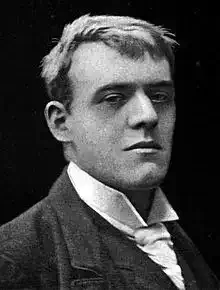
Hilaire Belloc
The Statue
The Statue
When we are dead, some Hunting-boy will pass
And find a stone half-hidden in tall grass
And grey with age: but having seen that stone
(Which was your image), ride more slowly on.
When we are dead, some Hunting-boy will pass
And find a stone half-hidden in tall grass
And grey with age: but having seen that stone
(Which was your image), ride more slowly on.
376
Hilaire Belloc
Ha'nacker Mill
Ha'nacker Mill
Sally is gone that was so kindly,
Sally is gone from Ha'nacker Hill
And the Briar grows ever since then so blindly;
And ever since then the clapper is still...
And the sweeps have fallen from Ha'nacker Mill.
Ha'nacker Hill is in Desolation:
Ruin a-top and a field unploughed.
And Spirits that call on a fallen nation,
Spirits that loved her calling aloud,
Spirits abroad in a windy cloud.
Spirits that call and no one answers -Ha'nacker's
down and England's done.
Wind and Thistle for pipe and dancers,
And never a ploughman under the Sun:
Never a ploughman. Never a one.
Sally is gone that was so kindly,
Sally is gone from Ha'nacker Hill
And the Briar grows ever since then so blindly;
And ever since then the clapper is still...
And the sweeps have fallen from Ha'nacker Mill.
Ha'nacker Hill is in Desolation:
Ruin a-top and a field unploughed.
And Spirits that call on a fallen nation,
Spirits that loved her calling aloud,
Spirits abroad in a windy cloud.
Spirits that call and no one answers -Ha'nacker's
down and England's done.
Wind and Thistle for pipe and dancers,
And never a ploughman under the Sun:
Never a ploughman. Never a one.
371
Hilaire Belloc
[Month of] November
[Month of] November
November is that historied Emperor,
Conquered in age, but foot to foot with fate,
Who from his refuge high has heard the roar
Of squadrons in pursuit, and now, too late,
Stirrups the storm and calls the winds to war,
And arms the garrison of his last heirloom,
And shakes the sky to its extremest shore
With battle against irrevocable doom.
Till, driven and hurled from his strong citadels,
He flies in hurrying cloud and spurs him on,
Empty of lingerings, empty of farewells
And final benedictions, and is gone.
But in my garden all the trees have shed
Their legacies of the light, and all the flowers are dead.
November is that historied Emperor,
Conquered in age, but foot to foot with fate,
Who from his refuge high has heard the roar
Of squadrons in pursuit, and now, too late,
Stirrups the storm and calls the winds to war,
And arms the garrison of his last heirloom,
And shakes the sky to its extremest shore
With battle against irrevocable doom.
Till, driven and hurled from his strong citadels,
He flies in hurrying cloud and spurs him on,
Empty of lingerings, empty of farewells
And final benedictions, and is gone.
But in my garden all the trees have shed
Their legacies of the light, and all the flowers are dead.
498
Hilaire Belloc
[Month of] January
[Month of] January
It freezes- all across a soundless sky
The birds go home. The governing dark's begun:
The steadfast dark that waits not for a sun;
The ultimate dark wherein the race shall die.
Death, with his evil finger to his lip,
Leers in at human windows, turning spy
To learn the country where his rule shall lie
When he assumes perpetual generalship.
The undefeated enemy, the chill
That shall benumb the voiceful earth at last,
Is master of our moment, and has bound
The viewless wind it-self. There is no sound.
It freezes. Every friendly stream is fast.
It freezes; and the graven twigs are still.
It freezes- all across a soundless sky
The birds go home. The governing dark's begun:
The steadfast dark that waits not for a sun;
The ultimate dark wherein the race shall die.
Death, with his evil finger to his lip,
Leers in at human windows, turning spy
To learn the country where his rule shall lie
When he assumes perpetual generalship.
The undefeated enemy, the chill
That shall benumb the voiceful earth at last,
Is master of our moment, and has bound
The viewless wind it-self. There is no sound.
It freezes. Every friendly stream is fast.
It freezes; and the graven twigs are still.
481
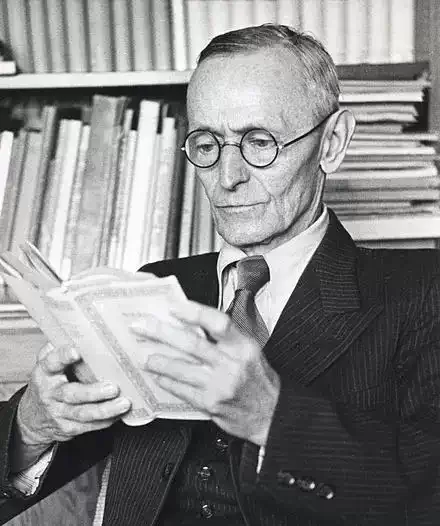
Hermann Hesse
In Secret We Thirst
In Secret We Thirst
Graceful, spiritual,
with the gentleness of arabesques
our life is similar
to the existence of fairies
that spin in soft cadence
around nothingness
to which we sacrifice
the here and now
Dreams of beauty, youthful joy
like a breath in pure harmony
with the depth of your young surface
where sparkles the longing for the night
for blood and barbarity
In the emptiness, spinning, without aims or needs
dance free our lives
always ready for the game
yet, secretly, we thirst for reality
for the conceiving, for the birth
we are thirst for sorrows and death
Graceful, spiritual,
with the gentleness of arabesques
our life is similar
to the existence of fairies
that spin in soft cadence
around nothingness
to which we sacrifice
the here and now
Dreams of beauty, youthful joy
like a breath in pure harmony
with the depth of your young surface
where sparkles the longing for the night
for blood and barbarity
In the emptiness, spinning, without aims or needs
dance free our lives
always ready for the game
yet, secretly, we thirst for reality
for the conceiving, for the birth
we are thirst for sorrows and death
641
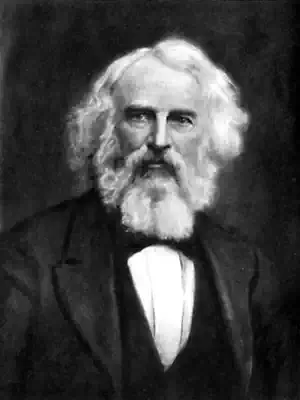
Henry Wadsworth Longfellow
Voices Of The Night : Footsteps of Angels
Voices Of The Night : Footsteps of Angels
When the hours of Day are numbered,
And the voices of the Night
Wake the better soul, that slumbered,
To a holy, calm delight;
Ere the evening lamps are lighted,
And, like phantoms grim and tall,
Shadows from the fitful firelight
Dance upon the parlor wall;
Then the forms of the departed
Enter at the open door;
The beloved, the true-hearted,
Come to visit me once more;
He, the young and strong, who cherished
Noble longings for the strife,
By the roadside fell and perished,
Weary with the march of life!
They, the holy ones and weakly,
Who the cross of suffering bore,
Folded their pale hands so meekly,
Spake with us on earth no more!
And with them the Being Beauteous,
Who unto my youth was given,
More than all things else to love me,
And is now a saint in heaven.
With a slow and noiseless footstep
Comes that messenger divine,
Takes the vacant chair beside me,
Lays her gentle hand in mine.
And she sits and gazes at me
With those deep and tender eyes,
Like the stars, so still and saint-like,
Looking downward from the skies.
Uttered not, yet comprehended,
Is the spirit's voiceless prayer,
Soft rebukes, in blessings ended,
Breathing from her lips of air.
Oh, though oft depressed and lonely,
All my fears are laid aside,
If I but remember only
Such as these have lived and died!
When the hours of Day are numbered,
And the voices of the Night
Wake the better soul, that slumbered,
To a holy, calm delight;
Ere the evening lamps are lighted,
And, like phantoms grim and tall,
Shadows from the fitful firelight
Dance upon the parlor wall;
Then the forms of the departed
Enter at the open door;
The beloved, the true-hearted,
Come to visit me once more;
He, the young and strong, who cherished
Noble longings for the strife,
By the roadside fell and perished,
Weary with the march of life!
They, the holy ones and weakly,
Who the cross of suffering bore,
Folded their pale hands so meekly,
Spake with us on earth no more!
And with them the Being Beauteous,
Who unto my youth was given,
More than all things else to love me,
And is now a saint in heaven.
With a slow and noiseless footstep
Comes that messenger divine,
Takes the vacant chair beside me,
Lays her gentle hand in mine.
And she sits and gazes at me
With those deep and tender eyes,
Like the stars, so still and saint-like,
Looking downward from the skies.
Uttered not, yet comprehended,
Is the spirit's voiceless prayer,
Soft rebukes, in blessings ended,
Breathing from her lips of air.
Oh, though oft depressed and lonely,
All my fears are laid aside,
If I but remember only
Such as these have lived and died!
319
Henry Wadsworth Longfellow
Vittoria Colonna
Vittoria Colonna
Once more, once more, Inarimé,
I see thy purple hills!--once more
I hear the billows of the bay
Wash the white pebbles on thy shore.
High o'er the sea-surge and the sands,
Like a great galleon wrecked and cast
Ashore by storms, thy castle stands,
A mouldering landmark of the Past.
Upon its terrace-walk I see
A phantom gliding to and fro;
It is Colonna,--it is she
Who lived and loved so long ago.
Pescara's beautiful young wife,
The type of perfect womanhood,
Whose life was love, the life of life,
That time and change and death withstood.
For death, that breaks the marriage band
In others, only closer pressed
The wedding-ring upon her hand
And closer locked and barred her breast.
She knew the life-long martyrdom,
The weariness, the endless pain
Of waiting for some one to come
Who nevermore would come again.
The shadows of the chestnut trees,
The odor of the orange blooms,
The song of birds, and, more than these,
The silence of deserted rooms;
The respiration of the sea,
The soft caresses of the air,
All things in nature seemed to be
But ministers of her despair;
Till the o'erburdened heart, so long
Imprisoned in itself, found vent
And voice in one impassioned song
Of inconsolable lament.
Then as the sun, though hidden from sight,
Transmutes to gold the leaden mist,
Her life was interfused with light,
From realms that, though unseen, exist,
Inarimé! Inarimé!
Thy castle on the crags above
In dust shall crumble and decay,
But not the memory of her love.
Once more, once more, Inarimé,
I see thy purple hills!--once more
I hear the billows of the bay
Wash the white pebbles on thy shore.
High o'er the sea-surge and the sands,
Like a great galleon wrecked and cast
Ashore by storms, thy castle stands,
A mouldering landmark of the Past.
Upon its terrace-walk I see
A phantom gliding to and fro;
It is Colonna,--it is she
Who lived and loved so long ago.
Pescara's beautiful young wife,
The type of perfect womanhood,
Whose life was love, the life of life,
That time and change and death withstood.
For death, that breaks the marriage band
In others, only closer pressed
The wedding-ring upon her hand
And closer locked and barred her breast.
She knew the life-long martyrdom,
The weariness, the endless pain
Of waiting for some one to come
Who nevermore would come again.
The shadows of the chestnut trees,
The odor of the orange blooms,
The song of birds, and, more than these,
The silence of deserted rooms;
The respiration of the sea,
The soft caresses of the air,
All things in nature seemed to be
But ministers of her despair;
Till the o'erburdened heart, so long
Imprisoned in itself, found vent
And voice in one impassioned song
Of inconsolable lament.
Then as the sun, though hidden from sight,
Transmutes to gold the leaden mist,
Her life was interfused with light,
From realms that, though unseen, exist,
Inarimé! Inarimé!
Thy castle on the crags above
In dust shall crumble and decay,
But not the memory of her love.
373
Henry Wadsworth Longfellow
Ultima Thule: Bayard Taylor
Ultima Thule: Bayard Taylor
Dead he lay among his books!
The peace of God was in his looks.
As the statues in the gloom
Watch o'er Maximilian's tomb,
So those volumes from their shelves
Watched him, silent as themselves.
Ah! his hand will nevermore
Turn their storied pages o'er;
Nevermore his lips repeat
Songs of theirs, however sweet.
Let the lifeless body rest!
He is gone, who was its guest;
Gone, as travellers haste to leave
An inn, nor tarry until eve.
Traveller! in what realms afar,
In what planet, in what star,
In what vast, aerial space,
Shines the light upon thy face?
In what gardens of delight
Rest thy weary feet to-night?
Poet! thou, whose latest verse
Was a garland on thy hearse;
Thou hast sung, with organ tone,
In Deukalion's life, thine own;
On the ruins of the Past
Blooms the perfect flower at last.
Friend! but yesterday the bells
Rang for thee their loud farewells;
And to-day they toll for thee,
Lying dead beyond the sea;
Lying dead among thy books,
The peace of God in all thy looks!
Dead he lay among his books!
The peace of God was in his looks.
As the statues in the gloom
Watch o'er Maximilian's tomb,
So those volumes from their shelves
Watched him, silent as themselves.
Ah! his hand will nevermore
Turn their storied pages o'er;
Nevermore his lips repeat
Songs of theirs, however sweet.
Let the lifeless body rest!
He is gone, who was its guest;
Gone, as travellers haste to leave
An inn, nor tarry until eve.
Traveller! in what realms afar,
In what planet, in what star,
In what vast, aerial space,
Shines the light upon thy face?
In what gardens of delight
Rest thy weary feet to-night?
Poet! thou, whose latest verse
Was a garland on thy hearse;
Thou hast sung, with organ tone,
In Deukalion's life, thine own;
On the ruins of the Past
Blooms the perfect flower at last.
Friend! but yesterday the bells
Rang for thee their loud farewells;
And to-day they toll for thee,
Lying dead beyond the sea;
Lying dead among thy books,
The peace of God in all thy looks!
428
Henry Wadsworth Longfellow
The Warden Of The Cinque Ports. (Birds Of Passage. Flight The First)
The Warden Of The Cinque Ports. (Birds Of Passage. Flight The First)
A mist was driving down the British Channel,
The day was just begun,
And through the window-panes, on floor and panel,
Streamed the red autumn sun.
It glanced on flowing flag and rippling pennon,
And the white sails of ships;
And, from the frowning rampart, the black cannon
Hailed it with feverish lips.
Sandwich and Romney, Hastings, Hithe, and Dover
Were all alert that day,
To see the French war-steamers speeding over,
When the fog cleared away.
Sullen and silent, and like couchant lions,
Their cannon, through the night,
Holding their breath, had watched, in grim defiance,
The sea-coast opposite.
And now they roared at drum-beat from their stations
On every citadel;
Each answering each, with morning salutations,
That all was well.
And down the coast, all taking up the burden,
Replied the distant forts,
As if to summon from his sleep the Warden
And Lord of the Cinque Ports.
Him shall no sunshine from the fields of azure,
No drum-beat from the wall,
No morning gun from the black fort's embrasure,
Awaken with its call!
No more, surveying with an eye impartial
The long line of the coast,
Shall the gaunt figure of the old Field Marshal
Be seen upon his post!
For in the night, unseen, a single warrior,
In sombre harness mailed,
Dreaded of man, and surnamed the Destroyer,
The rampart wall has scaled.
He passed into the chamber of the sleeper,
The dark and silent room,
And as he entered, darker grew, and deeper,
The silence and the gloom.
He did not pause to parley or dissemble,
But smote the Warden hoar;
Ah! what a blow! that made all England tremble
And groan from shore to shore.
Meanwhile, without, the surly cannon waited,
The sun rose bright o'erhead;
Nothing in Nature's aspect intimated
That a great man was dead.
A mist was driving down the British Channel,
The day was just begun,
And through the window-panes, on floor and panel,
Streamed the red autumn sun.
It glanced on flowing flag and rippling pennon,
And the white sails of ships;
And, from the frowning rampart, the black cannon
Hailed it with feverish lips.
Sandwich and Romney, Hastings, Hithe, and Dover
Were all alert that day,
To see the French war-steamers speeding over,
When the fog cleared away.
Sullen and silent, and like couchant lions,
Their cannon, through the night,
Holding their breath, had watched, in grim defiance,
The sea-coast opposite.
And now they roared at drum-beat from their stations
On every citadel;
Each answering each, with morning salutations,
That all was well.
And down the coast, all taking up the burden,
Replied the distant forts,
As if to summon from his sleep the Warden
And Lord of the Cinque Ports.
Him shall no sunshine from the fields of azure,
No drum-beat from the wall,
No morning gun from the black fort's embrasure,
Awaken with its call!
No more, surveying with an eye impartial
The long line of the coast,
Shall the gaunt figure of the old Field Marshal
Be seen upon his post!
For in the night, unseen, a single warrior,
In sombre harness mailed,
Dreaded of man, and surnamed the Destroyer,
The rampart wall has scaled.
He passed into the chamber of the sleeper,
The dark and silent room,
And as he entered, darker grew, and deeper,
The silence and the gloom.
He did not pause to parley or dissemble,
But smote the Warden hoar;
Ah! what a blow! that made all England tremble
And groan from shore to shore.
Meanwhile, without, the surly cannon waited,
The sun rose bright o'erhead;
Nothing in Nature's aspect intimated
That a great man was dead.
344
Henry Wadsworth Longfellow
The Two Angels. (Birds Of Passage. Flight The First)
The Two Angels. (Birds Of Passage. Flight The First)
Two angels, one of Life and one of Death,
Passed o'er our village as the morning broke;
The dawn was on their faces, and beneath,
The sombre houses hearsed with plumes of smoke.
Their attitude and aspect were the same,
Alike their features and their robes of white;
But one was crowned with amaranth, as with flame,
And one with asphodels, like flakes of light.
I saw them pause on their celestial way;
Then said I, with deep fear and doubt oppressed,
'Beat not so loud, my heart, lest thou betray
The place where thy beloved are at rest!'
And he who wore the crown of asphodels,
Descending, at my door began to knock,
And my soul sank within me, as in wells
The waters sink before an earthquake's shock.
I recognized the nameless agony,
The terror and the tremor and the pain,
That oft before had filled or haunted me,
And now returned with threefold strength again.
The door I opened to my heavenly guest,
And listened, for I thought I heard God's voice;
And, knowing whatsoe'er he sent was best,
Dared neither to lament nor to rejoice.
Then with a smile, that filled the house with light,
'My errand is not Death, but Life,' he said;
And ere I answered, passing out of sight,
On his celestial embassy he sped.
'T was at thy door, O friend! and not at mine,
The angel with the amaranthine wreath,
Pausing, descended, and with voice divine,
Whispered a word that had a sound like Death.
Then fell upon the house a sudden gloom,
A shadow on those features fair and thin;
And softly, from that hushed and darkened room,
Two angels issued, where but one went in.
All is of God! If he but wave his hand,
The mists collect, the rain falls thick and loud,
Till, with a smile of light on sea and land,
Lo! he looks back from the departing cloud.
Angels of Life and Death alike are his;
Without his leave they pass no threshold o'er;
Who, then, would wish or dare, believing this,
Against his messengers to shut the door?
Two angels, one of Life and one of Death,
Passed o'er our village as the morning broke;
The dawn was on their faces, and beneath,
The sombre houses hearsed with plumes of smoke.
Their attitude and aspect were the same,
Alike their features and their robes of white;
But one was crowned with amaranth, as with flame,
And one with asphodels, like flakes of light.
I saw them pause on their celestial way;
Then said I, with deep fear and doubt oppressed,
'Beat not so loud, my heart, lest thou betray
The place where thy beloved are at rest!'
And he who wore the crown of asphodels,
Descending, at my door began to knock,
And my soul sank within me, as in wells
The waters sink before an earthquake's shock.
I recognized the nameless agony,
The terror and the tremor and the pain,
That oft before had filled or haunted me,
And now returned with threefold strength again.
The door I opened to my heavenly guest,
And listened, for I thought I heard God's voice;
And, knowing whatsoe'er he sent was best,
Dared neither to lament nor to rejoice.
Then with a smile, that filled the house with light,
'My errand is not Death, but Life,' he said;
And ere I answered, passing out of sight,
On his celestial embassy he sped.
'T was at thy door, O friend! and not at mine,
The angel with the amaranthine wreath,
Pausing, descended, and with voice divine,
Whispered a word that had a sound like Death.
Then fell upon the house a sudden gloom,
A shadow on those features fair and thin;
And softly, from that hushed and darkened room,
Two angels issued, where but one went in.
All is of God! If he but wave his hand,
The mists collect, the rain falls thick and loud,
Till, with a smile of light on sea and land,
Lo! he looks back from the departing cloud.
Angels of Life and Death alike are his;
Without his leave they pass no threshold o'er;
Who, then, would wish or dare, believing this,
Against his messengers to shut the door?
253
Henry Wadsworth Longfellow
The Song Of Hiawatha XV: Hiawatha's Lamentation
The Song Of Hiawatha XV: Hiawatha's Lamentation
In those days the Evil Spirits,
All the Manitos of mischief,
Fearing Hiawatha's wisdom,
And his love for Chibiabos,
Jealous of their faithful friendship,
And their noble words and actions,
Made at length a league against them,
To molest them and destroy them.
Hiawatha, wise and wary,
Often said to Chibiabos,
'O my brother! do not leave me,
Lest the Evil Spirits harm you!'
Chibiabos, young and heedless,
Laughing shook his coal-black tresses,
Answered ever sweet and childlike,
'Do not fear for me, O brother!
Harm and evil come not near me!'
Once when Peboan, the Winter,
Roofed with ice the Big-Sea-Water,
When the snow-flakes, whirling downward,
Hissed among the withered oak-leaves,
Changed the pine-trees into wigwams,
Covered all the earth with silence,
Armed with arrows, shod with snow-shoes,
Heeding not his brother's warning,
Fearing not the Evil Spirits,
Forth to hunt the deer with antlers
All alone went Chibiabos.
Right across the Big-Sea-Water
Sprang with speed the deer before him.
With the wind and snow he followed,
O'er the treacherous ice he followed,
Wild with all the fierce commotion
And the rapture of the hunting.
But beneath, the Evil Spirits
Lay in ambush, waiting for him,
Broke the treacherous ice beneath him,
Dragged him downward to the bottom,
Buried in the sand his body.
Unktahee, the god of water,
He the god of the Dacotahs,
Drowned him in the deep abysses
Of the lake of Gitche Gumee.
From the headlands Hiawatha
Sent forth such a wail of anguish,
Such a fearful lamentation,
That the bison paused to listen,
And the wolves howled from the prairies,
And the thunder in the distance
Starting answered 'Baim-wawa!'
Then his face with black he painted,
With his robe his head he covered,
In his wigwam sat lamenting,
Seven long weeks he sat lamenting,
Uttering still this moan of sorrow:
'He is dead, the sweet musician!
He the sweetest of all singers!
He has gone from us forever,
He has moved a little nearer
To the Master of all music,
To the Master of all singing!
O my brother, Chibiabos!'
And the melancholy fir-trees
Waved their dark green fans above him,
Waved their purple cones above him,
Sighing with him to console him,
Mingling with his lamentation
Their complaining, their lamenting.
Came the Spring, and all the forest
Looked in vain for Chibiabos;
Sighed the rivulet, Sebowisha,
Sighed the rushes in the meadow.
From the tree-tops sang the bluebird,
Sang the bluebird, the Owaissa,
'Chibiabos! Chibiabos!
He is dead, the sweet musician!'
From the wigwam sang the robin,
Sang the robin, the Opechee,
'Chibiabos! Chibiabos!
He is dead, the sweetest singer!'
And at night through all the forest
Went the whippoorwill complaining,
Wailing went the Wawonaissa,
'Chibiabos! Chibiabos!
He is dead, the sweet musician!
He the sweetest of all singers!'
Then the Medicine-men, the Medas,
The magicians, the Wabenos,
And the Jossakeeds, the Prophets,
Came to visit Hiawatha;
Built a Sacred Lodge beside him,
To appease him, to console him,
Walked in silent, grave procession,
Bearing each a pouch of healing,
Skin of beaver, lynx, or otter,
Filled with magic roots and simples,
Filled with very potent medicines.
When he heard their steps approaching~,
Hiawatha ceased lamenting,
Called no more on Chibiabos;
Naught he questioned, naught he answered,
But his mournful head uncovered,
From his face the mourning colors
Washed he slowly and in silence,
Slowly and in silence followed
Onward to the Sacred Wigwam.
There a magic drink they gave him,
Made of Nahma-wusk, the spearmint,
And Wabeno-wusk, the yarrow,
Roots of power, and herbs of healing;
Beat their drums, and shook their rattles;
Chanted singly and in chorus,
Mystic songs like these, they chanted.
'I myself, myself! behold me!
`T Is the great Gray Eagle talking;
Come, ye white crows, come and hear him!
The loud-speaking thunder helps me;
All the unseen spirits help me;
I can hear their voices calling,
All around the sky I hear them!
I can blow you strong, my brother,
I can heal you, Hiawatha!'
'Hi-au-ha!' replied the chorus,
'Wayha-way!' the mystic chorus.
Friends of mine are all the serpents!
Hear me shake my skin of hen-hawk!
Mahng, the white loon, I can kill him;
I can shoot your heart and kill it!
I can blow you strong, my brother,
I can heal you, Hiawatha !'
'Hi-au-ha!' replied the chorus,
'Wayhaway!' the mystic chorus.
'I myself, myself! the prophet!
When I speak the wigwam trembles,
Shakes the Sacred Lodge with terror,
Hands unseen begin to shake it!
When I walk, the sky I tread on
Bends and makes a noise beneath me!
I can blow you strong, my brother!
Rise and speak, O Hiawatha!'
'Hi-au-ha!' replied the chorus,
'Way-ha-way!' the mystic chorus.
Then they shook their medicine-pouches
O'er the head of Hiawatha,
Danced their medicine-dance around him;
And upstarting wild and haggard,
Like a man from dreams awakened,
He was healed of all his madness.
As the clouds are swept from heaven,
Straightway from his brain departed
All his moody melancholy;
As the ice is swept from rivers,
Straightway from his heart departed
All his sorrow and affliction.
Then they summoned Chibiabos
From his grave beneath the waters,
From the sands of Gitche Gumee
Summoned Hiawatha's brother.
And so mighty was the magic
Of that cry and invocation,
That he heard it as he lay there
Underneath the Big-Sea-Water;
From the sand he rose and listened,
Heard the music and the singing,
Came, obedient to the summons,
To the doorway of the wigwam,
But to enter they forbade him.
Through a chink a coal they gave him,
Through the door a burning fire-brand;
Ruler in the Land of Spirits,
Ruler o'er the dead, they made him,
Telling him a fire to kindle
For all those that died thereafter,
Camp-fires for their night encampments
On their solitary journey
To the kingdom of Ponemah,
To the land of the Hereafter.
From the village of his childhood,
From the homes of those who knew him,
Passing silent through the forest,
Like a smoke-wreath wafted sideways,
Slowly vanished Chibiabos!
Where he passed, the branches moved not,
Where he trod, the grasses bent not,
And the fallen leaves of last year
Made no sound beneath his footstep.
Four whole days he journeyed onward
Down the pathway of the dead men;
On the dead-man's strawberry feasted,
Crossed the melancholy river,
On the swinging log he crossed it,
Came unto the Lake of Silver,
In the Stone Canoe was carried
To the Islands of the Blessed,
To the land of ghosts and shadows.
On that journey, moving slowly,
Many weary spirits saw he,
Panting under heavy burdens,
Laden with war-clubs, bows and arrows,
Robes of fur, and pots and kettles,
And with food that friends had given
For that solitary journey.
'Ay! why do the living,' said they,
'Lay such heavy burdens on us!
Better were it to go naked,
Better were it to go fasting,
Than to bear such heavy burdens
On our long and weary journey!'
Forth then issued Hiawatha,
Wandered eastward, wandered westward,
Teaching men the use of simples
And the antidotes for poisons,
And the cure of all diseases.
Thus was first made known to mortals
All the mystery of Medamin,
All the sacred art of healing.
In those days the Evil Spirits,
All the Manitos of mischief,
Fearing Hiawatha's wisdom,
And his love for Chibiabos,
Jealous of their faithful friendship,
And their noble words and actions,
Made at length a league against them,
To molest them and destroy them.
Hiawatha, wise and wary,
Often said to Chibiabos,
'O my brother! do not leave me,
Lest the Evil Spirits harm you!'
Chibiabos, young and heedless,
Laughing shook his coal-black tresses,
Answered ever sweet and childlike,
'Do not fear for me, O brother!
Harm and evil come not near me!'
Once when Peboan, the Winter,
Roofed with ice the Big-Sea-Water,
When the snow-flakes, whirling downward,
Hissed among the withered oak-leaves,
Changed the pine-trees into wigwams,
Covered all the earth with silence,
Armed with arrows, shod with snow-shoes,
Heeding not his brother's warning,
Fearing not the Evil Spirits,
Forth to hunt the deer with antlers
All alone went Chibiabos.
Right across the Big-Sea-Water
Sprang with speed the deer before him.
With the wind and snow he followed,
O'er the treacherous ice he followed,
Wild with all the fierce commotion
And the rapture of the hunting.
But beneath, the Evil Spirits
Lay in ambush, waiting for him,
Broke the treacherous ice beneath him,
Dragged him downward to the bottom,
Buried in the sand his body.
Unktahee, the god of water,
He the god of the Dacotahs,
Drowned him in the deep abysses
Of the lake of Gitche Gumee.
From the headlands Hiawatha
Sent forth such a wail of anguish,
Such a fearful lamentation,
That the bison paused to listen,
And the wolves howled from the prairies,
And the thunder in the distance
Starting answered 'Baim-wawa!'
Then his face with black he painted,
With his robe his head he covered,
In his wigwam sat lamenting,
Seven long weeks he sat lamenting,
Uttering still this moan of sorrow:
'He is dead, the sweet musician!
He the sweetest of all singers!
He has gone from us forever,
He has moved a little nearer
To the Master of all music,
To the Master of all singing!
O my brother, Chibiabos!'
And the melancholy fir-trees
Waved their dark green fans above him,
Waved their purple cones above him,
Sighing with him to console him,
Mingling with his lamentation
Their complaining, their lamenting.
Came the Spring, and all the forest
Looked in vain for Chibiabos;
Sighed the rivulet, Sebowisha,
Sighed the rushes in the meadow.
From the tree-tops sang the bluebird,
Sang the bluebird, the Owaissa,
'Chibiabos! Chibiabos!
He is dead, the sweet musician!'
From the wigwam sang the robin,
Sang the robin, the Opechee,
'Chibiabos! Chibiabos!
He is dead, the sweetest singer!'
And at night through all the forest
Went the whippoorwill complaining,
Wailing went the Wawonaissa,
'Chibiabos! Chibiabos!
He is dead, the sweet musician!
He the sweetest of all singers!'
Then the Medicine-men, the Medas,
The magicians, the Wabenos,
And the Jossakeeds, the Prophets,
Came to visit Hiawatha;
Built a Sacred Lodge beside him,
To appease him, to console him,
Walked in silent, grave procession,
Bearing each a pouch of healing,
Skin of beaver, lynx, or otter,
Filled with magic roots and simples,
Filled with very potent medicines.
When he heard their steps approaching~,
Hiawatha ceased lamenting,
Called no more on Chibiabos;
Naught he questioned, naught he answered,
But his mournful head uncovered,
From his face the mourning colors
Washed he slowly and in silence,
Slowly and in silence followed
Onward to the Sacred Wigwam.
There a magic drink they gave him,
Made of Nahma-wusk, the spearmint,
And Wabeno-wusk, the yarrow,
Roots of power, and herbs of healing;
Beat their drums, and shook their rattles;
Chanted singly and in chorus,
Mystic songs like these, they chanted.
'I myself, myself! behold me!
`T Is the great Gray Eagle talking;
Come, ye white crows, come and hear him!
The loud-speaking thunder helps me;
All the unseen spirits help me;
I can hear their voices calling,
All around the sky I hear them!
I can blow you strong, my brother,
I can heal you, Hiawatha!'
'Hi-au-ha!' replied the chorus,
'Wayha-way!' the mystic chorus.
Friends of mine are all the serpents!
Hear me shake my skin of hen-hawk!
Mahng, the white loon, I can kill him;
I can shoot your heart and kill it!
I can blow you strong, my brother,
I can heal you, Hiawatha !'
'Hi-au-ha!' replied the chorus,
'Wayhaway!' the mystic chorus.
'I myself, myself! the prophet!
When I speak the wigwam trembles,
Shakes the Sacred Lodge with terror,
Hands unseen begin to shake it!
When I walk, the sky I tread on
Bends and makes a noise beneath me!
I can blow you strong, my brother!
Rise and speak, O Hiawatha!'
'Hi-au-ha!' replied the chorus,
'Way-ha-way!' the mystic chorus.
Then they shook their medicine-pouches
O'er the head of Hiawatha,
Danced their medicine-dance around him;
And upstarting wild and haggard,
Like a man from dreams awakened,
He was healed of all his madness.
As the clouds are swept from heaven,
Straightway from his brain departed
All his moody melancholy;
As the ice is swept from rivers,
Straightway from his heart departed
All his sorrow and affliction.
Then they summoned Chibiabos
From his grave beneath the waters,
From the sands of Gitche Gumee
Summoned Hiawatha's brother.
And so mighty was the magic
Of that cry and invocation,
That he heard it as he lay there
Underneath the Big-Sea-Water;
From the sand he rose and listened,
Heard the music and the singing,
Came, obedient to the summons,
To the doorway of the wigwam,
But to enter they forbade him.
Through a chink a coal they gave him,
Through the door a burning fire-brand;
Ruler in the Land of Spirits,
Ruler o'er the dead, they made him,
Telling him a fire to kindle
For all those that died thereafter,
Camp-fires for their night encampments
On their solitary journey
To the kingdom of Ponemah,
To the land of the Hereafter.
From the village of his childhood,
From the homes of those who knew him,
Passing silent through the forest,
Like a smoke-wreath wafted sideways,
Slowly vanished Chibiabos!
Where he passed, the branches moved not,
Where he trod, the grasses bent not,
And the fallen leaves of last year
Made no sound beneath his footstep.
Four whole days he journeyed onward
Down the pathway of the dead men;
On the dead-man's strawberry feasted,
Crossed the melancholy river,
On the swinging log he crossed it,
Came unto the Lake of Silver,
In the Stone Canoe was carried
To the Islands of the Blessed,
To the land of ghosts and shadows.
On that journey, moving slowly,
Many weary spirits saw he,
Panting under heavy burdens,
Laden with war-clubs, bows and arrows,
Robes of fur, and pots and kettles,
And with food that friends had given
For that solitary journey.
'Ay! why do the living,' said they,
'Lay such heavy burdens on us!
Better were it to go naked,
Better were it to go fasting,
Than to bear such heavy burdens
On our long and weary journey!'
Forth then issued Hiawatha,
Wandered eastward, wandered westward,
Teaching men the use of simples
And the antidotes for poisons,
And the cure of all diseases.
Thus was first made known to mortals
All the mystery of Medamin,
All the sacred art of healing.
377
Henry Wadsworth Longfellow
The Siege Of Kazan. (Tartar Song, From The Prose Version Of Chodzko)
The Siege Of Kazan. (Tartar Song, From The Prose Version Of Chodzko)
Black are the moors before Kazan,
And their stagnant waters smell of blood:
I said in my heart, with horse and man,
I will swim across this shallow flood.
Under the feet of Argamack,
Like new moons were the shoes he bare,
Silken trappings hung on his back,
In a talisman on his neck, a prayer.
My warriors, thought I, are following me;
But when I looked behind, alas!
Not one of all the band could I see,
All had sunk in the black morass!
Where are our shallow fords? and where
The power of Kazan with its fourfold gates?
From the prison windows our maidens fair
Talk of us still through the iron grates.
We cannot hear them; for horse and man
Lie buried deep in the dark abyss!
Ah! the black day hath come down on Kazan!
Ah! was ever a grief like this?
Black are the moors before Kazan,
And their stagnant waters smell of blood:
I said in my heart, with horse and man,
I will swim across this shallow flood.
Under the feet of Argamack,
Like new moons were the shoes he bare,
Silken trappings hung on his back,
In a talisman on his neck, a prayer.
My warriors, thought I, are following me;
But when I looked behind, alas!
Not one of all the band could I see,
All had sunk in the black morass!
Where are our shallow fords? and where
The power of Kazan with its fourfold gates?
From the prison windows our maidens fair
Talk of us still through the iron grates.
We cannot hear them; for horse and man
Lie buried deep in the dark abyss!
Ah! the black day hath come down on Kazan!
Ah! was ever a grief like this?
409
Henry Wadsworth Longfellow
The Sea Diver
The Sea Diver
My way is on the bright blue sea,
My sleep upon its rocking tide;
And many an eye has followed me
Where billows clasp the worn seaside.
My plumage bears the crimson blush,
When ocean by the sun is kissed!
When fades the evening's purple flush,
My dark wing cleaves the silver mist.
Full many a fathom down beneath
The bright arch of the splendid deep
My ear has heard the sea-shell breathe
O'er living myriads in their sleep.
They rested by the coral throne,
And by the pearly diadem;
Where the pale sea-grape had o'ergrown
The glorious dwellings made for them.
At night upon my storm-drench'd wing,
I poised above a helmless bark,
And soon I saw the shattered thing
Had passed away and left no mark.
And when the wind and storm were done,
a ship, that had rode out the gale,
Sunk down, without a signal-gun,
And none was left to tell the tale.
I saw the pomp of day depart--
The cloud resign its golden crown,
When to the ocean's beating heart
The sailor's wasted corse went down.
Peace be to those whose graves are made
Beneath the bright and silver sea!
Peace - that their relics there were laid
With no vain pride and pageantry.
My way is on the bright blue sea,
My sleep upon its rocking tide;
And many an eye has followed me
Where billows clasp the worn seaside.
My plumage bears the crimson blush,
When ocean by the sun is kissed!
When fades the evening's purple flush,
My dark wing cleaves the silver mist.
Full many a fathom down beneath
The bright arch of the splendid deep
My ear has heard the sea-shell breathe
O'er living myriads in their sleep.
They rested by the coral throne,
And by the pearly diadem;
Where the pale sea-grape had o'ergrown
The glorious dwellings made for them.
At night upon my storm-drench'd wing,
I poised above a helmless bark,
And soon I saw the shattered thing
Had passed away and left no mark.
And when the wind and storm were done,
a ship, that had rode out the gale,
Sunk down, without a signal-gun,
And none was left to tell the tale.
I saw the pomp of day depart--
The cloud resign its golden crown,
When to the ocean's beating heart
The sailor's wasted corse went down.
Peace be to those whose graves are made
Beneath the bright and silver sea!
Peace - that their relics there were laid
With no vain pride and pageantry.
407
Henry Wadsworth Longfellow
The Reaper And The Flowers
The Reaper And The Flowers
There is a Reaper whose name is Death,
And, with his sickle keen,
He reaps the bearded grain at a breath,
And the flowers that grow between.
``Shall I have nought that is fair?'' saith he;
``Have nought but the bearded grain?
Though the breath of these flowers is sweet to me,
I will give them all back again.''
He gazed at the flowers with tearful eyes,
He kissed their drooping leaves;
It was for the Lord of Paradise
He bound them in his sheaves.
``My Lord has need of these flowerets gay,''
The Reaper said, and smiled;
``Dear tokens of the earth are they,
Where he was once a child.
``They shall all bloom in fields of light,
Transplanted by my care,
And saints, upon their garments white,
These sacred blossoms wear.''
And the mother gave, in tears and pain,
The flowers she most did love;
She knew she should find them all again
In the fields of light above.
O, not in cruelty, not in wrath,
The Reaper came that day;
'Twas an angel visited the green earth,
And took the flowers away.
There is a Reaper whose name is Death,
And, with his sickle keen,
He reaps the bearded grain at a breath,
And the flowers that grow between.
``Shall I have nought that is fair?'' saith he;
``Have nought but the bearded grain?
Though the breath of these flowers is sweet to me,
I will give them all back again.''
He gazed at the flowers with tearful eyes,
He kissed their drooping leaves;
It was for the Lord of Paradise
He bound them in his sheaves.
``My Lord has need of these flowerets gay,''
The Reaper said, and smiled;
``Dear tokens of the earth are they,
Where he was once a child.
``They shall all bloom in fields of light,
Transplanted by my care,
And saints, upon their garments white,
These sacred blossoms wear.''
And the mother gave, in tears and pain,
The flowers she most did love;
She knew she should find them all again
In the fields of light above.
O, not in cruelty, not in wrath,
The Reaper came that day;
'Twas an angel visited the green earth,
And took the flowers away.
441
Henry Wadsworth Longfellow
The Old Clock on the Stairs
The Old Clock on the Stairs
Somewhat back from the village street
Stands the old-fashioned country-seat.
Across its antique portico
Tall poplar-trees their shadows throw;
And from its station in the hall
An ancient timepiece says to all, -
"Forever -- never!
Never -- forever!"
Half-way up the stairs it stands,
And points and beckons with its hands
From its case of massive oak,
Like a monk, who, under his cloak,
Crosses himself, and sighs, alas!
With sorrowful voice to all who pass, -
"Forever -- never!
Never -- forever!"
By day its voice is low and light;
But in the silent dead of night,
Distinct as a passing footstep's fall,
It echoes along the vacant hall,
Along the ceiling, along the floor,
And seems to say, at each chamber-door, -
"Forever -- never!
Never -- forever!"
Through days of sorrow and of mirth,
Through days of death and days of birth,
Through every swift vicissitude
Of changeful time, unchanged it has stood,
And as if, like God, it all things saw,
It calmly repeats those words of awe, -
"Forever -- never!
Never -- forever!"
In that mansion used to be
Free-hearted Hospitality;
His great fires up the chimney roared;
The stranger feasted at his board;
But, like the skeleton at the feast,
That warning timepiece never ceased, -
"Forever -- never!
Never -- forever!"
There groups of merry children played,
There youths and maidens dreaming strayed;
O precious hours! O golden prime,
And affluence of love and time!
Even as a miser counts his gold,
Those hours the ancient timepiece told, -
"Forever -- never!
Never -- forever!"
From that chamber, clothed in white,
The bride came forth on her wedding night;
There, in that silent room below,
The dead lay in his shroud of snow;
And in the hush that followed the prayer,
Was heard the old clock on the stair, -
"Forever -- never!
Never -- forever!"
All are scattered now and fled,
Some are married, some are dead;
And when I ask, with throbs of pain,
"Ah! when shall they all meet again?"
As in the days long since gone by,
The ancient timepiece makes reply, -
"Forever -- never!
Never -- forever!"
Never here, forever there,
Where all parting, pain, and care,
And death, and time shall disappear, -Forever
there, but never here!
The horologe of Eternity
Sayeth this incessantly, -
"Forever -- never!
Never -- forever!"
Somewhat back from the village street
Stands the old-fashioned country-seat.
Across its antique portico
Tall poplar-trees their shadows throw;
And from its station in the hall
An ancient timepiece says to all, -
"Forever -- never!
Never -- forever!"
Half-way up the stairs it stands,
And points and beckons with its hands
From its case of massive oak,
Like a monk, who, under his cloak,
Crosses himself, and sighs, alas!
With sorrowful voice to all who pass, -
"Forever -- never!
Never -- forever!"
By day its voice is low and light;
But in the silent dead of night,
Distinct as a passing footstep's fall,
It echoes along the vacant hall,
Along the ceiling, along the floor,
And seems to say, at each chamber-door, -
"Forever -- never!
Never -- forever!"
Through days of sorrow and of mirth,
Through days of death and days of birth,
Through every swift vicissitude
Of changeful time, unchanged it has stood,
And as if, like God, it all things saw,
It calmly repeats those words of awe, -
"Forever -- never!
Never -- forever!"
In that mansion used to be
Free-hearted Hospitality;
His great fires up the chimney roared;
The stranger feasted at his board;
But, like the skeleton at the feast,
That warning timepiece never ceased, -
"Forever -- never!
Never -- forever!"
There groups of merry children played,
There youths and maidens dreaming strayed;
O precious hours! O golden prime,
And affluence of love and time!
Even as a miser counts his gold,
Those hours the ancient timepiece told, -
"Forever -- never!
Never -- forever!"
From that chamber, clothed in white,
The bride came forth on her wedding night;
There, in that silent room below,
The dead lay in his shroud of snow;
And in the hush that followed the prayer,
Was heard the old clock on the stair, -
"Forever -- never!
Never -- forever!"
All are scattered now and fled,
Some are married, some are dead;
And when I ask, with throbs of pain,
"Ah! when shall they all meet again?"
As in the days long since gone by,
The ancient timepiece makes reply, -
"Forever -- never!
Never -- forever!"
Never here, forever there,
Where all parting, pain, and care,
And death, and time shall disappear, -Forever
there, but never here!
The horologe of Eternity
Sayeth this incessantly, -
"Forever -- never!
Never -- forever!"
374
Henry Wadsworth Longfellow
The Haunted Chamber. (Birds Of Passage. Flight The Third)
The Haunted Chamber. (Birds Of Passage. Flight The Third)
Each heart has its haunted chamber,
Where the silent moonlight falls!
On the floor are mysterious footsteps,
There are whispers along the walls!
And mine at times is haunted
By phantoms of the Past
As motionless as shadows
By the silent moonlight cast.
A form sits by the window,
That is not seen by day,
For as soon as the dawn approaches
It vanishes away.
It sits there in the moonlight
Itself as pale and still,
And points with its airy finger
Across the window-sill.
Without before the window,
There stands a gloomy pine,
Whose boughs wave upward and downward
As wave these thoughts of mine.
And underneath its branches
Is the grave of a little child,
Who died upon life's threshold,
And never wept nor smiled.
What are ye, O pallid phantoms!
That haunt my troubled brain?
That vanish when day approaches,
And at night return again?
What are ye, O pallid phantoms!
But the statues without breath,
That stand on the bridge overarching
The silent river of death?
Each heart has its haunted chamber,
Where the silent moonlight falls!
On the floor are mysterious footsteps,
There are whispers along the walls!
And mine at times is haunted
By phantoms of the Past
As motionless as shadows
By the silent moonlight cast.
A form sits by the window,
That is not seen by day,
For as soon as the dawn approaches
It vanishes away.
It sits there in the moonlight
Itself as pale and still,
And points with its airy finger
Across the window-sill.
Without before the window,
There stands a gloomy pine,
Whose boughs wave upward and downward
As wave these thoughts of mine.
And underneath its branches
Is the grave of a little child,
Who died upon life's threshold,
And never wept nor smiled.
What are ye, O pallid phantoms!
That haunt my troubled brain?
That vanish when day approaches,
And at night return again?
What are ye, O pallid phantoms!
But the statues without breath,
That stand on the bridge overarching
The silent river of death?
292
Henry Wadsworth Longfellow
The Golden Legend: V. A Covered Bridge At Lucerne
The Golden Legend: V. A Covered Bridge At Lucerne
_Prince Henry_. God's blessing on the architects who build
The bridges o'er swift rivers and abysses
Before impassable to human feet,
No less than on the builders of cathedrals,
Whose massive walls are bridges thrown across
The dark and terrible abyss of Death.
Well has the name of Pontifex been given
Unto the Church's head, as the chief builder
And architect of the invisible bridge
That leads from earth to heaven.
_Elsie_ How dark it grows!
What are these paintings on the walls around us?
_Prince Henry_ The Dance Macaber!
_Elsie_ What?
_Prince Henry_ The Dance of Death!
All that go to and fro must look upon it,
Mindful of what they shall be, while beneath,
Among the wooden piles, the turbulent river
Rushes, impetuous as the river of life,
With dimpling eddies, ever green and bright,
Save where the shadow of this bridge falls on it.
_Elsie._ O, yes! I see it now!
_Prince Henry_ The grim musician
Leads all men through the mazes of that dance,
To different sounds in different measures moving;
Sometimes he plays a lute, sometimes a drum,
To tempt or terrify.
_Elsie_ What is this picture?
_Prince Henry_ It is a young man singing to a nun,
Who kneels at her devotions, but in kneeling
Turns round to look at him, and Death, meanwhile,
Is putting out the candles on the altar!
_Elsie_ Ah, what a pity 't is that she should listen
to such songs, when in her orisons
She might have heard in heaven the angels singing!
_Prince Henry_ Here he has stolen a jester's cap and bells,
And dances with the Queen.
_Elsie_ A foolish jest!
_Prince Henry_ And here the heart of the new-wedded wife,
Coming from church with her beloved lord,
He startles with the rattle of his drum.
_Elsie_ Ah, that is sad! And yet perhaps 't is best
That she should die, with all the sunshine on her,
And all the benedictions of the morning,
Before this affluence of golden light
Shall fade into a cold and clouded gray,
Then into darkness!
_Prince Henry_ Under it is written,
'Nothing but death shall separate thee and me!'
_Elsie._ And what is this, that follows close upon it?
_Prince Henry_ Death, playing on a ducimer. Behind him,
A poor old woman, with a rosary,
Follows the sound, and seems to wish her feet
Were swifter to o'ertake him. Underneath,
The inscription reads, 'Better is Death than Life.'
_Elsie._ Better is Death than Life! Ah yes! to thousands
Death plays upon a dulcimer, and sings
That song of consolation, till the air
Rings with it, and they cannot choose but follow
Whither he leads. And not the old alone,
But the young also hear it, and are still.
_Prince Henry_ Yes, in their sadder moments. 'T is the sound
Of their own hearts they hear, half full of tears,
Which are like crystal cups, half filled with water.
Responding to the pressure of a finger
With music sweet and low and melancholy.
Let us go forward, and no longer stay
In this great picture-gallery of Death!
I hate it! ay, the very thought of it!
_Elsie._ Why is it hateful to you?
_Prince Henry._ For the reason
That life, and all that speaks of life, is lovely,
And death, and all that speaks of death, is hateful.
_Elsie._ The grave is but a covered bridge,
leading from light to light, through a brief darkness!
_Prince Henry (emerging from the bridge)._ I breathe again more
freely! Ah, how pleasant
To come once more into the light of day,
Out of that shadow of death! To hear again
The hoof-beats of our horses on firm ground,
And not upon those hollow planks, resounding
With a sepulchral echo, like the clods
On coffins in a churchyard! Yonder lies
The Lake of the Four Forest-Towns, apparelled
In light, and lingering, like a village maiden,
Hid in the bosom of her native mountains,
Then pouring all her life into another's,
Changing her name and being! Overhead,
Shaking his cloudy tresses loose in air,
Rises Pilatus, with his windy pines.
(_They pass on_.)
* * * * *
THE DEVIL'S BRIDGE.
* * * * *
PRINCE HENRY _and_ ELSIE _crossing, with attendants._
_Guide._ This bridge is called the Devil's Bridge.
With a single arch, from ridge to ridge,
It leaps across the terrible chasm
Yawning beneath us, black and deep,
As if, in some convulsive spasm,
the summits of the hills had cracked,
and made a road for the cataract,
That raves and rages down the steep!
_Lucifer (under the bridge)._ Ha! ha!
_Guide._ Never any bridge but this
Could stand across the wild abyss;
All the rest, of wood or stone,
By the Devil's hand were overthrown.
He toppled crags from the precipice,
And whatsoe'er was built by day
In the night was swept away;
None could stand but this alone.
_Lucifer (under the bridge)._ Ha! ha!
_Guide._ I showed you in the valley a boulder
Marked with the imprint of his shoulder;
As he was bearing it up this way,
A peasant, passing, cried, 'Herr Je!'
And the Devil dropped it in his fright,
And vanished suddenly out of sight!
_Lucifer (under the bridge)._ Ha! ha!
_Guide._ Abbot Giraldus of Einsiedel,
For pilgrims on their way to Rome,
Built this at last, with a single arch,
Under which, on its endless march,
Runs the river, white with foam,
Like a thread through the eye of a needle.
And the Devil promised to let it stand,
Under compact and condition
That the first living thing which crossed
Should be surrendered into his hand,
And be beyond redemption lost.
_Lucifer (under the bridge)._ Ha! ha! perdition!
_Guide._ At length, the bridge being all completed,
The Abbot, standing at its head,
Threw across it a loaf of bread,
Which a hungry dog sprang after,
And the rocks reechoed with peals of laughter
To see the Devil thus defeated!
(_They pass on_)
_Lucifer_ (_under the bridge_) Ha! ha! defeated!
For journeys and for crimes like this
To let the bridge stand o'er the abyss!
* * * * *
THE ST. GOTHARD PASS.
* * * * *
_Prince Henry._ This is the highest point. Two ways the rivers
Leap down to different seas, and as they roll
Grow deep and still, and their majestic presence
Becomes a benefaction to the towns
They visit, wandering silently among them,
Like patriarchs old among their shining tents.
_Elsie._ How bleak and bare it is! Nothing but mosses
Grow on these rocks.
_Prince Henry._ Yet are they not forgotten;
Beneficent Nature sends the mists to feed them.
_Elsie._ See yonder little cloud, that, borne aloft
So tenderly by the wind, floats fast away
Over the snowy peaks! It seems to me
The body of St. Catherine, borne by angels!
_Prince Henry._ Thou art St. Catherine, and invisible angels
Bear thee across these chasms and precipices,
Lest thou shouldst dash thy feet against a stone!
_Elsie._ Would I were borne unto my grave, as she was,
Upon angelic shoulders! Even now
I Seem uplifted by them, light as air!
What sound is that?
_Prince Henry_. The tumbling avalanches!
_Elsie_ How awful, yet how beautiful!
_Prince Henry_. These are
The voices of the mountains! Thus they ope
Their snowy lips, and speak unto each other,
In the primeval language, lost to man.
_Elsie_. What land is this that spreads itself beneath us?
_Prince Henry_ Italy! Italy!
_Elsie_ Land of the Madonna!
How beautiful it is! It seems a garden
Of Paradise!
_Prince Henry_. Nay, of Gethsemane
To thee and me, of passion and of prayer!
Yet once of Paradise. Long years ago
I wandered as a youth among its bowers,
And never from my heart has faded quite
Its memory, that, like a summer sunset,
Encircles with a ring of purple light
All the horizon of my youth.
_Guide_. O friends!
The days are short, the way before us long;
We must not linger, if we think to reach
The inn at Belinzona before vespers!
(_They pass on_.)
* * * * *
AT THE FOOT OF THE ALPS.
* * * * *
_A halt under the trees at noon_.
_Prince Henry_ Here let us pause a moment in the trembling
Shadow and sunshine of the roadside trees,
And, our tired horses in a group assembling,
Inhale long draughts of this delicious breeze
Our fleeter steeds have distanced our attendants;
They lag behind us with a slower pace;
We will await them under the green pendants
Of the great willows in this shady place.
Ho, Barbarossa! how thy mottled haunches
Sweat with this canter over hill and glade!
Stand still, and let these overhanging branches
Fan thy hot sides and comfort thee with shade!
_Elsie._ What a delightful landscape spreads before us,
Marked with a whitewashed cottage here and there!
And, in luxuriant garlands drooping o'er us,
Blossoms of grapevines scent the sunny air.
_Prince Henry._ Hark! what sweet sounds are those, whose accents holy
Fill the warm noon with music sad and sweet!
_Elsie._ It is a band of pilgrims, moving slowly
On their long journey, with uncovered feet.
_Pilgrims (chaunting the Hymn of St. Hildebert)_
Me receptet Sion illa,
Sion David, urbs tranquilla,
Cujus faber auctor lucis,
Cujus portae lignum crucis,
Cujus claves lingua Petri,
Cujus cives semper laeti,
Cujus muri lapis vivus,
Cujus custos Rex festivus!
_Lucifer (as a Friar in the procession)._ Here am I, too, in the
pious band,
In the garb of a barefooted Carmelite dressed!
The soles of my feet are as hard and tanned
As the conscience of old Pope Hildebrand,
The Holy Satan, who made the wives
Of the bishops lead such shameful lives.
All day long I beat my breast,
And chaunt with a most particular zest
The Latin hymns, which I understand
Quite as well, I think, as the rest.
And at night such lodging in barns and sheds,
Such a hurly-burly in country inns,
Such a clatter of tongues in empty heads,
Such a helter-skelter of prayers and sins!
Of all the contrivances of the time
For sowing broadcast the seeds of crime,
There is none so pleasing to me and mine
As a pilgrimage to some far-off shrine!
_Prince Henry._ If from the outward man we judge the inner,
And cleanliness is godliness, I fear
A hopeless reprobate, a hardened sinner,
Must be that Carmelite now passing near.
_Lucifer._ There is my German Prince again,
Thus far on his journey to Salern,
And the lovesick girl, whose heated brain
Is sowing the cloud to reap the rain;
But it's a long road that has no turn!
Let them quietly hold their way,
I have also a part in the play.
But first I must act to my heart's content
This mummery and this merriment,
And drive this motley flock of sheep
Into the fold, where drink and sleep
The jolly old friars of Benevent.
Of a truth, it often provokes me to laugh
To see these beggars hobble along,
Lamed and maimed, and fed upon chaff,
Chanting their wonderful piff and paff,
And, to make up for not understanding the song,
Singing it fiercely, and wild, and strong!
Were it not for my magic garters and staff,
And the goblets of goodly wine I quaff,
And the mischief I make in the idle throng,
I should not continue the business long.
_Pilgrims (chaunting)._ In hac uibe, lux solennis,
Ver aeternum, pax perennis,
In hac odor implens caelos,
In hac semper festum melos!
_Prince Henry._ Do you observe that monk among the train,
Who pours from his great throat the roaring bass,
As a cathedral spout pours out the rain,
And this way turns his rubicund, round face?
_Elsie._ It is the same who, on the Strasburg square,
Preached to the people in the open air.
_Prince Henry._ And he has crossed o'er mountain, field, and fell,
On that good steed, that seems to bear him well,
The hackney of the Friars of Orders Gray,
His own stout legs! He, too, was in the play,
Both as King Herod and Ben Israel.
Good morrow, Friar!
_Friar Cuthbert._ Good morrow, noble Sir!
_Prince Henry._ I speak in German, for, unless I err,
You are a German.
_Friar Cuthbert._ I cannot gainsay you.
But by what instinct, or what secret sign,
Meeting me here, do you straightway divine
That northward of the Alps my country lies?
_Prince Henry._ Your accent, like St, Peter's, would betray you,
Did not your yellow beard and your blue eyes,
Moreover, we have seen your face before,
And heard you preach at the Cathedral door
On Easter Sunday, in the Strasburg square
We were among the crowd that gathered there,
And saw you play the Rabbi with great skill,
As if, by leaning o'er so many years
To walk with little children, your own will
Had caught a childish attitude from theirs,
A kind of stooping in its form and gait,
And could no longer stand erect and straight.
Whence come you now?
_Friar Cuthbert._ From the old monastery
Of Hirschau, in the forest; being sent
Upon a pilgrimage to Benevent,
To see the image of the Virgin Mary,
That moves its holy eyes, and sometimes speaks,
And lets the piteous tears run down its cheeks,
To touch the hearts of the impenitent.
_Prince Henry._ O, had I faith, as in the days gone by,
That knew no doubt, and feared no mystery!
_Lucifer (at a distance)._ Ho, Cuthbert! Friar Cuthbert!
_Friar Cuthbert._ Farewell, Prince!
I cannot stay to argue and convince.
_Prince Henry._ This is indeed the blessed Mary's land,
Virgin and Mother of our dear Redeemer!
All hearts are touched and softened at her name;
Alike the bandit, with the bloody hand,
The priest, the prince, the scholar, and the peasant,
The man of deeds, the visionary dreamer,
Pay homage to her as one ever present!
And even as children, who have much offended
A too indulgent father, in great shame,
Penitent, and yet not daring unattended
To go into his presence, at the gate
Speak with their sister, and confiding wait
Till she goes in before and intercedes;
So men, repenting of their evil deeds,
And yet not venturing rashly to draw near
With their requests an angry father's ear,
Offer to her their prayers and their confession,
And she for them in heaven makes intercession.
And if our Faith had given us nothing more
Than this example of all womanhood,
So mild, so merciful, so strong, so good,
So patient, peaceful, loyal, loving, pure,
This were enough to prove it higher and truer
Than all the creeds the world had known before.
_Pilgrims (chaunting afar off)_. Urbs ccelestis, urbs beata,
Supra petram collocata,
Urbs in portu satis tuto
De longinquo te saluto,
Te saluto, te suspiro,
Te affecto, te requiro!
* * * * *
THE INN AT GENOA.
* * * * *
_A terrace overlooking the sea. Night._
_Prince Henry._ It is the sea, it is the sea,
In all its vague immensity,
Fading and darkening in the distance!
Silent, majestical, and slow,
The white ships haunt it to and fro,
With all their ghostly sails unfurled,
As phantoms from another world
Haunt the dim confines of existence!
But ah! how few can comprehend
Their signals, or to what good end
From land to land they come and go!
Upon a sea more vast and dark
The spirits of the dead embark,
All voyaging to unknown coasts.
We wave our farewells from the shore,
And they depart, and come no more,
Or come as phantoms and as ghosts.
Above the darksome sea of death
Looms the great life that is to be,
A land of cloud and mystery,
A dim mirage, with shapes of men
Long dead, and passed beyond our ken.
Awe-struck we gaze, and hold our breath
Till the fair pageant vanisheth,
Leaving us in perplexity,
And doubtful whether it has been
A vision of the world unseen,
Or a bright image of our own
Against the sky in vapors thrown.
_Lucifer (singing from the sea)_. Thou didst not make it, thou
canst not mend it,
But thou hast the power to end it!
The sea is silent, the sea is discreet,
Deep it lies at thy very feet;
There is no confessor like unto Death!
Thou canst not see him, but he is near;
Thou needest not whisper above thy breath,
And he will hear;
He will answer the questions,
The vague surmises and suggestions,
That fill thy soul with doubt and fear!
_Prince Henry_. The fisherman, who lies afloat,
With shadowy sail, in yonder boat,
Is singing softly to the Night!
But do I comprehend aright
The meaning of the words he sung
So sweetly in his native tongue?
Ah, yes! the sea is still and deep.
All things within its bosom sleep!
A single step, and all is o'er;
A plunge, a bubble, and no more;
And thou, dear Elsie, wilt be free
From martyrdom and agony.
_Elsie (coming from her chamber upon the terrace)._
The night is calm and cloudless,
And still as still can be,
And the stars come forth to listen
To the music of the sea.
They gather, and gather, and gather,
Until they crowd the sky,
And listen, in breathless silence,
To the solemn litany.
It begins in rocky caverns,
As a voice that chaunts alone
To the pedals of the organ
In monotonous undertone;
And anon from shelving beaches,
And shallow sands beyond,
In snow-white robes uprising
The ghostly choirs respond.
And sadly and unceasing
The mournful voice sings on,
And the snow-white choirs still answer
Christe eleison!
_Prince Henry._ Angel of God! thy finer sense perceives
Celestial and perpetual harmonies!
Thy purer soul, that trembles and believes,
Hears the archangel's trumpet in the breeze,
And where the forest rolls, or ocean heaves,
Cecilia's organ sounding in the seas,
And tongues of prophets speaking in the leaves.
But I hear discord only and despair,
And whispers as of demons in the air!
* * * * *
AT SEA.
* * * * *
_Il Padrone._ The wind upon our quarter lies,
And on before the freshening gale,
That fills the snow-white lateen sail,
Swiftly our light felucca flies.
Around, the billows burst and foam;
They lift her o'er the sunken rock,
They beat her sides with many a shock,
And then upon their flowing dome
They poise her, like a weathercock!
Between us and the western skies
The hills of Corsica arise;
Eastward, in yonder long, blue line,
The summits of the Apennine,
And southward, and still far away,
Salerno, on its sunny bay.
You cannot see it, where it lies.
_Prince Henry._ Ah, would that never more mine eyes
Might see its towers by night or day!
_Elsie._ Behind us, dark and awfully,
There comes a cloud out of the sea,
That bears the form of a hunted deer,
With hide of brown, and hoofs of black,
And antlers laid upon its back,
And fleeing fast and wild with fear,
As if the hounds were on its track!
_Prince Henry._ Lo! while we gaze, it breaks and falls
In shapeless masses, like the walls
Of a burnt city. Broad and red
The fires of the descending sun
Glare through the windows, and o'erhead,
Athwart the vapors, dense and dun,
Long shafts of silvery light arise,
Like rafters that support the skies!
_Elsie._ See! from its summit the lurid levin
Flashes downward without warning,
As Lucifer, son of the morning,
Fell from the battlements of heaven!
_Il Padrone._ I must entreat you, friends, below!
The angry storm begins to blow,
For the weather changes with the moon.
All this morning, until noon,
We had baffling winds, and sudden flaws
Struck the sea with their cat's-paws.
Only a little hour ago
I was whistling to Saint Antonio
For a capful of wind to fill our sail,
And instead of a breeze he has sent a gale.
Last night I saw St. Elmo's stars,
With their glimmering lanterns, all at play
On the tops of the masts and the tips of the spars,
And I knew we should have foul weather to-day.
Cheerily, my hearties! yo heave ho!
Brail up the mainsail, and let her go
As the winds will and Saint Antonio!
Do you see that Livornese felucca,
That vessel to the windward yonder,
Running with her gunwale under?
I was looking when the wind o'ertook her,
She had all sail set, and the only wonder
Is that at once the strength of the blast
Did not carry away her mast.
She is a galley of the Gran Duca,
That, through the fear of the Algerines,
Convoys those lazy brigantines,
Laden with wine and oil from Lucca.
Now all is ready, high and low;
Blow, blow, good Saint Antonio!
Ha! that is the first dash of the rain,
With a sprinkle of spray above the rails,
Just enough to moisten our sails,
And make them ready for the strain.
See how she leaps, as the blasts o'ertake her,
And speeds away with a bone in her mouth!
Now keep her head toward the south,
And there is no danger of bank or breaker.
With the breeze behind us, on we go;
Not too much, good Saint Antonio!
_Prince Henry_. God's blessing on the architects who build
The bridges o'er swift rivers and abysses
Before impassable to human feet,
No less than on the builders of cathedrals,
Whose massive walls are bridges thrown across
The dark and terrible abyss of Death.
Well has the name of Pontifex been given
Unto the Church's head, as the chief builder
And architect of the invisible bridge
That leads from earth to heaven.
_Elsie_ How dark it grows!
What are these paintings on the walls around us?
_Prince Henry_ The Dance Macaber!
_Elsie_ What?
_Prince Henry_ The Dance of Death!
All that go to and fro must look upon it,
Mindful of what they shall be, while beneath,
Among the wooden piles, the turbulent river
Rushes, impetuous as the river of life,
With dimpling eddies, ever green and bright,
Save where the shadow of this bridge falls on it.
_Elsie._ O, yes! I see it now!
_Prince Henry_ The grim musician
Leads all men through the mazes of that dance,
To different sounds in different measures moving;
Sometimes he plays a lute, sometimes a drum,
To tempt or terrify.
_Elsie_ What is this picture?
_Prince Henry_ It is a young man singing to a nun,
Who kneels at her devotions, but in kneeling
Turns round to look at him, and Death, meanwhile,
Is putting out the candles on the altar!
_Elsie_ Ah, what a pity 't is that she should listen
to such songs, when in her orisons
She might have heard in heaven the angels singing!
_Prince Henry_ Here he has stolen a jester's cap and bells,
And dances with the Queen.
_Elsie_ A foolish jest!
_Prince Henry_ And here the heart of the new-wedded wife,
Coming from church with her beloved lord,
He startles with the rattle of his drum.
_Elsie_ Ah, that is sad! And yet perhaps 't is best
That she should die, with all the sunshine on her,
And all the benedictions of the morning,
Before this affluence of golden light
Shall fade into a cold and clouded gray,
Then into darkness!
_Prince Henry_ Under it is written,
'Nothing but death shall separate thee and me!'
_Elsie._ And what is this, that follows close upon it?
_Prince Henry_ Death, playing on a ducimer. Behind him,
A poor old woman, with a rosary,
Follows the sound, and seems to wish her feet
Were swifter to o'ertake him. Underneath,
The inscription reads, 'Better is Death than Life.'
_Elsie._ Better is Death than Life! Ah yes! to thousands
Death plays upon a dulcimer, and sings
That song of consolation, till the air
Rings with it, and they cannot choose but follow
Whither he leads. And not the old alone,
But the young also hear it, and are still.
_Prince Henry_ Yes, in their sadder moments. 'T is the sound
Of their own hearts they hear, half full of tears,
Which are like crystal cups, half filled with water.
Responding to the pressure of a finger
With music sweet and low and melancholy.
Let us go forward, and no longer stay
In this great picture-gallery of Death!
I hate it! ay, the very thought of it!
_Elsie._ Why is it hateful to you?
_Prince Henry._ For the reason
That life, and all that speaks of life, is lovely,
And death, and all that speaks of death, is hateful.
_Elsie._ The grave is but a covered bridge,
leading from light to light, through a brief darkness!
_Prince Henry (emerging from the bridge)._ I breathe again more
freely! Ah, how pleasant
To come once more into the light of day,
Out of that shadow of death! To hear again
The hoof-beats of our horses on firm ground,
And not upon those hollow planks, resounding
With a sepulchral echo, like the clods
On coffins in a churchyard! Yonder lies
The Lake of the Four Forest-Towns, apparelled
In light, and lingering, like a village maiden,
Hid in the bosom of her native mountains,
Then pouring all her life into another's,
Changing her name and being! Overhead,
Shaking his cloudy tresses loose in air,
Rises Pilatus, with his windy pines.
(_They pass on_.)
* * * * *
THE DEVIL'S BRIDGE.
* * * * *
PRINCE HENRY _and_ ELSIE _crossing, with attendants._
_Guide._ This bridge is called the Devil's Bridge.
With a single arch, from ridge to ridge,
It leaps across the terrible chasm
Yawning beneath us, black and deep,
As if, in some convulsive spasm,
the summits of the hills had cracked,
and made a road for the cataract,
That raves and rages down the steep!
_Lucifer (under the bridge)._ Ha! ha!
_Guide._ Never any bridge but this
Could stand across the wild abyss;
All the rest, of wood or stone,
By the Devil's hand were overthrown.
He toppled crags from the precipice,
And whatsoe'er was built by day
In the night was swept away;
None could stand but this alone.
_Lucifer (under the bridge)._ Ha! ha!
_Guide._ I showed you in the valley a boulder
Marked with the imprint of his shoulder;
As he was bearing it up this way,
A peasant, passing, cried, 'Herr Je!'
And the Devil dropped it in his fright,
And vanished suddenly out of sight!
_Lucifer (under the bridge)._ Ha! ha!
_Guide._ Abbot Giraldus of Einsiedel,
For pilgrims on their way to Rome,
Built this at last, with a single arch,
Under which, on its endless march,
Runs the river, white with foam,
Like a thread through the eye of a needle.
And the Devil promised to let it stand,
Under compact and condition
That the first living thing which crossed
Should be surrendered into his hand,
And be beyond redemption lost.
_Lucifer (under the bridge)._ Ha! ha! perdition!
_Guide._ At length, the bridge being all completed,
The Abbot, standing at its head,
Threw across it a loaf of bread,
Which a hungry dog sprang after,
And the rocks reechoed with peals of laughter
To see the Devil thus defeated!
(_They pass on_)
_Lucifer_ (_under the bridge_) Ha! ha! defeated!
For journeys and for crimes like this
To let the bridge stand o'er the abyss!
* * * * *
THE ST. GOTHARD PASS.
* * * * *
_Prince Henry._ This is the highest point. Two ways the rivers
Leap down to different seas, and as they roll
Grow deep and still, and their majestic presence
Becomes a benefaction to the towns
They visit, wandering silently among them,
Like patriarchs old among their shining tents.
_Elsie._ How bleak and bare it is! Nothing but mosses
Grow on these rocks.
_Prince Henry._ Yet are they not forgotten;
Beneficent Nature sends the mists to feed them.
_Elsie._ See yonder little cloud, that, borne aloft
So tenderly by the wind, floats fast away
Over the snowy peaks! It seems to me
The body of St. Catherine, borne by angels!
_Prince Henry._ Thou art St. Catherine, and invisible angels
Bear thee across these chasms and precipices,
Lest thou shouldst dash thy feet against a stone!
_Elsie._ Would I were borne unto my grave, as she was,
Upon angelic shoulders! Even now
I Seem uplifted by them, light as air!
What sound is that?
_Prince Henry_. The tumbling avalanches!
_Elsie_ How awful, yet how beautiful!
_Prince Henry_. These are
The voices of the mountains! Thus they ope
Their snowy lips, and speak unto each other,
In the primeval language, lost to man.
_Elsie_. What land is this that spreads itself beneath us?
_Prince Henry_ Italy! Italy!
_Elsie_ Land of the Madonna!
How beautiful it is! It seems a garden
Of Paradise!
_Prince Henry_. Nay, of Gethsemane
To thee and me, of passion and of prayer!
Yet once of Paradise. Long years ago
I wandered as a youth among its bowers,
And never from my heart has faded quite
Its memory, that, like a summer sunset,
Encircles with a ring of purple light
All the horizon of my youth.
_Guide_. O friends!
The days are short, the way before us long;
We must not linger, if we think to reach
The inn at Belinzona before vespers!
(_They pass on_.)
* * * * *
AT THE FOOT OF THE ALPS.
* * * * *
_A halt under the trees at noon_.
_Prince Henry_ Here let us pause a moment in the trembling
Shadow and sunshine of the roadside trees,
And, our tired horses in a group assembling,
Inhale long draughts of this delicious breeze
Our fleeter steeds have distanced our attendants;
They lag behind us with a slower pace;
We will await them under the green pendants
Of the great willows in this shady place.
Ho, Barbarossa! how thy mottled haunches
Sweat with this canter over hill and glade!
Stand still, and let these overhanging branches
Fan thy hot sides and comfort thee with shade!
_Elsie._ What a delightful landscape spreads before us,
Marked with a whitewashed cottage here and there!
And, in luxuriant garlands drooping o'er us,
Blossoms of grapevines scent the sunny air.
_Prince Henry._ Hark! what sweet sounds are those, whose accents holy
Fill the warm noon with music sad and sweet!
_Elsie._ It is a band of pilgrims, moving slowly
On their long journey, with uncovered feet.
_Pilgrims (chaunting the Hymn of St. Hildebert)_
Me receptet Sion illa,
Sion David, urbs tranquilla,
Cujus faber auctor lucis,
Cujus portae lignum crucis,
Cujus claves lingua Petri,
Cujus cives semper laeti,
Cujus muri lapis vivus,
Cujus custos Rex festivus!
_Lucifer (as a Friar in the procession)._ Here am I, too, in the
pious band,
In the garb of a barefooted Carmelite dressed!
The soles of my feet are as hard and tanned
As the conscience of old Pope Hildebrand,
The Holy Satan, who made the wives
Of the bishops lead such shameful lives.
All day long I beat my breast,
And chaunt with a most particular zest
The Latin hymns, which I understand
Quite as well, I think, as the rest.
And at night such lodging in barns and sheds,
Such a hurly-burly in country inns,
Such a clatter of tongues in empty heads,
Such a helter-skelter of prayers and sins!
Of all the contrivances of the time
For sowing broadcast the seeds of crime,
There is none so pleasing to me and mine
As a pilgrimage to some far-off shrine!
_Prince Henry._ If from the outward man we judge the inner,
And cleanliness is godliness, I fear
A hopeless reprobate, a hardened sinner,
Must be that Carmelite now passing near.
_Lucifer._ There is my German Prince again,
Thus far on his journey to Salern,
And the lovesick girl, whose heated brain
Is sowing the cloud to reap the rain;
But it's a long road that has no turn!
Let them quietly hold their way,
I have also a part in the play.
But first I must act to my heart's content
This mummery and this merriment,
And drive this motley flock of sheep
Into the fold, where drink and sleep
The jolly old friars of Benevent.
Of a truth, it often provokes me to laugh
To see these beggars hobble along,
Lamed and maimed, and fed upon chaff,
Chanting their wonderful piff and paff,
And, to make up for not understanding the song,
Singing it fiercely, and wild, and strong!
Were it not for my magic garters and staff,
And the goblets of goodly wine I quaff,
And the mischief I make in the idle throng,
I should not continue the business long.
_Pilgrims (chaunting)._ In hac uibe, lux solennis,
Ver aeternum, pax perennis,
In hac odor implens caelos,
In hac semper festum melos!
_Prince Henry._ Do you observe that monk among the train,
Who pours from his great throat the roaring bass,
As a cathedral spout pours out the rain,
And this way turns his rubicund, round face?
_Elsie._ It is the same who, on the Strasburg square,
Preached to the people in the open air.
_Prince Henry._ And he has crossed o'er mountain, field, and fell,
On that good steed, that seems to bear him well,
The hackney of the Friars of Orders Gray,
His own stout legs! He, too, was in the play,
Both as King Herod and Ben Israel.
Good morrow, Friar!
_Friar Cuthbert._ Good morrow, noble Sir!
_Prince Henry._ I speak in German, for, unless I err,
You are a German.
_Friar Cuthbert._ I cannot gainsay you.
But by what instinct, or what secret sign,
Meeting me here, do you straightway divine
That northward of the Alps my country lies?
_Prince Henry._ Your accent, like St, Peter's, would betray you,
Did not your yellow beard and your blue eyes,
Moreover, we have seen your face before,
And heard you preach at the Cathedral door
On Easter Sunday, in the Strasburg square
We were among the crowd that gathered there,
And saw you play the Rabbi with great skill,
As if, by leaning o'er so many years
To walk with little children, your own will
Had caught a childish attitude from theirs,
A kind of stooping in its form and gait,
And could no longer stand erect and straight.
Whence come you now?
_Friar Cuthbert._ From the old monastery
Of Hirschau, in the forest; being sent
Upon a pilgrimage to Benevent,
To see the image of the Virgin Mary,
That moves its holy eyes, and sometimes speaks,
And lets the piteous tears run down its cheeks,
To touch the hearts of the impenitent.
_Prince Henry._ O, had I faith, as in the days gone by,
That knew no doubt, and feared no mystery!
_Lucifer (at a distance)._ Ho, Cuthbert! Friar Cuthbert!
_Friar Cuthbert._ Farewell, Prince!
I cannot stay to argue and convince.
_Prince Henry._ This is indeed the blessed Mary's land,
Virgin and Mother of our dear Redeemer!
All hearts are touched and softened at her name;
Alike the bandit, with the bloody hand,
The priest, the prince, the scholar, and the peasant,
The man of deeds, the visionary dreamer,
Pay homage to her as one ever present!
And even as children, who have much offended
A too indulgent father, in great shame,
Penitent, and yet not daring unattended
To go into his presence, at the gate
Speak with their sister, and confiding wait
Till she goes in before and intercedes;
So men, repenting of their evil deeds,
And yet not venturing rashly to draw near
With their requests an angry father's ear,
Offer to her their prayers and their confession,
And she for them in heaven makes intercession.
And if our Faith had given us nothing more
Than this example of all womanhood,
So mild, so merciful, so strong, so good,
So patient, peaceful, loyal, loving, pure,
This were enough to prove it higher and truer
Than all the creeds the world had known before.
_Pilgrims (chaunting afar off)_. Urbs ccelestis, urbs beata,
Supra petram collocata,
Urbs in portu satis tuto
De longinquo te saluto,
Te saluto, te suspiro,
Te affecto, te requiro!
* * * * *
THE INN AT GENOA.
* * * * *
_A terrace overlooking the sea. Night._
_Prince Henry._ It is the sea, it is the sea,
In all its vague immensity,
Fading and darkening in the distance!
Silent, majestical, and slow,
The white ships haunt it to and fro,
With all their ghostly sails unfurled,
As phantoms from another world
Haunt the dim confines of existence!
But ah! how few can comprehend
Their signals, or to what good end
From land to land they come and go!
Upon a sea more vast and dark
The spirits of the dead embark,
All voyaging to unknown coasts.
We wave our farewells from the shore,
And they depart, and come no more,
Or come as phantoms and as ghosts.
Above the darksome sea of death
Looms the great life that is to be,
A land of cloud and mystery,
A dim mirage, with shapes of men
Long dead, and passed beyond our ken.
Awe-struck we gaze, and hold our breath
Till the fair pageant vanisheth,
Leaving us in perplexity,
And doubtful whether it has been
A vision of the world unseen,
Or a bright image of our own
Against the sky in vapors thrown.
_Lucifer (singing from the sea)_. Thou didst not make it, thou
canst not mend it,
But thou hast the power to end it!
The sea is silent, the sea is discreet,
Deep it lies at thy very feet;
There is no confessor like unto Death!
Thou canst not see him, but he is near;
Thou needest not whisper above thy breath,
And he will hear;
He will answer the questions,
The vague surmises and suggestions,
That fill thy soul with doubt and fear!
_Prince Henry_. The fisherman, who lies afloat,
With shadowy sail, in yonder boat,
Is singing softly to the Night!
But do I comprehend aright
The meaning of the words he sung
So sweetly in his native tongue?
Ah, yes! the sea is still and deep.
All things within its bosom sleep!
A single step, and all is o'er;
A plunge, a bubble, and no more;
And thou, dear Elsie, wilt be free
From martyrdom and agony.
_Elsie (coming from her chamber upon the terrace)._
The night is calm and cloudless,
And still as still can be,
And the stars come forth to listen
To the music of the sea.
They gather, and gather, and gather,
Until they crowd the sky,
And listen, in breathless silence,
To the solemn litany.
It begins in rocky caverns,
As a voice that chaunts alone
To the pedals of the organ
In monotonous undertone;
And anon from shelving beaches,
And shallow sands beyond,
In snow-white robes uprising
The ghostly choirs respond.
And sadly and unceasing
The mournful voice sings on,
And the snow-white choirs still answer
Christe eleison!
_Prince Henry._ Angel of God! thy finer sense perceives
Celestial and perpetual harmonies!
Thy purer soul, that trembles and believes,
Hears the archangel's trumpet in the breeze,
And where the forest rolls, or ocean heaves,
Cecilia's organ sounding in the seas,
And tongues of prophets speaking in the leaves.
But I hear discord only and despair,
And whispers as of demons in the air!
* * * * *
AT SEA.
* * * * *
_Il Padrone._ The wind upon our quarter lies,
And on before the freshening gale,
That fills the snow-white lateen sail,
Swiftly our light felucca flies.
Around, the billows burst and foam;
They lift her o'er the sunken rock,
They beat her sides with many a shock,
And then upon their flowing dome
They poise her, like a weathercock!
Between us and the western skies
The hills of Corsica arise;
Eastward, in yonder long, blue line,
The summits of the Apennine,
And southward, and still far away,
Salerno, on its sunny bay.
You cannot see it, where it lies.
_Prince Henry._ Ah, would that never more mine eyes
Might see its towers by night or day!
_Elsie._ Behind us, dark and awfully,
There comes a cloud out of the sea,
That bears the form of a hunted deer,
With hide of brown, and hoofs of black,
And antlers laid upon its back,
And fleeing fast and wild with fear,
As if the hounds were on its track!
_Prince Henry._ Lo! while we gaze, it breaks and falls
In shapeless masses, like the walls
Of a burnt city. Broad and red
The fires of the descending sun
Glare through the windows, and o'erhead,
Athwart the vapors, dense and dun,
Long shafts of silvery light arise,
Like rafters that support the skies!
_Elsie._ See! from its summit the lurid levin
Flashes downward without warning,
As Lucifer, son of the morning,
Fell from the battlements of heaven!
_Il Padrone._ I must entreat you, friends, below!
The angry storm begins to blow,
For the weather changes with the moon.
All this morning, until noon,
We had baffling winds, and sudden flaws
Struck the sea with their cat's-paws.
Only a little hour ago
I was whistling to Saint Antonio
For a capful of wind to fill our sail,
And instead of a breeze he has sent a gale.
Last night I saw St. Elmo's stars,
With their glimmering lanterns, all at play
On the tops of the masts and the tips of the spars,
And I knew we should have foul weather to-day.
Cheerily, my hearties! yo heave ho!
Brail up the mainsail, and let her go
As the winds will and Saint Antonio!
Do you see that Livornese felucca,
That vessel to the windward yonder,
Running with her gunwale under?
I was looking when the wind o'ertook her,
She had all sail set, and the only wonder
Is that at once the strength of the blast
Did not carry away her mast.
She is a galley of the Gran Duca,
That, through the fear of the Algerines,
Convoys those lazy brigantines,
Laden with wine and oil from Lucca.
Now all is ready, high and low;
Blow, blow, good Saint Antonio!
Ha! that is the first dash of the rain,
With a sprinkle of spray above the rails,
Just enough to moisten our sails,
And make them ready for the strain.
See how she leaps, as the blasts o'ertake her,
And speeds away with a bone in her mouth!
Now keep her head toward the south,
And there is no danger of bank or breaker.
With the breeze behind us, on we go;
Not too much, good Saint Antonio!
293
Henry Wadsworth Longfellow
The Ghosts
The Ghosts
Never stoops the soaring vulture
On his quarry in the desert,
On the sick or wounded bison,
But another vulture, watching
From his high aerial look-out,
Sees the downward plunge, and follows;
And a third pursues the second,
Coming from the invisible ether,
First a speck, and then a vulture,
Till the air is dark with pinions.
So disasters come not singly;
But as if they watched and waited,
Scanning one another's motions,
When the first descends, the others
Follow, follow, gathering flock-wise
Round their victim, sick and wounded,
First a shadow, then a sorrow,
Till the air is dark with anguish.
Now, o'er all the dreary North-land,
Mighty Peboan, the Winter,
Breathing on the lakes and rivers,
Into stone had changed their waters.
From his hair he shook the snow-flakes,
Till the plains were strewn with whiteness,
One uninterrupted level,
As if, stooping, the Creator
With his hand had smoothed them over.
Through the forest, wide and wailing,
Roamed the hunter on his snow-shoes;
In the village worked the women,
Pounded maize, or dressed the deer-skin;
And the young men played together
On the ice the noisy ball-play,
On the plain the dance of snow-shoes.
One dark evening, after sundown,
In her wigwam Laughing Water
Sat with old Nokomis, waiting
For the steps of Hiawatha
Homeward from the hunt returning.
On their faces gleamed the firelight,
Painting them with streaks of crimson,
In the eyes of old Nokomis
Glimmered like the watery moonlight,
In the eyes of Laughing Water
Glistened like the sun in water;
And behind them crouched their shadows
In the corners of the wigwam,
And the smoke In wreaths above them
Climbed and crowded through the smoke-flue.
Then the curtain of the doorway
From without was slowly lifted;
Brighter glowed the fire a moment,
And a moment swerved the smoke-wreath,
As two women entered softly,
Passed the doorway uninvited,
Without word of salutation,
Without sign of recognition,
Sat down in the farthest corner,
Crouching low among the shadows.
From their aspect and their garments,
Strangers seemed they in the village;
Very pale and haggard were they,
As they sat there sad and silent,
Trembling, cowering with the shadows.
Was it the wind above the smoke-flue,
Muttering down into the wigwam?
Was it the owl, the Koko-koho,
Hooting from the dismal forest?
Sure a voice said in the silence:
"These are corpses clad in garments,
These are ghosts that come to haunt you,
From the kingdom of Ponemah,
From the land of the Hereafter!"
Homeward now came Hiawatha
From his hunting in the forest,
With the snow upon his tresses,
And the red deer on his shoulders.
At the feet of Laughing Water
Down he threw his lifeless burden;
Nobler, handsomer she thought him,
Than when first he came to woo her,
First threw down the deer before her,
As a token of his wishes,
As a promise of the future.
Then he turned and saw the strangers,
Cowering, crouching with the shadows;
Said within himself, "Who are they?
What strange guests has Minnehaha?"
But he questioned not the strangers,
Only spake to bid them welcome
To his lodge, his food, his fireside.
When the evening meal was ready,
And the deer had been divided,
Both the pallid guests, the strangers,
Springing from among the shadows,
Seized upon the choicest portions,
Seized the white fat of the roebuck,
Set apart for Laughing Water,
For the wife of Hiawatha;
Without asking, without thanking,
Eagerly devoured the morsels,
Flitted back among the shadows
In the corner of the wigwam.
Not a word spake Hiawatha,
Not a motion made Nokomis,
Not a gesture Laughing Water;
Not a change came o'er their features;
Only Minnehaha softly
Whispered, saying, "They are famished;
Let them do what best delights them;
Let them eat, for they are famished."
Many a daylight dawned and darkened,
Many a night shook off the daylight
As the pine shakes off the snow-flakes
From the midnight of its branches;
Day by day the guests unmoving
Sat there silent in the wigwam;
But by night, in storm or starlight,
Forth they went into the forest,
Bringing fire-wood to the wigwam,
Bringing pine-cones for the burning,
Always sad and always silent.
And whenever Hiawatha
Came from fishing or from hunting,
When the evening meal was ready,
And the food had been divided,
Gliding from their darksome corner,
Came the pallid guests, the strangers,
Seized upon the choicest portions
Set aside for Laughing Water,
And without rebuke or question
Flitted back among the shadows.
Never once had Hiawatha
By a word or look reproved them;
Never once had old Nokomis
Made a gesture of impatience;
Never once had Laughing Water
Shown resentment at the outrage.
All had they endured in silence,
That the rights of guest and stranger,
That the virtue of free-giving,
By a look might not be lessened,
By a word might not be broken.
Once at midnight Hiawatha,
Ever wakeful, ever watchful,
In the wigwam, dimly lighted
By the brands that still were burning,
By the glimmering, flickering firelight
Heard a sighing, oft repeated,
From his couch rose Hiawatha,
From his shaggy hides of bison,
Pushed aside the deer-skin curtain,
Saw the pallid guests, the shadows,
Sitting upright on their couches,
Weeping in the silent midnight.
And he said: "O guests! why is it
That your hearts are so afflicted,
That you sob so in the midnight?
Has perchance the old Nokomis,
Has my wife, my Minnehaha,
Wronged or grieved you by unkindness,
Failed in hospitable duties?"
Then the shadows ceased from weeping,
Ceased from sobbing and lamenting,
And they said, with gentle voices:
"We are ghosts of the departed,
Souls of those who once were with you.
From the realms of Chibiabos
Hither have we come to try you,
Hither have we come to warn you.
"Cries of grief and lamentation
Reach us in the Blessed Islands;
Cries of anguish from the living,
Calling back their friends departed,
Sadden us with useless sorrow.
Therefore have we come to try you;
No one knows us, no one heeds us.
We are but a burden to you,
And we see that the departed
Have no place among the living.
"Think of this, O Hiawatha!
Speak of it to all the people,
That henceforward and forever
They no more with lamentations
Sadden the souls of the departed
In the Islands of the Blessed.
"Do not lay such heavy burdens
In the graves of those you bury,
Not such weight of furs and wampum,
Not such weight of pots and kettles,
For the spirits faint beneath them.
Only give them food to carry,
Only give them fire to light them.
"Four days is the spirit's journey
To the land of ghosts and shadows,
Four its lonely night encampments;
Four times must their fires be lighted.
Therefore, when the dead are buried,
Let a fire, as night approaches,
Four times on the grave be kindled,
That the soul upon its journey
May not lack the cheerful firelight,
May not grope about in darkness.
"Farewell, noble Hiawatha!
We have put you to the trial,
To the proof have put your patience,
By the insult of our presence,
By the outrage of our actions.
We have found you great and noble.
Fail not in the greater trial,
Faint not In the harder struggle."
When they ceased, a sudden darkness
Fell and filled the silent wigwam.
Hiawatha heard a rustle
As of garments trailing by him,
Heard the curtain of the doorway
Lifted by a hand he saw not,
Felt the cold breath of the night air,
For a moment saw the starlight;
But he saw the ghosts no longer,
Saw no more the wandering spirits
From the kingdom of Ponemah,
From the land of the Hereafter.
Never stoops the soaring vulture
On his quarry in the desert,
On the sick or wounded bison,
But another vulture, watching
From his high aerial look-out,
Sees the downward plunge, and follows;
And a third pursues the second,
Coming from the invisible ether,
First a speck, and then a vulture,
Till the air is dark with pinions.
So disasters come not singly;
But as if they watched and waited,
Scanning one another's motions,
When the first descends, the others
Follow, follow, gathering flock-wise
Round their victim, sick and wounded,
First a shadow, then a sorrow,
Till the air is dark with anguish.
Now, o'er all the dreary North-land,
Mighty Peboan, the Winter,
Breathing on the lakes and rivers,
Into stone had changed their waters.
From his hair he shook the snow-flakes,
Till the plains were strewn with whiteness,
One uninterrupted level,
As if, stooping, the Creator
With his hand had smoothed them over.
Through the forest, wide and wailing,
Roamed the hunter on his snow-shoes;
In the village worked the women,
Pounded maize, or dressed the deer-skin;
And the young men played together
On the ice the noisy ball-play,
On the plain the dance of snow-shoes.
One dark evening, after sundown,
In her wigwam Laughing Water
Sat with old Nokomis, waiting
For the steps of Hiawatha
Homeward from the hunt returning.
On their faces gleamed the firelight,
Painting them with streaks of crimson,
In the eyes of old Nokomis
Glimmered like the watery moonlight,
In the eyes of Laughing Water
Glistened like the sun in water;
And behind them crouched their shadows
In the corners of the wigwam,
And the smoke In wreaths above them
Climbed and crowded through the smoke-flue.
Then the curtain of the doorway
From without was slowly lifted;
Brighter glowed the fire a moment,
And a moment swerved the smoke-wreath,
As two women entered softly,
Passed the doorway uninvited,
Without word of salutation,
Without sign of recognition,
Sat down in the farthest corner,
Crouching low among the shadows.
From their aspect and their garments,
Strangers seemed they in the village;
Very pale and haggard were they,
As they sat there sad and silent,
Trembling, cowering with the shadows.
Was it the wind above the smoke-flue,
Muttering down into the wigwam?
Was it the owl, the Koko-koho,
Hooting from the dismal forest?
Sure a voice said in the silence:
"These are corpses clad in garments,
These are ghosts that come to haunt you,
From the kingdom of Ponemah,
From the land of the Hereafter!"
Homeward now came Hiawatha
From his hunting in the forest,
With the snow upon his tresses,
And the red deer on his shoulders.
At the feet of Laughing Water
Down he threw his lifeless burden;
Nobler, handsomer she thought him,
Than when first he came to woo her,
First threw down the deer before her,
As a token of his wishes,
As a promise of the future.
Then he turned and saw the strangers,
Cowering, crouching with the shadows;
Said within himself, "Who are they?
What strange guests has Minnehaha?"
But he questioned not the strangers,
Only spake to bid them welcome
To his lodge, his food, his fireside.
When the evening meal was ready,
And the deer had been divided,
Both the pallid guests, the strangers,
Springing from among the shadows,
Seized upon the choicest portions,
Seized the white fat of the roebuck,
Set apart for Laughing Water,
For the wife of Hiawatha;
Without asking, without thanking,
Eagerly devoured the morsels,
Flitted back among the shadows
In the corner of the wigwam.
Not a word spake Hiawatha,
Not a motion made Nokomis,
Not a gesture Laughing Water;
Not a change came o'er their features;
Only Minnehaha softly
Whispered, saying, "They are famished;
Let them do what best delights them;
Let them eat, for they are famished."
Many a daylight dawned and darkened,
Many a night shook off the daylight
As the pine shakes off the snow-flakes
From the midnight of its branches;
Day by day the guests unmoving
Sat there silent in the wigwam;
But by night, in storm or starlight,
Forth they went into the forest,
Bringing fire-wood to the wigwam,
Bringing pine-cones for the burning,
Always sad and always silent.
And whenever Hiawatha
Came from fishing or from hunting,
When the evening meal was ready,
And the food had been divided,
Gliding from their darksome corner,
Came the pallid guests, the strangers,
Seized upon the choicest portions
Set aside for Laughing Water,
And without rebuke or question
Flitted back among the shadows.
Never once had Hiawatha
By a word or look reproved them;
Never once had old Nokomis
Made a gesture of impatience;
Never once had Laughing Water
Shown resentment at the outrage.
All had they endured in silence,
That the rights of guest and stranger,
That the virtue of free-giving,
By a look might not be lessened,
By a word might not be broken.
Once at midnight Hiawatha,
Ever wakeful, ever watchful,
In the wigwam, dimly lighted
By the brands that still were burning,
By the glimmering, flickering firelight
Heard a sighing, oft repeated,
From his couch rose Hiawatha,
From his shaggy hides of bison,
Pushed aside the deer-skin curtain,
Saw the pallid guests, the shadows,
Sitting upright on their couches,
Weeping in the silent midnight.
And he said: "O guests! why is it
That your hearts are so afflicted,
That you sob so in the midnight?
Has perchance the old Nokomis,
Has my wife, my Minnehaha,
Wronged or grieved you by unkindness,
Failed in hospitable duties?"
Then the shadows ceased from weeping,
Ceased from sobbing and lamenting,
And they said, with gentle voices:
"We are ghosts of the departed,
Souls of those who once were with you.
From the realms of Chibiabos
Hither have we come to try you,
Hither have we come to warn you.
"Cries of grief and lamentation
Reach us in the Blessed Islands;
Cries of anguish from the living,
Calling back their friends departed,
Sadden us with useless sorrow.
Therefore have we come to try you;
No one knows us, no one heeds us.
We are but a burden to you,
And we see that the departed
Have no place among the living.
"Think of this, O Hiawatha!
Speak of it to all the people,
That henceforward and forever
They no more with lamentations
Sadden the souls of the departed
In the Islands of the Blessed.
"Do not lay such heavy burdens
In the graves of those you bury,
Not such weight of furs and wampum,
Not such weight of pots and kettles,
For the spirits faint beneath them.
Only give them food to carry,
Only give them fire to light them.
"Four days is the spirit's journey
To the land of ghosts and shadows,
Four its lonely night encampments;
Four times must their fires be lighted.
Therefore, when the dead are buried,
Let a fire, as night approaches,
Four times on the grave be kindled,
That the soul upon its journey
May not lack the cheerful firelight,
May not grope about in darkness.
"Farewell, noble Hiawatha!
We have put you to the trial,
To the proof have put your patience,
By the insult of our presence,
By the outrage of our actions.
We have found you great and noble.
Fail not in the greater trial,
Faint not In the harder struggle."
When they ceased, a sudden darkness
Fell and filled the silent wigwam.
Hiawatha heard a rustle
As of garments trailing by him,
Heard the curtain of the doorway
Lifted by a hand he saw not,
Felt the cold breath of the night air,
For a moment saw the starlight;
But he saw the ghosts no longer,
Saw no more the wandering spirits
From the kingdom of Ponemah,
From the land of the Hereafter.
382
Henry Wadsworth Longfellow
The Dead. (From The German Of Stockmann)
The Dead. (From The German Of Stockmann)
How they so softly rest,
All they the holy ones,
Unto whose dwelling-place
Now doth my soul draw near!
How they so softly rest,
All in their silent graves,
Deep to corruption
Slowly don-sinking!
And they no longer weep,
Here, where complaint is still!
And they no longer feel,
Here, where all gladness flies!
And, by the cypresses
Softly o'ershadowed
Until the Angel
Calls them, they slumber!
How they so softly rest,
All they the holy ones,
Unto whose dwelling-place
Now doth my soul draw near!
How they so softly rest,
All in their silent graves,
Deep to corruption
Slowly don-sinking!
And they no longer weep,
Here, where complaint is still!
And they no longer feel,
Here, where all gladness flies!
And, by the cypresses
Softly o'ershadowed
Until the Angel
Calls them, they slumber!
348
Henry Wadsworth Longfellow
The Chamber Over The Gate
The Chamber Over The Gate
Is it so far from thee
Thou canst no longer see,
In the Chamber over the Gate,
That old man desolate,
Weeping and wailing sore
For his son, who is no more?
O Absalom, my son!
Is it so long ago
That cry of human woe
From the walled city came,
Calling on his dear name,
That it has died away
In the distance of to-day?
O Absalom, my son!
There is no far or near,
There is neither there nor here,
There is neither soon nor late,
In that Chamber over the Gate,
Nor any long ago
To that cry of human woe,
O Absalom, my son!
From the ages that are past
The voice sounds like a blast,
Over seas that wreck and drown,
Over tumult of traffic and town;
And from ages yet to be
Come the echoes back to me,
O Absalom, my son!
Somewhere at every hour
The watchman on the tower
Looks forth, and sees the fleet
Approach of the hurrying feet
Of messengers, that bear
The tidings of despair.
O Absalom, my son!
He goes forth from the door
Who shall return no more.
With him our joy departs;
The light goes out in our hearts;
In the Chamber over the Gate
We sit disconsolate.
O Absalom, my son!
That 't is a common grief
Bringeth but slight relief;
Ours is the bitterest loss,
Ours is the heaviest cross;
And forever the cry will be
'Would God I had died for thee,
O Absalom, my son!'
Is it so far from thee
Thou canst no longer see,
In the Chamber over the Gate,
That old man desolate,
Weeping and wailing sore
For his son, who is no more?
O Absalom, my son!
Is it so long ago
That cry of human woe
From the walled city came,
Calling on his dear name,
That it has died away
In the distance of to-day?
O Absalom, my son!
There is no far or near,
There is neither there nor here,
There is neither soon nor late,
In that Chamber over the Gate,
Nor any long ago
To that cry of human woe,
O Absalom, my son!
From the ages that are past
The voice sounds like a blast,
Over seas that wreck and drown,
Over tumult of traffic and town;
And from ages yet to be
Come the echoes back to me,
O Absalom, my son!
Somewhere at every hour
The watchman on the tower
Looks forth, and sees the fleet
Approach of the hurrying feet
Of messengers, that bear
The tidings of despair.
O Absalom, my son!
He goes forth from the door
Who shall return no more.
With him our joy departs;
The light goes out in our hearts;
In the Chamber over the Gate
We sit disconsolate.
O Absalom, my son!
That 't is a common grief
Bringeth but slight relief;
Ours is the bitterest loss,
Ours is the heaviest cross;
And forever the cry will be
'Would God I had died for thee,
O Absalom, my son!'
309
Henry Wadsworth Longfellow
The Burial Of The Poet
The Burial Of The Poet
In the old churchyard of his native town,
And in the ancestral tomb beside the wall,
We laid him in the sleep that comes to all,
And left him to his rest and his renown.
The snow was falling, as if Heaven dropped down
White flowers of Paradise to strew his pall;--
The dead around him seemed to wake, and call
His name, as worthy of so white a crown.
And now the moon is shining on the scene,
And the broad sheet of snow is written o'er
With shadows cruciform of leafless trees,
As once the winding-sheet of Saladin
With chapters of the Koran; but, ah! more
Mysterious and triumphant signs are these.
In the old churchyard of his native town,
And in the ancestral tomb beside the wall,
We laid him in the sleep that comes to all,
And left him to his rest and his renown.
The snow was falling, as if Heaven dropped down
White flowers of Paradise to strew his pall;--
The dead around him seemed to wake, and call
His name, as worthy of so white a crown.
And now the moon is shining on the scene,
And the broad sheet of snow is written o'er
With shadows cruciform of leafless trees,
As once the winding-sheet of Saladin
With chapters of the Koran; but, ah! more
Mysterious and triumphant signs are these.
313
Henry Wadsworth Longfellow
The Black Knight. (From The German Of Uhland)
The Black Knight. (From The German Of Uhland)
'Twas Pentecost, the Feast of Gladness,
When woods and fields put off all sadness,
Thus began the King and spake:
So from the halls
Of ancient Hofburgh's walls,
A luxuriant Spring shall break.
Drums and trumpets echo loudly,
Wave the crimson banners proudly,
From balcony the King looked on;
In the play of spears,
Fell all the cavaliers,
Before the monarch's stalwart son.
To the barrier of the fight
Rode at last a sable Knight.
Sir Knight! your name and scutcheon say!
Should I speak it here,
Ye would stand aghast with fear;
I am a Prince of mighty sway!
When he rode into the lists,
The arch of heaven grew black with mists,
And the castle 'gan to rock.
At the first blow,
Fell the youth from saddle-bow,
Hardly rises from the shock.
Pipe and viol call the dances,
Torch-light through the high hall glances;
Waves a mighty shadow in;
With manner bland
Doth ask the maiden's hand,
Doth with her the dance begin;
Danced in sable iron sark,
Danced a measure weird and dark,
Coldly clasped her limbs around.
From breast and hair
Down fall from her the fair
Flowerets, faded, to the ground.
To the sumptuous banquet came
Every Knight and every Dame.
'Twixt son and daughter all distraught,
With mournful mind
The ancient King reclined,
Gazed at them in silent thought.
Pale the children both did look,
But the guest a beaker took;
Golden wine will make you whole!
The children drank,
Gave many a courteous thank;
Oh, that draught was very cool!
Each the father's breast embraces,
Son and daughter; and their faces
Colourless grow utterly.
Whichever way
Looks the fear-struck father grey,
He beholds his children die.
Woe! the blessed children both
Takest thou in the joy of youth;
Take me, too, the joyless father!
Spake the grim Guest,
From his hollow, cavernous breast,
Roses in the spring I gather!
'Twas Pentecost, the Feast of Gladness,
When woods and fields put off all sadness,
Thus began the King and spake:
So from the halls
Of ancient Hofburgh's walls,
A luxuriant Spring shall break.
Drums and trumpets echo loudly,
Wave the crimson banners proudly,
From balcony the King looked on;
In the play of spears,
Fell all the cavaliers,
Before the monarch's stalwart son.
To the barrier of the fight
Rode at last a sable Knight.
Sir Knight! your name and scutcheon say!
Should I speak it here,
Ye would stand aghast with fear;
I am a Prince of mighty sway!
When he rode into the lists,
The arch of heaven grew black with mists,
And the castle 'gan to rock.
At the first blow,
Fell the youth from saddle-bow,
Hardly rises from the shock.
Pipe and viol call the dances,
Torch-light through the high hall glances;
Waves a mighty shadow in;
With manner bland
Doth ask the maiden's hand,
Doth with her the dance begin;
Danced in sable iron sark,
Danced a measure weird and dark,
Coldly clasped her limbs around.
From breast and hair
Down fall from her the fair
Flowerets, faded, to the ground.
To the sumptuous banquet came
Every Knight and every Dame.
'Twixt son and daughter all distraught,
With mournful mind
The ancient King reclined,
Gazed at them in silent thought.
Pale the children both did look,
But the guest a beaker took;
Golden wine will make you whole!
The children drank,
Gave many a courteous thank;
Oh, that draught was very cool!
Each the father's breast embraces,
Son and daughter; and their faces
Colourless grow utterly.
Whichever way
Looks the fear-struck father grey,
He beholds his children die.
Woe! the blessed children both
Takest thou in the joy of youth;
Take me, too, the joyless father!
Spake the grim Guest,
From his hollow, cavernous breast,
Roses in the spring I gather!
306
Henry Wadsworth Longfellow
The Angel And The Child. (From Jean Reboul, The Baker Of Nismes)
The Angel And The Child. (From Jean Reboul, The Baker Of Nismes)
An angel with a radiant face,
Above a cradle bent to look,
Seemed his own image there to trace,
As in the waters of a brook.
'Dear child! who me resemblest so,'
It whispered, 'come, O come with me!
Happy together let us go,
The earth unworthy is of thee!
'Here none to perfect bliss attain;
The soul in pleasure suffering lies;
Joy hath an undertone of pain,
And even the happiest hours their sighs.
'Fear doth at every portal knock;
Never a day serene and pure
From the o'ershadowing tempest's shock
Hath made the morrow's dawn secure.
'What then, shall sorrows and shall fears
Come to disturb so pure a brow?
And with the bitterness of tears
These eyes of azure troubled grow?
'Ah no! into the fields of space,
Away shalt thou escape with me;
And Providence will grant thee grace
Of all the days that were to be.
'Let no one in thy dwelling cower,
In sombre vestments draped and veiled;
But let them welcome thy last hour,
As thy first moments once they hailed.
'Without a cloud be there each brow;
There let the grave no shadow cast;
When one is pure as thou art now,
The fairest day is still the last.'
And waving wide his wings of white,
The angel, at these words, had sped
Towards the eternal realms of light!--
Poor mother! see, thy son is dead!
An angel with a radiant face,
Above a cradle bent to look,
Seemed his own image there to trace,
As in the waters of a brook.
'Dear child! who me resemblest so,'
It whispered, 'come, O come with me!
Happy together let us go,
The earth unworthy is of thee!
'Here none to perfect bliss attain;
The soul in pleasure suffering lies;
Joy hath an undertone of pain,
And even the happiest hours their sighs.
'Fear doth at every portal knock;
Never a day serene and pure
From the o'ershadowing tempest's shock
Hath made the morrow's dawn secure.
'What then, shall sorrows and shall fears
Come to disturb so pure a brow?
And with the bitterness of tears
These eyes of azure troubled grow?
'Ah no! into the fields of space,
Away shalt thou escape with me;
And Providence will grant thee grace
Of all the days that were to be.
'Let no one in thy dwelling cower,
In sombre vestments draped and veiled;
But let them welcome thy last hour,
As thy first moments once they hailed.
'Without a cloud be there each brow;
There let the grave no shadow cast;
When one is pure as thou art now,
The fairest day is still the last.'
And waving wide his wings of white,
The angel, at these words, had sped
Towards the eternal realms of light!--
Poor mother! see, thy son is dead!
387