
Death and Mourning

Johann Wolfgang von Goethe
The Brethren
SLUMBER and Sleep, two brethren ordain'd by the gods to their service,
Were by Prometheus implored, comfort to give to his race;
But though so light to the gods, too heavy for man was their burden,
We in their slumber find sleep, we in their sleep meet with death.
Read more →
365

John Greenleaf Whittier
The Wreck Of Rivermouth
Rivermouth Rocks are fair to see,
By dawn or sunset shone across,
When the ebb of the sea has left them free,
To dry their fringes of gold-green moss
For there the river comes winding down,
From salt sea-meadows and uplands brown,
And waves on the outer rocks afoam
Shout to its waters, 'Welcome home!'
And fair are the sunny isles in view
East of the grisly Head of the Boar,
And Agamenticus lifts its blue
Disk of a cloud the woodlands o'er;
And southerly, when the tide is down,
'Twixt white sea-waves and sand-hills brown,
The beach-birds dance and the gray gulls wheel
Over a floor of burnished steel.
Once, in the old Colonial days,
Two hundred years ago and more,
A boat sailed down through the winding ways
Of Hampton River to that low shore,
Full of a goodly company
Sailing out on the summer sea,
Veering to catch the land-breeze light,
With the Boar to left and the Rocks to right.
In Hampton meadows, where mowers laid
Their scythes to the swaths of salted grass,
'Ah, well-a-day! our hay must be made!'
A young man sighed, who saw them pass.
Loud laughed his fellows to see him stand
Whetting his scythe with a listless hand,
Hearing a voice in a far-off song,
Watching a white hand beckoning long.
'Fie on the witch!' cried a merry girl,
As they rounded the point where Goody Cole
Sat by her door with her wheel atwirl,
A bent and blear-eyed poor old soul.
'Oho!' she muttered, 'ye 're brave to-day!
But I hear the little waves laugh and say,
'The broth will be cold that waits at home;
For it 's one to go, but another to come!''
'She's cursed,' said the skipper; 'speak her fair:
I'm scary always to see her shake
Her wicked head, with its wild gray hair,
And nose like a hawk, and eyes like a snake.'
But merrily still, with laugh and shout,
From Hampton River the boat sailed out,
Till the huts and the flakes on Star seemed nigh,
And they lost the scent of the pines of Rye.
They dropped their lines in the lazy tide,
Drawing up haddock and mottled cod;
They saw not the Shadow that walked beside,
They heard not the feet with silence shod.
But thicker and thicker a hot mist grew,
Shot by the lightnings through and through;
And muffled growls, like the growl of a beast,
Ran along the sky from west to east.
Then the skipper looked from the darkening sea
Up to the dimmed and wading sun;
But he spake like a brave man cheerily,
'Yet there is time for our homeward run.'
Veering and tacking, they backward wore;
And just as a breath-from the woods ashore
Blew out to whisper of danger past,
The wrath of the storm came down at last!
The skipper hauled at the heavy sail
'God be our help!' he only cried,
As the roaring gale, like the stroke of a flail,
Smote the boat on its starboard side.
The Shoalsmen looked, but saw alone
Dark films of rain-cloud slantwise blown,
Wild rocks lit up by the lightning's glare,
The strife and torment of sea and air.
Goody Cole looked out from her door
The Isles of Shoals were drowned and gone,
Scarcely she saw the Head of the Boar
Toss the foam from tusks of stone.
She clasped her hands with a grip of pain,
The tear on her cheek was not of rain
'They are lost,' she muttered, 'boat and crew!
Lord, forgive me! my words were true!'
Suddenly seaward swept the squall;
The low sun smote through cloudy rack;
The Shoals stood clear in the light, and all
The trend of the coast lay hard and black.
But far and wide as eye could reach,
No life was seen upon wave or beach;
The boat that went out at morning never
Sailed back again into Hampton River.
O mower, lean on thy bended snath,
Look from the meadows green and low
The wind of the sea is a waft of death,
The waves are singing a song of woe!
By silent river, by moaning sea,
Long and vain shall thy watching be
Never again shall the sweet voice call,
Never the white hand rise and fall!
O Rivermouth Rocks, how sad a sight
Ye saw in the light of breaking day
Dead faces looking up cold and white
From sand and seaweed where they lay.
The mad old witch-wife wailed and wept,
And cursed the tide as it backward crept
'Crawl back, crawl back, blue water-snake
Leave your dead for the hearts that break!'
Solemn it was in that old day
In Hampton town and its log-built church,
Where side by side the coffins lay
And the mourners stood in aisle and porch.
In the singing-seats young eyes were dim,
The voices faltered that raised the hymn,
And Father Dalton, grave and stern,
Sobbed through his prayer and wept in turn.
But his ancient colleague did not pray;
Under the weight of his fourscore years
He stood apart with the iron-gray
Of his strong brows knitted to hide his tears;
And a fair-faced woman of doubtful fame,
Linking her own with his honored name,
Subtle as sin, at his side withstood
The felt reproach of her neighborhood.
Apart with them, like them forbid,
Old Goody Cole looked drearily round,
As, two by two, with their faces hid,
The mourners walked to the burying-ground.
She let the staff from her clasped hands fall
'Lord, forgive us! we're sinners all!'
And the voice of the old man answered her
'Amen!' said Father Bachiler.
So, as I sat upon Appledore
In the calm of a closing summer day,
And the broken lines of Hampton shore
In purple mist of cloudland lay,
The Rivermouth Rocks their story told;
And waves aglow with sunset gold,
Rising and breaking in steady chime,
Beat the rhythm and kept the time.
And the sunset paled, and warmed once more
With a softer, tenderer after-glow;
In the east was moon-rise, with boats off-shore
And sails in the distance drifting slow.
The beacon glimmered from Portsmouth bar,
The White Isle kindled its great red star;
And life and death in my old-time lay
Mingled in peace like the night and day!
. . . . .
'Well!' said the Man of Books, 'your story
Is really not ill told in verse.
As the Celt said of purgatory,
One might go farther and fare worse.'
The Reader smiled; and once again
With steadier voice took up his strain,
While the fair singer from the neighboring tent
Drew near, and at his side a graceful listener bent.
Read more →
363

John Donne
Resurrection, imperfect
Sleep sleep old Sun, thou canst not have repast
As yet, the wound thou took’st on friday last;
Sleep then, and rest; The world may bearer thy stay,
A better Sun rose before thee to day,
Who, not content to’englighten all that dwell
On the earths face, as thou, enlightned hell,
And made the darker fires languish in that vale,
As, at thy presence here, our fires grow pale.
Whose body having walk’d on earth, and now
Hasting to Heaven, would, that he might allow
Himself unto all stations, and fill all,
For these three days become a mineral;
He was all gold when he lay down, but rose
All tincture, and doth not alone dispose
Leaden and iron wills to good, but is
Of power to make even sinful flesh like his.
Had one of those, whose credulous piety
Thought, that a Soul one might discern and see
Go from a body,’at this sepulcher been,
And, issuing from the sheet, this body seen,
He would have justly thought this body a soul,
If not of any man, yet of the whole.
Desunt cætera
Read more →
364

Ella Wheeler Wilcox
Over The May Hill
All through the night time, and all through the day time,
Dreading the morning and dreading the night,
Nearer and nearer we drift to the May time
Season of beauty and season of blight,
Leaves on the linden, and sun on the meadow,
Green in the garden, and bloom everywhere,
Gloom in my heart, and a terrible shadow,
Walks by me, sits by me, stands by my chair.
Oh, but the birds by the brooklet are cheery,
Oh, but the woods show such delicate greens,
Strange how you droop and how soon you are weary-
Too well I know what that weariness means.
But how could I know in the crisp winter weather
(Though sometimes I notices a catch in your breath),
Riding and singing and dancing together,
How could I know you were racing with death?
How could I know when we danced until morning,
And you were the gayest of all the gay crowd-
With only that shortness of breath for a warning,
How could I know that you danced for a shroud?
Whirling and whirling through moonlight and star-light,
Rocking as lightly as boats on the wave,
Down in your eyes shone a deep light-a far light,
How could I know 'twas the light to your grave?
Day by day, day by day, nearing and nearing,
Hid under greenness, and beauty and bloom,
Cometh the shape and the shadow I'm fearing,
'Over the May hill' is waiting your tomb.
The season of mirth and of music is over-
I have danced my last dance, I have sung my last song,
Under the violets, under the clover,
My heart and my love will be lying ere long.
Read more →
362

Emily Dickinson
The Whole of it came not at once
The Whole of it came not at once'
Twas Murder by degrees-
A Thrust-and then for Life a chance-
The Bliss to cauterize-
The Cat reprieves the Mouse
She eases from her teeth
Just long enough for Hope to tease-
Then mashes it to death
'Tis Life's award-to die-
Contenteder if once-
Than dying half-then rallying
For consciouser Eclipse-
Read more →
362
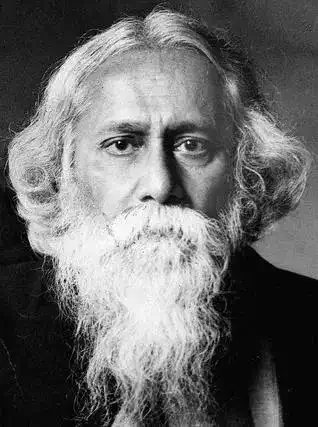
Rabindranath Tagore
Lover's Gifts XLIII: Dying, You Have Left Behind
Dying, you have left behind you the great sadness of the Eternal
in my life. You have painted my thought's horizon with the sunset
colours of your departure, leaving a track of tears across the
earth to love's heaven. Clasped in your dear arms, life and death
united in me in a marriage bond.
I think I can see you watching there in the balcony with your
lamp lighted, where the end and the beginning of all things meet.
My world went hence through the doors that you opened-you holding
the cup of death to my lips, filling it with life from your own.
Read more →
363
John Donne
Sweetest Love, I do not go
Sweetest love, I do not go,
For weariness of thee,
Nor in hope the world can show
A fitter love for me;
But since that I
Must die at last, 'tis best
To use myself in jest
Thus by feign'd deaths to die.
Yesternight the sun went hence,
And yet is here today;
He hath no desire nor sense,
Nor half so short a way:
Then fear not me,
But believe that I shall make
Speedier journeys, since I take
More wings and spurs than he.
O how feeble is man's power,
That if good fortune fall,
Cannot add another hour,
Nor a lost hour recall!
But come bad chance,
And we join to'it our strength,
And we teach it art and length,
Itself o'er us to'advance.
When thou sigh'st, thou sigh'st not wind,
But sigh'st my soul away;
When thou weep'st, unkindly kind,
My life's blood doth decay.
It cannot be
That thou lov'st me, as thou say'st,
If in thine my life thou waste,
That art the best of me.
Let not thy divining heart
Forethink me any ill;
Destiny may take thy part,
And may thy fears fulfil;
But think that we
Are but turn'd aside to sleep;
They who one another keep
Alive, ne'er parted be.
Read more →
359
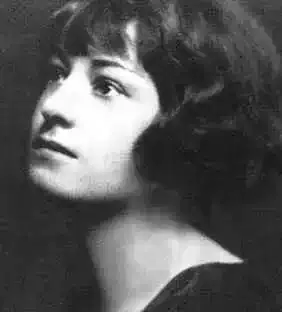
Dorothy Parker
Garden-Spot
God's acre was her garden-spot, she said;
She sat there often, of the Summer days,
Little and slim and sweet, among the dead,
Her hair a fable in the leveled rays.
She turned the fading wreath, the rusted cross,
And knelt to coax about the wiry stem.
I see her gentle fingers on the moss
Now it is anguish to remember them.
And once I saw her weeping, when she rose
And walked a way and turned to look around-
The quick and envious tears of one that knows
She shall not lie in consecrated ground.
Read more →
359

Walter de la Mare
The Song of Finis
At the edge of All the Ages
A Knight sate on his steed,
His armor red and thin with rust
His soul from sorrow freed;
And he lifted up his visor
From a face of skin and bone,
And his horse turned head and whinnied
As the twain stood there alone.
No bird above that steep of time
Sang of a livelong quest;
No wind breathed,
Rest:
"Lone for an end!" cried Knight to steed,
Loosed an eager rein--
Charged with his challenge into space:
And quiet did quiet remain.
Read more →
357
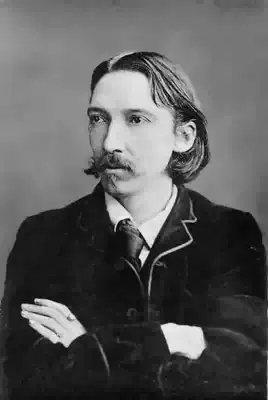
Robert Louis Stevenson
De Coenatione Micae
LOOK round: You see a little supper room;
But from my window, lo! great Caesar's tomb!
And the great dead themselves, with jovial breath
Bid you be merry and remember death.
Read more →
357
John Donne
The Dissolution
She's dead; and all which die
To their first elements resolve;
And we were mutual elements to us,
And made of one another.
My body then doth hers involve,
And those things whereof I consist hereby
In me abundant grow, and burdenous,
And nourish not, but smother.
My fire of passion, sighs of air,
Water of tears, and earthly sad despair,
Which my materials be,
But near worn out by love's security,
She, to my loss, doth by her death repair,
And I might live long wretched so
But that my fire doth with my fuel grow.
Now as those Active Kings
Whose foreign conquest treasure brings,
Receive more, and spend more, and soonest break:
This (which I am amazed that I can speak)
This death hath with my store
My use increased.
And so my soul more earnestly released
Will outstrip hers; as bullets flown before
A latter bullet may o'ertake, the powder being more.
Read more →
356
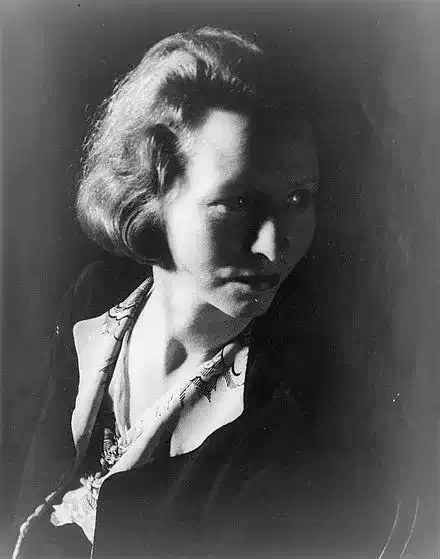
Edna St. Vincent Millay
Memorial To D.C.
(Vassar College, 1918)
O, loveliest throat of all sweet throats,
Where now no more the music is,
With hands that wrote you little notes
I write you little elegies!
Read more →
357

William Wordsworth
Desideria
SURPRISED by joy--impatient as the Wind
I turned to share the transport--O! with whom
But Thee, deep buried in the silent tomb,
That spot which no vicissitude can find?
Love, faithful love, recall'd thee to my mind--
But how could I forget thee? Through what power,
Even for the least division of an hour,
Have I been so beguiled as to be blind
To my most grievous loss?--That thought's return
Was the worst pang that sorrow ever bore,
Save one, one only, when I stood forlorn,
Knowing my heart's best treasure was no more;
That neither present time, nor years unborn
Could to my sight that heavenly face restore.
Read more →
358
Edna St. Vincent Millay
Ode To Silence
Aye, but she?
Your other sister and my other soul
Grave Silence, lovelier
Than the three loveliest maidens, what of her?
Clio, not you,
Not you, Calliope,
Nor all your wanton line,
Not Beauty's perfect self shall comfort me
For Silence once departed,
For her the cool-tongued, her the tranquil-hearted,
Whom evermore I follow wistfully,
Wandering Heaven and Earth and Hell and the four seasons through;
Thalia, not you,
Not you, Melpomene,
Not your incomparable feet, O thin Terpsichore, I seek in this great hall,
But one more pale, more pensive, most beloved of you all.
I seek her from afar,
I come from temples where her altars are,
From groves that bear her name,
Noisy with stricken victims now and sacrificial flame,
And cymbals struck on high and strident faces
Obstreperous in her praise
They neither love nor know,
A goddess of gone days,
Departed long ago,
Abandoning the invaded shrines and fanes
Of her old sanctuary,
A deity obscure and legendary,
Of whom there now remains,
For sages to decipher and priests to garble,
Only and for a little while her letters wedged in marble,
Which even now, behold, the friendly mumbling rain erases,
And the inarticulate snow,
Leaving at last of her least signs and traces
None whatsoever, nor whither she is vanished from these places.
"She will love well," I said,
"If love be of that heart inhabiter,
The flowers of the dead;
The red anemone that with no sound
Moves in the wind, and from another wound
That sprang, the heavily-sweet blue hyacinth,
That blossoms underground,
And sallow poppies, will be dear to her.
And will not Silence know
In the black shade of what obsidian steep
Stiffens the white narcissus numb with sleep?
(Seed which Demeter's daughter bore from home,
Uptorn by desperate fingers long ago,
Reluctant even as she,
Undone Persephone,
And even as she set out again to grow
In twilight, in perdition's lean and inauspicious loam).
She will love well," I said,
"The flowers of the dead;
Where dark Persephone the winter round,
Uncomforted for home, uncomforted,
Lacking a sunny southern slope in northern Sicily,
With sullen pupils focussed on a dream,
Stares on the stagnant stream
That moats the unequivocable battlements of Hell,
There, there will she be found,
She that is Beauty veiled from men and Music in a swound."
"I long for Silence as they long for breath
Whose helpless nostrils drink the bitter sea;
What thing can be
So stout, what so redoubtable, in Death
What fury, what considerable rage, if only she,
Upon whose icy breast,
Unquestioned, uncaressed,
One time I lay,
And whom always I lack,
Even to this day,
Being by no means from that frigid bosom weaned away,
If only she therewith be given me back?"
I sought her down that dolorous labyrinth,
Wherein no shaft of sunlight ever fell,
And in among the bloodless everywhere
I sought her, but the air,
Breathed many times and spent,
Was fretful with a whispering discontent,
And questioning me, importuning me to tell
Some slightest tidings of the light of day they know no more,
Plucking my sleeve, the eager shades were with me where I went.
I paused at every grievous door,
And harked a moment, holding up my hand,—and for a space
A hush was on them, while they watched my face;
And then they fell a-whispering as before;
So that I smiled at them and left them, seeing she was not there.
I sought her, too,
Among the upper gods, although I knew
She was not like to be where feasting is,
Nor near to Heaven's lord,
Being a thing abhorred
And shunned of him, although a child of his,
(Not yours, not yours; to you she owes not breath,
Mother of Song, being sown of Zeus upon a dream of Death).
Fearing to pass unvisited some place
And later learn, too late, how all the while,
With her still face,
She had been standing there and seen me pass, without a smile,
I sought her even to the sagging board whereat
The stout immortals sat;
But such a laughter shook the mighty hall
No one could hear me say:
Had she been seen upon the Hill that day?
And no one knew at all
How long I stood, or when at last I sighed and went away.
There is a garden lying in a lull
Between the mountains and the mountainous sea,
I know not where, but which a dream diurnal
Paints on my lids a moment till the hull
Be lifted from the kernel
And Slumber fed to me.
Your foot-print is not there, Mnemosene,
Though it would seem a ruined place and after
Your lichenous heart, being full
Of broken columns, caryatides
Thrown to the earth and fallen forward on their jointless knees,
And urns funereal altered into dust
Minuter than the ashes of the dead,
And Psyche's lamp out of the earth up-thrust,
Dripping itself in marble wax on what was once the bed
Of Love, and his young body asleep, but now is dust instead.
There twists the bitter-sweet, the white wisteria Fastens its fingers in the strangling
wall,
And the wide crannies quicken with bright weeds;
There dumbly like a worm all day the still white orchid feeds;
But never an echo of your daughters' laughter
Is there, nor any sign of you at all
Swells fungous from the rotten bough, grey mother of Pieria!
Only her shadow once upon a stone
I saw,—and, lo, the shadow and the garden, too, were gone.
I tell you you have done her body an ill,
You chatterers, you noisy crew!
She is not anywhere!
I sought her in deep Hell;
And through the world as well;
I thought of Heaven and I sought her there;
Above nor under ground
Is Silence to be found,
That was the very warp and woof of you,
Lovely before your songs began and after they were through!
Oh, say if on this hill
Somewhere your sister's body lies in death,
So I may follow there, and make a wreath
Of my locked hands, that on her quiet breast
Shall lie till age has withered them!
(Ah, sweetly from the rest
I see
Turn and consider me
Compassionate Euterpe!)
"There is a gate beyond the gate of Death,
Beyond the gate of everlasting Life,
Beyond the gates of Heaven and Hell," she saith,
"Whereon but to believe is horror!
Whereon to meditate engendereth
Even in deathless spirits such as I
A tumult in the breath,
A chilling of the inexhaustible blood
Even in my veins that never will be dry,
And in the austere, divine monotony
That is my being, the madness of an unaccustomed mood.
This is her province whom you lack and seek;
And seek her not elsewhere.
Hell is a thoroughfare
For pilgrims,—Herakles,
And he that loved Euridice too well,
Have walked therein; and many more than these;
And witnessed the desire and the despair
Of souls that passed reluctantly and sicken for the air;
You, too, have entered Hell,
And issued thence; but thence whereof I speak
None has returned;—for thither fury brings
Only the driven ghosts of them that flee before all things.
Oblivion is the name of this abode: and she is there."
Oh, radiant Song! Oh, gracious Memory!
Be long upon this height
I shall not climb again!
I know the way you mean,—the little night,
And the long empty day,—never to see
Again the angry light,
Or hear the hungry noises cry my brain!
Ah, but she,
Your other sister and my other soul,
She shall again be mine;
And I shall drink her from a silver bowl,
A chilly thin green wine,
Not bitter to the taste,
Not sweet,
Not of your press, oh, restless, clamorous nine,—
To foam beneath the frantic hoofs of mirth—
But savoring faintly of the acid earth,
And trod by pensive feet
From perfect clusters ripened without haste
Out of the urgent heat
In some clear glimmering vaulted twilight under the odorous vine
. Lift up your lyres! Sing on!
But as for me, I seek your sister whither she is gone.
Read more →
358
Johann Wolfgang von Goethe
Lines On Seeing Schiller's Skull
WITHIN a gloomy charnel-house one day
I view'd the countless skulls, so strangely mated,
And of old times I thought, that now were grey.
Close pack'd they stand, that once so fiercely hated,
And hardy bones, that to the death contended,
Are lying cross'd,--to lie for ever, fated.
What held those crooked shoulder-blades suspended?
No one now asks; and limbs with vigour fired,
The hand, the foot--their use in life is ended.
Vainly ye sought the tomb for rest when tired;
Peace in the grave may not be yours; ye're driven
Back into daylight by a force inspired;
But none can love the wither'd husk, though even
A glorious noble kernel it contained.
To me, an adept, was the writing given
Which not to all its holy sense explained,
When 'mid the crowd, their icy shadows flinging,
I saw a form, that glorious still remained.
And even there, where mould and damp were clinging,
Gave me a blest, a rapture-fraught emotion,
As though from death a living fount were springing.
What mystic joy I felt! What rapt devotion!
That form, how pregnant with a godlike trace!
A look, how did it whirl me tow'rd that ocean
Whose rolling billows mightier shapes embrace!
Mysterious vessel! Oracle how dear!
Even to grasp thee is my hand too base,
Except to steal thee from thy prison here
With pious purpose, and devoutly go
Back to the air, free thoughts, and sunlight clear.
What greater gain in life can man e'er know
Than when God-Nature will to him explain
How into Spirit steadfastness may flow,
How steadfast, too, the Spirit-Born remain.
Read more →
356
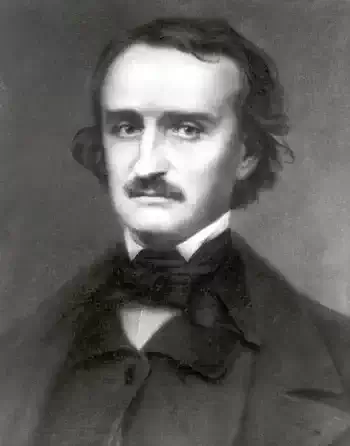
Edgar Allan Poe
Bridal Ballad
The ring is on my hand,
And the wreath is on my brow;
Satin and jewels grand
Are all at my command,
And I am happy now.
And my lord he loves me well;
But, when first he breathed his vow,
I felt my bosom swell
For
the words rang as a knell,
And the voice seemed his who fell
In the battle down the dell,
And who is happy now.
But he spoke to re-assure me,
And he kissed my pallid brow,
While a reverie came o'er me,
And to the church-yard bore me,
And I sighed to him before me,
Thinking him dead D'Elormie,
"Oh, I am happy now!"
And thus the words were spoken,
And this the plighted vow,
And, though my faith be broken,
And, though my heart be broken,
Here is a ring, as token
That I am happy now!
Would God I could awaken!
For I dream I know not how!
And my soul is sorely shaken
Lest an evil step be taken,
Lest the dead who is forsaken
May not be happy now.
Read more →
357
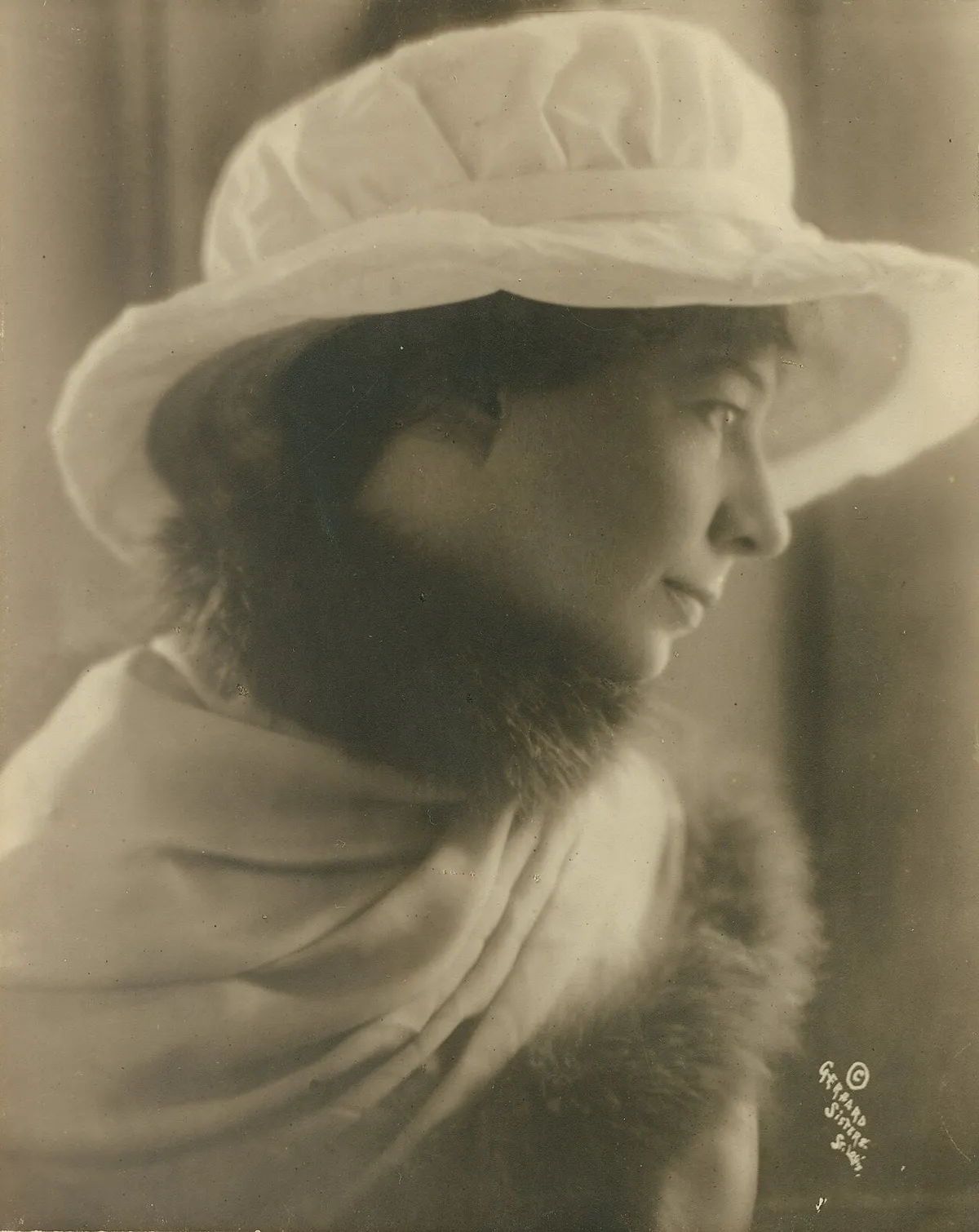
Sara Teasdale
Epitaph
Serene descent, as a red leaf's descending
When there is neither wind nor noise of rain,
But only autum air and the unending
Drawing of all things to the earth again.
So be it, let the snow fall deep and cover
All that was drunken once with light and air.
The earth will not regret her tireless lover,
Nor he awake to know she does not care.
Read more →
354
John Donne
A Burnt Ship
Out of a fired ship, which by no way
But drowning could be rescued from the flame,
Some men leap'd forth, and ever as they came
Near the foes' ships, did by their shot decay;
So all were lost, which in the ship were found,
They in the sea being burnt, they in the burnt ship drown'd.
Read more →
355
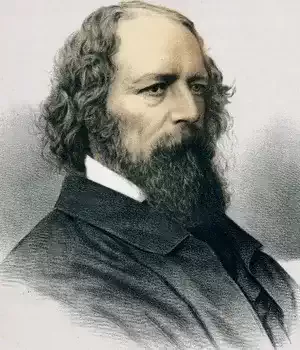
Alfred Lord Tennyson
In Memoriam A. H. H.: 39. Old warder of these buried bones
Old warder of these buried bones,
And answering now my random stroke
With fruitful cloud and living smoke,
Dark yew, that graspest at the stones
And dippest toward the dreamless head,
To thee too comes the golden hour
When flower is feeling after flower;
But Sorrow--fixt upon the dead,
And darkening the dark graves of men,-What
whisper'd from her lying lips?
Thy gloom is kindled at the tips,
And passes into gloom again.
Read more →
354
Dorothy Parker
Little Words
When you are gone, there is nor bloom nor leaf,
Nor singing sea at night, nor silver birds;
And I can only stare, and shape my grief
In little words.
I cannot conjure loveliness, to drown
The bitter woe that racks my cords apart.
The weary pen that sets my sorrow down
Feeds at my heart.
There is no mercy in the shifting year,
No beauty wraps me tenderly about.
I turn to little words- so you, my dear,
Can spell them out.
Read more →
354
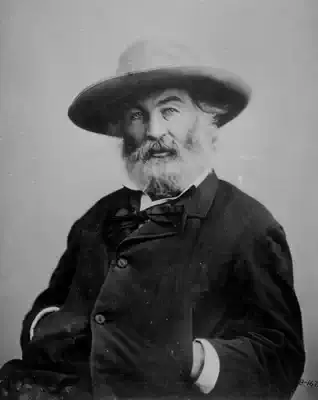
Walt Whitman
Portals
WHAT are those of the known, but to ascend and enter the Unknown?
And what are those of life, but for Death?
354
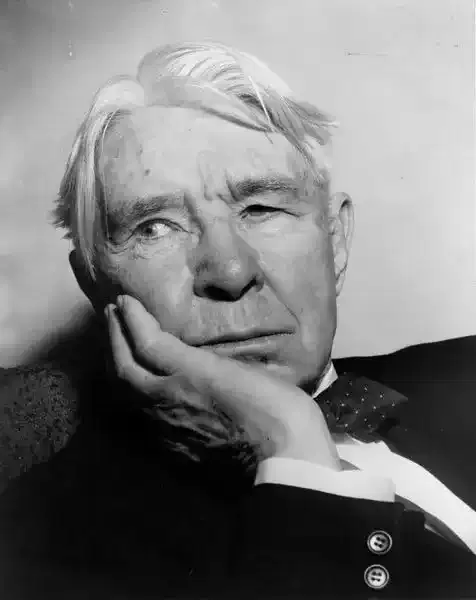
Carl Sandburg
Dunes
What do we see here in the sand dunes of the white moon alone with our thoughts,
Bill,
Alone with our dreams, Bill, soft as the women tying scarves around their heads
dancing,
Alone with a picture and a picture coming one after the other of all the dead,
The dead more than all these grains of sand one by one piled here in the moon,
Piled against the sky-line taking shapes like the hand of the wind wanted,
What do we see here, Bill, outside of what the wise men beat their heads on,
Outside of what the poets cry for and the soldiers drive on headlong and leave their
skulls in the sun for—what, Bill?
Read more →
354
Emily Dickinson
Bereaved of all, I went abroad
Bereaved of all, I went abroad-
No less bereaved was I
Upon a New Peninsula-
The Grave preceded me-
Obtained my Lodgings, ere myself-
And when I sought my Bed-
The Grave it was reposed upon
The Pillow for my Head-
I waked to find it first awake-
I rose-It followed me-
I tried to drop it in the Crowd-
To lose it in the Sea-
In Cups of artificial Drowse
To steep its shape away-
The Grave-was finished-but the Spade
Remained in Memory-
Read more →
354

Robert Browning
A Toccata Of Galuppi's
I.
Oh Galuppi, Baldassaro, this is very sad to find!
I can hardly misconceive you; it would prove me deaf and blind;
But although I take your meaning, 'tis with such a heavy mind!
II.
Here you come with all your music, and here's all the good it brings.
What, they lived once thus at Venice where the merchants were the kings,
Where Saint Mark's is, where the Doges used to wed the sea with rings?
III.
Ay, because the sea's the street there; and 'tis arched by ... what you call
... Shylock's bridge with houses on it, where they kept the carnival:
I was never out of England---it's as if I saw it all.
IV.
Did young people take their pleasure when the sea was warm in May?
Balls and masks begun at midnight, burning ever to mid-day,
When they made up fresh adventures for the morrow, do you say?
V.
Was a lady such a lady, cheeks so round and lips so red,---
On her neck the small face buoyant, like a bell-flower on its bed,
O'er the breast's superb abundance where a man might base his head?
VI.
Well, and it was graceful of them---they'd break talk off and afford
---She, to bite her mask's black velvet---he, to finger on his sword,
While you sat and played Toccatas, stately at the clavichord?
VII.
What? Those lesser thirds so plaintive, sixths diminished, sigh on sigh,
Told them something? Those suspensions, those solutions---``Must we die?''
Those commiserating sevenths---``Life might last! we can but try!''
VIII.
``Were you happy?''---``Yes.''---``And are you still as happy?''---``Yes. And you?''
---``Then, more kisses!''---``Did _I_ stop them, when a million seemed so few?''
Hark, the dominant's persistence till it must be answered to!
IX.
So, an octave struck the answer. Oh, they praised you, I dare say!
``Brave Galuppi! that was music! good alike at grave and gay!
``I can always leave off talking when I hear a master play!''
X.
Then they left you for their pleasure: till in due time, one by one,
Some with lives that came to nothing, some with deeds as well undone,
Death stepped tacitly and took them where they never see the sun.
XI.
But when I sit down to reason, think to take my stand nor swerve,
While I triumph o'er a secret wrung from nature's close reserve,
In you come with your cold music till I creep thro' every nerve.
XII.
Yes, you, like a ghostly cricket, creaking where a house was burned:
``Dust and ashes, dead and done with, Venice spent what Venice earned.
``The soul, doubtless, is immortal---where a soul can be discerned.
XIII.
``Yours for instance: you know physics, something of geology,
``Mathematics are your pastime; souls shall rise in their degree;
``Butterflies may dread extinction,---you'll not die, it cannot be!
XIV.
``As for Venice and her people, merely born to bloom and drop,
``Here on earth they bore their fruitage, mirth and folly were the crop:
``What of soul was left, I wonder, when the kissing had to stop?
XV.
``Dust and ashes!'' So you creak it, and I want the heart to scold.
Dear dead women, with such hair, too---what's become of all the gold
Used to hang and brush their bosoms? I feel chilly and grown old.
* . An overture---a touch piece.
Read more →
353