
Death and Mourning

Ella Wheeler Wilcox
An Empty Crib
Beside a crib that holds a baby’s stocking,
A tattered picture book, a broken toy,
A sleeping mother dreams that she is rocking
Her fair-haired cherub boy.
Upon the cradle’s side her light touch keeping,
She gently rocks it, crooning low a song;
And smiles to think her little one is sleeping,
So peacefully and long.
Step light, breathe low, break not her rapturous dreaming,
Wake not the sleeper from her trance of joy,
For never more save in sweet slumber-seeming
Will she watch o’er her little boy.
God pity her when from her dream Elysian
She wakes to see the empty crib, and weep;
Knowing her joy was but a sleeper’s vision,
Tread lightly – let her sleep.
Read more →
371

Henry Wadsworth Longfellow
Vittoria Colonna
Once more, once more, Inarimé,
I see thy purple hills!--once more
I hear the billows of the bay
Wash the white pebbles on thy shore.
High o'er the sea-surge and the sands,
Like a great galleon wrecked and cast
Ashore by storms, thy castle stands,
A mouldering landmark of the Past.
Upon its terrace-walk I see
A phantom gliding to and fro;
It is Colonna,--it is she
Who lived and loved so long ago.
Pescara's beautiful young wife,
The type of perfect womanhood,
Whose life was love, the life of life,
That time and change and death withstood.
For death, that breaks the marriage band
In others, only closer pressed
The wedding-ring upon her hand
And closer locked and barred her breast.
She knew the life-long martyrdom,
The weariness, the endless pain
Of waiting for some one to come
Who nevermore would come again.
The shadows of the chestnut trees,
The odor of the orange blooms,
The song of birds, and, more than these,
The silence of deserted rooms;
The respiration of the sea,
The soft caresses of the air,
All things in nature seemed to be
But ministers of her despair;
Till the o'erburdened heart, so long
Imprisoned in itself, found vent
And voice in one impassioned song
Of inconsolable lament.
Then as the sun, though hidden from sight,
Transmutes to gold the leaden mist,
Her life was interfused with light,
From realms that, though unseen, exist,
Inarimé! Inarimé!
Thy castle on the crags above
In dust shall crumble and decay,
But not the memory of her love.
Read more →
373

William Butler Yeats
Form the Green Helmet And Other Poems
HIS DREAM
I SWAYED upon the gaudy stem
The butt-end of a steering-oar,
And saw wherever I could turn
A crowd upon a shore.
And though I would have hushed the crowd,
There was no mother's son but said,
'What is the figure in a shroud
Upon a gaudy bed?'
And after running at the brim
Cried out upon that thing beneath
-- It had such dignity of limb --
By the sweet name of Death.
Though I'd my finger on my lip,
What could I but take up the song?
And running crowd and gaudy ship
Cried out the whole night long,
Crying amid the glittering sea,
Naming it with ecstatic breath,
Because it had such dignity,
By the sweet name of Death.
Read more →
372
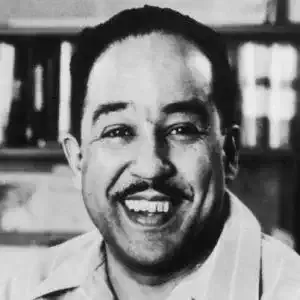
Langston Hughes
Sylvester’s Dying Bed
I woke up this mornin’
’Bout half-past three.
All the womens in town
Was gathered round me.
Sweet gals was a-moanin’,
“Sylvester’s gonna die!”
And a hundred pretty mamas
Bowed their heads to cry.
I woke up little later
’Bout half-past fo’,
The doctor ‘n’ undertaker’s
Both at ma do’.
Black gals was a-beggin’,
“You can’t leave us here!”
Brown-skins cryin’, “Daddy!
Honey! Baby! Don’t go, dear!”
But I felt ma time’s a-comin’,
And I know’d I’s dyin’ fast.
I seed the River Jerden
A-creepin’ muddy past—
But I’s still Sweet Papa ’Vester,
Yes, sir! Long as life do last!
So I hollers, “Com’ere, babies,
Fo’ to love yo’ daddy right!”
And I reaches up to hug ’em—
When the Lawd put out the light.
Then everything was darkness
In a great ... big ... night.
Read more →
373

Emily Dickinson
I cannot live with You (No. 640)
I cannot live with You--
It would be Life--
And Life is over there--
Behind the Shelf
The Sexton keeps the Key to--
Putting up
Our Life--His Porcelain--
Like a Cup--
Discarded of the Housewife-Quaint--
or Broke--
A newer Sevres pleases--
Old Ones crack--
I could not die--with You--
For One must wait
To shut the Other's Gaze down-You--
could not--
And I--could I stand by
And see You--freeze--
Without my Right of Frost-Death's
privilege?
Nor could I rise--with You--
Because Your Face
Would put out Jesus'--
That New Grace
Glow plain--and foreign
On my homesick Eye--
Except that You than He
Shone closer by-
They'd judge Us--How--
For You--served Heaven--You know,
Or sought to--
I could not--
Because You saturated Sight--
And I had no more Eyes
For sordid excellence
As Paradise
And were You lost, I would be--
Though My Name
Rang loudest
On the Heavenly fame--
And were You--saved--
And I--condemned to be
Where You were not--
That self--were Hell to Me--
So We must meet apart--
You there--I--here--
With just the Door ajar
That Oceans are--and Prayer--
And that White Sustenance--
Despair--
Read more →
371

John Greenleaf Whittier
The Swan Song of Parson Avery
When the reaper's task was ended, and the summer wearing late,
Parson Avery sailed from Newbury, with his wife and children eight,
Dropping down the river-harbor in the shallop 'Watch and Wait.'
Pleasantly lay the clearings in the mellow summer-morn,
With the newly planted orchards dropping their fruits first-born,
And the home-roofs like brown islands amid a sea of corn.
Broad meadows reached out 'seaward the tided creeks between,
And hills rolled wave-like inland, with oaks and walnuts green;
A
fairer home, a-goodlier land, his eyes had never seen.
Yet away sailed Parson Avery, away where duty led,
And the voice of God seemed calling, to break the living bread
To the souls of fishers starving on the rocks of Marblehead.
All day they sailed: at nightfall the pleasant land-breeze died,
The blackening sky, at midnight, its starry lights denied,
And far and low the thunder of tempest prophesied.
Blotted out were all the coast-lines, gone were rock, and wood, and sand;
Grimly anxious stood the skipper with the rudder in his hand,
And questioned of the darkness what was sea and what was land.
And the preacher heard his dear ones, nestled round him, weeping sore,
'Never heed, my little children! Christ is walking on before;
To the pleasant land of heaven, where the sea shall be no more.'
All at once the great cloud parted, like a curtain drawn aside,
To let down the torch of lightning on the terror far and wide;
And the thunder and the whirlwind together smote the tide.
There was wailing in the shallop, woman's wail and man's despair,
A crash of breaking timbers on the rocks so sharp and bare,
And, through it all, the murmur of Father Avery's prayer.
From his struggle in the darkness with the wild waves and the blast,
On a rock, where every billow broke above him as it passed,
Alone, of all his household, the man of God was cast.
There a comrade heard him praying, in the pause of wave and wind
'All my own have gone before me, and I linger just behind;
Not for life I ask, but only for the rest Thy ransomed find!
'In this night of death I challenge the promise of Thy word!
Let
me see the great salvation of which mine ears have heard!
Let
me pass from hence forgiven, through the grace of Christ, our Lord!
'In the baptism of these waters wash white my every sin,
And let me follow up to Thee my household and my kin!
Open the sea-gate of Thy heaven, and let me enter in!'
When the Christian sings his death-song, all the listening heavens draw near,
And the angels, leaning over the walls of crystal, hear
How the notes so faint and broken swell to music in God's ear.
The ear of God was open to His servant's last request;
As the strong wave swept him downward the sweet hymn upward pressed,
And the soul of Father Avery went, singing, to its rest.
There was wailing on the mainland, from the rocks of Marblehead;
In the stricken church of Newbury the notes of prayer were read;
And long, by board and hearthstone, the living mourned the dead.
And still the fishers outbound, or scudding from the squall,
With grave and reverent faces, the ancient tale recall,
When they see the white waves breaking on the Rock of Avery's Fall!
Read more →
369

Emily Jane Brontë
The Prisoner
Still let my tyrants know, I am not doomed to wear
Year after year in gloom and desolate despair;
A messenger of Hope comes every night to me,
And offers for short life, eternal liberty.
He comes with western winds, with evening's wandering airs,
With that clear dusk of heaven that brings the thickest stars:
Winds take a pensive tone, and stars a tender fire,
And visions rise, and change, that kill me with desire.
Desire for nothing known in my maturer years,
When Joy grew mad with awe, at counting future tears:
When, if my spirit's sky was full of flashes warm,
I knew not whence they came, from sun or thunderstorm.
But first, a hush of peace -a soundless calm descends;
The struggle of distress and fierce impatience ends;
Mute music soothes my breast -unuttered harmony
That I could never dream, till Earth was lost to me.
Then dawns the Invisible; the Unseen its truth reveals;
My outward sense is gone, my inward essence feels;
Its wings are almost free -its home, its harbour found;
Measuring the gulf, it stoops, and dares the final bound.
O dreadful is the check -intense the agony -
When the ear begins to hear, and the eye begins to see;
When the pulse begins to throb, the brain to think again,
The soul to feel the flesh, and the flesh to feel the chain.
Yet I would lose no sting, would wish no torture less;
The more that anguish racks, the earlier it will bless;
And robed in fires of hell, or bright with heavenly shine,
If it but herald Death, the vision is divine.
Read more →
371
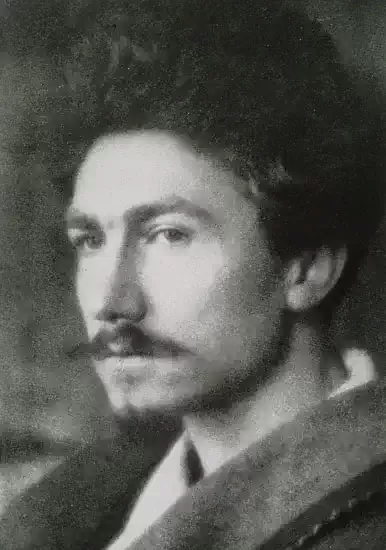
Ezra Pound
The Coming Of War: Actaeon
An image of Lethe,
and the fields
Full of faint light
but golden,
Gray cliffs,
and beneath them
A sea
Harsher than granite,
unstill, never ceasing;
High forms
with the movement of gods,
Perilous aspect;
And one said:
'This is Actaeon.'
Actaeon of golden greaves!
Over fair meadows,
Over the cool face of that field,
Unstill, ever moving
Hosts of an ancient people,
The silent cortège.
Read more →
369
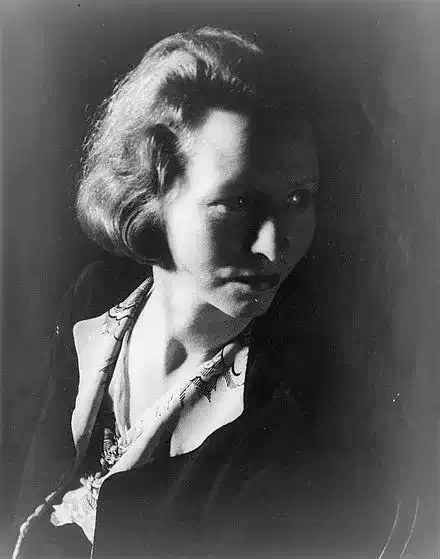
Edna St. Vincent Millay
The Wood Road
If I were to walk this way
Hand in hand with Grief,
I should mark that maple-spray
Coming into leaf.
I should note how the old burrs
Rot upon the ground.
Yes, though Grief should know me hers
While the world goes round,
It could not if truth be said
This was lost on me:
A rock-maple showing red,
Burrs beneath a tree.
Read more →
369
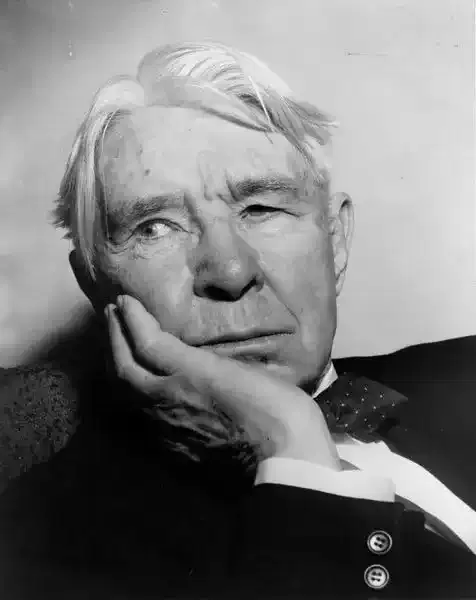
Carl Sandburg
Under the Harvest Moon
Under the harvest moon,
When the soft silver
Drips shimmering
Over the garden nights,
Death, the gray mocker,
Comes and whispers to you
As a beautiful friend
Who remembers.
Under the summer roses
When the flagrant crimson
Lurks in the dusk
Of the wild red leaves,
Love, with little hands,
Comes and touches you
With a thousand memories,
And asks you
Beautiful, unanswerable questions.
Read more →
369
Ella Wheeler Wilcox
Tired
I am tired to-night, and something,
The wind maybe, or the rain,
Or the cry of a bird in the copse outside,
Has brought back the past and its pain.
And I feel as I sit here thinking,
That the hand of a dead old June
Has reached out hold of my heart’s loose strings,
And is drawing them up in tune.
I am tired to-night, and I miss you,
And long for you, love, through tears;
And it seems but to-day that I saw you go –
You, who have been gone for years.
And I seem to be newly lonely –
I, who am so much alone;
And the strings of my heart are well in tune,
But they have not the same old tone.
I am tired; and that old sorrow
Sweeps down the bed of my soul,
As a turbulent river might suddenly break
Away from a dam’s control.
It beareth a wreck on its bosom,
A wreck with a snow-white sail,
And the hand on my heart-strings thrums away,
But they only respond with a wail.
Read more →
369
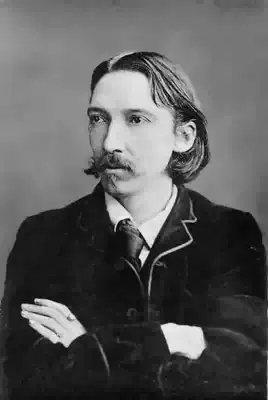
Robert Louis Stevenson
Soon Our Friends Perish
SOON our friends perish,
Soon all we cherish
Fades as days darken - goes as flowers go.
Soon in December
Over an ember,
Lonely we hearken, as loud winds blow.
Read more →
371
Robert Louis Stevenson
To Charles Baxter
OUR Johnie's deid. The mair's the pity!
He's deid, an' deid o' Aqua-vitae.
O Embro', you're a shrunken city,
Noo Johnie's deid!
Tak hands, an' sing a burial ditty
Ower Johnie's heid.
To see him was baith drink an' meat,
Gaun linkin' glegly up the street.
He but to rin or tak a seat,
The wee bit body!
Bein' aye unsicken on his feet
Wi' whusky toddy.
To be aye tosh was Johnie's whim,
There's nane was better teut than him,
Though whiles his gravit-knot wad clim'
Ahint his ear,
An' whiles he'd buttons oot or in
The less ae mair.
His hair a' lang about his bree,
His tap-lip lang by inches three -
A slockened sort 'mon,' to pree
A' sensuality -
A droutly glint was in his e'e
An' personality.
An' day an' nicht, frae daw to daw,
Dink an' perjink an' doucely braw,
Wi' a kind o' Gospel ower a',
May or October,
Like Peden, followin' the Law
An' no that sober.
Whusky an' he were pack thegether.
Whate'er the hour, whate'er the weather,
John kept himsel' wi' mistened leather
An' kindled spunk.
Wi' him, there was nae askin' whether -
John was aye drunk.
The auncient heroes gash an' bauld
In the uncanny days of auld,
The task ance fo(u)nd to which th'were called,
Stack stenchly to it.
His life sic noble lives recalled,
Little's he knew it.
Single an' straucht, he went his way.
He kept the faith an' played the play.
Whusky an' he were man an' may
Whate'er betided.
Bonny in life - in death - this twae
Were no' divided.
An' wow! but John was unco sport.
Whiles he wad smile about the Court
Malvolio-like - whiles snore an' snort
Was heard afar.
The idle winter lads' resort
Was aye John's bar.
What's merely humorous or bonny
The Worl' regairds wi' cauld astony.
Drunk men tak' aye mair place than ony;
An' sae, ye see,
The gate was aye ower thrang for Johnie -
Or you an' me.
John micht hae jingled cap an' bells,
Been a braw fule in silks an' pells,
In ane o' the auld worl's canty hells
Paris or Sodom.
I wadnae had him naething else
But Johnie Adam.
He suffered - as have a' that wan
Eternal memory frae man,
Since e'er the weary worl' began -
Mister or Madam,
Keats or Scots Burns, the Spanish Don
Or Johnie Adam.
We leuch, an' Johnie deid. An' fegs!
Hoo he had keept his stoiterin' legs
Sae lang's he did's a fact that begs
An explanation.
He stachers fifty years - syne plegs
To's destination.
Read more →
369
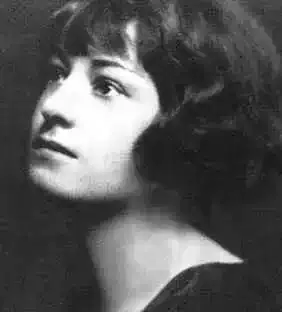
Dorothy Parker
Tombstones in the Starlight
I. The Minor Poet
His little trills and chirpings were his best.
No music like the nightingale's was born
Within his throat; but he, too, laid his breast
Upon a thorn.
II. The Pretty Lady
She hated bleak and wintry things alone.
All that was warm and quick, she loved too well-
A light, a flame, a heart against her own;
It is forever bitter cold, in Hell.
III. The Very Rich Man
He'd have the best, and that was none too good;
No barrier could hold, before his terms.
He lies below, correct in cypress wood,
And entertains the most exclusive worms.
IV. The Fisherwoman
The man she had was kind and clean
And well enough for every day,
But, oh, dear friends, you should have seen
The one that got away!
V. The Crusader
Arrived in Heaven, when his sands were run,
He seized a quill, and sat him down to tell
The local press that something should be done
About that noisy nuisance, Gabriel.
VI. The Actress
Her name, cut clear upon this marble cross,
Shines, as it shone when she was still on earth;
While tenderly the mild, agreeable moss
Obscures the figures of her date of birth.
Read more →
369

Henry Lawson
Past Carin'
Now up and down the siding brown
The great black crows are flyin',
And down below the spur, I know,
Another `milker's' dyin';
The crops have withered from the ground,
The tank's clay bed is glarin',
But from my heart no tear nor sound,
For I have gone past carin' -Past
worryin' or carin',
Past feelin' aught or carin';
But from my heart no tear nor sound,
For I have gone past carin'.
Through Death and Trouble, turn about,
Through hopeless desolation,
Through flood and fever, fire and drought,
And slavery and starvation;
Through childbirth, sickness, hurt, and blight,
And nervousness an' scarin',
Through bein' left alone at night,
I've got to be past carin'.
Past botherin' or carin',
Past feelin' and past carin';
Through city cheats and neighbours' spite,
I've come to be past carin'.
Our first child took, in days like these,
A cruel week in dyin',
All day upon her father's knees,
Or on my poor breast lyin';
The tears we shed -- the prayers we said
Were awful, wild -- despairin'!
I've pulled three through, and buried two
Since then -- and I'm past carin'.
I've grown to be past carin',
Past worryin' and wearin';
I've pulled three through and buried two
Since then, and I'm past carin'.
'Twas ten years first, then came the worst,
All for a dusty clearin',
I thought, I thought my heart would burst
When first my man went shearin';
He's drovin' in the great North-west,
I don't know how he's farin';
For I, the one that loved him best,
Have grown to be past carin'.
I've grown to be past carin'
Past lookin' for or carin';
The girl that waited long ago,
Has lived to be past carin'.
My eyes are dry, I cannot cry,
I've got no heart for breakin',
But where it was in days gone by,
A dull and empty achin'.
My last boy ran away from me,
I know my temper's wearin',
But now I only wish to be
Beyond all signs of carin'.
Past wearyin' or carin',
Past feelin' and despairin';
And now I only wish to be
Beyond all signs of carin'.
Read more →
367
Carl Sandburg
An Electric Sign Goes Dark
Poland, France, Judea ran in her veins,
Singing to Paris for bread, singing to Gotham in a fizz at the pop of a bottle’s cork.
“Won’t you come and play wiz me” she sang … and “I just can’t make my eyes
behave.”
“Higgeldy-Piggeldy,” “Papa’s Wife,” “Follow Me” were plays.
Did she wash her feet in a tub of milk? Was a strand of pearls sneaked from her trunk?
The newspapers asked.
Cigarettes, tulips, pacing horses, took her name.
Twenty years old … thirty … forty …
Forty-five and the doctors fathom nothing, the doctors quarrel, the doctors use silver
tubes feeding twenty-four quarts of blood into the veins, the respects of a prize-fighter,
a cab driver.
And a little mouth moans: It is easy to die when they are dying so many grand deaths
in France.
A voice, a shape, gone.
A baby bundle from Warsaw … legs, torso, head … on a hotel bed at The Savoy.
The white chiselings of flesh that flung themselves in somersaults, straddles, for
packed houses:
A memory, a stage and footlights out, an electric sign on Broadway dark.
She belonged to somebody, nobody.
No one man owned her, no ten nor a thousand.
She belonged to many thousand men, lovers of the white chiseling of arms and
shoulders, the ivory of a laugh, the bells of song.
Railroad brakemen taking trains across Nebraska prairies, lumbermen jaunting in pine
and tamarack of the Northwest, stock ranchers in the middle west, mayors of southern
cities
Say to their pals and wives now: I see by the papers Anna Held is dead.
Read more →
367
William Butler Yeats
A Dream Of Death
I DREAMED that one had died in a strange place
Near no accustomed hand,
And they had nailed the boards above her face,
The peasants of that land,
Wondering to lay her in that solitude,
And raised above her mound
A cross they had made out of two bits of wood,
And planted cypress round;
And left her to the indifferent stars above
Until I carved these words:
She was more beautiful than thy first love,
But now lies under boards.
Read more →
367
Ella Wheeler Wilcox
Widows
The world was widowed by the death of Christ:
Vainly its suffering soul for peace has sought
And found it not.
For nothing, nothing, nothing has sufficed
To bring back comfort to the stricken house
From whence has gone the Master and the Spouse.
In its long widowhood the world has striven
To find diversion. It has turned away
From the vast awefull silences of Heaven
(Which answer but with silence when we pray)
And sought for something to assuage its grief.
Some surcease and relief
From sorrow, in pursuit of mortal joys.
It drowned God's stillness in a sea of noise;
It lost God's presence in a blur of forms;
Till, bruised and bleeding with life's brutal storms,
Unto immutable and speechless space
The World lifts up its face,
Its haggard, tear-drenched face,
And cries aloud for faith's supreme reward,
The promised Second Coming of its Lord.
So many widows, widows everywhere,
The whole earth teems with widows.
Guns that blare-
Winged monsters of the air-
And deep-sea monsters leaping through the water,
Hell bent on slaughter,
All these plough paths for widows. Maids at dawn,
And brides at noon, ere eventide pass on
Into the ranks of widows: but to weep
Just for a little space; then will grief sleep
In their young bosoms, where sweet hope belongs,
New love will sing once more its age-old songs,
And life bloom as a rose-tree blooms again
After a night of rain.
There are complacent widows clothed in crêpe
Who simulate a grief that is not real.
Through paths of seeming sorrow they escape
From disappointed hopes to some ideal,
Or, from the penury of unloved wives
Walk forth to opulent lives.
And there are widows who shed all their tears
Just at the first
In one wild burst,
And then go lilting lightly down the years:
Black butterflies, they flit from flower to flower
And live in the thin pleasures of the hour;
Merging their tender memories of the dead
In tenderer dreams of being once more wed.
But there are others: women who have proved
That loving greatly means so being loved.
Women who through full beauteous years have grown
Into the very body, souls, and heart
Of their dear comrades. When death tears apart
Such close-knit bonds as these, and one alone
Out to the larger freer life is called,
And one is left-
Then God in heaven must sometimes be appalled
At the wild anguish of the soul bereft,
And unto His Son must say, 'I did not know
Mortals could suffer so.'
But Christ, remembering Gethsemane,
Will answer softly, 'It was known to Me.'
God's alchemist, old Time, will merge to calm
That bitter anguish; but there is no balm
Save the sweet certitude that each long day
Is one step in a stair
That circles up to where freed spirits stay.
Widows, so many widows everywhere.
The world was widowed by the death of Christ,
And nothing, nothing, nothing has sufficed
To bring back comfort to the stricken house
From whence has gone the Master and the Spouse.
Hasten, dear Lord, with Thy Millennium,
Hasten and come.
Read more →
366
Carl Sandburg
To Certain Journeymen
Undertakers, hearse drivers, grave diggers,
I speak to you as one not afraid of your business.
You handle dust going to a long country,
You know the secret behind your job is the same whether
you lower the coffin with modern, automatic machinery,
well-oiled and noiseless, or whether the
body is laid in by naked hands and then covered
by the shovels.
Your day's work is done with laughter many days of the year,
And you earn a living by those who say good-by today
in thin whispers.
Read more →
367
Dorothy Parker
Braggart
The days will rally, wreathing
Their crazy tarantelle;
And you must go on breathing,
But I'll be safe in hell.
Like January weather,
The years will bite and smart,
And pull your bones together
To wrap your chattering heart.
The pretty stuff you're made of
Will crack and crease and dry.
The thing you are afraid of
Will look from every eye.
You will go faltering after
The bright, imperious line,
And split your throat on laughter,
And burn your eyes with brine.
You will be frail and musty
With peering, furtive head,
Whilst I am young and lusty
Among the roaring dead.
Read more →
368
Henry Wadsworth Longfellow
By The Fireside : Resignation
There is no flock, however watched and tended,
But one dead lamb is there!
There is no fireside, howsoe'er defended,
But has one vacant chair!
The air is full of farewells to the dying,
And mournings for the dead;
The heart of Rachel, for her children crying,
Will not be comforted!
Let us be patient! These severe afflictions
Not from the ground arise,
But oftentimes celestial benedictions
Assume this dark disguise.
We see but dimly through the mists and vapors;
Amid these earthly damps
What seem to us but sad, funereal tapers
May be heaven's distant lamps.
There is no Death! What seems so is transition;
This life of mortal breath
Is but a suburb of the life elysian,
Whose portal we call Death.
She is not dead,--the child of our affection,--
But gone unto that school
Where she no longer needs our poor protection,
And Christ himself doth rule.
In that great cloister's stillness and seclusion,
By guardian angels led,
Safe from temptation, safe from sin's pollution,
She lives, whom we call dead.
Day after day we think what she is doing
In those bright realms of air;
Year after year, her tender steps pursuing,
Behold her grown more fair.
Thus do we walk with her, and keep unbroken
The bond which nature gives,
Thinking that our remembrance, though unspoken,
May reach her where she lives.
Not as a child shall we again behold her;
For when with raptures wild
In our embraces we again enfold her,
She will not be a child;
But a fair maiden, in her Father's mansion,
Clothed with celestial grace;
And beautiful with all the soul's expansion
Shall we behold her face.
And though at times impetuous with emotion
And anguish long suppressed,
The swelling heart heaves moaning like the ocean,
That cannot be at rest,--
We will be patient, and assuage the feeling
We may not wholly stay;
By silence sanctifying, not concealing,
The grief that must have way.
Read more →
368
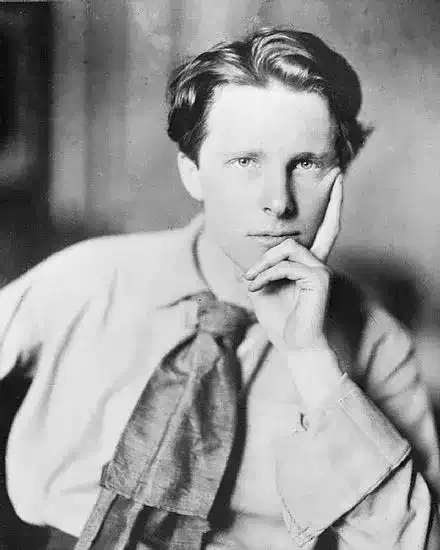
Rupert Brooke
Choriambics -- II
Here the flame that was ash, shrine that was void,
lost in the haunted wood,
I have tended and loved, year upon year, I in the solitude
Waiting, quiet and glad-eyed in the dark, knowing that once a gleam
Glowed and went through the wood. Still I abode strong in a golden dream,
Unrecaptured.
For I, I that had faith, knew that a face would glance
One day, white in the dim woods, and a voice call, and a radiance
Fill the grove, and the fire suddenly leap . . . and, in the heart of it,
End of labouring, you! Therefore I kept ready the altar, lit
The flame, burning apart.
Face of my dreams vainly in vision white
Gleaming down to me, lo! hopeless I rise now. For about midnight
Whispers grew through the wood suddenly, strange cries in the boughs above
Grated, cries like a laugh. Silent and black then through the sacred grove
Great birds flew, as a dream, troubling the leaves, passing at length.
I knew
Long expected and long loved, that afar, God of the dim wood, you
Somewhere lay, as a child sleeping, a child suddenly reft from mirth,
White and wonderful yet, white in your youth, stretched upon foreign earth,
God, immortal and dead!
Therefore I go; never to rest, or win
Peace, and worship of you more, and the dumb wood and the shrine therein.
Read more →
368
Henry Van Dyke
Dulcis Memoria
Long, long ago I heard a little song,
(Ah, was it long ago, or yesterday?)
So lowly, slowly wound the tune along,
That far into my heart it found the way:
A melody consoling and endearing;
And still, in silent hours, I'm often hearing
The small, sweet song that does not die away.
Long, long ago I saw a little flower,-(
Ah, was it long ago, or yesterday?)
So fair of face and fragrant for an hour,
That something dear to me it seemed to say:
A thought of joy that blossomed into being
Without a word; and now I'm often seeing
The friendly flower that does not fade away.
Long, long ago we had a little child,-(
Ah, was it long ago, or yesterday?)
Into his mother's eyes and mine he smiled
Unconscious love; warm in our arms he lay.
An angel called! Dear heart, we could not hold him;
Yet secretly your arms and mine infold him--
Our little child who does not go away.
Long, long ago? Ah, memory, make it clear-(
It was not long ago, but yesterday,)
So little and so helpless and so dear
Let not the song be lost, the flower decay!
His voice, his waking eyes, his gentle sleeping:
The smallest things are safest in thy keeping.
Sweet memory, keep our child with us always.
Read more →
365
Henry Wadsworth Longfellow
By The Fireside : Tegner's Death (Tegner's Drapa)
I heard a voice, that cried,
'Balder the Beautiful
Is dead, is dead!'
And through the misty air
Passed like the mournful cry
Of sunward sailing cranes.
I saw the pallid corpse
Of the dead sun
Borne through the Northern sky.
Blasts from Niffelheim
Lifted the sheeted mists
Around him as he passed.
And the voice forever cried,
'Balder the Beautiful
Is dead, is dead!'
And died away
Through the dreary night,
In accents of despair.
Balder the Beautiful,
God of the summer sun,
Fairest of all the Gods!
Light from his forehead beamed,
Runes were upon his tongue,
As on the warrior's sword.
All things in earth and air
Bound were by magic spell
Never to do him harm;
Even the plants and stones;
All save the mistletoe,
The sacred mistletoe!
Hoeder, the blind old God,
Whose feet are shod with silence,
Pierced through that gentle breast
With his sharp spear, by fraud
Made of the mistletoe,
The accursed mistletoe!
They laid him in his ship,
With horse and harness,
As on a funeral pyre.
Odin placed
A ring upon his finger,
And whispered in his ear.
They launched the burning ship!
It floated far away
Over the misty sea,
Till like the sun it seemed,
Sinking beneath the waves.
Balder returned no more!
So perish the old Gods!
But out of the sea of Time
Rises a new land of song,
Fairer than the old.
Over its meadows green
Walk the young bards and sing.
Build it again,
O ye bards,
Fairer than before!
Ye fathers of the new race,
Feed upon morning dew,
Sing the new Song of Love!
The law of force is dead!
The law of love prevails!
Thor, the thunderer,
Shall rule the earth no more,
No more, with threats,
Challenge the meek Christ.
Sing no more,
O ye bards of the North,
Of Vikings and of Jarls!
Of the days of Eld
Preserve the freedom only,
Not the deeds of blood!
Read more →
365