
Change and Transformation

Sara Teasdale
Embers
I said, "My youth is gone
Like a fire beaten out by the rain,
That will never sway and sing
Or play with the wind again."
I said, "It is no great sorrow
That quenched my youth in me,
But only little sorrows
Beating ceaselessly."
I thought my youth was gone,
But you returned --
Like a flame at the call of the wind
It leaped and burned;
Threw off its ashen cloak,
And gowned anew
Gave itself like a bride
Once more to you.
425

Ella Wheeler Wilcox
One Woman's History
'The maiden free, the maiden wed.
Can never, never be the same,
A new life springs from out the dead.
And with the speaking of a name-
A breath upon the marriage bed,
She finds herself a something new.
'Where lay the shallows of the maid
No plummet line the wife can sound;
Where round the sunny islands played
The pulses of the great profound
Lies low the treacherous everglade.
'A wife is like an unknown sea,
Least known to him who thinks he knows
Where all the shores of Promise be,
And where the islands of Repose-
And where the rocks that he must flee.'
426

Alfred Lord Tennyson
In Memoriam A. H. H.: 118. Contemplate all this work of Tim
Contemplate all this work of Time,
The giant labouring in his youth;
Nor dream of human love and truth,
As dying Nature's earth and lime;
But trust that those we call the dead
Are breathers of an ampler day
For ever nobler ends. They say,
The solid earth whereon we tread
In tracts of fluent heat began,
And grew to seeming-random forms,
The seeming prey of cyclic storms,
Till at the last arose the man;
Who throve and branch'd from clime to clime,
The herald of a higher race,
And of himself in higher place,
If so he type this work of time
Within himself, from more to more;
Or, crown'd with attributes of woe
Like glories, move his course, and show
That life is not as idle ore,
But iron dug from central gloom,
And heated hot with burning fears,
And dipt in baths of hissing tears,
And batter'd with the shocks of doom
To shape and use. Arise and fly
The reeling Faun, the sensual feast;
Move upward, working out the beast,
And let the ape and tiger die.
424
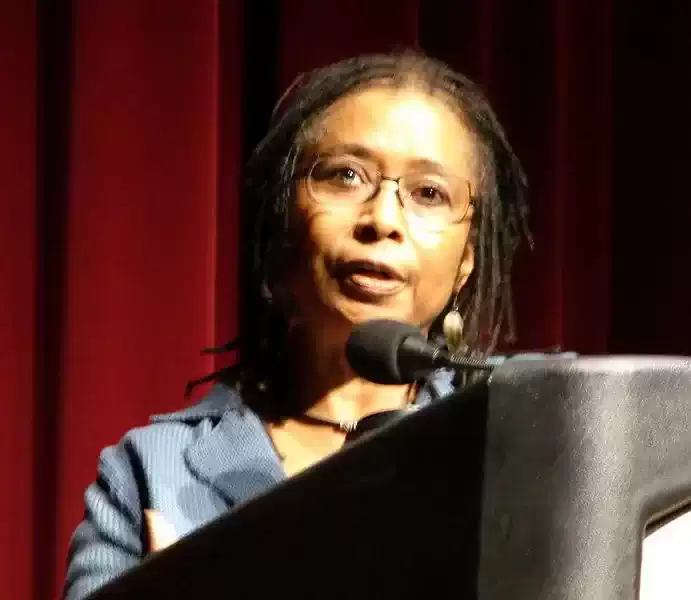
Alice Walker
The Tree Of Life Has Fallen
The tree of life
has fallen on my small house.
I thought it was so much bigger!
But it is not.
There in the distance I see the mountains
still.
The view of vast water stretching before me
is superb.
My boat is grand and I still command the captain
of it; not having learned myself to sail.
But I am adrift
without my tree of life
that has fallen heavy
without grace or pity
on this small place.
For the departing dictator, in perpetuity.
418
Alfred Lord Tennyson
The Princess: A Medley: Our Enemies have Fall'n
Our enemies have fall'n, have fall'n: the seed,
The little seed they laugh'd at in the dark,
Has risen and cleft the soil, and grown a bulk
Of spanless girth, that lays on every side
A thousand arms and rushes to the Sun.
Our enemies have fall'n, have fall'n: they came;
The leaves were wet with women's tears: they heard
A noise of songs they would not understand:
They mark'd it with the red cross to the fall,
And would have strown it, and are fall'n themselves.
Our enemies have fall'n, have fall'n: they came,
The woodmen with their axes: lo the tree!
But we will make it faggots for the hearth,
And shape it plank and beam for roof and floor,
And boats and bridges for the use of men.
Our enemies have fall'n, have fall'n: they struck;
With their own blows they hurt themselves, nor knew
There dwelt an iron nature in the grain:
The glittering axe was broken in their arms,
Their arms were shatter'd to the shoulder blade.
Our enemies have fall'n, but this shall grow
A night of Summer from the heat, a breadth
Of Autumn, dropping fruits of power; and roll'd
With music in the growing breeze of Time,
The tops shall strike from star to star, the fangs
Shall move the stony bases of the world.
418

Dorothy Parker
Recurrence
We shall have our little day.
Take my hand and travel still
Round and round the little way,
Up and down the little hill.
It is good to love again;
Scan the renovated skies,
Dip and drive the idling pen,
Sweetly tint the paling lies.
Trace the dripping, pierced heart,
Speak the fair, insistent verse,
Vow to God, and slip apart,
Little better, Little worse.
Would we need not know before
How shall end this prettiness;
One of us must love the more,
One of us shall love the less.
Thus it is, and so it goes;
We shall have our day, my dear.
Where, unwilling, dies the rose
Buds the new, another year.
419
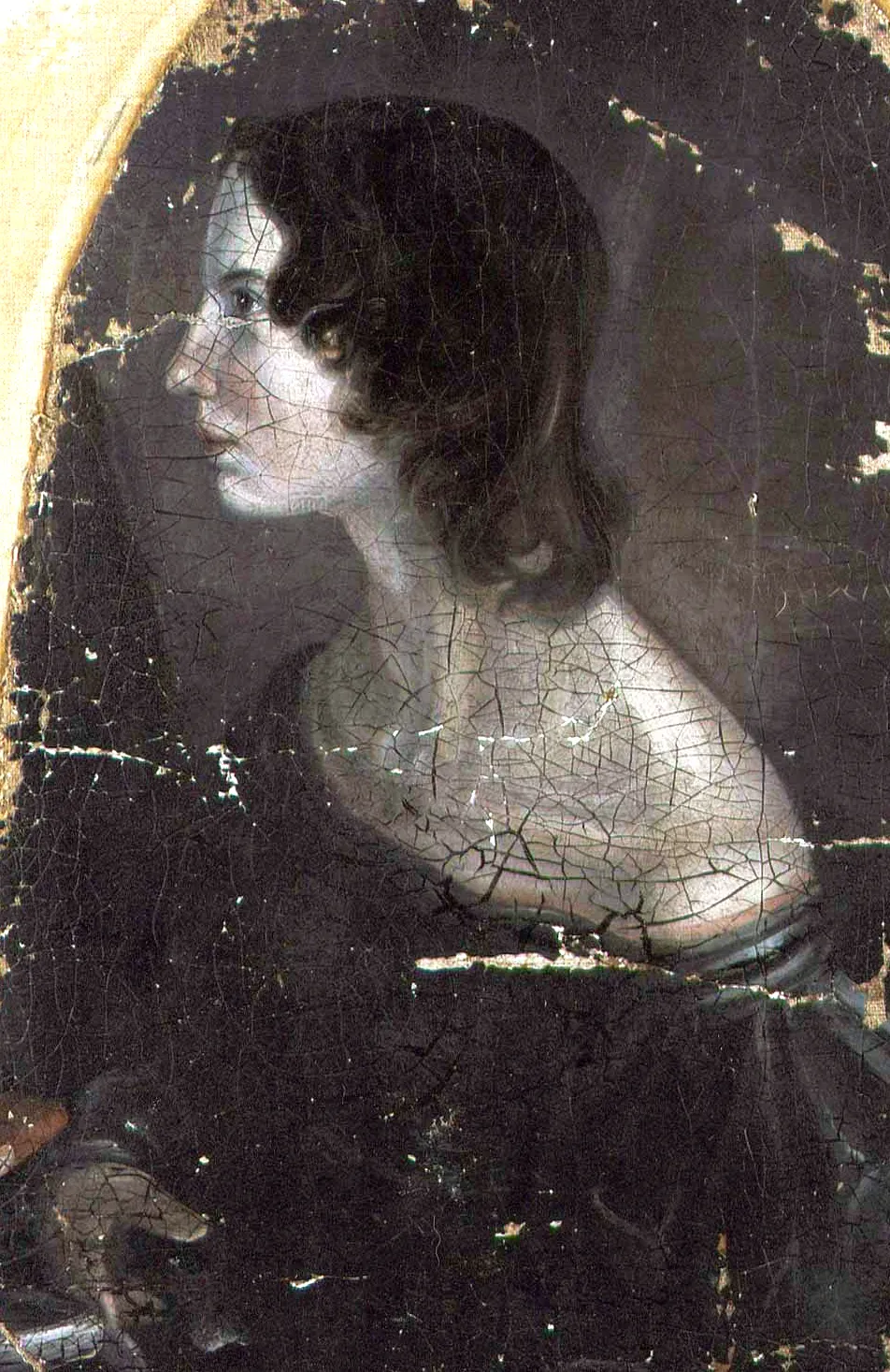
Emily Jane Brontë
Loud Without the Wind Was Roaring
Loud without the wind was roaring
Through th' autumnal sky;
Drenching wet, the cold rain pouring,
Spoke of winter nigh.
All too like that dreary eve,
Did my exiled spirit grieve.
Grieved at first, but grieved not long,
Sweet—how softly sweet!—it came;
Wild words of an ancient song,
Undefined, without a name.
'It was spring, and the skylark was singing';
Those words they awakened a spell;
They unlocked a deep fountain, whose springing,
Nor absence, nor distance can quell.
In the gloom of a cloudy November
They uttered the music of May;
They kindled the perishing ember
Into fervour that could not decay.
Awaken, o'er all my dear moorland,
West-wind, in thy glory and pride!
Oh! call me from valley and lowland,
To walk by the hill-torrent's side!
It is swelled with the first snowy weather;
The rocks they are icy and hoar,
And sullenly waves the long heather,
And the fern leaves are sunny no more.
There are no yellow stars on the mountain
The bluebells have long died away
From the brink of the moss-bedded fountain—
From the side of the wintry brae.
But lovelier than corn-fields all waving
In emerald, and vermeil, and gold,
Are the heights where the north-wind is raving,
And the crags where I wandered of old.
It was morning: the bright sun was beaming;
How sweetly it brought back to me
The time when nor labour nor dreaming
Broke the sleep of the happy and free!
But blithely we rose as the dawn-heaven
Was melting to amber and blue,
And swift were the wings to our feet given,
As we traversed the meadows of dew.
For the moors! For the moors, where the short grass
Like velvet beneath us should lie!
For the moors! For the moors, where each high pass
Rose sunny against the clear sky!
For the moors, where the linnet was trilling
Its song on the old granite stone;
Where the lark, the wild sky-lark, was filling
Every breast with delight like its own!
What language can utter the feeling
Which rose, when in exile afar,
On the brow of a lonely hill kneeling,
I saw the brown heath growing there?
It was scattered and stunted, and told me
That soon even that would be gone:
It whispered, 'The grim walls enfold me,
I have bloomed in my last summer's sun.'
But not the loved music, whose waking
Makes the soul of the Swiss die away,
Has a spell more adored and heartbreaking
Than, for me, in that blighted heath lay.
The spirit which bent 'neath its power,
How it longed—how it burned to be free!
If I could have wept in that hour,
Those tears had been heaven to me.
Well—well; the sad minutes are moving,
Though loaded with trouble and pain;
And some time the loved and the loving
Shall meet on the mountains again!
420

Walt Whitman
Eidólons
I MET a Seer,
Passing the hues and objects of the world,
The fields of art and learning, pleasure, sense,
To glean Eidólons.
Put in thy chants, said he,
No more the puzzling hour, nor day--nor segments, parts, put in,
Put first before the rest, as light for all, and entrance-song of
all,
That of Eidólons.
Ever the dim beginning;
Ever the growth, the rounding of the circle;
Ever the summit, and the merge at last, (to surely start again,)
Eidólons! Eidólons!
Ever the mutable!
Ever materials, changing, crumbling, re-cohering;
Ever the ateliers, the factories divine,
Issuing Eidólons!
Lo! I or you!
Or woman, man, or State, known or unknown,
We seeming solid wealth, strength, beauty build,
But really build Eidólons.
The ostent evanescent;
The substance of an artist's mood, or savan's studies long,
Or warrior's, martyr's, hero's toils,
To fashion his Eidólon.
Of every human life,
(The units gather'd, posted--not a thought, emotion, deed, left out;)
The whole, or large or small, summ'd, added up,
In its Eidólon.
The old, old urge;
Based on the ancient pinnacles, lo! newer, higher pinnacles;
From Science and the Modern still impell'd,
The old, old urge, Eidólons.
The present, now and here,
America's busy, teeming, intricate whirl,
Of aggregate and segregate, for only thence releasing,
To-day's Eidólons.
These, with the past,
Of vanish'd lands--of all the reigns of kings across the sea,
Old conquerors, old campaigns, old sailors' voyages,
Joining Eidólons.
Densities, growth, façades,
Strata of mountains, soils, rocks, giant trees,
Far-born, far-dying, living long, to leave,
Eidólons everlasting.
Exaltè, rapt, extatic,
The visible but their womb of birth,
Of orbic tendencies to shape, and shape, and shape,
The mighty Earth-Eidólon.
All space, all time,
(The stars, the terrible perturbations of the suns,
Swelling, collapsing, ending--serving their longer, shorter use,)
Fill'd with Eidólons only.
The noiseless myriads!
The infinite oceans where the rivers empty!
The separate, countless free identities, like eyesight;
The true realities, Eidólons.
Not this the World,
Nor these the Universes--they the Universes,
Purport and end--ever the permanent life of life,
Eidólons, Eidólons.
Beyond thy lectures, learn'd professor,
Beyond thy telescope or spectroscope, observer keen--beyond all
mathematics,
Beyond the doctor's surgery, anatomy--beyond the chemist with his
chemistry,
The entities of entities, Eidólons.
Unfix'd, yet fix'd;
Ever shall be--ever have been, and are,
Sweeping the present to the infinite future,
Eidólons, Eidólons, Eidólons.
The prophet and the bard,
Shall yet maintain themselves--in higher stages yet,
Shall mediate to the Modern, to Democracy--interpret yet to them,
God, and Eidólons.
And thee, My Soul!
Joys, ceaseless exercises, exaltations!
Thy yearning amply fed at last, prepared to meet,
Thy mates, Eidólons.
Thy Body permanent,
The Body lurking there within thy Body,
The only purport of the Form thou art--the real I myself,
An image, an Eidólon.
Thy very songs, not in thy songs;
No special strains to sing--none for itself;
But from the whole resulting, rising at last and floating,
A round, full-orb'd Eidólon.
420
Ella Wheeler Wilcox
The Universal Route
As we journey along, with a laugh and a song,
We see, on youth’s flower-decked slope,
Like a beacon of light, shining fair on the sight,
The beautiful Station of Hope.
But the wheels of old Time roll along as we climb,
And our youth speeds away on the years;
And with hearts that are numb with life’s sorrows we come
To the mist-covered Station of Tears.
Still onward we pass, where the milestones, alas!
Are tombs of our dead, to the West,
Where glitters and gleams, in the dying sunbeams,
The sweet, silent Station of Rest.
All rest is but change, and no grave can estrange
The soul from its Parent above;
And, scorning the rod, it soars back to God,
To the limitless City of Love.
418

Carl Sandburg
Autumn Movement
I cried over beautiful things knowing no beautiful thing lasts.
The field of cornflower yellow is a scarf at the neck of the copper
sunburned woman, the mother of the year, the taker of seeds.
The northwest wind comes and the yellow is torn full of holes,
new beautiful things come in the first spit of snow on the northwest wind,
and the old things go, not one lasts.
411

Johann Wolfgang von Goethe
On The New Year
FATE now allows us,
'Twixt the departing
And the upstarting,
Happy to be;
And at the call of
Memory cherish'd,
Future and perish'd
Moments we see.
Seasons of anguish,--
Ah, they must ever
Truth from woe sever,
Love and joy part;
Days still more worthy
Soon will unite us,
Fairer songs light us,
Strength'ning the heart.
We, thus united,
Think of, with gladness,
Rapture and sadness,
Sorrow now flies.
Oh, how mysterious
Fortune's direction!
Old the connection,
New-born the prize!
Thank, for this, Fortune,
Wavering blindly!
Thank all that kindly
Fate may bestow!
Revel in change's
Impulses clearer,
Love far sincerer,
More heartfelt glow!
Over the old one,
Wrinkles collected,
Sad and dejected,
Others may view;
But, on us gently
Shineth a true one,
And to the new one
We, too, are new.
As a fond couple
'Midst the dance veering,
First disappearing,
Then reappear,
So let affection
Guide thro' life's mazy
Pathways so hazy
Into the year!
410

Emily Dickinson
Our share of night to bear
Our share of night to bear-
Our share of morning-
Our blank in bliss to fill
Our blank in scorning-
Here a star, and there a star,
Some lose their way!
Here a mist, and there a mist,
Afterwards-Day!
Our share of morning-
Our blank in bliss to fill
Our blank in scorning-
Here a star, and there a star,
Some lose their way!
Here a mist, and there a mist,
Afterwards-Day!
411
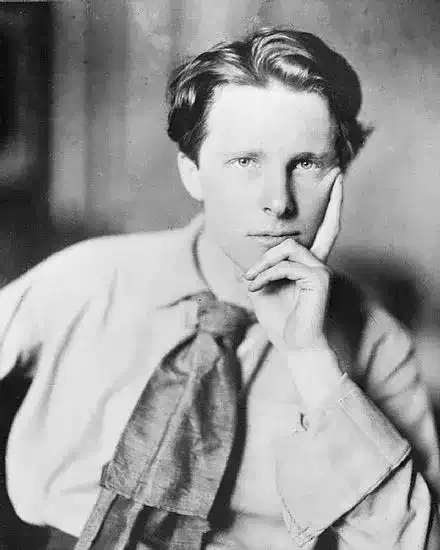
Rupert Brooke
The Night Journey
Hands and lit faces eddy to a line;
The dazed last minutes click; the clamour dies.
Beyond the great-swung arc o’ the roof, divine,
Night, smoky-scarv’d, with thousand coloured eyes
Glares the imperious mystery of the way.
Thirsty for dark, you feel the long-limbed train
Throb, stretch, thrill motion, slide, pull out and sway,
Strain for the far, pause, draw to strength again.…
As a man, caught by some great hour, will rise,
Slow-limbed, to meet the light or find his love;
And, breathing long, with staring sightless eyes,
Hands out, head back, agape and silent, move
Sure as a flood, smooth as a vast wind blowing;
And, gathering power and purpose as he goes,
Unstumbling, unreluctant, strong, unknowing,
Borne by a will not his, that lifts, that grows,
Sweep out to darkness, triumphing in his goal,
Out of the fire, out of the little room.…
—There is an end appointed, O my soul!
Crimson and green the signals burn; the gloom
Is hung with steam’s far-blowing livid streamers.
Lost into God, as lights in light, we fly,
Grown one with will, end-drunken huddled dreamers.
The white lights roar. The sounds of the world die.
And lips and laughter are forgotten things.
Speed sharpens; grows. Into the night, and on,
The strength and splendour of our purpose swings.
The lamps fade; and the stars. We are alone.
408
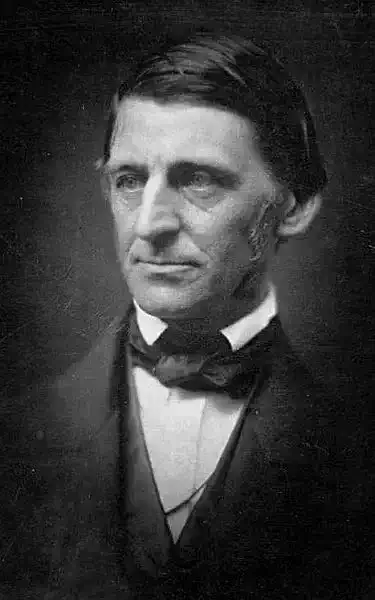
Ralph Waldo Emerson
Seashore
I heard or seemed to hear the chiding Sea
Say, Pilgrim, why so late and slow to come?
Am I not always here, thy summer home?
Is not my voice thy music, morn and eve?
My breath thy healthful climate in the heats,
My touch thy antidote, my bay thy bath?
Was ever building like my terraces?
Was ever couch magnificent as mine?
Lie on the warm rock-ledges, and there learn
A little hut suffices like a town.
I make your sculptured architecture vain,
Vain beside mine. I drive my wedges home,
And carve the coastwise mountain into caves.
Lo! here is Rome and Nineveh and Thebes,
Karnak and Pyramid and Giant's Stairs
Half piled or prostrate; and my newest slab
Older than all thy race.
Behold the Sea,
The opaline, the plentiful and strong,
Yet beautiful as is the rose in June,
Fresh as the trickling rainbow of July;
Sea full of food, the nourisher of kinds,
Purger of earth, and medicine of men;
Creating a sweet climate by my breath,
Washing out harms and griefs from memory,
And, in my mathematic ebb and flow,
Giving a hint of that which changes not.
Rich are the sea-gods:--who gives gifts but they?
They grope the sea for pearls, but more than pearls:
They pluck Force thence, and give it to the wise.
For every wave is wealth to Dædalus,
Wealth to the cunning artist who can work
This matchless strength. Where shall he find, O waves!
A load your Atlas shoulders cannot lift?
I with my hammer pounding evermore
The rocky coast, smite Andes into dust,
Strewing my bed, and, in another age,
Rebuild a continent of better men.
Then I unbar the doors: my paths lead out
The exodus of nations: I dispersed
Men to all shores that front the hoary main.
I too have arts and sorceries;
Illusion dwells forever with the wave.
I know what spells are laid. Leave me to deal
With credulous and imaginative man;
For, though he scoop my water in his palm,
A few rods off he deems it gems and clouds.
Planting strange fruits and sunshine on the shore,
I make some coast alluring, some lone isle,
To distant men, who must go there, or die.
405
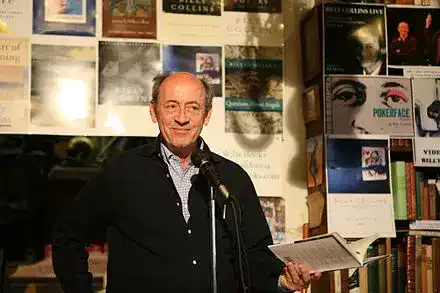
Billy Collins
Litany
You are the bread and the knife,
The crystal goblet and the wine...
-Jacques Crickillon
You are the bread and the knife,
the crystal goblet and the wine.
You are the dew on the morning grass
and the burning wheel of the sun.
You are the white apron of the baker,
and the marsh birds suddenly in flight.
However, you are not the wind in the orchard,
the plums on the counter,
or the house of cards.
And you are certainly not the pine-scented air.
There is just no way that you are the pine-scented air.
It is possible that you are the fish under the bridge,
maybe even the pigeon on the general's head,
but you are not even close
to being the field of cornflowers at dusk.
And a quick look in the mirror will show
that you are neither the boots in the corner
nor the boat asleep in its boathouse.
It might interest you to know,
speaking of the plentiful imagery of the world,
that I am the sound of rain on the roof.
I also happen to be the shooting star,
the evening paper blowing down an alley
and the basket of chestnuts on the kitchen table.
I am also the moon in the trees
and the blind woman's tea cup.
But don't worry, I'm not the bread and the knife.
You are still the bread and the knife.
You will always be the bread and the knife,
not to mention the crystal goblet and--somehow--the wine.
405

William Butler Yeats
The Gyres
THE GYRES! the gyres! Old Rocky Face, look forth;
Things thought too long can be no longer thought,
For beauty dies of beauty, worth of worth,
And ancient lineaments are blotted out.
Irrational streams of blood are staining earth;
Empedocles has thrown all things about;
Hector is dead and there's a light in Troy;
We that look on but laugh in tragic joy.
What matter though numb nightmare ride on top,
And blood and mire the sensitive body stain?
What matter? Heave no sigh, let no tear drop,
A-greater, a more gracious time has gone;
For painted forms or boxes of make-up
In ancient tombs I sighed, but not again;
What matter? Out of cavern comes a voice,
And all it knows is that one word 'Rejoice!'
Conduct and work grow coarse, and coarse the soul,
What matter? Those that Rocky Face holds dear,
Lovers of horses and of women, shall,
From marble of a broken sepulchre,
Or dark betwixt the polecat and the owl,
Or any rich, dark nothing disinter
The workman, noble and saint, and all things run
On that unfashionable gyre again.
402
Carl Sandburg
Pool
Out of the fire
Came a man sunken
To less than cinders,
A tea-cup of ashes or so.
And I,
The gold in the house,
Writhed into a stiff pool.
Came a man sunken
To less than cinders,
A tea-cup of ashes or so.
And I,
The gold in the house,
Writhed into a stiff pool.
401
Emily Dickinson
So from the mould
So from the mould
Scarlet and Gold
Many a Bulb will rise-
Hidden away, cunningly, From sagacious eyes.
So from Cocoon
Many a Worm
Leap so Highland gay,
Peasants like me,
Peasants like Thee
Gaze perplexedly!
Scarlet and Gold
Many a Bulb will rise-
Hidden away, cunningly, From sagacious eyes.
So from Cocoon
Many a Worm
Leap so Highland gay,
Peasants like me,
Peasants like Thee
Gaze perplexedly!
398
Carl Sandburg
Bath
A man saw the whole world as a grinning skull and cross-bones. The rose flesh of life
shriveled from all faces. Nothing counts. Everything is a fake. Dust to dust and ashes
to ashes and then an old darkness and a useless silence. So he saw it all. Then he went
to a Mischa Elman concert. Two hours waves of sound beat on his eardrums. Music
washed something or other inside him. Music broke down and rebuilt something or
other in his head and heart. He joined in five encores for the young Russian Jew with
the fiddle. When he got outside his heels hit the sidewalk a new way. He was the same
man in the same world as before. Only there was a singing fire and a climb of roses
everlastingly over the world he looked on.
396

Walter de la Mare
Music
When music sounds, gone is the earth I know,
And all her lovely things even lovelier grow;
Her flowers in vision flame, her forest trees
Lift burdened branches, stilled with ecstasies.
When music sounds, out of the water rise
Naiads whose beauty dims my waking eyes,
Rapt in strange dreams burns each enchanted face,
With solemn echoing stirs their dwelling-place.
When music sounds, all that I was I am
Ere to this haunt of brooding dust I came;
And from Time's woods break into distant song
The swift-winged hours, as I hasten along.
396
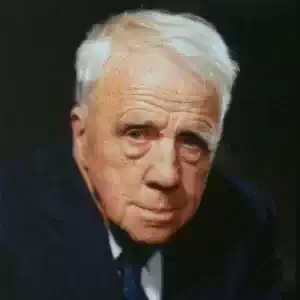
Robert Frost
Nothing Gold Can Stay
Nature's first green is gold,
Her hardest hue to hold.
Her early leaf's a flower;
But only so an hour.
Then leaf subsides to leaf,
So Eden sank to grief,
So dawn goes down to day
Nothing gold can stay.
Her hardest hue to hold.
Her early leaf's a flower;
But only so an hour.
Then leaf subsides to leaf,
So Eden sank to grief,
So dawn goes down to day
Nothing gold can stay.
397
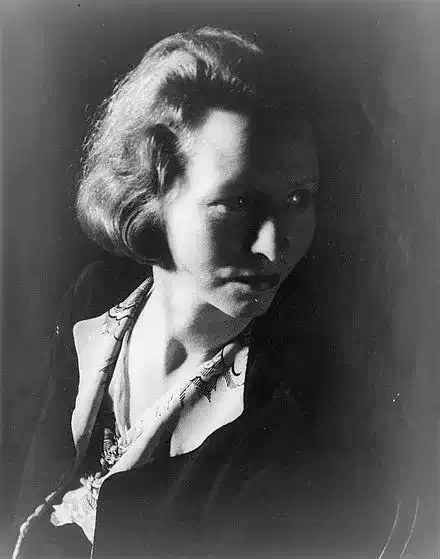
Edna St. Vincent Millay
The Penitent
I had a little Sorrow,
Born of a little Sin,
I found a room all damp with gloom
And shut us all within;
And, "Little Sorrow, weep," said I,
"And, Little Sin, pray God to die,
And I upon the floor will lie
And think how bad I've been!"
Alas for pious planning—
It mattered not a whit!
As far as gloom went in that room,
The lamp might have been lit!
My little Sorrow would not weep,
My little Sin would go to sleep—
To save my soul I could not keep
My graceless mind on it!
So I got up in anger,
And took a book I had,
And put a ribbon on my hair
To please a passing lad,
And, "One thing there's no getting by—
I've been a wicked girl," said I:
"But if I can't be sorry, why,
I might as well be glad!"
393

Henry Wadsworth Longfellow
In The Harbour: Autumn Within
It is autumn; not without
But within me is the cold.
Youth and spring are all about;
It is I that have grown old.
Birds are darting through the air,
Singing, building without rest;
Life is stirring everywhere,
Save within my lonely breast.
There is silence: the dead leaves
Fall and rustle and are still;
Beats no flail upon the sheaves,
Comes no murmur from the mill.
392

John Clare
Peggy's The Lady Of The Hall
And will she leave the lowly clowns
For silk and satins gay,
Her woollen aprons and drab gowns
For lady's cold array?
And will she leave the wild hedge rose,
The redbreast and the wren,
And will she leave her Sunday beaus
And milk shed in the glen?
And will she leave her kind friends all
To be the Lady of the Hall?
The cowslips bowed their golden drops,
The white thorn white as sheets;
The lamb agen the old ewe stops,
The wren and robin tweets.
And Peggy took her milk pails still,
And sang her evening song,
To milk her cows on Cowslip Hill
For half the summer long.
But silk and satins rich and rare
Are doomed for Peggy still to wear.
But when the May had turned to haws,
The hedge rose swelled to hips,
Peggy was missed without a cause,
And left us in eclipse.
The shepherd in the hovel milks,
Where builds the little wren,
And Peggy's gone, all clad in silks--
Far from the happy glen,
From dog-rose, woodbine, clover, all
To be the Lady of the Hall.
391