
Nostalgia

Ella Wheeler Wilcox
The Story Of Grumble Tone
There was a boy named Grumble Tone, who ran away to sea.
'I'm sick of things on land,' he said, 'as sick as I can be,
A life upon the bounding wave is just the life for me!'
But the seething ocean billows failed to stimulate his mirth,
For he did not like the vessel or the dizzy rolling berth,
And he thought the sea was almost as unpleasant as the earth.
He wandered into foreign lands, he saw each wondrous sight,
But nothing that he heard or saw seemed just exactly right,
And so he journeyed on and on, still seeking for delight.
He talked with kings and ladies grand; he dined in courts, they say,
But always found the people dull and longed to get away
To search for that mysterious land where he should want to stay.
He wandered over all the world, his hair grew white as snow,
He reached that final bourne at last where all of us must go,
But never found the land he sought; the reason would you know?
The reason was that north or south, where'er his steps were bent,
On land or sea, in court or hall, he found but discontent,
For he took his disposition with him, everywhere he went.
494
1

Oscar Wilde
Desespoir
The seasons send their ruin as they go,
For in the spring the narciss shows its head
Nor withers till the rose has flamed to red,
And in the autumn purple violets blow,
And the slim crocus stirs the winter snow;
Wherefore yon leafless trees will bloom again
And this grey land grow green with summer rain
And send up cowslips for some boy to mow.
But what of life whose bitter hungry sea
Flows at our heels, and gloom of sunless night
Covers the days which never more return?
Ambition, love and all the thoughts that burn
We lose too soon, and only find delight
In withered husks of some dead memory.
1,306
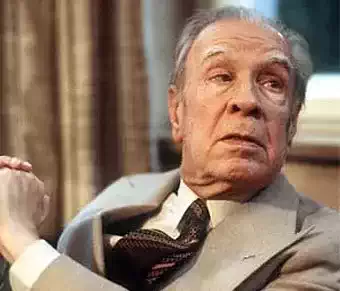
Jorge Luis Borges
Susana Soca
With lingering love she gazed at the dispersed
Colors of dusk. It pleased her utterly
To lose herself in the complex melody
Or in the cunous life to be found in verse.
lt was not the primal red but rather grays
That spun the fine thread of her destiny,
For the nicest distinctions and all spent
In waverings, ambiguities, delays.
Lacking the nerve to tread this treacherous
Labyrinth, she looked in on, whom without,
The shapes, the turbulence, the striving rout,
(Like the other lady of the looking glass.)
The gods that dwell too far away for prayer
Abandoned her to the final tiger, Fire.
1,273

Rabindranath Tagore
The Lotus
On the day when the lotus bloomed, alas, my mind was straying,
and I knew it not. My basket was empty and the flower remained unheeded.
Only now and again a sadness fell upon me, and I started up from my
dream and felt a sweet trace of a strange fragrance in the south wind.
That vague sweetness made my heart ache with longing and it seemed to
me that is was the eager breath of the summer seeking for its completion.
I knew not then that it was so near, that it was mine, and that this
perfect sweetness had blossomed in the depth of my own heart.
1,248

Derek Walcott
The Saddhu Of Couva
When sunset, a brass gong,
vibrate through Couva,
is then I see my soul, swiftly unsheathed,
like a white cattle bird growing more small
over the ocean of the evening canes,
and I sit quiet, waiting for it to return
like a hog-cattle blistered with mud,
because, for my spirit, India is too far.
And to that gong
sometimes bald clouds in saffron robes assemble
sacred to the evening,
sacred even to Ramlochan,
singing Indian hits from his jute hammock
while evening strokes the flanks
and silver horns of his maroon taxi,
as the mosquitoes whine their evening mantras,
my friend Anopheles, on the sitar,
and the fireflies making every dusk Divali.
I knot my head with a cloud,
my white mustache bristle like horns,
my hands are brittle as the pages of Ramayana.
Once the sacred monkeys multiplied like branches
in the ancient temples: I did not miss them,
because these fields sang of Bengal,
behind Ramlochan Repairs there was Uttar Pradesh;
but time roars in my ears like a river,
old age is a conflagration
as fierce as the cane fires of crop time.
I will pass through these people like a cloud,
they will see a white bird beating the evening sea
of the canes behind Couva,
and who will point it as my soul unsheathed?
Naither the bridegroom in beads,
nor the bride in her veils,
their sacred language on the cinema hoardings.
I talked too damn much on the Couva Village Council.
I talked too softly, I was always drowned
by the loudspeakers in front of the stores
or the loudspeakers with the greatest pictures.
I am best suited to stalk like a white cattle bird
on legs like sticks, with sticking to the Path
between the canes on a district road at dusk.
Playing the Elder. There are no more elders.
Is only old people.
My friends spit on the government.
I do not think is just the government.
Suppose all the gods too old,
Suppose they dead and they burning them,
supposing when some cane cutter
start chopping up snakes with a cutlass
he is severing the snake-armed god,
and suppose some hunter has caught
Hanuman in his mischief in a monkey cage.
Suppose all the gods were killed by electric light?
Sunset, a bonfire, roars in my ears;
embers of brown swallows dart and cry,
like women distracted,
around its cremation.
I ascend to my bed of sweet sandalwood.
1,235
Derek Walcott
The Star-Apple Kingdom
There were still shards of an ancient pastoral
in those shires of the island where the cattle drank
their pools of shadow from an older sky,
surviving from when the landscape copied such objects as
'Herefords at Sunset in the valley of the Wye.'
The mountain water that fell white from the mill wheel
sprinkling like petals from the star-apple trees,
and all of the windmills and sugar mills moved by mules
on the treadmill of Monday to Monday, would repeat
in tongues of water and wind and fire, in tongues
of Mission School pickaninnies, like rivers remembering
their source, Parish Trelawny, Parish St David, Parish
St Andrew, the names afflicting the pastures,
the lime groves and fences of marl stone and the cattle
with a docile longing, an epochal content.
And there were, like old wedding lace in an attic,
among the boas and parasols and the tea-colored
daguerreotypes, hints of an epochal happiness
as ordered and infinite to the child
as the great house road to the Great House
down a perspective of casuarinas plunging green manes
in time to the horses, an orderly life
reduced by lorgnettes day and night, one disc the sun,
the other the moon, reduced into a pier glass:
nannies diminished to dolls, mahogany stairways
no larger than those of an album in which
the flash of cutlery yellows, as gamboge as
the piled cakes of teatime on that latticed
bougainvillea verandah that looked down toward
a prospect of Cuyp-like Herefords under a sky
lurid as a porcelain souvenir with these words:
'Herefords at Sunset in the Valley of the Wye.'
Strange, that the rancor of hatred hid in that dream
of slow rivers and lily-like parasols, in snaps
of fine old colonial families, curled at the edge
not from age of from fire or the chemicals, no, not at all,
but because, off at its edges, innocently excluded
stood the groom, the cattle boy, the housemaid, the gardeners,
the tenants, the good Negroes down in the village,
their mouth in the locked jaw of a silent scream.
A scream which would open the doors to swing wildly
all night, that was bringing in heavier clouds,
more black smoke than cloud, frightening the cattle
in whose bulging eyes the Great House diminished;
a scorching wind of a scream
that began to extinguish the fireflies,
that dried the water mill creaking to a stop
as it was about to pronounce Parish Trelawny
all over, in the ancient pastoral voice,
a wind that blew all without bending anything,
neither the leaves of the album nor the lime groves;
blew Nanny floating back in white from a feather
to a chimerical, chemical pin speck that shrank
the drinking Herefords to brown porcelain cows
on a mantelpiece, Trelawny trembling with dusk,
the scorched pastures of the old benign Custos; blew
far the decent servants and the lifelong cook,
and shriveled to a shard that ancient pastoral
of dusk in a gilt-edged frame now catching the evening sun
in Jamaica, making both epochs one.
He looked out from the Great House windows on
clouds that still held the fragrance of fire,
he saw the Botanical Gardens officially drown
in a formal dusk, where governors had strolled
and black gardeners had smiled over glinting shears
at the lilies of parasols on the floating lawns,
the flame trees obeyed his will and lowered their wicks,
the flowers tightened their fists in the name of thrift,
the porcelain lamps of ripe cocoa, the magnolia's jet
dimmed on the one circuit with the ginger lilies
and left a lonely bulb on the verandah,
and, had his mandate extended to that ceiling
of star-apple candelabra, he would have ordered
the sky to sleep, saying, I'm tired,
save the starlight for victories, we can't afford it,
leave the moon on for one more hour,and that's it.
But though his power, the given mandate, extended
from tangerine daybreaks to star-apple dusks,
his hand could not dam that ceaseless torrent of dust
that carried the shacks of the poor, to their root-rock music,
down the gullies of Yallahs and August Town,
to lodge them on thorns of maca, with their rags
crucified by cactus, tins, old tires, cartons;
from the black Warieka Hills the sky glowed fierce as
the dials of a million radios,
a throbbing sunset that glowed like a grid
where the dread beat rose from the jukebox of Kingston.
He saw the fountains dried of quadrilles, the water-music
of the country dancers, the fiddlers like fifes
put aside. He had to heal
this malarial island in its bath of bay leaves,
its forests tossing with fever, the dry cattle
groaning like winches, the grass that kept shaking
its head to remember its name. No vowels left
in the mill wheel, the river. Rock stone. Rock stone.
The mountains rolled like whales through phosphorous stars,
as he swayed like a stone down fathoms into sleep,
drawn by that magnet which pulls down half the world
between a star and a star, by that black power
that has the assassin dreaming of snow,
that poleaxes the tyrant to a sleeping child.
The house is rocking at anchor, but as he falls
his mind is a mill wheel in moonlight,
and he hears, in the sleep of his moonlight, the drowned
bell of Port Royal's cathedral, sees the copper pennies
of bubbles rising from the empty eye-pockets
of green buccaneers, the parrot fish floating
from the frayed shoulders of pirates, sea horses
drawing gowned ladies in their liquid promenade
across the moss-green meadows of the sea;
he heard the drowned choirs under Palisadoes,
a hymn ascending to earth from a heaven inverted
by water, a crab climbing the steeple,
and he climbed from that submarine kingdom
as the evening lights came on in the institute,
the scholars lamplit in their own aquarium,
he saw them mouthing like parrot fish, as he passed
upward from that baptism, their history lessons,
the bubbles like ideas which he could not break:
Jamaica was captured by Penn and Venables,
Port Royal perished in a cataclysmic earthquake.
Before the coruscating façades of cathedrals
from Santiago to Caracas, where penitential archbishops
washed the feet of paupers (a parenthetical moment
that made the Caribbean a baptismal font,
turned butterflies to stone, and whitened like doves
the buzzards circling municipal garbage),
the Caribbean was borne like an elliptical basin
in the hands of acolytes, and a people were absolved
of a history which they did not commit;
the slave pardoned his whip, and the dispossessed
said the rosary of islands for three hundred years,
a hymn that resounded like the hum of the sea
inside a sea cave, as their knees turned to stone,
while the bodies of patriots were melting down walls
still crusted with mute outcries of La Revolucion!
'San Salvador, pray for us,
St. Thomas, San Domingo,
ora pro nobis, intercede for us, Sancta Lucia
of no eyes,' and when the circular chaplet
reached the last black bead of Sancta Trinidad
they began again, their knees drilled into stone,
where Colon had begun, with San Salvador's bead,
beads of black colonies round the necks of Indians.
And while they prayed for an economic miracle,
ulcers formed on the municipal portraits,
the hotels went up, and the casinos and brothels,
and the empires of tobacco, sugar, and bananas,
until a black woman, shawled like a buzzard,
climbed up the stairs and knocked at the door
of his dream, whispering in the ear of the keyhole:
'Let me in, I'm finished with praying, I'm the Revolution.
I am the darker, the older America.'
She was as beautiful as a stone in the sunrise,
her voice had the gutturals of machine guns
across khaki deserts where the cactus flower
detonates like grenades, her sex was the slit throat
of an Indian, her hair had the blue-black sheen of the crow.
She was a black umbrella blown inside out
by the wind of revolution, La Madre Dolorosa,
a black rose of sorrow, a black mine of silence,
raped wife, empty mother, Aztec virgin
transfixed by arrows from a thousand guitars,
a stone full of silence, which, if it gave tongue
to the tortures done in the name of the Father,
would curdle the blood of the marauding wolf,
the fountain of generals, poets, and cripples
who danced without moving over their graves
with each revolution; her Caesarean was stitched
by the teeth of machine guns,and every sunset
she carried the Caribbean's elliptical basin
as she had once carried the penitential napkins
to be the footbath of dictators, Trujillo, Machado,
and those whose faces had yellowed like posters
on municipal walls. Now she stroked his hair
until it turned white, but she would not understand
that he wanted no other power but peace,
that he wanted a revolution without any bloodshed,
he wanted a history without any memory,
streets without statues,
and a geography without myth. He wanted no armies
but those regiments of bananas, thick lances of cane,
and he sobbed,'I am powerless, except for love.'
She faded from him, because he could not kill;
she shrunk to a bat that hung day and night
in the back of his brain. He rose in his dream.
1,208

William Shakespeare
Sonnet 104: To me, fair Friend, you never can be old
To me, fair Friend, you never can be old,
For as you were when first your eye I eyed
Such seems your beauty still, Three winters' cold
Have from the forests shook three summers' pride;
Three beauteous springs to yellow autmun turn'd
In process of the seasons have I seen,
Three April perfumes in three hot Junes burn'd,
Since first I saw you fresh, which yet are green.
Ah! yes doth beauty, like a dial-hand,
Steal from his figure, and no pace perceived;
So your sweet hue, which methinks still doth stand,
Hath motion, and mine eye may be deceived,
For fear of which, hear this, thou age unbred,-
Ere you were born, was beauty's summer dead.
1,042
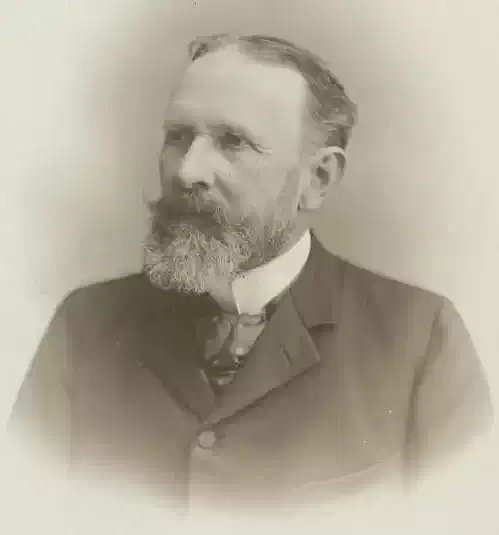
Carl Spitteler
The Hiker
Downy flakes whisper softly from the sky.
A hiker climbs over firn and ice.
The snow woman follows him with treacherous steps:
"Hold still, my dear, and take me with you!
The evening is near and the summit is far away.
I'd be happy to play you a little song just to keep you entertained."
She puts the green shawm on her lip,
She rejoiced at flowers and Lenz and Mai.
He listened, cheeks wet with tears,
Then he ticked the box and drew for bass.
And darker clouds the twilight snow.
She crept to his side on a cunning toe:
"Stop! let me shine for you, you are wandering astray!
I'll tell you a friendly fairy tale."
A traffic light she drew from her robe:
The homeland shines before his eyes,
The hill, the garden, being a parent
In the blissful golden glow of youth.
He swayed. Already he shortens the measure of his steps,
Then he ticked the box and drew for bass.
And it storms and it rummages with storm power,
White night yawns from the howling rock.
His will failed, his knee sank.
There she sat on a stone bench.
"It's comfortable here; come, sit down!
I really know how to caress.
And slumber lures you and a dream laughs at you:
There is room on my warm bosom."
She looked so lovely, she nodded so sweetly,
as if the sky wanted to open up to him.
He staggers towards her in a staggering run
and fell at her feet - never got up again.
1,104
Oscar Wilde
Taedium Vitae
To stab my youth with desperate knives, to wear
This paltry age's gaudy livery,
To let each base hand filch my treasury,
To mesh my soul within a woman's hair,
And be mere Fortune's lackeyed groom, - I swear
I love it not! these things are less to me
Than the thin foam that frets upon the sea,
Less than the thistledown of summer air
Which hath no seed: better to stand aloof
Far from these slanderous fools who mock my life
Knowing me not, better the lowliest roof
Fit for the meanest hind to sojourn in,
Than to go back to that hoarse cave of strife
Where my white soul first kissed the mouth of sin.
1,151
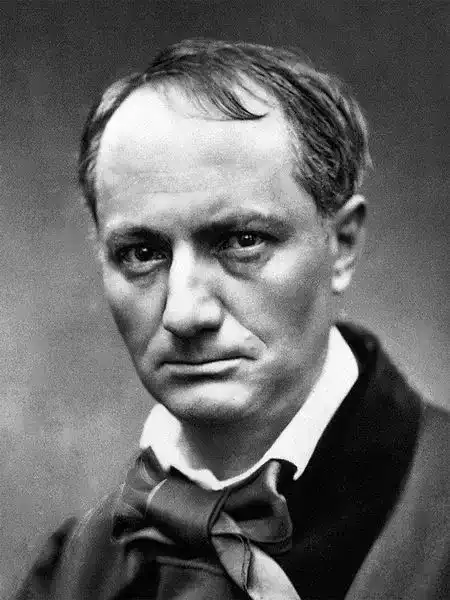
Charles Baudelaire
Anywhere Out of the World
This life is a hospital where every patient is possessed with the desire to change beds;
one man would like to
suffer in front of the stove, and another believes that he would recover his health
beside the window.
It always seems to me that I should feel well in the place where I am not, and this
question of removal is one
which I discuss incessantly with my soul.
'Tell me, my soul, poor chilled soul, what do you think of going to live in Lisbon? It
must be warm there, and there
you would invigorate yourself like a lizard. This city is on the sea-shore; they say that
it is built of marble
and that the people there have such a hatred of vegetation that they uproot all the
trees. There you have a landscape
that corresponds to your taste! a landscape made of light and mineral, and liquid to
reflect them!'
My soul does not reply.
'Since you are so fond of stillness, coupled with the show of movement, would you like
to settle in Holland,
that beatifying country? Perhaps you would find some diversion in that land whose
image you have so often admired
in the art galleries. What do you think of Rotterdam, you who love forests of masts,
and ships moored at the foot of
houses?'
My soul remains silent.
'Perhaps Batavia attracts you more? There we should find, amongst other things, the
spirit of Europe
married to tropical beauty.'
Not a word. Could my soul be dead?
'Is it then that you have reached such a degree of lethargy that you acquiesce in your
sickness? If so, let us
flee to lands that are analogues of death. I see how it is, poor soul! We shall pack our
trunks for Tornio. Let us go
farther still to the extreme end of the Baltic; or farther still from life, if that is possible;
let us settle at the Pole. There
the sun only grazes the earth obliquely, and the slow alternation of light and darkness
suppresses variety and
increases monotony, that half-nothingness. There we shall be able to take long baths
of darkness, while for our
amusement the aurora borealis shall send us its rose-coloured rays that are like the
reflection of Hell's own
fireworks!'
At last my soul explodes, and wisely cries out to me: 'No matter where! No matter
where! As long as it's out
of the world!'
1,154
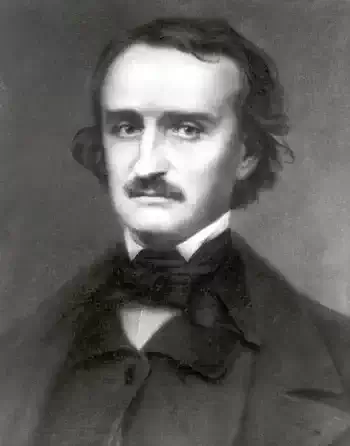
Edgar Allan Poe
The Happiest Day
The happiest day — the happiest hour
My sear'd and blighted heart hath known,
The highest hope of pride, and power,
I feel hath flown.
Of power! said I? yes! such I ween
But they have vanish'd long alas!
The visions of my youth have been —
But let them pass.
And, pride, what have I now with thee?
Another brow may ev'n inherit
The venom thou hast pour'd on me —
Be still my spirit.
The happiest day — the happiest hour
Mine eyes shall see — have ever seen
The brightest glance of pride and power
I feel — have been:
But were that hope of pride and power
Now offer'd, with the pain
Ev'n then I felt — that brightest hour
I would not live again:
For on its wing wall dark alloy
And as it flutter'd — fell
An essence — powerful to destroy
A soul that knew it well.
1827
1,136

William Blake
The Angel
I dreamt a dream! What can it mean?
And that I was a maiden Queen
Guarded by an Angel mild:
Witless woe was ne'er beguiled!
And I wept both night and day,
And he wiped my tears away;
And I wept both day and night,
And hid from him my heart's delight.
So he took his wings, and fled;
Then the morn blushed rosy red.
I dried my tears, and armed my fears
With ten-thousand shields and spears.
Soon my Angel came again;
I was armed, he came in vain;
For the time of youth was fled,
And grey hairs were on my head.
1,062
Derek Walcott
Sabbaths, W.I.
Those villages stricken with the melancholia of Sunday,
in all of whose ocher streets one dog is sleeping
those volcanoes like ashen roses, or the incurable sore
of poverty, around whose puckered mouth thin boys are
selling yellow sulphur stone
the burnt banana leaves that used to dance
the river whose bed is made of broken bottles
the cocoa grove where a bird whose cry sounds green and
yellow and in the lights under the leaves crested with
orange flame has forgotten its flute
gommiers peeling from sunburn still wrestling to escape the sea
the dead lizard turning blue as stone
those rivers, threads of spittle, that forgot the old music
that dry, brief esplanade under the drier sea almonds
where the dry old men sat
watching a white schooner stuck in the branches
and playing draughts with the moving frigate birds
those hillsides like broken pots
those ferns that stamped their skeletons on the skin
and those roads that begin reciting their names at vespers
mention them and they will stop
those crabs that were willing to let an epoch pass
those herons like spinsters that doubted their reflections
inquiring, inquiring
those nettles that waited
those Sundays, those Sundays
those Sundays when the lights at the road's end were an occasion
those Sundays when my mother lay on her back
those Sundays when the sisters gathered like white moths
round their street lantern
and cities passed us by on the horizon
1,124

Emily Dickinson
I years had been from home
I years had been from home,
And now, before the door,
I dared not open, lest a face
I never saw before
Stare vacant into mine
And ask my business there.
My business,--just a life I left,
Was such still dwelling there?
I fumbled at my nerve,
I scanned the windows near;
The silence like an ocean rolled,
And broke against my ear.
I laughed a wooden laugh
That I could fear a door,
Who danger and the dead had faced,
But never quaked before.
I fitted to the latch
My hand, with trembling care,
Lest back the awful door should spring,
And leave me standing there.
I moved my fingers off
As cautiously as glass,
And held my ears, and like a thief
Fled gasping from the house.
1,053
Oscar Wilde
Roses and Rue
Could we dig up this long-buried treasure,
Were it worth the pleasure,
We never could learn love's song,
We are parted too long
Could the passionate past that is fled
Call back its dead,
Could we live it all over again,
Were it worth the pain!
I remember we used to meet
By an ivied seat,
And you warbled each pretty word
With the air of a bird;
And your voice had a quaver in it,
Just like a linnet,
And shook, as the blackbird's throat
With its last big note;
And your eyes, they were green and grey
Like an April day,
But lit into amethyst
When I stooped and kissed;
And your mouth, it would never smile
For a long, long while,
Then it rippled all over with laughter
Five minutes after.
You were always afraid of a shower,
Just like a flower:
I remember you started and ran
When the rain began.
I remember I never could catch you,
For no one could match you,
You had wonderful, luminous, fleet,
Little wings to your feet.
I remember your hair - did I tie it?
For it always ran riot -
Like a tangled sunbeam of gold:
These things are old.
I remember so well the room,
And the lilac bloom
That beat at the dripping pane
In the warm June rain;
And the colour of your gown,
It was amber-brown,
And two yellow satin bows
From the shoulders rose.
And the handkerchief of French lace
Which you held to your face-
Had a small tear left a stain?
Or was it the rain?
On your hand as it waved adieu
There were veins of blue;
In your voice as it said good-bye
Was a petulant cry,
"You have only wasted your life."
(Ah, that was the knife!)
When I rushed through the garden gate
It was all too late.
Could we live it over again,
Were it worth the pain,
Could the passionate past that is fled
Call back its dead!
Well, if my heart must break,
Dear love, for your sake,
It will break in music, I know,
Poets' hearts break so.
But strange that I was not told
That the brain can hold
In a tiny ivory cell
God's heaven and hell.
1,068
Guillaume Apollinaire
Palace
In deepest dream towards Rosemonde's palace
My barefoot brain inclined for the evening
Like a naked king the walls are waking
Beaten flesh and fresh-cut roses
You can see my thoughts immersed in roses
Smiling at the concert of the toads
They are in the mood for cypress bedposts
The sun is a broken mirror of the rose
What badly wounded bowman opened
Stigmata of palms on the windowpane
At the white lamb's love-feast I have tasted
Resins that bitter the Cyprian wine
On the jagged lap of the lascivious king
In the May-time of her age and finest frock
Mysterious Madame Rosemonde rolls
Her little round eyes like a Hun
Lady of my thoughts your pearly asshole
Is unrivalled by anything Oriental
For whom are you waiting
Deepest dreams en route to the Orient
Are my loveliest neighbors
Knock knock Come into the forecourt night is coming
In shadow the night-light is toasted tinsel
Hang your heads by the hair on the hat-rack
The evening sky is aglimmer with pins
We entered the dining room our noses
Caught a whiff of grease and mucus
Of twenty soup bowls three were urine
The king ate two poached eggs in bouillon
And then the scullions brought in the meat dishes
A standing roast of thoughts deceased in my brain
My lovely still-born dreams in slices still bloody
And gamy little meatballs of memory
Dead for millennia now these thoughts
Had a flavorless taste of frozen mammoth
Bones or visionaries danced out of ossuaries
The dance of death in the folds of my brain
And all those meats pronounced revelations
But Holy Christ!
A famished belly has no hearing
The guests continued their best mastications
Ah Holy Christ! cried out the rib-eyes
The huge pâtes the marrow and hot-pots
Tongues of fire o where is the pentecost
Of my thoughts for all places nations and times
1,128

William Wordsworth
To The Daisy
IN youth from rock to rock I went
From hill to hill in discontent
Of pleasure high and turbulent,
Most pleased when most uneasy;
But now my own delights I make,---
Thirst at every rill can slake,
And gladly Nature's love partake,
Of Thee, sweet Daisy!
Thee Winter in the garland wears
That thinly decks his few gray hairs;
Spring parts the clouds with softest airs,
That she may sun thee;
Whole Summer-fields are thine by right;
And Autumn, melancholy Wight!
Doth in thy crimson head delight
When rains are on thee.
In shoals and bands, a morrice train,
Thou greet'st the traveller in the lane;
Pleased at his greeting thee again;
Yet nothing daunted,
Nor grieved if thou be set at nought:
And oft alone in nooks remote
We meet thee, like a pleasant thought,
When such are wanted.
Be violets in their secret mews
The flowers the wanton Zephyrs choose;
Proud be the rose, with rains and dew
Her head impearling,
Thou liv'st with less ambitious aim,
Yet hast not gone without thy fame;
Thou art indeed by many a claim
The Poet's darling.
If to a rock from rain he fly,
Or, some bright day of April sky,
Imprisoned by hot sunshine lie
Near the green holly,
And wearily at length should fare;
He need but look about, and there
Thou art!---a friend at hand, to care
His melancholy.
A hundred times, by rock or bower,
Ere thus I have lain couched an hour,
Have I derived from thy sweet power
Some apprehension
Some steady love; some brief delight;
Some memory that had taken flight;
Some chime of fancy wrong or right;
Of stray invention.
If stately passions in me burn,
And one chance look to Thee should turn,
I drink out of an humbler urn
A lowlier pleasure;
The homely sympathy that heeds
The common life, our nature breeds;
A wisdom fitted to the needs
Of hearts at leisure.
Fresh-smitten by the morning ray,
When thou art up, alert and gay,
Then, cheerful Flower! my spirits play
With kindred gladness:
And when, at dusk, by dews opprest
Thou sink'st, the image of thy rest
Hath often eased my pensive breast
Of careful sadness.
And all day long I number yet,
All seasons through, another debt,
Which I, wherever thou art met,
To thee am owing;
An instinct call it, a blind sense;
A happy, genial influence,
Coming one knows not how, nor whence,
Nor whither going.
Child of the Year! that round dost run
Thy pleasant course,---when day's begun
As ready to salute the sun
As lark or leveret,
Thy long-lost praise thou shalt regain;
Nor be less dear to future men
Than in old time;---thou not in vain
Art Nature's favourite.
1,019

Rudyard Kipling
A Ballad of Jakko Hill
One moment bid the horses wait,
Since tiffin is not laid till three,
Below the upward path and straight
You climbed a year ago with me.
Love came upon us suddenly
And loosed -- an idle hour to kill --
A headless, armless armory
That smote us both on Jakko Hill.
Ah Heaven! we would wait and wait
Through Time and to Eternity!
Ah Heaven! we could conquer Fate
With more than Godlike constancy
I cut the date upon a tree --
Here stand the clumsy figures still:
"--, A.D."
Damp with the mist of Jakko Hill.
What came of high resolve and great,
And until Death fidelity!
Whose horse is waiting at your gate?
Whose 'rickshaw-wheels ride over me?
No Saint's, I swear; and -- let me see
To-night what names your programme fill --
We drift asunder merrily,
As drifts the mist on Jakko Hill.
L'ENVOI.
Princess, behold our ancient state
Has clean departed; and we see
'Twas Idleness we took for Fate
That bound light bonds on you and me.
Amen! Here ends the comedy
Where it began in all good will;
Since Love and Leave together flee
As driven mist on Jakko Hill!
1,024
Oscar Wilde
Holy Week at Genoa
I wandered through Scoglietto's far retreat,
The oranges on each o'erhanging spray
Burned as bright lamps of gold to shame the day;
Some startled bird with fluttering wings and fleet
Made snow of all the blossoms; at my feet
Like silver moons the pale narcissi lay:
And the curved waves that streaked the great green bay
Laughed i' the sun, and life seemed very sweet.
Outside the young boy-priest passed singing clear,
'Jesus the son of Mary has been slain,
O come and fill His sepulchre with flowers.'
Ah, God! Ah, God! those dear Hellenic hours
Had drowned all memory of Thy bitter pain,
The Cross, the Crown, the Soldiers and the Spear.
914
Rudyard Kipling
Our Fathers Also
Thrones, Powers, Dominions, Peoples, Kings,
Are changing 'neath our hand.
Our fathers also see these things
But they do not understand.
By--they are by with mirth and tears,
Wit or the works of Desire-
Cushioned about on the kindly years
Between the wall and the fire.
The grapes are pressed, the corn is shocked--
Standeth no more to glean;
For the Gates of Love and Learning locked
When they went out between.
All lore our Lady Venus bares,
Signalled it was or told
By the dear lips long given to theirs
And longer to the mould.
All Profit, all Device, all Truth,
Written it was or said
By the mighty men of their mighty youth,
Which is mighty being dead.
The film that floats before their eyes
The Temple's Veil they call;
And the dust that on the Shewbread lies
Is holy over all.
Warn them of seas that slip our yoke,
Of slow-conspiring stars-
The ancient Front of Things unbroke
But heavy with new wars?
By--they are by with mirth and tears,
Wit or the waste of Desire-
Cushioned about on the kindly years
Between the wall and the fire!
919

John Keats
Sonnet. Written In Disgust Of Vulgar Superstition
The church bells toll a melancholy round,
Calling the people to some other prayers,
Some other gloominess, more dreadful cares,
More hearkening to the sermon's horrid sound.
Surely the mind of man is closely bound
In some black spell; seeing that each one tears
Himself from fireside joys, and Lydian airs,
And converse high of those with glory crown'd.
Still, still they toll, and I should feel a damp,--
A chill as from a tomb, did I not know
That they are dying like an outburnt lamp;
That 'tis their sighing, wailing ere they go
Into oblivion; -- that fresh flowers will grow,
And many glories of immortal stamp.
884
Vikram Seth
Mistaken
I smiled at you because I thought that you
Were someone else; you smiled back; and there grew
Between two strangers in a library
Something that seemes like love; but you loved me
(If that's the word) because you thought that I
Was other than I was. And by and by
We found we'd been mistaken all the while
From that first glance, that first mistaken smile.
861

William Butler Yeats
Introductory Lines (The Shadowy Waters)
I walked among the seven woods of Coole:
Shan-walla, where a willow-hordered pond
Gathers the wild duck from the winter dawn;
Shady Kyle-dortha; sunnier Kyle-na-no,
Where many hundred squirrels are as happy
As though they had been hidden by green bough's
Where old age cannot find them; Paire-na-lee,
Where hazel and ash and privet blind the paths:
Dim Paire-na-carraig, where the wild bees fling
Their sudden fragrances on the green air;
Dim Paire-na-tarav, where enchanted eyes
Have seen immortal, mild, proud shadows walk;
Dim Inchy wood, that hides badger and fox
And marten-cat, and borders that old wood
Wise Buddy Early called the wicked wood:
Seven odours, seven murmurs, seven woods.
I had not eyes like those enchanted eyes,
Yet dreamed that beings happier than men
Moved round me in the shadows, and at night
My dreams were clown by voices and by fires;
And the images I have woven in this story
Of Forgael and Dectora and the empty waters
Moved round me in the voices and the fires,
And more I may not write of, for they that cleave
The waters of sleep can make a chattering tongue
Heavy like stone, their wisdom being half silence.
How shall I name you, immortal, mild, proud shadows?
I only know that all we know comes from you,
And that you come from Eden on flying feet.
Is Eden far away, or do you hide
From human thought, as hares and mice and coneys
That run before the reaping-hook and lie
In the last ridge of the barley? Do our woods
And winds and ponds cover more quiet woods,
More shining winds, more star-glimmering ponds?
Is Eden out of time and out of space?
And do you gather about us when pale light
Shining on water and fallen among leaves,
And winds blowing from flowers, and whirr of feathers
And the green quiet, have uplifted the heart?
I have made this poem for you, that men may read it
Before they read of Forgael and Dectora,
As men in the old times, before the harps began,
Poured out wine for the high invisible ones.
872

Alfred Lord Tennyson
The Lady of Shalott (1842)
PART I
On either side the river lie
Long fields of barley and of rye,
That clothe the wold and meet the sky;
And thro' the field the road runs by
To many-tower'd Camelot;
And up and down the people go,
Gazing where the lilies blow
Round an island there below,
The island of Shalott.
Willows whiten, aspens quiver,
Little breezes dusk and shiver
Thro' the wave that runs for ever
By the island in the river
Flowing down to Camelot.
Four gray walls, and four gray towers,
Overlook a space of flowers,
And the silent isle imbowers
The Lady of Shalott.
By the margin, willow veil'd,
Slide the heavy barges trail'd
By slow horses; and unhail'd
The shallop flitteth silken-sail'd
Skimming down to Camelot:
But who hath seen her wave her hand?
Or at the casement seen her stand?
Or is she known in all the land,
The Lady of Shalott?
Only reapers, reaping early
In among the bearded barley,
Hear a song that echoes cheerly
From the river winding clearly,
Down to tower'd Camelot:
And by the moon the reaper weary,
Piling sheaves in uplands airy,
Listening, whispers " 'Tis the fairy
Lady of Shalott."PART II
There she weaves by night and day
A magic web with colours gay.
She has heard a whisper say,
A curse is on her if she stay
To look down to Camelot.
She knows not what the curse may be,
And so she weaveth steadily,
And little other care hath she,
The Lady of Shalott.
And moving thro' a mirror clear
That hangs before her all the year,
Shadows of the world appear.
There she sees the highway near
Winding down to Camelot:
There the river eddy whirls,
And there the surly village-churls,
And the red cloaks of market girls,
Pass onward from Shalott.
Sometimes a troop of damsels glad,
An abbot on an ambling pad,
Sometimes a curly shepherd-lad,
Or long-hair'd page in crimson clad,
Goes by to tower'd Camelot;
And sometimes thro' the mirror blue
The knights come riding two and two:
She hath no loyal knight and true,
The Lady of Shalott.
But in her web she still delights
To weave the mirror's magic sights,
For often thro' the silent nights
A funeral, with plumes and lights
And music, went to Camelot:
Or when the moon was overhead,
Came two young lovers lately wed:
"I am half sick of shadows," said
The Lady of Shalott.PART III
A bow-shot from her bower-eaves,
He rode between the barley-sheaves,
The sun came dazzling thro' the leaves,
And flamed upon the brazen greaves
Of bold Sir Lancelot.
A red-cross knight for ever kneel'd
To a lady in his shield,
That sparkled on the yellow field,
Beside remote Shalott.
The gemmy bridle glitter'd free,
Like to some branch of stars we see
Hung in the golden Galaxy.
The bridle bells rang merrily
As he rode down to Camelot:
And from his blazon'd baldric slung
A mighty silver bugle hung,
And as he rode his armour rung,
Beside remote Shalott.
All in the blue unclouded weather
Thick-jewell'd shone the saddle-leather,
The helmet and the helmet-feather
Burn'd like one burning flame together,
As he rode down to Camelot.
As often thro' the purple night,
Below the starry clusters bright,
Some bearded meteor, trailing light,
Moves over still Shalott.
His broad clear brow in sunlight glow'd;
On burnish'd hooves his war-horse trode;
From underneath his helmet flow'd
His coal-black curls as on he rode,
As he rode down to Camelot.
From the bank and from the river
He flash'd into the crystal mirror,
"Tirra lirra," by the river
Sang Sir Lancelot.
She left the web, she left the loom,
She made three paces thro' the room,
She saw the water-lily bloom,
She saw the helmet and the plume,
She look'd down to Camelot.
Out flew the web and floated wide;
The mirror crack'd from side to side;
"The curse is come upon me," cried
The Lady of Shalott.PART IV
In the stormy east-wind straining,
The pale yellow woods were waning,
The broad stream in his banks complaining,
Heavily the low sky raining
Over tower'd Camelot;
Down she came and found a boat
Beneath a willow left afloat,
And round about the prow she wrote
The Lady of Shalott.
And down the river's dim expanse
Like some bold seër in a trance,
Seeing all his own mischance-With
a glassy countenance
Did she look to Camelot.
And at the closing of the day
She loosed the chain, and down she lay;
The broad stream bore her far away,
The Lady of Shalott.
Lying, robed in snowy white
That loosely flew to left and right-The
leaves upon her falling light-Thro'
the noises of the night
She floated down to Camelot:
And as the boat-head wound along
The willowy hills and fields among,
They heard her singing her last song,
The Lady of Shalott.
Heard a carol, mournful, holy,
Chanted loudly, chanted lowly,
Till her blood was frozen slowly,
And her eyes were darken'd wholly,
Turn'd to tower'd Camelot.
For ere she reach'd upon the tide
The first house by the water-side,
Singing in her song she died,
The Lady of Shalott.
Under tower and balcony,
By garden-wall and gallery,
A gleaming shape she floated by,
Dead-pale between the houses high,
Silent into Camelot.
Out upon the wharfs they came,
Knight and burgher, lord and dame,
And round the prow they read her name,
The Lady of Shalott.
Who is this? and what is here?
And in the lighted palace near
Died the sound of royal cheer;
And they cross'd themselves for fear,
All the knights at Camelot:
But Lancelot mused a little space;
He said, "She has a lovely face;
God in his mercy lend her grace,
The Lady of Shalott."
833
Page 1
Next