
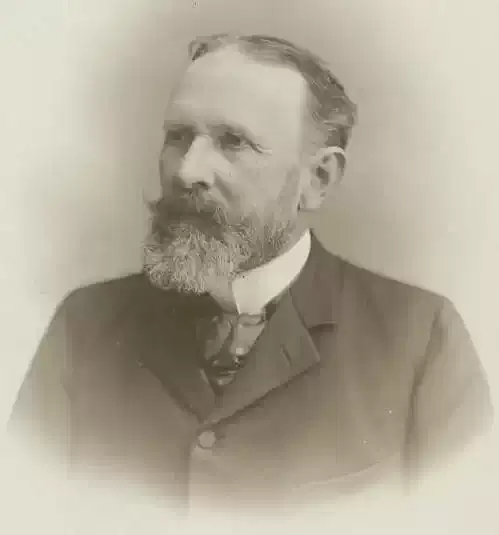
Carl Spitteler
1845–1924
· lived 79 years
 CH
CH
CH
Carl Spitteler was a prominent German-speaking Swiss poet, awarded the Nobel Prize in Literature in 1919. His work is vast and complex, characterized by a deep interest in mythology, philosophy, and the human condition, exploring universal themes in an epic and symbolic manner. With a grand and often allegorical style, Spitteler created poetic worlds rich in imagination and depth. His best-known works, such as "Der Chung"
n. 1845-04-24, Liestal · m. 1924-12-29, Lucerna
95
Views
Bio
Identification and basic context
Carl Friedrich Georg Spitteler (born in Liestal, April 15, 1845 – died in Lucerne, December 29, 1919) was a German-speaking Swiss poet, essayist, and painter. He is one of Switzerland's most important literary figures. He received the Nobel Prize in Literature in 1919 "in special recognition of his epic work, 'Olympischer Frühling'."Childhood and education
Spitteler was born in Liestal, in the canton of Basel-Landschaft. His father was a customs official. He spent his childhood in Basel, where he attended gymnasium. Initially, he studied theology at the University of Zurich and then in Heidelberg. However, his interests shifted, and he abandoned his theological studies to dedicate himself to philology and art. He attended the Karlsruhe Academy of Arts and subsequently studied art in Berlin. This duality between literature and art profoundly marked his work.Literary career
Spitteler's literary career was long and marked by a notable evolution. He began publishing poetry relatively late. His first significant work, "Gedichte" (Poems), appeared in 1881. However, it was with his epic and allegorical works that he achieved greater recognition. "Der Chung" (The Chuang-Tzu), published in 1886, and "Extramundana" (Outside the World), in 1887, were early works that already demonstrated his originality and his interest in philosophical and spiritual themes. His masterpiece, the epic "Olympischer Frühling" (Olympic Spring), was published in parts between 1900 and 1906, consolidating his reputation as one of the greatest epic poets of his generation.Work, style, and literary characteristics
Spitteler's work is vast and diverse, encompassing lyrical and epic poetry, essays, and critical writings. His most prominent literary characteristics include: * **Themes:** Greco-Roman mythology, Eastern philosophy (especially Taoism), the human condition, the struggle between good and evil, the search for spirituality and inner truth. * **Style:** Grand, epic, allegorical, and symbolic. His language is rich, elaborate, and often dense, with strong musicality and powerful rhythm. He did not shy away from formal experimentation, although he often relied on traditional epic structures. * **Main works:** "Gedichte" (1881), "Der Chung" (1886), "Extramundana" (1887), "Der Lung" (1887), "Prometheus und Epimetheus" (1881), and the monumental "Olympischer Frühling" (1900-1906). * **Innovations:** Spitteler brought a new approach to epic poetry, infusing it with philosophical and psychological depth. His ability to create complex mythological worlds and explore existential themes in an innovative way marked German literature.Cultural and historical context
Spitteler lived during a period of great changes in Europe, including the late 19th and early 20th centuries, marked by scientific advances, political tensions, and cultural effervescence. Although Swiss, his German-language work engaged with the German literary tradition. He was a contemporary of Nietzsche, whose ideas about the Übermensch and the will to power seem to echo in some of his themes about human overcoming and the pursuit of an ideal. His epic poem, "Olympischer Frühling," was seen as a response to the spiritual and cultural challenges of his time, offering a vision of rebirth and renewal.Personal life
Spitteler's life was marked by travels and periods of isolation, where he intensely dedicated himself to his writing and art. After his studies, he worked as a teacher in Estonia and Switzerland, and also as a journalist. His work "Prometheus und Epimetheus" (1881), which he wrote in prose, was a personal declaration of intellectual and spiritual independence. His life was dedicated to art and literature, although he experienced periods of financial hardship. He married the painter Henriette. His connection with visual art remained strong throughout his life.Recognition and reception
Although he had admirers and was respected in literary circles, Spitteler only achieved international recognition late in his career. The Nobel Prize in Literature in 1919 was the culmination of this recognition, validating his contribution to epic poetry and his profound philosophical thought. Before that, he had already received some awards in Switzerland, but his work was considered by many to be too demanding or complex.Influences and legacy
Spitteler was influenced by classical mythology, Eastern philosophy (particularly the Taoism of Lao Tzu and Chuang Tzu), and thinkers like Nietzsche. His legacy is that of an epic poet who revitalized the genre, infusing it with unprecedented psychological and philosophical depth. He influenced poets seeking grand themes and an elevated style, and his work continues to be studied for its symbolic complexity and humanistic vision. His work "Olympischer Frühling" is considered one of the most important poetic works of the early 20th century.Interpretation and critical analysis
Spitteler's work is often interpreted as an allegory of the human journey in search of meaning and self-overcoming. "Olympischer Frühling," in particular, is seen as a representation of the struggle and triumph of the human spirit, the renewal of consciousness, and harmonization with the cosmos. His philosophical themes address the duality of existence, the importance of knowledge and will, and the relationship between the individual and the universe.Curiosities and lesser-known aspects
Spitteler was a talented painter, and his passion for visual arts is evident in the imagistic richness of his poetry. He considered poetry and painting as complementary forms of expression. His proximity to Nietzsche's thought, while not a direct and explicit influence, is notable in some of his reflections on will, morality, and the creation of values. His time as a teacher in Estonia influenced his early writing, especially regarding Slavic mythology and landscape.Death and remembrance
Carl Spitteler died in Lucerne in 1919, shortly after the Nobel Prize was announced. His death was felt as a great loss to German and world literature. He is remembered as one of the great epic poets of modernity and a profound thinker, whose work continues to inspire and challenge readers and scholars.Poems
0No poems found
Comments (0)
Log in
to post a comment.
No comments yet. Be the first to comment.