
Anger and Indignation

Ella Wheeler Wilcox
The Cry Of The People
Fire! Fire! Fire! the cry rang out on the night air,
The roving winds caught it up, and the very heavens resounded.
Louder and louder still, by voices grown hoarse with terror,
The cry went up and out and a nation stood still to listen.
'Come, for the love of God, and help us fight the demon!
Come and help us to chain the fiend that is making us homeless:
His hot and scorching breath has melted our hard-earned fortunes,
And, not contented with this, he is snatching our loved ones from us.
The air is thick with the stream that pours in clouds from his nostrils:
Come, for the love of God, and help us to fetter or slay him.'
The ear of the Nation heard, the heart of the Nation responded:
The smith left anvil and forge, and hastened to render assistance;
The clergyman went from the pulpit, the lawyer went from his office,
The houses of trade were closed, and a Nation was in commotion.
For the hungry tongue of Fire was lapping the skirts of the city,
The royal Queen of the West, and her people were crying in anguish.
Nobly and well they worked, till they chained and fettered the demon,
Bound him hand and foot, and hindered his work of destruction.
Over the land on wires, over the mighty cable,
Flashed the terrible truth: 'Ruin and destitution
Reigns where but yesterday there was lavish wealth and plenty.'
And up from the South came aid, and aid came down from the Northland,
And it came from East and West, wholesome food for the hungry,
Shelter for houseless heads, and clothes to cover the naked.
Hark! there's a sound abroad, like the cry of a suffering people,
Loud and louder it swells, and echoes from ocean to ocean,
The raving winds catch it up, and from throats that are hoarse with crying
The wail goes up and out, but is answered only by echoes.
'Come for the love of God, and help us to fetter the demon
That is taking the bread from our mouths, and the mouths of our helpless children;
He is walking abroad in the land, and all things perish before him:
Homesteads crumble away, and fortunes vanish like snow wreaths;
And, not contented with this, he is slaying our best and our fairest,
Stealing the brains of the wise, and bringing the young to the gallows;
He is making the home forlorn, and crowding the jails and the prisons,
He moves the hand of the thief-he drives the assassin's dagger.'
The ear of the Nation is deaf, the heart of the Nation is hardened:
The smith at his anvil and forge sings in the midst of his labor;
The clergyman stands in his pulpit, and prays for the soul of the sinner,
But says no word of the fiend who wrecked and ruined the mortal;
The lawyer smokes his cigar or sips his glass of Burgundy;
The merchant, day after day, thinks only of buying and selling.
And up and down through the land, night and day, walks the demon,
Poverty, sorrow, and shame follow the print of his footsteps.
The cry of the people goes up, a cry of anguish and pleading,
But only a few respond, a few too feeble to chain him.
The multitude stands aloof, or aids the fiend of destruction,
While he tramples under his hoofs hundreds and thousands of victims-
And the multitude's ear is deaf to the wail of the beggared orphans.
Shame, oh! shame to the Nation that leaves the demon of Traffic
Free to roam through the land, and pillage and rob the helpless.
Shame to the multitude that will not render assistance,
But leaves a few to do what many can only accomplish.
Arouse! ye listless hosts! and answer the suffering people!
Spring to the aid of the million, as ye sprang to the aid of the thousand:
As you fettered the demon Fire, fetter the demon Traffic,
Who slays his tens of thousands, where the other slew only hundreds.
477

Lord Byron
Don Juan: Canto The Thirteenth
I now mean to be serious;it
is time,
Since laughter nowadays
is deem'd too serious.
A jest at Vice by Virtue's call'd a crime,
And critically held as deleterious:
Besides, the sad's a source of the sublime,
Although when long a little apt to weary us;
And therefore shall my lay soar high and solemn,
As an old temple dwindled to a column.
The Lady Adeline Amundeville
('Tis an old Norman name, and to be found
In pedigrees, by those who wander still
Along the last fields of that Gothic ground)
Was highborn,
wealthy by her father's will,
And beauteous, even where beauties most abound,
In Britain which
of course true patriots find
The goodliest soil of body and of mind.
I'll not gainsay them; it is not my cue;
I'll leave them to their taste, no doubt the best:
An eye's an eye, and whether black or blue,
Is no great matter, so 'tis in request,
'Tis nonsense to dispute about a hue The
kindest may be taken as a test.
The fair sex should be always fair; and no man,
Till thirty, should perceive there 's a plain woman.
And after that serene and somewhat dull
Epoch, that awkward corner turn'd for days
More quiet, when our moon's no more at full,
We may presume to criticise or praise;
Because indifference begins to lull
Our passions, and we walk in wisdom's ways;
Also because the figure and the face
Hint, that 'tis time to give the younger place.
I know that some would fain postpone this era,
Reluctant as all placemen to resign
Their post; but theirs is merely a chimera,
For they have pass'd life's equinoctial line:
But then they have their claret and Madeira
To irrigate the dryness of decline;
And county meetings, and the parliament,
And debt, and what not, for their solace sent.
And is there not religion, and reform,
Peace, war, the taxes, and what's call'd the 'Nation'?
The struggle to be pilots in a storm?
The landed and the monied speculation?
The joys of mutual hate to keep them warm,
Instead of love, that mere hallucination?
Now hatred is by far the longest pleasure;
Men love in haste, but they detest at leisure.
Rough Johnson, the great moralist, profess'd,
Right honestly, 'he liked an honest hater!'The
only truth that yet has been confest
Within these latest thousand years or later.
Perhaps the fine old fellow spoke in jest:
For
my part, I am but a mere spectator,
And gaze where'er the palace or the hovel is,
Much in the mode of Goethe's Mephistopheles;
But neither love nor hate in much excess;
Though 'twas not once so. If I sneer sometimes,
It is because I cannot well do less,
And now and then it also suits my rhymes.
I should be very willing to redress
Men's wrongs, and rather check than punish crimes,
Had not Cervantes, in that too true tale
Of Quixote, shown how all such efforts fail.
Of all tales 'tis the saddest and
more sad,
Because it makes us smile: his hero 's right,
And still pursues the right;to
curb the bad
His only object, and 'gainst odds to fight
His guerdon: 'tis his virtue makes him mad!
But his adventures form a sorry sight;
A sorrier still is the great moral taught
By that real epic unto all who have thought.
Redressing injury, revenging wrong,
To aid the damsel and destroy the caitiff;
Opposing singly the united strong,
From foreign yoke to free the helpless native:
Alas!
must noblest views, like an old song,
Be for mere fancy's sport a theme creative,
A jest, a riddle, Fame through thin and thick sought!
And Socrates himself but Wisdom's Quixote?
Cervantes smiled Spain's chivalry away;
A single laugh demolish'd the right arm
Of his own country;seldom
since that day
Has Spain had heroes. While Romance could charm,
The world gave ground before her bright array;
And therefore have his volumes done such harm,
That all their glory, as a composition,
Was dearly purchased by his land's perdition.
I'm 'at my old lunes'digression,
and forget
The Lady Adeline Amundeville;
The fair most fatal Juan ever met,
Although she was not evil nor meant ill;
But Destiny and Passion spread the net
(Fate is a good excuse for our own will),
And caught them;what
do they not catch, methinks?
But I 'm not OEdipus, and life's a Sphinx.
I tell the tale as it is told, nor dare
To venture a solution: 'Davus sum!'
And now I will proceed upon the pair.
Sweet Adeline, amidst the gay world's hum,
Was the Queen Bee,
the glass of all that 's fair;
Whose charms made all men speak, and women dumb.
The last's a miracle, and such was reckon'd,
And since that time there has not been a second.
Chaste was she, to detraction's desperation,
And wedded unto one she had loved well A
man known in the councils of the nation,
Cool, and quite English, imperturbable,
Though apt to act with fire upon occasion,
Proud of himself and her: the world could tell
Nought against either, and both seem'd secure She
in her virtue, he in his hauteur.
It chanced some diplomatical relations,
Arising out of business, often brought
Himself and Juan in their mutual stations
Into close contact. Though reserved, nor caught
By specious seeming, Juan's youth, and patience,
And talent, on his haughty spirit wrought,
And form'd a basis of esteem, which ends
In making men what courtesy calls friends.
And thus Lord Henry, who was cautious as
Reserve and pride could make him, and full slow
In judging men when
once his judgment was
Determined, right or wrong, on friend or foe,
Had all the pertinacity pride has,
Which knows no ebb to its imperious flow,
And loves or hates, disdaining to be guided,
Because its own good pleasure hath decided.
His friendships, therefore, and no less aversions,
Though oft well founded, which confirm'd but more
His prepossessions, like the laws of Persians
And Medes, would ne'er revoke what went before.
His feelings had not those strange fits, like tertians,
Of common likings, which make some deplore
What they should laugh at the
mere ague still
Of men's regard, the fever or the chill.
''Tis not in mortals to command success:
But do you more, Sempronius don't
deserve it,'
And take my word, you won't have any less.
Be wary, watch the time, and always serve it;
Give gently way, when there's too great a press;
And for your conscience, only learn to nerve it,
For, like a racer, or a boxer training,
'Twill make, if proved, vast efforts without paining.
Lord Henry also liked to be superior,
As most men do, the little or the great;
The very lowest find out an inferior,
At least they think so, to exert their state
Upon: for there are very few things wearier
Than solitary Pride's oppressive weight,
Which mortals generously would divide,
By bidding others carry while they ride.
In birth, in rank, in fortune likewise equal,
O'er Juan he could no distinction claim;
In years he had the advantage of time's sequel;
And, as he thought, in country much the same Because
bold Britons have a tongue and free quill,
At which all modern nations vainly aim;
And the Lord Henry was a great debater,
So that few members kept the house up later.
These were advantages: and then he thought It
was his foible, but by no means sinister That
few or none more than himself had caught
Court mysteries, having been himself a minister:
He liked to teach that which he had been taught,
And greatly shone whenever there had been a stir;
And reconciled all qualities which grace man,
Always a patriot, and sometimes a placeman.
He liked the gentle Spaniard for his gravity;
He almost honour'd him for his docility;
Because, though young, he acquiesced with suavity,
Or contradicted but with proud humility.
He knew the world, and would not see depravity
In faults which sometimes show the soil's fertility,
If that the weeds o'erlive not the first crop For
then they are very difficult to stop.
And then he talk'd with him about Madrid,
Constantinople, and such distant places;
Where people always did as they were bid,
Or did what they should not with foreign graces.
Of coursers also spake they: Henry rid
Well, like most Englishmen, and loved the races;
And Juan, like a trueborn
Andalusian,
Could back a horse, as despots ride a Russian.
And thus acquaintance grew, at noble routs,
And diplomatic dinners, or at other For
Juan stood well both with Ins and Outs,
As in freemasonry a higher brother.
Upon his talent Henry had no doubts;
His manner show'd him sprung from a high mother;
And all men like to show their hospitality
To him whose breeding matches with his quality.
At BlankBlank
Square;for
we will break no squares
By naming streets: since men are so censorious,
And apt to sow an author's wheat with tares,
Reaping allusions private and inglorious,
Where none were dreamt of, unto love's affairs,
Which were, or are, or are to be notorious,
That therefore do I previously declare,
Lord Henry's mansion was in BlankBlank
Square.
Also there bin another pious reason
For making squares and streets anonymous;
Which is, that there is scarce a single season
Which doth not shake some very splendid house
With some slight heartquake
of domestic treason A
topic scandal doth delight to rouse:
Such I might stumble over unawares,
Unless I knew the very chastest squares.
'Tis true, I might have chosen Piccadilly,
A place where peccadillos are unknown;
But I have motives, whether wise or silly,
For letting that pure sanctuary alone.
Therefore I name not square, street, place, until I
Find one where nothing naughty can be shown,
A vestal shrine of innocence of heart:
At Henry's mansion then, in BlankBlank
Square,
Was Juan a recherche, welcome guest,
As many other noble scions were;
And some who had but talent for their crest;
Or wealth, which is a passport every where;
Or even mere fashion, which indeed's the best
Recommendation; and to be well drest
Will very often supersede the rest.
And since 'there's safety in a multitude
Of counsellors,' as Solomon has said,
Or some one for him, in some sage, grave mood;
Indeed
we see the daily proof display'd
In senates, at the bar, in wordy feud,
Where'er collective wisdom can parade,
Which is the only cause that we can guess
Of Britain's present wealth and happiness;
But as 'there's safety' grafted in the number
'Of counsellors' for men, thus for the sex
A large acquaintance lets not Virtue slumber;
Or should it shake, the choice will more perplex Variety
itself will more encumber.
'Midst many rocks we guard more against wrecks;
And thus with women: howsoe'er it shocks some's
Selflove,
there's safety in a crowd of coxcombs.
But Adeline had not the least occasion
For such a shield, which leaves but little merit
To virtue proper, or good education.
Her chief resource was in her own high spirit,
Which judged mankind at their due estimation;
And for coquetry, she disdain'd to wear it:
Secure of admiration, its impression
Was faint, as of an everyday
possession.
To all she was polite without parade;
To some she show'd attention of that kind
Which flatters, but is flattery convey'd
In such a sort as cannot leave behind
A trace unworthy either wife or maid;
A
gentle, genial courtesy of mind,
To those who were, or pass'd for meritorious,
Just to console sad glory for being glorious;
Which is in all respects, save now and then,
A dull and desolate appendage. Gaze
Upon the shades of those distinguish'd men
Who were or are the puppetshows
of praise,
The praise of persecution; gaze again
On the most favour'd; and amidst the blaze
Of sunset halos o'er the laurelbrow'd,
What can ye recognise?a
gilded cloud.
There also was of course in Adeline
That calm patrician polish in the address,
Which ne'er can pass the equinoctial line
Of any thing which nature would express;
Just as a mandarin finds nothing fine,
At
least his manner suffers not to guess
That any thing he views can greatly please.
Perhaps we have borrow'd this from the Chinese
Perhaps from Horace: his 'Nil admirari'
Was what he call'd the 'Art of Happiness;'
An art on which the artists greatly vary,
And have not yet attain'd to much success.
However, 'tis expedient to be wary:
Indifference certes don't produce distress;
And rash enthusiasm in good society
Were nothing but a moral inebriety.
But Adeline was not indifferent: for
(Now for a commonplace!)
beneath the snow,
As a volcano holds the lava more
Withinet
caetera. Shall I go on?
No!
I hate to hunt down a tired metaphor,
So let the oftenused
volcano go.
Poor thing! How frequently, by me and others,
It hath been stirr'd up till its smoke quite smothers!
I'll have another figure in a trice:
What
say you to a bottle of champagne?
Frozen into a very vinous ice,
Which leaves few drops of that immortal rain,
Yet in the very centre, past all price,
About a liquid glassful will remain;
And this is stronger than the strongest grape
Could e'er express in its expanded shape:
'Tis the whole spirit brought to a quintessence;
And thus the chilliest aspects may concentre
A hidden nectar under a cold presence.
And such are many though
I only meant her
From whom I now deduce these moral lessons,
On which the Muse has always sought to enter.
And your cold people are beyond all price,
When once you have broken their confounded ice.
But after all they are a NorthWest
Passage
Unto the glowing India of the soul;
And as the good ships sent upon that message
Have not exactly ascertain'd the Pole
(Though Parry's efforts look a lucky presage),
Thus gentlemen may run upon a shoal;
For if the Pole's not open, but all frost
(A chance still), 'tis a voyage or vessel lost.
And young beginners may as well commence
With quiet cruising o'er the ocean woman;
While those who are not beginners should have sense
Enough to make for port, ere time shall summon
With his grey signalflag;
and the past tense,
The dreary 'Fuimus' of all things human,
Must be declined, while life's thin thread's spun out
Between the gaping heir and gnawing gout.
But heaven must be diverted; its diversion
Is sometimes truculent but
never mind:
The world upon the whole is worth the assertion
(If but for comfort) that all things are kind:
And that same devilish doctrine of the Persian,
Of the two principles, but leaves behind
As many doubts as any other doctrine
Has ever puzzled Faith withal, or yoked her in.
The English winter ending
in July,
To recommence in August now
was done.
'Tis the postilion's paradise: wheels fly;
On roads, east, south, north, west, there is a run.
But for posthorses
who finds sympathy?
Man's pity's for himself, or for his son,
Always premising that said son at college
Has not contracted much more debt than knowledge.
The London winter's ended in July Sometimes
a little later. I don't err
In this: whatever other blunders lie
Upon my shoulders, here I must aver
My Muse a glass of weatherology;
For parliament is our barometer:
Let radicals its other acts attack,
Its sessions form our only almanack.
When its quicksilver's down at zero,lo
Coach, chariot, luggage, baggage, equipage!
Wheels whirl from Carlton palace to Soho,
And happiest they who horses can engage;
The turnpikes glow with dust; and Rotten Row
Sleeps from the chivalry of this bright age;
And tradesmen, with long bills and longer faces,
Sigh as
the postboys fasten on the traces.
They and their bills, 'Arcadians both,' are left
To the Greek kalends of another session.
Alas! to them of ready cash bereft,
What hope remains? Of hope the full possession,
Or generous draft, conceded as a gift,
At a long date till
they can get a fresh one Hawk'd
about at a discount, small or large;
Also the solace of an overcharge.
But these are trifles. Downward flies my lord,
Nodding beside my lady in his carriage.
Away! away! 'Fresh horses!' are the word,
And changed as quickly as hearts after marriage;
The obsequious landlord hath the change restored;
The postboys have no reason to disparage
Their fee; but ere the water'd wheels may hiss hence,
The ostler pleads too for a reminiscence.
'Tis granted; and the valet mounts the dickey That
gentleman of lords and gentlemen;
Also my lady's gentlewoman, tricky,
Trick'd out, but modest more than poet's pen
Can paint,'
Cosi viaggino i Ricchi!'
(Excuse a foreign slipslop now and then,
If but to show I've travell'd; and what's travel,
Unless it teaches one to quote and cavil?)
The London winter and the country summer
Were well nigh over. 'Tis perhaps a pity,
When nature wears the gown that doth become her,
To lose those best months in a sweaty city,
And wait until the nightingale grows dumber,
Listening debates not very wise or witty,
Ere patriots their true country can remember;
But
there 's no shooting (save grouse) till September.
I've done with my tirade. The world was gone;
The twice two thousand, for whom earth was made,
Were vanish'd to be what they call alone That
is, with thirty servants for parade,
As many guests, or more; before whom groan
As many covers, duly, daily, laid.
Let none accuse Old England's hospitality Its
quantity is but condensed to quality.
Lord Henry and the Lady Adeline
Departed like the rest of their compeers,
The peerage, to a mansion very fine;
The Gothic Babel of a thousand years.
None than themselves could boast a longer line,
Where time through heroes and through beauties steers;
And oaks as olden as their pedigree
Told of their sires, a tomb in every tree.
A paragraph in every paper told
Of their departure: such is modern fame:
'Tis pity that it takes no farther hold
Than an advertisement, or much the same;
When, ere the ink be dry, the sound grows cold.
The Morning Post was foremost to proclaim '
Departure, for his country seat, today,
Lord H. Amundeville and Lady A.
'We understand the splendid host intends
To entertain, this autumn, a select
And numerous party of his noble friends;
'Midst whom we have heard, from sources quite correct,
With many more by rank and fashion deck'd;
Also a foreigner of high condition,
The envoy of the secret Russian mission.'
And thus we see who
doubts the Morning Post?
(Whose articles are like the 'Thirty nine,'
Which those most swear to who believe them most)Our
gay Russ Spaniard was ordain'd to shine,
Deck'd by the rays reflected from his host,
With those who, Pope says, 'greatly daring dine.'
'T is odd, but true,last
war the News abounded
More with these dinners than the kill'd or wounded;
As thus: 'On Thursday there was a grand dinner;
Present, Lords A. B. C.'Earls,
dukes, by name
Announced with no less pomp than victory's winner:
Then underneath, and in the very same
Column; date, 'Falmouth. There has lately been here
The Slapdash
regiment, so well known to fame,
Whose loss in the late action we regret:
The vacancies are fill'd up see
Gazette.'
To Norman Abbey whirl'd the noble pair,
An
old, old monastery once, and now
Still older mansion; of a rich and rare
Mix'd Gothic, such as artists all allow
Few specimens yet left us can compare
Withal: it lies perhaps a little low,
Because the monks preferr'd a hill behind,
To shelter their devotion from the wind.
It stood embosom'd in a happy valley,
Crown'd by high woodlands, where the Druid oak
Stood like Caractacus in act to rally
His host, with broad arms 'gainst the thunderstroke;
And from beneath his boughs were seen to sally
The dappled foresters as
day awoke,
The branching stag swept down with all his herd,
To quaff a brook which murmur'd like a bird.
Before the mansion lay a lucid lake,
Broad as transparent, deep, and freshly fed
By a river, which its soften'd way did take
In currents through the calmer water spread
Around: the wildfowl nestled in the brake
And sedges, brooding in their liquid bed:
The woods sloped downwards to its brink, and stood
With their green faces fix'd upon the flood.
Its outlet dash'd into a deep cascade,
Sparkling with foam, until again subsiding,
Its shriller echoes like
an infant made
Quiet sank
into softer ripples, gliding
Into a rivulet; and thus allay'd,
Pursued its course, now gleaming, and now hiding
Its windings through the woods; now clear, now blue,
According as the skies their shadows threw.
A glorious remnant of the Gothic pile
(While yet the church was Rome's) stood half apart
In a grand arch, which once screen'd many an aisle.
These last had disappear'd a
loss to art:
The first yet frown'd superbly o'er the soil,
And kindled feelings in the roughest heart,
Which mourn'd the power of time's or tempest's march,
In gazing on that venerable arch.
Within a niche, nigh to its pinnacle,
Twelve saints had once stood sanctified in stone;
But these had fallen, not when the friars fell,
But in the war which struck Charles from his throne,
When each house was a fortalice, as tell
The annals of full many a line undone,
The
gallant cavaliers, who fought in vain
For those who knew not to resign or reign.
But in a higher niche, alone, but crowned,
The Virgin Mother of the God born
Child,
With her Son in her blessed arms, look'd round,
Spared by some chance when all beside was spoil'd;
She made the earth below seem holy ground.
This may be superstition, weak or wild,
But even the faintest relics of a shrine
Of any worship wake some thoughts divine.
A mighty window, hollow in the centre,
Shorn of its glass of thousand colourings,
Through which the deepen'd glories once could enter,
Streaming from off the sun like seraph's wings,
Now yawns all desolate: now loud, now fainter,
The gale sweeps through its fretwork, and oft sings
The owl his anthem, where the silenced quire
Lie with their hallelujahs quench'd like fire.
But in the noontide of the moon, and when
The wind is winged from one point of heaven,
There moans a strange unearthly sound, which then
Is musical a
dying accent driven
Through the huge arch, which soars and sinks again.
Some deem it but the distant echo given
Back to the night wind by the waterfall,
And harmonised by the old choral wall:
Others, that some original shape, or form
Shaped by decay perchance, hath given the power
(Though less than that of Memnon's statue, warm
In Egypt's rays, to harp at a fix'd hour)
To this grey ruin, with a voice to charm.
Sad, but serene, it sweeps o'er tree or tower;
The cause I know not, nor can solve; but such
The fact:
I
've heard it once
perhaps too much.
Amidst the court a Gothic fountain play'd,
Symmetrical, but deck'd with carvings quaint Strange
faces, like to men in masquerade,
And here perhaps a monster, there a saint:
The spring gush'd through grim mouths of granite made,
And sparkled into basins, where it spent
Its little torrent in a thousand bubbles,
Like man's vain glory, and his vainer troubles.
The mansion's self was vast and venerable,
With more of the monastic than has been
Elsewhere preserved: the cloisters still were stable,
The cells, too, and refectory, I ween:
An exquisite small chapel had been able,
Still unimpair'd, to decorate the scene;
The rest had been reform'd, replaced, or sunk,
And spoke more of the baron than the monk.
Huge halls, long galleries, spacious chambers, join'd
By no quite lawful marriage of the arts,
Might shock a connoisseur; but when combined,
Form'd a whole which, irregular in parts,
Yet left a grand impression on the mind,
At least of those whose eyes are in their hearts:
We gaze upon a giant for his stature,
Nor judge at first if all be true to nature.
Steel barons, molten the next generation
To silken rows of gay and garter'd earls,
Glanced from the walls in goodly preservation;
And Lady Marys blooming into girls,
With fair long locks, had also kept their station;
And countesses mature in robes and pearls:
Also some beauties of Sir Peter Lely,
Whose drapery hints we may admire them freely.
Judges in very formidable ermine
Were there, with brows that did not much invite
The accused to think their lordships would determine
His cause by leaning much from might to right:
Bishops, who had not left a single sermon:
Attorneys general,
awful to the sight,
As hinting more (unless our judgments warp us)
Of the 'Star Chamber' than of 'Habeas Corpus.'
Generals, some all in armour, of the old
And iron time, ere lead had ta'en the lead;
Others in wigs of Marlborough's martial fold,
Huger than twelve of our degenerate breed:
Lordlings, with staves of white or keys of gold:
Nimrods, whose canvass scarce contain'd the steed;
And here and there some stern high patriot stood,
Who could not get the place for which he sued.
But ever and anon, to soothe your vision,
Fatigued with these hereditary glories,
There rose a Carlo Dolce or a Titian,
Or wilder group of savage Salvatore's;
Here danced Albano's boys, and here the sea shone
In Vernet's ocean lights; and there the stories
Of martyrs awed, as Spagnoletto tainted
His brush with all the blood of all the sainted.
Here sweetly spread a landscape of Lorraine;
There Rembrandt made his darkness equal light,
Or gloomy Caravaggio's gloomier stain
Bronzed o'er some lean and stoic anchorite:
But,
lo! a Teniers woos, and not in vain,
Your eyes to revel in a livelier sight:
His bell mouth'd
goblet makes me feel quite Danish
Or Dutch with thirst What,
ho! a flask of Rhenish.
O reader! if that thou canst read,and
know,
'T is not enough to spell, or even to read,
To constitute a reader; there must go
Virtues of which both you and I have need;
Firstly,
begin with the beginning (though
That clause is hard); and secondly, proceed;
Thirdly, commence not with the end or,
sinning
In this sort, end at least with the beginning.
But, reader, thou hast patient been of late,
While I, without remorse of rhyme, or fear,
Have built and laid out ground at such a rate,
Dan Phoebus takes me for an auctioneer.
That poets were so from their earliest date,
By Homer's 'Catalogue of ships' is clear;
But a mere modern must be moderate I
spare you then the furniture and plate.
The mellow autumn came, and with it came
The promised party, to enjoy its sweets.
The corn is cut, the manor full of game;
The pointer ranges, and the sportsman beats
In russet jacket:lynx
like
is his aim;
Full grows his bag, and wonderful his feats.
Ah, nut brown
partridges! Ah, brilliant pheasants!
And ah, ye poachers!'
T is no sport for peasants.
An English autumn, though it hath no vines,
Blushing with Bacchant coronals along
The paths, o'er which the far festoon entwines
The red grape in the sunny lands of song,
Hath yet a purchased choice of choicest wines;
The claret light, and the Madeira strong.
If Britain mourn her bleakness, we can tell her,
The very best of vineyards is the cellar.
Then, if she hath not that serene decline
Which makes the southern autumn's day appear
As if 't would to a second spring resign
The season, rather than to winter drear,
Of in door
comforts still she hath a mine,
The
sea coal
fires the 'earliest of the year;'
Without doors, too, she may compete in mellow,
As what is lost in green is gain'd in yellow.
And for the effeminate villeggiatura Rife
with more horns than hounds she
hath the chase,
So animated that it might allure
Saint from his beads to join the jocund race;
Even Nimrod's self might leave the plains of Dura,
And wear the Melton jacket for a space:
If she hath no wild boars, she hath a tame
Preserve of bores, who ought to be made game.
The noble guests, assembled at the Abbey,
Consisted of we
give the sex the pas The
Duchess of Fitz Fulke;
the Countess Crabby;
The Ladies Scilly, Busey;Miss
Eclat,
Miss Bombazeen, Miss Mackstay, Miss O'Tabby,
And Mrs. Rabbi, the rich banker's squaw;
Also the honourable Mrs. Sleep,
Who look'd a white lamb, yet was a black sheep:
With other Countesses of Blank but
rank;
At once the 'lie' and the 'elite' of crowds;
Who pass like water filter'd in a tank,
All purged and pious from their native clouds;
Or paper turn'd to money by the Bank:
No matter how or why, the passport shrouds
The 'passee' and the past; for good society
Is no less famed for tolerance than piety,
That is, up to a certain point; which point
Forms the most difficult in punctuation.
Appearances appear to form the joint
On which it hinges in a higher station;
And so that no explosion cry 'Aroint
Thee, witch!' or each Medea has her Jason;
Or (to the point with Horace and with Pulci)
'Omne tulit punctum, quae miscuit utile dulci.'
I can't exactly trace their rule of right,
Which hath a little leaning to a lottery.
I 've seen a virtuous woman put down quite
By the mere combination of a coterie;
Also a so so
matron boldly fight
Her way back to the world by dint of plottery,
And shine the very Siria of the spheres,
Escaping with a few slight, scarless sneers.
I have seen more than I 'll say:but
we will see
How our villeggiatura will get on.
The party might consist of thirty three
Of highest caste the
Brahmins of the ton.
I have named a few, not foremost in degree,
But ta'en at hazard as the rhyme may run.
By way of sprinkling, scatter'd amongst these,
There also were some Irish absentees.
There was Parolles, too, the legal bully,
Who limits all his battles to the bar
And senate: when invited elsewhere, truly,
He shows more appetite for words than war.
There was the young bard Rackrhyme, who had newly
Come out and glimmer'd as a six weeks' star.
There was Lord Pyrrho, too, the great freethinker;
And Sir John Pottledeep, the mighty drinker.
There was the Duke of Dash, who was a duke,
'Ay, every inch a' duke; there were twelve peers
Like Charlemagne's and
all such peers in look
And intellect, that neither eyes nor ears
For commoners had ever them mistook.
There were the six Miss Rawbolds pretty
dears!
All song and sentiment; whose hearts were set
Less on a convent than a coronet.
There were four Honourable Misters, whose
Honour was more before their names than after;
There was the preux Chevalier de la Ruse,
Whom France and Fortune lately deign'd to waft here,
Whose chiefly harmless talent was to amuse;
But the clubs found it rather serious laughter,
Because such
was his magic power to please The
dice seem'd charm'd, too, with his repartees.
There was Dick Dubious, the metaphysician,
Who loved philosophy and a good dinner;
Angle, the soi disant
mathematician;
Sir Henry Silvercup, the great race winner.
There was the Reverend Rodomont Precisian,
Who did not hate so much the sin as sinner;
And Lord Augustus Fitz Plantagenet,
Good at all things, but better at a bet.
There was jack jargon, the gigantic guardsman;
And General Fireface, famous in the field,
A great tactician, and no less a swordsman,
Who ate, last war, more Yankees than he kill'd.
There was the waggish Welsh Judge, Jefferies Hardsman,
In his grave office so completely skill'd,
That when a culprit came far condemnation,
He had his judge's joke for consolation.
Good company 's a chess board
there
are kings,
Queens, bishops, knights, rooks, pawns; the world 's a game;
Save that the puppets pull at their own strings,
Methinks gay Punch hath something of the same.
My Muse, the butterfly hath but her wings,
Not stings, and flits through ether without aim,
Alighting rarely:were
she but a hornet,
Perhaps there might be vices which would mourn it.
I had forgotten but
must not forget An
orator, the latest of the session,
Who had deliver'd well a very set
Smooth speech, his first and maidenly transgression
Upon debate: the papers echoed yet
With his debut, which made a strong impression,
And rank'd with what is every day display'd '
The best first speech that ever yet was made.'
Proud of his 'Hear hims!' proud, too, of his vote
And lost virginity of oratory,
Proud of his learning (just enough to quote),
He revell'd in his Ciceronian glory:
With memory excellent to get by rote,
With wit to hatch a pun or tell a story,
Graced with some merit, and with more effrontery,
'His country's pride,' he came down to the country.
There also were two wits by acclamation,
Longbow from Ireland, Strongbow from the Tweed,
Both lawyers and both men of education;
But Strongbow's wit was of more polish'd breed:
Longbow was rich in an imagination
As beautiful and bounding as a steed,
But sometimes stumbling over a potato,
While
Strongbow's best things might have come from Cato.
Strongbow was like a new tuned
harpsichord;
But Longbow wild as an AEolian harp,
With which the winds of heaven can claim accord,
And make a music, whether flat or sharp.
Of Strongbow's talk you would not change a word:
At Longbow's phrases you might sometimes carp:
Both wits one
born so, and the other bred This
by his heart, his rival by his head.
If all these seem a heterogeneous mas
To be assembled at a country seat,
Yet think, a specimen of every class
Is better than a humdrum tete a
tete.
The days of Comedy are gone, alas!
When Congreve's fool could vie with Moliere's bete:
Society is smooth'd to that excess,
That manners hardly differ more than dress.
Our ridicules are kept in the back ground
Ridiculous
enough, but also dull;
Professions, too, are no more to be found
Professional; and there is nought to cull
Of folly's fruit; for though your fools abound,
They're barren, and not worth the pains to pull.
Society is now one polish'd horde,
Form'd of two mighty tribes, the Bores and Bored.
But from being farmers, we turn gleaners, gleaning
The scanty but right well
thresh'd ears of truth;
And, gentle reader! when you gather meaning,
You may be Boaz, and I modest
Ruth.
Farther I 'd quote, but Scripture intervening
Forbids. it great impression in my youth
Was made by Mrs. Adams, where she cries,
'That Scriptures out of church are blasphemies.'
But what we can we glean in this vile age
Of chaff, although our gleanings be not grist.
I must not quite omit the talking sage,
Kit Cat,
the famous Conversationist,
Who, in his common place
book, had a page
Prepared each morn for evenings. 'List, oh, list!''
Alas, poor ghost!'What
unexpected woes
Await those who have studied their bon mots!
Firstly, they must allure the conversation
By many windings to their clever clinch;
And secondly, must let slip no occasion,
Nor bate (abate) their hearers of an inch,
But take an ell and
make a great sensation,
If possible; and thirdly, never flinch
When some smart talker puts them to the test,
But seize the last word, which no doubt 's the best.
Lord Henry and his lady were the hosts;
The party we have touch'd on were the guests:
Their table was a board to tempt even ghosts
To pass the Styx for more substantial feasts.
I will not dwell upon ragouts or roasts,
Albeit all human history attests
That happiness for man the
hungry sinner!
Since
Eve ate apples, much depends on dinner.
Witness the lands which 'flow'd with milk and honey,'
Held out unto the hungry Israelites;
To this we have added since, the love of money,
The only sort of pleasure which requites.
Youth fades, and leaves our days no longer sunny;
We tire of mistresses and parasites;
But oh, ambrosial cash! Ah! who would lose thee?
When we no more can use, or even abuse thee!
The gentlemen got up betimes to shoot,
Or hunt: the young, because they liked the sport The
first thing boys like after play and fruit;
The middle aged
to make the day more short;
For ennui is a growth of English root,
Though nameless in our language:we
retort
The fact for words, and let the French translate
That awful yawn which sleep can not abate.
The elderly walk'd through the library,
And tumbled books, or criticised the pictures,
Or saunter'd through the gardens piteously,
And made upon the hot house
several strictures,
Or rode a nag which trotted not too high,
Or on the morning papers read their lectures,
Or on the watch their longing eyes would fix,
Longing at sixty for the hour of six.
But none were 'gene:' the great hour of union
Was rung by dinner's knell; till then all were
Masters of their own time or
in communion,
Or solitary, as they chose to bear
The hours, which how to pass is but to few known.
Each rose up at his own, and had to spare
What time he chose for dress, and broke his fast
When, where, and how he chose for that repast.
The ladies some
rouged, some a little pale Met
the morn as they might. If fine, they rode,
Or walk'd; if foul, they read, or told a tale,
Sung, or rehearsed the last dance from abroad;
Discuss'd the fashion which might next prevail,
And settled bonnets by the newest code,
Or cramm'd twelve sheets into one little letter,
To make each correspondent a new debtor.
For some had absent lovers, all had friends.
The earth has nothing like a she epistle,
And hardly heaven because
it never ends.
I love the mystery of a female missal,
Which, like a creed, ne'er says all it intends,
But full of cunning as Ulysses' whistle,
When he allured poor Dolon:you
had better
Take care what you reply to such a letter.
Then there were billiards; cards, too, but no dice;
Save
in the clubs no man of honour plays;
Boats
when 't was water, skating when 't was ice,
And the hard frost destroy'd the scenting days:
And angling, too, that solitary vice,
Whatever Izaak Walton sings or says;
The quaint, old, cruel coxcomb, in his gullet
Should have a hook, and a small trout to pull it.
With evening came the banquet and the wine;
The conversazione; the duet,
Attuned by voices more or less divine
(My heart or head aches with the memory yet).
The four Miss Rawbolds in a glee would shine;
But the two youngest loved more to be set
Down to the harp because
to music's charms
They added graceful necks, white hands and arms.
Sometimes a dance (though rarely on field days,
For then the gentlemen were rather tired)
Display'd some sylph like
figures in its maze;
Then there was small talk
ready when required;
Flirtation but
decorous; the mere praise
Of charms that should or should not be admired.
The hunters fought their fox hunt
o'er again,
And then retreated soberly at
ten.
The politicians, in a nook apart,
Discuss'd the world, and settled all the spheres;
The wits watch'd every loophole for their art,
To introduce a bon mot
head and ears;
Small is the rest of those who would be smart,
A moment's good thing may have cost them years
Before they find an hour to introduce it;
And then, even then, some bore may make them lose it.
But all was gentle and aristocratic
In this our party; polish'd, smooth, and cold,
As Phidian forms cut out of marble Attic.
There now are no Squire Westerns as of old;
And our Sophias are not so emphatic,
But fair as then, or fairer to behold.
We have no accomplish'd blackguards, like Tom Jones,
But gentlemen in stays, as stiff as stones.
They separated at an early hour;
That is, ere midnight which
is London's noon:
But in the country ladies seek their bower
A little earlier than the waning moon.
Peace to the slumbers of each folded flower May
the rose call back its true colour soon!
Good hours of fair cheeks are the fairest tinters,
And lower the price of rouge at
least some winters.
474
Lord Byron
Epigram
In digging up your bones, Tom Paine,
Will. Cobbett has done well:
You visit him on earth again,
He'll visit you in hell.
Will. Cobbett has done well:
You visit him on earth again,
He'll visit you in hell.
474

Ezra Pound
Song Of The Six Hundred M.P.'S
‘We are 'ere met together
in this momentous hower,
Ter lick th' bankers' dirty boots
an' keep the Bank in power.’
We are 'ere met together
ter grind the same old axes
And keep the people in its place
a'payin' us the taxes.
We are six hundred beefy men
(but mostly gas and suet)
An’ every year we meet to let
some other feller do it.'
I see their 'igh 'ats on the seats
an' them sprawling on the benches
And thinks about a Rowton 'ouse
and a lot of small street stenches.
'O Britain, muvver of parliaments,
'ave you seen yer larst sweet litter?
Could yeh swap th' brains of orl this lot
fer 'arft a pint o' bitter?'
‘I couldn't,' she sez, ‘an' I aint tried,
They're me own,' she sez to me,
‘As footlin' a lot as was ever spawned
to defend democracy.'
469
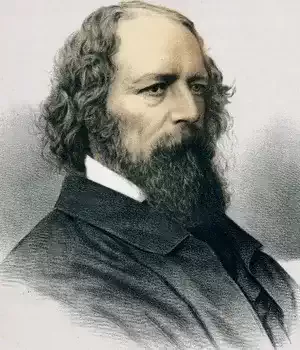
Alfred Lord Tennyson
The Princess (part 3)
Morn in the wake of the morning star
Came furrowing all the orient into gold.
We rose, and each by other drest with care
Descended to the court that lay three parts
In shadow, but the Muses' heads were touched
Above the darkness from their native East.
There while we stood beside the fount, and watched
Or seemed to watch the dancing bubble, approached
Melissa, tinged with wan from lack of sleep,
Or grief, and glowing round her dewy eyes
The circled Iris of a night of tears;
'And fly,' she cried, 'O fly, while yet you may!
My mother knows:' and when I asked her 'how,'
'My fault' she wept 'my fault! and yet not mine;
Yet mine in part. O hear me, pardon me.
My mother, 'tis her wont from night to night
To rail at Lady Psyche and her side.
She says the Princess should have been the Head,
Herself and Lady Psyche the two arms;
And so it was agreed when first they came;
But Lady Psyche was the right hand now,
And the left, or not, or seldom used;
Hers more than half the students, all the love.
And so last night she fell to canvass you:
Her countrywomen! she did not envy her.
"Who ever saw such wild barbarians?
Girls?--more like men!" and at these words the snake,
My secret, seemed to stir within my breast;
And oh, Sirs, could I help it, but my cheek
Began to burn and burn, and her lynx eye
To fix and make me hotter, till she laughed:
"O marvellously modest maiden, you!
Men! girls, like men! why, if they had been men
You need not set your thoughts in rubric thus
For wholesale comment." Pardon, I am shamed
That I must needs repeat for my excuse
What looks so little graceful: "men" (for still
My mother went revolving on the word)
"And so they are,--very like men indeed--
And with that woman closeted for hours!"
Then came these dreadful words out one by one,
"Why--these--are--men:" I shuddered: "and you know it."
"O ask me nothing," I said: "And she knows too,
And she conceals it." So my mother clutched
The truth at once, but with no word from me;
And now thus early risen she goes to inform
The Princess: Lady Psyche will be crushed;
But you may yet be saved, and therefore fly;
But heal me with your pardon ere you go.'
'What pardon, sweet Melissa, for a blush?'
Said Cyril: 'Pale one, blush again: than wear
Those lilies, better blush our lives away.
Yet let us breathe for one hour more in Heaven'
He added, 'lest some classic Angel speak
In scorn of us, "They mounted, Ganymedes,
To tumble, Vulcans, on the second morn."
But I will melt this marble into wax
To yield us farther furlough:' and he went.
Melissa shook her doubtful curls, and thought
He scarce would prosper. 'Tell us,' Florian asked,
'How grew this feud betwixt the right and left.'
'O long ago,' she said, 'betwixt these two
Division smoulders hidden; 'tis my mother,
Too jealous, often fretful as the wind
Pent in a crevice: much I bear with her:
I never knew my father, but she says
(God help her) she was wedded to a fool;
And still she railed against the state of things.
She had the care of Lady Ida's youth,
And from the Queen's decease she brought her up.
But when your sister came she won the heart
Of Ida: they were still together, grew
(For so they said themselves) inosculated;
Consonant chords that shiver to one note;
One mind in all things: yet my mother still
Affirms your Psyche thieved her theories,
And angled with them for her pupil's love:
She calls her plagiarist; I know not what:
But I must go: I dare not tarry,' and light,
As flies the shadow of a bird, she fled.
Then murmured Florian gazing after her,
'An open-hearted maiden, true and pure.
If I could love, why this were she: how pretty
Her blushing was, and how she blushed again,
As if to close with Cyril's random wish:
Not like your Princess crammed with erring pride,
Nor like poor Psyche whom she drags in tow.'
'The crane,' I said, 'may chatter of the crane,
The dove may murmur of the dove, but I
An eagle clang an eagle to the sphere.
My princess, O my princess! true she errs,
But in her own grand way: being herself
Three times more noble than three score of men,
She sees herself in every woman else,
And so she wears her error like a crown
To blind the truth and me: for her, and her,
Hebes are they to hand ambrosia, mix
The nectar; but--ah she--whene'er she moves
The Samian Herè rises and she speaks
A Memnon smitten with the morning Sun.'
So saying from the court we paced, and gained
The terrace ranged along the Northern front,
And leaning there on those balusters, high
Above the empurpled champaign, drank the gale
That blown about the foliage underneath,
And sated with the innumerable rose,
Beat balm upon our eyelids. Hither came
Cyril, and yawning 'O hard task,' he cried;
'No fighting shadows here! I forced a way
Through opposition crabbed and gnarled.
Better to clear prime forests, heave and thump
A league of street in summer solstice down,
Than hammer at this reverend gentlewoman.
I knocked and, bidden, entered; found her there
At point to move, and settled in her eyes
The green malignant light of coming storm.
Sir, I was courteous, every phrase well-oiled,
As man's could be; yet maiden-meek I prayed
Concealment: she demanded who we were,
And why we came? I fabled nothing fair,
But, your example pilot, told her all.
Up went the hushed amaze of hand and eye.
But when I dwelt upon your old affiance,
She answered sharply that I talked astray.
I urged the fierce inscription on the gate,
And our three lives. True--we had limed ourselves
With open eyes, and we must take the chance.
But such extremes, I told her, well might harm
The woman's cause. "Not more than now," she said,
"So puddled as it is with favouritism."
I tried the mother's heart. Shame might befall
Melissa, knowing, saying not she knew:
Her answer was "Leave me to deal with that."
I spoke of war to come and many deaths,
And she replied, her duty was to speak,
And duty duty, clear of consequences.
I grew discouraged, Sir; but since I knew
No rock so hard but that a little wave
May beat admission in a thousand years,
I recommenced; "Decide not ere you pause.
I find you here but in the second place,
Some say the third--the authentic foundress you.
I offer boldly: we will seat you highest:
Wink at our advent: help my prince to gain
His rightful bride, and here I promise you
Some palace in our land, where you shall reign
The head and heart of all our fair she-world,
And your great name flow on with broadening time
For ever." Well, she balanced this a little,
And told me she would answer us today,
meantime be mute: thus much, nor more I gained.'
He ceasing, came a message from the Head.
'That afternoon the Princess rode to take
The dip of certain strata to the North.
Would we go with her? we should find the land
Worth seeing; and the river made a fall
Out yonder:' then she pointed on to where
A double hill ran up his furrowy forks
Beyond the thick-leaved platans of the vale.
Agreed to, this, the day fled on through all
Its range of duties to the appointed hour.
Then summoned to the porch we went. She stood
Among her maidens, higher by the head,
Her back against a pillar, her foot on one
Of those tame leopards. Kittenlike he rolled
And pawed about her sandal. I drew near;
I gazed. On a sudden my strange seizure came
Upon me, the weird vision of our house:
The Princess Ida seemed a hollow show,
Her gay-furred cats a painted fantasy,
Her college and her maidens, empty masks,
And I myself the shadow of a dream,
For all things were and were not. Yet I felt
My heart beat thick with passion and with awe;
Then from my breast the involuntary sigh
Brake, as she smote me with the light of eyes
That lent my knee desire to kneel, and shook
My pulses, till to horse we got, and so
Went forth in long retinue following up
The river as it narrowed to the hills.
I rode beside her and to me she said:
'O friend, we trust that you esteemed us not
Too harsh to your companion yestermorn;
Unwillingly we spake.' 'No--not to her,'
I answered, 'but to one of whom we spake
Your Highness might have seemed the thing you say.'
'Again?' she cried, 'are you ambassadresses
From him to me? we give you, being strange,
A license: speak, and let the topic die.'
I stammered that I knew him--could have wished-'
Our king expects--was there no precontract?
There is no truer-hearted--ah, you seem
All he prefigured, and he could not see
The bird of passage flying south but longed
To follow: surely, if your Highness keep
Your purport, you will shock him even to death,
Or baser courses, children of despair.'
'Poor boy,' she said, 'can he not read--no books?
Quoit, tennis, ball--no games? nor deals in that
Which men delight in, martial exercise?
To nurse a blind ideal like a girl,
Methinks he seems no better than a girl;
As girls were once, as we ourself have been:
We had our dreams; perhaps he mixt with them:
We touch on our dead self, nor shun to do it,
Being other--since we learnt our meaning here,
To lift the woman's fallen divinity
Upon an even pedestal with man.'
She paused, and added with a haughtier smile
'And as to precontracts, we move, my friend,
At no man's beck, but know ourself and thee,
O Vashti, noble Vashti! Summoned out
She kept her state, and left the drunken king
To brawl at Shushan underneath the palms.'
'Alas your Highness breathes full East,' I said,
'On that which leans to you. I know the Prince,
I prize his truth: and then how vast a work
To assail this gray preëminence of man!
You grant me license; might I use it? think;
Ere half be done perchance your life may fail;
Then comes the feebler heiress of your plan,
And takes and ruins all; and thus your pains
May only make that footprint upon sand
Which old-recurring waves of prejudice
Resmooth to nothing: might I dread that you,
With only Fame for spouse and your great deeds
For issue, yet may live in vain, and miss,
Meanwhile, what every woman counts her due,
Love, children, happiness?'
And she exclaimed,
'Peace, you young savage of the Northern wild!
What! though your Prince's love were like a God's,
Have we not made ourself the sacrifice?
You are bold indeed: we are not talked to thus:
Yet will we say for children, would they grew
Like field-flowers everywhere! we like them well:
But children die; and let me tell you, girl,
Howe'er you babble, great deeds cannot die;
They with the sun and moon renew their light
For ever, blessing those that look on them.
Children--that men may pluck them from our hearts,
Kill us with pity, break us with ourselves-O--
children--there is nothing upon earth
More miserable than she that has a son
And sees him err: nor would we work for fame;
Though she perhaps might reap the applause of Great,
Who earns the one POU STO whence after-hands
May move the world, though she herself effect
But little: wherefore up and act, nor shrink
For fear our solid aim be dissipated
By frail successors. Would, indeed, we had been,
In lieu of many mortal flies, a race
Of giants living, each, a thousand years,
That we might see our own work out, and watch
The sandy footprint harden into stone.'
I answered nothing, doubtful in myself
If that strange Poet-princess with her grand
Imaginations might at all be won.
And she broke out interpreting my thoughts:
'No doubt we seem a kind of monster to you;
We are used to that: for women, up till this
Cramped under worse than South-sea-isle taboo,
Dwarfs of the gynæceum, fail so far
In high desire, they know not, cannot guess
How much their welfare is a passion to us.
If we could give them surer, quicker proof--
Oh if our end were less achievable
By slow approaches, than by single act
Of immolation, any phase of death,
We were as prompt to spring against the pikes,
Or down the fiery gulf as talk of it,
To compass our dear sisters' liberties.'
She bowed as if to veil a noble tear;
And up we came to where the river sloped
To plunge in cataract, shattering on black blocks
A breadth of thunder. O'er it shook the woods,
And danced the colour, and, below, stuck out
The bones of some vast bulk that lived and roared
Before man was. She gazed awhile and said,
'As these rude bones to us, are we to her
That will be.' 'Dare we dream of that,' I asked,
'Which wrought us, as the workman and his work,
That practice betters?' 'How,' she cried, 'you love
The metaphysics! read and earn our prize,
A golden brooch: beneath an emerald plane
Sits Diotima, teaching him that died
Of hemlock; our device; wrought to the life;
She rapt upon her subject, he on her:
For there are schools for all.' 'And yet' I said
'Methinks I have not found among them all
One anatomic.' 'Nay, we thought of that,'
She answered, 'but it pleased us not: in truth
We shudder but to dream our maids should ape
Those monstrous males that carve the living hound,
And cram him with the fragments of the grave,
Or in the dark dissolving human heart,
And holy secrets of this microcosm,
Dabbling a shameless hand with shameful jest,
Encarnalize their spirits: yet we know
Knowledge is knowledge, and this matter hangs:
Howbeit ourself, foreseeing casualty,
Nor willing men should come among us, learnt,
For many weary moons before we came,
This craft of healing. Were you sick, ourself
Would tend upon you. To your question now,
Which touches on the workman and his work.
Let there be light and there was light: 'tis so:
For was, and is, and will be, are but is;
And all creation is one act at once,
The birth of light: but we that are not all,
As parts, can see but parts, now this, now that,
And live, perforce, from thought to thought, and make
One act a phantom of succession: thus
Our weakness somehow shapes the shadow, Time;
But in the shadow will we work, and mould
The woman to the fuller day.'
She spake
With kindled eyes; we rode a league beyond,
And, o'er a bridge of pinewood crossing, came
On flowery levels underneath the crag,
Full of all beauty. 'O how sweet' I said
(For I was half-oblivious of my mask)
'To linger here with one that loved us.' 'Yea,'
She answered, 'or with fair philosophies
That lift the fancy; for indeed these fields
Are lovely, lovelier not the Elysian lawns,
Where paced the Demigods of old, and saw
The soft white vapour streak the crownèd towers
Built to the Sun:' then, turning to her maids,
'Pitch our pavilion here upon the sward;
Lay out the viands.' At the word, they raised
A tent of satin, elaborately wrought
With fair Corinna's triumph; here she stood,
Engirt with many a florid maiden-cheek,
The woman-conqueror; woman-conquered there
The bearded Victor of ten-thousand hymns,
And all the men mourned at his side: but we
Set forth to climb; then, climbing, Cyril kept
With Psyche, with Melissa Florian, I
With mine affianced. Many a little hand
Glanced like a touch of sunshine on the rocks,
Many a light foot shone like a jewel set
In the dark crag: and then we turned, we wound
About the cliffs, the copses, out and in,
Hammering and clinking, chattering stony names
Of shales and hornblende, rag and trap and tuff,
Amygdaloid and trachyte, till the Sun
Grew broader toward his death and fell, and all
The rosy heights came out above the lawns.
The splendour falls on castle walls
And snowy summits old in story:
The long light shakes across the lakes,
And the wild cataract leaps in glory.
Blow, bugle, blow, set the wild echoes flying,
Blow, bugle; answer, echoes, dying, dying, dying.
O hark, O hear! how thin and clear,
And thinner, clearer, farther going!
O sweet and far from cliff and scar
The horns of Elfland faintly blowing!
Blow, let us hear the purple glens replying:
Blow, bugle; answer, echoes, dying, dying, dying.
O love, they die in yon rich sky,
They faint on hill or field or river:
Our echoes roll from soul to soul,
And grow for ever and for ever.
Blow, bugle, blow, set the wild echoes flying,
And answer, echoes, answer, dying, dying, dying.
465

William Butler Yeats
The People
'WHAT have I earned for all that work,' I said,
'For all that I have done at my own charge?
The daily spite of this unmannerly town,
Where who has served the most is most defaned,
The reputation of his lifetime lost
Between the night and morning. I might have lived,
And you know well how great the longing has been,
Where every day my footfall Should have lit
In the green shadow of Ferrara wall;
Or climbed among the images of the past --
The unperturbed and courtly images --
Evening and morning, the steep street of Urbino
To where the Duchess and her people talked
The stately midnight through until they stood
In their great window looking at the dawn;
I might have had no friend that could not mix
Courtesy and passion into one like those
That saw the wicks grow yellow in the dawn;
I might have used the one substantial right
My trade allows: chosen my company,
And chosen what scenery had pleased me best.
Thereon my phoenix answered in reproof,
'The drunkards, pilferers of public funds,
All the dishonest crowd I had driven away,
When my luck changed and they dared meet my face,
Crawled from obscurity, and set upon me
Those I had served and some that I had fed;
Yet never have I, now nor any time,
Complained of the people.'
All I could reply
Was: 'You, that have not lived in thought but deed,
Can have the purity of a natural force,
But I, whose virtues are the definitions
Of the analytic mind, can neither close
The eye of the mind nor keep my tongue from speech.'
And yet, because my heart leaped at her words,
I was abashed, and now they come to mind
After nine years, I sink my head abashed.
467
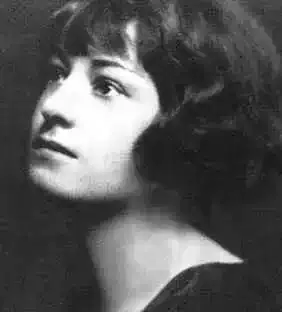
Dorothy Parker
The Veteran
When I was young and bold and strong,
Oh, right was right, and wrong was wrong!
My plume on high, my flag unfurled,
I rode away to right the world.
"Come out, you dogs, and fight!" said I,
And wept there was but once to die.
But I am old; and good and bad
Are woven in a crazy plaid.
I sit and say, "The world is so;
And he is wise who lets it go.
A battle lost, a battle won-
The difference is small, my son."
Inertia rides and riddles me;
The which is called Philosophy.
466

John Keats
Hymn To Apollo
GOD of the golden bow,
And of the golden lyre,
And of the golden hair,
And of the golden fire,
Charioteer
Of the patient year,
Where---where slept thine ire,
When like a blank idiot I put on thy wreath,
Thy laurel, thy glory,
The light of thy story,
Or was I a worm---too low crawling for death?
O Delphic Apollo!
The Thunderer grasp'd and grasp'd,
The Thunderer frown'd and frown'd;
The eagle's feathery mane
For wrath became stiffen'd---the sound
Of breeding thunder
Went drowsily under,
Muttering to be unbound.
O why didst thou pity, and beg for a worm?
Why touch thy soft lute
Till the thunder was mute,
Why was I not crush'd---such a pitiful germ?
O Delphic Apollo!
The Pleiades were up,
Watching the silent air;
The seeds and roots in Earth
Were swelling for summer fare;
The Ocean, its neighbour,
Was at his old labour,
When, who---who did dare
To tie for a moment, thy plant round his brow,
And grin and look proudly,
And blaspheme so loudly,
And live for that honour, to stoop to thee now?
O Delphic Apollo!
462
Ezra Pound
Alf’s Tenth Bit
WIND
Scarce and thin, scarce and thin
The government's excuse,
Never at all will they do
Aught of the slightest use.
Over the dying half-wits blow,
Over the empty-headed, and the slow
Marchers, not getting forwarder,
While Ramsay MacDonald sleeps, sleeps.
Fester and rot, fester and rot,
And angle and tergiversate
One thing among all things you will not
Do, that is: think, before it's too late.
Election will not come very soon,
And those born with a silver spoon,
Will keep it a little longer,
Until the mind of the old nation gets a little stronger.
464
Ezra Pound
Ezra on the Strike
Wal, Thanksgivin' do be comin' round.
With the price of turkeys on the bound,
And coal, by gum! Thet were just found,
Is surely gettin' cheaper.
The winds will soon begin to howl,
And winter, in its yearly growl,
Across the medders begin to prowl,
And Jack Frost gettin' deeper.
By shucks! It seems to me,
That you I orter be
Thankful, that our Ted could see
A way to operate it.
I sez to Mandy, sure, sez I,
I'll bet thet air patch o' rye
Thet he'll squash 'em by-and-by,
And he did, by cricket!
No use talkin', he's the man -
One of the best thet ever ran,
Fer didn't I turn Republican
One o' the fust?
I 'lowed as how he'd beat the rest,
But old Si Perkins, he hemmed and guessed,
And sed as how it wuzn't best
To meddle with the trust.
461

Walt Whitman
ARM’D year! year of the struggle!
No dainty rhymes or sentimental love verses for you, terrible year!
Not you as some pale poetling, seated at a desk, lisping cadenzas
piano;
But as a strong man, erect, clothed in blue clothes, advancing,
carrying a rifle on your shoulder,
With well-gristled body and sunburnt face and hands–with a knife in
the belt at your side,
As I heard you shouting loud–your sonorous voice ringing across the
continent;
Your masculine voice, O year, as rising amid the great cities,
Amid the men of Manhattan I saw you, as one of the workmen, the
dwellers in Manhattan;
Or with large steps crossing the prairies out of Illinois and
Indiana,
Rapidly crossing the West with springy gait, and descending the
Alleghanies;
Or down from the great lakes, or in Pennsylvania, or on deck along
the Ohio river;
Or southward along the Tennessee or Cumberland rivers, or at
Chattanooga on the mountain top,
Saw I your gait and saw I your sinewy limbs, clothed in blue, bearing
weapons, robust year;
Heard your determin’d voice, launch’d forth again and again;
Year that suddenly sang by the mouths of the round-lipp’d cannon,
I repeat you, hurrying, crashing, sad, distracted year.
461
Ezra Pound
Salvationists
I
Come, my songs, let us speak of perfection
We shall get ourselves rather disliked.
II
Ah yes, my songs, let us resurrect
The very excellent term Rusticus.
Let us apply it in all its opprobrium
To those to whom it applies.
And you may decline to make them immortal,
For we shall consider them and their state
In delicate
Opulent silence.
III
Come, my songs,
Let us take arms against this sea of stupidities-
Beginning with Mumpodorus;
And against this sea of vulgarities
Beginning with Nimmim;
And against this sea of imbeciles
All the Bulmenian literati.
459
Walt Whitman
Spirit Whose Work Is Done
SPIRIT whose work is done! spirit of dreadful hours!
Ere, departing, fade from my eyes your forests of bayonets;
Spirit of gloomiest fears and doubts, (yet onward ever unfaltering
pressing;)
Spirit of many a solemn day, and many a savage scene! Electric
spirit!
That with muttering voice, through the war now closed, like a
tireless phantom flitted,
Rousing the land with breath of flame, while you beat and beat the
drum;
--Now, as the sound of the drum, hollow and harsh to the last,
reverberates round me;
As your ranks, your immortal ranks, return, return from the battles;
While the muskets of the young men yet lean over their shoulders;
While I look on the bayonets bristling over their shoulders;
While those slanted bayonets, whole forests of them, appearing in the
distance, approach and pass on, returning homeward,
Moving with steady motion, swaying to and fro, to the right and left,
Evenly, lightly rising and falling, as the steps keep time;
--Spirit of hours I knew, all hectic red one day, but pale as death
next day;
Touch my mouth, ere you depart--press my lips close!
Leave me your pulses of rage! bequeath them to me! fill me with
currents convulsive!
Let them scorch and blister out of my chants, when you are gone;
Let them identify you to the future, in these songs.
461

Rudyard Kipling
Hadramauti
Who knows the heart of the Christian? How does he reason?
What are his measures and balances? Which is his season
For laughter, forbearance or bloodshed, and what devils move him
When he arises to smite us? I do not love him.
He invites the derision of strangers—he enters all places.
Booted, bareheaded he enters. With shouts and embraces
He asks of us news of the household whom we reckon nameless.
Certainly Allah created him forty-fold shameless!
So it is not in the Desert. One came to me weeping—
The Avenger of Blood on his track—I took him in keeping.
Demanding not whom he had slain, I refreshed him, I fed him
As he were even a brother. But Eblis had bred him.
He was the son of an ape, ill at ease in his clothing.
He talked with his head, hands and feet. I endured him with loathing.
Whatever his spirit conceived his countenance showed it
As a frog shows in a mud-puddle. Yet I abode it!
I fingered my beard and was dumb, in silence confronting him.
His soul was too shallow for silence, e'en with Death hunting him.
I said: "'Tis his weariness speaks," but, when he had rested,
He chirped in my face like some sparrow, and, presently, jested!
Wherefore slew I that stranger? He brought me dishonour.
I saddled my mare, Bijli, I set him upon her.
I gave him rice and goat's flesh. He bared me to laughter.
When he was gone from my tent, swift I followed after,
Taking my sword in my hand. The hot wine had filled him.
Under the stars he mocked me—therefore I killed him!
456
Lord Byron
Lines On Hearing That Lady Byron Was Ill
And thou wert sad yet
I was not with thee;
And thou wert sick, and yet I was not near;
Methought that joy and health alone could be
Where I was not and
pain and sorrow here!
And is it thus?it
is as I foretold,
And shall be more so; for the mind recoils
Upon itself, and the wreck'd heart lies cold,
While heaviness collects the shatter'd spoils.
It is not in the storm nor in the strife
We feel benumb'd, and wish to be no more,
But in the after silence
on the shore.
When all is lost, except a little life.
I am too well avenged! but
'twas my right ;
Whate'er my sins might be, thou wert not sent
To be the Nemesis who should requite Nor
did Heaven choose so near an instrument.
Mercy is for the merciful! thou
Hast been of such, 'twill be accorded now.
Thy nights are banish'd from the realms of sleep! Yes!
they may flatter thee, but thou shalt feel
A hollow agony which will not heal,
For thou art pillow'd on a curse too deep;
Thou hast sown in my sorrow, and must reap
The bitter harvest in a woe as real!
I have had many foes, but none like thee;
For 'gainst the rest myself I could defend,
And be avenged, or turn them into friend;
But thou in safe implacability
Hadst nought to dread in
thy own weakness shielded,
And in my love, which hath but too much yielded,
And spared, for thy sake, some I should not spare;
And thus upon the world trust
in thy truth,
And the wild fame of my ungovern'd youth On
things that were not, and on things that are Even
upon such a basis hast thou built
A monument, whose cement hath been guilt!
The moral Clytemnestra of thy lord,
And hew'd down, with an unsuspected sword,
Fame, peace, and hope and
all the better life,
Which, but for this cold treason of thy heart,
Might still have risen from out the grave of strife,
And found a nobler duty than to part.
But of thy virtues didst thou make a vice,
Trafficking with them in a purpose cold,
For present anger, and for future gold And
buying others' grief at any price.
And thus once enter 'd into crooked ways,
The earthly truth, which was thy proper praise,
Did not still walk beside thee but
at times,
And with a breast unknowing its own crimes,
Deceit, averments incompatible,
Equivocations, and the thoughts which dwell
In Janusspirits
the
significant eye
Which learns to lie with silence the
pretext
Of prudence, with advantages annex'd The
acquiescence in all things which tend,
No matter how, to the desired end
All found a place in thy philosophy.
The means were worthy, and the end is won
I would not do by thee as thou hast done!
September 1816.
458
Ezra Pound
Further Instructions
Come, my songs, let us express our baser passions.
Let us express our envy for the man with a steady job and no worry about the future.
You are very idle, my songs,
I fear you will come to a bad end.
You stand about the streets, You loiter at the corners and bus-stops,
You do next to nothing at all.
You do not even express our inner nobilitys,
You will come to a very bad end.
And I? I have gone half-cracked.
I have talked to you so much that I almost see you about me,
Insolent little beasts! Shameless! Devoid of clothing!
But you, newest song of the lot,
You are not old enough to have done much mischief.
I will get you a green coat out of China
With dragons worked upon it.
I will get you the scarlet silk trousers
From the statue of the infant Christ at Santa Maria Novella;
Lest they say we are lacking in taste,
Or that there is no caste in this family.
454
John Donne
The Curse
Whoever guesses, thinks, or dreams, he knows
Who is my mistress, wither by this curse ;
Him, only for his purse
May some dull whore to love dispose,
And then yield unto all that are his foes ;
May he be scorn'd by one, whom all else scorn,
Forswear to others, what to her he hath sworn,
With fear of missing, shame of getting, torn.
Madness his sorrow, gout his cramps, may he
Make, by but thinking who hath made him such ;
And may he feel no touch
Of conscience, but of fame, and be
Anguish'd, not that 'twas sin, but that 'twas she ;
Or may he for her virtue reverence
One that hates him only for impotence,
And equal traitors be she and his sense.
May he dream treason, and believe that he
Meant to perform it, and confesses, and die,
And no record tell why ;
His sons, which none of his may be,
Inherit nothing but his infamy ;
Or may he so long parasites have fed,
That he would fain be theirs whom he hath bred,
And at the last be circumcised for bread.
The venom of all stepdames, gamesters' gall,
What tyrants and their subjects interwish,
What plants, mine, beasts, fowl, fish,
Can contribute, all ill, which all
Prophets or poets spake, and all which shall
Be annex'd in schedules unto this by me,
Fall on that man ; For if it be a she
Nature beforehand hath out-cursèd me.
451
Hilaire Belloc
Lines to a Don
Remote and ineffectual Don
That dared attack my Chesterton,
With that poor weapon, half-impelled,
Unlearnt, unsteady, hardly held,
Unworthy for a tilt with men--
Your quavering and corroded pen;
Don poor at Bed and worse at Table,
Don pinched, Don starved, Don miserable;
Don stuttering, Don with roving eyes,
Don nervous, Don of crudities;
Don clerical, Don ordinary,
Don self-absorbed and solitary;
Don here-and-there, Don epileptic;
Don puffed and empty, Don dyspeptic;
Don middle-class, Don sycophantic,
Don dull, Don brutish, Don pedantic;
Don hypocritical, Don bad,
Don furtive, Don three-quarters mad;
Don (since a man must make and end),
Don that shall never be my friend.
Don different from those regal Dons!
With hearts of gold and lungs of bronze,
Who shout and bang and roar and bawl
The Absolute across the hall,
Or sail in amply bellying gown
Enormous through the Sacred Town,
Bearing from College to their homes
Deep cargoes of gigantic tomes;
Dons admirable! Dons of Might!
Uprising on my inward sight
Compact of ancient tales, and port
And sleep--and learning of a sort.
Dons English, worthy of the land;
Dons rooted; Dons that understand.
Good Dons perpetual that remain
A landmark, walling in the plain--
The horizon of my memories--
Like large and comfortable trees.
Don very much apart from these,
Thou scapegoat Don, thou Don devoted,
Don to thine own damnation quoted,
Perplexed to find thy trivial name
Reared in my verse to lasting shame.
Don dreadful, rasping Don and wearing,
Repulsive Don--Don past all bearing.
Don of the cold and doubtful breath,
Don despicable, Don of death;
Don nasty, skimpy, silent, level;
Don evil, Don that serves the devil.
Don ugly--that makes fifty lines.
There is a Canon which confines
A Rhymed Octosyllabic Curse
If written in Iambic Verse
To fifty lines. I never cut;
I far prefer to end it--but
Believe me I shall soon return.
My fires are banked, but still they burn
To write some more about the Don
That dared attack my Chesterton.
449
William Butler Yeats
Three Marching Songs
REMEMBER all those renowned generations,
They left their bodies to fatten the wolves,
They left their homesteads to fatten the foxes,
Fled to far countries, or sheltered themselves
In cavern, crevice, or hole,
Defending Ireland's soul.
Be still, be still, what can be said?
My father sang that song,
But time amends old wrong,
All that is finished, let it fade.
Remember all those renowned generations,
Remember all that have sunk in their blood,
Remember all that have died on the scaffold,
Remember all that have fled, that have stood,
Stood, took death like a tune
On an old,tambourine.
Be still, be still, what can be said?
My father sang that song,
But time amends old wrong,
And all that's finished, let it fade.
Fail, and that history turns into rubbish,
All that great past to a trouble of fools;
Those that come after shall mock at O'Donnell,
Mock at the memory of both O'Neills,
Mock Emmet, mock Parnell,
All the renown that fell.
Be still, be still, what can be said?
My father sang that song,
but time amends old wrong,
And all that's finished, let it fade.
The soldier takes pride in saluting his Captain,
The devotee proffers a knee to his Lord,
Some back a mare thrown from a thoroughbred,,
Troy backed its Helen; Troy died and adored;
Great nations blossom above;
A slave bows down to a slave.
What marches through the mountain pass?
No, no, my son, not yet;
That is an airy spot,
And no man knows what treads the grass.
We know what rascal might has defiled,
The lofty innocence that it has slain,
Were we not born in the peasant's cot
Where men forgive if the belly gain?
More dread the life that we live,
How can the mind forgive?
What marches down the mountain pass?
No, no, my son, not yet;
That is an airy spot,
And no man knows what treads the grass.
What if there's nothing up there at the top?
Where are the captains that govern mankind?
What tears down a tree that has nothing within it?
A blast of the wind, O a marching wind,
March wind, and any old tune.
March, march, and how does it run?
What marches down the mountain pass?
No, no, my son, not yet;
That is an airy spot,
And no man knows what treads the grass.
III
Grandfather sang it under the gallows:
'Hear, gentlemen, ladies, and all mankind:
Money is good and a girl might be better,
But good strong blows are delights to the mind.'
There, standing on the cart,
He sang it from his heart.
<1Robbers had taken his old tambourine,
But he took down the moon
And rattled out a tunc;
Robbers had taken his old tambourinc.>1
'A girl I had, but she followed another,
Money I had, and it went in the night,
Strong drink I had, and it brought me to sorrow,
But a good strong cause and blows are delight.'
All there caught up the tune:
'Oh, on, my darling man.'
Robbers had taken his old tambourine,
But he took down the moon
And rattled out a tune;>1
Robbers had taken his old tambourine.
'Money is good and a girl might be better,
No matter what happens and who takes the fall,
But a good strong cause' -- the rope gave a jerk there,
No more sang he, for his throat was too small;
But he kicked before he died,
He did it out of pride.
<1Robbers had taken his old tambourine,
But he took down the moon
And rattled out a tune;
Robbers had taken his old tambourine.
452
Alfred Edward Housman
Be Still, My Soul, Be Still
Be still, my soul, be still; the arms you bear are brittle,
Earth and high heaven are fixt of old and founded strong.
Think rather,-- call to thought, if now you grieve a little,
The days when we had rest, O soul, for they were long.
Men loved unkindness then, but lightless in the quarry
I slept and saw not; tears fell down, I did not mourn;
Sweat ran and blood sprang out and I was never sorry:
Then it was well with me, in days ere I was born.
Now, and I muse for why and never find the reason,
I pace the earth, and drink the air, and feel the sun.
Be still, be still, my soul; it is but for a season:
Let us endure an hour and see injustice done.
Ay, look: high heaven and earth ail from the prime foundation;
All thoughts to rive the heart are here, and all are vain:
Horror and scorn and hate and fear and indignation--
Oh why did I awake? when shall I sleep again?
445

William Shakespeare
Witches Chant (from Macbeth)
Round about the couldron go:
In the poisones entrails throw.
Toad,that under cold stone
Days and nights has thirty-one
Sweated venom sleeping got,
Boil thou first in the charmed pot.
Double,double toil and trouble;
Fire burn and cauldron bubble.
Fillet of a fenny snake,
In the cauldron boil and bake;
Eye of newt and toe of frog,
Wool of bat and tongue of dog,
Adder's fork and blindworm's sting,
Lizard's leg and howlet's wing.
For charm of powerful trouble,
Like a hell-broth boil and bubble.
Double,double toil and trouble;
Fire burn and couldron bubble.
Scale of dragon,tooth of wolf,
Witch's mummy, maw and gulf
Of the ravin'd salt-sea shark,
Root of hemlock digg'd in the dark,
Liver of blaspheming Jew;
Gall of goat; andslips of yew
silver'd in the moon's eclipse;
Nose of Turk, and Tartar's lips;
Finger of birth-strangled babe
Ditch-deliver'd by the drab,-
Make the gruel thick and slab:
Add thereto a tiger's chaudron,
For ingrediants of our cauldron.
Double,double toil and trouble,
Fire burn and cauldron bubble.
446
Lord Byron
Windsor Poetics : Lines Composed On The Occasion Of His Royal Highness The
Prince Regent Being Seen Standing Between The Coffins Of Henry VIII And
Charles I, In The Royal Vault At Windsor
Famed for contemptuous breach of sacred ties,
By headless Charles see heartless Henry lies;
Between them stands another sceptred thing
It
moves, it reignsin
all but name, a king:
Charles to his people, Henry to his wife,
In
him the double tyrant starts to life:
Justice and death have mix'd their dust in vain,
Each royal vampire wakes to life again.
Ah, what can tombs avail!since
these disgorge
The blood and dust of bothto
mould a George.
445
Henry Van Dyke
The Vain King
In robes of Tyrian blue the King was drest,
A jewelled collar shone upon his breast,
A giant ruby glittered in his crown -----
Lord of rich lands and many a splendid town.
In him the glories of an ancient line
Of sober kings, who ruled by right divine,
Were centred; and to him with loyal awe
The people looked for leadership and law.
Ten thousand knights, the safeguard of the land,
Lay like a single sword within his hand;
A hundred courts, with power of life and death,
Proclaimed decrees justice by his breath;
And all the sacred growths that men had known
Of order and of rule upheld his throne.
Proud was the King: yet not with such a heart
As fits a man to play a royal part.
Not his the pride that honours as a trust
The right to rule, the duty to be just:
Not his the dignity that bends to bear
The monarch's yoke, the master's load of care,
And labours like the peasant at his gate,
To serve the people and protect the State.
Another pride was his, and other joys:
To him the crown and sceptre were but toys,
With which he played at glory's idle game,
To please himself and win the wreaths of fame.
The throne his fathers held from age to age
Built for King Martin to diplay at will,
His mighty strength and universal skill.
No conscious child, that, spoiled with praising, tries
At every step to win admiring eyes, ----
No favourite mountebank, whose acting draws
From gaping crowds loud thunder of applause,
Was vainer than the King: his only thirst
Was to be hailed, in every race, the first.
When tournament was held, in knightly guise
The King would ride the lists and win the prize;
When music charmed the court, with golden lyre
The King would take the stage and lead the choir;
In hunting, his the lance to slay the boar;
In hawking, see his falcon highest soar;
In painting, he would wield the master's brush;
In high debate, -----"the King is speaking! Hush!"
Thus, with a restless heart, in every field
He sought renown, and found his subjects yield
As if he were a demi-god revealed.
But while he played the petty games of life
His kingdom fell a prey to inward strife;
Corruption through the court unheeded crept,
And on the seat of honour justice slept.
The strong trod down the weak; the helpless poor
Groaned under burdens grievous to endure.
The nation's wealth was spent in vain display,
And weakness wore the nation's heart away.
Yet think not Earth is blind to human woes ---
Man has more friends and helpers than he knows;
And when a patient people are oppressed,
The land that bore them feels it in her breast.
Spirits of field and flood, of heath and hill,
Are grieved and angry at the spreading ill;
The trees complain together in the night,
Voices of wrath are heard along the height,
And secret vows are sworn, by stream and strand,
To bring the tyrant low and liberate the land.
But little recked the pampered King of these;
He heard no voice but such as praise and please.
Flattered and fooled, victor in every sport,
One day he wandered idly with his court
Beside the river, seeking to devise
New ways to show his skill to wondering eyes.
There in the stream a patient fisher stood,
And cast his line across the rippling flood.
His silver spoil lay near him on the green:
"Such fish," the courtiers cried, "were never seen!"
"Three salmon larger than a cloth-yard shaft--"
This man must be the master of his craft!"
"An easy art!" the jealous King replied:
"Myself could learn it better, if I tried,
"And catch a hundred larger fish a week--"
Wilt thou accept the challenge, fellow? Speak!"
The fisher turned, came near, and bent his knee:
"'Tis not for kings to strive with such as me;
"Yet if the King commands it, I obey.
"But one condition of the strife I pray:
"The fisherman who brings the least to land
"Shall do whate'er the other may command."
Loud laughed the King: "A foolish fisher thou!
"For I shall win and rule thee then as now."
So to Prince John, a sober soul, sedate
And slow, King Martin left the helm of state,
While to the novel game with eager zest
He all his time and all his powers addrest.
Sure such a sight was never seen before!
For robed and crowned the monarch trod the shore;
His golden hooks were decked with feathers fine,
His jewelled reel ran out a silken line.
With kingly strokes he flogged the crystal stream,
Far-off the salmon saw his tackle gleam;
Careless of kings, they eyed with calm disdain
The gaudy lure, and Martin fished in vain.
On Friday, when the week was almost spent,
He scanned his empty creel with discontent,
Called for a net, and cast it far and wide,
And drew --- a thousand minnows from the tide!
Then came the fisher to conclude the match,
And at the monarch's feet spread out his catch ---
A hundred salmon, greater than before --"
I win!" he cried: "the King must pay the score."
Then Martin, angry, threw his tackle down:
"Rather than lose this game I'd lose me crown!"
"Nay, thou has lost them both," the fisher said;
And as he spoke a wondrous light was shed
Around his form; he dropped his garments mean,
And in his place the River-god was seen.
"Thy vanity hast brought thee in my power,
"And thou shalt pay the forfeit at this hour:
"For thou hast shown thyself a royal fool,
"Too proud to angle, and too vain to rule.
"Eager to win in every trivial strife, --"
Go! Thou shalt fish for minnows all thy life!"
Wrathful, the King the scornful sentence heard;
He strove to answer, but he only chirr-r-ed:
His Tyrian robe was changed to wings of blue,
His crown became a crest, --- away he flew!
And still, along the reaches of the stream,
The vain King-fisher flits, an azure gleam, ---
You see his ruby crest, you hear his jealous scream.
440
Ezra Pound
Alf’s Fifth Bit
The pomps of butchery, financial power,
Told 'em to die in war, and then to save,
Then cut their saving to the half or lower;
When will this system lie down in its grave?
The pomps of Fleet St., festering year on year,
Hid truth and lied, and lied and hid the facts.
The pimps of Whitehall ever more in fear,
Hid health statistics, dodged the Labour Acts.
All drew their pay, and as the pay grew less,
The money rotten and more rotten yet,
Hid more statistics, more feared to confess
C.3, C.4, 'twere better to forget
How many weak of mind, how much tuberculosis
Filled the back alleys and the back to back houses.
'The medical report this week discloses . . .'
'Time for that question!' Front Bench interposes.
Time for that question? and the time is NOW.
Who ate the profits, and who locked 'em in
The unsafe safe, wherein all rots, and no man can say how
What was the nation's, now by Norman's kin
Is one day blown up large, the next, ducked in?
436