
Anger and Indignation
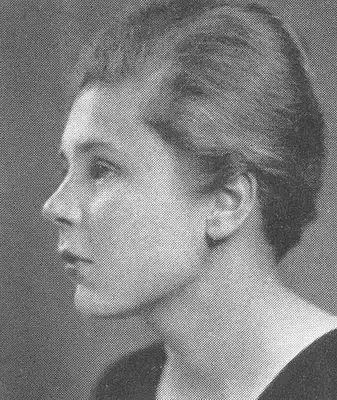
Elizabeth Bishop
Roosters
At four o'clock
in the gun-metal blue dark
we hear the first crow of the first cock
just below
the gun-metal blue window
and immediately there is an echo
off in the distance,
then one from the backyard fence,
then one, with horrible insistence,
grates like a wet match
from the broccoli patch,
flares,and all over town begins to catch.
Cries galore
come from the water-closet door,
from the dropping-plastered henhouse floor,
where in the blue blur
their rusting wives admire,
the roosters brace their cruel feet and glare
with stupid eyes
while from their beaks there rise
the uncontrolled, traditional cries.
Deep from protruding chests
in green-gold medals dressed,
planned to command and terrorize the rest,
the many wives
who lead hens' lives
of being courted and despised;
deep from raw throats
a senseless order floats
all over town. A rooster gloats
over our beds
from rusty irons sheds
and fences made from old bedsteads,
over our churches
where the tin rooster perches,
over our little wooden northern houses,
making sallies
from all the muddy alleys,
marking out maps like Rand McNally's:
glass-headed pins,
oil-golds and copper greens,
anthracite blues, alizarins,
each one an active
displacement in perspective;
each screaming, "This is where I live!"
Each screaming
"Get up! Stop dreaming!"
Roosters, what are you projecting?
You, whom the Greeks elected
to shoot at on a post, who struggled
when sacrificed, you whom they labeled
"Very combative..."
what right have you to give
commands and tell us how to live,
cry "Here!" and "Here!"
and wake us here where are
unwanted love, conceit and war?
The crown of red
set on your little head
is charged with all your fighting blood
Yes, that excrescence
makes a most virile presence,
plus all that vulgar beauty of iridescence
Now in mid-air
by two they fight each other.
Down comes a first flame-feather,
and one is flying,
with raging heroism defying
even the sensation of dying.
And one has fallen
but still above the town
his torn-out, bloodied feathers drift down;
and what he sung
no matter. He is flung
on the gray ash-heap, lies in dung
with his dead wives
with open, bloody eyes,
while those metallic feathers oxidize.
St. Peter's sin
was worse than that of Magdalen
whose sin was of the flesh alone;
of spirit, Peter's,
falling, beneath the flares,
among the "servants and officers."
Old holy sculpture
could set it all together
in one small scene, past and future:
Christ stands amazed,
Peter, two fingers raised
to surprised lips, both as if dazed.
But in between
a little cock is seen
carved on a dim column in the travertine,
explained by gallus canit;
flet Petrus underneath it,
There is inescapable hope, the pivot;
yes, and there Peter's tears
run down our chanticleer's
sides and gem his spurs.
Tear-encrusted thick
as a medieval relic
he waits. Poor Peter, heart-sick,
still cannot guess
those cock-a-doodles yet might bless,
his dreadful rooster come to mean forgiveness,
a new weathervane
on basilica and barn,
and that outside the Lateran
there would always be
a bronze cock on a porphyry
pillar so the people and the Pope might see
that event the Prince
of the Apostles long since
had been forgiven, and to convince
all the assembly
that "Deny deny deny"
is not all the roosters cry.
In the morning
a low light is floating
in the backyard, and gilding
from underneath
the broccoli, leaf by leaf;
how could the night have come to grief?
gilding the tiny
floating swallow's belly
and lines of pink cloud in the sky,
the day's preamble
like wandering lines in marble,
The cocks are now almost inaudible.
The sun climbs in,
following "to see the end,"
faithful as enemy, or friend.
682
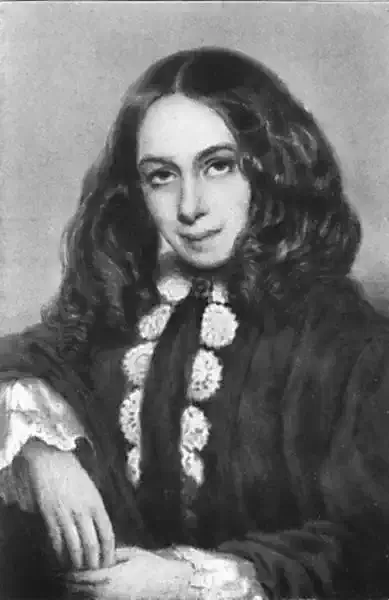
Elizabeth Barrett Browning
The Runaway Slave at Pilgrim's Point
I.
I stand on the mark beside the shore
Of the first white pilgrim's bended knee,
Where exile turned to ancestor,
And God was thanked for liberty.
I have run through the night, my skin is as dark,
I bend my knee down on this mark . . .
I look on the sky and the sea.
II.
O pilgrim-souls, I speak to you!
I see you come out proud and slow
From the land of the spirits pale as dew. . .
And round me and round me ye go!
O pilgrims, I have gasped and run
All night long from the whips of one
Who in your names works sin and woe.
III.
And thus I thought that I would come
And kneel here where I knelt before,
And feel your souls around me hum
In undertone to the ocean's roar;
And lift my black face, my black hand,
Here, in your names, to curse this land
Ye blessed in freedom's evermore.
IV.
I am black, I am black;
And yet God made me, they say.
But if He did so, smiling back
He must have cast His work away
Under the feet of His white creatures,
With a look of scorn,--that the dusky features
Might be trodden again to clay.
V.
And yet He has made dark things
To be glad and merry as light.
There's a little dark bird sits and sings;
There's a dark stream ripples out of sight;
And the dark frogs chant in the safe morass,
And the sweetest stars are made to pass
O'er the face of the darkest night.
VI.
But we who are dark, we are dark!
Ah, God, we have no stars!
About our souls in care and cark
Our blackness shuts like prison bars:
The poor souls crouch so far behind,
That never a comfort can they find
By reaching through the prison-bars.
VII.
Indeed, we live beneath the sky, . . .
That great smooth Hand of God, stretched out
On all His children fatherly,
To bless them from the fear and doubt,
Which would be, if, from this low place,
All opened straight up to His face
Into the grand eternity.
VIII.
And still God's sunshine and His frost,
They make us hot, they make us cold,
As if we were not black and lost:
And the beasts and birds, in wood and fold,
Do fear and take us for very men!
Could the weep-poor-will or the cat of the glen
Look into my eyes and be bold?
IX.
I am black, I am black!--
But, once, I laughed in girlish glee;
For one of my colour stood in the track
Where the drivers drove, and looked at me--
And tender and full was the look he gave:
Could a slave look so at another slave?--
I look at the sky and the sea.
X.
And from that hour our spirits grew
As free as if unsold, unbought:
Oh, strong enough, since we were two
To conquer the world, we thought!
The drivers drove us day by day;
We did not mind, we went one way,
And no better a liberty sought.
XI.
In the sunny ground between the canes,
He said 'I love you' as he passed:
When the shingle-roof rang sharp with the rains,
I heard how he vowed it fast:
While others shook, he smiled in the hut
As he carved me a bowl of the cocoa-nut,
Through the roar of the hurricanes.
XII.
I sang his name instead of a song;
Over and over I sang his name--
Upward and downward I drew it along
My various notes; the same, the same!
I sang it low, that the slave-girls near
Might never guess from aught they could hear,
It was only a name.
XIII.
I look on the sky and the sea--
We were two to love, and two to pray,--
Yes, two, O God, who cried to Thee,
Though nothing didst Thou say.
Coldly Thou sat'st behind the sun!
And now I cry who am but one,
How wilt Thou speak to-day?--
XIV.
We were black, we were black!
We had no claim to love and bliss:
What marvel, if each turned to lack?
They wrung my cold hands out of his,--
They dragged him . . . where ? . . . I crawled to touch
His blood's mark in the dust! . . . not much,
Ye pilgrim-souls, . . . though plain as this!
XV.
Wrong, followed by a deeper wrong!
Mere grief's too good for such as I.
So the white men brought the shame ere long
To strangle the sob of my agony.
They would not leave me for my dull
Wet eyes!--it was too merciful
To let me weep pure tears and die.
XVI.
I am black, I am black!--
I wore a child upon my breast
An amulet that hung too slack,
And, in my unrest, could not rest:
Thus we went moaning, child and mother,
One to another, one to another,
Until all ended for the best:
XVII.
For hark ! I will tell you low . . . Iow . . .
I am black, you see,--
And the babe who lay on my bosom so,
Was far too white . . . too white for me;
As white as the ladies who scorned to pray
Beside me at church but yesterday;
Though my tears had washed a place for my knee.
XVIII.
My own, own child! I could not bear
To look in his face, it was so white.
I covered him up with a kerchief there;
I covered his face in close and tight:
And he moaned and struggled, as well might be,
For the white child wanted his liberty--
Ha, ha! he wanted his master right.
XIX.
He moaned and beat with his head and feet,
His little feet that never grew--
He struck them out, as it was meet,
Against my heart to break it through.
I might have sung and made him mild--
But I dared not sing to the white-faced child
The only song I knew.
XX.
I pulled the kerchief very close:
He could not see the sun, I swear,
More, then, alive, than now he does
From between the roots of the mango . . . where
. . . I know where. Close! a child and mother
Do wrong to look at one another,
When one is black and one is fair.
XXI.
Why, in that single glance I had
Of my child's face, . . . I tell you all,
I saw a look that made me mad . . .
The master's look, that used to fall
On my soul like his lash . . . or worse!
And so, to save it from my curse,
I twisted it round in my shawl.
XXII.
And he moaned and trembled from foot to head,
He shivered from head to foot;
Till, after a time, he lay instead
Too suddenly still and mute.
I felt, beside, a stiffening cold, . . .
I dared to lift up just a fold . . .
As in lifting a leaf of the mango-fruit.
XXIII.
But my fruit . . . ha, ha!--there, had been
(I laugh to think on't at this hour! . . .)
Your fine white angels, who have seen
Nearest the secret of God's power, . . .
And plucked my fruit to make them wine,
And sucked the soul of that child of mine,
As the humming-bird sucks the soul of the flower.
XXIV.
Ha, ha, for the trick of the angels white!
They freed the white child's spirit so.
I said not a word, but, day and night,
I carried the body to and fro;
And it lay on my heart like a stone . . . as chill.
--The sun may shine out as much as he will:
I am cold, though it happened a month ago.
XXV.
From the white man's house, and the black man's hut,
I carried the little body on,
The forest's arms did round us shut,
And silence through the trees did run:
They asked no question as I went,--
They stood too high for astonishment,--
They could see God sit on His throne.
XXVI.
My little body, kerchiefed fast,
I bore it on through the forest . . . on:
And when I felt it was tired at last,
I scooped a hole beneath the moon.
Through the forest-tops the angels far,
With a white sharp finger from every star,
Did point and mock at what was done.
XXVII.
Yet when it was all done aright, . . .
Earth, 'twixt me and my baby, strewed,
All, changed to black earth, . . . nothing white, . . .
A dark child in the dark,--ensued
Some comfort, and my heart grew young:
I sate down smiling there and sung
The song I learnt in my maidenhood.
XXVIII.
And thus we two were reconciled,
The white child and black mother, thus:
For, as I sang it, soft and wild
The same song, more melodious,
Rose from the grave whereon I sate!
It was the dead child singing that,
To join the souls of both of us.
XXIX.
I look on the sea and the sky!
Where the pilgrims' ships first anchored lay,
The free sun rideth gloriously;
But the pilgrim-ghosts have slid away
Through the earliest streaks of the morn.
My face is black, but it glares with a scorn
Which they dare not meet by day.
XXX.
Ah!--in their 'stead, their hunter sons!
Ah, ah! they are on me--they hunt in a ring--
Keep off! I brave you all at once--
I throw off your eyes like snakes that sting!
You have killed the black eagle at nest, I think:
Did you never stand still in your triumph, and shrink
From the stroke of her wounded wing?
XXXI.
(Man, drop that stone you dared to lift!--)
I wish you, who stand there five a-breast,
Each, for his own wife's joy and gift,
A little corpse as safely at rest
As mine in the mangos!--Yes, but she
May keep live babies on her knee,
And sing the song she liketh best.
XXXll.
I am not mad: I am black.
I see you staring in my face--
I know you, staring, shrinking back--
Ye are born of the Washington-race:
And this land is the free America:
And this mark on my wrist . . . (I prove what I say)
Ropes tied me up here to the flogging-place.
XXXIII.
You think I shrieked then? Not a sound!
I hung, as a gourd hangs in the sun.
I only cursed them all around,
As softly as I might have done
My very own child!--From these sands
Up to the mountains, lift your hands,
O slaves, and end what I begun!
XXXIV.
Whips, curses; these must answer those!
For in this UNION, you have set
Two kinds of men in adverse rows,
Each loathing each: and all forget
The seven wounds in Christ's body fair;
While HE sees gaping everywhere
Our countless wounds that pay no debt.
XXXV.
Our wounds are different. Your white men
Are, after all, not gods indeed,
Nor able to make Christs again
Do good with bleeding. We who bleed . . .
(Stand off!) we help not in our loss!
We are too heavy for our cross,
And fall and crush you and your seed.
XXXVI.
I fall, I swoon! I look at the sky:
The clouds are breaking on my brain;
I am floated along, as if I should die
Of liberty's exquisite pain--
In the name of the white child, waiting for me
In the death-dark where we may kiss and agree,
White men, I leave you all curse-free
In my broken heart's disdain!
680
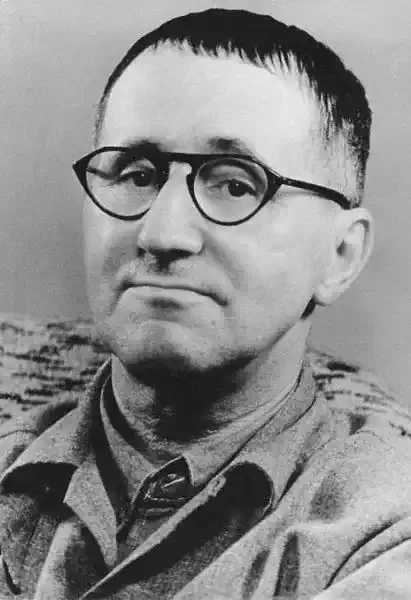
Bertolt Brecht
Mack the Knife
Oh, the shark has pretty teeth, dear
And he shows them pearly white.
Just a jack knife has Macheath, dear
And he keeps it out of sight.
When the shark bites with his teeth, dear
Scarlet billows start to spread.
Fancy gloves, though, wears Macheath, dear
So there's not a trace of red.
On the side-walk Sunday morning
Lies a body oozing life;
Someone's sneaking 'round the corner.
Is that someone Mack the Knife?
From a tugboat by the river
A cement bag's dropping down;
The cement's just for the weight, dear.
Bet you Mackie's back in town.
Louie Miller disappeared, dear
After drawing out his cash;
And Macheath spends like a sailor.
Did our boy do something rash?
Sukey Tawdry, Jenny Diver,
Polly Peachum, Lucy Brown
Oh, the line forms on the right, dear
Now that Mackie's back in town.
667
Arthur Rimbaud
Tartufe's Punishment
Raking, raking, his amorous thoughts
underneath his chaste robe of black,
happy, his hand gloved,
one day as he went along, fearsomely sweet,
yellow, dribbling piety from his toothless mouth,
One day as he went along,
'Let us Pray', - a Wicked One seized him
roughly by his saintly ear and
snapped frightful words at him,
tearing off the chaste robe of black
wrapped about his moist skin.
Punishment! - His clothes were unbuttoned;
and, the long chaplet of pardoned
sins being told in his heart,
St Tartufe was so pale!..
So he confessed and prayed, with a death rattle!
The man contented himself with carrying off
his clerical bands… - Faugh!
Tartufe was naked from his top to his toe!
673
Arthur Rimbaud
Shame
So long as the blade has not
Cut off that brain,
That white, green and fatty parcel,
Whose steam is never fresh,
Ah ! He, should cut off his
Nose, his lips, his ears,
His belly ! And abandon
But no, truly, I believe that so long as
The blade to his head,
And the stone to his side,
And the flame to his guts
Have not done execution, the tiresome
Child, the so stupid animal,
Must never for an instant cease
To cheat and betray
And like a Rocky Mountain cat ;
To make all places stink !
But still when he dies,
O my God !
May there rise up some prayer !
662
Arthur Rimbaud
Le Forgeron (The Blacksmith)
Le bras sur un marteau gigantesque, effrayant
D'ivresse et de grandeur, le front large, riant
Comme un clairon d'airain, avec toute sa bouche,
Et prenant ce gros-là dans son regard farouche,
Le Forgeron parlait à Louis Seize, un jour
Que le Peuple était là, se tordant tout autour,
Et sur les lambris d'or traînait sa veste sale.
Or le bon roi, debout sur son ventre, était pâle
Pâle comme un vaincu qu'on prend pour le gibet,
Et, soumis comme un chien, jamais ne regimbait,
Car ce maraud de forge aux énormes épaules
Lui disait de vieux mots et des choses si drôles,
Que cela l'empoignait au front, comme cela !
'Donc, Sire, tu sais bien, nous chantions tra la la
Et nous piquions les boeufs vers les sillons des autres :
Le Chanoine au soleil disait ses patenôtres
Sur des chapelets clairs grenés de pièces d'or.
Le Seigneur, à cheval, passait, sonnant du cor,
Et l'un avec la hart, l'autre avec la cravache,
Nous fouaillaient ; Hébétés comme des yeux de vache,
Nos yeux ne pleuraient pas : nous allions ! nous allions !
Et quand nous avions mis le pays en sillons,
Quand nous avions laissé dans cette terre noire
Un peu de notre chair... nous avions un pourboire :
-Nous venions voir flamber nos taudis dans la nuit ;
Nos enfants y faisaient un gâteau fort bien cuit !...
'Oh ! je ne me plains pas. Je te dis mes bêtises :
-C'est entre nous. J'admets que tu me contredises...
Or, n'est-ce pas joyeux de voir, au mois de juin
Dans les granges entrer des voitures de foin
Enormes ? De sentir l'odeur de ce qui pousse,
Des vergers quand il pleut un peu, de l'herbe rousse ?
De voir les champs de blé, les épis pleins de grain,
De penser que cela prépare bien du pain ?...
-Oui, l'on pourrait, plus fort, au fourneau qui s'allume,
Chanter joyeusement en martelant l'enclume,
Si l'on était certain qu'on pourrait prendre un peu,
Étant homme, à la fin !, de ce que donne Dieu !...
-Mais voilà, c'est toujours la même vieille histoire !
'... Oh ! je sais, maintenant ! Moi, je ne peux plus croire,
Quand j'ai deux bonnes mains, mon front et mon marteau,
Qu'un homme vienne là, dague sous le manteau
Et me dise : Maraud, ensemence ma terre ;
Que l'on arrive encor, quand ce serait la guerre,
Me prendre mon garçon comme cela, chez moi !...
-Moi, je serais un homme, et toi tu serais roi,
Tu me dirais : Je veux ! - Tu vois bien, c'est stupide !...
Tu crois que j'aime à voir ta baraque splendide,
Tes officiers dorés, tes mille chenapans,
Tes palsembleu bâtards tournant comme des paons ?
Ils ont rempli ton nid de l'odeur de nos filles,
Et de petits billets pour nous mettre aux Bastilles,
Et nous dirions : C'est bien : les pauvres à genoux !...
Nous dorerions ton Louvre en donnant nos gros sous,
Et tu te soûlerais, tu ferais belle fête,
Et tes Messieurs riraient, les reins sur notre tête !...
'Non ! Ces saletés-là datent de nos papas !
Oh ! Le Peuple n'est plus une putain ! Trois pas,
Et, tous, nous avons mis ta Bastille en poussière !
Cette bête suait du sang à chaque pierre...
Et c'était dégoûtant, la Bastille debout
Avec ses murs lépreux qui nous rappelaient tout
Et, toujours, nous tenaient enfermés dans leur ombre !
-Citoyen ! citoyen ! c'était le passé sombre
Qui croulait, qui râlait, quand nous prîmes la tour !
Nous avions quelque chose au coeur comme l'amour :
Nous avions embrassé nos fils sur nos poitrines,
Et, comme des chevaux, en soufflant des narines,
Nous marchions, nous chantions, et ça nous battait là,
Nous allions au soleil, front haut, comme cela,
Dans Paris accourant devant nos vestes sales !...
Enfin ! Nous nous sentions hommes ! Nous étions pâles,
Sire ; nous étions soûls de terribles espoirs,
Et quand nous fûmes là, devant les donjons noirs,
Agitant nos clairons et nos feuilles de chêne,
Les piques à la main ; nous n'eûmes pas de haine :
-Nous nous sentions si forts ! nous voulions être doux !
'Et depuis ce jour-là, nous sommes comme fous...
Le flot des ouvriers a monté dans la rue
Et ces maudits s'en vont, foule toujours accrue,
Comme des revenants, aux portes des richards !...
Moi, je cours avec eux assommer les mouchards,
Et je vais dans Paris le marteau sur l'épaule,
Farouche, à chaque coin balayant quelque drôle,
Et, si tu me riais au nez, je te tuerais !...
-Puis, tu dois y compter, tu te feras des frais
Avec tes avocats, qui prennent nos requêtes
Pour se les renvoyer comme sur des raquettes,
Et, tout bas, les malins ! Nous traitant de gros sots !
Pour mitonner des lois, ranger des de petits pots
Pleins de menus décrets, de méchantes droguailles,
S'amuser à couper proprement quelques tailles,
Puis se boucher le nez quand nous passons près d'eux,
- Ces chers avocassiers qui nous trouvent crasseux ! -
Pour débiter là-bas des milliers de sornettes
Et ne rien redouter sinon les baïonnettes,
Nous en avons assez, de tous ces cerveaux plats !
Ils embêtent le peuple !... Ah ! ce sont là les plats
Que tu nous sers, bourgeois, quand nous sommes féroces,
Quand nous cassons déjà les sceptres et les crosses !...'
Puis il le prend au bras, arrache le velours
Des rideaux, et lui montre, en bas, les larges cours
Où fourmille, où fourmille, où se lève la foule,
La foule épouvantable avec des bruits de houle,
Hurlant comme une chienne, hurlant comme une mer,
Avec ses bâtons forts et ses piques de fer,
Ses clameurs, ses grands cris de halles et de bouges,
Tas sombre de haillons taché de bonnets rouges !
L'Homme, par la fenêtre ouverte, montre tout
Au Roi pâle, suant qui chancelle debout,
Malade à regarder cela !...
spacespacespacespacespacespacespacespace'C'est la Crapule,
Sire ! ça bave aux murs, ça roule, ça pullule...
-Puisqu'ils ne mangent pas, Sire, ce sont les gueux !
-Je suis un forgeron : ma femme est avec eux :
Folle ! Elle vient chercher du pain aux Tuileries :
-On ne veut pas de nous dans les boulangeries !...
J'ai trois petits ; -Je suis crapule ! - Je connais
Des vieilles qui s'en vont pleurant sous leurs bonnets,
Parce qu'on leur a pris leur garçon ou leur fille :
-C'est la crapule. - Un homme était à la bastille,
D'autres étaient forçats ; c'étaient des citoyens
Honnêtes ; Libérés, ils sont comme des chiens ;
On les insulte ! Alors, ils ont là quelque chose
Qui leur fait mal, allez ! C'est terrible, et c'est cause
Que, se sentant brisés, que, se sentant damnés,
Ils viennent maintenant hurler sous votre nez !...
-Crapules : - Là-dedans sont des filles, infâmes
Parce que -, sachant bien que c'est faible, les femmes,
Messeigneurs de la cour, que ça veut toujours bien, -
Vous leur avez sali leur âme, comme rien !
Vos belles, aujourd'hui, sont là : - C'est la Crapule...
'Oh ! tous les Malheureux, tout ceux dont le dos brûle
Sous le soleil féroce, et qui vont, et qui vont,
Et dans ce travail-là sentent crever leur front,
Chapeau bas, mes bourgeois ! Oh ! ceux-là sont les hommes !
-Nous sommes Ouvriers ! Sire, Ouvriers ! - nous sommes
Pour les grands temps nouveaux où l'on voudra savoir,
Où l'homme forgera du matin jusqu'au soir,
Où, lentement vainqueur, il chassera les choses
Poursuivant les grands buts, cherchant les grandes causes,
Et montera sur Tout comme sur un cheval !
Oh ! nous sommes contents, nous aurons bien du mal !
-Tout ce qu'on ne sait pas, c'est peut-être terrible.
Nous pendrons nos marteaux, nous passerons au crible
Tout ce que nous savons, puis, Frères, en avant !...
-Nous faisons quelquefois ce grand rêve émouvant
De vivre simplement, ardemment, sans rien dire
De mauvais, travaillant sous l'auguste sourire
D'une femme qu'on aime avec un noble amour !
Et l'on travaillerait fièrement tout le jour,
Ecoutant le devoir comme un clairon qui sonne :
Et l'on se trouverait fort heureux, et personne,
Oh ! personne ! surtout, ne vous ferait plier !...
On aurait un fusil au-dessus du foyer....
'Oh ! mais ! l'air est tout plein d'une odeur de bataille !
Que te disais-je donc ? Je suis de la canaille !'
Translation by A. S. Kline
His hand on a gigantic hammer, terrifying
In size and drunkenness, vast-browed, laughing
Like a bronze trumpet, his whole mouth displayed,
Devouring the fat man, now, with his wild gaze,
The Blacksmith spoke with Louis, with the king,
The People there, all around him, cavorting,
Trailing their dirty coats down gilded panels.
But the dear king, belly upright, was pallid,
Pale as the victim led to the guillotine,
Submissive like a dog, cowed by the scene,
Since that wide-shouldered forge-black soul
Spoke of things past and other things so droll,
He had him by the short hairs, just like that!
‘Now, Sir, you know how we’d sing tra-la-la,
And drive the ox down other people’s furrows:
The Canon spun paternosters in the shadows
On rosaries bright with golden coins adorned,
Some Lord, astride, passed blowing on his horn,
One with the noose, another with whip-blows
Lashed us on. – Dazed like the eyes of cows,
Our eyes no longer wept; on and on we went,
And when we’d ploughed a whole continent,
When we had left behind in that black soil
A little of our own flesh…to reward our toil:
They’d set alight our hovels in the night;
Our little ones made burnt cakes alright.
…Oh, I’m not complaining! All my follies,
They’re between us. I’ll let you contradict.
But, isn’t it fine to see, in the month of June,
The enormous hay-wains entering the barns?
To smell the odour of burgeoning things,
The orchards in fine rain, the oats reddening?
To see wheat, wheat, ears filled with grain,
To think it promises us good bread again?...
Oh! You’d go to the forge, be more cheerful,
Sing and hammer joyfully at the anvil,
If you were sure to gain a little in the end –
Being, in fact, a man – of what God intends!
– But there it is, always the same old story!...
But now I know! I don’t credit it any more,
Owning two strong hands, a head, a hammer,
That a man in a cloak, wearing a dagger
Can say: go and sow my land, there, fellow;
Or that another, if maybe war should follow,
Can take my son like that, from where I’m living!
– Suppose I were a man, and you a king,
You’d say: I will it!... – What stupidity.
You think your splendid barn pleases me,
Your gilded servants, your thousand rogues,
Your fancy bastards, peacocks in a row:
Filling your nest with our daughters’ odour,
Warrants to the Bastille for us, moreover
That we should say: fine: make the poor poorer!
We’ll give you our last sous to gild the Louvre!
While you get drunk and enjoy the feast,
– And they all laugh, riding our backs beneath!
No. Those puerilities were our fathers!
The People is no one’s whore now, three steps further
And then, we razed your Bastille to the ground.
That monster sweated blood from every mound,
Was an abomination, that Bastille standing,
With leprous walls its every story yielding,
And, we forever held fast in its shadow!
– Citizen! That was the past, its sorrow,
That broke, and died, when we stormed the tower!
We had something in our hearts like true ardour.
We had clutched our children to our breast.
And like chargers, snorting at the contest,
We went, proud and strong, beating here inside…
We marched in the sun – like this – heads high
Into Paris! They greeted us in our ragged clothes.
At last! We felt ourselves Men! We were sallow,
Sire, drunk, and pallid with terrifying hopes:
And there, in front of those black prison slopes,
Waving our bugles and our sprigs of oak,
Pikes in our fists; did we feel hatred, no!
– We felt such strength we wanted to be gentle! ...
And since that day, we have proved elementals!
A mass of workers sprang up in the street,
And, cursed, are gone, a swelling crowd replete
With ghostly shades, to haunt the rich man’s gate.
I, I run with them, and set informers straight:
I scour Paris, dark-faced, wild, hammer on shoulder,
Sweeping something droll out of every corner,
And, if you smile at me, then I’ll do for you!
– Well, count on it: all this is going to cost you
And your men in black, culling our requests
To bat them about on their racquets all in jest,
And whisper, the rascals, softly: “Oh, what sots!”
To cook up laws, and stick up little pots,
Filled with cute pink decrees, and sugar pills,
Cutting us down to size, to amuse themselves,
Then they hold their noses when we pass by,
– Our kind representatives who hate the sty! –
Fearful of nothing, nothing, but bayonets….
That’s fine. Enough of snuff and lorgnettes!
We’ve had our fill, here, of those dull heads
And bellies of gods. Ah! That’s the bread
You serve us, bourgeoisie, while we rage here,
While we shatter the sceptre and the crozier!...’
He takes his arm, tears back the velvet curtain
And shows the vast courtyards beneath them,
Where the mob swarms, and seethes, where rise,
Out of the frightful mob those storm-filled cries,
Howling as bitches howl, or like the sea,
With their knotted stakes, their pikes of steel,
With the clamour of their market-halls and slums,
A ragged mass of blood-stained caps, and drums:
The Man, through the open window, shows all
To the pale sweating king, reeling, about to fall,
Sick at the sight of it!
‘Those are the Scum, Sire.
Licking the walls, seething, rising higher:
– But then they’ve not eaten, Sire, these beggars!
I’m a blacksmith: my wife, madwoman, is there!
She thinks she’ll get bread at the Tuileries!
– They’ll have none of us in the bakeries.
I’ve three youngsters. I’m scum, too – I know
Old women weeping under their bonnets so
Because they’ve taken a daughter or a son:
One man was in the Bastille – oh, they’re scum –
Another the galleys: both honest citizens.
Freed, they’re treated like dogs, these men:
Insulted! Then, they have something here
That hurts them, see! It’s terrible, it’s clear
They feel broken, feel themselves damned,
There, screaming beneath you where you stand!
Scum. – Down there girls, infamous, shriek,
Because – well, you knew girls were weak –
Gentlemen of the court – gave all you sought –
You’d spit on their souls, as if they were naught!
Now, your pretty ones are there. They’re scum.
Oh, all the Wretched, whose backs, in the fierce sun
Burn, and yet they still work on and on,
Feeling their heads burst with their exertion,
Hats off, you bourgeoisie! Those are Men.
We are the Workers, Sire! Workers! And then
We’re for the great new age, of knowledge, light,
When Man will forge from morning to night,
Pursuing great effects, chasing great causes,
When he will tame things, slowly victorious,
And like a horse, mount the mighty All!
Oh! Splendour of the forges! And no more
Evil, then! – What’s unknown, its terror maybe
We’ll know! – Hammer in hand, let’s sieve freely
All that we know: then, Brothers, we’ll go on!
Sometimes we dream that dream’s vast emotion
Of the simple ardent life, where you revile
All evil, working beneath the august smile,
Of a woman you love with love’s nobility:
And all day long you labour on proudly,
Hearing the clarion call of duty sounding!
And you feel so happy; and nothing, nothing,
Oh, above all, no-one makes you kneel!
Over the fireplace, there, you’d have a rifle…
Oh! But the air is filled with the scent of battle.
What did I say? I too am one of the rascals!
And there are still sharks and informers.
But we are free! With our moments of terror
When we feel we are great, so great! Just now
I was talking of peaceful work, of how…
Look at that sky! – Too small for us, you see,
If we feared the heat, we’d live on our knees!
Look at that sky! – I’ll return to the crowd,
To the vast fearful mob who cry aloud
And roll your cannon through the cobbles’ sty;
– Oh! We will wash them clean when we die!
– And if, against our cries and our vengeance,
The claws of old gilded kings, all over France,
Urge on their regiments in full battle-dress,
Well then, you lot? Shit to those dogs, no less!’
– He shoulders his hammer once more.
The crowd
Feels soul-drunk close to that man, and now
Through the great courtyard, all those rooms,
Where Paris pants and the voices boom,
A shudder shakes the immense populace.
Then, with his broad hand, its grimy grace
Gilded, while the pot-bellied king sweats,
The Blacksmith set his red cap on that head!
655
Bertolt Brecht
Radio Poem
You little box, held to me escaping
So that your valves should not break
Carried from house to house to ship from sail to train,
So that my enemies might go on talking to me,
Near my bed, to my pain
The last thing at night, the first thing in the morning,
Of their victories and of my cares,
Promise me not to go silent all of a sudden.
658

Rudyard Kipling
The Female of the Species
When the Himalayan peasant meets the he-bear in his pride,
He shouts to scare the monster who will often turn aside.
But the she-bear thus accosted rends the peasant tooth and nail,
For the female of the species is more deadly than the male.
When Nag, the wayside cobra, hears the careless foot of man,
He will sometimes wriggle sideways and avoid it if he can,
But his mate makes no such motion where she camps beside the trail -
For the female of the species is more deadly than the male.
When the early Jesuit fathers preached to Hurons and Choctaws,
They prayed to be delivered from the vengeance of the squaws -
'Twas the women, not the warriors, turned those stark enthusiasts pale -
For the female of the species is more deadly than the male.
Man's timid heart is bursting with the things he must not say,
For the Woman that God gave him isn't his to give away;
But when hunter meets with husband, each confirms the others tale -
The female of the species is more deadly than the male.
Man, a bear in most relations, worm and savage otherwise,
Man propounds negotiations, Man accepts the compromise;
Very rarely will he squarely push the logic of a fact
To its ultimate conclusion in unmitigated act.
Fear, or foolishness, impels him, ere he lay the wicked low,
To concede some form of trial even to his fiercest foe.
Mirth obscene diverts his anger; Doubt and Pity oft perplex
Him in dealing with an issue - to the scandal of the Sex!
But the Woman that God gave him, every fibre of her frame
Proves her launched for one sole issue, armed and engined for the same,
And to serve that single issue, lest the generations fail,
The female of the species must be deadlier than the male.
She who faces Death by torture for each life beneath her breast
May not deal in doubt or pity - must not swerve for fact or jest.
These be purely male diversions - not in these her honor dwells -
She, the Other Law we live by, is that Law and nothing else!
She can bring no more to living than the powers that make her great
As the Mother of the Infant and the Mistress of the Mate;
And when Babe and Man are lacking and she strides unclaimed to claim
Her right as femme (and baron), her equipment is the same.
She is wedded to convictions - in default of grosser ties;
Her contentions are her children, Heaven help him, who denies!
He will meet no cool discussion, but the instant, white-hot wild
Wakened female of the species warring as for spouse and child.
Unprovoked and awful charges - even so the she-bear fights;
Speech that drips, corrodes and poisons - even so the cobra bites;
Scientific vivisection of one nerve till it is raw,
And the victim writhes with anguish - like the Jesuit with the squaw!
So it comes that Man, the coward, when he gathers to confer
With his fellow-braves in council, dare not leave a place for her
Where, at war with Life and Conscience, he uplifts his erring hands
To some God of abstract justice - which no woman understands.
And Man knows it! Knows, moreover, that the Woman that God gave him
Must command but may not govern; shall enthrall but not enslave him.
And She knows, because She warns him and Her instincts never fail,
That the female of Her species is more deadly than the male!
647

Robert Browning
The Laboratory-Ancien Régime
I.
Now that I, tying thy glass mask tightly,
May gaze thro' these faint smokes curling whitely,
As thou pliest thy trade in this devil's-smithy---
Which is the poison to poison her, prithee?
II.
He is with her, and they know that I know
Where they are, what they do: they believe my tears flow
While they laugh, laugh at me, at me fled to the drear
Empty church, to pray God in, for them!---I am here.
III
Grind away, moisten and mash up thy paste,
Pound at thy powder,---I am not in haste!
Better sit thus, and observe thy strange things,
Than go where men wait me and dance at the King's.
IV
That in the mortar---you call it a gum?
Ah, the brave tree whence such gold oozings come!
And yonder soft phial, the exquisite blue,
Sure to taste sweetly,---is that poison too?
V
Had I but all of them, thee and thy treasures,
What a wild crowd of invisible pleasures!
To carry pure death in an earring, a casket,
A signet, a fan-mount, a filigree basket!
VI
Soon, at the King's, a mere lozenge to give,
And Pauline should have just thirty minutes to live!
But to light a pastile, and Elise, with her head
And her breast and her arms and her hands, should drop dead!
VII
Quick---is it finished? The colour's too grim!
Why not soft like the phial's, enticing and dim?
Let it brighten her drink, let her turn it and stir,
And try it and taste, ere she fix and prefer!
VIII
What a drop! She's not little, no minion like me!
That's why she ensnared him: this never will free
The soul from those masculine eyes,---Say, ``no!''
To that pulse's magnificent come-and-go.
IX
For only last night, as they whispered, I brought
My own eyes to bear on her so, that I thought
Could I keep them one half minute fixed, she would fall
Shrivelled; she fell not; yet this does it all!
X
Not that I bid you spare her the pain;
Let death be felt and the proof remain:
Brand, burn up, bite into its grace---
He is sure to remember her dying face!
XI
Is it done? Take my mask off! Nay, be not morose;
It kills her, and this prevents seeing it close;
The delicate droplet, my whole fortune's fee!
If it hurts her, beside, can it ever hurt me?
XII
Now, take all my jewels, gorge gold to your fill,
You may kiss me, old man, on my mouth if you will!
But brush this dust off me, lest horror it brings
Ere I know it---next moment I dance at the King's!
630
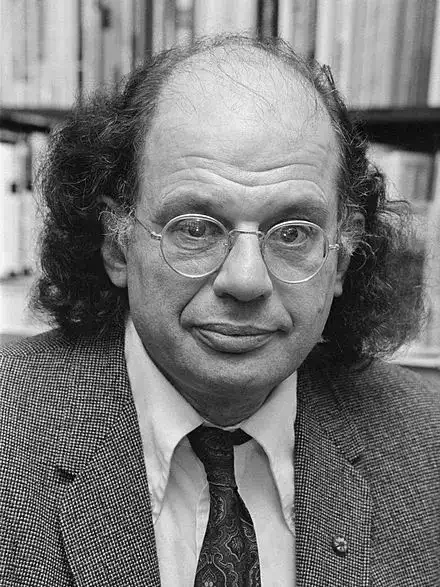
Allen Ginsberg
Mugging (I)
I
Tonite I walked out of my red apartment door on East tenth street’s dusk—
Walked out of my home ten years, walked out in my honking neighborhood
Tonite at seven walked out past garbage cans chained to concrete anchors
Walked under black painted fire escapes, giant castiron plate covering a hole in ground
—Crossed the street, traffic lite red, thirteen bus roaring by liquor store,
past corner pharmacy iron grated, past Coca Cola & Mylai posters fading scraped on
brick
Past Chinese Laundry wood door’d, & broken cement stoop steps For Rent hall painted
green & purple Puerto Rican style
Along E. 10th’s glass splattered pavement, kid blacks & Spanish oiled hair adolescents’
crowded house fronts—
Ah, tonite I walked out on my block NY City under humid summer sky Halloween,
thinking what happened Timothy Leary joining brain police for a season?
thinking what’s all this Weathermen, secrecy & selfrighteousness beyond reason—F.B.I.
plots?
Walked past a taxicab controlling the bottle strewn curb—
past young fellows with their umbrella handles & canes leaning against a ravaged Buick
—and as I looked at the crowd of kids on the stoop—a boy stepped up, put his arm
around my neck
tenderly I thought for a moment, squeezed harder, his umbrella handle against my
skull,
and his friends took my arm, a young brown companion tripped his foot ’gainst my
ankle—
as I went down shouting Om Ah Hūm to gangs of lovers on the stoop watching
slowly appreciating, why this is a raid, these strangers mean strange business
with what—my pockets, bald head, broken-healed-bone leg, my softshoes, my heart—
Have they knives? Om Ah Hūm—Have they sharp metal wood to shove in eye
ear ass? Om Ah Hūm
& slowly reclined on the pavement, struggling to keep my woolen bag of poetry
address calendar & Leary-lawyer notes hung from my shoulder
dragged in my neat orlon shirt over the crossbar of a broken metal door
dragged slowly onto the fire-soiled floor an abandoned store, laundry candy counter
1929—
now a mess of papers & pillows & plastic car seat covers cracked cockroach-corpsed
ground—
my wallet back pocket passed over the iron foot step guard
and fell out, stole by God Muggers’ lost fingers, Strange—
Couldn’t tell—snakeskin wallet actually plastic, 70 dollars my bank money for a week,
old broken wallet—and dreary plastic contents—Amex card & Manf. Hanover Trust
Credit too—business card from Mr. Spears British Home Minister Drug Squad—my draft
card—membership ACLU & Naropa Institute Instructor’s identification
Om Ah Hūm I continued chanting Om Ah Hūm
Putting my palm on the neck of an 18 year old boy fingering my back pocket crying
“Where’s the money”
“Om Ah Hūm there isn’t any”
My card Chief Boo-Hoo Neo American Church New Jersey & Lower East Side
Om Ah Hūm —what not forgotten crowded wallet—Mobil Credit, Shell? old lovers
addresses on cardboard pieces, booksellers calling cards—
—“Shut up or we’ll murder you”—“Om Ah Hūm take it easy”
Lying on the floor shall I shout more loud?—the metal door closed on blackness
one boy felt my broken healed ankle, looking for hundred dollar bills behind my
stocking weren’t even there—a third boy untied my Seiko Hong Kong watch rough from
right wrist leaving a clasp-prick skin tiny bruise
“Shut up and we’ll get out of here”—and so they left,
as I rose from the cardboard mattress thinking Om Ah Hūm didn’t stop em
enough,
the tone of voice too loud—my shoulder bag with 10,000 dollars full of poetry left on
the broken floor—
620

Kazi Nazrul Islam
Irrepressible Youth
O restless and impetuous youth!
Who hid thy face with the mask of wisdom
And clothed thee with the apparel of patience?
All the morality-mongers advise restraint
For the arrogant power of youth
Only to hide their own inner fears.
O thou impetuous! Who fettered thy flying wings?
Fearless youth! Thou, who from the crowd
Of begging weaklings, used to snatch light
Out of the womb of darkness, dost rest today
In thy nest,
How couldst thou check
Thy terrific onrush of life at the bidding
Of those whose spine is broken by
The cold touch of the polar wind and
Whose life is made powerless by the shadow of
hardened frost.
How strange to see the lion of the desert
Meekly enter the cage and submit to punishment!
Those who to want create to and yet are afraid to destroy
Are themselves victims of destruction first.
What fool says that thou canst kindle the fire
Without burning firewood? How
Canst thou get the shade of the forest
If the seed does not supply the life?
The swift flowing river as it rushes madly on
Impelled by its richness of life erodes the
two banks
And yet, at the same time, makes the flowers blossom.
She is thirsty for the sea and knows not
Who is her friend or foe. She cares
Not how many boats she sinks. All she
Wants is ever to be on the move, for that is
Her religion, Who ever heard that the breakers
Of the sea quietly slept lest two merchant ships sank?
Will not the elephant walk on the roads
Lest it tramples an ant under its feet?
Will not the mighty fire burn lest
It destroys healths and homes?
Will the sight of gaping, tattered roofs
Make the rains cease its heavy downpour?
Will the summer storms fail to come
Lest the trees in the woods tumble arid break?
Will there be no eagle because the timid
Baby-Lamb might take fright at his sight ?
O uncalculating youth,
Thou dost never waste thy time making out
The balance sheet of loss and gain !
O tempestuous youth, wake up!
Come like a tornado, trampling everything that falls
In front of thee, in causeless glee.
Bring generous life, wide as the horizons,
And a mighty current of motion strong enough
To wash tile debris off the banks
In a wild rush.
Embrace sorrow with a stout heart
And laugh loudly with frankness and joy.
Freedom will come later, but sing now
Of the fresh and the young. Untimely and
Ugly sickness has attacked the kingdom of youth.
This nation is inert as the dead
Long before its real decease. Open the iron door
And let joy unbounded flow
Like the smooth easy flight of the pigeons
In the blue firmament. Rush into the ocean
For no reason and climb the peak
Of that distant hill! If thou meetest
Death round the corner, embrace him as thy comrade.
Get rid of all the prejudices that reside
Inside thy heart and outside of thee, All the swords
Of Ali are rusted today and gone to seed!
[Original: Durbar joubon; Translation: Kabir Chowdhury]
611
Kazi Nazrul Islam
Robbers and Dacoits
Who calls you a dacoit, friend,
Who calls you a robber?
All around dacoits reign today,
And thieves prosper.
Who is judging the robbers and the dacoits?
Who is the lord of justice?
Ask him, friend, who is not a dacoit today,
Who is not a robber chief.
My lord, raise your mace of justice and punish
Those wealthy and the rich who thrived
Robbing the humble poor and the deprive.
Today the greater the robber, the bigger the thief
and the cleverer the cheat
The more honourable, the more distinguished
and the more dignified his seat
In the assembly of nations.
All around
Bricks red with the blood of the subjects
Go to raise the king's palaces
And the factories of the gangster-rich flourish
Rendering thousands homeless.
The cunning devils start mills
Where men are ground to pieces,
Where from hungry millions emerge,
Sucked dry like sugarcane,
Bereft of their juices.
Squeezing out the life blood of millions of men
The mill owners amass vast wealth in their hidden den.
The money lenders grow rich
Robbing the helpless,
And the Zamindars on joy rides go
Rendering the weak homeless.
The greedy merchants in this earth
Have built a house of prostitution of wealth
There the vice Saki dances and drinks
The gold demon's health.
Losing health, food, life, hope, language and all
Bankrupt man is heading to a terrible fall.
There is no way of escape
The gold-hungry monsters have dug
Deep invincible moats all around,
The world today is a prison sound
With cruel gangsters working as sentinel.
Thieves are friends here
Cheats are comrades dear.
Who calls you a dacoit, dear friend?
Who calls you a robber?
You may have stolen money or goods,
But you have not dug a dagger
In some one's tender-heart.
You may be thieves all right
But not inhuman like the so-called great
You can turn Valmikis yet
When true men you meet
You who are the Ratnakars.
[Original: Chor-Dakaat; Translation: Kabir Chowdhury]
Who calls you a robber?
All around dacoits reign today,
And thieves prosper.
Who is judging the robbers and the dacoits?
Who is the lord of justice?
Ask him, friend, who is not a dacoit today,
Who is not a robber chief.
My lord, raise your mace of justice and punish
Those wealthy and the rich who thrived
Robbing the humble poor and the deprive.
Today the greater the robber, the bigger the thief
and the cleverer the cheat
The more honourable, the more distinguished
and the more dignified his seat
In the assembly of nations.
All around
Bricks red with the blood of the subjects
Go to raise the king's palaces
And the factories of the gangster-rich flourish
Rendering thousands homeless.
The cunning devils start mills
Where men are ground to pieces,
Where from hungry millions emerge,
Sucked dry like sugarcane,
Bereft of their juices.
Squeezing out the life blood of millions of men
The mill owners amass vast wealth in their hidden den.
The money lenders grow rich
Robbing the helpless,
And the Zamindars on joy rides go
Rendering the weak homeless.
The greedy merchants in this earth
Have built a house of prostitution of wealth
There the vice Saki dances and drinks
The gold demon's health.
Losing health, food, life, hope, language and all
Bankrupt man is heading to a terrible fall.
There is no way of escape
The gold-hungry monsters have dug
Deep invincible moats all around,
The world today is a prison sound
With cruel gangsters working as sentinel.
Thieves are friends here
Cheats are comrades dear.
Who calls you a dacoit, dear friend?
Who calls you a robber?
You may have stolen money or goods,
But you have not dug a dagger
In some one's tender-heart.
You may be thieves all right
But not inhuman like the so-called great
You can turn Valmikis yet
When true men you meet
You who are the Ratnakars.
[Original: Chor-Dakaat; Translation: Kabir Chowdhury]
610
Elizabeth Bishop
Songs for a Colored Singer
I
A washing hangs upon the line,
but it's not mine.
None of the things that I can see
belong to me.
The neighbors got a radio with an aerial;
we got a little portable.
They got a lot of closet space;
we got a suitcase.
I say, "Le Roy, just how much are we owing?
Something I can't comprehend,
the more we got the more we spend...."
He only answers, "Let's get going."
Le Roy, you're earning too much money now.
I sit and look at our backyard
and find it very hard.
What have we got for all his dollars and cents?
--A pile of bottles by the fence.
He's faithful and he's kind
but he sure has an inquiring mind.
He's seen a lot; he's bound to see the rest,
and if I protest
Le Roy answers with a frown,
"Darling, when I earns I spends.
The world is wide; it still extends....
I'm going to get a job in the next town."
Le Roy, you're earning too much money now.
II
The time has come to call a halt;
and so it ends.
He's gone off with his other friends.
He needn't try to make amends,
this occasion's all his fault.
Through rain and dark I see his face
across the street at Flossie's place.
He's drinking in the warm pink glow
to th' accompaniment of the piccolo.
The time has come to call a halt.
I met him walking with Varella
and hit him twice with my umbrella.
Perhaps that occasion was my fault,
but the time has come to call a halt.
Go drink your wine and go get tight.
Let the piccolo play.
I'm sick of all your fussing anyway.
Now I'm pursuing my own way.
I'm leaving on the bus tonight.
Far down the highway wet and black
I'll ride and ride and not come back.
I'm going to go and take the bus
and find someone monogamous.
The time has come to call a halt.
I've borrowed fifteen dollars fare
and it will take me anywhere.
For this occasion's all his fault.
The time has come to call a halt.
III
Lullaby.
Adult and child
sink to their rest.
At sea the big ship sinks and dies,
lead in its breast.
Lullaby.
Let mations rage,
let nations fall.
The shadow of the crib makes an enormous cage
upon the wall.
Lullaby.
Sleep on and on,
war's over soon.
Drop the silly, harmless toy,
pick up the moon.
Lullaby.
If they should say
you have no sense,
don't you mind them; it won't make
much difference.
Lullaby.
Adult and child
sink to their rest.
At sea the big ship sinks and dies,
lead in its breast.
IV
What's that shining in the leaves,
the shadowy leaves,
like tears when somebody grieves,
shining, shining in the leaves?
Is it dew or is it tears,
dew or tears,
hanging there for years and years
like a heavy dew of tears?
Then that dew begins to fall,
roll down and fall,
Maybe it's not tears at all.
See it, see it roll and fall.
Hear it falling on the ground,
hear, all around.
That is not a tearful sound,
beating, beating on the ground.
See it lying there like seeds,
like black seeds.
see it taking root like weeds,
faster, faster than the weeds,
all the shining seeds take root,
conspiring root,
and what curious flower or fruit
will grow from that conspiring root?
fruit or flower? It is a face.
Yes, a face.
In that dark and dreary place
each seed grows into a face.
Like an army in a dream
the faces seem,
darker, darker, like a dream.
They're too real to be a dream.
595
Kazi Nazrul Islam
Rise Up, O Farmer!
O farmer, where is tile smile of your face?
Where is' your shepherd's bamboo flute'!
Where is your jute?
Who plunders it from your stock on riverside?
Who robs you of huge golden paddy grown in your fields?
The empty corn-bin in your courtyard resembles a husband-less daughter
lamenting in her father's home.
Your rural fields present winter-crops as though painted, why
does your son ask for salt and green chilies while eating?
It seems that the government has taxed on your curry too.
Have your sugar-canes been sweetened by the juice of your tears?
Who have drunk milk exploiting your cow?
Alas, your milk pot docs not hold even the starch of boiled rice.
Your younger child with high fever is healed up,
since he is sleeping in tile graveyard.
And he seems to drag her elder sister towards the grave, too.
The girl is calling him deliriously.
Mother replaces milk will oyster,
father weeps on his way to field burying his son;
around him tile fields are full of paddy and the sky is full of delight.
It seems that today's horizon is red by sucking' a farmer's blood.
Fields overflow with paddy, markets with goods,
the wharps with jute-loaded boats.
Who eats away tile crops of your field,who
are those swarm of locusts?
Why are you so destitute in this realm of merrymaking?
Why does the son of your home go to the grave?
Your cattle grazes in the vast pastures, but you get no milk,
O farmer, your hopes of living have gone away long before,
how do you stand lamentations beside a tomb?
Can't you wake up the burning of thunder in your arid bones?
How long shall you see with eyes wide open the theft by burglars?
Don't you possess a bamboo-stick even?
You may have no blood in your body, yet we want all your bones.
The plunderer robbing you of your boiled rice day
and night has ascended to affluency sucking your blood.
Your bone shall cause the bones of those plunderers decay,
and your rib-bones will turn into war swords.
Allah, the Benevolent, gives water to your fields,
energy to your wind to bloom flowers,
sun and moon rise up to grow your crops, would
those gifts of Allah again be plundered by that demon?
Though the sky is all clear, there is no hope.
Though Khuda's mercy comes in torrents,
you don't reach it. So raise up your hands straight,
that would give you instant strength.
Your crops shall fill your granary, and God shall bless you.
[Original: Otth re chashi; Translation: Mohammad Nurul Huda]
585
Rudyard Kipling
Cain and Abel
Western Version
Cain and Abel were brothers born.
(Koop-la! Come along, cows!)
One raised cattle and one raised corn.
(Koop-la! Come along! Co-hoe!)
And Cain he farmed by the river-side,
So he did not care how much it dried.
For he banked, and he sluiced, and he ditched and he led
(And the Corn don't care for the Horn)--
A-half Euphrates out of her bed
To water his dam' Corn!
But Abel herded out on the plains
Where you have to go by the dams and rains.
It happened, after a three-year drought,
The wells, and the springs, and the dams gave out.
The Herd-bulls came to Cain's new house
(They wanted water so!--)
With the hot red Sun between their brows,
Sayin' "Give us water for our pore cows!"
But Cain he told 'em--"No!"
The Cows they came to Cain's big house
With the cold white Moon between their brows,
Sayin' "Give some water to us pore cows!"
But Cain he told 'em--"No?"
The li'l Calves came to Cain's fine house
With the Evenin' Star between their brows,
Sayin' "'Give us water an' we'll be cows."
But Cain he told 'em--"No!"
The Herd-bulls led 'em back again,
An' Abel went an' said to Cain: --
"Oh sell me water, my brother dear,
Or there will be no beef this year."
And Cain he answered--"No! "
"Then draw your hatches, my brother true,
An' let a little water through."
But Cain he answered: -"No!
"My dams are tight an' my ditches are sound,
An' not a drop goes through or round
Till she's done her duty by the Corn.
"I will not sell, an' I will not draw,
An' if you breach, I'll have the Law,
As sure as you are borne! "
Then Abel took his best bull-goad,
An' holed a dyke on the Eden road.
He opened her up with foot an' hand,
An' let Euphrates loose on the land.
He spilled Euphrates out on the plain,
So's all his cattle could drink again.
Then Cain he saw what Abel done--
But, in those days, there was no Gun!
So he made him a club of a hickory-limb,
An' halted Abel an' said to him: --
"I did not sell an' I did not draw,
An' now you've breached I'll have the Law.
"You ride abroad in your hat and spurs,
Hell-hoofin' over my cucumbers!
"You pray to the Lord to send you luck
An' you loose your steers in my garden-truck:
"An' now you're bust, as you ought to be,
You can keep on prayin' but not to me!"
Then Abel saw it meant the life;
But, in those days, there was no Knife:
So he up with his big bull-goad instead,
But--Cain hit first and dropped him dead!
The Herd-bulls ran when they smelt the blood,
An' horned an' pawed in that Red Mud.
The Calves they bawled, and the Steers they milled,
Because it was the First Man Killed;
An' the whole Herd broke for the Land of Nod,
An' Cain was left to be judged by God!
But, seein' all he had had to bear,
I never could call the Judgment fair!
580

Ezra Pound
Piere Vidal Old
When I but think upon the great dead days
And turn my mind upon that splendid madness,
Lo! I do curse my strength
And blame the sun his gladness;
For that the one is dead
And the red sun mocks my sadness.
Behold me, Vidal, that was fool of fools!
Swift as the king wolf was I and as strong
When tall stags fled me through the alder brakes,
And every jongleur knew me in his song,
And the hounds fled and the deer fled
And none fled over long.
Even the grey pack knew me and knew fear.
God! how the swiftest hind's blood spurted hot
Over the sharpened teeth and purpling lips!
Hot was that hind's blood yet it scorched me not
As did first scorn, then lips of the Penautier!
Aye ye are fools, if ye think time can blot
From Piere Vidal’s remembrance that blue night.
God! but the purple of the sky was deep!
Clear, deep, translucent, so the stars me seemed
Set deep in crystal; and because my sleep
Rare visitor came not, the Saints I guerdon
For that restlessness Piere set to keep
One more fool's vigil with the hollyhocks.
Swift came the Loba, as a branch that's caught,
Torn, green and silent in the swollen Rhone,
Green was her mantle, close, and wrought
Of some thin silk stuff that's scarce stuff at all,
But like a mist wherethrough her white form fought,
And conquered! Ah God! conquered!
Silent my mate came as the night was still.
Speech? Words? Faugh! Who talks of words and love?!
Hot is such love and silent,
Silent as fate is, and as strong until
It faints in taking and in giving all.
Stark, keen, triumphant, till it plays at death.
God! she was white then, splendid as some tomb
High wrought of marble, and the panting breath
Ceased utterly. Well, then I waited, drew,
Half-sheathed, then naked from its saffron sheath
Drew full this dagger that doth tremble here.
Just then she woke and mocked the less keen blade.
Ah God, the Loba! and my only mate!
Was there such flesh made ever and unmade!
God curse the years that turn such women grey!
Behold here Vidal, that was hunted, flayed,
Shamed and yet bowed not and that won at last.
And yet I curse the sun for his red gladness,
I that have known strath, garth, brake, dale,
And every run-away of the wood through that great
madness,
Behold me shrivelled as an old oak's trunk
And made men's mock'ry in my rotten sadness!
No man hath heard the glory of my days:
No man hath dared and won his dare as I:
One night, one body and one welding flame!
What do ye own, ye niggards! that can buy
Such glory of the earth? Or who will win
Such battle-guerdon with his 'prowesse high' ?
O age gone lax! O stunted followers,
That mask at passions and desire desires,
Behold me shrivelled, and your mock of mocks;
And yet I mock you by the mighty fires
That burnt me to this ash.
Ah! Cabaret! Ah Cabaret, thy hills again!
Take your hands off me! . . . [Sniffing the air.
Ha! this scent is hot!
566
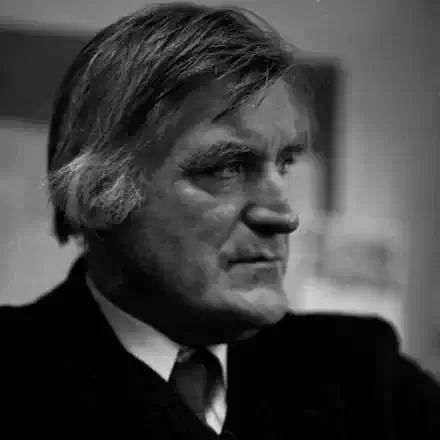
Ted Hughes
Thistles
Against the rubber tongues of cows and the hoeing hands of men
Thistles spike the summer air
And crackle open under a blue-black pressure.
Every one a revengeful burst
Of resurrection, a grasped fistful
Of splintered weapons and Icelandic frost thrust up
From the underground stain of a decayed Viking.
They are like pale hair and the gutturals of dialects.
Every one manages a plume of blood.
Then they grow grey like men.
Mown down, it is a feud. Their sons appear
Stiff with weapons, fighting back over the same ground.
565
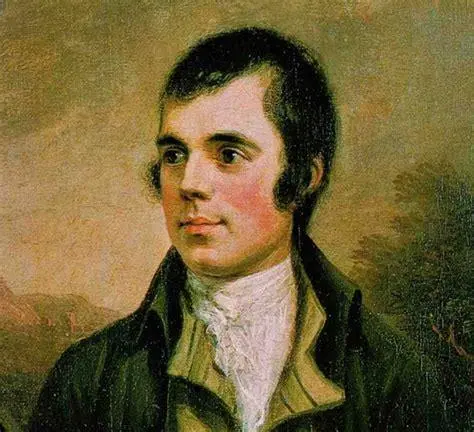
Robert Burns
Holy Willie's Prayer
'And send the godly in a pet to pray.' - Pope
O Thou, that in the heavens does dwell,
Wha, as it pleases best Thysel',
Sends ane to heaven an' ten to hell,
A' for Thy glory,
And no for onie guid or ill
They've done afore Thee!
I bless and praise Thy matchless might,
When thousands Thou hast left in night,
That I am here afore Thy sight,
For gifts an' grace
A burning and a shining light
To a' this place.
What was I, or my generation,
That I should get sic exaltation,
I wha deserv'd most just damnation
For broken laws,
Sax thousand years ere my creation,
Thro' Adam's cause.
When from my mither's womb I fell,
Thou might hae plung'd me deep in hell,
To gnash my gooms, and weep and wail,
In burnin lakes,
Where daned devils roar and yell,
Chain'd to their stakes.
Yet I am here a chosen sample,
To show thy grace is great and ample;
I'm here a pillar o' Thy temple,
Strong as a rock,
A guide, a buckler, and example,
To a' Thy flock.
O Lord, Thou kens what zeal I bear,
When drinkers drink, an' swearers swear,
An' sining here, an' dancin there,
Wi great and sma';
For I am keepit by Thy fear
Free frae them a'.
But yet, O Lord! confess I must,
At times I'm fash'd wi' fleshly lust:
An' sometimes, too, in warldly trust,
Vile self gets in;
But Thou remembers we are dust,
Defil'd wi' sin.
O Lord! yestreen, Thou kens, wi' Meg -
Thy pardon I sincerely beg;
O! may't ne'er be a livin plague
To my dishonour,
An' I'll ne'er lift a lawless leg
Again upon her.
Besides, I farther maun allow,
Wi' Leezie's lass, three times I trow -
But Lord, that Friday I was fou,
When I cam near her;
Or else, Thou kens, Thy servant true
Wad never steer her.
Maybe Thou lets this fleshly thorn
Buffet Thy servant e'en and morn,
Lest he owre proud and high shou'd turn,
That he's sae gifted:
If sae, Thy han' maun e'en be borne,
Until Thou lift it.
Lord, mind Gaw'n Hamilton's deserts;
He drinks, an' swears, an' plays at cartes,
Yet has sae mony takin arts,
Wi' great and sma',
Frae God's ain priest the people's hearts
He steals awa.
An' when we chasten'd him therefor,
Thou kens how he bred sic a splore,
An' set the warld in a roar
O' laughing at us; -
Curse Thou his basket and his store,
Kail an' potatoes.
Lord, hear my earnest cry and pray'r,
Against that Presbyt'ry o' Ayr;
Thy strong right hand, Lord make it bare
Upo' their heads;
Lord visit them, an' dinna spare,
For their misdeeds.
O Lord, my God! that glib-tongu'd Aiken,
My vera heart and flesh are quakin,
To think how we stood sweatin, shakin,
An' p-'d wi' dread,
While he, wi' hingin lip an' snakin,
Held up his head.
Lord, in Thy day o' vengeance try him,
Lord, visit them wha did employ him,
And pass not in Thy mercy by them,
Nor hear them their pray'r,
But for Thy people's sake destroy them,
An' dinna spare.
But, Lord, remember me an' mine
Wi' mercies temporal and divine,
That I for grace an' gear may shine,
Excell'd by nane,
And a' the glory shall be thine,
Amen, Amen!
569
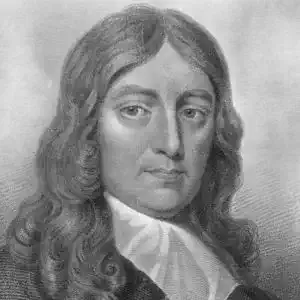
John Milton
Psalm 83
Be not thou silent now at length
O God hold not thy peace,
Sit not thou still O God of strength
We cry and do not cease.
For lo thy furious foes now *swell
And *storm outrageously, *Jehemajun.
And they that hate thee proud and fill
Exalt their heads full hie.
Against thy people they *contrive *Jagnarimu.
*Their Plots and Counsels deep, *Sod.
*Them to ensnare they chiefly strive *Jithjagnatsu gnal.
*Whom thou dost hide and keep. *Tsephuneca.
Come let us cut them off say they,
Till they no Nation be
That Israels name for ever may
Be lost in memory.
For they consult *with all their might, *Lev jachdau.
And all as one in mind
Themselves against thee they unite
And in firm union bind.
The tents of Edom, and the brood
Of scornful Ishmael,
Moab, with them of Hagars blood
That in the Desart dwell,
Gebal and Ammon there conspire,
And hateful Amalec,
The Philistims, and they of Tyre
Whose bounds the sea doth check.
With them great Asshur also bands
And doth confirm the knot,
All these have lent their armed hands
To aid the Sons of Lot.
Do to them as to Midian bold
That wasted all the Coast.
To Sisera, and as is told
Thou didst to Jabins hoast,
When at the brook of Kishon old
They were repulst and slain,
At Endor quite cut off, and rowl'd
As dung upon the plain.
As Zeb and Oreb evil sped
So let their Princes speed
As Zeba, and Zalmunna bled
So let their Princes bleed.
For they amidst their pride have said
By right now shall we seize
Gods houses, and will now invade
*Their stately Palaces. *Neoth Elohim bears both.
My God, oh make them as a wheel
No quiet let them find,
Giddy and restless let them reel
Like stubble from the wind.
As when an aged wood takes fire
Which on a sudden straies,
The greedy flame runs hier and hier
Till all the mountains blaze,
So with thy whirlwind them pursue,
And with thy tempest chase;
*And till they *yield thee honour due,
Lord fill with shame their face.
*They seek thy
Name. Heb.
Asham'd and troubl'd let them be,
Troubl'd and sham'd for ever,
Ever confounded, and so die
With shame, and scape it never.
Then shall they know that thou whose name
Jehova is alone,
Art the most high, and thou the same
O're all the earth art one.
531

William Blake
The Human Abstract
Pity would be no more
If we did not make somebody Poor;
And Mercy no more could be
If all were as happy as we.
And mutual fear brings peace,
Till the selfish loves increase:
Then Cruelty knits a snare,
And spreads his baits with care.
He sits down with holy fears,
And waters the grounds with tears;
Then Humility takes its root
Underneath his foot.
Soon spreads the dismal shade
Of Mystery over his head;
And the Catterpiller and Fly
Feed on the Mystery.
And it bears the fruit of Deceit,
Ruddy and sweet to eat;
And the Raven his nest has made
In its thickest shade.
The Gods of the earth and sea
Sought thro' Nature to find this Tree;
But their search was all in vain:
There grows one in the Human Brain.
523
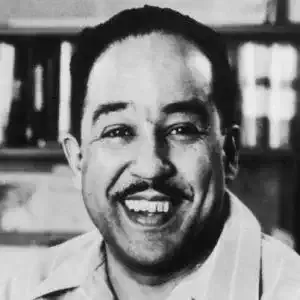
Langston Hughes
Madam and The Rent Man
The rent man knocked.
He said, Howdy-do?
I said, What
Can I do for you?
He said, You know
Your rent is due.
I said, Listen,
Before I'd pay
I'd go to Hades
And rot away!
The sink is broke,
The water don't run,
And you ain't done a thing
You promised to've done.
Back window's cracked,
Kitchen floor squeaks,
There's rats in the cellar,
And the attic leaks.
He said, Madam,
It's not up to me.
I'm just the agent,
Don't you see?
I said, Naturally,
You pass the buck.
If it's money you want
You're out of luck.
He said, Madam,
I ain't pleased!
I said, Neither am I.
So we agrees!
518
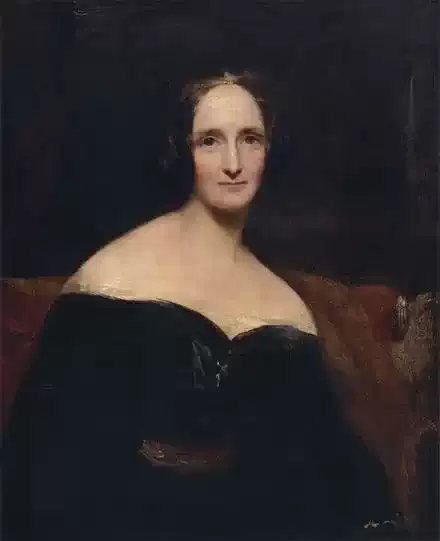
Percy Bysshe Shelley
Feelings Of A Republican On The Fall Of Bonaparte
I hated thee, fallen tyrant! I did groan
To think that a most unambitious slave,
Like thou, shouldst dance and revel on the grave
Of Liberty. Thou mightst have built thy throne
Where it had stood even now: thou didst prefer
A frail and bloody pomp which Time has swept
In fragments towards Oblivion. Massacre,
For this I prayed, would on thy sleep have crept,
Treason and Slavery, Rapine, Fear, and Lust,
And stifled thee, their minister. I know
Too late, since thou and France are in the dust,
That Virtue owns a more eternal foe
Than Force or Fraud: old Custom, legal Crime,
And bloody Faith the foulest birth of Time.
511
Ezra Pound
Sestina: Altaforte
Loquitur: En Bertrans de Born.
Dante Alighieri put this man in hell for that he was a
stirrer-up of strife.
Eccovi!
Judge ye!
Have I dug him up again?
The scene in at his castle, Altaforte. "Papiols" is his jongleur.
"The Leopard," the device of Richard (Cúur de Lion).
I
Damn it all! all this our South stinks peace.
You whoreson dog, Papiols, come! Let's to music!
I have no life save when the swords clash.
But ah! when I see the standards gold, vair, purple, opposing
And the broad fields beneath them turn crimson,
Then howl I my heart nigh mad with rejoicing.
II
In hot summer have I great rejoicing
When the tempests kill the earth's foul peace,
And the lightnings from black heav'n flash crimson,
And the fierce thunders roar me their music
And the winds shriek through the clouds mad, opposing,
And through all the riven skies God's swords clash.
III
Hell grant soon we hear again the swords clash!
And the shrill neighs of destriers in battle rejoicing,
Spiked breast to spiked breast opposing!
Better one hour's stour than a year's peace
With fat boards, bawds, wine and frail music!
Bah! there's no wine like the blood's crimson!
IV
And I love to see the sun rise blood-crimson.
And I watch his spears through the dark clash
And it fills all my heart with rejoicing
And pries wide my mouth with fast music
When I see him so scorn and defy peace,
His lone might 'gainst all darkness opposing.
V
The man who fears war and squats opposing
My words for stour, hath no blood of crimson
But is fit only to rot in womanish peace
Far from where worth's won and the swords clash
For the death of such sluts I go rejoicing;
Yea, I fill all the air with my music.
VI
Papiols, Papiols, to the music!
There's no sound like to swords swords opposing,
No cry like the battle's rejoicing
When our elbows and swords drip the crimson
And our charges 'gainst "The Leopard's" rush clash.
May God damn for ever all who cry "Peace!"
VII
And let the music of the swords make them crimson!
Hell grant soon we hear again the swords clash!
Hell blot black for always the thought "Peace!"
508
Arthur Rimbaud
My Little Lovelies
A tearful tincture washes
Cabbage-green skies;
Beneath the dribbling bushes
Your raincoats lie;
Pale white in private moonlight,
Like round-eyed sores,
Flap your scabby kneecaps apart,
My ugly whores!
We loved each other in those days,
Ugly blue whore!
We ate boiled eggs
And weed.
One night you made me a poet,
Ugly blond whore.
Get between my legs,
I'll whip you.
I puked up your greasy hair,
Ugly black whore;
You tried to unstring
My guitar.
Blah! Some of my dried-up spit,
Ugly red whore,
Still stinks in the cracks
Of your breast.
O my little lovelies,
I hate your guts!
Go stick big blisters
On your ugly tits!
Break the cracked bottles and jars
Of my feelings;
Come on! Be my ballerinas
Just for a while!
Your shoulder blades are twisted back,
My masterpieces!
Stick stars in your snatches and shake
Them to bits!
And it was for you hunks of meat
I wrote my rhymes!
My love was sticky self-deceit
And dirty games!
Dumb bunch of burnt-out stars,
-Against the walls!
Go back to God, croak in corners
Like animals!
Pale white in private moonlight,
Like round-eyed sores,
Flap your scabby kneecaps apart,
My ugly whores!
508