
Animals and Nature

Emily Dickinson
My Faith is larger than the Hills
My Faith is larger than the Hills-
So when the Hills decay-
My Faith must take the Purple Wheel
To show the Sun the way
'Tis first He steps upon the Vane-
And then-upon the Hill-
And then abroad the World He go
To do His Golden Will-
And if His Yellow feet should miss-
The Bird would not arise-
The Flowers would slumber on their Stems-
No Bells have Paradise-
How dare I, therefore, stint a faith
On which so vast depends-
Lest Firmament should fail for me-
The Rivet in the Bands
231

Henry Lawson
That There Dog O' Mine
Macquarie the shearer had met with an accident. To tell the truth, he had been in a
drunken row at a wayside shanty, from which he had escaped with three fractured ribs,
a cracked head, and various minor abrasions. His dog, Tally, had been a sober but
savage participator in the drunken row, and had escaped with a broken leg.
Macquarie afterwards shouldered his swag and staggered and struggled along the track
ten miles to the Union-Town Hospital. Lord knows how he did it. He didn't exactly know
himself. Tally limped behind all the way on three legs. The doctors examined the man's
injuries and were surprised at his endurance.
Even doctors are surprised sometimes - though they don't always show it. Of course
they would take him in, but they objected to Tally. Dogs were not allowed on the
premises. 'You will have to turn that dog out,' they said to the shearer, as he sat on
the edge of a bed.
Macquarie said nothing. 'We cannot allow dogs about the place, my man,' said the
doctor in a louder tone, thinking the man was deaf. 'Tie him up in the yard then.' 'No.
He must go out. Dogs are not permitted on the grounds.'
Macquarie rose slowly to his feet, shut his agony behind his set teeth painfully
buttoned his shirt over his hairy chest, took up his waistcoat, and staggered to the
comer where the swag lay. 'What are you going to do?' they asked.
'You ain't going to let my dog stop?' 'No. It's against the rules. There are no dogs
allowed on the premises.' He stooped and lifted his swag, but the pain was too great,
and he leaned back against the wall.
'Come, come now! man alive!' exclaimed the doctor, impatiently. 'You must be mad.
You know you are not in a fit state to go out. Let the wardsman help you to undress.'
'No!' said Macquarie. 'No. If you won't take my dog in you don't take me. He's got a
broken leg and wants fixing up just - just as much as - as I do.
If I'm good enough to come in, he's good enough - and - and better.' He paused
awhile, breathing painfully, and then went on. 'That - that there old dog of mine has
follered me faithful and true, these twelve long hard and hungry years. He's about about
the only thing that ever cared whether I lived or fell and rotted on the cursed
track.'
He rested again; then he continued: 'That - that there dog was pupped on the track,'
he said with a sad sort of smile. 'I carried him for months in a billy can and afterwards
on my swag when he was knocked up… And the old slut - his mother - she'd foller
along quite contented - sniff the billy now and again - just to see if he was all right…
She follered me for God knows how many years. She follered me till she was blind and
for a year after. She folleredme till she could crawl along through the dust no
longer, and - and then I killed her, because I couldn't leave her behind alive! '
He rested again. 'And this here old dog,' he continued, touching Tally's upturned nose
with his knotted fingers, 'this here old dog has follered me for - for ten years; through
floods and droughts, through fair times and - and hard - mostly hard; and kept me
from going mad when I had no mate nor money on the lonely track and watched over
me for weeks when I was drunk - drugged and poisoned at the cursed shanties; and
saved my life more'n once, and got kicks and curses very often for thanks; and forgave
me for it all; and - and fought for me.
He was the only living thing that stood up for me against that crawling push of curs
when they set onter me at the shanty back yonder - and he left his mark on some of
'em too; and - and so did I.' He took another spell.
Then he drew in his breath, shut his teeth hard, shouldered his swag, stepped into the
doorway, and faced round again. The dog limped out of the comer and looked up
anxiously. 'That there dog,' said Macquarie to the Hospital staff in general, 'is a better
dog than I'm a man - or you too, it seems - and a better Christian.
He's been a better mate to me than I ever was to any man - or any man to me. He's
watched over me; kep' me from getting robbed many a time; fought for me; saved my
life and took drunken kicks and curses for thanks - and forgave me. He's been a true,
straight, honest, and faithful mate to me - and I ain't going to desert him now. I ain't
going to kick him out in the road with a broken leg. I - Oh, my God! my back!'
He groaned and lurched forward, but they caught him, slipped off the swag, and laid
him on a bed. Half an hour later the shearer was comfortably fixed up. 'Where's my
dog?' he asked, when he came to himself.
'Oh, the dog's all right,' said the nurse, rather impatiently. 'Don't bother. The doctor's
setting his leg out in the yard.'
233
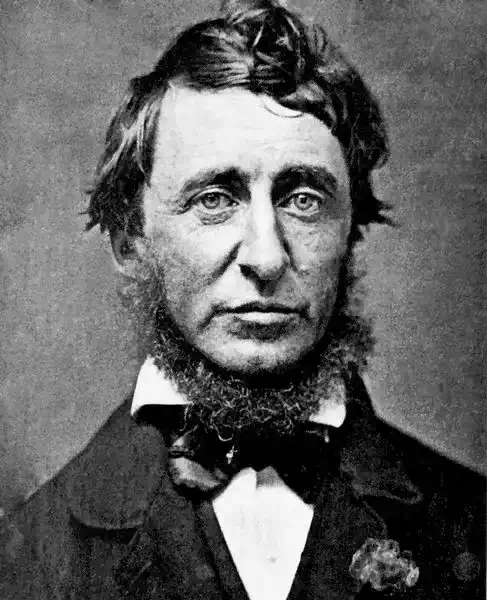
Henry David Thoreau
Nature
O Nature! I do not aspire
To be the highest in thy choir, -
To be a meteor in thy sky,
Or comet that may range on high;
Only a zephyr that may blow
Among the reeds by the river low;
Give me thy most privy place
Where to run my airy race.
In some withdrawn, unpublic mead
Let me sigh upon a reed,
Or in the woods, with leafy din,
Whisper the still evening in:
Some still work give me to do, -
Only - be it near to you!
For I'd rather be thy child
And pupil, in the forest wild,
Than be the king of men elsewhere,
And most sovereign slave of care;
To have one moment of thy dawn,
Than share the city's year forlorn.
232
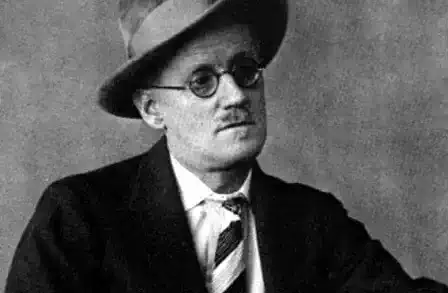
James Joyce
Tilly
He travels after a winter sun,
Urging the cattle along a cold red road,
Calling to them, a voice they know,
He drives his beasts above Cabra.
The voice tells them home is warm.
They moo and make brute music with their hoofs.
He drives them with a flowering branch before him,
Smoke pluming their foreheads.
Boor, bond of the herd,
Tonight stretch full by the fire!
I bleed by the black stream
For my torn bough!
232

Christina Rossetti
Who Hath Despised The Day Of Small Things?
As violets so be I recluse and sweet,
Cheerful as daisies unaccounted rare,
Still sunward-gazing from a lowly seat,
Still sweetening wintry air.
While half-awakened Spring lags incomplete,
While lofty forest trees tower bleak and bare,
Daisies and violets own remotest heat
And bloom and make them fair.
Cheerful as daisies unaccounted rare,
Still sunward-gazing from a lowly seat,
Still sweetening wintry air.
While half-awakened Spring lags incomplete,
While lofty forest trees tower bleak and bare,
Daisies and violets own remotest heat
And bloom and make them fair.
232
Emily Dickinson
Flowers—Well—if anybody
Flowers—Well—if anybody
Can the ecstasy define—
Half a transport—half a trouble—
With which flowers humble men:
Anybody find the fountain
From which floods so contra flow—
I will give him all the Daisies
Which upon the hillside blow.
Too much pathos in their faces
For a simple breast like mine—
Butterflies from St. Domingo
Cruising round the purple line—
Have a system of aesthetics—
Far superior to mine.
229

William Wordsworth
To a Sky-Lark
Up with me! up with me into the clouds!
For thy song, Lark, is strong;
Up with me, up with me into the clouds!
Singing, singing,
With clouds and sky about thee ringing,
Lift me, guide me till I find
That spot which seems so to thy mind!
I have walked through wildernesses dreary
And to-day my heart is weary;
Had I now the wings of a Faery,
Up to thee would I fly.
There is madness about thee, and joy divine
In that song of thine;
Lift me, guide me high and high
To thy banqueting-place in the sky.
Joyous as morning
Thou art laughing and scorning;
Thou hast a nest for thy love and thy rest,
And, though little troubled with sloth,
Drunken Lark! thou would'st be loth
To be such a traveller as I.
Happy, happy Liver,
With a soul as strong as a mountain river
Pouring out praise to the Almighty Giver,
Joy and jollity be with us both!
Alas! my journey, rugged and uneven,
Through prickly moors or dusty ways must wind;
But hearing thee, or others of thy kind,
As full of gladness and as free of heaven,
I, with my fate contented, will plod on,
And hope for higher raptures, when life's day is done.
230

Robert W. Service
Euthansia
A sea-gull with a broken wing,
I found upon the kelp-strewn shore.
It sprawled and gasped; I sighed: "Poor thing!
I fear your flying days are o'er;
Sad victim of a savage gun,
So ends your soaring in the sun."
I only wanted to be kind;
Its icy legs I gently caught,
Thinking its fracture I might bind,
But fiercely in its fear it fought;
Till guessing that I meant no ill,
It glared and gaped, but lay quite still.
I took it home and gave it food,
And nursed its wing day after day.
Alas for my solicitude,
It would not eat, but pined away.
And so at last with tender hands
I took it to its native sands.
"I'll leave it where its kindred are,"
I thought, "And maybe they will cheer
And comfort it": I watched afar,
I saw them wheeling swiftly near. . . .
Awhile they hovered overhead,
Then darted down and - stabbed it dead.
When agonized is human breath,
And there's of living not a chance,
Could it not be that gentle death
Might mean divine deliverance?
Might it not seep into our skulls
To be as merciful as gulls?
230
Henry Lawson
Up The Country
I am back from up the country -- very sorry that I went --
Seeking for the Southern poets' land whereon to pitch my tent;
I have lost a lot of idols, which were broken on the track,
Burnt a lot of fancy verses, and I'm glad that I am back.
Further out may be the pleasant scenes of which our poets boast,
But I think the country's rather more inviting round the coast.
Anyway, I'll stay at present at a boarding-house in town,
Drinking beer and lemon-squashes, taking baths and cooling down.
`Sunny plains'! Great Scott! -- those burning
wastes of barren soil and sand
With their everlasting fences stretching out across the land!
Desolation where the crow is! Desert where the eagle flies,
Paddocks where the luny bullock starts and stares with reddened eyes;
Where, in clouds of dust enveloped, roasted bullock-drivers creep
Slowly past the sun-dried shepherd dragged behind his crawling sheep.
Stunted peak of granite gleaming, glaring like a molten mass
Turned from some infernal furnace on a plain devoid of grass.
Miles and miles of thirsty gutters -- strings of muddy water-holes
In the place of `shining rivers' -- `walled by cliffs and forest boles.'
Barren ridges, gullies, ridges! where the ever-madd'ning flies --
Fiercer than the plagues of Egypt -- swarm about your blighted eyes!
Bush! where there is no horizon! where the buried bushman sees
Nothing -- Nothing! but the sameness of the ragged, stunted trees!
Lonely hut where drought's eternal, suffocating atmosphere
Where the God-forgotten hatter dreams of city life and beer.
Treacherous tracks that trap the stranger,
endless roads that gleam and glare,
Dark and evil-looking gullies, hiding secrets here and there!
Dull dumb flats and stony rises, where the toiling bullocks bake,
And the sinister `gohanna', and the lizard, and the snake.
Land of day and night -- no morning freshness, and no afternoon,
When the great white sun in rising bringeth summer heat in June.
Dismal country for the exile, when the shades begin to fall
From the sad heart-breaking sunset, to the new-chum worst of all.
Dreary land in rainy weather, with the endless clouds that drift
O'er the bushman like a blanket that the Lord will never lift --
Dismal land when it is raining -- growl of floods, and, oh! the woosh
Of the rain and wind together on the dark bed of the bush --
Ghastly fires in lonely humpies where the granite rocks are piled
In the rain-swept wildernesses that are wildest of the wild.
Land where gaunt and haggard women live alone and work like men,
Till their husbands, gone a-droving, will return to them again:
Homes of men! if home had ever such a God-forgotten place,
Where the wild selector's children fly before a stranger's face.
Home of tragedy applauded by the dingoes' dismal yell,
Heaven of the shanty-keeper -- fitting fiend for such a hell -
And the wallaroos and wombats, and, of course, the curlew's call --
And the lone sundowner tramping ever onward through it all!
I am back from up the country, up the country where I went
Seeking for the Southern poets' land whereon to pitch my tent;
I have shattered many idols out along the dusty track,
Burnt a lot of fancy verses -- and I'm glad that I am back.
I believe the Southern poets' dream will not be realised
Till the plains are irrigated and the land is humanised.
I intend to stay at present, as I said before, in town
Drinking beer and lemon-squashes, taking baths and cooling down.
Seeking for the Southern poets' land whereon to pitch my tent;
I have lost a lot of idols, which were broken on the track,
Burnt a lot of fancy verses, and I'm glad that I am back.
Further out may be the pleasant scenes of which our poets boast,
But I think the country's rather more inviting round the coast.
Anyway, I'll stay at present at a boarding-house in town,
Drinking beer and lemon-squashes, taking baths and cooling down.
`Sunny plains'! Great Scott! -- those burning
wastes of barren soil and sand
With their everlasting fences stretching out across the land!
Desolation where the crow is! Desert where the eagle flies,
Paddocks where the luny bullock starts and stares with reddened eyes;
Where, in clouds of dust enveloped, roasted bullock-drivers creep
Slowly past the sun-dried shepherd dragged behind his crawling sheep.
Stunted peak of granite gleaming, glaring like a molten mass
Turned from some infernal furnace on a plain devoid of grass.
Miles and miles of thirsty gutters -- strings of muddy water-holes
In the place of `shining rivers' -- `walled by cliffs and forest boles.'
Barren ridges, gullies, ridges! where the ever-madd'ning flies --
Fiercer than the plagues of Egypt -- swarm about your blighted eyes!
Bush! where there is no horizon! where the buried bushman sees
Nothing -- Nothing! but the sameness of the ragged, stunted trees!
Lonely hut where drought's eternal, suffocating atmosphere
Where the God-forgotten hatter dreams of city life and beer.
Treacherous tracks that trap the stranger,
endless roads that gleam and glare,
Dark and evil-looking gullies, hiding secrets here and there!
Dull dumb flats and stony rises, where the toiling bullocks bake,
And the sinister `gohanna', and the lizard, and the snake.
Land of day and night -- no morning freshness, and no afternoon,
When the great white sun in rising bringeth summer heat in June.
Dismal country for the exile, when the shades begin to fall
From the sad heart-breaking sunset, to the new-chum worst of all.
Dreary land in rainy weather, with the endless clouds that drift
O'er the bushman like a blanket that the Lord will never lift --
Dismal land when it is raining -- growl of floods, and, oh! the woosh
Of the rain and wind together on the dark bed of the bush --
Ghastly fires in lonely humpies where the granite rocks are piled
In the rain-swept wildernesses that are wildest of the wild.
Land where gaunt and haggard women live alone and work like men,
Till their husbands, gone a-droving, will return to them again:
Homes of men! if home had ever such a God-forgotten place,
Where the wild selector's children fly before a stranger's face.
Home of tragedy applauded by the dingoes' dismal yell,
Heaven of the shanty-keeper -- fitting fiend for such a hell -
And the wallaroos and wombats, and, of course, the curlew's call --
And the lone sundowner tramping ever onward through it all!
I am back from up the country, up the country where I went
Seeking for the Southern poets' land whereon to pitch my tent;
I have shattered many idols out along the dusty track,
Burnt a lot of fancy verses -- and I'm glad that I am back.
I believe the Southern poets' dream will not be realised
Till the plains are irrigated and the land is humanised.
I intend to stay at present, as I said before, in town
Drinking beer and lemon-squashes, taking baths and cooling down.
229
Henry Lawson
The Grog-an'Grumble Steeplechase
'Twixt the coastline and the border lay the town of Grog-an'-Grumble
In the days before the bushman was a dull 'n' heartless drudge,
An' they say the local meeting was a drunken rough-and-tumble,
Which was ended pretty often by an inquest on the judge.
An' 'tis said the city talent very often caught a tartar
In the Grog-an'-Grumble sportsman, 'n' returned with broken heads,
For the fortune, life, and safety of the Grog-an'-Grumble starter
Mostly hung upon the finish of the local thoroughbreds.
Pat M'Durmer was the owner of a horse they called the Screamer,
Which he called "the quickest stepper 'twixt the Darling and the sea",
And I think it's very doubtful if the stomach-troubled dreamer
Ever saw a more outrageous piece of equine scenery;
For his points were most decided, from his end to his beginning,
He had eyes of different colour, and his legs they wasn't mates.
Pat M'Durmer said he always came "widin a flip of winnin'",
An' his sire had come from England, 'n' his dam was from the States.
Friends would argue with M'Durmer, and they said he was in error
To put up his horse the Screamer, for he'd lose in any case,
And they said a city racer by the name of Holy Terror
Was regarded as the winner of the coming steeplechase;
But he said he had the knowledge to come in when it was raining,
And irrevelantly mentioned that he knew the time of day,
So he rose in their opinion. It was noticed that the training
Of the Screamer was conducted in a dark, mysterious way.
Well, the day arrived in glory; 'twas a day of jubilation
With careless-hearted bushmen for a hundred miles around,
An' the rum 'n' beer 'n' whisky came in waggons from the station,
An' the Holy Terror talent were the first upon the ground.
Judge M'Ard – with whose opinion it was scarcely safe to wrestle –
Took his dangerous position on the bark-and-sapling stand:
He was what the local Stiggins used to speak of as a "wessel
Of wrath", and he'd a bludgeon that he carried in his hand.
"Off ye go!" the starter shouted, as down fell a stupid jockey –
Off they started in disorder – left the jockey where he lay –
And they fell and rolled and galloped down the crooked course and rocky,
Till the pumping of the Screamer could be heard a mile away.
But he kept his legs and galloped; he was used to rugged courses,
And he lumbered down the gully till the ridge began to quake:
And he ploughed along the siding, raising earth till other horses
An' their riders, too, were blinded by the dust-cloud in his wake.
From the ruck he'd struggled slowly – they were much surprised to find him
Close abeam of the Holy Terror as along the flat they tore –
Even higher still and denser rose the cloud of dust behind him,
While in more divided splinters flew the shattered rails before.
"Terror!" "Dead heat!" they were shouting – "Terror!" but the Screamer hung out
Nose to nose with Holy Terror as across the creek they swung,
An' M'Durmer shouted loudly, "Put yer toungue out! put yer tongue out!"
An ' the Screamer put his tongue out, and he won by half-a-tongue.
229
William Wordsworth
Ruth
When Ruth was left half desolate,
Her Father took another Mate;
And Ruth, not seven years old,
A slighted child, at her own will
Went wandering over dale and hill,
In thoughtless freedom, bold.
And she had made a pipe of straw,
And music from that pipe could draw
Like sounds of winds and floods;
Had built a bower upon the green,
As if she from her birth had been
An infant of the woods.
Beneath her father's roof, alone
She seemed to live; her thoughts her own;
Herself her own delight;
Pleased with herself, nor sad, nor gay;
And, passing thus the live-long day,
She grew to woman's height.
There came a Youth from Georgia's shore--
A military casque he wore,
With splendid feathers drest;
He brought them from the Cherokees;
The feathers nodded in the breeze,
And made a gallant crest.
From Indian blood you deem him sprung:
But no! he spake the English tongue,
And bore a soldier's name;
And, when America was free
From battle and from jeopardy,
He 'cross the ocean came.
With hues of genius on his cheek
In finest tones the Youth could speak:
--While he was yet a boy,
The moon, the glory of the sun,
And streams that murmur as they run,
Had been his dearest joy.
He was a lovely Youth! I guess
The panther in the wilderness
Was not so fair as he;
And, when he chose to sport and play,
No dolphin ever was so gay
Upon the tropic sea.
Among the Indians he had fought,
And with him many tales he brought
Of pleasure and of fear;
Such tales as told to any maid
By such a Youth, in the green shade,
Were perilous to hear.
He told of girls--a happy rout!
Who quit their fold with dance and shout,
Their pleasant Indian town,
To gather strawberries all day long;
Returning with a choral song
When daylight is gone down.
He spake of plants that hourly change
Their blossoms, through a boundless range
Of intermingling hues;
With budding, fading, faded flowers
They stand the wonder of the bowers
From morn to evening dews.
He told of the magnolia, spread
High as a cloud, high over head!
The cypress and her spire;
--Of flowers that with one scarlet gleam
Cover a hundred leagues, and seem
To set the hills on fire.
The Youth of green savannahs spake,
And many an endless, endless lake,
With all its fairy crowds
Of islands, that together lie
As quietly as spots of sky
Among the evening clouds.
"How pleasant," then he said, "it were
A fisher or a hunter there,
In sunshine or in shade
To wander with an easy mind;
And build a household fire, and find
A home in every glade!
"What days and what bright years! Ah me!
Our life were life indeed, with thee
So passed in quiet bliss,
And all the while," said he, "to know
That we were in a world of woe,
On such an earth as this!"
And then he sometimes interwove
Fond thoughts about a father's love
"For there," said he, "are spun
Around the heart such tender ties,
That our own children to our eyes
Are dearer than the sun.
"Sweet Ruth! and could you go with me
My helpmate in the woods to be,
Our shed at night to rear;
Or run, my own adopted bride,
A sylvan huntress at my side,
And drive the flying deer!
"Beloved Ruth!"--No more he said,
The wakeful Ruth at midnight shed
A solitary tear:
She thought again--and did agree
With him to sail across the sea,
And drive the flying deer.
"And now, as fitting is and right,
We in the church our faith will plight,
A husband and a wife."
Even so they did; and I may say
That to sweet Ruth that happy day
Was more than human life.
Through dream and vision did she sink,
Delighted all the while to think
That on those lonesome floods,
And green savannahs, she should share
His board with lawful joy, and bear
His name in the wild woods.
But, as you have before been told,
This Stripling, sportive, gay, and bold,
And, with his dancing crest,
So beautiful, through savage lands
Had roamed about, with vagrant bands
Of Indians in the West.
The wind, the tempest roaring high,
The tumult of a tropic sky,
Might well be dangerous food
For him, a Youth to whom was given
So much of earth--so much of heaven,
And such impetuous blood.
Whatever in those climes he found
Irregular in sight or sound
Did to his mind impart
A kindred impulse, seemed allied
To his own powers, and justified
The workings of his heart.
Nor less, to feed voluptuous thought,
The beauteous forms of nature wrought,
Fair trees and gorgeous flowers;
The breezes their own languor lent;
The stars had feelings, which they sent
Into those favoured bowers.
Yet, in his worst pursuits, I ween
That sometimes there did intervene
Pure hopes of high intent:
For passions linked to forms so fair
And stately, needs must have their share
Of noble sentiment.
But ill he lived, much evil saw,
With men to whom no better law
Nor better life was known;
Deliberately, and undeceived,
Those wild men's vices he received,
And gave them back his own.
His genius and his moral frame
Were thus impaired, and he became
The slave of low desires:
A Man who without self-control
Would seek what the degraded soul
Unworthily admires.
And yet he with no feigned delight
Had wooed the Maiden, day and night
Had loved her, night and morn:
What could he less than love a Maid
Whose heart with so much nature played?
So kind and so forlorn!
Sometimes, most earnestly, he said,
"O Ruth! I have been worse than dead;
False thoughts, thoughts bold and vain,
Encompassed me on every side
When I, in confidence and pride,
Had crossed the Atlantic main.
"Before me shone a glorious world--
Fresh as a banner bright, unfurled
To music suddenly:
I looked upon those hills and plains,
And seemed as if let loose from chains,
To live at liberty.
"No more of this; for now, by thee
Dear Ruth! more happily set free
With nobler zeal I burn;
My soul from darkness is released,
Like the whole sky when to the east
The morning doth return."
Full soon that better mind was gone;
No hope, no wish remained, not one,--
They stirred him now no more;
New objects did new pleasure give,
And once again he wished to live
As lawless as before.
Meanwhile, as thus with him it fared,
They for the voyage were prepared,
And went to the sea-shore,
But, when they thither came the Youth
Deserted his poor Bride, and Ruth
Could never find him more.
God help thee, Ruth!--Such pains she had,
That she in half a year was mad,
And in a prison housed;
And there, with many a doleful song
Made of wild words, her cup of wrong
She fearfully caroused.
Yet sometimes milder hours she knew,
Nor wanted sun, nor rain, nor dew,
Nor pastimes of the May;
--They all were with her in her cell;
And a clear brook with cheerful knell
Did o'er the pebbles play.
When Ruth three seasons thus had lain,
There came a respite to her pain;
She from her prison fled;
But of the Vagrant none took thought;
And where it liked her best she sought
Her shelter and her bread.
Among the fields she breathed again:
The master-current of her brain
Ran permanent and free;
And, coming to the Banks of Tone,
There did she rest; and dwell alone
Under the greenwood tree.
The engines of her pain, the tools
That shaped her sorrow, rocks and pools,
And airs that gently stir
The vernal leaves--she loved them still;
Nor ever taxed them with the ill
Which had been done to her.
A Barn her 'winter' bed supplies;
But, till the warmth of summer skies
And summer days is gone,
(And all do in this tale agree)
She sleeps beneath the greenwood tree,
And other home hath none.
An innocent life, yet far astray!
And Ruth will, long before her day,
Be broken down and old:
Sore aches she needs must have! but less
Of mind, than body's wretchedness,
From damp, and rain, and cold.
If she is prest by want of food,
She from her dwelling in the wood
Repairs to a road-side;
And there she begs at one steep place
Where up and down with easy pace
The horsemen-travellers ride.
That oaten pipe of hers is mute,
Or thrown away; but with a flute
Her loneliness she cheers:
This flute, made of a hemlock stalk,
At evening in his homeward walk
The Quantock woodman hears.
I, too, have passed her on the hills
Setting her little water-mills
By spouts and fountains wild--
Such small machinery as she turned
Ere she had wept, ere she had mourned,
A young and happy Child!
Farewell! and when thy days are told,
Ill-fated Ruth, in hallowed mould
Thy corpse shall buried be,
For thee a funeral bell shall ring,
And all the congregation sing
A Christian psalm for thee.
229
Robert W. Service
Titine
Although I have a car of class,
A limousine,
I also have a jenny ass
I call Titine.
And if I had in sober sense
To choose between,
I know I'd give the preference
To sleek Titine.
My chauffeur drives my Cadillac
In uniform.
I wear a worn coat on my back
That he would scorn.
He speeds with umpty equine power,
Like an express;
I amble at eight miles an hour,
Or even less.
My wife can use our fancy bus
To cut a dash;
She very definitely does,
And blows my cash.
But this old codger seeks the sane
And simple scene;
Content to jog along a lane
With old Titine.
So as in country ways I go
Wife loves the town;
But though I'm slow, serene I know
I won't break down.
With brawn and bone I reckon mine
The best machine:
Old folks and donkeys best combine,
--"Giddup, Titine!"
227
Christina Rossetti
There's Snow On The Fields
There's snow on the fields,
And cold in the cottage,
While I sit in the chimney nook
Supping hot pottage.
My clothes are soft and warm,
Fold upon fold,
But I'm so sorry for the poor
Out in the cold.
And cold in the cottage,
While I sit in the chimney nook
Supping hot pottage.
My clothes are soft and warm,
Fold upon fold,
But I'm so sorry for the poor
Out in the cold.
228
Robert W. Service
The Wildy Ones
The sheep are in the silver wood,
The cows are in the broom;
The goats are in the wild mountain
And won't be home by noon.
My mother sang that olden tune
Most every night,
And to her newest she would croon
By candle light;
While cuddling in the velvet gloom
I'd dream of cows
That sought each dawn 'mid golden broom
To gently browse.
Or I would glimpse the silver wood,
The birchen glade,
Where pearly sheep in quiet mood
Cropped unafraid;
But how I loved in lapsing drowse
The mountain wild!
The goats were more than sheep and cows
To one wee child.
For cows and sheep are shelter-wise,
And love the lea;
While goats have starlight in their eyes,
In cragland free . . .
And now on edge of endless sleep
Wryly I note
How less I'm kin to kine and sheep
Than rebel goat!
228

D.H. Lawrence
Snake
A snake came to my water-trough
On a hot, hot day, and I in pyjamas for the heat,
To drink there.
In the deep, strange-scented shade of the great dark carob-tree
I came down the steps with my pitcher
And must wait, must stand and wait, for there he was at the trough before
me.
He reached down from a fissure in the earth-wall in the gloom
And trailed his yellow-brown slackness soft-bellied down, over the edge of
the stone trough
And rested his throat upon the stone bottom,
And where the water had dripped from the tap, in a small clearness,
He sipped with his straight mouth,
Softly drank through his straight gums, into his slack long body,
Silently.
Someone was before me at my water-trough,
And I, like a second comer, waiting.
He lifted his head from his drinking, as cattle do,
And looked at me vaguely, as drinking cattle do,
And flickered his two-forked tongue from his lips, and mused a moment,
And stooped and drank a little more,
Being earth-brown, earth-golden from the burning bowels of the earth
On the day of Sicilian July, with Etna smoking.
The voice of my education said to me
He must be killed,
For in Sicily the black, black snakes are innocent, the gold are venomous.
And voices in me said, If you were a man
You would take a stick and break him now, and finish him off.
But must I confess how I liked him,
How glad I was he had come like a guest in quiet, to drink at my water-trough
And depart peaceful, pacified, and thankless,
Into the burning bowels of this earth?
Was it cowardice, that I dared not kill him? Was it perversity, that I longed to talk to
him? Was it humility, to feel so honoured?
I felt so honoured.
And yet those voices:
If you were not afraid, you would kill him!
And truly I was afraid, I was most afraid, But even so, honoured still more
That he should seek my hospitality
From out the dark door of the secret earth.
He drank enough
And lifted his head, dreamily, as one who has drunken,
And flickered his tongue like a forked night on the air, so black,
Seeming to lick his lips,
And looked around like a god, unseeing, into the air,
And slowly turned his head,
And slowly, very slowly, as if thrice adream,
Proceeded to draw his slow length curving round
And climb again the broken bank of my wall-face.
And as he put his head into that dreadful hole,
And as he slowly drew up, snake-easing his shoulders, and entered farther,
A sort of horror, a sort of protest against his withdrawing into that horrid black hole,
Deliberately going into the blackness, and slowly drawing himself after,
Overcame me now his back was turned.
I looked round, I put down my pitcher,
I picked up a clumsy log
And threw it at the water-trough with a clatter.
I think it did not hit him,
But suddenly that part of him that was left behind convulsed in undignified haste.
Writhed like lightning, and was gone
Into the black hole, the earth-lipped fissure in the wall-front,
At which, in the intense still noon, I stared with fascination.
And immediately I regretted it.
I thought how paltry, how vulgar, what a mean act!
I despised myself and the voices of my accursed human education.
And I thought of the albatross
And I wished he would come back, my snake.
For he seemed to me again like a king,
Like a king in exile, uncrowned in the underworld,
Now due to be crowned again.
And so, I missed my chance with one of the lords
Of life.
And I have something to expiate:
A pettiness.
224
Henry Lawson
Trouble on the Selection
You lazy boy, you’re here at last,
You must be wooden-legged;
Now, are you sure the gate is fast
And all the sliprails pegged
And all the milkers at the yard,
The calves all in the pen?
We don’t want Poley’s calf to suck
His mother dry again.
And did you mend the broken rail
And make it firm and neat?
I s’pose you want that brindle steer
All night among the wheat.
And if he finds the lucerne patch,
He’ll stuff his belly full;
He’ll eat till he gets ‘blown’ on that
And busts like Ryan’s bull.
Old Spot is lost? You’ll drive me mad,
You will, upon my soul!
She might be in the boggy swamps
Or down a digger’s hole.
You needn’t talk, you never looked
You’d find her if you’d choose,
Instead of poking ’possum logs
And hunting kangaroos.
How came your boots as wet as muck?
You tried to drown the ants!
Why don’t you take your bluchers off,
Good Lord, he’s tore his pants!
Your father’s coming home to-night;
You’ll catch it hot, you’ll see.
Now go and wash your filthy face
And come and get your tea.
225
D.H. Lawrence
The Elephant Is Slow to Mate
The elephant, the huge old beast,
is slow to mate;
he finds a female, they show no haste
they wait
for the sympathy in their vast shy hearts
slowly, slowly to rouse
as they loiter along the river-beds
and drink and browse
and dash in panic through the brake
of forest with the herd,
and sleep in massive silence, and wake
together, without a word.
So slowly the great hot elephant hearts
grow full of desire,
and the great beasts mate in secret at last,
hiding their fire.
Oldest they are and the wisest of beasts
so they know at last
how to wait for the loneliest of feasts
for the full repast.
They do not snatch, they do not tear;
their massive blood
moves as the moon-tides, near, more near
till they touch in flood.
223
D.H. Lawrence
Mating
Round clouds roll in the arms of the wind,
The round earth rolls in a clasp of blue sky,
And see, where the budding hazels are thinned,
The wild anemones lie
In undulating shivers beneath the wind.
Over the blue of the waters ply
White ducks, a living flotilla of cloud;
And, look you, floating just thereby,
The blue-gleamed drake stems proud
Like Abraham, whose seed should multiply.
In the lustrous gleam of the water, there
Scramble seven toads across the silk, obscure leaves,
Seven toads that meet in the dusk to share
The darkness that interweaves
The sky and earth and water and live things everywhere.
Look now, through the woods where the beech-green spurts
Like a storm of emerald snow, look, see
A great bay stallion dances, skirts
The bushes sumptuously,
Going outward now in the spring to his brief deserts.
Ah love, with your rich, warm face aglow,
What sudden expectation opens you
So wide as you watch the catkins blow
Their dust from the birch on the blue
Lift of the pulsing wind—ah, tell me you know!
Ah, surely! Ah, sure from the golden sun
A quickening, masculine gleam floats in to all
Us creatures, people and flowers undone,
Lying open under his thrall,
As he begets the year in us. What, then, would you shun?
Why, I should think that from the earth there fly
Fine thrills to the neighbour stars, fine yellow beams
Thrown lustily off from our full-blown, high
Bursting globe of dreams,
To quicken the spheres that are virgin still in the sky.
Do you not hear each morsel thrill
With joy at travelling to plant itself within
The expectant one, therein to instil
New rapture, new shape to win,
From the thick of life wake up another will?
Surely, and if that I would spill
The vivid, ah, the fiery surplus of life,
From off my brimming measure, to fill
You, and flush you rife
With increase, do you call it evil, and always evil?
223
Robert W. Service
Learn To Like
School yourself to savour most
Joys that have but little cost;
Prove the best of life is free,
Sun and stars and sky and sea;
Eager in your eyes to please,
Proffer meadows, brooks and trees;
Nature strives for your content,
Never charging you a cent.
Learn to love a garden gay,
Flowers and fruit in rich array.
Care for dogs and singing birds,
Have for children cheery words.
Find plain food and comfort are
More than luxury by far.
Music, books and honest friends
Outweigh golden dividends.
Love your work and do it well,
Scorning not a leisure spell.
Hold the truest form of wealth
Body fit and ruddy health.
Let your smile of happiness
Rustic peace serenely stress:
Home to love and heart to pray--
Thank your God for every day.
225
Emily Dickinson
Heaven has different Signs—to me
"Heaven" has different Signs—to me—
Sometimes, I think that Noon
Is but a symbol of the Place—
And when again, at Dawn,
A mighty look runs round the World
And settles in the Hills—
An Awe if it should be like that
Upon the Ignorance steals—
The Orchard, when the Sun is on—
The Triumph of the Birds
When they together Victory make—
Some Carnivals of Clouds—
The Rapture of a finished Day—
Returning to the West—
All these—remind us of the place
That Men call "paradise"—
Itself be fairer—we suppose—
But how Ourself, shall be
Adorned, for a Superior Grace—
Not yet, our eyes can see—
225
D.H. Lawrence
Lui et Elle
She is large and matronly
And rather dirty,
A little sardonic-looking, as if domesticity had driven her to it.
Though what she does, except lay four eggs at random in the garden once a year
And put up with her husband,
I don't know.
She likes to eat.
She hurries up, striding reared on long uncanny legs
When food is going.
Oh yes, she can make haste when she likes.
She snaps the soft bread from my hand in great mouthfuls,
Opening her rather pretty wedge of an iron, pristine face
Into an enormously wide-beaked mouth
Like sudden curved scissors,
And gulping at more than she can swallow, and working her thick, soft tongue,
And having the bread hanging over her chin.
O Mistress, Mistress,
Reptile mistress,
Your eye is very dark, very bright,
And it never softens
Although you watch.
She knows,
She knows well enough to come for food,
Yet she sees me not;
Her bright eye sees, but not me, not anything,
Sightful, sightless, seeing and visionless,
Reptile mistress.
Taking bread in her curved, gaping, toothless mouth,
She has no qualm when she catches my finger in her steel overlapping gums,
But she hangs on, and my shout and my shrinking are nothing to her.
She does not even know she is nipping me with her curved beak.
Snake-like she draws at my finger, while I drag it in horror away.
Mistress, reptile mistress,
You are almost too large, I am almost frightened.
He is much smaller,
Dapper beside her,
And ridiculously small.
Her laconic eye has an earthy, materialistic look,
His, poor darling, is almost fiery.
His wimple, his blunt-prowed face,
His low forehead, his skinny neck, his long, scaled, striving legs,
So striving, striving,
Are all more delicate than she,
And he has a cruel scar on his shell.
Poor darling, biting at her feet,
Running beside her like a dog, biting her earthy, splay feet,
Nipping her ankles,
Which she drags apathetic away, though without retreating into her shell.
Agelessly silent,
And with a grim, reptile determination,
Cold, voiceless age-after-age behind him, serpents' long obstinacy
Of horizontal persistence.
Little old man
Scuffling beside her, bending down, catching his opportunity,
Parting his steel-trap face, so suddenly, and seizing her scaly ankle,
And hanging grimly on,
Letting go at last as she drags away,
And closing his steel-trap face.
His steel-trap, stoic, ageless, handsome face.
Alas, what a fool he looks in this scuffle.
And how he feels it!
The lonely rambler, the stoic, dignified stalker through chaos,
The immune, the animate,
Enveloped in isolation,
Fore-runner.
Now look at him!
Alas, the spear is through the side of his isolation.
His adolescence saw him crucified into sex,
Doomed, in the long crucifixion of desire, to seek his consummation beyond himself.
Divided into passionate duality,
He, so finished and immune, now broken into desirous fragmentariness,
Doomed to make an intolerable fool of himself
In his effort toward completion again.
Poor little earthy house-inhabiting Osiris,
The mysterious bull tore him at adolescence into pieces,
And he must struggle after reconstruction, ignominiously.
And so behold him following the tail
Of that mud-hovel of his slowly rambling spouse,
Like some unhappy bull at the tail of a cow,
But with more than bovine, grim, earth-dank persistence.
Suddenly seizing the ugly ankle as she stretches out to walk,
Roaming over the sods,
Or, if it happen to show, at her pointed, heavy tail
Beneath the low-dropping back-board of her shell.
Their two shells like domed boats bumping,
Hers huge, his small;
Their splay feet rambling and rowing like paddles,
And stumbling mixed up in one another,
In the race of love --
Two tortoises,
She huge, he small.
She seems earthily apathetic,
And he has a reptile's awful persistence.
I heard a woman pitying her, pitying the Mère Tortue.
While I, I pity Monsieur.
'He pesters her and torments her,' said the woman.
How much more is he pestered and tormented, say I.
What can he do?
He is dumb, he is visionless,
Conceptionless.
His black, sad-lidded eye sees but beholds not
As her earthen mound moves on,
But he catches the folds of vulnerable, leathery skin,
Nail-studded, that shake beneath her shell,
And drags at these with his beak,
Drags and drags and bites,
While she pulls herself free, and rows her dull mound along.
224

John Greenleaf Whittier
Summer By The Lakeside: Lake Winnipesaukee
I. NOON.
White clouds, whose shadows haunt the deep,
Light mists, whose soft embraces keep
The sunshine on the hills asleep!
O isles of calm! O dark, still wood!
And stiller skies that overbrood
Your rest with deeper quietude!
O shapes and hues, dim beckoning, through
Yon mountain gaps, my longing view
Beyond the purple and the blue,
To stiller sea and greener land,
And softer lights and airs more bland,
And skies,--the hollow of God's hand!
Transfused through you, O mountain friends!
With mine your solemn spirit blends,
And life no more hath separate ends.
I read each misty mountain sign,
I know the voice of wave and pine,
And I am yours, and ye are mine.
Life's burdens fall, its discords cease,
I lapse into the glad release
Of Nature's own exceeding peace.
O welcome calm of heart and mind!
As falls yon fir-tree's loosened rind
To leave a tenderer growth behind,
So fall the weary years away;
A child again, my head I lay
Upon the lap of this sweet day.
This western wind hath Lethean powers,
Yon noonday cloud nepenthe showers,
The lake is white with lotus-flowers!
Even Duty's voice is faint and low,
And slumberous Conscience, waking slow,
Forgets her blotted scroll to show.
The Shadow which pursues us all,
Whose ever-nearing steps appall,
Whose voice we hear behind us call,-
That Shadow blends with mountain gray,
It speaks but what the light waves say,-Death
walks apart from Fear to-day!
Rocked on her breast, these pines and I
Alike on Nature's love rely;
And equal seems to live or die.
Assured that He whose presence fills
With light the spaces of these hills
No evil to His creatures wills,
The simple faith remains, that He
Will do, whatever that may be,
The best alike for man and tree.
What mosses over one shall grow,
What light and life the other know,
Unanxious, leaving Him to show.
II. EVENING.
Yon mountain's side is black with night,
While, broad-orhed, o'er its gleaming crown
The moon, slow-rounding into sight,
On the hushed inland sea looks down.
How start to light the clustering isles,
Each silver-hemmed! How sharply show
The shadows of their rocky piles,
And tree-tops in the wave below!
How far and strange the mountains seem,
Dim-looming through the pale, still light
The vague, vast grouping of a dream,
They stretch into the solemn night.
Beneath, lake, wood, and peopled vale,
Hushed by that presence grand and grave,
Are silent, save the cricket's wail,
And low response of leaf and wave.
Fair scenes! whereto the Day and Night
Make rival love, I leave ye soon,
What time before the eastern light
The pale ghost of the setting moon
Shall hide behind yon rocky spines,
And the young archer, Morn, shall break
His arrows on the mountain pines,
And, golden-sandalled, walk the lake!
Farewell! around this smiling bay
Gay-hearted Health, and Life in bloom,
With lighter steps than mine, may stray
In radiant summers yet to come.
But none shall more regretful leave
These waters and these hills than I
Or, distant, fonder dream how eve
Or dawn is painting wave and sky;
How rising moons shine sad and mild
On wooded isle and silvering bay;
Or setting suns beyond the piled
And purple mountains lead the day;
Nor laughing girl, nor bearding boy,
Nor full-pulsed manhood, lingering here,
Shall add, to life's abounding joy,
The charmed repose to suffering dear.
Still waits kind Nature to impart
Her choicest gifts to such as gain
An entrance to her loving heart
Through the sharp discipline of pain.
Forever from the Hand that takes
One blessing from us others fall;
And, soon or late, our Father makes
His perfect recompense to all!
Oh, watched by Silence and the Night,
And folded in the strong embrace
Of the great mountains, with the light
Of the sweet heavens upon thy face,
Lake of the Northland! keep thy dower
Of beauty still, and while above
Thy solemn mountains speak of power,
Be thou the mirror of God's love.
221
Emily Dickinson
The Grass so little has to do
The Grass so little has to do –
A Sphere of simple Green –
With only Butterflies to brood
And Bees to entertain –
And stir all day to pretty Tunes
The Breezes fetch along –
And hold the Sunshine in its lap
And bow to everything –
And thread the Dews, all night, like Pearls –
And make itself so fine
A Duchess were too common
For such a noticing –
And even when it dies – to pass
In Odors so divine –
Like Lowly spices, lain to sleep –
Or Spikenards, perishing –
And then, in Sovereign Barns to dwell –
And dream the Days away,
The Grass so little has to do
I wish I were a Hay –
221
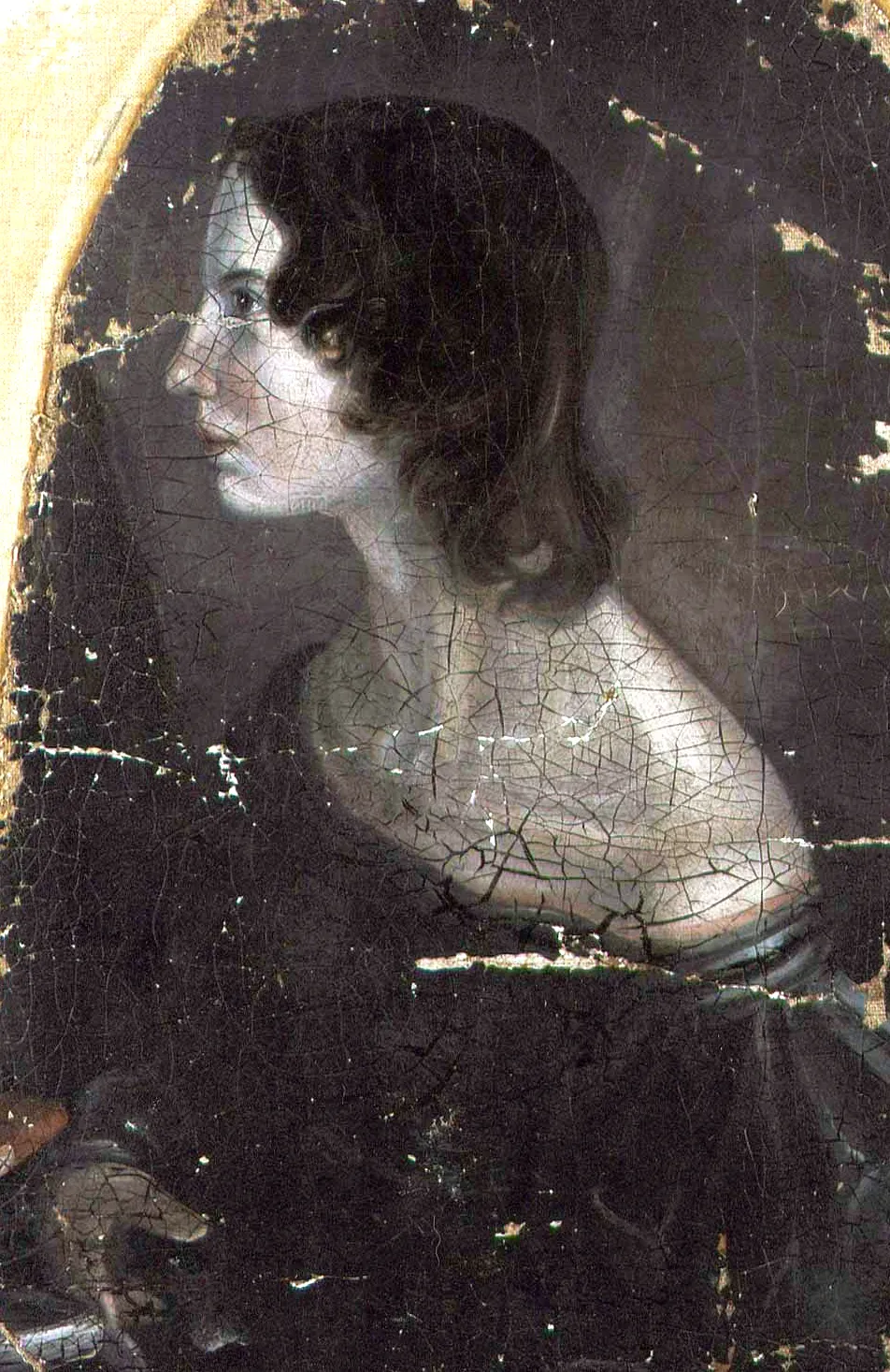
Emily Jane Brontë
The Sun Has Set
The sun has set, and the long grass now
Waves dreamily in the evening wind;
And the wild bird has flown from that old gray stone
In some warm nook a couch to find.
In all the lonely landscape round
I see no light and hear no sound,
Except the wind that far away
Come sighing o'er the healthy sea.
Waves dreamily in the evening wind;
And the wild bird has flown from that old gray stone
In some warm nook a couch to find.
In all the lonely landscape round
I see no light and hear no sound,
Except the wind that far away
Come sighing o'er the healthy sea.
222