
Wisdom
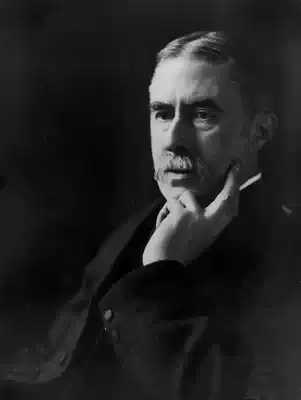
Alfred Edward Housman
Loitering with a Vacant Eye
Loitering with a vacant eye
Along the Grecian gallery,
And brooding on my heavy ill,
I met a statue standing still.
Still in marble stone stood he,
And stedfastly he looked at me.
"Well met," I thought the look would say,
"We both were fashioned far away;
We neither knew, when we were young,
These Londoners we live among."
Still he stood and eyed me hard,
An earnest and a grave regard:
"What, lad, drooping with your lot?
I too would be where I am not.
I too survey that endless line
Of men whose thoughts are not as mine.
Years, ere you stood up from rest,
On my neck the collar prest;
Years, when you lay down your ill,
I shall stand and bear it still.
Courage, lad, 'tis not for long:
Stand, quit you like stone, be strong."
So I thought his look would say;
And light on me my trouble lay,
And I stept out in flesh and bone
Manful like the man of stone.
472

William Butler Yeats
Wisdom
THE true faith discovered was
When painted panel, statuary.
Glass-mosaic, window-glass,
Amended what was told awry
By some peasant gospeller;
Swept the Sawdust from the floor
Of that working-carpenter.
Miracle had its playtime where
In damask clothed and on a seat
Chryselephantine, cedar-boarded,
His majestic Mother sat
Stitching at a purple hoarded
That He might be nobly breeched
In starry towers of Babylon
Noah's freshet never reached.
King Abundance got Him on
Innocence; and Wisdom He.
That cognomen sounded best
Considering what wild infancy
Drove horror from His Mother's breast.
466

Ella Wheeler Wilcox
Ernestness
The hurry of the times affects us so
In this swift rushing hour, we crowd and press
And thrust each other backward as we go,
And do not pause to lay sufficient stress
Upon that good, strong, true word, Earnestness.
In our impetuous haste, could we but know
Its full, deep meaning, its vast import, oh,
Then might we grasp the secret of success!
In that receding age when men were great,
The bone and sinew of their purpose lay
In this one word. God likes an earnest soul—
Too earnest to be eager. Soon or late
It leaves the spent horde breathless by the way,
And stands serene, triumphant at the goal.
469

John Keats
Sonnet: Before He Went
BEFORE he went to feed with owls and bats
Nebuchadnezzar had an ugly dream,
Worse than an Hus'if's when she thinks her cream
Made a Naumachia for mice and rats.
So scared, he sent for that 'Good King of Cats'
Young Daniel, who soon did pluck away the beam
From out his eye, and said he did not deem
The sceptre worth a straw his Cushions old door-mats.
A horrid nightmare similar somewhat
Of late has haunted a most motley crew,
Most loggerheads and Chapmen we are told
That any Daniel tho' he be a sot
Can make the lying lips turn pale of hue
By belching out 'ye are that head of Gold.'
466
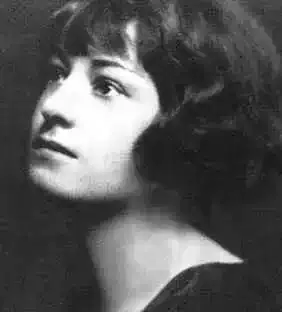
Dorothy Parker
The Veteran
When I was young and bold and strong,
Oh, right was right, and wrong was wrong!
My plume on high, my flag unfurled,
I rode away to right the world.
"Come out, you dogs, and fight!" said I,
And wept there was but once to die.
But I am old; and good and bad
Are woven in a crazy plaid.
I sit and say, "The world is so;
And he is wise who lets it go.
A battle lost, a battle won-
The difference is small, my son."
Inertia rides and riddles me;
The which is called Philosophy.
466
Ella Wheeler Wilcox
The Two Glasses
There sat two glasses, filled to the brim,
On a rich man's table, rim to rim.
One was ruddy and red as blood,
And one was clear as the crystal flood.
Said the glass of wine to his paler brother,
"Let us tell tales of the past to each other;
I can tell of banquet, and revel, and mirth,
Where I was a king, for I ruled in might;
For the proudest and grandest souls on earth
Fell under my touch, as though struck with blight.
From the heads of kings I have torn the crown;
From the heights of fame I have hurled men down.
I have blasted many an honored name;
I have taken virtue and given shame;
I have tempted the youth with a sip, a taste,
That has made his future a barren waste.
Far greater than any king am I,
Or than any army beneath the sky.
I have made the arm of the driver fail,
And sent the train from the iron rail.
I have made good ships go down at sea,
And the shrieks of the lost were sweet to me.
Fame, strength, wealth, genius before me fall;
Ho, ho! pale brother," said the wine,
"Can you boast of deeds as great as mine?"
Said the water-glass: "I cannot boast
Of a king dethroned, or a murdered host,
But I can tell of hearts that were sad
By my crystal drops made bright and glad;
Of thirsts I have quenched, and brows I have laved;
Of hands I have cooled, and souls I have saved.
I have leaped through the valley, dashed down the mountain,
Slept in the sunshine, and dripped from the fountain.
I have burst my cloud-fetters, and dropped from the sky,
And everywhere gladdened the prospect and eye;
I have eased the hot forehead of fever and pain;
I have made the parched meadows grow fertile with grain.
I can tell of the powerful wheel of the mill,
That ground out the flower, and turned at my will.
I can tell of manhood debased by you,
That I have uplifted and crowned anew;
I cheer, I help, I strengthen and aid;
I gladden the heart of man and maid;
I set the wine-chained captive free,
And all are better for knowing me."
These are the tales they told each other,
The glass of wine and its paler brother,
As they sat together, filled to the brim,
On a rich man's table, rim to rim.
On a rich man's table, rim to rim.
One was ruddy and red as blood,
And one was clear as the crystal flood.
Said the glass of wine to his paler brother,
"Let us tell tales of the past to each other;
I can tell of banquet, and revel, and mirth,
Where I was a king, for I ruled in might;
For the proudest and grandest souls on earth
Fell under my touch, as though struck with blight.
From the heads of kings I have torn the crown;
From the heights of fame I have hurled men down.
I have blasted many an honored name;
I have taken virtue and given shame;
I have tempted the youth with a sip, a taste,
That has made his future a barren waste.
Far greater than any king am I,
Or than any army beneath the sky.
I have made the arm of the driver fail,
And sent the train from the iron rail.
I have made good ships go down at sea,
And the shrieks of the lost were sweet to me.
Fame, strength, wealth, genius before me fall;
Ho, ho! pale brother," said the wine,
"Can you boast of deeds as great as mine?"
Said the water-glass: "I cannot boast
Of a king dethroned, or a murdered host,
But I can tell of hearts that were sad
By my crystal drops made bright and glad;
Of thirsts I have quenched, and brows I have laved;
Of hands I have cooled, and souls I have saved.
I have leaped through the valley, dashed down the mountain,
Slept in the sunshine, and dripped from the fountain.
I have burst my cloud-fetters, and dropped from the sky,
And everywhere gladdened the prospect and eye;
I have eased the hot forehead of fever and pain;
I have made the parched meadows grow fertile with grain.
I can tell of the powerful wheel of the mill,
That ground out the flower, and turned at my will.
I can tell of manhood debased by you,
That I have uplifted and crowned anew;
I cheer, I help, I strengthen and aid;
I gladden the heart of man and maid;
I set the wine-chained captive free,
And all are better for knowing me."
These are the tales they told each other,
The glass of wine and its paler brother,
As they sat together, filled to the brim,
On a rich man's table, rim to rim.
468

Lord Byron
A Spirit Passed Before Me [From Job]
A spirit passed before me: I beheld
The face of immortality unveiled
Deep
sleep came down on every eye save mine
And
there it stood,all
formlessbut
divine:
Along my bones the creeping flesh did quake;
And as my damp hair stiffened, thus it spake:
'Is man more just than God? Is man more pure
Than He who deems even Seraphs insecure?
Creatures of clayvain
dwellers in the dust!
The moth survives you, and are ye more just?
Things of a day! you wither ere the night,
Heedless and blind to Wisdom's wasted light!'
463
Ella Wheeler Wilcox
Worthy The Name of Sir Knight
I
Sir Knight of the world's oldest order,
Sir Knight of the Army of God,
You have crossed the strange mystical border,
The ground floor of truth you have trod;
You have entered the sanctum sanctorum,
Which leads to the temple above,
Where you come as a stone, and a Christ-chosen one,
In the kingdom of Friendship and Love.
II
As you stand in this new realm of beauty,
Where each man you meet is your friend,
Think not that your promise of duty
In hall, or asylum, shall end;
Outside, in the great world of pleasure,
Beyond, in the clamor of trade,
In the battle of life and its coarse daily strife
Remember the vows you have made.
III
Your service, majestic and solemn,
Your symbols, suggestive and sweet,
Your uniformed phalanx in column
On gala days marching the street;
Your sword and your plume and your helmet,
Your 'secrets' hid from the world's sight;
These things are the small, lesser parts of the all
Which are needed to form the true Knight.
IV
The martyrs who perished rejoicing
In Templary's glorious laws,
Who died 'midst the fagots while voicing
The glory and worth of their cause-
They honored the title of 'Templar'
No more than the Knight of to-day
Who mars not the name with one blemish of shame,
But carries it clean through life's fray.
V
To live for a cause, to endeavor
To make your deeds grace it, to try
And uphold its precepts forever,
Is harder by far than to die.
For the battle of life is unending,
The enemy, Self, never tires,
And the true Knight must slay that sly foe every day
Ere he reaches the heights he desires.
VI
Sir Knight, have you pondered the meaning
Of all you have heard and been told?
Have you strengthened your heart for its weaning
From vices and faults loved of old?
Will you honor, in hours of temptation,
Your promises noble and grand?
Will your spirit be strong to do battle with wrong,
'And having done all, to stand?'
VII
Will you ever be true to a brother
In actions as well as in creed?
Will you stand by his side as no other
Could stand in the hour of his need?
Will you boldly defend him from peril,
And lift him from poverty's curse-
Will the promise of aid which you willingly made,
Reach down from your lips to your purse?
VIII
The world's battle field is before you!
Let Wisdom walk close by your side,
Let Faith spread her snowy wings o'er you,
Let Truth be your comrade and guide;
Let Fortitude, Justice and Mercy
Direct all your conduct aright,
And let each word and act tell to men the proud fact,
You are worthy the name of 'Sir Knight'.
463

Henry Wadsworth Longfellow
Loss And Gain
When I compare
What I have lost with what I have gained,
What I have missed with what attained,
Little room do I find for pride.
I am aware
How many days have been idly spent;
How like an arrow the good intent
Has fallen short or been turned aside.
But who shall dare
To measure loss and gain in this wise?
Defeat may be victory in disguise;
The lowest ebb is the turn of the tide.
461
Ella Wheeler Wilcox
As You Go Through Life
Don’t look for the flaws as you go through life;
And even when you find them,
It is wise and kind to be somewhat blind
And look for the virtue behind them.
For the cloudiest night has a hint of light
Somewhere in its shadows hiding;
It is better by far to hunt for a star,
Than the spots on the sun abiding.
The current of life runs ever away
To the bosom of God’s great ocean.
Don’t set your force ‘gainst the river’s course
And think to alter its motion.
Don’t waste a curse on the universe –
Remember it lived before you.
Don’t butt at the storm with your puny form,
But bend and let it go o’er you.
The world will never adjust itself
To suit your whims to the letter.
Some things must go wrong your whole life long,
And the sooner you know it the better.
It is folly to fight with the Infinite,
And go under at last in the wrestle;
The wiser man shapes into God’s plan
As water shapes into a vessel.
456

Rudyard Kipling
To Wolcott Balestier
Beyond the path of the outmost sun through utter darkness hurled --
Further than ever comet flared or vagrant star-dust swirled --
Live such as fought and sailed and ruled and loved and made our world.
They are purged of pride because they died, they know the worth of their bays,
They sit at wine with the Maidens Nine and the Gods of the Elder Days,
It is their will to serve or be still as fitteth our Father's praise.
'Tis theirs to sweep through the ringing deep where Azrael's outposts are,
Or buffet a path through the Pit's red wrath when God goes out to war,
Or hang with the reckless Seraphim on the rein of a red-maned star.
They take their mirth in the joy of the Earth --
they dare not grieve for her pain --
They know of toil and the end of toil, they know God's law is plain,
So they whistle the Devil to make them sport who know that Sin is vain.
And ofttimes cometh our wise Lord God, master of every trade,
And tells them tales of His daily toil, of Edens newly made;
And they rise to their feet as He passes by, gentlemen unafraid.
To these who are cleansed of base Desire, Sorrow and Lust and Shame --
Gods for they knew the hearts of men, men for they stooped to Fame,
Borne on the breath that men call Death, my brother's spirit came.
He scarce had need to doff his pride or slough the dross of Earth --
E'en as he trod that day to God so walked he from his birth,
In simpleness and gentleness and honour and clean mirth.
So cup to lip in fellowship they gave him welcome high
And made him place at the banquet board -- the Strong Men ranged thereby,
Who had done his work and held his peace and had no fear to die.
Beyond the loom of the last lone star, through open darkness hurled,
Further than rebel comet dared or hiving star-swarm swirled,
Sits he with those that praise our God for that they served His world.
456

Johann Wolfgang von Goethe
Legend
THERE lived in the desert a holy man
To whom a goat-footed Faun one day
Paid a visit, and thus began
To his surprise: 'I entreat thee to pray
That grace to me and my friends may be given,
That we may be able to mount to Heaven,
For great is our thirst for heav'nly bliss.'
The holy man made answer to this:
'Much danger is lurking in thy petition,
Nor will it be easy to gain admission;
Thou dost not come with an angel's salute;
For I see thou wearest a cloven foot.'
The wild man paused, and then answer'd he:
'What doth my goat's foot matter to thee?
Full many I've known into heaven to pass
Straight and with ease, with the head of an ass!'
457
William Butler Yeats
Tom O'Roughley
'THOUGH logic-choppers rule the town,
And every man and maid and boy
Has marked a distant object down,
An aimless joy is a pure joy,'
Or so did Tom O'Roughley say
That saw the surges running by.
'And wisdom is a butterfly
And not a gloomy bird of prey.
'If little planned is little sinned
But little need the grave distress.
What's dying but a second wind?
How but in zig-zag wantonness
Could trumpeter Michael be so brave?'
Or something of that sort he said,
'And if my dearest friend were dead
I'd dance a measure on his grave.'
454
William Butler Yeats
An Acre Of Grass
PICTURE and book remain,
An acre of green grass
For air and exercise,
Now strength of body goes;
Midnight, an old house
Where nothing stirs but a mouse.
My temptation is quiet.
Here at life's end
Neither loose imagination,
Nor the mill of the mind
Consuming its rag and bonc,
Can make the truth known.
Grant me an old man's frenzy,
Myself must I remake
Till I am Timon and Lear
Or that William Blake
Who beat upon the wall
Till Truth obeyed his call;
A mind Michael Angelo knew
That can pierce the clouds,
Or inspired by frenzy
Shake the dead in their shrouds;
Forgotten else by mankind,
An old man's eagle mind.
453

Alexander Pope
An Essay on Man in Four Epistles: Epistle 1
To Henry St. John, Lord Bolingbroke
Awake, my St. John! leave all meaner things
To low ambition, and the pride of kings.
Let us (since life can little more supply
Than just to look about us and to die)
Expatiate free o'er all this scene of man;
A mighty maze! but not without a plan;
A wild, where weeds and flow'rs promiscuous shoot;
Or garden, tempting with forbidden fruit.
Together let us beat this ample field,
Try what the open, what the covert yield;
The latent tracts, the giddy heights explore
Of all who blindly creep, or sightless soar;
Eye Nature's walks, shoot folly as it flies,
And catch the manners living as they rise;
Laugh where we must, be candid where we can;
But vindicate the ways of God to man.I.
Say first, of God above, or man below,
What can we reason, but from what we know?
Of man what see we, but his station here,
From which to reason, or to which refer?
Through worlds unnumber'd though the God be known,
'Tis ours to trace him only in our own.
He, who through vast immensity can pierce,
See worlds on worlds compose one universe,
Observe how system into system runs,
What other planets circle other suns,
What varied being peoples ev'ry star,
May tell why Heav'n has made us as we are.
But of this frame the bearings, and the ties,
The strong connections, nice dependencies,
Gradations just, has thy pervading soul
Look'd through? or can a part contain the whole?
Is the great chain, that draws all to agree,
And drawn supports, upheld by God, or thee?II.
Presumptuous man! the reason wouldst thou find,
Why form'd so weak, so little, and so blind?
First, if thou canst, the harder reason guess,
Why form'd no weaker, blinder, and no less?
Ask of thy mother earth, why oaks are made
Taller or stronger than the weeds they shade?
Or ask of yonder argent fields above,
Why Jove's satellites are less than Jove?
Of systems possible, if 'tis confest
That Wisdom infinite must form the best,
Where all must full or not coherent be,
And all that rises, rise in due degree;
Then, in the scale of reas'ning life, 'tis plain
There must be somewhere, such a rank as man:
And all the question (wrangle e'er so long)
Is only this, if God has plac'd him wrong?
Respecting man, whatever wrong we call,
May, must be right, as relative to all.
In human works, though labour'd on with pain,
A thousand movements scarce one purpose gain;
In God's, one single can its end produce;
Yet serves to second too some other use.
So man, who here seems principal alone,
Perhaps acts second to some sphere unknown,
Touches some wheel, or verges to some goal;
'Tis but a part we see, and not a whole.
When the proud steed shall know why man restrains
His fiery course, or drives him o'er the plains:
When the dull ox, why now he breaks the clod,
Is now a victim, and now Egypt's God:
Then shall man's pride and dulness comprehend
His actions', passions', being's, use and end;
Why doing, suff'ring, check'd, impell'd; and why
This hour a slave, the next a deity.
Then say not man's imperfect, Heav'n in fault;
Say rather, man's as perfect as he ought:
His knowledge measur'd to his state and place;
His time a moment, and a point his space.
If to be perfect in a certain sphere,
What matter, soon or late, or here or there?
The blest today is as completely so,
As who began a thousand years ago.III.
Heav'n from all creatures hides the book of fate,
All but the page prescrib'd, their present state:
From brutes what men, from men what spirits know:
Or who could suffer being here below?
The lamb thy riot dooms to bleed today,
Had he thy reason, would he skip and play?
Pleas'd to the last, he crops the flow'ry food,
And licks the hand just rais'd to shed his blood.
Oh blindness to the future! kindly giv'n,
That each may fill the circle mark'd by Heav'n:
Who sees with equal eye, as God of all,
A hero perish, or a sparrow fall,
Atoms or systems into ruin hurl'd,
And now a bubble burst, and now a world.
Hope humbly then; with trembling pinions soar;
Wait the great teacher Death; and God adore.
What future bliss, he gives not thee to know,
But gives that hope to be thy blessing now.
Hope springs eternal in the human breast:
Man never is, but always to be blest:
The soul, uneasy and confin'd from home,
Rests and expatiates in a life to come.
Lo! the poor Indian, whose untutor'd mind
Sees God in clouds, or hears him in the wind;
His soul, proud science never taught to stray
Far as the solar walk, or milky way;
Yet simple nature to his hope has giv'n,
Behind the cloud topp'd hill, an humbler heav'n;
Some safer world in depth of woods embrac'd,
Some happier island in the wat'ry waste,
Where slaves once more their native land behold,
No fiends torment, no Christians thirst for gold.
To be, contents his natural desire,
He asks no angel's wing, no seraph's fire;
But thinks, admitted to that equal sky,
His faithful dog shall bear him company.IV.
Go, wiser thou! and, in thy scale of sense
Weigh thy opinion against Providence;
Call imperfection what thou fanciest such,
Say, here he gives too little, there too much:
Destroy all creatures for thy sport or gust,
Yet cry, if man's unhappy, God's unjust;
If man alone engross not Heav'n's high care,
Alone made perfect here, immortal there:
Snatch from his hand the balance and the rod,
Rejudge his justice, be the God of God.
In pride, in reas'ning pride, our error lies;
All quit their sphere, and rush into the skies.
Pride still is aiming at the blest abodes,
Men would be angels, angels would be gods.
Aspiring to be gods, if angels fell,
Aspiring to be angels, men rebel:
And who but wishes to invert the laws
Of order, sins against th' Eternal Cause.V.
Ask for what end the heav'nly bodies shine,
Earth for whose use? Pride answers, " 'Tis for mine:
For me kind Nature wakes her genial pow'r,
Suckles each herb, and spreads out ev'ry flow'r;
Annual for me, the grape, the rose renew,
The juice nectareous, and the balmy dew;
For me, the mine a thousand treasures brings;
For me, health gushes from a thousand springs;
Seas roll to waft me, suns to light me rise;
My foot-stool earth, my canopy the skies."
But errs not Nature from this gracious end,
From burning suns when livid deaths descend,
When earthquakes swallow, or when tempests sweep
Towns to one grave, whole nations to the deep?
"No, ('tis replied) the first Almighty Cause
Acts not by partial, but by gen'ral laws;
Th' exceptions few; some change since all began:
And what created perfect?"--Why then man?
If the great end be human happiness,
Then Nature deviates; and can man do less?
As much that end a constant course requires
Of show'rs and sunshine, as of man's desires;
As much eternal springs and cloudless skies,
As men for ever temp'rate, calm, and wise.
If plagues or earthquakes break not Heav'n's design,
Why then a Borgia, or a Catiline?
Who knows but he, whose hand the lightning forms,
Who heaves old ocean, and who wings the storms;
Pours fierce ambition in a Cæsar's mind,
Or turns young Ammon loose to scourge mankind?
From pride, from pride, our very reas'ning springs;
Account for moral, as for nat'ral things:
Why charge we Heav'n in those, in these acquit?
In both, to reason right is to submit.
Better for us, perhaps, it might appear,
Were there all harmony, all virtue here;
That never air or ocean felt the wind;
That never passion discompos'd the mind.
But ALL subsists by elemental strife;
And passions are the elements of life.
The gen'ral order, since the whole began,
Is kept in nature, and is kept in man.VI.
What would this man? Now upward will he soar,
And little less than angel, would be more;
Now looking downwards, just as griev'd appears
To want the strength of bulls, the fur of bears.
Made for his use all creatures if he call,
Say what their use, had he the pow'rs of all?
Nature to these, without profusion, kind,
The proper organs, proper pow'rs assign'd;
Each seeming want compensated of course,
Here with degrees of swiftness, there of force;
All in exact proportion to the state;
Nothing to add, and nothing to abate.
Each beast, each insect, happy in its own:
Is Heav'n unkind to man, and man alone?
Shall he alone, whom rational we call,
Be pleas'd with nothing, if not bless'd with all?
The bliss of man (could pride that blessing find)
Is not to act or think beyond mankind;
No pow'rs of body or of soul to share,
But what his nature and his state can bear.
Why has not man a microscopic eye?
For this plain reason, man is not a fly.
Say what the use, were finer optics giv'n,
T' inspect a mite, not comprehend the heav'n?
Or touch, if tremblingly alive all o'er,
To smart and agonize at ev'ry pore?
Or quick effluvia darting through the brain,
Die of a rose in aromatic pain?
If nature thunder'd in his op'ning ears,
And stunn'd him with the music of the spheres,
How would he wish that Heav'n had left him still
The whisp'ring zephyr, and the purling rill?
Who finds not Providence all good and wise,
Alike in what it gives, and what denies?VII.
Far as creation's ample range extends,
The scale of sensual, mental pow'rs ascends:
Mark how it mounts, to man's imperial race,
From the green myriads in the peopled grass:
What modes of sight betwixt each wide extreme,
The mole's dim curtain, and the lynx's beam:
Of smell, the headlong lioness between,
And hound sagacious on the tainted green:
Of hearing, from the life that fills the flood,
To that which warbles through the vernal wood:
The spider's touch, how exquisitely fine!
Feels at each thread, and lives along the line:
In the nice bee, what sense so subtly true
From pois'nous herbs extracts the healing dew?
How instinct varies in the grov'lling swine,
Compar'd, half-reas'ning elephant, with thine!
'Twixt that, and reason, what a nice barrier;
For ever sep'rate, yet for ever near!
Remembrance and reflection how allied;
What thin partitions sense from thought divide:
And middle natures, how they long to join,
Yet never pass th' insuperable line!
Without this just gradation, could they be
Subjected, these to those, or all to thee?
The pow'rs of all subdu'd by thee alone,
Is not thy reason all these pow'rs in one?VIII.
See, through this air, this ocean, and this earth,
All matter quick, and bursting into birth.
Above, how high, progressive life may go!
Around, how wide! how deep extend below!
Vast chain of being, which from God began,
Natures ethereal, human, angel, man,
Beast, bird, fish, insect! what no eye can see,
No glass can reach! from infinite to thee,
From thee to nothing!--On superior pow'rs
Were we to press, inferior might on ours:
Or in the full creation leave a void,
Where, one step broken, the great scale's destroy'd:
From nature's chain whatever link you strike,
Tenth or ten thousandth, breaks the chain alike.
And, if each system in gradation roll
Alike essential to th' amazing whole,
The least confusion but in one, not all
That system only, but the whole must fall.
Let earth unbalanc'd from her orbit fly,
Planets and suns run lawless through the sky;
Let ruling angels from their spheres be hurl'd,
Being on being wreck'd, and world on world;
Heav'n's whole foundations to their centre nod,
And nature trembles to the throne of God.
All this dread order break--for whom? for thee?
Vile worm!--Oh madness, pride, impiety!IX.
What if the foot ordain'd the dust to tread,
Or hand, to toil, aspir'd to be the head?
What if the head, the eye, or ear repin'd
To serve mere engines to the ruling mind?
Just as absurd for any part to claim
To be another, in this gen'ral frame:
Just as absurd, to mourn the tasks or pains,
The great directing Mind of All ordains.
All are but parts of one stupendous whole,
Whose body Nature is, and God the soul;
That, chang'd through all, and yet in all the same,
Great in the earth, as in th' ethereal frame,
Warms in the sun, refreshes in the breeze,
Glows in the stars, and blossoms in the trees,
Lives through all life, extends through all extent,
Spreads undivided, operates unspent,
Breathes in our soul, informs our mortal part,
As full, as perfect, in a hair as heart;
As full, as perfect, in vile man that mourns,
As the rapt seraph that adores and burns;
To him no high, no low, no great, no small;
He fills, he bounds, connects, and equals all.X.
Cease then, nor order imperfection name:
Our proper bliss depends on what we blame.
Know thy own point: This kind, this due degree
Of blindness, weakness, Heav'n bestows on thee.
Submit.--In this, or any other sphere,
Secure to be as blest as thou canst bear:
Safe in the hand of one disposing pow'r,
Or in the natal, or the mortal hour.
All nature is but art, unknown to thee;
All chance, direction, which thou canst not see;
All discord, harmony, not understood;
All partial evil, universal good:
And, spite of pride, in erring reason's spite,
One truth is clear, Whatever is, is right.
453
William Butler Yeats
Three Marching Songs
REMEMBER all those renowned generations,
They left their bodies to fatten the wolves,
They left their homesteads to fatten the foxes,
Fled to far countries, or sheltered themselves
In cavern, crevice, or hole,
Defending Ireland's soul.
Be still, be still, what can be said?
My father sang that song,
But time amends old wrong,
All that is finished, let it fade.
Remember all those renowned generations,
Remember all that have sunk in their blood,
Remember all that have died on the scaffold,
Remember all that have fled, that have stood,
Stood, took death like a tune
On an old,tambourine.
Be still, be still, what can be said?
My father sang that song,
But time amends old wrong,
And all that's finished, let it fade.
Fail, and that history turns into rubbish,
All that great past to a trouble of fools;
Those that come after shall mock at O'Donnell,
Mock at the memory of both O'Neills,
Mock Emmet, mock Parnell,
All the renown that fell.
Be still, be still, what can be said?
My father sang that song,
but time amends old wrong,
And all that's finished, let it fade.
The soldier takes pride in saluting his Captain,
The devotee proffers a knee to his Lord,
Some back a mare thrown from a thoroughbred,,
Troy backed its Helen; Troy died and adored;
Great nations blossom above;
A slave bows down to a slave.
What marches through the mountain pass?
No, no, my son, not yet;
That is an airy spot,
And no man knows what treads the grass.
We know what rascal might has defiled,
The lofty innocence that it has slain,
Were we not born in the peasant's cot
Where men forgive if the belly gain?
More dread the life that we live,
How can the mind forgive?
What marches down the mountain pass?
No, no, my son, not yet;
That is an airy spot,
And no man knows what treads the grass.
What if there's nothing up there at the top?
Where are the captains that govern mankind?
What tears down a tree that has nothing within it?
A blast of the wind, O a marching wind,
March wind, and any old tune.
March, march, and how does it run?
What marches down the mountain pass?
No, no, my son, not yet;
That is an airy spot,
And no man knows what treads the grass.
III
Grandfather sang it under the gallows:
'Hear, gentlemen, ladies, and all mankind:
Money is good and a girl might be better,
But good strong blows are delights to the mind.'
There, standing on the cart,
He sang it from his heart.
<1Robbers had taken his old tambourine,
But he took down the moon
And rattled out a tunc;
Robbers had taken his old tambourinc.>1
'A girl I had, but she followed another,
Money I had, and it went in the night,
Strong drink I had, and it brought me to sorrow,
But a good strong cause and blows are delight.'
All there caught up the tune:
'Oh, on, my darling man.'
Robbers had taken his old tambourine,
But he took down the moon
And rattled out a tune;>1
Robbers had taken his old tambourine.
'Money is good and a girl might be better,
No matter what happens and who takes the fall,
But a good strong cause' -- the rope gave a jerk there,
No more sang he, for his throat was too small;
But he kicked before he died,
He did it out of pride.
<1Robbers had taken his old tambourine,
But he took down the moon
And rattled out a tune;
Robbers had taken his old tambourine.
452
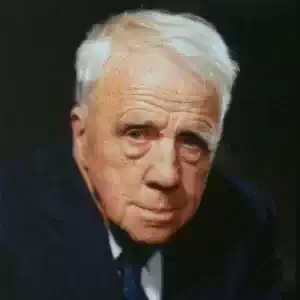
Robert Frost
The Secret Sits
We dance round in a ring and suppose,
But the Secret sits in the middle and knows.
But the Secret sits in the middle and knows.
446
William Butler Yeats
Under Saturn
DO not because this day I have grown saturnine
Imagine that lost love, inseparable from my thought
Because I have no other youth, can make me pine;
For how should I forget the wisdom that you brought,
The comfort that you made? Although my wits have gone
On a fantastic ride, my horse's flanks are spurred
By childish memories of an old cross Pollexfen,
And of a Middleton, whose name you never heard,
And of a red-haired Yeats whose looks, although he died
Before my time, seem like a vivid memory.
You heard that labouring man who had served my people. He said
Upon the open road, near to the Sligo quay --
No, no, not said, but cried it out -- 'You have come again,
And surely after twenty years it was time to come.'
I am thinking of a child's vow sworn in vain
Never to leave that valley his fathers called their home.
448
Rudyard Kipling
Outsong in the Jungle
Baloo
For the sake of him who showed
One wise Frog the Jungle-Road,
Keep the Law the Man-Pack make
For thy blind old Baloo's sake!
Clean or tainted, hot or stale,
Hold it as it were the Trail,
Through the day and through the night,
Questing neither left nor right.
For the sake of him who loves
Thee beyond all else that moves,
When thy Pack would make thee pain,
Say: " Tabaqui sings again."
When thy Pack would work thee ill,
Say: "Shere Khan is yet to kill."
When the knife is drawn to slay,
Keep the Law and go thy way.
(Root and honey, palm and spathe,
Guard a cub from harm and scathe!)
Wood and Water, Wind and Tree,
Jungle-Favour go with thee!
Kaa
Anger is the egg of Fear--
Only lidless eyes see clear.
Cobra-poison none may leech--
Even so with Cobra-speech.
Open talk shall call to thee
Strength, whose mate is Courtesy.
Send no lunge beyond thy length.
Lend no rotten bough thy strength.
Gauge thy gape with buck or goat,
Lest thine eye should choke thy throat.
After gorging, wouldst thou sleep ?
Look thy den be hid and deep,
Lest a wrong, by thee forgot,
Draw thy killer to the spot.
East and West and North and South,
Wash thy hide and close thy mouth.
(Pit and rift and blue pool-brim,
Middle-Jungle follow him!)
Wood and Water, Wind and Tree,
Jungle-Favour go with thee!
Bagheera
In the cage my life began;
Well I know the worth of Man.
By the Broken Lock that freed--
Man-cub, ware the Man-cub's breed!
Scenting-dew or starlight pale,
Choose no tangled tree-cat trail.
Pack or council, hunt or den,
Cry no truce with Jackal-Men.
Feed them silence when they say:
"Come with us an easy way."
Feed them silence when they seek
Help of thine to hurt the weak.
Make no bandar's boast of skill;
Hold thy peace above the kill.
Let nor call nor song nor sign
Turn thee from thy hunting-line.
(Morning mist or twilight clear,
Serve him, Wardens of the Deer!)
Wood and Water, Wind and Tree,
Jungle-Favour go with thee!
The Three
On the trail that thou must tread
To the threshold of our dread,
Where the Flower blossoms red;
Through the nights when thou shalt lie
Prisoned from our Mother-sky,
Hearing us, thy loves, go by;
In the dawns when thou. shalt wake
To the toil thou canst not break,
Heartsick for the Jungle's sake;
Wood and Water, Wind air Tree,
Wisdom, Strength, and Courtesy,
Jungle-Favour go with thee!
446
Alfred Edward Housman
When Smoke Stood Up From Ludlow
When smoke stood up from Ludlow,
And mist blew off from Teme,
And blithe afield to ploughing
Against the morning beam
I strode beside my team,
The blackbird in the coppice
Looked out to see me stride,
And hearkened as I whistled
The trampling team beside,
And fluted and replied:
"Lie down, lie down, young yeoman;
What use to rise and rise?
Rise man a thousand mornings
Yet down at last he lies,
And then the man is wise."
I heard the tune he sang me,
And spied his yellow bill;
I picked a stone and aimed it
And threw it with a will:
Then the bird was still.
Then my soul within me
Took up the blackbird's strain,
And still beside the horses
Along the dewy lane
It sang the song again:
"Lie down, lie down, young yeoman;
The sun moves always west;
The road one treads to labour
Will lead one home to rest,
And that will be the best."
445
Rudyard Kipling
The Puzzler
The Celt in all his variants from Builth to Ballyhoo,
His mental processes are plain--one knows what he will do,
And can logically predicate his finish by his start;
But the English--ah, the English!--they are quite a race apart.
Their psychology is bovine, their outlook crude and raw.
They abandon vital matters to be tickled with a straw;
But the straw that they were tickled with-the chaff that they were fed with--
They convert into a weaver's beam to break their foeman's head with.
For undemocratic reasons and for motives not of State,
They arrive at their conclusions--largely inarticulate.
Being void of self-expression they confide their views to none;
But sometimes in a smoking-room, one learns why things were done.
Yes, sometimes in a smoking-room, through clouds of "Ers" an "Ums,"
Obliquely and by inference, illumination comes,
On some step that they have taken, or some action they approve
Embellished with the argot of the Upper Fourth Remove.
In telegraphic sentences half nodded to their friends,
They hint a matter's inwardness--and there the matter ends.
And while the Celt is talking from Valencia to Kirkwall,
The English--ah, the English!--don't say anything at all.
446
Alexander Pope
Couplets on Wit
I
But our Great Turks in wit must reign alone
And ill can bear a Brother on the Throne.
II
Wit is like faith by such warm Fools profest
Who to be saved by one, must damn the rest.
III
Some who grow dull religious strait commence
And gain in morals what they lose in sence.
IV
Wits starve as useless to a Common weal
While Fools have places purely for their Zea.
V
Now wits gain praise by copying other wits
As one Hog lives on what another sh---.
VI
Wou'd you your writings to some Palates fit
Purged all you verses from the sin of wit
For authors now are so conceited grown
They praise no works but what are like their own.
446
Ella Wheeler Wilcox
Robin's Mistake
What do you think Red Robin
Found by a mow of hay?
Why, a flask brimful of liquor,
That the mowers brought that day
To slake their thirst in the hayfield.
And Robin he shook his head:
'Now, I wonder what they call it,
And how it tastes?' he said.
'I have seen the mowers drink it-
Why isn't it good for me?
So I'll just draw out the stopper
And get at the stuff, and see!'
But alas! for the curious Robin,
One draught, and he burned his throat
From his bill to his poor crop's lining,
And he could not utter a note.
And his head grew light and dizzy,
And he staggered left and right,
Tipped over the flask of brandy,
And spilled it, every mite.
But after awhile he sobered,
And quietly flew away,
And he never has tasted liquor,
Or touched it, since that day.
But I heard him say to his kindred.
In the course of a friendly chat,
'These men think they are above us,
Yet they drink such stuff as that!
Oh, the poor degraded creatures!
I am glad I am only a bird!'
Then he flew up over the meadow,
And that was all I heard.
440
Ella Wheeler Wilcox
Life's Harmonies
Let no man pray that he know not sorrow,
Let no soul ask to be free from pain,
For the gall of to-day is the sweet of to-morrow,
And the moment's loss is the lifetime's gain.
Through want of a thing does its worth redouble,
Through hunger's pangs does the feast content,
And only the heart that has harbored trouble,
Can fully rejoice when joy is sent.
Let no man shrink from the bitter tonics
Of grief, and yearning, and need, and strife,
For the rarest chords in the soul's harmonies,
Are found in the minor strains of life.
438