
Solitude
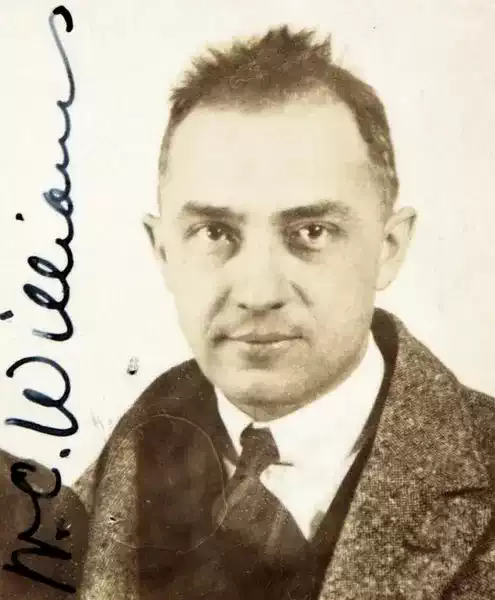
William Carlos Williams
Blizzard
Snow falls:
years of anger following
hours that float idly down --
the blizzard
drifts its weight
deeper and deeper for three days
or sixty years, eh? Then
the sun! a clutter of
yellow and blue flakes --
Hairy looking trees stand out
in long alleys
over a wild solitude.
The man turns and there --
his solitary track stretched out
upon the world.
312

Emily Dickinson
Exclusion (The soul selects her own society)
The soul selects her own society,
Then shuts the door;
On her divine majority
Obtrude no more.
Unmoved, she notes the chariot's pausing
At her low gate;
Unmoved, an emperor is kneeling
Upon her mat.
I've known her from an ample nation
Choose one
Then close the valves of her attention
Like stone.
Then shuts the door;
On her divine majority
Obtrude no more.
Unmoved, she notes the chariot's pausing
At her low gate;
Unmoved, an emperor is kneeling
Upon her mat.
I've known her from an ample nation
Choose one
Then close the valves of her attention
Like stone.
299
Emily Dickinson
The Loneliness One dare not sound
The Loneliness One dare not sound-
And would as soon surmise
As in its Grave go plumbing
To ascertain the size-
The Loneliness whose worst alarm
Is lest itself should see-
And perish from before itself
For just a scrutiny-
The Horror not to be surveyed-
But skirted in the Dark-
With Consciousness suspended-
And Being under Lock-
I fear me this-is Loneliness-
The Maker of the soul
Its Caverns and its Corridors
Illuminate-or seal-
299

William Wordsworth
Lines Left upon a Seat in a Yew-tree
Nay, Traveller! rest. This lonely Yew-tree stands
Far from all human dwelling: what if here
No sparkling rivulet spread the verdant herb?
What if the bee love not these barren boughs?
Yet, if the wind breathe soft, the curling waves,
That break against the shore, shall lull thy mind
By one soft impulse saved from vacancy.
--------------------Who he was
That piled these stones and with the mossy sod
First covered, and here taught this aged Tree
With its dark arms to form a circling bower,
I well remember.--He was one who owned
No common soul. In youth by science nursed,
And led by nature into a wild scene
Of lofty hopes, he to the world went forth
A favoured Being, knowing no desire
Which genius did not hallow; 'gainst the taint
Of dissolute tongues, and jealousy, and hate,
And scorn,--against all enemies prepared,
All but neglect. The world, for so it thought,
Owed him no service; wherefore he at once
With indignation turned himself away,
And with the food of pride sustained his soul
In solitude.--Stranger! these gloomy boughs
Had charms for him; and here he loved to sit,
His only visitants a straggling sheep,
The stone-chat, or the glancing sand-piper:
And on these barren rocks, with fern and heath,
And juniper and thistle, sprinkled o'er,
Fixing his downcast eye, he many an hour
A morbid pleasure nourished, tracing here
An emblem of his own unfruitful life:
And, lifting up his head, he then would gaze
On the more distant scene,--how lovely 'tis
Thou seest,--and he would gaze till it became
Far lovelier, and his heart could not sustain
The beauty, still more beauteous! Nor, that time,
When nature had subdued him to herself,
Would he forget those Beings to whose minds,
Warm from the labours of benevolence,
The world, and human life, appeared a scene
Of kindred loveliness: then he would sigh,
Inly disturbed, to think that others felt
What he must never feel: and so, lost Man!
On visionary views would fancy feed,
Till his eye streamed with tears. In this deep vale
He died,--this seat his only monument.
If Thou be one whose heart the holy forms
Of young imagination have kept pure,
Stranger! henceforth be warned; and know that pride,
Howe'er disguised in its own majesty,
Is littleness; that he, who feels contempt
For any living thing, hath faculties
Which he has never used; that thought with him
Is in its infancy. The man whose eye
Is ever on himself doth look on one,
The least of Nature's works, one who might move
The wise man to that scorn which wisdom holds
Unlawful, ever. O be wiser, Thou!
Instructed that true knowledge leads to love;
True dignity abides with him alone
Who, in the silent hour of inward thought,
Can still suspect, and still revere himself
In lowliness of heart.
292

William Butler Yeats
A Man Young And Old: X. His Wildness
O bid me mount and sail up there
Amid the cloudy wrack,
For peg and Meg and Paris' love
That had so straight a back,
Are gone away, and some that stay
Have changed their silk for sack.
Were I but there and none to hear
I'd have a peacock cry,
For that is natural to a man
That lives in memory,
Being all alone I'd nurse a stone
And sing it lullaby.
289

Alice Walker
Be Nobody's Darling
Be nobody's darling;
Be an outcast.
Take the contradictions
Of your life
And wrap around
You like a shawl,
To parry stones
To keep you warm.
Watch the people succumb
To madness
With ample cheer;
Let them look askance at you
And you askance reply.
Be an outcast;
Be pleased to walk alone
(Uncool)
Or line the crowded
River beds
With other impetuous
Fools.
Make a merry gathering
On the bank
Where thousands perished
For brave hurt words
They said.
But be nobody's darling;
Be an outcast.
Qualified to live
Among your dead.
Be an outcast.
Take the contradictions
Of your life
And wrap around
You like a shawl,
To parry stones
To keep you warm.
Watch the people succumb
To madness
With ample cheer;
Let them look askance at you
And you askance reply.
Be an outcast;
Be pleased to walk alone
(Uncool)
Or line the crowded
River beds
With other impetuous
Fools.
Make a merry gathering
On the bank
Where thousands perished
For brave hurt words
They said.
But be nobody's darling;
Be an outcast.
Qualified to live
Among your dead.
289

Robert W. Service
My Inner Life
'Tis true my garments threadbare are,
And sorry poor I seem;
But inly I am richer far
Than any poet's dream.
For I've a hidden life no one
Can ever hope to see;
A sacred sanctuary none
May share with me.
Aloof I stand from out the strife,
Within my heart a song;
By virtue of my inner life
I to myself belong.
Against man-ruling I rebel,
Yet do not fear defeat,
For to my secret citadel
I may retreat.
Oh you who have an inner life
Beyond this dismal day
With wars and evil rumours rife,
Go blessedly your way.
Your refuge hold inviolate;
Unto yourself be true,
And shield serene from sordid fate
The Real You.
287
Emily Dickinson
I hide myself within my flower
I hide myself within my flower,
That fading from your Vase,
You, unsuspecting, feel for me-
Almost a loneliness.
That fading from your Vase,
You, unsuspecting, feel for me-
Almost a loneliness.
283
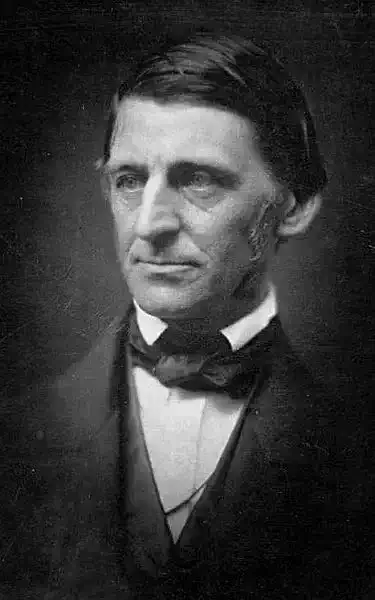
Ralph Waldo Emerson
Compensation
Why should I keep holiday,
When other men have none?
Why but because when these are gay,
I sit and mourn alone.
And why when mirth unseals all tongues
Should mine alone be dumb?
Ah! late I spoke to silent throngs,
And now their hour is come.
When other men have none?
Why but because when these are gay,
I sit and mourn alone.
And why when mirth unseals all tongues
Should mine alone be dumb?
Ah! late I spoke to silent throngs,
And now their hour is come.
283
Robert W. Service
Moon-Lover
I
The Moon is like a ping-pong ball;
I lean against the orchard wall,
And see it soar into the void,
A silky sphere of celluloid.
Then fairy fire enkindles it,
Like gossamer by taper lit,
Until it glows above the trees
As mellow as a Cheddar cheese.
And up and up I watch it press
Into appalling loneliness;
Like realms of ice without a stain,
A corpse Moon come to life again.
Ruthless it drowns a sturdy star
That seeks its regal way to bar;
Seeming with conscious power to grow,
And sweeter, purer, gladder glow.
Dreaming serenely up the sky
Until exultantly on high,
It shimmers with superb delight,
The silver navel of the night.
II
I have a compact to commune
A monthly midnight with the Moon;
Into its face I stare and stare,
And find sweet understanding there.
As quiet as a toad I sit
And tell my tale of days to it;
The tessellated yarn I've spun
In thirty spells of star and sun.
And the Moon listens pensively,
As placid as a lamb to me;
Until I think there's just us two
In silver world of mist and dew.
In all of spangled space, but I
To stare moon-struck into the sky;
Of billion beings I alone
To praise the Moon as still as stone.
And seal a bond between us two,
Closer than mortal ever knew;
For as mute masses I intone
The Moon is mine and mine alone.
III
To know the Moon as few men may,
One must be just a little fey;
And for our friendship's sake I'm glad
That I am just a trifle mad.
And one with all the wild, wise things,
The furtive folk of fur and wings,
That hold the Moon within their eyes,
And make it nightly sacrifice.
O I will watch the maiden Moon
Dance on the sea with silver shoon;
But with the Queen Moon I will keep
My tryst when all the world's asleep.
As I have kept by land and sea
That tryst for half a century;
Entranced in sibylline suspense
Beyond a world of common-sense.
Until one night the Moon alone
Will look upon a graven stone. . . .
I wonder will it miss me then,
Its lover more than other men?
Or will my wistful ghost be there,
Down ages dim to stare and stare,
On silver nights without a stir--
The Moon's Eternal Worshipper?
277
Emily Dickinson
Too little way the House must lie
Too little way the House must lie
From every Human Heart
That holds in undisputed Lease
A white inhabitant-
Too narrow is the Right between-
Too imminent the chance-
Each Consciousness must emigrate
And lose its neighbor once-
From every Human Heart
That holds in undisputed Lease
A white inhabitant-
Too narrow is the Right between-
Too imminent the chance-
Each Consciousness must emigrate
And lose its neighbor once-
277

Christina Rossetti
The Thread of Life
I
The irresponsive silence of the land,
The irresponsive sounding of the sea,
Speak both one message of one sense to me:--
Aloof, aloof, we stand aloof, so stand
Thou too aloof bound with the flawless band
Of inner solitude; we bind not thee;
But who from thy self-chain shall set thee free?
What heart shall touch thy heart? what hand thy hand?--
And I am sometimes proud and sometimes meek,
And sometimes I remember days of old
When fellowship seemed not so far to seek
And all the world and I seemed much less cold,
And at the rainbow's foot lay surely gold,
And hope felt strong and life itself not weak.
II
Thus am I mine own prison. Everything
Around me free and sunny and at ease:
Or if in shadow, in a shade of trees
Which the sun kisses, where the gay birds sing
And where all winds make various murmuring;
Where bees are found, with honey for the bees;
Where sounds are music, and where silences
Are music of an unlike fashioning.
Then gaze I at the merrymaking crew,
And smile a moment and a moment sigh
Thinking: Why can I not rejoice with you?
But soon I put the foolish fancy by:
I am not what I have nor what I do;
But what I was I am, I am even I.
III
Therefore myself is that one only thing
I hold to use or waste, to keep or give;
My sole possession every day I live,
And still mine own despite Time's winnowing.
Ever mine own, while moons and seasons bring
From crudeness ripeness mellow and sanitive;
Ever mine own, till Death shall ply his sieve;
And still mine own, when saints break grave and sing.
And this myself as king unto my King
I give, to Him Who gave Himself for me;
Who gives Himself to me, and bids me sing
A sweet new song of His redeemed set free;
he bids me sing: O death, where is thy sting?
And sing: O grave, where is thy victory?
272
Emily Dickinson
How sick—to wait—in any place—but thine
How sick—to wait—in any place—but thine—
I knew last night—when someone tried to twine—
Thinking—perhaps—that I looked tired—or alone—
Or breaking—almost—with unspoken pain—
And I turned—ducal—
That right—was thine—
One port—suffices—for a Brig—like mine—
Ours be the tossing—wild though the sea—
Rather than a Mooring—unshared by thee.
Ours be the Cargo—unladed—here—
Rather than the "spicy isles—"
And thou—not there—
270

Henry Lawson
On the Summit of Mt. Clarence
On the summit of Mount Clarence rotting slowly in the air
Stands a tall and naked flagstaff, relic of the Russian scare—
Russian scare that scares no longer, for the cry is “All is well”—
Yet the flagstaff still is standing like a lonely sentinel.
And it watches through the seasons—winter’s cold and summer’s heat,
Watches seaward, watches ever for the phantom Russian fleet.
In a cave among the ridges, where the scrub is tall and thick
With no human being near him dwells a wretched lunatic:
On Mount Clarence in the morning he will fix his burning eyes,
And he scans the sea and watches for the signal flag to rise;
In his ears the roar of cannon and the sound of battle drums
While he cleans his gun and watches for the foe that never comes.
And they say, at dreary nightfall, when the storms are howling round
Comes a phantom ship to anchor in the waters of the “Sound”,
And the lunatic who sees it wakes the landscape with his whoops,
Loads his gun and marches seaward at the head of airy troops—
To the summit of Mount Clarence leads them on with martial tread,
Fires his gun and sends the Russians to the mustering of the dead.
267
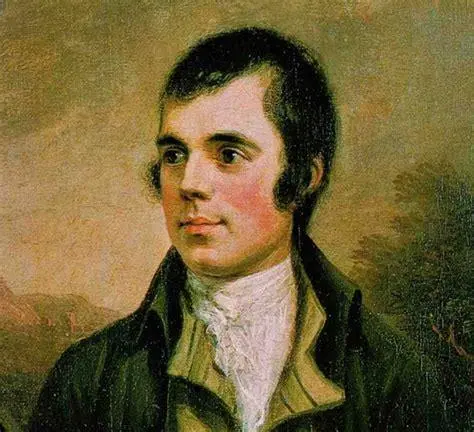
Robert Burns
Despondency -- An Ode
Oppress'd with grief, oppress'd with care,
A burden more than I can bear,
I set me down and sigh:
O life! thou art a galling load,
Along a rough, a weary road,
To wretches such as I!
Dim backward as I cast my view,
What sick'ning scenes appear!
What sorrows yet may pierce me thro',
Too justly I may fear!
Still caring, despairing,
Must be my bitter doom;
My woes here shall close ne'er
But with the closing tomb!
Happy, ye sons of busy life,
Who, equal to the bustling strife,
No other view regard!
Ev'n when the wished end's denied,
Yet while the busy means are plied,
They bring their own reward:
Whilst I, a hope-abandon'd wight,
Unfitted with an aim,
Meet ev'ry sad returning night,
And joyless morn the same;
You, bustling, and justling,
Forget each grief and pain;
I, listless, yet restless,
Find every prospect vain.
How blest the Solitary's lot,
Who, all-forgetting, all-forgot,
Within his humble cell,
The cavern wild with tangling roots,
Sits o'er his newly-gather'd fruits,
Beside his crystal well!
Or, haply, to his ev'ning thought,
By unfrequented stream,
The ways of men are distant brought,
A faint collected dream:
While praising, and raising
His thoughts to heav'n on high,
As wand'ring, meand'ring,
He views the solemn sky.
Than I, no lonely hermit plac'd
Where never human footstep trac'd,
Less fit to play the part;
The lucky moment to improve,
And just to stop, and just to move,
With self-respecting art:
But ah! those pleasures, loves, and joys,
Which I too keenly taste,
The Solitary can despise,
Can want, and yet be blest!
He needs not, he heeds not,
Or human love or hate,
Whilst I here must cry here,
At perfidy ingrate!
Oh! enviable, early days,
When dancing thoughtless pleasure's maze,
To care, to guilt unknown!
How ill exchang'd for riper times,
To feel the follies, or the crimes
Of others, or my own !
Ye tiny elves that guiltless sport
Like linnets in the bush,
Ye little know the ills ye court,
When manhood is your wish!
The losses, the crosses,
That active man engage
The fears all, the tears all,
Of dim-declining age!
264
Robert W. Service
Heart O' The North
And when I come to the dim trail-end,
I who have been Life's rover,
This is all I would ask, my friend,
Over and over and over:
A little space on a stony hill
With never another near me,
Sky o' the North that's vast and still,
With a single star to cheer me;
Star that gleams on a moss-grey stone
Graven by those who love me --
There would I lie alone, alone,
With a single pine above me;
Pine that the north wind whinneys through -Oh,
I have been Life's lover!
But there I'd lie and listen to
Eternity passing over.
251
Emily Dickinson
I'm nobody! Who are you?
I'm nobody! Who are you?
Are you nobody, too?
Then there's a pair of us -- don't tell!
They'd banish -- you know!
How dreary to be somebody!
How public like a frog
To tell one's name the livelong day
To an admiring bog!
Are you nobody, too?
Then there's a pair of us -- don't tell!
They'd banish -- you know!
How dreary to be somebody!
How public like a frog
To tell one's name the livelong day
To an admiring bog!
252
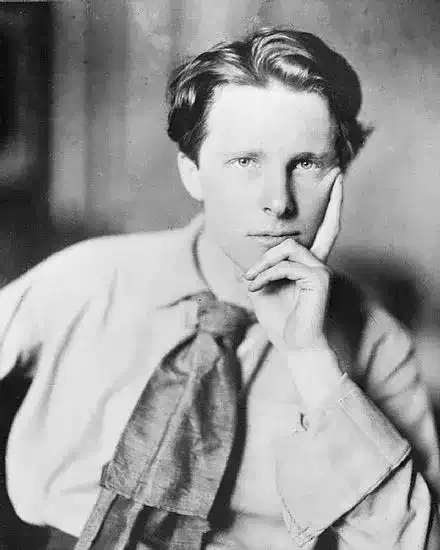
Rupert Brooke
The Jolly Company
The stars, a jolly company,
I envied, straying late and lonely;
And cried upon their revelry:
"O white companionship! You only
In love, in faith unbroken dwell,
Friends radiant and inseparable!"
Light-heart and glad they seemed to me
And merry comrades (EVEN SO
GOD OUT OF HEAVEN MAY LAUGH TO SEE
THE HAPPY CROWDS; AND NEVER KNOW
THAT IN HIS LONE OBSCURE DISTRESS
EACH WALKETH IN A WILDERNESS).
But I, remembering, pitied well
And loved them, who, with lonely light,
In empty infinite spaces dwell,
Disconsolate. For, all the night,
I heard the thin gnat-voices cry,
Star to faint star, across the sky.
246
Rupert Brooke
Paralysis
For moveless limbs no pity I crave,
That never were swift! Still all I prize,
Laughter and thought and friends, I have;
No fool to heave luxurious sighs
For the woods and hills that I never knew.
The more excellent way's yet mine! And you
Flower-laden come to the clean white cell,
And we talk as ever -- am I not the same?
With our hearts we love, immutable,
You without pity, I without shame.
We talk as of old; as of old you go
Out under the sky, and laughing, I know,
Flit through the streets, your heart all me;
Till you gain the world beyond the town.
Then -- I fade from your heart, quietly;
And your fleet steps quicken. The strong down
Smiles you welcome there; the woods that love you
Close lovely and conquering arms above you.
O ever-moving, O lithe and free!
Fast in my linen prison I press
On impassable bars, or emptily
Laugh in my great loneliness.
And still in the white neat bed I strive
Most impotently against that gyve;
Being less now than a thought, even,
To you alone with your hills and heaven.
242
Robert W. Service
Trixie
Dogs have a sense beyond our ken -
At least my little Trixie had:
Tail-wagging when I laughed, and when
I sighed, eyes luminously sad.
And if I planned to go away,
She'd know, oh, days and days before:
Aye, dogs I think are sometimes fey,
They seem to sense our fate in store.
Now take the case of old Tome Low;
With flowers each week he'd call on me.
Dear Trixie used to love him so,
With joyous jump upon his knee.
Yet when he wandered in one day,
Her hair grew sudden stark with dread;
She growled, she howled, she ran away . . .
Well, ten hours later Tom was dead.
Aye, dogs hear sounds we cannot hear,
And dogs see sights we cannot see;
And that is why I took the fear
That one day she would glare at me
As if a Shape cowered on my bead,
And with each hair on end she'd creep
Beneath the couch and whine with dread . . .
And so I've had her put to sleep.
Now Trixie's gone, the only one
Who loved me in my lonely life,
And here I wait, my race nigh run,
My ill too grievous for the knife.
My hand of ice she'll never lick,
My heedless mask she'll never see:
No heartbreak - just a needle prick. . . .
Oh, Doctor, do the same for me!
239
Christina Rossetti
From Sunset to Star Rise
Go from me, summer friends, and tarry not:
I am no summer friend, but wintry cold,
A silly sheep benighted from the fold,
A sluggard with a thorn-choked garden plot.
Take counsel, sever from my lot your lot,
Dwell in your pleasant places, hoard your gold;
Lest you with me should shiver on the wold,
Athirst and hungering on a barren spot.
For I have hedged me with a thorny hedge,
I live alone, I look to die alone:
Yet sometimes, when a wind sighs through the sedge,
Ghosts of my buried years, and friends come back,
My heart goes sighing after swallows flown
On sometime summer's unreturning track.
232
Rupert Brooke
Seaside
Swiftly out from the friendly lilt of the band,
The crowd's good laughter, the loved eyes of men,
I am drawn nightward; I must turn again
Where, down beyond the low untrodden strand,
There curves and glimmers outward to the unknown
The old unquiet ocean. All the shade
Is rife with magic and movement. I stray alone
Here on the edge of silence, half afraid,
Waiting a sign. In the deep heart of me
The sullen waters swell towards the moon,
And all my tides set seaward.
From inland
Leaps a gay fragment of some mocking tune,
That tinkles and laughs and fades along the sand,
And dies between the seawall and the sea.
231
Robert W. Service
My Hundred Books
A thousand books my library
Contains;
And all are primed, it seems to me
With brains.
Mine are so few I scratch in thought
My head;
For just a hundred of the lot
I've read.
A hundred books, but of the best,
I can
With wisdom savour and digest
And scan.
Yet when afar from kin and kith
In nooks
Of quietness I'm happy with
Sweet books.
So as nine hundred at me stare
In vain,
My lack I'm wistfully aware
Of brain;
Yet as my leave of living ends,
With looks
Of love I view a hundred friends,
My books.
223
Robert W. Service
Rich Poor Man
We pitied him because
He lived alone;
His tiny cottage was
His only own.
His little garden had
A wall around;
Yet never was so glad
A bit of ground.
It seemed to fair rejoice
With flowers and fruit;
With blooms it found a voice
When ours was muts.
It smiled without a pause
In gracious glow:
I think it was because
He loved it so.
He had no news to read,
No rent to pay;
His vegetable need
He plucked each day.
His grateful garden gave
Him ample fare;
He lived without a crave,
Without a care.
His bread and milk and tea
Were all he bought;
To us he seemed to be
A sorry lot . . .
But when we're dead and gone,
With all our fuss,
I guess he'll carry on,
And laugh at us.
218