
Solitude

Johann Wolfgang von Goethe
Solitude
OH ye kindly nymphs, who dwell 'mongst the rocks and the thickets,
Grant unto each whatsoe'er he may in silence desire!
Comfort impart to the mourner, and give to the doubter instruction,
And let the lover rejoice, finding the bliss that he craves.
For from the gods ye received what they ever denied unto mortals,
Power to comfort and aid all who in you may confide.
405
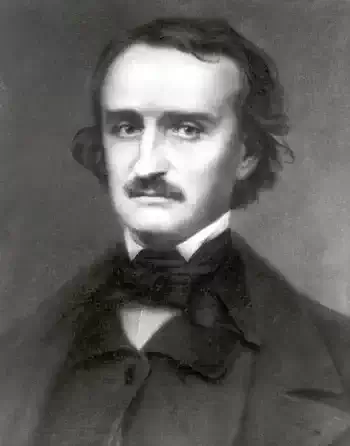
Edgar Allan Poe
Spirits Of The Dead
Thy soul shall find itself alone
'Mid dark thoughts of the grey tomb-stone;
Not one, of all the crowd, to pry
Into thine hour of secrecy.
Be silent in that solitude,
Which is not loneliness- for then
The spirits of the dead, who stood
In life before thee, are again
In death around thee, and their will
Shall overshadow thee; be still.
The night, though clear, shall frown,
And the stars shall not look down
From their high thrones in the Heaven
With light like hope to mortals given,
But their red orbs, without beam,
To thy weariness shall seem
As a burning and a fever
Which would cling to thee for ever.
Now are thoughts thou shalt not banish,
Now are visions ne'er to vanish;
From thy spirit shall they pass
No more, like dew-drop from the grass.
The breeze, the breath of God, is still,
And the mist upon the hill
Shadowy, shadowy, yet unbroken,
Is a symbol and a token.
How it hangs upon the trees,
A mystery of mysteries!
404
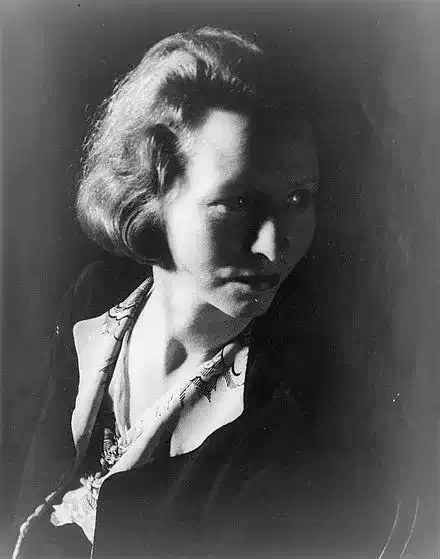
Edna St. Vincent Millay
Wraith
"Thin Rain, whom are you haunting,
That you haunt my door?"
—Surely it is not I she's wanting;
Someone living here before—
"Nobody's in the house but me:
You may come in if you like and see."
Thin as thread, with exquisite fingers,—
Have you seen her, any of you?—
Grey shawl, and leaning on the wind,
And the garden showing through?
Glimmering eyes,—and silent, mostly,
Sort of a whisper, sort of a purr,
Asking something, asking it over,
If you get a sound from her.—
Ever see her, any of you?—
Strangest thing I've ever known,—
Every night since I moved in,
And I came to be alone.
"Thin Rain, hush with your knocking!
You may not come in!
This is I that you hear rocking;
Nobody's with me, nor has been!"
Curious, how she tried the window,—
Odd, the way she tries the door,—
Wonder just what sort of people
Could have had this house before . . .
401

Robert Louis Stevenson
The Vagabond
Give to me the life I love,
Let the lave go by me,
Give the jolly heaven above
And the byway nigh me.
Bed in the bush with stars to see,
Bread I dip in the river -
There's the life for a man like me,
There's the life for ever.
Let the blow fall soon or late,
Let what will be o'er me;
Give the face of earth around
And the road before me.
Wealth I seek not, hope nor love,
Nor a friend to know me;
All I seek, the heaven above
And the road below me.
Or let autumn fall on me
Where afield I linger,
Silencing the bird on tree,
Biting the blue finger.
White as meal the frosty field -
Warm the fireside haven -
Not to autumn will I yield,
Not to winter even!
Let the blow fall soon or late,
Let what will be o'er me;
Give the face of earth around,
And the road before me.
Wealth I ask not, hope nor love,
Nor a friend to know me;
All I ask, the heaven above
And the road below me.
400

John Clare
In Hilly-Wood
How sweet to be thus nestling deep in boughs,
Upon an ashen stoven pillowing me;
Faintly are heard the ploughmen at their ploughs,
But not an eye can find its way to see.
The sunbeams scarce molest me with a smile,
So thick the leafy armies gather round;
And where they do, the breeze blows cool the while,
Their leafy shadows dancing on the ground.
Full many a flower, too, wishing to be seen,
Perks up its head the hiding grass between.-
In mid-wood silence, thus, how sweet to be;
Where all the noises, that on peace intrude,
Come from the chittering cricket, bird, and bee,
Whose songs have charms to sweeten solitude.
394
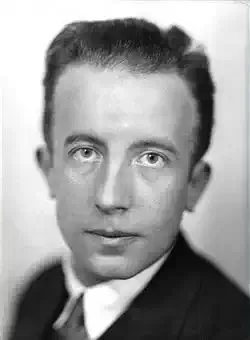
Paul Éluard
I Cannot be Known
I cannot be known
Better than you know me
Your eyes in which we sleep
We together
Have made for my man's gleam
A better fate than for the common nights
Your eyes in which I travel
Have given to signs along the roads
A meaning alien to the earth
In your eyes who reveal to us
Our endless solitude
Are no longer what they thought themselves to be
You cannot be known
Better than I know you.
392

John Keats
On Leaving Some Friends At An Early Hour
Give me a golden pen, and let me lean
On heaped-up flowers, in regions clear, and far;
Bring me a tablet whiter than a star,
Or hand of hymning angel, when 'tis seen
The silver strings of heavenly harp atween:
And let there glide by many a pearly car
Pink robes, and wavy hair, and diamond jar,
And half-discovered wings, and glances keen.
The while let music wander round my ears,
And as it reaches each delicious ending,
Let me write down a line of glorious tone,
And full of many wonders of the spheres:
For what a height my spirit is contending!
'Tis not content so soon to be alone.
385

William Butler Yeats
The Apparitions
BECAUSE there is safety in derision
I talked about an apparition,
I took no trouble to convince,
Or seem plausible to a man of sense.
Distrustful of thar popular eye
Whether it be bold or sly.
Fifteen apparitions have I seen;
The worst a coat upon a coat-hanger.
I have found nothing half so good
As my long-planned half solitude,
Where I can sit up half the night
With some friend that has the wit
Not to allow his looks to tell
When I am unintelligible.
Fifteen apparitions have I seen;
The worst a coat upon a coat-hanger.
When a man grows old his joy
Grows more deep day after day,
His empty heart is full at length,
But he has need of all that strength
Because of the increasing Night
That opens her mystery and fright.
Fifteen apparitions have I seen;
The worst a coat upon a coat-hanger.
383

Mirza Ghalib
Ghazal
I wish to go and dwell,
In such a place,
Where there's no one else.
No one to understand my speech,
No one around to talk with,
There, I want to reach.
I wish to build,
One such house,
Without a door to enter,
Without the boundary walls,
Thus there will be no neighbours,
And there will be no guard.
There will be no one thus,
To take care of me,
When I will fell ill.
And there will be no one,
To mourn or cry,
When I will die.
380

Nazim Hikmet
Letters From A Man In Solitary
I carved your name on my watchband
with my fingernail.
Where I am, you know,
I don't have a pearl-handled jackknife
(they won't give me anything sharp)
or a plane tree with its head in the clouds.
Trees may grow in the yard,
but I'm not allowed
to see the sky overhead...
How many others are in this place?
I don't know.
I'm alone far from them,
they're all together far from me.
To talk anyone besides myself
is forbidden.
So I talk to myself.
But I find my conversation so boring,
my dear wife, that I sing songs.
And what do you know,
that awful, always off-key voice of mine
touches me so
that my heart breaks.
And just like the barefoot orphan
lost in the snow
in those old sad stories, my heart
-- with moist blue eyes
and a little red runny rose --
wants to snuggle up in your arms.
It doesn't make me blush
that right now
I'm this weak,
this selfish,
this human simply.
No doubt my state can be explained
physiologically, psychologically, etc.
Or maybe it's
this barred window,
this earthen jug,
these four walls,
which for months have kept me from hearing
another human voice.
It's five o'clock, my dear.
Outside,
with its dryness,
eerie whispers,
mud roof,
and lame, skinny horse
standing motionless in infinity
-- I mean, it's enough to drive the man inside crazy with grief --
outside, with all its machinery and all its art,
a plains night comes down red on treeless space.
Again today, night will fall in no time.
A light will circle the lame, skinny horse.
And the treeless space, in this hopeless landscape
stretched out before me like the body of a hard man,
will suddenly be filled with stars.
We'll reach the inevitable end once more,
which is to say the stage is set
again today for an elaborate nostalgia.
Me,
the man inside,
once more I'll exhibit my customary talent,
and singing an old-fashioned lament
in the reedy voice of my childhood,
once more, by God, it will crush my unhappy heart
to hear you inside my head,
so far
away, as if I were watching you
in a smoky, broken mirror...
It's spring outside, my dear wife, spring.
Outside on the plain, suddenly the smell
of fresh earth, birds singing, etc.
It's spring, my dear wife,
the plain outside sparkles...
And inside the bed comes alive with bugs,
the water jug no longer freezes,
and in the morning sun floods the concrete...
The sun--
every day till noon now
it comes and goes
from me, flashing off
and on...
And as the day turns to afternoon, shadows climb the walls,
the glass of the barred window catches fire,
and it's night outside,
a cloudless spring night...
And inside this is spring's darkest hour.
In short, the demon called freedom,
with its glittering scales and fiery eyes,
possesses the man inside
especially in spring...
I know this from experience, my dear wife,
from experience...
Sunday today.
Today they took me out in the sun for the first time.
And I just stood there, struck for the first time in my life
by how far away the sky is,
how blue
and how wide.
Then I respectfully sat down on the earth.
I leaned back against the wall.
For a moment no trap to fall into,
no struggle, no freedom, no wife.
Only earth, sun, and me...
I am happy.
Trans. by Randy Blasing and Mutlu Konuk ()
372

Emily Dickinson
Deprived of other Banquet
Deprived of other Banquet,
I entertained Myself-
At first-a scant nutrition-
An insufficient Loaf-
But grown by slender addings
To so esteemed a size
'Tis sumptuous enough for me-
And almost to suffice
A Robin's famine able-
Red Pilgrim, He and I-
A Berry from our table
Reserve-for charity-
I entertained Myself-
At first-a scant nutrition-
An insufficient Loaf-
But grown by slender addings
To so esteemed a size
'Tis sumptuous enough for me-
And almost to suffice
A Robin's famine able-
Red Pilgrim, He and I-
A Berry from our table
Reserve-for charity-
362
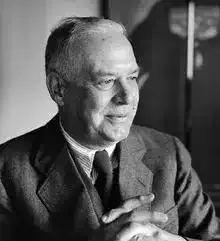
Wallace Stevens
The Snow Man
One must have a mind of winter
To regard the frost and the boughs
Of the pine-trees crusted with snow;
And have been cold a long time
To behold the junipers shagged with ice,
The spruces rough in the distant glitter
Of the January sun; and not to think
Of any misery in the sound of the wind,
In the sound of a few leaves,
Which is the sound of the land
Full of the same wind
That is blowing in the same bare place
For the listener, who listens in the snow,
And, nothing himself, beholds
Nothing that is not there and the nothing that is.
360
Edna St. Vincent Millay
Ode To Silence
Aye, but she?
Your other sister and my other soul
Grave Silence, lovelier
Than the three loveliest maidens, what of her?
Clio, not you,
Not you, Calliope,
Nor all your wanton line,
Not Beauty's perfect self shall comfort me
For Silence once departed,
For her the cool-tongued, her the tranquil-hearted,
Whom evermore I follow wistfully,
Wandering Heaven and Earth and Hell and the four seasons through;
Thalia, not you,
Not you, Melpomene,
Not your incomparable feet, O thin Terpsichore, I seek in this great hall,
But one more pale, more pensive, most beloved of you all.
I seek her from afar,
I come from temples where her altars are,
From groves that bear her name,
Noisy with stricken victims now and sacrificial flame,
And cymbals struck on high and strident faces
Obstreperous in her praise
They neither love nor know,
A goddess of gone days,
Departed long ago,
Abandoning the invaded shrines and fanes
Of her old sanctuary,
A deity obscure and legendary,
Of whom there now remains,
For sages to decipher and priests to garble,
Only and for a little while her letters wedged in marble,
Which even now, behold, the friendly mumbling rain erases,
And the inarticulate snow,
Leaving at last of her least signs and traces
None whatsoever, nor whither she is vanished from these places.
"She will love well," I said,
"If love be of that heart inhabiter,
The flowers of the dead;
The red anemone that with no sound
Moves in the wind, and from another wound
That sprang, the heavily-sweet blue hyacinth,
That blossoms underground,
And sallow poppies, will be dear to her.
And will not Silence know
In the black shade of what obsidian steep
Stiffens the white narcissus numb with sleep?
(Seed which Demeter's daughter bore from home,
Uptorn by desperate fingers long ago,
Reluctant even as she,
Undone Persephone,
And even as she set out again to grow
In twilight, in perdition's lean and inauspicious loam).
She will love well," I said,
"The flowers of the dead;
Where dark Persephone the winter round,
Uncomforted for home, uncomforted,
Lacking a sunny southern slope in northern Sicily,
With sullen pupils focussed on a dream,
Stares on the stagnant stream
That moats the unequivocable battlements of Hell,
There, there will she be found,
She that is Beauty veiled from men and Music in a swound."
"I long for Silence as they long for breath
Whose helpless nostrils drink the bitter sea;
What thing can be
So stout, what so redoubtable, in Death
What fury, what considerable rage, if only she,
Upon whose icy breast,
Unquestioned, uncaressed,
One time I lay,
And whom always I lack,
Even to this day,
Being by no means from that frigid bosom weaned away,
If only she therewith be given me back?"
I sought her down that dolorous labyrinth,
Wherein no shaft of sunlight ever fell,
And in among the bloodless everywhere
I sought her, but the air,
Breathed many times and spent,
Was fretful with a whispering discontent,
And questioning me, importuning me to tell
Some slightest tidings of the light of day they know no more,
Plucking my sleeve, the eager shades were with me where I went.
I paused at every grievous door,
And harked a moment, holding up my hand,—and for a space
A hush was on them, while they watched my face;
And then they fell a-whispering as before;
So that I smiled at them and left them, seeing she was not there.
I sought her, too,
Among the upper gods, although I knew
She was not like to be where feasting is,
Nor near to Heaven's lord,
Being a thing abhorred
And shunned of him, although a child of his,
(Not yours, not yours; to you she owes not breath,
Mother of Song, being sown of Zeus upon a dream of Death).
Fearing to pass unvisited some place
And later learn, too late, how all the while,
With her still face,
She had been standing there and seen me pass, without a smile,
I sought her even to the sagging board whereat
The stout immortals sat;
But such a laughter shook the mighty hall
No one could hear me say:
Had she been seen upon the Hill that day?
And no one knew at all
How long I stood, or when at last I sighed and went away.
There is a garden lying in a lull
Between the mountains and the mountainous sea,
I know not where, but which a dream diurnal
Paints on my lids a moment till the hull
Be lifted from the kernel
And Slumber fed to me.
Your foot-print is not there, Mnemosene,
Though it would seem a ruined place and after
Your lichenous heart, being full
Of broken columns, caryatides
Thrown to the earth and fallen forward on their jointless knees,
And urns funereal altered into dust
Minuter than the ashes of the dead,
And Psyche's lamp out of the earth up-thrust,
Dripping itself in marble wax on what was once the bed
Of Love, and his young body asleep, but now is dust instead.
There twists the bitter-sweet, the white wisteria Fastens its fingers in the strangling
wall,
And the wide crannies quicken with bright weeds;
There dumbly like a worm all day the still white orchid feeds;
But never an echo of your daughters' laughter
Is there, nor any sign of you at all
Swells fungous from the rotten bough, grey mother of Pieria!
Only her shadow once upon a stone
I saw,—and, lo, the shadow and the garden, too, were gone.
I tell you you have done her body an ill,
You chatterers, you noisy crew!
She is not anywhere!
I sought her in deep Hell;
And through the world as well;
I thought of Heaven and I sought her there;
Above nor under ground
Is Silence to be found,
That was the very warp and woof of you,
Lovely before your songs began and after they were through!
Oh, say if on this hill
Somewhere your sister's body lies in death,
So I may follow there, and make a wreath
Of my locked hands, that on her quiet breast
Shall lie till age has withered them!
(Ah, sweetly from the rest
I see
Turn and consider me
Compassionate Euterpe!)
"There is a gate beyond the gate of Death,
Beyond the gate of everlasting Life,
Beyond the gates of Heaven and Hell," she saith,
"Whereon but to believe is horror!
Whereon to meditate engendereth
Even in deathless spirits such as I
A tumult in the breath,
A chilling of the inexhaustible blood
Even in my veins that never will be dry,
And in the austere, divine monotony
That is my being, the madness of an unaccustomed mood.
This is her province whom you lack and seek;
And seek her not elsewhere.
Hell is a thoroughfare
For pilgrims,—Herakles,
And he that loved Euridice too well,
Have walked therein; and many more than these;
And witnessed the desire and the despair
Of souls that passed reluctantly and sicken for the air;
You, too, have entered Hell,
And issued thence; but thence whereof I speak
None has returned;—for thither fury brings
Only the driven ghosts of them that flee before all things.
Oblivion is the name of this abode: and she is there."
Oh, radiant Song! Oh, gracious Memory!
Be long upon this height
I shall not climb again!
I know the way you mean,—the little night,
And the long empty day,—never to see
Again the angry light,
Or hear the hungry noises cry my brain!
Ah, but she,
Your other sister and my other soul,
She shall again be mine;
And I shall drink her from a silver bowl,
A chilly thin green wine,
Not bitter to the taste,
Not sweet,
Not of your press, oh, restless, clamorous nine,—
To foam beneath the frantic hoofs of mirth—
But savoring faintly of the acid earth,
And trod by pensive feet
From perfect clusters ripened without haste
Out of the urgent heat
In some clear glimmering vaulted twilight under the odorous vine
. Lift up your lyres! Sing on!
But as for me, I seek your sister whither she is gone.
357

Dorothy Parker
Wisdom
This I say, and this I know:
Love has seen the last of me.
Love's a trodden lane to woe,
Love's a path to misery.
This I know, and knew before,
This I tell you, of my years:
Hide your heart, and lock your door.
Hell's afloat in lovers' tears.
Give your heart, and toss and moan;
What a pretty fool you look!
I am sage, who sit alone;
Here's my wool, and here's my book.
Look! A lad's a-waiting there,
Tall he is and bold, and gay.
What the devil do I care
What I know, and what I say?
356

Carl Sandburg
Dunes
What do we see here in the sand dunes of the white moon alone with our thoughts,
Bill,
Alone with our dreams, Bill, soft as the women tying scarves around their heads
dancing,
Alone with a picture and a picture coming one after the other of all the dead,
The dead more than all these grains of sand one by one piled here in the moon,
Piled against the sky-line taking shapes like the hand of the wind wanted,
What do we see here, Bill, outside of what the wise men beat their heads on,
Outside of what the poets cry for and the soldiers drive on headlong and leave their
skulls in the sun for—what, Bill?
354
Dorothy Parker
Portrait of the Artist
Oh, lead me to a quiet cell
Where never footfall rankles,
And bar the window passing well,
And gyve my wrists and ankles.
Oh, wrap my eyes with linen fair,
With hempen cord go bind me,
And, of your mercy, leave me there,
Nor tell them where to find me.
Oh, lock the portal as you go,
And see its bolts be double....
Come back in half an hour or so,
And I will be in trouble.
336
Emily Dickinson
It is a lonesome Glee
It is a lonesome Glee-
Yet sanctifies the Mind-
With fair association-
Afar upon the Wind
A Bird to overhear
Delight without a Cause-
Arrestless as invisible-
A matter of the Skies.
Yet sanctifies the Mind-
With fair association-
Afar upon the Wind
A Bird to overhear
Delight without a Cause-
Arrestless as invisible-
A matter of the Skies.
332
Emily Dickinson
There's something quieter than sleep
There's something quieter than sleep
Within this inner room!
It wears a sprig upon its breast-
And will not tell its name.
Some touch it, and some kiss it-
Some chafe its idle hand-
It has a simple gravity
I do not understand!
I would not weep if I were they-
How rude in one to sob!
Might scare the quiet fairy
Back to her native wood!
While simple-hearted neighbors
Chat of the "Early dead"We-
prone to periphrasis
Remark that Birds have fled!
325

Walter de la Mare
Melmillo
Three and thirty birds there stood
In an elder in a wood;
Called Melmillo -- flew off three,
Leaving thirty in the tree;
Called Melmillo -- nine now gone,
And the boughs held twenty-one;
Called Melmillo -- and eighteen
Left but three to nod and preen;
Called Melmillo -- three--two--one--
Now of birds were feathers none.
Then stole slim Me.millo in
To that wood all dusk and green,
And with lean long palms outspread
Softly a strange dance did tread;
Not a note of music she
Had for echoing company;
All the birds were flown to rest
In the hollow of her breast;
In the wood -- thorn, elder willow --
Danced alone -- lone danced Melmillo.
323
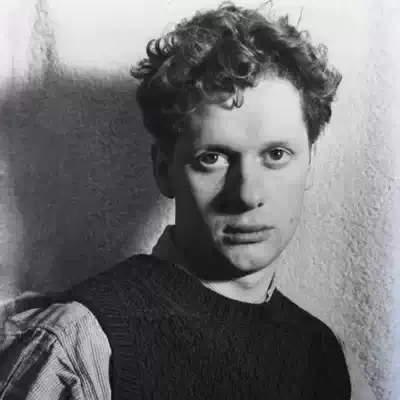
Dylan Thomas
Ears in the Turrets Hear
Ears in the turrets hear
Hands grumble on the door,
Eyes in the gables see
The fingers at the locks.
Shall I unbolt or stay
Alone till the day I die
Unseen by stranger-eyes
In this white house?
Hands, hold you poison or grapes?
Beyond this island bound
By a thin sea of flesh
And a bone coast,
The land lies out of sound
And the hills out of mind.
No birds or flying fish
Disturbs this island’s rest.
Ears in this island hear
The wind pass like a fire,
Eyes in this island see
Ships anchor off the bay.
Shall I run to the ships
With the wind in my hair,
Or stay till the day I die
And welcome no sailor?
Ships, hold you poison or grapes?
Hands grumble on the door,
Ships anchor off the bay,
Rain beats the sand and slates.
Shall I let in the stranger,
Shall I welcome the sailor,
Or stay till the day I die?
Hands of the stranger and holds of the ships,
Hold you poison or grapes?
Hands grumble on the door,
Eyes in the gables see
The fingers at the locks.
Shall I unbolt or stay
Alone till the day I die
Unseen by stranger-eyes
In this white house?
Hands, hold you poison or grapes?
Beyond this island bound
By a thin sea of flesh
And a bone coast,
The land lies out of sound
And the hills out of mind.
No birds or flying fish
Disturbs this island’s rest.
Ears in this island hear
The wind pass like a fire,
Eyes in this island see
Ships anchor off the bay.
Shall I run to the ships
With the wind in my hair,
Or stay till the day I die
And welcome no sailor?
Ships, hold you poison or grapes?
Hands grumble on the door,
Ships anchor off the bay,
Rain beats the sand and slates.
Shall I let in the stranger,
Shall I welcome the sailor,
Or stay till the day I die?
Hands of the stranger and holds of the ships,
Hold you poison or grapes?
318
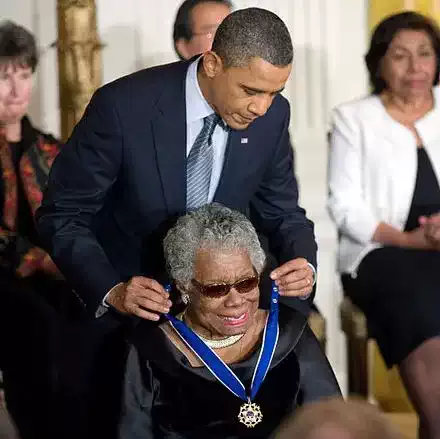
Maya Angelou
Alone
Lying, thinking
Last night
How to find my soul a home
Where water is not thirsty
And bread loaf is not stone
I came up with one thing
And I don't believe I'm wrong
That nobody,
But nobody
Can make it out here alone.
Alone, all alone
Nobody, but nobody
Can make it out here alone.
There are some millionaires
With money they can't use
Their wives run round like banshees
Their children sing the blues
They've got expensive doctors
To cure their hearts of stone.
But nobody
No, nobody
Can make it out here alone.
Alone, all alone
Nobody, but nobody
Can make it out here alone.
Now if you listen closely
I'll tell you what I know
Storm clouds are gathering
The wind is gonna blow
The race of man is suffering
And I can hear the moan,
'Cause nobody,
But nobody
Can make it out here alone.
Alone, all alone
Nobody, but nobody
Can make it out here alone.
317
Walter de la Mare
Alone
The abode of the nightingale is bare,
Flowered frost congeals in the gelid air,
The fox howls from his frozen lair:
Alas, my loved one is gone,
I am alone:
It is winter.
Once the pink cast a winy smell,
The wild bee hung in the hyacinth bell,
Light in effulgence of beauty fell:
I am alone:
It is winter.
My candle a silent fire doth shed,
Starry Orion hunts o'erhead;
Come moth, come shadow, the world is dead:
Alas, my loved one is gone,
I am alone;
It is winter.
317
Emily Dickinson
I was the slightest in the House
I was the slightest in the House-
I took the smallest Room-
At night, my little Lamp, and Book-
And one Geranium-
So stationed I could catch the Mint
That never ceased to fall-
And just my Basket-
Let me think-I'm sure-
That this was all-
I never spoke-unless addressed-
And then, 'twas brief and low-
I could not bear to live-aloud-
The Racket shamed me so-
And if it had not been so far-
And any one I knew
Were going-I had often thought
How noteless-I could die-
312
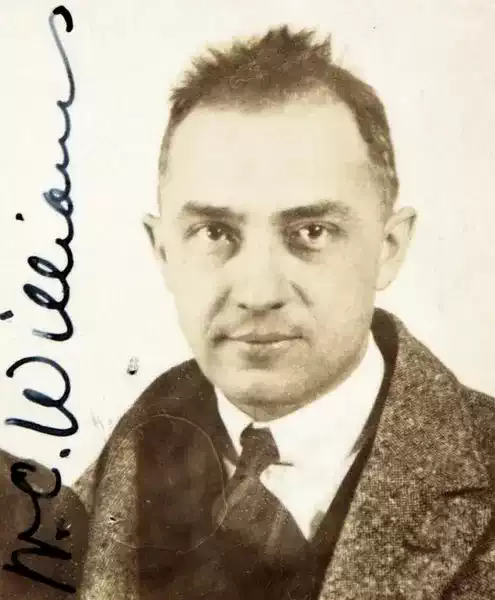
William Carlos Williams
Blizzard
Snow falls:
years of anger following
hours that float idly down --
the blizzard
drifts its weight
deeper and deeper for three days
or sixty years, eh? Then
the sun! a clutter of
yellow and blue flakes --
Hairy looking trees stand out
in long alleys
over a wild solitude.
The man turns and there --
his solitary track stretched out
upon the world.
312