
Betrayal and Disappointment

Rudyard Kipling
The Queen's Men
Valour and Innocence
Have latterly gone hence
To certain death by certain shame attended.
Envy--ah! even to tears! --
The fortune of their years
Which, though so few, yet so divinely ended.
Scarce had they lifted up
Life's full and fiery cup,
Than they had set it down untouched before them.
Before their day arose
They beckoned it to close--
Close in confusion and destruction o'er them.
They did not stay to ask
What prize should crown their task--
Well sure that prize was such as no man strives for;
But passed into eclipse,
Her kiss upon their lips--
Even Belphoebe's, whom they gave their lives for!
501
Rudyard Kipling
The Story of Uriah
Jack Barrett went to Quetta
Because they told him to.
He left his wife at Simla
On three-fourths his monthly screw.
Jack Barrett died at Quetta
Ere the next month's pay he drew.
Jack Barrett went to Quetta.
He didn't understand
The reason of his transfer
From the pleasant mountain-land.
The season was September,
And it killed him out of hand.
Jack Barrett went to Quetta
And there gave up the ghost,
Attempting two men's duty
In that very healthy post;
And Mrs. Barrett mourned for him
Five lively months at most.
Jack Barrett's bones at Quetta
Enjoy profound repose;
But I shouldn't be astonished
If now his spirit knows
The reason of his transfer
From the Himalayan snows.
And, when the Last Great Bugle Call
Adown the Hurnai throbs,
And the last grim joke is entered
In the big black Book of Jobs.
And Quetta graveyards give again
Their victims to the air,
I shouldn't like to be the man
Who sent Jack Barrett there.
500

Alfred Lord Tennyson
The Ringlet
'Your ringlets, your ringlets,
That look so golden-gay,
If you will give me one, but one,
To kiss it night and day,
The never chilling touch of Time
Will turn it silver-gray;
And then shall I know it is all true gold
To flame and sparkle and stream as of old.
Till all the comets in heaven are cold,
And all her stars decay.'
'Then take it, love, and put it by;
This cannot change, nor yet can I.'
'My ringlet, my ringlet,
That art so golden-gay,
Now never chilling touch of Time
Can turn thee silver-gray;
And a lad may wink, and a girl may hint,
And a fool may say his say;
For my doubts and fears were all amiss,
And I swear henceforth by this and this,
That a doubt will only come for a kiss,
And a fear to be kiss'd away.'
'Then kiss it, love, and put it by:
If this can change, why so can I.'
O Ringlet, O Ringlet,
I kiss'd you night and day,
And Ringlet, O Ringlet,
You still are golden-gay,
But Ringlet, O Ringlet,
You should be silver-gray:
For what is this which now I'm told,
I that took you for true gold,
She that gave you 's bought and sold,
Sold, sold.
O Ringlet, O Ringlet,
She blush'd a rosy red,
When Ringlet, O Ringlet
She clipt you from her head,
And Ringlet, O Ringlet,
She gave you me, and said,
'Come, kiss it, love and put it by:
If this can change, why so can I.'
O fie, you golden nothing, fie,
You golden lie.
O Ringlet, O Ringlet,
I count you much to blame,
For Ringlet, O Ringlet,
You put me much to shame,
So Ringlet, O Ringlet,
I doom you to the flame.
For what is this which now I learn,
Has given all my faith a turn?
Burn, you glossy heretic, burn,
Burn, burn.
502
Rudyard Kipling
The Disciple
He that hath a Gospel
To loose upon Mankind,
Though he serve it utterly--
Body, soul and mind--
Though he go to Calvary
Daily for its gain--
It is His Disciple
Shall make his labour vain.
He that hath a Gospel
For all earth to own--
Though he etch it on the steel,
Or carve it on the stone--
Not to be misdoubted
Through the after-days--
It is His Disciple
Shall read it many ways.
It is His Disciple
(Ere Those Bones are dust )
Who shall change the Charter,
Who shall split the Trust--
Amplify distinctions,
Rationalize the Claim;
Preaching that the Master
Would have done the same.
It is His Disciple
Who shall tell us how
Much the Master would have scrapped
Had he lived till now--
What he would have modified
Of what he said before.
It is His Disciple
Shall do this and more....
He that hath a Gospel
Whereby Heaven is won
( Carpenter, or cameleer,
Or Maya's dreaming son ),
Many swords shall pierce Him,
Mingling blood with gall;
But His Own Disciple
Shall wound Him worst of all!
492
Rudyard Kipling
Delilah
We have another viceroy now, -- those days are dead and done
Of Delilah Aberyswith and depraved Ulysses Gunne.
Delilah Aberyswith was a lady -- not too young --
With a perfect taste in dresses and a badly-bitted tongue,
With a thirst for information, and a greater thirst for praise,
And a little house in Simla in the Prehistoric Days.
By reason of her marriage to a gentleman in power,
Delilah was acquainted with the gossip of the hour;
And many little secrets, of the half-official kind,
Were whispered to Delilah, and she bore them all in mind.
She patronized extensively a man, Ulysses Gunne,
Whose mode of earning money was a low and shameful one.
He wrote for certain papers, which, as everybody knows,
Is worse than serving in a shop or scaring off the crows.
He praised her "queenly beauty" first; and, later on, he hinted
At the "vastness of her intellect" with compliment unstinted.
He went with her a-riding, and his love for her was such
That he lent her all his horses and -- she galled them very much.
One day, THEY brewed a secret of a fine financial sort;
It related to Appointments, to a Man and a Report.
'Twas almost wortth the keeping, -- only seven people knew it --
And Gunne rose up to seek the truth and patiently ensue it.
It was a Viceroy's Secret, but -- perhaps the wine was red --
Perhaps an Aged Concillor had lost his aged head --
Perhaps Delilah's eyes were bright -- Delilah's whispers sweet --
The Aged Member told her what 'twere treason to repeat.
Ulysses went a-riding, and they talked of love and flowers;
Ulysses went a-calling, and he called for several hours;
Ulysses went a-waltzing, and Delilah helped him dance --
Ulysses let the waltzes go, and waited for his chance.
The summer sun was setting, and the summer air was still,
The couple went a-walking in the shade of Summer Hill.
The wasteful sunset faded out in turkis-green and gold,
Ulysses pleaded softly, and . . . that bad Delilah told!
Next morn, a startled Empire learnt the all-important news;
Next week, the Aged Councillor was shaking in his shoes.
Next month, I met Delilah and she did not show the least
Hesitation in affirming that Ulysses was a "beast."
* * * * *
We have another Viceroy now, those days are dead and done --
Off, Delilah Aberyswith and most mean Ulysses Gunne!
489

Robert Browning
A Light Woman
I.
So far as our story approaches the end,
Which do you pity the most of us three?---
My friend, or the mistress of my friend
With her wanton eyes, or me?
II.
My friend was already too good to lose,
And seemed in the way of improvement yet,
When she crossed his path with her hunting-noose
And over him drew her net.
III.
When I saw him tangled in her toils,
A shame, said I, if she adds just him
To her nine-and-ninety other spoils,
The hundredth for a whim!
IV.
And before my friend be wholly hers,
How easy to prove to him, I said,
An eagle's the game her pride prefers,
Though she snaps at a wren instead!
V.
So, I gave her eyes my own eyes to take,
My hand sought hers as in earnest need,
And round she turned for my noble sake,
And gave me herself indeed.
VI.
The eagle am I, with my fame in the world,
The wren is he, with his maiden face.
---You look away and your lip is curled?
Patience, a moment's space!
VII.
For see, my friend goes shaling and white;
He eyes me as the basilisk:
I have turned, it appears, his day to night,
Eclipsing his sun's disk.
VIII.
And I did it, he thinks, as a very thief:
``Though I love her---that, he comprehends---
``One should master one's passions, (love, in chief)
``And be loyal to one's friends!''
IX.
And she,---she lies in my hand as tame
As a pear late basking over a wall;
Just a touch to try and off it came;
'Tis mine,---can I let it fall?
X.
With no mind to eat it, that's the worst!
Were it thrown in the road, would the case assist?
'Twas quenching a dozen blue-flies' thirst
When I gave its stalk a twist.
XI.
And I,---what I seem to my friend, you see:
What I soon shall seem to his love, you guess:
What I seem to myself, do you ask of me?
No hero, I confess.
XII.
'Tis an awkward thing to play with souls,
And matter enough to save one's own:
Yet think of my friend, and the burning coals
He played with for bits of stone!
XIII.
One likes to show the truth for the truth;
That the woman was light is very true:
But suppose she says,---Never mind that youth!
What wrong have I done to you?
XIV.
Well, any how, here the story stays,
So far at least as I understand;
And, Robert Browning, you writer of plays,
Here's a subject made to your hand!
491

William Shakespeare
Sonnet 118: Like as to make our appetite more keen
Like as to make our appetite more keen
With eager compounds we our palate urge,
As to prevent our maladies unseen,
We sicken to shun sickness when we purge.
Even so being full of your ne'er-cloying sweetness,
To bitter sauces did I frame my feeding;
And, sick of welfare, found a kind of meetness
To be diseased ere that there was true needing.
Thus policy in love t' anticipate
The ills that were not, grew to faults assured,
And brought to medicine a healthful state
Which, rank of goodness, would by ill be cured.
But thence I learn and find the lesson true:
Drugs poison him that so fell sick of you.
485
Rudyard Kipling
Mary, Pity Women!
You call yourself a man,
For all you used to swear,
An' leave me, as you can,
My certain shame to bear?
I 'ear! You do not care --
You done the worst you know.
I 'ate you, grinnin' there. . . .
Ah, Gawd, I love you so!
Nice while it lasted, an' now it is over --
Tear out your 'eart an' good-bye to your lover!
What's the use o' grievin', when the mother that bore you
(Mary, pity women!) knew it all before you?
It aren't no false alarm,
The finish to your fun;
You -- you 'ave brung the 'arm,
An' I'm the ruined one;
An' now you'll off an' run
With some new fool in tow.
Your 'eart? You 'aven't none. . . .
Ah, Gawd, I love you so!
When a man is tired there is naught will bind 'im;
All 'e solemn promised 'e will shove be'ind 'im.
What's the good o' prayin' for The Wrath to strike 'im
(Mary, pity women!), when the rest are like 'im?
What 'ope for me or -- it?
What's left for us to do?
I've walked with men a bit,
But this -- but this is you.
So 'elp me Christ, it's true!
Where can I 'ide or go?
You coward through and through! . . .
Ah, Gawd, I love you so!
All the more you give 'em the less are they for givin' --
Love lies dead, an' you cannot kiss 'im livin'.
Down the road 'e led you there is no returnin'
(Mary, pity women!), but you're late in learnin'!
You'd like to treat me fair?
You can't, because we're pore?
We'd starve? What do I care!
We might, but this is shore!
I want the name -- no more --
The name, an' lines to show,
An' not to be an 'ore. . . .
Ah, Gawd, I love you so!
What's the good o' pleadin', when the mother that bore you
(Mary, pity women!) knew it all before you?
Sleep on 'is promises an' wake to your sorrow
(Mary, pity women!), for we sail to-morrow!
485
Rudyard Kipling
Tarrant Moss
I closed and drew for my love's sake
That now is false to me,
And I slew the Reiver of Tarrant Moss
And set Dumeny free.
They have gone down, they have gone down,
They are standing all arow -
Twenty knights in the peat-water,
That never struck a blow!
Their armour shall not dull nor rust,
Their flesh shall not decay,
For Tarrant Moss holds them in trust,
Until the Judgment Day.
Their soul went from them in their youth,
Ah God, that mine had gone,
Whenas I leaned on my love's truth
And not on my sword alone!
Whenas I leaned on lad's belief
And not on my naked blade -
And I slew a thief, and an honest thief,
For the sake of a worthless maid.
They have laid the Reiver low in his place,
They have set me up on high,
But the twenty knights in the peat-water
Are luckier than I!
And ever they give me gold and praise
And ever I mourn my loss -
For I struck the blow for my false love's sake
And not for the Men of the Moss!
487
Rudyard Kipling
Rimmon
-- After Boer War
Duly with knees that feign to quake--
Bent head and shaded brow,--
Yet once again, for my father's sake,
In Rimmon's House I bow.
The curtains part, the trumpet blares,
And the eunuchs howl aloud;
And the gilt, swag-bellied idol glares
Insolent over the crowd.
"This is Rimmon, Lord of the Earth--
"Fear Him and bow the knee!"
And I watch my comrades hide their mirth
That rode to the wars with me.
For we remember the sun and the sand
And the rocks whereon we trod,
Ere we came to a scorched and a scornful land
That did not know our God;
As we remember the sacrifice,
Dead men an hundred laid--
Slain while they served His mysteries,
And that He would not aid--
Not though we gashed ourselves and wept,
For the high-priest bade us wait;
Saying He went on a journey or slept,
Or was drunk or had taken a mate.
(Praise ye Rimmon, King of Kings,
Who ruleth Earth and Sky!
And again I bow as the censer swings
And the God Enthroned goes by.)
Ay, we remember His sacred ark
And the virtuous men that knelt
To the dark and the hush behind the dark
Wherein we dreamed He dwelt;
Until we entered to hale Him out
And found no more than an old
Uncleanly image girded about
The loins with scarlet and gold.
Him we o'erset with the butts of our spears--
Him and his vast designs--
To be scorn of our muleteers
And the jest of our halted line.
By the picket-pins that the dogs defile,
In the dung and the dust He lay,
Till the priests ran and chattered awhile
And we wiped Him and took Him away.
Hushing the matter before it was known,
They returned to our fathers afar,
And hastily set Him afresh on His throne
Because he had won us the war.
Wherefore with knees that feign to quake--
Bent head and shaded brow--
To this dog, for my father's sake,
In the Rimmon's House I bow!
486
Rudyard Kipling
Late Came the God
Late came the God, having sent his forerunners who were
not regarded--
Late, but in wrath;
Saying: "The wrong shall be paid, the contempt be rewarded
On all that she hath."
He poisoned the blade and struck home, the full bosom receiving
The wound and the venom in one, past cure or relieving.
He made treaty with Time to stand still that the grief might
be fresh--
Daily renewed and nightly pursued through her soul to her
flesh--
Mornings of memory, noontides of agony, midnights unslaked
for her,
Till the stones of the streets of her Hells and her Paradise ached
for her.
So she lived while her body corrupted upon her.
And she called on the Night for a sign, and a Sign was allowed,
And she builded an Altar and served by the light of her Vision--
Alone, without hope of regard or reward, but uncowed,
Resolute, selfless, divine.
These things she did in Love's honour...
What is a God beside Woman? Dust and derision!
487
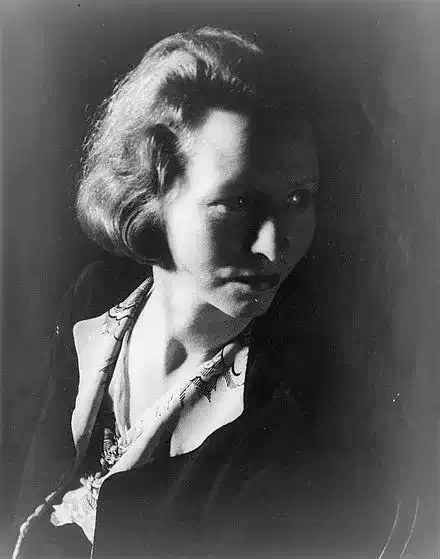
Edna St. Vincent Millay
The True Encounter
"Wolf!" cried my cunning heart
At every sheep it spied,
And roused the countryside.
"Wolf! Wolf!"—and up would start
Good neighbours, bringing spade
And pitchfork to my aid.
At length my cry was known:
Therein lay my release.
I met the wolf alone
And was devoured in peace.
At every sheep it spied,
And roused the countryside.
"Wolf! Wolf!"—and up would start
Good neighbours, bringing spade
And pitchfork to my aid.
At length my cry was known:
Therein lay my release.
I met the wolf alone
And was devoured in peace.
482

Lord Byron
To A Vain Lady
Ah! heedless girl! why thus disclose
What ne'er was meant for other ears:
Why thus destroy thine own repose
And dig the source of future tears?
Oh, thou wilt weep, imprudent maid,
While lurking envious foes will smile,
For all the follies thou hast said
Of those who spoke but to beguile.
Vain girl! thy ling'ring woes are nigh,
If thou believ'st what striplings say:
Oh, from the deep temptation fly,
Nor fall the specious spoiler's prey.
Dost thou repeat, in childish boast,
The words man utters to deceive?
Thy peace, thy hope, thy all is lost,
If thou canst venture to believe.
While now amongst thy female peers
Thou tell'st again the soothing tale,
Canst thou not mark the rising sneers
Duplicity in vain would veil?
These tales in secret silence hush,
Nor make thyself the public gaze:
What modest maid without a blush
Recounts a flattering coxcomb's praise?
Will not the laughing boy despise
Her who relates each fond conceit Who,
thinking Heaven is in her eyes,
Yet cannot see the slight deceit?
For she who takes a soft delight
These amorous nothings in revealing,
Must credit all we say or write,
While vanity prevents concealing.
Cease, if you prize your beauty's reign!
No jealousy bids me reprove:
One, who is thus from nature vain,
I pity, but I cannot love.
January 15,1807.
481
Robert Browning
My Last Duchess
FERRARA.
That's my last Duchess painted on the wall,
Looking as if she were alive. I call
That piece a wonder, now: Fr Pandolf's hands
Worked busily a day, and there she stands.
Will't please you sit and look at her? I said
``Fr Pandolf'' by design, for never read
Strangers like you that pictured countenance,
The depth and passion of its earnest glance,
But to myself they turned (since none puts by
The curtain I have drawn for you, but I)
And seemed as they would ask me, if they durst,
How such a glance came there; so, not the first
Are you to turn and ask thus. Sir, 'twas not
Her husband's presence only, called that spot
Of joy into the Duchess' cheek: perhaps
Fr Pandolf chanced to say ``Her mantle laps
``Over my lady's wrist too much,'' or ``Paint
``Must never hope to reproduce the faint
``Half-flush that dies along her throat:'' such stuff
Was courtesy, she thought, and cause enough
For calling up that spot of joy. She had
A heart---how shall I say?---too soon made glad,
Too easily impressed; she liked whate'er
She looked on, and her looks went everywhere.
Sir, 'twas all one! My favour at her breast,
The dropping of the daylight in the West,
The bough of cherries some officious fool
Broke in the orchard for her, the white mule
She rode with round the terrace---all and each
Would draw from her alike the approving speech,
Or blush, at least. She thanked men,---good! but thanked
Somehow---I know not how---as if she ranked
My gift of a nine-hundred-years-old name
With anybody's gift. Who'd stoop to blame
This sort of trifling? Even had you skill
In speech---(which I have not)---to make your will
Quite clear to such an one, and say, ``Just this
``Or that in you disgusts me; here you miss,
``Or there exceed the mark''---and if she let
Herself be lessoned so, nor plainly set
Her wits to yours, forsooth, and made excuse,
---E'en then would be some stooping; and I choose
Never to stoop. Oh sir, she smiled, no doubt,
Whene'er I passed her; but who passed without
Much the same smile? This grew; I gave commands;
Then all smiles stopped together. There she stands
As if alive. Will't please you rise? We'll meet
The company below, then. I repeat,
The Count your master's known munificence
Is ample warrant that no just pretence
Of mine for dowry will be disallowed;
Though his fair daughter's self, as I avowed
At starting, is my object. Nay, we'll go
Together down, sir. Notice Neptune, though,
Taming a sea-horse, thought a rarity,
Which Claus of Innsbruck cast in bronze for me!
480
Rudyard Kipling
Gehazi
Whence comest thou, Gehazi,
So reverend to behold,
In scarlet and in ermines
And chain of England's gold?"
"From following after Naaman
To tell him all is well,
Whereby my zeal hath made me
A Judge in Israel."
Well done; well done, Gehazi!
Stretch forth thy ready hand,
Thou barely 'scaped from judgment,
Take oath to judge the land
Unswayed by gift of money
Or privy bribe, more base,
Of knowledge which is profit
In any market-place.
Search out and probe, Gehazi,
As thou of all carist try,
The truthful, well-weighed answer
That tells the blacker lie --
The loud, uneasy virtue
The anger feigned at will,
To overbear a witness
And make the Court keep still.
Take order now, Gehazi,
That no man talk aside
In secret with his judges
The while his case is tried.
Lest he should show them -- reason
To keep a matter hid,
And subtly lead the questions
Away from what he did.
Thou mirror of uprightness,
What ails thee at thy vows?
What means the risen whiteness
Of the skin between thy brows?
The boils that shine and burrow,
The sores that slough and bleed --
The leprosy of Naaman
On thee and all thy seed?
Stand up, stand up, Gehazi,
Draw close thy robe and go,
Gehazi, Judge in Israel,
A leper white as snow!
477
Rudyard Kipling
The Vampire
A fool there was and he made his prayer
(Even as you and I!)
To a rag and a bone and a hank of hair
(We called her the woman who did not care),
But the fool he called her his lady fair
(Even as you and I!)
Oh the years we waste and the tears we waste
And the work of our head and hand,
Belong to the woman who did not know
(And now we know that she never could know)
And did not understand.
A fool there was and his goods he spent
(Even as you and I!)
Honor and faith and a sure intent
But a fool must follow his natural bent
(And it wasn't the least what the lady meant),
(Even as you and I!)
Oh the toil we lost and the spoil we lost
And the excellent things we planned,
Belong to the woman who didn't know why
(And now we know she never knew why)
And did not understand.
The fool we stripped to his foolish hide
(Even as you and I!)
Which she might have seen when she threw him aside --
(But it isn't on record the lady tried)
So some of him lived but the most of him died --
(Even as you and I!)
And it isn't the shame and it isn't the blame
That stings like a white hot brand.
It's coming to know that she never knew why
(Seeing at last she could never know why)
And never could understand.
(Even as you and I!)
To a rag and a bone and a hank of hair
(We called her the woman who did not care),
But the fool he called her his lady fair
(Even as you and I!)
Oh the years we waste and the tears we waste
And the work of our head and hand,
Belong to the woman who did not know
(And now we know that she never could know)
And did not understand.
A fool there was and his goods he spent
(Even as you and I!)
Honor and faith and a sure intent
But a fool must follow his natural bent
(And it wasn't the least what the lady meant),
(Even as you and I!)
Oh the toil we lost and the spoil we lost
And the excellent things we planned,
Belong to the woman who didn't know why
(And now we know she never knew why)
And did not understand.
The fool we stripped to his foolish hide
(Even as you and I!)
Which she might have seen when she threw him aside --
(But it isn't on record the lady tried)
So some of him lived but the most of him died --
(Even as you and I!)
And it isn't the shame and it isn't the blame
That stings like a white hot brand.
It's coming to know that she never knew why
(Seeing at last she could never know why)
And never could understand.
480
Rudyard Kipling
The Mare's Nest
Jane Austen Beecher Stowe de Rouse
Was good beyond all earthly need;
But, on the other hand, her spouse
Was very, very bad indeed.
He smoked cigars, called churches slow,
And raced -- but this she did not know.
For Belial Machiavelli kept
The little fact a secret, and,
Though o'er his minor sins she wept,
Jane Austen did not understand
That Lilly -- thirteen-two and bay
Absorbed one-half her husband's pay.
She was so good, she made hime worse;
(Some women are like this, I think;)
He taught her parrot how to curse,
Her Assam monkey how to drink.
He vexed her righteous soul until
She went up, and he went down hill.
Then came the crisis, strange to say,
Which turned a good wife to a better.
A telegraphic peon, one day,
Brought her -- now, had it been a letter
For Belial Machiavelli, I
Know Jane would just have let it lie.
But 'twas a telegram instead,
Marked "urgent," and her duty plain
To open it. Jane Austen read:
"Your Lilly's got a cough again.
Can't understand why she is kept
At your expense." Jane Austen wept.
It was a misdirected wire.
Her husband was at Shaitanpore.
She spread her anger, hot as fire,
Through six thin foreign sheets or more.
Sent off that letter, wrote another
To her solicitor -- and mother.
Then Belial Machiavelli saw
Her error and, I trust, his own,
Wired to the minion of the Law,
And traveled wifeward -- not alone.
For Lilly -- thirteen-two and bay --
Came in a horse-box all the way.
There was a scene -- a weep or two --
With many kisses. Austen Jane
Rode Lilly all the season through,
And never opened wires again.
She races now with Belial. This
Is very sad, but so it is.
478
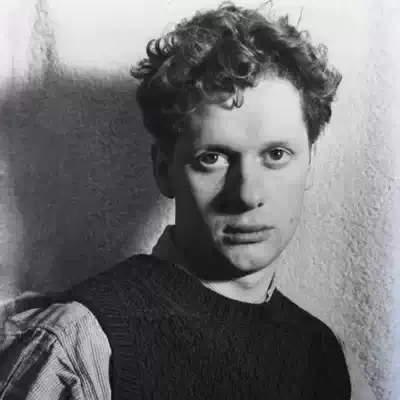
Dylan Thomas
To Others Than You
Friend by enemy I call you out.
You with a bad coin in your socket,
You my friend there with a winning air
Who palmed the lie on me when you looked
Brassily at my shyest secret,
Enticed with twinkling bits of the eye
Till the sweet tooth of my love bit dry,
Rasped at last, and I stumbled and sucked,
Whom now I conjure to stand as thief
In the memory worked by mirrors,
With unforgettably smiling act,
Quickness of hand in the velvet glove
And my whole heart under your hammer,
Were once such a creature, so gay and frank
A desireless familiar
I never thought to utter or think
While you displaced a truth in the air,
That though I loved them for their faults
As much as for their good,
My friends were enemies on stilts
With their heads in a cunning cloud.
474
John Donne
The Legacy
When I died last, and, Dear, I die
As often as from thee I go,
Though it be but an hour ago,
And Lovers' hours be full eternity,
I can remember yet, that I
Something did say, and something did bestow;
Though I be dead, which sent me, I should be
Mine own executor and legacy.
I heard me say, "Tell her anon,
That myself, that is you, not I,
Did kill me," and when I felt me die,
I bid me send my heart, when I was gone,
But alas could there find none,
When I had ripp'd me, and search'd where hearts should lie;
It kill'd me again, that I who still was true,
In life, in my last will should cozen you.
Yet I found something like a heart,
But colors it, and corners had,
It was not good, it was not bad,
It was intire to none, and few had part.
As good as could be made by art
It seem'd, and therefore for our losses sad,
I meant to send this heart in stead of mine,
But oh, no man could hold it, for 'twas thine.
472

William Blake
My Spectre Around Me
My spectre around me night and day
Like a wild beast guards my way.
My emanation far within
Weeps incessantly for my sin.
A fathomless and boundless deep,
There we wander, there we weep;
On the hungry craving wind
My spectre follows thee behind.
He scents thy footsteps in the snow,
Wheresoever thou dost go
Through the wintry hail and rain.
When wilt thou return again?
Dost thou not in pride and scorn
Fill with tempests all my morn,
And with jealousies and fears
Fill my pleasant nights with tears?
Seven of my sweet loves thy knife
Has bereaved of their life.
Their marble tombs I built with tears
And with cold and shuddering fears.
Seven more loves weep night and day
Round the tombs where my loves lay,
And seven more loves attend each night
Around my couch with torches bright.
And seven more loves in my bed
Crown with wine my mournful head,
Pitying and forgiving all
Thy transgressions, great and small.
471
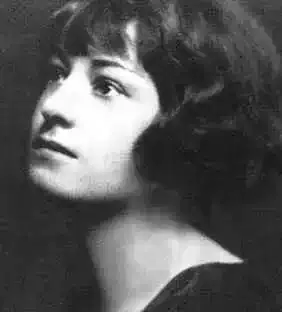
Dorothy Parker
A Certain Lady
Oh, I can smile for you, and tilt my head,
And drink your rushing words with eager lips,
And paint my mouth for you a fragrant red,
And trace your brows with tutored finger-tips.
When you rehearse your list of loves to me,
Oh, I can laugh and marvel, rapturous-eyed.
And you laugh back, nor can you ever see
The thousand little deaths my heart has died.
And you believe, so well I know my part,
That I am gay as morning, light as snow,
And all the straining things within my heart
You'll never know.
Oh, I can laugh and listen, when we meet,
And you bring tales of fresh adventurings, --
Of ladies delicately indiscreet,
Of lingering hands, and gently whispered things.
And you are pleased with me, and strive anew
To sing me sagas of your late delights.
Thus do you want me -- marveling, gay, and true,
Nor do you see my staring eyes of nights.
And when, in search of novelty, you stray,
Oh, I can kiss you blithely as you go ....
And what goes on, my love, while you're away,
You'll never know.
462

John Keats
Otho The Great - Act IV
SCENE I.
AURANTHE'S Apartment.
AURANTHE and CONRAD discovered.
Conrad. Well, well, I know what ugly jeopardy
We are cag'd in; you need not pester that
Into my ears. Prythee, let me be spared
A foolish tongue, that I may bethink me
Of remedies with some deliberation.
You cannot doubt but 'tis in Albert's power
To crush or save us?
Auranthe. No, I cannot doubt.
He has, assure yourself, by some strange means,
My secret ; which I ever hid from him,
Knowing his mawkish honesty.
Conrad. Curs'd slave!
Auranthe. Ay, I could almost curse him now myself.
Wretched impediment! Evil genius!
A glue upon my wings, that cannot spread,
When they should span the provinces! A snake,
A scorpion, sprawling on the first gold step,
Conducting to the throne, high canopied.
Conrad. You would not hear my council, when his life
Might have been trodden out, all sure and hush'd;
Now the dull animal forsooth must be
Intreated, managed! When can you contrive
The interview he demands?
Auranthe. As speedily
It must be done as my brib'd woman can
Unseen conduct him to me; but I fear
Twill be impossible, while the broad day
Comes through the panes with persecuting glare.
Methinks, if 't now were night I could intrigue
With darkness, bring the stars to second me,
And settle all this trouble.
Conrad. Nonsense! Child!
See him immediately; why not now?
Auranthe. Do you forget that even the senseless door-posts
Are on the watch and gape through all the house?
How many whispers there are about,
Hungry for evidence to ruin me ;
Men I have spurn 'd, and women I have taunted?
Besides, the foolish prince sends, minute whiles,
His pages so they tell me to enquire
After my health, entreating, if I please,
To see me.
Conrad. Well, suppose this Albert here;
What is your power with him?
Auranthe. He should be
My echo, my taught parrot! but I fear
He will be cur enough to bark at me ;
Have his own say ; read me some silly creed
'Bout shame and pity.
Conrad. What will you do then?
Auranthe. What I shall do, I know not: what L would
Cannot be done; for see, this chain her-floor
Will not yield to the pick-axe and the spade,
Here is no quiet depth of hollow ground.
Conrad. Sister, you have grown sensible and wise,
Seconding, ere I speak it, what is now,
I hope, resolv'd between us.
Auranthe. Say, what is 't?
Conrad. You need not be his sexton too: a man
May carry that with him shall make him die
Elsewhere, give that to him; pretend the while
You will to-morrow succumb to his wishes,
Be what they may, and send him from the Castle
On some fool's errand; let his latest groan
Frighten the wolves!
Auranthe. Alas! he must not die!
Conrad. Would you were both hears'd up in stifling lead!
Detested
Auranthe. Conrad, hold! I would not bear
The little thunder of your fretful tongue,
Tho; I alone were taken in these toils,
And you could free me; but remember, sir,
You live alone in my security:
So keep your wits at work, for your own sake,
Not mine, and be more mannerly.
Conrad. Thou wasp!
If my domains were emptied of these folk,
And I had thee to starve
Auranthe. O, marvellous!
But Conrad, now be gone; the Host is look'd for;
Cringe to the Emperor, entertain the Lords,
And, do ye mind, above all things, proclaim
My sickness, with a brother's sadden'd eye,
Condoling with Prince Ludolph. In fit time
Return to me.
Conrad. I leave you to your thoughts. [Exit.
Auranthe (sola) Down, down, proud temper! down,
Auranthe's pride!
Why do I anger him when I should kneel?
Conrad! Albert! help! help! What can I do?
wretched woman! lost, wreck'd, swallow'd up,
Accursed, blasted ! O, thou golden Crown,
Orbing along the serene firmament
Of a wide empire, like a glowing moon;
And thou, bright sceptre! lustrous in my eyes,
There as the fabled fair Hesperian tree,
Bearing a fruit more precious! graceful thing.
Delicate, godlike, magic! must I leave
Thee to melt in the visionary air,
Ere, by one grasp, this common hand is made
Imperial? I do not know the time
When I have wept for sorrow; but methinks
I could now sit upon the ground, and shed
Tears, tears of misery. O, the heavy day!
How shall I bear my life till Albert comes?
Ludolph! Erminia! Proofs! O heavy day!
Bring me some mourning weeds, that I may 'tire
Myself, as fits one wailing her own death:
Cut off these curls, and brand this lilly hand,
And throw these jewels from my loathing sight,
Fetch me a missal, and a string of beads,
A cup of bitter'd water, and a crust,
I will confess, O holy Abbot How!
What is this? Auranthe! thou fool, dolt,
Whimpering idiot! up! up! act and quell!
I am safe! Coward! why am I in fear?
Albert! he cannot stickle, chew the cud
In such a fine extreme, impossible!
Who knocks? [Goes to the Door, listens, and opens it.
Enter ALBERT.
Albert, I have been waiting for you here
With such an aching heart, such swooning throbs
On my poor brain, such cruel cruel sorrow,
That I should claim your pity! Art not well?
Albert. Yes, lady, well.
Auranthe. You look not so, alas!
But pale, as if you brought some heavy news.
Albert. You know full well what makes me look so pale.
Auranthe. No! Do I? Surely I am still to learn
Some horror; all I know, this present, is
I am near hustled to a dangerous gulph,
Which you can save me from, and therefore safe,
So trusting in thy love; that should not make
Thee pale, my Albert.
Albert. It doth make me freeze.
Auranthe. Why should it, love?
Albert. You should not ask me that,
But make your own heart monitor, and save
Me the great pain of telling. You must know.
Auranthe. Something has vexed you, Albert. There are times
When simplest things put on a sombre cast;
A melancholy mood will haunt a man,
Until most easy matters take the shape
Of unachievable tasks; small rivulets
Then seem impassable.
Albert. Do not cheat yourself
With hope that gloss of words, or suppliant action,
Or tears, or ravings, or self-threaten 'd death,
Can alter my resolve.
Auranthe. You make me tremble;
Not so much at your threats, as at your voice.
Untun'd. and harsh, and barren of all love.
Albert. You suffocate me! Stop this devil's parley,
And listen to me; know me once for all.
Auranthe. I thought I did. Alas! I am deceiv'd.
Albert. No, you are not deceiv'd. You took me for
A man detesting all inhuman crime;
And therefore kept from me your demon's plot
Against Erminia. Silent? Be so still;
For ever! Speak no more; but hear my words,
Thy fate. Your safety I have bought to-day
By blazoning a lie, which in the dawn
I expiate with truth.
Auranthe. O cruel traitor!
Albert. For I would not set eyes upon thy shame;
I would not see thee dragg'd to death by the hair,
Penanc'd, and taunted on a scaffolding!
To-night, upon the skirts of the blind wood
That blackens northward of these horrid towers,
I wait for you with horses. Choose your fate.
Farewell.
Auranthe. Albert, you jest; I'm sure you must.
You, an ambitious Soldier! I, a Queen,
One who could say, Here, rule these Provinces!
Take tribute from those cities for thyself!
Empty these armouries, these treasuries,
Muster thy warlike thousands at a nod !
Go! conquer Italy!
Albert. Auranthe, you have made
The whole world chaff to me. Your doom is fix'd.
Auranthe. Out, villain! dastard!
Albert. Look there to the door!
Who is it?
Auranthe. Conrad, traitor!
Albert. Let him in.
Enter CONRAD.
Do not affect amazement, hypocrite,
At seeing me in this chamber.
Conrad. Auranthe?
Albert. Talk not with eyes, but speak your curses out
Against me, who would sooner crush and grind
A brace of toads, than league with them to oppress
An innocent lady, gull an Emperor,
More generous to me than autumn's sun
To ripening harvests.
Auranthe. No more insult, sir!
Albert. Aye, clutch your scabbard; but, for prudence sake,
Draw not the sword; 'twould make an uproar, Duke,
You would not hear the end of. At nightfall
Your lady sister, if I guess aright,
Will leave this busy castle. You had best
Take farewell too of worldly vanities.
Conrad. Vassal!
Albert. To-morrow, when the Emperor sends
For loving Conrad, see you fawn on him.
Good even !
Auranthe. You'll be seen!
Albert. See the coast clear then.
Auranthe (as he goes). Remorseless Albert! Cruel,
cruel wretch!
[She lets him out.
Conrad. So, we must lick the dust?
Auranthe. I follow him.
Conrad. How? Where? The plan of your escape?
Auranthe. He waits
For me with horses by the forest-side,
Northward.
Conrad. Good, good! he dies. You go, say you?
Auranthe. Perforce.
Conrad. Be speedy, darkness! Till that comes,
Fiends keep you company! [Exit.
Auranthe. And you! And you!
And all men! Vanish!
[Retires to an inner Apartment.
SCENE II. An Apartment in the Castle.
Enter LUDOLPH and Page.
Page. Still very sick, my Lord; but now I went
Knowing my duty to so good a Prince;
And there her women in a mournful throng
Stood in the passage whispering: if any
Mov'd 'twas with careful steps and hush'd as death;
They bid me stop.
Ludolph. Good fellow, once again
Make soft enquiry; prythee be not stay'd
By any hindrance, but with gentlest force
Break through her weeping servants, till thou com'st
E'en to her chamber door, and there, fair boy,
If with thy mother's milk thou hast suck'd in
Any diviner eloquence ; woo her ears
With plaints for me more tender than the voice
Of dying Echo, echoed.
Page. Kindest master!
To know thee sad thus, will unloose my tongue
In mournful syllables. Let but my words reach
Her ears and she shall take them coupled with
Moans from my heart and sighs not counterfeit.
May I speed better! [Exit Page.
Ludolph. Auranthe! My Life!
Long have I lov'd thee, yet till now not lov'd:
Remembering, as I do, hard-hearted times
When I had heard even of thy death perhaps,
And thoughtless, suffered to pass alone
Into Elysium! now I follow thee
A substance or a shadow, wheresoe'er
Thou leadest me, whether thy white feet press,
With pleasant weight, the amorous-aching earth,
Or thro' the air thou pioneerest me,
A shade! Yet sadly I predestinate!
O unbenignest Love, why wilt thou let
Darkness steal out upon the sleepy world
So wearily; as if night's chariot wheels
Were clog'd in some thick cloud. O, changeful Love,
Let not her steeds with drowsy-footed pace
Pass the high stars, before sweet embassage
Comes from the pillow 'd beauty of that fair
Completion of all delicate nature's wit.
Pout her faint lips anew with rubious health
And with thine infant fingers lift the fringe
Of her sick eyelids ; that those eyes may glow
With wooing light upon me, ere the Morn
Peers with disrelish, grey, barren, and cold.
Enter GERSA and Courtiers.
Otho calls me his Lion should I blush
To be so tam'd, so
Gersa. Do me the courtesy
Gentlemen to pass on.
Courtier. We are your servants.
[Exeunt Courtiers.
Ludolph. It seems then, Sir, you have found out the man
You would confer with; me?
Gersa. If I break not
Too much upon your thoughtful mood, I will
Claim a brief while your patience.
Ludolph. For what cause
Soe'er I shall be honour 'd.
Gersa. I not less.
Ludolph. What may it be? No trifle can take place
Of such deliberate prologue, serious 'haviour.
But be it what it may I cannot fail
To listen with no common interest
For though so new your presence is to me,
I have a soldier's friendship for your fame
Please you explain.
Gersa. As thus for, pardon me,
I cannot in plain terms grossly assault
A noble nature ; and would faintly sketch
What your quick apprehension will fill up
So finely I esteem you.
Ludolph. I attend
Gersa. Your generous Father, most illustrious Otho,
Sits in the Banquet room among his chiefs
His wine is bitter, for you are not there
His eyes are fix'd still on the open doors,
And every passer in he frowns upon
Seeing no Ludolph comes.
Ludolph. I do neglect
Gersa. And for your absence, may I guess the cause?
Ludolph. Stay there! no guess? more princely you must be
Than to make guesses at me. ‘Tis enough,
I'm sorry I can hear no more.
Gersa. And I
As griev'd to force it on you so abrupt;
Yet one day you must know a grief whose sting
Will sharpen more the longer 'tis concealed.
Ludolph. Say it at once, sir, dead, dead, is she dead?
Gersa. Mine is a cruel task : she is not dead
And would for your sake she were innocent
Ludolph. Thou liest! thou amazest me beyond
All scope of thought; convulsest my heart's blood
To deadly churning Gersa you are young
As I am ; let me observe you face to face ;
Not grey-brow'd like the poisonous Ethelbert,
No rheumed eyes, no furrowing of age,
No wrinkles where all vices nestle in
Like crannied vermin no, but fresh and young
And hopeful featured. Ha! by heaven you weep
Tears, human tears Do you repent you then
Of a curs'd torturer's office! Why shouldst join
Tell me, the league of Devils? Confess confess
The Lie.
Gersa. Lie!- but begone all ceremonious points
Of honour battailous. I could not turn
My wrath against thee for the orbed world.
Ludolph. Your wrath, weak boy? Tremble at mine unless
Retraction follow close upon the heels
Of that late stounding insult: why has my sword
Not done already a sheer judgment on thee?
Despair, or eat thy words. Why, thou wast nigh
Whimpering away my reason: hark ye, Sir,
It is no secret; that Erminia,
Erminia, Sir, was hidden in your tent;
O bless 'd asylum! comfortable home!
Begone, I pity thee, thou art a Gull
Erminia's last new puppet
Gersa. Furious fire!
Thou mak'st me boil as hot as thou canst flame!
And in thy teeth I give thee back the lie!
Thou liest! Thou, Auranthe's fool, a wittol
Ludolph. Look! look at this bright sword;
There is no part of it to the very hilt
But shall indulge itself about thine heart
Draw but remember thou must cower thy plumes,
As yesterday the Arab made thee stoop
Gersa. Patience! not here, I would not spill thy blood
Here underneath this roof where Otho breathes,
Thy father almost mine
Ludolph. O faltering coward
Re-enter PAGE.
Stay, stay, here is one I have half a word with
Well What ails thee child?
Page. My lord,
Ludolph. Good fellow
Page. They are fled!
Ludolph. They who?
Page. When anxiously
I hasten 'd back, your grieving messenger,
I found the stairs all dark, the lamps extinct,
And not a foot or whisper to be heard.
I thought her dead, and on the lowest step
Sat listening; when presently came by
Two muffled up, one sighing heavily,
The other cursing low, whose voice I knew
For the Duke Conrad's. Close I follow'd them
Thro' the dark ways they chose to the open air;
And, as I follow'd, heard my lady speak.
Ludolph. Thy life answers the truth!
Page. The chamber's empty!
Ludolph. As I will be of mercy! So, at last,
This nail is in my temples!
Gersa. Be calm in this.
Ludolph. I am.
Gersa. And Albert too has disappeared;
Ere I met you, I sought him everywhere ;
You would not hearken.
Ludolph. Which way went they, boy?
Gersa. I'll hunt with you.
Ludolph. No, no, no. My senses are
Still whole. I have surviv'd. My arm is strong
My appetite sharp for revenge! I'll no sharer
In my feast; my injury is all my own,
And so is my revenge, my lawful chattels!
Terrier, ferret them out! Burn burn the witch!
Trace me their footsteps! Away!
[Exeunt.
464
Alfred Lord Tennyson
The Princess (part 3)
Morn in the wake of the morning star
Came furrowing all the orient into gold.
We rose, and each by other drest with care
Descended to the court that lay three parts
In shadow, but the Muses' heads were touched
Above the darkness from their native East.
There while we stood beside the fount, and watched
Or seemed to watch the dancing bubble, approached
Melissa, tinged with wan from lack of sleep,
Or grief, and glowing round her dewy eyes
The circled Iris of a night of tears;
'And fly,' she cried, 'O fly, while yet you may!
My mother knows:' and when I asked her 'how,'
'My fault' she wept 'my fault! and yet not mine;
Yet mine in part. O hear me, pardon me.
My mother, 'tis her wont from night to night
To rail at Lady Psyche and her side.
She says the Princess should have been the Head,
Herself and Lady Psyche the two arms;
And so it was agreed when first they came;
But Lady Psyche was the right hand now,
And the left, or not, or seldom used;
Hers more than half the students, all the love.
And so last night she fell to canvass you:
Her countrywomen! she did not envy her.
"Who ever saw such wild barbarians?
Girls?--more like men!" and at these words the snake,
My secret, seemed to stir within my breast;
And oh, Sirs, could I help it, but my cheek
Began to burn and burn, and her lynx eye
To fix and make me hotter, till she laughed:
"O marvellously modest maiden, you!
Men! girls, like men! why, if they had been men
You need not set your thoughts in rubric thus
For wholesale comment." Pardon, I am shamed
That I must needs repeat for my excuse
What looks so little graceful: "men" (for still
My mother went revolving on the word)
"And so they are,--very like men indeed--
And with that woman closeted for hours!"
Then came these dreadful words out one by one,
"Why--these--are--men:" I shuddered: "and you know it."
"O ask me nothing," I said: "And she knows too,
And she conceals it." So my mother clutched
The truth at once, but with no word from me;
And now thus early risen she goes to inform
The Princess: Lady Psyche will be crushed;
But you may yet be saved, and therefore fly;
But heal me with your pardon ere you go.'
'What pardon, sweet Melissa, for a blush?'
Said Cyril: 'Pale one, blush again: than wear
Those lilies, better blush our lives away.
Yet let us breathe for one hour more in Heaven'
He added, 'lest some classic Angel speak
In scorn of us, "They mounted, Ganymedes,
To tumble, Vulcans, on the second morn."
But I will melt this marble into wax
To yield us farther furlough:' and he went.
Melissa shook her doubtful curls, and thought
He scarce would prosper. 'Tell us,' Florian asked,
'How grew this feud betwixt the right and left.'
'O long ago,' she said, 'betwixt these two
Division smoulders hidden; 'tis my mother,
Too jealous, often fretful as the wind
Pent in a crevice: much I bear with her:
I never knew my father, but she says
(God help her) she was wedded to a fool;
And still she railed against the state of things.
She had the care of Lady Ida's youth,
And from the Queen's decease she brought her up.
But when your sister came she won the heart
Of Ida: they were still together, grew
(For so they said themselves) inosculated;
Consonant chords that shiver to one note;
One mind in all things: yet my mother still
Affirms your Psyche thieved her theories,
And angled with them for her pupil's love:
She calls her plagiarist; I know not what:
But I must go: I dare not tarry,' and light,
As flies the shadow of a bird, she fled.
Then murmured Florian gazing after her,
'An open-hearted maiden, true and pure.
If I could love, why this were she: how pretty
Her blushing was, and how she blushed again,
As if to close with Cyril's random wish:
Not like your Princess crammed with erring pride,
Nor like poor Psyche whom she drags in tow.'
'The crane,' I said, 'may chatter of the crane,
The dove may murmur of the dove, but I
An eagle clang an eagle to the sphere.
My princess, O my princess! true she errs,
But in her own grand way: being herself
Three times more noble than three score of men,
She sees herself in every woman else,
And so she wears her error like a crown
To blind the truth and me: for her, and her,
Hebes are they to hand ambrosia, mix
The nectar; but--ah she--whene'er she moves
The Samian Herè rises and she speaks
A Memnon smitten with the morning Sun.'
So saying from the court we paced, and gained
The terrace ranged along the Northern front,
And leaning there on those balusters, high
Above the empurpled champaign, drank the gale
That blown about the foliage underneath,
And sated with the innumerable rose,
Beat balm upon our eyelids. Hither came
Cyril, and yawning 'O hard task,' he cried;
'No fighting shadows here! I forced a way
Through opposition crabbed and gnarled.
Better to clear prime forests, heave and thump
A league of street in summer solstice down,
Than hammer at this reverend gentlewoman.
I knocked and, bidden, entered; found her there
At point to move, and settled in her eyes
The green malignant light of coming storm.
Sir, I was courteous, every phrase well-oiled,
As man's could be; yet maiden-meek I prayed
Concealment: she demanded who we were,
And why we came? I fabled nothing fair,
But, your example pilot, told her all.
Up went the hushed amaze of hand and eye.
But when I dwelt upon your old affiance,
She answered sharply that I talked astray.
I urged the fierce inscription on the gate,
And our three lives. True--we had limed ourselves
With open eyes, and we must take the chance.
But such extremes, I told her, well might harm
The woman's cause. "Not more than now," she said,
"So puddled as it is with favouritism."
I tried the mother's heart. Shame might befall
Melissa, knowing, saying not she knew:
Her answer was "Leave me to deal with that."
I spoke of war to come and many deaths,
And she replied, her duty was to speak,
And duty duty, clear of consequences.
I grew discouraged, Sir; but since I knew
No rock so hard but that a little wave
May beat admission in a thousand years,
I recommenced; "Decide not ere you pause.
I find you here but in the second place,
Some say the third--the authentic foundress you.
I offer boldly: we will seat you highest:
Wink at our advent: help my prince to gain
His rightful bride, and here I promise you
Some palace in our land, where you shall reign
The head and heart of all our fair she-world,
And your great name flow on with broadening time
For ever." Well, she balanced this a little,
And told me she would answer us today,
meantime be mute: thus much, nor more I gained.'
He ceasing, came a message from the Head.
'That afternoon the Princess rode to take
The dip of certain strata to the North.
Would we go with her? we should find the land
Worth seeing; and the river made a fall
Out yonder:' then she pointed on to where
A double hill ran up his furrowy forks
Beyond the thick-leaved platans of the vale.
Agreed to, this, the day fled on through all
Its range of duties to the appointed hour.
Then summoned to the porch we went. She stood
Among her maidens, higher by the head,
Her back against a pillar, her foot on one
Of those tame leopards. Kittenlike he rolled
And pawed about her sandal. I drew near;
I gazed. On a sudden my strange seizure came
Upon me, the weird vision of our house:
The Princess Ida seemed a hollow show,
Her gay-furred cats a painted fantasy,
Her college and her maidens, empty masks,
And I myself the shadow of a dream,
For all things were and were not. Yet I felt
My heart beat thick with passion and with awe;
Then from my breast the involuntary sigh
Brake, as she smote me with the light of eyes
That lent my knee desire to kneel, and shook
My pulses, till to horse we got, and so
Went forth in long retinue following up
The river as it narrowed to the hills.
I rode beside her and to me she said:
'O friend, we trust that you esteemed us not
Too harsh to your companion yestermorn;
Unwillingly we spake.' 'No--not to her,'
I answered, 'but to one of whom we spake
Your Highness might have seemed the thing you say.'
'Again?' she cried, 'are you ambassadresses
From him to me? we give you, being strange,
A license: speak, and let the topic die.'
I stammered that I knew him--could have wished-'
Our king expects--was there no precontract?
There is no truer-hearted--ah, you seem
All he prefigured, and he could not see
The bird of passage flying south but longed
To follow: surely, if your Highness keep
Your purport, you will shock him even to death,
Or baser courses, children of despair.'
'Poor boy,' she said, 'can he not read--no books?
Quoit, tennis, ball--no games? nor deals in that
Which men delight in, martial exercise?
To nurse a blind ideal like a girl,
Methinks he seems no better than a girl;
As girls were once, as we ourself have been:
We had our dreams; perhaps he mixt with them:
We touch on our dead self, nor shun to do it,
Being other--since we learnt our meaning here,
To lift the woman's fallen divinity
Upon an even pedestal with man.'
She paused, and added with a haughtier smile
'And as to precontracts, we move, my friend,
At no man's beck, but know ourself and thee,
O Vashti, noble Vashti! Summoned out
She kept her state, and left the drunken king
To brawl at Shushan underneath the palms.'
'Alas your Highness breathes full East,' I said,
'On that which leans to you. I know the Prince,
I prize his truth: and then how vast a work
To assail this gray preëminence of man!
You grant me license; might I use it? think;
Ere half be done perchance your life may fail;
Then comes the feebler heiress of your plan,
And takes and ruins all; and thus your pains
May only make that footprint upon sand
Which old-recurring waves of prejudice
Resmooth to nothing: might I dread that you,
With only Fame for spouse and your great deeds
For issue, yet may live in vain, and miss,
Meanwhile, what every woman counts her due,
Love, children, happiness?'
And she exclaimed,
'Peace, you young savage of the Northern wild!
What! though your Prince's love were like a God's,
Have we not made ourself the sacrifice?
You are bold indeed: we are not talked to thus:
Yet will we say for children, would they grew
Like field-flowers everywhere! we like them well:
But children die; and let me tell you, girl,
Howe'er you babble, great deeds cannot die;
They with the sun and moon renew their light
For ever, blessing those that look on them.
Children--that men may pluck them from our hearts,
Kill us with pity, break us with ourselves-O--
children--there is nothing upon earth
More miserable than she that has a son
And sees him err: nor would we work for fame;
Though she perhaps might reap the applause of Great,
Who earns the one POU STO whence after-hands
May move the world, though she herself effect
But little: wherefore up and act, nor shrink
For fear our solid aim be dissipated
By frail successors. Would, indeed, we had been,
In lieu of many mortal flies, a race
Of giants living, each, a thousand years,
That we might see our own work out, and watch
The sandy footprint harden into stone.'
I answered nothing, doubtful in myself
If that strange Poet-princess with her grand
Imaginations might at all be won.
And she broke out interpreting my thoughts:
'No doubt we seem a kind of monster to you;
We are used to that: for women, up till this
Cramped under worse than South-sea-isle taboo,
Dwarfs of the gynæceum, fail so far
In high desire, they know not, cannot guess
How much their welfare is a passion to us.
If we could give them surer, quicker proof--
Oh if our end were less achievable
By slow approaches, than by single act
Of immolation, any phase of death,
We were as prompt to spring against the pikes,
Or down the fiery gulf as talk of it,
To compass our dear sisters' liberties.'
She bowed as if to veil a noble tear;
And up we came to where the river sloped
To plunge in cataract, shattering on black blocks
A breadth of thunder. O'er it shook the woods,
And danced the colour, and, below, stuck out
The bones of some vast bulk that lived and roared
Before man was. She gazed awhile and said,
'As these rude bones to us, are we to her
That will be.' 'Dare we dream of that,' I asked,
'Which wrought us, as the workman and his work,
That practice betters?' 'How,' she cried, 'you love
The metaphysics! read and earn our prize,
A golden brooch: beneath an emerald plane
Sits Diotima, teaching him that died
Of hemlock; our device; wrought to the life;
She rapt upon her subject, he on her:
For there are schools for all.' 'And yet' I said
'Methinks I have not found among them all
One anatomic.' 'Nay, we thought of that,'
She answered, 'but it pleased us not: in truth
We shudder but to dream our maids should ape
Those monstrous males that carve the living hound,
And cram him with the fragments of the grave,
Or in the dark dissolving human heart,
And holy secrets of this microcosm,
Dabbling a shameless hand with shameful jest,
Encarnalize their spirits: yet we know
Knowledge is knowledge, and this matter hangs:
Howbeit ourself, foreseeing casualty,
Nor willing men should come among us, learnt,
For many weary moons before we came,
This craft of healing. Were you sick, ourself
Would tend upon you. To your question now,
Which touches on the workman and his work.
Let there be light and there was light: 'tis so:
For was, and is, and will be, are but is;
And all creation is one act at once,
The birth of light: but we that are not all,
As parts, can see but parts, now this, now that,
And live, perforce, from thought to thought, and make
One act a phantom of succession: thus
Our weakness somehow shapes the shadow, Time;
But in the shadow will we work, and mould
The woman to the fuller day.'
She spake
With kindled eyes; we rode a league beyond,
And, o'er a bridge of pinewood crossing, came
On flowery levels underneath the crag,
Full of all beauty. 'O how sweet' I said
(For I was half-oblivious of my mask)
'To linger here with one that loved us.' 'Yea,'
She answered, 'or with fair philosophies
That lift the fancy; for indeed these fields
Are lovely, lovelier not the Elysian lawns,
Where paced the Demigods of old, and saw
The soft white vapour streak the crownèd towers
Built to the Sun:' then, turning to her maids,
'Pitch our pavilion here upon the sward;
Lay out the viands.' At the word, they raised
A tent of satin, elaborately wrought
With fair Corinna's triumph; here she stood,
Engirt with many a florid maiden-cheek,
The woman-conqueror; woman-conquered there
The bearded Victor of ten-thousand hymns,
And all the men mourned at his side: but we
Set forth to climb; then, climbing, Cyril kept
With Psyche, with Melissa Florian, I
With mine affianced. Many a little hand
Glanced like a touch of sunshine on the rocks,
Many a light foot shone like a jewel set
In the dark crag: and then we turned, we wound
About the cliffs, the copses, out and in,
Hammering and clinking, chattering stony names
Of shales and hornblende, rag and trap and tuff,
Amygdaloid and trachyte, till the Sun
Grew broader toward his death and fell, and all
The rosy heights came out above the lawns.
The splendour falls on castle walls
And snowy summits old in story:
The long light shakes across the lakes,
And the wild cataract leaps in glory.
Blow, bugle, blow, set the wild echoes flying,
Blow, bugle; answer, echoes, dying, dying, dying.
O hark, O hear! how thin and clear,
And thinner, clearer, farther going!
O sweet and far from cliff and scar
The horns of Elfland faintly blowing!
Blow, let us hear the purple glens replying:
Blow, bugle; answer, echoes, dying, dying, dying.
O love, they die in yon rich sky,
They faint on hill or field or river:
Our echoes roll from soul to soul,
And grow for ever and for ever.
Blow, bugle, blow, set the wild echoes flying,
And answer, echoes, answer, dying, dying, dying.
465

Ella Wheeler Wilcox
The Duet
I was smoking a cigarette;
Maud, my wife, and the tenor McKey
Were singing together a blithe duet,
And days it were better I should forget
Came suddenly back to me,
Days when life seemed a gay masque ball
And to love and be loved as the sum of it all.
As they sang together the whole scene fled,
The room’s rich hangings, the sweet home air,
Stately Maud, with her proud blonde head,
And I seemed to see in her place instead
A wealth of blue-black hair,
And a face, ah! your face, - yours, Lisette,
A face it were wiser I should forget.
We were back – well, no matter when or where,
But you remember, I know, Lisette,
I saw you, dainty, and debonnaire,
With the very same look you used to wear
In the days I should forget.
And your lips, as red as the vintage we quaffed,
Were pearl-edged bumpers of wine when you laughed.
Two small slippers with big rosettes
Peeped out under your kilt-skirt there,
While we sat smoking our cigarettes
(Oh, I shall be dust when my heart forgets!)
And singing that selfsame air;
And between the verses for interlude,
I kissed your throat, and your shoulders nude.
You were so full of a subtle fire,
You were so warm and so sweet, Lisette;
You were everything men admire,
And there were no fetters to make us tire;
For you were – a pretty grisette.
But you loved, as only such natures can,
With a love that makes heaven of hell for a man.
****
They have ceased singing that old duet,
Stately Maud and the tenor McKey.
‘You are burning your coat with your cigarette,
And qu’avez-vous, dearest, your lids are wet, ’
Maud says, as she leans o’er me.
And I smile, and lie to her, husband-wise,
‘Oh, it is nothing but smoke in my eyes.’
458