
Betrayal and Disappointment
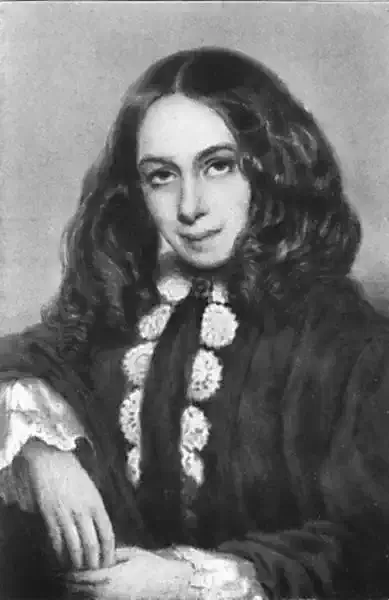
Elizabeth Barrett Browning
Sonnet XXXVI: When We Met First
When we met first and loved, I did not build
Upon the event with marble. Could it mean
To last, a love set pendulous between
Sorrow and sorrow? Nay, I rather thrilled,
Distrusting every light that seemed to gild
The onward path, and feared to overlean
A finger even. And, though I have grown serene
And strong since then, I think that God has willed
A still renewable fear ... O love, O troth ...
Lest these enclasped hands should never hold,
This mutual kiss drop down between us both
As an unowned thing, once the lips being cold.
And Love, be false! if he, to keep one oath,
Must lose one joy, by his life's star foretold.
857
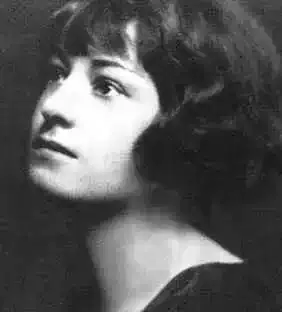
Dorothy Parker
Unfortunate Coincidence
By the time you swear you're his,
Shivering and sighing,
And he vows his passion is
Infinite, undying -
Lady, make a note of this:
One of you is lying.
Shivering and sighing,
And he vows his passion is
Infinite, undying -
Lady, make a note of this:
One of you is lying.
424

Ella Wheeler Wilcox
Master And Servant
The devil to Bacchus said, one day,
In a scowling, growling, petulant way,
As he came from earth to hell:
'There's a soul above that I cannot move,
And I've struggled long and well;
He's a manly youth, with an eye of truth,
A fellow of matchless grace;
And he looks me through with his eye of blue
Till I cower before his face.
The very power and strength of heaven
To this young, fearless soul were given;
For I've never an art that can reach his heart,
And I cannot snare his feet:
I have wasted days in devising ways,
And now must cry 'Defeat!''
And the devil scowled, and grumbled, and growled,
And beat about with his cane,
Till the demons fled over the burning waste
Out of his reach in hurrying haste,
Howling aloud in pain.
Bacchus laughed as he stooped and quaffed
A burning bumper of wine:
'Why, master,' said he, 'you soon shall see
The fellow down at your shrine;
Long ago, if you'd let me know,
We'd had him in our ranks.
And now, adieu! while I work for you;
Don't hurry about your thanks!
I'm going above; you know they love
The sight of my glowing face.
They call me a god! ho! ho! how odd!
With this for my dwelling-place.'
A youth with a dower of manly grace,
A maid with the morning in her face;
And she filleth a goblet full to the brim,
And giveth the bubbling draught to him.
'Drink!' she says, and the goblet sways
And shimmers under his eyes.
He tries to speak, but the tongue is weak,
And the words sink into sighs;
For the maid is fair, and she holds him there
With a spell that he cannot flee:
'Drink!' and she sips with her ruby lips'
Drink but a draught with me.'
And the lovers quaffed, while the demons laughed,
And Bacchus laughed loud and long.
'Ho! ho!' cried he, 'what a victory!
Ho! ho! for the soul so strong
That my master was beat, and cried 'Defeat!'
But wine is a tempter, and love is sweet.'
Bacchus went back o'er the fiery track
Into the land below;
And the devil said, 'Well, what have you to tell
Of the thing I want to know?'
And Bacchus said he, 'Why, look and see!
There is your strong, brave youth
Reeling along, with a drunken song
Staining those lips of truth.
My work is done! You must go on
And finish the job I started;
And as long as I stay in your service, pray,
Don't ever be down-hearted.'
421

Johann Wolfgang von Goethe
The Maid Of The Mill's Treachery
WHENCE comes our friend so hastily,
When scarce the Eastern sky is grey?
Hath he just ceased, though cold it be,
In yonder holy spot to pray?
The brook appears to hem his path,
Would he barefooted o'er it go?
Why curse his orisons in wrath,
Across those heights beclad with snow?
Alas! his warm bed he bath left,
Where he had look'd for bliss, I ween;
And if his cloak too, had been reft,
How fearful his disgrace had been!
By yonder villain sorely press'd,
His wallet from him has been torn;
Our hapless friend has been undress'd,
Left well nigh naked as when born.
The reason why he came this road,
Is that he sought a pair of eyes,
Which, at the mill, as brightly glow'd
As those that are in Paradise.
He will not soon again be there;
From out the house he quickly hied,
And when he gain'd the open air,
Thus bitterly and loudly cried
'Within her gaze, so dazzling bright,
No word of treachery I could read;
She seem'd to see me with delight,
Yet plann'd e'en then this cruel deed!
Could I, when basking in her smile,
Dream of the treason in her breast?
She bade kind Cupid stay awhile,
And he was there, to make us blest.
'To taste of love's sweet ecstasy
Throughout the night, that endless seem'd,
And for her mother's help to cry
Only when morning sunlight beam'd!
A dozen of her kith and kin,
A very human flood, in-press'd
Her cousins came, her aunts peer'd in,
And uncles, brothers, and the rest.
'Then what a tumult, fierce and loud!
Each seem'd a beast of prey to be;
The maiden's honour all the crowd,
With fearful shout, demand of me.
Why should they, madmen-like, begin
To fall upon a guiltless youth?
For he who such a prize would win,
Far nimbler needs must be, in truth.
'The way to follow up with skill
His freaks, by love betimes is known:
He ne'er will leave, within a mill,
Sweet flowers for sixteen years alone.-
They stole my clothes away,-yes, all!
And tried my cloak besides to steal.
How strange that any house so small
So many rascals could conceal!
'Then I sprang up, and raved, and swore,
To force a passage through them there.
I saw the treacherous maid once more,
And she was still, alas, so fair
They all gave way before my wrath,
Wild outcries flew about pell-mell;
At length I managed to rush forth,
With voice of thunder, from that hell.
'As maidens of the town we fly,
We'll shun you maidens of the village;
Leave it to those of quality
Their humble worshippers to pillage.
Yet if ye are of practised skill,
And of all tender ties afraid,
Exchange your lovers, if ye will,
But never let them be betray'd.'
Thus sings he in the winter-night,
While not a blade of grass was green.
I laugh'd to see his piteous plight,
For it was well-deserved, I ween.
And may this be the fate of all,
Who treat by day their true loves ill,
And, with foolhardy daring, crawl
By night to Cupid's treacherous mill!
417

Lord Byron
Remember Thee! Remember Thee!
Remember thee! remember thee!
Till Lethe quench life's burning stream
Remorse and shame shall cling to thee,
And haunt thee like a feverish dream!
Remember thee! Aye, doubt it not.
Thy husband too shall think of thee:
By neither shalt thou be forgot,
Thou false to him, thou fiend to me!
Till Lethe quench life's burning stream
Remorse and shame shall cling to thee,
And haunt thee like a feverish dream!
Remember thee! Aye, doubt it not.
Thy husband too shall think of thee:
By neither shalt thou be forgot,
Thou false to him, thou fiend to me!
417
Ella Wheeler Wilcox
Pardoned Out
I’m pardoned out. Again the stars
Shine on me with their myriad eyes.
So long I’ve peered ‘twixt iron bars,
I’m awed by this expanse of skies.
The world is wider than I thought,
And yet ‘tis not so wide, I know,
But into its remotest spot
My tale of shame can go.
I’m pardoned out. Old Father Time
Who seemed to halt in horror, when
I strained my manhood by a crime,
With steady step moves on again,
And through the black appalling night,
That walled me in a gloom accurst,
The wonder of the morning light
In sudden glory burst.
I’m pardoned out. I shall be knows
No more by number, but by name.
And yet each whispering wind has blown
Abroad the story of my shame.
I dread to see men shrink away
With startled looks of scorn or fear,
When in life’s crowded marts some day,
That name falls on their ear.
I’m pardoned out, ah God! to roam
Like some whipped dog among my kind.
I have no friends, I have no home,
Save these bleak walls I leave behind.
How can I face the world of men,
My comrades in the days of yore?
Oh! hide me in my cell again,
And, warden lock the door.
410

Robert Browning
The Statue and the Bust
There's a palace in Florence, the world knows well,
And a statue watches it from the square,
And this story of both do our townsmen tell.
Ages ago, a lady there,
At the farthest window facing the East,
Asked, "Who rides by with the royal air?"
The bridesmaids' prattle around her ceased;
She leaned forth, one on either hand;
They saw how the blush of the bride increased --
They felt by its beats her heart expand --
As one at each ear and both in a breath
Whispered, "The Great-Duke Ferdinand."
That self-same instant, underneath,
The Duke rode past in his idle way,
Empty and fine like a swordless sheath.
Gay he rode, with a friend as gay,
Till he threw his head back -- "Who is she?"
-- "A bride the Riccardi brings home today."
Hair in heaps lay heavily
Over a pale brow spirit-pure --
Carved like the heart of the coal-black tree,
Crisped like a war-steed's encolure --
And vainly sought to dissemble her eyes
Of the blackest black our eyes endure.
And lo, a blade for a knight's emprise
Filled the fine empty sheath of a man, --
The Duke grew straightway brave and wise.
He looked at her, as a lover can;
She looked at him, as one who awakes:
The past was a sleep, and their life began.
Now, love so ordered for both their sakes,
A feast was held that selfsame night
In the pile which the mighty shadow makes.
(For Via Larga is three-parts light,
But the palace overshadows one,
Because of a crime which may God requite!
To Florence and God the wrong was done,
Through the first republic's murder there
By Cosimo and his cursèd son.)
The Duke (with the statue's face in the square)
Turned in the midst of his multitude
At the bright approach of the bridal pair.
Face to face the lovers stood
A single minute and no more,
While the bridegroom bent as a man subdued --
Bowed till his bonnet brushed the floor --
For the Duke on the lady a kiss conferred,
As the courtly custom was of yore.
In a minute can lovers exchange a word?
If a word did pass, which I do not think,
Only one out of the thousand heard.
That was the bridegroom. At day's brink
He and his bride were alone at last
In a bedchamber by a taper's blink.
Calmly he said that her lot was cast,
That the door she had passed was shut on her
Till the final catafalque repassed.
The world meanwhile, its noise and stir,
Through a certain window facing the East,
She could watch like a convent's chronicler.
Since passing the door might lead to a feast,
And a feast might lead to so much beside,
He, of many evils, chose the least.
"Freely I choose too," said the bride --
"Your window and its world suffice,"
Replied the tongue, while the heart replied --
"If I spend the night with that devil twice,
May his window serve as my loop of hell
Whence a damned soul looks on paradise!
"I fly to the Duke who loves me well,
Sit by his side and laugh at sorrow
Ere I count another ave-bell.
"'Tis only the coat of a page to borrow,
And tie my hair in a horse-boy's trim,
And I save my soul -- but not tomorrow" --
(She checked herself and her eye grew dim)
"My father tarries to bless my state:
I must keep it one day more for him.
"Is one day more so long to wait?
Moreover the Duke rides past, I know;
We shall see each other, sure as fate."
She turned on her side and slept. Just so!
So we resolve on a thing and sleep:
So did the lady, ages ago.
That night the Duke said, "Dear or cheap
As the cost of this cup of bliss may prove
To body or soul, I will drain it deep."
And on the morrow, bold with love,
He beckoned the bridegroom (close on call,
As his duty bade, by the Duke's alcove)
And smiled "'Twas a very funeral,
Your lady will think, this feast of ours, --
A shame to efface, whate'er befall!
"What if we break from the Arno bowers,
And try if Petraja, cool and green,
Cure last night's fault with this morning's flowers?"
The bridegroom, not a thought to be seen
On his steady brow and quiet mouth,
Said, "Too much favour for me so mean!
"But, alas! my lady leaves the South;
Each wind that comes from the Apennine
Is a menace to her tender youth:
"Nor a way exists, the wise opine,
If she quits her palace twice this year,
To avert the flower of life's decline."
Quoth the Duke, "A sage and a kindly fear.
Moreover Petraja is cold this spring:
Be our feast tonight as usual here!"
And then to himself -- "Which night shall bring
Thy bride to her lover's embraces, fool --
Or I am the fool, and thou art the king!
"Yet my passion must wait a night, nor cool --
For tonight the Envoy arrives from France
Whose heart I unlock with thyself, my tool.
"I need thee still and might miss perchance.
Today is not wholly lost, beside,
With its hope of my lady's countenance:
"For I ride -- what should I do but ride?
And passing her palace, if I list,
May glance at its window -- well betide!"
So said, so done: nor the lady missed
One ray that broke from the ardent brow,
Nor a curl of the lips where the spirit kissed.
Be sure that each renewed the vow,
No morrow's sun should arise and set
And leave them then as it left them now.
But next day passed, and next day yet,
With still fresh cause to wait one day more
Ere each leaped over the parapet.
And still, as love's brief morning wore,
With a gentle start, half smile, half sigh,
They found love not as it seemed before.
They thought it would work infallibly,
But not in despite of heaven and earth:
The rose would blow when the storm passed by.
Meantime they could profit in winter's dearth
By store of fruits that supplant the rose:
The world and its ways have a certain worth:
And to press a point while these oppose
Were simple policy; better wait:
We lose no friends and we gain no foes.
Meantime, worse fates than a lover's fate,
Who daily may ride and pass and look
Where his lady watches behind the grate!
And she -- she watched the square like a book
Holding one picture and only one,
Which daily to find she undertook:
When the picture was reached the book was done,
And she turned from the picture at night to scheme
Of tearing it out for herself next sun.
So weeks grew months, years; gleam by gleam
The glory dropped from their youth and love,
And both perceived they had dreamed a dream;
Which hovered as dreams do, still above:
But who can take a dream for a truth?
Oh, hide our eyes from the next remove!
One day as the lady saw her youth
Depart, and the silver thread that streaked
Her hair, and, worn by the serpent's tooth,
The brow so puckered, the chin so peaked, --
And wondered who the woman was,
Hollow-eyed and haggard-cheeked,
Fronting her silent in the glass --
"Summon here," she suddenly said,
"Before the rest of my old self pass,
"Him, the Carver, a hand to aid,
Who fashions the clay no love will change,
And fixes a beauty never to fade.
"Let Robbia's craft so apt and strange
Arrest the remains of young and fair,
And rivet them while the seasons range.
"Make me a face on the window there,
Waiting as ever, mute the while,
My love to pass below in the square!
"And let me think that it may beguile
Dreary days which the dead must spend
Down in their darkness under the aisle,
"To say, 'What matters it at the end?
I did no more while my heart was warm
Than does that image, my pale-faced friend.'
"Where is the use of the lip's red charm,
The heaven of hair, the pride of the brow,
And the blood that blues the inside arm --
"Unless we turn, as the soul knows how,
The earthly gift to an end divine?
A lady of clay is as good, I trow."
But long ere Robbia's cornice, fine,
With flowers and fruits which leaves enlace,
Was set where now is the empty shrine --
(And, leaning out of a bright blue space,
As a ghost might lean from a chink of sky,
The passionate pale lady's face --
Eyeing ever, with earnest eye
And quick-turned neck at its breathless stretch,
Some one who ever is passing by --)
The Duke had sighed like the simplest wretch
In Florence, "Youth -- my dream escapes!
Will its record stay?" And he bade them fetch
Some subtle moulder of brazen shapes --
"Can the soul, the will, die out of a man
Ere his body find the grave that gapes?
"John of Douay shall effect my plan,
Set me on horseback here aloft,
Alive, as the crafty sculptor can,
"In the very square I have crossed so oft:
That men may admire, when future suns
Shall touch the eyes to a purpose soft,
"While the mouth and the brow stay brave in bronze --
Admire and say, 'When he was alive
How he would take his pleasure once!'
"And it shall go hard but I contrive
To listen the while, and laugh in my tomb
At idleness which aspires to strive."
So! While these wait the trump of doom,
How do their spirits pass, I wonder,
Nights and days in the narrow room?
Still, I suppose, they sit and ponder
What a gift life was, ages ago,
Six steps out of the chapel yonder.
Only they see not God, I know,
Nor all that chivalry of his,
The soldier-saints who, row on row,
Burn upward each to his point of bliss --
Since, the end of life being manifest,
He had burned his way through the world to this.
I hear you reproach, "But delay was best,
For their end was a crime." -- Oh, a crime will do
As well, I reply, to serve for a test,
As a virtue golden through and through,
Sufficient to vindicate itself
And prove its worth at a moment's view!
Must a game be played for the sake of pelf?
Where a button goes, 'twere an epigram
To offer the stamp of the very Guelph.
The true has no value beyond the sham:
As well the counter as coin, I submit,
When your table's a hat, and your prize a dram.
Stake your counter as boldly every whit,
Venture as warily, use the same skill,
Do your best, whether winning or losing it,
If you choose to play! -- is my principle.
Let a man contend to the uttermost
For his life's set prize, be it what it will!
The counter our lovers staked was lost
As surely as if it were lawful coin:
And the sin I impute to each frustrate ghost
Is -- the unlit lamp and the ungirt loin,
Though the end in sight was a vice, I say.
You of the virtue (we issue join)
How strive you? De te, fabula.
819
Ella Wheeler Wilcox
Her Last Letter
Sitting alone by the window,
Watching the moonlit street,
Bending my head to listen
To the well-known sound of your feet,
I have been wondering, darling,
How I can bear the pain,
When I watch, with sighs and tear-wet eyes;
And wait for your coming in vain.
For I know that a day approaches
When your heart will tire of me;
When by door and gate I may watch and wait
For a form I shall not see.
When the love that is now my heaven,
The kisses that make my life,
You will bestow on another,
And that other will be-your wife.
You will grow weary of sinning
(Though you do not call it so),
You will long for a love that is purer
Than the love that we two know.
God knows I have loved you dearly,
With a passion strong as true;
But you will grow tired and leave me,
Though I gave up all for you.
I was as pure as the morning
When I first looked on your face;
I knew I never could reach you
In your high, exalted place.
But I looked and loved and worshiped
As a flower might worship a star,
And your eyes shone down upon me,
And you seemed so far-so far.
And then? Well, then, you loved me,
Loved me with all your heart;
But we could not stand at the altar,
We were so far apart.
If a star should wed with a flower
The star must drop from the sky,
Or the flower in trying to reach it
Would droop on its stalk and die.
But you said that you loved me, darling,
And swore by the heavens above
That the Lord and all of His angels
Would sanction and bless our love.
And I? I was weak, not wicked.
My love was as pure as true,
And sin itself seemed a virtue
If only shared by you.
We have been happy together,
Though under the cloud of sin,
But I know that the day approaches
When my chastening must begin.
You have been faithful and tender,
But you will not always be,
And I think I had better leave you
While your thoughts are kind of me.
I know my beauty is fading-
Sin furrows the fairest brow-
And I know that your heart will weary
Of the face you smile on now.
You will take a bride to your bosom
After you turn from me;
You will sit with your wife in the moonlight,
And hold her babe on your knee.
Oh, God! I never could bear it;
It would madden my brain, I know;
And so while you love me dearly
I think I had better go.
It is sweeter to feel, my darling-
To know as I fall asleep-
That some one will mourn me and miss me,
That some one is left to weep,
Than to die as I should in the future,
To drop in the street some day,
Unknown, unwept and forgotten
After you cast me away.
Perhaps the blood of the Saviour
Can wash my garments clean;
Perchance I may drink of the waters
That flow through pastures green.
Perchance we may meet in heaven,
And walk in the streets above,
With nothing to grieve us or part us
Since our sinning was all through love.
God says, 'Love one another,'
And down to the depths of hell
Will he send the soul of a women
Because she loved-and fell?
And so in the moonlight he found her,
Or found her beautiful clay,
Lifeless and pallid as marble,
For the spirit had flown away.
The farewell words she had written
She held to her cold, white breast,
And the buried blade of a dagger
Told how she had gone to rest.
405
Johann Wolfgang von Goethe
Death-Lament Of The Noble Wife Of Asan Aga
WHAT is yonder white thing in the forest?
Is it snow, or can it swans perchance be?
Were it snow, ere this it had been melted,
Were it swans, they all away had hastend.
Snow, in truth, it is not, swans it is not,
'Tis the shining tents of Asan Aga.
He within is lying, sorely wounded;
To him come his mother and his sister;
Bashfully his wife delays to come there.
When the torment of his wounds had lessen'd,
To his faithful wife he sent this message:
"At my court no longer dare to tarry,
At my court, or e'en amongst my people."
When the woman heard this cruel message,
Mute and full of sorrow stood that true one.
At the doors she hears the feet of horses,
And bethinks that Asan comes--her husband,
To the tower she springs, to leap thence headlong,
Her two darling daughters follow sadly,
And whilst weeping bitter tears, exclaim they:
These are not our father Asan's horses;
'Tis thy brother Pintorowich coming!"
So the wife of Asan turns to meet him,
Clasps her arms in anguish round her brother:
"See thy sister's sad disgrace, oh brother!
How I'm banish'd--mother of five children!"
Silently her brother from his wallet,
Wrapp'd in deep red-silk, and ready written,
Draweth forth the letter of divorcement,
To return home to her mother's dwelling,
Free to be another's wife thenceforward.
When the woman saw that mournful letter,
Fervently she kiss'd her two sons' foreheads,
And her two girls' cheeks with fervour kiss'd she,
But she from the suckling in the cradle
Could not tear herself, so deep her sorrow!
So she's torn thence by her fiery brother,
On his nimble steed he lifts her quickly,
And so hastens, with the heart-sad woman,
Straightway tow'rd his father's lofty dwelling.
Short the time was--seven days had pass'd not,--
Yet enough 'twas; many mighty princes
Sought the woman in her widow's-mourning.
Sought the woman,--as their wife they sought her.
And the mightiest was Imoski's Cadi,
And the woman weeping begg'd her brother:
By thy life, my brother, I entreat thee,
Let me not another's wife be ever,
Lest my heart be broken at the image
Of my poor, my dearly-cherish'd children!"
To her prayer her brother would not hearken,
Fix'd to wed her to Imoski's Cadi.
Yet the good one ceaselessly implored him:
"Send, at least a letter, oh, my brother,
With this message to Imoski's Cadi:
'The young widow sends thee friendly greeting;
Earnestly she prays thee, through this letter,
That, when thou com'st hither, with thy Suatians,
A long veil thou'lt bring me, 'neath whose shadow
I may hide, when near the house of Asan,
And not see my dearly cherish'd orphans.'"
Scarcely had the Cadi read this letter,
Than he gather'd all his Suatians round him,
And then tow'rd the bride his course directed,
And the veil she ask'd for, took he with him.
Happily they reach'd the princess' dwelling,
From the dwelling happily they led her.
But when they approach'd the house of Asan,
Lo! the children saw from high their mother,
And they shouted: "To thy halls return thou!
Eat thy supper with thy darling children!"
Mournfully the wife of Asan heard it,
Tow'rd the Suatian prince then turn'd she, saying:
"Let, I pray, the Suatians and the horses
At the loved ones' door a short time tarry,
That I may give presents to my children."
And before the loved ones' door they tarried,
And she presents gave to her poor children,
To the boys gave gold-embroider'd buskins,
To the girls gave long and costly dresses,
To the suckling, helpless in the cradle,
Gave a garment, to be worn hereafter.
This aside saw Father Asan Aga,--
Sadly cried he to his darling children:
"Hither come, ye dear unhappy infants,
For your mother's breast is turn'd to iron,
Lock'd for ever, closed to all compassion!"
When the wife of Asan heard him speak thus,
On the ground, all pale and trembling, fell she,
And her spirit fled her sorrowing bosom,
When she saw her children flying from her.
404
Lord Byron
The Chain I Gave: From The Turkish
The chain I gave was fair to view,
The lute I added sweet in sound;
The heart that offer'd both was true,
And ill deserved the fate it found.
These gifts were charm'd by secret spell,
Thy truth in absence to divine;
And they have done their duty well,
Alas! they could not teach the thine.
That chain was firm in every link,
But not to bear a stranger's touch;
That lute was sweet, till thou could'st think
In other hands its notes were such.
Let him who from thy neck unbound
The chain which shiver'd in his grasp,
Who saw that lute refuse to sound,
Restring the chords, renew the clasp.
When thou wert changed, they alter'd too;
The chain is broke, the music mute.
'Tis past, to them and thee adieu
False heart, frail chain, and silent lute.
393
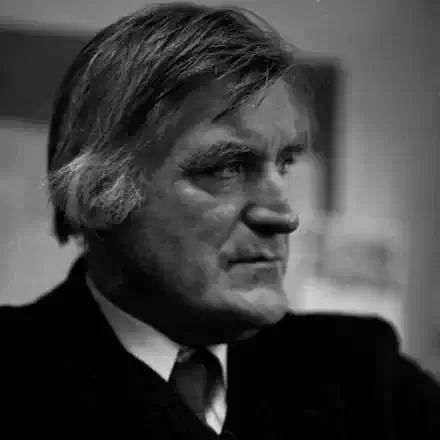
Ted Hughes
The Minotaur
The mahogany table-top you smashed
Had been the broad plank top
Of my mother's heirloom sideboard-
Mapped with the scars of my whole life.
That came under the hammer.
That high stool you swung that day
Demented by my being
Twenty minutes late for baby-minding.
'Marvellous!' I shouted, 'Go on,
Smash it into kindling.
That's the stuff you're keeping out of your poems!'
And later, considered and calmer,
'Get that shoulder under your stanzas
And we'll be away.' Deep in the cave of your ear
The goblin snapped his fingers.
So what had I given him?
The bloody end of the skein
That unravelled your marriage,
Left your children echoing
Like tunnels in a labyrinth.
Left your mother a dead-end,
Brought you to the horned, bellowing
Grave of your risen father
And your own corpse in it.
395

Robert W. Service
The Ballad Of One-Eyed Mike
This is the tale that was told to me by the man with the crystal eye,
As I smoked my pipe in the camp-fire light, and the Glories swept the sky;
As the Northlights gleamed and curved and streamed, and the bottle of "hooch" was
dry.
A man once aimed that my life be shamed, and wrought me a deathly wrong;
I vowed one day I would well repay, but the heft of his hate was strong.
He thonged me East and he thonged me West; he harried me back and forth,
Till I fled in fright from his peerless spite to the bleak, bald-headed North.
And there I lay, and for many a day I hatched plan after plan,
For a golden haul of the wherewithal to crush and to kill my man;
And there I strove, and there I clove through the drift of icy streams;
And there I fought, and there I sought for the pay-streak of my dreams.
So twenty years, with their hopes and fears and smiles and tears and such,
Went by and left me long bereft of hope of the Midas touch;
About as fat as a chancel rat, and lo! despite my will,
In the weary fight I had clean lost sight of the man I sought to kill.
'Twas so far away, that evil day when I prayed to the Prince of Gloom
For the savage strength and the sullen length of life to work his doom.
Nor sign nor word had I seen or heard, and it happed so long ago;
My youth was gone and my memory wan, and I willed it even so.
It fell one night in the waning light by the Yukon's oily flow,
I smoked and sat as I marvelled at the sky's port-winey glow;
Till it paled away to an absinthe gray, and the river seemed to shrink,
All wobbly flakes and wriggling snakes and goblin eyes a-wink.
'Twas weird to see and it 'wildered me in a queer, hypnotic dream,
Till I saw a spot like an inky blot come floating down the stream;
It bobbed and swung; it sheered and hung; it romped round in a ring;
It seemed to play in a tricksome way; it sure was a merry thing.
In freakish flights strange oily lights came fluttering round its head,
Like butterflies of a monster size--then I knew it for the Dead.
Its face was rubbed and slicked and scrubbed as smooth as a shaven pate;
In the silver snakes that the water makes it gleamed like a dinner-plate.
It gurgled near, and clear and clear and large and large it grew;
It stood upright in a ring of light and it looked me through and through.
It weltered round with a woozy sound, and ere I could retreat,
With the witless roll of a sodden soul it wantoned to my feet.
And here I swear by this Cross I wear, I heard that "floater" say:
"I am the man from whom you ran, the man you sought to slay.
That you may note and gaze and gloat, and say `Revenge is sweet',
In the grit and grime of the river's slime I am rotting at your feet.
"The ill we rue we must e'en undo, though it rive us bone from bone;
So it came about that I sought you out, for I prayed I might atone.
I did you wrong, and for long and long I sought where you might live;
And now you're found, though I'm dead and drowned, I beg you to forgive."
So sad it seemed, and its cheek-bones gleamed, and its fingers flicked the shore;
And it lapped and lay in a weary way, and its hands met to implore;
That I gently said: "Poor, restless dead, I would never work you woe;
Though the wrong you rue you can ne'er undo, I forgave you long ago."
Then, wonder-wise, I rubbed my eyes and I woke from a horrid dream.
The moon rode high in the naked sky, and something bobbed in the stream.
It held my sight in a patch of light, and then it sheered from the shore;
It dipped and sank by a hollow bank, and I never saw it more.
This was the tale he told to me, that man so warped and gray,
Ere he slept and dreamed, and the camp-fire gleamed in his eye in a wolfish way--
That crystal eye that raked the sky in the weird Auroral ray.
387

William Shakespeare
Sonnet 88: When thou shalt be disposed to set me light
When thou shalt be disposed to set me light
And place my merit in the eye of scorn,
Upon thy side, against myself I'll fight,
And prove thee virtuous, though thou art forsworn.
With mine own weakness being best acquainted,
Upon thy part I can set down a story
Of faults concealed, wherein I am attainted,
That thou in losing me shalt win much glory.
And I by this will be a gainer too;
For bending all my loving thoughts on thee,
The injuries that to myself I do,
Doing thee vantage, double-vantage me.
Such is my love, to thee I so belong,
That for thy right, myself will bear all wrong.
702
William Shakespeare
Sonnet 41: Those petty wrongs that liberty commits
Those petty wrongs that liberty commits,
When I am sometime absent from thy heart,
Thy beauty and thy years full well befits,
For still temptation follows where thou art.
Gentle thou art and therefore to be won,
Beauteous thou art, therefore to be assailed;
And when a woman woos, what woman's son
Will sourly leave her till she have prevailed?
Ay me! but yet thou mightest my seat forbear,
And chide try beauty and thy straying youth,
Who lead thee in their riot even there
Where thou art forced to break a twofold truth,
Hers by thy beauty tempting her to thee,
Thine, by thy beauty being false to me.
384

Nazim Hikmet
A Sad State Of Freedom
You waste the attention of your eyes,
the glittering labour of your hands,
and knead the dough enough for dozens of loaves
of which you'll taste not a morsel;
you are free to slave for others--
you are free to make the rich richer.
The moment you're born
they plant around you
mills that grind lies
lies to last you a lifetime.
You keep thinking in your great freedom
a finger on your temple
free to have a free conscience.
Your head bent as if half-cut from the nape,
your arms long, hanging,
your saunter about in your great freedom:
you're free
with the freedom of being unemployed.
You love your country
as the nearest, most precious thing to you.
But one day, for example,
they may endorse it over to America,
and you, too, with your great freedom--
you have the freedom to become an air-base.
You may proclaim that one must live
not as a tool, a number or a link
but as a human being--
then at once they handcuff your wrists.
You are free to be arrested, imprisoned
and even hanged.
There's neither an iron, wooden
nor a tulle curtain
in your life;
there's no need to choose freedom:
you are free.
But this kind of freedom
is a sad affair under the stars.
Translated by Taner Baybars
381

Wilfred Owen
The Parable of the Old Man and the Young
So Abram rose, and clave the wood, and went,
And took the fire with him, and a knife.
And as they sojourned both of them together,
Isaac the first-born spake and said, My Father,
Behold the preparations, fire and iron,
But where the lamb for this burnt-offering?
Then Abram bound the youth with belts and strops,
And builded parapets and trenches there,
And stretched forth the knife to slay his son.
When lo! an angel called him out of heaven,
Saying, Lay not thy hand upon the lad,
Neither do anything to him. Behold,
A ram, caught in a thicket by its horns;
Offer the Ram of Pride instead of him.
But the old man would not so, but slew his son,
And half the seed of Europe, one by one.
693
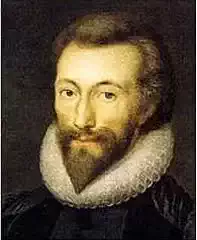
John Donne
Twickenham Garden
BLASTED with sighs, and surrounded with tears,
Hither I come to seek the spring,
And at mine eyes, and at mine ears,
Receive such balms as else cure every thing.
But O ! self-traitor, I do bring
The spider Love, which transubstantiates all,
And can convert manna to gall ;
And that this place may thoroughly be thought
True paradise, I have the serpent brought.
'Twere wholesomer for me that winter did
Benight the glory of this place,
And that a grave frost did forbid
These trees to laugh and mock me to my face ;
But that I may not this disgrace
Endure, nor yet leave loving, Love, let me
Some senseless piece of this place be ;
Make me a mandrake, so I may grow here,
Or a stone fountain weeping out my year.
Hither with crystal phials, lovers, come,
And take my tears, which are love's wine,
And try your mistress' tears at home,
For all are false, that taste not just like mine.
Alas ! hearts do not in eyes shine,
Nor can you more judge women's thoughts by tears,
Than by her shadow what she wears.
O perverse sex, where none is true but she,
Who's therefore true, because her truth kills me.
378
William Shakespeare
Sonnet 152: In loving thee thou know'st I am forsworn
In loving thee thou know'st I am forsworn,
But thou art twice forsworn, to me love swearing,
In act thy bed-vow broke and new faith torn,
In vowing new hate after new love bearing.
But why of two oaths' breach do I accuse thee,
When I break twenty? I am perjured most;
For all my vows are oaths but to misuse thee
And all my honest faith in thee is lost,
For I have sworn deep oaths of thy deep kindness,
Oaths of thy love, thy truth, thy constancy,
And, to enlighten thee, gave eyes to blindness,
Or made them swear against the thing they see;
For I have sworn thee fair; more perjured I,
To swear against the truth so foul a lie!
378
Robert Browning
Count Gismond--Aix in Provence
Christ God who savest man, save most
Of men Count Gismond who saved me!
Count Gauthier, when he chose his post,
Chose time and place and company
To suit it; when he struck at length
My honour, 't was with all his strength.
And doubtlessly, ere he could draw
All points to one, he must have schemed!
That miserable morning saw
Few half so happy as I seemed,
While being dressed in queen's array
To give our tourney prize away.
I thought they loved me, did me grace
To please themselves; 't was all their deed;
God makes, or fair or foul, our face;
If showing mine so caused to bleed
My cousins' hearts, they should have dropped
A word, and straight the play had stopped.
They, too, so beauteous! Each a queen
By virtue of her brow and breast;
Not needing to be crowned, I mean,
As I do. E'en when I was dressed,
Had either of them spoke, instead
Of glancing sideways with still head!
But no: they let me laugh, and sing
My birthday song quite through, adjust
The last rose in my garland, fling
A last look on the mirror, trust
My arms to each an arm of theirs,
And so descend the castle-stairs-
And come out on the morning troop
Of merry friends who kissed my cheek,
And called me queen, and made me stoop
Under the canopy-(a streak
That pierced it, of the outside sun,
Powdered with gold its gloom's soft dun)-
And they could let me take my state
And foolish throne amid applause
Of all come there to celebrate
My queen's-day-Oh I think the cause
Of much was, they forgot no crowd
Makes up for parents in their shroud!
However that be, all eyes were bent
Upon me, when my cousins cast
Theirs down; 't was time I should present
The victor's crown, but ... there, 't will last
No long time ... the old mist again
Blinds me as then it did. How vain!
See! Gismond's at the gate, in talk
With his two boys: I can proceed.
Well, at that moment, who should stalk
Forth boldly-to my face, indeed-
But Gauthier? and he thundered "Stay!"
And all stayed. "Bring no crowns, I say!
"Bring torches! Wind the penance-sheet
"About her! Let her shun the chaste,
"Or lay herself before their feet!
"Shall she, whose body I embraced
"A night long, queen it in the day?
"For honour's sake no crowns, I say!"
I? What I answered? As I live,
I never fancied such a thing
As answer possible to give.
What says the body when they spring
Some monstrous torture-engine's whole
Strength on it? No more says the soul.
Till out strode Gismond; then I knew
That I was saved. I never met
His face before, but, at first view,
I felt quite sure that God had set
Himself to Satan; would who spend
A minute's mistrust on the end?
He strode to Gauthier, in his throat
Gave him the lie, then struck his mouth
With one back-handed blow that wrote
In blood men's verdict there. North, South,
East, West, I looked. The lie was dead,
And damned, and truth stood up instead.
This glads me most, that I enjoyed
The heart o' the joy, with my content
In watching Gismond unalloyed
By any doubt of the event:
God took that on him-I was bid
Watch Gismond for my part: I did.
Did I not watch him while he let
His armourer just brace his greaves,
Rivet his hauberk, on the fret
The while! His foot ... my memory leaves
No least stamp out nor how anon
He pulled his ringing gauntlets on.
And e'en before the trumpet's sound
Was finished, prone lay the false knight,
Prone as his lie, upon the ground:
Gismond flew at him, used no sleight
O' the sword, but open-breasted drove,
Cleaving till out the truth he clove.
Which done, he dragged him to my feet
And said, "Here die, but end thy breath
"In full confession, lest thou fleet
"From my first, to God's second death!
"Say, hast thou lied? "And, "I have lied
"To God and her,"he said, and died.
Then Gismond, kneeling to me, asked
-What safe my heart holds, though no word
Could I repeat now, if I tasked
My powers for ever, to a third
Dear even as you are. Pass the rest
Until I sank upon his breast.
Over my head his arm he flung
Against the world; and scarce I felt
His sword (that dripped by me and swung)
A little shifted in its belt:
For he began to say the while
How South our home lay many a mile.
So, 'mid the shouting multitude
We two walked forth to never more
Return. My cousins have pursued
Their life, untroubled as before
I vexed them. Gauthier's dwelling-place
God lighten! May his soul find grace!
Our elder boy has got the clear
Great brow, tho' when his brother's black
Full eye shows scorn, it ... Gismond here?
And have you brought my tercel back?
I was just telling Adela
How many birds it struck since May.
368

Anonymous
England
Oh, England!
Sick in head and sick in heart,
Sick in whole and every part:
And yet sicker thou art still
For thinking that thou art not ill.
Sick in head and sick in heart,
Sick in whole and every part:
And yet sicker thou art still
For thinking that thou art not ill.
368
William Shakespeare
Sonnet 150: O, from what power hast thou this powerful might
O, from what power hast thou this powerful might
With insufficiency my heart to sway?
To make me give the lie to my true sight,
And swear that brightness doth not grace the day?
Whence hast thou this becoming of things ill,
That in the very refuse of thy deeds
There is such strength and warrantize of skill
That, in my mind, thy worst all best exceeds?
Who taught thee how to make me love thee more
The more I hear and see just cause of hate?
O, though I love what others do abhor,
With others thou shouldst not abhor my state:
If thy unworthiness raised love in me,
More worthy I to be beloved of thee.
367
William Shakespeare
Sonnet 119: What potions have I drunk of Siren tears
What potions have I drunk of Siren tears,
Distill'd from limbecks foul as hell within,
Applying fears to hopes and hopes to fears,
Still losing when I saw myself to win!
What wretched errors hath my heart committed,
Whilst it hath thought itself so blessed never!
How have mine eyes out of their spheres been fitted
In the distraction of this madding fever!
O benefit of ill! now I find true
That better is by evil still made better;
And ruin'd love, when it is built anew,
Grows fairer than at first, more strong, far greater.
So I return rebuked to my content
And gain by ill thrice more than I have spent.
365
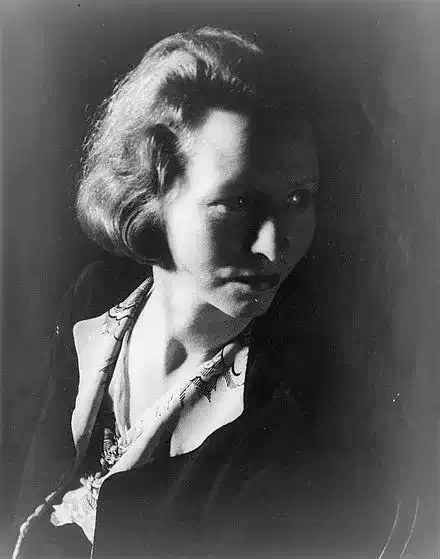
Edna St. Vincent Millay
The Singing-Woman From The Wood's Edge
What should I be but a prophet and a liar,
Whose mother was a leprechaun, whose father was a friar?
Teethed on a crucifix and cradled under water,
What should I be but the fiend's god-daughter?
And who should be my playmates but the adder and the frog,
That was got beneath a furze-bush and born in a bog?
And what should be my singing, that was christened at an altar,
But Aves and Credos and Psalms out of the Psalter?
You will see such webs on the wet grass, maybe,
As a pixie-mother weaves for her baby,
You will find such flame at the wave's weedy ebb
As flashes in the meshes of a mer-mother's web,
But there comes to birth no common spawn
From the love a a priest for a leprechaun,
And you never have seen and you never will see
Such things as the things that swaddled me!
After all's said and after all's done,
What should I be but a harlot and a nun?
In through the bushes, on any foggy day,
My Da would come a-swishing of the drops away,
With a prayer for my death and a groan for my birth,
A-mumbling of his beads for all that he was worth.
And there'd sit my Ma, with her knees beneath her chin,
A-looking in his face and a-drinking of it in,
And a-marking in the moss some funny little saying
That would mean just the opposite of all that he was praying!
He taught me the holy-talk of Vesper and of Matin,
He heard me my Greek and he heard me my Latin,
He blessed me and crossed me to keep my soul from evil,
And we watched him out of sight, and we conjured up the devil!
Oh, the things I haven't seen and the things I haven't known,
What with hedges and ditches till after I was grown,
And yanked both way by my mother and my father,
With a "Which would you better?" and a " Which would you
rather?"
With him for a sire and her for a dam,
What should I be but just what I am?
364
Ella Wheeler Wilcox
In The Cup
There is grief in the cup!
I saw a proud mother set wine on the board;
The eyes of her son sparkled bright as she poured
The ruddy stream into the glass in his hand.
The cup was of silver; the lady was grand
In her satins and laces; her proud heart was glad
In the love of her fair, noble son; but, oh! sad,
Oh! so sad ere a year had passed by,
And the soft light had gone from her beautiful eye.
For the boy that she loved, with a love strong as death,
In the chill hours of morn with a drunkard's foul breath
And a drunkard's fierce oath, reeled and staggered his way
To his home, a dark blot on the face of the day.
There is shame in the cup!
The tempter said, 'Drink,' and a fair maiden quaffed
Till her cheeks glowed the hue of the dangerous draught.
The voice of the tempter spoke low in her ear
Words that once would have started the quick, angry tear,
But wine blunts the conscience, and wine dulls the brain,
She listened and smiled, and he whispered again.
He lifted the goblet: 'Once more,' he said, 'drink,'
And the soul of the maiden was lost in the brink.
There is death in the cup!
A man in God's image, strong, noble, and grand,
With talents that crowned him a prince of the land,
Sipped the ruddy red wine!-sipped it lightly at first,
Until from its chains broke the demon of thirst.
And thirst became master, and man became slave,
And he ended his life in the drunkard's poor grave.
Wealth, fame, talents, beauty, and life swallowed up,
Grief, shame, death, destruction, are all in the cup.
365