
Betrayal and Disappointment

Robert W. Service
The Ballad Of One-Eyed Mike
This is the tale that was told to me by the man with the crystal eye,
As I smoked my pipe in the camp-fire light, and the Glories swept the sky;
As the Northlights gleamed and curved and streamed, and the bottle of "hooch" was
dry.
A man once aimed that my life be shamed, and wrought me a deathly wrong;
I vowed one day I would well repay, but the heft of his hate was strong.
He thonged me East and he thonged me West; he harried me back and forth,
Till I fled in fright from his peerless spite to the bleak, bald-headed North.
And there I lay, and for many a day I hatched plan after plan,
For a golden haul of the wherewithal to crush and to kill my man;
And there I strove, and there I clove through the drift of icy streams;
And there I fought, and there I sought for the pay-streak of my dreams.
So twenty years, with their hopes and fears and smiles and tears and such,
Went by and left me long bereft of hope of the Midas touch;
About as fat as a chancel rat, and lo! despite my will,
In the weary fight I had clean lost sight of the man I sought to kill.
'Twas so far away, that evil day when I prayed to the Prince of Gloom
For the savage strength and the sullen length of life to work his doom.
Nor sign nor word had I seen or heard, and it happed so long ago;
My youth was gone and my memory wan, and I willed it even so.
It fell one night in the waning light by the Yukon's oily flow,
I smoked and sat as I marvelled at the sky's port-winey glow;
Till it paled away to an absinthe gray, and the river seemed to shrink,
All wobbly flakes and wriggling snakes and goblin eyes a-wink.
'Twas weird to see and it 'wildered me in a queer, hypnotic dream,
Till I saw a spot like an inky blot come floating down the stream;
It bobbed and swung; it sheered and hung; it romped round in a ring;
It seemed to play in a tricksome way; it sure was a merry thing.
In freakish flights strange oily lights came fluttering round its head,
Like butterflies of a monster size--then I knew it for the Dead.
Its face was rubbed and slicked and scrubbed as smooth as a shaven pate;
In the silver snakes that the water makes it gleamed like a dinner-plate.
It gurgled near, and clear and clear and large and large it grew;
It stood upright in a ring of light and it looked me through and through.
It weltered round with a woozy sound, and ere I could retreat,
With the witless roll of a sodden soul it wantoned to my feet.
And here I swear by this Cross I wear, I heard that "floater" say:
"I am the man from whom you ran, the man you sought to slay.
That you may note and gaze and gloat, and say `Revenge is sweet',
In the grit and grime of the river's slime I am rotting at your feet.
"The ill we rue we must e'en undo, though it rive us bone from bone;
So it came about that I sought you out, for I prayed I might atone.
I did you wrong, and for long and long I sought where you might live;
And now you're found, though I'm dead and drowned, I beg you to forgive."
So sad it seemed, and its cheek-bones gleamed, and its fingers flicked the shore;
And it lapped and lay in a weary way, and its hands met to implore;
That I gently said: "Poor, restless dead, I would never work you woe;
Though the wrong you rue you can ne'er undo, I forgave you long ago."
Then, wonder-wise, I rubbed my eyes and I woke from a horrid dream.
The moon rode high in the naked sky, and something bobbed in the stream.
It held my sight in a patch of light, and then it sheered from the shore;
It dipped and sank by a hollow bank, and I never saw it more.
This was the tale he told to me, that man so warped and gray,
Ere he slept and dreamed, and the camp-fire gleamed in his eye in a wolfish way--
That crystal eye that raked the sky in the weird Auroral ray.
387

William Shakespeare
Sonnet 41: Those petty wrongs that liberty commits
Those petty wrongs that liberty commits,
When I am sometime absent from thy heart,
Thy beauty and thy years full well befits,
For still temptation follows where thou art.
Gentle thou art and therefore to be won,
Beauteous thou art, therefore to be assailed;
And when a woman woos, what woman's son
Will sourly leave her till she have prevailed?
Ay me! but yet thou mightest my seat forbear,
And chide try beauty and thy straying youth,
Who lead thee in their riot even there
Where thou art forced to break a twofold truth,
Hers by thy beauty tempting her to thee,
Thine, by thy beauty being false to me.
384

Nazim Hikmet
A Sad State Of Freedom
You waste the attention of your eyes,
the glittering labour of your hands,
and knead the dough enough for dozens of loaves
of which you'll taste not a morsel;
you are free to slave for others--
you are free to make the rich richer.
The moment you're born
they plant around you
mills that grind lies
lies to last you a lifetime.
You keep thinking in your great freedom
a finger on your temple
free to have a free conscience.
Your head bent as if half-cut from the nape,
your arms long, hanging,
your saunter about in your great freedom:
you're free
with the freedom of being unemployed.
You love your country
as the nearest, most precious thing to you.
But one day, for example,
they may endorse it over to America,
and you, too, with your great freedom--
you have the freedom to become an air-base.
You may proclaim that one must live
not as a tool, a number or a link
but as a human being--
then at once they handcuff your wrists.
You are free to be arrested, imprisoned
and even hanged.
There's neither an iron, wooden
nor a tulle curtain
in your life;
there's no need to choose freedom:
you are free.
But this kind of freedom
is a sad affair under the stars.
Translated by Taner Baybars
381
William Shakespeare
Sonnet 152: In loving thee thou know'st I am forsworn
In loving thee thou know'st I am forsworn,
But thou art twice forsworn, to me love swearing,
In act thy bed-vow broke and new faith torn,
In vowing new hate after new love bearing.
But why of two oaths' breach do I accuse thee,
When I break twenty? I am perjured most;
For all my vows are oaths but to misuse thee
And all my honest faith in thee is lost,
For I have sworn deep oaths of thy deep kindness,
Oaths of thy love, thy truth, thy constancy,
And, to enlighten thee, gave eyes to blindness,
Or made them swear against the thing they see;
For I have sworn thee fair; more perjured I,
To swear against the truth so foul a lie!
378

John Donne
Twickenham Garden
BLASTED with sighs, and surrounded with tears,
Hither I come to seek the spring,
And at mine eyes, and at mine ears,
Receive such balms as else cure every thing.
But O ! self-traitor, I do bring
The spider Love, which transubstantiates all,
And can convert manna to gall ;
And that this place may thoroughly be thought
True paradise, I have the serpent brought.
'Twere wholesomer for me that winter did
Benight the glory of this place,
And that a grave frost did forbid
These trees to laugh and mock me to my face ;
But that I may not this disgrace
Endure, nor yet leave loving, Love, let me
Some senseless piece of this place be ;
Make me a mandrake, so I may grow here,
Or a stone fountain weeping out my year.
Hither with crystal phials, lovers, come,
And take my tears, which are love's wine,
And try your mistress' tears at home,
For all are false, that taste not just like mine.
Alas ! hearts do not in eyes shine,
Nor can you more judge women's thoughts by tears,
Than by her shadow what she wears.
O perverse sex, where none is true but she,
Who's therefore true, because her truth kills me.
378

Robert Browning
Count Gismond--Aix in Provence
Christ God who savest man, save most
Of men Count Gismond who saved me!
Count Gauthier, when he chose his post,
Chose time and place and company
To suit it; when he struck at length
My honour, 't was with all his strength.
And doubtlessly, ere he could draw
All points to one, he must have schemed!
That miserable morning saw
Few half so happy as I seemed,
While being dressed in queen's array
To give our tourney prize away.
I thought they loved me, did me grace
To please themselves; 't was all their deed;
God makes, or fair or foul, our face;
If showing mine so caused to bleed
My cousins' hearts, they should have dropped
A word, and straight the play had stopped.
They, too, so beauteous! Each a queen
By virtue of her brow and breast;
Not needing to be crowned, I mean,
As I do. E'en when I was dressed,
Had either of them spoke, instead
Of glancing sideways with still head!
But no: they let me laugh, and sing
My birthday song quite through, adjust
The last rose in my garland, fling
A last look on the mirror, trust
My arms to each an arm of theirs,
And so descend the castle-stairs-
And come out on the morning troop
Of merry friends who kissed my cheek,
And called me queen, and made me stoop
Under the canopy-(a streak
That pierced it, of the outside sun,
Powdered with gold its gloom's soft dun)-
And they could let me take my state
And foolish throne amid applause
Of all come there to celebrate
My queen's-day-Oh I think the cause
Of much was, they forgot no crowd
Makes up for parents in their shroud!
However that be, all eyes were bent
Upon me, when my cousins cast
Theirs down; 't was time I should present
The victor's crown, but ... there, 't will last
No long time ... the old mist again
Blinds me as then it did. How vain!
See! Gismond's at the gate, in talk
With his two boys: I can proceed.
Well, at that moment, who should stalk
Forth boldly-to my face, indeed-
But Gauthier? and he thundered "Stay!"
And all stayed. "Bring no crowns, I say!
"Bring torches! Wind the penance-sheet
"About her! Let her shun the chaste,
"Or lay herself before their feet!
"Shall she, whose body I embraced
"A night long, queen it in the day?
"For honour's sake no crowns, I say!"
I? What I answered? As I live,
I never fancied such a thing
As answer possible to give.
What says the body when they spring
Some monstrous torture-engine's whole
Strength on it? No more says the soul.
Till out strode Gismond; then I knew
That I was saved. I never met
His face before, but, at first view,
I felt quite sure that God had set
Himself to Satan; would who spend
A minute's mistrust on the end?
He strode to Gauthier, in his throat
Gave him the lie, then struck his mouth
With one back-handed blow that wrote
In blood men's verdict there. North, South,
East, West, I looked. The lie was dead,
And damned, and truth stood up instead.
This glads me most, that I enjoyed
The heart o' the joy, with my content
In watching Gismond unalloyed
By any doubt of the event:
God took that on him-I was bid
Watch Gismond for my part: I did.
Did I not watch him while he let
His armourer just brace his greaves,
Rivet his hauberk, on the fret
The while! His foot ... my memory leaves
No least stamp out nor how anon
He pulled his ringing gauntlets on.
And e'en before the trumpet's sound
Was finished, prone lay the false knight,
Prone as his lie, upon the ground:
Gismond flew at him, used no sleight
O' the sword, but open-breasted drove,
Cleaving till out the truth he clove.
Which done, he dragged him to my feet
And said, "Here die, but end thy breath
"In full confession, lest thou fleet
"From my first, to God's second death!
"Say, hast thou lied? "And, "I have lied
"To God and her,"he said, and died.
Then Gismond, kneeling to me, asked
-What safe my heart holds, though no word
Could I repeat now, if I tasked
My powers for ever, to a third
Dear even as you are. Pass the rest
Until I sank upon his breast.
Over my head his arm he flung
Against the world; and scarce I felt
His sword (that dripped by me and swung)
A little shifted in its belt:
For he began to say the while
How South our home lay many a mile.
So, 'mid the shouting multitude
We two walked forth to never more
Return. My cousins have pursued
Their life, untroubled as before
I vexed them. Gauthier's dwelling-place
God lighten! May his soul find grace!
Our elder boy has got the clear
Great brow, tho' when his brother's black
Full eye shows scorn, it ... Gismond here?
And have you brought my tercel back?
I was just telling Adela
How many birds it struck since May.
368

Anonymous
England
Oh, England!
Sick in head and sick in heart,
Sick in whole and every part:
And yet sicker thou art still
For thinking that thou art not ill.
Sick in head and sick in heart,
Sick in whole and every part:
And yet sicker thou art still
For thinking that thou art not ill.
368
William Shakespeare
Sonnet 150: O, from what power hast thou this powerful might
O, from what power hast thou this powerful might
With insufficiency my heart to sway?
To make me give the lie to my true sight,
And swear that brightness doth not grace the day?
Whence hast thou this becoming of things ill,
That in the very refuse of thy deeds
There is such strength and warrantize of skill
That, in my mind, thy worst all best exceeds?
Who taught thee how to make me love thee more
The more I hear and see just cause of hate?
O, though I love what others do abhor,
With others thou shouldst not abhor my state:
If thy unworthiness raised love in me,
More worthy I to be beloved of thee.
367
William Shakespeare
Sonnet 119: What potions have I drunk of Siren tears
What potions have I drunk of Siren tears,
Distill'd from limbecks foul as hell within,
Applying fears to hopes and hopes to fears,
Still losing when I saw myself to win!
What wretched errors hath my heart committed,
Whilst it hath thought itself so blessed never!
How have mine eyes out of their spheres been fitted
In the distraction of this madding fever!
O benefit of ill! now I find true
That better is by evil still made better;
And ruin'd love, when it is built anew,
Grows fairer than at first, more strong, far greater.
So I return rebuked to my content
And gain by ill thrice more than I have spent.
365

Ella Wheeler Wilcox
In The Cup
There is grief in the cup!
I saw a proud mother set wine on the board;
The eyes of her son sparkled bright as she poured
The ruddy stream into the glass in his hand.
The cup was of silver; the lady was grand
In her satins and laces; her proud heart was glad
In the love of her fair, noble son; but, oh! sad,
Oh! so sad ere a year had passed by,
And the soft light had gone from her beautiful eye.
For the boy that she loved, with a love strong as death,
In the chill hours of morn with a drunkard's foul breath
And a drunkard's fierce oath, reeled and staggered his way
To his home, a dark blot on the face of the day.
There is shame in the cup!
The tempter said, 'Drink,' and a fair maiden quaffed
Till her cheeks glowed the hue of the dangerous draught.
The voice of the tempter spoke low in her ear
Words that once would have started the quick, angry tear,
But wine blunts the conscience, and wine dulls the brain,
She listened and smiled, and he whispered again.
He lifted the goblet: 'Once more,' he said, 'drink,'
And the soul of the maiden was lost in the brink.
There is death in the cup!
A man in God's image, strong, noble, and grand,
With talents that crowned him a prince of the land,
Sipped the ruddy red wine!-sipped it lightly at first,
Until from its chains broke the demon of thirst.
And thirst became master, and man became slave,
And he ended his life in the drunkard's poor grave.
Wealth, fame, talents, beauty, and life swallowed up,
Grief, shame, death, destruction, are all in the cup.
365
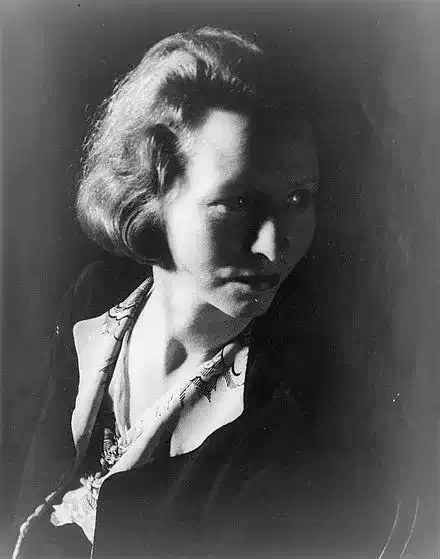
Edna St. Vincent Millay
The Singing-Woman From The Wood's Edge
What should I be but a prophet and a liar,
Whose mother was a leprechaun, whose father was a friar?
Teethed on a crucifix and cradled under water,
What should I be but the fiend's god-daughter?
And who should be my playmates but the adder and the frog,
That was got beneath a furze-bush and born in a bog?
And what should be my singing, that was christened at an altar,
But Aves and Credos and Psalms out of the Psalter?
You will see such webs on the wet grass, maybe,
As a pixie-mother weaves for her baby,
You will find such flame at the wave's weedy ebb
As flashes in the meshes of a mer-mother's web,
But there comes to birth no common spawn
From the love a a priest for a leprechaun,
And you never have seen and you never will see
Such things as the things that swaddled me!
After all's said and after all's done,
What should I be but a harlot and a nun?
In through the bushes, on any foggy day,
My Da would come a-swishing of the drops away,
With a prayer for my death and a groan for my birth,
A-mumbling of his beads for all that he was worth.
And there'd sit my Ma, with her knees beneath her chin,
A-looking in his face and a-drinking of it in,
And a-marking in the moss some funny little saying
That would mean just the opposite of all that he was praying!
He taught me the holy-talk of Vesper and of Matin,
He heard me my Greek and he heard me my Latin,
He blessed me and crossed me to keep my soul from evil,
And we watched him out of sight, and we conjured up the devil!
Oh, the things I haven't seen and the things I haven't known,
What with hedges and ditches till after I was grown,
And yanked both way by my mother and my father,
With a "Which would you better?" and a " Which would you
rather?"
With him for a sire and her for a dam,
What should I be but just what I am?
364
William Shakespeare
Sonnet 34: Why didst thou promise such a beauteous day
Why didst thou promise such a beauteous day
And make me travel forth without my cloak,
To let base clouds o'ertake me in my way,
Hiding thy brav'ry in their rotten smoke?
'Tis not enough that through the cloud thou break,
To dry the rain on my storm-beaten face,
For no man well of such a salve can speak
That heals the wound and cures not the disgrace.
Nor can thy shame give physic to my grief;
Though thou repent, yet I have still the loss.
Th' offender's sorrow lends but weak relief
To him that bears the strong offence's cross.
Ah, but those tears are pearl which thy love sheds,
And they are rich, and ransom all ill deeds.
363
Edna St. Vincent Millay
The Plaid Dress
Strong sun, that bleach
The curtains of my room, can you not render
Colourless this dress I wear?—
This violent plaid
Of purple angers and red shames; the yellow stripe
Of thin but valid treacheries; the flashy green of kind deeds done
Through indolence high judgments given here in haste;
The recurring checker of the serious breach of taste?
No more uncoloured than unmade,
I fear, can be this garment that I may not doff;
Confession does not strip it off,
To send me homeward eased and bare;
All through the formal, unoffending evening, under the clean
Bright hair,
Lining the subtle gown. . .it is not seen,
But it is there.
361
Ella Wheeler Wilcox
PH. Best & Co.'s Lager-Beer
In every part of the thrifty town,
Whether my course be up or down,
In lane, and alley, and avenue,
Painted in yellow, and red, and blue,
This side and that, east and west,
Was this flaunting sign-board of 'Ph. Best.'
'Twas hung high up, and swung in the air
With a swaggering, bold-faced, 'devil-may-care
It-
is-none-of-your-business' sort of way;
Or, as if dreading the light o' the day,
It hung low, over a basement-stair,
And seemed ashamed when you saw it there.
Or it shone like a wicked and evil eye
From a 'restaurant' door on passers-by,
And seemed with a twinkling wink to say:
'Are you bound for hell? Then step this way;
This is the ticket-office of sin;
If you think of purchasing, pray, walk in.'
Or it glared from a window where the light
Of the lamps within shone full and bright,
And seemed to be saying, 'Come out of the storm!
Come into my haven snug and warm;
I will give you warmth from the flowing bowl,
And all I ask is your purse and soul.'
But whether on window, door, or stair,
Wherever I went, it was always there;
Painted in yellow, and red, and blue,
It stared from alley and avenue:
It was north, and south, and east, and west,
The lager-beer of this Philip Best.
And who was Philip Best, you ask?
Oh! he was a man, whose noble task
Was the brewing of beer-good beer, first-class-
That should sparkle, and bubble, and boil in the glass:
Should sparkle and flow till drank, and then
Feast like a vampire on brains of men.
Ah! Philip Best, you have passed from view,
But your name and your works live after you.
Come, brothers, raise him a monument,
Inscribed, 'Here lies the man who sent
A million of souls to the depths of hell;
Turned genius and worth to the prison-cell;
Stole bread from the mouth of the hungry child:
Made the father a brute, and the mother wild;
Filled happy homes with dread unrest:
Oh! a very great man was Philip Best.
O Ph. Best! you have passed from view,
But your nameand your deeds live after you.'
356
William Shakespeare
Sonnet 117: Accuse me thus: that I have scanted all
Accuse me thus: that I have scanted all
Wherein I should your great deserts repay,
Forgot upon your dearest love to call,
Whereto all bonds do tie me day by day;
That I have frequent been with unknown minds
And given to time your own dear-purchased right
That I have hoisted sail to all the winds
Which should transport me farthest from your sight.
Book both my wilfulness and errors down
And on just proof surmise accumulate;
Bring me within the level of your frown,
But shoot not at me in your waken'd hate;
Since my appeal says I did strive to prove
The constancy and virtue of your love.
358
William Shakespeare
Sonnet 93: So shall I live, supposing thou art true
So shall I live, supposing thou art true,
Like a deceived husband; so love's face
May still seem love to me, though altered new;
Thy looks with me, thy heart in other place:
For there can live no hatred in thine eye,
Therefore in that I cannot know thy change.
In many's looks, the false heart's history
Is writ in moods, and frowns, and wrinkles strange.
But heaven in thy creation did decree
That in thy face sweet love should ever dwell;
Whate'er thy thoughts, or thy heart's workings be,
Thy looks should nothing thence, but sweetness tell.
How like Eve's apple doth thy beauty grow,
If thy sweet virtue answer not thy show!
354
John Donne
Elegy XII
COME Fates ; I fear you not ! All whom I owe
Are paid, but you ; then 'rest me ere I go.
But Chance from you all sovereignty hath got ;
Love woundeth none but those whom Death dares not ;
True if you were, and just in equity,
I should have vanquish'd her, as you did me ;
Else lovers should not brave Death's pains, and live ;
But 'tis a rule, “ Death comes not to relieve.”
Or, pale and wan Death's terrors, are they laid
So deep in lovers, they make Death afraid ?
Or—the least comfort—have I company ?
O'ercame she Fates, Love, Death, as well as me ?
Yes, Fates do silk unto her distaff pay,
For ransom, which tax they on us do lay.
Love gives her youth—which is the reason why
Youths, for her sake, some wither and some die.
Poor Death can nothing give ; yet, for her sake,
Still in her turn, he doth a lover take.
And if Death should prove false, she fears him not ;
Our Muses, to redeem her, she hath got.
That fatal night we last kiss'd, I thus pray'd,
—Or rather, thus despair'd, I should have said—
Kisses, and yet despair ! The forbid tree
Did promise (and deceive) no more than she.
Like lambs, that see their teats, and must eat hay,
A food, whose taste hath made me pine away.
Dives, when thou saw'st bliss, and craved'st to touch
A drop of water, thy great pains were such.
Here grief wants a fresh wit, for mine being spent,
And my sighs weary, groans are all my rent.
Unable longer to endure the pain,
They break like thunder, and do bring down rain.
Thus till dry tear solder my eye, I weep ;
And then, I dream, how you securely sleep,
And in your dreams do laugh at me. I hate,
And pray Love all may ; he pities my state,
But says, I therein no revenge shall find ;
The sun would shine, though all the world were blind.
Yet, to try my hate, Love show'd me your tear ;
And I had died, had not your smile been there.
Your frown undoes me ; your smile is my wealth ;
And as you please to look, I have my health.
Methought, Love pitying me, when he saw this,
Gave me your hands, the backs and palms to kiss.
That cured me not, but to bear pain gave strength ;
And what is lost in force, is took in length.
I call'd on Love again, who fear'd you so,
That his compassion still proved greater woe ;
For, then I dream'd I was in bed with you,
But durst not feel, for fear it should not be true.
This merits not your anger, had it been ;
The queen of chastity was naked seen ;
And in bed not to feel, the pain I took,
Was more than for Actæon not to look ;
And that breast which lay ope, I did not know,
But for the clearness, from a lump of snow ;
Nor that sweet teat which on the top it bore
From the rose-bud which for my sake you wore.
These griefs to issue forth, by verse I prove ;
Or turn their course by travel and new love.
All would not do ; the best at last I tried ;
Unable longer to hold out, I died.
And then I found I lost life, death by flying ;
Who hundreds live, are but so long in dying.
Charon did let me pass ; I'll him requite.
To mark the groves or shades wrongs my delight ;
I'll speak but of those ghosts I found alone,
Those thousand ghosts, whereof myself made one,
All images of thee ; I asked them why ?
The judge told me, all they for thee did die,
And therefore had for their Elysian bliss,
In one another their own loves to kiss.
O here I miss'd not blissh, but being dead ;
For lo ! I dreamt, I dreamt, and waking said,
“ Heaven, if who are in thee there must dwell,
How is't I now was there, and now I fell ?”
349
Edna St. Vincent Millay
Bluebeard
This door you might not open, and you did;
So enter now, and see for what slight thing
You are betrayed... Here is no treasure hid,
No cauldron, no clear crystal mirroring
The sought-for truth, no heads of women slain
For greed like yours, no writhings of distress,
But only what you see... Look yet again—
An empty room, cobwebbed and comfortless.
Yet this alone out of my life I kept
Unto myself, lest any know me quite;
And you did so profane me when you crept
Unto the threshold of this room to-night
That I must never more behold your face.
This now is yours. I seek another place.
349

Rudyard Kipling
The Ballad of Fisher's Boarding-House
That night, when through the mooring-chains
The wide-eyed corpse rolled free,
To blunder down by Garden Reach
And rot at Kedgeree,
The tale the Hughli told the shoal
The lean shoal told to me.
'T was Fultah Fisher's boarding-house,
Where sailor-men reside,
And there were men of all the ports
From Mississip to Clyde,
And regally they spat and smoked,
And fearsomely they lied.
They lied about the purple Sea
That gave them scanty bread,
They lied about the Earth beneath,
The Heavens overhead,
For they had looked too often on
Black rum when that was red.
They told their tales of wreck and wrong,
Of shame and lust and fraud,
They backed their toughest statements with
The Brimstone of the Lord,
And crackling oaths went to and fro
Across the fist-banged board.
And there was Hans the blue-eyed Dane,
Bull-throated, bare of arm,
Who carried on his hairy chest
The maid Ultruda's charm --
The little silver crucifix
That keeps a man from harm.
And there was Jake Withouth-the-Ears,
And Pamba the Malay,
And Carboy Gin the Guinea cook,
And Luz from Vigo Bay,
And Honest Jack who sold them slops
And harvested their pay.
And there was Salem Hardieker,
A lean Bostonian he --
Russ, German, English, Halfbreed, Finn,
Yank, Dane, and Portuguee,
At Fultah Fisher's boarding-house
The rested from the sea.
Now Anne of Austria shared their drinks,
Collinga knew her fame,
From Tarnau in Galicia
To Juan Bazaar she came,
To eat the bread of infamy
And take the wage of shame.
She held a dozen men to heel --
Rich spoil of war was hers,
In hose and gown and ring and chain,
From twenty mariners,
And, by Port Law, that week, men called
her Salem Hardieker's.
But seamen learnt -- what landsmen know --
That neither gifts nor gain
Can hold a winking Light o' Love
Or Fancy's flight restrain,
When Anne of Austria rolled her eyes
On Hans the blue-eyed Dane.
Since Life is strife, and strife means knife,
From Howrah to the Bay,
And he may die before the dawn
Who liquored out the day,
In Fultah Fisher's boarding-house
We woo while yet we may.
But cold was Hans the blue-eyed Dane,
Bull-throated, bare of arm,
And laughter shook the chest beneath
The maid Ultruda's charm --
The little silver crucifix
That keeps a man from harm.
"You speak to Salem Hardieker;
"You was his girl, I know.
"I ship mineselfs to-morrow, see,
"Und round the Skaw we go,
"South, down the Cattegat, by Hjelm,
"To Besser in Saro."
When love rejected turns to hate,
All ill betide the man.
"You speak to Salem Hardieker" --
She spoke as woman can.
A scream -- a sob -- "He called me -- names!"
And then the fray began.
An oath from Salem Hardieker,
A shriek upon the stairs,
A dance of shadows on the wall,
A knife-thrust unawares --
And Hans came down, as cattle drop,
Across the broken chairs.
. . . . . .
In Anne of Austria's trembling hands
The weary head fell low: --
"I ship mineselfs to-morrow, straight
"For Besser in Saro;
"Und there Ultruda comes to me
"At Easter, und I go
"South, down the Cattegat -- What's here?
"There -- are -- no -- lights -- to guide!"
The mutter ceased, the spirit passed,
And Anne of Austria cried
In Fultah Fisher's boarding-house
When Hans the mighty died.
Thus slew they Hans the blue-eyed Dane,
Bull-throated, bare of arm,
But Anne of Austria looted first
The maid Ultruda's charm --
The little silver crucifix
That keeps a man from harm.
349
William Shakespeare
Sonnet 89: Say that thou didst forsake me for some fault
Say that thou didst forsake me for some fault,
And I will comment upon that offence;
Speak of my lameness, and I straight will halt,
Against thy reasons making no defence.
Thou canst not, love, disgrace me half so ill,
To set a form upon desired change,
As I'll myself disgrace: knowing thy will,
I will acquaintance strangle and look strange,
Be absent from thy walks, and in my tongue
Thy sweet beloved name no more shall dwell,
Lest I, too much profane, should do it wrong
And haply of our old acquaintance tell.
For thee against myself I'll vow debate,
For I must ne'er love him whom thou dost hate.
345

Emily Dickinson
A Secret told
A Secret told-
Ceases to be a Secret-then-
A Secret-kept
That-
can appal but One-
Better of it-continual be afraid-
Than it-
And Whom you told it to-beside-
Ceases to be a Secret-then-
A Secret-kept
That-
can appal but One-
Better of it-continual be afraid-
Than it-
And Whom you told it to-beside-
342
William Shakespeare
Sonnet 151: Love is too young to know what conscience is
Love is too young to know what conscience is;
Yet who knows not conscience is born of love?
Then, gentle cheater, urge not my amiss,
Lest guilty of my faults thy sweet self prove.
For thou betraying me, I do betray
My nobler part to my gross body's treason;
My soul doth tell my body that he may
Triumph in love; flesh stays no farther reason,
But, rising at thy name, doth point out thee
As his triumphant prize. Proud of this pride,
He is contented thy poor drudge to be,
To stand in thy affairs, fall by thy side.
No want of conscience hold it that I call,
Her "love" for whose dear love I rise and fall.
342
William Shakespeare
Sonnet 147: My love is as a fever, longing still
My love is as a fever, longing still
For that which longer nurseth the disease,
Feeding on that which doth preserve the ill,
Th' uncertain sickly appetite to please.
My reason, the physician to my love,
Angry that his prescriptions are not kept,
Hath left me, and I desperate now approve
Desire is death, which physic did except.
Past cure I am, now reason is past care,
And frantic-mad with evermore unrest;
My thoughts and my discourse as mad men's are,
At random from the truth vainly expressed.
For I have sworn thee fair, and thought thee bright,
Who art as black as hell, as dark as night.
342
John Donne
A Jet Ring Sent
Thou art not so black as my heart,
Nor half so brittle as her heart, thou art ;
What would'st thou say ? shall both our properties by thee be spoke,
—Nothing more endless, nothing sooner broke?
Marriage rings are not of this stuff ;
Oh, why should ought less precious, or less tough
Figure our loves ? except in thy name thou have bid it say,
'—I'm cheap, and nought but fashion ; fling me away.'
Yet stay with me since thou art come,
Circle this finger's top, which didst her thumb ;
Be justly proud, and gladly safe, that thou dost dwell with me ;
She that, O ! broke her faith, would soon break thee.
343