
Betrayal and Disappointment
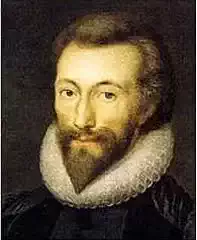
John Donne
Holy Sonnet II: As Due By Many Titles I Resign
As due by many titles I resign
My self to Thee, O God; first I was made
By Thee, and for Thee, and when I was decayed
Thy blood bought that, the which before was Thine;
I am Thy son, made with Thy Self to shine,
Thy servant, whose pains Thou hast still repaid,
Thy sheep, thine image, and, till I betrayed
My self, a temple of Thy Spirit divine;
Why doth the devil then usurp on me?
Why doth he steal, nay ravish that's thy right?
Except thou rise and for thine own work fight,
Oh I shall soon despair, when I do see
That thou lov'st mankind well, yet wilt not choose me,
And Satan hates me, yet is loth to lose me.
343

John Greenleaf Whittier
The Palatine
Leagues north, as fly the gull and auk,
Point Judith watches with eye of hawk;
Leagues south, thy beacon flames, Montauk!
Lonely and wind-shorn, wood-forsaken,
With never a tree for Spring to waken,
For tryst of lovers or farewells taken,
Circled by waters that never freeze,
Beaten by billow and swept by breeze,
Lieth the island of Manisees,
Set at the mouth of the Sound to hold
The coast lights up on its turret old,
Yellow with moss and sea-fog mould.
Dreary the land when gust and sleet
At its doors and windows howl and beat,
And Winter laughs at its fires of peat!
But in summer time, when pool and pond,
Held in the laps of valleys fond,
Are blue as the glimpses of sea beyond;
When the hills are sweet with the brier-rose,
And, hid in the warm, soft dells, unclose
Flowers the mainland rarely knows;
When boats to their morning fishing go,
And, held to the wind and slanting low,
Whitening and darkening the small sails show,-
Then is that lonely island fair;
And the pale health-seeker findeth there
The wine of life in its pleasant air.
No greener valleys the sun invite,
On smoother beaches no sea-birds light,
No blue waves shatter to foam more white!
There, circling ever their narrow range,
Quaint tradition and legend strange
Live on unchallenged, and know no change.
Old wives spinning their webs of tow,
Or rocking weirdly to and fro
In and out of the peat's dull glow,
And old men mending their nets of twine,
Talk together of dream and sign,
Talk of the lost ship Palatine,-
The ship that, a hundred years before,
Freighted deep with its goodly store,
In the gales of the equinox went ashore.
The eager islanders one by one
Counted the shots of her signal gun,
And heard the crash when she drove right on!
Into the teeth of death she sped
(May God forgive the hands that fed
The false lights over the rocky Head!)
O men and brothers! what sights were there!
White upturned faces, hands stretched in prayer!
Where waves had pity, could ye not spare?
Down swooped the wreckers, like birds of prey
Tearing the heart of the ship away,
And the dead had never a word to say.
And then, with ghastly shimmer and shine
Over the rocks and the seething brine,
They burned the wreck of the Palatine.
In their cruel hearts, as they homeward sped,
'The sea and the rocks are dumb,' they said
'There 'll be no reckoning with the dead.'
But the year went round, and when once more
Along their foam-white curves of shore
They heard the line-storm rave and roar,
Behold! again, with shimmer and shine,
Over the rocks and the seething brine,
The flaming wreck of the Palatine!
So, haply in fitter words than these,
Mending their nets on their patient knees
They tell the legend of Manisees.
Nor looks nor tones a doubt betray;
'It is known to us all,' they quietly say;
'We too have seen it in our day.'
Is there, then, no death for a word once spoken?
Was never a deed but left its token
Written on tables never broken?
Do the elements subtle reflections give?
Do pictures of all the ages live
On Nature's infinite negative,
Which, half in sport, in malice half,
She shows at times, with shudder or laugh,
Phantom and shadow in photograph?
For still, on many a moonless night,
From Kingston Head and from Montauk light
The spectre kindles and burns in sight.
Now low and dim, now clear and higher,
Leaps up the terrible Ghost of Fire,
Then, slowly sinking, the flames expire.
And the wise Sound skippers, though skies be fine,
Reef their sails when they see the sign
Of the blazing wreck of the Palatine!
. . . . .
'A fitter tale to scream than sing,'
The Book-man said. 'Well, fancy, then,'
The Reader answered, 'on the wing
The sea-birds shriek it, not for men,
But in the ear of wave and breeze!'
The Traveller mused: 'Your Manisees
Is fairy-land: off Narragansett shore
Who ever saw the isle or heard its name before?
''T is some strange land of Flyaway,
Whose dreamy shore the ship beguiles,
St. Brandan's in its sea-mist gray,
Or sunset loom of Fortunate Isles!'
'No ghost, but solid turf and rock
Is the good island known as Block,'
The Reader said. 'For beauty and for ease
I chose its Indian name, soft-flowing Manisees!
'But let it pass; here is a bit
Of unrhymed story, with a hint
Of the old preaching mood in it,
The sort of sidelong moral squint
Our friend objects to, which has grown,
I fear, a habit of my own.
'Twas written when the Asian plague drew near,
And the land held its breath and paled with sudden fear.'
338

Anonymous
The Braes o'Yarrow
Late at e'en, drinking the wine,
And ere they paid the lawing,
They set a combat them between,
To fight it in the dawing.
'What though ye be my sister's lord
We'll cross our swords to-morrow.'
'What though my wife your sister be,
I'll meet ye then on Yarrow.'
'O stay at hame, my ain gude lord!
O stay, my ain dear marrow!
My cruel brither will you betray
On the dowie banks of Yarrow.'
'O fare ye weel, my lady dear!
And put aside your sorrow;
For if I gae, I'll sune return
Frae the bonny banks o' Yarrow.'
She kiss'd his cheek, she kaimed his hair,
As oft she'd done before, O;
She belted him with his gude brand,
And he's awa' to Yarrow.
When he gaed up the Tennies bank,
As he gaed mony a morrow,
Nine armed men lay in a den
On the dowie braes o' Yarrow.
'O come ye here to hunt or hawk
The bonny Forest thorough?
Or come ye here to wield your brand
Upon the banks o' Yarrow?'
'I come not here to hunt or hawk
As oft I've dune before, O,
But I come here to wield my brand
Upon the banks o' Yarrow.
'If ye attack me nine to ane,
That God may send ye sorrow!--
Yet will I fight while stand I may,
On the bonny banks o' Yarrow.'
Two has he hurt, and three has slain,
On the bloody braes o' Yarrow;
But the stubborn knight crept in behind,
And pierced his body thorough.
'Gae hame, gae hame, you brither John,
And tell your sister sorrow,--
To come and lift her leafu' lord
On the dowie banks o' Yarrow.'
Her brither John gaed ower the hill,
As oft he'd dune before, O;
There he met his sister dear,
Cam' rinnin' fast to Yarrow.
'I dreamt a dream last night,' she says,
'I wish it binna sorrow;
I dreamt I pu'd the heather green
Wi' my true love on Yarrow.'
'I'll read your dream, sister,' he says,
'I'll read it into sorrow;
Ye're bidden go take up your love,
He's sleeping sound on Yarrow.'
She's torn the ribbons frae her head
That were baith braid and narrow;
She's kilted up her lang claithing,
And she's awa' to Yarrow.
She's ta'en him in her arms twa,
And gi'en him kisses thorough;
She sought to bind his many wounds,
But he lay dead on Yarrow.
'O haud your tongue,' her father says,
'And let be a' your sorrow;
I'll wed you to a better lord
Than him you lost on Yarrow.'
'O haud your tongue, father,' she says,
'Far warse ye make my sorrow;
A better lord could never be
Than him that lies on Yarrow.'
She kiss'd his lips, she kaimed his hair,
As aft she'd dune before, O;
And there with grief her heart did break
Upon the banks o' Yarrow.
335
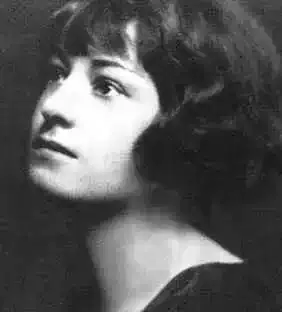
Dorothy Parker
Second Love
"So surely is she mine," you say, and turn
Your quick and steady mind to harder things-
To bills and bonds and talk of what men earn-
And whistle up the stair, of evenings.
And do you see a dream behind my eyes,
Or ask a simple question twice of me"
Thus women are," you say; for men are wise
And tolerant, in their security.
How shall I count the midnights I have known
When calm you turn to me, nor feel me start,
To find my easy lips upon your own
And know my breast beneath your rhythmic heart.
Your god defer the day I tell you this:
My lad, my lad, it is not you I kiss!
337
Henry Van Dyke
Hudson's Last Voyage
June 22, 1611
THE SHALLOP ON HUDSON BAY
One sail in sight upon the lonely sea
And only one, God knows! For never ship
But mine broke through the icy gates that guard
These waters, greater grown than any since
We left the shores of England. We were first,
My men, to battle in between the bergs
And floes to these wide waves. This gulf is mine;
I name it! and that flying sail is mine!
And there, hull-down below that flying sail,
The ship that staggers home is mine, mine, mine!
My ship Discoverie!
The sullen dogs
Of mutineers, the bitches' whelps that snatched
Their food and bit the hand that nourished them,
Have stolen her. You ingrate Henry Greene,
I picked you from the gutter of Houndsditch,
And paid your debts, and kept you in my house,
And brought you here to make a man of you!
You Robert Juet, ancient, crafty man,
Toothless and tremulous, how many times
Have I employed you as a master's mate
To give you bread? And you Abacuck Prickett,
You sailor-clerk, you salted puritan,
You knew the plot and silently agreed,
Salving your conscience with a pious lie!
Yes, all of you -- hounds, rebels, thieves! Bring back
My ship!
Too late, -- I rave, -- they cannot hear
My voice: and if they heard, a drunken laugh
Would be their answer; for their minds have caught
The fatal firmness of the fool's resolve,
That looks like courage but is only fear.
They'll blunder on, and lose my ship, and drown, --
Or blunder home to England and be hanged.
Their skeletons will rattle in the chains
Of some tall gibbet on the Channel cliffs,
While passing mariners look up and say:
"Those are the rotten bones of Hudson's men
"Who left their captain in the frozen North!"
O God of justice, why hast Thou ordained
Plans of the wise and actions of the brave
Dependent on the aid of fools and cowards?
Look, -- there she goes, -- her topsails in the sun
Gleam from the ragged ocean edge, and drop
Clean out of sight! So let the traitors go
Clean out of mind! We'll think of braver things!
Come closer in the boat, my friends. John King,
You take the tiller, keep her head nor'west.
You Philip Staffe, the only one who chose
Freely to share our little shallop's fate,
Rather than travel in the hell-bound ship, --
Too good an English seaman to desert
These crippled comrades, -- try to make them rest
More easy on the thwarts. And John, my son,
My little shipmate, come and lean your head
Against your father's knee. Do you recall
That April morn in Ethelburga's church,
Five years ago, when side by side we kneeled
To take the sacrament with all our men,
Before the Hopewell left St. Catherine's docks
On our first voyage? It was then I vowed
My sailor-soul and years to search the sea
Until we found the water-path that leads
From Europe into Asia.
I believe
That God has poured the ocean round His world,
Not to divide, but to unite the lands.
And all the English captains that have dared
In little ships to plough uncharted waves, --
Davis and Drake, Hawkins and Frobisher,
Raleigh and Gilbert, -- all the other names, --
Are written in the chivalry of God
As men who served His purpose. I would claim
A place among that knighthood of the sea;
And I have earned it, though my quest should fail!
For, mark me well, the honour of our life
Derives from this: to have a certain aim
Before us always, which our will must seek
Amid the peril of uncertain ways.
Then, though we miss the goal, our search is crowned
With courage, and we find along our path
A rich reward of unexpected things.
Press towards the aim: take fortune as it fares!
I know not why, but something in my heart
Has always whispered, "Westward seek your goal!"
Three times they sent me east, but still I turned
The bowsprit west, and felt among the floes
Of ruttling ice along the Gröneland coast,
And down the rugged shore of Newfoundland,
And past the rocky capes and wooded bays
Where Gosnold sailed, -- like one who feels his way
With outstretched hand across a darkened room, --
I groped among the inlets and the isles,
To find the passage to the Land of Spice.
I have not found it yet, -- but I have found
Things worth the finding!
Son, have you forgot
Those mellow autumn days, two years ago,
When first we sent our little ship Half-Moon, --
The flag of Holland floating at her peak, --
Across a sandy bar, and sounded in
Among the channels, to a goodly bay
Where all the navies of the world could ride?
A fertile island that the redmen called
Manhattan, lay above the bay: the land
Around was bountiful and friendly fair.
But never land was fair enough to hold
The seaman from the calling of the sea.
And so we bore to westward of the isle,
Along a mighty inlet, where the tide
Was troubled by a downward-flowing flood
That seemed to come from far away, -- perhaps
From some mysterious gulf of Tartary?
Inland we held our course; by palisades
Of naked rock where giants might have built
Their fortress; and by rolling hills adorned
With forests rich in timber for great ships;
Through narrows where the mountains shut us in
With frowning cliffs that seemed to bar the stream;
And then through open reaches where the banks
Sloped to the water gently, with their fields
Of corn and lentils smiling in the sun.
Ten days we voyaged through that placid land,
Until we came to shoals, and sent a boat
Upstream to find, -- what I already knew, --
We travelled on a river, not a strait.
But what a river! God has never poured
A stream more royal through a land more rich.
Even now I see it flowing in my dream,
While coming ages people it with men
Of manhood equal to the river's pride.
I see the wigwams of the redmen changed
To ample houses, and the tiny plots
Of maize and green tobacco broadened out
To prosperous farms, that spread o'er hill and dale
The many-coloured mantle of their crops;
I see the terraced vineyard on the slope
Where now the fox-grape loops its tangled vine;
And cattle feeding where the red deer roam;
And wild-bees gathered into busy hives,
To store the silver comb with golden sweet;
And all the promised land begins to flow
With milk and honey. Stately manors rise
Along the banks, and castles top the hills,
And little villages grow populous with trade,
Until the river runs as proudly as the Rhine, --
The thread that links a hundred towns and towers!
And looking deeper in my dream, I see
A mighty city covering the isle
They call Manhattan, equal in her state
To all the older capitals of earth, --
The gateway city of a golden world, --
A city girt with masts, and crowned with spires,
And swarming with a host of busy men,
While to her open door across the bay
The ships of all the nations flock like doves.
My name will be remembered there, for men
Will say, "This river and this isle were found
By Henry Hudson, on his way to seek
The Northwest Passage into Farthest Inde."
Yes! yes! I sought it then, I seek it still, --
My great adventure and my guiding star!
For look ye, friends, our voyage is not done;
We hold by hope as long as life endures!
Somewhere among these floating fields of ice,
Somewhere along this westward widening bay,
Somewhere beneath this luminous northern night,
The channel opens to the Orient, --
I know it, -- and some day a little ship
Will push her bowsprit in, and battle through!
And why not ours, -- to-morrow, -- who can tell?
The lucky chance awaits the fearless heart!
These are the longest days of all the year;
The world is round and God is everywhere,
And while our shallop floats we still can steer.
So point her up, John King, nor'west by north.
We 'l1 keep the honour of a certain aim
Amid the peril of uncertain ways,
And sail ahead, and leave the rest to God.
333

Emily Dickinson
I never told the buried gold
I never told the buried gold
Upon the hill-that lies-
I saw the sun-his plunder done
Crouch low to guard his prize.
He stood as near
As stood you here-
A pace had been between-
Did but a snake bisect the brake
My life had forfeit been.
That was a wondrous booty-
I hope 'twas honest gained.
Those were the fairest ingots
That ever kissed the spade!
Whether to keep the secret-
Whether to reveal-
Whether as I ponder
Kidd will sudden sail-
Could a shrewd advise me
We might e'en divide-
Should a shrewd betray me-
Atropos decide!
328
John Donne
The Will
Before I sigh my last gasp, let me breathe,
Great Love, some legacies ; I here bequeath
Mine eyes to Argus, if mine eyes can see ;
If they be blind, then, Love, I give them thee ;
My tongue to Fame ; to ambassadors mine ears ;
To women, or the sea, my tears ;
Thou, Love, hast taught me heretofore
By making me serve her who had twenty more,
That I should give to none, but such as had too much before.
My constancy I to the planets give ;
My truth to them who at the court do live ;
My ingenuity and openness,
To Jesuits ; to buffoons my pensiveness ;
My silence to any, who abroad hath been ;
My money to a Capuchin :
Thou, Love, taught'st me, by appointing me
To love there, where no love received can be,
Only to give to such as have an incapacity.
My faith I give to Roman Catholics ;
All my good works unto the Schismatics
Of Amsterdam ; my best civility
And courtship to an University ;
My modesty I give to soldiers bare ;
My patience let gamesters share :
Thou, Love, taught'st me, by making me
Love her that holds my love disparity,
Only to give to those that count my gifts indignity.
I give my reputation to those
Which were my friends ; mine industry to foes ;
To schoolmen I bequeath my doubtfulness ;
My sickness to physicians, or excess ;
To nature all that I in rhyme have writ ;
And to my company my wit :
Thou, Love, by making me adore
Her, who begot this love in me before,
Taught'st me to make, as though I gave, when I do but restore.
To him for whom the passing-bell next tolls,
I give my physic books ; my written rolls
Of moral counsels I to Bedlam give ;
My brazen medals unto them which live
In want of bread ; to them which pass among
All foreigners, mine English tongue :
Though, Love, by making me love one
Who thinks her friendship a fit portion
For younger lovers, dost my gifts thus disproportion.
Therefore I'll give no more, but I'll undo
The world by dying, because love dies too.
Then all your beauties will be no more worth
Than gold in mines, where none doth draw it forth ;
And all your graces no more use shall have,
Than a sun-dial in a grave :
Thou, Love, taught'st me by making me
Love her who doth neglect both me and thee,
To invent, and practise this one way, to annihilate all three.
324
Dorothy Parker
Social Note
Lady, lady, should you meet
One whose ways are all discreet,
One who murmurs that his wife
Is the lodestar of his life,
One who keeps assuring you
That he never was untrue,
Never loved another one . . .
Lady, lady, better run!
One whose ways are all discreet,
One who murmurs that his wife
Is the lodestar of his life,
One who keeps assuring you
That he never was untrue,
Never loved another one . . .
Lady, lady, better run!
322

Spike Milligan
Feelings
There must be a wound!
No one can be this hurt
and not bleed.
How could she injure me so?
No marks
No bruise
Worse!
People say 'My, you're looking well'
.....God help me!
She's mummified me -
ALIVE!
No one can be this hurt
and not bleed.
How could she injure me so?
No marks
No bruise
Worse!
People say 'My, you're looking well'
.....God help me!
She's mummified me -
ALIVE!
317
John Donne
Mercurius Gallo-Belgicus
Like Esop's fellow-slaves, O Mercury,
Which could do all things, thy faith is ; and I
Like Esop's self, which nothing. I confess
I should have had more faith, if thou hadst less.
Thy credit lost thy credit. 'Tis sin to do,
In this case, as thou wouldst be done unto,
To believe all. Change thy name ; thou art like
Mercury in stealing, but liest like a Greek.
316

James Whitcomb Riley
Down On Wriggle Crick
'Best time to kill a hog's when he's fat.' --Old Saw.
Mostly folks is law-abidin'
Down on Wriggle Crick--,
Seein' they's no Squire residin'
In our bailywick;
No grand juries, no suppeenies,
Ner no vested rights to pick
Out yer man, jerk up and jail ef
He's outragin' Wriggle Crick!
Wriggle Crick hain't got no lawin',
Ner no suits to beat;
Ner no court-house gee-and-hawin'
Like a County-seat;
Hain't no waitin' round fer verdick,
Ner non-gittin' witness-fees;
Ner no thiefs 'at gits 'new heain's,'
By some lawyer slick as grease!
Wriggle Cricks's leadin' spirit
Is old Johnts Culwell--,
Keeps post-office, and right near it
Owns what's called 'The Grand Hotel--'
(Warehouse now--) buys wheat and ships it;
Gits out ties, and trades in stock,
And knows all the high-toned drummers
'Twixt South Bend and Mishawauk'
Last year comes along a feller--
Sharper 'an a lance-Stovepipe-
hat and silk umbreller,
And a boughten all-wool pants--,
Tinkerin of clocks and watches:
Says a trial's all he wants--
And rents out the tavern-office
Next to Uncle Johnts.
Well--. He tacked up his k'dentials,
And got down to biz--.
Captured Johnts by cuttin' stenchils
Fer them old wheat-sacks o' his--.
Fixed his clock, in the post-office--
Painted fer him, clean and slick,
'Crost his safe, in gold-leaf letters,
'J. Culwells's Wriggle Crick.'
Any kindo' job you keered to
Resk him with, and bring,
He'd fix fer you-- jest appeared to
Turn his hand to anything--!
Rings, er earbobs, er umbrellers--
Glue a cheer er chany doll--,
W'y, of all the beatin' fellers,
He Jest beat 'em all!
Made his friends, but wouldn't stop there--,
One mistake he learnt,
That was, sleepin' in his shop there--.
And one Sund'y night it burnt!
Come in one o' jest a-sweepin'
All the whole town high and dry--
And that feller, when they waked him,
Suffocatin', mighty nigh!
Johnts he drug him from the buildin',
He'pless-- 'peared to be--,
And the women and the childern
Drenchin' him with sympathy!
But I noticed Johnts helt on him
With a' extry lovin' grip,
And the men-folks gethered round him
In most warmest pardership!
That's the whole mess, grease-and-dopin'!
Johnt's safe was saved--,
But the lock was found sprung open,
And the inside caved.
Was no trial-- ner no jury--
Ner no jedge ner court-house-click--.
Circumstances alters cases
Down on Wriggle Crick!
315

William Butler Yeats
On Those That Hated 'The Playboy Of The Western World'
ONCE, when midnight smote the air,
Eunuchs ran through Hell and met
On every crowded street to stare
Upon great Juan riding by:
Even like these to rail and sweat
Staring upon his sinewy thigh.
Eunuchs ran through Hell and met
On every crowded street to stare
Upon great Juan riding by:
Even like these to rail and sweat
Staring upon his sinewy thigh.
315

Henry Lawson
The Ghost
Down the street as I was drifting with the city's human tide,
Came a ghost, and for a moment walked in silence by my side --
Now my heart was hard and bitter, and a bitter spirit he,
So I felt no great aversion to his ghostly company.
Said the Shade: `At finer feelings let your lip in scorn be curled,
`Self and Pelf', my friend, has ever been the motto for the world.'
And he said: `If you'd be happy, you must clip your fancy's wings,
Stretch your conscience at the edges to the size of earthly things;
Never fight another's battle, for a friend can never know
When he'll gladly fly for succour to the bosom of the foe.
At the power of truth and friendship let your lip in scorn be curled -`
Self and Pelf', my friend, remember, is the motto of the world.
`Where Society is mighty, always truckle to her rule;
Never send an `i' undotted to the teacher of a school;
Only fight a wrong or falsehood when the crowd is at your back,
And, till Charity repay you, shut the purse, and let her pack;
At the fools who would do other let your lip in scorn be curled,
`Self and Pelf', my friend, remember, that's the motto of the world.
`Ne'er assail the shaky ladders Fame has from her niches hung,
Lest unfriendly heels above you grind your fingers from the rung;
Or the fools who idle under, envious of your fair renown,
Heedless of the pain you suffer, do their worst to shake you down.
At the praise of men, or censure, let your lip in scorn be curled,
`Self and Pelf', my friend, remember, is the motto of the world.
`Flowing founts of inspiration leave their sources parched and dry,
Scalding tears of indignation sear the hearts that beat too high;
Chilly waters thrown upon it drown the fire that's in the bard;
And the banter of the critic hurts his heart till it grows hard.
At the fame your muse may offer let your lip in scorn be curled,
`Self and Pelf', my friend, remember, that's the motto of the world.
`Shun the fields of love, where lightly, to a low and mocking tune,
Strong and useful lives are ruined, and the broken hearts are strewn.
Not a farthing is the value of the honest love you hold;
Call it lust, and make it serve you! Set your heart on nought but gold.
At the bliss of purer passions let your lip in scorn be curled -`
Self and Pelf', my friend, shall ever be the motto of the world.'
Then he ceased and looked intently in my face, and nearer drew;
But a sudden deep repugnance to his presence thrilled me through;
Then I saw his face was cruel, by the look that o'er it stole,
Then I felt his breath was poison, by the shuddering of my soul,
Then I guessed his purpose evil, by his lip in sneering curled,
And I knew he slandered mankind, by my knowledge of the world.
But he vanished as a purer brighter presence gained my side -`
Heed him not! there's truth and friendship
in this wondrous world,' she cried,
And of those who cleave to virtue in their climbing for renown,
Only they who faint or falter from the height are shaken down.
At a cynic's baneful teaching let your lip in scorn be curled!
`Brotherhood and Love and Honour!' is the motto for the world.'
311
John Donne
Elegy VI
Oh, let me not serve so, as those men serve
Whom honour's smokes at once fatten and starve;
Poorly enrich't with great men's words or looks;
Nor so write my name in thy loving books
As those idolatrous flatterers, which still
Their Prince's styles, with many realms fulfil
Whence they no tribute have, and where no sway.
Such services I offer as shall pay
Themselves, I hate dead names: Oh then let me
Favourite in Ordinary, or no favourite be.
When my soul was in her own body sheathed,
Nor yet by oaths betrothed, nor kisses breathed
Into my Purgatory, faithless thee,
Thy heart seemed wax, and steel thy constancy:
So, careless flowers strowed on the waters face
The curled whirlpools suck, smack, and embrace,
Yet drown them; so, the taper's beamy eye
Amorously twinkling beckons the giddy fly,
Yet burns his wings; and such the devil is,
Scarce visiting them who are entirely his.
When I behold a stream which, from the spring,
Doth with doubtful melodious murmuring,
Or in a speechless slumber, calmly ride
Her wedded channels' bosom, and then chide
And bend her brows, and swell if any bough
Do but stoop down, or kiss her upmost brow:
Yet, if her often gnawing kisses win
The traiterous bank to gape, and let her in,
She rusheth violently, and doth divorce
Her from her native, and her long-kept course,
And roars, and braves it, and in gallant scorn,
In flattering eddies promising retorn,
She flouts the channel, who thenceforth is dry;
Then say I, That is she, and this am I.
Yet let not thy deep bitterness beget
Careless despair in me, for that will whet
My mind to scorn; and Oh, love dulled with pain
Was ne'er so wise, nor well armed as disdain.
Then with new eyes I shall survey thee, and spy
Death in thy cheeks, and darkness in thine eye.
Though hope bred faith and love: thus taught, I shall,
As nations do from Rome, from thy love fall.
My hate shall outgrow thine, and utterly
I will renounce thy dalliance: and when I
Am the recusant, in that resolute state,
What hurts it me to be excommunicate?
308

Henry Wadsworth Longfellow
The Saga of King Olaf: III. Thora Of Rimol
'Thora of Rimol! hide me! hide me!
Danger and shame and death betide me!
For Olaf the King is hunting me down
Through field and forest, through thorp and town!'
Thus cried Jarl Hakon
To Thora, the fairest of women.
?Hakon Jarl! for the love I bear thee
Neither shall shame nor death come near thee!
But the hiding-place wherein thou must lie
Is the cave underneath the swine in the sty.'
Thus to Jarl Hakon
Said Thora, the fairest of women.
So Hakon Jarl and his base thrall Karker
Crouched in the cave, than a dungeon darker,
As Olaf came riding, with men in mail,
Through the forest roads into Orkadale,
Demanding Jarl Hakon
Of Thorn, the fairest of women.
'Rich and honored shall be whoever
The head of Hakon Jarl shall dissever!'
Hakon heard him, and Karker the slave,
Through the breathing-holes of the darksome cave.
Alone in her chamber
Wept Thora, the fairest of women.
Said Karker, the crafty, 'I will not slay thee!
For all the king's gold I will never betray thee!'
'Then why dost thou turn so pale, O churl,
And then again black as the earth?' said the Earl.
More pale and more faithful
Was Thora, the fairest of women.
From a dream in the night the thrall started, saying,
'Round my neck a gold ring King Olaf was laying!'
And Hakon answered, 'Beware of the king!
He will lay round thy neck a blood-red ring.'
At the ring on her finger
Gazed Thora, the fairest of women.
At daybreak slept Hakon, with sorrows encumbered,
But screamed and drew up his feet as he slumbered;
The thrall in the darkness plunged with his knife,
And the Earl awakened no more in this life.
But wakeful and weeping
Sat Thora, the fairest of women.
At Nidarholm the priests are all singing,
Two ghastly heads on the gibbet are swinging;
One is Jarl Hakon's and one is his thrall's,
And the people are shouting from windows and walls;
While alone in her chamber
Swoons Thora, the fairest of women.
308
Anonymous
Edward, Edward
'WHY does your brand sae drop wi' blude,
Edward, Edward?
Why does your brand sae drop wi' blude,
And why sae sad gang ye, O?'
'O I hae kill'd my hawk sae gude,
Mither, mither;
O I hae kill'd my hawk sae gude,
And I had nae mair but he, O.'
'Your hawk's blude was never sae red,
Edward, Edward;
Your hawk's blude was never sae red,
My dear son, I tell thee, O.'
'O I hae kill'd my red-roan steed,
Mither, mither;
O I hae kill'd my red-roan steed,
That erst was sae fair and free, O.'
'Your steed was auld, and ye hae got mair,
Edward, Edward;
Your steed was auld, and ye hae got mair;
Some other dule ye dree, O.'
'O I hae kill'd my father dear,
Mither, mither;
O I hae kill'd my father dear,
Alas, and wae is me, O!'
'And whatten penance will ye dree for that,
Edward, Edward?
Whatten penance will ye dree for that?
My dear son, now tell me, O.'
'I'll set my feet in yonder boat,
Mither, mither;
I'll set my feet in yonder boat,
And I'll fare over the sea, O.'
'And what will ye do wi' your tow'rs and your ha',
Edward, Edward?
And what will ye do wi' your tow'rs and your ha',
That were sae fair to see, O?'
'I'll let them stand till they doun fa',
Mither, mither;
I'll let them stand till they doun fa',
For here never mair maun I be, O.'
'And what will ye leave to your bairns and your wife,
Edward, Edward?
And what will ye leave to your bairns and your wife,
When ye gang owre the sea, O?'
'The warld's room: let them beg through life,
Mither, mither;
The warld's room: let them beg through life;
For them never mair will I see, O.'
'And what will ye leave to your ain mither dear,
Edward, Edward?
And what will ye leave to your ain mither dear,
My dear son, now tell me, O?'
'The curse of hell frae me sall ye bear,
Mither, mither;
The curse of hell frae me sall ye bear:
Sic counsels ye gave to me, O!'
Edward, Edward?
Why does your brand sae drop wi' blude,
And why sae sad gang ye, O?'
'O I hae kill'd my hawk sae gude,
Mither, mither;
O I hae kill'd my hawk sae gude,
And I had nae mair but he, O.'
'Your hawk's blude was never sae red,
Edward, Edward;
Your hawk's blude was never sae red,
My dear son, I tell thee, O.'
'O I hae kill'd my red-roan steed,
Mither, mither;
O I hae kill'd my red-roan steed,
That erst was sae fair and free, O.'
'Your steed was auld, and ye hae got mair,
Edward, Edward;
Your steed was auld, and ye hae got mair;
Some other dule ye dree, O.'
'O I hae kill'd my father dear,
Mither, mither;
O I hae kill'd my father dear,
Alas, and wae is me, O!'
'And whatten penance will ye dree for that,
Edward, Edward?
Whatten penance will ye dree for that?
My dear son, now tell me, O.'
'I'll set my feet in yonder boat,
Mither, mither;
I'll set my feet in yonder boat,
And I'll fare over the sea, O.'
'And what will ye do wi' your tow'rs and your ha',
Edward, Edward?
And what will ye do wi' your tow'rs and your ha',
That were sae fair to see, O?'
'I'll let them stand till they doun fa',
Mither, mither;
I'll let them stand till they doun fa',
For here never mair maun I be, O.'
'And what will ye leave to your bairns and your wife,
Edward, Edward?
And what will ye leave to your bairns and your wife,
When ye gang owre the sea, O?'
'The warld's room: let them beg through life,
Mither, mither;
The warld's room: let them beg through life;
For them never mair will I see, O.'
'And what will ye leave to your ain mither dear,
Edward, Edward?
And what will ye leave to your ain mither dear,
My dear son, now tell me, O?'
'The curse of hell frae me sall ye bear,
Mither, mither;
The curse of hell frae me sall ye bear:
Sic counsels ye gave to me, O!'
307
Emily Dickinson
I cautious, scanned my little life
I cautious, scanned my little life-
I winnowed what would fade
From what would last till Heads like mine
Should be a-dreaming laid.
I put the latter in a Barn-
The former, blew away.
I went one winter morning
And lo - my priceless Hay
Was not upon the "Scaffold"-
Was not upon the "Beam"-
And from a thriving Farmer-
A Cynic, I became.
Whether a Thief did it-
Whether it was the wind-
Whether Deity's guiltless-
My business is, to find!
So I begin to ransack!
How is it Hearts, with Thee?
Art thou within the little Barn
Love provided Thee?
303
Henry Lawson
The Cab Lamps
The crescent moon and clock tower are fair above the wall
Across the smothered lanes of ’Loo, the stifled vice and all,
And in the shadow yonder—like cats that wait for scraps—
The crowding cabs seem waiting—for you and me, perhaps.
The cab lamps are watching as they watched for you and me,
The cab lamps are a-watching and they watch unblinkingly.
The sea breeze in Macleay Street and star-angels over all,
But the slinking cabs of darkness keep their watch beside the wall.
Oh! the years we slipped like months—and the months like a day—
When our cabs slid from the stand—touched the kerb and sped away—
Oh! the cloak on girlish shoulders—Oh! the theatres and light!
And the private rooms and supper that were all in a night!
Oh! the rickshaw in Colombo! And the flat that no one knew,
Where the cab lamps watched Haymarket—London cabs for me and you.
Oh! the gay run “Home” by Paris when the world was ours to play
And the wild run back by Frisco that seems all in a day.
Oh! the cab lamps and rose curtains, when the lie called love seemed true,
While an honest wife and husband suffered by the lanes of ’Loo.
Oh! the health and strength and beauty and the money with its power—
And those two good lives we ruined that was all in an hour.
But the night policeman’s coming with a sharp suspicious eye,
And he’d shift us “quick and lively” to the sweet by and by.
So we’ll seek our frowsy bedroom, if the old hag lets us through—
Where our folks died broken-hearted in the cruel lanes of ’Loo.
The cab lamps are watching as they watched across the sea,
The cab lamps are watching, and they watch for you and me.
For you and me they waited, when the thing called love seemed true,
But the bull’s-eye of our midnight must not flash on me—and you.
301
Anonymous
Frankie and Johnnie
Frankie and Johnnie were lovers,
O, my Gawd, how they could love,
They swore to be true to each other,
As true as the stars above;
He was her man, but he done her wrong.
Frankie was a good woman,
As everybody knows,
Gave her man a hundred dollars,
To get him a suit of clothes;
He was her man, but he done her wrong.
Frankie and Johnnie went walking,
Johnnie in his bran' new suit,
"Oh, my Gawd," said Frankie,
"But don't my Johnnie look cute?"
He was her man, but he done her wrong.
Frankie went down to Memphis,
Went on the morning train,
Paid a hundred dollars,
Got Johnnie a watch and chain;
He was her man, but he done her wrong.
Frankie lived in a crib-house,
Crib-house with only two doors,
Gave her money to Johnnie,
He spent it on those parlour whores;
He was her man, but he done her wrong.
Frankie went down to the corner,
Went for a bucket of beer,
She said, "Oh, Mr. Bar-tender,
Has my loving Johnnie been here?
He is my man, and he's done me wrong."
"I won't make you no trouble,
I won't tell you no lie,
But I saw Johnnie an hour ago
With a girl named Nellie Bly;
He is your man, and he's doing you wrong."
Frankie went to the hock-shop,
Bought her a big forty-four,
Aimed that gun at the ceiling,
Shot a big hole in the floor;
"Now where's my man that's doing me wrong?"
Frankie went down to the hook-shop,
Looked in at a window so high,
There she saw her Johnnie,
Loving up Nellie Bly,
He was her man, but he done her wrong.
Frankie went up to the front door,
She rang the front-door bell,
Said, "Stand back, all you chippies,
Or I'll blow you all to hell;
I want my man, who's done me wrong."
Frankie went into the hook-shop,
She didn't go there for fun,
'Cause underneath her kimona
She toted that forty-four gun;
He was her man, but he done her wrong.
Frankie looked in at the keyhole,
And there before her eye,
She saw her Johnnie on the sofa,
A loving up Nellie Bly;
He was her man, but he done her wrong.
Frankie threw back her kimona,
Took out the little forty-four,
Roota-toot-toot, three times she shoot,
Right through that hardwood door;
He was her man, but he done her wrong.
Johnnie grabbed off his Stetson,
Said, "Oh, Gawd, Frankie, don't shoot!"
But she pressed hard on the trigger,
And the gun went roota-toot-toot;
He was her man, but he done her wrong.
"Roll me over easy,
Oh, roll me over slow,
Roll me over on my right side,
'Cause my left side hurts me so."
He was her man, but he done her wrong.
"Bring out your rubber-tyred buggy,
Bring out your rubber-tyred hack,
I'll take my man to the graveyard,
But I won't bring him back;
He was my man, but he done me wrong."
They brought out the rubber-tyred hearses,
They brought out the rubber-tyred hack,
Thirteen men went to the graveyard,
But only twelve came back;
He was her man, but he done her wrong.
"Bring 'round a hundred policemen,
Bring 'em around to-day,
And lock me in that jail-house,
Then throw the key away;
I shot my man, 'cause he done me wrong.
"I've saved up a little money,
I'll save up a little more,
I'll send it all to his widow,
And say it's from the girl next door;
He was my man, but he done me wrong."
Frankie went to the madame,
She fell down on her knees,
"Forgive me, Mrs. Halcome,
Forgive me, if you please;
I've killed my man, 'cause he done me wrong."
"Forgive you, Frankie darling?
Forgive you I never can.
Forgive you, Frankie darling,
For shooting your only man?
For he was your man, though he done you wrong."
Frankie went to the coffin,
Looked down at his face,
Said, "Oh, Lord, have mercy on me,
I'd like to take his place;
He was my man, but he done me wrong."
A rubber-tyred buggy,
A rubber-tyred hack,
Took poor Frankie to the jail-house
But it didn't bring her back;
He was her man, but he done her wrong.
Frankie sat in her prison,
Had no electric fan,
Told her little sister,
Never marry no sporting man;
"I had a man, but he done me wrong."
The Sheriff took Frankie to the gallows,
Hung her until she died,
They hung her for killing Johnnie,
And the undertaker waited outside;
She killed her man, 'cause he done her wrong.
301
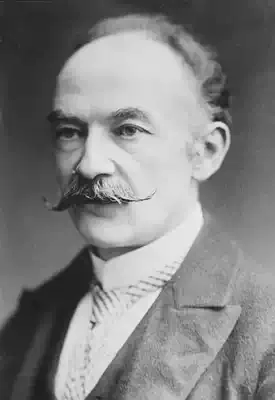
Thomas Hardy
A Wife in London (December, )
I--The Tragedy
She sits in the tawny vapour
That the City lanes have uprolled,
Behind whose webby fold on fold
Like a waning taper
The street-lamp glimmers cold.
A messenger's knock cracks smartly,
Flashed news is in her hand
Of meaning it dazes to understand
Though shaped so shortly:
He--has fallen--in the far South Land . . .
II--The Irony
'Tis the morrow; the fog hangs thicker,
The postman nears and goes:
A letter is brought whose lines disclose
By the firelight flicker
His hand, whom the worm now knows:
Fresh--firm--penned in highest feather -
Page-full of his hoped return,
And of home-planned jaunts by brake and burn
In the summer weather,
And of new love that they would learn.
301
Henry Wadsworth Longfellow
The Saga of King Olaf: VIII. Gudrun
On King Olaf's bridal night
Shines the moon with tender light,
And across the chamber streams
Its tide of dreams.
At the fatal midnight hour,
When all evil things have power,
In the glimmer of the moon
Stands Gudrun.
Close against her heaving breast
Something in her hand is pressed;
Like an icicle, its sheen
Is cold and keen.
On the cairn are fixed her eyes
Where her murdered father lies,
And a voice remote and drear
She seems to hear.
What a bridal night is this!
Cold will be the dagger's kiss;
Laden with the chill of death
Is its breath.
Like the drifting snow she sweeps
To the couch where Olaf sleeps;
Suddenly he wakes and stirs,
His eyes meet hers.
'What is that,' King Olaf said,
'Gleams so bright above my head?
Wherefore standest thou so white
In pale moonlight?'
''T is the bodkin that I wear
When at night I bind my hair;
It woke me falling on the floor;
'T is nothing more.'
'Forests have ears, and fields have eyes;
Often treachery lurking lies
Underneath the fairest hair!
Gudrun beware!'
Ere the earliest peep of morn
Blew King Olaf's bugle-horn;
And forever sundered ride
Bridegroom and bride!
299
Emily Dickinson
He forgot—and I—remembered
He forgot—and I—remembered—
'Twas an everyday affair—
Long ago as Christ and Peter—
"Warmed them" at the "Temple fire."
"Thou wert with him"—quoth "the Damsel"?
"No"—said Peter, 'twasn't me—
Jesus merely "looked" at Peter—
Could I do aught else—to Thee?
'Twas an everyday affair—
Long ago as Christ and Peter—
"Warmed them" at the "Temple fire."
"Thou wert with him"—quoth "the Damsel"?
"No"—said Peter, 'twasn't me—
Jesus merely "looked" at Peter—
Could I do aught else—to Thee?
296

William Shakespeare
Sonnets to the Sundry Notes of Music
I.
IT was a lording's daughter, the fairest one of three,
That liked of her master as well as well might be,
Till looking on an Englishman, the fair'st that eye could see,
Her fancy fell a-turning.
Long was the combat doubtful that love with love did fight,
To leave the master loveless, or kill the gallant knight:
To put in practise either, alas, it was a spite
Unto the silly damsel!
But one must be refused; more mickle was the pain
That nothing could be used to turn them both to gain,
For of the two the trusty knight was wounded with disdain:
Alas, she could not help it!
Thus art with arms contending was victor of the day,
Which by a gift of learning did bear the maid away:
Then, lullaby, the learned man hath got the lady gay;
For now my song is ended.
II.
On a day, alack the day!
Love, whose month was ever May,
Spied a blossom passing fair,
Playing in the wanton air:
Through the velvet leaves the wind
All unseen, gan passage find;
That the lover, sick to death,
Wish'd himself the heaven's breath,
'Air,' quoth he, 'thy cheeks may blow;
Air, would I might triumph so!
But, alas! my hand hath sworn
Ne'er to pluck thee from thy thorn:
Vow, alack! for youth unmeet:
Youth, so apt to pluck a sweet.
Thou for whom Jove would swear
Juno but an Ethiope were;
Turning mortal for thy love.'
III.
My flocks feed not,
My ewes breed not,
My rams speed not,
All is amiss:
Love's denying,
Faith's defying,
Heart's renying,
Causer of this.
All my merry jigs are quite forgot,
All my lady's love is lost, God wot:
Where her faith was firmly fix'd in love,
There a nay is placed without remove.
One silly cross
Wrought all my loss;
O frowning Fortune, cursed, fickle dame!
For now I see
Inconstancy
More in women than in men remain.
In black mourn I,
All fears scorn I,
Love hath forlorn me,
Living in thrall:
Heart is bleeding,
All help needing,
O cruel speeding,
Fraughted with gall.
My shepherd's pipe can sound no deal;
My wether's bell rings doleful knell;
My curtail dog, that wont to have play'd
Plays not at all, but seems afraid;
My sighs so deep
Procure to weep,
In howling wise, to see my doleful plight.
How sighs resound
Through heartless ground,
Like a thousand vanquish'd men in bloody fight!
Clear wells spring not,
Sweet birds sing not,
Green plants bring not
Forth their dye;
Herds stand weeping,
Flocks all sleeping,
Nymphs back peeping
Fearfully:
All our pleasure known to us poor swains,
All our merry meetings on the plains,
All our evening sport from us is fled,
All our love is lost, for Love is dead
Farewell, sweet lass,
Thy like ne'er was
For a sweet content, the cause of all my moan:
Poor Corydon
Must live alone;
Other help for him I see that there is none.
IV.
When as thine eye hath chose the dame,
And stall'd the deer that thou shouldst strike,
Let reason rule things worthy blame,
As well as fancy partial might:
Take counsel of some wiser head,
Neither too young nor yet unwed.
And when thou comest thy tale to tell,
Smooth not thy tongue with filed talk,
Lest she some subtle practise smell,--
A cripple soon can find a halt;--
But plainly say thou lovest her well,
And set thy person forth to sell.
What though her frowning brows be bent,
Her cloudy looks will calm ere night:
And then too late she will repent
That thus dissembled her delight;
And twice desire, ere it be day,
That which with scorn she put away.
What though she strive to try her strength,
And ban and brawl, and say thee nay,
Her feeble force will yield at length,
When craft hath taught her thus to say,
'Had women been so strong as men,
In faith, you had not had it then.'
And to her will frame all thy ways;
Spare not to spend, and chiefly there
Where thy desert may merit praise,
By ringing in thy lady's ear:
The strongest castle, tower, and town,
The golden bullet beats it down.
Serve always with assured trust,
And in thy suit be humble true;
Unless thy lady prove unjust,
Press never thou to choose anew:
When time shall serve, be thou not slack
To proffer, though she put thee back.
The wiles and guiles that women work,
Dissembled with an outward show,
The tricks and toys that in them lurk,
The cock that treads them shall not know.
Have you not heard it said full oft,
A woman's nay doth stand for nought?
Think women still to strive with men,
To sin and never for to saint:
There is no heaven, by holy then,
When time with age doth them attaint.
Were kisses all the joys in bed,
One woman would another wed.
But, soft! enough, too much, I fear
Lest that my mistress hear my song,
She will not stick to round me i' the ear,
To teach my tongue to be so long:
Yet will she blush, here be it said,
To hear her secrets so bewray'd.
V.
Live with me, and be my love,
And we will all the pleasures prove
That hills and valleys, dales and fields,
And all the craggy mountains yields.
There will we sit upon the rocks,
And see the shepherds feed their flocks,
By shallow rivers, by whose falls
Melodious birds sing madrigals.
There will I make thee a bed of roses,
With a thousand fragrant posies,
A cap of flowers, and a kirtle
Embroider'd all with leaves of myrtle.
A belt of straw and ivy buds,
With coral clasps and amber studs;
And if these pleasures may thee move,
Then live with me and be my love.
LOVE'S ANSWER.
If that the world and love were young,
And truth in every shepherd's tongue,
These pretty pleasures might me move
To live with thee and be thy love.
VI.
As it fell upon a day
In the merry month of May,
Sitting in a pleasant shade
Which a grove of myrtles made,
Beasts did leap, and birds did sing,
Trees did grow, and plants did spring;
Every thing did banish moan,
Save the nightingale alone:
She, poor bird, as all forlorn,
Lean'd her breast up-till a thorn
And there sung the dolefull'st ditty,
That to hear it was great pity:
'Fie, fie, fie,' now would she cry;
'Tereu, tereu!' by and by;
That to hear her so complain,
Scarce I could from tears refrain;
For her griefs, so lively shown,
Made me think upon mine own.
Ah, thought I, thou mourn'st in vain!
None takes pity on thy pain:
Senseless trees they cannot hear thee;
Ruthless beasts they will not cheer thee:
King Pandion he is dead;
All thy friends are lapp'd in lead;
All thy fellow birds do sing,
Careless of thy sorrowing.
Even so, poor bird, like thee,
None alive will pity me.
Whilst as fickle Fortune smiled,
Thou and I were both beguiled.
Every one that flatters thee
Is no friend in misery.
Words are easy, like the wind;
Faithful friends are hard to find:
Every man will be thy friend
Whilst thou hast wherewith to spend;
But if store of crowns be scant,
No man will supply thy want.
If that one be prodigal,
Bountiful they will him call,
And with such-like flattering,
'Pity but he were a king;'
If he be addict to vice,
Quickly him they will entice;
If to women he be bent,
They have at commandement:
But if Fortune once do frown,
Then farewell his great renown
They that fawn'd on him before
Use his company no more.
He that is thy friend indeed,
He will help thee in thy need:
If thou sorrow, he will weep;
If thou wake, he cannot sleep;
Thus of every grief in heart
He with thee doth bear a part.
These are certain signs to know
Faithful friend from flattering foe.
294
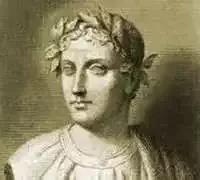
Horácio
BkI:V Treacherous Girl
What slender boy, Pyrrha, drowned in liquid perfume,
urges you on, there, among showers of roses,
deep down in some pleasant cave?
For whom did you tie up your hair,
with simple elegance? How often he’ll cry at
the changes of faith and of gods, ah, he’ll wonder,
surprised by roughening water,
surprised by the darkening storms,
who enjoys you now and believes you’re golden,
who thinks you’ll always be single and lovely,
ignoring the treacherous
breeze. Wretched are those you dazzle
while still untried. As for me the votive tablet
that hangs on the temple wall reveals, suspended,
my dripping clothes, for the god,
who holds power over the sea.
290