
Betrayal and Disappointment
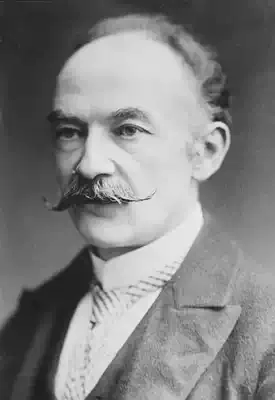
Thomas Hardy
The Puzzled Game-Birds
They are not those who used to feed us
When we were young--they cannot be -
These shapes that now bereave and bleed us?
They are not those who used to feed us, -
For would they not fair terms concede us?
- If hearts can house such treachery
They are not those who used to feed us
When we were young--they cannot be!
When we were young--they cannot be -
These shapes that now bereave and bleed us?
They are not those who used to feed us, -
For would they not fair terms concede us?
- If hearts can house such treachery
They are not those who used to feed us
When we were young--they cannot be!
291
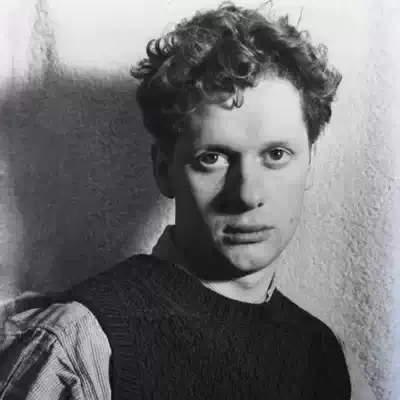
Dylan Thomas
Into Her Lying Down Head
I
Into her lying down head
His enemies entered bed,
Under the encumbered eyelid,
Through the rippled drum of the hair-buried ear;
And Noah's rekindled now unkind dove
Flew man-bearing there.
Last night in a raping wave
Whales unreined from the green grave
In fountains of origin gave up their love,
Along her innocence glided
Jaun aflame and savagely young King Lear,
Queen Catherine howling bare
And Samson drowned in his hair,
The colossal intimacies of silent
Once seen strangers or shades on a stair;
There the dark blade and wanton sighing her down
To a haycock couch and the scythes of his arms
Rode and whistled a hundred times
Before the crowing morning climbed;
Man was the burning England she was sleep-walking, and the enamouring island
Made her limbs blind by luminous charms,
Sleep to a newborn sleep in a swaddling loin-leaf stroked and sang
And his runaway beloved childlike laid in the acorned sand.
II
There where a numberless tongue
Wound their room with a male moan,
His faith around her flew undone
And darkness hung the walls with baskets of snakes,
A furnace-nostrilled column-membered
Super-or-near man
Resembling to her dulled sense
The thief of adolescence,
Early imaginary half remembered
Oceanic lover alone
Jealousy cannot forget for all her sakes,
Made his bad bed in her good
Night, and enjoyed as he would.
Crying, white gowned, from the middle moonlit stages
Out to the tiered and hearing tide,
Close and far she announced the theft of the heart
In the taken body at many ages,
Trespasser and broken bride
Celebrating at her side
All blood-signed assailing and vanished marriages in which he had no lovely part
Nor could share, for his pride, to the least
Mutter and foul wingbeat of the solemnizing nightpriest
Her holy unholy hours with the always anonymous beast.
III
Two sand grains together in bed,
Head to heaven-circling head,
Singly lie with the whole wide shore,
The covering sea their nightfall with no names;
And out of every domed and soil-based shell
One voice in chains declaims
The female, deadly, and male
Libidinous betrayal,
Golden dissolving under the water veil.
A she bird sleeping brittle by
Her lover's wings that fold to-morrow's flight,
Within the nested treefork
Sings to the treading hawk
Carrion, paradise, chirrup my bright yolk.
A blade of grass longs with the meadow,
A stone lies lost and locked in the lark-high hill.
Open as to the air to the naked shadow
O she lies alone and still,
Innocent between two wars,
With the incestuous secret brother in the seconds to perpetuate the stars,
A man torn up mourns in the sole night.
And the second comers, the severers, the enemies from the deep
Forgotten dark, rest their pulse and bury their dead in her faithless sleep.
289

Gwendolyn Brooks
the sonnet-ballad
Oh mother, mother, where is happiness?
They took my lover's tallness off to war,
Left me lamenting. Now I cannot guess
What I can use an empty heart-cup for.
He won't be coming back here any more.
Some day the war will end, but, oh, I knew
When he went walking grandly out that door
That my sweet love would have to be untrue.
Would have to be untrue. Would have to court
Coquettish death, whose impudent and strange
Possessive arms and beauty (of a sort)
Can make a hard man hesitate--and change.
And he will be the one to stammer, "Yes."
Oh mother, mother, where is happiness?
289

John Greenleaf Whittier
A Letter
'TIS over, Moses! All is lost!
I hear the bells a-ringing;
Of Pharaoh and his Red Sea host
I hear the Free-Wills singing.*
We're routed, Moses, horse and foot,
If there be truth in figures,
With Federal Whigs in hot pursuit,
And Hale, and all the 'niggers.'
Alack! alas! this month or more
We've felt a sad foreboding;
Our very dreams the burden bore
Of central cliques exploding;
Before our eyes a furnace shone,
Where heads of dough were roasting,
And one we took to be your own
The traitor Hale was toasting!
Our Belknap brother* heard with awe
The Congo minstrels playing;
At Pittsfield Reuben Leavitt* saw
The ghost of Storrs a-praying;
And Carroll's woods were sad to see,
With black-winged crows a-darting;
And Black Snout looked on Ossipee,
New-glossed with Day and Martin.
We thought the 'Old Man of the Notch'
His face seemed changing wholly —
His lips seemed thick; his nose seemed flat;
His misty hair looked woolly;
And Coös teamsters, shrieking, fled
From the metamorphosed figure.
'Look there!' they said, 'the Old Stone Head
Himself is turning nigger!'
The schoolhouse* out of Canaan hauled
Seemed turning on its track again,
And like a great swamp-turtle crawled
To Canaan village back again,
Shook off the mud and settled flat
Upon its underpinning;
A nigger on its ridge-pole sat,
From ear to ear a-grinning.
Gray H—d heard o' nights the sound
Of rail-cars onward faring;
Right over Democratic ground
The iron horse came tearing.
A flag waved o'er that spectral train,
As high as Pittsfield steeple;
Its emblem was a broken chain;
Its motto: 'To the people!'
I dreamed that Charley took his bed,
With Hale for his physician;
His daily dose an old 'unread
And unreferred' petition.*
There Hayes and Tuck as nurses sat,
As near as near could be, man;
They leeched him with the 'Democrat;'
They blistered with the 'Freeman.'
Ah! grisly portents! What avail
Your terrors of forewarning?
We wake to find the nightmare Hale
Astride our breasts at morning!
From Portsmouth lights to Indian stream
Our foes their throats are trying;
The very factory-spindles seem
To mock us while they're flying.
The hills have bonfires; in our streets
Flags flout us in our faces;
The newsboys, peddling off their sheets,
Are hoarse with our disgraces.
In vain we turn, for gibing wit
And shoutings follow after,
As if old Kearsarge had split
His granite sides with laughter!
What boots it that we pelted out
The anti-slavery women,9
And bravely strewed their hall about
With tattered lace and trimming?
Was it for such a sad reverse
Our mobs became peacemakers,
And kept their tar and wooden horse
For Englishmen and Quakers?
For this did shifty Atherton
Make gag rules for the Great House?
Wiped we for this our feet upon
Petitions in our State House?
Plied we for this our axe of doom,
No stubborn traitor sparing,
Who scoffed at our opinion loom,
And took to homespun wearing?
Ah, Moses! hard it is to scan
These crooked providences,
Deducing from the wisest plan
The saddest consequences!
Strange that, in trampling as was meet
The nigger-men's petition,
We sprung a mine beneath our feet
Which opened up perdition.
How goodly, Moses, was the game
In which we've long been actors,
Supplying freedom with the name
And slavery with the practice!
Our smooth words fed the people's mouth,
Their ears our party rattle;
We kept them headed to the South,
As drovers do their cattle.
But now our game of politics
The world at large is learning;
And men grown gray in all our tricks
State's evidence are turning.
Votes and preambles subtly spun
They cram with meanings louder,
And load the Democratic gun
With abolition powder.
The ides of June! Woe worth the day
When, turning all things over,
The traitor Hale shall make his hay
From Democratic clover!
Who then shall take him in the law,
Who punish crime so flagrant?
Whose hand shall serve, whose pen shall draw,
A writ against that 'vagrant'?
Alas! no hope is left us here,
And one can only pine for
The envied place of overseer
Of slaves in Carolina!
Pray, Moses, give Calhoun the wink,
And see what pay he's giving!
We're practised long enough, we think,
To know the art of driving.
And for the faithful rank and file,
Who know their proper stations,
Perhaps it may be worth their while
To try the rice plantations.
Let Hale exult, let Wilson scoff,
To see us southward scamper;
The slaves, we know, are 'better off
Than laborers in New Hampshire!'
285
Dylan Thomas
A Saint About To Fall
A saint about to fall,
The stained flats of heaven hit and razed
To the kissed kite hems of his shawl,
On the last street wave praised
The unwinding, song by rock,
Of the woven wall
Of his father's house in the sands,
The vanishing of the musical ship-work and the chucked bells,
The wound-down cough of the blood-counting clock
Behind a face of hands,
On the angelic etna of the last whirring featherlands,
Wind-heeled foot in the hole of a fireball,
Hymned his shrivelling flock,
On the last rick's tip by spilled wine-wells
Sang heaven hungry and the quick
Cut Christbread spitting vinegar and all
The mazes of his praise and envious tongue were worked in flames and shells.
Glory cracked like a flea.
The sun-leaved holy candlewoods
Drivelled down to one singeing tree
With a stub of black buds,
The sweet, fish-gilled boats bringing blood
Lurched through a scuttled sea
With a hold of leeches and straws,
Heaven fell with his fall and one crocked bell beat the left air.
O wake in me in my house in the mud
Of the crotch of the squawking shores,
Flicked from the carbolic city puzzle in a bed of sores
The scudding base of the familiar sky,
The lofty roots of the clouds.
From an odd room in a split house stare,
Milk in your mouth, at the sour floods
That bury the sweet street slowly, see
The skull of the earth is barbed with a war of burning brains and hair.
Strike in the time-bomb town,
Raise the live rafters of the eardrum,
Throw your fear a parcel of stone
Through the dark asylum,
Lapped among herods wail
As their blade marches in
That the eyes are already murdered,
The stocked heart is forced, and agony has another mouth to feed.
O wake to see, after a noble fall,
The old mud hatch again, the horrid
Woe drip from the dishrag hands and the pressed sponge of the forehead,
The breath draw back like a bolt through white oil
And a stranger enter like iron.
Cry joy that hits witchlike midwife second
Bullies into rough seas you so gentle
And makes with a flick of the thumb and sun
A thundering bullring of your silent and girl-circled island.
286

Robert W. Service
The Wedding Ring
I pawned my sick wife's wedding ring,
To drink and make myself a beast.
I got the most that it would bring,
Of golden coins the very least.
With stealth into her room I crept
And stole it from her as she slept.
I do not think that she will know,
As in its place I left a band
Of brass that has a brighter glow
And gleamed upon her withered hand.
I do not think that she can tell
The change - she does not see too well.
Pray God, she doesn't find me out.
I'd rather far I would be dead.
Yet yesterday she seemed to doubt,
And looking at me long she said:
"My finger must have shrunk, because
My ring seems bigger than it was."
She gazed at it so wistfully,
And one big tear rolled down her cheek.
Said she: "You'll bury it with me . . ."
I was so moved I could not speak.
Oh wretched me! How whisky can
Bring out the devil in a man!"
And yet I know she loves me still,
As on the morn that we were wed;
And darkly guess I also will
Be doomed the day that she is dead.
And yet I swear, before she's gone,
I will retrieve her ring from pawn.
I'll get it though I have to steal,
Then when to ease her bitter pain
They give her sleep oh I will feel
Her hand and slip it on again;
Through tears her wasted face I'll see,
And pray to God: "Oh pity me!"
285

Jonathan Swift
On Gold
All-ruling tyrant of the earth,
To vilest slaves I owe my birth,
How is the greatest monarch blest,
When in my gaudy livery drest!
No haughty nymph has power to run
From me; or my embraces shun.
Stabb'd to the heart, condemn'd to flame,
My constancy is still the same.
The favourite messenger of Jove,
And Lemnian god, consulting strove
To make me glorious to the sight
Of mortals, and the gods' delight.
Soon would their altar's flame expire
If I refused to lend them fire.
By fate exalted high in place,
Lo, here I stand with double face:
Superior none on earth I find;
But see below me all mankind
Yet, as it oft attends the great,
I almost sink with my own weight.
At every motion undertook,
The vulgar all consult my look.
I sometimes give advice in writing,
But never of my own inditing.
I am a courtier in my way;
For those who raised me, I betray;
And some give out that I entice
To lust, to luxury, and dice.
Who punishments on me inflict,
Because they find their pockets pickt.
By riding post, I lose my health,
And only to get others wealth.
282

Emily Dickinson
She dealt her pretty words like Blades
She dealt her pretty words like Blades-
How glittering they shone-
And every One unbared a Nerve
Or wantoned with a Bone-
She never deemed-she hurt
That-
is not Steel's Affair-
A vulgar grimace in the Flesh-
How ill the Creatures bear-
To Ache is human-not polite-
The Film upon the eye
Mortality's old Custom-
Just locking up-to Die.
How glittering they shone-
And every One unbared a Nerve
Or wantoned with a Bone-
She never deemed-she hurt
That-
is not Steel's Affair-
A vulgar grimace in the Flesh-
How ill the Creatures bear-
To Ache is human-not polite-
The Film upon the eye
Mortality's old Custom-
Just locking up-to Die.
273
Gwendolyn Brooks
She did not scream.
She stood there.
But a hatred for him burst into glorious flower,
And its perfume enclasped them--big,
Bigger than all magnolias.
The last bleak news of the ballad.
The rest of the rugged music.
The last quatrain.
But a hatred for him burst into glorious flower,
And its perfume enclasped them--big,
Bigger than all magnolias.
The last bleak news of the ballad.
The rest of the rugged music.
The last quatrain.
270
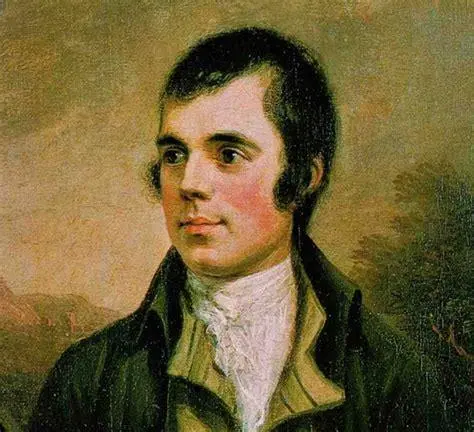
Robert Burns
Fareweel To A'Our Scottish Fame
Fareweel to a' our Scottish fame,
Fareweel our ancient glory;
Fareweel ev'n to the Scottish name,
Sae famed in martial story!
Now Sark rins over Solway sands,
And Tweed rins to the ocean,
To mark where England's province stands—
Such a parcel of rogues in a nation!
What force or guile could not subdue
Thro' many warlike ages,
Is wrought now by a coward few,
For hireling traitor's wages.
The English steel we could disdain,
Secure in valour's station;
But English gold has been our bane—
Such a parcel of rogues in a nation!
O, would or I had seen the day
That treason thus could sell us,
My auld grey head had lien in clay
Wi' Bruce and loyal Wallace!
But pith and power, till my last hour,
I'll mak this declaration:
We're bought and sold for English gold—
Such a parcel of rogues in a nation!
268
Robert W. Service
White Christmas
My folks think I'm a serving maid
Each time I visit home;
They do not dream I ply a trade
As old as Greece or Rome;
For if they found I'd fouled their name
And was not white as snow,
I'm sure that they would die of shame . . .
Please, God, they'll never know.
I clean the paint from off my face,
In sober black I dress;
Of coquetry I leave no trace
To give them vague distress;
And though it causes me a pang
To play such sorry tricks,
About my neck I meekly hang
A silver crufix.
And so with humble step I go
Just like a child again,
To greet their Christmas candle-glow,
A soul without a stain;
So well I play my contrite part
I make myself believe
There's not a stain within my heart
On Holy Christmas Eve.
With double natures we are vext,
And what we feel, we are;
A saint one day, a sinner next,
A red light or a star;
A prostitute or proselyte,
And in each part sincere:
So I become a vestal white
One week in every year.
For this I say without demur
From out life's lurid lore,
Each righteous women has in her
A tincture of the whore;
While every harpy of the night,
As I have learned too well;
Holds in her heart a heaven-light
To ransom her from hell.
So I'll go home and sweep and dust;
I'll make the kitchen fire,
And be a model of daughters just
The best they could desire;
I'll fondle them and cook their food,
And Mother dear will say:
"Thank God! my darling is as good
As when she went away."
But after New Year's Day I'll fill
My bag and though they grieve,
I'll bid them both good-bye until
Another Christmas Eve;
And then . . . a knock upon the door:
I'll find them waiting there,
And angel-like I'll come once more
In answer to their prayer.
Then Lo! one night when candle-light
Gleams mystic on the snow,
And music swells of Christmas bells,
I'll come, no more to go:
The old folks need my love and care,
Their gold shall gild my dross,
And evermore my breast shall bear
My little silver cross.
266

Henry Lawson
Keeping His First Wife Now
IT’S OH! for a rivet in marriage bonds,
And a splice in the knot untied—
The sanctity of the marriage tie
Is growing more sanctified!
They’re getting mixed up in society,
There’s an awful family row,
For Reginald Jones of “The Fernery”
Is “keeping” his first wife now!
Oh! she belonged to the smart, smart set
(Where reasons are far to seek)—
And the wedding and “crush” are remembered yet
As the “smart” things of the week.
Never an atom of love had she,
But they had a child somehow—
And Reginald Jones of “The Fernery”
Has the love of his first wife now.
Mad for “notice” and “talk” was she—
A butterfly blind as a bat—
She would flaunt for a season a divorcee,
Or divorce him, failing that.
He played his part and she held his heart
As light as her marriage vow—
But Reginald Jones of “The Fernery”
Has a hold on his first wife now.
She swore in Court what the world knew false,
With never a thought of shame—
She was free to flaunt to her heart’s content,
But she found it mighty tame:
The talk of the “town” for a week or two—
The gush, the smirk and the bow—
But Reginald Jones of “The Fernery”
Is the God of his first wife now!
Her soul grew sick of the smart, smart set,
Or her conscience drove her wild—
Or she craved for “notice” and “talk” once more—
Or perhaps because of the child;
But they met at last and they met again—
No matter the where or how—
And Reginald Jones of “The Fernery”
Is in love with his first wife now.
’Tis a “terrible life” for the second young wife,
But she married him too for “place”;
And she mustn’t forget that a smarting set
Belongs to the human race.
They say it’s fixed up in camera,
And, if that is the case, I’ll vow,
That Reginald Jones of “The Fernery”
Will marry his first wife now.
And there is a song of the English world
And a song for the English race:
The second husband and second wife
Must ever take second place.
So cherish the best that you find in the first,
And a margin of width allow:
The future looks after itself too well!
Look after the first ones now.
266

Anonymous
The Lass of Lochroyan
'O WHA will shoe my bonny foot?
And wha will glove my hand?
And wha will bind my middle jimp
Wi' a lang, lang linen band?
'O wha will kame my yellow hair,
With a haw bayberry kame?
And wha will be my babe's father
Till Gregory come hame?'
'They father, he will shoe thy foot,
Thy brother will glove thy hand,
Thy mither will bind thy middle jimp
Wi' a lang, lang linen band.
'Thy sister will kame thy yellow hair,
Wi' a haw bayberry kame;
The Almighty will be thy babe's father
Till Gregory come hame.'
'And wha will build a bonny ship,
And set it on the sea?
For I will go to seek my love,
My ain love Gregory.'
Up then spak her father dear,
A wafu' man was he;
'And I will build a bonny ship,
And set her on the sea.
'And I will build a bonny ship,
And set her on the sea,
And ye sal gae and seek your love,
Your ain love Gregory.'
Then he 's gart build a bonny ship,
And set it on the sea,
Wi' four-and-twenty mariners,
To bear her company.
O he 's gart build a bonny ship,
To sail on the salt sea;
The mast was o' the beaten gold,
The sails o' cramoisie.
The sides were o' the gude stout aik,
The deck o' mountain pine,
The anchor o' the silver shene,
The ropes o' silken twine.
She hadna sail'd but twenty leagues,
But twenty leagues and three,
When she met wi' a rank reiver,
And a' his companie.
'Now are ye Queen of Heaven hie,
Come to pardon a' our sin?
Or are ye Mary Magdalane,
Was born at Bethlam?'
'I'm no the Queen of Heaven hie,
Come to pardon ye your sin,
Nor am I Mary Magdalane,
Was born in Bethlam.
'But I'm the lass of Lochroyan,
That 's sailing on the sea
To see if I can find my love,
My ain love Gregory.'
'O see na ye yon bonny bower?
It 's a' covered owre wi' tin;
When thou hast sail'd it round about,
Lord Gregory is within.'
And when she saw the stately tower,
Shining both clear and bright,
Whilk stood aboon the jawing wave,
Built on a rock of height,
Says, 'Row the boat, my mariners,
And bring me to the land,
For yonder I see my love's castle,
Close by the salt sea strand.'
She sail'd it round, and sail'd it round,
And loud and loud cried she,
'Now break, now break your fairy charms,
And set my true-love free.'
She 's ta'en her young son in her arms,
And to the door she 's gane,
And long she knock'd, and sair she ca'd.
But answer got she nane.
'O open, open, Gregory!
O open! if ye be within;
For here 's the lass of Lochroyan,
Come far fra kith and kin.
'O open the door, Lord Gregory!
O open and let me in!
The wind blows loud and cauld, Gregory,
The rain drops fra my chin.
'The shoe is frozen to my foot,
The glove unto my hand,
The wet drops fra my yellow hair,
Na langer dow I stand.'
O up then spak his ill mither,
--An ill death may she die!
'Ye're no the lass of Lochroyan,
She 's far out-owre the sea.
'Awa', awa', ye ill woman,
Ye're no come here for gude;
Ye're but some witch or wil' warlock,
Or mermaid o' the flood.'
'I am neither witch nor wil' warlock,
Nor mermaid o' the sea,
But I am Annie of Lochroyan,
O open the door to me!'
'Gin ye be Annie of Lochroyan,
As I trow thou binna she,
Now tell me of some love-tokens
That pass'd 'tween thee and me.'
'O dinna ye mind, love Gregory,
As we sat at the wine,
We changed the rings frae our fingers?
And I can shew thee thine.
'O yours was gude, and gude enough,
But ay the best was mine,
For yours was o' the gude red gowd,
But mine o' the diamond fine.
'Yours was o' the gude red gowd,
Mine o' the diamond fine;
Mine was o' the purest troth,
But thine was false within.'
'If ye be the lass of Lochroyan,
As I kenna thou be,
Tell me some mair o' the love-tokens
Pass'd between thee and me.'
'And dinna ye mind, love Gregory!
As we sat on the hill,
Thou twin'd me o' my maidenheid,
Right sair against my will?
'Now open the door, love Gregory!
Open the door! I pray;
For thy young son is in my arms,
And will be dead ere day.'
'Ye lie, ye lie, ye ill woman,
So loud I hear ye lie;
For Annie of the Lochroyan
Is far out-owre the sea.'
Fair Annie turn'd her round about:
'Weel, sine that it be sae,
May ne'er woman that has borne a son
Hae a heart sae fu' o' wae!
'Tak down, tak down that mast o' gowd,
Set up a mast of tree;
It disna become a forsaken lady
To sail sae royallie.'
When the cock has crawn, and the day did dawn,
And the sun began to peep,
Up than raise Lord Gregory,
And sair, sair did he weep.
'O I hae dream'd a dream, mither,
I wish it may bring good!
That the bonny lass of Lochroyan
At my bower window stood.
'O I hae dream'd a dream, mither,
The thought o't gars me greet!
That fair Annie of Lochroyan
Lay dead at my bed-feet.'
'Gin it be for Annie of Lochroyan
That ye mak a' this mane,
She stood last night at your bower-door,
But I hae sent her hame.'
'O wae betide ye, ill woman,
An ill death may ye die!
That wadna open the door yoursell
Nor yet wad waken me.'
O he 's gane down to yon shore-side,
As fast as he could dree,
And there he saw fair Annie's bark
A rowing owre the sea.
'O Annie, Annie,' loud he cried,
'O Annie, O Annie, bide!'
But ay the mair he cried 'Annie,'
The braider grew the tide.
'O Annie, Annie, dear Annie,
Dear Annie, speak to me!'
But ay the louder he gan call,
The louder roar'd the sea.
The wind blew loud, the waves rose hie
And dash'd the boat on shore;
Fair Annie's corpse was in the faem,
The babe rose never more.
Lord Gregory tore his gowden locks
And made a wafu' moan;
Fair Annie's corpse lay at his feet,
His bonny son was gone.
'O cherry, cherry was her cheek,
And gowden was her hair,
And coral, coral was her lips,
Nane might with her compare.'
Then first he kiss'd her pale, pale cheek,
And syne he kiss'd her chin,
And syne he kiss'd her wane, wane lips,
There was na breath within.
'O wae betide my ill mither,
An ill death may she die!
She turn'd my true-love frae my door,
Who cam so far to me.
'O wae betide my ill mither,
An ill death may she die!
She has no been the deid o' ane,
But she 's been the deid of three.'
Then he 's ta'en out a little dart,
Hung low down by his gore,
He thrust it through and through his heart,
And words spak never more.
266
Jonathan Swift
Mrs Frances Haris's Petition
To their Excellencies the Lords Justices of Ireland,
The humble petition of Frances Harris,
Who must starve and die a maid if it miscarries;
Humble sheweth, that I went to warm myself in Lady Betty's chamber, because I
was cold;
And I had in a purse seven pounds, four shillings, and sixpence, (besides
farthings) in money and gold;
So because I had been buying things for my lady last night,
I was resolved to tell my money, to see if it was right.
Now, you must know, because my trunk has a very bad lock,
Therefore all the money I have, which, God knows, is a very small stock,
I keep in my pocket, tied about my middle, next my smock.
So when I went to put up my purse, as God would have it, my smock was unripped,
And instead of putting it into my pocket, down it slipped;
Then the bell rung, and I went down to put my lady to bed;
And, God knows, I thought my money was as safe as my maidenhead.
So, when I came up again, I found my pocket feel very light;
But when I searched, and missed my purse, Lord! I thought I should have sunk
outright.
'Lord! madam,' says Mary, 'how d'ye do?' -'Indeed,' says I, 'never worse:
But pray, Mary, can you tell what I have done with my purse?'
'Lord help me!' says Mary, 'I never stirred out of this place!'
'Nay,' said I, 'I had it in Lady Betty's chamber, that's a plain case.'
So Mary got me to bed, and covered me up warm:
However, she stole away my garters, that I might do myself no harm.
So I tumbled and tossed all night, as you may very well think,
But hardly ever set my eyes together, or slept a wink.
So I was a-dreamed, methought, that I went and searched the folks round,
And in a corner of Mrs Duke's box, tied in a rag, the money was found.
So next morning we told Whittle, and he fell a swearing:
Then my dame Wadgar came, and she, you know, is thick of hearing.
'Dame,' says I, as loud as I could bawl, 'do you know what a loss I have had?'
'Nay,' says she, 'my Lord Colway's folks are all very sad:
For my Lord Dromedary comes a Tuesday without fail.'
'Pugh!' said I, 'but that's not the business that I ail.'
Says Cary, says he, 'I have been a servant this five and twenty years come
spring,
And in all the places I lived I never heard of such a thing.'
'Yes,' says the steward, 'I remember when I was at my Lord Shrewsbury's,
Such a thing as this happened, just about the time of gooseberries.'
So I went to the party suspected, and I found her full of grief:
(Now, you must know, of all things in the world I hate a thief:)
However, I was resolved to bring the discourse slily about:
'Mrs Duke,' said I, 'here's an ugly accident has happened out:
'Tis not that I value the money three skips of a louse:
But the thing I stand upon is the credit of the house.
'Tis true, seven pounds, four shillings, and sixpence makes a great hole in my
wages:
Besides, as they say, service is no inheritance in these ages.
Now, Mrs Duke, you know, and everybody understands,
That though 'tis hard to judge, yet money can't go without hands.'
'The devil take me!' said she, (blessing herself,) 'if ever I saw't!'
So she roared like a bedlam, as though I had called her all to naught.
So, you know, what could I say to her any more?
I e'en left her, and came away as wise as I was before.
Well; but then they would have had me gone to the cunning man:
'No,' said I, ''tis the same thing, the CHAPLAIN will be here anon.'
So the Chaplain came in. Now the servants say he is my sweetheart,
Because he's always in my chamber, and I always take his part.
So, as the devil would have it, before I was aware, out I blundered,
'Parson,' said I, 'can you cast a nativity, when a body's plundered?'
(Now you must know, he hates to be called Parson, like the devil!)
'Truly,' says he, 'Mrs Nab, it might become you to be more civil;
If your money be gone, as a learned Divine says, d'ye see,
You are no text for my handling; so take that from me:
I was never taken for a Conjurer before, I'd have you to know.'
'Lord!' said I, 'don't be angry, I am sure I never thought you so;
You know I honour the cloth; I design to be a Parson's wife;
I never took one in your coat for a conjurer in all my life.'
With that he twisted his girdle at me like a rope, as who should say,
`Now you may go hang yourself for me!' and so went away.
Well: I thought I should have swooned. 'Lord!' said I, 'what shall I do?
I have lost my money, and shall lose my true love too!'
Then my lord called me: 'Harry,' said my lord, 'don't cry;
I'll give you something toward thy loss: 'And,' says my lady, 'so will I.'
Oh! but, said I, what if, after all, the Chaplain won't come to?
For that, he said (an't please your Excellencies), I must petition you.
The premisses tenderly considered, I desire your Excellencies' protection,
And that I may have a share in next Sunday's collection;
And, over and above, that I may have your Excellencies' letter,
With an order for the Chaplain aforesaid, or, instead of him, a better:
And then your poor petitioner, both night and day,
Or the Chaplain (for 'tis his trade,) as in duty bound, shall ever pray.
266
Emily Dickinson
Like eyes that looked on Wastes
Like eyes that looked on Wastes-
Incredulous of Ought
But Blank-and steady Wilderness-
Diversified by Night-
Just Infinites of Nought-
As far as it could see-
So looked the face I looked upon-
So looked itself-on Me-
I offered it no Help-
Because the Cause was Mine-
The Misery a Compact
As hopeless-as divine
Neither-would be absolved-
Neither would be a Queen
Without the Other-Therefore-
We perish-tho' We reign-
264
Anonymous
The Bonny Earl of Murray
YE Highlands and ye Lawlands,
O where hae ye been?
They hae slain the Earl of Murray,
And hae laid him on the green.
Now wae be to thee, Huntley!
And whairfore did ye sae!
I bade you bring him wi' you,
But forbade you him to slay.
He was a braw gallant,
And he rid at the ring;
Ana the bonny Earl of Murray,
O he might hae been a king!
He was a braw gallant,
And he play'd at the ba';
And the bonny Earl of Murray
Was the flower amang them a'!
He was a braw gallant,
And he play'd at the gluve;
And the bonny Earl of Murray,
O he was the Queen's luve!
O lang will his Lady
Look owre the Castle Downe,
Ere she see the Earl of Murray
Come sounding through the town!
264
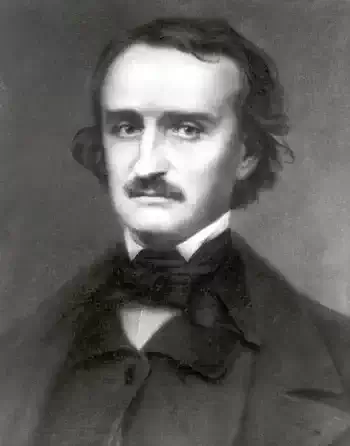
Edgar Allan Poe
Song
I saw thee on thy bridal day
When
a burning blush came o'er thee,
Though happiness around thee lay,
The world all love before thee:
And in thine eye a kindling light
(Whatever it might be)
Was all on Earth my aching sight
Of Loveliness could see.
That blush, perhaps, was maiden shame
As
such it well may pass
Though
its glow hath raised a fiercer flame
In the breast of him, alas!
Who saw thee on that bridal day,
When that deep blush would come o'er thee,
Though happiness around thee lay;
The world all love before thee.
260
Henry Lawson
The Women of the Town
It is up from out the alleys, from the alleys dark and vile—
It is up from out the alleys I have struggled for a while—
Just to breathe the breath of Heaven ere my devil drags me down,
And to sing a song of pity for the women of the town.
Johnnies in the private bar room, weak and silly, vain and blind—
Even they would shrink and shudder if they knew the hell behind,
And the meanest wouldn’t grumble when he’s bilked of half-a-crown
If he knew as much as I do of the women of the town.
For I see the end too plainly of the golden-headed star
Who is smiling like an angel in the gilded private bar—
Drifting to the third-rate houses, drifting, sinking lower down
Till she raves in some foul parlour with the women of the town.
To the dingy beer-stained parlour all day long the outcasts come—
Draggled, dirty, bleared, repulsive, shameless, aye, and rotten some—
They have sold their bodies and would sell their souls for drink to drown
Memories of wrong that haunt them—haunt the women of the town.
I have seen the haunting terror of the ‘horrors’ in their eyes,
Heard them cry to Christ to help them as the mansoul never cries,
While the smirking landlord listened with a grin or with a frown.
Oh, they suffer hell in drinking, do the women of the town.
I have known too well, God help me! to what depths a man can sink,
Sacrificing wife and children, fame and honour, all for drink.
Deeper, deeper sink the women, for the veriest drunken clown
Has his feet upon the shoulders of the women of the town.
There’s a heavy cloud that’s lying on my spirit like a pall—
’Tis the horror and injustice and the hopelessness of all—
There’s the love of one for ever that no sea of sin can drown,
And she loves a brute, God help her! does the woman of the town.
O my sisters, O my sisters, I am powerless to aid;
’Tis a world of prostitution, it is business, it is trade,
And they profit from the brewer and the smirking landlord down
To the bully and the bludger, on the women of the town.
Oh, the heart of one great poet* called to heaven in a line—
Crying, ‘Mary, pity women!’—You have whiter souls than mine.
And if in the grand Hereafter there is one shall wear a crown—
For the hell that men made for her—’tis the Woman of the Town.
261
Henry Lawson
The Pride That Comes After
It knows it all, it knows it all,
The world of groans and laughter,
It sneers of pride before a fall,
But the bitter pride comes after:
So leave me and I’ll seek you not,
So seek me and you’ll find me—
But till I know your hand-grip’s true
I’ll stand with hands behind me.
It knows it all, it knows it all,
The world of lies and sorrow—
It prates of pride before a fall,
And of the humble morrow;
But shame and blame are but a name,
Oh, heart that’s hurt past curing!
We’ll drink to-night the sinner’s pride,
The pride that’s most enduring.
They know it all, they know it all,
The curs that pass the sentence.
They preach of pride before a fall
And bitter black repentance:
So leave me when my star is set,
I’ll glory that you leave me,
While one has pride to love me yet
There’s nought on earth shall grieve me.
257

William Wordsworth
Ellen Irwin
Fair Ellen Irwin, when she sate
Upon the braes of Kirtle,
Was lovely as a Grecian maid
Adorned with wreaths of myrtle;
Young Adam Bruce beside her lay,
And there did they beguile the day
With love and gentle speeches,
Beneath the budding beeches.
From many knights and many squires
The Bruce had been selected;
And Gordon, fairest of them all,
By Ellen was rejected.
Sad tidings to that noble Youth!
For it may be proclaimed with truth,
If Bruce hath loved sincerely,
That Gordon loves as dearly.
But what are Gordon's form and face,
His shattered hopes and crosses,
To them, 'mid Kirtle's pleasant braes,
Reclined on flowers and mosses?
Alas that ever he was born!
The Gordon, couched behind a thorn,
Sees them and their caressing;
Beholds them blest and blessing.
Proud Gordon, maddened by the thoughts
That through his brain are travelling,
Rushed forth, and at the heart of Bruce
He launched a deadly javelin!
Fair Ellen saw it as it came,
And, starting up to meet the same,
Did with her body cover
The Youth, her chosen lover.
And, falling into Bruce's arms,
Thus died the beauteous Ellen,
Thus, from the heart of her True-love,
The mortal spear repelling.
And Bruce, as soon as he had slain
The Gordon, sailed away to Spain;
And fought with rage incessant
Against the Moorish crescent.
But many days, and many months,
And many years ensuing,
This wretched Knight did vainly seek
The death that he was wooing.
So, coming his last help to crave,
Heart-broken, upon Ellen's grave
His body he extended,
And there his sorrow ended.
Now ye, who willingly have heard
The tale I have been telling,
May in Kirkconnel churchyard view
The grave of lovely Ellen:
By Ellen's side the Bruce is laid;
And, for the stone upon his head,
May no rude hand deface it,
And its forlorn "Hie jacet"!
255

William Shakespeare
Sonnet 40: Take all my loves, my love, yea, take them all
Take all my loves, my love, yea, take them all;
What hast thou then more than thou hadst before?
No love, my love, that thou mayst true love call;
All mine was thine, before thou hadst this more.
Then if for my love, thou my love receivest,
I cannot blame thee, for my love thou usest;
But yet be blamed, if thou thy self deceivest
By wilful taste of what thy self refusest.
I do forgive thy robbery, gentle thief,
Although thou steal thee all my poverty;
And yet love knows it is a greater grief
To bear love's wrong, than hate's known injury.
Lascivious grace, in whom all ill well shows,
Kill me with spites; yet we must not be foes.
256
Thomas Hardy
The King's Experiment
It was a wet wan hour in spring,
And Nature met King Doom beside a lane,
Wherein Hodge trudged, all blithely ballading
The Mother's smiling reign.
"Why warbles he that skies are fair
And coombs alight," she cried, "and fallows gay,
When I have placed no sunshine in the air
Or glow on earth to-day?"
"'Tis in the comedy of things
That such should be," returned the one of Doom;
"Charge now the scene with brightest blazonings,
And he shall call them gloom."
She gave the word: the sun outbroke,
All Froomside shone, the hedgebirds raised a song;
And later Hodge, upon the midday stroke,
Returned the lane along,
Low murmuring: "O this bitter scene,
And thrice accurst horizon hung with gloom!
How deadly like this sky, these fields, these treen,
To trappings of the tomb!"
The Beldame then: "The fool and blind!
Such mad perverseness who may apprehend?" -
"Nay; there's no madness in it; thou shalt find
Thy law there," said her friend.
"When Hodge went forth 'twas to his Love,
To make her, ere this eve, his wedded prize,
And Earth, despite the heaviness above,
Was bright as Paradise.
"But I sent on my messenger,
With cunning arrows poisonous and keen,
To take forthwith her laughing life from her,
And dull her little een,
"And white her cheek, and still her breath,
Ere her too buoyant Hodge had reached her side;
So, when he came, he clasped her but in death,
And never as his bride.
"And there's the humour, as I said;
Thy dreary dawn he saw as gleaming gold,
And in thy glistening green and radiant red
Funereal gloom and cold."
256
Robert W. Service
The Cuckoo
No lyric line I ever penned
The praise this parasitic bird;
And what is more, I don't intend
To write a laudatory word,
Since in my garden robins made
A nest with eggs of dainty spot,
And then a callous cuckoo laid
A lone on on the lot.
Of course the sillies hatched it out
Along with their two tiny chicks,
And there it threw its weight about,
But with the others would not mix.
In fact, it seemed their guts to hate,
And crossly kicked them to the ground,
So that next morning, sorry fate!
Two babes stone dead I found.
These stupid robins, how they strove
To gluttonize that young cuckoo!
And like a prodigy it throve,
And daily greedier it grew.
How it would snap and glup and spit!
Till finally it came to pass,
Growing too big the nest to fit,
It fell out on the grass.
So for a week they fed it there,
As in a nook of turf it lay;
But it was scornful of their care,
for it was twice as big as they.
When lo! one afternoon I heard
A flutelike call: Cuckoo! Cuckoo!
Then suddenly that foulsome bird
Flapped to its feet and flew.
I'm sure it never said goodbye
To its fond foster Pa and Ma,
Though to their desolated sigh
It might have chirruped: "Au revoir."
But no, it went in wanton mood,
Flying the coop for climates new
And so I say: "Ingratitude,
They name's Cuckoo."
255
Robert W. Service
Lip-Stick Liz
Oh Lip-Stick Liz was in the biz, That's the oldest known in history;
She had a lot of fancy rags, Of her form she made no myst'ry.
She had a man, a fancy man, His name was Alexander,
And he used to beat her up because he couldn't understand her.
Now Lip-Stick Liz she loved her man And she couldn't love no other
So when she saw him with a Broadway Blonde, Her rage she could not smother.
She saw him once and she saw him twice But the third time nearly crazed her,
So she walked bang into a hardware store, And she bought a brand new razor.
Now Lip-Stick Liz she trailed them two For she was tired of weeping;
She trailed them two, in a flash hotel And there she found them sleeping;
So she gashed them once and she gashed them twice Their ju'lar veins to sever,
And the bright blood flowed like a brook between. And their lives were gone forever.
Now Lip-Stick Liz went to the p'lice And sez she: "Me hands are gory,
And you'll put me away in a deep dark cell When once you've heard me story."
So they've put her away in a deep dark cell, Until her life be over
And what is the moral of the whole damn show, I wish I could discover.
Chorus:
Oh Lip-Stick Liz! What a lousy life this is.
It's a hell of a break for a girl on the make,
Oh Lip-Stick Liz!
253