
Betrayal and Disappointment
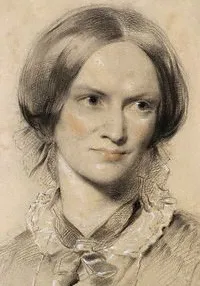
Charlotte Brontë
Pilate's Wife's Dream
I've quenched my lamp, I struck it in that start
Which every limb convulsed, I heard it fall
The
crash blent with my sleep, I saw depart
Its light, even as I woke, on yonder wall;
Over against my bed, there shone a gleam
Strange, faint, and mingling also with my dream.
It sunk, and I am wrapt in utter gloom;
How far is night advanced, and when will day
Retinge the dusk and livid air with bloom,
And fill this void with warm, creative ray ?
Would I could sleep again till, clear and red,
Morning shall on the mountaintops
be spread!
I'd call my women, but to break their sleep,
Because my own is broken, were unjust;
They've wrought all day, and wellearned
slumbers steep
Their labours in forgetfulness, I trust;
Let me my feverish watch with patience bear,
Thankful that none with me its sufferings share.
Yet, Oh, for light ! one ray would tranquilise
My nerves, my pulses, more than effort can;
I'll draw my curtain and consult the skies:
These trembling stars at dead of night look wan,
Wild, restless, strange, yet cannot be more drear
Than this my couch, shared by a nameless fear.
All blackone
great cloud, drawn from east to west,
Conceals the heavens, but there are lights below;
Torches burn in Jerusalem, and cast
On yonder stony mount a lurid glow.
I see men stationed there, and gleaming spears;
A sound, too, from afar, invades my ears.
Dull, measured, strokes of axe and hammer ring
From street to street, not loud, but through the night
Distinctly heardand
some strange spectral thing
Is now uprearedand,
fixed against the light
Of the pale lamps; defined upon that sky,
It stands up like a column, straight and high.
I see it all
I
know the dusky sign
A
cross on Calvary, which Jews uprear
While Romans watch; and when the dawn shall shine
Pilate, to judge the victim will appear,
Pass sentenceyield
him up to crucify;
And on that cross the spotless Christ must die.
Dreams, then, are truefor
thus my vision ran;
Surely some oracle has been with me,
The gods have chosen me to reveal their plan,
To warn an unjust judge of destiny:
I, slumbering, heard and saw; awake I know,
Christ's coming death, and Pilate's life of woe.
I do not weep for Pilatewho
could prove
Regret for him whose cold and crushing sway
No prayer can soften, no appeal can move;
Who tramples hearts as others trample clay,
Yet with a faltering, an uncertain tread,
That might stir up reprisal in the dead.
Forced to sit by his side and see his deeds;
Forced to behold that visage, hour by hour,
In whose gaunt lines, the abhorrent gazer reads
A triple lust of gold, and blood, and power;
A soul whom motives, fierce, yet abject, urge
Rome's servile slave, and Judah's tyrant scourge.
How can I love, or mourn, or pity him ?
I, who so long my fettered hands have wrung;
I, who for grief have wept my eyesight
dim;
Because, while life for me was bright and young,
He robbed my youthhe
quenched my life's fair ray
He
crushed my mind, and did my freedom slay.
And at this houralthough
I be his wife
He
has no more of tenderness from me
Than any other wretch of guilty life;
Less, for I know his household privacy
I
see him as he iswithout
a screen;
And, by the gods, my soul abhors his mien !
Has he not sought my presence, dyed in blood
Innocent,
righteous blood, shed shamelessly ?
And have I not his red salute withstood ?
Aye,when,
as erst, he plunged all Galilee
In dark bereavementin
affliction sore,
Mingling their very offerings with their gore.
Then came hein
his eyes a serpentsmile,
Upon his lips some false, endearing word,
And, through the streets of Salem, clanged the while,
His slaughtering, hacking, sacrilegious sword
And
I, to see a man cause men such woe,
Trembled with ire
I
did not fear to show.
And now, the envious Jewish priests have brought
Jesuswhom
they in mockery call their king
To have, by this grim power, their vengeance wrought;
By this mean reptile, innocence to sting.
Oh ! could I but the purposed doom avert,
And shield the blameless head from cruel hurt!
Accessible is Pilate's heart to fear,
Omens will shake his soul, like autumn leaf;
Could he this night's appalling vision hear,
This just man's bonds were loosed, his life were safe,
Unless that bitter priesthood should prevail,
And make even terror to their malice quail.
Yet if I tell the dreambut
let me pause.
What dream ? Erewhile the characters were clear,
Graved on my brainat
once some unknown cause
Has dimmed and rased the thoughts, which now appear,
Like a vague remnant of some bypast
scene;
Not
what will be, but what, long since, has been.
I suffered many things, I heard foretold
A dreadful doom for Pilate,lingering
woes,
In far, barbarian climes, where mountains cold
Built up a solitude of trackless snows,
There, he and grisly wolves prowled side by side,
There he lived famishedthere
methought he died;
But not of hunger, nor by malady;
I saw the snow around him, stained with gore;
I said I had no tears for such as he,
And, lo ! my cheek is wetmine
eyes run o'er;
I weep for mortal suffering, mortal guilt,
I weep the impious deedthe
blood selfspilt.
More I recall not, yet the vision spread
Into a world remote, an age to come
And
still the illumined name of Jesus shed
A light, a clearness, through the enfolding gloom
And
still I saw that sign, which now I see,
That cross on yonder brow of Calvary.
What is this Hebrew Christ ? To me unknown,
His lineagedoctrinemissionyet
how clear,
Is Godlike
goodness, in his actions shewn !
How straight and stainless is his life's career !
The ray of Deity that rests on him,
In my eyes makes Olympian glory dim.
The world advances, Greek, or Roman rite
Suffices not the inquiring mind to stay;
The searching soul demands a purer light
To guide it on its upward, onward way;
Ashamed of sculptured gods
Religion
turns
To where the unseen Jehovah's altar burns.
Our faith is rottenall
our rites defiled,
Our temples sullied, and methinks, this man,
With his new ordinance, so wise and mild,
Is come, even as he says, the chaff to fan
And sever from the wheat; but will his faith
Survive the terrors of tomorrow's
death ?
* * * * *
I feel a firmer trusta
higher hope
Rise in my soulit
dawns with dawning day;
Lo ! on the Temple's roofon
Moriah's slope
Appears at length that clear, and crimson ray,
Which I so wished for when shut in by night;
Oh, opening skies, I hail, I bless your light !
Part, clouds and shadows ! glorious Sun appear !
Part, mental gloom ! Come insight from on high !
Dusk dawn in heaven still strives with daylight clear,
The longing soul, doth still uncertain sigh.
Oh ! to behold the truththat
sun divine,
How doth my bosom pant, my spirit pine !
This day, time travails with a mighty birth,
This day, Truth stoops from heaven and visits earth,
Ere night descends, I shall more surely know
What guide to follow, in what path to go;
I wait in hope
I
wait in solemn fear,
The oracle of Godthe
soletrue
Godto
hear.
250

William Shakespeare
Sonnet 70: That thou art blamed shall not be thy defect
That thou art blamed shall not be thy defect,
For slander's mark was ever yet the fair,
The ornament of beauty is suspect,
A crow that flies in heaven's sweetest air.
So thou be good, slander doth but approve,
Thy worth the greater being wooed of time,
For canker vice the sweetest buds doth love,
And thou present'st a pure unstained prime.
Thou hast passed by the ambush of young days,
Either not assailed, or victor being charged,
Yet this thy praise cannot be so thy praise,
To tie up envy, evermore enlarged,
If some suspect of ill masked not thy show,
Then thou alone kingdoms of hearts shouldst owe.
248

Henry Lawson
The Men Who Come Behind
There's a class of men (and women) who are always on their guard—
Cunning, treacherous, suspicious—feeling softly—grasping hard—
Brainy, yet without the courage to forsake the beaten track—
Cautiously they feel their way behind a bolder spirit’s back.
If you save a bit of money, and you start a little store—
Say, an oyster-shop, for instance, where there wasn’t one before—
When the shop begins to pay you, and the rent is off your mind,
You will see another started by a chap that comes behind.
So it is, and so it might have been, my friend, with me and you—
When a friend of both and neither interferes between the two;
They will fight like fiends, forgetting in their passion mad and blind,
That the row is mostly started by the folk who come behind.
They will stick to you like sin will, while your money comes and goes,
But they’ll leave you when you haven’t got a shilling in your clothes.
You may get some help above you, but you’ll nearly always find
That you cannot get assistance from the men who come behind.
There are many, far too many, in the world of prose and rhyme,
Always looking for another’s ‘footsteps on the sands of time.’
Journalistic imitators are the meanest of mankind;
And the grandest themes are hackneyed by the pens that come behind.
If you strike a novel subject, write it up, and do not fail,
They will rhyme and prose about it till your very own is stale,
As they raved about the region that the wattle-boughs perfume
Till the reader cursed the bushman and the stink of wattle-bloom.
They will follow in your footsteps while you’re groping for the light ;
But they’ll run to get before you when they see you’re going right;
And they’ll trip you up and baulk you in their blind and greedy heat,
Like a stupid pup that hasn’t learned to trail behind your feet.
Take your loads of sin and sorrow on more energetic backs!
Go and strike across the country where there are not any tracks!
And—we fancy that the subject could be further treated here,
But we’ll leave it to be hackneyed by the fellows in the rear.
246

Anonymous
The Queen's Marie
MARIE HAMILTON 's to the kirk gane,
Wi' ribbons in her hair;
The King thought mair o' Marie Hamilton
Than ony that were there.
Marie Hamilton 's to the kirk gane
Wi' ribbons on her breast;
The King thought mair o' Marie Hamilton
Than he listen'd to the priest.
Marie Hamilton 's to the kirk gane,
Wi' gloves upon her hands;
The King thought mair o' Marie Hamilton
Than the Queen and a' her lands.
She hadna been about the King's court
A month, but barely one,
Till she was beloved by a' the King's court
And the King the only man.
She hadna been about the King's court
A month, but barely three,
Till frae the King's court Marie Hamilton,
Marie Hamilton durstna be.
The King is to the Abbey gane,
To pu' the Abbey tree,
To scale the babe frae Marie's heart;
But the thing it wadna be.
O she has row'd it in her apron,
And set it on the sea--
'Gae sink ye or swim ye, bonny babe,
Ye'se get nae mair o' me.'
Word is to the kitchen gane,
And word is to the ha',
And word is to the noble room
Amang the ladies a',
That Marie Hamilton 's brought to bed,
And the bonny babe 's miss'd and awa'.
Scarcely had she lain down again,
And scarcely fa'en asleep,
When up and started our gude Queen
Just at her bed-feet;
Saying--'Marie Hamilton, where 's your babe?
For I am sure I heard it greet.'
'O no, O no, my noble Queen!
Think no sic thing to be;
'Twas but a stitch into my side,
And sair it troubles me!'
'Get up, get up, Marie Hamilton:
Get up and follow me;
For I am going to Edinburgh town,
A rich wedding for to see.'
O slowly, slowly rase she up,
And slowly put she on;
And slowly rade she out the way
Wi' mony a weary groan.
The Queen was clad in scarlet,
Her merry maids all in green;
And every town that they cam to,
They took Marie for the Queen.
'Ride hooly, hooly, gentlemen,
Ride hooly now wi' me!
For never, I am sure, a wearier burd
Rade in your companie.'--
But little wist Marie Hamilton,
When she rade on the brown,
That she was gaen to Edinburgh town,
And a' to be put down.
'Why weep ye so, ye burgess wives,
Why look ye so on me?
O I am going to Edinburgh town,
A rich wedding to see.'
When she gaed up the tolbooth stairs,
The corks frae her heels did flee;
And lang or e'er she cam down again,
She was condemn'd to die.
When she cam to the Netherbow port,
She laugh'd loud laughters three;
But when she came to the gallows foot
The tears blinded her e'e.
'Yestreen the Queen had four Maries,
The night she'll hae but three;
There was Marie Seaton, and Marie Beaton,
And Marie Carmichael, and me.
'O often have I dress'd my Queen
And put gowd upon her hair;
But now I've gotten for my reward
The gallows to be my share.
'Often have I dress'd my Queen
And often made her bed;
But now I've gotten for my reward
The gallows tree to tread.
'I charge ye all, ye mariners,
When ye sail owre the faem,
Let neither my father nor mother get wit
But that I'm coming hame.
'I charge ye all, ye mariners,
That sail upon the sea,
That neither my father nor mother get wit
The dog's death I'm to die.
'For if my father and mother got wit,
And my bold brethren three,
O mickle wad be the gude red blude
This day wad be spilt for me!
'O little did my mother ken,
The day she cradled me,
The lands I was to travel in
Or the death I was to die!
247

Robert W. Service
Bonehead Bill
I wonder 'oo and wot 'e was,
That 'Un I got so slick.
I couldn't see 'is face because
The night was 'ideous thick.
I just made out among the black
A blinkin' wedge o' white;
Then biff! I guess I got 'im crack --
The man I killed last night.
I wonder if account o' me
Some wench will go unwed,
And 'eaps o' lives will never be,
Because 'e's stark and dead?
Or if 'is missis damns the war,
And by some candle light,
Tow-headed kids are prayin' for
The Fritz I copped last night.
I wonder, 'struth, I wonder why
I 'ad that 'orful dream?
I saw up in the giddy sky
The gates o' God agleam;
I saw the gates o' 'eaven shine
Wiv everlastin' light:
And then . . . I knew that I'd got mine,
As 'e got 'is last night.
Aye, bang beyond the broodin' mists
Where spawn the mother stars,
I 'ammered wiv me bloody fists
Upon them golden bars;
I 'ammered till a devil's doubt
Fair froze me wiv affright:
To fink wot God would say about
The bloke I corpsed last night.
I 'ushed; I wilted wiv despair,
When, like a rosy flame,
I sees a angel standin' there
'Oo calls me by me name.
'E 'ad such soft, such shiny eyes;
'E 'eld 'is 'and and smiled;
And through the gates o' Paradise
'E led me like a child.
'E led me by them golden palms
Wot 'ems that jeweled street;
And seraphs was a-singin' psalms,
You've no ideer 'ow sweet;
Wiv cheroobs crowdin' closer round
Than peas is in a pod,
'E led me to a shiny mound
Where beams the throne o' God.
And then I 'ears God's werry voice:
"Bill 'agan, 'ave no fear.
Stand up and glory and rejoice
For 'im 'oo led you 'ere."
And in a nip I seemed to see:
Aye, like a flash o' light,
My angel pal I knew to be
The chap I plugged last night.
Now, I don't claim to understand --
They calls me Bonehead Bill;
They shoves a rifle in me 'and,
And show me 'ow to kill.
Me job's to risk me life and limb,
But . . . be it wrong or right,
This cross I'm makin', it's for 'im,
The cove I croaked last night.
247
Robert W. Service
The Twins
There were two brothers, John and James,
And when the town went up in flames,
To save the house of James dashed John,
Then turned, and lo! his own was gone.
And when the great World War began,
To volunteer John promptly ran;
And while he learned live bombs to lob,
James stayed at home and -- sneaked his job.
John came home with a missing limb;
That didn't seem to worry him;
But oh, it set his brain awhirl
To find that James had -- sneaked his girl!
Time passed. John tried his grief to drown;
To-day James owns one-half the town;
His army contracts riches yield;
And John? Well, search the Potter's Field.
244
Robert W. Service
The Ballad Of Hank The Finn
Now Fireman Flynn met Hank the Finn where lights of Lust-land glow;
"Let's leave," says he, "the lousy sea, and give the land a show.
I'm fed up to the molar mark with wallopin' the brine;
I feel the bloody barnacles a-carkin' on me spine.
Let's hit the hard-boiled North a crack, where creeks are paved with gold."
"You count me in," says Hank the Finn. "Ay do as Ay ban told."
And so they sought the Lonely Land and drifted down its stream,
Where sunny silence round them spanned, as dopey as a dream.
But to the spell of flood and fell their gold-grimed eyes were blind;
By pine and peak they paused to seek, but nothing did they find;
No yellow glint of dust to mint, just mud and mocking sand,
And a hateful hush that seemed to crush them down on every hand.
Till Fireman Flynn grew mean as sin, and cursed his comrade cold,
But Hank the Finn would only grin, and . . . do as he was told.
Now Fireman Flynn had pieces ten of yellow Yankee gold,
Which every night he would invite his partner to behold.
"Look hard," says he; "It's all you'll see in this god-blasted land;
But you fret, I'm gonna let you hold them i your hand.
Yeah! Watch 'em gleam, then go and dream they're yours to have and hold."
Then Hank the Finn would scratch his chin and . . . do as he was told.
But every night by camp-fire light, he'd incubate his woes,
And fan the hate of mate for mate, the evil Artic knows.
In dreams the Lapland withes gloomed like gargoyles overhead,
While the devils three of Helsinkee came cowering by his bed.
"Go take," said they, "the yellow loot he's clinking in his belt,
And leave the sneaking wolverines to snout around his pelt.
Last night he called you Swedish scum, from out the glory-hole;
To-day he said you were a bum, and damned your mother's soul.
Go, plug with lead his scurvy head, and grab his greasy gold . . ."
Then Hank the Finn saw red within, and . . . did as he was told.
So in due course the famous Force of Men Who Get Their Man,
Swooped down on sleeping Hank the Finn, and popped him in the can.
And in due time his grievous crime was judged without a plea,
And he was dated up to swing upon the gallows tree.
Then Sheriff gave a party in the Law's almighty name,
He gave a neck-tie party, and he asked me to the same.
There was no hooch a-flowin' and his party wasn't gay,
For O our hearts were heavy at the dawning of the day.
There was no band a-playin' and the only dancin' there
Was Hank the Fin interpretin' his solo in the air.
We climbed the scaffold steps and stood beside the knotted rope.
We watched the hooded hangman and his eyes were dazed with dope.
The Sheriff was in evening dress; a bell began to toll,
A beastly bell that struck a knell of horror to the soul.
As if the doomed one was myself, I shuddered, waiting there.
I spoke no word, then . . . then I heard his step upon the stair;
His halting foot, moccasin clad . . . and then I saw him stand
Between a weeping warder and a priest with Cross in hand.
And at the sight a murmur rose of terror and of awe,
And all them hardened gallows fans were sick at what they saw:
For as he towered above the mob, his limbs with leather triced,
By all that's wonderful, I swear, his face was that of Christ.
Now I ain't no blaspheming cuss, so don't you start to shout.
You see, his beard had grown so long it framed his face about.
His rippling hair was long and fair, his cheeks were spirit-pale,
His face was bright with holy light that made us wince and quail.
He looked at us with eyes a-shine, and sore were we confused,
As if he were the Judge divine, and we were the accused.
Aye, as serene he stood between the hangman and the cord,
You would have sworn, with anguish torn, he was the Blessed Lord.
The priest was wet with icy sweat, the Sheriff's lips were dry,
And we were staring starkly at the man who had to die.
"Lo! I am raised above you all," his pale lips seemed to say,
"For in a moment I shall leap to God's Eternal Day.
Am I not happy! I forgive you each for what you do;
Redeemed and penitent I go, with heart of love for you."
So there he stood in mystic mood, with scorn sublime of death.
I saw him gently kiss the Cross, and then I held by breath.
That blessed smile was blotted out; they dropped the hood of black;
They fixed the noose around his neck, the rope was hanging slack.
I heard him pray, I saw him sway, then . . . then he was not there;
A rope, a ghastly yellow rope was jerking in the air;
A jigging rope that soon was still; a hush as of the tomb,
And Hank the Finn, that man of sin, had met his rightful doom.
His rightful doom! Now that's the point. I'm wondering, because
I hold a man is what he is, and never what he was.
You see, the priest had filled that guy so full of holy dope,
That at the last he came to die as pious as the Pope.
A gentle ray of sunshine made a halo round his head.
I thought to see a sinner - lo! I saw a Saint instead.
Aye, as he stood as martyrs stand, clean-cleansed of mortal dross,
I think he might have gloried had . . . WE NAILED HIM TO A CROSS.
245

Wilfred Owen
The Dead-beat
He dropped, - more sullenly than wearily,
Lay stupid like a cod, heavy like meat,
And none of us could kick him to his feet;
-just blinked at my revolver, blearily;
- Didn't appear to know a war was on,
Or see the blasted trench at which he stared.
'I'll do 'em in,' he whined. 'If this hand's spared,
I'll murder them, I will.'
A low voice said,
'It's Blighty, p'raps, he sees; his pluck's all gone,
Dreaming of all the valiant, that aren't dead:
Bold uncles, smiling ministerially;
Maybe his brave young wife, getting her fun
In some new home, improved materially.
It's not these stiffs have crazed him; nor the Hun.'
We sent him down at last, out of the way.
Unwounded; - stout lad, too, before that strafe.
Malingering? Stretcher-bearers winked, 'Not half!'
Next day I heard the Doc's well-whiskied laugh:
'That scum you sent last night soon died. Hooray!'
243

Christina Rossetti
Cousin Kate
I was a cottage maiden
Hardened by sun and air
Contented with my cottage mates,
Not mindful I was fair.
Why did a great lord find me out,
And praise my flaxen hair?
Why did a great lord find me out,
To fill my heart with care?
He lured me to his palace home Woe's
me for joy thereof-
To lead a shameless shameful life,
His plaything and his love.
He wore me like a silken knot,
He changed me like a glove;
So now I moan, an unclean thing,
Who might have been a dove.
O Lady kate, my cousin Kate,
You grew more fair than I:
He saw you at your father's gate,
Chose you, and cast me by.
He watched your steps along the lane,
Your work among the rye;
He lifted you from mean estate
To sit with him on high.
Because you were so good and pure
He bound you with his ring:
The neighbors call you good and pure,
Call me an outcast thing.
Even so I sit and howl in dust,
You sit in gold and sing:
Now which of us has tenderer heart?
You had the stronger wing.
O cousin Kate, my love was true,
Your love was writ in sand:
If he had fooled not me but you,
If you stood where I stand,
He'd not have won me with his love
Nor bought me with his land;
I would have spit into his face
And not have taken his hand.
Yet I've a gift you have not got,
And seem not like to get:
For all your clothes and wedding-ring
I've little doubt you fret.
My fair-haired son, my shame, my pride,
Cling closer, closer yet:
Your father would give his lands for one
To wear his coronet.
242
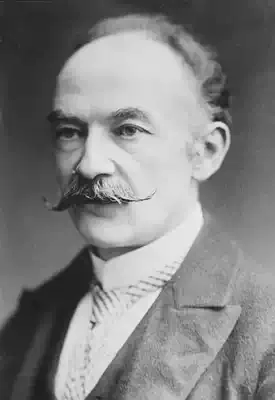
Thomas Hardy
In The Vaulted Way
In the vaulted way, where the passage turned
To the shadowy corner that none could see,
You paused for our parting, - plaintively:
Though overnight had come words that burned
My fond frail happiness out of me.
And then I kissed you, - despite my thought
That our spell must end when reflection came
On what you had deemed me, whose one long aim
Had been to serve you; that what I sought
Lay not in a heart that could breathe such blame.
But yet I kissed you: whereon you again
As of old kissed me. Why, why was it so?
Do you cleave to me after that light-tongued blow?
If you scorned me at eventide, how love then?
The thing is dark, Dear. I do not know.
237
Christina Rossetti
Despised And Rejected
My sun has set, I dwell
In darkness as a dead man out of sight;
And none remains, not one, that I should tell
To him mine evil plight
This bitter night.
I will make fast my door
That hollow friends may trouble me no more.
'Friend, open to Me.'—Who is this that calls?
Nay, I am deaf as are my walls:
Cease crying, for I will not hear
Thy cry of hope or fear.
Others were dear,
Others forsook me: what art thou indeed
That I should heed
Thy lamentable need?
Hungry should feed,
Or stranger lodge thee here?
'Friend, My Feet bleed.
Open thy door to Me and comfort Me.'
I will not open, trouble me no more.
Go on thy way footsore,
I will not rise and open unto thee.
'Then is it nothing to thee? Open, see
Who stands to plead with thee.
Open, lest I should pass thee by, and thou
One day entreat My Face
And howl for grace,
And I be deaf as thou art now.
Open to Me.'
Then I cried out upon him: Cease,
Leave me in peace:
Fear not that I should crave
Aught thou mayst have.
Leave me in peace, yea trouble me no more,
Lest I arise and chase thee from my door.
What, shall I not be let
Alone, that thou dost vex me yet?
But all night long that voice spake urgently:
'Open to Me.'
Still harping in mine ears:
'Rise, let Me in.'
Pleading with tears:
'Open to Me that I may come to thee.'
While the dew dropped, while the dark hours were cold:
'My Feet bleed, see My Face,
See My Hands bleed that bring thee grace,
My Heart doth bleed for thee,
Open to Me.'
So till the break of day:
Then died away
That voice, in silence as of sorrow;
Then footsteps echoing like a sigh
Passed me by,
Lingering footsteps slow to pass.
On the morrow
I saw upon the grass
Each footprint marked in blood, and on my door
The mark of blood for evermore.
233
Robert W. Service
Expectation
My flask of wine was ruby red
And swift I ran my sweet to see;
With eyes that snapped delight I said:
"How mad with love a lad can be!"
The moon was laughing overhead;
I danced as nimbly as a flea.
Thought I: In two weeks time we'll wed;
No more a lonesome widow she;
For I have bought a double bed
And I will father children three.
So singing like a lark I sped
To her who ne'er expected me.
And then I went with wary tread,
Her sweet surprise to greet with glee;
To where her lamplit lattice shed
A rosy radiance on the lea:
. . . And then my heart sank low like lead,
Two shadows on the blind to see.
A man was sitting on the bed,
And she was nudely on his knee. . . .
I saw her face drain white with dread,
I saw her lover madly flee. . . .
Oh how her blood is ruby red,
And I await the gallows tree
235
Thomas Hardy
The Fire at Tranter Sweatley’s
The Fire at Tranter Sweatley’s
They had long met o’ Zundays—her true love and she—
And at junketings, maypoles, and flings;
But she bode wi’ a thirtover uncle, and he
Swore by noon and by night that her goodman should be
Naibor Sweatley—a gaffer oft weak at the knee
From taking o’ sommat more cheerful than tea—
Who tranted, and moved people’s things.
She cried, “O pray pity me!” Nought would he hear;
Then with wild rainy eyes she obeyed,
She chid when her Love was for clinking off wi’ her.
The pa’son was told, as the season drew near
To throw over pu’pit the names of the peäir
As fitting one flesh to be made.
The wedding-day dawned and the morning drew on;
The couple stood bridegroom and bride;
The evening was passed, and when midnight had gone
The folks horned out, “God save the King,” and anon
The two home-along gloomily hied.
The lover Tim Tankens mourned heart-sick and drear
To be thus of his darling deprived:
He roamed in the dark ath’art field, mound, and mere,
And, a’most without knowing it, found himself near
The house of the tranter, and now of his Dear,
Where the lantern-light showed ’em arrived.
The bride sought her cham’er so calm and so pale
That a Northern had thought her resigned;
But to eyes that had seen her in tide-times of weal,
Like the white cloud o’ smoke, the red battlefield’s vail,
That look spak’ of havoc behind.
The bridegroom yet laitered a beaker to drain,
Then reeled to the linhay for more,
When the candle-snoff kindled some chaff from his grain—
Flames spread, and red vlankers, wi’ might and wi’ main,
And round beams, thatch, and chimley-tun roar.
Young Tim away yond, rafted up by the light,
Through brimble and underwood tears,
Till he comes to the orchet, when crooping thereright
In the lewth of a codlin-tree, bivering wi’ fright,
Wi’ on’y her night-rail to screen her from sight,
His lonesome young Barbree appears.
Her cwold little figure half-naked he views
Played about by the frolicsome breeze,
Her light-tripping totties, her ten little tooes,
All bare and besprinkled wi’ Fall’s chilly dews,
While her great gallied eyes, through her hair hanging loose,
Sheened as stars through a tardle o’ trees.
She eyed en; and, as when a weir-hatch is drawn,
Her tears, penned by terror afore,
With a rushing of sobs in a shower were strawn,
Till her power to pour ’em seemed wasted and gone
From the heft o’ misfortune she bore.
“O Tim, my own Tim I must call ’ee—I will!
All the world ha’ turned round on me so!
Can you help her who loved ’ee, though acting so ill?
Can you pity her misery—feel for her still?
When worse than her body so quivering and chill
Is her heart in its winter o’ woe!
“I think I mid almost ha’ borne it,” she said,
“Had my griefs one by one come to hand;
But O, to be slave to thik husbird for bread,
And then, upon top o’ that, driven to wed,
And then, upon top o’ that, burnt out o’ bed,
Is more than my nater can stand!”
Tim’s soul like a lion ’ithin en outsprung—
(Tim had a great soul when his feelings were wrung)—
“Feel for ’ee, dear Barbree?” he cried;
And his warm working-jacket about her he flung,
Made a back, horsed her up, till behind him she clung
Like a chiel on a gipsy, her figure uphung
By the sleeves that around her he tied.
Over piggeries, and mixens, and apples, and hay,
They lumpered straight into the night;
And finding bylong where a halter-path lay,
At dawn reached Tim’s house, on’y seen on their way
By a naibor or two who were up wi’ the day;
But they gathered no clue to the sight.
Then tender Tim Tankens he searched here and there
For some garment to clothe her fair skin;
But though he had breeches and waistcoats to spare,
He had nothing quite seemly for Barbree to wear,
Who, half shrammed to death, stood and cried on a chair
At the caddle she found herself in.
There was one thing to do, and that one thing he did,
He lent her some clouts of his own,
And she took ’em perforce; and while in ’em she slid,
Tim turned to the winder, as modesty bid,
Thinking, “O that the picter my duty keeps hid
To the sight o’ my eyes mid be shown!”
In the tallet he stowed her; there huddied she lay,
Shortening sleeves, legs, and tails to her limbs;
But most o’ the time in a mortal bad way,
Well knowing that there’d be the divel to pay
If ’twere found that, instead o’ the elements’ prey,
She was living in lodgings at Tim’s.
“Where’s the tranter?” said men and boys; “where can er be?”
“Where’s the tranter?” said Barbree alone.
“Where on e’th is the tranter?” said everybod-y:
They sifted the dust of his perished roof-tree,
And all they could find was a bone.
Then the uncle cried, “Lord, pray have mercy on me!”
And in terror began to repent.
But before ’twas complete, and till sure she was free,
Barbree drew up her loft-ladder, tight turned her key—
Tim bringing up breakfast and dinner and tea—
Till the news of her hiding got vent.
Then followed the custom-kept rout, shout, and flare
Of a skimmington-ride through the naiborhood, ere
Folk had proof o’ wold Sweatley’s decay.
Whereupon decent people all stood in a stare,
Saying Tim and his lodger should risk it, and pair:
So he took her to church. An’ some laughing lads there
Cried to Tim, “After Sweatley!” She said, “I declare
I stand as a maiden to-day!”
236

John Greenleaf Whittier
Leggett’s Monument
Yes, pile the marble o'er him! It is well
That ye who mocked him in his long stern strife,
And planted in the pathway of his life
The ploughshares of your hatred hot from hell,
Who clamored down the bold reformer when
He pleaded for his captive fellow-men,
Who spurned him in the market-place, and sought
Within thy walls, St. Tammany, to bind
In party chains the free and honest thought,
The angel utterance of an upright mind,
Well is it now that o'er his grave ye raise
The stony tribute of your tardy praise,
For not alone that pile shall tell to Fame
Of the brave heart beneath, but of the builders' shame!
220
Robert W. Service
My Mate
I've been sittin' starin', starin' at 'is muddy pair of boots,
And tryin' to convince meself it's 'im.
(Look out there, lad! That sniper -- 'e's a dysey when 'e shoots;
'E'll be layin' of you out the same as Jim.)
Jim as lies there in the dug-out wiv 'is blanket round 'is 'ead,
To keep 'is brains from mixin' wiv the mud;
And 'is face as white as putty, and 'is overcoat all red,
Like 'e's spilt a bloomin' paint-pot -- but it's blood.
And I'm tryin' to remember of a time we wasn't pals.
'Ow often we've played 'ookey, 'im and me;
And sometimes it was music-'alls, and sometimes it was gals,
And even there we 'ad no disagree.
For when 'e copped Mariar Jones, the one I liked the best,
I shook 'is 'and and loaned 'im 'arf a quid;
I saw 'im through the parson's job, I 'elped 'im make 'is nest,
I even stood god-farther to the kid.
So when the war broke out, sez 'e: "Well, wot abaht it, Joe?"
"Well, wot abaht it, lad?" sez I to 'im.
'Is missis made a awful fuss, but 'e was mad to go,
('E always was 'igh-sperrited was Jim).
Well, none of it's been 'eaven, and the most of it's been 'ell,
But we've shared our baccy, and we've 'alved our bread.
We'd all the luck at Wipers, and we shaved through Noove Chapelle,
And . . . that snipin' barstard gits 'im on the 'ead.
Now wot I wants to know is, why it wasn't me was took?
I've only got meself, 'e stands for three.
I'm plainer than a louse, while 'e was 'andsome as a dook;
'E always WAS a better man than me.
'E was goin' 'ome next Toosday; 'e was 'appy as a lark,
And 'e'd just received a letter from 'is kid;
And 'e struck a match to show me, as we stood there in the dark,
When . . . that bleedin' bullet got 'im on the lid.
'E was killed so awful sudden that 'e 'adn't time to die.
'E sorto jumped, and came down wiv a thud.
Them corpsy-lookin' star-shells kept a-streamin' in the sky,
And there 'e lay like nothin' in the mud.
And there 'e lay so quiet wiv no mansard to 'is 'ead,
And I'm sick, and blamed if I can understand:
The pots of 'alf and 'alf we've 'ad, and ZIP! like that -- 'e's dead,
Wiv the letter of 'is nipper in 'is 'and.
There's some as fights for freedom and there's some as fights for fun,
But me, my lad, I fights for bleedin' 'ate.
You can blame the war and blast it, but I 'opes it won't be done
Till I gets the bloomin' blood-price for me mate.
It'll take a bit o' bayonet to level up for Jim;
Then if I'm spared I think I'll 'ave a bid,
Wiv 'er that was Mariar Jones to take the place of 'im,
To sorter be a farther to 'is kid.
221
Thomas Hardy
The Inconsistent
I say, "She was as good as fair,"
When standing by her mound;
"Such passing sweetness," I declare,
"No longer treads the ground."
I say, "What living Love can catch
Her bloom and bonhomie,
And what in newer maidens match
Her olden warmth to me!"
- There stands within yon vestry-nook
Where bonded lovers sign,
Her name upon a faded book
With one that is not mine.
To him she breathed the tender vow
She once had breathed to me,
But yet I say, "O love, even now
Would I had died for thee!"
217
Robert W. Service
Vanity
My tangoing seemed to delight her;
With me it was love at first sight.
I mentioned That I was a writer:
She asked me: "What is it you write?"
"Oh, only best-sellers," I told her.
Their titles? . . . She shook her blonde head;
The atmosphere seemed to grow colder:
Not one of my books had she read.
Oh, she was a beauty ensnaring,
And I was an author of note;
But little I saw she'd be caring
If never a novel I wrote.
Alas for the caprice of Cupid!
Alack for the phantom of Fame!
I thought her just homely and stupid:
She didn't know even my name.
I saw her a score of years after;
She gushed as I took off my hat;
But inwardly loud was my laughter,
For she was enormously fat.
Thank heaven I'd not made that error;
I saw Love drive off in a hearse;
But I too retreated in terror . . .
She started to quote me my verse.
212
Henry Lawson
The Other Gum
Well Boory, I have read your “grin”,
And listened to your whine;
I only wish you’d sent it in
Before I printed mine.
You see, I never meant to hit
The new-chum Jackaroo;
I only tried to write a skit
On poets – such as you.
We’re sinners all – the world knows that,
But damned mean sinners some –
(The ‘possum you are barking at
is up the other gum).
But sneer in safety if you choose
I’ve no hand in the game;
I will not fight the crawlers who’s
Afraid to sign his name.
I never strike without a mark –
‘Tis safer in the end;
For he who hits back in the dark
Might chance to hurt a ‘friend’!
The game is stale, your jokes are flat,
You might as well be dumb –
(The ‘possum you are howling at
Is up another gum).
211
Robert W. Service
The Pigeons Of St. Marks
Something's wrong in Pigeon-land;
'Tisn't as it used to be,
When the pilgrim, corn in hand,
Courted us with laughing glee;
When we crooned with pinions furled,
Tamest pigeons in the world.
When we packed each arm and shoulder,
Never deeming man a menace;
Surly birds were never bolder
Than our dainty doves of Venice:
Who would have believed a pigeon
Could become wild as a widgeon.
Well, juts blame it on the War,
When Venetians grew thinner,
And gaunt hands would grab us for
Succulence to serve a dinner . . .
How our numbers fast grew fewer,
As we perished on a skewer.
Pa and Mummie went like that,
So when tourist takes his stand,
On his Borsolino hat
Soft as whispered love I land;
Then with cooing liquid vowels
I . . . evacuate my bowls.
Something's wrong in Pigeon-land;
Mankind we no longer trust;
Shrinking from the tendered hand,
pick we corn from out the dust;
While on guileless pilgrim pate,
Thinking that revenge is sweet,
Soft I croon my hymn of hate,
Drop my tribute and retreat.
213
Robert W. Service
My Bay'nit
When first I left Blighty they gave me a bay'nit
And told me it 'ad to be smothered wiv gore;
But blimey! I 'aven't been able to stain it,
So far as I've gone wiv the vintage of war.
For ain't it a fraud! when a Boche and yours truly
Gits into a mix in the grit and the grime,
'E jerks up 'is 'ands wiv a yell and 'e's duly
Part of me outfit every time.
Left, right, Hans and Fritz!
Goose step, keep up yer mits!
Oh my, Ain't it a shyme!
Part of me outfit every time.
At toasting a biscuit me bay'nit's a dandy;
I've used it to open a bully beef can;
For pokin' the fire it comes in werry 'andy;
For any old thing but for stickin' a man.
'Ow often I've said: "'Ere, I'm goin' to press you
Into a 'Un till you're seasoned for prime,"
And fiercely I rushes to do it, but bless you!
Part of me outfit every time.
Lor, yus; DON'T they look glad?
Right O! 'Owl Kamerad!
Oh my, always the syme!
Part of me outfit every time.
I'm 'untin' for someone to christen me bay'nit,
Some nice juicy Chewton wot's fightin' in France;
I'm fairly down-'earted -- 'ow CAN yer explain it?
I keeps gettin' prisoners every chance.
As soon as they sees me they ups and surrenders,
Extended like monkeys wot's tryin' to climb;
And I uses me bay'nit -- to slit their suspenders -
Part of me outfit every time.
Four 'Uns; lor, wot a bag!
'Ere, Fritz, sample a fag!
Oh my, ain't it a gyme!
Part of me outfit every time.
208
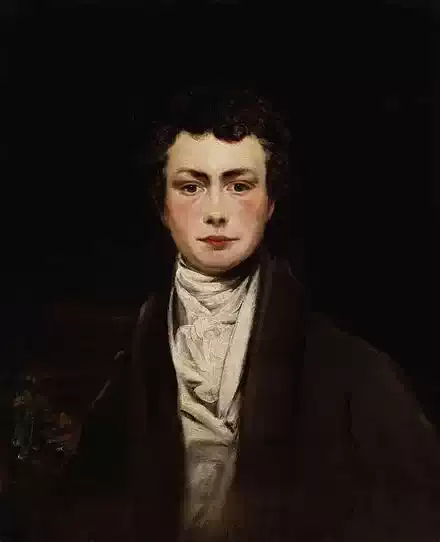
Thomas Moore
The Song of O'Ruark, Prince of Breffni
The valley lay smiling before me,
Where lately I left her behind;
Yet I trembled, and something hung o'er me,
That sadden'd the joy of my mind.
I look'd for the lamp which, she told me,
Should shine when her Pilgrim return'd;
But, though darkness began to infold me,
No lamp from the battlements burn'd!
I flew to her chamber -- 'twas lonely,
As if the loved tenant lay dead; --
Ah, would it were death, and death only!
But no, the young false one had fled.
And there hung the lute that could soften
My very worst pains into bliss;
While the hand that had waked it so often
Now throbb'd to a proud rival's kiss.
There was a time, falsest of women,
When Breffni's good sword would have sought
That man, through a million of foemen,
Who dared but to wrong thee in thought!
While now -- oh degenerate daughter
Of Erin, how fallen is thy fame!
And through ages of bondage and slaughter,
Our country shall bleed for thy shame.
Already the curse is upon her,
And strangers her valleys profane;
They come to divide, to dishonour,
And tyrants they long will remain.
But onward! --- the green banner rearing,
Go, flesh every sword to the hilt;
On our side is Virtue and Erin,
On theirs is the Saxon and Guilt.
210
Anonymous
My bag and me they sundered us
My bag and me they sundered us,
’Twas stuffed from string to sauleen,
My bag of bags they sundered us!
Yourself and I, mo stóreen,
At every hour of night and day,
Through road and lane and bohreen
Without complaint we made our way,
Till one sore day a carman
In pity took us from the road,
And faced us towards Dungarvan
Where mortal sin hath firm abode.
An allalu mo wauleen,
Without a hole or rent in it,
’Twas stuffed from string to sauleen,
My half-year’s rent was pent in it!
My curses attend Dungarvan,
Her boats, her borough, and her fish,
May every woe that mars man
Come dancing down upon her dish!
For all the rogues behind you,
From Slaney’s bank to Shannon’s tide,
Are but poor scholars, mind you,
To the rogues you’d meet in Abbeyside!
An allalu mo wauleen,
My little bag I treasured it,
’Twas stuffed from string to sauleen,
A thousand times I measured it!
’Twas stuffed from string to sauleen,
My bag of bags they sundered us!
Yourself and I, mo stóreen,
At every hour of night and day,
Through road and lane and bohreen
Without complaint we made our way,
Till one sore day a carman
In pity took us from the road,
And faced us towards Dungarvan
Where mortal sin hath firm abode.
An allalu mo wauleen,
Without a hole or rent in it,
’Twas stuffed from string to sauleen,
My half-year’s rent was pent in it!
My curses attend Dungarvan,
Her boats, her borough, and her fish,
May every woe that mars man
Come dancing down upon her dish!
For all the rogues behind you,
From Slaney’s bank to Shannon’s tide,
Are but poor scholars, mind you,
To the rogues you’d meet in Abbeyside!
An allalu mo wauleen,
My little bag I treasured it,
’Twas stuffed from string to sauleen,
A thousand times I measured it!
207
Thomas Hardy
San Sebastian
With Thoughts of Sergeant M---- (Pensioner), who died -
"WHY, Sergeant, stray on the Ivel Way,
As though at home there were spectres rife?
From first to last 'twas a proud career!
And your sunny years with a gracious wife
Have brought you a daughter dear.
"I watched her to-day; a more comely maid,
As she danced in her muslin bowed with blue,
Round a Hintock maypole never gayed."
--"Aye, aye; I watched her this day, too,
As it happens," the Sergeant said.
"My daughter is now," he again began,
"Of just such an age as one I knew
When we of the Line, in the Foot-Guard van,
On an August morning--a chosen few--
Stormed San Sebastian.
"She's a score less three; so about was she--
The maiden I wronged in Peninsular days....
You may prate of your prowess in lusty times,
But as years gnaw inward you blink your bays,
And see too well your crimes!
"We'd stormed it at night, by the vlanker-light
Of burning towers, and the mortar's boom:
We'd topped the breach but had failed to stay,
For our files were misled by the baffling gloom;
And we said we'd storm by day.
"So, out of the trenches, with features set,
On that hot, still morning, in measured pace,
Our column climbed; climbed higher yet,
Past the fauss'bray, scarp, up the curtain-face,
And along the parapet.
"From the batteried hornwork the cannoneers
Hove crashing balls of iron fire;
On the shaking gap mount the volunteers
In files, and as they mount expire
Amid curses, groans, and cheers.
"Five hours did we storm, five hours re-form,
As Death cooled those hot blood pricked on;
Till our cause was helped by a woe within;
They swayed from the summit we'd leapt upon,
And madly we entered in.
"On end for plunder, 'mid rain and thunder
That burst with the lull of our cannonade,
We vamped the streets in the stifling air--
Our hunger unsoothed, our thirst unstayed--
And ransacked the buildings there.
"Down the stony steps of the house-fronts white
We rolled rich puncheons of Spanish grape,
Till at length, with the fire of the wine alight,
I saw at a doorway a fair fresh shape--
A woman, a sylph, or sprite.
"Afeard she fled, and with heated head
I pursued to the chamber she called her own;
--When might is right no qualms deter,
And having her helpless and alone
I wreaked my lust on her.
"She raised her beseeching eyes to me,
And I heard the words of prayer she sent
In her own soft language.... Seemingly
I copied those eyes for my punishment
In begetting the girl you see!
"So, to-day I stand with a God-set brand
Like Cain's, when he wandered from kindred's ken....
I served through the war that made Europe free;
I wived me in peace-year. But, hid from men,
I bear that mark on me.
"And I nightly stray on the Ivel Way
As though at home there were spectres rife;
I delight me not in my proud career;
And 'tis coals of fire that a gracious wife
Should have brought me a daughter dear!"
206
Robert W. Service
Gypsy Jill
They're hanging Bill at eight o' clock,
And millions will applaud.
He killed, and so they have to kill,
Such is the will of God.
His brother Tom is on my bed
To keep me comforted.
I see his bleary, blotchy face,
I hear his sodden snore.
He plans that he can take Bill's place;
I felt worse than a whore
As in his arms I cried all night,
Thinking of poor Bill's plight.
I keep my eyes upon the clock;
It nears the stroke of eight.
I think how bravely Bill will walk
To meet his gallows fate . . .
His loaded gun is in the tent,-I
know now what he meant.
Though Tom is boastful he will wed
With me, no more to part,
I'll put a bullet through his head,
Another through my heart:
At eight, stone-dead we three will be,
--Bill, Tom and me.
206