
Sadness and Melancholy
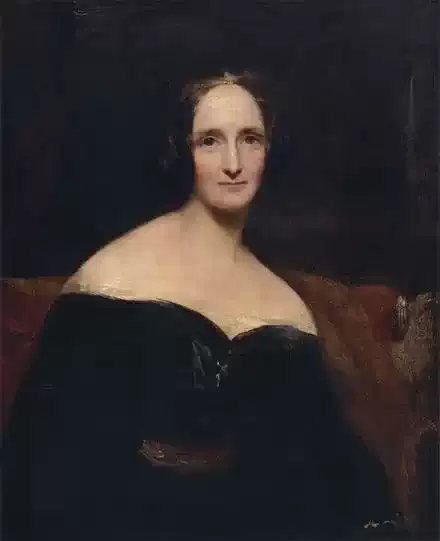
Percy Bysshe Shelley
On A Dead Violet
The odor from the flower is gone
Which like thy kisses breathed on me;
The color from the flower is flown
Which glowed of thee and only thee!
A shrivelled, lifeless, vacant form,
It lies on my abandoned breast;
And mocks the heart, which yet is warm,
With cold and silent rest.
I weep--my tears revive it not;
I sigh--it breathes no more on me:
Its mute and uncomplaining lot
Is such as mine should be.
1,066
6

Ella Wheeler Wilcox
The Story Of Grumble Tone
There was a boy named Grumble Tone, who ran away to sea.
'I'm sick of things on land,' he said, 'as sick as I can be,
A life upon the bounding wave is just the life for me!'
But the seething ocean billows failed to stimulate his mirth,
For he did not like the vessel or the dizzy rolling berth,
And he thought the sea was almost as unpleasant as the earth.
He wandered into foreign lands, he saw each wondrous sight,
But nothing that he heard or saw seemed just exactly right,
And so he journeyed on and on, still seeking for delight.
He talked with kings and ladies grand; he dined in courts, they say,
But always found the people dull and longed to get away
To search for that mysterious land where he should want to stay.
He wandered over all the world, his hair grew white as snow,
He reached that final bourne at last where all of us must go,
But never found the land he sought; the reason would you know?
The reason was that north or south, where'er his steps were bent,
On land or sea, in court or hall, he found but discontent,
For he took his disposition with him, everywhere he went.
494
1

Elizabeth Barrett Browning
Sonnet XXX: I See Thine Image
I see thine image through my tears to-night,
And yet to-day I saw thee smiling. How
Refer the cause?--Beloved, is it thou
Or I, who makes me sad? The acolyte
Amid the chanted joy and thankful rite
May so fall flat, with pale insensate brow,
On the altar-stair. I hear thy voice and vow,
Perplexed, uncertain, since thou art out of sight,
As he, in his swooning ears, the choir's amen.
Beloved, dost thou love? or did I see all
The glory as I dreamed, and fainted when
Too vehement light dilated my ideal,
For my soul's eyes? Will that light come again,
As now these tears come--falling hot and real?
1,709

William Shakespeare
Sonnet 30: When to the sessions of sweet silent thought
When to the sessions of sweet silent thought
I summon up remembrance of things past,
I sigh the lack of many a thing I sought,
And with old woes new wail my dear time's waste:
Then can I drown an eye, unused to flow,
For precious friends hid in death's dateless night,
And weep afresh love's long since cancelled woe,
And moan the expense of many a vanished sight:
Then can I grieve at grievances foregone,
And heavily from woe to woe tell o'er
The sad account of fore-bemoanèd moan,
Which I new pay as if not paid before.
But if the while I think on thee, dear friend,
All losses are restored and sorrows end.
1,771
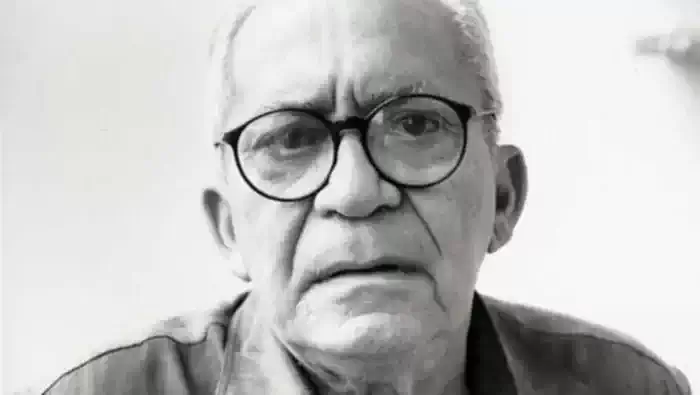
Lêdo Ivo
Poor Folk at the Bus Station
Poor folk travel. At the bus station
they crane their necks like geese to see
the place-names on the buses. The look on their faces
betrays their fear of losing something:
the suitcase that holds a transitor radio and a coat
of chilling drabness on a day without dreams,
the mortadella sandwich at the bottom of their bag,
and the suburban sunshine and dust beyond the viaducts.
Amid the uproar of loud-speakers and the wheezing of buses
they are seared of missing their connection
hidden in a haze of time-tables.
Some dozing on benches awaken with a start
though nightmares are the privilege of those
who fuel the hearing of bored psycho-analysts
in rooms as antiseptic as the cotton-wool that
plugs the nostrils of corpses.
Standing in queues poor folk adopt a serious expression
combining fear, impatience and submission.
How grotesque poor folk are! And how their stench
offends us even at a distance!
They have no concept of social graces and no idea
how to behave in public.
A nicotine-stained finger rubs an itching eye
that has nothing but matter to show for its dream.
From a sagging swollen breast a trickle of milk
drips into a tiny mouth familiar with tears.
On the platform poor folk come and go, leaping and clutching
baggage and parcels,
they ask silly questions at the ticket offices,
whisper mysterious words
and gaze at magazine covers with the starfled look
of someone who does not know the way to the threshold of life.
Why all this coming and going? And those gaudy clothes,
those yeflows reminiscent of palm oü that injure the delicate sight
of passengers forced to endure so many unpleasant odours
and those glaring reds one associares with a fun-fair or circus?
Poor folk do not know how to travel or dress.
Not even how to live: they have no concept of comfort
although some even possess a television set.
In truth, poor folk do not know how to die.
(They invariably have a sordid, vulgar death)
Throughout the world they are a nuisance,
unwanted travellers who occupy our seats
even when we are seated and they travel on foot.
Os Pobres na Estação Rodoviária Poema em Português
1,328
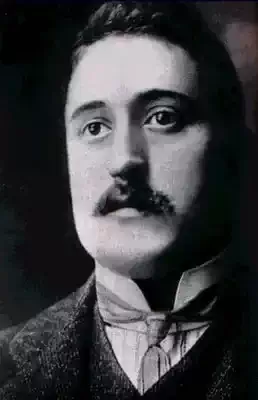
Guillaume Apollinaire
Vitam Impendere Amori
(Vitam Impendere Amori: To Threaten Life for Love)
Love is dead within your arms
Do you remember his encounter
He’s dead you restore the charms
He returns at your encounter
Another spring of springs gone past
I think of all its tenderness
Farewell season done at last
You’ll return as tenderly
****
In the evening light that’s faded
Where our several loves brush by
Your memory lies enchained
Far from our shades that die
O hands bound by memory
Burning like a funeral pyre
Where the last black Phoenix
Perfection comes to respire
Link by link the chain wears thin
Deriding us your memory
Flies ah hear it you who rail
I kneel again at your feet
****
You’ve not surprised my secret yet
Already the cortège moves on
But left to us is the regret
of there being no connivance none
The rose floats at the water’s edge
The maskers have passed by in crowds
It trembles in me like a bell
This heavy secret you ask now
****
Evening falls and in the garden
Women tell their histories
to Night that not without disdain
spills their dark hair’s mysteries
Little children little children
Your wings have flown away
But you rose that defend yourself
Throw your unrivalled scents away
For now’s the hour of petty theft
Of plumes of flowers and of tresses
Gather the fountain jets so free
Of whom the roses are mistresses
****
You descended through the water clear
I drowned my self so in your glance
The soldier passes she leans down
Turns and breaks away a branch
You float on nocturnal waves
The flame is my own heart reversed
Coloured as that comb’s tortoiseshell
The wave that bathes you mirrors well
****
O my abandoned youth is dead
Like a garland faded
Here the season comes again
Of suspicion and disdain
The landscape’s formed of canvasses
A false stream of blood flows down
And under the tree the stars glow fresh
The only passer by’s a clown
The glass in the frame has cracked
An air defined uncertainly
Hovers between sound and thought
Between ‘to be’ and memory
O my abandoned youth is dead
Like a garland faded
Here the season comes again
Of suspicion and disdain
1,477
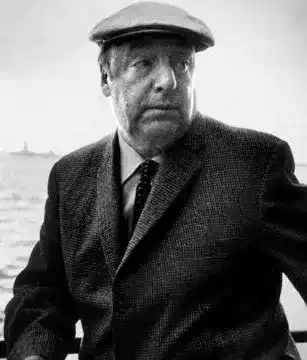
Pablo Neruda
Saddest Poem
I can write the saddest poem of all tonight.
Write, for instance: "The night is full of stars,
and the stars, blue, shiver in the distance."
The night wind whirls in the sky and sings.
I can write the saddest poem of all tonight.
I loved her, and sometimes she loved me too.
On nights like this, I held her in my arms.
I kissed her so many times under the infinite sky.
She loved me, sometimes I loved her.
How could I not have loved her large, still eyes?
I can write the saddest poem of all tonight.
To think I don't have her. To feel that I've lost her.
To hear the immense night, more immense without her.
And the poem falls to the soul as dew to grass.
What does it matter that my love couldn't keep her.
The night is full of stars and she is not with me.
That's all. Far away, someone sings. Far away.
My soul is lost without her.
As if to bring her near, my eyes search for her.
My heart searches for her and she is not with me.
The same night that whitens the same trees.
We, we who were, we are the same no longer.
I no longer love her, true, but how much I loved her.
My voice searched the wind to touch her ear.
Someone else's. She will be someone else's. As she once
belonged to my kisses.
Her voice, her light body. Her infinite eyes.
I no longer love her, true, but perhaps I love her.
Love is so short and oblivion so long.
Because on nights like this I held her in my arms,
my soul is lost without her.
Although this may be the last pain she causes me,
and this may be the last poem I write for her.
1,565
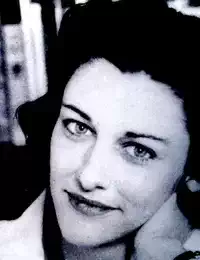
Anne Sexton
Sylvias Death
O Sylvia, Sylvia,
with a dead box of stones and spoons,
with two children, two meteors
wandering loose in a tiny playroom,
with your mouth into the sheet,
into the roofbeam, into the dumb prayer,
(Sylvia, Sylvia
where did you go
after you wrote me
from Devonshire
about raising potatoes
and keeping bees?)
what did you stand by,
just how did you lie down into?
Thief --
how did you crawl into,
crawl down alone
into the death I wanted so badly and for so long,
the death we said we both outgrew,
the one we wore on our skinny breasts,
the one we talked of so often each time
we downed three extra dry martinis in Boston,
the death that talked of analysts and cures,
the death that talked like brides with plots,
the death we drank to,
the motives and the quiet deed?
(In Boston
the dying
ride in cabs,
yes death again,
that ride home
with our boy.)
O Sylvia, I remember the sleepy drummer
who beat on our eyes with an old story,
how we wanted to let him come
like a sadist or a New York fairy
to do his job,
a necessity, a window in a wall or a crib,
and since that time he waited
under our heart, our cupboard,
and I see now that we store him up
year after year, old suicides
and I know at the news of your death
a terrible taste for it, like salt,
(And me,
me too.
And now, Sylvia,
you again
with death again,
that ride home
with our boy.)
And I say only
with my arms stretched out into that stone place,
what is your death
but an old belonging,
a mole that fell out
of one of your poems?
(O friend,
while the moons bad,
and the kings gone,
and the queens at her wits end
the bar fly ought to sing!)
O tiny mother,
you too!
O funny duchess!
O blonde thing!
February 17, 1963
1,381
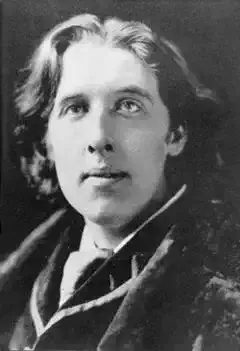
Oscar Wilde
Requiescat
TREAD lightly, she is near
Under the snow,
Speak gently, she can hear
The daisies grow.
All her bright golden hair
Tarnished with rust,
She that was young and fair
Fallen to dust.
Lily-like, white as snow,
She hardly knew
She was a woman, so
Sweetly she grew.
Coffin-board, heavy stone,
Lie on her breast,
I vex my heart alone
She is at rest.
Peace, Peace, she cannot hear
Lyre or sonnet,
All my life's buried here,
Heap earth upon it.
AVIGNON.
1,116
Pablo Neruda
Walking Around
It so happens I am sick of being a man.
And it happens that I walk into tailorshops and movie
houses
dried up, waterproof, like a swan made of felt
steering my way in a water of wombs and ashes.
The smell of barbershops makes me break into hoarse
sobs.
The only thing I want is to lie still like stones or wool.
The only thing I want is to see no more stores, no gardens,
no more goods, no spectacles, no elevators.
It so happens that I am sick of my feet and my nails
and my hair and my shadow.
It so happens I am sick of being a man.
Still it would be marvelous
to terrify a law clerk with a cut lily,
or kill a nun with a blow on the ear.
It would be great
to go through the streets with a green knife
letting out yells until I died of the cold.
I don't want to go on being a root in the dark,
insecure, stretched out, shivering with sleep,
going on down, into the moist guts of the earth,
taking in and thinking, eating every day.
I don't want so much misery.
I don't want to go on as a root and a tomb,
alone under the ground, a warehouse with corpses,
half frozen, dying of grief.
That's why Monday, when it sees me coming
with my convict face, blazes up like gasoline,
and it howls on its way like a wounded wheel,
and leaves tracks full of warm blood leading toward the
night.
And it pushes me into certain corners, into some moist
houses,
into hospitals where the bones fly out the window,
into shoeshops that smell like vinegar,
and certain streets hideous as cracks in the skin.
There are sulphur-colored birds, and hideous intestines
hanging over the doors of houses that I hate,
and there are false teeth forgotten in a coffeepot,
there are mirrors
that ought to have wept from shame and terror,
there are umbrellas everywhere, and venoms, and umbilical
cords.
I stroll along serenely, with my eyes, my shoes,
my rage, forgetting everything,
I walk by, going through office buildings and orthopedic
shops,
and courtyards with washing hanging from the line:
underwear, towels and shirts from which slow
dirty tears are falling.
Translated by Robert Bly
1,069
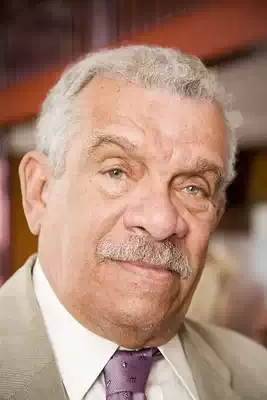
Derek Walcott
Sabbaths, W.I.
Those villages stricken with the melancholia of Sunday,
in all of whose ocher streets one dog is sleeping
those volcanoes like ashen roses, or the incurable sore
of poverty, around whose puckered mouth thin boys are
selling yellow sulphur stone
the burnt banana leaves that used to dance
the river whose bed is made of broken bottles
the cocoa grove where a bird whose cry sounds green and
yellow and in the lights under the leaves crested with
orange flame has forgotten its flute
gommiers peeling from sunburn still wrestling to escape the sea
the dead lizard turning blue as stone
those rivers, threads of spittle, that forgot the old music
that dry, brief esplanade under the drier sea almonds
where the dry old men sat
watching a white schooner stuck in the branches
and playing draughts with the moving frigate birds
those hillsides like broken pots
those ferns that stamped their skeletons on the skin
and those roads that begin reciting their names at vespers
mention them and they will stop
those crabs that were willing to let an epoch pass
those herons like spinsters that doubted their reflections
inquiring, inquiring
those nettles that waited
those Sundays, those Sundays
those Sundays when the lights at the road's end were an occasion
those Sundays when my mother lay on her back
those Sundays when the sisters gathered like white moths
round their street lantern
and cities passed us by on the horizon
1,124
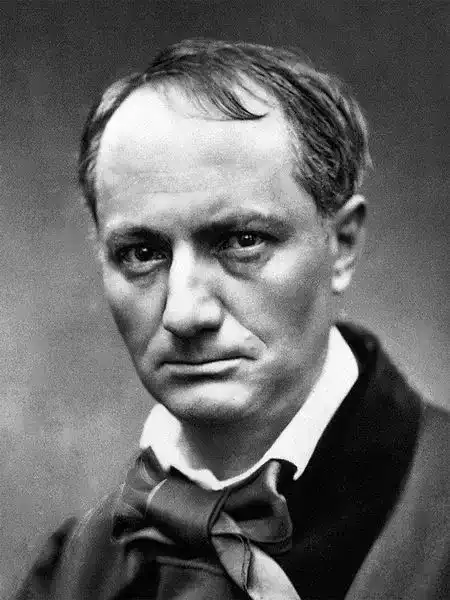
Charles Baudelaire
The Enemy
My youth was nothing but a black storm
Crossed now and then by brilliant suns.
The thunder and the rain so ravage the shores
Nothing's left of the fruit my garden held once.
I should employ the rake and the plow,
Having reached the autumn of ideas,
To restore this inundated ground
Where the deep grooves of water form tombs in the lees.
And who knows if the new flowers you dreamed
Will find in a soil stripped and cleaned
The mystic nourishment that fortifies?
—O Sorrow—O Sorrow—Time consumes Life,
And the obscure enemy that gnaws at my heart
Uses the blood that I lose to play my part.
Translated by William A. Sigler
1,051
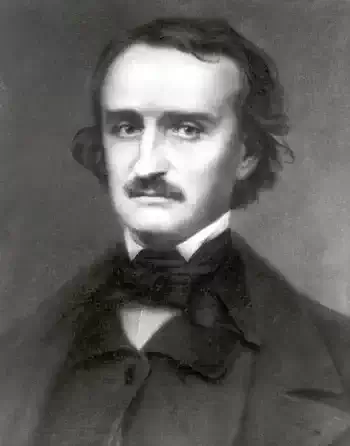
Edgar Allan Poe
To
Sleep on, sleep on, another hour —
I would not break so calm a sleep,
To wake to sunshine and to show'r,
To smile and weep.
Sleep on, sleep on, like sculptured thing,
Majestic, beautiful art thou;
Sure seraph shields thee with his wing
And fans thy brow —
We would not deem thee child of earth,
For, O, angelic, is thy form!
But, that in heav'n thou had'st thy birth,
Where comes no storm
To mar the bright, the perfect flow'r,
But all is beautiful and still —
And golden sands proclaim the hour
Which brings no ill.
Sleep on, sleep on, some fairy dream
Perchance is woven in thy sleep —
But, O, thy spirit, calm, serene,
Must wake to weep.
1833
1,143
Edgar Allan Poe
The Happiest Day
The happiest day — the happiest hour
My sear'd and blighted heart hath known,
The highest hope of pride, and power,
I feel hath flown.
Of power! said I? yes! such I ween
But they have vanish'd long alas!
The visions of my youth have been —
But let them pass.
And, pride, what have I now with thee?
Another brow may ev'n inherit
The venom thou hast pour'd on me —
Be still my spirit.
The happiest day — the happiest hour
Mine eyes shall see — have ever seen
The brightest glance of pride and power
I feel — have been:
But were that hope of pride and power
Now offer'd, with the pain
Ev'n then I felt — that brightest hour
I would not live again:
For on its wing wall dark alloy
And as it flutter'd — fell
An essence — powerful to destroy
A soul that knew it well.
1827
1,136

Lord Byron
Sonnet - to Genevra
Thy cheek is pale with thought, but not from woe,
And yet so lovely, that if Mirth could flush
Its rose of whiteness with the brightest blush,
My heart would wish away that ruder glow:
And dazzle not thy deepblue
eyesbut,
oh!
While gazing on them sterner eyes will gush,
And into mine my mother's weakness rush,
Soft as the last drops round Heaven's airy bow.
For, though thy long dark lashes low depending,
The soul of melancholy Gentleness
Gleams like a Seraph from the sky descending,
Above all pain, yet pitying all distress;
At once such majesty with sweetness blending,
I worship more, but cannot love thee less.
1,189

John Keats
Sonnet To Byron
Byron! how sweetly sad thy melody!
Attuning still the soul to tenderness,
As if soft Pity, with unusual stress,
Had touch'd her plaintive lute, and thou, being by,
Hadst caught the tones, nor suffer'd them to die.
O'ershadowing sorrow doth not make thee less
Delightful: thou thy griefs dost dress
With a bright halo, shining beamily,
As when a cloud the golden moon doth veil,
Its sides are ting'd with a resplendent glow,
Through the dark robe oft amber rays prevail,
And like fair veins in sable marble flow;
Still warble, dying swan! still tell the tale,
The enchanting tale, the tale of pleasing woe.
964

Antonio Roberval Miketen
Eight Song of Friendship
Close to the waves of the sea of Vigo
I come to remember a friend.
Birds shed feathers at the horizon
and the feathers, water from a spring
in Vigo, on the seaweeds
of the friend announce his delay.
From beyond comes, light as feathers,
the pain I do not want to lament.
But the svagulls fill with mist
the depth of my sorrow,
when, on the shores of the sea of Vigo
I come to remember a friend.
I come to remember a friend.
Birds shed feathers at the horizon
and the feathers, water from a spring
in Vigo, on the seaweeds
of the friend announce his delay.
From beyond comes, light as feathers,
the pain I do not want to lament.
But the svagulls fill with mist
the depth of my sorrow,
when, on the shores of the sea of Vigo
I come to remember a friend.
1,019
Guillaume Apollinaire
Autumn Crocuses
The meadow is poisonous but pretty in the autumn
The cows that graze there are slowly poisoned
Meadow-saffron the colour of lilac and of shadows
Under the eyes grows there your eyes are like those flowers
Mauve as their shadows and mauve as this autumn
And for your eyes' sake my life is slowly poisoned
Children from school come with their commotion
Dressed in smocks and playing the mouth-organ
Picking autumn crocuses which are like their mothers
Daughters of their daughters and the colour of your eyelids
Which flutter like flowers in the mad breeze blown
The cowherd sings softly to himself all alone
While slow moving lowing the cows leave behind them
Forever this great meadow ill flowered by autumn
1,035
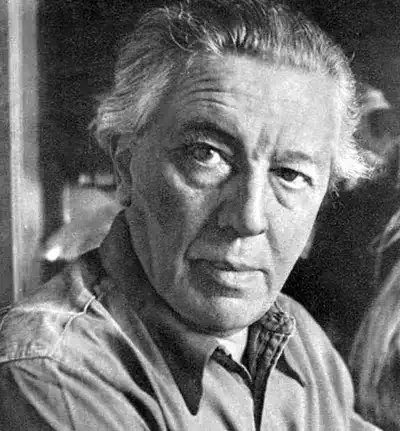
André Breton
Less Time
Less time than it takes to say it, less tears than it takes to die; I've taken account of
everything,
there you have it. I've made a census of the stones, they are as numerous as my
fingers and some
others; I've distributed some pamphlets to the plants, but not all were willing to accept
them. I've
kept company with music for a second only and now I no longer know what to think of
suicide, for
if I ever want to part from myself, the exit is on this side and, I add mischievously, the
entrance, the
re-entrance is on the other. You see what you still have to do. Hours, grief, I don't
keep a
reasonable account of them; I'm alone, I look out of the window; there is no passerby,
or rather no
one passes (underline passes). You don't know this man? It's Mr. Same. May I
introduce Madam
Madam? And their children. Then I turn back on my steps, my steps turn back too, but
I don't
know exactly what they turn back on. I consult a schedule; the names of the towns
have been
replaced by the names of people who have been quite close to me. Shall I go to A,
return to B,
change at X? Yes, of course I'll change at X. Provided I don't miss the connection with
boredom!
There we are: boredom, beautiful parallels, ah! how beautiful the parallels are under
God's
perpendicular.
1,017
Antonio Roberval Miketen
It is Late to be Morning
For Simone
Poor little helpless baby chick,
leaning against the thrash can,
at ease in a coat of sheer luxury,
derived from a secret sable fur,
finer
than human skin.
High up, the clouds
are becoming the color
of the yellow of your softness.
The evening turned the morning late.
Your little eyes still open
want my hands
touching the back of your feathers.
They want me to be a small boy,
a small boy offering my innocence
to the little child that chirps inside you.
Sweet was your tameness
bent over a defeated rose,
while you rested your eternity
on a bouquet of roses, despised
because withered.
But under you each petal bleeded,
leaving a stain of wine
in the rniddle of your belly.
I then passed by,
you were already dead when I passed by
enamored of the sunset,
oblivious of the morning
that was rising in your little eyes.
941
Percy Bysshe Shelley
Art Thou Pale For Weariness
Art thou pale for weariness
Of climbing heaven and gazing on the earth,
Wandering companionless
Among the stars that have a different birth,
And ever changing, like a joyless eye
That finds no object worth its constancy?
Of climbing heaven and gazing on the earth,
Wandering companionless
Among the stars that have a different birth,
And ever changing, like a joyless eye
That finds no object worth its constancy?
910
Oscar Wilde
Impression Du Matin
The Thames nocturne of blue and gold
Changed to a Harmony in grey:
A barge with ochre-coloured hay
Dropt from the wharf: and chill and cold
The yellow fog came creeping down
The bridges, till the houses' walls
Seemed changed to shadows and St. Paul's
Loomed like a bubble o'er the town.
Then suddenly arose the clang
Of waking life; the streets were stirred
With country waggons: and a bird
Flew to the glistening roofs and sang.
But one pale woman all alone,
The daylight kissing her wan hair,
Loitered beneath the gas lamps' flare,
With lips of flame and heart of stone.
897
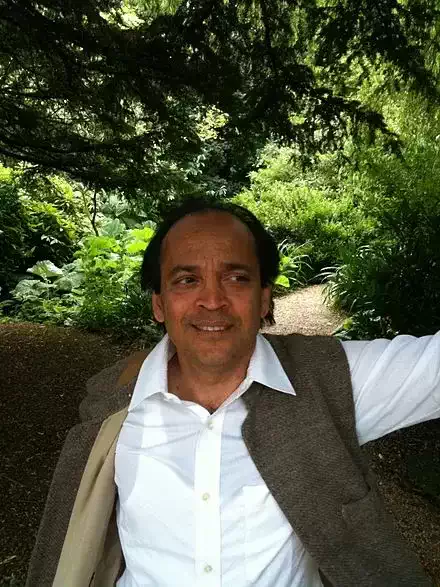
Vikram Seth
Mistaken
I smiled at you because I thought that you
Were someone else; you smiled back; and there grew
Between two strangers in a library
Something that seemes like love; but you loved me
(If that's the word) because you thought that I
Was other than I was. And by and by
We found we'd been mistaken all the while
From that first glance, that first mistaken smile.
861

Ezra Pound
The Garden
En robe de parade. Samain
Like a skein of loose silk blown against a wall
She walks by the railing of a path in Kensington Gardens,
And she is dying piece-meal
Tof a sort of emotional anaemia.
And round about there is a rabble
Of the filthy, sturdy, unkillable infants of the very poor.
They shall inherit the earth.
In her is the end of breeding.
Her boredom is exquisite and excessive.
She would like some one to speak to her,
And is almost afraid that I
Twill commit that indiscretion.
869
Page 1
Next