
Sadness and Melancholy

Christina Rossetti
Sing Me A Song
Sing me a song -
What shall I sing? -
Three merry sisters
Dancing in a ring,
Light and fleet upon their feet
As birds upon the wing.
Tell me a tale -
What shall I tell?
Two mournful sisters,
And a tolling knell,
Tolling ding and tolling dong,
Ding dong bell.
What shall I sing? -
Three merry sisters
Dancing in a ring,
Light and fleet upon their feet
As birds upon the wing.
Tell me a tale -
What shall I tell?
Two mournful sisters,
And a tolling knell,
Tolling ding and tolling dong,
Ding dong bell.
189
Christina Rossetti
Grown And Flown
I loved my love from green of Spring
Until sere Autumn's fall;
But now that leaves are withering
How should one love at all?
One heart's too small
For hunger, cold, love, everything.
I loved my love on sunny days
Until late Summer's wane;
But now that frost begins to glaze
How should one love again ?
Nay, love and pain
Walk wide apart in diverse ways.
I loved my love - alas to see
That this should be, alas!
I thought that this could scarcely be,
Yet has it come to pass:
Sweet sweet love was,
Now bitter bitter grown to me.
190

William Ernest Henley
Croquis
The beach was crowded. Pausing now and then,
He groped and fiddled doggedly along,
His worn face glaring on the thoughtless throng
The stony peevishness of sightless men.
He seemed scarce older than his clothes. Again,
Grotesquing thinly many an old sweet song,
So cracked his fiddle, his hand so frail and wrong,
You hardly could distinguish one in ten.
He stopped at last, and sat him on the sand,
And, grasping wearily his bread-winner,
Staring dim towards the blue immensity,
Then leaned his head upon his poor old hand.
He may have slept: he did not speak nor stir:
His gesture spoke a vast despondency.
182
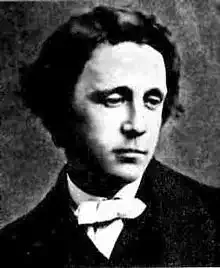
Lewis Carroll
Melancholetta
With saddest music all day long
She soothed her secret sorrow:
At night she sighed "I fear 'twas wrong
Such cheerful words to borrow.
Dearest, a sweeter, sadder song
I'll sing to thee tomorrow."
I thanked her, but I could not say
That I was glad to hear it:
I left the house at break of day,
And did not venture near it
Till time, I hoped, had worn away
Her grief, for nought could cheer it!
My dismal sister! Couldst thou know
The wretched home thou keepest!
Thy brother, drowned in daily woe,
Is thankful when thou sleepest;
For if I laugh, however low,
When thou'rt awake, thou weepest!
I took my sister t'other day
(Excuse the slang expression)
To Sadler's Wells to see the play
In hopes the new impression
Might in her thoughts, from grave to gay
Effect some slight digression.
I asked three gay young dogs from town
To join us in our folly,
Whose mirth, I thought, might serve to drown
My sister's melancholy:
The lively Jones, the sportive Brown,
And Robinson the jolly.
The maid announced the meal in tones
That I myself had taught her,
Meant to allay my sister's moans
Like oil on troubled water:
I rushed to Jones, the lively Jones,
And begged him to escort her.
Vainly he strove, with ready wit,
To joke about the weather To
ventilate the last 'ON DIT' To
quote the price of leather She
groaned "Here I and Sorrow sit:
Let us lament together!"
I urged "You're wasting time, you know:
Delay will spoil the venison."
"My heart is wasted with my woe!
There is no rest in
Venice, on
The Bridge of Sighs!" she quoted low
From Byron and from Tennyson.
I need not tell of soup and fish
In solemn silence swallowed,
The sobs that ushered in each dish,
And its departure followed,
Nor yet my suicidal wish
To BE the cheese I hollowed.
Some desperate attempts were made
To start a conversation;
"Madam," the sportive Brown essayed,
"Which kind of recreation,
Hunting or fishing, have you made
Your special occupation?"
Her lips curved downwards instantly,
As if of indiarubber.
"Hounds IN FULL CRY I like," said she:
(Oh how I longed to snub her!)
"Of fish, a whale's the one for me,
IT IS SO FULL OF BLUBBER!"
The night's performance was "King John."
"It's dull," she wept, "and soso!"
Awhile I let her tears flow on,
She said they soothed her woe so!
At length the curtain rose upon
'Bombastes Furioso.'
In vain we roared; in vain we tried
To rouse her into laughter:
Her pensive glances wandered wide
From orchestra to rafter "
TIER UPON TIER!" she said, and sighed;
And silence followed after.
181

Siegfried Sassoon
'In the Pink'
So Davies wrote: ' This leaves me in the pink. '
Then scrawled his name: ' Your loving sweetheart Willie '
With crosses for a hug. He'd had a drink
Of rum and tea; and, though the barn was chilly,
For once his blood ram warm; he had pay to spend,
Winter was passing; soon the year would mend.
He couldn't sleep that night. Stiff in the dark
He groaned and thought of Sundays at the farm,
When he'd go out as cheerful as a lark
In his best suit to wander arm-in-arm
With brown-eyed Gwen, and whisper in her ear
The simple, silly things she liked to hear.
And then he thought: to-morrow night we trudge
Up to the trenches, and my boots are rotten.
Five miles of stodgy clay and freezing sludge,
And everything but wretchedness forgotten.
To-night he's in the pink; but soon he'll die.
And still the war goes on; he don't know why.
122

Joyce Kilmer
The House with Nobody in It
Whenever I walk to Suffern along the Erie track
I go by a poor old farmhouse with its shingles broken and black.
I suppose I've passed it a hundred times, but I always stop for a minute
And look at the house, the tragic house, the house with nobody in it.
I never have seen a haunted house, but I hear there are such things;
That they hold the talk of spirits, their mirth and sorrowings.
I know this house isn't haunted, and I wish it were, I do;
For it wouldn't be so lonely if it had a ghost or two.
This house on the road to Suffern needs a dozen panes of glass,
And somebody ought to weed the walk and take a scythe to the grass.
It needs new paint and shingles, and the vines should be trimmed and tied;
But what it needs the most of all is some people living inside.
If I had a lot of money and all my debts were paid
I'd put a gang of men to work with brush and saw and spade.
I'd buy that place and fix it up the way it used to be
And I'd find some people who wanted a home and give it to them free.
Now, a new house standing empty, with staring window and door,
Looks idle, perhaps, and foolish, like a hat on its block in the store.
But there's nothing mournful about it; it cannot be sad and lone
For the lack of something within it that it has never known.
But a house that has done what a house should do,
a house that has sheltered life,
That has put its loving wooden arms around a man and his wife,
A house that has echoed a baby's laugh and held up his stumbling feet,
Is the saddest sight, when it's left alone, that ever your eyes could meet.
So whenever I go to Suffern along the Erie track
I never go by the empty house without stopping and looking back,
Yet it hurts me to look at the crumbling roof and the shutters fallen apart,
For I can't help thinking the poor old house is a house with a broken heart.
142
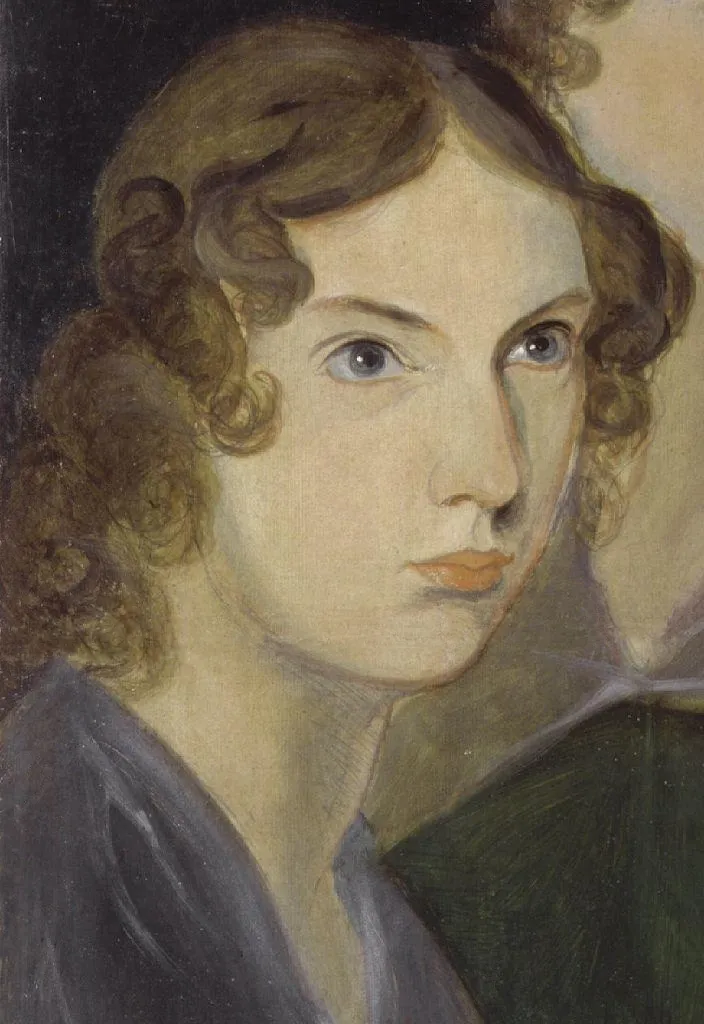
Anne Brontë
And yet my comrades marked it not
And yet my comrades marked it not,
My voice was still the same;
They saw me smile, and o'er my face No
signs of sadness came;
They little knew my hidden thoughts
And they will never know
The anguish of my drooping heart,
The bitter aching woe!
Olivia Vernon.
My voice was still the same;
They saw me smile, and o'er my face No
signs of sadness came;
They little knew my hidden thoughts
And they will never know
The anguish of my drooping heart,
The bitter aching woe!
Olivia Vernon.
87
Anne Brontë
Fragment
Yes I will take a cheerful tone
And feign to share their heartless glee,
But I would rather weep alone
Than laugh amid their revelry.
And feign to share their heartless glee,
But I would rather weep alone
Than laugh amid their revelry.
95
Siegfried Sassoon
The Dug-out
Why do you lie with your legs ungainly huddled,
And one arm bent across your sullen, cold,
Exhausted face? It hurts my heart to watch you,
Deep-shadowed from the candle's guttering gold;
And you wonder why I shake you by the shoulder;
Drowsy, you mumble and sigh and turn your head...
You are too young to fall asleep for ever;
And when you sleep you remind me of the dead.
84
Anne Brontë
Monday Night May 11th 1846 / Domestic Peace
Why should such gloomy silence reign;
And why is all the house so drear,
When neither danger, sickness, pain,
Nor death, nor want have entered here?
We are as many as we were
That other night, when all were gay,
And full of hope, and free from care;
Yet, is there something gone away.
The moon without as pure and calm
Is shining as that night she shone;
but now, to us she brings no balm,
For something from our hearts is gone.
Something whose absence leaves a void,
A cheerless want in every heart.
Each feels the bliss of all destroyed
And mourns the change but
each apart.
The fire is burning in the grate
As redly as it used to burn,
But still the hearth is desolate
Till Mirth and Love with Peace return.
'Twas Peace that flowed from heart to heart
With looks and smiles that spoke of Heaven,
And gave us language to impart
The blissful thoughts itself had given.
Sweet child of Heaven, and joy of earth!
O, when will Man thy value learn?
We rudely drove thee from our hearth,
And vainly sigh for thy return.
3
Previous
Page 11