
Truth

William Shakespeare
The Passionate Pilgrim
I.
When my love swears that she is made of truth,
I do believe her, though I know she lies,
That she might think me some untutor'd youth,
Unskilful in the world's false forgeries,
Thus vainly thinking that she thinks me young,
Although I know my years be past the best,
I smiling credit her false-speaking tongue,
Outfacing faults in love with love's ill rest.
But wherefore says my love that she is young?
And wherefore say not I that I am old?
O, love's best habit is a soothing tongue,
And age, in love, loves not to have years told.
Therefore, I'll lie with love, and love with me,
Since that our faults in love thus smother'd be.
II.
Two loves I have, of comfort and despair,
That like two spirits do suggest me still;
My better angel is a man right fair,
My worser spirit a woman colour'd ill.
To win me soon to hell, my female evil
Tempteth my better angel from my side,
And would corrupt my saint to be a devil,
Wooing his purity with her fair pride.
And whether that my angel be turn'd fiend,
Suspect I may, yet not directly tell:
For being both to me, both to each friend,
I guess one angel in another's hell:
The truth I shall not know, but live in doubt,
Till my bad angel fire my good one out.
III.
Did not the heavenly rhetoric of thine eye,
'Gainst whom the world could not hold argument.
Persuade my heart to this false perjury?
Vows for thee broke deserve not punishment.
A woman I forswore; but I will prove,
Thou being a goddess, I forswore not thee:
My vow was earthly, thou a heavenly love:
Thy grace being gain'd cures all disgrace in me.
My vow was breath, and breath a vapour is;
Then, thou fair sun, that on this earth doth shine,
Exhale this vapour vow; in thee it is:
If broken, then it is no fault of mine.
If by me broke, what fool is not so wise
To break an oath, to win a paradise?
IV.
Sweet Cytherea, sitting by a brook
With young Adonis, lovely, fresh, and green,
Did court the lad with many a lovely look,
Such looks as none could look but beauty's queen,
She told him stories to delight his ear;
She show'd him favours to allure his eye;
To win his heart, she touch'd him here and there, --
Touches so soft still conquer chastity.
But whether unripe years did want conceit,
Or he refused to take her figured proffer,
The tender nibbler would not touch the bait,
But smile and jest at every gentle offer:
Then fell she on her back, fair queen, and toward:
He rose and ran away; ah, fool too froward!
V.
If love make me forsworn, how shall I swear to love?
O never faith could hold, if not to beauty vow'd:
Though to myself forsworn, to thee I'll constant prove;
Those thoughts, to me like oaks, to thee like osiers bow'd.
Study his bias leaves, and make his book thine eyes,
Where all those pleasures live that art can comprehend.
If knowledge be the mark, to know thee shall suffice;
Well learned is that tongue that well can thee commend;
All ignorant that soul that sees thee without wonder;
Which is to me some praise, that I thy parts admire:
Thy eye Jove's lightning seems, thy voice his dreadful thunder,
Which, not to anger bent, is music and sweet fire.
Celestial as thou art, O do not love that wrong,
To sing heaven's praise with such an earthly tongue.
VI.
Scarce had the sun dried up the dewy morn,
And scarce the herd gone to the hedge for shade,
When Cytherea, all in love forlorn,
A longing tarriance for Adonis made
Under an osier growing by a brook,
A brook where Adon used to cool his spleen:
Hot was the day; she hotter that did look
For his approach, that often there had been.
Anon he comes, and throws his mantle by,
And stood stark naked on the brook's green brim:
The sun look'd on the world with glorious eye,
Yet not so wistly as this queen on him.
He, spying her, bounced in, whereas he stood:
'O Jove,' quoth she, 'why was not I a flood!'
VII.
Fair is my love, but not so fair as fickle;
Mild as a dove, but neither true nor trusty;
Brighter than glass, and yet, as glass is brittle;
Softer than wax, and yet, as iron, rusty:
A lily pale, with damask dye to grace her,
None fairer, nor none falser to deface her.
Her lips to mine how often hath she joined,
Between each kiss her oaths of true love swearing!
How many tales to please me bath she coined,
Dreading my love, the loss thereof still fearing!
Yet in the midst of all her pure protestings,
Her faith, her oaths, her tears, and all were jestings.
She burn'd with love, as straw with fire flameth;
She burn'd out love, as soon as straw outburneth;
She framed the love, and yet she foil'd the framing;
She bade love last, and yet she fell a-turning.
Was this a lover, or a lecher whether?
Bad in the best, though excellent in neither.
VIII.
If music and sweet poetry agree,
As they must needs, the sister and the brother,
Then must the love be great 'twixt thee and me,
Because thou lovest the one, and I the other.
Dowland to thee is dear, whose heavenly touch
Upon the lute doth ravish human sense;
Spenser to me, whose deep conceit is such
As, passing all conceit, needs no defence.
Thou lovest to bear the sweet melodious sound
That Phoebus' lute, the queen of music, makes;
And I in deep delight am chiefly drown'd
Whenas himself to singing he betakes.
One god is god of both, as poets feign;
One knight loves both, and both in thee remain.
IX.
Fair was the morn when the fair queen of love,
Paler for sorrow than her milk-white dove,
For Adon's sake, a youngster proud and wild;
Her stand she takes upon a steep-up hill:
Anon Adonis comes with horn and hounds;
She, silly queen, with more than love's good will,
Forbade the boy he should not pass those grounds:
'Once,' quoth she, 'did I see a fair sweet youth
Here in these brakes deep-wounded with a boar,
Deep in the thigh, a spectacle of ruth!
See, in my thigh,' quoth she, 'here was the sore.
She showed hers: he saw more wounds than one,
And blushing fled, and left her all alone.
X.
Sweet rose, fair flower, untimely pluck'd, soon vaded,
Pluck'd in the bud, and vaded in the spring!
Bright orient pearl, alack, too timely shaded!
Fair creature, kill'd too soon by death's sharp sting!
Like a green plum that hangs upon a tree,
And falls, through wind, before the fall should he.
I weep for thee, and yet no cause I have;
For why thou left'st me nothing in thy will:
And yet thou left'st me more than I did crave;
For why I craved nothing of thee still:
O yes, dear friend, I pardon crave of thee,
Thy discontent thou didst bequeath to me.
XI.
Venus, with young Adonis sitting by her
Under a myrtle shade, began to woo him:
She told the youngling how god Mars did try her,
And as he fell to her, so fell she to him.
'Even thus,' quoth she, 'the warlike god embraced me,'
And then she clipp'd Adonis in her arms;
'Even thus,' quoth she, 'the warlike god unlaced me,'
As if the boy should use like loving charms;
'Even thus,' quoth she, 'he seized on my lips
And with her lips on his did act the seizure
And as she fetched breath, away he skips,
And would not take her meaning nor her pleasure.
Ah, that I had my lady at this bay,
To kiss and clip me till I run away!
XII.
Crabbed age and youth cannot live together
Youth is full of pleasance, age is full of care;
Youth like summer morn, age like winter weather;
Youth like summer brave, age like winter bare;
Youth is full of sport, age's breath is short;
Youth is nimble, age is lame;
Youth is hot and bold, age is weak and cold;
Youth is wild, and age is tame.
Age, I do abhor thee; youth, I do adore thee;
O, my love, my love is young!
Age, I do defy thee: O, sweet shepherd, hie thee,
For methinks thou stay'st too long.
XIII.
Beauty is but a vain and doubtful good;
A shining gloss that vadeth suddenly;
A flower that dies when first it gins to bud;
A brittle glass that's broken presently:
A doubtful good, a gloss, a glass, a flower,
Lost, vaded, broken, dead within an hour.
And as goods lost are seld or never found,
As vaded gloss no rubbing will refresh,
As flowers dead lie wither'd on the ground,
As broken glass no cement can redress,
So beauty blemish'd once's for ever lost,
In spite of physic, painting, pain and cost.
XIV.
Good night, good rest. Ah, neither be my share:
She bade good night that kept my rest away;
And daff'd me to a cabin hang'd with care,
To descant on the doubts of my decay.
'Farewell,' quoth she, 'and come again tomorrow:
Fare well I could not, for I supp'd with sorrow.
Yet at my parting sweetly did she smile,
In scorn or friendship, nill I construe whether:
'T may be, she joy'd to jest at my exile,
'T may be, again to make me wander thither:
'Wander,' a word for shadows like myself,
As take the pain, but cannot pluck the pelf.
XV.
Lord, how mine eyes throw gazes to the east!
My heart doth charge the watch; the morning rise
Doth cite each moving sense from idle rest.
Not daring trust the office of mine eyes,
While Philomela sits and sings, I sit and mark,
And wish her lays were tuned like the lark;
For she doth welcome daylight with her ditty,
And drives away dark dismal-dreaming night:
The night so pack'd, I post unto my pretty;
Heart hath his hope, and eyes their wished sight;
Sorrow changed to solace, solace mix'd with sorrow;
For why, she sigh'd and bade me come tomorrow.
Were I with her, the night would post too soon;
But now are minutes added to the hours;
To spite me now, each minute seems a moon;
Yet not for me, shine sun to succour flowers!
Pack night, peep day; good day, of night now borrow:
Short, night, to-night, and length thyself tomorrow.
347

John Greenleaf Whittier
To Charles Sumner
If I have seemed more prompt to censure wrong
Than praise the right; if seldom to thine ear
My voice hath mingled with the exultant cheer
Borne upon all our Northern winds along;
If I have failed to join the fickle throng
In wide-eyed wonder, that thou standest strong
In victory, surprised in thee to find
Brougham's scathing power with Canning's grace combined;
That he, for whom the ninefold Muses sang,
From their twined arms a giant athlete sprang,
Barbing the arrows of his native tongue
With the spent shafts Latona's archer flung,
To smite the Python of our land and time,
Fell as the monster born of Crissa's slime,
Like the blind bard who in Castalian springs
Tempered the steel that clove the crest of kings,
And on the shrine of England's freedom laid
The gifts of Cumve and of Delphi's' shade,-Small
need hast thou of words of praise from me.
Thou knowest my heart, dear friend, and well canst guess
That, even though silent, I have not the less
Rejoiced to see thy actual life agree
With the large future which I shaped for thee,
When, years ago, beside the summer sea,
White in the moon, we saw the long waves fall
Baffled and broken from the rocky wall,
That, to the menace of the brawling flood,
Opposed alone its massive quietude,
Calm as a fate; with not a leaf nor vine
Nor birch-spray trembling in the still moonshine,
Crowning it like God's peace. I sometimes think
That night-scene by the sea prophetical,
(For Nature speaks in symbols and in signs,
And through her pictures human fate divines),
That rock, wherefrom we saw the billows sink
In murmuring rout, uprising clear and tall
In the white light of heaven, the type of one
Who, momently by Error's host assailed,
Stands strong as Truth, in greaves of granite mailed;
And, tranquil-fronted, listening over all
The tumult, hears the angels say, Well done!
336

Emily Dickinson
I never told the buried gold
I never told the buried gold
Upon the hill-that lies-
I saw the sun-his plunder done
Crouch low to guard his prize.
He stood as near
As stood you here-
A pace had been between-
Did but a snake bisect the brake
My life had forfeit been.
That was a wondrous booty-
I hope 'twas honest gained.
Those were the fairest ingots
That ever kissed the spade!
Whether to keep the secret-
Whether to reveal-
Whether as I ponder
Kidd will sudden sail-
Could a shrewd advise me
We might e'en divide-
Should a shrewd betray me-
Atropos decide!
328
Emily Dickinson
Struck, was I, not yet by Lightning
Struck, was I, not yet by LightningLightning-
lets away
Power to perceive His Process
With Vitality.
Maimed-was I-yet not by Venture-
Stone of stolid Boy-
Nor a Sportsman's Peradventure-
Who mine Enemy?
Robbed-was I-intact to Bandit-
All my Mansion torn
Sun-
withdrawn to Recognition-
Furthest shining-done-
Yet was not the foe-of any-
Not the smallest Bird
In the nearest Orchard dwelling
Be of Me-afraid.
Most-I love the Cause that slew Me.
Often as I die
Its beloved Recognition
Holds a Sun on Me
Best-at Setting-as is Nature's-
Neither witnessed Rise
Till the infinite Aurora
In the other's eyes.
327
John Greenleaf Whittier
The Star Of Bethlehem
Where Time the measure of his hours
By changeful bud and blossom keeps,
And, like a young bride crowned with flowers,
Fair Shiraz in her garden sleeps;
Where, to her poet's turban stone,
The Spring her gift of flowers imparts,
Less sweet than those his thoughts have sown
In the warm soil of Persian hearts:
There sat the stranger, where the shade
Of scattered date-trees thinly lay,
While in the hot clear heaven delayed
The long and still and weary day.
Strange trees and fruits above him hung,
Strange odors filled the sultry air,
Strange birds upon the branches swung,
Strange insect voices murmured there.
And strange bright blossoms shone around,
Turned sunward from the shadowy bowers,
As if the Gheber's soul had found
A fitting home in Iran's flowers.
Whate'er he saw, whate'er he heard,
Awakened feelings new and sad,-No
Christian garb, nor Christian word,
Nor church with Sabbath-bell chimes glad,
But Moslem graves, with turban stones,
And mosque-spires gleaming white, in view,
And graybeard Mollahs in low tones
Chanting their Koran service through.
The flowers which smiled on either hand,
Like tempting fiends, were such as they
Which once, o'er all that Eastern land,
As gifts on demon altars lay.
As if the burning eye of Baal
The servant of his Conqueror knew,
From skies which knew no cloudy veil,
The Sun's hot glances smote him through.
'Ah me!' the lonely stranger said,
'The hope which led my footsteps on,
And light from heaven around them shed,
O'er weary wave and waste, is gone!
'Where are the harvest fields all white,
For Truth to thrust her sickle in?
Where flock the souls, like doves in flight,
From the dark hiding-place of sin?
'A silent-horror broods o'er all,-The
burden of a hateful spell,-The
very flowers around recall
The hoary magi's rites of hell!
'And what am I, o'er such a land
The banner of the Cross to bear?
Dear Lord, uphold me with Thy hand,
Thy strength with human weakness share!'
He ceased; for at his very feet
In mild rebuke a floweret smiled;
How thrilled his sinking heart to greet
The Star-flower of the Virgin's child!
Sown by some wandering Frank, it drew
Its life from alien air and earth,
And told to Paynim sun and dew
The story of the Saviour's birth.
From scorching beams, in kindly mood,
The Persian plants its beauty screened,
And on its pagan sisterhood,
In love, the Christian floweret leaned.
With tears of joy the wanderer felt
The darkness of his long despair
Before that hallowed symbol melt,
Which God's dear love had nurtured there.
From Nature's face, that simple flower
The lines of sin and sadness swept;
And Magian pile and Paynim bower
In peace like that of Eden slept.
Each Moslem tomb, and cypress old,
Looked holy through the sunset air;
And, angel-like, the Muezzin told
From tower and mosque the hour of prayer.
With cheerful steps, the morrow's dawn
From Shiraz saw the stranger part;
The Star-flower of the Virgin-Born
Still blooming in his hopeful heart!
324
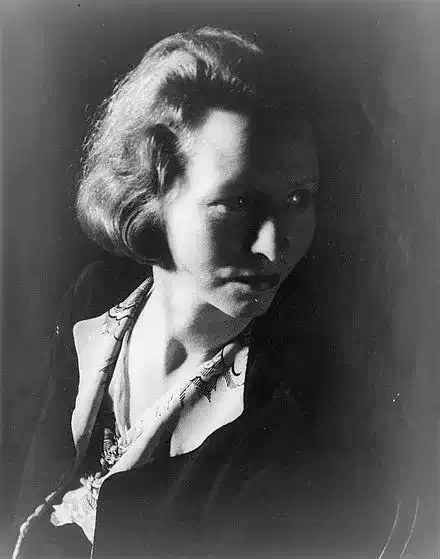
Edna St. Vincent Millay
Euclid Alone
Euclid alone has looked on Beauty bare.
Let all who prate of Beauty hold their peace,
And lay them prone upon the earth and cease
To ponder on themselves, the while they stare
At nothing, intricately drawn nowhere
In shapes of shifting lineage; let geese
Gabble and hiss, but heroes seek release
From dusty bondage into luminous air.
O blinding hour, O holy, terrible day,
When first the shaft into his vision shone
Of light anatomized! Euclid alone
Has looked on Beauty bare. Fortunate they
Who, though once only and then but far away,
Have heard her massive sandal set on stone.
318

John Donne
Mercurius Gallo-Belgicus
Like Esop's fellow-slaves, O Mercury,
Which could do all things, thy faith is ; and I
Like Esop's self, which nothing. I confess
I should have had more faith, if thou hadst less.
Thy credit lost thy credit. 'Tis sin to do,
In this case, as thou wouldst be done unto,
To believe all. Change thy name ; thou art like
Mercury in stealing, but liest like a Greek.
316

Henry Lawson
The Ghost
Down the street as I was drifting with the city's human tide,
Came a ghost, and for a moment walked in silence by my side --
Now my heart was hard and bitter, and a bitter spirit he,
So I felt no great aversion to his ghostly company.
Said the Shade: `At finer feelings let your lip in scorn be curled,
`Self and Pelf', my friend, has ever been the motto for the world.'
And he said: `If you'd be happy, you must clip your fancy's wings,
Stretch your conscience at the edges to the size of earthly things;
Never fight another's battle, for a friend can never know
When he'll gladly fly for succour to the bosom of the foe.
At the power of truth and friendship let your lip in scorn be curled -`
Self and Pelf', my friend, remember, is the motto of the world.
`Where Society is mighty, always truckle to her rule;
Never send an `i' undotted to the teacher of a school;
Only fight a wrong or falsehood when the crowd is at your back,
And, till Charity repay you, shut the purse, and let her pack;
At the fools who would do other let your lip in scorn be curled,
`Self and Pelf', my friend, remember, that's the motto of the world.
`Ne'er assail the shaky ladders Fame has from her niches hung,
Lest unfriendly heels above you grind your fingers from the rung;
Or the fools who idle under, envious of your fair renown,
Heedless of the pain you suffer, do their worst to shake you down.
At the praise of men, or censure, let your lip in scorn be curled,
`Self and Pelf', my friend, remember, is the motto of the world.
`Flowing founts of inspiration leave their sources parched and dry,
Scalding tears of indignation sear the hearts that beat too high;
Chilly waters thrown upon it drown the fire that's in the bard;
And the banter of the critic hurts his heart till it grows hard.
At the fame your muse may offer let your lip in scorn be curled,
`Self and Pelf', my friend, remember, that's the motto of the world.
`Shun the fields of love, where lightly, to a low and mocking tune,
Strong and useful lives are ruined, and the broken hearts are strewn.
Not a farthing is the value of the honest love you hold;
Call it lust, and make it serve you! Set your heart on nought but gold.
At the bliss of purer passions let your lip in scorn be curled -`
Self and Pelf', my friend, shall ever be the motto of the world.'
Then he ceased and looked intently in my face, and nearer drew;
But a sudden deep repugnance to his presence thrilled me through;
Then I saw his face was cruel, by the look that o'er it stole,
Then I felt his breath was poison, by the shuddering of my soul,
Then I guessed his purpose evil, by his lip in sneering curled,
And I knew he slandered mankind, by my knowledge of the world.
But he vanished as a purer brighter presence gained my side -`
Heed him not! there's truth and friendship
in this wondrous world,' she cried,
And of those who cleave to virtue in their climbing for renown,
Only they who faint or falter from the height are shaken down.
At a cynic's baneful teaching let your lip in scorn be curled!
`Brotherhood and Love and Honour!' is the motto for the world.'
311
William Shakespeare
Sonnet 138: When my love swears that she is made of truth
When my love swears that she is made of truth
I do believe her, though I know she lies,
That she might think me some untutor'd youth,
Unlearned in the world's false subtleties.
Thus vainly thinking that she thinks me young,
Although she knows my days are past the best,
Simply I credit her false speaking tongue:
On both sides thus is simple truth suppress'd.
But wherefore says she not she is unjust?
And wherefore say not I that I am old?
O, love's best habit is in seeming trust,
And age in love loves not to have years told:
Therefore I lie with her and she with me,
And in our faults by lies we flatter'd be.
311

Jonathan Swift
On Ink
I am jet black, as you may see,
The son of pitch and gloomy night:
Yet all that know me will agree,
I'm dead except I live in light.
Sometimes in panegyric high,
Like lofty Pindar, I can soar;
And raise a virgin to the sky,
Or sink her to a pocky whore.
My blood this day is very sweet,
To-morrow of a bitter juice;
Like milk, 'tis cried about the street,
And so applied to different use.
Most wondrous is my magic power:
For with one colour I can paint;
I'll make the devil a saint this hour,
Next make a devil of a saint.
Through distant regions I can fly,
Provide me but with paper wings;
And fairly show a reason why
There should be quarrels among kings:
And, after all, you'll think it odd,
When learned doctors will dispute,
That I should point the word of God,
And show where they can best confute.
Let lawyers bawl and strain their throats:
'Tis I that must the lands convey,
And strip their clients to their coats;
Nay, give their very souls away.
301
Emily Dickinson
A Tongue—to tell Him I am true!
A Tongue—to tell Him I am true!
Its fee—to be of Gold—
Had Nature—in Her monstrous House
A single Ragged Child—
To earn a Mine—would run
That Interdicted Way,
And tell Him—Charge thee speak it plain—
That so far—Truth is True?
And answer What I do—
Beginning with the Day
That Night—begun—
Nay—Midnight—'twas—
Since Midnight—happened—say—
If once more—Pardon—Boy—
The Magnitude thou may
Enlarge my Message—If too vast
Another Lad—help thee—
Thy Pay—in Diamonds—be—
And His—in solid Gold—
Say Rubies—if He hesitate—
My Message—must be told—
Say—last I said—was This—
That when the Hills—come down—
And hold no higher than the Plain—
My Bond—have just begun—
And when the Heavens—disband—
And Deity conclude—
Then—look for me. Be sure you say—
Least Figure—on the Road—
296
Henry Lawson
Watching The Crows
A bushman got lost in a scrub in the North,
And all the long morning the searchers went forth.
They swore at the rain that had washed out the tracks
And left not a trace for the eyes of the blacks;
But, trusting the signs that the blackfellow knows,
A quiet old darkey stood watching the crows.
The solemn old blackman stood silently by;
He stood like a statue, his face to the sky.
Black Billy was out of the bearings—we thought—
If he looked above for the bushman we sought;
For we rather suspected the spirit would go
In—well, quite another direction, you know.
Most bushmen on solemn occasions will joke,
And unto Black Bill ’twas the super who spoke.
He asked, as he cocked his red nose in the air—
“You think it old Harrison sit down up there?”
“I’m watching the crows. Where the white man lies dead
The crows will fly over,” the blackfellow said.
The blackfellow died, and long years have gone round
Since the day when old Harrison’s body was found;
But still do I see, in my vision at night,
A faint figure come like a shadow in sight,
And nearer and nearer it comes till it grows
Like the form of that blackfellow—“watching the crows”.
292

Robert W. Service
Visibility
Because my eyes were none to bright
Strong spectacles I bought,
And lo! there sprang into my sight
A life beyond my thought:
A world of wonder and delight
My magic lenses brought.
Aye, sudden leaping in my sight
The far became the near;
Life unbelievably was bright,
And vividly was clear.
My heart was lifted with delight,
Then--then I shrank in fear.
For faces I had thought were gay
I saw were lined with care,
While strange corruption and decay
Surprised me everywhere:
Dismayed I put my specs away,-Such
truth I could not bear.
And now I do not want to see
With clarity of view;
For while there's heaven hell may be
More tragically true:
Though dim may be Reality,
Sheer love shines through.
284
Edna St. Vincent Millay
I Know The Face Of Falsehood And Her Tongue
I know the face of Falsehood and her Tongue
Honeyed with unction, Plausible with guile,
Are dear to men, whom count me not among,
That owe their daily credit to her smile;
Such have been succoured out of great distress
By her contriving, if accounts be true:
Their deference now above the board, I guess,
Dishcharges what beneath the board is due.
As for myself, I'd liefer lack her aid
Than eat her presence; let this building fall:
But let me never lift my latch, afraid
To hear her simpering accents in the hall,
Nor force an entrance past mephitic airs
Of stale patchoulie hanging on my stairs.
276
Emily Dickinson
Truth—is as old as God
Truth—is as old as God—
His Twin identity
And will endure as long as He
A Co-Eternity—
And perish on the Day
Himself is borne away
From Mansion of the Universe
A lifeless Deity.
His Twin identity
And will endure as long as He
A Co-Eternity—
And perish on the Day
Himself is borne away
From Mansion of the Universe
A lifeless Deity.
269
Henry Lawson
The Labour Agitator
LET the liar call me liar,
And the robber call me thief.
They can only fan the fire
That is born of my belief.
While I’m speaking, while I’m writing,
To reform the wrongful laws,
Well I know that I am fighting
For the grand old Cause.
See the army of the rebels
Marching on for evermore.
We are countless as the pebbles
That are strewn along the shore.
Agitating, agitating,
Till the Truth has sealed the fate
Of the wrongs that I am hating
With the grand old Hate.
Though no battle banner rustles
In a smoke that blurs the blue,
As when “heroes” poured from Brussels
To the field of Waterloo,
Though we do not hear the rattle
Of the rifles in the wars,
There is glory in the battle
For the grand old Cause.
See the army of the rebels
Marching on for evermore.
We are countless as the pebbles
That are strewn along the shore.
Agitating, agitating,
Till the Truth has sealed the fate
Of the wrongs that I am hating
With the grand old Hate.
No! I look not to the reaping
In the dynasty of men,
For I know that I’ll be sleeping
In a slandered grave e’er then.
Till his right to man is given
We’ll rebel, and we’ll rebel
As we would rebel in heaven
If it proved a hell.
See the army of the rebels
Marching on for evermore.
We are countless as the pebbles
That are strewn along the shore.
Agitating, agitating,
Till the Truth has sealed the fate
Of the wrongs that I am hating
With the grand old Hate.
No! There’s neither creed nor nation
Where the Labour flag’s unfurled,
For the Labour agitation
Breaks the barriers of the world.
Let the rulers fly in terror
With their scornful lips uncurled,
One by one the gods of error
From their thrones are hurled.
See the army of the rebels
Marching on for evermore.
We are countless as the pebbles
That are strewn along the shore.
Agitating, agitating,
Till the Truth has sealed the fate
Of the wrongs that I am hating
With the grand old Hate.
269

George Herbert
Sonnet (II)
O
Sure Lord, there is enough in thee to dry
Oceans of Ink ; for, as the Deluge did
Cover the Earth, so doth thy Majesty :
Each Cloud distills thy praise, and doth forbid
Poets to turn it to another use.
Roses and Lillies speak thee ; and to make
A pair of Cheeks of them, is thy abuse.
Why should I Womens eyes for Chrystal take?
Such poor invention burns in their low mind,
Whose fire is wild, and doth not upward go
To praise, and on thee Lord, some Ink bestow.
Open the bones, and you shall nothing find
In the best face but filth, when Lord, in thee
The beauty lies, in the discovery
267
Robert W. Service
White Christmas
My folks think I'm a serving maid
Each time I visit home;
They do not dream I ply a trade
As old as Greece or Rome;
For if they found I'd fouled their name
And was not white as snow,
I'm sure that they would die of shame . . .
Please, God, they'll never know.
I clean the paint from off my face,
In sober black I dress;
Of coquetry I leave no trace
To give them vague distress;
And though it causes me a pang
To play such sorry tricks,
About my neck I meekly hang
A silver crufix.
And so with humble step I go
Just like a child again,
To greet their Christmas candle-glow,
A soul without a stain;
So well I play my contrite part
I make myself believe
There's not a stain within my heart
On Holy Christmas Eve.
With double natures we are vext,
And what we feel, we are;
A saint one day, a sinner next,
A red light or a star;
A prostitute or proselyte,
And in each part sincere:
So I become a vestal white
One week in every year.
For this I say without demur
From out life's lurid lore,
Each righteous women has in her
A tincture of the whore;
While every harpy of the night,
As I have learned too well;
Holds in her heart a heaven-light
To ransom her from hell.
So I'll go home and sweep and dust;
I'll make the kitchen fire,
And be a model of daughters just
The best they could desire;
I'll fondle them and cook their food,
And Mother dear will say:
"Thank God! my darling is as good
As when she went away."
But after New Year's Day I'll fill
My bag and though they grieve,
I'll bid them both good-bye until
Another Christmas Eve;
And then . . . a knock upon the door:
I'll find them waiting there,
And angel-like I'll come once more
In answer to their prayer.
Then Lo! one night when candle-light
Gleams mystic on the snow,
And music swells of Christmas bells,
I'll come, no more to go:
The old folks need my love and care,
Their gold shall gild my dross,
And evermore my breast shall bear
My little silver cross.
266
Emily Dickinson
The Truth—is stirless
The Truth—is stirless—
Other force—may be presumed to move—
This—then—is best for confidence—
When oldest Cedars swerve—
And Oaks untwist their fists—
And Mountains—feeble—lean—
How excellent a Body, that
Stands without a Bone—
How vigorous a Force
That holds without a Prop—
Truth stays Herself—and every man
That trusts Her—boldly up—
266
John Greenleaf Whittier
The Relic
TOKEN Of friendship true and tried,
From one whose fiery heart of youth
With mine has beaten, side by side,
For Liberty and Truth;
With honest pride the gift I take,
And prize it for the giver's sake.
But not alone because it tells
Of generous hand and heart sincere;
Around that gift of friendship dwells
A memory doubly dear;
Earth's noblest aim, man's holiest thought,
With that memorial frail inwrought!
Pure thoughts and sweet like flowers unfold,
And precious memories round it cling,
Even as the Prophet's rod of old
In beauty blossoming:
And buds of feeling, pure and good,
Spring from its cold unconscious wood.
Relic of Freedom's shrine! a brand
Plucked from its burning! let it be
Dear as a jewel from the hand
Of a lost friend to me!
Flower of a perished garland left,
Of life and beauty unbereft!
Oh, if the young enthusiast bears,
O'er weary waste and sea, the stone
Which crumbled from the Forum's stairs,
Or round the Parthenon;
Or olive-bough from some wild tree
Hung over old Thermopylæ:
If leaflets from some hero's tomb,
Or moss-wreath torn from ruins hoary;
Or faded flowers whose sisters bloom
On fields renowned in story;
Or fragment from the Alhambra's crest,
Or the gray rock by Druids blessed;
Sad Erin's shamrock greenly growing
Where Freedom led her stalwart kern,
Or Scotia's 'rough bur thistle' blowing
On Bruce's Bannockburn;
Or Runnymede's wild English rose,
Or lichen plucked from Sempach's snows!
If it be true that things like these
To heart and eye bright visions bring,
Shall not far holier memories
To this memorial cling?
Which needs no mellowing mist of time
To hide the crimson stains of crime!
Wreck of a temple, unprofaned;
Of courts where Peace with Freedom trod,
Lifting on high, with hands unstained,
Thanksgiving unto God;
Where Mercy's voice of love was pleading
For human hearts in bondage bleeding!
Where, midst the sound of rushing feet
And curses on the night-air flung,
That pleading voice rose calm and sweet
From woman's earnest tongue;
And Riot turned his scowling glance,
Awed, from her tranquil countenance!
That temple now in ruin lies!
The fire-stain on its shattered wall,
And open to the changing skies
Its black and roofless hall,
It stands before a nation's sight
A gravestone over buried Right!
But from that ruin, as of old,
The fire-scorched stones themselves are crying,
And from their ashes white and cold
Its timbers are replying!
A voice which slavery cannot kill
Speaks from the crumbling arches still!
And even this relic from thy shrine,
O holy Freedom! hath to me
A potent power, a voice and sign
To testify of thee;
And, grasping it, methinks I feel
A deeper faith, a stronger zeal.
And not unlike that mystic rod,
Of old stretched o'er the Egyptian wave,
Which opened, in the strength of God,
A pathway for the slave,
It yet may point the bondman's way,
And turn the spoiler from his prey.
253
Robert W. Service
Belated Conscience
To buy for school a copy-book
I asked my Dad for two-pence;
He gave it with a gentle look,
Although he had but few pence.
'Twas then I proved myself a crook
And came a moral cropper,
I bought a penny copy-book
And blued the other copper.
I spent it on a sausage roll
Gulped down with guilt suggestion,
To the damnation of my soul
And awful indigestion.
Poor Dad! His job was hard to hold;
His mouths to feed were many;
Were he alive a millionfold
I'd pay him for his penny.
Now nigh the grave I think with grief,
Though other sins are many,
I am a liar and a thief
'Cause once I stole a penny:
Yet be he pious as a friar
It is my firm believing,
That every man has been a liar
And most of us done thieving.
246
Henry Lawson
The Spirits for Good
We come with peace and reason,
We come with love and light,
To banish black self-treason
And everlasting night.
We know no god nor devil,
We neither drive nor lead—
We come to banish evil
In thought as well as deed.
And this our grandest mission,
And this our purest worth;
To banish superstition,
The blackest curse on earth.
We come to pass no sentence,
For ours is not the power—
The coward’s vain repentance
But wastes the waiting hour.
’Tis not for us to lengthen
The years of wasted lives;
We come to help and strengthen
The goodness that survives.
We promise nought hereafter,
We cannot conquer pain,
But work, and rest, and laughter,
Will soothe the tortured brain.
That which is lost, we cannot
Restore to any one—
But Truth and Right must triumph,
And Justice must be done!
We come in many guises;
But every one is plain
To each pure thought that rises
Again and yet again.
We are ourselves and human,
And ours our destiny;
The souls of Man and Woman
Divorced by Vanity.
242
Robert W. Service
Cowardice
Although you deem it far from nice,
And it perchance may hurt you,
Let me suggest that cowardice
Can masquerade as virtue;
And many a maid remains a maid
Because she is afraid.
And many a man is chaste because
He fears the house of sin;
And though before the door he pause,
He dare not enter in:
So worse than being dissolute
At home he plays the flute.
And many an old cove such as I
Is troubled with the jitters,
And being as he's scared to die
Gives up his gin and bitters;
While dreading stomach ulcers he
Chucks dinner for high tea.
Well, we are wise. When life begins
To look so dour and dark
'Tis good to jettison our sins
And keep afloat the bark:
But don't let us claim lack of vice
For what's plumb cowardice!
232
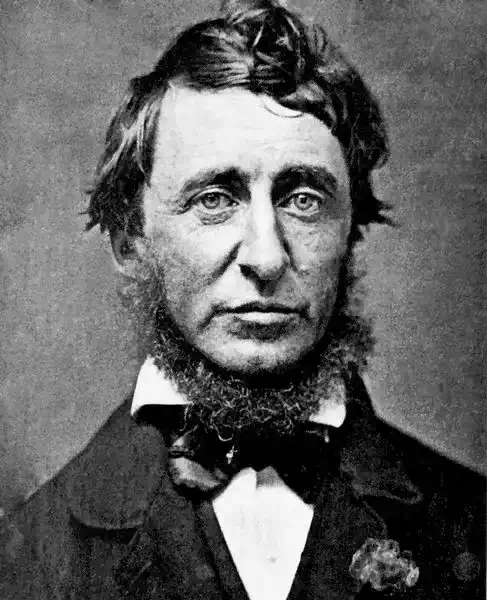
Henry David Thoreau
Epitaph On The World
Here lies the body of this world,
Whose soul alas to hell is hurled.
This golden youth long since was past,
Its silver manhood went as fast,
An iron age drew on at last;
'Tis vain its character to tell,
The several fates which it befell,
What year it died, when 'twill arise,
We only know that here it lies.
Whose soul alas to hell is hurled.
This golden youth long since was past,
Its silver manhood went as fast,
An iron age drew on at last;
'Tis vain its character to tell,
The several fates which it befell,
What year it died, when 'twill arise,
We only know that here it lies.
230