
Truth

Lord Byron
Were My Bosom As False as Thou Deem'st It To Be
Were my bosom as false as thou deem'st it to be,
I need not have wander'd from far Galilee;
It was but abjuring my creed to efface
The curse which, thou say'st, is the crime of my race.
If the bad never triumph, then God is with thee!
If the slave only sin, thou art spotless and free!
If the Exile on earth is an Outcast on high,
Live on in thy faith, but in mine I will die.
I have lost for that faith more than thou canst bestow,
As the God who permits thee to prosper doth know;
In his hand is my heart and my hope and
in thine
The land and the life which for him I resign.
419
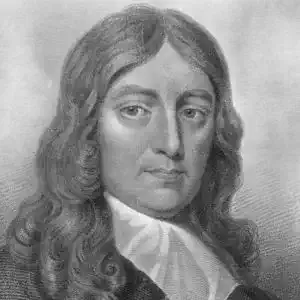
John Milton
To My Lord Fairfax
Fairfax, whose Name in Arms through Europe rings,
And fills all Mouths with Envy or with Praise,
And all her Jealous Monarchs with Amaze.
And Rumours loud which daunt remotest Kings,
Thy firm unshaken Valour ever brings
Victory home, while new Rebellions raise
Their Hydra-heads, and the false North displays
Her broken League to Imp her Serpent Wings:
O yet! a Nobler task awaits thy Hand,
For what can War, but Acts of War still breed
Till injur'd Truth from Violence be freed;
And publick Faith be rescu'd from the Brand
Of publick Fraud; in vain doth Valour bleed,
While Avarice and Rapine shares the Land.
414

Ella Wheeler Wilcox
All Roads That Lead To God Are Good
All roads that lead to God are good.
What matters it, your faith, or mine?
Both centre at the goal divine
Of love’s eternal Brotherhood.
The kindly life in house or street –
The life of prayer and mystic rite –
The student’s search for truth and light –
These paths at one great Junction meet.
Before the oldest book was writ,
Full many a prehistoric soul
Arrived at this unchanging goal,
Through changeless Love, that leads to it.
What matters that one found his Christ
In rising sun, or burning fire?
In faith within him did not tire,
His longing for the Truth sufficed.
Before our modern hell was brought
To edify the modern world,
Full many a hate-filled soul was hurled
In lakes of fire by its own thought.
A thousand creeds have come and gone,
But what is that to you or me?
Creeds are but branches of a tree –
The root of love lives on and on.
Though branch by branch proved withered wood,
The root is warm with precious wine.
Then keep your faith, and leave me mine –
All roads that lead to God are good.
413

William Blake
To The Accuser Who is The God of This World
Truly My Satan thou art but a Dunce
And dost not know the Garment from the Man
Every Harlot was a Virgin once
Nor canst thou ever change Kate into Nan
Tho thou art Worship'd by the Names Divine
Of Jesus & Jehovah thou art still
The Son of Morn in weary Nights decline
The lost Travellers Dream under the Hill
And dost not know the Garment from the Man
Every Harlot was a Virgin once
Nor canst thou ever change Kate into Nan
Tho thou art Worship'd by the Names Divine
Of Jesus & Jehovah thou art still
The Son of Morn in weary Nights decline
The lost Travellers Dream under the Hill
413

William Butler Yeats
On Hearing That The Students Of Our New University Have Joined
Where, where but here have pride and Truth,
That long to give themselves for wage,
To shake their wicked sides at youth
Restraining reckless middle-age?
That long to give themselves for wage,
To shake their wicked sides at youth
Restraining reckless middle-age?
412

Alfred Lord Tennyson
Of Old Sat Freedom on the Heights
Of old sat Freedom on the heights,
The thunders breaking at her feet:
Above her shook the starry lights:
She heard the torrents meet.
There in her place she did rejoice,
Self-gather'd in her prophet-mind,
But fragments of her mighty voice
Came rolling on the wind.
Then stept she down thro' town and field
To mingle with the human race,
And part by part to men reveal'd
The fulness of her face-
Grave mother of majestic works,
From her isle-altar gazing down,
Who, God-like, grasps the triple forks,
And, King-like, wears the crown:
Her open eyes desire the truth.
The wisdom of a thousand years
Is in them. May perpetual youth
Keep dry their light from tears;
That her fair form may stand and shine,
Make bright our days and light our dreams,
Turning to scorn with lips divine
The falsehood of extremes!
856

William Shakespeare
Sonnet 125: Were't aught to me I bore the canopy
Were't aught to me I bore the canopy,
With my extern the outward honouring,
Or laid great bases for eternity,
Which proves more short than waste or ruining?
Have I not seen dwellers on form and favour
Lose all, and more, by paying too much rent
For compound sweet forgoing simple savour,
Pitiful thrivers in their gazing spent?
No, let me be obsequious in thy heart,
And take thou my oblation, poor but free,
Which is not mixed with seconds, knows no art
But mutual render, only me for thee.
Hence, thou suborned informer, a true soul
When most impeached stands least in thy control.
391

Johann Wolfgang von Goethe
Explanation Of An Ancient Woodcut
EARLY within his workshop here,
On Sundays stands our master dear;
His dirty apron he puts away,
And wears a cleanly doublet to-day;
Lets wax'd thread, hammer, and pincers rest,
And lays his awl within his chest;
The seventh day he takes repose
From many pulls and many blows.
Soon as the spring-sun meets his view,
Repose begets him labour anew;
He feels that he holds within his brain
A little world, that broods there amain,
And that begins to act and to live,
Which he to others would gladly give.
He had a skillful eye and true,
And was full kind and loving too.
For contemplation, clear and pure,--
For making all his own again, sure;
He had a tongue that charm'd when 'twas heard,
And graceful and light flow'd ev'ry word;
Which made the Muses in him rejoice,
The Master-singer of their choice.
And now a maiden enter'd there,
With swelling breast, and body fair;
With footing firm she took her place,
And moved with stately, noble grace;
She did not walk in wanton mood,
Nor look around with glances lewd.
She held a measure in her hand,
Her girdle was a golden band,
A wreath of corn was on her head,
Her eye the day's bright lustre shed;
Her name is honest Industry,
Else, Justice, Magnanimity.
She enter'd with a kindly greeting;
He felt no wonder at the meeting,
For, kind and fair as she might be,
He long had known her, fancied he.
"I have selected thee," she said,
"From all who earth's wild mazes tread,
That thou shouldst have clear-sighted sense,
And nought that's wrong shouldst e'er commence.
When others run in strange confusion,
Thy gaze shall see through each illusion
When others dolefully complain,
Thy cause with jesting thou shalt gain,
Honour and right shalt value duly,
In everything act simply, truly,--
Virtue and godliness proclaim,
And call all evil by its name,
Nought soften down, attempt no quibble,
Nought polish up, nought vainly scribble.
The world shall stand before thee, then,
As seen by Albert Durer's ken,
In manliness and changeless life,
In inward strength, with firmness rife.
Fair Nature's Genius by the hand
Shall lead thee on through every land,
Teach thee each different life to scan,
Show thee the wondrous ways of man,
His shifts, confusions, thrustings, and drubbings,
Pushings, tearings, pressings, and rubbings;
The varying madness of the crew,
The anthill's ravings bring to view;
But thou shalt see all this express'd,
As though 'twere in a magic chest.
Write these things down for folks on earth,
In hopes they may to wit give birth."--
Then she a window open'd wide,
And show'd a motley crowd outside,
All kinds of beings 'neath the sky,
As in his writings one may spy.
Our master dear was, after this,
On Nature thinking, full of bliss,
When tow'rd him, from the other side
He saw an aged woman glide;
The name she bears, Historia,
Mythologia, Fabula;
With footstep tottering and unstable
She dragg'd a large and wooden carved-table,
Where, with wide sleeves and human mien,
The Lord was catechizing seen;
Adam, Eve, Eden, the Serpent's seduction,
Gomorrah and Sodom's awful destruction,
The twelve illustrious women, too,
That mirror of honour brought to view;
All kinds of bloodthirstiness, murder, and sin,
The twelve wicked tyrants also were in,
And all kinds of goodly doctrine and law;
Saint Peter with his scourge you saw,
With the world's ways dissatisfied,
And by our Lord with power supplied.
Her train and dress, behind and before,
And e'en the seams, were painted o'er
With tales of worldly virtue and crime.--
Our master view'd all this for a time;
The sight right gladly he survey'd,
So useful for him in his trade,
Whence he was able to procure
Example good and precept sure,
Recounting all with truthful care,
As though he had been present there.
His spirit seem'd from earth to fly,
He ne'er had turned away his eye,
Did he not just behind him hear
A rattle of bells approaching near.
And now a fool doth catch his eye,
With goat and ape's leap drawing nigh
A merry interlude preparing
With fooleries and jests unsparing.
Behind him, in a line drawn out,
He dragg'd all fools, the lean and stout,
The great and little, the empty and full,
All too witty, and all too dull,
A lash he flourish'd overhead,
As though a dance of apes he led,
Abusing them with bitterness,
As though his wrath would ne'er grow less.
While on this sight our master gazed,
His head was growing well-nigh crazed:
What words for all could he e'er find,
Could such a medley be combined?
Could he continue with delight
For evermore to sing and write?
When lo, from out a cloud's dark bed
In at the upper window sped
The Muse, in all her majesty,
As fair as our loved maids we see.
With clearness she around him threw
Her truth, that ever stronger grew.
"I, to ordain thee come," she spake:
"So prosper, and my blessing take!
The holy fire that slumb'ring lies
Within thee, in bright flames shall rise;
Yet that thine ever-restless life
May still with kindly strength be rife,
I, for thine inward spirit's calm.
Have granted nourishment and balm,
That rapture may thy soul imbue,
Like some fair blossom bathed in dew."--
Behind his house then secretly
Outside the doorway pointed she,
Where, in a shady garden-nook,
A beauteous maid with downcast look
Was sitting where a stream was flowing,
With elder bushes near it growing,
She sat beneath an apple tree,
And nought around her seem'd to see.
Her lap was full of roses fair,
Which in a wreath she twined with care.
And, with them, leaves and blossoms blended:
For whom was that sweet wreath intended?
Thus sat she, modest and retired,
Her bosom throbb'd, with hope inspired;
Such deep forebodings fill'd her mind,
No room for wishing could she find,
And with the thoughts that o'er it flew,
Perchance a sigh was mingled too.
"But why should sorrow cloud thy brow?
That, dearest love, which fills thee now
Is fraught with joy and ecstasy.
Prepared in one alone for thee,
That he within thine eye may find
Solace when fortune proves unkind,
And be newborn through many a kiss,
That he receives with inward bliss;
When'er he clasps thee to his breast.
May he from all his toils find rest
When he in thy dear arms shall sink,
May he new life and vigour drink:
Fresh joys of youth shalt thou obtain,
In merry jest rejoice again.
With raillery and roguish spite,
Thou now shalt tease him, now delight.
Thus Love will nevermore grow old,
Thus will the minstrel ne'er be cold!"
While he thus lives, in secret bless'd,
Above him in the clouds doth rest
An oak-wreath, verdant and sublime,
Placed on his brow in after-time;
While they are banish'd to the slough,
Who their great master disavow.
387

Elizabeth Barrett Browning
Sonnet XIV: If Thou Must Love Me
If thou must love me, let it be for nought
Except for love's sake only. Do not say
"I love her for her smile--her look--her way
Of speaking gently,--for a trick of thought
That falls in well with mine, and certes brought
A sense of pleasant ease on such a day" -
For these things in themselves, Beloved, may
Be changed, or change for thee,--and love, so wrought,
May be unwrought so. Neither love me for
Thine own dear pity's wiping my cheeks dry, -
A creature might forget to weep, who bore
Thy comfort long, and lose thy love thereby!
But love me for love's sake, that evermore
Thou may'st love on, through love's eternity.
1,982
Ella Wheeler Wilcox
The Truth Teller
The Truth Teller lifts the curtain,
And shows us the people's plight;
And everything seems uncertain,
And nothing at all looks right.
Yet out of the blackness groping,
My heart finds a world in bloom;
For it somehow is fashioned for hoping,
And it cannot live in the gloom.
He tells us from border to border,
That race is warring with race;
With riot and mad disorder,
The earth is a wretched place;
And yet ere the sun is setting
I am thinking of peace, not strife;
For my heart has a way of forgetting
All things save the joy of life.
I heard in my Youth's beginning
That earth was a region of woe,
And trouble, and sorrow, and sinning:
The Truth Teller told me so.
I knew it was true, and tragic;
And I mourned over much that was wrong;
And then, by some curious magic,
The heart of me burst into song.
The years have been going, going,
A mixture of pleasure and pain;
But the Truth Teller's books are showing
That evil is on the gain.
And I know that I ought to be grieving,
And I should be too sad to sing;
But somehow I keep on believing
That life is a glorious thing.
387

Emily Dickinson
I Died For Beauty
I died for beauty, but was scarce
Adjusted in the tomb,
When one who died for truth was lain
In an adjoining room.
He questioned softly why I failed?
"For beauty," I replied.
"And I for truth - the two are one;
We brethren are," he said.
And so, as kinsmen met a-night,
We talked between the rooms,
Until the moss had reached our lips,
And covered up our names.
382
William Shakespeare
Sonnet 116: Let me not to the marriage of true minds
Let me not to the marriage of true minds
Admit impediments. Love is not love
Which alters when it alteration finds,
Or bends with the remover to remove:
O no! it is an ever-fixed mark
That looks on tempests and is never shaken;
It is the star to every wandering bark,
Whose worth's unknown, although his height be taken.
Love's not Time's fool, though rosy lips and cheeks
Within his bending sickle's compass come:
Love alters not with his brief hours and weeks,
But bears it out even to the edge of doom.
If this be error and upon me proved,
I never writ, nor no man ever loved.
383

Carl Sandburg
On the Way
Little one, you have been buzzing in the books,
Flittering in the newspapers and drinking beer with lawyers
And amid the educated men of the clubs you have been getting an earful of speech
from trained tongues.
Take an earful from me once, go with me on a hike
Along sand stretches on the great inland sea here
And while the eastern breeze blows on us and the restless surge
Of the lake waves on the breakwater breaks with an ever fresh monotone,
Let us ask ourselves: What is truth? what do you or I know?
How much do the wisest of the world’s men know about where the massed human
procession is going?
You have heard the mob laughed at?
I ask you: Is not the mob rough as the mountains are rough?
And all things human rise from the mob and relapse and rise again as rain to the sea?
380
William Blake
The Two Songs
I heard an Angel Singing
When the day was springing:
"Mercy, pity, and peace,
Are the world's release."
So he sang all day
Over the new-mown hay,
Till the sun went down,
And the haycocks looked brown.
I heard a devil curse
Over the heath and the furse:
"Mercy vould be no more
If there were nobody poor,
And pity no more could be
If all were happy as ye:
And mutual fear brings peace,
Misery's increase
Are mercy, pity, and peace."
At his curse the sun went down,
And the heavens gave a frown.
380
Johann Wolfgang von Goethe
Three Palinodias - 01
"Incense is hut a tribute for the gods,--
To mortals 'tis but poison."
THE smoke that from thine altar blows,
Can it the gods offend?
For I observe thou hold'st thy nose--
Pray what does this portend?
Mankind deem incense to excel
Each other earthly thing,
So he that cannot bear its smell,
No incense e'er should bring.
With unmoved face by thee at least
To dolls is homage given;
If not obstructed by the priest,
The scent mounts up to heaven.
377
Henry Van Dyke
A Scrap of Paper
"Will you go to war just for a scrap of paper?" -- Question
of the German Chancellor to the British Ambassador,
August 5, 1914.
A mocking question! Britain's answer came
Swift as the light and searching as the flame.
"Yes, for a scrap of paper we will fight
Till our last breath, and God defend the right!
"A scrap of paper where a name is set
Is strong as duty's pledge and honor's debt.
"A scrap of paper holds for man and wife
The sacrament of love, the bond of life.
"A scrap of paper may be Holy Writ
With God's eternal word to hallow it.
"A scrap of paper binds us both to stand
Defenders of a neutral neighbor land.
"By God, by faith, by honor, yes! We fight
To keep our name upon that paper white."
371
William Butler Yeats
A First Confession
I admit the briar
Entangled in my hair
Did not injure me;
My blenching and trembling,
Nothing but dissembling,
Nothing but coquetry.
I long for truth, and yet
I cannot stay from that
My better self disowns,
For a man's attention
Brings such satisfaction
To the craving in my bones.
Brightness that I pull back
From the Zodiac,
Why those questioning eyes
That are fixed upon me?
What can they do but shun me
If empty night replies?
369
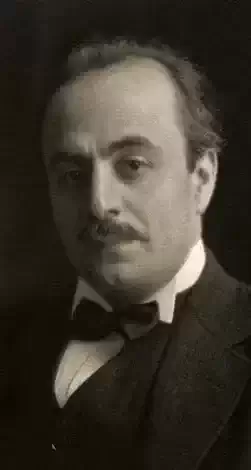
Khalil Gibran
Song of Love XXIV
I am the lover's eyes, and the spirit's
Wine, and the heart's nourishment.
I am a rose. My heart opens at dawn and
The virgin kisses me and places me
Upon her breast.
I am the house of true fortune, and the
Origin of pleasure, and the beginning
Of peace and tranquility. I am the gentle
Smile upon his lips of beauty. When youth
Overtakes me he forgets his toil, and his
Whole life becomes reality of sweet dreams.
I am the poet's elation,
And the artist's revelation,
And the musician's inspiration.
I am a sacred shrine in the heart of a
Child, adored by a merciful mother.
I appear to a heart's cry; I shun a demand;
My fullness pursues the heart's desire;
It shuns the empty claim of the voice.
I appeared to Adam through Eve
And exile was his lot;
Yet I revealed myself to Solomon, and
He drew wisdom from my presence.
I smiled at Helena and she destroyed Tarwada;
Yet I crowned Cleopatra and peace dominated
The Valley of the Nile.
I am like the ages -- building today
And destroying tomorrow;
I am like a god, who creates and ruins;
I am sweeter than a violet's sigh;
I am more violent than a raging tempest.
Gifts alone do not entice me;
Parting does not discourage me;
Poverty does not chase me;
Jealousy does not prove my awareness;
Madness does not evidence my presence.
Oh seekers, I am Truth, beseeching Truth;
And your Truth in seeking and receiving
And protecting me shall determine my
Behavior.
370
Ella Wheeler Wilcox
Preaching Vs Practice
It is easy to sit in the sunshine
And talk to the man in the shade;
It is easy to float in a well-trimmed boat,
And point out the places to wade.
But once we pass into the shadows,
We murmur and fret and frown,
And, our length from the bank, we shout for a plank,
Or throw up our hands and go down.
It is easy to sit in your carriage,
And counsel the man on foot,
But get down and walk, and you'll change your talk,
As you feel the peg in your boot.
It is easy to tell the toiler
How best he can carry his pack,
But no one can rate a burden's weight
Until it has been on his back.
The up-curled mouth of pleasure,
Can prate of sorrow's worth,
But give it a sip, and a wryer lip,
Was never made on earth.
359
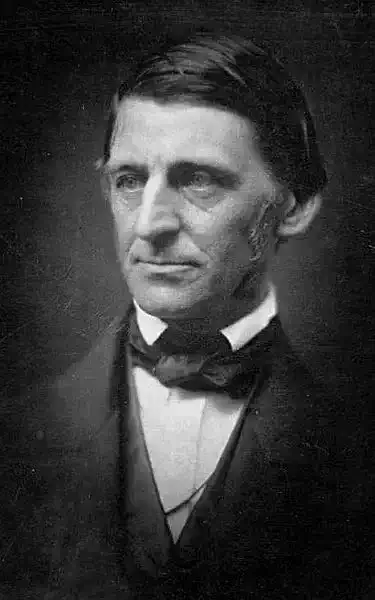
Ralph Waldo Emerson
Astræa
Himself it was who wrote
His rank, and quartered his own coat.
There is no king nor sovereign state
That can fix a hero's rate;
Each to all is venerable,
Cap-a-pie invulnerable,
Until he write, where all eyes rest,
Slave or master on his breast.
I saw men go up and down
In the country and the town,
With this prayer upon their neck,
"Judgment and a judge we seek."
Not to monarchs they repair,
Nor to learned jurist's chair,
But they hurry to their peers,
To their kinsfolk and their dears,
Louder than with speech they pray,
What am I? companion; say.
And the friend not hesitates
To assign just place and mates,
Answers not in word or letter,
Yet is understood the better;—
Is to his friend a looking-glass,
Reflects his figure that doth pass.
Every wayfarer he meets
What himself declared, repeats;
What himself confessed, records;
Sentences him in his words,
The form is his own corporal form,
And his thought the penal worm.
Yet shine for ever virgin minds,
Loved by stars and purest winds,
Which, o'er passion throned sedate,
Have not hazarded their state,
Disconcert the searching spy,
Rendering to a curious eye
The durance of a granite ledge
To those who gaze from the sea's edge.
It is there for benefit,
It is there for purging light,
There for purifying storms,
And its depths reflect all forms;
It cannot parley with the mean,
Pure by impure is not seen.
For there's no sequestered grot,
Lone mountain tam, or isle forgot,
But justice journeying in the sphere
Daily stoops to harbor there.
357
William Shakespeare
Sonnet 14: Not from the stars do I my judgment pluck
Not from the stars do I my judgment pluck,
And yet methinks I have astronomy;
But not to tell of good or evil luck,
Of plagues, of dearths, or seasons' quality;
Nor can I fortune to brief minutes tell,
Pointing to each his thunder, rain, and wind,
Or say with princes if it shall go well
By oft predict that I in heaven find.
But from thine eyes my knowledge I derive,
And, constant stars, in them I read such art
As truth and beauty shall together thrive
If from thyself to store thou wouldst convert:
Or else of thee this I prognosticate,
Thy end is truth's and beauty's doom and date.
667
William Shakespeare
The Passionate Pilgrim
I.
When my love swears that she is made of truth,
I do believe her, though I know she lies,
That she might think me some untutor'd youth,
Unskilful in the world's false forgeries,
Thus vainly thinking that she thinks me young,
Although I know my years be past the best,
I smiling credit her false-speaking tongue,
Outfacing faults in love with love's ill rest.
But wherefore says my love that she is young?
And wherefore say not I that I am old?
O, love's best habit is a soothing tongue,
And age, in love, loves not to have years told.
Therefore, I'll lie with love, and love with me,
Since that our faults in love thus smother'd be.
II.
Two loves I have, of comfort and despair,
That like two spirits do suggest me still;
My better angel is a man right fair,
My worser spirit a woman colour'd ill.
To win me soon to hell, my female evil
Tempteth my better angel from my side,
And would corrupt my saint to be a devil,
Wooing his purity with her fair pride.
And whether that my angel be turn'd fiend,
Suspect I may, yet not directly tell:
For being both to me, both to each friend,
I guess one angel in another's hell:
The truth I shall not know, but live in doubt,
Till my bad angel fire my good one out.
III.
Did not the heavenly rhetoric of thine eye,
'Gainst whom the world could not hold argument.
Persuade my heart to this false perjury?
Vows for thee broke deserve not punishment.
A woman I forswore; but I will prove,
Thou being a goddess, I forswore not thee:
My vow was earthly, thou a heavenly love:
Thy grace being gain'd cures all disgrace in me.
My vow was breath, and breath a vapour is;
Then, thou fair sun, that on this earth doth shine,
Exhale this vapour vow; in thee it is:
If broken, then it is no fault of mine.
If by me broke, what fool is not so wise
To break an oath, to win a paradise?
IV.
Sweet Cytherea, sitting by a brook
With young Adonis, lovely, fresh, and green,
Did court the lad with many a lovely look,
Such looks as none could look but beauty's queen,
She told him stories to delight his ear;
She show'd him favours to allure his eye;
To win his heart, she touch'd him here and there, --
Touches so soft still conquer chastity.
But whether unripe years did want conceit,
Or he refused to take her figured proffer,
The tender nibbler would not touch the bait,
But smile and jest at every gentle offer:
Then fell she on her back, fair queen, and toward:
He rose and ran away; ah, fool too froward!
V.
If love make me forsworn, how shall I swear to love?
O never faith could hold, if not to beauty vow'd:
Though to myself forsworn, to thee I'll constant prove;
Those thoughts, to me like oaks, to thee like osiers bow'd.
Study his bias leaves, and make his book thine eyes,
Where all those pleasures live that art can comprehend.
If knowledge be the mark, to know thee shall suffice;
Well learned is that tongue that well can thee commend;
All ignorant that soul that sees thee without wonder;
Which is to me some praise, that I thy parts admire:
Thy eye Jove's lightning seems, thy voice his dreadful thunder,
Which, not to anger bent, is music and sweet fire.
Celestial as thou art, O do not love that wrong,
To sing heaven's praise with such an earthly tongue.
VI.
Scarce had the sun dried up the dewy morn,
And scarce the herd gone to the hedge for shade,
When Cytherea, all in love forlorn,
A longing tarriance for Adonis made
Under an osier growing by a brook,
A brook where Adon used to cool his spleen:
Hot was the day; she hotter that did look
For his approach, that often there had been.
Anon he comes, and throws his mantle by,
And stood stark naked on the brook's green brim:
The sun look'd on the world with glorious eye,
Yet not so wistly as this queen on him.
He, spying her, bounced in, whereas he stood:
'O Jove,' quoth she, 'why was not I a flood!'
VII.
Fair is my love, but not so fair as fickle;
Mild as a dove, but neither true nor trusty;
Brighter than glass, and yet, as glass is brittle;
Softer than wax, and yet, as iron, rusty:
A lily pale, with damask dye to grace her,
None fairer, nor none falser to deface her.
Her lips to mine how often hath she joined,
Between each kiss her oaths of true love swearing!
How many tales to please me bath she coined,
Dreading my love, the loss thereof still fearing!
Yet in the midst of all her pure protestings,
Her faith, her oaths, her tears, and all were jestings.
She burn'd with love, as straw with fire flameth;
She burn'd out love, as soon as straw outburneth;
She framed the love, and yet she foil'd the framing;
She bade love last, and yet she fell a-turning.
Was this a lover, or a lecher whether?
Bad in the best, though excellent in neither.
VIII.
If music and sweet poetry agree,
As they must needs, the sister and the brother,
Then must the love be great 'twixt thee and me,
Because thou lovest the one, and I the other.
Dowland to thee is dear, whose heavenly touch
Upon the lute doth ravish human sense;
Spenser to me, whose deep conceit is such
As, passing all conceit, needs no defence.
Thou lovest to bear the sweet melodious sound
That Phoebus' lute, the queen of music, makes;
And I in deep delight am chiefly drown'd
Whenas himself to singing he betakes.
One god is god of both, as poets feign;
One knight loves both, and both in thee remain.
IX.
Fair was the morn when the fair queen of love,
Paler for sorrow than her milk-white dove,
For Adon's sake, a youngster proud and wild;
Her stand she takes upon a steep-up hill:
Anon Adonis comes with horn and hounds;
She, silly queen, with more than love's good will,
Forbade the boy he should not pass those grounds:
'Once,' quoth she, 'did I see a fair sweet youth
Here in these brakes deep-wounded with a boar,
Deep in the thigh, a spectacle of ruth!
See, in my thigh,' quoth she, 'here was the sore.
She showed hers: he saw more wounds than one,
And blushing fled, and left her all alone.
X.
Sweet rose, fair flower, untimely pluck'd, soon vaded,
Pluck'd in the bud, and vaded in the spring!
Bright orient pearl, alack, too timely shaded!
Fair creature, kill'd too soon by death's sharp sting!
Like a green plum that hangs upon a tree,
And falls, through wind, before the fall should he.
I weep for thee, and yet no cause I have;
For why thou left'st me nothing in thy will:
And yet thou left'st me more than I did crave;
For why I craved nothing of thee still:
O yes, dear friend, I pardon crave of thee,
Thy discontent thou didst bequeath to me.
XI.
Venus, with young Adonis sitting by her
Under a myrtle shade, began to woo him:
She told the youngling how god Mars did try her,
And as he fell to her, so fell she to him.
'Even thus,' quoth she, 'the warlike god embraced me,'
And then she clipp'd Adonis in her arms;
'Even thus,' quoth she, 'the warlike god unlaced me,'
As if the boy should use like loving charms;
'Even thus,' quoth she, 'he seized on my lips
And with her lips on his did act the seizure
And as she fetched breath, away he skips,
And would not take her meaning nor her pleasure.
Ah, that I had my lady at this bay,
To kiss and clip me till I run away!
XII.
Crabbed age and youth cannot live together
Youth is full of pleasance, age is full of care;
Youth like summer morn, age like winter weather;
Youth like summer brave, age like winter bare;
Youth is full of sport, age's breath is short;
Youth is nimble, age is lame;
Youth is hot and bold, age is weak and cold;
Youth is wild, and age is tame.
Age, I do abhor thee; youth, I do adore thee;
O, my love, my love is young!
Age, I do defy thee: O, sweet shepherd, hie thee,
For methinks thou stay'st too long.
XIII.
Beauty is but a vain and doubtful good;
A shining gloss that vadeth suddenly;
A flower that dies when first it gins to bud;
A brittle glass that's broken presently:
A doubtful good, a gloss, a glass, a flower,
Lost, vaded, broken, dead within an hour.
And as goods lost are seld or never found,
As vaded gloss no rubbing will refresh,
As flowers dead lie wither'd on the ground,
As broken glass no cement can redress,
So beauty blemish'd once's for ever lost,
In spite of physic, painting, pain and cost.
XIV.
Good night, good rest. Ah, neither be my share:
She bade good night that kept my rest away;
And daff'd me to a cabin hang'd with care,
To descant on the doubts of my decay.
'Farewell,' quoth she, 'and come again tomorrow:
Fare well I could not, for I supp'd with sorrow.
Yet at my parting sweetly did she smile,
In scorn or friendship, nill I construe whether:
'T may be, she joy'd to jest at my exile,
'T may be, again to make me wander thither:
'Wander,' a word for shadows like myself,
As take the pain, but cannot pluck the pelf.
XV.
Lord, how mine eyes throw gazes to the east!
My heart doth charge the watch; the morning rise
Doth cite each moving sense from idle rest.
Not daring trust the office of mine eyes,
While Philomela sits and sings, I sit and mark,
And wish her lays were tuned like the lark;
For she doth welcome daylight with her ditty,
And drives away dark dismal-dreaming night:
The night so pack'd, I post unto my pretty;
Heart hath his hope, and eyes their wished sight;
Sorrow changed to solace, solace mix'd with sorrow;
For why, she sigh'd and bade me come tomorrow.
Were I with her, the night would post too soon;
But now are minutes added to the hours;
To spite me now, each minute seems a moon;
Yet not for me, shine sun to succour flowers!
Pack night, peep day; good day, of night now borrow:
Short, night, to-night, and length thyself tomorrow.
347

John Greenleaf Whittier
To Charles Sumner
If I have seemed more prompt to censure wrong
Than praise the right; if seldom to thine ear
My voice hath mingled with the exultant cheer
Borne upon all our Northern winds along;
If I have failed to join the fickle throng
In wide-eyed wonder, that thou standest strong
In victory, surprised in thee to find
Brougham's scathing power with Canning's grace combined;
That he, for whom the ninefold Muses sang,
From their twined arms a giant athlete sprang,
Barbing the arrows of his native tongue
With the spent shafts Latona's archer flung,
To smite the Python of our land and time,
Fell as the monster born of Crissa's slime,
Like the blind bard who in Castalian springs
Tempered the steel that clove the crest of kings,
And on the shrine of England's freedom laid
The gifts of Cumve and of Delphi's' shade,-Small
need hast thou of words of praise from me.
Thou knowest my heart, dear friend, and well canst guess
That, even though silent, I have not the less
Rejoiced to see thy actual life agree
With the large future which I shaped for thee,
When, years ago, beside the summer sea,
White in the moon, we saw the long waves fall
Baffled and broken from the rocky wall,
That, to the menace of the brawling flood,
Opposed alone its massive quietude,
Calm as a fate; with not a leaf nor vine
Nor birch-spray trembling in the still moonshine,
Crowning it like God's peace. I sometimes think
That night-scene by the sea prophetical,
(For Nature speaks in symbols and in signs,
And through her pictures human fate divines),
That rock, wherefrom we saw the billows sink
In murmuring rout, uprising clear and tall
In the white light of heaven, the type of one
Who, momently by Error's host assailed,
Stands strong as Truth, in greaves of granite mailed;
And, tranquil-fronted, listening over all
The tumult, hears the angels say, Well done!
336
Emily Dickinson
I never told the buried gold
I never told the buried gold
Upon the hill-that lies-
I saw the sun-his plunder done
Crouch low to guard his prize.
He stood as near
As stood you here-
A pace had been between-
Did but a snake bisect the brake
My life had forfeit been.
That was a wondrous booty-
I hope 'twas honest gained.
Those were the fairest ingots
That ever kissed the spade!
Whether to keep the secret-
Whether to reveal-
Whether as I ponder
Kidd will sudden sail-
Could a shrewd advise me
We might e'en divide-
Should a shrewd betray me-
Atropos decide!
328