
Truth

Elizabeth Barrett Browning
Sonnet XIV: If Thou Must Love Me
If thou must love me, let it be for nought
Except for love's sake only. Do not say
"I love her for her smile--her look--her way
Of speaking gently,--for a trick of thought
That falls in well with mine, and certes brought
A sense of pleasant ease on such a day" -
For these things in themselves, Beloved, may
Be changed, or change for thee,--and love, so wrought,
May be unwrought so. Neither love me for
Thine own dear pity's wiping my cheeks dry, -
A creature might forget to weep, who bore
Thy comfort long, and lose thy love thereby!
But love me for love's sake, that evermore
Thou may'st love on, through love's eternity.
1,982

William Shakespeare
Sonnet 129: The expense of spirit in a waste of shame
The expense of spirit in a waste of shame
Is lust in action; and till action, lust
Is perjured, murderous, bloody, full of blame,
Savage, extreme, rude, cruel, not to trust,
Enjoy'd no sooner but despised straight,
Past reason hunted, and no sooner had
Past reason hated, as a swallow'd bait
On purpose laid to make the taker mad;
Mad in pursuit and in possession so;
Had, having, and in quest to have, extreme;
A bliss in proof, and proved, a very woe;
Before, a joy proposed; behind, a dream.
All this the world well knows; yet none knows well
To shun the heaven that leads men to this hell.
924

Kazi Nazrul Islam
Prostitute
Who calls you a prostitute, Mother?
Who spits at you?
Perhaps you were suckled by someone
as chaste as Seeta.
You may not be chaste,
yet you are one of the family
of all our mothers and sisters.
Your sons are like any of us sons,
as capable of achieving fame and honor
as any of us,
as capable of entering heaven.
The great hero Drona
was the son of Ghritachi,
a prostitute in heaven.
Krishna-Daipayan,
who was universally respected,
was the son of an unmarried girl.
Karna the Benevolent
Was born of a maiden.
Ganga, expelled from heaven,
was married to Shiva.
King Shantanu, too,
offered her his love.
Their son was the immortal Bheeshma,
to whom Krishna paid homage!
The Sage Satyakama
was the illegitimate son of Jabala.
The conception of the great lover of humanity, Jesus,
remains a mystery.
None is,stained with sin here,
none is an object of hatred.
Millions of beautiful lilies
blossom in the lake of lust!
Listen to this message of humanity:
After birth, all human beings
are free of all impurities.
Because I have once committed a sin,
have I no right to return to virtue?
Hundreds of sinful acts
did not take away the divineness of the gods.
If Ahalya was freed of sin,
if Mary was canonized,
truthfully, why shouldn't you, too,
be worthy of worship?
Who are the bigots
who condescendingly label your son
as an 'illegitimate' child?
To them I simply ask these questions.
How many of the 1,500 million children
of this world were born
purely out of the purpose of procreation,
and not out of lust?
How many are pure and chaste?
For whose sin do millions of sucklings
die in the cradle?
Purely from carnal urge
do men and women unite.
We are children born of that lust.
Yet how proud we are!
So, listen, religious leaders:
There's no difference between 'illegitimate'
and 'legitimate' children!
And if the son of an unchaste mother is 'illegitimate,'
so is the son of an unchaste father.
[Translation: Sajed Kamal]
894

Alfred Lord Tennyson
Of Old Sat Freedom on the Heights
Of old sat Freedom on the heights,
The thunders breaking at her feet:
Above her shook the starry lights:
She heard the torrents meet.
There in her place she did rejoice,
Self-gather'd in her prophet-mind,
But fragments of her mighty voice
Came rolling on the wind.
Then stept she down thro' town and field
To mingle with the human race,
And part by part to men reveal'd
The fulness of her face-
Grave mother of majestic works,
From her isle-altar gazing down,
Who, God-like, grasps the triple forks,
And, King-like, wears the crown:
Her open eyes desire the truth.
The wisdom of a thousand years
Is in them. May perpetual youth
Keep dry their light from tears;
That her fair form may stand and shine,
Make bright our days and light our dreams,
Turning to scorn with lips divine
The falsehood of extremes!
856
William Shakespeare
Sonnet 48: How careful was I, when I took my way
How careful was I, when I took my way,
Each trifle under truest bars to thrust,
That to my use it might unusèd stay
From hands of falsehood, in sure wards of trust!
But thou, to whom my jewels trifles are,
Most worthy comfort, now my greatest grief,
Thou best of dearest, and mine only care,
Art left the prey of every vulgar thief.
Thee have I not locked up in any chest,
Save where thou art not—though I feel thou art—
Within the gentle closure of my breast,
From whence at pleasure thou mayst come and part;
And even thence thou wilt be stol'n, I fear,
For truth proves thievish for a prize so dear.
695
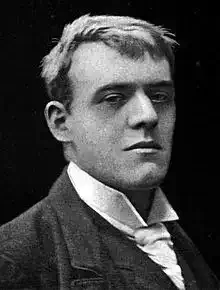
Hilaire Belloc
Matilda Who told Lies, and was Burned to Death
Matilda told such Dreadful Lies,
It made one Gasp and Stretch one's Eyes;
Her Aunt, who, from her Earliest Youth,
Had kept a Strict Regard for Truth,
Attempted to Believe Matilda:
The effort very nearly killed her,
And would have done so, had not She
Discovered this Infirmity.
For once, towards the Close of Day,
Matilda, growing tired of play,
And finding she was left alone,
Went tiptoe to the Telephone
And summoned the Immediate Aid
Of London's Noble Fire-Brigade.
Within an hour the Gallant Band
Were pouring in on every hand,
From Putney, Hackney Downs, and Bow.
With Courage high and Hearts a-glow,
They galloped, roaring through the Town,
'Matilda's House is Burning Down!'
Inspired by British Cheers and Loud
Proceeding from the Frenzied Crowd,
They ran their ladders through a score
Of windows on the Ball Room Floor;
And took Peculiar Pains to Souse
The Pictures up and down the House,
Until Matilda's Aunt succeeded
In showing them they were not needed;
And even then she had to pay
To get the Men to go away,
It happened that a few Weeks later
Her Aunt was off to the Theatre
To see that Interesting Play
The Second Mrs. Tanqueray.
She had refused to take her Niece
To hear this Entertaining Piece:
A Deprivation Just and Wise
To Punish her for Telling Lies.
That Night a Fire did break out--
You should have heard Matilda Shout!
You should have heard her Scream and Bawl,
And throw the window up and call
To People passing in the Street-(
The rapidly increasing Heat
Encouraging her to obtain
Their confidnce) -- but all in vain!
For every time she shouted 'Fire!'
They only answered 'Little Liar!'
And therefore when her Aunt returned,
Matilda, and the House, were Burned.
669
William Shakespeare
Sonnet 14: Not from the stars do I my judgment pluck
Not from the stars do I my judgment pluck,
And yet methinks I have astronomy;
But not to tell of good or evil luck,
Of plagues, of dearths, or seasons' quality;
Nor can I fortune to brief minutes tell,
Pointing to each his thunder, rain, and wind,
Or say with princes if it shall go well
By oft predict that I in heaven find.
But from thine eyes my knowledge I derive,
And, constant stars, in them I read such art
As truth and beauty shall together thrive
If from thyself to store thou wouldst convert:
Or else of thee this I prognosticate,
Thy end is truth's and beauty's doom and date.
667
Kazi Nazrul Islam
In Salutation of One God
Let them spread jealousy, prejudice and defamation,
We will offer justice, peace and one God's proclamation.
Let them seek narrowness, pigeon-hole and mud from pond,
We will seek open space, shining light and love's bond.
Let them seek slave's life, we seek martyr's honor,
They fear death; while we search - it's hiding in which corner?
They won't die; if battle starts, they will hide behind a bush,
Nail-less, toothless - still boisterous, busy in giving each other a push.
They are lifeless, yet move by vile selfishness and greed,
They are jinns, ghosts, or mummies, from base desires can't be freed.
We are the new youth of Bengal; to wrestle with death we enjoy,
Due to grace we spare them, thinking them as ant or toy.
They are ever-skeptical about everything, also about human progress in future,
These disbelievers are disciples of Satan; pessimism and wrong vision they nurture.
They say, people will all be atheist, and anarchy is what they will bring,
We say, they will be believers, so that the song of heavenly bond they will sing.
Let them seek unhappiness, we will seek His forgiveness and love,
Let the ghosts seek graveyards, we will cherish the Garden from above.
People can see west's world wars, as punishment inflicted from Him,
And then turn away from more selfishness, singing peace and justice's hymn.
Let the owls stay in their hole, expecting no more sunrise,
Crows won't attack them again, let it be their claw-and-beak's demise.
Believers never say such things, they seek ray of hope and light,
Standing up against oppression and suffering, the believers delight.
The believers say, if we all turned toward Him in unison,
Shower of His mercy will bring on this earth like daily Eid celebration.
From seven heavens these believers want to bring colorful rainbow,
God never withholds His bounties; When does He ever say 'No? '
Those who seek mischief and unhappiness, exactly that they will get,
Let them choose as they wish; on the path of our choice our foot will set.
They seek the kingdom of monsters, we want God's kingdom,
This world then would experience peace, joy and freedom.
Our Lord's treasure is ever full, we won't lack anything anymore,
They want to fight over corpses like vultures or wild boar.
May God save us all, so that we don't tread that path of doom,
One God is our Lord, His everlasting beauty you always see abloom.
All the vices in this world, let it disappear, let it go away,
This world's darkness and hatred, may the ray of His love keep at bay.
From all the narrowness and prejudice may mankind's heart be free,
Let His light shine from every home under every blooming tree.
Those foster riot to loot, they are greedy monsters or gangsters,
Path of goodness and virtue they won't see, they will bring only disasters.
They are ever after vice, they are ever after conflict,
Their life is devoid of rhythm, they are spoiled, corpse-addict.
By God's soldiers, they will surely be overcome, in future that is near
These pirates - plunderer of crops and harvests - are ever so familiar.
They are spiders, creatures of darkness; stay away from their home and den,
In abandoned corners lie their web, they haven't seen life's vibrant garden.
Believe in God, in one and only God, in day as well as night
Heavenly ride will be with you, with God's sword in hand to fight.
Those who want to pass their life in sleep and laziness' fashion,
They don't want moon or sun, they are living dead, bound for humiliation.
Whose dream is everlasting youth, come, come that new generation,
Your sacrifice and work brought progress that are worthy of celebration.
Let them enjoy mud-slinging, their weapons are malice and vilification,
We will throw bouquet at them, and trumpet to one God our salutation.
[Translation: Mohammad Omar Farooq]
637

Lord Byron
The Prayer Of Nature
Father of Light! great God of Heaven!
Hear'st thou the accents of despair?
Can guilt like man's be e'er forgiven?
Can vice atone for crimes by prayer?
Father of Light, on thee I call!
Thou seest my soul is dark within;
Thou who canst'mark the sparrow's fall,
Avert from me the death of sin.
No shrine I seek, to sects unknown;
Oh, point to me the path of truth!
Thy dread omnipotence I own;
Spare, yet amend, the faults of youth.
Let bigots rear a gloomy fane,
Let superstitition hail the pile,
Let priests, to spread their sable reign,
With tales of mystic rites beguile.
Shall man confine his Maker's sway
To Gothic domes of mouldering stone?
Thy temple is the face of the day;
Earth, ocean, heaven, thy boundless throne.
Shall man condemn his race to hell,
Unless they bend in pompous form?
Tell us that all, of one who fell,
Must perish in the mingling storm?
Shall each pretend to reach the skies,
Yet doom his brother to expire,
Whose soul a different hope supplies,
Or doctrines less severe inspire?
Shall these, by creeds they can't expound,
Prepare a fancied bliss or woe?
Shall reptiles, grovelling on the ground,
Their great Creator's purpose know?
Shall those, who live for self alone,
Whose years float on in a daily crime Shall
they by Faith for guilt atone,
And live beyond the bounds of Time?
Father! no prophet's laws I seek,
Thy
laws in Nature's works appear;
I
own myself corrupt and weak,
Yet will I pray, for thou wilt hear!
Thou, who canst guide the wandering star
Through trackness realms of other's space;
Who calm'st the elemental war,
Whose hand from pole to pole I trace.
Thou, who in wisdom placed me here,
Who, when thou wilt, canst take me hence,
Ah! whilst I tread this earthly sphere,
Extend to me thy wide defence.
To Thee, my God, to thee I call!
Whatever weal or woe betide,
By thy command I rise or fall,
In thy protection I confide.
If, when this dust to dust's restored,
My soul shall float on airy wing,
How shall thy glorious name adored
Inspire her feedle voice to sing!
But, if this fleeting spirit share
With clay the gaves eternal bed,
While life yet throbs I raise my prayer,
Though doom'd no more to quit the dead.
To Thee I breathe my humble strain;
Grateful for all thy mercies past,
And hope, my God, to thee again
This erring life may fly at last.
December 29, 1806
596
Lord Byron
To Romance
Parent of golden dreams, Romance!
Auspicious Queen of childish joys,
Who lead'st along, in airy dance,
Thy votive train of girls and boys;
At length, in spells no longer bound,
I break the fetters of my youth;
No more I tread thy mystic round,
But leave thy realms for those of Truth.
And yet 'tis hard to quit the dreams
Which haunt the unsuspicious soul,
Where every nymph a goddess seems,
Whose eyes through rays immortal roll;
While Fancy holds her boundless reign,
And all assume a varied hue;
When Virgins seem no longer vain,
And even Woman's smiles are true.
And must we own thee, but a name,
And from thy hall of clouds descend?
Nor find a Sylph in every dame,
A Pylades in every friend?
But leave, at once, thy realms of air i
To mingling bands of fairy elves;
Confess that woman's false as fair,
And friends have feeling forthemselves?
With shame, I own, I've felt thy sway;
Repentant, now thy reign is o'er;
No more thy precepts I obey,
No more on fancied pinions soar;
Fond fool! to love a sparkling eye,
And think that eye to truth was dear;
To trust a passing wanton's sigh,
And melt beneath a wanton's tear!
Romance! disgusted with deceit,
Far from thy motley court I fly,
Where Affectation holds her seat,
And sickly Sensibility;
Whose silly tears can never flow
For any pangs excepting thine;
Who turns aside from real woe,
To steep in dew thy gaudy shrine.
Now join with sable Sympathy,
With cypress crown'd, array'd in weeds,
Who heaves with thee her simple sigh,
Whose breast for every bosom bleeds;
And call thy sylvan female choir,
To mourn a Swain for ever gone,
Who once could glow with equal fire,
But bends not now before thy throne.
Ye genial Nymphs, whose ready tears
On all occasions swiftly flow;
Whose bosoms heave with fancied fears,
With fancied flames and phrenzy glow
Say, will you mourn my absent name,
Apostate from your gentle train
An infant Bard, at least, may claim
From you a sympathetic strain.
Adieu, fond race! a long adieu!
The hour of fate is hovering nigh;
E'en now the gulf appears in view,
Where unlamented you must lie:
Oblivion's blackening lake is seen,
Convuls'd by gales you cannot weather,
Where you, and eke your gentle queen,
Alas! must perish altogether.
579

Walt Whitman
All Is Truth
O ME, man of slack faith so long!
Standing aloof--denying portions so long;
Only aware to-day of compact, all-diffused truth;
Discovering to-day there is no lie, or form of lie, and can be none,
but grows as inevitably upon itself as the truth does upon
itself,
Or as any law of the earth, or any natural production of the earth
does.
(This is curious, and may not be realized immediately--But it must be
realized;
I feel in myself that I represent falsehoods equally with the rest,
And that the universe does.)
Where has fail'd a perfect return, indifferent of lies or the truth?
Is it upon the ground, or in water or fire? or in the spirit of man?
or in the meat and blood?
Meditating among liars, and retreating sternly into myself, I see
that there are really no liars or lies after all,
And that nothing fails its perfect return--And that what are called
lies are perfect returns,
And that each thing exactly represents itself, and what has preceded
it,
And that the truth includes all, and is compact, just as much as
space is compact,
And that there is no flaw or vacuum in the amount of the truth--but
that all is truth without exception;
And henceforth I will go celebrate anything I see or am,
And sing and laugh, and deny nothing.
557
Lord Byron
Don Juan: Canto The Sixteenth
The antique Persians taught three useful things,
To draw the bow, to ride, and speak the truth.
This was the mode of Cyrus, best of kings
A
mode adopted since by modern youth.
Bows have they, generally with two strings;
Horses they ride without remorse or ruth;
At speaking truth perhaps they are less clever,
But draw the long bow better now than ever.
The cause of this effect, or this defect,'
For this effect defective comes by cause,'Is
what I have not leisure to inspect;
But this I must say in my own applause,
Of all the Muses that I recollect,
Whate'er may be her follies or her flaws
In some things, mine's beyond all contradiction
The most sincere that ever dealt in fiction.
And as she treats all things, and ne'er retreats
From any thing, this epic will contain
A wilderness of the most rare conceits,
Which you might elsewhere hope to find in vain.
'Tis true there be some bitters with the sweets,
Yet mix'd so slightly, that you can't complain,
But wonder they so few are, since my tale is
'De rebus cunctis et quibusdam aliis.'
But of all truths which she has told, the most
True is that which she is about to tell.
I said it was a story of a ghost
What
then? I only know it so befell.
Have you explored the limits of the coast,
Where all the dwellers of the earth must dwell?
'Tis time to strike such puny doubters dumb as
The sceptics who would not believe Columbus.
Some people would impose now with authority,
Turpin's or Monmouth Geoffry's Chronicle;
Men whose historical superiority
Is always greatest at a miracle.
But Saint Augustine has the great priority,
Who bids all men believe the impossible,
Because 'tis so. Who nibble, scribble, quibble, he
Quiets at once with 'quia impossibile.'
And therefore, mortals, cavil not at all;
Believe:if
'tis improbable you must,
And if it is impossible, you shall:
'Tis always best to take things upon trust.
I do not speak profanely, to recall
Those holier mysteries which the wise and just
Receive as gospel, and which grow more rooted,
As all truths must, the more they are disputed:
I merely mean to say what Johnson said,
That in the course of some six thousand years,
All nations have believed that from the dead
A visitant at intervals appears;
And what is strangest upon this strange head,
Is, that whatever bar the reason rears
'Gainst such belief, there's something stronger still
In its behalf, let those deny who will.
The dinner and the soiree too were done,
The supper too discuss'd, the dames admired,
The banqueteers had dropp'd off one by one The
song was silent, and the dance expired:
The last thin petticoats were vanish'd, gone
Like fleecy Clouds into the sky retired,
And nothing brighter gleam'd through the saloon
Than dying tapers and
the peeping moon.
The evaporation of a joyous day
Is like the last glass of champagne, without
The foam which made its virgin bumper gay;
Or like a system coupled with a doubt;
Or like a soda bottle when its spray
Has sparkled and let half its spirit out;
Or like a billow left by storms behind,
Without the animation of the wind;
Or like an opiate, which brings troubled rest,
Or none; or likelike
nothing that I know
Except itself;such
is the human breast;
A thing, of which similitudes can show
No real likeness,like
the old Tyrian vest
Dyed purple, none at present can tell how,
If from a shellfish
or from cochineal.
So perish every tyrant's robe piece meal!
But next to dressing for a rout or ball,
Undressing is a woe; our robe de chambre
May sit like that of Nessus, and recall
Thoughts quite as yellow, but less clear than amber.
Titus exclaim'd, 'I've lost a day!' Of all
The nights and days most people can remember
(I have had of both, some not to be disdain'd),
I wish they 'd state how many they have gain'd.
And Juan, on retiring for the night,
Felt restless, and perplex'd, and compromised:
He thought Aurora Raby's eyes more bright
Than Adeline (such is advice) advised;
If he had known exactly his own plight,
He probably would have philosophised:
A great resource to all, and ne'er denied
Till wanted; therefore Juan only sigh'd.
He sigh'd;the
next resource is the full moon,
Where all sighs are deposited; and now
It happen'd luckily, the chaste orb shone
As clear as such a climate will allow;
And Juan's mind was in the proper tone
To hail her with the apostrophe'
O thou!'
Of amatory egotism the Tuism,
Which further to explain would be a truism.
But lover, poet, or astronomer,
Shepherd, or swain, whoever may behold,
Feel some abstraction when they gaze on her:
Great thoughts we catch from thence (besides a cold
Sometimes, unless my feelings rather err);
Deep secrets to her rolling light are told;
The ocean's tides and mortals' brains she sways,
And also hearts, if there be truth in lays.
Juan felt somewhat pensive, and disposed
For contemplation rather than his pillow:
The Gothic chamber, where he was enclosed,
Let in the rippling sound of the lake's billow,
With all the mystery by midnight caused;
Below his window waved (of course) a willow;
And he stood gazing out on the cascade
That flash'd and after darken'd in the shade.
Upon his table or his toilet,which
Of these is not exactly ascertain'd
(I state this, for I am cautious to a pitch
Of nicety, where a fact is to be gain'd),A
lamp burn'd high, while he leant from a niche,
Where many a Gothic ornament remain'd,
In chisell'd stone and painted glass, and all
That time has left our fathers of their hall.
Then, as the night was clear though cold, he threw
His chamber door wide open and
went forth
Into a gallery, of a sombre hue,
Long, furnish'd with old pictures of great worth,
Of knights and dames heroic and chaste too,
As doubtless should be people of high birth.
But by dim lights the portraits of the dead
Have something ghastly, desolate, and dread.
The forms of the grim knight and pictured saint
Look living in the moon; and as you turn
Backward and forward to the echoes faint
Of your own footsteps voices
from the urn
Appear to wake, and shadows wild and quaint
Start from the frames which fence their aspects stern,
As if to ask how you can dare to keep
A vigil there, where all but death should sleep.
And the pale smile of beauties in the grave,
The charms of other days, in starlight gleams,
Glimmer on high; their buried locks still wave
Along the canvas; their eyes glance like dreams
On ours, or spars within some dusky cave,
But death is imaged in their shadowy beams.
A picture is the past; even ere its frame
Be gilt, who sate hath ceased to be the same.
As Juan mused on mutability,
Or on his mistress terms
synonymous No
sound except the echo of his sigh
Or step ran sadly through that antique house;
When suddenly he heard, or thought so, nigh,
A supernatural agent or
a mouse,
Whose little nibbling rustle will embarrass
Most people as it plays along the arras.
It was no mouse, but lo! a monk, array'd
In cowl and beads and dusky garb, appear'd,
Now in the moonlight, and now lapsed in shade,
With steps that trod as heavy, yet unheard;
His garments only a slight murmur made;
He moved as shadowy as the sisters weird,
But slowly; and as he pass'd Juan by,
Glanced, without pausing, on him a bright eye.
Juan was petrified; he had heard a hint
Of such a spirit in these halls of old,
But thought, like most men, there was nothing in't
Beyond the rumour which such spots unfold,
Coin'd from surviving superstition's mint,
Which passes ghosts in currency like gold,
But rarely seen, like gold compared with paper.
And did he see this? or was it a vapour?
Once, twice, thrice pass'd, repass'dthe
thing of air,
Or earth beneath, or heaven, or t'other place;
And Juan gazed upon it with a stare,
Yet could not speak or move; but, on its base
As stands a statue, stood: he felt his hair
Twine like a knot of snakes around his face;
He tax'd his tongue for words, which were not granted,
To ask the reverend person what he wanted.
The third time, after a still longer pause,
The shadow pass'd awaybut
where? the hall
Was long, and thus far there was no great cause
To think his vanishing unnatural:
Doors there were many, through which, by the laws
Of physics, bodies whether short or tall
Might come or go; but Juan could not state
Through which the spectre seem'd to evaporate.
He stood how
long he knew not, but it seem'd
An age expectant,
powerless, with his eyes
Strain'd on the spot where first the figure gleam'd;
Then by degrees recall'd his energies,
And would have pass'd the whole off as a dream,
But could not wake; he was, he did surmise,
Waking already, and return'd at length
Back to his chamber, shorn of half his strength.
All there was as he left it: still his taper
Burnt, and not blue, as modest tapers use,
Receiving sprites with sympathetic vapour;
He rubb'd his eyes, and they did not refuse
Their office; he took up an old newspaper;
The paper was right easy to peruse;
He read an article the king attacking,
And a long eulogy of 'patent blacking.'
This savour'd of this world; but his hand shook
He
shut his door, and after having read
A paragraph, I think about Horne Tooke,
Undrest, and rather slowly went to bed.
There, couch'd all snugly on his pillow's nook,
With what he had seen his phantasy he fed;
And though it was no opiate, slumber crept
Upon him by degrees, and so he slept.
He woke betimes; and, as may be supposed,
Ponder'd upon his visitant or vision,
And whether it ought not to be disclosed,
At risk of being quizz'd for superstition.
The more he thought, the more his mind was posed:
In the mean time, his valet, whose precision
Was great, because his master brook'd no less,
Knock'd to inform him it was time to dress.
He dress'd; and like young people he was wont
To take some trouble with his toilet, but
This morning rather spent less time upon't;
Aside his very mirror soon was put;
His curls fell negligently o'er his front,
His clothes were not curb'd to their usual cut,
His very neckcloth's Gordian knot was tied
Almost an hair's breadth too much on one side.
And when he walk'd down into the saloon,
He sate him pensive o'er a dish of tea,
Which he perhaps had not discover'd soon,
Had it not happen'd scalding hot to be,
Which made him have recourse unto his spoon;
So much distrait he was, that all could see
That something was the matter Adeline
The first but
what she could not well divine.
She look'd, and saw him pale, and turn'd as pale
Herself; then hastily look'd down, and mutter'd
Something, but what's not stated in my tale.
Lord Henry said his muffin was ill butter'd;
The Duchess of FitzFulke
play'd with her veil,
And look'd at Juan hard, but nothing utter'd.
Aurora Raby with her large dark eyes
Survey'd him with a kind of calm surprise.
But seeing him all cold and silent still,
And everybody wondering more or less,
Fair Adeline enquired, 'If he were ill?'
He started, and said, 'Yesnoratheryes.'
The family physician had great skill,
And being present, now began to express
His readiness to feel his pulse and tell
The cause, but Juan said, 'He was quite well.'
'Quite well; yes,no.'
These
answers were mysterious,
And yet his looks appear'd to sanction both,
However they might savour of delirious;
Something like illness of a sudden growth
Weigh'd on his spirit, though by no means serious:
But for the rest, as he himself seem'd loth
To state the case, it might be ta'en for granted
It was not the physician that he wanted.
Lord Henry, who had now discuss'd his chocolate,
Also the muffin whereof he complain'd,
Said, Juan had not got his usual look elate,
At which he marvell'd, since it had not rain'd;
Then ask'd her Grace what news were of the duke of late?
Her Grace replied, his Grace was rather pain'd
With some slight, light, hereditary twinges
Of gout, which rusts aristocratic hinges.
Then Henry turn'd to Juan, and address'd
A few words of condolence on his state:
'You look,' quoth he, 'as if you had had your rest
Broke in upon by the Black Friar of late.'
'What friar?' said Juan; and he did his best
To put the question with an air sedate,
Or careless; but the effort was not valid
To hinder him from growing still more pallid.
'Oh! have you never heard of the Black Friar?
The spirit of these walls?''
In truth not I.'
'Why Famebut
Fame you know 's sometimes a liar
Tells
an odd story, of which by and by:
Whether with time the spectre has grown shyer,
Or that our sires had a more gifted eye
For such sights, though the tale is half believed,
The friar of late has not been oft perceived.
(Who watch'd the changes of Don Juan's brow,
And from its context thought she could divine
Connexions stronger then he chose to avow
With this same legend)'
if you but design
To jest, you'll choose some other theme just now,
Because the present tale has oft been told,
And is not much improved by growing old.'
'Jest!' quoth Milor; 'why, Adeline, you know
That we ourselves '
twas in the honeymoon
But,
come, I'll set your story to a tune.'
Graceful as Dian, when she draws her bow,
She seized her harp, whose strings were kindled soon
As touch'd, and plaintively began to play
The air of ''Twas a Friar of Orders Gray.'
'But add the words,' cried Henry, 'which you made;
For Adeline is half a poetess,'
Turning round to the rest, he smiling said.
Of course the others could not but express
In courtesy their wish to see display'd
By one three talents, for there were no less
The
voice, the words, the harper's skill, at once
Could hardly be united by a dunce.
After some fascinating hesitation,
The
charming of these charmers, who seem bound,
I can't tell why, to this dissimulation,
Fair
Adeline, with eyes fix'd on the ground
At first, then kindling into animation,
Added her sweet voice to the lyric sound,
And sang with much simplicity,a
merit
Not the less precious, that we seldom hear it.
Beware! beware! of the Black Friar,
Who sitteth by Norman stone,
For he mutters his prayer in the midnight air,
And his mass of the days that are gone.
When the Lord of the Hill, Amundeville,
Made Norman Church his prey,
And expell'd the friars, one friar still
Would not be driven away.
Though he came in his might, with King Henry's right,
To turn church lands to lay,
With sword in hand, and torch to light
Their walls, if they said nay;
A monk remain'd, unchased, unchain'd,
And he did not seem form'd of clay,
For he's seen in the porch, and he 's seen in the church,
Though he is not seen by day.
And whether for good, or whether for ill,
It is not mine to say;
But still with the house of Amundeville
He abideth night and day.
By the marriagebed
of their lords, 'tis said,
He flits on the bridal eve;
And 'tis held as faith, to their bed of death
He comes but
not to grieve.
When an heir is born, he's heard to mourn,
And when aught is to befall
That ancient line, in the 'we moonshine
He walks from hall to hall.
His form you may trace, but not his face,
'Tis shadow'd by his cowl;
But his eyes may be seen from the folds between,
And they seem of a parted soul.
But beware! beware! of the Black Friar,
He still retains his sway,
For he is yet the church's heir
Whoever may be the lay.
Amundeville is lord by day,
But the monk is lord by night;
Nor wine nor wassail could raise a vassal
To question that friar's right.
Say nought to him as he walks the hall,
And he'll say nought to you;
He sweeps along in his dusky pall,
As o'er the grass the dew.
Then grammercy! for the Black Friar;
Heaven sain him, fair or foul!
And whatsoe'er may be his prayer,
Let ours be for his soul.
The lady's voice ceased, and the thrilling wires
Died from the touch that kindled them to sound;
And the pause follow'd, which when song expires
Pervades a moment those who listen round;
And then of course the circle much admires,
Nor less applauds, as in politeness bound,
The tones, the feeling, and the execution,
To the performer's diffident confusion.
Fair Adeline, though in a careless way,
As if she rated such accomplishment
As the mere pastime of an idle day,
Pursued an instant for her own content,
Would now and then as 'twere without display,
Yet with display in fact, at times relent
To such performances with haughty smile,
To show she could, if it were worth her while.
Now this (but we will whisper it aside)
Was pardon
the pedantic illustration
Trampling
on Plato's pride with greater pride,
As did the Cynic on some like occasion;
Deeming the sage would be much mortified,
Or thrown into a philosophic passion,
For a spoil'd carpet but
the 'Attic Bee'
Was much consoled by his own repartee.
Thus Adeline would throw into the shade
(By doing easily, whene'er she chose,
What dilettanti do with vast parade)
Their sort of half profession; for it grows
To something like this when too oft display'd;
And that it is so everybody knows
Who have heard Miss That or This, or Lady T'other,
Show off to
please their company or mother.
Oh! the long evenings of duets and trios!
The admirations and the speculations;
The 'Mamma Mia's!' and the 'Amor Mio's!'
The 'Tanti palpiti's' on such occasions:
The 'Lasciami's,' and quavering 'Addio's!'
Amongst our own most musical of nations;
With 'Tu mi chamas's' from Portingale,
To soothe our ears, lest Italy should fail.
In Babylon's bravuras as
the home
Heartballads
of Green Erin or Gray Highlands,
That bring Lochaber back to eyes that roam
O'er far Atlantic continents or islands,
The calentures of music which o'ercome
All mountaineers with dreams that they are nigh lands,
No more to be beheld but in such visions Was
Adeline well versed, as compositions.
She also had a twilight tinge of 'Blue,'
Could write rhymes, and compose more than she wrote,
Made epigrams occasionally too
Upon her friends, as everybody ought.
But still from that sublimer azure hue,
So much the present dye, she was remote;
Was weak enough to deem Pope a great poet,
And what was worse, was not ashamed to show it.
Aurora since
we are touching upon taste,
Which nowadays
is the thermometer
By whose degrees all characters are class'd Was
more Shakspearian, if I do not err.
The worlds beyond this world's perplexing waste
Had more of her existence, for in her
There was a depth of feeling to embrace
Thoughts, boundless, deep, but silent too as Space.
Not so her gracious, graceful, graceless Grace,
The fullgrown
Hebe of FitzFulke,
whose mind,
If she had any, was upon her face,
And that was of a fascinating kind.
A little turn for mischief you might trace
Also thereon,but
that's not much; we find
Few females without some such gentle leaven,
For fear we should suppose us quite in heaven.
I have not heard she was at all poetic,
Though once she was seen reading the 'Bath Guide,'
And 'Hayley's Triumphs,' which she deem'd pathetic,
Because she said her temper had been tried
So much, the bard had really been prophetic
Of what she had gone through with since
a bride.
But of all verse, what most ensured her praise
Were sonnets to herself, or 'bouts rimes.'
'Twere difficult to say what was the object
Of Adeline, in bringing this same lay
To bear on what appear'd to her the subject
Of Juan's nervous feelings on that day.
Perhaps she merely had the simple project
To laugh him out of his supposed dismay;
Perhaps she might wish to confirm him in it,
Though why I cannot say at
least this minute.
But so far the immediate effect
Was to restore him to his self propriety,
A thing quite necessary to the elect,
Who wish to take the tone of their society:
In which you cannot be too circumspect,
Whether the mode be persiflage or piety,
But wear the newest mantle of hypocrisy,
On pain of much displeasing the gynocracy.
And therefore Juan now began to rally
His spirits, and without more explanation
To jest upon such themes in many a sally.
Her Grace, too, also seized the same occasion,
With various similar remarks to tally,
But wish'd for a still more detail'd narration
Of this same mystic friar's curious doings,
About the present family's deaths and wooings.
Of these few could say more than has been said;
They pass'd as such things do, for superstition
With some, while others, who had more in dread
The theme, half credited the strange tradition;
And much was talk'd on all sides on that head:
But Juan, when crossquestion'd
on the vision,
Which some supposed (though he had not avow'd it)
Had stirr'd him, answer'd in a way to cloud it.
And then, the midday
having worn to one,
The company prepared to separate;
Some to their several pastimes, or to none,
Some wondering 'twas so early, some so late.
There was a goodly match too, to be run
Between some greyhounds on my lord's estate,
And a young racehorse
of old pedigree
Match'd for the spring, whom several went to see.
There was a picturedealer
who had brought
A special Titian, warranted original,
So precious that it was not to be bought,
Though princes the possessor were besieging all.
The king himself had cheapen'd it, but thought
The civil list he deigns to accept (obliging all
His subjects by his gracious acceptation)
Too scanty, in these times of low taxation.
But as Lord Henry was a connoisseur,
The
friend of artists, if not arts,the
owner,
With motives the most classical and pure,
So that he would have been the very donor,
Rather than seller, had his wants been fewer,
So much he deem'd his patronage an honour,
Had brought the capo d'opera, not for sale,
But for his judgment never
known to fail.
There was a modern Goth, I mean a Gothic
Bricklayer of Babel, call'd an architect,
Brought to survey these grey walls, which though so thick,
Might have from time acquired some slight defect;
Who after rummaging the Abbey through thick
And thin, produced a plan whereby to erect
New buildings of correctest conformation,
And throw down old which
he call'd restoration.
The cost would be a trifle an
'old song,'
Set to some thousands ('tis the usual burden
Of that same tune, when people hum it long)The
price would speedily repay its worth in
An edifice no less sublime than strong,
By which Lord Henry's good taste would go forth in
Its glory, through all ages shining sunny,
For Gothic daring shown in English money.
There were two lawyers busy on a mortgage
Lord Henry wish'd to raise for a new purchase;
Also a lawsuit upon tenures burgage,
And one on tithes, which sure are Discord's torches,
Kindling Religion till she throws down her gage,
'Untying' squires 'to fight against the churches;'
There was a prize ox, a prize pig, and ploughman,
For Henry was a sort of Sabine showman.
There were two poachers caught in a steel trap,
Ready for gaol, their place of convalescence;
There was a country girl in a close cap
And scarlet cloak (I hate the sight to see, since
Sincesincein
youth, I had the sad mishap
But
luckily I have paid few parish fees since):
That scarlet cloak, alas! unclosed with rigour,
Presents the problem of a double figure.
A reel within a bottle is a mystery,
One can't tell how it e'er got in or out;
Therefore the present piece of natural history
I leave to those who are fond of solving doubt;
And merely state, though not for the consistory,
Lord Henry was a justice, and that Scout
The constable, beneath a warrant's banner,
Had bagg'd this poacher upon Nature's manor.
Now justices of peace must judge all pieces
Of mischief of all kinds, and keep the game
And morals of the country from caprices
Of those who have not a license for the same;
And of all things, excepting tithes and leases,
Perhaps these are most difficult to tame:
Preserving partridges and pretty wenches
Are puzzles to the most precautious benches.
The present culprit was extremely pale,
Pale as if painted so; her cheek being red
By nature, as in higher dames less hale
'Tis white, at least when they just rise from bed.
Perhaps she was ashamed of seeming frail,
Poor soul! for she was country born and bred,
And knew no better in her immorality
Than to wax white for
blushes are for quality.
Her black, bright, downcast, yet espiegle eye,
Had gather'd a large tear into its corner,
Which the poor thing at times essay'd to dry,
For she was not a sentimental mourner
Parading all her sensibility,
Nor insolent enough to scorn the scorner,
But stood in trembling, patient tribulation,
To be call'd up for her examination.
Of course these groups were scatter'd here and there,
Not nigh the gay saloon of ladies gent.
The lawyers in the study; and in air
The prize pig, ploughman, poachers; the men sent
From town, viz., architect and dealer, were
Both busy (as a general in his tent
Writing despatches) in their several stations,
Exulting in their brilliant lucubrations.
But this poor girl was left in the great hall,
While Scout, the parish guardian of the frail,
Discuss'd (he hated beer yclept the 'small')
A mighty mug of moral double ale.
She waited until justice could recall
Its kind attentions to their proper pale,
To name a thing in nomenclature rather
Perplexing for most virgins a
child's father.
You see here was enough of occupation
For the Lord Henry, link'd with dogs and horses.
There was much bustle too, and preparation
Below stairs on the score of second courses;
Because, as suits their rank and situation,
Those who in counties have great land resources
Have 'Public days,' when all men may carouse,
Though not exactly what's call'd 'open house.'
But once a week or fortnight, uninvited
(Thus we translate a general invitation),
All country gentlemen, esquired or knighted,
May drop in without cards, and take their station
At the full board, and sit alike delighted
With fashionable wines and conversation;
And, as the isthmus of the grand connection,
Talk o'er themselves the past and next election.
Lord Henry was a great electioneerer,
Burrowing for boroughs like a rat or rabbit;
But county contests cost him rather dearer,
Because the neighbouring Scotch Earl of Giftgabbit
Had English influence in the selfsame
sphere here;
His son, the Honourable Dick Dicedrabbit,
Was member for the 'other interest' (meaning
The same selfinterest,
with a different leaning).
Courteous and cautious therefore in his county,
He was all things to all men, and dispensed
To some civility, to others bounty,
And promises to all which
last commenced
To gather to a somewhat large amount, he
Not calculating how much they condensed;
But what with keeping some, and breaking others,
His word had the same value as another's.
A friend to freedom and freeholdersyet
No less a friend to governmenthe
held,
That he exactly the just medium hit
'Twixt place and patriotismalbeit
compell'd,
Such was his sovereign's pleasure (though unfit,
He added modestly, when rebels rail'd),
To hold some sinecures he wish'd abolish'd,
But that with them all law would be demolish'd.
He was 'free to confess' (whence comes this phrase?
Is't English? No'
tis only parliamentary)
That innovation's spirit nowadays
Had made more progress than for the last century.
He would not tread a factious path to praise,
Though for the public weal disposed to venture high;
As for his place, he could but say this of it,
That the fatigue was greater than the profit.
Heaven, and his friends, knew that a private life
Had ever been his sole and whole ambition;
But could he quit his king in times of strife,
Which threaten'd the whole country with perdition?
When demagogues would with a butcher's knife
Cut through and through (oh! damnable incision!)
The Gordian or the Geordian
knot, whose strings
Have tied together commons, lords, and kings.
Sooner 'come lace into the civil list
And champion him to the utmost'he
would keep it,
Till duly disappointed or dismiss'd:
Profit he care not for, let others reap it;
But should the day come when place ceased to exist,
The country would have far more cause to weep it:
For how could it go on? Explain who can!
He gloried in the name of Englishman.
He was as independentay,
much more
Than those who were not paid for independence,
As common soldiers, or a commonshore,
Have in their several arts or parts ascendance
O'er the irregulars in lust or gore,
Who do not give professional attendance.
Thus on the mob all statesmen are as eager
To prove their pride, as footmen to a beggar.
All this (save the last stanza) Henry said,
And thought. I say no more
I've
said too much;
For all of us have either heard or read
Offor
upon the hustingssome
slight such
Hints from the independent heart or head
Of the official candidate. I'll touch
No more on thisthe
dinnerbell
hath rung,
And grace is said; the grace I should have sung
But I'm too late, and therefore must make play.
'Twas a great banquet, such as Albion old
Was wont to boastas
if a glutton's tray
Were something very glorious to behold.
But 'twas a public feast and public day,
Quite
full, right dull, guests hot, and dishes cold,
Great plenty, much formality, small cheer,
And every body out of their own sphere.
The squires familiarly formal, and
My lords and ladies proudly condescending;
The very servants puzzling how to hand
Their plateswithout
it might be too much bending
From their high places by the sideboard's stand
Yet,
like their masters, fearful of offending.
For any deviation from the graces
Might cost both man and master tootheir
places.
There were some hunters bold, and coursers keen,
Whose hounds ne'er err'd, nor greyhounds deign'd to lurch;
Some deadly shots too, Septembrizers, seen
Earliest to rise, and last to quit the search
Of the poor partridge through his stubble screen.
There were some massy members of the church,
Takers of tithes, and makers of good matches,
And several who sung fewer psalms than catches.
There were some country wags too and,
alas!
Some exiles from the town, who had been driven
To gaze, instead of pavement, upon grass,
And rise at nine in lieu of long eleven.
And lo! upon that day it came to pass,
I sate next that o'erwhelming son of heaven,
The very powerful parson, Peter Pith,
The loudest wit I e'er was deafen'd with.
I knew him in his livelier London days,
A brilliant diner out, though but a curate;
And not a joke he cut but earn'd its praise,
Until preferment, coming at a sure rate
(O Providence! how wondrous are thy ways!
Who would suppose thy gifts sometimes obdurate?),
Gave him, to lay the devil who looks o'er Lincoln,
A fat fen vicarage, and nought to think on.
His jokes were sermons, and his sermons jokes;
But both were thrown away amongst the fens;
For wit hath no great friend in aguish folks.
No longer ready ears and shorthand
pens
Imbibed the gay bonmot,
or happy hoax:
The poor priest was reduced to common sense,
Or to coarse efforts very loud and long,
To hammer a horse laugh from the thick throng.
There is a difference, says the song, 'between
A beggar and a queen,' or was (of late
The latter worse used of the two we've seen
But
we'll say nothing of affairs of state);
A difference ''twixt a bishop and a dean,'
A difference between crockery ware and plate,
As between English beef and Spartan broth
And
yet great heroes have been bred by both.
But of all nature's discrepancies, none
Upon the whole is greater than the difference
Beheld between the country and the town,
Of which the latter merits every preference
From those who have few resources of their own,
And only think, or act, or feel, with reference
To some small plan of interest or ambition
Both
which are limited to no condition.
But 'en avant!' The light loves languish o'er
Long banquets and too many guests, although
A slight repast makes people love much more,
Bacchus and Ceres being, as we know
Even from our grammar upwards, friends of yore
With vivifying Venus, who doth owe
To these the invention of champagne and truffles:
Temperance delights her, but long fasting ruffles.
Dully past o'er the dinner of the day;
And Juan took his place, he knew not where,
Confused, in the confusion, and distrait,
And sitting as if nail'd upon his chair:
Though knives and forks clank'd round as in a fray,
He seem'd unconscious of all passing there,
Till some one, with a groan, exprest a wish
(Unheeded twice) to have a fin of fish.
On which, at the third asking of the bans,
He started; and perceiving smiles around
Broadening to grins, he colour'd more than once,
And hastilyas
nothing can confound
A wise man more than laughter from a dunce
Inflicted
on the dish a deadly wound,
And with such hurry, that ere he could curb it
He had paid his neighbour's prayer with half a turbot.
This was no bad mistake, as it occurr'd,
The supplicator being an amateur;
But others, who were left with scarce a third,
Were angryas
they well might, to be sure.
They wonder'd how a young man so absurd
Lord Henry at his table should endure;
And this, and his not knowing how much oats
Had fallen last market, cost his host three votes.
They little knew, or might have sympathised,
That he the night before had seen a ghost,
A prologue which but slightly harmonised
With the substantial company engross'd
By matter, and so much materialised,
That one scarce knew at what to marvel most
Of two thingshow
(the question rather odd is)
Such bodies could have souls, or souls such bodies.
But what confused him more than smile or stare
From all the 'squires and 'squiresses around,
Who wonder'd at the abstraction of his air,
Especially as he had been renown'd
For some vivacity among the fair,
Even in the country circle's narrow bound
(For little things upon my lord's estate
Were good small talk for others still less great)
Was, that he caught Aurora's eye on his,
And something like a smile upon her cheek.
Now this he really rather took amiss:
In those who rarely smile, their smiles bespeak
A strong external motive; and in this
Smile of Aurora's there was nought to pique
Or hope, or love, with any of the wiles
Which some pretend to trace in ladies' smiles.
'Twas a mere quiet smile of contemplation,
Indicative of some surprise and pity;
And Juan grew carnation with vexation,
Which was not very wise, and still less witty,
Since he had gain'd at least her observation,
A most important outwork of the city
As
Juan should have known, had not his senses
By last night's ghost been driven from their defences.
But what was bad, she did not blush in turn,
Nor seem embarrass'dquite
the contrary;
Her aspect was as usual, stillnot
stern
And
she withdrew, but cast not down, her eye,
Yet grew a little palewith
what? concern?
I know not; but her colour ne'er was high
Though
sometimes faintly flush'dand
always clear,
As deep seas in a sunny atmosphere.
But Adeline was occupied by fame
This day; and watching, witching, condescending
To the consumers of fish, fowl, and game,
And dignity with courtesy so blending,
As all must blend whose part it is to aim
(Especially as the sixth year is ending)
At their lord's, son's, or similar connection's
Safe conduct through the rocks of reelections.
Though this was most expedient on the whole,
And usual
Juan,
when he cast a glance
On Adeline while playing her grand role,
Which she went through as though it were a dance,
Betraying only now and then her soul
By a look scarce perceptibly askance
(Of weariness or scorn), began to feel
Some doubt how much of Adeline was real;
So well she acted all and every part
By turnswith
that vivacious versatility,
Which many people take for want of heart.
They err'
tis merely what is call'd mobility,
A thing of temperament and not of art,
Though seeming so, from its supposed facility;
And falsethough
true; for surely they 're sincerest
Who are strongly acted on by what is nearest.
This makes your actors, artists, and romancers,
Heroes sometimes, though seldomsages
never;
But speakers, bards, diplomatists, and dancers,
Little that's great, but much of what is clever;
Most orators, but very few financiers,
Though all Exchequer chancellors endeavour,
Of late years, to dispense with Cocker's rigours,
And grow quite figurative with their figures.
The poets of arithmetic are they
Who, though they prove not two and two to be
Five, as they might do in a modest way,
Have plainly made it out that four are three,
Judging by what they take, and what they pay.
The Sinking Fund's unfathomable sea,
That most unliquidating liquid, leaves
The debt unsunk, yet sinks all it receives.
While Adeline dispensed her airs and graces,
The fair FitzFulke
seem'd very much at ease;
Though too well bred to quiz men to their faces,
Her laughing blue eyes with a glance could seize
The ridicules of people in all places That
honey of your fashionable bees And
store it up for mischievous enjoyment;
And this at present was her kind employment.
However, the day closed, as days must close;
The evening also waned and
coffee came.
Each carriage was announced, and ladies rose,
And curtsying off, as curtsies country dame,
Retired: with most unfashionable bows
Their docile esquires also did the same,
Delighted with their dinner and their host,
But with the Lady Adeline the most.
Some praised her beauty; others her great grace;
The warmth of her politeness, whose sincerity
Was obvious in each feature of her face,
Whose traits were radiant with the rays of verity.
Yes; she was truly worthy her high place!
No one could envy her deserved prosperity.
And then her dress what
beautiful simplicity
Draperied her form with curious felicity!
Meanwhile Sweet Adeline deserved their praises,
By an impartial indemnification
For all her past exertion and soft phrases,
In a most edifying conversation,
Which turn'd upon their late guests' miens and faces,
And families, even to the last relation;
Their hideous wives, their horrid selves and dresses,
And truculent distortion of their tresses.
True, she said little '
twas the rest that broke
Forth into universal epigram;
But then 'twas to the purpose what she spoke:
Like Addison's 'faint praise,' so wont to damn,
Her own but served to set off every joke,
As music chimes in with a melodrame.
How sweet the task to shield an absent friend!
I ask but this of mine, to not
defend.
There were but two exceptions to this keen
Skirmish of wits o'er the departed; one
Aurora, with her pure and placid mien;
And Juan, too, in general behind none
In gay remark on what he had heard or seen,
Sate silent now, his usual spirits gone:
In vain he heard the others rail or rally,
He would not join them in a single sally.
'Tis true he saw Aurora look as though
She approved his silence; she perhaps mistook
Its motive for that charity we owe
But seldom pay the absent, nor would look
Farther it
might or might not be so.
But Juan, sitting silent in his nook,
Observing little in his reverie,
Yet saw this much, which he was glad to see.
The ghost at least had done him this much good,
In making him as silent as a ghost,
If in the circumstances which ensued
He gain'd esteem where it was worth the most.
And certainly Aurora had renew'd
In him some feelings he had lately lost,
Or harden'd; feelings which, perhaps ideal,
Are so divine, that I must deem them real:
The love of higher things and better days;
The unbounded hope, and heavenly ignorance
Of what is call'd the world, and the world's ways;
The moments when we gather from a glance
More joy than from all future pride or praise,
Which kindle manhood, but can ne'er entrance
The heart in an existence of its own,
Of which another's bosom is the zone.
Who would not sigh Ai ai Tan Kuuerheian
That hath a memory, or that had a heart?
Alas! her star must fade like that of Dian:
Ray fades on ray, as years on years depart.
Anacreon only had the soul to tie an
Unwithering myrtle round the unblunted dart
Of Eros: but though thou hast play'd us many tricks,
Still we respect thee, 'Alma Venus Genetrix!'
And full of sentiments, sublime as billows
Heaving between this world and worlds beyond,
Don Juan, when the midnight hour of pillows
Arrived, retired to his; but to despond
Rather than rest. Instead of poppies, willows
Waved o'er his couch; he meditated, fond
Of those sweet bitter thoughts which banish sleep,
And make the worldling sneer, the youngling weep.
The night was as before: he was undrest,
Saving his nightgown,
which is an undress;
Completely 'sans culotte,' and without vest;
In short, he hardly could be clothed with less:
But apprehensive of his spectral guest,
He sate with feelings awkward to express
(By those who have not had such visitations),
Expectant of the ghost's fresh operations.
And not in vain he listen'd;Hush!
what's that?
I see
I
see
Ah,
no!'
tis notyet
'tisYe
powers! it is thethethe
Pooh!
the cat!
The devil may take that stealthy pace of his!
So like a spiritual pitapat,
Or tiptoe of an amatory Miss,
Gliding the first time to a rendezvous,
And dreading the chaste echoes of her shoe.
Againwhat
is't? The wind? No, nothis
time
It is the sable friar as before,
With awful footsteps regular as rhyme,
Or (as rhymes may be in these days) much more.
Again through shadows of the night sublime,
When deep sleep fell on men, and the world wore
The starry darkness round her like a girdle
Spangled with gemsthe
monk made his blood curdle.
A noise like to wet fingers drawn on glass,
Which sets the teeth on edge; and a slight clatter,
Like showers which on the midnight gusts will pass,
Sounding like very supernatural water,
Came over Juan's ear, which throbb'd, alas!
For immaterialism's a serious matter;
So that even those whose faith is the most great
In souls immortal, shun them teteatete.
Were his eyes open?
Yes!
and his mouth too.
Surprise has this effectto
make one dumb,
Yet leave the gate which eloquence slips through
As wide as if a long speech were to come.
Nigh and more nigh the awful echoes drew,
Tremendous to a mortal tympanum:
His eyes were open, and (as was before
Stated) his mouth. What open'd next?the
door.
It open'd with a most infernal creak,
Like that of hell. 'Lasciate ogni speranza
Voi che entrate!' The hinge seem'd to speak,
Dreadful as Dante's rhima, or this stanza;
Or but
all words upon such themes are weak:
A single shade's sufficient to entrance
Hero for
what is substance to a spirit?
Or how is't matter trembles to come near it?
The door flew wide,not
swiftly, but, as fly
The sea gulls,
with a steady, sober flight,
And then swung back, nor close, but stood awry,
Half letting in long shadows on the light,
Which still in Juan's candlesticks burned high,
For he had two, both tolerably bright,
And in the doorway, darkening darkness, stood
The sable Friar in his solemn hood.
Between two worlds life hovers like a star,
'Twixt night and morn, upon the horizon's verge.
How little do we know that which we are!
How less what we may be! The eternal surge
Of time and tide rolls on, and bears afar
Our bubbles; as the old burst, new emerge,
Lash'd from the foam of ages; while the graves
Of empires heave but like some passing waves.
Don Juan shook, as erst he had been shaken
The night before, but being sick of shaking,
He first inclined to think he had been mistaken,
And then to be ashamed of such mistaking.
His own internal ghost began to awaken
Within him and to quell his corporal quaking,
Hinting that soul and body on the whole
Were odds against a disembodied soul.
And then his dread grew wrath, and his wrath fierce,
And he arose, advanced. The shade retreated,
But Juan, eager now the truth to pierce,
Followed, his veins no longer cold, but heated,
Resolved to thrust the mystery carte and tierce,
At whatsoever risk of being defeated.
The ghost stopped, menaced, then retired, until
He reached the ancient wall, then stood stone still.
Juan put forth one arm. Eternal powers!
It touched no soul nor body, but the wall,
On which the moonbeams fell in silvery showers
Checkered with all the tracery of the hall.
He shuddered, as no doubt the bravest cowers
When he can't tell what 'tis that doth appal.
How odd, a single hobgoblin's nonentity
Should cause more fear than a whole host's identity.
But still the shade remained, the blue eyes glared,
And rather variably for stony death.
Yet one thing rather good the grave had spared;
The ghost had a remarkably sweet breath.
A straggling curl showed he had been fairhaired.
A red lip with two rows of pearls beneath
Gleamed forth, as through the casement's ivy shroud
The moon peeped, just escaped from a grey cloud.
And Juan, puzzled but still curious, thrust
His other arm forth. Wonder upon wonder!
It pressed upon a hard but glowing bust,
Which beat as if there was a warm heart under.
He found, as people on most trials must,
That he had made at first a silly blunder
And that in his confusion he had caught
Only the wall, instead of what he sought
The ghost, if ghost it were, seemed a sweet soul
As ever lurked beneath a holy hood.
A dimpled chin, a neck of ivory stole
Forth into something much like flesh and blood.
Back fell the sable frock and dreary cowl
And they revealed, alas, that ere they should,
In full, voluptuous, but not o'ergrown bulk,
The phantom of her frolic Grace FitaFulke!
549

Jack Kerouac
The Scripture of the Golden Eternity
Did I create that sky? Yes, for, if it was anything other than a conception in my mind I
wouldnt have said 'Sky'-That is why I am the golden eternity. There are not two of us
here, reader and writer, but one, one golden eternity, One-Which-It-Is, That-WhichEverything-
Is.
2
The awakened Buddha to show the way, the chosen Messiah to die in the degradation
of sentience, is the golden eternity. One that is what is, the golden eternity, or, God,
or, Tathagata-the name. The Named One. The human God. Sentient Godhood. Animate
Divine. The Deified One. The Verified One. The Free One. The Liberator. The Still One.
The settled One. The Established One. Golden Eternity. All is Well. The Empty One. The
Ready One. The Quitter. The Sitter. The Justified One. The Happy One.
3
That sky, if it was anything other than an illusion of my mortal mind I wouldnt have
said 'that sky.' Thus I made that sky, I am the golden eternity. I am Mortal Golden
Eternity.
4
I was awakened to show the way, chosen to die in the degradation of life, because I
am Mortal Golden Eternity.
5
I am the golden eternity in mortal animate form.
6
Strictly speaking, there is no me, because all is emptiness. I am empty, I am
non-existent. All is bliss.
7
This truth law has no more reality than the world.
8
You are the golden eternity because there is no me and no you, only one golden
eternity.
9
The Realizer. Entertain no imaginations whatever, for the thing is a no-thing. Knowing
this then is Human Godhood.
10
This world is the movie of what everything is, it is one movie, made of the same stuff
throughout, belonging to nobody, which is what everything is.
11
If we were not all the golden eternity we wouldnt be here. Because we are here we
cant help being pure. To tell man to be pure on account of the punishing angel that
punishes the bad and the rewarding angel that rewards the good would be like telling
the water 'Be Wet'-Never the less, all things depend on supreme reality, which is
already established as the record of Karma earned-fate.
12
God is not outside us but is just us, the living and the dead, the never-lived and
never-died. That we should learn it only now, is supreme reality, it was written a long
time ago in the archives of universal mind, it is already done, there's no more to do.
13
This is the knowledge that sees the golden eternity in all things, which is us, you, me,
and which is no longer us, you, me.
14
What name shall we give it which hath no name, the common eternal matter of the
mind? If we were to call it essence, some might think it meant perfume, or gold, or
honey. It is not even mind. It is not even discussible, groupable into words; it is not
even endless, in fact it is not even mysterious or inscrutably inexplicable; it is what is;
it is that; it is this. We could easily call the golden eternity 'This.' But 'what's in a
name?' asked Shakespeare. The golden eternity by another name would be as sweet. A
Tathagata, a God, a Buddha by another name, an Allah, a Sri Krishna, a Coyote, a
Brahma, a Mazda, a Messiah, an Amida, an Aremedeia, a Maitreya, a Palalakonuh, 1 2
3 4 5 6 7 8 would be as sweet. The golden eternity is X, the golden eternity is A, the
golden eternity is /\, the golden eternity is O, the golden eternity is [ ], the golden
eternity is t-h-e-g-o-l-d-e-n-e-t-e-r- n-i-t-y. In the beginning was the word; before the
beginning, in the beginningless infinite neverendingness, was the essence. Both the
word 'god' and the essence of the word, are emptiness. The form of emptiness which is
emptiness having taken the form of form, is what you see and hear and feel right now,
and what you taste and smell and think as you read this. Wait awhile, close your eyes,
let your breathing stop three seconds or so, listen to the inside silence in the womb of
the world, let your hands and nerve-ends drop, re-recognize the bliss you forgot, the
emptiness and essence and ecstasy of ever having been and ever to be the golden
eternity. This is the lesson you forgot.
15
The lesson was taught long ago in the other world systems that have naturally changed
into the empty and awake, and are here now smiling in our smile and scowling in our
scowl. It is only like the golden eternity pretending to be smiling and scowling to itself;
like a ripple on the smooth ocean of knowing. The fate of humanity is to vanish into the
golden eternity, return pouring into its hands which are not hands. The navel shall
receive, invert, and take back what'd issued forth; the ring of flesh shall close; the
personalities of long dead heroes are blank dirt.
16
The point is we're waiting, not how comfortable we are while waiting. Paleolithic man
waited by caves for the realization of why he was there, and hunted; modern men wait
in beautified homes and try to forget death and birth. We're waiting for the realization
that this is the golden eternity.
17
It came on time.
18
There is a blessedness surely to be believed, and that is that everything abides in
eternal ecstasy, now and forever.
19
Mother Kali eats herself back. All things but come to go. All these holy forms,
unmanifest, not even forms, truebodies of blank bright ecstasy, abiding in a trance, 'in
emptiness and silence' as it is pointed out in the Diamond-cutter, asked to be only
what they are: GLAD.
20
The secret God-grin in the trees and in the teapot, in ashes and fronds, fire and brick,
flesh and mental human hope. All things, far from yearning to be re-united with God,
had never left themselves and here they are, Dharmakaya, the body of the truth law,
the universal Thisness.
21
'Beyond the reach of change and fear, beyond all praise and blame,' the Lankavatara
Scripture knows to say, is he who is what he is in time and time-less-ness, in ego and
in ego-less-ness, in self and in self-less-ness.
22
Stare deep into the world before you as if it were the void: innumerable holy ghosts,
buddhies, and savior gods there hide, smiling. All the atoms emitting light inside
wavehood, there is no personal separation of any of it. A hummingbird can come into a
house and a hawk will not: so rest and be assured. While looking for the light, you may
suddenly be devoured by the darkness and find the true light.
23
Things dont tire of going and coming. The flies end up with the delicate viands.
24
The cause of the world's woe is birth, The cure of the world's woe is a bent stick.
25
Though it is everything, strictly speaking there is no golden eternity because
everything is nothing: there are no things and no goings and comings: for all is
emptiness, and emptiness is these forms, emptiness is this one formhood.
26
All these selfnesses have already vanished. Einstein measured that this present
universe is an expanding bubble, and you know what that means.
27
Discard such definite imaginations of phenomena as your own self, thou human being,
thou'rt a numberless mass of sun-motes: each mote a shrine. The same as to your
shyness of other selves, selfness as divided into infinite numbers of beings, or selfness
as identified as one self existing eternally. Be obliging and noble, be generous with
your time and help and possessions, and be kind, because the emptiness of this little
place of flesh you carry around and call your soul, your entity, is the same emptiness in
every direction of space unmeasurable emptiness, the same, one, and holy emptiness
everywhere: why be selfy and unfree, Man God, in your dream? Wake up, thou'rt
selfless and free. 'Even and upright your mind abides nowhere,' states Hui Neng of
China. We're all in heaven now.
28
Roaring dreams take place in a perfectly silent mind. Now that we know this, throw the
raft away.
29
Are you tightwad and are you mean, those are the true sins, and sin is only a
conception of ours, due to long habit. Are you generous and are you kind, those are
the true virtues, and they're only conceptions. The golden eternity rests beyond sin and
virtue, is attached to neither, is attached to nothing, is unattached, because the golden
eternity is Alone. The mold has rills but it is one mold. The field has curves but it is one
field. All things are different forms of the same thing. I call it the golden eternity-what
do you call it, brother? for the blessing and merit of virtue, and the punishment and
bad fate of sin, are alike just so many words.
30
Sociability is a big smile, and a big smile is nothing but teeth. Rest and be kind.
31
There's no need to deny that evil thing called GOOGOO, which doesnt exist, just as
there's no need to deny that evil thing called Sex and Rebirth, which also doesn't exist,
as it is only a form of emptiness. The bead of semen comes from a long line of
awakened natures that were your parent, a holy flow, a succession of saviors pouring
from the womb of the dark void and back into it, fantastic magic imagination of the
lightning, flash, plays, dreams, not even plays, dreams.
32
'The womb of exuberant fertility,' Ashvhaghosha called it, radiating forms out of its
womb of exuberant emptiness. In emptiness there is no Why, no knowledge of Why, no
ignorance of Why, no asking and no answering of Why, and no significance attached to
this.
33
A disturbed and frightened man is like the golden eternity experimentally pretending at
feeling the disturbed-and-frightened mood; a calm and joyous man, is like the golden
eternity pretending at experimenting with that experience; a man experiencing his
Sentient Being, is like the golden eternity pretending at trying that out too; a man who
has no thoughts, is like the golden eternity pretending at being itself; because the
emptiness of everything has no beginning and no end and at present is infinite.
34
'Love is all in all,' said Sainte Therese, choosing Love for her vocation and pouring out
her happiness, from her garden by the gate, with a gentle smile, pouring roses on the
earth, so that the beggar in the thunderbolt received of the endless offering of her dark
void. Man goes a-beggaring into nothingness. 'Ignorance is the father, Habit-Energy is
the Mother.' Opposites are not the same for the same reason they are the same.
35
The words 'atoms of dust' and 'the great universes' are only words. The idea that they
imply is only an idea. The belief that we live here in this existence, divided into various
beings, passing food in and out of ourselves, and casting off husks of bodies one after
another with no cessation and no definite or particular discrimination, is only an idea.
The seat of our Immortal Intelligence can be seen in that beating light between the
eyes the Wisdom Eye of the ancients: we know what we're doing: we're not disturbed:
because we're like the golden eternity pretending at playing the magic cardgame and
making believe it's real, it's a big dream, a joyous ecstasy of words and ideas and
flesh, an ethereal flower unfolding a folding back, a movie, an exuberant bunch of lines
bounding emptiness, the womb of Avalokitesvara, a vast secret silence, springtime in
the Void, happy young gods talking and drinking on a cloud. Our 32,000 chillicosms
bear all the marks of excellence. Blind milky light fills our night; and the morning is
crystal.
36
Give a gift to your brother, but there's no gift to compare with the giving of assurance
that he is the golden eternity. The true understanding of this would bring tears to your
eyes. The other shore is right here, forgive and forget, protect and reassure. Your
tormenters will be purified. Raise thy diamond hand. Have faith and wait. The course of
your days is a river rumbling over your rocky back. You're sitting at the bottom of the
world with a head of iron. Religion is thy sad heart. You're the golden eternity and it
must be done by you. And means one thing: Nothing-Ever-Happened. This is the
golden eternity.
37
When the Prince of the Kalinga severed the flesh from the limbs and body of Buddha,
even then the Buddha was free from any such ideas as his own self, other self, living
beings divided into many selves, or living beings united and identified into one eternal
self. The golden eternity isnt 'me.' Before you can know that you're dreaming you'll
wake up, Atman. Had the Buddha, the Awakened One, cherished any of these
imaginary judgments of and about things, he would have fallen into impatience and
hatred in his suffering. Instead, like Jesus on the Cross he saw the light and died kind,
loving all living things.
38
The world was spun out of a blade of grass: the world was spun out of a mind. Heaven
was spun out of a blade of grass: heaven was spun out of a mind. Neither will do you
much good, neither will do you much harm. The Oriental imperturbed, is the golden
eternity.
39
He is called a Yogi, his is called a Priest, a Minister, a Brahmin, a Parson, a Chaplain, a
Roshi, a Laoshih, a Master, a Patriarch, a Pope, a Spiritual Commissar, a Counselor,
and Adviser, a Bodhisattva-Mahasattva, an Old Man, a Saint, a Shaman, a Leader, who
thinks nothing of himself as separate from another self, not higher nor lower, no stages
and no definite attainments, no mysterious stigmata or secret holyhood, no wild dark
knowledge and no venerable authoritativeness, nay a giggling sage sweeping out of the
kitchen with a broom. After supper, a silent smoke. Because there is no definite
teaching: the world is undisciplined. Nature endlessly in every direction inward to your
body and outward into space.
40
Meditate outdoors. The dark trees at night are not really the dark trees at night, it's
only the golden eternity.
41
A mosquito as big as Mount Everest is much bigger than you think: a horse's hoof is
more delicate than it looks. An altar consecrated to the golden eternity, filled with
roses and lotuses and diamonds, is the cell of the humble prisoner, the cell so cold and
dreary. Boethius kissed the Robe of the Mother Truth in a Roman dungeon.
42
Do you think the emptiness of the sky will ever crumble away? Every little child knows
that everybody will go to heaven. Knowing that nothing ever happened is not really
knowing that nothing ever happened, it's the golden eternity. In other words, nothing
can compare with telling your brother and your sister that what happened, what is
happening, and what will happen, never really happened, is not really happening and
never will happen, it is only the golden eternity. Nothing was ever born, nothing will
ever die. Indeed, it didnt even happen that you heard about golden eternity through
the accidental reading of this scripture. The thing is easily false. There are no warnings
whatever issuing from the golden eternity: do what you want.
43
Even in dreams be kind, because anyway there is no time, no space, no mind. 'It's all
not-born,' said Bankei of Japan, whose mother heard this from her son did what we call
'died happy.' And even if she had died unhappy, dying unhappy is not really dying
unhappy, it's the golden eternity. It's impossible to exist, it's impossible to be
persecuted, it's impossible to miss your reward.
44
Eight hundred and four thousand myriads of Awakened Ones throughout numberless
swirls of epochs appeared to work hard to save a grain of sand, and it was only the
golden eternity. And their combined reward will be no greater and no lesser than what
will be won by a piece of dried turd. It's a reward beyond thought.
45
When you've understood this scripture, throw it away. If you cant understand this
scripture, throw it away. I insist on your freedom.
46
O everlasting Eternity, all things and all truth laws are no- things, in three ways, which
is the same way: AS THINGS OF TIME they dont exist because there is no furthest
atom than can be found or weighed or grasped, it is emptiness through and through,
matter and empty space too. AS THINGS OF MIND they dont exist, because the mind
that conceives and makes them out does so by seeing, hearing touching, smelling,
tasting, and mentally-noticing and without this mind they would not be seen or heard
or felt or smelled or tasted or mentally-noticed, they are discriminated that which
they're not necessarily by imaginary judgments of the mind, they are actually
dependent on the mind that makes them out, by themselves they are no-things, they
are really mental, seen only of the mind, they are really empty visions of the mind,
heaven is a vision, everything is a vision. What does it mean that I am in this endless
universe thinking I'm a man sitting under the stars on the terrace of earth, but actually
empty and awake throughout the emptiness and awakedness of everything? It means
that I am empty and awake, knowing that I am empty and awake, and that there's no
difference between me and anything else. It means that I have attained to that which
everything is.
47
The-Attainer-To-That-Which-Everything-Is, the Sanskrit Tathagata, has no ideas
whatever but abides in essence identically with the essence of all things, which is what
it is, in emptiness and silence. Imaginary meaning stretched to make mountains and as
far as the germ is concerned it stretched even further to make molehills. A million souls
dropped through hell but nobody saw them or counted them. A lot of large people isnt
really a lot of large people, it's only the golden eternity. When St. Francis went to
heaven he did not add to heaven nor detract from earth. Locate silence, possess space,
spot me the ego. 'From the beginning,' said the Sixth Patriarch of the China School,
'not a thing is.'
48
He who loves all life with his pity and intelligence isnt really he who loves all life with
his pity and intelligence, it's only natural. The universe is fully known because it is
ignored. Enlightenment comes when you dont care. This is a good tree stump I'm
sitting on. You cant even grasp your own pain let alone your eternal reward. I love you
because you're me. I love you because there's nothing else to do. It's just the natural
golden eternity.
49
What does it mean that those trees and mountains are magic and unreal?- It means
that those trees and mountains are magic and unreal. What does it mean that those
trees and mountains are not magic but real?- it means that those trees and mountains
are not magic but real. Men are just making imaginary judgments both ways, and all
the time it's just the same natural golden eternity.
50
If the golden eternity was anything other than mere words, you could not have said
'golden eternity.' This means that the words are used to point at the endless
nothingness of reality. If the endless nothingness of reality was anything other than
mere words, you could not have said 'endless nothingness of reality,' you could not
have said it. This means that the golden eternity is out of our word-reach, it refuses
steadfastly to be described, it runs away from us and leads us in. The name is not
really the name. The same way, you could not have said 'this world' if this world was
anything other than mere words. There's nothing there but just that. They've long
known that there's nothing to life but just the living of it. It Is What It Is and That's All
It Is.
51
There's no system of teaching and no reward for teaching the golden eternity, because
nothing has happened. In the golden eternity teaching and reward havent even
vanished let alone appeared. The golden eternity doesnt even have to be perfect. It is
very silly of me to talk about it. I talk about it simply because here I am dreaming that
I talk about it in a dream already ended, ages ago, from which I'm already awake, and
it was only an empty dreaming, in fact nothing whatever, in fact nothing ever
happened at all. The beauty of attaining the golden eternity is that nothing will be
acquired, at last.
52
Kindness and sympathy, understanding and encouragement, these give: they are
better than just presents and gifts: no reason in the world why not. Anyhow, be nice.
Remember the golden eternity is yourself. 'If someone will simply practice kindness,'
said Gotama to Subhuti, 'he will soon attain highest perfect wisdom.' Then he added:
'Kindness after all is only a word and it should be done on the spot without thought of
kindness.' By practicing kindness all over with everyone you will soon come into the
holy trance, infinite distinctions of personalities will become what they really
mysteriously are, our common and eternal blissstuff, the pureness of everything
forever, the great bright essence of mind, even and one thing everywhere the holy
eternal milky love, the white light everywhere everything, emptybliss, svaha, shining,
ready, and awake, the compassion in the sound of silence, the swarming myriad
trillionaire you are.
53
Everything's alright, form is emptiness and emptiness is form, and we're here forever,
in one form or another, which is empty. Everything's alright, we're not here, there, or
anywhere. Everything's alright, cats sleep.
54
The everlasting and tranquil essence, look around and see the smiling essence
everywhere. How wily was the world made, Maya, not-even-made.
55
There's the world in the daylight. If it was completely dark you wouldnt see it but it
would still be there. If you close your eyes you really see what it's like: mysterious
particle-swarming emptiness. On the moon big mosquitos of straw know this in the
kindness of their hearts. Truly speaking, unrecognizably sweet it all is. Don't worry
about nothing.
56
Imaginary judgments about things, in the Nothing-Ever-Happened wonderful void, you
dont even have to reject them, let alone accept them. 'That looks like a tree, let's call it
a tree,' said Coyote to Earthmaker at the beginning, and they walked around the
rootdrinker patting their bellies.
57
Perfectly selfless, the beauty of it, the butterfly doesnt take it as a personal
achievement, he just disappears through the trees. You too, kind and humble and
not-even-here, it wasnt in a greedy mood that you saw the light that belongs to
everybody.
58
Look at your little finger, the emptiness of it is no different than the emptiness of
infinity.
59
Cats yawn because they realize that there's nothing to do.
60
Up in heaven you wont remember all these tricks of yours. You wont even sigh 'Why?'
Whether as atomic dust or as great cities, what's the difference in all this stuff. A tree
is still only a rootdrinker. The puma's twisted face continues to look at the blue sky
with sightless eyes, Ah sweet divine and indescribable verdurous paradise planted in
mid-air! Caitanya, it's only consciousness. Not with thoughts of your mind, but in the
believing sweetness of your heart, you snap the link and open the golden door and
disappear into the bright room, the everlasting ecstasy, eternal Now. Soldier, follow
me! - there never was a war. Arjuna, dont fight! - why fight over nothing? Bless and sit
down.
61
I remember that I'm supposed to be a man and consciousness and I focus my eyes and
the print reappears and the words of the poor book are saying, 'The world, as God has
made it' and there are no words in my pitying heart to express the knowless loveliness
of the trance there was before I read those words, I had no such idea that there was a
world.
62
This world has no marks, signs, or evidence of existence, nor the noises in it, like
accident of wind or voices or heehawing animals, yet listen closely the eternal hush of
silence goes on and on throughout all this, and has been gong on, and will go on and
on. This is because the world is nothing but a dream and is just thought of and the
everlasting eternity pays no attention to it. At night under the moon, or in a quiet
room, hush now, the secret music of the Unborn goes on and on, beyond conception,
awake beyond existence. Properly speaking, awake is not really awake because the
golden eternity never went to sleep; you can tell by the constant sound of Silence
which cuts through this world like a magic diamond through the trick of your not
realizing that your mind caused the world.
63
The God of the American Plateau Indian was Coyote. He says: 'Earth! those beings
living on your surface, none of them disappearing, will all be transformed. When I have
spoken to them, when they have spoken to me, from that moment on, their words and
their bodies which they usually use to move about with, will all change. I will not have
heard them.'
64
I was smelling flowers in the yard, and when I stood up I took a deep breath and the
blood all rushed to my brain and I woke up dead on my back in the grass. I had
apparently fainted, or died, for about sixty seconds. My neighbor saw me but he
thought I had just suddenly thrown myself on the grass to enjoy the sun. During that
timeless moment of unconsciousness I saw the golden eternity. I saw heaven. In it
nothing had ever happened, the events of a million years ago were just as phantom
and ungraspable as the events of now, or the events of the next ten minutes. It was
perfect, the golden solitude, the golden emptiness, Something-Or- Other, something
surely humble. There was a rapturous ring of silence abiding perfectly. There was no
question of being alive or not being alive, of likes and dislikes, of near or far, no
question of giving or gratitude, no question of mercy or judgment, or of suffering or its
opposite or anything. It was the womb itself, aloneness, alaya vijnana the universal
store, the Great Free Treasure, the Great Victory, infinite completion, the joyful
mysterious essence of Arrangement. It seemed like one smiling smile, one adorable
adoration, one gracious and adorable charity, everlasting safety, refreshing afternoon,
roses, infinite brilliant immaterial gold ash, the Golden Age. The 'golden' came from the
sun in my eyelids, and the 'eternity' from my sudden instant realization as I woke up
that I had just been where it all came from and where it was all returning, the
everlasting So, and so never coming or going; therefore I call it the golden eternity but
you can call it anything you want. As I regained consciousness I felt so sorry I had a
body and a mind suddenly realizing I didn't even have a body and a mind and nothing
had ever happened and everything is alright forever and forever and forever, O thank
you thank you thank you.
65
This is the first teaching from the golden eternity.
66
The second teaching from the golden eternity is that there never was a first teaching
from the golden eternity. So be sure.
545

Rabindranath Tagore
Where The Mind Is Without Fear
Where the mind is without fear and the head is held high
Where knowledge is free
Where the world has not been broken up into fragments
By narrow domestic walls
Where words come out from the depth of truth
Where tireless striving stretches its arms towards perfection
Where the clear stream of reason has not lost its way
Into the dreary desert sand of dead habit
Where the mind is led forward by thee
Into ever-widening thought and action
Into that heaven of freedom, my Father, let my country awake
544
William Shakespeare
Sonnet 111: O, for my sake do you with Fortune chide
O, for my sake do you with Fortune chide,
The guilty goddess of my harmful deeds,
That did not better for my life provide
Than public means which public manners breeds.
Thence comes it that my name receives a brand,
And almost thence my nature is subdued
To what it works in, like the dyer's hand.
Pity me then, and wish I were renewed,
Whilst like a willing patient I will drink
Potions of eisel 'gainst my strong infection;
No bitterness that I will bitter think,
Nor double penance to correct correction.
Pity me then, dear friend, and I assure ye
Even that your pity is enough to cure me.
540

Rudyard Kipling
The Fabulists
-
When all the world would keep a matter hid,
Since Truth is seldom Friend to any crowd,
Men write in Fable, as old AEsop did,
Jesting at that which none will name aloud.
And this they needs must do, or it will fall
Unless they please they are not heard at all.
When desperate Folly daily laboureth
To work confusion upon all we have,
When diligent Sloth demandeth Freedom's death,
And banded Fear commandeth Honour's grave--
Even in that certain hour before the fall,
Unless men please they are not heard at all.
Needs must all please, yet some not all for need,
Needs must all toil, yet some not all for gain,
But that men taking pleasure may take heed
Whom present toil shall snatch from later pain.
Thus some have toiled, but their reward was small
Since, though they pleased, they were not heard at all.
This was the lock that lay upon our lips,
This was the yoke that we have undergone,
Denying us all pleasant fellowships
As in our time and generation.
Our pleasures unpursued age past recall,
And for our pains--we are not heard at all.
What man hears aught except the groaning guns?
What man heeds aught save what each instant brings?
When each man's life all imaged life outruns,
What man shall pleasure in imaginings?
So it hath fallen, as it was bound to fall,
We are not, nor we were not, heard at all.
540
Rudyard Kipling
A General Summary
We are very slightly changed
From the semi-apes who ranged
India's Prehistoric clay;
He that drew the longest bow
Ran his brother down, you know,
As we run men down to-day.
"Dowb," the first of all his race,
Met the Mammoth face to face
On the lake or in the cave:
Stole the steadiest canoe,
Ate the quarry others slew,
Died -- and took the finest grave.
When they scratched the reindeer-bone,
Some one made the sketch his own,
Filched it from the artist -- then,
Even in those early days,
Won a simple Viceroy's praise
Through the toil of other men.
Ere they hewed the Sphinx's visage
Favouritism governed kissage,
Even as it does in this age.
Who shall doubt "the secret hid
Under Cheops' pyramid"
Was that the contractor did
Cheops out of several millions?
Or that Joseph's sudden rise
To comptroller of Supplies
Was a fraud of monstrous size
On King Pharaoh's swart Civilians?
Thus, the artless songs I sing
Do not deal with anything
New or never said before.
As it was in the beginning
Is to-day official sinning,
And shall be for evermore!
517

Robert Browning
The Confessional
[SPAIN.]
I.
It is a lie---their Priests, their Pope,
Their Saints, their ... all they fear or hope
Are lies, and lies---there! through my door
And ceiling, there! and walls and floor,
There, lies, they lie---shall still be hurled
Till spite of them I reach the world!
II.
You think Priests just and holy men!
Before they put me in this den
I was a human creature too,
With flesh and blood like one of you,
A girl that laughed in beauty's pride
Like lilies in your world outside.
III.
I had a lover---shame avaunt!
This poor wrenched body, grim and gaunt,
Was kissed all over till it burned,
By lips the truest, love e'er turned
His heart's own tint: one night they kissed
My soul out in a burning mist.
IV.
So, next day when the accustomed train
Of things grew round my sense again,
``That is a sin,'' I said: and slow
With downcast eyes to church I go,
And pass to the confession-chair,
And tell the old mild father there.
V.
But when I falter Beltran's name,
``Ha?'' quoth the father; ``much I blame
``The sin; yet wherefore idly grieve?
``Despair not---strenuously retrieve!
``Nay, I will turn this love of thine
``To lawful love, almost divine;
VI.
``For he is young, and led astray,
``This Beltran, and he schemes, men say,
``To change the laws of church and state
``So, thine shall be an angel's fate,
``Who, ere the thunder breaks, should roll
``Its cloud away and save his soul.
VII.
``For, when he lies upon thy breast,
``Thou mayst demand and be possessed
``Of all his plans, and next day steal
``To me, and all those plans reveal,
``That I and every priest, to purge
``His soul, may fast and use the scourge.''
VIII.
That father's beard was long and white,
With love and truth his brow seemed bright;
I went back, all on fire with joy,
And, that same evening, bade the boy
Tell me, as lovers should, heart-free,
Something to prove his love of me.
IX.
He told me what he would not tell
For hope of heaven or fear of hell;
And I lay listening in such pride!
And, soon as he had left my side,
Tripped to the church by morning-light
To save his soul in his despite.
X.
I told the father all his schemes,
Who were his comrades, what their dreams;
``And now make haste,'' I said, ``to pray
``The one spot from his soul away;
``To-night he comes, but not the same
``Will look!'' At night he never came.
XI.
Nor next night: on the after-morn,
I went forth with a strength new-born.
The church was empty; something drew
My steps into the street; I knew
It led me to the market-place:
Where, lo, on high, the father's face!
XII.
That horrible black scaffold dressed,
That stapled block ... God sink the rest!
That head strapped back, that blinding vest,
Those knotted hands and naked breast,
Till near one busy hangman pressed,
And, on the neck these arms caressed ...
XIII.
No part in aught they hope or fear!
No heaven with them, no hell!---and here,
No earth, not so much space as pens
My body in their worst of dens
But shall bear God and man my cry,
Lies---lies, again---and still, they lie!
517

John Milton
Sonnet 12
XII. On the same.
I did but prompt the age to quit their cloggs
By the known rules of antient libertie,
When strait a barbarous noise environs me
Of Owles and Cuckoes, Asses, Apes and Doggs.
As when those Hinds that were transform'd to Froggs
Raild at Latona's twin-born progenie
Which after held the Sun and Moon in fee.
But this is got by casting Pearl to Hoggs;
That bawle for freedom in their senceless mood,
And still revolt when truth would set them free.
Licence they mean when they cry libertie;
For who loves that, must first be wise and good;
But from that mark how far they roave we see
For all this wast of wealth, and loss of blood.
504

Johann Wolfgang von Goethe
A Legacy
No living atom comes at last to naught!
Active in each is still the eternal Thought:
Hold fast to Being if thou wouldst be blest.
Being is without end; for changeless laws
Bind that from which the All its glory draws
Of living treasures endlessly possessed.
Unto the wise of old this truth was known,
Such wisdom knit their noble souls in one;
Then hold thou still the lore of ancient days!
To that high power thou ow'st it, son of man,
By whose decree the earth its circuit ran
And all the planets went their various ways.
Then inward turn at once thy searching eyes;
Thence shalt thou see the central truth arise
From which no lofty soul goes e'er astray;
There shalt thou miss no needful guiding sign-
For conscience lives, and still its light divine
Shall be the sun of all thy moral day.
Next shalt thou trust thy senses' evidence,
And fear from them no treacherous offence
While the mind's watchful eye thy road commands:
With lively pleasure contemplate the scene
And roam securely, teachable, serene,
At will throughout a world of fruitful lands.
Enjoy in moderation all life gives:
Where it rejoices in each thing that lives
Let reason be thy guide and make thee see.
Then shall the distant past be present still,
The future, ere it comes, thy vision fill-
Each single moment touch eternity.
Then at the last shalt thou achieve thy quest,
And in one final, firm conviction rest:
What bears for thee true fruit alone is true.
Prove all things, watch the movement of the world
As down the various ways its tribes are whirled;
Take thou thy stand among the chosen few.
Thus hath it been of old; in solitude
The artist shaped what thing to him seemed good,
The wise man hearkened to his own soul's voice.
Thus also shalt thou find thy greatest bliss;
To lead where the elect shall follow-this
And this alone is worth a hero's choice.
494
Edna St. Vincent Millay
The True Encounter
"Wolf!" cried my cunning heart
At every sheep it spied,
And roused the countryside.
"Wolf! Wolf!"—and up would start
Good neighbours, bringing spade
And pitchfork to my aid.
At length my cry was known:
Therein lay my release.
I met the wolf alone
And was devoured in peace.
At every sheep it spied,
And roused the countryside.
"Wolf! Wolf!"—and up would start
Good neighbours, bringing spade
And pitchfork to my aid.
At length my cry was known:
Therein lay my release.
I met the wolf alone
And was devoured in peace.
482

Ella Wheeler Wilcox
What Had He Done?
I saw the farmer, when the day was done,
And the proud sun had sought his crimson bed,
And the mild stars came forward one by one-
I saw the sturdy farmer, and I said:
'What have you done to-day,
O farmer! say?'
'Oh! I have sown the wheat in yonder field,
And pruned my orchard to increase its yield,
And turned the furrow for a patch of corn:
This have I done, with other things, since morn.'
I saw the blacksmith in his smithy-door,
When day had vanished and the west grew red,
And all the busy noise and strife were o'er-
I saw the kingly blacksmith, and I said:
'What have you done to-day,
O blacksmith! say?
'Oh! I have made two plough-shares all complete,
And nailed the shoes on many horses' feet;
And-O my friend! I cannot tell you half,'
The man of muscle answered, with a laugh.
I saw the miller, when the day had gone,
And all the sunlight from the hills had fled,
And tender shadows crept across the lawn-
I saw the trusty miller, and I said:
'What have you done to-day,
O miller gray?'
'Oh! I have watched my mill from morn to night,
And never saw yon flour so snowy white.
And many are the mouths to-day I've fed,
I ween,' the merry miller laughed and said.
I saw another, when the night grew nigh,
And turned each daily toiler from his task,
When gold and crimson banners decked the sky-
I saw another, and I paused to ask:
'What have you done to-day,
Rumseller, say?'
But the rumseller turned with dropping head,
And not a single word in answer said.
What had he done? His work he knew full well
Was plunging human souls in deepest hell.
Alas! rumseller, on that awful day,
When death shall call you, and your race is run,
How can you answer? What can you hope to say?
When God shall ask you, 'What have you done?'
How can you meet the eye
Of the Most High?
When night approaches and the day grows late,
Think you to find the way to heaven's gate?
Think you to dwell with souls of righteous men?
Think you to enter in? If not, what then?
479
Rudyard Kipling
Gehazi
Whence comest thou, Gehazi,
So reverend to behold,
In scarlet and in ermines
And chain of England's gold?"
"From following after Naaman
To tell him all is well,
Whereby my zeal hath made me
A Judge in Israel."
Well done; well done, Gehazi!
Stretch forth thy ready hand,
Thou barely 'scaped from judgment,
Take oath to judge the land
Unswayed by gift of money
Or privy bribe, more base,
Of knowledge which is profit
In any market-place.
Search out and probe, Gehazi,
As thou of all carist try,
The truthful, well-weighed answer
That tells the blacker lie --
The loud, uneasy virtue
The anger feigned at will,
To overbear a witness
And make the Court keep still.
Take order now, Gehazi,
That no man talk aside
In secret with his judges
The while his case is tried.
Lest he should show them -- reason
To keep a matter hid,
And subtly lead the questions
Away from what he did.
Thou mirror of uprightness,
What ails thee at thy vows?
What means the risen whiteness
Of the skin between thy brows?
The boils that shine and burrow,
The sores that slough and bleed --
The leprosy of Naaman
On thee and all thy seed?
Stand up, stand up, Gehazi,
Draw close thy robe and go,
Gehazi, Judge in Israel,
A leper white as snow!
477
Rudyard Kipling
Poseidon's Law
When the robust and Brass-bound Man commissioned first for sea
His fragile raft, Poseidon laughed, and "Mariner," said he,
"Behold, a Law immutable I lay on thee and thine,
That never shall ye act or tell a falsehood at my shrine.
"Let Zeus adjudge your landward kin whose votive meal and sale
At easy-cheated altars win oblivion for the fault,
But you the unhoodwinked wave shall test--the immediate gulf condemn--
Except ye owe the Fates a jest, be slow to jest with them.
Ye shall not clear by Greekly speech, nor cozen from your path
The twinkling shoal, the leeward beach, or Hadria's white-lipped wrath;
Nor tempt with painted cloth for wood my fraud-avenging hosts;
Nor make at all, or all make good, your bulwarks and your boasts.
Now and henceforward serve unshod, through wet and wakeful shifts,
A present and oppressive God, but take, to aid, my gifts--
The wide and windward-opening eye, the large and lavish hand,
The soul that cannot tell a lie--except upon the land!"
In dromond and in catafract--wet, wakeful, windward-eyed--
He kept Poseidon's Law intact (his ship and freight beside),
But, once discharged the dromond's hold, the bireme beached once more,
Splendaciously mendacious rolled the Brass-bound Man ashore....
The thranite now and thalamite are pressures low and high,
And where three hundred blades bit white the twin-propellers ply.
The God that hailed, the keel that sailed are changed beyond recall,
But the robust and Brass-bound Man he is not changed at all!
From Punt returned, from Phormio's Fleet, from Javan and Gadire,
He strongly occupies the seat about the tavern fire,
And, moist with much Falernian or smoked Massilian juice,
Revenges there the Brass-bound Man his long-enforced truce!
475
Page 1
Next