
Travel and Horizons

Nazim Hikmet
Things I Didn't Know I Loved
it's March th
I'm sitting by the window on the Prague-Berlin train
night is falling
I never knew I liked
night descending like a tired bird on a smoky wet plain
I don't like
comparing nightfall to a tired bird
I didn't know I loved the earth
can someone who hasn't worked the earth love it
I've never worked the earth
it must be my only Platonic love
and here I've loved rivers all this time
whether motionless like this they curl skirting the hills
European hills crowned with chateaus
or whether stretched out flat as far as the eye can see
I know you can't wash in the same river even once
I know the river will bring new lights you'll never see
I know we live slightly longer than a horse but not nearly as long as a crow
I know this has troubled people before
and will trouble those after me
I know all this has been said a thousand times before
and will be said after me
I didn't know I loved the sky
cloudy or clear
the blue vault Andrei studied on his back at Borodino
in prison I translated both volumes of War and Peace into Turkish
I hear voices
not from the blue vault but from the yard
the guards are beating someone again
I didn't know I loved trees
bare beeches near Moscow in Peredelkino
they come upon me in winter noble and modest
beeches are Russian the way poplars are Turkish
"the poplars of Izmir
losing their leaves. . .
they call me The Knife. . .
lover like a young tree. . .
I blow stately mansions sky-high"
in the Ilgaz woods in I tied an embroidered linen handkerchief
to a pine bough for luck
I never knew I loved roads
even the asphalt kind
Vera's behind the wheel we're driving from Moscow to the Crimea
Koktebele
formerly "Goktepé ili" in Turkish
the two of us inside a closed box
the world flows past on both sides distant and mute
I was never so close to anyone in my life
bandits stopped me on the red road between Bolu and Geredé
when I was eighteen
apart from my life I didn't have anything in the wagon they could take
and at eighteen our lives are what we value least
I've written this somewhere before
wading through a dark muddy street I'm going to the shadow play
Ramazan night
a paper lantern leading the way
maybe nothing like this ever happened
maybe I read it somewhere an eight-year-old boy
going to the shadow play
Ramazan night in Istanbul holding his grandfather's hand
his grandfather has on a fez and is wearing the fur coat
with a sable collar over his robe
and there's a lantern in the servant's hand
and I can't contain myself for joy
flowers come to mind for some reason
poppies cactuses jonquils
in the jonquil garden in Kadikoy Istanbul I kissed Marika
fresh almonds on her breath
I was seventeen
my heart on a swing touched the sky
I didn't know I loved flowers
friends sent me three red carnations in prison
I just remembered the stars
I love them too
whether I'm floored watching them from below
or whether I'm flying at their side
I have some questions for the cosmonauts
were the stars much bigger
did they look like huge jewels on black velvet
or apricots on orange
did you feel proud to get closer to the stars
I saw color photos of the cosmos in Ogonek magazine now don't
be upset comrades but nonfigurative shall we say or abstract
well some of them looked just like such paintings which is to
say they were terribly figurative and concrete
my heart was in my mouth looking at them
they are our endless desire to grasp things
seeing them I could even think of death and not feel at all sad
I never knew I loved the cosmos
snow flashes in front of my eyes
both heavy wet steady snow and the dry whirling kind
I didn't know I liked snow
I never knew I loved the sun
even when setting cherry-red as now
in Istanbul too it sometimes sets in postcard colors
but you aren't about to paint it that way
I didn't know I loved the sea
except the Sea of Azov
or how much
I didn't know I loved clouds
whether I'm under or up above them
whether they look like giants or shaggy white beasts
moonlight the falsest the most languid the most petit-bourgeois
strikes me
I like it
I didn't know I liked rain
whether it falls like a fine net or splatters against the glass my
heart leaves me tangled up in a net or trapped inside a drop
and takes off for uncharted countries I didn't know I loved
rain but why did I suddenly discover all these passions sitting
by the window on the Prague-Berlin train
is it because I lit my sixth cigarette
one alone could kill me
is it because I'm half dead from thinking about someone back in Moscow
her hair straw-blond eyelashes blue
the train plunges on through the pitch-black night
I never knew I liked the night pitch-black
sparks fly from the engine
I didn't know I loved sparks
I didn't know I loved so many things and I had to wait until sixty
to find it out sitting by the window on the Prague-Berlin train
watching the world disappear as if on a journey of no return
April
Moscow
Trans. by Randy Blasing and Mutlu Konuk ()
400

Henry Lawson
Never, Never Land
By hut, homestead and shearing shed,
By railroad, coach and track-
By lonely graves where rest the dead,
Up-Country and Out-Back:
To where beneath the clustered stars
The dreamy plains expand-
My home lies wide a thousand miles
In Never-Never Land.
It lies beyond the farming belt,
Wide wastes of scrub and plain,
A blazing desert in the drought,
A lake-land after rain;
To the skyline sweeps the waving grass,
Or whirls the scorching sand-
A phantom land, a mystic realm!
The Never-Never Land.
Where lone Mount Desolation lies
Mounts Dreadful and Despair'
Tis lost beneath the rainless skies
In hopeless deserts there;
It spreads nor-west by No-Man's Land
Where clouds are seldom seen
To where the cattle stations lie
Three hundred miles between.
The drovers of the Great Stock Routes
The strange Gulf country Know
Where, travelling from the southern droughts,
The big lean bullocks go;
And camped by night where plains lie wide,
Like some old ocean's bed,
The watchmen in the starlight ride
Round fifteen hundred head.
Lest in the city I forget
True mateship after all,
My water-bag and billy yet
Are hanging on the wall;
And I, to save my soul again,
Would tramp to sunsets grand
With sad-eyed mates across the plain
In Never-Never Land.
401

Ella Wheeler Wilcox
A Marine Etching
A yacht from its harbour ropes pulled free,
And leaped like a steed o’er the race track blue,
Then up behind her, the dust of the sea,
A gray fog, drifted, and hid her from view.
And leaped like a steed o’er the race track blue,
Then up behind her, the dust of the sea,
A gray fog, drifted, and hid her from view.
402

Lord Byron
Lines In The Travellers' Book At Orchomenus
In this book a traveller had written:'
Fair Albion, smiling, sees her son depart
To trace the birth and nursery of art:
Noble his object, glorious is his aim;
He comes to Athens, and he writes his name.'
BENEATH WHICH LORD BYRON INSERTED THE FOLLOWING.
The modest bard, like many a bard unknown,
Rhymes on our names, but wisely hides his own;
But yet, whoe'er he be, to say no worse,
His name would bring more credit than his verse.
396
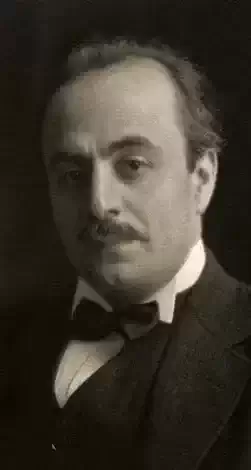
Khalil Gibran
The Farewell XXVIII
And now it was evening.
And Almitra the seeress said, "Blessed be this day and this place and your spirit that
has spoken."
And he answered, Was it I who spoke? Was I not also a listener?
Then he descended the steps of the Temple and all the people followed him. And he
reached his ship and stood upon the deck.
And facing the people again, he raised his voice and said:
People of Orphalese, the wind bids me leave you.
Less hasty am I than the wind, yet I must go.
We wanderers, ever seeking the lonelier way, begin no day where we have ended
another day; and no sunrise finds us where sunset left us.
Even while the earth sleeps we travel.
We are the seeds of the tenacious plant, and it is in our ripeness and our fullness of
heart that we are given to the wind and are scattered.
Brief were my days among you, and briefer still the words I have spoken.
But should my voice fade in your ears, and my love vanish in your memory, then I will
come again,
And with a richer heart and lips more yielding to the spirit will I speak.
Yea, I shall return with the tide,
And though death may hide me, and the greater silence enfold me, yet again will I
seek your understanding.
And not in vain will I seek.
If aught I have said is truth, that truth shall reveal itself in a clearer voice, and in
words more kin to your thoughts.
I go with the wind, people of Orphalese, but not down into emptiness;
And if this day is not a fulfillment of your needs and my love, then let it be a promise
till another day. Know therefore, that from the greater silence I shall return.
The mist that drifts away at dawn, leaving but dew in the fields, shall rise and gather
into a cloud and then fall down in rain.
And not unlike the mist have I been.
In the stillness of the night I have walked in your streets, and my spirit has entered
your houses,
And your heart-beats were in my heart, and your breath was upon my face, and I knew
you all.
Ay, I knew your joy and your pain, and in your sleep your dreams were my dreams.
And oftentimes I was among you a lake among the mountains.
I mirrored the summits in you and the bending slopes, and even the passing flocks of
your thoughts and your desires.
And to my silence came the laughter of your children in streams, and the longing of
your youths in rivers.
And when they reached my depth the streams and the rivers ceased not yet to sing.
But sweeter still than laughter and greater than longing came to me.
It was boundless in you;
The vast man in whom you are all but cells and sinews;
He in whose chant all your singing is but a soundless throbbing.
It is in the vast man that you are vast,
And in beholding him that I beheld you and loved you.
For what distances can love reach that are not in that vast sphere?
What visions, what expectations and what presumptions can outsoar that flight?
Like a giant oak tree covered with apple blossoms is the vast man in you.
His mind binds you to the earth, his fragrance lifts you into space, and in his durability
you are deathless.
You have been told that, even like a chain, you are as weak as your weakest link.
This is but half the truth. You are also as strong as your strongest link.
To measure you by your smallest deed is to reckon the power of ocean by the frailty of
its foam.
To judge you by your failures is to cast blame upon the seasons for their inconsistency.
Ay, you are like an ocean,
And though heavy-grounded ships await the tide upon your shores, yet, even like an
ocean, you cannot hasten your tides.
And like the seasons you are also,
And though in your winter you deny your spring,
Yet spring, reposing within you, smiles in her drowsiness and is not offended.
Think not I say these things in order that you may say the one to the other, "He
praised us well. He saw but the good in us."
I only speak to you in words of that which you yourselves know in thought.
And what is word knowledge but a shadow of wordless knowledge?
Your thoughts and my words are waves from a sealed memory that keeps records of
our yesterdays,
And of the ancient days when the earth knew not us nor herself,
And of nights when earth was upwrought with confusion,
Wise men have come to you to give you of their wisdom. I came to take of your
wisdom:
And behold I have found that which is greater than wisdom.
It is a flame spirit in you ever gathering more of itself,
While you, heedless of its expansion, bewail the withering of your days.
It is life in quest of life in bodies that fear the grave.
There are no graves here.
These mountains and plains are a cradle and a stepping-stone.
Whenever you pass by the field where you have laid your ancestors look well
thereupon, and you shall see yourselves and your children dancing hand in hand.
Verily you often make merry without knowing.
Others have come to you to whom for golden promises made unto your faith you have
given but riches and power and glory.
Less than a promise have I given, and yet more generous have you been to me.
You have given me deeper thirsting after life.
Surely there is no greater gift to a man than that which turns all his aims into parching
lips and all life into a fountain.
And in this lies my honour and my reward, -
That whenever I come to the fountain to drink I find the living water itself thirsty;
And it drinks me while I drink it.
Some of you have deemed me proud and over-shy to receive gifts.
To proud indeed am I to receive wages, but not gifts.
And though I have eaten berries among the hill when you would have had me sit at
your board,
And slept in the portico of the temple where you would gladly have sheltered me,
Yet was it not your loving mindfulness of my days and my nights that made food sweet
to my mouth and girdled my sleep with visions?
For this I bless you most:
You give much and know not that you give at all.
Verily the kindness that gazes upon itself in a mirror turns to stone,
And a good deed that calls itself by tender names becomes the parent to a curse.
And some of you have called me aloof, and drunk with my own aloneness,
And you have said, "He holds council with the trees of the forest, but not with men.
He sits alone on hill-tops and looks down upon our city."
True it is that I have climbed the hills and walked in remote places.
How could I have seen you save from a great height or a great distance?
How can one be indeed near unless he be far?
And others among you called unto me, not in words, and they said,
Stranger, stranger, lover of unreachable heights, why dwell you among the summits
where eagles build their nests?
Why seek you the unattainable?
What storms would you trap in your net,
And what vaporous birds do you hunt in the sky?
Come and be one of us.
Descend and appease your hunger with our bread and quench your thirst with our
wine."
In the solitude of their souls they said these things;
But were their solitude deeper they would have known that I sought but the secret of
your joy and your pain,
And I hunted only your larger selves that walk the sky.
But the hunter was also the hunted:
For many of my arrows left my bow only to seek my own breast.
And the flier was also the creeper;
For when my wings were spread in the sun their shadow upon the earth was a turtle.
And I the believer was also the doubter;
For often have I put my finger in my own wound that I might have the greater belief in
you and the greater knowledge of you.
And it is with this belief and this knowledge that I say,
You are not enclosed within your bodies, nor confined to houses or fields.
That which is you dwells above the mountain and roves with the wind.
It is not a thing that crawls into the sun for warmth or digs holes into darkness for
safety,
But a thing free, a spirit that envelops the earth and moves in the ether.
If this be vague words, then seek not to clear them.
Vague and nebulous is the beginning of all things, but not their end,
And I fain would have you remember me as a beginning.
Life, and all that lives, is conceived in the mist and not in the crystal.
And who knows but a crystal is mist in decay?
This would I have you remember in remembering me:
That which seems most feeble and bewildered in you is the strongest and most
determined.
Is it not your breath that has erected and hardened the structure of your bones?
And is it not a dream which none of you remember having dreamt that building your
city and fashioned all there is in it?
Could you but see the tides of that breath you would cease to see all else,
And if you could hear the whispering of the dream you would hear no other sound.
But you do not see, nor do you hear, and it is well.
The veil that clouds your eyes shall be lifted by the hands that wove it,
And the clay that fills your ears shall be pierced by those fingers that kneaded it.
And you shall see
And you shall hear.
Yet you shall not deplore having known blindness, nor regret having been deaf.
For in that day you shall know the hidden purposes in all things,
And you shall bless darkness as you would bless light.
After saying these things he looked about him, and he saw the pilot of his ship standing
by the helm and gazing now at the full sails and now at the distance.
And he said:
Patient, over-patient, is the captain of my ship.
The wind blows, and restless are the sails;
Even the rudder begs direction;
Yet quietly my captain awaits my silence.
And these my mariners, who have heard the choir of the greater sea, they too have
heard me patiently.
Now they shall wait no longer.
I am ready.
The stream has reached the sea, and once more the great mother holds her son
against her breast.
Fare you well, people of Orphalese.
This day has ended.
It is closing upon us even as the water-lily upon its own tomorrow.
What was given us here we shall keep,
And if it suffices not, then again must we come together and together stretch our
hands unto the giver.
Forget not that I shall come back to you.
A little while, and my longing shall gather dust and foam for another body.
A little while, a moment of rest upon the wind, and another woman shall bear me.
Farewell to you and the youth I have spent with you.
It was but yesterday we met in a dream.
You have sung to me in my aloneness, and I of your longings have built a tower in the
sky.
But now our sleep has fled and our dream is over, and it is no longer dawn.
The noontide is upon us and our half waking has turned to fuller day, and we must
part.
If in the twilight of memory we should meet once more, we shall speak again together
and you shall sing to me a deeper song.
And if our hands should meet in another dream, we shall build another tower in the
sky.
So saying he made a signal to the seamen, and straightaway they weighed anchor and
cast the ship loose from its moorings, and they moved eastward.
And a cry came from the people as from a single heart, and it rose the dusk and was
carried out over the sea like a great trumpeting.
Only Almitra was silent, gazing after the ship until it had vanished into the mist.
And when all the people were dispersed she still stood alone upon the sea-wall,
remembering in her heart his saying,
A little while, a moment of rest upon the wind, and another woman shall bear me."
395

William Butler Yeats
The Pilgrim
I FASTED for some forty days on bread and buttermilk,
For passing round the bottle with girls in rags or silk,
In country shawl or Paris cloak, had put my wits astray,
And what's the good of women, for all that they can say
Is fol de rol de rolly O.
Round Lough Derg's holy island I went upon the stones,
I prayed at all the Stations upon my matrow-bones,
And there I found an old man, and though, I prayed all day
And that old man beside me, nothing would he say
But fol de rol de rolly O.
All know that all the dead in the world about that place are stuck,
And that should mother seek her son she'd have but little luck
Because the fires of purgatory have ate their shapes away;
I swear to God I questioned them, and all they had to say
Was fol de rol de rolly O.
A great black ragged bird appeared when I was in the boat;
Some twenty feet from tip to tip had it stretched rightly out,
With flopping and with flapping it made a great display,
But I never stopped to question, what could the boatman say
But fol de rol de rolly O.
Now I am in the public-house and lean upon the wall,
So come in rags or come in silk, in cloak or country shawl,
And come with learned lovers or with what men you may,
For I can put the whole lot down, and all I have to say
Is fol de rol de rolly O.
393

Johann Wolfgang von Goethe
To My Friend - Ode II
THOU go'st! I murmur--
Go! let me murmur.
Oh, worthy man,
Fly from this land!
Deadly marshes,
Steaming mists of October
Here interweave their currents,
Blending for ever.
Noisome insects
Here are engender'd;
Fatal darkness
Veils their malice.
The fiery-tongued serpent,
Hard by the sedgy bank,
Stretches his pamper'd body,
Caress'd by the sun's bright beams.
Tempt no gentle night-rambles
Under the moon's cold twilight!
Loathsome toads hold their meetings
Yonder at every crossway.
Injuring not,
Fear will they cause thee.
Oh, worthy man,
Fly from this land!
390

Jack Kerouac
Bus East
Society has good intentions Bureaucracy is like a friend
5 years ago - other furies other losses
America's
trying to control the uncontrollable Forest fires, Vice
The essential smile In the essential sleep Of the children Of the essential mind
I'm
all thru playing the American
Now I'm going to live a good quiet life
The
world should be built for foot walkers
Oily
rivers Of spiney Nevady
I
am Jake Cake
Rake
Write like Blake
The
horse is not pleased Sight of his
gorgeous finery
in the dust Its silken
nostrils
did disgust
Cats
arent kind Kiddies anent sweet
April
in Nevada - Investigating Dismal Cheyenne Where the war parties
In fields
of straw
Aimed over oxen At Indian Chiefs
In wild headdress Pouring thru
the gap
In Wyoming plain
To make the settlers
Eat more dust than dust
was eaten In the States From East at Seacoast Where wagons made up To dreadful
Plains
Of clazer vup
Saltry
settlers
Anxious to masturbate The Mongol Sea (I'm too tired in Cheyenne -
No sleep in 4 nights now, & 2 to go)
392

Robert Louis Stevenson
From a Railway Carriage
Faster than fairies, faster than witches,
Bridges and houses, hedges and ditches;
And charging along like troops in a battle
All through the meadows the horses and cattle:
All of the sights of the hill and the plain
Fly as thick as driving rain;
And ever again, in the wink of an eye,
Painted stations whistle by.
Here is a child who clambers and scrambles,
All by himself and gathering brambles;
Here is a tramp who stands and gazes;
And here is the green for stringing the daisies!
Here is a cart runaway in the road
Lumping along with man and load;
And here is a mill, and there is a river:
Each a glimpse and gone forever!
390

Henry Van Dyke
The Glory of Ships
The glory of ships is an old, old song,
since the days when the sea-rovers ran
In their open boats through the roaring surf,
and the spread of the world began;
The glory of ships is a light on the sea,
and a star in the story of man.
When Homer sang of the galleys of Greece
that conquered the Trojan shore,
And Solomon lauded the barks of Tyre that
brought great wealth to his door,
'Twas little they knew, those ancient men,
what would come of the sail and the oar.
The Greek ships rescued the West from the East,
when they harried the Persians home;
And the Roman ships were the wings of strength
that bore up the empire, Rome;
And the ships of Spain found a wide new world,
far over the fields of foam.
Then the tribes of courage at last saw clear
that the ocean was not a bound,
But a broad highway, and a challenge to seek
for treasure as yet unfound;
So the fearless ships fared forth to the search,
in joy that the globe was round.
Their hulls were heightened, their sails spread out,
they grew with the growth of their quest;
They opened the secret doors of the East,
and the golden gates of the West;
And many a city of high renown
was proud of a ship on its crest.
The fleets of England and Holland and France
were at strife with each other and Spain;
And battle and storm sent a myriad ships
to sleep in the depths of the main;
But the seafaring spirit could never be drowned,
and it filled up the fleets again.
They greatened and grew, with the aid of steam,
to a wonderful, vast array,
That carries the thoughts and the traffic of men
into every harbor and bay;
And now in the world-wide work of the ships
'tis England that leads the way.
O well for the leading that follows the law
of a common right on the sea!
But ill for the leader who tries to hold
what belongs to mankind in fee!
The way of the ships is an open way,
and the ocean must ever be free!
Remember, O first of the maritime folk,
how the rise of your greatness began.
It will live if you safeguard the round-the-world road
from the shame of a selfish ban;
For the glory of ships is a light on the sea,
and a star in the story of man!
384
Robert Louis Stevenson
The Piper
AGAIN I hear you piping, for I know the tune so well, -
You rouse the heart to wander and be free,
Tho' where you learned your music, not the God of song can tell,
For you pipe the open highway and the sea.
O piper, lightly footing, lightly piping on your way,
Tho' your music thrills and pierces far and near,
I tell you you had better pipe to someone else to-day,
For you cannot pipe my fancy from my dear.
You sound the note of travel through the hamlet and the town;
You would lure the holy angels from on high;
And not a man can hear you, but he throws the hammer down
And is off to see the countries ere he die.
But now no more I wander, now unchanging here I stay;
By my love, you find me safely sitting here:
And pipe you ne'er so sweetly, till you pipe the hills away,
You can never pipe my fancy from my dear.
380

John Greenleaf Whittier
The Red River Voyageur
Out and in the river is winding
The links of its long, red chain,
Through belts of dusky pine-land
And gusty leagues of plain.
Only, at times, a smoke-wreath
With the drifting cloud-rack joins,
The
smoke of the hunting-lodges
Of the wild Assiniboins.
Drearily blows the north-wind
From the land of ice and snow;
The eyes that look are weary,
And heavy the hands that row.
And with one foot on the water,
And one upon the shore,
The Angel of Shadow gives warning
That day shall be no more.
Is it the clang of wild-geese?
Is it the Indian's yell,
That lends to the voice of the north-wind
The tones of a far-off bell?
The voyageur smiles as he listens
To the sound that grows apace;
Well he knows the vesper ringing
Of the bells of St. Boniface.
The bells of the Roman Mission,
That call from their turrets twain,
To the boatman on the river,
To the hunter on the plain!
Even so in our mortal journey
The bitter north-winds blow,
And thus upon life's Red River
Our hearts, as oarsmen, row.
And when the Angel of Shadow
Rests his feet on wave and shore,
And our eyes grow dim with watching
And our hearts faint at the oar,
Happy is he who heareth
The signal of his release
In the bells of the Holy City,
The chimes of eternal peace!
377
Johann Wolfgang von Goethe
The Freebooter
No door has my house,
No house has my door;
And in and out ever
I carry my store.
No grate has my kitchen,
No kitchen my grate;
Yet roasts it and boils it
Both early and late.
My bed has no trestles,
My trestles no bed;
Yet merrier moments
No mortal e'er led.
My cellar is lofty,
My barn is full deep,
From top to the bottom,--
There lie I and sleep.
And soon as I waken,
All moves on its race;
My place has no fixture,
My fixture no place.
375
Johann Wolfgang von Goethe
Mignon
Do you know the land where the lemon-trees grow,
in darkened leaves the gold-oranges glow,
a soft wind blows from the pure blue sky,
the myrtle stands mute, and the bay-tree high?
Do you know it well?
It’s there I’d be gone,
to be there with you, O, my beloved one!
Do you know the house? It has columns and beams,
there are glittering rooms, the hallway gleams,
and figures of marble looking at me?
‘What have they done, child of misery?
Do you know it well?
It’s there I’d be gone,
to be there with you, O my true guardian!
Do you know the clouded mountain mass?
The mule picks its way through the misted pass,
and dragons in caves raise their ancient brood,
and the cliffs are polished smooth by the flood;
Do you know it well?
It’s there I would be gone!
It’s there our way leads! Father, we must go on!
373

Walt Whitman
Facing West From California's Shores
FACING west, from California's shores,
Inquiring, tireless, seeking what is yet unfound,
I, a child, very old, over waves, towards the house of maternity, the
land of migrations, look afar,
Look off the shores of my Western Sea--the circle almost circled;
For, starting westward from Hindustan, from the vales of Kashmere,
From Asia--from the north--from the God, the sage, and the hero,
From the south--from the flowery peninsulas, and the spice islands;
Long having wander'd since--round the earth having wander'd,
Now I face home again--very pleas'd and joyous;
(But where is what I started for, so long ago?
And why is it yet unfound?)
372

Emily Dickinson
Exultation is the going
Exultation is the going
Of an inland soul to sea,
Past the houses-past the headlands-
Into deep Eternity-
Bred as we, among the mountains,
Can the sailor understand
The divine intoxication
Of the first league out from land?
Of an inland soul to sea,
Past the houses-past the headlands-
Into deep Eternity-
Bred as we, among the mountains,
Can the sailor understand
The divine intoxication
Of the first league out from land?
365
Walt Whitman
The Ship Starting
LO! THE unbounded sea!
On its breast a Ship starting, spreading all her sails--an ample
Ship, carrying even her moonsails;
The pennant is flying aloft, as she speeds, she speeds so stately-below,
emulous waves press forward,
They surround the Ship, with shining curving motions, and foam.
On its breast a Ship starting, spreading all her sails--an ample
Ship, carrying even her moonsails;
The pennant is flying aloft, as she speeds, she speeds so stately-below,
emulous waves press forward,
They surround the Ship, with shining curving motions, and foam.
363

Robert W. Service
The Ballad Of The Ice-Worm Cocktail
To Dawson Town came Percy Brown from London on the Thames.
A pane of glass was in his eye, and stockings on his stems.
Upon the shoulder of his coat a leather pad he wore,
To rest his deadly rifle when it wasn't seeking gore;
The which it must have often been, for Major Percy Brown,
According to his story was a hunter of renown,
Who in the Murrumbidgee wilds had stalked the kangaroo
And killed the cassowary on the plains of Timbuctoo.
And now the Arctic fox he meant to follow to its lair,
And it was also his intent to beard the Artic hare...
Which facts concerning Major Brown I merely tell because
I fain would have you know him for the Nimrod that he was.
Now Skipper Grey and Deacon White were sitting in the shack,
And sampling of the whisky that pertained to Sheriff Black.
Said Skipper Grey: "I want to say a word about this Brown:
The piker's sticking out his chest as if he owned the town."
Said Sheriff Black: "he has no lack of frigorated cheek;
He called himself a Sourdough when he'd just been here a week."
Said Deacon White: "Methinks you're right, and so I have a plan
By which I hope to prove to-night the mettle of the man.
Just meet me where the hooch-bird sings, and though our ways be rude
We'll make a proper Sourdough of this Piccadilly dude."
Within the Malamute Saloon were gathered all the gang;
The fun was fast and furious, and the loud hooch-bird sang.
In fact the night's hilarity had almost reached its crown,
When into its storm-centre breezed the gallant Major Brown.
And at the apparation, whith its glass eye and plus-fours,
From fifty alcoholic throats responded fifty roars.
With shouts of stark amazement and with whoops of sheer delight,
They surged around the stranger, but the first was Deacon White.
"We welcome you," he cried aloud, "to this the Great White Land.
The Artic Brotherhood is proud to grip you by the hand.
Yea, sportsman of the bull-dog breed, from trails of far away,
To Yukoners this is indeed a memorable day.
Our jubilation to express, vocabularies fail...
Boys, hail the Great Cheechako!" And the boys responded: "Hail!"
"And now," continued Deacon White to blushing Major Brown,
"Behold assembled the eelight and cream of Dawson Town,
And one ambition fills their hearts and makes their bosoms glow -
They want to make you, honoured sir, a bony feed Sourdough.
The same, some say, is one who's seen the Yukon ice go out,
But most profound authorities the definition doubt,
And to the genial notion of this meeting, Major Brown,
A Sourdough is a guy who drinks ... an ice-worm cocktail down."
"By Gad!" responded Major Brown, "that's ripping, don't you know.
I've always felt I'd like to be a certified Sourdough.
And though I haven't any doubt your Winter's awf'ly nice,
Mayfair, I fear, may miss me ere the break-up of your ice.
Yet (pray excuse my ignorance of matters such as these)
A cocktail I can understand - but what's an ice-worm, please?"
Said Deacon White: "It is not strange that you should fail to know,
Since ice-worms are peculiar to the Mountain of Blue Snow.
Within the Polar rim it rears, a solitary peak,
And in the smoke of early Spring (a spectacle unique)
Like flame it leaps upon the sight and thrills you through and through,
For though its cone is piercing white, its base is blazing blue.
Yet all is clear as you draw near - for coyley peering out
Are hosts and hosts of tiny worms, each indigo of snout.
And as no nourishment they find, to keep themselves alive
They masticate each other's tails, till just the Tough survive.
Yet on this stern and Spartan fare so-rapidly they grow,
That some attain six inches by the melting of the snow.
Then when the tundra glows to green and nigger heads appear,
They burrow down and are not seen until another year."
"A toughish yarn," laughed Major Brown, "as well you may admit.
I'd like to see this little beast before I swallow it."
"'Tis easy done," said Deacon White, "Ho! Barman, haste and bring
Us forth some pickled ice-worms of the vintage of last Spring."
But sadly still was Barman Bill, then sighed as one bereft:
"There's been a run on cocktails, Boss; there ain't an ice-worm left.
Yet wait . . . By gosh! it seems to me that some of extra size
Were picked and put away to show the scientific guys."
Then deeply in a drawer he sought, and there he found a jar,
The which with due and proper pride he put upon the bar;
And in it, wreathed in queasy rings, or rolled into a ball,
A score of grey and greasy things, were drowned in alcohol.
Their bellies were a bilious blue, their eyes a bulbous red;
Their back were grey, and gross were they, and hideous of head.
And when with gusto and a fork the barman speared one out,
It must have gone four inches from its tail-tip to its snout.
Cried Deacon White with deep delight: "Say, isn't that a beaut?"
"I think it is," sniffed Major Brown, "a most disgustin' brute.
Its very sight gives me the pip. I'll bet my bally hat,
You're only spoofin' me, old chap. You'll never swallow that."
"The hell I won't!" said Deacon White. "Hey! Bill, that fellows fine.
Fix up four ice-worm cocktails, and just put that wop in mine."
So Barman Bill got busy, and with sacerdotal air
His art's supreme achievement he proceeded to prepare.
His silver cups, like sickle moon, went waving to and fro,
And four celestial cocktails soon were shining in a row.
And in the starry depths of each, artistically piled,
A fat and juicy ice-worm raised its mottled mug and smiled.
Then closer pressed the peering crown, suspended was the fun,
As Skipper Grey in courteous way said: "Stranger, please take one."
But with a gesture of disgust the Major shook his head.
"You can't bluff me. You'll never drink that gastly thing," he said.
"You'll see all right," said Deacon White, and held his cocktail high,
Till its ice-worm seemed to wiggle, and to wink a wicked eye.
Then Skipper Grey and Sheriff Black each lifted up a glass,
While through the tense and quiet crown a tremor seemed to pass.
"Drink, Stranger, drink," boomed Deacon White. "proclaim you're of the best,
A doughty Sourdough who has passed the Ice-worm Cocktail Test."
And at these words, with all eyes fixed on gaping Major Brown,
Like a libation to the gods, each dashed his cocktail down.
The Major gasped with horror as the trio smacked their lips.
He twiddled at his eye-glass with unsteady finger-tips.
Into his starry cocktail with a look of woe he peered,
And its ice-worm, to his thinking, mosy incontinently leered.
Yet on him were a hundred eyes, though no one spoke aloud,
For hushed with expectation was the waiting, watching crowd.
The Major's fumbling hand went forth - the gang prepared to cheer;
The Major's falt'ring hand went back, the mob prepared to jeer,
The Major gripped his gleaming glass and laid it to his lips,
And as despairfully he took some nauseated sips,
From out its coil of crapulence the ice-worm raised its head,
Its muzzle was a murky blue, its eyes a ruby red.
And then a roughneck bellowed fourth: "This stiff comes here and struts,
As if he bought the blasted North - jest let him show his guts."
And with a roar the mob proclaimed: "Cheechako, Major Brown,
Reveal that you're of Sourdough stuff, and drink your cocktail down."
The Major took another look, then quickly closed his eyes,
For even as he raised his glass he felt his gorge arise.
Aye, even though his sight was sealed, in fancy he could see
That grey and greasy thing that reared and sneered in mockery.
Yet round him ringed the callous crowd - and how they seemed to gloat!
It must be done . . . He swallowed hard . . . The brute was at his throat.
He choked. . . he gulped . . . Thank God! at last he'd got the horror down.
Then from the crowd went up a roar: "Hooray for Sourdough Brown!"
With shouts they raised him shoulder high, and gave a rousing cheer,
But though they praised him to the sky the Major did not hear.
Amid their demonstrative glee delight he seemed to lack;
Indeed it almost seemed that he - was "keeping something back."
A clammy sweat was on his brow, and pallid as a sheet:
"I feel I must be going now," he'd plaintively repeat.
Aye, though with drinks and smokes galore, they tempted him to stay,
With sudden bolt he gained the door, and made his get-away.
And ere next night his story was the talk of Dawson Town,
But gone and reft of glory was the wrathful Major Brown;
For that ice-worm (so they told him) of such formidable size
Was - a stick of stained spaghetti with two red ink spots for eyes.
360

Robert Browning
The Wanderers
OVER the sea our galleys went,
With cleaving prows in order brave
To a speeding wind and a bounding wave--
A gallant armament:
Each bark built out of a forest-tree
Left leafy and rough as first it grew,
And nail'd all over the gaping sides,
Within and without, with black bull-hides,
Seethed in fat and suppled in flame,
To bear the playful billows' game;
So, each good ship was rude to see,
Rude and bare to the outward view.
But each upbore a stately tent
Where cedar pales in scented row
Kept out the flakes of the dancing brine,
And an awning droop'd the mast below,
In fold on fold of the purple fine,
That neither noontide nor star-shine
Nor moonlight cold which maketh mad,
Might pierce the regal tenement.
When the sun dawn'd, O, gay and glad
We set the sail and plied the oar;
But when the night-wind blew like breath,
For joy of one day's voyage more,
We sang together on the wide sea,
Like men at peace on a peaceful shore;
Each sail was loosed to the wind so free,
Each helm made sure by the twilight star,
And in a sleep as calm as death,
We, the voyagers from afar,
Lay stretch'd along, each weary crew
In a circle round its wondrous tent
Whence gleam'd soft light and curl'd rich scent,
And with light and perfume, music too:
So the stars wheel'd round, and the darkness past,
And at morn we started beside the mast,
And still each ship was sailing fast!
Now, one morn, land appear'd--a speck
Dim trembling betwixt sea and sky--
'Avoid it,' cried our pilot, 'check
The shout, restrain the eager eye!'
But the heaving sea was black behind
For many a night and many a day,
And land, though but a rock, drew nigh;
So we broke the cedar pales away,
Let the purple awning flap in the wind,
And a statue bright was on every deck!
We shouted, every man of us,
And steer'd right into the harbour thus,
With pomp and paean glorious.
A hundred shapes of lucid stone!
All day we built its shrine for each,
A shrine of rock for ever one,
Nor paused till in the westering sun
We sat together on the beach
To sing because our task was done;
When lo! what shouts and merry songs!
What laughter all the distance stirs!
A loaded raft with happy throngs
Of gentle islanders!
'Our isles are just at hand,' they cried,
'Like cloudlets faint in even sleeping;
Our temple-gates are open'd wide,
Our olive-groves thick shade are keeping
For these majestic forms'--they cried.
O, then we awoke with sudden start
From our deep dream, and knew, too late,
How bare the rock, how desolate,
Which had received our precious freight:
Yet we call'd out--'Depart!
Our gifts, once given, must here abide:
Our work is done; we have no heart
To mar our work,'--we cried.
359

Carl Sandburg
Waiting
Today I will let the old boat stand
Where the sweep of the harbor tide comes in
To the pulse of a far, deep-steady sway.
And I will rest and dream and sit on the deck
Watching the world go by
And take my pay for many hard days gone I remember.
I will choose what clouds I like
In the great white fleets that wander the blue
As I lie on my back or loaf at the rail.
And I will listen as the veering winds kiss me and fold me
And put on my brow the touch of the world's great will.
Daybreak will hear the heart of the boat beat,
Engine throb and piston play
In the quiver and leap at call of life.
To-morrow we move in the gaps and heights
On changing floors of unlevel seas
And no man shall stop us and no man follow
For ours is the quest of an unknown shore
And we are husky and lusty and shouting-gay.
350

Walter de la Mare
Off the Ground
Three jolly Farmers
Once bet a pound
Each dance the others would
Off the ground.
Out of their coats
They slipped right soon,
And neat and nicesome
Put each his shoon.
One--Two--Three!
And away they go,
Not too fast,
And not too slow;
Out from the elm-tree's
Noonday shadow,
Into the sun
And across the meadow.
Past the schoolroom,
With knees well bent,
Fingers a flicking,
They dancing went.
Up sides and over,
And round and round,
They crossed click-clacking
The Parish bound;
By Tupman's meadow
They did their mile,
Tee-to-tum
On a three-barred stile.
Then straight through Whipham,
Downhill to Week,
Footing it lightsome,
But not too quick,
Up fields to Watchet
And on through Wye,
Till seven fine churches
They'd seen slip by --
Seven fine churches,
And five old mills,
Farms in the valley,
And sheep on the hills;
Old Man's Acre
And Dead Man's Pool
All left behind,
As they danced through Wool.
And Wool gone by,
Like tops that seem
To spin in sleep
They danced in dream:
Withy -- Wellover --
Wassop -- Wo --
Like an old clock
Their heels did go.
A league and a league
And a league they went,
And not one weary,
And not one spent.
And log, and behold!
Past Willow-cum-Leigh
Stretched with its waters
The great green sea.
Says Farmer Bates,
'I puffs and I blows,
What's under the water,
Why, no man knows !'
Says Farmer Giles,
'My mind comes weak,
And a good man drownded
Is far to seek. '
But Farmer Turvey,
On twirling toes,
Up's with his gaiters,
And in he goes:
Down where the mermaids
Pluck and play
On their twangling harps
In a sea-green day;
Down where the mermaids
Finned and fair,
Sleek with their combs
Their yellow hair. . . .
Bates and Giles --
On the shingle sat,
Gazing at Turvey's
Floating hat.
But never a ripple
Nor bubble told
Where he was supping
Off plates of gold.
Never an echo
Rilled through the sea
Of the feasting and dancing
And minstrelsy.
They called -- called -- called;
Came no reply:
Nought but the ripples'
Sandy sigh.
Then glum and silent
They sat instead,
Vacantly brooding
On home and bed,
Till both together
Stood up and said: --
'Us knows not, dreams not,
Where you be,
Turvey, unless
In the deep blue sea;
But axcusing silver --
And it comes most willing --
Here's us two paying our forty shilling;
For it's sartin sure, Turvey,
Safe and sound,
You danced us a square, Turvey,
Off the ground.'
350
Robert Louis Stevenson
Singing
Of speckled eggs the birdie sings
And nests among the trees;
The sailor sings of ropes and things
In ships upon the seas.
The children sing in far Japan,
The children sing in Spain;
The organ with the organ man
Is singing in the rain.
And nests among the trees;
The sailor sings of ropes and things
In ships upon the seas.
The children sing in far Japan,
The children sing in Spain;
The organ with the organ man
Is singing in the rain.
351

Anonymous
Sir Patrick Spens
I. The Sailing
THE king sits in Dunfermline town
Drinking the blude-red wine;
'O whare will I get a skeely skipper
To sail this new ship o' mine?'
O up and spak an eldern knight,
Sat at the king's right knee;
'Sir Patrick Spens is the best sailor
That ever sail'd the sea.'
Our king has written a braid letter,
And seal'd it with his hand,
And sent it to Sir Patrick Spens,
Was walking on the strand.
'To Noroway, to Noroway,
To Noroway o'er the faem;
The king's daughter o' Noroway,
'Tis thou must bring her hame.'
The first word that Sir Patrick read
So loud, loud laugh'd he;
The neist word that Sir Patrick read
The tear blinded his e'e.
'O wha is this has done this deed
And tauld the king o' me,
To send us out, at this time o' year,
To sail upon the sea?
'Be it wind, be it weet, be it hail, be it sleet,
Our ship must sail the faem;
The king's daughter o' Noroway,
'Tis we must fetch her hame.'
They hoysed their sails on Monenday morn
Wi' a' the speed they may;
They hae landed in Noroway
Upon a Wodensday.
II. The Return
'Mak ready, mak ready, my merry men a'!
Our gude ship sails the morn.'
'Now ever alack, my master dear,
I fear a deadly storm.
'I saw the new moon late yestreen
Wi' the auld moon in her arm;
And if we gang to sea, master,
I fear we'll come to harm.'
They hadna sail'd a league, a league,
A league but barely three,
When the lift grew dark, and the wind blew loud,
And gurly grew the sea.
The ankers brak, and the topmast lap,
It was sic a deadly storm:
And the waves cam owre the broken ship
Till a' her sides were torn.
'Go fetch a web o' the silken claith,
Another o' the twine,
And wap them into our ship's side,
And let nae the sea come in.'
They fetch'd a web o' the silken claith,
Another o' the twine,
And they wapp'd them round that gude ship's side,
But still the sea came in.
O laith, laith were our gude Scots lords
To wet their cork-heel'd shoon;
But lang or a' the play was play'd
They wat their hats aboon.
And mony was the feather bed
That flatter'd on the faem;
And mony was the gude lord's son
That never mair cam hame.
O lang, lang may the ladies sit,
Wi' their fans into their hand,
Before they see Sir Patrick Spens
Come sailing to the strand!
And lang, lang may the maidens sit
Wi' their gowd kames in their hair,
A-waiting for their ain dear loves!
For them they'll see nae mair.
Half-owre, half-owre to Aberdour,
'Tis fifty fathoms deep;
And there lies gude Sir Patrick Spens,
Wi' the Scots lords at his feet!
344
Johann Wolfgang von Goethe
To The Chosen One
HAND in hand! and lip to lip!
Oh, be faithful, maiden dear!
Fare thee well! thy lover's ship
Past full many a rock must steers
But should he the haven see,
When the storm has ceased to break,
And be happy, reft of thee,--
May the Gods fierce vengeance take!
Boldly dared is well nigh won!
Half my task is solved aright;
Ev'ry star's to me a sun,
Only cowards deem it night.
Stood I idly by thy side,
Sorrow still would sadden me;
But when seas our paths divide,
Gladly toil I,--toil for thee!
Now the valley I perceive,
Where together we will go,
And the streamlet watch each eve,
Gliding peacefully below
Oh, the poplars on yon spot!
Oh, the beech trees in yon grove!
And behind we'll build a cot,
Where to taste the joys of love!
344