
Travel and Horizons

Henry Lawson
Andy's Return
With pannikins all rusty,
And billy burnt and black,
And clothes all torn and dusty,
That scarcely hide his back;
With sun-cracked saddle-leather,
And knotted greenhide rein,
And face burnt brown with weather,
Our Andy’s home again!
His unkempt hair is faded
With sleeping in the wet,
He’s looking old and jaded;
But he is hearty yet.
With eyes sunk in their sockets—
But merry as of yore;
With big cheques in his pockets,
Our Andy’s home once more!
Old Uncle’s bright and cheerful;
He wears a smiling face;
And Aunty’s never tearful
Now Andy’s round the place.
Old Blucher barks for gladness;
He broke his rusty chain,
And leapt in joyous madness
When Andy came again.
With tales of flood and famine,
On distant northern tracks,
And shady yarns—‘baal gammon!’
Of dealings with the blacks,
From where the skies hang lazy
On many a northern plain,
From regions dim and hazy
Our Andy’s home again!
His toil is nearly over;
He’ll soon enjoy his gains.
Not long he’ll be a drover,
And cross the lonely plains.
We’ll happy be for ever
When he’ll no longer roam,
But by some deep, cool river
Will make us all a home.
345
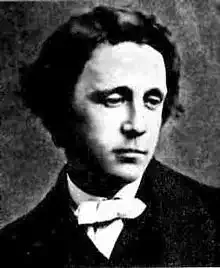
Lewis Carroll
The Hunting of the Snark
Fit the First
THE LANDING
'Just the place for a Snark!' the Bellman cried,
As he landed his crew with care;
Supporting each man on the top of the tide
By a finger entwined in his hair.
'Just the place for a Snark! I have said it twice:
That alone should encourage the crew.
Just the place for a Snark! I have said it thrice:
What i tell you three times is true.'
The crew was complete: it included a BootsA
maker of Bonnets and HoodsA
Barrister, brought to arrange their disputes
And
a Broker, to value their goods.
A Billiardmaker,
whose skill was immense,
Might perhaps have won more than his share
But
a Banker, engaged at enormous expense,
Had the whole of their cash in his care.
There was also a Beaver, that paced on the deck,
Or would sit making lace in the bow:
And had often (the Bellman said) saved them from wreck,
Though none of the sailors knew how.
There was one who was famed for the number of things
He forgot when he entered the ship:
His umbrella, his watch, all his jewels and rings,
And the clothes he had bought for the trip.
He had fortytwo
boxes, all carefully packed,
With his name painted clearly on each:
But, since he omitted to mention the fact,
They were all left behind on the beach.
The loss of his clothes hardly mattered, because
He had seven coats on when he came,
With three pairs of bootsbut
the worst of it was,
He had wholly forgotten his name.
He would answer to 'Hi!' or to any loud cry,
Such as 'Fry me!' or 'Fritter my wig!'
To 'Whatyoumaycallum!'
or 'Whatwashisname!'
But especially 'Thingumajig!'
While, for those who preferred a more forcible word,
He had different names from these:
His intimate friends called him 'Candleends,'
And his enemies 'Toastedcheese.'
'His form in ungainlyhis
intellect small'
(So the Bellman would often remark)
'But his courage is perfect! And that, after all,
Is the thing that one needs with a Snark.'
He would joke with hyenas, returning their stare
With an impudent wag of the head:
And he once went a walk, pawinpaw,
with a bear,
'Just to keep up its spirits,' he said.
He came as a Baker: but owned, when too late
And
it drove the poor Bellman halfmad
He
could only bake Bridecakefor
which, I may state,
No materials were to be had.
The last of the crew needs especial remark,
Though he looked an incredible dunce:
He had just one ideabut,
that one being 'Snark,'
The good Bellman engaged him at once.
He came as a Butcher: but gravely declared,
When the ship had been sailing a week,
He could only kill Beavers. The Bellman looked scared,
And was almost too frightened to speak:
But at length he explained, in a tremulous tone,
There was only one Beaver on board;
And that was a tame one he had of his own,
Whose death would be deeply deplored.
The Beaver, who happened to hear the remark,
Protested, with tears in its eyes,
That not even the rapture of hunting the Snark
Could atone for that dismal surprise!
It strongly advised that the Butcher should be
Conveyed in a separate ship:
But the Bellman declared that would never agree
With the plans he had made for the trip:
Navigation was always a difficult art,
Though with only one ship and one bell:
And he feared he must really decline, for his part,
Undertaking another as well.
The Beaver's best course was, no doubt, to procure
A secondhand
daggerproof
coat
So
the Baker advised itand
next, to insure
Its life in some Office of note:
This the Banker suggested, and offered for hire
(On moderate terms), or for sale,
Two excellent Policies, one Against Fire,
And one Against Damage From Hail.
Yet still, ever after that sorrowful day,
Whenever the Butcher was by,
The Beaver kept looking the opposite way,
And appeared unaccountably shy.
Fit the Second
THE BELLMAN'S SPEECH
The Bellman himself they all praised to the skies
Such
a carriage, such ease and such grace!
Such solemnity, too! One could see he was wise,
The moment one looked in his face!
He had bought a large map representing the sea,
Without the least vestige of land:
And the crew were much pleased when they found it to be
A map they could all understand.
'What's the good of Mercator's North Poles and Equators,
Tropics, Zones, and Meridian Lines?'
So the Bellman would cry: and the crew would reply
'They are merely conventional signs!
'Other maps are such shapes, with their islands and capes!
But we've got our brave Captain to thank:
(So the crew would protest) 'that he's bought us the best
A
perfect and absolute blank!'
This was charming, no doubt; but they shortly found out
That the Captain they trusted so well
Had only one notion for crossing the ocean,
And that was to tingle his bell.
He was thoughtful and gravebut
the orders he gave
Were enough to bewilder a crew.
When he cried 'Steer to starboard, but keep her head larboard!'
What on earth was the helmsman to do?
Then the bowsprit got mixed with the rudder sometimes:
A thing, as the Bellman remarked,
That frequently happens in tropical climes,
When a vessel is, so to speak, 'snarked.'
But the principal failing occurred in the sailing,
And the Bellman, perplexed and distressed,
Said he had hoped, at least, when the wind blew due East,
That the ship would not travel due West!
But the danger was pastthey
had landed at last,
With their boxes, portmanteaus, and bags:
Yet at first sight the crew were not pleased with the view,
Which consisted to chasms and crags.
The Bellman perceived that their spirits were low,
And repeated in musical tone
Some jokes he had kept for a season of woe
But
the crew would do nothing but groan.
He served out some grog with a liberal hand,
And bade them sit down on the beach:
And they could not but own that their Captain looked grand,
As he stood and delivered his speech.
'Friends, Romans, and countrymen, lend me your ears!'
(They were all of them fond of quotations:
So they drank to his health, and they gave him three cheers,
While he served out additional rations).
'We have sailed many months, we have sailed many weeks,
(Four weeks to the month you may mark),
But never as yet ('tis your Captain who speaks)
Have we caught the least glimpse of a Snark!
'We have sailed many weeks, we have sailed many days,
(Seven days to the week I allow),
But a Snark, on the which we might lovingly gaze,
We have never beheld till now!
'Come, listen, my men, while I tell you again
The five unmistakable marks
By which you may know, wheresoever you go,
The warranted genuine Snarks.
'Let us take them in order. The first is the taste,
Which is meager and hollow, but crisp:
Like a coat that is rather too tight in the waist,
With a flavor of Willothewisp.
'Its habit of getting up late you'll agree
That it carries too far, when I say
That it frequently breakfasts at fiveo'clock
tea,
And dines on the following day.
'The third is its slowness in taking a jest.
Should you happen to venture on one,
It will sigh like a thing that is deeply distressed:
And it always looks grave at a pun.
'The fourth is its fondness for bathingmachines,
Which is constantly carries about,
And believes that they add to the beauty of scenes
A
sentiment open to doubt.
'The fifth is ambition. It next will be right
To describe each particular batch:
Distinguishing those that have feathers, and bite,
And those that have whiskers, and scratch.
'For, although common Snarks do no manner of harm,
Yet, I feel it my duty to say,
Some are Boojums'
The Bellman broke off in alarm,
For the Baker had fainted away.
Fit the Third
THE BAKER'S TALE
They roused him with muffinsthey
roused him with ice
They
roused him with mustard and cress
They
roused him with jam and judicious advice
They
set him conundrums to guess.
When at length he sat up and was able to speak,
His sad story he offered to tell;
And the Bellman cried 'Silence! Not even a shriek!'
And excitedly tingled his bell.
There was silence supreme! Not a shriek, not a scream,
Scarcely even a howl or a groan,
As the man they called 'Ho!' told his story of woe
In an antediluvian tone.
'My father and mother were honest, though poor'
'Skip all that!' cried the Bellman in haste.
'If it once becomes dark, there's no chance of a SnarkWe
have hardly a minute to waste!'
'I skip forty years,' said the Baker, in tears,
'And proceed without further remark
To the day when you took me aboard of your ship
To help you in hunting the Snark.
'A dear uncle of mine (after whom I was named)
Remarked, when I bade him farewell'
'Oh, skip your dear uncle!' the Bellman exclaimed,
As he angrily tingled his bell.
'He remarked to me then,' said that mildest of men,
' 'If your Snark be a Snark, that is right:
Fetch it home by all meansyou
may serve it with greens,
And it's handy for striking a light.
' 'You may seek it with thimblesand
seek it with care;
You may hunt it with forks and hope;
You may threaten its life with a railwayshare;
You may charm it with smiles and soap'
'
('That's exactly the method,' the Bellman bold
In a hasty parenthesis cried,
'That's exactly the way I have always been told
That the capture of Snarks should be tried!')
' 'But oh, beamish nephew, beware of the day,
If your Snark be a Boojum! For then
You will softly and suddenly vanish away,
And never be met with again!'
'It is this, it is this that oppresses my soul,
When I think of my uncle's last words:
And my heart is like nothing so much as a bowl
Brimming over with quivering curds!
'It is this, it is this'
'We have had that before!'
The Bellman indignantly said.
And the Baker replied 'Let me say it once more.
It is this, it is this that I dread!
'I engage with the Snarkevery
night after dark
In
a dreamy delirious fight:
I serve it with greens in those shadowy scenes,
And I use it for striking a light:
'But if ever I meet with a Boojum, that day,
In a moment (of this I am sure),
I shall softly and suddenly vanish away
And
the notion I cannot endure!'
Fit the fourth
THE HUNTING
The Bellman looked uffish, and wrinkled his brow.
'If only you'd spoken before!
It's excessively awkward to mention it now,
With the Snark, so to speak, at the door!
'We should all of us grieve, as you well may believe,
If you never were met with again
But
surely, my man, when the voyage began,
You might have suggested it then?
'It's excessively awkward to mention it now
As
I think I've already remarked.'
And the man they called 'Hi!' replied, with a sigh,
'I informed you the day we embarked.
'You may charge me with murderor
want of sense(
We are all of us weak at times):
But the slightest approach to a false pretense
Was never among my crimes!
'I said it in HebrewI
said it in DutchI
said it in German and Greek:
But I wholly forgot (and it vexes me much)
That English is what you speak!'
''Tis a pitiful tale,' said the Bellman, whose face
Had grown longer at every word:
'But, now that you've stated the whole of your case,
More debate would be simply absurd.
'The rest of my speech' (he explained to his men)
'You shall hear when I've leisure to speak it.
But the Snark is at hand, let me tell you again!
'Tis your glorious duty to seek it!
'To seek it with thimbles, to seek it with care;
To pursue it with forks and hope;
To threaten its life with a railwayshare;
To charm it with smiles and soap!
'For the Snark's a peculiar creature, that won't
Be caught in a commonplace way.
Do all that you know, and try all that you don't:
Not a chance must be wasted today!
'For England expects
I
forbear to proceed:
'Tis a maxim tremendous, but trite:
And you'd best be unpacking the things that you need
To rig yourselves out for the fight.'
Then the Banker endorsed a blank check (which he crossed),
And changed his loose silver for notes.
The Baker with care combed his whiskers and hair,
And shook the dust out of his coats.
The Boots and the Broker were sharpening a spade
Each
working the grindstone in turn:
But the Beaver went on making lace, and displayed
No interest in the concern:
Though the Barrister tried to appeal to its pride,
And vainly proceeded to cite
A number of cases, in which making laces
Had been proved an infringement of right.
The maker of Bonnets ferociously planned
A novel arrangement of bows:
While the Billiardmarker
with quivering hand
Was chalking the tip of his nose.
But the Butcher turned nervous, and dressed himself fine,
With yellow kid gloves and a ruff
Said
he felt it exactly like going to dine,
Which the Bellman declared was all 'stuff.'
'Introduce me, now there's a good fellow,' he said,
'If we happen to meet it together!'
And the Bellman, sagaciously nodding his head,
Said 'That must depend on the weather.'
The Beaver went simply galumphing about,
At seeing the Butcher so shy:
And even the Baker, though stupid and stout,
Made an effort to wink with one eye.
'Be a man!' said the Bellman in wrath, as he heard
The Butcher beginning to sob.
'Should we meet with a Jubjub, that desperate bird,
We shall need all our strength for the job!'
Fit the Fifth
THE BEAVER'S LESSON
They sought it with thimbles, they sought it with care;
They pursued it with forks and hope;
They threatened its life with a railwayshare;
They charmed it with smiles and soap.
Then the Butcher contrived an ingenious plan
For making a separate sally;
And fixed on a spot unfrequented by man,
A dismal and desolate valley.
But the very same plan to the Beaver occurred:
It had chosen the very same place:
Yet neither betrayed, by a sign or a word,
The disgust that appeared in his face.
Each thought he was thinking of nothing but 'Snark'
And the glorious work of the day;
And each tried to pretend that he did not remark
That the other was going that way.
But the valley grew narrow and narrower still,
And the evening got darker and colder,
Till (merely from nervousness, not from goodwill)
They marched along shoulder to shoulder.
Then a scream, shrill and high, rent the shuddering sky,
And they knew that some danger was near:
The Beaver turned pale to the tip of its tail,
And even the Butcher felt queer.
He thought of his childhood, left far far behind
That
blissful and innocent state
The
sound so exactly recalled to his mind
A pencil that squeaks on a slate!
''Tis the voice of the Jubjub!' he suddenly cried.
(This man, that they used to call 'Dunce.')
'As the Bellman would tell you,' he added with pride,
'I have uttered that sentiment once.
''Tis the note of the Jubjub! Keep count, I entreat;
You will find I have told it you twice.
'Tis the song of the Jubjub! The proof is complete,
If only I've stated it thrice.'
The Beaver had counted with scrupulous care,
Attending to every word:
But it fairly lost heart, and outgrabe in despair,
When the third repetition occurred.
It felt that, in spite of all possible pains,
It had somehow contrived to lose count,
And the only thing now was to rack its poor brains
By reckoning up the amount.
'Two added to oneif
that could but be done,'
It said, 'with one's fingers and thumbs!'
Recollecting with tears how, in earlier years,
It had taken no pains with its sums.
'The thing can be done,' said the Butcher, 'I think.
The thing must be done, I am sure.
The thing shall be done! Bring me paper and ink,
The best there is time to procure.'
The Beaver brought paper,portfolio, pens,
And ink in unfailing supplies:
While strange creepy creatures came out of their dens,
And watched them with wondering eyes.
So engrossed was the Butcher, he heeded them not,
As he wrote with a pen in each hand,
And explained all the while in a popular style
Which the Beaver could well understand.
'Taking Three as the subject to reason about
A
convenient number to state
We
add Seven, and Ten, and then multiply out
By One Thousand diminished by Eight.
'The result we proceed to divide, as you see,
By Nine Hundred and Ninety Two:
Then subtract Seventeen, and the answer must be
Exactly and perfectly true.
'The method employed I would gladly explain,
While I have it so clear in my head,
If I had but the time and you had but the brain
But
much yet remains to be said.
'In one moment I've seen what has hitherto been
Enveloped in absolute mystery,
And without extra charge I will give you at large
A Lesson in Natural History.'
In his genial way he proceeded to say
(Forgetting all laws of propriety,
And that giving instruction, without introduction,
Would have caused quite a thrill in Society),
'As to temper the Jubjub's a desperate bird,
Since it lives in perpetual passion:
Its taste in costume is entirely absurd
It
is ages ahead of the fashion:
'But it knows any friend it has met once before:
It never will look at a bride:
And in charitymeetings
it stands at the door,
And collectsthough
it does not subscribe.
' Its flavor when cooked is more exquisite far
Than mutton, or oysters, or eggs:
(Some think it keeps best in an ivory jar,
And some, in mahogany kegs:)
'You boil it in sawdust: you salt it in glue:
You condense it with locusts and tape:
Still keeping one principal object in view
To
preserve its symmetrical shape.'
The Butcher would gladly have talked till next day,
But he felt that the lesson must end,
And he wept with delight in attempting to say
He considered the Beaver his friend.
While the Beaver confessed, with affectionate looks
More eloquent even than tears,
It had learned in ten minutes far more than all books
Would have taught it in seventy years.
They returned handinhand,
and the Bellman, unmanned
(For a moment) with noble emotion,
Said 'This amply repays all the wearisome days
We have spent on the billowy ocean!'
Such friends, as the Beaver and Butcher became,
Have seldom if ever been known;
In winter or summer, 'twas always the same
You
could never meet either alone.
And when quarrels aroseas
one frequently finds
Quarrels will, spite of every endeavor
The
song of the Jubjub recurred to their minds,
And cemented their friendship for ever!
Fit the Sixth
THE BARRISTER'S DREAM
They sought it with thimbles, they sought it with care;
They pursued it with forks and hope;
They threatened its life with a railwayshare;
They charmed it with smiles and soap.
But the Barrister, weary of proving in vain
That the Beaver's lacemaking
was wrong,
Fell asleep, and in dreams saw the creature quite plain
That his fancy had dwelt on so long.
He dreamed that he stood in a shadowy Court,
Where the Snark, with a glass in its eye,
Dressed in gown, bands, and wig, was defending a pig
On the charge of deserting its sty.
The Witnesses proved, without error or flaw,
That the sty was deserted when found:
And the Judge kept explaining the state of the law
In a soft undercurrent
of sound.
The indictment had never been clearly expressed,
And it seemed that the Snark had begun,
And had spoken three hours, before any one guessed
What the pig was supposed to have done.
The Jury had each formed a different view
(Long before the indictment was read),
And they all spoke at once, so that none of them knew
One word that the others had said.
'You must know '
said the Judge: but the Snark exclaimed 'Fudge!'
That statute is obsolete quite!
Let me tell you, my friends, the whole question depends
On an ancient manorial right.
'In the matter of Treason the pig would appear
To have aided, but scarcely abetted:
While the charge of Insolvency fails, it is clear,
If you grant the plea 'never indebted.'
'The fact of Desertion I will not dispute;
But its guilt, as I trust, is removed
(So far as related to the costs of this suit)
By the Alibi which has been proved.
'My poor client's fate now depends on you votes.'
Here the speaker sat down in his place,
And directed the Judge to refer to his notes
And briefly to sum up the case.
But the Judge said he never had summed up before;
So the Snark undertook it instead,
And summed it so well that it came to far more
Than the Witnesses ever had said!
When the verdict was called for, the Jury declined,
As the word was so puzzling to spell;
But they ventured to hope that the Snark wouldn't mind
Undertaking that duty as well.
So the Snark found the verdict, although, as it owned,
It was spent with the toils of the day:
When it said the word 'GUILTY!' the Jury all groaned,
And some of them fainted away.
Then the Snark pronounced sentence, the Judge being quite
Too nervous to utter a word:
When it rose to its feet, there was silence like night,
And the fall of a pin might be heard.
'Transportation for lift' was the sentence it gave,
'And *then* to be fined forty pound.'
The Jury all cheered, though the Judge said he feared
That the phrase was not legally sound.
But their wild exultation was suddenly checked
When the jailer informed them, with tears,
Such a sentence would have not the slightest effect,
As the pig had been dead for some years.
The Judge left the Court, looking deeply disgusted:
But the Snark, though a little aghast,
As the lawyer to whom the defense was entrusted,
Went bellowing on to the last.
Thus the Barrister dreamed, while the bellowing seemed
To grow every moment more clear:
Till he woke to the knell of a furious bell,
Which the Bellman rang close at his ear.
Fit the Seventh
THE BANKER'S FATE
They sought it with thimbles, they sought it with care;
They pursued it with forks and hope;
They threatened its life with a railwayshare;
They charmed it with smiles and soap.
And the Banker, inspired with a courage so new
It was matter for general remark,
Rushed madly ahead and was lost to their view
In his zeal to discover the Snark
But while he was seeking with thimbles and care,
A Bandersnatch swiftly drew nigh
And grabbed at the Banker, who shrieked in despair,
For he knew it was useless to fly.
He offered large discounthe
offered a check
(Drawn 'to bearer') for sevenpoundsten:
But the Bandersnatch merely extended its neck
And grabbed at the Banker again.
Without rest or pausewhile
those frumious jaws
Went savagely snapping around
He
skipped and he hopped, and he floundered and flopped,
Till fainting he fell to the ground.
The Bandersnatch fled as the others appeared
Led on by that fearstricken
yell:
And the Bellman remarked 'It is just as I feared!'
And solemnly tolled on his bell.
He was black in the face, and they scarcely could trace
The least likeness to what he had been:
While so great was his fright that his waistcoat turned white
A
wonderful thing to be seen!
To the horror of all who were present that day.
He uprose in full evening dress,
And with senseless grimaces endeavored to say
What his tongue could no longer express.
Down he sank in a chairran
his hands through his hair
And
chanted in mimsiest tones
Words whose utter inanity proved his insanity,
While he rattled a couple of bones.
'Leave him here to his fateit
is getting so late!'
The Bellman exclaimed in a fright.
'We have lost half the day. Any further delay,
And we sha'nt catch a Snark before night!'
Fit the Eighth
THE VANISHING
They sought it with thimbles, they sought it with care;
They pursued it with forks and hope;
They threatened its life with a railwayshare;
They charmed it with smiles and soap.
They shuddered to think that the chase might fail,
And the Beaver, excited at last,
Went bounding along on the tip of its tail,
For the daylight was nearly past.
'There is Thingumbob shouting!' the Bellman said,
'He is shouting like mad, only hark!
He is waving his hands, he is wagging his head,
He has certainly found a Snark!'
They gazed in delight, while the Butcher exclaimed
'He was always a desperate wag!'
They beheld himtheir
Bakertheir
hero unnamed
On
the top of a neighboring crag.
Erect and sublime, for one moment of time.
In the next, that wild figure they saw
(As if stung by a spasm) plunge into a chasm,
While they waited and listened in awe.
'It's a Snark!' was the sound that first came to their ears,
And seemed almost too good to be true.
Then followed a torrent of laughter and cheers:
Then the ominous words 'It's a Boo'
Then, silence. Some fancied they heard in the air
A weary and wandering sigh
Then sounded like 'jum!'
but the others declare
It was only a breeze that went by.
They hunted till darkness came on, but they found
Not a button, or feather, or mark,
By which they could tell that they stood on the ground
Where the Baker had met with the Snark.
In the midst of the word he was trying to say,
In the midst of his laughter and glee,
He had softly and suddenly vanished away
For
the Snark *was* a Boojum, you see.
338

Robert Louis Stevenson
Where Go the Boats?
Dark brown is the river,
Golden is the sand.
It flows along for ever,
With trees on either hand.
Green leaves a-floating,
Castles of the foam,
Boats of mine a-boating -
Where will all come home?
On goes the river
And out past the mill,
Away down the valley,
Away down the hill.
Away down the river,
A hundred miles or more,
Other little children
Shall bring my boats ashore.
338
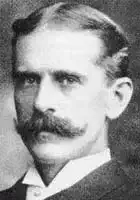
Henry Van Dyke
Hudson's Last Voyage
June 22, 1611
THE SHALLOP ON HUDSON BAY
One sail in sight upon the lonely sea
And only one, God knows! For never ship
But mine broke through the icy gates that guard
These waters, greater grown than any since
We left the shores of England. We were first,
My men, to battle in between the bergs
And floes to these wide waves. This gulf is mine;
I name it! and that flying sail is mine!
And there, hull-down below that flying sail,
The ship that staggers home is mine, mine, mine!
My ship Discoverie!
The sullen dogs
Of mutineers, the bitches' whelps that snatched
Their food and bit the hand that nourished them,
Have stolen her. You ingrate Henry Greene,
I picked you from the gutter of Houndsditch,
And paid your debts, and kept you in my house,
And brought you here to make a man of you!
You Robert Juet, ancient, crafty man,
Toothless and tremulous, how many times
Have I employed you as a master's mate
To give you bread? And you Abacuck Prickett,
You sailor-clerk, you salted puritan,
You knew the plot and silently agreed,
Salving your conscience with a pious lie!
Yes, all of you -- hounds, rebels, thieves! Bring back
My ship!
Too late, -- I rave, -- they cannot hear
My voice: and if they heard, a drunken laugh
Would be their answer; for their minds have caught
The fatal firmness of the fool's resolve,
That looks like courage but is only fear.
They'll blunder on, and lose my ship, and drown, --
Or blunder home to England and be hanged.
Their skeletons will rattle in the chains
Of some tall gibbet on the Channel cliffs,
While passing mariners look up and say:
"Those are the rotten bones of Hudson's men
"Who left their captain in the frozen North!"
O God of justice, why hast Thou ordained
Plans of the wise and actions of the brave
Dependent on the aid of fools and cowards?
Look, -- there she goes, -- her topsails in the sun
Gleam from the ragged ocean edge, and drop
Clean out of sight! So let the traitors go
Clean out of mind! We'll think of braver things!
Come closer in the boat, my friends. John King,
You take the tiller, keep her head nor'west.
You Philip Staffe, the only one who chose
Freely to share our little shallop's fate,
Rather than travel in the hell-bound ship, --
Too good an English seaman to desert
These crippled comrades, -- try to make them rest
More easy on the thwarts. And John, my son,
My little shipmate, come and lean your head
Against your father's knee. Do you recall
That April morn in Ethelburga's church,
Five years ago, when side by side we kneeled
To take the sacrament with all our men,
Before the Hopewell left St. Catherine's docks
On our first voyage? It was then I vowed
My sailor-soul and years to search the sea
Until we found the water-path that leads
From Europe into Asia.
I believe
That God has poured the ocean round His world,
Not to divide, but to unite the lands.
And all the English captains that have dared
In little ships to plough uncharted waves, --
Davis and Drake, Hawkins and Frobisher,
Raleigh and Gilbert, -- all the other names, --
Are written in the chivalry of God
As men who served His purpose. I would claim
A place among that knighthood of the sea;
And I have earned it, though my quest should fail!
For, mark me well, the honour of our life
Derives from this: to have a certain aim
Before us always, which our will must seek
Amid the peril of uncertain ways.
Then, though we miss the goal, our search is crowned
With courage, and we find along our path
A rich reward of unexpected things.
Press towards the aim: take fortune as it fares!
I know not why, but something in my heart
Has always whispered, "Westward seek your goal!"
Three times they sent me east, but still I turned
The bowsprit west, and felt among the floes
Of ruttling ice along the Gröneland coast,
And down the rugged shore of Newfoundland,
And past the rocky capes and wooded bays
Where Gosnold sailed, -- like one who feels his way
With outstretched hand across a darkened room, --
I groped among the inlets and the isles,
To find the passage to the Land of Spice.
I have not found it yet, -- but I have found
Things worth the finding!
Son, have you forgot
Those mellow autumn days, two years ago,
When first we sent our little ship Half-Moon, --
The flag of Holland floating at her peak, --
Across a sandy bar, and sounded in
Among the channels, to a goodly bay
Where all the navies of the world could ride?
A fertile island that the redmen called
Manhattan, lay above the bay: the land
Around was bountiful and friendly fair.
But never land was fair enough to hold
The seaman from the calling of the sea.
And so we bore to westward of the isle,
Along a mighty inlet, where the tide
Was troubled by a downward-flowing flood
That seemed to come from far away, -- perhaps
From some mysterious gulf of Tartary?
Inland we held our course; by palisades
Of naked rock where giants might have built
Their fortress; and by rolling hills adorned
With forests rich in timber for great ships;
Through narrows where the mountains shut us in
With frowning cliffs that seemed to bar the stream;
And then through open reaches where the banks
Sloped to the water gently, with their fields
Of corn and lentils smiling in the sun.
Ten days we voyaged through that placid land,
Until we came to shoals, and sent a boat
Upstream to find, -- what I already knew, --
We travelled on a river, not a strait.
But what a river! God has never poured
A stream more royal through a land more rich.
Even now I see it flowing in my dream,
While coming ages people it with men
Of manhood equal to the river's pride.
I see the wigwams of the redmen changed
To ample houses, and the tiny plots
Of maize and green tobacco broadened out
To prosperous farms, that spread o'er hill and dale
The many-coloured mantle of their crops;
I see the terraced vineyard on the slope
Where now the fox-grape loops its tangled vine;
And cattle feeding where the red deer roam;
And wild-bees gathered into busy hives,
To store the silver comb with golden sweet;
And all the promised land begins to flow
With milk and honey. Stately manors rise
Along the banks, and castles top the hills,
And little villages grow populous with trade,
Until the river runs as proudly as the Rhine, --
The thread that links a hundred towns and towers!
And looking deeper in my dream, I see
A mighty city covering the isle
They call Manhattan, equal in her state
To all the older capitals of earth, --
The gateway city of a golden world, --
A city girt with masts, and crowned with spires,
And swarming with a host of busy men,
While to her open door across the bay
The ships of all the nations flock like doves.
My name will be remembered there, for men
Will say, "This river and this isle were found
By Henry Hudson, on his way to seek
The Northwest Passage into Farthest Inde."
Yes! yes! I sought it then, I seek it still, --
My great adventure and my guiding star!
For look ye, friends, our voyage is not done;
We hold by hope as long as life endures!
Somewhere among these floating fields of ice,
Somewhere along this westward widening bay,
Somewhere beneath this luminous northern night,
The channel opens to the Orient, --
I know it, -- and some day a little ship
Will push her bowsprit in, and battle through!
And why not ours, -- to-morrow, -- who can tell?
The lucky chance awaits the fearless heart!
These are the longest days of all the year;
The world is round and God is everywhere,
And while our shallop floats we still can steer.
So point her up, John King, nor'west by north.
We 'l1 keep the honour of a certain aim
Amid the peril of uncertain ways,
And sail ahead, and leave the rest to God.
333

Henry Wadsworth Longfellow
Discoverer Of The North Cape. A Leaf From King Alfred's Orosius
Othere, the old sea-captain,
Who dwelt in Helgoland,
To King Alfred, the Lover of Truth,
Brought a snow-white walrus-tooth,
Which he held in his brown right hand.
His figure was tall and stately,
Like a boy's his eye appeared;
His hair was yellow as hay,
But threads of a silvery gray
Gleamed in his tawny beard.
Hearty and hale was Othere,
His cheek had the color of oak;
With a kind of laugh in his speech,
Like the sea-tide on a beach,
As unto the King he spoke.
And Alfred, King of the Saxons,
Had a book upon his knees,
And wrote down the wondrous tale
Of him who was first to sail
Into the Arctic seas.
'So far I live to the northward,
No man lives north of me;
To the east are wild mountain-chains;
And beyond them meres and plains;
To the westward all is sea.
'So far I live to the northward,
From the harbor of Skeringes-hale,
If you only sailed by day,
With a fair wind all the way,
More than a month would you sail.
'I own six hundred reindeer,
With sheep and swine beside;
I have tribute from the Finns,
Whalebone and reindeer-skins,
And ropes of walrus-hide.
'I ploughed the land with horses,
But my heart was ill at ease,
For the old seafaring men
Came to me now and then,
With their sagas of the seas;-
'Of Iceland and of Greenland,
And the stormy Hebrides,
And the undiscovered deep;--
Oh I could not eat nor sleep
For thinking of those seas.
'To the northward stretched the desert,
How far I fain would know;
So at last I sallied forth,
And three days sailed due north,
As far as the whale-ships go.
'To the west of me was the ocean,
To the right the desolate shore,
But I did not slacken sail
For the walrus or the whale,
Till after three days more.
'The days grew longer and longer,
Till they became as one,
And northward through the haze
I saw the sullen blaze
Of the red midnight sun.
'And then uprose before me,
Upon the water's edge,
The huge and haggard shape
Of that unknown North Cape,
Whose form is like a wedge.
'The sea was rough and stormy,
The tempest howled and wailed,
And the sea-fog, like a ghost,
Haunted that dreary coast,
But onward still I sailed.
'Four days I steered to eastward,
Four days without a night:
Round in a fiery ring
Went the great sun, O King,
With red and lurid light.'
Here Alfred, King of the Saxons,
Ceased writing for a while;
And raised his eyes from his book,
With a strange and puzzled look,
And an incredulous smile.
But Othere, the old sea-captain,
He neither paused nor stirred,
Till the King listened, and then
Once more took up his pen,
And wrote down every word.
'And now the land,' said Othere,
'Bent southward suddenly,
And I followed the curving shore
And ever southward bore
Into a nameless sea.
'And there we hunted the walrus,
The narwhale, and the seal;
Ha! 't was a noble game!
And like the lightning's flame
Flew our harpoons of steel.
'There were six of us all together,
Norsemen of Helgoland;
In two days and no more
We killed of them threescore,
And dragged them to the strand!'
Here Alfred the Truth-Teller
Suddenly closed his book,
And lifted his blue eyes,
With doubt and strange surmise
Depicted in their look.
And Othere the old sea-captain
Stared at him wild and weird,
Then smiled, till his shining teeth
Gleamed white from underneath
His tawny, quivering beard.
And to the King of the Saxons,
In witness of the truth,
Raising his noble head,
He stretched his brown hand, and said,
'Behold this walrus-tooth!'
334
Henry Wadsworth Longfellow
The Golden Legend: IV. The Road To Hirschau
PRINCE HENRY _and_ ELSIE, _with their attendants, on
horseback._
_Elsie._ Onward and onward the highway runs
to the distant city, impatiently bearing
Tidings of human joy and disaster, of love and of
hate, of doing and daring!
_Prince Henry._ This life of ours is a wild aeolian
harp of many a joyous strain,
But under them all there runs a loud perpetual wail,
as of souls in pain.
_Elsie._ Faith alone can interpret life, and the heart
that aches and bleeds with the stigma
Of pain, alone bears the likeness of Christ, and can
comprehend its dark enigma.
_Prince Henry._ Man is selfish, and seeketh pleasure
with little care of what may betide;
Else why am I travelling here beside thee, a demon
that rides by an angel's side?
_Elsie._ All the hedges are white with dust, and
the great dog under the creaking wain
Hangs his head in the lazy heat, while onward the
horses toil and strain
_Prince Henry._ Now they stop at the wayside inn,
and the wagoner laughs with the landlord's daughter,
While out of the dripping trough the horses distend
their leathern sides with water.
_Elsie._ All through life there are wayside inns,
where man may refresh his soul with love;
Even the lowest may quench his thirst at rivulets fed
by springs from above.
_Prince Henry._ Yonder, where rises the cross of
stone, our journey along the highway ends,
And over the fields, by a bridle path, down into the
broad green valley descends.
_Elsie._ I am not sorry to leave behind the beaten
road with its dust and heat;
The air will be sweeter far, and the turf will be softer
under our horses' feet.
(_They turn down a green lane._)
_Elsie._ Sweet is the air with the budding haws,
and the valley stretching for miles below
Is white with blossoming cheery trees, as if just covered
with lightest snow.
_Prince Henry._ Over our heads a white cascade is
gleaming against the distant hill;
We cannot hear it, nor see it move, but it hangs like
a banner when winds are still.
_Elsie._ Damp and cool is this deep ravine, and
cool the sound of the brook by our side!
What is this castle that rises above us, and lords it
over a land so wide?
_Prince Henry._ It is the home of the Counts of
Calva; well have I known these scenes of old,
Well I remember each tower and turret, remember the
brooklet, the wood, and the wold.
_Elsie._ Hark! from the little village below us the
bells of the church are ringing for rain!
Priests and peasants in long procession come forth
and kneel on the arid plain.
_Prince Henry._ They have not long to wait, for I
see in the south uprising a little cloud,
That before the sun shall be set will cover the sky
above us as with a shroud.
(_They pass on._)
* * * * *
THE CONVENT OF HIRSCHAU IN THE BLACK FOREST.
* * * * *
_The Convent cellar._ FRIAR CLAUS _comes in with a
light and a basket of empty flagons._
_Friar Claus._ I always enter this sacred place
With a thoughtful, solemn, and reverent pace,
Pausing long enough on each stair
To breathe an ejaculatory prayer,
And a benediction on the vines
That produce these various sorts of wines!
For my part, I am well content
That we have got through with the tedious Lent!
Fasting is all very well for those
Who have to contend with invisible foes;
But I am quite sure it does not agree
With a quiet, peaceable man like me,
Who am not of that nervous and meagre kind
That are always distressed in body and mind!
And at times it really does me good
To come down among this brotherhood,
Dwelling forever under ground,
Silent, contemplative, round and sound;
Each one old, and brown with mould,
But filled to the lips with the ardor of youth,
With the latent power and love of truth,
And with virtues fervent and manifold.
I have heard it said, that at Easter-tide,
When buds are swelling on every side,
And the sap begins to move in the vine.
Then in all the cellars, far and wide,
The oldest, as well as the newest, wine
Begins to stir itself, and ferment,
With a kind of revolt and discontent
At being so long in darkness pent,
And fain would burst from its sombre tun
To bask on the hillside in the sun;
As in the bosom of us poor friars,
The tumult of half-subdued desires
For the world that we have left behind
Disturbs at times all peace of mind!
And now that we have lived through Lent,
My duty it is, as often before,
To open awhile the prison-door,
And give these restless spirits vent.
Now here is a cask that stands alone,
And has stood a hundred years or more,
Its beard of cobwebs, long and hoar,
Trailing and sweeping along the floor,
Like Barbarossa, who sits in his cave,
Taciturn, sombre, sedate, and grave,
Till his beard has grown through the table of stone!
It is of the quick and not of the dead!
In its veins the blood is hot and red,
And a heart still beats in those ribs of oak
That time may have tamed, but has not broke;
It comes from Bacharach on the Rhine,
Is one of the three best kinds of wine,
And costs some hundred florins the ohm;
But that I do not consider dear,
When I remember that every year
Four butts are sent to the Pope of Rome.
And whenever a goblet thereof I drain,
The old rhyme keeps running in my brain:
At Bacharach on the Rhine,
At Hochheim on the Main,
And at Wuerzburg on the Stein,
Grow the three best kinds of wine!
They are all good wines, and better far
Than those of the Neckar, or those of the Ahr
In particular, Wuerzburg well may boast
Of its blessed wine of the Holy Ghost,
Which of all wines I like the most.
This I shall draw for the Abbot's drinking,
Who seems to be much of my way of thinking.
(_Fills a flagon._)
Ah! how the streamlet laughs and sings!
What a delicious fragrance springs
From the deep flagon, while it fills,
As of hyacinths and daffodils!
Between this cask and the Abbot's lips
Many have been the sips and slips;
Many have been the draughts of wine,
On their way to his, that have stopped at mine;
And many a time my soul has hankered
For a deep draught out of his silver tankard,
When it should have been busy with other affairs,
Less with its longings and more with its prayers.
But now there is no such awkward condition,
No danger of death and eternal perdition;
So here's to the Abbot and Brothers all,
Who dwell in this convent of Peter and Paul!
(_He drinks._)
O cordial delicious! O soother of pain!
It flashes like sunshine into my brain!
A benison rest on the Bishop who sends
Such a fudder of wine as this to his friends!
And now a flagon for such as may ask
A draught from the noble Bacharach cask,
And I will be gone, though I know full well
The cellar's a cheerfuller place than the cell.
Behold where he stands, all sound and good,
Brown and old in his oaken hood;
Silent he seems externally
As any Carthusian monk may be;
But within, what a spirit of deep unrest!
What a seething and simmering in his breast!
As if the heaving of his great heart
Would burst his belt of oak apart!
Let me unloose this button of wood,
And quiet a little his turbulent mood.
(_Sets it running._)
See! how its currents gleam and shine,
As if they had caught the purple hues
Of autumn sunsets on the Rhine,
Descending and mingling with the dews;
Or as if the grapes were stained with the blood
Of the innocent boy, who, some years back,
Was taken and crucified by the Jews,
In that ancient town of Bacharach;
Perdition upon those infidel Jews,
In that ancient town of Bacharach!
The beautiful town, that gives us wine
With the fragrant odor of Muscadine!
I should deem it wrong to let this pass
Without first touching my lips to the glass,
For here in the midst of the current I stand,
Like the stone Pfalz in the midst of the river
Taking toll upon either hand,
And much more grateful to the giver.
(_He drinks._)
Here, now, is a very inferior kind,
Such as in any town you may find,
Such as one might imagine would suit
The rascal who drank wine out of a boot,
And, after all, it was not a crime,
For he won thereby Dorf Hueffelsheim.
A jolly old toper! who at a pull
Could drink a postilion's jack boot full,
And ask with a laugh, when that was done,
If the fellow had left the other one!
This wine is as good as we can afford
To the friars, who sit at the lower board,
And cannot distinguish bad from good,
And are far better off than if they could,
Being rather the rude disciples of beer
Than of anything more refined and dear!
(_Fills the other flagon and departs._)
* * * * *
THE SCRIPTORIUM.
FRIAR PACIFICUS _transcribing and illuminating._
_Friar Pacificus_ It is growing dark! Yet one line more,
And then my work for today is o'er.
I come again to the name of the Lord!
Ere I that awful name record,
That is spoken so lightly among men,
Let me pause awhile, and wash my pen;
Pure from blemish and blot must it be
When it writes that word of mystery!
Thus have I labored on and on,
Nearly through the Gospel of John.
Can it be that from the lips
Of this same gentle Evangelist,
That Christ himself perhaps has kissed,
Came the dread Apocalypse!
It has a very awful look,
As it stands there at the end of the book,
Like the sun in an eclipse.
Ah me! when I think of that vision divine,
Think of writing it, line by line,
I stand in awe of the terrible curse,
Like the trump of doom, in the closing verse!
God forgive me! if ever I
Take aught from the book of that Prophecy,
Lest my part too should be taken away
From the Book of Life on the Judgment Day.
This is well written, though I say it!
I should not be afraid to display it,
In open day, on the selfsame shelf
With the writings of St Thecla herself,
Or of Theodosius, who of old
Wrote the Gospels in letters of gold!
That goodly folio standing yonder,
Without a single blot or blunder,
Would not bear away the palm from mine,
If we should compare them line for line.
There, now, is an initial letter!
King Rene himself never made a better!
Finished down to the leaf and the snail,
Down to the eyes on the peacock's tail!
And now, as I turn the volume over,
And see what lies between cover and cover,
What treasures of art these pages hold,
All ablaze with crimson and gold,
God forgive me! I seem to feel
A certain satisfaction steal
Into my heart, and into my brain,
As if my talent had not lain
Wrapped in a napkin, and all in vain.
Yes, I might almost say to the Lord,
Here is a copy of thy Word,
Written out with much toil and pain;
Take it, O Lord, and let it be
As something I have done for thee!
(_He looks from the window._)
How sweet the air is! How fair the scene!
I wish I had as lovely a green
To paint my landscapes and my leaves!
How the swallows twitter under the eaves!
There, now, there is one in her nest;
I can just catch a glimpse of her head and breast,
And will sketch her thus, in her quiet nook,
In the margin of my Gospel book.
(_He makes a sketch._)
I can see no more. Through the valley yonder
A shower is passing; I hear the thunder
Mutter its curses in the air,
The Devil's own and only prayer!
The dusty road is brown with rain,
And speeding on with might and main,
Hitherward rides a gallant train.
They do not parley, they cannot wait,
But hurry in at the convent gate.
What a fair lady! and beside her
What a handsome, graceful, noble rider!
Now she gives him her hand to alight;
They will beg a shelter for the night.
I will go down to the corridor,
And try to see that face once more;
It will do for the face of some beautiful Saint,
Or for one of the Maries I shall paint.
(_Goes out._)
* * * * *
THE CLOISTERS.
* * * * *
_The_ ABBOT ERNESTUS _pacing to and fro._
_Abbot._ Slowly, slowly up the wall
Steals the sunshine, steals the shade;
Evening damps begin to fall,
Evening shadows are displayed.
Round me, o'er me, everywhere,
All the sky is grand with clouds,
And athwart the evening air
Wheel the swallows home in crowds.
Shafts of sunshine from the west
Paint the dusky windows red;
Darker shadows, deeper rest,
Underneath and overhead.
Darker, darker, and more wan,
In my breast the shadows fall;
Upward steals the life of man,
As the sunshine from the wall.
From the wall into the sky,
From the roof along the spire;
Ah, the souls of those that die
Are but sunbeams lifted higher.
(_Enter_ PRINCE HENRY.)
_Prince Henry._ Christ is arisen!
_Abbot._ Amen! he is arisen!
His peace be with you!
_Prince Henry._ Here it reigns forever!
The peace of God, that passeth understanding,
Reigns in these cloisters and these corridors,
Are you Ernestus, Abbot of the convent?
_Abbot._ I am.
_Prince Henry._ And I Prince Henry of Hoheneck,
Who crave your hospitality to-night.
_Abbot._ You are thrice welcome to our humble walls.
You do us honor; and we shall requite it,
I fear, but poorly, entertaining you
With Paschal eggs, and our poor convent wine,
The remnants of our Easter holidays.
_Prince Henry._ How fares it with the holy monks of Hirschau?
Are all things well with them?
_Abbot._ All things are well.
_Prince Henry._ A noble convent! I have known it long
By the report of travellers. I now see
Their commendations lag behind the truth.
You lie here in the valley of the Nagold
As in a nest: and the still river, gliding
Along its bed, is like an admonition
How all things pass. Your lands are rich and ample,
And your revenues large. God's benediction
Rests on your convent.
_Abbot._ By our charities
We strive to merit it. Our Lord and Master,
When he departed, left us in his will,
As our best legacy on earth, the poor!
These we have always with us; had we not,
Our hearts would grow as hard as are these stones.
_Prince Henry._ If I remember right, the Counts of Calva
Founded your convent.
_Abbot._ Even as you say.
_Prince Henry._ And, if I err not, it is very old.
_Abbot._ Within these cloisters lie already buried
Twelve holy Abbots. Underneath the flags
On which we stand, the Abbot William lies,
Of blessed memory.
_Prince Henry._ And whose tomb is that,
Which bears the brass escutcheon?
_Abbot._ A benefactor's.
Conrad, a Count of Calva, he who stood
Godfather to our bells.
_Prince Henry._ Your monks are learned
And holy men, I trust.
_Abbot._ There are among them
Learned and holy men. Yet in this age
We need another Hildebrand, to shake
And purify us like a mighty wind.
The world is wicked, and sometimes I wonder
God does not lose his patience with it wholly,
And shatter it like glass! Even here, at times,
Within these walls, where all should be at peace,
I have my trials. Time has laid his hand
Upon my heart, gently, not smiting it,
But as a harper lays his open palm
Upon his harp, to deaden its vibrations.
Ashes are on my head, and on my lips
Sackcloth, and in my breast a heaviness
And weariness of life, that makes me ready
To say to the dead Abbots under us,
'Make room for me!' Only I see the dusk
Of evening twilight coming, and have not
Completed half my task; and so at times
The thought of my shortcomings in this life
Falls like a shadow on the life to come.
_Prince Henry._ We must all die, and not the old alone;
The young have no exemption from that doom.
_Abbot._ Ah, yes! the young may die, but the old must!
That is the difference.
_Prince Henry._ I have heard much laud
Of your transcribers. Your Scriptorium
Is famous among all, your manuscripts
Praised for their beauty and their excellence.
_Abbot._ That is indeed our boast. If you desire it,
You shall behold these treasures. And meanwhile
Shall the Refectorarius bestow
Your horses and attendants for the night.
(_They go in. The Vesper-bell rings._)
* * * * *
THE CHAPEL.
* * * * *
_Vespers; after which the monks retire, a chorister
leading an old monk who is blind_.
_Prince Henry._ They are all gone, save one who lingers,
Absorbed in deep and silent prayer.
As if his heart could find no rest,
At times he beats his heaving breast
With clenched and convulsive fingers,
Then lifts them trembling in the air.
A chorister, with golden hair,
Guides hitherward his heavy pace.
Can it be so? Or does my sight
Deceive me in the uncertain light?
Ah no! I recognize that face,
Though Time has touched it in his flight,
And changed the auburn hair to white.
It is Count Hugo of the Rhine,
The deadliest foe of all our race,
And hateful unto me and mine!
_The Blind Monk_. Who is it that doth stand so near
His whispered words I almost hear?
_Prince Henry_. I am Prince Henry of Hoheneck,
And you, Count Hugo of the Rhine!
I know you, and I see the scar,
The brand upon your forehead, shine
And redden like a baleful star!
_The Blind Monk_. Count Hugo once, but now the wreck
Of what I was. O Hoheneck!
The passionate will, the pride, the wrath
That bore me headlong on my path,
Stumbled and staggered into fear,
And failed me in my mad career,
As a tired steed some evil-doer,
Alone upon a desolate moor,
Bewildered, lost, deserted, blind,
And hearing loud and close behind
The o'ertaking steps of his pursuer.
Then suddenly, from the dark there came
A voice that called me by my name,
And said to me, 'Kneel down and pray!'
And so my terror passed away,
Passed utterly away forever.
Contrition, penitence, remorse,
Came on me, with o'erwhelming force;
A hope, a longing, an endeavor,
By days of penance and nights of prayer,
To frustrate and defeat despair!
Calm, deep, and still is now my heart.
With tranquil waters overflowed;
A lake whose unseen fountains start,
Where once the hot volcano glowed.
And you, O Prince of Hoheneck!
Have known me in that earlier time,
A man of violence and crime,
Whose passions brooked no curb nor check.
Behold me now, in gentler mood,
One of this holy brotherhood.
Give me your hand; here let me kneel;
Make your reproaches sharp as steel;
Spurn me, and smite me on each cheek;
No violence can harm the meek,
There is no wound Christ cannot heal!
Yes; lift your princely hand, and take
Revenge, if 't is revenge you seek,
Then pardon me, for Jesus' sake!
_Prince Henry._ Arise, Count Hugo! let there be
No farther strife nor enmity
Between us twain; we both have erred!
Too rash in act, too wroth in word,
From the beginning have we stood
In fierce, defiant attitude,
Each thoughtless of the other's right,
And each reliant on his might.
But now our souls are more subdued;
The hand of God, and not in vain,
Has touched us with the fire of pain.
Let us kneel down, and side by side
Pray, till our souls are purified,
And pardon will not be denied!
(_They kneel._)
* * * * *
THE REFECTORY.
* * * * *
_Gaudiolum of Monks at midnight. LUCIFER disguised
as a Friar._
_Friar Paul (sings)._ Ave! color vini clari,
Dulcis potus, non aman,
Tua nos inebriari
Digneris potentia!
_Friar Cuthbert._ Not so much noise, my worthy freres,
You'll disturb the Abbot at his prayers.
_Friar Paul (sings)._ O! quam placens in colore!
O! quam fragrans in odore!
O! quam sapidum in ore!
Dulce linguse vinculum!
_Friar Cuthbert._ I should think your tongue had
broken its chain!
_Friar Paul (sings)._ Felix venter quern intrabis!
Felix guttur quod rigabis!
Felix os quod tu lavabis!
Et beata labia!
_Friar Cuthbert._ Peace! I say, peace!
Will you never cease!
You will rouse up the Abbot, I tell you again!
_Friar John._ No danger! to-night he will let us alone,
As I happen to know he has guests of his own.
_Friar Cuthbert._ Who are they?
_Friar John._ A German Prince and his train,
Who arrived here just before the rain.
There is with him a damsel fair to see,
As slender and graceful as a reed!
When she alighted from her steed,
It seemed like a blossom blown from a tree.
_Friar Cuthbert._ None of your pale-faced girls for me!
(_Kisses the girl at his side_.)
_Friar John._ Come, old fellow, drink down to your peg!
do not drink any farther, I beg!
_Friar Paul (sings)._ In the days of gold,
The days of old,
Cross of wood
And bishop of gold!
_Friar Cuthbert (to the girl)._ What an infernal racket and din!
No need not blush so, that's no sin.
You look very holy in this disguise,
Though there's something wicked in your eyes!
_Friar Paul (continues.)_ Now we have changed
That law so good,
To cross of gold
And bishop of wood!
_Friar Cuthbert._ I like your sweet face under a hood.
Sister! how came you into this way?
_Girl._ It was you, Friar Cuthbert, who led me astray.
Have you forgotten that day in June,
When the church was so cool in the afternoon,
And I came in to confess my sins?
That is where my ruin begins.
_Friar John._ What is the name of yonder friar,
With an eye that glows like a coal of fire,
And such a black mass of tangled hair?
_Friar Paul._ He who is sitting there,
With a rollicking,
Devil may care,
Free and easy look and air,
As if he were used to such feasting and frollicking?
_Friar John._ The same.
_Friar Paul._ He's a stranger. You had better ask his name,
And where he is going, and whence he came.
_Friar John._ Hallo! Sir Friar!
_Friar Paul._ You must raise your voice a little higher,
He does not seem to hear what you say.
Now, try again! He is looking this way.
_Friar John._ Hallo! Sir Friar,
We wish to inquire
Whence you came, and where you are going,
And anything else that is worth the knowing.
So be so good as to open your head.
_Lucifer._ I am a Frenchman born and bred,
Going on a pilgrimage to Rome.
My home
Is the convent of St. Gildas de Rhuys,
Of which, very like, you never have heard.
_Monks._ Never a word!
_Lucifer._ You must know, then, it is in the diocese
Called the Diocese of Vannes,
In the province of Brittany.
From the gray rocks of Morbihan
It overlooks the angry sea;
The very seashore where,
In his great despair,
Abbot Abelard walked to and fro,
Filling the night with woe,
And wailing aloud to the merciless seas
The name of his sweet Heloise!
Whilst overhead
The convent windows gleamed as red
As the fiery eyes of the monks within,
Who with jovial din
Gave themselves up to all kinds of sin!
Ha! that is a convent! that is an abbey!
Over the doors,
None of your death-heads carved in wood,
None of your Saints looking pious and good,
None of your Patriarchs old and shabby!
But the heads and tusks of boars,
And the cells
Hung all round with the fells
of the fallow-deer,
And then what cheer!
What jolly, fat friars,
Sitting round the great, roaring fires,
Roaring louder than they,
With their strong wines,
And their concubines,
And never a bell,
With its swagger and swell,
Calling you up with a start of affright
In the dead of night,
To send you grumbling down dark stairs,
To mumble your prayers,
But the cheery crow
Of cocks in the yard below,
After daybreak, an hour or so,
And the barking of deep-mouthed hounds,
These are the sounds
That, instead of bells, salute the ear.
And then all day
Up and away
Through the forest, hunting the deer!
Ah, my friends! I'm afraid that here
You are a little too pious, a little too tame,
And the more is the shame,
It is the greatest folly
Not to be jolly;
That's what I think!
Come, drink, drink,
Drink, and die game!
_Monks,_ And your Abbot What's-his-name?
_Lucifer._ Abelard!
_Monks._ Did he drink hard?
_Lucifer._ O, no! Not he!
He was a dry old fellow,
Without juice enough to get thoroughly mellow.
There he stood,
Lowering at us in sullen mood,
As if he had come into Brittany
Just to reform our brotherhood!
(_A roar of laughter_.)
But you see
It never would do!
For some of us knew a thing or two,
In the Abbey of St. Gildas de Rhuys!
For instance, the great ado
With old Fulbert's niece,
The young and lovely Heloise!
_Friar John._ Stop there, if you please,
Till we drink to the fair Heloise.
_All (drinking and shouting)._ Heloise! Heloise!
(_The Chapel-bell tolls_.)
_Lucifer (starting)._ What is that bell for? Are you such asses
As to keep up the fashion of midnight masses?
_Friar Cuthbert._ It is only a poor, unfortunate brother,
Who is gifted with most miraculous powers
Of getting up at all sorts of hours,
And, by way of penance and Christian meekness,
Of creeping silently out of his cell
To take a pull at that hideous bell;
So that all the monks who are lying awake
May murmur some kind of prayer for his sake,
And adapted to his peculiar weakness!
_Friar John._ From frailty and fall-
_All._ Good Lord, deliver us all!
_Friar Cuthbert._ And before the bell for matins sounds,
He takes his lantern, and goes the rounds,
Flashing it into our sleepy eyes,
Merely to say it is time to arise.
But enough of that. Go on, if you please,
With your story about St. Gildas de Rhuys.
_Lucifer._ Well, it finally came to pass
That, half in fun and half in malice,
One Sunday at Mass
We put some poison into the chalice.
But, either by accident or design,
Peter Abelard kept away
From the chapel that day,
And a poor, young friar, who in his stead
Drank the sacramental wine,
Fell on the steps of the altar, dead!
But look! do you see at the window there
That face, with a look of grief and despair,
That ghastly face, as of one in pain?
_Monks._ Who? where?
_Lucifer._ As I spoke, it vanished away again.
_Friar Cuthbert._ It is that nefarious
Siebald the Refectorarius.
That fellow is always playing the scout,
Creeping and peeping and prowling about;
And then he regales
The Abbot with Scandalous tales.
_Lucifer_. A spy in the convent? One of the brothers
Telling scandalous tales of the others?
Out upon him, the lazy loon!
I would put a stop to that pretty soon,
In a way he should rue it.
_Monks_. How shall we do it?
_Lucifer_. Do you, brother Paul,
Creep under the window, close to the wall,
And open it suddenly when I call.
Then seize the villain by the hair,
And hold him there,
And punish him soundly, once for all.
_Friar Cuthbert_. As St. Dustan of old,
We are told,
Once caught the Devil by the nose!
_Lucifer_. Ha! ha! that story is very clever,
But has no foundation whatsoever.
Quick! for I see his face again
Glaring in at the window pane;
Now! now! and do not spare your blows.
(FRIAR PAUL _opens the window suddenly, and seizes_
SIEBALD. _They beat him._)
_Friar Siebald_. Help! help! are you going to slay me?
_Friar Paul_. That will teach you again to betray me!
_Friar Siebald_. Mercy! mercy!
_Friar Paul_ (_shouting and beating_). Rumpas bellorum lorum,
Vim confer amorum
Morum verorum, rorun.
Tu plena polorum!
_Lucifer_. Who stands in the doorway yonder,
Stretching out his trembling hand,
Just as Abelard used to stand,
The flash of his keen, black eyes
Forerunning the thunder?
_The Monks (in confusion)_. The Abbot! the
Abbot!
_Friar Cuthbert (to the girl)_. Put on your disguise!
_Friar Francis_. Hide the great flagon
From the eyes of the dragon!
_Friar Cuthbert_. Pull the brown hood over your face,
Lest you bring me into disgrace!
_Abbot_. What means this revel and carouse?
Is this a tavern and drinking-house?
Are you Christian monks, or heathen devils,
To pollute this convent with your revels?
Were Peter Damian still upon earth,
To be shocked by such ungodly mirth,
He would write your names, with pen of gall,
In his Book of Gomorrah, one and all!
Away, you drunkards! to your cells,
And pray till you hear the matin-bells;
You, Brother Francis, and you, Brother Paul!
And as a penance mark each prayer
With the scourge upon your shoulders bare;
Nothing atones for such a sin
But the blood that follows the discipline.
And you, Brother Cuthbert, come with me
Alone into the sacristy;
You, who should be a guide to your brothers,
And are ten times worse than all the others,
For you I've a draught that has long been brewing
You shall do a penance worth the doing!
Away to your prayers, then, one and all!
I wonder the very, convent wall
Does not crumble and crush you in its fall!
* * * * *
THE NEIGHBORING NUNNERY.
* * * * *
_The_ ABBESS IRMINGARD _sitting with_ ELSIE _in the
moonlight._
_Irmingard_ The night is silent, the wind is still,
The moon is looking from yonder hill
Down upon convent, and grove, and garden;
The clouds have passed away from her face,
Leaving behind them no sorrowful trace,
Only the tender and quiet grace
Of one, whose heart had been healed with pardon!
And such am I. My soul within
Was dark with passion and soiled with sin.
But now its wounds are healed again;
Gone are the anguish, the terror, and pain;
For across that desolate land of woe,
O'er whose burning sands I was forced to go,
A wind from heaven began to blow;
And all my being trembled and shook,
As the leaves of the tree, or the grass of the field,
And I was healed, as the sick are healed,
When fanned by the leaves of the Holy Book!
As thou sittest in the moonlight there,
Its glory flooding thy golden hair,
And the only darkness that which lies
In the haunted chambers of thine eyes,
I feel my soul drawn unto thee,
Strangely, and strongly, and more and more,
As to one I have known and loved before;
For every soul is akin to me
That dwells in the land of mystery!
I am the Lady Irmingard,
Born of a noble race and name!
Many a wandering Suabian bard,
Whose life was dreary, and bleak, and hard,
Has found through me the way to fame.
Brief and bright were those days, and the night
Which followed was full of a lurid light.
Love, that of every woman's heart
Will have the whole, and not a part,
That is to her, in Nature's plan,
More than ambition is to man,
Her light, her life, her very breath,
With no alternative but death,
Found me a maiden soft and young,
Just from the convent's cloistered school,
And seated on my lowly stool,
Attentive while the minstrels sung.
Gallant, graceful, gentle, tall,
Fairest, noblest, best of all,
Was Walter of the Vogelweid,
And, whatsoever may betide,
Still I think of him with pride!
His song was of the summer-time
The very birds sang in his rhyme;
The sunshine, the delicious air,
The fragrance of the flowers, were there,
And I grew restless as I heard,
Restless and buoyant as a bird,
Down soft, aerial currents sailing,
O'er blossomed orchards, and fields in bloom,
And through the momentary gloom
Of shadows o'er the landscape trailing,
Yielding and borne I knew not where,
But feeling resistance unavailing.
And thus, unnoticed and apart,
And more by accident than choice.
I listened to that single voice
Until the chambers of my heart
Were filled with it by night and day,
One night,--it was a night in May,--
Within the garden, unawares,
Under the blossoms in the gloom,
I heard it utter my own name
With protestations and wild prayers;
And it rang through me, and became
Like the archangel's trump of doom,
Which the soul hears, and must obey;
And mine arose as from a tomb.
My former life now seemed to me
Such as hereafter death may be,
When in the great Eternity
We shall awake and find it day.
It was a dream, and would not stay;
A dream, that in a single night
Faded and vanished out of sight.
My father's anger followed fast
This passion, as a freshening blast
Seeks out and fans the fire, whose rage
It may increase, but not assuage.
And he exclaimed: 'No wandering bard
Shall win thy hand, O Irmingard!
For which Prince Henry of Hoheneck
By messenger and letter sues.'
Gently, but firmly, I replied:
'Henry of Hoheneck I discard!
Never the hand of Irmingard
Shall lie in his as the hand of a bride!'
This said I, Walter, for thy sake:
This said I, for I could not choose.
After a pause, my father spake
In that cold and deliberate tone
Which turns the hearer into stone,
And seems itself the act to be
That follows with such dread certainty;
'This, or the cloister and the veil!'
No other words than these he said,
But they were like a funeral wail;
My life was ended, my heart was dead.
That night from the castle-gate went down,
With silent, slow, and stealthy pace,
Two shadows, mounted on shadowy steeds,
Taking the narrow path that leads
Into the forest dense and brown,
In the leafy darkness of the place,
One could not distinguish form nor face,
Only a bulk without a shape,
A darker shadow in the shade;
One scarce could say it moved or stayed,
Thus it was we made our escape!
A foaming brook, with many a bound,
Followed us like a playful hound;
Then leaped before us, and in the hollow
Paused, and waited for us to follow,
And seemed impatient, and afraid
That our tardy flight should be betrayed
By the sound our horses' hoof-beats made,
And when we reached the plain below,
He paused a moment and drew rein
To look back at the castle again;
And we saw the windows all aglow
With lights, that were passing to and fro;
Our hearts with terror ceased to beat;
The brook crept silent to our feet;
We knew what most we feared to know.
Then suddenly horns began to blow;
And we heard a shout, and a heavy tramp,
And our horses snorted in the damp
Night-air of the meadows green and wide,
And in a moment, side by side,
So close, they must have seemed but one,
The shadows across the moonlight run,
And another came, and swept behind,
Like the shadow of clouds before the wind!
How I remember that breathless flight
Across the moors, in the summer night!
How under our feet the long, white road
Backward like a river flowed,
Sweeping with it fences and hedges,
Whilst farther away, and overhead,
Paler than I, with fear and dread,
The moon fled with us, as we fled
Along the forest's jagged edges!
All this I can remember well;
But of what afterward befell
I nothing farther can recall
Than a blind, desperate, headlong fall;
The rest is a blank and darkness all.
When I awoke out of this swoon,
The sun was shining, not the moon,
Making a cross upon the wall
With the bars of my windows narrow and tall;
And I prayed to it, as I had been wont to pray,
From early childhood, day by day,
Each morning, as in bed I lay!
I was lying again in my own room!
And I thanked God, in my fever and pain,
That those shadows on the midnight plain
Were gone, and could not come again!
I struggled no longer with my doom!
This happened many years ago.
I left my father's home to come
Like Catherine to her martyrdom,
For blindly I esteemed it so.
And when I heard the convent door
Behind me close, to ope no more,
I felt it smite me like a blow,
Through all my limbs a shudder ran,
And on my bruised spirit fell
The dampness of my narrow cell
As night-air on a wounded man,
Giving intolerable pain.
But now a better life began,
I felt the agony decrease
By slow degrees, then wholly cease,
Ending in perfect rest and peace!
It was not apathy, nor dulness,
That weighed and pressed upon my brain,
But the same passion I had given
To earth before, now turned to heaven
With all its overflowing fulness.
Alas! the world is full of peril!
The path that runs through the fairest meads,
On the sunniest side of the valley, leads
Into a region bleak and sterile!
Alike in the high-born and the lowly,
The will is feeble, and passion strong.
We cannot sever right from wrong;
Some falsehood mingles with all truth;
Nor is it strange the heart of youth
Should waver and comprehend but slowly
The things that are holy and unholy!
But in this sacred and calm retreat,
We are all well and safely shielded
From winds that blow, and waves that beat,
From the cold, and rain, and blighting heat,
To which the strongest hearts have yielded.
Here we stand as the Virgins Seven,
For our celestial bridegroom yearning;
Our hearts are lamps forever burning,
With a steady and unwavering flame,
Pointing upward, forever the same,
Steadily upward toward the Heaven!
The moon is hidden behind a cloud;
A sudden darkness fills the room,
And thy deep eyes, amid the gloom,
Shine like jewels in a shroud.
On the leaves is a sound of falling rain;
A bird, awakened in its nest,
Gives a faint twitter of unrest,
Then smoothes its plumes and sleeps again.
No other sounds than these I hear;
The hour of midnight must be near.
Thou art o'erspent with the day's fatigue
Of riding many a dusty league;
Sink, then, gently to thy slumber;
Me so many cares encumber,
So many ghosts, and forms of fright,
Have started from their graves to-night,
They have driven sleep from mine eyes away:
I will go down to the chapel and pray.
331

Robert Browning
Through The Metidja To Abd-El-Kadr
Abd-el-Kadr was an Arab Chief of Algiers who resisted the French in .]
I.
As I ride, as I ride,
With a full heart for my guide,
So its tide rocks my side,
As I ride, as I ride,
That, as I were double-eyed,
He, in whom our Tribes confide,
Is descried, ways untried
As I ride, as I ride.
II.
As I ride, as I ride
To our Chief and his Allied,
Who dares chide my heart's pride
As I ride, as I ride?
Or are witnesses denied---
Through the desert waste and wide
Do I glide unespied
As I ride, as I ride?
III.
As I ride, as I ride,
When an inner voice has cried,
The sands slide, nor abide
(As I ride, as I ride)
O'er each visioned homicide
That came vaunting (has he lied?)
To reside---where he died,
As I ride, as I ride.
IV.
As I ride, as I ride,
Ne'er has spur my swift horse plied,
Yet his hide, streaked and pied,
As I ride, as I ride,
Shows where sweat has sprung and dried,
---Zebra-footed, ostrich-thighed---
How has vied stride with stride
As I ride, as I ride!
V.
As I ride, as I ride,
Could I loose what Fate has tied,
Ere I pried, she should hide
(As I ride, as I ride)
All that's meant me---satisfied
When the Prophet and the Bride
Stop veins I'd have subside
As I ride, as I ride!
332
Henry Lawson
The Paroo
It was a week from Christmas-time,
As near as I remember,
And half a year since, in the rear,
We'd left the Darling timber.
The track was hot and more than drear;
The day dragged out for ever;
But now we knew that we were near
Our camp - the Paroo River.
With blighted eyes and blistered feet,
With stomachs out of order,
Half-mad with flies and dust and heat
We'd crossed the Queensland border.
I longed to hear a stream go by
And see the circles quiver;
I longed to lay me down and die
That night on Paroo River.
The "nose-bags" heavy on each chest
(God bless one kindly squatter!),
With grateful weight our hearts they pressed -
We only wanted water.
The sun was setting in a spray
Of colour like a liver We'd
fondly hoped to camp and stay
That night by Paroo River.
A cloud was on my mate's broad brow,
And once I heard him mutter:
'What price the good old Darling now? -
God bless that grand old gutter!"
And then he stopped and slowly said
In tones that made me shiver:
"It cannot well be on ahead -
I think we've crossed the river."
But soon we saw a strip of ground
Beside the track we followed,
No damper than the surface round,
But just a little hollowed.
His brow assumed a thoughtful frown -
This speech did he deliver:
"I wonder if we'd best go down
Or up the blessed river?"
"But where," said I, " 's the blooming stream?'
And he replied, 'we're at it!"
I stood awhile, as in a dream,
"Great Scott!" I cried, "is that it?
Why, that is some old bridle-track!"
He chuckled, "Well, I never!
It's plain you've never been Out Back -
This is the Paroo River!"
328

John Greenleaf Whittier
The Drovers
THROUGH heat and cold, and shower and sun,
Still onward cheerly driving!
There's life alone in duty done,
And rest alone in striving.
But see! the day is closing cool,
The woods are dim before us;
The white fog of the wayside pool
Is creeping slowly o'er us.
The night is falling, comrades mine,
Our footsore beasts are weary,
And through yon elms the tavern sign
Looks out upon us cheery.
The landlord beckons from his door,
His beechen fire is glowing;
These ample barns, with feed in store,
Are filled to overflowing.
From many a valley frowned across
By brows of rugged mountains;
From hillsides where, through spongy moss,
Gush out the river fountains;
From quiet farm-fields, green and low,
And bright with blooming clover;
From vales of corn the wandering crow
No richer hovers over;
Day after day our way has been
O'er many a hill and hollow;
By lake and stream, by wood and glen,
Our stately drove we follow.
Through dust-clouds rising thick and dun,
As smoke of battle o'er us,
Their white horns glisten in the sun,
Like plumes and crests before us.
We see them slowly climb the hill,
As slow behind it sinking;
Or, thronging close, from roadside rill,
Or sunny lakelet, drinking.
Now crowding in the narrow road,
In thick and struggling masses,
They glare upon the teamster's load,
Or rattling coach that passes.
Anon, with toss of horn and tail,
And paw of hoof, and bellow,
They leap some farmer's broken pale,
O'er meadow-close or fallow.
Forth comes the startled goodman; forth
Wife, children, house-dog, sally,
Till once more on their dusty path
The baffled truants rally.
We drive no starvelings, scraggy grown,
Loose-legged, and ribbed and bony,
Like those who grind their noses down
On pastures bare and stony, —
Lank oxen, rough as Indian dogs,
And cows too lean for shadows,
Disputing feebly with the frogs
The crop of saw-grass meadows!
In our good drove, so sleek and fair,
No bones of leanness rattle;
No tottering hide-bound ghosts are there,
Or Pharaoh's evil cattle.
Each stately beeve bespeaks the hand
That fed him unrepining;
The fatness of a goodly land
In each dun hide is shining.
We've sought them where, in warmest nooks,
The freshest feed is growing,
By sweetest springs and clearest brooks
Through honeysuckle flowing;
Wherever hillsides, sloping south,
Are bright with early grasses,
Or, tracking green the lowland's drouth,
The mountain streamlet passes.
But now the day is closing cool,
The woods are dim before us,
The white fog of the wayside pool
Is creeping slowly o'er us.
The cricket to the frog's bassoon
His shrillest time is keeping;
The sickle of yon setting moon
The meadow-mist is reaping.
The night is falling, comrades mine,
Our footsore beasts are weary,
And through yon elms the tavern sign
Looks out upon us cheery.
To-morrow, eastward with our charge
We'll go to meet the dawning,
Ere yet the pines of Kearsarge
Have seen the sun of morning.
When snow-flakes o'er the frozen earth,
Instead of birds, are flitting;
When children throng the glowing hearth,
And quiet wives are knitting;
While in the fire-light strong and clear
Young eyes of pleasure glisten,
To tales of all we see and hear
The ears of home shall listen.
By many a Northern lake and hill,
From many a mountain pasture,
Shall Fancy play the Drover still,
And speed the long night faster.
Then let us on, through shower and sun,
And heat and cold, be driving;
There's life alone in duty done,
And rest alone in striving.
329
John Greenleaf Whittier
On Receiving An Eagle's Quill From Lake Superior
All day the darkness and the cold
Upon my heart have lain,
Like shadows on the winter sky,
Like frost upon the pane;
But now my torpid fancy wakes,
And, on thy Eagle's plume,
Rides forth, like Sindbad on his bird,
Or witch upon her broom!
Below me roar the rocking pines,
Before me spreads the lake
Whose long and solemn-sounding waves
Against the sunset break.
I hear the wild Rice-Eater thresh
The grain he has not sown;
I see, with flashing scythe of fire,
The prairie harvest mown!
I hear the far-off voyager's horn;
I see the Yankee's trail,-His
foot on every mountain-pass,
On every stream his sail.
By forest, lake, and waterfall,
I see his pedler show;
The mighty mingling with the mean,
The lofty with the low.
He's whittling by St. Mary's Falls,
Upon his loaded wain;
He's measuring o'er the Pictured Rocks,
With eager eyes of gain.
I hear the mattock in the mine,
The axe-stroke in the dell,
The clamor from the Indian lodge,
The Jesuit chapel bell!
I see the swarthy trappers come
From Mississippi's springs;
And war-chiefs with their painted brows,
And crests of eagle wings.
Behind the scared squaw's birch canoe,
The steamer smokes and raves;
And city lots are staked for sale
Above old Indian graves.
I hear the tread of pioneers
Of nations yet to be;
The first low wash of waves, where soon
Shall roll a human sea.
The rudiments of empire here
Are plastic yet and warm;
The chaos of a mighty world
Is rounding into form!
Each rude and jostling fragment soon
Its fitting place shall find,-The
raw material of a State,
Its muscle and its mind!
And, westering still, the star which leads
The New World in its train
Has tipped with fire the icy spears
Of many a mountain chain.
The snowy cones of Oregon
Are kindling on its way;
And California's golden sands
Gleam brighter in its ray!
Then blessings on thy eagle quill,
As, wandering far and wide,
I thank thee for this twilight dream
And Fancy's airy ride!
Yet, welcomer than regal plumes,
Which Western trappers find,
Thy free and pleasant thoughts, chance sown,
Like feathers on the wind.
Thy symbol be the mountain-bird,
Whose glistening quill I hold;
Thy home the ample air of hope,
And memory's sunset gold!
In thee, let joy with duty join,
And strength unite with love,
The eagle's pinions folding round
The warm heart of the dove!
So, when in darkness sleeps the vale
Where still the blind bird clings
The sunshine of the upper sky
Shall glitter on thy wings!
328
Henry Wadsworth Longfellow
Travels By The Fireside. (Birds Of Passage. Flight The Fourth)
The ceaseless rain is falling fast,
And yonder gilded vane,
Immovable for three days past,
Points to the misty main,
It drives me in upon myself
And to the fireside gleams,
To pleasant books that crowd my shelf,
And still more pleasant dreams,
I read whatever bards have sung
Of lands beyond the sea,
And the bright days when I was young
Come thronging back to me.
In fancy I can hear again
The Alpine torrent's roar,
The mule-bells on the hills of Spain,
The sea at Elsinore.
I see the convent's gleaming wall
Rise from its groves of pine,
And towers of old cathedrals tall,
And castles by the Rhine.
I journey on by park and spire,
Beneath centennial trees,
Through fields with poppies all on fire,
And gleams of distant seas.
I fear no more the dust and heat,
No more I feel fatigue,
While journeying with another's feet
O'er many a lengthening league.
Let others traverse sea and land,
And toil through various climes,
I turn the world round with my hand
Reading these poets' rhymes.
From them I learn whatever lies
Beneath each changing zone,
And see, when looking with their eyes,
Better than with mine own.
327

James Whitcomb Riley
A Noted Traveler
Even in such a scene of senseless play
The children were surprised one summer-day
By a strange man who called across the fence,
Inquiring for their father's residence;
And, being answered that this was the place,
Opened the gate, and with a radiant face,
Came in and sat down with them in the shade
And waited--till the absent father made
His noon appearance, with a warmth and zest
That told he had no ordinary guest
In this man whose low-spoken name he knew
At once, demurring as the stranger drew
A stuffy notebook out and turned and set
A big fat finger on a page and let
The writing thereon testify instead
Of further speech. And as the father read
All silently, the curious children took
Exacting inventory both of book
And man:--He wore a long-napped white fur-hat
Pulled firmly on his head, and under that
Rather long silvery hair, or iron-gray--
For he was not an old man,--anyway,
Not beyond sixty. And he wore a pair
Of square-framed spectacles--or rather there
Were two more than a pair,--the extra two
Flared at the corners, at the eyes' side-view,
In as redundant vision as the eyes
Of grasshoppers or bees or dragonflies.
Later the children heard the father say
He was 'A Noted Traveler,' and would stay
Some days with them--In which time host and guest
Discussed, alone, in deepest interest,
Some vague, mysterious matter that defied
The wistful children, loitering outside
The spare-room door. There Bud acquired a quite
New list of big words--such as 'Disunite,'
And 'Shibboleth,' and 'Aristocracy,'
And 'Juggernaut,' and 'Squatter Sovereignty,'
And 'Anti-slavery,' 'Emancipate,'
'Irrepressible conflict,' and 'The Great
Battle of Armageddon'--obviously
A pamphlet brought from Washington, D. C.,
And spread among such friends as might occur
Of like views with 'The Noted Traveler.'
323
John Greenleaf Whittier
The Star Of Bethlehem
Where Time the measure of his hours
By changeful bud and blossom keeps,
And, like a young bride crowned with flowers,
Fair Shiraz in her garden sleeps;
Where, to her poet's turban stone,
The Spring her gift of flowers imparts,
Less sweet than those his thoughts have sown
In the warm soil of Persian hearts:
There sat the stranger, where the shade
Of scattered date-trees thinly lay,
While in the hot clear heaven delayed
The long and still and weary day.
Strange trees and fruits above him hung,
Strange odors filled the sultry air,
Strange birds upon the branches swung,
Strange insect voices murmured there.
And strange bright blossoms shone around,
Turned sunward from the shadowy bowers,
As if the Gheber's soul had found
A fitting home in Iran's flowers.
Whate'er he saw, whate'er he heard,
Awakened feelings new and sad,-No
Christian garb, nor Christian word,
Nor church with Sabbath-bell chimes glad,
But Moslem graves, with turban stones,
And mosque-spires gleaming white, in view,
And graybeard Mollahs in low tones
Chanting their Koran service through.
The flowers which smiled on either hand,
Like tempting fiends, were such as they
Which once, o'er all that Eastern land,
As gifts on demon altars lay.
As if the burning eye of Baal
The servant of his Conqueror knew,
From skies which knew no cloudy veil,
The Sun's hot glances smote him through.
'Ah me!' the lonely stranger said,
'The hope which led my footsteps on,
And light from heaven around them shed,
O'er weary wave and waste, is gone!
'Where are the harvest fields all white,
For Truth to thrust her sickle in?
Where flock the souls, like doves in flight,
From the dark hiding-place of sin?
'A silent-horror broods o'er all,-The
burden of a hateful spell,-The
very flowers around recall
The hoary magi's rites of hell!
'And what am I, o'er such a land
The banner of the Cross to bear?
Dear Lord, uphold me with Thy hand,
Thy strength with human weakness share!'
He ceased; for at his very feet
In mild rebuke a floweret smiled;
How thrilled his sinking heart to greet
The Star-flower of the Virgin's child!
Sown by some wandering Frank, it drew
Its life from alien air and earth,
And told to Paynim sun and dew
The story of the Saviour's birth.
From scorching beams, in kindly mood,
The Persian plants its beauty screened,
And on its pagan sisterhood,
In love, the Christian floweret leaned.
With tears of joy the wanderer felt
The darkness of his long despair
Before that hallowed symbol melt,
Which God's dear love had nurtured there.
From Nature's face, that simple flower
The lines of sin and sadness swept;
And Magian pile and Paynim bower
In peace like that of Eden slept.
Each Moslem tomb, and cypress old,
Looked holy through the sunset air;
And, angel-like, the Muezzin told
From tower and mosque the hour of prayer.
With cheerful steps, the morrow's dawn
From Shiraz saw the stranger part;
The Star-flower of the Virgin-Born
Still blooming in his hopeful heart!
324

Emily Dickinson
Many cross the Rhine
Many cross the Rhine
In this cup of mine.
Sip old Frankfort air
From my brown Cigar.
In this cup of mine.
Sip old Frankfort air
From my brown Cigar.
321

William Butler Yeats
Who Goes With Fergus?
WHO will go drive with Fergus now,
And pierce the deep wood's woven shade,
And dance upon the level shore?
Young man, lift up your russet brow,
And lift your tender eyelids, maid,
And brood on hopes and fear no more.
And no more turn aside and brood
Upon love's bitter mystery;
For Fergus rules the brazen cars,
And rules the shadows of the wood,
And the white breast of the dim sea
And all dishevelled wandering stars.
321
Henry Wadsworth Longfellow
The Tide Rises, the Tide Falls
The tide rises, the tide falls,
The twilight darkens, the curlew calls;
Along the sea-sands damp and brown
The traveler hastens toward the town,
And the tide rises, the tide falls.
Darkness settles on roofs and walls,
But the sea, the sea in darkness calls;
The little waves, with their soft, white hands
Efface the footprints in the sands,
And the tide rises, the tide falls.
The morning breaks; the steeds in their stalls
Stamp and neigh, as the hostler calls;
The day returns, but nevermore
Returns the traveler to the shore.
And the tide rises, the tide falls.
320

Walt Whitman
Now Finale To The Shore
NOW finale to the shore!
Now, land and life, finale, and farewell!
Now Voyager depart! (much, much for thee is yet in store;)
Often enough hast thou adventur'd o'er the seas,
Cautiously cruising, studying the charts,
Duly again to port, and hawser's tie, returning:
--But now obey, thy cherish'd, secret wish,
Embrace thy friends--leave all in order;
To port, and hawser's tie, no more returning,
Depart upon thy endless cruise, old Sailor!
319
William Carlos Williams
Heel & Toe To The End
Gagarin says, in ecstasy,
he could have
gone on forever
he floated
at and sang
and when he emerged from that
one hundred eight minutes off
the surface of
the earth he was smiling.
Then he returned
to take his place
among the rest of us
from all that division and
subtraction a measure
to and heel
heel and toe he felt
as if he had
been dancing
317
Henry Wadsworth Longfellow
Tales Of A Wayside Inn : Part 2. Prelude
A cold, uninterrupted rain,
That washed each southern window-pane,
And made a river of the road;
A sea of mist that overflowed
The house, the barns, the gilded vane,
And drowned the upland and the plain,
Through which the oak-trees, broad and high,
Like phantom ships went drifting by;
And, hidden behind a watery screen,
The sun unseen, or only seen
As a faint pallor in the sky;--
Thus cold and colorless and gray,
The morn of that autumnal day,
As if reluctant to begin,
Dawned on the silent Sudbury Inn,
And all the guests that in it lay.
Full late they slept. They did not hear
The challenge of Sir Chanticleer,
Who on the empty threshing-floor,
Disdainful of the rain outside,
Was strutting with a martial stride,
As if upon his thigh he wore
The famous broadsword of the Squire,
And said, 'Behold me, and admire!'
Only the Poet seemed to hear,
In drowse or dream, more near and near
Across the border-land of sleep,
The blowing of a blithesome horn,
That laughed the dismal day to scorn;
A splash of hoofs and rush of wheels
Through sand and mire like stranding keels,
As from the road with sudden sweep
The Mail drove up the little steep,
And stopped beside the tavern door;
A moment stopped, and then again
With crack of whip and bark of dog
Plunged forward through the sea of fog,
And all was silent as before,--
All silent save the dripping rain.
Then one by one the guests came down,
And greeted with a smile the Squire,
Who sat before the parlor fire,
Reading the paper fresh from town.
First the Sicilian, like a bird,
Before his form appeared, was heard
Whistling and singing down the stair;
Then came the Student, with a look
As placid as a meadow-brook;
The Theologian, still perplexed
With thoughts of this world and the next;
The Poet then, as one who seems
Walking in visions and in dreams;
Then the Musician, like a fair
Hyperion from whose golden hair
The radiance of the morning streams;
And last the aromatic Jew
Of Alicant, who, as he threw
The door wide open, on the air
Breathed round about him a perfume
Of damask roses in full bloom,
Making a garden of the room.
The breakfast ended, each pursued
The promptings of his various mood;
Beside the fire in silence smoked
The taciturn, impassive Jew,
Lost in a pleasant revery;
While, by his gravity provoked,
His portrait the Sicilian drew,
And wrote beneath it 'Edrehi,
At the Red Horse in Sudbury.'
By far the busiest of them all,
The Theologian in the hall
Was feeding robins in a cage,--
Two corpulent and lazy birds,
Vagrants and pilferers at best,
If one might trust the hostler's words,
Chief instrument of their arrest;
Two poets of the Golden Age,
Heirs of a boundless heritage
Of fields and orchards, east and west,
And sunshine of long summer days,
Though outlawed now and dispossessed!--
Such was the Theologian's phrase.
Meanwhile the Student held discourse
With the Musician, on the source
Of all the legendary lore
Among the nations, scattered wide
Like silt and seaweed by the force
And fluctuation of the tide;
The tale repeated o'er and o'er,
With change of place and change of name,
Disguised, transformed, and yet the same
We've heard a hundred times before.
The Poet at the window mused,
And saw, as in a dream confused,
The countenance of the Sun, discrowned,
And haggard with a pale despair,
And saw the cloud-rack trail and drift
Before it, and the trees uplift
Their leafless branches, and the air
Filled with the arrows of the rain,
And heard amid the mist below,
Like voices of distress and pain,
That haunt the thoughts of men insane,
The fateful cawings of the crow.
Then down the road, with mud besprent,
And drenched with rain from head to hoof,
The rain-drops dripping from his mane
And tail as from a pent-house roof,
A jaded horse, his head down bent,
Passed slowly, limping as he went.
The young Sicilian--who had grown
Impatient longer to abide
A prisoner, greatly mortified
To see completely overthrown
His plans for angling in the brook,
And, leaning o'er the bridge of stone,
To watch the speckled trout glide by,
And float through the inverted sky,
Still round and round the baited hook--
Now paced the room with rapid stride,
And, pausing at the Poet's side,
Looked forth, and saw the wretched steed,
And said: 'Alas for human greed,
That with cold hand and stony eye
Thus turns an old friend out to die,
Or beg his food from gate to gate!
This brings a tale into my mind,
Which, if you are not disinclined
To listen, I will now relate.'
All gave assent; all wished to hear,
Not without many a jest and jeer,
The story of a spavined steed;
And even the Student with the rest
Put in his pleasant little jest
Out of Malherbe, that Pegasus
Is but a horse that with all speed
Bears poets to the hospital;
While the Sicilian, self-possessed,
After a moment's interval
Began his simple story thus.
316
John Greenleaf Whittier
The Norsemen ( From Narrative and Legendary Poems )
.
GIFT from the cold and silent Past!
A relic to the present cast,
Left on the ever-changing strand
Of shifting and unstable sand,
Which wastes beneath the steady chime
And beating of the waves of Time!
Who from its bed of primal rock
First wrenched thy dark, unshapely block?
Whose hand, of curious skill untaught,
Thy rude and savage outline wrought?
The waters of my native stream
Are glancing in the sun's warm beam;
From sail-urged keel and flashing oar
The circles widen to its shore;
And cultured field and peopled town
Slope to its willowed margin down.
Yet, while this morning breeze is bringing
The home-life sound of school-bells ringing,
And rolling wheel, and rapid jar
Of the fire-winged and steedless car,
And voices from the wayside near
Come quick and blended on my ear,-A
spell is in this old gray stone,
My thoughts are with the Past alone!
A change! -- The steepled town no more
Stretches along the sail-thronged shore;
Like palace-domes in sunset's cloud,
Fade sun-gilt spire and mansion proud:
Spectrally rising where they stood,
I see the old, primeval wood;
Dark, shadow-like, on either hand
I see its solemn waste expand;
It climbs the green and cultured hill,
It arches o'er the valley's rill,
And leans from cliff and crag to throw
Its wild arms o'er the stream below.
Unchanged, alone, the same bright river
Flows on, as it will flow forever!
I listen, and I hear the low
Soft ripple where its water go;
I hear behind the panther's cry,
The wild-bird's scream goes thrilling by,
And shyly on the river's brink
The deer is stooping down to drink.
But hard! -- from wood and rock flung back,
What sound come up the Merrimac?
What sea-worn barks are those which throw
The light spray from each rushing prow?
Have they not in the North Sea's blast
Bowed to the waves the straining mast?
Their frozen sails the low, pale sun
Of Thulë's night has shone upon;
Flapped by the sea-wind's gusty sweep
Round icy drift, and headland steep.
Wild Jutland's wives and Lochlin's daughters
Have watched them fading o'er the waters,
Lessening through driving mist and spray,
Like white-winged sea-birds on their way!
Onward they glide, -- and now I view
Their iron-armed and stalwart crew;
Joy glistens in each wild blue eye,
Turned to green earth and summer sky.
Each broad, seamed breast has cast aside
Its cumbering vest of shaggy hide;
Bared to the sun and soft warm air,
Streams back the Northmen's yellow hair.
I see the gleam of axe and spear,
A sound of smitten shields I hear,
Keeping a harsh and fitting time
To Saga's chant, and Runic rhyme;
Such lays as Zetland's Scald has sung,
His gray and naked isles among;
Or mutter low at midnight hour
Round Odin's mossy stone of power.
The wolf beneath the Arctic moon
Has answered to that startling rune;
The Gael has heard its stormy swell,
The light Frank knows its summons well;
Iona's sable-stoled Culdee
Has heard it sounding o'er the sea,
And swept, with hoary beard and hair,
His altar's foot in trembling prayer!
'T is past, -- the 'wildering vision dies
In darkness on my dreaming eyes!
The forest vanishes in air,
Hill-slope and vale lie starkly bare;
I hear the common tread of men,
And hum of work-day life again;
The mystic relic seems alone
A broken mass of common stone;
And if it be the chiselled limb
Of Berserker or idol grim,
A fragment of Valhalla's Thor,
The stormy Viking's god of War,
Or Praga of the Runic lay,
Or love-awakening Siona,
I know not, -- for no graven line,
Nor Druid mark, nor Runic sign,
Is left me here, by which to trace
Its name, or origin, or place.
Yet, for this vision of the Past,
This glance upon its darkness cast,
My spirit bows in gratitude
Before the Giver of all good,
Who fashioned so the human mind,
That, from the waste of Time behind,
A simple stone, or mound of earth,
Can summon the departed forth;
Quicken the Past to life again,
The Present lose in what hath been,
And in their primal freshness show
The buried forms of long ago.
As if a portion of that Thought
By which the Eternal will is wrought,
Whose impulse fills anew with breath
The frozen solitude of Death,
To mortal mind were sometimes lent,
To mortal musing sometimes sent,
To whisper -- even when it seems
But Memory's fantasy of dreams -Through
the mind's waste of woe and sin,
Of an immortal origin!
.
314
John Greenleaf Whittier
A Summer Pilgrimage
To kneel before some saintly shrine,
To breathe the health of airs divine,
Or bathe where sacred rivers flow,
The cowled and turbaned pilgrims go.
I too, a palmer, take, as they
With staff and scallop-shell, my way
To feel, from burdening cares and ills,
The strong uplifting of the hills.
The years are many since, at first,
For dreamed-of wonders all athirst,
I saw on Winnipesaukee fall
The shadow of the mountain wall.
Ah! where are they who sailed with me
The beautiful island-studded sea?
And am I he whose keen surprise
Flashed out from such unclouded eyes?
Still, when the sun of summer burns,
My longing for the hills returns;
And northward, leaving at my back
The warm vale of the Merrimac,
I go to meet the winds of morn,
Blown down the hill-gaps, mountain-born,
Breathe scent of pines, and satisfy
The hunger of a lowland eye.
Again I see the day decline
Along a ridged horizon line;
Touching the hill-tops, as a nun
Her beaded rosary, sinks the sun.
One lake lies golden, which shall soon
Be silver in the rising moon;
And one, the crimson of the skies
And mountain purple multiplies.
With the untroubled quiet blends
The distance-softened voice of friends;
The girl's light laugh no discord brings
To the low song the pine-tree sings;
And, not unwelcome, comes the hail
Of boyhood from his nearing sail.
The human presence breaks no spell,
And sunset still is miracle!
Calm as the hour, methinks I feel
A sense of worship o'er me steal;
Not that of satyr-charming Pan,
No cult of Nature shaming man,
Not Beauty's self, but that which lives
And shines through all the veils it weaves,-Soul
of the mountain, lake, and wood,
Their witness to the Eternal Good!
And if, by fond illusion, here
The earth to heaven seems drawing near,
And yon outlying range invites
To other and serener heights,
Scarce hid behind its topmost swell,
The shining Mounts Delectable
A dream may hint of truth no less
Than the sharp light of wakefulness.
As through her vale of incense smoke.
Of old the spell-rapt priestess spoke,
More than her heathen oracle,
May not this trance of sunset tell
That Nature's forms of loveliness
Their heavenly archetypes confess,
Fashioned like Israel's ark alone
From patterns in the Mount made known?
A holier beauty overbroods
These fair and faint similitudes;
Yet not unblest is he who sees
Shadows of God's realities,
And knows beyond this masquerade
Of shape and color, light and shade,
And dawn and set, and wax and wane,
Eternal verities remain.
O gems of sapphire, granite set!
O hills that charmed horizons fret
I know how fair your morns can break,
In rosy light on isle and lake;
How over wooded slopes can run
The noonday play of cloud and sun,
And evening droop her oriflamme
Of gold and red in still Asquam.
The summer moons may round again,
And careless feet these hills profane;
These sunsets waste on vacant eyes
The lavish splendor of the skies;
Fashion and folly, misplaced here,
Sigh for their natural atmosphere,
And travelled pride the outlook scorn
Of lesser heights than Matterhorn.
But let me dream that hill and sky
Of unseen beauty prophesy;
And in these tinted lakes behold
The trailing of the raiment fold
Of that which, still eluding gaze,
Allures to upward-tending ways,
Whose footprints make, wherever found,
Our common earth a holy ground.
313
Henry Lawson
The Teams
A cloud of dust on the long white road,
And the teams go creeping on
Inch by inch with the weary load;
And by the power of the green-hide goad
The distant goal is won.
With eyes half-shut to the blinding dust,
And necks to the yokes bent low,
The beasts are pulling as bullocks must;
And the shining tires might almost rust
While the spokes are turning slow.
With face half-hid 'neath a broad-brimmed hat
That shades from the heat's white waves,
And shouldered whip with its green-hide plait,
The driver plods with a gait like that
Of his weary, patient slaves.
He wipes his brow, for the day is hot,
And spits to the left with spite;
He shouts at `Bally', and flicks at `Scot',
And raises dust from the back of `Spot',
And spits to the dusty right.
He'll sometimes pause as a thing of form
In front of a settler's door,
And ask for a drink, and remark `It's warm,
Or say `There's signs of a thunder-storm';
But he seldom utters more.
But the rains are heavy on roads like these;
And, fronting his lonely home,
For weeks together the settler sees
The teams bogged down to the axletrees,
Or ploughing the sodden loam.
And then when the roads are at their worst,
The bushman's children hear
The cruel blows of the whips reversed
While bullocks pull as their hearts would burst,
And bellow with pain and fear.
And thus with little of joy or rest
Are the long, long journeys done;
And thus -- 'tis a cruel war at the best --
Is distance fought in the mighty West,
And the lonely battles won.
307
Robert Browning
Nationality In Drinks
I.
My heart sank with our Claret-flask,
Just now, beneath the heavy sedges
That serve this Pond's black face for mask
And still at yonder broken edges
O' the hole, where up the bubbles glisten,
After my heart I look and listen.
II.
Our laughing little flask, compelled
Thro' depth to depth more bleak and shady;
As when, both arms beside her held,
Feet straightened out, some gay French lady
Is caught up from life's light and motion,
And dropped into death's silent ocean!
---
Up jumped Tokay on our table,
Like a pygmy castle-warder,
Dwarfish to see, but stout and able,
Arms and accoutrements all in order;
And fierce he looked North, then, wheeling South,
Blew with his bugle a challenge to Drouth,
Cocked his flap-hat with the tosspot-feather,
Twisted his thumb in his red moustache,
Jingled his huge brass spurs together,
Tightened his waist with its Buda sash,
And then, with an impudence nought could abash,
Shrugged his hump-shoulder, to tell the beholder,
For twenty such knaves he should laugh but the bolder:
And so, with his sword-hilt gallantly jutting,
And dexter-hand on his haunch abutting,
Went the little man, Sir Ausbruch, strutting!
---
Here's to Nelson's memory!
'Tis the second time that I, at sea,
Right off Cape Trafalgar here,
Have drunk it deep in British Beer.
Nelson for ever---any time
Am I his to command in prose or rhyme!
Give me of Nelson only a touch,
And I save it, be it little or much:
Here's one our Captain gives, and so
Down at the word, by George, shall it go!
He says that at Greenwich they point the beholder
To Nelson's coat, ``still with tar on the shoulder:
``For he used to lean with one shoulder digging,
``Jigging, as it were, and zig-zag-zigging
``Up against the mizen-rigging!''
307

Billy Collins
Fishing On The Susquehanna In July
I have never been fishing on the Susquehanna
or on any river for that matter
to be perfectly honest.
Not in July or any month
have I had the pleasure -- if it is a pleasure -of
fishing on the Susquehanna.
I am more likely to be found
in a quiet room like this one -a
painting of a woman on the wall,
a bowl of tangerines on the table -trying
to manufacture the sensation
of fishing on the Susquehanna.
There is little doubt
that others have been fishing
on the Susquehanna,
rowing upstream in a wooden boat,
sliding the oars under the water
then raising them to drip in the light.
But the nearest I have ever come to
fishing on the Susquehanna
was one afternoon in a museum in Philadelphia,
when I balanced a little egg of time
in front of a painting
in which that river curled around a bend
under a blue cloud-ruffled sky,
dense trees along the banks,
and a fellow with a red bandana
sitting in a small, green
flat-bottom boat
holding the thin whip of a pole.
That is something I am unlikely
ever to do, I remember
saying to myself and the person next to me.
Then I blinked and moved on
to other American scenes
of haystacks, water whitening over rocks,
even one of a brown hare
who seemed so wired with alertness
I imagined him springing right out of the frame.
303