
Travel and Horizons

Dante Alighieri
Ulysses' Last Voyage
I launched her with my small remaining band
and, putting out to sea, we set the main
on that lone ship and said farewell to land.
Far to starboard rose the coast of Spain,
astern was Sardi, Islas at our bow,
and soon we saw Morocco port abeam.
Though I and comrades now were old and slow,
we hauled till nightfall for the narrow sound
where Hercules had shown what not to do,
by setting marks for men to stay behind.
At dawn the starboard lookout made Seville,
and at the straits stood Ceuta t'other hand.
'Brothers,' I shouted, 'who have had the will
to come through danger, and have reached the west!
our time awake is brief from now until
the senses die, and so I say we test
the sun's own motion and do not forego
the worlds beyond, unknown and peopleless.
Think of the roots from which you sprang, and show
that you are human: not unconscious brutes
but made to follow virtue and to know.'
303

Henry Lawson
Ballad Of The Drover
Across the stony ridges,
Across the rolling plain,
Young Harry Dale, the drover,
Comes riding home again.
And well his stock-horse bears him,
And light of heart is he,
And stoutly his old pack-horse
Is trotting by his knee.
Up Queensland way with cattle
He travelled regions vast;
And many months have vanished
Since home-folk saw him last.
He hums a song of someone
He hopes to marry soon;
And hobble-chains and camp-ware
Keep jingling to the tune.
Beyond the hazy dado
Against the lower skies
And yon blue line of ranges
The homestead station lies.
And thitherward the drover
Jogs through the lazy noon,
While hobble-chains and camp-ware
Are jingling to a tune.
An hour has filled the heavens
With storm-clouds inky black;
At times the lightning trickles
Around the drover's track;
But Harry pushes onward,
His horses' strength he tries,
In hope to reach the river
Before the flood shall rise.
The thunder from above him
Goes rolling o'er the plain;
And down on thirsty pastures
In torrents falls the rain.
And every creek and gully
Sends forth its little flood,
Till the river runs a banker,
All stained with yellow mud.
Now Harry speaks to Rover,
The best dog on the plains,
And to his hardy horses,
And strokes their shaggy manes;
`We've breasted bigger rivers
When floods were at their height
Nor shall this gutter stop us
From getting home to-night!'
The thunder growls a warning,
The ghastly lightnings gleam,
As the drover turns his horses
To swim the fatal stream.
But, oh! the flood runs stronger
Than e'er it ran before;
The saddle-horse is failing,
And only half-way o'er!
When flashes next the lightning,
The flood's grey breast is blank,
And a cattle dog and pack-horse
Are struggling up the bank.
But in the lonely homestead
The girl will wait in vain He'll
never pass the stations
In charge of stock again.
The faithful dog a moment
Sits panting on the bank,
And then swims through the current
To where his master sank.
And round and round in circles
He fights with failing strength,
Till, borne down by the waters,
The old dog sinks at length.
Across the flooded lowlands
And slopes of sodden loam
The pack-horse struggles onward,
To take dumb tidings home.
And mud-stained, wet, and weary,
Through ranges dark goes he;
While hobble-chains and tinware
Are sounding eerily.
The floods are in the ocean,
The stream is clear again,
And now a verdant carpet
Is stretched across the plain.
But someone's eyes are saddened,
And someone's heart still bleeds
In sorrow for the drover
Who sleeps among the reeds.
302
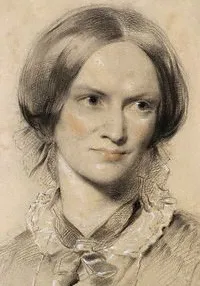
Charlotte Brontë
The Wood
BUT two miles more, and then we rest !
Well, there is still an hour of day,
And long the brightness of the West
Will light us on our devious way;
Sit then, awhile, here in this wood
So
total is the solitude,
We safely may delay.
These massive roots afford a seat,
Which seems for weary travellers made.
There rest. The air is soft and sweet
In this sequestered forest glade,
And there are scents of flowers around,
The evening dew draws from the ground;
How soothingly they spread !
Yes; I was tired, but not at heart;
Nothat
beats full of sweet content,
For now I have my natural part
Of action with adventure blent;
Cast forth on the wide vorld with thee,
And all my once waste energy
To weighty purpose bent.
Yetsay'st
thou, spies around us roam,
Our aims are termed conspiracy ?
Haply, no more our English home
An anchorage for us may be ?
That there is risk our mutual blood
May redden in some lonely wood
The knife of treachery ?
Say'st thouthat
where we lodge each night,
In each lone farm, or lonelier hall
Of Norman Peerere
morning light
Suspicion must as duly fall,
As day returnssuch
vigilance
Presides and watches over France,
Such rigour governs all ?
I fear not, William; dost thou fear ?
So that the knife does not divide,
It may be ever hovering near:
I could not tremble at thy side,
And strenuous lovelike
mine for thee
Is
buckler strong, 'gainst treachery,
And turns its stab aside.
I am resolved that thou shalt learn
To trust my strength as I trust thine;
I am resolved our souls shall burn,
With equal, steady, mingling shine;
Part of the field is conquered now,
Our lives in the same channel flow,
Along the selfsame
line;
And while no groaning storm is heard,
Thou seem'st content it should be so,
But soon as comes a warning word
Of dangerstraight
thine anxious brow
Bends over me a mournful shade,
As doubting if my powers are made
To ford the floods of woe.
Know, then it is my spirit swells,
And drinks, with eager joy, the air
Of freedomwhere
at last it dwells,
Chartered, a common task to share
With thee, and then it stirs alert,
And pants to learn what menaced hurt
Demands for thee its care.
Remember, I have crossed the deep,
And stood with thee on deck, to gaze
On waves that rose in threatening heap,
While stagnant lay a heavy haze,
Dimly confusing sea with sky,
And baffling, even, the pilot's eye,
Intent to thread the maze
Of rocks, on Bretagne's dangerous coast,
And find a way to steer our band
To the one point obscure, which lost,
Flung us, as victims, on the strand;
All,
elsewhere, gleamed the Gallic sword,
And not a wherry could be moored
Along the guarded land.
I feared not then
I
fear not now;
The interest of each stirring scene
Wakes a new sense, a welcome glow,
In every nerve and bounding vein;
Alike on turbid Channel sea,
Or in still wood of Normandy,
I feel as born again.
The rain descended that wild morn
When, anchoring in the cove at last,
Our band, all weary and forlorn,
Ashore, like waveworn
sailors, cast
Sought
for a sheltering roof in vain,
And scarce could scanty food obtain
To break their morning fast.
Thou didst thy crust with me divide,
Thou didst thy cloak around me fold;
And, sitting silent by thy side,
I ate the bread in peace untold:
Given kindly from thy hand, 'twas sweet
As costly fare or princely treat
On royal plate of gold.
Sharp blew the sleet upon my face,
And, rising wild, the gusty wind
Drove on those thundering waves apace,
Our crew so late had left behind;
But, spite of frozen shower and storm,
So close to thee, my heart beat warm,
And tranquil slept my mind.
So nownor
footsore
nor opprest
With walking all this August day,
I taste a heaven in this brief rest,
This gipsyhalt
beside the way.
England's wild flowers are fair to view,
Like balm is England's summer dew,
Like gold her sunset ray.
But the white violets, growing here,
Are sweeter than I yet have seen,
And ne'er did dew so pure and clear
Distil on forest mosses green,
As now, called forth by summer heat,
Perfumes our cool and fresh retreat
These fragrant limes between.
That sunset ! Look beneath the boughs,
Over the copsebeyond
the hills;
How soft, yet deep and warm it glows,
And heaven with rich suffusion fills;
With hues where still the opal's tint,
Its gleam of poisoned fire is blent,
Where flame through azure thrills !
Depart we nowfor
fast will fade
That solemn splendour of decline,
And deep must be the aftershade
As stars alone tonight
will shine;
No moon is destinedpaleto
gaze
On such a day's vast Phoenix blaze,
A day in fires decayed !
Therehandinhand
we tread again
The mazes of this varying wood,
And soon, amid a cultured plain,
Girt in with fertile solitude,
We shall our restingplace
descry,
Marked by one rooftree,
towering high
Above a farmstead
rude.
Refreshed, erelong, with rustic fare,
We'll seek a couch of dreamless ease;
Courage will guard thy heart from fear,
And Love give mine divinest peace:
Tomorrow
brings more dangerous toil,
And through its conflict and turmoil
We'll pass, as God shall please.
298
Henry Lawson
Genoa
A long farewell to Genoa
That rises to the skies,
Where the barren coast of Italy
Like our own coastline lies.
A sad farewell to Genoa,
And long my heart shall grieve,
The only city in the world
That I was loath to leave.
No sign of rush or strife is there,
No war of greed they wage.
The deep cool streets of Genoa
Are rock-like in their age.
No garish signs of commerce there
Are flaunting in the sun.
A rag hung from a balcony
Is by an artist done.
And she was fair in Genoa,
And she was very kind,
Those pale blind-seeming eyes that seem
Most beautifully blind.
Oh they are sad in Genoa,
Those poor soiled singing birds.
I had but three Italian words
And she three English words.
But love is cheap in Genoa,
Aye, love and wine are cheap,
And neither leaves an aching head,
Nor cuts the heart too deep;
Save when the knife goes straight, and then
There’s little time to grieve—
The only city in the world
That I was loath to leave.
I’ve said farewell to tinted days
And glorious starry nights,
I’ve said farewell to Naples with
Her long straight lines of lights;
But it is not for Naples but
For Genoa that I grieve,
The only city in the world
That I was loath to leave.
297
Henry Lawson
The Three Kings [1]
The East is dead and the West is done, and again our course lies thus
South-east by Fate and the Rising Sun where the Three Kings wait for us.
When our hearts are young and the world is wide, and the heights seem grand to
climb—
We are off and away to the Sydney-side; but the Three Kings bide their time.
‘I’ve been to the West,’ the digger said: he was bearded, bronzed and old;
Ah, the smothering curse of the East is wool, and the curse of the West is gold.
I went to the West in the golden boom, with Hope and a life-long mate,
‘They sleep in the sand by the Boulder Soak, and long may the Three Kings wait.’
‘I’ve had my fling on the Sydney-side,’ said a blacksheep to the sea,
Let the young fool learn when he can’t be taught: I’ve learnt what’s good for me.’
And he gazed ahead on the sea-line dim—grown dim in his softened eyes—
With a pain in his heart that was good for him—as he saw the Three Kings rise.
A pale girl sits on the foc’sle head—she is back, Three Kings! so soon;
But it seems to her like a life-time dead since she fled with him ‘saloon.’
There is refuge still in the old folks’ arms for the child that loved too well;
They will hide her shame on the Southern farm—and the Three Kings will not tell.
’Twas a restless heart on the tide of life, and a false star in the skies
That led me on to the deadly strife where the Southern London lies;
But I dream in peace of a home for me, by a glorious southern sound,
As the sunset fades from a moonlit sea, and the Three Kings show us round.
Our hearts are young and the old hearts old, and life, on the farms is slow,
And away in the world there is fame and gold—and the Three Kings watch us go.
Our heads seem wise and the world seems wide, and its heights are ours to climb,
So it’s off and away in our youthful pride—but the Three Kings bide our time.
295
Henry Lawson
The Drovers
Shrivelled leather, rusty buckles, and the rot is in our knuckles,
Scorched for months upon the pommel while the brittle rein hung free;
Shrunken eyes that once were lighted with fresh boyhood, dull and blighted—
And the sores upon our eyelids are unpleasant sights to see.
And our hair is thin and dying from the ends, with too long lying
In the night dews on the ashes of the Dry Countree.
Yes, we’ve seen ’em ‘bleaching whitely’ where the salt-bush sparkles brightly,
But their grins were over-friendly, so we passed and let them be.
And we’ve seen them ‘rather recent,’ and we’ve stopped to hide ’em decent
When they weren’t nice to handle and they weren’t too nice to see;
We have heard the dry bones rattle under fifteen hundred cattle—
Seen the rags go up in dust-clouds and the brittle joints kicked free;
But there’s little time to tarry, if you wish to live and marry,
When the cattle shy at something in the Dry Countree.
No, you needn’t fear the blacks on the Never Never tracks—
For the Myall in his freedom’s an uncommon sight to see;
Oh! we do not stick at trifles—and the trackers sneak their rifles,
And go strolling in the gloaming while the sergeant’s yarning free:
Round the Myalls creep the trackers—there’s a sound like firing crackers
And—the blacks are getting scarcer in the Dry Countree.
(Goes an unprotected maiden-’cross the clearing carrion-laden—
Oh they ride ’em down on horseback in the Dry Countree.)
But you don’t know what might happen when a tank is but a trap on
Roofs of hell, and there is nothing but the blaze of hell to see;
And the phantom water’s lapping—and no limb for saddle-strapping—
Better carry your revolver through the Dry Countree.
But I’m feeling gay and frisky, come with me and have a whisky!
Change of hells is all we live for (that’s my mate that’s got D.T.);
We have fought through hell’s own weather, he and I and death together—
Oh, the devil grins to greet us from the Dry Countree!
293
Henry Lawson
The Wander-Light
And they heard the tent-poles clatter,
And the fly in twain was torn –
'Tis the soiled rag of a tatter
Of the tent where I was born.
And what matters it, I wonder?
Brick or stone or calico? –
Or a bush you were born under,
When it happened long ago?
And my beds were camp beds and tramp beds and damp beds,
And my beds were dry beds on drought-stricken ground,
Hard beds and soft beds, and wide beds and narrow –
For my beds were strange beds the wide world round.
And the old hag seemed to ponder
('Twas my mother told me so),
And she said that I would wander
Where but few would think to go.
"He will fly the haunts of tailors,
He will cross the ocean wide,
For his fathers, they were sailors
All on his good father's side."
Behind me, before me, Oh! my roads are stormy
The thunder of skies and the sea's sullen sound,
The coaster or liner, the English or foreign,
The state-room or steerage the wide world round.
And the old hag she seemed troubled
As she bent above the bed,
"He will dream things and he'll see things
To come true when he is dead.
He will see things all too plainly,
And his fellows will deride,
For his mothers they were gipsies
All on his good mother's side."
And my dreams are strange dreams, are day dreams, are grey dreams,
And my dreams are wild dreams, and old dreams and new;
They haunt me and daunt me with fears of the morrow –
My brothers they doubt me – but my dreams come true.
And so I was born of fathers
From where ice-bound harbours are
Men whose strong limbs never rested
And whose blue eyes saw afar.
Till, for gold, one left the ocean,
Seeking over plain and hill;
And so I was born of mothers
Whose deep minds were never still.
I rest not, 'tis best not, the world is a wide one
And, caged for an hour, I pace to and fro;
I see things and dree things and plan while I'm sleeping,
I wander for ever and dream as I go.
I have stood by Table Mountain
On the Lion at Capetown,
And I watched the sunset fading
From the roads that I marked down,
And I looked out with my brothers
From the heights behind Bombay,
Gazing north and west and eastward,
Over roads I'll tread some day.
For my ways are strange ways and new ways and old ways,
And deep ways and steep ways and high ways and low;
I'm at home and at ease on a track that I know not,
And restless and lost on a road that I know.
292

John Greenleaf Whittier
To A Cape Ann Schooner
Luck to the craft that bears this name of mine,
Good fortune follow with her golden spoon
The glazed hat and tarry pantaloon;
And wheresoe'er her keel shall cut the brine,
Cod, hake and haddock quarrel for her line.
Shipped with her crew, whatever wind may blow,
Or tides delay, my wish with her shall go,
Fishing by proxy. Would that it might show
At need her course, in lack of sun and star,
Where icebergs threaten, and the sharp reefs are;
Lift the blind fog on Anticosti's lee
And Avalon's rock; make populous the sea
Round Grand Manan with eager finny swarms,
Break the long calms, and charm away the storms.
290

William Wordsworth
Yarrow Unvisited
. From Stirling castle we had seen
The mazy Forth unravelled;
Had trod the banks of Clyde, and Tay,
And with the Tweed had travelled;
And when we came to Clovenford,
Then said my "winsome Marrow ,"
"Whate'er betide, we'll turn aside,
And see the Braes of Yarrow."
"Let Yarrow folk, frae Selkirk town,
Who have been buying, selling,
Go back to Yarrow, 'tis their own;
Each maiden to her dwelling!
On Yarrow's banks let her herons feed,
Hares couch, and rabbits burrow!
But we will downward with the Tweed
Nor turn aside to Yarrow.
"There's Galla Water, Leader Haughs,
Both lying right before us;
And Dryborough, where with chiming Tweed
The lintwhites sing in chorus;
There's pleasant Tiviot-dale, a land
Made blithe with plough and harrow:
Why throw away a needful day
To go in search of Yarrow?
"What's Yarrow but a river bare,
That glides the dark hills under?
There are a thousand such elsewhere
As worthy of your wonder."
--Strange words they seemed of slight and scorn;
My True-love sighed for sorrow;
And looked me in the face, to think
I thus could speak of Yarrow!
"Oh! green," said I, "are Yarrow's holms,
And sweet is Yarrow flowing!
Fair hangs the apple frae the rock,
But we will leave it growing.
O'er hilly path, and open Strath,
We'll wander Scotland thorough;
But, though so near, we will not turn
Into the dale of Yarrow.
"Let beeves and home-bred kine partake
The sweets of Burn-mill meadow,
The swan on still St. Mary's Lake
Float double, swan and shadow!
We will not see them; will not go,
To-day, nor yet to-morrow;
Enough if in our hearts we know
There's such a place as Yarrow.
"Be Yarrow stream unseen, unknown!
It must, or we shall rue it:
We have a vision of our own;
Ah! why should we undo it?
The treasured dreams of times long past,
We'll keep them, winsome Marrow!
For when we'er there, although 'tis fair,
'Twill be another Yarrow!
"If Care with freezing years should come,
And wandering seem but folly,--
Should we be loth to stir from home,
And yet be melancholy;
Should life be dull, and spirits low,
'Twill soothe us in our sorrow,
That earth has something yet to show,
The bonny holms of Yarrow!"
289

Muhammad Iqbal
The Crescent
The sun's boat is broken and drowned in the Nile
But a piece is floating about on the water of the Nile
The twilight's pure blood drips into the sky's basin
Has the lancet of Nature drawn the sun's blood?
Has the sky stolen the ear ring of the evening's bride?
Or has the fragile cord in the Nile's waters strolling?
Your caravan is afoot without help of bell's call
The human ear cannot hear your foot-steps' sound
You show the spectacle of rise and fall to the eyes
Where is your home? To which country are you going?
O star-like planet take me with yourself
The prick of Longing's thorn keeps me restless
I am seeking light, I am weary in this habitation
I am the restless child in the existence's school…
282

Henry Wadsworth Longfellow
Song. (From The Portuguese)
If thou art sleeping, maiden,
Awake, and open thy door:
'Tis the break of day, and we must away,
O'er meadow, and mount, and moor.
Wait not to find thy slippers,
But come with thy naked feet:
We shall have to pass through the dewy grass,
And waters wide and fleet.
Awake, and open thy door:
'Tis the break of day, and we must away,
O'er meadow, and mount, and moor.
Wait not to find thy slippers,
But come with thy naked feet:
We shall have to pass through the dewy grass,
And waters wide and fleet.
283
Henry Lawson
Jack Cornstalk
Jack Cornstalk as a drover born,
Jack Cornstalk gaunt and tan,
Jack Cornstalk leaves his love forlorn,
Jack Cornstalk man to man.
Jack Cornstalk as a careless scamp,
With day-dreams in his head;
Jack Cornstalk on his lone, wide camp,
Jack Cornstalk with his dead,
Jack Cornstalk at his best and worst.
The day dawns on his brow,
Jack Cornstalk’s country must be first –
Advance Australia now!
282

Robert W. Service
Finistere
Hurrah! I'm off to Finistere, to Finistere, to Finistere;
My satchel's swinging on my back, my staff is in my hand;
I've twenty louis in my purse, I know the sun and sea are there,
And so I'm starting out to-day to tramp the golden land.
I'll go alone and glorying, with on my lips a song of joy;
I'll leave behind the city with its canker and its care;
I'll swing along so sturdily -- oh, won't I be the happy boy!
A-singing on the rocky roads, the roads of Finistere.
Oh, have you been to Finistere, and do you know a whin-gray town
That echoes to the clatter of a thousand wooden shoes?
And have you seen the fisher-girls go gallivantin' up and down,
And watched the tawny boats go out, and heard the roaring crews?
Oh, would you sit with pipe and bowl, and dream upon some sunny quay,
Or would you walk the windy heath and drink the cooler air;
Oh, would you seek a cradled cove and tussle with the topaz sea! --
Pack up your kit to-morrow, lad, and haste to Finistere.
Oh, I will go to Finistere, there's nothing that can hold me back.
I'll laugh with Yves and Le/on, and I'll chaff with Rose and Jeanne;
I'll seek the little, quaint buvette that's kept by Mother Merdrinac,
Who wears a cap of many frills, and swears just like a man.
I'll yarn with hearty, hairy chaps who dance and leap and crack their heels;
Who swallow cupfuls of cognac and never turn a hair;
I'll watch the nut-brown boats come in with mullet, plaice and conger eels,
The jeweled harvest of the sea they reap in Finistere.
Yes, I'll come back from Finistere with memories of shining days,
Of scaly nets and salty men in overalls of brown;
Of ancient women knitting as they watch the tethered cattle graze
By little nestling beaches where the gorse goes blazing down;
Of headlands silvering the sea, of Calvarys against the sky,
Of scorn of angry sunsets, and of Carnac grim and bare;
Oh, won't I have the leaping veins, and tawny cheek and sparkling eye,
When I come back to Montparnasse and dream of Finistere.
281
Henry Lawson
The Tracks That Lie By India
Now this is not a dismal song, like some I’ve sung of late,
When I’ve been brooding all day long about my muddled fate;
For though I’ve had a rocky time I’ll never quite forget,
And though I never was so deep in trouble and in debt,
And though I never was so poor nor in a fix so tight—
The tracks that run by India are shining in my sight.
The roads that run by India, and all the ports of call—
I’m going back to London first to raise the wherewithal.
I’ll call at Suez and Port Said as I am going past
(I was too worried to take notes when I was that way last),
At Naples and at Genoa, and, if I get the chance,
Who knows but I might run across the pleasant land of France.
The track that runs by India goes up the hot Red Sea—
The other side of Africa is far too dull for me.
(I fear that I have missed a chance I’ll never get again
To see the land of chivalry and bide awhile in Spain.)
I’ll graft a year in London, and if fortune smiles on me
I’ll take the track to India by France and Italy.
’Tis sweet to court some foreign girl with eyes of lustrous glow,
Who does not know my language and whose language I don’t know;
To loll on gently-rolling decks beneath the softening skies,
While she sits knitting opposite, and make love with our eyes—
The glance that says far more than words, the old half-mystic smile—
The track that runs by India will wait for me awhile.
The tracks that run by India to China and Japan,
The tracks where all the rovers go—the tracks that call a Man!
I’m wearied of the formal lands of parson and of priest,
Of dollars and of fashions, and I’m drifting towards the East;
I’m tired of cant and cackle, and of sordid jobbery—
The mystery of the East hath cast its glamour over me.
282
Henry Wadsworth Longfellow
Ovid In Exile, At Tomis, In Bessarabia, Near The Mouths Of The Danube (Tristia, Book III. Elegy X.)
Should any one there in Rome remember Ovid the exile,
And, without me, my name still in the city survive;
Tell him that under stars which never set in the ocean
I am existing still, here in a barbarous land.
Fierce Sarmatians encompass me round, and the Bessi and Getae;
Names how unworthy to be sung by a genius like mine!
Yet when the air is warm, intervening Ister defends us:
He, as he flows, repels inroads of war with his waves.
But when the dismal winter reveals its hideous aspect,
When all the earth becomes white with a marble-like frost;
And when Boreas is loosed, and the snow hurled under Arcturus,
Then these nations, in sooth, shudder and shiver with cold.
Deep lies the snow, and neither the sun nor the rain can dissolve
it;
Boreas hardens it still, makes it forever remain.
Hence, ere the first ha-s melted away, another succeeds it,
And two years it is wont, in many places, to lie.
And so great is the power of the Northwind awakened, it levels
Lofty towers with the ground, roofs uplifted bears off.
Wrapped in skins, and with trousers sewed, they contend with the
weather,
And their faces alone of the whole body are seen.
Often their tresses, when shaken, with pendent icicles tinkle,
And their whitened beards shine with the gathering frost.
Wines consolidate stand, preserving the form of the vessels;
No more draughts of wine,--pieces presented they drink.
Why should I tell you how all the rivers are frozen and solid,
And from out of the lake frangible water is dug?
Ister,--no narrower stream than the river that bears the
papyrus,--
Which through its many mouths mingles its waves with the deep;
Ister, with hardening winds, congeals its cerulean waters,
Under a roof of ice, winding its way to the sea.
There where ships have sailed, men go on foot; and the billows,
Solid made by the frost, hoof-beats of horses indent.
Over unwonted bridges, with water gliding beneath them,
The Sarmatian steers drag their barbarian carts.
Scarcely shall I be believed; yet when naught is gained by a
falsehood,
Absolute credence then should to a witness be given.
I have beheld the vast Black Sea of ice all compacted,
And a slippery crust pressing its motionless tides.
'Tis not enough to have seen, I have trodden this indurate
ocean;
Dry shod passed my foot over its uppermost wave.
If thou hadst had of old such a sea as this is, Leander!
Then thy death had not been charged as a crime to the Strait.
Nor can the curved dolphins uplift themselves from the water;
All their struggles to rise merciless winter prevents;
And though Boreas sound with roar of wings in commotion,
In the blockaded gulf never a wave will there be;
And the ships will stand hemmed in by the frost, as in marble,
Nor will the oar have power through the stiff waters to cleave.
Fast-bound in the ice have I seen the fishes adhering,
Yet notwithstanding this some of them still were alive.
Hence, if the savage strength of omnipotent Boreas freezes
Whether the salt-sea wave, whether the refluent stream,-
Straightway,--the Ister made level by arid blasts of the North-wind,--
Comes the barbaric foe borne on his swift-footed steed;
Foe, that powerful made by his steed and his far-flying arrows,
All the neighboring land void of inhabitants makes.
Some take flight, and none being left to defend their possessions,
Unprotected, their goods pillage and plunder become;
Cattle and creaking carts, the little wealth of the country,
And what riches beside indigent peasants possess.
Some as captives are driven along, their hands bound behind them,
Looking backward in vain toward their Lares and lands.
Others, transfixed with barbed arrows, in agony perish,
For the swift arrow-heads all have in poison been dipped.
What they cannot carry or lead away they demolish,
And the hostile flames burn up the innocent cots.
Even when there is peace, the fear of war is impending;
None, with the ploughshare pressed, furrows the soil any more.
Either this region sees, or fears a foe that it sees not,
And the sluggish land slumbers in utter neglect.
No sweet grape lies hidden here in the shade of its vine-leaves,
No fermenting must fills and o'erflows the deep vats.
Apples the region denies; nor would Acontius have found here
Aught upon which to write words for his mistress to read.
Naked and barren plains without leaves or trees we behold here,--
Places, alas! unto which no happy man would repair.
Since then this mighty orb lies open so wide upon all sides,
Has this region been found only my prison to be?
(Tristia, Book III. Elegy XII.)
Now the zephyrs diminish the cold, and the year being ended,
Winter Maeotian seems longer than ever before;
And the Ram that bore unsafely the burden of Helle,
Now makes the hours of the day equal with those of the night.
Now the boys and the laughing girls the violet gather,
Which the fields bring forth, nobody sowing the seed.
Now the meadows are blooming with flowers of various colors,
And with untaught throats carol the garrulous birds.
Now the swallow, to shun the crime of her merciless mother,
Under the rafters builds cradles and dear little homes;
And the blade that lay hid, covered up in the furrows of Ceres,
Now from the tepid ground raises its delicate head.
Where there is ever a vine, the bud shoots forth from the tendrils,
But from the Getic shore distant afar is the vine!
Where there is ever a tree, on the tree the branches are swelling,
But from the Getic land distant afar is the tree!
Now it is holiday there in Rome, and to games in due order
Give place the windy wars of the vociferous bar.
Now they are riding the horses; with light arms now they are playing,
Now with the ball, and now round rolls the swift-flying hoop:
Now, when the young athlete with flowing oil is anointed,
He in the Virgin's Fount bathes, over-wearied, his limbs.
Thrives the stage; and applause, with voices at variance, thunders,
And the Theatres three for the three Forums resound.
Four times happy is he, and times without number is happy,
Who the city of Rome, uninterdicted, enjoys.
But all I see is the snow in the vernal sunshine dissolving,
And the waters no more delved from the indurate lake.
Nor is the sea now frozen, nor as before o'er the Ister
Comes the Sarmatian boor driving his stridulous cart.
Hitherward, nevertheless, some keels already are steering,
And on this Pontic shore alien vessels will be.
Eagerly shall I run to the sailor, and, having saluted,
Who he may be, I shall ask; wherefore and whence he hath come.
Strange indeed will it be, if he come not from regions adjacent,
And incautious unless ploughing the neighboring sea.
Rarely a mariner over the deep from Italy passes,
Rarely he comes to these shores, wholly of harbors devoid.
Whether he knoweth Greek, or whether in Latin he speaketh,
Surely on this account he the more welcome will be.
Also perchance from the mouth of the Strait and the waters Propontic,
Unto the steady South-wind, some one is spreading his sails.
Whosoever he is, the news he can faithfully tell me,
Which may become a part and an approach to the truth.
He, I pray, may he able to tell me the triumphs of Caesar,
Which he has heard of, and vows paid to the Latian Jove;
And that thy sorrowful head, Germania, thou, the rebellious,
Under the feet, at last, of the Great Captain hast laid.
Whoso shall tell me these things, that not to have seen will afflict me,
Forthwith unto my house welcomed as guest shall he be.
Woe is me! Is the house of Ovid in Scythian lands now?
And doth punishment now give me its place for a home?
Grant, ye gods, that Caesar make this not my house and my homestead,
But decree it to be only the inn of my pain.
281

Horácio
BkI:VII Tibur
Let others sing in praise of Rhodes, or Mytilene,
or Ephesus, or Corinth on the Isthmus,
or Thebes that’s known for Bacchus, or Apollo’s isle
of Delphi, or Thessalian Tempe.
There’s some whose only purpose is to celebrate
virgin Athene’s city forever,
and set indiscriminately gathered olive on their heads.
Many a poet in honour of Juno
will speak fittingly of horses, Argos, rich Mycenae.
As for me not even stubborn Sparta
or the fields of lush Larisa are quite as striking,
as Albunea’s echoing cavern,
her headlong Anio, and the groves of Tiburnus,
and Tibur’s orchards, white with flowing streams.
Bright Notus from the south often blows away the clouds
from dark skies, without bringing endless rain,
so Plancus, my friend, remember to end a sad life
and your troubles, wisely, with sweet wine,
whether it’s the camp, and gleaming standards, that hold you
or the deep shadows of your own Tibur.
They say that Teucer, fleeing from Salamis and his
father, still wreathed the garlands, leaves of poplar,
round his forehead, flushed with wine, and in speech to his friends
said these words to them as they sorrowed:
‘Wherever fortune carries us, kinder than my father,
there, O friends and comrades, we’ll adventure!
Never despair, if Teucer leads, of Teucer’s omens!
Unerring Apollo surely promised,
in the uncertain future, a second Salamis
on a fresh soil. O you brave heroes, you
who suffered worse with me often, drown your cares with wine:
tomorrow we’ll sail the wide seas again.’
279
John Greenleaf Whittier
Palestine
Blest land of Judea! thrice hallowed of song,
Where the holiest of memories pilgrim-like throng;
In the shade of thy palms, by the shores of thy sea,
On the hills of thy beauty, my heart is with thee.
With the eye of a spirit I look on that shore,
Where pilgrim and prophet have lingered before;
With the glide of a spirit, I traverse the sod
Made bright by the steps of the angels of God.
Blue sea of the hills! in my spirit I hear
Thy waters, Genasseret, chime on my ear;
Where the Lowly and Just with the people sat down,
And thy spray on the dust of His sandals was thrown.
Beyond are Bethulia's mountains of green,
And the desolate hills of the wild Godarene;
And I pause on the goat-crags of Tabor to see
The gleam of thy waters, oh dark Gallilee!
Hark, a sound in the vallies! where, swollen and strong,
Thy river, oh Kishon, is sweeping along;
Where the Canaanite strove with Jehovah in vain,
And thy torrent grew dark with the blood of the slain.
There down from his mountains stern Zebulon came,
And Naphtali's stag, with his eye-balls of flame,
And the chariots of Jabin rolled harmlessly on,
For the arm of the Lord was Abinoam's son!
There sleep the still rocks and the caverns which rang
To the song which the beautiful Prophetess sang,
When the Princes of Issachar stood by her side,
And the shout of a host in its triumph replied.
Lo! Bethlehem's hill-site before me is seen,
With the mountains around, and the vallies between;
There rested the shepherds of Judah, and there
The song of the angels rose sweet on the air.
And Bethany's palm-trees in beauty still throw
Their shadows at noon on the ruins below;
But where are the sisters who hastened to greet
The lowly Redeemer, and sit at His feet?
I tread where the TWELVE in their wayfaring trod;
I stand where they stood with the CHOSEN of GOD!
Where his blessing was heard, and his lessons were taught,
Where the blind were restored, and the healing was wrought.
Oh, here with his flock the sad Wanderer came,
These hills he toiled over in grief are the same
The founts where he drank by the wayside still flow,
And the same airs are blowing which breathed on his brow.
And throned on her hills sits Jerusalem yet,
But with dust on her forehead, and chains on her feet:
For the crown of her pride to the mocker hath gone,
And the holy Shechinah is dark where it shone!
But wherefore this dream of the earthly abode
Of Humanity clothed in the brightness of God?
Were my spirit but turned from the outward and dim,
It could gaze, even now, on the presence of Him!
Not in clouds and in terrors, but gentle as when
In love and in meekness he moved among men;
And the voice which breathed peace to the waves of the sea,
In the hush of my spirit would whisper to me!
And what if my feet may not tread where He stood,
Nor my ears hear the dashing of Gallilee's flood,
Nor my eyes see the cross which He bowed him to bear,
Nor my knees press Gethsemane's garden of prayer.
Yet, Loved of the Father, Thy spirit is near
To the meek, and the lowly, and penitent here;
And the voice of thy love is the same even now,
As at Bethany's tomb, or on Olivet's brow,mdash;
Oh, the outward hath gone!-but in glory and power,
The SPIRIT surviveth the things of an hour;
Unchanged, undecaying, its Pentecost flame
On the heart's secret altar is burning the same!
277

Emily Dickinson
This-is the land-the Sunset washes
This-is the land-the Sunset washes
These-
are the Banks of the Yellow Sea-
Where it rose-or whither it rushes
These-
are the Western Mystery!
Night after Night
Her purple traffic
Strews the landing with Opal BalesMerchantmen-
poise upon HorizonsDip-
and vanish like Orioles!
These-
are the Banks of the Yellow Sea-
Where it rose-or whither it rushes
These-
are the Western Mystery!
Night after Night
Her purple traffic
Strews the landing with Opal BalesMerchantmen-
poise upon HorizonsDip-
and vanish like Orioles!
277
William Wordsworth
Resolution and Independence
I
There was a roaring in the wind all night;
The rain came heavily and fell in floods;
But now the sun is rising calm and bright;
The birds are singing in the distant woods;
Over his own sweet voice the Stock-dove broods;
The Jay makes answer as the Magpie chatters;
And all the air is filled with pleasant noise of waters.
II
All things that love the sun are out of doors;
The sky rejoices in the morning's birth;
The grass is bright with rain-drops;--on the moors
The hare is running races in her mirth;
And with her feet she from the plashy earth
Raises a mist, that, glittering in the sun,
Runs with her all the way, wherever she doth run.
III
I was a Traveller then upon the moor,
I saw the hare that raced about with joy;
I heard the woods and distant waters roar;
Or heard them not, as happy as a boy:
The pleasant season did my heart employ:
My old remembrances went from me wholly;
And all the ways of men, so vain and melancholy.
IV
But, as it sometimes chanceth, from the might
Of joy in minds that can no further go,
As high as we have mounted in delight
In our dejection do we sink as low;
To me that morning did it happen so;
And fears and fancies thick upon me came;
Dim sadness--and blind thoughts, I knew not, nor could name.
V
I heard the sky-lark warbling in the sky;
And I bethought me of the playful hare:
Even such a happy Child of earth am I;
Even as these blissful creatures do I fare;
Far from the world I walk, and from all care;
But there may come another day to me--
Solitude, pain of heart, distress, and poverty.
VI
My whole life I have lived in pleasant thought,
As if life's business were a summer mood;
As if all needful things would come unsought
To genial faith, still rich in genial good;
But how can He expect that others should
Build for him, sow for him, and at his call
Love him, who for himself will take no heed at all?
VII
I thought of Chatterton, the marvellous Boy,
The sleepless Soul that perished in his pride;
Of Him who walked in glory and in joy
Following his plough, along the mountain-side:
By our own spirits are we deified:
We Poets in our youth begin in gladness;
But thereof come in the end despondency and madness.
VIII
Now, whether it were by peculiar grace,
A leading from above, a something given,
Yet it befell, that, in this lonely place,
When I with these untoward thoughts had striven,
Beside a pool bare to the eye of heaven
I saw a Man before me unawares:
The oldest man he seemed that ever wore grey hairs.
IX
As a huge stone is sometimes seen to lie
Couched on the bald top of an eminence;
Wonder to all who do the same espy,
By what means it could thither come, and whence;
So that it seems a thing endued with sense:
Like a sea-beast crawled forth, that on a shelf
Of rock or sand reposeth, there to sun itself;
X
Such seemed this Man, not all alive nor dead,
Nor all asleep--in his extreme old age:
His body was bent double, feet and head
Coming together in life's pilgrimage;
As if some dire constraint of pain, or rage
Of sickness felt by him in times long past,
A more than human weight upon his frame had cast.
XI
Himself he propped, limbs, body, and pale face,
Upon a long grey staff of shaven wood:
And, still as I drew near with gentle pace,
Upon the margin of that moorish flood
Motionless as a cloud the old Man stood,
That heareth not the loud winds when they call
And moveth all together, if it move at all.
XII
At length, himself unsettling, he the pond
Stirred with his staff, and fixedly did look
Upon the muddy water, which he conned,
As if he had been reading in a book:
And now a stranger's privilege I took;
And, drawing to his side, to him did say,
"This morning gives us promise of a glorious day."
XIII
A gentle answer did the old Man make,
In courteous speech which forth he slowly drew:
And him with further words I thus bespake,
"What occupation do you there pursue?
This is a lonesome place for one like you."
Ere he replied, a flash of mild surprise
Broke from the sable orbs of his yet-vivid eyes,
XIV
His words came feebly, from a feeble chest,
But each in solemn order followed each,
With something of a lofty utterance drest--
Choice word and measured phrase, above the reach
Of ordinary men; a stately speech;
Such as grave Livers do in Scotland use,
Religious men, who give to God and man their dues.
XV
He told, that to these waters he had come
To gather leeches, being old and poor:
Employment hazardous and wearisome!
And he had many hardships to endure:
From pond to pond he roamed, from moor to moor;
Housing, with God's good help, by choice or chance,
And in this way he gained an honest maintenance.
XVI
The old Man still stood talking by my side;
But now his voice to me was like a stream
Scarce heard; nor word from word could I divide;
And the whole body of the Man did seem
Like one whom I had met with in a dream;
Or like a man from some far region sent,
To give me human strength, by apt admonishment.
XVII
My former thoughts returned: the fear that kills;
And hope that is unwilling to be fed;
Cold, pain, and labour, and all fleshly ills;
And mighty Poets in their misery dead.
--Perplexed, and longing to be comforted,
My question eagerly did I renew,
"How is it that you live, and what is it you do?"
XVIII
He with a smile did then his words repeat;
And said, that, gathering leeches, far and wide
He travelled; stirring thus about his feet
The waters of the pools where they abide.
"Once I could meet with them on every side;
But they have dwindled long by slow decay;
Yet still I persevere, and find them where I may."
XIX
While he was talking thus, the lonely place,
The old Man's shape, and speech--all troubled me:
In my mind's eye I seemed to see him pace
About the weary moors continually,
Wandering about alone and silently.
While I these thoughts within myself pursued,
He, having made a pause, the same discourse renewed.
XX
And soon with this he other matter blended,
Cheerfully uttered, with demeanour kind,
But stately in the main; and when he ended,
I could have laughed myself to scorn to find
In that decrepit Man so firm a mind.
"God," said I, "be my help and stay secure;
I'll think of the Leech-gatherer on the lonely moor!"
278
Henry Wadsworth Longfellow
Catawba Wine. (Birds Of Passage. Flight The First)
This song of mine
Is a Song of the Vine,
To be sung by the glowing embers
Of wayside inns,
When the rain begins
To darken the drear Novembers.
It is not a song
Of the Scuppernong,
From warm Carolinian valleys,
Nor the Isabel
And the Muscadel
That bask in our garden alleys.
Nor the red Mustang,
Whose clusters hang
O'er the waves of the Colorado,
And the fiery flood
Of whose purple blood
Has a dash of Spanish bravado.
For richest and best
Is the wine of the West,
That grows by the Beautiful River;
Whose sweet perfume
Fills all the room
With a benison on the giver.
And as hollow trees
Are the haunts of bees,
Forever going and coming;
So this crystal hive
Is all alive
With a swarming and buzzing and humming.
Very good in its way
Is the Verzenay,
Or the Sillery soft and creamy;
But Catawba wine
Has a taste more divine,
More dulcet, delicious, and dreamy.
There grows no vine
By the haunted Rhine,
By Danube or Guadalquivir,
Nor on island or cape,
That bears such a grape
As grows by the Beautiful River.
Drugged is their juice
For foreign use,
When shipped o'er the reeling Atlantic,
To rack our brains
With the fever pains,
That have driven the Old World frantic.
To the sewers and sinks
With all such drinks,
And after them tumble the mixer;
For a poison malign
Is such Borgia wine,
Or at best but a Devil's Elixir.
While pure as a spring
Is the wine I sing,
And to praise it, one needs but name it;
For Catawba wine
Has need of no sign,
No tavern-bush to proclaim it.
And this Song of the Vine,
This greeting of mine,
The winds and the birds shall deliver
To the Queen of the West,
In her garlands dressed,
On the banks of the Beautiful River.
276

Phillis Wheatley
Ode To Neptune
On Mrs. W-----'s Voyage to England.
I.
WHILE raging tempests shake the shore,
While AElus' thunders round us roar,
And sweep impetuous o'er the plain
Be still, O tyrant of the main;
Nor let thy brow contracted frowns betray,
While my Susanna skims the wat'ry way.
II.
The Pow'r propitious hears the lay,
The blue-ey'd daughters of the sea
With sweeter cadence glide along,
And Thames responsive joins the song.
Pleas'd with their notes Sol sheds benign his ray,
And double radiance decks the face of day.
III.
To court thee to Britannia's arms
Serene the climes and mild the sky,
Her region boasts unnumber'd charms,
Thy welcome smiles in ev'ry eye.
Thy promise, Neptune keep, record my pray'r,
Not give my wishes to the empty air.
272
Henry Lawson
Broken Axletree
On the Track of Grand Endeavour, on the long track out to Bourke,
Past the Turn-Back, and past Howlong, and the pub at Sudden Jerk,
Past old Bullock-Yoke and Bog Flat, and the “Pinch” at Stick-to-me,
Lies the camp that we have christened—christened “Broken Axletree.”
We were young and strong and fearless, we had not seen Mount Despair,
And the West was to be conquered, and we meant to do our share;
We were far away from cities, and were fairly off the spree
When we camped at Cart Wheel River with a broken axletree.
Oh, the pub at Devil’s Crossing! and the woman that he sent!
And the hell for which we bartered horse and trap and “traps” and tent!
And the black “Since Then”—the chances that we never more may see—
Ah! the two lives that were ruined for a broken axletree!
“Fate” is but a Cart Wheel River, placed to test us by the Lord,
And the Star of Live Forever shines beyond At Blacksmith’s Ford!
Shun all fatalists and “isms”—heed no talk of “destiny”!
Ride a race for life to Blacksmith’s with your broken axletree.
272
John Greenleaf Whittier
The Bridal of Pennacook
We had been wandering for many days
Through the rough northern country. We had seen
The sunset, with its bars of purple cloud,
Like a new heaven, shine upward from the lake
Of Winnepiseogee; and had felt
The sunrise breezes, midst the leafy isles
Which stoop their summer beauty to the lips
Of the bright waters. We had checked our steeds,
Silent with wonder, where the mountain wall
Is piled to heaven; and, through the narrow rift
Of the vast rocks, against whose rugged feet
Beats the mad torrent with perpetual roar,
Where noonday is as twilight, and the wind
Comes burdened with the everlasting moan
Of forests and of far-off waterfalls,
We had looked upward where the summer sky,
Tasselled with clouds light-woven by the sun,
Sprung its blue arch above the abutting crags
O'er-roofing the vast portal of the land
Beyond the wall of mountains. We had passed
The high source of the Saco; and bewildered
In the dwarf spruce-belts of the Crystal Hills,
Had heard above us, like a voice in the cloud,
The horn of Fabyan sounding; and atop
Of old Agioochook had seen the mountains'
Piled to the northward, shagged with wood, and thick
As meadow mole-hills,—the far sea of Casco,
A white gleam on the horizon of the east;
Fair lakes, embosomed in the woods and hills;
Moosehillock's mountain range, and Kearsarge
Lifting his granite forehead to the sun!
And we had rested underneath the oaks
Shadowing the bank, whose grassy spires are shaken
By the perpetual beating of the falls
Of the wild Ammonoosuc. We had tracked
The winding Pemigewasset, overhung
By beechen shadows, whitening down its rocks,
Or lazily gliding through its intervals,
From waving rye-fields sending up the gleam
Of sunlit waters. We had seen the moon
Rising behind Umbagog's eastern pines,
Like a great Indian camp-fire; and its beams
At midnight spanning with a bridge of silver
The Merrimac by Uncanoonuc's falls.
There were five souls of us whom travel's chance
Had thrown together in these wild north hills
A city lawyer, for a month escaping
From his dull office, where the weary eye
Saw only hot brick walls and close thronged streets;
Briefless as yet, but with an eye to see
Life's sunniest side, and with a heart to take
Its chances all as godsends; and his brother,
Pale from long pulpit studies, yet retaining
The warmth and freshness of a genial heart,
Whose mirror of the beautiful and true,
In Man and Nature, was as yet undimmed
By dust of theologic strife, or breath
Of sect, or cobwebs of scholastic lore;
Like a clear crystal calm of water, taking
The hue and image of o'erleaning flowers,
Sweet human faces, white clouds of the noon,
Slant starlight glimpses through the dewy leaves,
And tenderest moonrise. 'Twas, in truth, a study,
To mark his spirit, alternating between
A decent and professional gravity
And an irreverent mirthfulness, which often
Laughed in the face of his divinity,
Plucked off the sacred ephod, quite unshrined
The oracle, and for the pattern priest
Left us the man. A shrewd, sagacious merchant,
To whom the soiled sheet found in Crawford's inn,
Giving the latest news of city stocks
And sales of cotton, had a deeper meaning
Than the great presence of the awful mountains
Glorified by the sunset; and his daughter,
A delicate flower on whom had blown too long
Those evil winds, which, sweeping from the ice
And winnowing the fogs of Labrador,
Shed their cold blight round Massachusetts Bay,
With the same breath which stirs Spring's opening leaves
And lifts her half-formed flower-bell on its stem,
Poisoning our seaside atmosphere.
It chanced that as we turned upon our homeward way,
A drear northeastern storm came howling up
The valley of the Saco; and that girl
Who had stood with us upon Mount Washington,
Her brown locks ruffled by the wind which whirled
In gusts around its sharp, cold pinnacle,
Who had joined our gay trout-fishing in the streams
Which lave that giant's feet; whose laugh was heard
Like a bird's carol on the sunrise breeze
Which swelled our sail amidst the lake's green islands,
Shrank from its harsh, chill breath, and visibly drooped
Like a flower in the frost. So, in that quiet inn
Which looks from Conway on the mountains piled
Heavily against the horizon of the north,
Like summer thunder-clouds, we made our home
And while the mist hung over dripping hills,
And the cold wind-driven rain-drops all day long
Beat their sad music upon roof and pane,
We strove to cheer our gentle invalid.
The lawyer in the pauses of the storm
Went angling down the Saco, and, returning,
Recounted his adventures and mishaps;
Gave us the history of his scaly clients,
Mingling with ludicrous yet apt citations
Of barbarous law Latin, passages
From Izaak Walton's Angler, sweet and fresh
As the flower-skirted streams of Staffordshire,
Where, under aged trees, the southwest wind
Of soft June mornings fanned the thin, white hair
Of the sage fisher. And, if truth be told,
Our youthful candidate forsook his sermons,
His commentaries, articles and creeds,
For the fair page of human loveliness,
The missal of young hearts, whose sacred text
Is music, its illumining, sweet smiles.
He sang the songs she loved; and in his low,
Deep, earnest voice, recited many a page
Of poetry, the holiest, tenderest lines
Of the sad bard of Olney, the sweet songs,
Simple and beautiful as Truth and Nature,
Of him whose whitened locks on Rydal Mount
Are lifted yet by morning breezes blowing
From the green hills, immortal in his lays.
And for myself, obedient to her wish,
I searched our landlord's proffered library,—
A well-thumbed Bunyan, with its nice wood pictures
Of scaly fiends and angels not unlike them;
Watts' unmelodious psalms; Astrology's
Last home, a musty pile of almanacs,
And an old chronicle of border wars
And Indian history. And, as I read
A story of the marriage of the Chief
Of Saugus to the dusky Weetamoo,
Daughter of Passaconaway, who dwelt
In the old time upon the Merrimac,
Our fair one, in the playful exercise
Of her prerogative,—the right divine
Of youth and beauty,—bade us versify
The legend, and with ready pencil sketched
Its plan and outlines, laughingly assigning
To each his part, and barring our excuses
With absolute will. So, like the cavaliers
Whose voices still are heard in the Romance
Of silver-tongued Boccaccio, on the banks
Of Arno, with soft tales of love beguiling
The ear of languid beauty, plague-exiled
From stately Florence, we rehearsed our rhymes
To their fair auditor, and shared by turns
Her kind approval and her playful censure.
It may be that these fragments owe alone
To the fair setting of their circumstances,—
The associations of time, scene, and audience,—
Their place amid the pictures which fill up
The chambers of my memory. Yet I trust
That some, who sigh, while wandering in thought,
Pilgrims of Romance o'er the olden world,
That our broad land,—our sea-like lakes and mountains
Piled to the clouds, our rivers overhung
By forests which have known no other change
For ages than the budding and the fall
Of leaves, our valleys lovelier than those
Which the old poets sang of,—should but figure
On the apocryphal chart of speculation
As pastures, wood-lots, mill-sites, with the privileges,
Rights, and appurtenances, which make up
A Yankee Paradise, unsung, unknown,
To beautiful tradition; even their names,
Whose melody yet lingers like the last
Vibration of the red man's requiem,
Exchanged for syllables significant,
Of cotton-mill and rail-car, will look kindly
Upon this effort to call up the ghost
Of our dim Past, and listen with pleased ear
To the responses of the questioned Shade.
I. THE MERRIMAC
O child of that white-crested mountain whose springs
Gush forth in the shade of the cliff-eagle's wings,
Down whose slopes to the lowlands thy wild waters shine,
Leaping gray walls of rock, flashing through the dwarf pine;
From that cloud-curtained cradle so cold and so lone,
From the arms of that wintry-locked mother of stone,
By hills hung with forests, through vales wide and free,
Thy mountain-born brightness glanced down to the sea.
No bridge arched thy waters save that where the trees
Stretched their long arms above thee and kissed in the breeze:
No sound save the lapse of the waves on thy shores,
The plunging of otters, the light dip of oars.
Green-tufted, oak-shaded, by Amoskeag's fall
Thy twin Uncanoonucs rose stately and tall,
Thy Nashua meadows lay green and unshorn,
And the hills of Pentucket were tasselled with corn.
But thy Pennacook valley was fairer than these,
And greener its grasses and taller its trees,
Ere the sound of an axe in the forest had rung,
Or the mower his scythe in the meadows had swung.
In their sheltered repose looking out from the wood
The bark-builded wigwams of Pennacook stood;
There glided the corn-dance, the council-fire shone,
And against the red war-post the hatchet was thrown.
There the old smoked in silence their pipes, and the young
To the pike and the white-perch their baited lines flung;
There the boy shaped his arrows, and there the shy maid
Wove her many-hued baskets and bright wampum braid.
O Stream of the Mountains! if answer of thine
Could rise from thy waters to question of mine,
Methinks through the din of thy thronged banks a moan
Of sorrow would swell for the days which have gone.
Not for thee the dull jar of the loom and the wheel,
The gliding of shuttles, the ringing of steel;
But that old voice of waters, of bird and of breeze,
The dip of the wild-fowl, the rustling of trees.
II. THE BASHABA
Lift we the twilight curtains of the Past,
And, turning from familiar sight and sound,
Sadly and full of reverence let us cast
A glance upon Tradition's shadowy ground,
Led by the few pale lights which, glimmering round
That dim, strange land of Eld, seem dying fast;
And that which history gives not to the eye,
The faded coloring of Time's tapestry,
Let Fancy, with her dream-dipped brush, supply.
Roof of bark and walls of pine,
Through whose chinks the sunbeams shine,
Tracing many a golden line
On the ample floor within;
Where, upon that earth-floor stark,
Lay the gaudy mats of bark,
With the bear's hide, rough and dark,
And the red-deer's skin.
Window-tracery, small and slight,
Woven of the willow white,
Lent a dimly checkered light;
And the night-stars glimmered down,
Where the lodge-fire's heavy smoke,
Slowly through an opening broke,
In the low roof, ribbed with oak,
Sheathed with hemlock brown.
Gloomed behind the changeless shade
By the solemn pine-wood made;
Through the rugged palisade,
In the open foreground planted,
Glimpses came of rowers rowing,
Stir of leaves and wild-flowers blowing,
Steel-like gleams of water flowing,
In the sunlight slanted.
Here the mighty Bashaba
Held his long-unquestioned sway,
From the White Hills, far away,
To the great sea's sounding shore;
Chief of chiefs, his regal word
All the river Sachems heard,
At his call the war-dance stirred,
Or was still once more.
There his spoils of chase and war,
Jaw of wolf and black bear's paw,
Panther's skin and eagle's claw,
Lay beside his axe and bow;
And, adown the roof-pole hung,
Loosely on a snake-skin strung,
In the smoke his scalp-locks swung
Grimly to and fro.
Nightly down the river going,
Swifter was the hunter's rowing,
When he saw that lodge-fire, glowing
O'er the waters still and red;
And the squaw's dark eye burned brighter,
And she drew her blanket tighter,
As, with quicker step and lighter,
From that door she fled.
For that chief had magic skill,
And a Panisee's dark will,
Over powers of good and ill,
Powers which bless and powers which ban;
Wizard lord of Pennacook,
Chiefs upon their war-path shook,
When they met the steady look
Of that wise dark man.
Tales of him the gray squaw told,
When the winter night-wind cold
Pierced her blanket's thickest fold,
And her fire burned low and small,
Till the very child abed,
Drew its bear-skin over bead,
Shrinking from the pale lights shed
On the trembling wall.
All the subtle spirits hiding
Under earth or wave, abiding
In the caverned rock, or riding
Misty clouds or morning breeze;
Every dark intelligence,
Secret soul, and influence
Of all things which outward sense
Feels, or bears, or sees,—
These the wizard's skill confessed,
At his bidding banned or blessed,
Stormful woke or lulled to rest
Wind and cloud, and fire and flood;
Burned for him the drifted snow,
Bade through ice fresh lilies blow,
And the leaves of summer grow
Over winter's wood!
Not untrue that tale of old!
Now, as then, the wise and bold
All the powers of Nature hold
Subject to their kingly will;
From the wondering crowds ashore,
Treading life's wild waters o'er,
As upon a marble floor,
Moves the strong man still.
Still, to such, life's elements
With their sterner laws dispense,
And the chain of consequence
Broken in their pathway lies;
Time and change their vassals making,
Flowers from icy pillows waking,
Tresses of the sunrise shaking
Over midnight skies.
Still, to th' earnest soul, the sun
Rests on towered Gibeon,
And the moon of Ajalon
Lights the battle-grounds of life;
To his aid the strong reverses
Hidden powers and giant forces,
And the high stars, in their courses,
Mingle in his strife!
III. THE DAUGHTER
The soot-black brows of men, the yell
Of women thronging round the bed,
The tinkling charm of ring and shell,
The Powah whispering o'er the dead!
All these the Sachem's home had known,
When, on her journey long and wild
To the dim World of Souls, alone,
In her young beauty passed the mother of his child.
Three bow-shots from the Sachem's dwelling
They laid her in the walnut shade,
Where a green hillock gently swelling
Her fitting mound of burial made.
There trailed the vine in summer hours,
The tree-perched squirrel dropped his shell,—
On velvet moss and pale-hued flowers,
Woven with leaf and spray, the softened sunshine fell!
The Indian's heart is hard and cold,
It closes darkly o'er its care,
And formed in Nature's sternest mould,
Is slow to feel, and strong to bear.
The war-paint on the Sachem's face,
Unwet with tears, shone fierce and red,
And still, in battle or in chase,
Dry leaf and snow-rime crisped beneath his foremost tread.
Yet when her name was heard no more,
And when the robe her mother gave,
And small, light moccasin she wore,
Had slowly wasted on her grave,
Unmarked of him the dark maids sped
Their sunset dance and moonlit play;
No other shared his lonely bed,
No other fair young head upon his bosom lay.
A lone, stern man. Yet, as sometimes
The tempest-smitten tree receives
From one small root the sap which climbs
Its topmost spray and crowning leaves,
So from his child the Sachem drew
A life of Love and Hope, and felt
His cold and rugged nature through
The softness and the warmth of her young being melt.
A laugh which in the woodland rang
Bemocking April's gladdest bird,—
A light and graceful form which sprang
To meet him when his step was heard,—
Eyes by his lodge-fire flashing dark,
Small fingers stringing bead and shell
Or weaving mats of bright-hued bark,—
With these the household-god had graced his wigwam well.
Child of the forest! strong and free,
Slight-robed, with loosely flowing hair,
She swam the lake or climbed the tree,
Or struck the flying bird in air.
O'er the heaped drifts of winter's moon
Her snow-shoes tracked the hunter's way;
And dazzling in the summer noon
The blade of her light oar threw off its shower of spray!
Unknown to her the rigid rule,
The dull restraint, the chiding frown,
The weary torture of the school,
The taming of wild nature down.
Her only lore, the legends told
Around the hunter's fire at night;
Stars rose and set, and seasons rolled,
Flowers bloomed and snow-flakes fell, unquestioned in her sight.
Unknown to her the subtle skill
With which the artist-eye can trace
In rock and tree and lake and hill
The outlines of divinest grace;
Unknown the fine soul's keen unrest,
Which sees, admires, yet yearns alway;
Too closely on her mother's breast
To note her smiles of love the child of Nature lay!
It is enough for such to be
Of common, natural things a part,
To feel, with bird and stream and tree,
The pulses of the same great heart;
But we, from Nature long exiled,
In our cold homes of Art and Thought
Grieve like the stranger-tended child,
Which seeks its mother's arms, and sees but feels them not.
The garden rose may richly bloom
In cultured soil and genial air,
To cloud the light of Fashion's room
Or droop in Beauty's midnight hair;
In lonelier grace, to sun and dew
The sweetbrier on the hillside shows
Its single leaf and fainter hue,
Untrained and wildly free, yet still a sister rose!
Thus o'er the heart of Weetamoo
Their mingling shades of joy and ill
The instincts of her nature threw;
The savage was a woman still.
Midst outlines dim of maiden schemes,
Heart-colored prophecies of life,
Rose on the ground of her young dreams
The light of a new home, the lover and the wife.
IV. THE WEDDING
Cool and dark fell the autumn night,
But the Bashaba's wigwam glowed with light,
For down from its roof, by green withes hung,
Flaring and smoking the pine-knots swung.
And along the river great wood-fires
Shot into the night their long, red spires,
Showing behind the tall, dark wood,
Flashing before on the sweeping flood.
In the changeful wind, with shimmer and shade,
Now high, now low, that firelight played,
On tree-leaves wet with evening dews,
On gliding water and still canoes.
The trapper that night on Turee's brook,
And the weary fisher on Contoocook,
Saw over the marshes, and through the pine,
And down on the river, the dance-lights shine.
For the Saugus Sachem had come to woo
The Bashaba's daughter Weetamoo,
And laid at her father's feet that night
His softest furs and wampum white.
From the Crystal Hills to the far southeast
The river Sagamores came to the feast;
And chiefs whose homes the sea-winds shook
Sat down on the mats of Pennacook.
They came from Sunapee's shore of rock,
From the snowy sources of Snooganock,
And from rough Coos whose thick woods shake
Their pine-cones in Umbagog Lake.
From Ammonoosuc's mountain pass,
Wild as his home, came Chepewass;
And the Keenomps of the bills which throw
Their shade on the Smile of Manito.
With pipes of peace and bows unstrung,
Glowing with paint came old and young,
In wampum and furs and feathers arrayed,
To the dance and feast the Bashaba made.
Bird of the air and beast of the field,
All which the woods and the waters yield,
On dishes of birch and hemlock piled,
Garnished and graced that banquet wild.
Steaks of the brown bear fat and large
From the rocky slopes of the Kearsarge;
Delicate trout from Babboosuck brook,
And salmon speared in the Contoocook;
Squirrels which fed where nuts fell thick
in the gravelly bed of the Otternic;
And small wild-hens in reed-snares caught
from the banks of Sondagardee brought;
Pike and perch from the Suncook taken,
Nuts from the trees of the Black Hills shaken,
Cranberries picked in the Squamscot bog,
And grapes from the vines of Piscataquog:
And, drawn from that great stone vase which stands
In the river scooped by a spirit's hands,
Garnished with spoons of shell and horn,
Stood the birchen dishes of smoking corn.
Thus bird of the air and beast of the field,
All which the woods and the waters yield,
Furnished in that olden day
The bridal feast of the Bashaba.
And merrily when that feast was done
On the fire-lit green the dance begun,
With squaws' shrill stave, and deeper hum
Of old men beating the Indian drum.
Painted and plumed, with scalp-locks flowing,
And red arms tossing and black eyes glowing,
Now in the light and now in the shade
Around the fires the dancers played.
The step was quicker, the song more shrill,
And the beat of the small drums louder still
Whenever within the circle drew
The Saugus Sachem and Weetamoo.
The moons of forty winters had shed
Their snow upon that chieftain's head,
And toil and care and battle's chance
Had seamed his hard, dark countenance.
A fawn beside the bison grim,—
Why turns the bride's fond eye on him,
In whose cold look is naught beside
The triumph of a sullen pride?
Ask why the graceful grape entwines
The rough oak with her arm of vines;
And why the gray rock's rugged cheek
The soft lips of the mosses seek.
Why, with wise instinct, Nature seems
To harmonize her wide extremes,
Linking the stronger with the weak,
The haughty with the soft and meek!
V. THE NEW HOME
A wild and broken landscape, spiked with firs,
Roughening the bleak horizon's northern edge;
Steep, cavernous hillsides, where black hemlock spurs
And sharp, gray splinters of the wind-swept ledge
Pierced the thin-glazed ice, or bristling rose,
Where the cold rim of the sky sunk down upon the snows.
And eastward cold, wide marshes stretched away,
Dull, dreary flats without a bush or tree,
O'er-crossed by icy creeks, where twice a day
Gurgled the waters of the moon-struck sea;
And faint with distance came the stifled roar,
The melancholy lapse of waves on that low shore.
No cheerful village with its mingling smokes,
No laugh of children wrestling in the snow,
No camp-fire blazing through the hillside oaks,
No fishers kneeling on the ice below;
Yet midst all desolate things of sound and view,
Through the long winter moons smiled dark-eyed Weetamoo.
Her heart had found a home; and freshly all
Its beautiful affections overgrew
Their rugged prop. As o'er some granite wall
Soft vine-leaves open to the moistening dew
And warm bright sun, the love of that young wife
Found on a hard cold breast the dew and warmth of life.
The steep, bleak hills, the melancholy shore,
The long, dead level of the marsh between,
A coloring of unreal beauty wore
Through the soft golden mist of young love seen.
For o'er those hills and from that dreary plain,
Nightly she welcomed home her hunter chief again.
No warmth of heart, no passionate burst of feeling,
Repaid her welcoming smile and parting kiss,
No fond and playful dalliance half concealing,
Under the guise of mirth, its tenderness;
But, in their stead, the warrior's settled pride,
And vanity's pleased smile with homage satisfied.
Enough for Weetamoo, that she alone
Sat on his mat and slumbered at his side;
That he whose fame to her young ear had flown
Now looked upon her proudly as his bride;
That he whose name the Mohawk trembling heard
Vouchsafed to her at times a kindly look or word.
For she had learned the maxims of her race,
Which teach the woman to become a slave,
And feel herself the pardonless disgrace
Of love's fond weakness in the wise and brave,—
The scandal and the shame which they incur,
Who give to woman all which man requires of her.
So passed the winter moons. The sun at last
Broke link by link the frost chain of the rills,
And the warm breathings of the southwest passed
Over the hoar rime of the Saugus hills;
The gray and desolate marsh grew green once more,
And the birch-tree's tremulous shade fell round the Sachem's door.
Then from far Pennacook swift runners came,
With gift and greeting for the Saugus chief;
Beseeching him in the great Sachem's name,
That, with the coming of the flower and leaf,
The song of birds, the warm breeze and the rain,
Young Weetamoo might greet her lonely sire again.
And Winnepurkit called his chiefs together,
And a grave council in his wigwam met,
Solemn and brief in words, considering whether
The rigid rules of forest etiquette
Permitted Weetamoo once more to look
Upon her father's face and green-banked Pennacook.
With interludes of pipe-smoke and strong water,
The forest sages pondered, and at length,
Concluded in a body to escort her
Up to her father's home of pride and strength,
Impressing thus on Pennacook a sense
Of Winnepurkit's power and regal consequence.
So through old woods which Aukeetamit's hand,
A soft and many-shaded greenness lent,
Over high breezy hills, and meadow land
Yellow with flowers, the wild procession went,
Till, rolling down its wooded banks between,
A broad, clear, mountain stream, the Merrimac was seen.
The hunter leaning on his bow undrawn,
The fisher lounging on the pebbled shores,
Squaws in the clearing dropping the seed-corn,
Young children peering through the wigwam doors,
Saw with delight, surrounded by her train
Of painted Saugus braves, their Weetamoo again.
VI. AT PENNACOOK
The hills are dearest which our childish feet
Have climbed the earliest; and the streams most sweet
Are ever those at which our young lips drank,
Stooped to their waters o'er the grassy bank.
Midst the cold dreary sea-watch, Home's hearth-light
Shines round the helmsman plunging through the night;
And still, with inward eye, the traveller sees
In close, dark, stranger streets his native trees.
The home-sick dreamer's brow is nightly fanned
By breezes whispering of his native land,
And on the stranger's dim and dying eye
The soft, sweet pictures of his childhood lie.
Joy then for Weetamoo, to sit once more
A child upon her father's wigwam floor!
Once more with her old fondness to beguile
From his cold eye the strange light of a smile.
The long, bright days of summer swiftly passed,
The dry leaves whirled in autumn's rising blast,
And evening cloud and whitening sunrise rime
Told of the coming of the winter-time.
But vainly looked, the while, young Weetamoo,
Down the dark river for her chief's canoe;
No dusky messenger from Saugus brought
The grateful tidings which the young wife sought.
At length a runner from her father sent,
To Winnepurkit's sea-cooled wigwam went
'Eagle of Saugus,—in the woods the dove
Mourns for the shelter of thy wings of love.'
But the dark chief of Saugus turned aside
In the grim anger of hard-hearted pride;
I bore her as became a chieftain's daughter,
Up to her home beside the gliding water.
If now no more a mat for her is found
Of all which line her father's wigwam round,
Let Pennacook call out his warrior train,
And send her back with wampum gifts again.'
The baffled runner turned upon his track,
Bearing the words of Winnepurkit back.
'Dog of the Marsh,' cried Pennacook, 'no more
Shall child of mine sit on his wigwam floor.
'Go, let him seek some meaner squaw to spread
The stolen bear-skin of his beggar's bed;
Son of a fish-hawk! let him dig his clams
For some vile daughter of the Agawams,
'Or coward Nipmucks! may his scalp dry black
In Mohawk smoke, before I send her back.'
He shook his clenched hand towards the ocean wave,
While hoarse assent his listening council gave.
Alas poor bride! can thy grim sire impart
His iron hardness to thy woman's heart?
Or cold self-torturing pride like his atone
For love denied and life's warm beauty flown?
On Autumn's gray and mournful grave the snow
Hung its white wreaths; with stifled voice and low
The river crept, by one vast bridge o'er-crossed,
Built by the boar-locked artisan of Frost.
And many a moon in beauty newly born
Pierced the red sunset with her silver horn,
Or, from the east, across her azure field
Rolled the wide brightness of her full-orbed shield.
Yet Winnepurkit came not,—on the mat
Of the scorned wife her dusky rival sat;
And he, the while, in Western woods afar,
Urged the long chase, or trod the path of war.
Dry up thy tears, young daughter of a chief!
Waste not on him the sacredness of grief;
Be the fierce spirit of thy sire thine own,
His lips of scorning, and his heart of stone.
What heeds the warrior of a hundred fights,
The storm-worn watcher through long hunting nights,
Cold, crafty, proud of woman's weak distress,
Her home-bound grief and pining loneliness?
VII. THE DEPARTURE
The wild March rains had fallen fast and long
The snowy mountains of the North among,
Making each vale a watercourse, each hill
Bright with the cascade of some new-made rill.
Gnawed by the sunbeams, softened by the rain,
Heaved underneath by the swollen current's strain,
The ice-bridge yielded, and the Merrimac
Bore the huge ruin crashing down its track.
On that strong turbid water, a small boat
Guided by one weak hand was seen to float;
Evil the fate which loosed it from the shore,
Too early voyager with too frail an oar!
Down the vexed centre of that rushing tide,
The thick huge ice-blocks threatening either side,
The foam-white rocks of Amoskeag in view,
With arrowy swiftness sped that light canoe.
The trapper, moistening his moose's meat
On the wet bank by Uncanoonuc's feet,
Saw the swift boat flash down the troubled stream;
Slept he, or waked he? was it truth or dream?
The straining eye bent fearfully before,
The small hand clenching on the useless oar,
The bead-wrought blanket trailing o'er the water—
He knew them all—woe for the Sachem's daughter!
Sick and aweary of her lonely life,
Heedless of peril, the still faithful wife
Had left her mother's grave, her father's door,
To seek the wigwam of her chief once more.
Down the white rapids like a sear leaf whirled,
On the sharp rocks and piled-up ices hurled,
Empty and broken, circled the canoe
In the vexed pool below—but where was Weetamoo.
VIII. SONG OF INDIAN WOMEN
The Dark eye has left us,
The Spring-bird has flown;
On the pathway of spirits
She wanders alone.
The song of the wood-dove has died on our shore
Mat wonck kunna-monee! We hear it no more!
O dark water Spirit
We cast on thy wave
These furs which may never
Hang over her grave;
Bear down to the lost one the robes that she wore
Mat wonck kunna-monee! We see her no more!
Of the strange land she walks in
No Powah has told:
It may burn with the sunshine,
Or freeze with the cold.
Let us give to our lost one the robes that she wore:
Mat wonck kunna-monee! We see her no more!
The path she is treading
Shall soon be our own;
Each gliding in shadow
Unseen and alone!
In vain shall we call on the souls gone before:
Mat wonck kunna-monee! They hear us no more!
O mighty Sowanna!
Thy gateways unfold,
From thy wigwam of sunset
Lift curtains of gold!
Take home the poor Spirit whose journey is o'er
Mat wonck kunna-monee! We see her no more!
So sang the Children of the Leaves beside
The broad, dark river's coldly flowing tide;
Now low, now harsh, with sob-like pause and swell,
On the high wind their voices rose and fell.
Nature's wild music,—sounds of wind-swept trees,
The scream of birds, the wailing of the breeze,
The roar of waters, steady, deep, and strong,—
Mingled and murmured in that farewell song.
271
Henry Lawson
Outside
I want to be lighting my pipe on deck,
With my baggage safe below—
I want to be free of the crowded quay,
While the steamer’s swinging slow.
I want to be free of treachery,
And of sordid joys and griefs—
To be out of sight of the faces white,
And the waving of handkerchiefs.
I want to be making my ship-board friends,
I want to be free of the past—
I want to be laughing with kindred souls,
While the Heads are opening fast.
I want to be sailing far to-day,
On the tracks where the rovers go,
To feel the heave of the deck, and draw
The breath that the rovers know.
270