
Soul
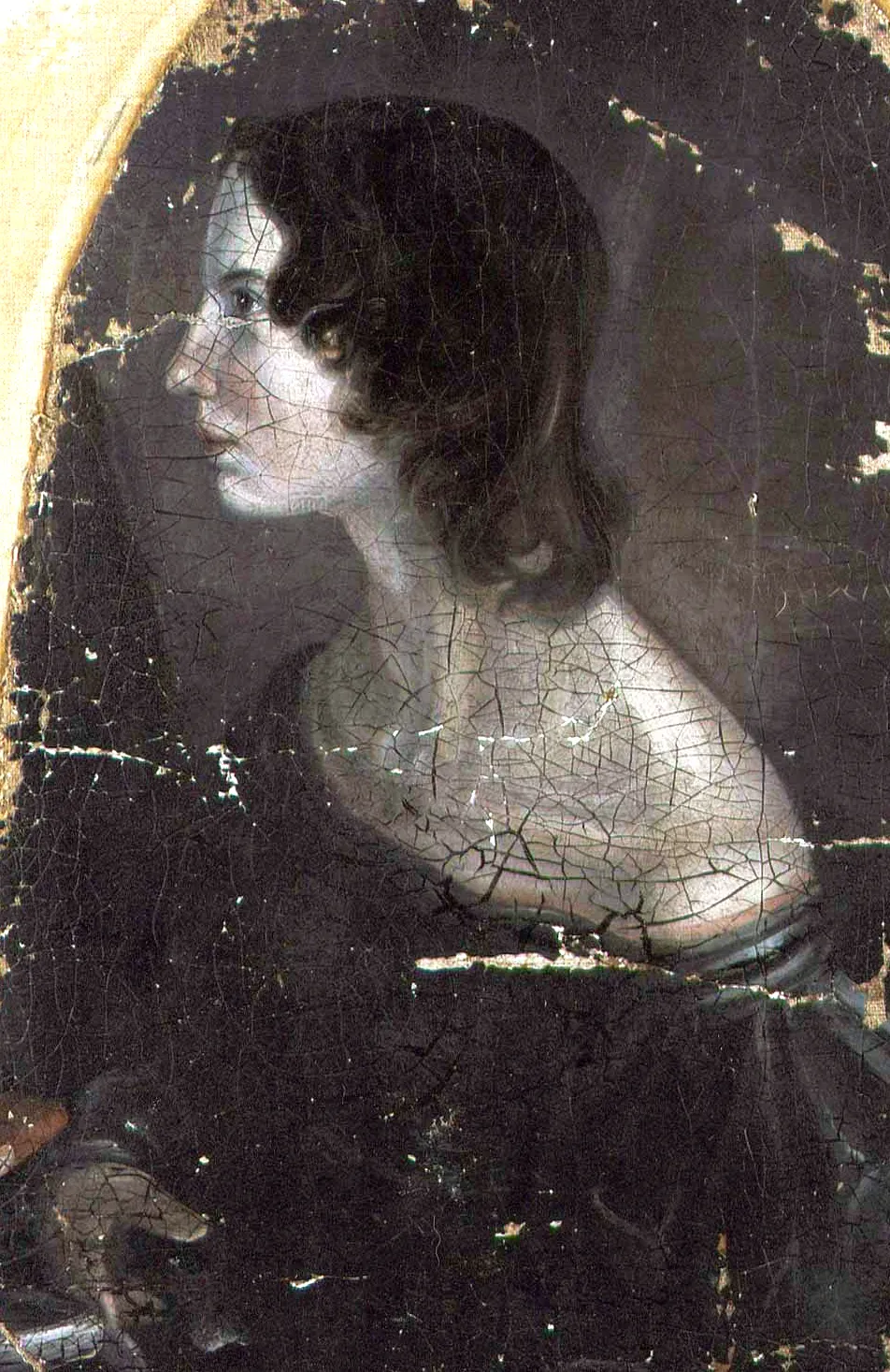
Emily Jane Brontë
To Imagination
When weary with the long day's care,
And earthly change from pain to pain,
And lost and ready to despair,
Thy kind voice calls me back again:
Oh, my true friend! I am not lone,
While thou canst speak with such a tone!
So hopeless is the world without;
The world within I doubly prize;
Thy world, where guile, and hate, and doubt,
And cold suspicion never rise;
Where thou, and I, and Liberty,
Have undisputed sovereignty.
What matters it, that, all around,
Danger, and guilt, and darkness lie,
If but within our bosom's bound
We hold a bright, untroubled sky,
Warm with ten thousand mingled rays
Of suns that know no winter days?
Reason, indeed, may oft complain
For Nature's sad reality,
And tell the suffering heart, how vain
Its cherished dreams must always be;
And Truth may rudely trample down
The flowers of Fancy, newly-blown:
But, thou art ever there, to bring
The hovering vision back, and breathe
New glories o'er the blighted spring,
And call a lovelier Life from Death,
And whisper, with a voice divine,
Of real worlds, as bright as thine.
I trust not to thy phantom bliss,
Yet, still, in evening's quiet hour,
With never-failing thankfulness,
I welcome thee, Benignant Power;
Sure solacer of human cares,
And sweeter hope, when hope despairs!
Read more →
263
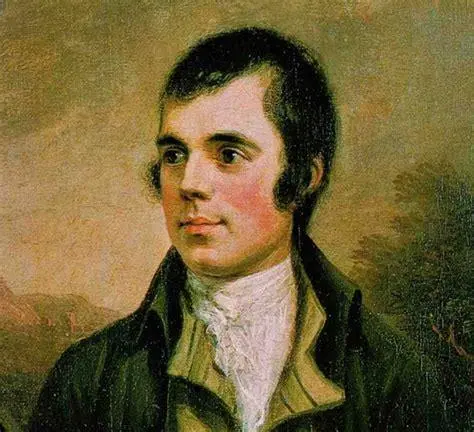
Robert Burns
Bonnie Lesley
O SAW ye bonnie Lesley
As she gaed o'er the Border?
She 's gane, like Alexander,
To spread her conquests farther.
To see her is to love her,
And love but her for ever;
For Nature made her what she is,
And ne'er made sic anither!
Thou art a queen, fair Lesley,
Thy subjects we, before thee:
Thou art divine, fair Lesley,
The hearts o' men adore thee.
The Deil he couldna scaith thee,
Or aught that wad belang thee;
He'd look into thy bonnie face
And say, 'I canna wrang thee!'
The Powers aboon will tent thee,
Misfortune sha'na steer thee:
Thou'rt like themsel' sae lovely,
That ill they'll ne'er let near thee.
Return again, fair Lesley,
Return to Caledonie!
That we may brag we hae a lass
There 's nane again sae bonnie!
Read more →
262

George Herbert
Clasping of Hands
LORD, Thou art mine, and I am Thine,
If mine I am; and Thine much more
Then I or ought or can be mine.
Yet to be Thine doth me restore,
So that again I now am mine,
And with advantage mine the more,
Since this being mine brings with it Thine,
And Thou with me dost Thee restore:
If I without Thee would be mine,
I neither should be mine nor Thine.
Lord, I am Thine, and Thou art mine;
So mine Thou art, that something more
I may presume Thee mine then Thine,
For Thou didst suffer to restore
Not Thee, but me, and to be mine:
And with advantage mine the more,
Since Thou in death wast none of Thine,
Yet then as mine didst me restore:
O, be mine still; still make me Thine;
Or rather make no Thine and Mine.
Read more →
260

Billy Collins
I Ask You
What scene would I want to be enveloped in
more than this one,
an ordinary night at the kitchen table,
floral wallpaper pressing in,
white cabinets full of glass,
the telephone silent,
a pen tilted back in my hand?
It gives me time to think
about all that is going on outside-leaves
gathering in corners,
lichen greening the high grey rocks,
while over the dunes the world sails on,
huge, ocean-going, history bubbling in its wake.
But beyond this table
there is nothing that I need,
not even a job that would allow me to row to work,
or a coffee-colored Aston Martin DB4
with cracked green leather seats.
No, it's all here,
the clear ovals of a glass of water,
a small crate of oranges, a book on Stalin,
not to mention the odd snarling fish
in a frame on the wall,
and the way these three candles-each
a different height-are
singing in perfect harmony.
So forgive me
if I lower my head now and listen
to the short bass candle as he takes a solo
while my heart
thrums under my shirt-frog
at the edge of a pond-and
my thoughts fly off to a province
made of one enormous sky
and about a million empty branches.
Read more →
259

Henry Lawson
The Women of the Town
It is up from out the alleys, from the alleys dark and vile—
It is up from out the alleys I have struggled for a while—
Just to breathe the breath of Heaven ere my devil drags me down,
And to sing a song of pity for the women of the town.
Johnnies in the private bar room, weak and silly, vain and blind—
Even they would shrink and shudder if they knew the hell behind,
And the meanest wouldn’t grumble when he’s bilked of half-a-crown
If he knew as much as I do of the women of the town.
For I see the end too plainly of the golden-headed star
Who is smiling like an angel in the gilded private bar—
Drifting to the third-rate houses, drifting, sinking lower down
Till she raves in some foul parlour with the women of the town.
To the dingy beer-stained parlour all day long the outcasts come—
Draggled, dirty, bleared, repulsive, shameless, aye, and rotten some—
They have sold their bodies and would sell their souls for drink to drown
Memories of wrong that haunt them—haunt the women of the town.
I have seen the haunting terror of the ‘horrors’ in their eyes,
Heard them cry to Christ to help them as the mansoul never cries,
While the smirking landlord listened with a grin or with a frown.
Oh, they suffer hell in drinking, do the women of the town.
I have known too well, God help me! to what depths a man can sink,
Sacrificing wife and children, fame and honour, all for drink.
Deeper, deeper sink the women, for the veriest drunken clown
Has his feet upon the shoulders of the women of the town.
There’s a heavy cloud that’s lying on my spirit like a pall—
’Tis the horror and injustice and the hopelessness of all—
There’s the love of one for ever that no sea of sin can drown,
And she loves a brute, God help her! does the woman of the town.
O my sisters, O my sisters, I am powerless to aid;
’Tis a world of prostitution, it is business, it is trade,
And they profit from the brewer and the smirking landlord down
To the bully and the bludger, on the women of the town.
Oh, the heart of one great poet* called to heaven in a line—
Crying, ‘Mary, pity women!’—You have whiter souls than mine.
And if in the grand Hereafter there is one shall wear a crown—
For the hell that men made for her—’tis the Woman of the Town.
Read more →
261

Henry Wadsworth Longfellow
Suspiria
Take them, O Death! and bear away
Whatever thou canst call thine own!
Thine image, stamped upon this clay,
Doth give thee that, but that alone!
Take them, O Grave! and let them lie
Folded upon thy narrow shelves,
As garments by the soul laid by,
And precious only to ourselves!
Take them, O great Eternity!
Our little life is but a gust
That bends the branches of thy tree,
And trails its blossoms in the dust!
Read more →
260

Emily Dickinson
Morns like these—we parted
Morns like these—we parted—
Noons like these—she rose—
Fluttering first—then firmer
To her fair repose.
Never did she lisp it—
It was not for me—
She—was mute from transport—
I—from agony—
Till—the evening nearing
One the curtains drew—
Quick! A Sharper rustling!
And this linnet flew!
Read more →
260
George Herbert
Grace
My stock lies dead and no increase
Doth my dull husbandry improve:
O let thy graces without cease
Drop from above!
If still the sun should hide his face,
Thy house would but a dungeon prove,
Thy works, night's captives: O let grace
Drop from above!
The dew doth ev'ry morning fall;
And shall the dew outstrip thy dove?
The dew, for which grass cannot call,
Drop from above.
Death is still working like a mole,
And digs my grave at each remove:
Let grace work too, and on my soul
Drop from above.
Sin is still hammering my heart
Unto a hardness, void of love:
Let suppling grace, to cross his art,
Drop from above.
O come! for thou dost know the way.
Or if to me thou wilt not move,
Remove me, where I need not say,
'Drop from above.'
Read more →
261
Henry Lawson
After All
The brooding ghosts of Australian night have gone from the bush and town;
My spirit revives in the morning breeze,
though it died when the sun went down;
The river is high and the stream is strong,
and the grass is green and tall,
And I fain would think that this world of ours is a good world after all.
The light of passion in dreamy eyes, and a page of truth well read,
The glorious thrill in a heart grown cold of the spirit I thought was dead,
A song that goes to a comrade's heart, and a tear of pride let fall --
And my soul is strong! and the world to me is a grand world after all!
Let our enemies go by their old dull tracks,
and theirs be the fault or shame
(The man is bitter against the world who has only himself to blame);
Let the darkest side of the past be dark, and only the good recall;
For I must believe that the world, my dear, is a kind world after all.
It well may be that I saw too plain, and it may be I was blind;
But I'll keep my face to the dawning light,
though the devil may stand behind!
Though the devil may stand behind my back, I'll not see his shadow fall,
But read the signs in the morning stars of a good world after all.
Rest, for your eyes are weary, girl -- you have driven the worst away --
The ghost of the man that I might have been is gone from my heart to-day;
We'll live for life and the best it brings till our twilight shadows fall;
My heart grows brave, and the world, my girl, is a good world after all.
Read more →
260
Emily Dickinson
Pain Has An Element
Pain has an element of blank;
It cannot recollect
When it began, or if there were
A day when it was not.
It has no future but itself,
Its infinite realms contain
Its past, enlightened to perceive
New periods of pain.
Read more →
261
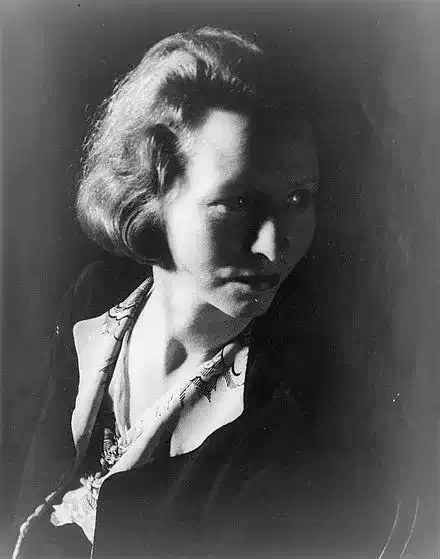
Edna St. Vincent Millay
Sonnets 04: Only Until This Cigarette Is Ended
Only until this cigarette is ended,
A little moment at the end of all,
While on the floor the quiet ashes fall,
And in the firelight to a lance extended,
Bizarrely with the jazzing music blended,
The broken shadow dances on the wall,
I will permit my memory to recall
The vision of you, by all my dreams attended.
And then adieu,—farewell!—the dream is done.
Yours is a face of which I can forget
The color and the features, every one,
The words not ever, and the smiles not yet;
But in your day this moment is the sun
Upon a hill, after the sun has set.
Read more →
261

Christina Rossetti
Twilight Calm
Oh, pleasant eventide!
Clouds on the western side
Grow grey and greyer, hiding the warm sun:
The bees and birds, their happy labours done,
Seek their close nests and bide.
Screened in the leafy wood
The stock-doves sit and brood:
The very squirrel leaps from bough to bough
But lazily; pauses; and settles now
Where once he stored his food.
One by one the flowers close,
Lily and dewy rose
Shutting their tender petals from the moon:
The grasshoppers are still; but not so soon
Are still the noisy crows.
The dormouse squats and eats
Choice little dainty bits
Beneath the spreading roots of a broad lime
Nibbling his fill he stops from time to time
And listens where he sits.
From far the lowings come
Of cattle driven home:
From farther still the wind brings fitfully
The vast continual murmur of the sea,
Now loud, now almost dumb.
The gnats whirl in the air,
The evening gnats; and there
The owl opes broad his eyes and wings to sail
For prey; the bat wakes; and the shell-less snail
Comes forth, clammy and bare.
Hark! that's the nightingale,
Telling the selfsame tale
Her song told when this ancient earth was young:
So echoes answered when her song was sung
In the first wooded vale.
We call it love and pain
The passion of her strain;
And yet we little understand or know:
Why should it not be rather joy that so
Throbs in each throbbing vein?
In separate herds the deer
Lie; here the bucks, and here
The does, and by its mother sleeps the fawn:
Through all the hours of night until the dawn
They sleep, forgetting fear.
The hare sleeps where it lies,
With wary half-closed eyes;
The cock has ceased to crow, the hen to cluck:
Only the fox is out, some heedless duck
Or chicken to surprise.
Remote, each single star
Comes out, till there they are
All shining brightly: how the dews fall damp!
While close at hand the glow-worm lights her lamp,
Or twinkles from afar.
But evening now is done
As much as if the sun
Day-giving had arisen in the East:
For night has come; and the great calm has ceased,
The quiet sands have run.
Read more →
260

Anonymous
Quia Amore Langueo
IN a valley of this restles mind
I sought in mountain and in mead,
Trusting a true love for to find.
Upon an hill then took I heed;
A voice I heard (and near I yede)
In great dolour complaining tho:
See, dear soul, how my sides bleed
Quia amore langueo.
Upon this hill I found a tree,
Under a tree a man sitting;
From head to foot wounded was he;
His hearte blood I saw bleeding:
A seemly man to be a king,
A gracious face to look unto.
I asked why he had paining;
[He said,] Quia amore langueo.
I am true love that false was never;
My sister, man's soul, I loved her thus.
Because we would in no wise dissever
I left my kingdom glorious.
I purveyed her a palace full precious;
She fled, I followed, I loved her so
That I suffered this pain piteous
Quia amore langueo.
My fair love and my spouse bright!
I saved her from beating, and she hath me bet;
I clothed her in grace and heavenly light;
This bloody shirt she hath on me set;
For longing of love yet would I not let;
Sweete strokes are these: lo!
I have loved her ever as I her het
Quia amore langueo.
I crowned her with bliss and she me with thorn;
I led her to chamber and she me to die;
I brought her to worship and she me to scorn;
I did her reverence and she me villany.
To love that loveth is no maistry;
Her hate made never my love her foe:
Ask me then no question why--
Quia amore langueo.
Look unto mine handes, man!
These gloves were given me when I her sought;
They be not white, but red and wan;
Embroidered with blood my spouse them brought.
They will not off; I loose hem nought;
I woo her with hem wherever she go.
These hands for her so friendly fought
Quia amore langueo.
Marvel not, man, though I sit still.
See, love hath shod me wonder strait:
Buckled my feet, as was her will,
With sharpe nails (well thou may'st wait!)
In my love was never desait;
All my membres I have opened her to;
My body I made her herte's bait
Quia amore langueo.
In my side I have made her nest;
Look in, how weet a wound is here!
This is her chamber, here shall she rest,
That she and I may sleep in fere.
Here may she wash, if any filth were;
Here is seat for all her woe;
Come when she will, she shall have cheer
Quia amore langueo.
I will abide till she be ready,
I will her sue if she say nay;
If she be retchless I will be greedy,
If she be dangerous I will her pray;
If she weep, then bide I ne may:
Mine arms ben spread to clip her me to.
Cry once, I come: now, soul, assay
Quia amore langueo.
Fair love, let us go play:
Apples ben ripe in my gardayne.
I shall thee clothe in a new array,
Thy meat shall be milk, honey and wine.
Fair love, let us go dine:
Thy sustenance is in my crippe, lo!
Tarry thou not, my fair spouse mine,
Quia amore langueo.
If thou be foul, I shall thee make clean;
If thou be sick, I shall thee heal;
If thou mourn ought, I shall thee mene;
Why wilt thou not, fair love, with me deal?
Foundest thou ever love so leal?
What wilt thou, soul, that I shall do?
I may not unkindly thee appeal
Quia amore langueo.
What shall I do now with my spouse
But abide her of my gentleness,
Till that she look out of her house
Of fleshly affection? love mine she is;
Her bed is made, her bolster is bliss,
Her chamber is chosen; is there none mo.
Look out on me at the window of kindeness
Quia amore langueo.
My love is in her chamber: hold your peace!
Make ye no noise, but let her sleep.
My babe I would not were in disease,
I may not hear my dear child weep.
With my pap I shall her keep;
Ne marvel ye not though I tend her to:
This wound in my side had ne'er be so deep
But Quia amore langueo.
Long thou for love never so high,
My love is more than thine may be.
Thou weepest, thou gladdest, I sit thee by:
Yet wouldst thou once, love, look unto me!
Should I always feede thee
With children meat? Nay, love, not so!
I will prove thy love with adversite
Quia amore langueo.
Wax not weary, mine own wife!
What mede is aye to live in comfort?
In tribulation I reign more rife
Ofter times than in disport.
In weal and in woe I am aye to support:
Mine own wife, go not me fro!
Thy mede is marked, when thou art mort:
Quia amore langueo.
Read more →
260
Christina Rossetti
One Day
I will tell you when they met:
In the limpid days of Spring;
Elder boughs were budding yet,
Oaken boughs looked wintry still,
But primrose and veined violet
In the mossful turf were set,
While meeting birds made haste to sing
And build with right good will.
I will tell you when they parted:
When plenteous Autumn sheaves were brown,
Then they parted heavy-hearted;
The full rejoicing sun looked down
As grand as in the days before;
Only they had lost a crown;
Only to them those days of yore
Could come back nevermore.
When shall they meet? I cannot tell,
Indeed, when they shall meet again,
Except some day in Paradise:
For this they wait, one waits in pain.
Beyond the sea of death love lies
For ever, yesterday, to-day;
Angels shall ask them, 'Is it well?'
And they shall answer, 'Yea.'
Read more →
259

William Butler Yeats
He Reproves The Curlew
O CURLEW, cry no more in the air,
Or only to the water in the West;
Because your crying brings to my mind
passion-dimmed eyes and long heavy hair
That was shaken out over my breast:
There is enough evil in the crying of wind.
Read more →
260

William Shakespeare
Sonnet 74: But be contented when that fell arrest
But be contented when that fell arrest
Without all bail shall carry me away;
My life hath in this line some interest,
Which for memorial still with thee shall stay.
When thou reviewest this, thou dost review
The very part was consecrate to thee,
The earth can have but earth, which is his due;
My spirit is thine the better part of me.
So then thou hast but lost the dregs of life,
The prey of worms, my body being dead,
The coward conquest of a wretch's knife,
Too base of thee to be rememberèd,
The worth of that is that which it contains,
And that is this, and this with thee remains.
Read more →
260
Emily Dickinson
Of nearness to her sundered Things
Of nearness to her sundered Things
The Soul has special times-
When Dimness-looks the OddityDistinctness-
easy-seems-
The Shapes we buried, dwell about,
Familiar, in the Rooms-
Untarnished by the Sepulchre,
The Mouldering Playmate comes-
In just the Jacket that he wore-
Long buttoned in the Mold
Since we-old mornings, Children-played
Divided-
by a world-
The Grave yields back her Robberies-
The Years, our pilfered Things-
Bright Knots of Apparitions
Salute us, with their wings-
As we-it were-that perished
Themself-
had just remained till we rejoin them-
And 'twas they, and not ourself
That mourned.
Read more →
261
Anonymous
Clerk Saunders
Whan bells war rung, an mass was sung,
A wat a' man to bed were gone,
Clark Sanders came to Margret's window,
With mony a sad sigh and groan.
"Are ye sleeping, Margret," he says,
"Or are ye waking, presentlie?
Give me my faith and trouthe again,
A wat, trew-love, I gied to thee."
"Your faith and trouth ye's never get,
Nor our trew love shall never twain,
Till ye come with me in my bower,
And kiss me both cheek and chin."
"My mouth it is full cold, Margret,
It has the smell now of the ground;
And if I kiss thy comely mouth,
Thy life-days will not be long.
"Cocks are crowing a merry mid-larf,
I wat the wild fule boded day;
Gie me my faith and trouthe again,
And let me fare me on my way."
"Thy faith and trouth thou shall na get,
Nor our trew love shall never twin,
Till ye tell me what comes of women
Awat that dy's in strong traveling."
"Their beds are made in the heavens high,
Down at the foot of our good Lord's knee,
Well set about wi gilly-flowers,
A wat sweet company for to see.
"O cocks are crowing a merry middlarf,
A wat the wilde foule boded day;
The salms of Heaven will be sung,
And ere now I'le be misst away."
Up she has tain a bright long wand,
And she has straked her trouth thereon;
She has given it him out at the shot-window,
Wi many a sad sigh and heavy groan.
"I thank you, Margret, I thank you, Margret,
And I thank you hartilie;
Gine ever the dead come for the quick,
Be sure, Margret, I'll come again for thee."
It's hose an shoon an gound alane
She clame the wall and followed him,
Untill she came to a green forest,
On this she lost the sight of him.
"Is their any room at your head, Sanders?
Is their any room at your feet?
Or any room at your twa sides?
Whare fain, fain woud I sleep."
"Their is na room at my head, Margret,
Their is na room at my feet;
There is room at my twa sides,
For ladys for to sleep.
"Cold meal is my covering owre,
But an my winding sheet;
My bed it is full low, I say,
Down among the hongerey worms I sleep.
"Cold meal is my covering owre,
But an my winding sheet;
The dew it falls na sooner down
Then ay it is full weet."
Read more →
261
Henry Van Dyke
Keats
The melancholy gift Aurora gained
From Jove, that her sad lover should not see
The face of death, no goddess asked for thee,
My Keats! But when the crimson blood-drop stained
Thy pillow, thou didst read the fate ordained, --
Brief life, wild love, a flight of poesy!
And then, -- a shadow fell on Italy:
Thy star went down before its brightness waned,
Yet thou hast won the gift Tithonus missed:
Never to feel the pain of growing old,
Nor lose the blissful sight of beauty's truth,
But with the ardent lips that music kissed
To breathe thy song, and, ere thy heart grew cold,
Become the Poet of Immortal Youth.
Read more →
261
Emily Dickinson
The Bible is an antique Volume
The Bible is an antique Volume-
Written by faded men
At the suggestion of Holy SpectresSubjects-
BethlehemEden-
the ancient HomesteadSatan-
the BrigadierJudas-
the Great DefaulterDavid-
the TroubadorSin-
a distinguished Precipice
Others must resist-
Boys that "believe" are very lonesome-
Other Boys are "lost"-
Had but the Tale a warbling Teller-
All the Boys would come-
Orpheus' Sermon captivated-
It did not condemn-
Read more →
259

D.H. Lawrence
In a Boat
See the stars, love,
In the water much clearer and brighter
Than those above us, and whiter,
Like nenuphars.
Star-shadows shine, love,
How many stars in your bowl?
How many shadows in your soul,
Only mine, love, mine?
When I move the oars, love,
See how the stars are tossed,
Distorted, the brightest lost.
—So that bright one of yours, love.
The poor waters spill
The stars, waters broken, forsaken.
—The heavens are not shaken, you say, love,
Its stars stand still.
There, did you see
That spark fly up at us; even
Stars are not safe in heaven.
—What of yours, then, love, yours?
What then, love, if soon
Your light be tossed over a wave?
Will you count the darkness a grave,
And swoon, love, swoon?
Read more →
259

Robert W. Service
The Rover
Oh, how good it is to be
Foot-loose and heart-free!
Just my dog and pipe and I, underneath the vast sky;
Trail to try and goal to win, white road and cool inn;
Fields to lure a lad afar, clear spring and still star;
Lilting feet that never tire, green dingle, fagot fire;
None to hurry, none to hold, heather hill and hushed fold;
Nature like a picture book, laughing leaf and bright brook;
Every day a jewel bright, set serenely in the night;
Every night a holy shrine, radiant for a day divine.
Weathered cheek and kindly eye, let the wanderer go by.
Woman-love and wistful heart, let the gipsy one depart.
For the farness and the road are his glory and his goad.
Oh, the lilt of youth and Spring! Eyes laugh and lips sing.
Yea, but it is good to be
Foot-loose and heart-free!
II
Yet how good it is to come
Home at last, home, home!
On the clover swings the bee, overhead's the hale tree;
Sky of turquoise gleams through, yonder glints the lake's blue.
In a hammock let's swing, weary of wandering;
Tired of wild, uncertain lands, strange faces, faint hands.
Has the wondrous world gone cold? Am I growing old, old?
Grey and weary . . . let me dream, glide on the tranquil stream.
Oh, what joyous days I've had, full, fervid, gay, glad!
Yet there comes a subtile change, let the stripling rove, range.
From sweet roving comes sweet rest, after all, home's best.
And if there's a little bit of woman-love with it,
I will count my life content, God-blest and well spent. . . .
Oh but it is good to be
Foot-loose and heart-free!
Yet how good it is to come
Home at last, home, home!
Read more →
258
George Herbert
A Dialogue-Anthem
Alas, poor Death! Where is thy glory?
Where is thy famous force, thy ancient sting?
Alas, poor mortal, void of story!
Go spell and read how I have killed thy King.
Poor Death! And who was hurt thereby?
Thy curse being laid on Him makes thee accurst.
Let losers talk, yet thou shalt die;
These arms shall crush thee.
Spare not, do thy worst.
I shall be one day better than before;
Thou so much worse, that thou shalt be no more.
Read more →
259
Anonymous
A Lyke-Wake Dirge
THIS ae nighte, this ae nighte,
--Every nighte and alle,
Fire and fleet and candle-lighte,
And Christe receive thy saule.
When thou from hence away art past,
--Every nighte and alle,
To Whinny-muir thou com'st at last;
And Christe receive thy saule.
If ever thou gavest hosen and shoon,
--Every nighte and alle,
Sit thee down and put them on;
And Christe receive thy saule.
If hosen and shoon thou ne'er gav'st nane
--Every nighte and alle,
The whinnes sall prick thee to the bare bane;
And Christe receive thy saule.
From Whinny-muir when thou may'st pass,
--Every nighte and alle,
To Brig o' Dread thou com'st at last;
And Christe receive thy saule.
From Brig o' Dread when thou may'st pass,
--Every nighte and alle,
To Purgatory fire thou com'st at last;
And Christe receive thy saule.
If ever thou gavest meat or drink,
--Every nighte and alle,
The fire sall never make thee shrink;
And Christe receive thy saule.
If meat or drink thou ne'er gav'st nane,
--Every nighte and alle,
The fire will burn thee to the bare bane;
And Christe receive thy saule.
This ae nighte, this ae nighte,
--Every nighte and alle,
Fire and fleet and candle-lighte,
And Christe receive thy saule.
Read more →
258