
Soul

Henry Wadsworth Longfellow
Tales Of A Wayside Inn : Part 3. Prelude
The evening came; the golden vane
A moment in the sunset glanced,
Then darkened, and then gleamed again,
As from the east the moon advanced
And touched it with a softer light;
While underneath, with flowing mane,
Upon the sign the Red Horse pranced,
And galloped forth into the night.
But brighter than the afternoon
That followed the dark day of rain,
And brighter than the golden vane
That glistened in the rising moon,
Within the ruddy fire-light gleamed;
And every separate window-pane,
Backed by the outer darkness, showed
A mirror, where the flamelets gleamed
And flickered to and fro, and seemed
A bonfire lighted in the road.
Amid the hospitable glow,
Like an old actor on the stage,
With the uncertain voice of age,
The singing chimney chanted low
The homely songs of long ago.
The voice that Ossian heard of yore,
When midnight winds were in his hall;
A ghostly and appealing call,
A sound of days that are no more!
And dark as Ossian sat the Jew,
And listened to the sound, and knew
The passing of the airy hosts,
The gray and misty cloud of ghosts
In their interminable flight;
And listening muttered in his beard,
With accent indistinct and weird,
'Who are ye, children of the Night?'
Beholding his mysterious face,
'Tell me,' the gay Sicilian said,
'Why was it that in breaking bread
At supper, you bent down your head
And, musing, paused a little space,
As one who says a silent grace?'
The Jew replied, with solemn air,
'I said the Manichaean's prayer.
It was his faith,--perhaps is mine,--
That life in all its forms is one,
And that its secret conduits run
Unseen, but in unbroken line,
From the great fountain-head divine
Through man and beast, through grain and grass.
Howe'er we struggle, strive, and cry,
From death there can be no escape,
And no escape from life, alas
Because we cannot die, but pass
From one into another shape:
It is but into life we die.
'Therefore the Manichaean said
This simple prayer on breaking bread,
Lest he with hasty hand or knife
Might wound the incarcerated life,
The soul in things that we call dead:
'I did not reap thee, did not bind thee,
I did not thrash thee, did not grind thee,
Nor did I in the oven bake thee!
It was not I, it was another
Did these things unto thee, O brother;
I only have thee, hold thee, break thee!''
'That birds have souls I can concede,'
The Poet cried, with glowing cheeks;
'The flocks that from their beds of reed
Uprising north or southward fly,
And flying write upon the sky
The biforked letter of the Greeks,
As hath been said by Rucellai;
All birds that sing or chirp or cry,
Even those migratory bands,
The minor poets of the air,
The plover, peep, and sanderling,
That hardly can be said to sing,
But pipe along the barren sands,--
All these have souls akin to ours;
So hath the lovely race of flowers:
Thus much I grant, but nothing more.
The rusty hinges of a door
Are not alive because they creak;
This chimney, with its dreary roar,
These rattling windows, do not speak!'
'To me they speak,' the Jew replied;
'And in the sounds that sink and soar,
I hear the voices of a tide
That breaks upon an unknown shore!'
Here the Sicilian interfered:
'That was your dream, then, as you dozed
A moment since, with eyes half-closed,
And murmured something in your beard.'
The Hebrew smiled, and answered, 'Nay;
Not that, but something very near;
Like, and yet not the same, may seem
The vision of my waking dream;
Before it wholly dies away,
Listen to me, and you shall hear.'
Read more →
256

D.H. Lawrence
Elegy
Since I lost you, my darling, the sky has come near,
And I am of it, the small sharp stars are quite near,
The white moon going among them like a white bird among snow-berries,
And the sound of her gently rustling in heaven like a bird I hear.
And I am willing to come to you now, my dear,
As a pigeon lets itself off from a cathedral dome
To be lost in the haze of the sky, I would like to come,
And be lost out of sight with you, and be gone like foam.
For I am tired, my dear, and if I could lift my feet,
My tenacious feet from off the dome of the earth
To fall like a breath within the breathing wind
Where you are lost, what rest, my love, what rest!
Read more →
257

Henry Lawson
When The `Army' Prays For Watty
When the kindly hours of darkness, save for light of moon and star,
Hide the picture on the signboard over Doughty's Horse Bazaar;
When the last rose-tint is fading on the distant mulga scrub,
Then the Army prays for Watty at the entrance of his pub.
Now, I often sit at Watty's when the night is very near,
With a head that's full of jingles and the fumes of bottled beer,
For I always have a fancy that, if I am over there
When the Army prays for Watty, I'm included in the prayer.
Watty lounges in his arm-chair, in its old accustomed place,
With a fatherly expression on his round and passive face;
And his arms are clasped before him in a calm, contented way,
And he nods his head and dozes when he hears the Army pray.
And I wonder does he ponder on the distant years and dim,
Or his chances over yonder, when the Army prays for him?
Has he not a fear connected with the warm place down below,
Where, according to good Christians, all the publicans should go?
But his features give no token of a feeling in his breast,
Save of peace that is unbroken and a conscience well at rest;
And we guzzle as we guzzled long before the Army came,
And the loafers wait for `shouters' and -- they get there just the same.
It would take a lot of praying -- lots of thumping on the drum --
To prepare our sinful, straying, erring souls for Kingdom Come;
But I love my fellow-sinners, and I hope, upon the whole,
That the Army gets a hearing when it prays for Watty's soul.
Read more →
254

Jonathan Swift
Stella’s Birth-Day.1719-20
All travellers at first incline
Where'er they see the fairest sign
And if they find the chambers neat,
And like the liquor and the meat,
Will call again, and recommend
The Angel Inn to every friend.
And though the painting grows decay'd,
The house will never lose its trade:
Nay, though the treach'rous tapster, Thomas,
Hangs a new Angel two doors from us,
As fine as daubers' hands can make it,
In hopes that strangers may mistake it,
We think it both a shame and sin
To quit the true old Angel Inn.
Now this is Stella's case in fact,
An angel's face a little crack'd.
(Could poets or could painters fix
How angels look at thirty-six
This drew us in at first to find
In such a form an angel's mind;
And every virtue now supplies
The fainting rays of Stella's eyes.
See, at her levee crowding swains,
Whom Stella freely entertains
With breeding, humour, wit, and sense,
And puts them to so small expense;
Their minds so plentifully fills,
And makes such reasonable bills,
So little gets for what she gives,
We really wonder how she lives!
And had her stock been less, no doubt
She must have long ago run out.
Then, who can think we'll quit the place,
When Doll hangs out a newer face?
Nail'd to her window full in sight
All Christian people to invite.
Or stop and light at Chloe's head,
With scraps and leavings to be fed?
Then, Chloe, still go on to prate
Of thirty-six and thirty-eight;
Pursue your trade of scandal-picking,
Your hints that Stella is no chicken;
Your innuendoes, when you tell us,
That Stella loves to talk with fellows:
But let me warn you to believe
A truth, for which your soul should grieve;
That should you live to see the day,
When Stella's locks must all be gray,
When age must print a furrow'd trace
On every feature of her face;
Though you, and all your senseless tribe,
Could Art, or Time, or Nature bribe,
To make you look like Beauty's Queen,
And hold for ever at fifteen;
No bloom of youth can ever blind
The cracks and wrinkles of your mind:
All men of sense will pass your door,
And crowd to Stella's at four-score.
Read more →
255
Henry Wadsworth Longfellow
Voices Of The Night : The Light Of Stars
The night is come, but not too soon;
And sinking silently,
All silently, the little moon
Drops down behind the sky.
There is no light in earth or heaven
But the cold light of stars;
And the first watch of night is given
To the red planet Mars.
Is it the tender star of love?
The star of love and dreams?
O no! from that blue tent above,
A hero's armor gleams.
And earnest thoughts within me rise,
When I behold afar,
Suspended in the evening skies,
The shield of that red star.
O star of strength! I see thee stand
And smile upon my pain;
Thou beckonest with thy mailed hand,
And I am strong again.
Within my breast there is no light
But the cold light of stars;
I give the first watch of the night
To the red planet Mars.
The star of the unconquered will,
He rises in my breast,
Serene, and resolute, and still,
And calm, and self-possessed.
And thou, too, whosoe'er thou art,
That readest this brief psalm,
As one by one thy hopes depart,
Be resolute and calm.
O fear not in a world like this,
And thou shalt know erelong,
Know how sublime a thing it is
To suffer and be strong.
Read more →
255
Henry Lawson
The Song of the Waste-Paper Basket
O BARD of fortune, you deem me nought
But a mark for your careless scorn.
For I am the echo-less grave of thought
That is strangled before it’s born.
You think perchance that I am a doom
Which only a dunce should dread—
Nor dream I’ve been the dishonoured tomb
Of the noblest and brightest dead.
The brightest fancies that e’er can fly
From the labouring minds of men
Are often written in lines awry,
And marred by a blundering pen;
And thus it comes that I gain a part
Of what to the world is loss—
Of genius lost for the want of art,
Of pearls that are set in dross.
And though I am of a lowly birth
My fame has been cheaply bought,
A power am I, for I rob the earth
Of the brightest gems of thought;
The Press gains much of my lawful share,
I am wronged without redress—
But I have revenge, for I think it fair
That I should plunder the Press.
You’d pause in wonder to read behind
The lines of some songs I see;
The soul of the singer I often find
In songs that are thrown to me.
But the song of the singer I bury deep
With the scrawl of the dunce and clown,
And both from the eyes of the world I keep,
And the hopes of both I drown.
Read more →
254

Robert W. Service
The Three Voices
The waves have a story to tell me,
As I lie on the lonely beach;
Chanting aloft in the pine-tops,
The wind has a lesson to teach;
But the stars sing an anthem of glory
I cannot put into speech.
The waves tell of ocean spaces,
Of hearts that are wild and brave,
Of populous city places,
Of desolate shores they lave,
Of men who sally in quest of gold
To sink in an ocean grave.
The wind is a mighty roamer;
He bids me keep me free,
Clean from the taint of the gold-lust,
Hardy and pure as he;
Cling with my love to nature,
As a child to the mother-knee.
But the stars throng out in their glory,
And they sing of the God in man;
They sing of the Mighty Master,
Of the loom his fingers span,
Where a star or a soul is a part of the whole,
And weft in the wondrous plan.
Here by the camp-fire's flicker,
Deep in my blanket curled,
I long for the peace of the pine-gloom,
When the scroll of the Lord is unfurled,
And the wind and the wave are silent,
And world is singing to world.
Read more →
255
Robert W. Service
My Picture
I made a picture; all my heart
I put in it, and all I knew
Of canvas-cunning and of Art,
Of tenderness and passion true.
A worshipped Master came to see;
Oh he was kind and gentle, too.
He studied it with sympathy,
And sensed what I had sought to do.
Said he: "Your paint is fresh and fair,
And I can praise it without cease;
And yet a touch just here and there
Would make of it a masterpiece."
He took the brush from out my hand;
He touched it here, he touched it there.
So well he seemed to understand,
And momently it grew more fair.
Oh there was nothing I could say,
And there was nothing I could do.
I thanked him, and he went his way,
And then - I slashed my picture through.
For though his brush with soft caress
Had made my daub a thing divine,
Oh God! I wept with bitterness,
. . . It wasn't mine, it wasn't mine.
Read more →
254
Henry Lawson
The Heart of the Swag
Oh, the track through the scrub groweth ever more dreary,
And lower and lower his grey head doth bow;
For the swagman is old and the swagman is weary—
He’s been tramping for over a century now.
He tramps in a worn-out old “side spring” and “blucher,”
His hat is a ruin, his coat is a rag,
And he carries forever, far into the future,
The key of his life in the core of his swag.
There are old-fashioned portraits of girls who are grannies,
There are tresses of dark hair whose owner’s are grey;
There are faded old letters from Marys and Annies,
And Toms, Dicks, and Harrys, dead many a day.
There are broken-heart secrets and bitter-heart reasons—
They are sewn in a canvas or calico bag,
And wrapped up in oilskin through dark rainy seasons,
And he carries them safe in the core of his swag.
There are letters that should have been burnt in the past time,
For he reads them alone, and a devil it brings;
There were farewells that should have been said for the last time,
For, forever and ever the love for her springs.
But he keeps them all precious, and keeps them in order,
And no matter to man how his footsteps may drag,
There’s a friend who will find, when he crosses the Border,
That the Heart of the Man’s in the Heart of his swag.
Read more →
254
Robert W. Service
Death In The Arctic
I
I took the clock down from the shelf;
"At eight," said I, "I shoot myself."
It lacked a minute of the hour,
And as I waited all a-cower,
A skinful of black, boding pain,
Bits of my life came back again. . . .
"Mother, there's nothing more to eat --
Why don't you go out on the street?
Always you sit and cry and cry;
Here at my play I wonder why.
Mother, when you dress up at night,
Red are your cheeks, your eyes are bright;
Twining a ribband in your hair,
Kissing good-bye you go down-stair.
Then I'm as lonely as can be.
Oh, how I wish you were with me!
Yet when you go out on the street,
Mother, there's always lots to eat. . . ."
II
For days the igloo has been dark;
But now the rag wick sends a spark
That glitters in the icy air,
And wakes frost sapphires everywhere;
Bright, bitter flames, that adder-like
Dart here and there, yet fear to strike
The gruesome gloom wherein they lie,
My comrades, oh, so keen to die!
And I, the last -- well, here I wait
The clock to strike the hour of eight. . . .
"Boy, it is bitter to be hurled
Nameless and naked on the world;
Frozen by night and starved by day,
Curses and kicks and clouts your pay.
But you must fight! Boy, look on me!
Anarch of all earth-misery;
Beggar and tramp and shameless sot;
Emblem of ill, in rags that rot.
Would you be foul and base as I?
Oh, it is better far to die!
Swear to me now you'll fight and fight,
Boy, or I'll kill you here to-night. . . ."
III
Curse this silence soft and black!
Sting, little light, the shadows back!
Dance, little flame, with freakish glee!
Twinkle with brilliant mockery!
Glitter on ice-robed roof and floor!
Jewel the bear-skin of the door!
Gleam in my beard, illume my breath,
Blanch the clock face that times my death!
But do not pierce that murk so deep,
Where in their sleeping-bags they sleep!
But do not linger where they lie,
They who had all the luck to die! . . .
"There is nothing more to say;
Let us part and go our way.
Since it seems we can't agree,
I will go across the sea.
Proud of heart and strong am I;
Not for woman will I sigh;
Hold my head up gay and glad:
You can find another lad. . . ."
IV
Above the igloo piteous flies
Our frayed flag to the frozen skies.
Oh, would you know how earth can be
A hell -- go north of Eighty-three!
Go, scan the snows day after day,
And hope for help, and pray and pray;
Have seal-hide and sea-lice to eat;
Melt water with your body's heat;
Sleep all the fell, black winter through
Beside the dear, dead men you knew.
(The walrus blubber flares and gleams --
O God! how long a minute seems!) . . .
"Mary, many a day has passed,
Since that morn of hot-head youth.
Come I back at last, at last,
Crushed with knowing of the truth;
How through bitter, barren years
You loved me, and me alone;
Waited, wearied, wept your tears --
Oh, could I atone, atone,
I would pay a million-fold!
Pay you for the love you gave.
Mary, look down as of old --
I am kneeling by your grave." . . .
V
Olaf, the Blonde, was first to go;
Bitten his eyes were by the snow;
Sightless and sealed his eyes of blue,
So that he died before I knew.
Here in those poor weak arms he died:
"Wolves will not get you, lad," I lied;
"For I will watch till Spring come round;
Slumber you shall beneath the ground."
Oh, how I lied! I scarce can wait:
Strike, little clock, the hour of eight! . . .
"Comrade, can you blame me quite?
The horror of the long, long night
Is on me, and I've borne with pain
So long, and hoped for help in vain.
So frail am I, and blind and dazed;
With scurvy sick, with silence crazed.
Beneath the Arctic's heel of hate,
Avid for Death I wait, I wait.
Oh if I falter, fail to fight,
Can you, dear comrade, blame me quite?" . . .
VI
Big Eric gave up months ago.
But seldom do men suffer so.
His feet sloughed off, his fingers died,
His hands shrunk up and mummified.
I had to feed him like a child;
Yet he was valiant, joked and smiled,
Talked of his wife and little one
(Thanks be to God that I have none),
Passed in the night without a moan,
Passed, and I'm here, alone, alone. . . .
"I've got to kill you, Dick.
Your life for mine, you know.
Better to do it quick,
A swift and sudden blow.
See! here's my hand to lick;
A hug before you go --
God! but it makes me sick:
Old dog, I love you so.
Forgive, forgive me, Dick --
A swift and sudden blow. . . ."
VII
Often I start up in the dark,
Thinking the sound of bells to hear.
Often I wake from sleep: "Oh, hark!
Help . . . it is coming . . . near and near."
Blindly I reel toward the door;
There the snow billows bleak and bare;
Blindly I seek my den once more,
Silence and darkness and despair.
Oh, it is all a dreadful dream!
Scurvy and cold and death and dearth;
I will awake to warmth and gleam,
Silvery seas and greening earth.
Life is a dream, its wakening,
Death, gentle shadow of God's wing. . . .
"Tick, little clock, my life away!
Even a second seems a day.
Even a minute seems a year,
Peopled with ghosts, that press and peer
Into my face so charnel white,
Lit by the devilish, dancing light.
Tick, little clock! mete out my fate:
Tortured and tense I wait, I wait. . . ."
VIII
Oh, I have sworn! the hour is nigh:
When it strikes eight, I die, I die.
Raise up the gun -- it stings my brow --
When it strikes eight . . . all ready . . . now -
* * * * *
Down from my hand the weapon dropped;
Wildly I stared. . . .
THE CLOCK HAD STOPPED.
IX
Phantoms and fears and ghosts have gone.
Peace seems to nestle in my brain.
Lo! the clock stopped, I'm living on;
Heart-sick I was, and less than sane.
Yet do I scorn the thing I planned,
Hearing a voice: "O coward, fight!"
Then the clock stopped . . . whose was the hand?
Maybe 'twas God's -- ah well, all's right.
Heap on me darkness, fold on fold!
Pain! wrench and rack me! What care I?
Leap on me, hunger, thirst and cold!
I will await my time to die;
Looking to Heaven that shines above;
Looking to God, and love . . . and love.
X
Hark! what is that? Bells, dogs again!
Is it a dream? I sob and cry.
See! the door opens, fur-clad men
Rush to my rescue; frail am I;
Feeble and dying, dazed and glad.
There is the pistol where it dropped.
"Boys, it was hard -- but I'm not mad. . . .
Look at the clock -- it stopped, it stopped.
Carry me out. The heavens smile.
See! there's an arch of gold above.
Now, let me rest a little while --
Looking to God and Love . . .and Love . . ."
Read more →
254

George Herbert
Sin's Round
Sorry I am, my God, sorry I am,
That my offences course it in a ring.
My thoughts are working like a busy flame,
Until their cockatrice they hatch and bring:
And when they once have perfected their draughts,
My words take fire from my inflamed thoughts.
My words take fire fro m my inflamed thoughts,
Which spit it forth like the Sicilian hill.
They vent their wares, and pass them with their faults,
And by their breathing ventilate the ill.
But words suffice not, where are lewd intentions:
My hands do join to finish the inventions.
My hands do join to finish the inventions:
And so my sins ascend three stories high,
As Babel grew, before there were dissentions.
Let ill deeds loiter not: for they supply
New thoughts of sinning:
wherefore, to my shame,
Sorry I am, my God, sorry I am.
Read more →
254
Robert W. Service
Freedom's Fool
To hell with Government I say;
I'm sick of all the piddling pack.
I'd like to scram, get clean away,
And never, nevermore come back.
With heart of hope I long to go
To some lost island of the sea,
And there get drunk with joy to know
No one on earth is over me.
There will be none to say me nay,
So from my lexicon I can
Obliterate the word "obey",
And mock the meddling laws of man.
The laws of Nature and of God
Are good enough for guys like me,
Who scorn to kiss the scarlet rod
Of office and authority.
No Stars and Stripes nor Union Jack,
Nor tri-colour nor crimson rag
Shall claim my love, I'll turn my back
On every land, on every flag.
My banner shall be stainless white,
An emblem of the Golden Rule,
Yet for its freedom I will fight
And die - like any other fool.
Oh Government's a bitter pill!
No force or fear shall forge my fate;
I'll bow to no communal will,
For I myself shall be the State.
Uncurst by man-curb and control,
my Isle shall be emparadised,
And I will re-possess my soul . . .
Mad Anarchist! - Well, wasn't Christ?
Read more →
254
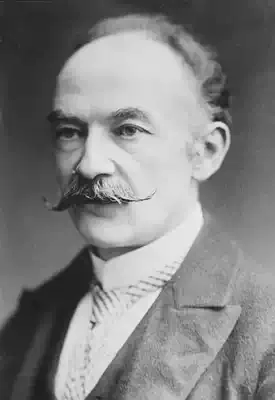
Thomas Hardy
[Greek Title]
Long have I framed weak phantasies of Thee,
O Willer masked and dumb!
Who makest Life become, -
As though by labouring all-unknowingly,
Like one whom reveries numb.
How much of consciousness informs Thy will
Thy biddings, as if blind,
Of death-inducing kind,
Nought shows to us ephemeral ones who fill
But moments in Thy mind.
Perhaps Thy ancient rote-restricted ways
Thy ripening rule transcends;
That listless effort tends
To grow percipient with advance of days,
And with percipience mends.
For, in unwonted purlieus, far and nigh,
At whiles or short or long,
May be discerned a wrong
Dying as of self-slaughter; whereat I
Would raise my voice in song.
Read more →
254

Anonymous
For Christmas Day in the Morning
The first Nowell the Angel did say
Was to three poor Shepherds in the fields as they lay;
In fields where they lay keeping their sheep
In a cold winter's night that was so deep.
Nowell, Nowell, Nowell, Nowell,
Born is the King of Israel.
They looked up and saw a Star
Shining in the East beyond them far,
And to the earth it gave great light,
And so it continued both day and night.
Nowell, Nowell, Nowell, Nowell,
Born is the King of Israel.
And by the light of that same Star,
Three Wise Men came from country far;
To seek for a King was their intent,
And to follow the Star wherever it went.
Nowell, Nowell, Nowell, Nowell,
Born is the King of Israel.
This Star drew nigh to the North West,
O'er Bethlehem it took its rest,
And there it did both stop and stay
Right over the place where Jesus lay.
Nowell, Nowell, Nowell, Nowell,
Born is the King of Israel.
Then did they know assuredly
Within the house the King did lie:
One entered in then for to see,
And found the Babe in poverty.
Nowell, Nowell, Nowell, Nowell,
Born is the King of Israel.
Then enter'd in those Wise Men three
Most reverently upon their knee,
And offer'd there in his presence,
Both gold, and myrrh, and frankincense.
Nowell, Nowell, Nowell, Nowell,
Born is the King of Israel.
Between an ox stall and an ass,
This Child truly there born he was;
For want of clothing they did him lay
All in the manger, among the hay.
Nowell, Nowell, Nowell, Nowell,
Born is the King of Israel.
Then let us all with one accord
Sing praises to our heavenly Lord,
That hath made heaven and earth of nought,
And with his blood mankind hath bought.
Nowell, Nowell, Nowell, Nowell,
Born is the King of Israel.
If we in our time shall do well,
We shall be free from death and Hell,
For God hath prepared for us all
A resting place in general.
Nowell, Nowell, Nowell, Nowell,
Born is the King of Israel.
Read more →
254
Henry Lawson
The Soul of a Poet
I HAVE written, long years I have written
For the sake of my people and right,
I was true when the iron had bitten
Deep into my soul in the night;
And I wrote not for praise nor for money,
I craved but the soul and the pen,
And I felt not the sting in the honey
Of praising the kindness of men.
You read and you saw without seeing,
My work seemed a trifle apart,
While the truth of things thrilled through my being,
And the wrong of things murdered my heart!
Cast out and despised and neglected,
And weak, and in fear, and in debt,
My songs, mutilated, rejected,
Shall ring through the Commonwealth yet!
And you, too, the pure and the guileless,
In the peace of your comfort and pride,
You have mocked at my bodily vileness,
You have tempted and cast me aside.
But wronged, and cast out, drink-sodden,
But shunned, and insane and unclean,
I have dared where few others have trodden,
I have seen what few others have seen.
I have seen your souls bare for a season,
I have heard as a deaf man can hear,
I have seen you deprived of your reason
And stricken with deadliest fear.
And when beautiful night hid the shocking
Black shame of the day that was past,
I felt the great universe rocking
With the truth that was coming at last!
Read more →
254

Emily Dickinson
How happy is the little Stone
How happy is the little Stone
That rambles in the Road alone,
And doesn't care about Careers
And Exigencies never fears-
Whose Coat of elemental Brown
A passing Universe put on,
And independent as the Sun
Associates or glows alone,
Fulfilling absolute Decree
In casual simplicity-
Read more →
254
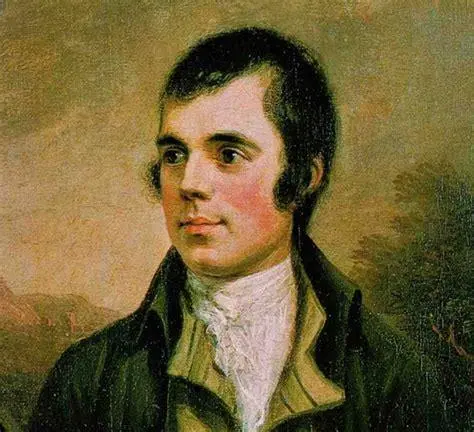
Robert Burns
Again Rejoicing Nature Sees
Again rejoicing nature sees
Her robe assume its vernal hues,
Her leafy looks wave in the breeze,
All freshly steep'd in morning dews.
And maun I still on Menie doat,
And bear the scorn that's in her ee?
For it's jet, jet black, an' it's like a hawk,
An' it winna let a body be!
In vain to me the cowslips blaw,
In vain to me the vi'lets spring;
In vain to me, in glen or shaw,
The mavis and the lintwhite sing.
And maun I still...
The merry ploughboy cheers his team,
Wi' joy the tentie seedsman stalks,
But life to me 's a weary dream,
A dream of ane that never wauks.
And maun I still...
The wanton coot the water skims,
Among the reeds the ducklings cry,
The stately swan majestic swims,
And every thing is blest but I.
And maun I still...
The shepherd steeks his faulding slap,
And owre the moorlands whistles shill,
Wi' wild, unequal, wand'ring step,
I meet him on the dewy hill.
And maun I still...
And when the lark, 'tween light and dark,
Blythe waukens by the daisy's side,
And mounts and sings on fluttering wings,
A woe-worn ghaist I hameward glide.
And maun I still...
Come, Winter, with thine angry howl,
And raging bend the naked tree;
Thy gloom will soothe my cheerless soul,
When Nature all is sad like me!
And maun I still...
Read more →
255

Christina Rossetti
A Royal Princess
I, a princess, king-descended, decked with jewels, gilded, drest,
Would rather be a peasant with her baby at her breast,
For all I shine so like the sun, and am purple like the west.
Two and two my guards behind, two and two before,
Two and two on either hand, they guard me evermore;
Me, poor dove, that must not coo—eagle that must not soar.
All my fountains cast up perfumes, all my gardens grow
Scented woods and foreign spices, with all flowers in blow
That are costly, out of season as the seasons go.
All my walls are lost in mirrors, whereupon I trace
Self to right hand, self to left hand, self in every place,
Self-same solitary figure, self-same seeking face.
Then I have an ivory chair high to sit upon,
Almost like my father's chair, which is an ivory throne;
There I sit uplift and upright, there I sit alone.
Alone by day, alone by night, alone days without end;
My father and my mother give me treasures, search and spend—
O my father! O my mother! have you ne'er a friend?
As I am a lofty princess, so my father is
A lofty king, accomplished in all kingly subtilties,
Holding in his strong right hand world-kingdoms' balances.
He has quarrelled with his neighbours, he has scourged his foes;
Vassal counts and princes follow where his pennon goes,
Long-descended valiant lords whom the vulture knows,
On whose track the vulture swoops, when they ride in state
To break the strength of armies and topple down the great:
Each of these my courteous servant, none of these my mate.
My father counting up his strength sets down with equal pen
So many head of cattle, head of horses, head of men;
These for slaughter, these for breeding, with the how and when.
Some to work on roads, canals; some to man his ships;
Some to smart in mines beneath sharp overseers' whips;
Some to trap fur-beasts in lands where utmost winter nips.
Once it came into my heart, and whelmed me like a flood,
That these too are men and women, human flesh and blood;
Men with hearts and men with souls, though trodden down like mud.
Our feasting was not glad that night, our music was not gay:
On my mother's graceful head I marked a thread of grey,
My father frowning at the fare seemed every dish to weigh.
I sat beside them sole princess in my exalted place,
My ladies and my gentlemen stood by me on the dais:
A mirror showed me I look old and haggard in the face;
It showed me that my ladies all are fair to gaze upon,
Plump, plenteous-haired, to every one love's secret lore is known,
They laugh by day, they sleep by night; ah me, what is a throne?
The singing men and women sang that night as usual,
The dancers danced in pairs and sets, but music had a fall,
A melancholy windy fall as at a funeral.
Amid the toss of torches to my chamber back we swept;
My ladies loosed my golden chain; meantime I could have wept
To think of some in galling chains whether they waked or slept.
I took my bath of scented milk, delicately waited on,
They burned sweet things for my delight, cedar and cinnamon,
They lit my shaded silver lamp, and left me there alone.
A day went by, a week went by. One day I heard it said:
'Men are clamouring, women, children, clamouring to be fed;
Men like famished dogs are howling in the streets for bread.'
So two whispered by my door, not thinking I could hear,
Vulgar naked truth, ungarnished for a royal ear;
Fit for cooping in the background, not to stalk so near.
But I strained my utmost sense to catch this truth, and mark:
'There are families out grazing like cattle in the park.'
'A pair of peasants must be saved even if we build an ark.'
A merry jest, a merry laugh, each strolled upon his way;
One was my page, a lad I reared and bore with day by day;
One was my youngest maid as sweet and white as cream in May.
Other footsteps followed softly with a weightier tramp;
Voices said: 'Picked soldiers have been summoned from the camp
To quell these base-born ruffians who make free to howl and stamp.'
'Howl and stamp?' one answered: 'They made free to hurl a stone
At the minister's state coach, well aimed and stoutly thrown.'
'There's work then for the soldiers, for this rank crop must be mown.'
'One I saw, a poor old fool with ashes on his head,
Whimpering because a girl had snatched his crust of bread:
Then he dropped; when some one raised him, it turned out he was dead.'
'After us the deluge,' was retorted with a laugh:
'If bread's the staff of life, they must walk without a staff.'
'While I've a loaf they're welcome to my blessing and the chaff.'
These passed. The king: stand up. Said my father with a smile:
'Daughter mine, your mother comes to sit with you awhile,
She's sad to-day, and who but you her sadness can beguile?'
He too left me. Shall I touch my harp now while I wait,—
(I hear them doubling guard below before our palace gate—)
Or shall I work the last gold stitch into my veil of state;
Or shall my woman stand and read some unimpassioned scene,
There's music of a lulling sort in words that pause between;
Or shall she merely fan me while I wait here for the queen?
Again I caught my father's voice in sharp word of command:
'Charge!' a clash of steel: 'Charge again, the rebels stand.
Smite and spare not, hand to hand; smite and spare not, hand to hand.'
There swelled a tumult at the gate, high voices waxing higher;
A flash of red reflected light lit the cathedral spire;
I heard a cry for faggots, then I heard a yell for fire.
'Sit and roast there with your meat, sit and bake there with your bread,
You who sat to see us starve,' one shrieking woman said:
'Sit on your throne and roast with your crown upon your head.'
Nay, this thing will I do, while my mother tarrieth,
I will take my fine spun gold, but not to sew therewith,
I will take my gold and gems, and rainbow fan and wreath;
With a ransom in my lap, a king's ransom in my hand,
I will go down to this people, will stand face to face, will stand
Where they curse king, queen, and princess of this cursed land.
They shall take all to buy them bread, take all I have to give;
I, if I perish, perish; they to-day shall eat and live;
I, if I perish, perish; that's the goal I half conceive:
Once to speak before the world, rend bare my heart and show
The lesson I have learned which is death, is life, to know.
I, if I perish, perish; in the name of God I go.
Read more →
252
Emily Dickinson
It's all I have to bring today
It's all I have to bring today-
This, and my heart beside-
This, and my heart, and all the fields-
And all the meadows wide-
Be sure you count-should I forget
Some one the sum could tell-
This, and my heart, and all the Bees
Which in the Clover dwell.
Read more →
253
George Herbert
Affliction (IV)
Broken in pieces all asunder,
Lord, hunt me not,
A thing forgot,
Once a poor creature, now a wonder,
A wonder tortur'd in the space
Betwixt this world and that of grace.
My thoughts are all a case of knives,
Wounding my heart
With scatter'd smart,
As wat'ring pots give flowers their lives.
Nothing their fury can control,
While they do wound and prick my soul.
All my attendants are at strife,
Quitting their place
Unto my face:
Nothing performs the task of life:
The elements are let loose to fight,
And while I live, try out their right.
Oh help, my God! let not their plot
Kill them and me,
And also thee,
Who art my life: dissolve the knot,
As the sun scatters by his light
All the rebellions of the night.
Then shall those powers, which work for grief,
Enter thy pay,
And day by day
Labour thy praise, and my relief;
With care and courage building me,
Till I reach heav'n, and much more, thee.
Read more →
253
Robert W. Service
Awake To Smile
When I blink sunshine in my eyes
And hail the amber morn,
Before the rosy dew-drop dries
With sparkle on the thorn;
When boughs with robin rapture ring,
And bees hum in the may,--
Then call me young, with heart of Spring,
Though I be grey.
But when no more I know the joy
And urgence of that hour,
As like a happy-hearted boy
I leap to land aflower;
When gusto I no longer feel,
To rouse with glad hooray,--
Then call me old and let me steal
From men away.
Let me awaken with a smile
And go to garden glee,
For there is such a little while
Of living left to me;
But when star-wist I frail away,
Lord, let the hope beguile
That to Ecstatic Light I may
Awake to smile.
Read more →
252

John Greenleaf Whittier
St. Martin's Summer
Though flowers have perished at the touch
Of Frost, the early comer,
I hail the season loved so much,
The good St. Martin's summer.
O gracious morn, with rose-red dawn,
And thin moon curving o'er it!
The old year's darling, latest born,
More loved than all before it!
How flamed the sunrise through the pines!
How stretched the birchen shadows,
Braiding in long, wind-wavered lines
The westward sloping meadows!
The sweet day, opening as a flower
Unfolds its petals tender,
Renews for us at noontide's hour
The summer's tempered splendor.
The birds are hushed; alone the wind,
That through the woodland searches,
The red-oak's lingering leaves can find,
And yellow plumes of larches.
But still the balsam-breathing pine
Invites no thought of sorrow,
No hint of loss from air like wine
The earth's content can borrow.
The summer and the winter here
Midway a truce are holding,
A soft, consenting atmosphere
Their tents of peace enfolding.
The silent woods, the lonely hills,
Rise solemn in their gladness;
The quiet that the valley fills
Is scarcely joy or sadness.
How strange! The autumn yesterday
In winter's grasp seemed dying;
On whirling winds from skies of gray
The early snow was flying.
And now, while over Nature's mood
There steals a soft relenting,
I will not mar the present good,
Forecasting or lamenting.
My autumn time and Nature's hold
A dreamy tryst together,
And, both grown old, about us fold
The golden-tissued weather.
I lean my heart against the day
To feel its bland caressing;
I will not let it pass away
Before it leaves its blessing.
God's angels come not as of old
The Syrian shepherds knew them;
In reddening dawns, in sunset gold,
And warm noon lights I view them.
Nor need there is, in times like this
When heaven to earth draws nearer,
Of wing or song as witnesses
To make their presence clearer.
O stream of life, whose swifter flow
Is of the end forewarning,
Methinks thy sundown afterglow
Seems less of night than morning!
Old cares grow light; aside I lay
The doubts and fears that troubled;
The quiet of the happy day
Within my soul is doubled.
That clouds must veil this fair sunshine
Not less a joy I find it;
Nor less yon warm horizon line
That winter lurks behind it.
The mystery of the untried days
I close my eyes from reading;
His will be done whose darkest ways
To light and life are leading!
Less drear the winter night shall be,
If memory cheer and hearten
Its heavy hours with thoughts of thee,
Sweet summer of St. Martin!
Read more →
253
Robert W. Service
Ant Hill
Black ants have made a musty mound
My purple pine tree under,
And I am often to be found,
Regarding it with wonder.
Yet as I watch, somehow it;s odd,
Above their busy striving
I feel like an ironic god
Surveying human striving.
Then one day came my serving maid,
And just in time I caught her,
For on each lusty arm she weighed
A pail of boiling water.
She said with glee: "When this I spill,
Of life they'll soon be lacking."
Said I: "If even one you kill,
You bitch! I'll send you packing."
Just think - ten thousand eager lives
In that toil-worn upcasting,
Their homes, their babies and their wives
Destroyed in one fell blasting!
Imagine that swift-scalding hell! . . .
And though, mayhap, it seems a
Fantastic, far-fetched parallel -
Remember . . . Hiroshima.
Read more →
252
D.H. Lawrence
Monologue of a Mother
This is the last of all, this is the last!
I must hold my hands, and turn my face to the fire,
I must watch my dead days fusing together in dross,
Shape after shape, and scene after scene from my past
Fusing to one dead mass in the sinking fire
Where the ash on the dying coals grows swiftly, like heavy moss.
Strange he is, my son, whom I have awaited like a loyer,
Strange to me like a captive in a foreign country, haunting
The confines and gazing out on the land where the wind is free;
White and gaunt, with wistful eyes that hover
Always on the distance, as if his soul were chaunting
The monotonous weird of departure away from me.
Like a strange white bird blown out of the frozen seas,
Like a bird from the far north blown with a broken wing
Into our sooty garden, he drags and beats
From place to place perpetually, seeking release
From me, from the hand of my love which creeps up, needing
His happiness, whilst he in displeasure retreats.
I must look away from him, for my faded eyes
Like a cringing dog at his heels offend him now,
Like a toothless hound pursuing him with my will,
Till he chafes at my crouching persistence, and a sharp spark flies
In my soul from under the sudden frown of his brow,
As he blenches and turns away, and my heart stands still.
This is the last, it will not be any more.
All my life I have borne the burden of myself,
All the long years of sitting in my husband’s house,
Never have I said to myself as he closed the door:
“Now I am caught!—You are hopelessly lost, O Self,
You are frightened with joy, my heart, like a frightened mouse.”
Three times have I offered myself, three times rejected.
It will not be any more. No more, my son, my son!
Never to know the glad freedom of obedience, since long ago
The angel of childhood kissed me and went. I expected
Another would take me,—and now, my son, O my son,
I must sit awhile and wait, and never know
The loss of myself, till death comes, who cannot fail.
Death, in whose service is nothing of gladness, takes me:
For the lips and the eyes of God are behind a veil.
And the thought of the lipless voice of the Father shakes me
With fear, and fills my eyes with the tears of desire,
And my heart rebels with anguish as night draws nigher.
Read more →
253