
Soul

Emily Dickinson
A Shade upon the mind there passes
A Shade upon the mind there passes
As when on Noon
A Cloud the mighty Sun encloses
Remembering
That some there be too numb to notice
Oh God
Why give if Thou must take away
The Loved?
Read more →
250

Robert W. Service
Apollo Belvedere
A-sitttin' on a cracker box an' spittin' in the stove,
I took a sudden notion that I'd kindo' like to rove;
An' so I bought a ticket, jest as easy as could be,
From Pumpkinville in Idaho to Rome in Italy;
An' found myself in seven days of mostly atmosphere
A-starin' at a statoo called Appoller Belvydeer.
Now I'm a rum-soaked sinner, an' religion ain't my plan,
Yet, I was flabbergasted by that gol-darned Vattyican;
An' when I seed Saint Peter's dome, all I could do was swear,
The which I reckon after all may be a form o' prayer;
Abut as I sought amid them sights bewildered to steer,
The king-pin was the one they called Appoller Belvydeer.
Say, I ain't got no culture an' I don't know any art,
But that there statoo got me, standin' in its room apart,
In an alcove draped wi' velvet, lookin' everlastin' bright,
Like the vision o' a poet, full o' beauty, grace an' light;
An' though I know them kind o' words sound sissy in the ear,
It's jest how I was struck by that Appoller Belvydeer.
I've gazed at them depictions in the glossy magazines,
Uv modern Art an' darned if I can make out what it means:
Will any jerk to-day outstand a thousand years of test?
Why, them old Pagans make us look like pikers at the best.
An' maybe, too, their minds was jest as luminous and clear
As that immortal statoo o' Appoller Belvydeer.
An' all yer march o' progress an' machinery as' such,
I wonder if, when all is said, they add up to so much?
An' were not these old fellers in their sweet an' simple way
Serener souled an' happier than we poor mugs to-day?
They have us licked, I thought, an' stood wi' mingled gloom an' cheer
Before that starry statoo o' Appoller Belvydeer.
So I'll go back to Pumpkinville an' to my humble home,
An' dream o' all the sights I saw in everlastin' Rome;
But I will never speak a word o' that enchanted land
That taks you bang into the Past - folks wouldn't understand;
An' midmost in my memories I'll cherish close an' dear
That bit o' frozen music, that Appoller Belvydeer.
Read more →
249

George Herbert
The Call
Come, my Way, my Truth, my Life :
Such a Way, as gives us breath :
Such a Truth, as ends all strife :
And such a Life, as killeth death.
Come, my Light, my Feast, my Strength :
Such a Light, as shows a feast :
Such a Feast, as mends in length :
Such a Strength, as makes his guest.
Come, my Joy, my Love, my Heart :
Such a Joy, as none can move :
Such a Love, as none can part :
Such a Heart, as joyes in love.
Read more →
250

D.H. Lawrence
The Virgin Mother
My little love, my darling,
You were a doorway to me;
You let me out of the confines
Into this strange countrie,
Where people are crowded like thistles,
Yet are shapely and comely to see.
My little love, my dearest
Twice have you issued me,
Once from your womb, sweet mother,
Once from myself, to be
Free of all hearts, my darling,
Of each heart’s home-life free.
And so, my love, my mother,
I shall always be true to you;
Twice I am born, my dearest,
To life, and to death, in you;
And this is the life hereafter
Wherein I am true.
I kiss you good-bye, my darling,
Our ways are different now;
You are a seed in the night-time,
I am a man, to plough
The difficult glebe of the future
For God to endow.
I kiss you good-bye, my dearest,
It is finished between us here.
Oh, if I were calm as you are,
Sweet and still on your bier!
O God, if I had not to leave you
Alone, my dear!
Let the last word be uttered,
Oh grant the farewell is said!
Spare me the strength to leave you
Now you are dead.
I must go, but my soul lies helpless
Beside your bed.
Read more →
250
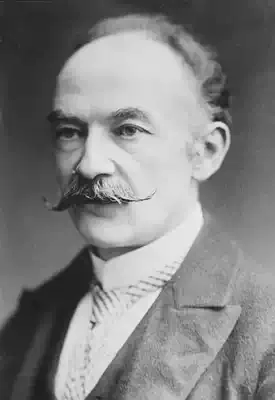
Thomas Hardy
Let Me Enjoy
Minor Key
I
Let me enjoy the earth no less
Because the all-enacting Might
That fashioned forth its loveliness
Had other aims than my delight.
II
About my path there flits a Fair,
Who throws me not a word or sign;
I'll charm me with her ignoring air,
And laud the lips not meant for mine.
III
From manuscripts of moving song
Inspired by scenes and dreams unknown
I'll pour out raptures that belong
To others, as they were my own.
IV
And some day hence, towards Paradise
And all its blest -- if such should be --
I will lift glad, afar-off eyes
Though it contain no place for me.
Read more →
250
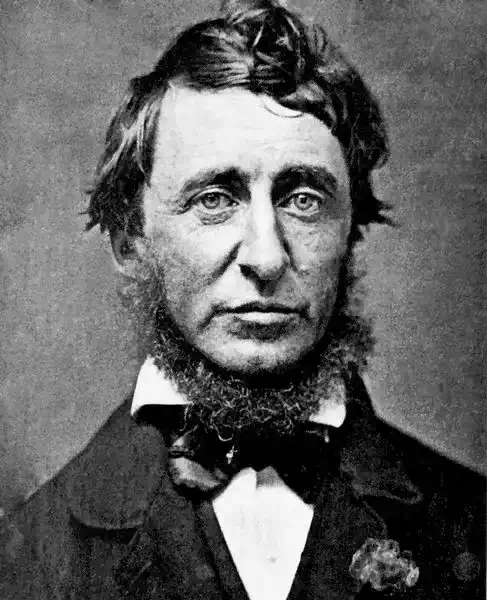
Henry David Thoreau
Sic Vita
I am a parcel of vain strivings tied
By a chance bond together,
Dangling this way and that, their links
Were made so loose and wide,
Methinks,
For milder weather.
A bunch of violets without their roots,
And sorrel intermixed,
Encircled by a wisp of straw
Once coiled about their shoots,
The law
By which I'm fixed.
A nosegay which Time clutched from out
Those fair Elysian fields,
With weeds and broken stems, in haste,
Doth make the rabble rout
That waste
The day he yields.
And here I bloom for a short hour unseen,
Drinking my juices up,
With no root in the land
To keep my branches green,
But stand
In a bare cup.
Some tender buds were left upon my stem
In mimicry of life,
But ah! the children will not know,
Till time has withered them,
The woe
With which they're rife.
But now I see I was not plucked for naught,
And after in life's vase
Of glass set while I might survive,
But by a kind hand brought
Alive
To a strange place.
That stock thus thinned will soon redeem its hours,
And by another year,
Such as God knows, with freer air,
More fruits and fairer flowers
Will bear,
While I droop here.
Read more →
251
Emily Dickinson
The Sun kept setting—setting—still
The Sun kept setting—setting—still
No Hue of Afternoon—
Upon the Village I perceived
From House to House 'twas Noon—
The Dusk kept dropping—dropping—still
No Dew upon the Grass—
But only on my Forehead stopped—
And wandered in my Face—
My Feet kept drowsing—drowsing—still
My fingers were awake—
Yet why so little sound—Myself
Unto my Seeming—make?
How well I knew the Light before—
I could see it now—
'Tis Dying—I am doing—but
I'm not afraid to know—
Read more →
250
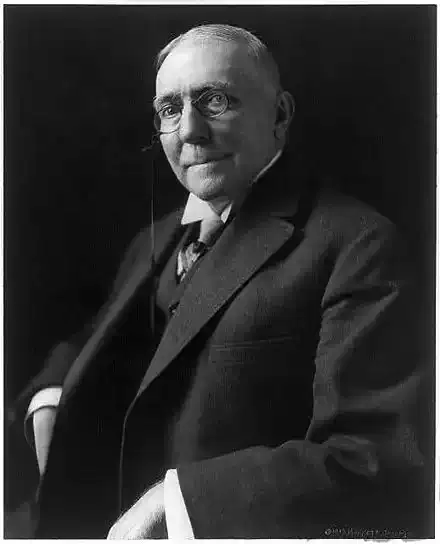
James Whitcomb Riley
The Chant Of The Cross-Bearing Child
I bear dis cross dis many a mile.
O de cross-bearin' chile--
De cross-bearin' chile!
I bear dis cross 'long many a road
Wha' de pink ain't bloom' an' de grass done mowed.
O de cross-bearin' chile--
De cross-bearin' chile!
Hits on my conscience all dese days
Fo' ter bear de cross ut de good Lord lays
On my po' soul, an' ter lif my praise.
O de cross-bearin' chile--
De cross-bearin' chile!
I 's nigh-'bout weak ez I mos' kin be,
Yit de Marstah call an' He say,--'You 's free
Fo' ter 'cept dis cross, an' ter cringe yo' knee
To no n'er man in de worl' but me!'
O de cross-bearin' chile--
De cross-bearin' chile!
Says you guess wrong, ef I let you guess--
Says you 'spec' mo', an'-a you git less:--
Says you go eas', says you go wes',
An' whense you fine de road ut you like bes'
You betteh take ch'ice er any er de res'!
O de cross-bearin' chile--
De cross-bearin' chile!
He build my feet, an' He fix de signs
Dat de shoe hit pinch an' de shoe hit bines
Ef I on'y w'ah eights an-a wanter w'ah nines;
I hone fo' de rain, an' de sun hit shines,
An' whilse I hunt de sun, hits de rain I fines.-O-
a trim my lamp, an-a gyrd my lines!
O de cross-bearin' chile--
De cross-bearin' chile!
I wade de wet, an' I walk de dry:
I done tromp long, an' I done clim high;
An' I pilgrim on ter de jasper sky,
An' I taken de resk fo' ter cas' my eye
Wha' de Gate swing wide an' de Lord draw nigh,
An' de Trump hit blow, an' I hear de cry,-'
You lay dat cross down by an' by!--
O de Cross-bearin' Chile--
Do Cross-bearin' Chile!'
Read more →
247

Anonymous
Thomas the Rhymer
True Thomas lay on Huntlie bank;
A ferlie he spied wi' his e'e;
And there he saw a ladye bright
Come riding down by the Eildon Tree.
Her skirt was o' the grass-green silk,
Her mantle o' the velvet fyne;
At ilka tett o' her horse's mane,
Hung fifty siller bells and nine.
True Thomas he pu'd aff his cap,
And louted low down on his knee
'Hail to thee Mary, Queen of Heaven!
For thy peer on earth could never be.'
'O no, O no, Thomas' she said,
'That name does not belang to me;
I'm but the Queen o' fair Elfland,
That am hither come to visit thee.
'Harp and carp, Thomas,' she said;
'Harp and carp along wi' me;
And if ye dare to kiss my lips,
Sure of your bodie I will be.'
'Betide me weal; betide me woe,
That weird shall never daunten me.'
Syne he has kiss'd her rosy lips,
All underneath the Eildon Tree.
'Now ye maun go wi' me,' she said,
'True Thomas, ye maun go wi' me;
And ye maun serve me seven years,
Thro' weal or woe as may chance to be.'
She 's mounted on her milk-white steed,
She 's ta'en true Thomas up behind;
And aye, whene'er her bridle rang,
The steed gaed swifter than the wind.
O they rade on, and farther on,
The steed gaed swifter than the wind;
Until they reach'd a desert wide,
And living land was left behind.
'Light down, light down now, true Thomas,
And lean your head upon my knee;
Abide ye there a little space,
And I will show you ferlies three.
'O see ye not yon narrow road,
So thick beset wi' thorns and briers?
That is the Path of Righteousness,
Though after it but few inquires.
'And see ye not yon braid, braid road,
That lies across the lily leven?
That is the Path of Wickedness,
Though some call it the Road to Heaven.
'And see ye not yon bonny road
That winds about the fernie brae?
That is the Road to fair Elfland,
Where thou and I this night maun gae.
'But, Thomas, ye sall haud your tongue,
Whatever ye may hear or see;
For speak ye word in Elfyn-land,
Ye'll ne'er win back to your ain countrie.'
O they rade on, and farther on,
And they waded rivers abune the knee;
And they saw neither sun nor moon,
But they heard the roaring of the sea.
It was mirk, mirk night, there was nae starlight,
They waded thro' red blude to the knee;
For a' the blude that 's shed on the earth
Rins through the springs o' that countrie.
Syne they came to a garden green,
And she pu'd an apple frae a tree:
'Take this for thy wages, true Thomas;
It will give thee the tongue that can never lee.'
'My tongue is my ain,' true Thomas he said;
'A gudely gift ye wad gie to me!
I neither dought to buy or sell
At fair or tryst where I might be.
'I dought neither speak to prince or peer,
Nor ask of grace from fair ladye!'—
'Now haud thy peace, Thomas,' she said,
'For as I say, so must it be.'
He has gotten a coat of the even cloth,
And a pair o' shoon of the velvet green;
And till seven years were gane and past,
True Thomas on earth was never seen.
Read more →
248
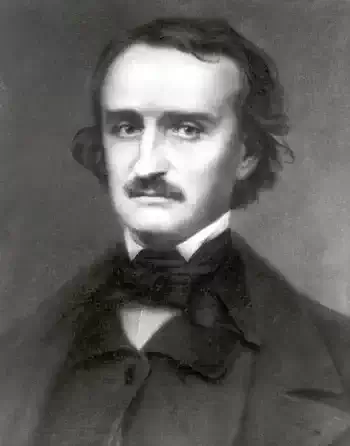
Edgar Allan Poe
To --
The bowers whereat, in dreams, I see
The wantonest singing birds,
Are lips- and all thy melody
Of lip-begotten words
Thine eyes, in Heaven of heart enshrined,
Then desolately fall,
O God! on my funereal mind
Like starlight on a pall
Thy heart- thy heart!- I wake and sigh,
And sleep to dream till day
Of the truth that gold can never buy
Of
the baubles that it may.
Read more →
247
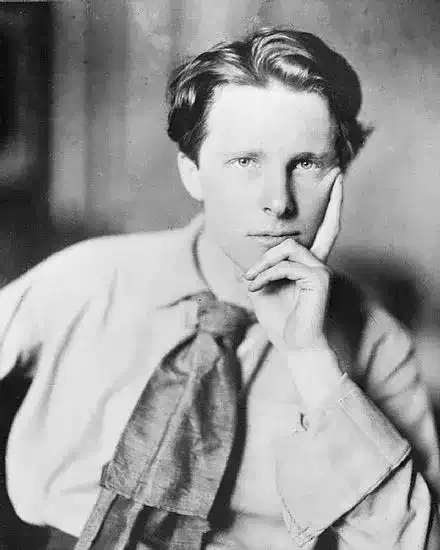
Rupert Brooke
The Jolly Company
The stars, a jolly company,
I envied, straying late and lonely;
And cried upon their revelry:
"O white companionship! You only
In love, in faith unbroken dwell,
Friends radiant and inseparable!"
Light-heart and glad they seemed to me
And merry comrades (EVEN SO
GOD OUT OF HEAVEN MAY LAUGH TO SEE
THE HAPPY CROWDS; AND NEVER KNOW
THAT IN HIS LONE OBSCURE DISTRESS
EACH WALKETH IN A WILDERNESS).
But I, remembering, pitied well
And loved them, who, with lonely light,
In empty infinite spaces dwell,
Disconsolate. For, all the night,
I heard the thin gnat-voices cry,
Star to faint star, across the sky.
Read more →
248
Robert W. Service
Worms
Worms finer for fishing you couldn't be wishing;
I delved them dismayed from the velvety sod;
The rich loam upturning I gathered them squirming,
big, fat, gleamy earthworms, all ripe for my rod.
Thinks I, without waiting, my hook I'll be baiting,
And flip me a fish from the foam of the pool;
Then Mother beholding, came crying and scolding:
"You're late, ye young devil! Be off to the school."
So grabbing me bait-tin I dropped them fat worms in,
With globs of green turf for their comfort and cheer;
And there, clean forgotten, no doubt dead and rotten;
I left them to languish for nigh on a year.
One day to be cleaning the byre I was meaning,
When seeing that old rusty can on the shelf,
Says I: "To my thinking, them worms must be stinking:
Begorrah! I'd better find out for myself."
So I opened the tin, held my nose and looked in;
And what did I see? Why, most nothing at all.
Just darkness and dank. and . . . a something that stank,
Tucked down in a corner, a greasy grey ball.
My worms -no, not dead, but thin as a thread,
Each seemed to reproach me, protesting its worth:
So softly I took them and tenderly shook them
Back into the bosom of mothering earth.
I'm now in the City; 'tis grand, but I pity
The weariful wretches that crawl in its grime;
The dregs and the scum and the spawn of the slum,
And the poor little children that's cradled in crime.
Sure I see them in terms of my pitiful worms,
surviving despite desperation and doom,
And I wish I was God, with a smile and a nod
To set them all down in a valley of bloom,
Saying: "Let these rejoice with a wonderful voice
For mothering earth and for fathering sea,
And healing of sun, for each weariful one
Of these poor human worms is a wee bit of me. . . .
Let your be the blame and yours be the shame:
What ye do unto them ye do also to ME."
Read more →
248
Thomas Hardy
Between Us Now
Between us now and here -
Two thrown together
Who are not wont to wear
Life's flushest feather -
Who see the scenes slide past,
The daytimes dimming fast,
Let there be truth at last,
Even if despair.
So thoroughly and long
Have you now known me,
So real in faith and strong
Have I now shown me,
That nothing needs disguise
Further in any wise,
Or asks or justifies
A guarded tongue.
Face unto face, then, say,
Eyes mine own meeting,
Is your heart far away,
Or with mine beating?
When false things are brought low,
And swift things have grown slow,
Feigning like froth shall go,
Faith be for aye.
Read more →
247
Emily Dickinson
Elysium is as far as to
Elysium is as far as to
The very nearest Room
If in that Room a Friend await
Felicity or Doom--
What fortitude the Soul contains
That it can so endure
The accent of a coming Foot--
The opening of a Door--
Read more →
246
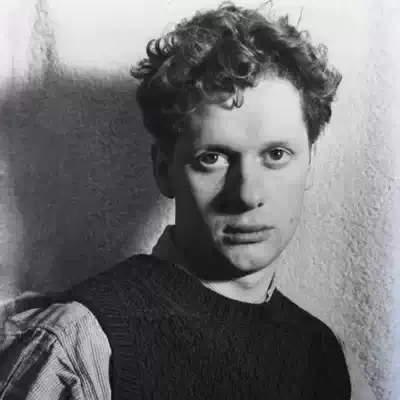
Dylan Thomas
After the Funeral (In memory of Ann Jones)
After the funeral, mule praises, brays,
Windshake of sailshaped ears, muffle-toed tap
Tap happily of one peg in the thick
Grave's foot, blinds down the lids, the teeth in black,
The spittled eyes, the salt ponds in the sleeves,
Morning smack of the spade that wakes up sleep,
Shakes a desolate boy who slits his throat
In the dark of the coffin and sheds dry leaves,
That breaks one bone to light with a judgment clout'
After the feast of tear-stuffed time and thistles
In a room with a stuffed fox and a stale fern,
I stand, for this memorial's sake, alone
In the snivelling hours with dead, humped Ann
Whose hodded, fountain heart once fell in puddles
Round the parched worlds of Wales and drowned each sun
(Though this for her is a monstrous image blindly
Magnified out of praise; her death was a still drop;
She would not have me sinking in the holy
Flood of her heart's fame; she would lie dumb and deep
And need no druid of her broken body).
But I, Ann's bard on a raised hearth, call all
The seas to service that her wood-tongud virtue
Babble like a bellbuoy over the hymning heads,
Bow down the walls of the ferned and foxy woods
That her love sing and swing through a brown chapel,
Blees her bent spirit with four, crossing birds.
Her flesh was meek as milk, but this skyward statue
With the wild breast and blessed and giant skull
Is carved from her in a room with a wet window
In a fiercely mourning house in a crooked year.
I know her scrubbed and sour humble hands
Lie with religion in their cramp, her threadbare
Whisper in a damp word, her wits drilled hollow,
Her fist of a face died clenched on a round pain;
And sculptured Ann is seventy years of stone.
These cloud-sopped, marble hands, this monumental
Argument of the hewn voice, gesture and psalm
Storm me forever over her grave until
The stuffed lung of the fox twitch and cry Love
And the strutting fern lay seeds on the black sill.
Read more →
248
Robert W. Service
Don't Cheer
Don't cheer, damn you! Don't cheer!
Silence! Your bitterest tear
Is fulsomely sweet to-day. . . .
Down on your knees and pray.
See, they sing as they go,
Marching row upon row.
Who will be spared to return,
Sombre and starkly stern?
Chaps whom we knew - s0 strange,
Distant and dark with change;
Silent as those they slew,
Something in them dead too.
Who will return this way,
To sing as they sing to-day.
Send to the glut of the guns
Bravest and best of you sons.
Hurl a million to slaughter,
Blood flowing like Thames water;
Pile up pyramid high
Your dead to the anguished sky;
A monument down all time
Of hate and horror and crime.
Weep, rage, pity, curse, fear -
Anything, but . . . don't cheer.
Sow to the ploughing guns
Seed of your splendid sons.
Let your heroic slain
Richly manure the plain.
What will the harvest be?
Unborn of Unborn will see. . . .
Dark is the sky and drear. . . .
For the pity of God don't cheer.
Dark and dread is their way.
Who sing as they march to-day. . . .
Humble your hearts and pray.
Read more →
247

Henry Lawson
Mount Bukaroo
Only one old post is standing -Solid
yet, but only one --
Where the milking, and the branding,
And the slaughtering were done.
Later years have brought dejection,
Care, and sorrow; but we knew
Happy days on that selection
Underneath old Bukaroo.
Then the light of day commencing
Found us at the gully's head,
Splitting timber for the fencing,
Stripping bark to roof the shed.
Hands and hearts the labour strengthened;
Weariness we never knew,
Even when the shadows lengthened
Round the base of Bukaroo.
There for days below the paddock
How the wilderness would yield
To the spade, and pick, and mattock,
While we toiled to win the field.
Bronzed hands we used to sully
Till they were of darkest hue,
`Burning off' down in the gully
At the back of Bukaroo.
When we came the baby brother
Left in haste his broken toys,
Shouted to the busy mother:
`Here is dadda and the boys!'
Strange it seems that she was able
For the work that she would do;
How she'd bustle round the table
In the hut 'neath Bukaroo!
When the cows were safely yarded,
And the calves were in the pen,
All the cares of day discarded,
Closed we round the hut-fire then.
Rang the roof with boyish laughter
While the flames o'er-topped the flue;
Happy days remembered after -Far
away from Bukaroo.
But the years were full of changes,
And a sorrow found us there;
For our home amid the ranges
Was not safe from searching Care.
On he came, a silent creeper;
And another mountain threw
O'er our lives a shadow deeper
Than the shade of Bukaroo.
All the farm is disappearing;
For the home has vanished now,
Mountain scrub has choked the clearing,
Hid the furrows of the plough.
Nearer still the scrub is creeping
Where the little garden grew;
And the old folks now are sleeping
At the foot of Bukaroo.
Read more →
247
D.H. Lawrence
The Mystic Blue
Out of the darkness, fretted sometimes in its sleeping,
Jets of sparks in fountains of blue come leaping
To sight, revealing a secret, numberless secrets keeping.
Sometimes the darkness trapped within a wheel
Runs into speed like a dream, the blue of the steel
Showing the rocking darkness now a-reel.
And out of the invisible, streams of bright blue drops
Rain from the showery heavens, and bright blue crops
Surge from the under-dark to their ladder-tops.
And all the manifold blue and joyous eyes,
The rainbow arching over in the skies,
New sparks of wonder opening in surprise.
All these pure things come foam and spray of the sea
Of Darkness abundant, which shaken mysteriously,
Breaks into dazzle of living, as dolphins that leap from the sea
Of midnight shake it to fire, so the secret of death we see.
Read more →
246
D.H. Lawrence
Sorrow
Why does the thin grey strand
Floating up from the forgotten
Cigarette between my fingers,
Why does it trouble me?
Ah, you will understand;
When I carried my mother downstairs,
A few times only, at the beginning
Of her soft-foot malady,
I should find, for a reprimand
To my gaiety, a few long grey hairs
On the breast of my coat; and one by one
I let them float up the dark chimney.
Read more →
248
Rupert Brooke
The Fish
In a cool curving world he lies
And ripples with dark ecstasies.
The kind luxurious lapse and steal
Shapes all his universe to feel
And know and be; the clinging stream
Closes his memory, glooms his dream,
Who lips the roots o’ the shore, and glides
Superb on unreturning tides.
Those silent waters weave for him
A fluctuant mutable world and dim,
Where wavering masses bulge and gape
Mysterious, and shape to shape
Dies momently through whorl and hollow,
And form and line and solid follow
Solid and line and form to dream
Fantastic down the eternal stream;
An obscure world, a shifting world,
Bulbous, or pulled to thin, or curled,
Or serpentine, or driving arrows,
Or serene slidings, or March narrows.
There slipping wave and shore are one,
And weed and mud. No ray of sun,
But glow to glow fades down the deep
(As dream to unknown dream in sleep);
Shaken translucency illumes
The hyaline of drifting glooms;
The strange soft-handed depth subdues
Drowned colour there, but black to hues,
As death to living, decomposes—
Red darkness of the heart of roses,
Blue brilliant from dead starless skies,
And gold that lies behind the eyes,
The unknown unnameable sightless white
That is the essential flame of night,
Lustreless purple, hooded green,
The myriad hues that lie between
Darkness and darkness!…
And all’s one.
Gentle, embracing, quiet, dun,
The world he rests in, world he knows,
Perpetual curving. Only—grows
An eddy in that ordered falling,
A knowledge from the gloom, a calling
Weed in the wave, gleam in the mud—
The dark fire leaps along his blood;
Dateless and deathless, blind and still,
The intricate impulse works its will;
His woven world drops back; and he,
Sans providence, sans memory,
Unconscious and directly driven,
Fades to some dank sufficient heaven.
O world of lips, O world of laughter,
Where hope is fleet and thought flies after,
Of lights in the clear night, of cries
That drift along the wave and rise
Thin to the glittering stars above,
You know the hands, the eyes of love!
The strife of limbs, the sightless clinging,
The infinite distance, and the singing
Blown by the wind, a flame of sound,
The gleam, the flowers, and vast around
The horizon, and the heights above—
You know the sigh, the song of love!
But there the night is close, and there
Darkness is cold and strange and bare;
And the seered deeps are whisperless;
And rhythm is all deliciousness;
And joy is in the throbbing tide,
Whose intricate fingers beat and glide
In felt bewildering harmonies
Of trembling touch; and music is
The exquisite knocking of the blood.
Space is no more, under the mud;
His bliss is older than the sun.
Silent and straight the waters run.
The lights, the cries, the willows dim,
And the dark tide are one with him.
Read more →
247
Henry Van Dyke
A Health to Mark Twain
At his Birthday Feast
With memories old and wishes new
We crown our cups again,
And here's to you, and here's to you
With love that ne'er shall wane!
And may you keep, at sixty-seven,
The joy of earth, the hope of heaven,
And fame well-earned, and friendship true,
And peace that comforts every pain,
And faith that fights the battle through,
And all your heart's unbounded wealth,
And all your wit, and all your health,--
Yes, here's a hearty health to you,
And here's to you, and here's to you,
Long life to you, Mark Twain.
Read more →
248
Emily Dickinson
Love—is that Later Thing than Death
Love—is that later Thing than Death—
More previous—than Life—
Confirms it at its entrance—And
Usurps it—of itself—
Tastes Death—the first—to hand the sting
The Second—to its friend—
Disarms the little interval—
Deposits Him with God—
Then hovers—an inferior Guard—
Lest this Beloved Charge
Need—once in an Eternity—
A smaller than the Large—
Read more →
248
Anonymous
Advice to a Lover
The sea hath many thousand sands,
The sun hath motes as many;
The sky is full of stars, and Love
As full of woes as any:
Believe me, that do know the elf,
And make no trial by thyself!
It is in truth a pretty toy
For babes to play withal:
But O, the honies of our youth
Are oft our age's gall:
Self-proof in time will make thee know
He was a prophet told thee so:
A prophet that, Cassandra-like,
Tells truth without belief;
For headstrong Youth will run his race,
Although his goal be grief: -
Love's Martyr, when his heat is past,
Proves Care's Confessor at the last.
Read more →
246
Robert W. Service
The Host
I never could imagine God:
I don't suppose I ever will.
Beside His altar fire I nod
With senile drowsiness but still
In old of age as sight grows dim
I have a sense of Him.
For when I count my sum of days
I find so many sweet and good,
My mind is full of peace and praise,
My heart aglow with gratitude.
For my long living in the sun
I want to thank someone.
Someone who has been kind to me;
Some power within, if not on high,
Who shaped my gentle destiny,
And led me pleasant pastures by:
Who taught me, whether gay or grave,
To love the life He gave.
A Host of charity and cheer,
Within a Tavern warm and bright;
Who smiles and bids me have no fear
As forth I fare into the night:
From whom I beg no Heav'n, but bless
For earthly happiness.
Read more →
246