
Soul

John Greenleaf Whittier
The
Weary of jangling noises never stilled,
The skeptic's sneer, the bigot's hate, the din
Of clashing texts, the webs of creed men spin
Round simple truth, the children grown who build
With gilded cards their new Jerusalem,
Busy, with sacerdotal tailorings
And tinsel gauds, bedizening holy things,
I turn, with glad and grateful heart, from them
To the sweet story of the Florentine
Immortal in her blameless maidenhood,
Beautiful as God's angels and as good;
Feeling that life, even now, may be divine
With love no wrong can ever change to hate,
No sin make less than all-compassionate!
Read more →
238
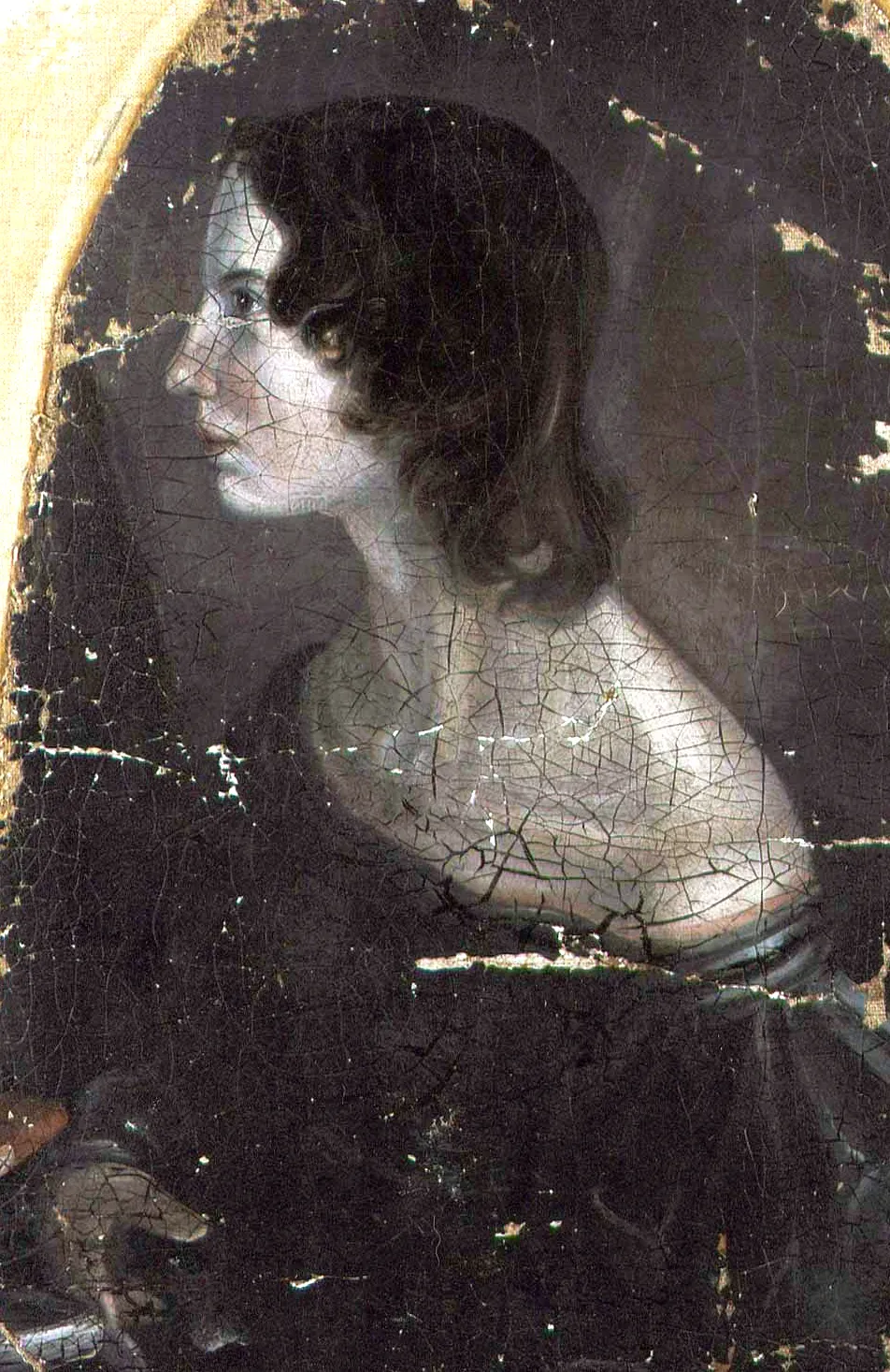
Emily Jane Brontë
Encouragement
I do not weep; I would not weep;
Our mother needs no tears:
Dry thine eyes, too; 'tis vain to keep
This causeless grief for years.
What though her brow be changed and cold,
Her sweet eyes closed for ever?
What though the stone-the darksome mould
Our mortal bodies sever?
What though her hand smooth ne'er again
Those silken locks of thine?
Nor, through long hours of future pain,
Her kind face o'er thee shine?
Remember still, she is not dead;
She sees us, sister, now;
Laid, where her angel spirit fled,
'Mid heath and frozen snow.
And from that world of heavenly light
Will she not always bend
To guide us in our lifetime's night,
And guard us to the end?
Thou knowest she will; and thou mayst mourn
That we are left below:
But not that she can ne'er return
To share our earthly woe.
Read more →
239
Emily Jane Brontë
The Visionary
Silent is the house: all are laid asleep:
One alone looks out o’er the snow-wreaths deep,
Watching every cloud, dreading every breeze
That whirls the wildering drift, and bends the groaning trees.
Cheerful is the hearth, soft the matted floor;
Not one shivering gust creeps through pane or door;
The little lamp burns straight, its rays shoot strong and far:
I trim it well, to be the wanderer’s guiding-star.
Frown, my haughty sire! chide, my angry dame!
Set your slaves to spy; threaten me with shame:
But neither sire nor dame nor prying serf shall know,
What angel nightly tracks that waste of frozen snow.
What I love shall come like visitant of air,
Safe in secret power from lurking human snare;
What loves me, no word of mine shall e’er betray,
Though for faith unstained my life must forfeit pay.
Burn, then, little lamp; glimmer straight and clear—
Hush! a rustling wing stirs, methinks, the air:
He for whom I wait, thus ever comes to me;
Strange Power! I trust thy might; trust thou my constancy.
Read more →
239

Christina Rossetti
Fluttered Wings
The splendour of the kindling day,
The splendor of the setting sun,
These move my soul to wend its way,
And have done
With all we grasp and toil amongst and say.
The paling roses of a cloud,
The fading bow that arches space,
These woo my fancy toward my shroud,
Toward the place
Of faces veil’d, and heads discrown’d and bow’d.
The nation of the awful stars,
The wandering star whose blaze is brief,
These make me beat against the bars
Of my grief;
My tedious grief, twin to the life it mars.
O fretted heart toss’d to and fro,
So fain to flee, so fain to rest!
All glories that are high or low,
East or west,
Grow dim to thee who art so fain to go.
Read more →
239
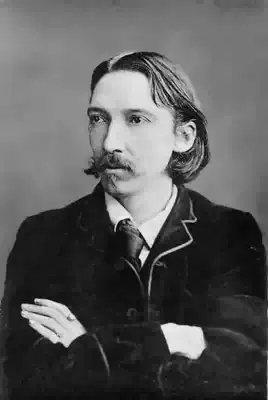
Robert Louis Stevenson
I Love To Be Warm By The Red Fireside
I LOVE to be warm by the red fireside,
I love to be wet with rain:
I love to be welcome at lamplit doors,
And leave the doors again.
Read more →
240
Christina Rossetti
Roses Blushing Red And White
Roses blushing red and white,
For delight;
Honeysuckle wreaths above,
For love;
Dim sweet-scented heliotrope,
For hope;
Shining lilies tall and straight,
For royal state;
Dusky pansies, let them be
For memory;
With violets of fragrant breath,
For death.
Read more →
239

Emily Dickinson
To make One's Toilette-after Death
To make One's Toilette-after Death
Has made the Toilette cool
Of only Taste we cared to please
Is difficult, and still
That's easier-than Braid the Hair-
And make the Bodice gay-
When eyes that fondled it are wrenched
By Decalogues-away-
Read more →
239

Jonathan Swift
To Stella On Her Birth-Day, 1721-2
While, Stella, to your lasting praise
The Muse her annual tribute pays,
While I assign myself a task
Which you expect, but scorn to ask;
If I perform this task with pain,
Let me of partial fate complain;
You every year the debt enlarge,
I grow less equal to the charge:
In you each virtue brighter shines,
But my poetic vein declines;
My harp will soon in vain be strung,
And all your virtues left unsung.
For none among the upstart race
Of poets dare assume my place;
Your worth will be to them unknown,
They must have Stellas of their own;
And thus, my stock of wit decay'd,
I dying leave the debt unpaid,
Unless Delany, as my heir,
Will answer for the whole arrear.
Read more →
239
Christina Rossetti
Mirage
The hope I dreamed of was a dream,
Was but a dream; and now I wake,
Exceeding comfortless, and worn, and old,
For a dream's sake.
I hang my harp upon a tree,
A weeping willow in a lake;
I hang my silent harp there, wrung and snapped
For a dream's sake.
Lie still, lie still, my breaking heart;
My silent heart, lie still and break:
Life, and the world, and mine own self, are changed
For a dream's sake.
Read more →
239

Robert W. Service
Agnostic Apology
I am a stout materialist;
With abstract terms I can't agree,
And so I've made a little list
Of words that don't make sense to me.
To fool my reason I refuse,
For honest thinking is my goal;
And that is why I rarely use
Vague words like Soul.
In terms of matter I am sure
This world of our can be defined;
And so with theories obscure
I will not mystify my mind;
And though I use it more or less,
Describing alcoholic scenes,
I do not know, I must confess,
What Spirit means.
When I survey this cosmic scene,
The term "Creator" seems absurd;
The Universe has always been,
Creation never has occurred.
But in my Lexicon of Doubt
It strikes me definitely odd,
One word I never dare to flout,
One syllable the mountains shout,
Three letters that the stars spell out:
GOD.
Read more →
239
Robert W. Service
Boon Soul
Behold! I'm old; my hair is white;
My eighty years are in the offing,
And sitting by the fire to-night
I sip a grog to ease my coughing.
It's true I'm raucous as a rook,
But feeling bibulously "bardy,"
These lines I'm scribbling in a book:
The verse complete of Thomas Hardy.
Although to-day he's read by few,
Him have I loved beyond all measure;
So here to-night I riffle through
His pages with the oldtime pleasure;
And with this book upon my knee,
(To-day so woefully neglected)
I muse and think how soon I'll be
Myself among the Great Rejected.
Yet as these lines with zest I write,
Although the hour for me is tardy,
I think: "Of all the world to-night
'Tis I alone am reading Hardy";
And now to me he seems so nigh
I feel I commune with his spirit,
And as none love him more than I,
Thereby I gain a modest merit.
Oh Brother Thomas, glad I'll be,
Though all the world may pass unheeding,
If some greybeard con over me,
As I to-night your rhymes are reading;
Saying: "Old Bastard, you and I
By sin are knit in mind and body. . . ."
So ere to hit the hay I hie
Your ghost I'll toast in midnight toddy.
Read more →
238

Henry Lawson
The Pink Carnation
I may walk until I’m fainting, I may write until I’m blinded,
I might drink until my back teeth are afloat,
But I can’t forget my ruin and the happy days behind it,
When I wore a pink carnation in my coat.
Oh, I thought that time could conquer, and I thought my heart would harden,
But it sends a sudden lump into my throat,
When I think of what I have been, and the cottage and the garden,
When I wore a pink carnation in my coat.
God forgive you, girl, and bless you! Let no line of mine distress you –
I am sorry for the bitter lines I wrote;
But remember, and think kindly, for we met and married blindly,
When I wore a pink carnation in my coat.
Read more →
239
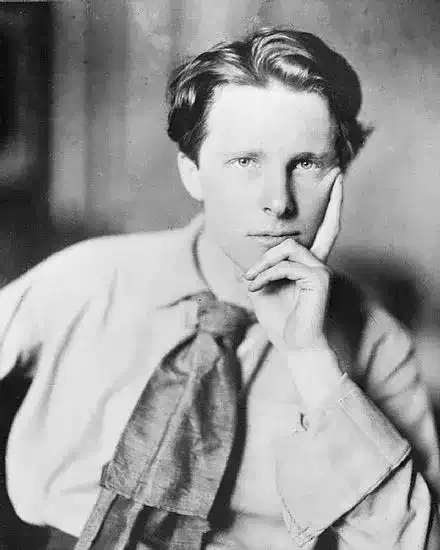
Rupert Brooke
Mummia
As those of old drank mummia
To fire their limbs of lead,
Making dead kings from Africa
Stand pandar to their bed;
Drunk on the dead, and medicined
With spiced imperial dust,
In a short night they reeled to find
Ten centuries of lust.
So I, from paint, stone, tale, and rhyme,
Stuffed love's infinity,
And sucked all lovers of all time
To rarify ecstasy.
Helen's the hair shuts out from me
Verona's livid skies;
Gypsy the lips I press; and see
Two Antonys in your eyes.
The unheard invisible lovely dead
Lie with us in this place,
And ghostly hands above my head
Close face to straining face;
Their blood is wine along our limbs;
Their whispering voices wreathe
Savage forgotten drowsy hymns
Under the names we breathe;
Woven from their tomb, and one with it,
The night wherein we press;
Their thousand pitchy pyres have lit
Your flaming nakedness.
For the uttermost years have cried and clung
To kiss your mouth to mine;
And hair long dust was caught, was flung,
Hand shaken to hand divine,
And Life has fired, and Death not shaded,
All Time's uncounted bliss,
And the height o' the world has flamed and faded,
Love, that our love be this!
Read more →
238
Robert W. Service
The Hand
Throughout my life I see
A guiding hand;
The pitfalls set for me
Were grimly planned.
But always when and where
They opened wide,
Someone who seemed to care
Stood by my side.
When up the pathway dark
I stumbled on,
Afar, ahead a spark
Of guidance shone.
When forked the tragic trail
And sad my plight,
My guardian without fail
Would lead me right.
How merciful a Mind
my life has planned!
Aye, though mine eyes were blind
I touched the Hand;
Though weary ways and wan
My feet have trod,
Always it led me on,
Starways to God.
Read more →
239
Emily Dickinson
Only God—detect the Sorrow
Only God—detect the Sorrow—
Only God—
The Jehovahs—are no Babblers—
Unto God—
God the Son—Confide it—
Still secure—
God the Spirit's Honor—
Just as sure—
Read more →
238
Emily Dickinson
'Twas like a Maelstrom, with a notch
'Twas like a Maelstrom, with a notch,
That nearer, every Day,
Kept narrowing its boiling Wheel
Until the Agony
Toyed coolly with the final inch
Of your delirious Hem-
And you dropt, lost,
When something broke-
And let you from a Dream-
As if a Goblin with a Gauge-
Kept measuring the Hours-
Until you felt your Second
Weigh, helpless, in his Paws-
And not a Sinew-stirred-could help,
And sense was setting numb-
When God-remembered-and the Fiend
Let go, then, Overcome-
As if your Sentence stood-pronounced-
And you were frozen led
From Dungeon's luxury of Doubt
To Gibbets, and the Dead-
And when the Film had stitched your eyes
A Creature gasped "Reprieve"!
Which Anguish was the utterest-then-
To perish, or to live?
Read more →
238
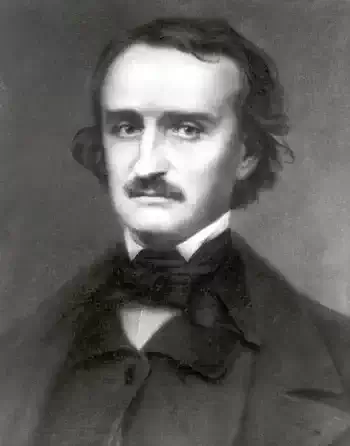
Edgar Allan Poe
To The River --
Fair river! in thy bright, clear flow
Of crystal, wandering water,
Thou art an emblem of the glow
Of beauty- the unhidden heart
The
playful maziness of art
In old Alberto's daughter;
But when within thy wave she looks
Which
glistens then, and trembles
Why,
then, the prettiest of brooks
Her worshipper resembles;
For in his heart, as in thy stream,
Her image deeply lies
His
heart which trembles at the beam
Of her soul-searching eyes.
Read more →
239
Emily Dickinson
Unto Me? I do not know you—
"Unto Me?" I do not know you—
Where may be your House?
"I am Jesus—Late of Judea—
Now—of Paradise"—
Wagons—have you—to convey me?
This is far from Thence—
"Arms of Mine—sufficient Phaeton—
Trust Omnipotence"—
I am spotted—"I am Pardon"—
I am small—"The Least
Is esteemed in Heaven the Chiefest—
Occupy my House"—
Read more →
238
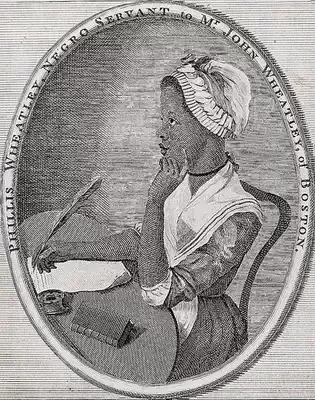
Phillis Wheatley
On The Death Of J. C. An Infant
NO more the flow'ry scenes of pleasure rife,
Nor charming prospects greet the mental eyes,
No more with joy we view that lovely face
Smiling, disportive, flush'd with ev'ry grace.
The tear of sorrow flows from ev'ry eye,
Groans answer groans, and sighs to sighs reply;
What sudden pangs shot thro' each aching heart,
When, Death, thy messenger dispatch'd his dart?
Thy dread attendants, all-destroying Pow'r,
Hurried the infant to his mortal hour.
Could'st thou unpitying close those radiant eyes?
Or fail'd his artless beauties to surprise?
Could not his innocence thy stroke controul,
Thy purpose shake, and soften all thy soul?
The blooming babe, with shades of Death o'erspread,
No more shall smile, no more shall raise its head,
But, like a branch that from the tree is torn,
Falls prostrate, wither'd, languid, and forlorn.
"Where flies my James?" 'tis thus I seem to hear
The parent ask, "Some angel tell me where
"He wings his passage thro' the yielding air?"
Methinks a cherub bending from the skies
Observes the question, and serene replies,
"In heav'ns high palaces your babe appears:
"Prepare to meet him, and dismiss your tears."
Shall not th' intelligence your grief restrain,
And turn the mournful to the cheerful strain?
Cease your complaints, suspend each rising sigh,
Cease to accuse the Ruler of the sky.
Parents, no more indulge the falling tear:
Let Faith to heav'n's refulgent domes repair,
There see your infant, like a seraph glow:
What charms celestial in his numbers flow
Melodious, while the foul-enchanting strain
Dwells on his tongue, and fills th' ethereal plain?
Enough--for ever cease your murm'ring breath;
Not as a foe, but friend converse with Death,
Since to the port of happiness unknown
He brought that treasure which you call your own.
The gift of heav'n intrusted to your hand
Cheerful resign at the divine command:
Not at your bar must sov'reign Wisdom stand.
Read more →
239
Rupert Brooke
There's Wisdom In Women
"Oh love is fair, and love is rare;" my dear one she said,
"But love goes lightly over." I bowed her foolish head,
And kissed her hair and laughed at her. Such a child was she;
So new to love, so true to love, and she spoke so bitterly.
But there's wisdom in women, of more than they have known,
And thoughts go blowing through them, are wiser than their own,
Or how should my dear one, being ignorant and young,
Have cried on love so bitterly, with so true a tongue?
Read more →
239
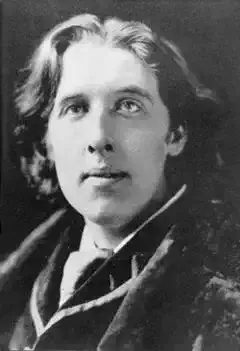
Oscar Wilde
Panthea
NAY, let us walk from fire unto fire,
From passionate pain to deadlier delight,--
I am too young to live without desire,
Too young art thou to waste this summer night
Asking those idle questions which of old
Man sought of seer and oracle, and no reply was told.
For, sweet, to feel is better than to know,
And wisdom is a childless heritage,
One pulse of passion--youth's first fiery glow,--
Are worth the hoarded proverbs of the sage:
Vex not thy soul with dead philosophy,
Have we not lips to kiss with, hearts to love, and eyes to see!
Dost thou not hear the murmuring nightingale
Like water bubbling from a silver jar,
So soft she sings the envious moon is pale,
That high in heaven she is hung so far
She cannot hear that love-enraptured tune,--
Mark how she wreathes each horn with mist, yon late and labouring
moon.
White lilies, in whose cups the gold bees dream,
The fallen snow of petals where the breeze
Scatters the chestnut blossom, or the gleam
Of boyish limbs in water,--are not these
Enough for thee, dost thou desire more?
Alas! the Gods will give nought else from their eternal store.
For our high Gods have sick and wearied grown
Of all our endless sins, our vain endeavour
For wasted days of youth to make atone
By pain or prayer or priest, and never, never,
Hearken they now to either good or ill,
But send their rain upon the just and the unjust at will.
They sit at ease, our Gods they sit at ease,
Strewing with leaves of rose their scented wine,
They sleep, they sleep, beneath the rocking trees
Where asphodel and yellow lotus twine,
Mourning the old glad days before they knew
What evil things the heart of man could dream, and dreaming do.
And far beneath the brazen floor they see
Like swarming flies the crowd of little men,
The bustle of small lives, then wearily
Back to their lotus-haunts they turn again
Kissing each other's mouths, and mix more deep
The poppy-seeded draught which brings soft purple-lidded sleep.
There all day long the golden-vestured sun,
Their torch-bearer, stands with his torch a-blaze,
And when the gaudy web of noon is spun
By its twelve maidens through the crimson haze
Fresh from Endymion's arms comes forth the moon,
And the immortal Gods in toils of mortal passions swoon.
There walks Queen Juno through some dewy mead
Her grand white feet flecked with the saffron dust
Of wind-stirred lilies, while young Ganymede
Leaps in the hot and amber-foaming must,
His curls all tossed, as when the eagle bare
The frightened boy from Ida through the blue Ionian air.
There in the green heart of some garden close
Queen Venus with the shepherd at her side,
Her warm soft body like the briar rose
Which would be white yet blushes at its pride,
Laughs low for love, till jealous Salmacis
Peers through the myrtle-leaves and sighs for pain of lonely
bliss.
There never does that dreary north-wind blow
Which leaves our English forests bleak and bare,
Nor ever falls the swift white-feathered snow,
Nor doth the red-toothed lightning ever dare
To wake them in the silver-fretted night
When we lie weeping for some sweet sad sin, some dead delight.
Alas! they know the far Lethæan spring,
The violet-hidden waters well they know,
Where one whose feet with tired wandering
Are faint and broken may take heart and go,
And from those dark depths cool and crystalline
Drink, and draw balm, and sleep for sleepless souls, and anodyne.
But we oppress our natures, God or Fate
Is our enemy, we starve and feed
On vain repentance--O we are born too late!
What balm for us in bruisèd poppy seed
Who crowd into one finite pulse of time
The joy of infinite love and the fierce pain of infinite crime.
O we are wearied of this sense of guilt,
Wearied of pleasure's paramour despair,
Wearied of every temple we have built,
Wearied of every right, unanswered prayer,
For man is weak; God sleeps: and heaven is high:
One fiery-coloured moment: one great love; and lo! we die.
Ah! but no ferry-man with labouring pole
Nears his black shallop to the flowerless strand,
No little coin of bronze can bring the soul
Over Death's river to the sunless land,
Victim and wine and vow are all in vain,
The tomb is sealed; the soldiers watch; the dead rise not again.
We are resolved into the supreme air,
We are made one with what we touch and see,
With our heart's blood each crimson sun is fair,
With our young lives each spring-impassioned tree
Flames into green, the wildest beasts that range
The moor our kinsmen are, all life is one, and all is change.
With beat of systole and of diastole
One grand great life throbs through earth's giant heart,
And mighty waves of single Being roll
From nerve-less germ to man, for we are part
Of every rock and bird and beast and hill,
One with the things that prey on us, and one with what we kill.
From lower cells of waking life we pass
To full perfection; thus the world grows old:
We who are godlike now were once a mass
Of quivering purple flecked with bars of gold,
Unsentient or of joy or misery,
And tossed in terrible tangles of some wild and wind-swept sea.
This hot hard flame with which our bodies burn
Will make some meadow blaze with daffodil,
Ay! and those argent breasts of thine will turn
To water-lilies; the brown fields men till
Will be more fruitful for our love to-night,
Nothing is lost in nature, all things live in Death's despite.
The boy's first kiss, the hyacinth's first bell,
The man's last passion, and the last red spear
That from the lily leaps, the asphodel
Which will not let its blossoms blow for fear
Of too much beauty, and the timid shame
Of the young bride-groom at his lover's eyes,--these with the
same
One sacrament are consecrate, the earth
Not we alone hath passions hymeneal,
The yellow buttercups that shake for mirth
At daybreak know a pleasure not less real
Than we do, when in some fresh-blossoming wood
We draw the spring into our hearts, and feel that life is good.
So when men bury us beneath the yew
Thy crimson-stainèd mouth a rose will be,
And thy soft eyes lush bluebells dimmed with dew,
And when the white narcissus wantonly
Kisses the wind its playmate, some faint joy
Will thrill our dust, and we will be again fond maid and boy.
And thus without life's conscious torturing pain
In some sweet flower we will feel the sun,
And from the linnet's throat will sing again,
And as two gorgeous-mailèd snakes will run
Over our graves, or as two tigers creep
Through the hot jungle where the yellow-eyed huge lions sleep
And give them battle! How my heart leaps up
To think of that grand living after death
In beast and bird and flower, when this cup,
Being filled too full of spirit, bursts for breath,
And with the pale leaves of some autumn day
The soul earth's earliest conqueror becomes earth's last great prey.
O think of it! We shall inform ourselves
Into all sensuous life, the goat-foot Faun,
The Centaur, or the merry bright-eyed Elves
That leave their dancing rings to spite the dawn
Upon the meadows, shall not be more near
Than you and I to nature's mysteries, for we shall hear
The thrush's heart beat, and the daisies grow,
And the wan snowdrop sighing for the sun
On sunless days in winter, we shall know
By whom the silver gossamer is spun,
Who paints the diapered fritillaries,
On what wide wings from shivering pine to pine the eagle flies.
Ay! had we never loved at all, who knows
If yonder daffodil had lured the bee
Into its gilded womb, or any rose
Had hung with crimson lamps its little tree!
Methinks no leaf would ever bud in spring,
But for the lovers' lips that kiss, the poets' lips that sing.
Is the light vanished from our golden sun,
Or is this dædal-fashioned earth less fair,
That we are nature's heritors, and one
With every pulse of life that beats the air?
Rather new suns across the sky shall pass,
New splendour come unto the flower, new glory to the grass.
And we two lovers shall not sit afar,
Critics of nature, but the joyous sea
Shall be our raiment, and the bearded star
Shoot arrows at our pleasure! We shall be
Part of the mighty universal whole,
And through all æons mix and mingle with the Kosmic Soul!
We shall be notes in that great Symphony
Whose cadence circles through the rhythmic spheres,
And all the live World's throbbing heart shall be
One with our heart, the stealthy creeping years
Have lost their terrors now, we shall not die,
The Universe itself shall be our Immortality!
Read more →
239
Robert W. Service
The Widower
Oh I have worn my mourning out,
And on her grave the green grass grows;
So I will hang each sorry clout
High in the corn to scare the crows.
And I will buy a peacock tie,
And coat of cloth of Donegal;
Then to the Farmer's Fair I'll hie
And peek in at the Barley Ball.
But though the fiddlers saw a jig
I used to foot when I was wed,
I'll walk me home and feed the pig,
And go a lonesome man to bed.
So I will wait another year,
As any decent chap would do,
Till I can think without a tear
Of her whose eyes were cornflower blue.
Then to the Harvest Ball I'll hie,
And I will wear a flower-sprigged vest;
For Maggie has a nut-brown eyes,
And we will foot it with the best.
And if kind-minded she should be
To wife me - 'tis the will if God . . .
But Oh the broken heart f me
For her who lies below the sod!
Read more →
238
Robert W. Service
Divine Detachment
One day the Great Designer sought
His Clerk of Birth and Death.
Said he: "Two souls are in my thought,
to whom I gave life-breath.
I deemed my work was fitly done,
But yester-eve I saw
That in the finished brain of one
There was a tiny flaw.
"It worried me, and I would know,
Since I am all to blame,
What happened to them down below,
Of honour or of shame;
For if the later did befall,
My sorrow will be grave . . ."
Then numbers astronomical
unto the Clerk he gave.
The Keeper of the Rolls replied:
"Of them I've little trace;
But one he was a Prince of pride
And one of lowly race.
One was a Holy Saint proclaimed;
For one no hell sufficed . . . .
Let's see - the last was Nero named,
The other . . . Jesus Christ."
Read more →
235
Christina Rossetti
Despised And Rejected
My sun has set, I dwell
In darkness as a dead man out of sight;
And none remains, not one, that I should tell
To him mine evil plight
This bitter night.
I will make fast my door
That hollow friends may trouble me no more.
'Friend, open to Me.'—Who is this that calls?
Nay, I am deaf as are my walls:
Cease crying, for I will not hear
Thy cry of hope or fear.
Others were dear,
Others forsook me: what art thou indeed
That I should heed
Thy lamentable need?
Hungry should feed,
Or stranger lodge thee here?
'Friend, My Feet bleed.
Open thy door to Me and comfort Me.'
I will not open, trouble me no more.
Go on thy way footsore,
I will not rise and open unto thee.
'Then is it nothing to thee? Open, see
Who stands to plead with thee.
Open, lest I should pass thee by, and thou
One day entreat My Face
And howl for grace,
And I be deaf as thou art now.
Open to Me.'
Then I cried out upon him: Cease,
Leave me in peace:
Fear not that I should crave
Aught thou mayst have.
Leave me in peace, yea trouble me no more,
Lest I arise and chase thee from my door.
What, shall I not be let
Alone, that thou dost vex me yet?
But all night long that voice spake urgently:
'Open to Me.'
Still harping in mine ears:
'Rise, let Me in.'
Pleading with tears:
'Open to Me that I may come to thee.'
While the dew dropped, while the dark hours were cold:
'My Feet bleed, see My Face,
See My Hands bleed that bring thee grace,
My Heart doth bleed for thee,
Open to Me.'
So till the break of day:
Then died away
That voice, in silence as of sorrow;
Then footsteps echoing like a sigh
Passed me by,
Lingering footsteps slow to pass.
On the morrow
I saw upon the grass
Each footprint marked in blood, and on my door
The mark of blood for evermore.
Read more →
234