
Soul

Christina Rossetti
Heart’s Chill Between
I did not chide him, though I knew
That he was false to me.
Chide the exhaling of the dew,
The ebbing of the sea,
The fading of a rosy hue,—
But not inconstancy.
Why strive for love when love is o'er?
Why bind a restive heart?—
He never knew the pain I bore
In saying: 'We must part;
Let us be friends and nothing more.'
—Oh, woman's shallow art!
But it is over, it is done,—
I hardly heed it now;
So many weary years have run
Since then, I think not how
Things might have been,—but greet each one
With an unruffled brow.
What time I am where others be,
My heart seems very calm—
Stone calm; but if all go from me,
There comes a vague alarm,
A shrinking in the memory
From some forgotten harm.
And often through the long, long night,
Waking when none are near,
I feel my heart beat fast with fright,
Yet know not what I fear.
Oh how I long to see the light,
And the sweet birds to hear!
To have the sun upon my face,
To look up through the trees,
To walk forth in the open space
And listen to the breeze,—
And not to dream the burial-place
Is clogging my weak knees.
Sometimes I can nor weep nor pray,
But am half stupefied:
And then all those who see me say
Mine eyes are opened wide
And that my wits seem gone away—
Ah, would that I had died!
Would I could die and be at peace,
Or living could forget!
My grief nor grows nor doth decrease,
But ever is:—and yet
Methinks, now, that all this shall cease
Before the sun shall set.
Read more →
207

Anonymous
The Bells of Hell
The bells of hell go ting-a-ling-a-ling
For you but not for me:
And the little devils how they sing-a-ling-a-ling
For you but not for me.
O death, where is thy sting-a-ling-a-ling,
O Grave, thy victor-ee?
The bells of hell go ting-a-ling-a-ling,
For you but not for me.
Read more →
205

D.H. Lawrence
Dissolute
Many years have I still to burn, detained
Like a candle flame on this body; but I enshine
A darkness within me, a presence which sleeps contained
In my flame of living, her soul enfolded in mine.
And through these years, while I burn on the fuel of life,
What matter the stuff I lick up in my living flame,
Seeing I keep in the fire-core, inviolate,
A night where she dreams my dreams for me, ever the same.
Read more →
206

Robert W. Service
The Scribe's Prayer
When from my fumbling hand the tired pen falls,
And in the twilight weary droops my head;
While to my quiet heart a still voice calls,
Calls me to join my kindred of the Dead:
Grant that I may, O Lord, ere rest be mine,
Write to Thy praise one radiant, ringing line.
For all of worth that in this clay abides,
The leaping rapture and the ardent flame,
The hope, the high resolve, the faith that guides:
All, all is Thine, and liveth in Thy name:
Lord, have I dallied with the sacred fire!
Lord, have I trailed Thy glory in the mire!
E'en as a toper from the dram-shop reeling,
Sees in his garret's blackness, dazzling fair,
All that he might have been, and, heart-sick, kneeling,
Sobs in the passion of a vast despair:
So my ideal self haunts me alway --
When the accounting comes, how shall I pay?
For in the dark I grope, nor understand;
And in my heart fight selfishness and sin:
Yet, Lord, I do not seek Thy helping hand;
Rather let me my own salvation win:
Let me through strife and penitential pain
Onward and upward to the heights attain.
Yea, let me live my life, its meaning seek;
Bear myself fitly in the ringing fight;
Strive to be strong that I may aid the weak;
Dare to be true -- O God! the Light, the Light!
Cometh the Dark so soon. I've mocked Thy Word;
Yet do I know Thy Love: have mercy, Lord. . . .
FINIS
Read more →
208
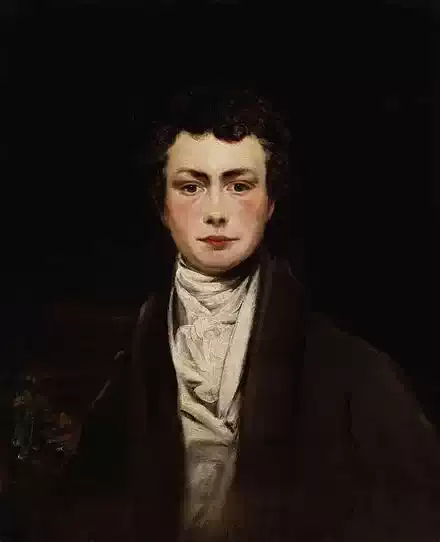
Thomas Moore
Love and the Novice
"Here we dwell, in holiest bowers,
Where angels of light o'er our orisans bend;
Where sighs of devotion and breathings of flowers
To heaven in mingled odour ascend.
Do not disturb our calm, oh Love!
So like is thy form to the cherubs above,
It well might deceive such hearts as ours."
Love stood near the Novice and listen'd,
And Love is no novice in taking a hint;
His laughing blue eyes soon with piety glisten'd;
His rosy wing turn'd to heaven's own tint.
"Who would have thought," the urchin cries,
"That Love could so well, so gravely disguise
His wandering wings, and wounding eyes?"
Love now warms thee, waking and sleeping,
Young Novice, to him all thy orisons rise.
He tinges the heavenly fount with his weeping,
He brightens the censer's flame with his sighs.
Love is the Saint enshrined in thy breast,
And angels themselves would admit such a guest,
If he came to them clothed in Piety's vest.
Read more →
207

Henry Lawson
Macleay Street and Red Rock Lane
Macleay Street looks to Mosman,
Across the other side,
With brave asphalted pavements
And roadway clean and wide.
Macleay Street hath its mansions,
Its grounds and greenery;
Macleay Street hath its terraces
As terraces should be.
Red Rock Lane looks to nowhere,
With pockets into hell;
Red Rock Lane is a horror
Of heat and dirt and smell.
Red Rock Lane hath its brothels,
Of houses one in three;
Red Rock Lane hath its corner pubs
As fourth-rate pubs should be.
Macleay Street, cool and quiet,
Is marked off from the town,
And standing in the centre
The tall arc lamps look down.
The jealous closed cabs vanish
That stole from out the row,
Fair women stroll bareheaded,
And theatre parties go.
Red Rock Lane, hot with riot,
Hides things that none should know;
The furtive couples vanish
Through doorways dark and low.
Lust, thievery, drink and madness
In one infernal stew—
And Mrs Johnson, raving,
Walks out—bareheaded too.
Macleay Street hath its swindles,
But on a public scale;
Macleay Street hath its razzles
Until the night grows pale.
Macleay Street hath its scandals,
But—only this is plain,
That nothing is a scandal
Down there in Red Rock Lane.
Macleay Street looks to Mosman
In morning’s rosy glow,
And freshly to the city
The summer-suited go
While wild-eyed, foul and shaking,
Red Rock Lane wakes again.
This morning at the Central
They’re fining Red Rock Lane.
The Central says “the risin’”,
“Seven days”, or what you will;
Macleay Street says, “Drive slowly”
When any one is ill.
The law sends Black Maria
When Red Rock Lane is dead.
But doctors come in motor cars
When Macleay Street’s got a head.
The grey-faced, weedy parents
Sunk in Red Rock Lane holes—
They worry, pinch, and perish
To save their children’s souls.
The fairy of Macleay Street
Shall never soil her hands—
Her Pa is independent,
Or high up in “the Lands”.
And—well, there seems no moral,
And nothing more to tell,
But because of that fierce sympathy
Of souls to souls in hell;
And because of that wild kindness
To souls in sordid pain,
My soul I’d rather venture
With some in Red Rock Lane.
Read more →
206
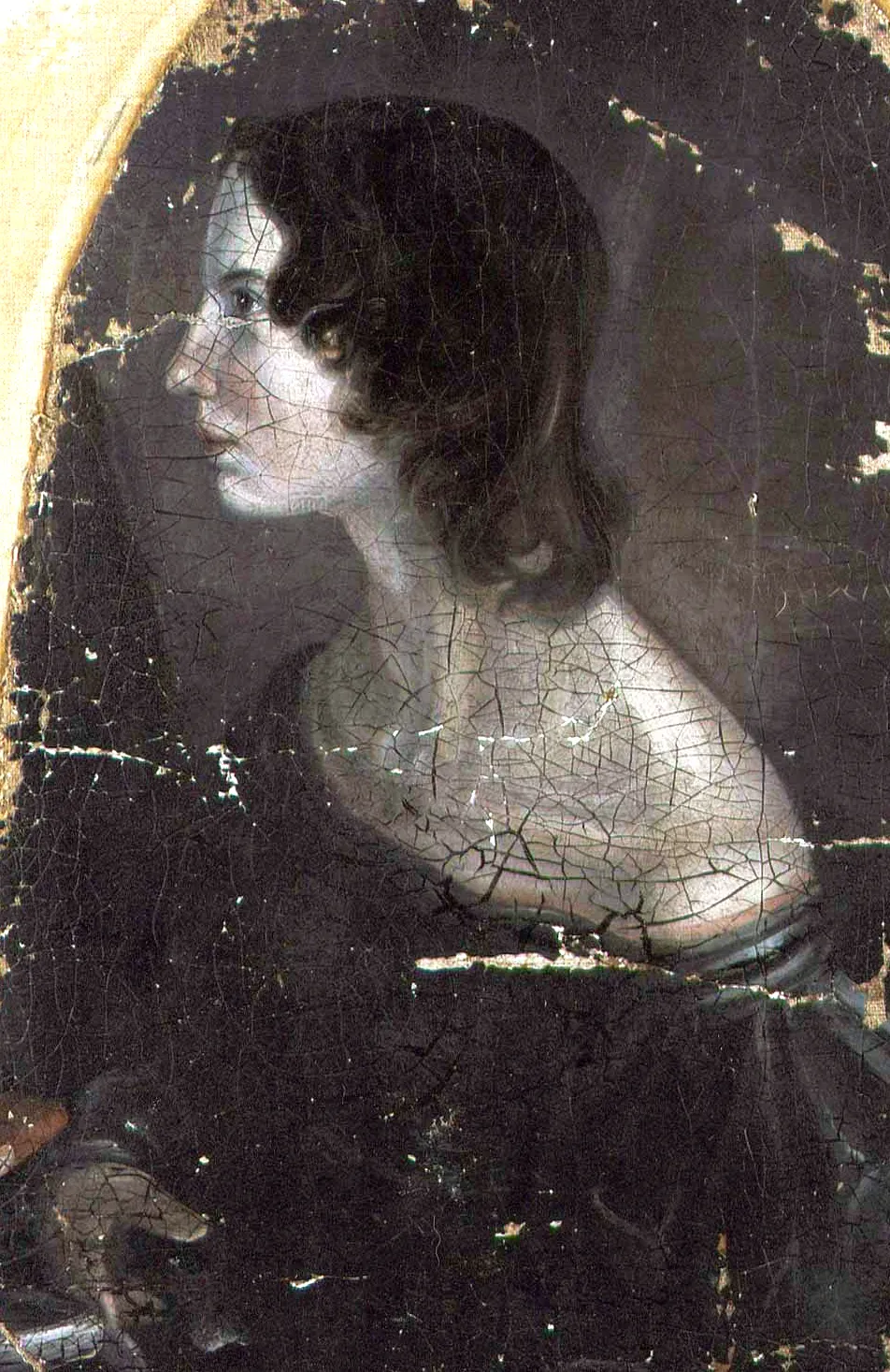
Emily Jane Brontë
Speak, God Of Visions
O, thy bright eyes must answer now,
When Reason, with a scornful brow,
Is mocking at my overthrow!
O, thy sweet tongue must plead for me,
And tell why I have chosen thee!
Stern Reason is to judgment come,
Arrayed in all her forms of gloom:
Wilt thou, my advocate, be dumb?
No, radiant angel, speak and say
Why I did cast the world away;
Why I have presevered to shun
The common paths that others run,
And on a strange road journeyed on,
Heedless alike of wealth and power,
Of Glory's wreath and Pleasure's flower.
These once, indeed, seemed Beings Divine;
And they, perchance, heard vows of mine,
And saw my offerings on their shrine;
But careless gifts are seldom prized,
And mine were worthily despised.
So, with a ready heart I swore
To seek their altar-stone no more;
And gave my spirit to adore
Thee, ever-present, phantom thing—
My slave, my comrade, and my king.
A slave, because I rule thee still,
Incline thee to my changeful will,
And make thy influence good or ill;
A comrade, for by day and night
Thou art my intimate delight,—
My darling pain that wounds and sears,
And wrings a blessing out of tears
Be deadening me to earthly cares;
And yet, a king, though Prudence well
Have taught thy subject to rebel.
And I am wrong to worship where
Faith cannot doubt, nor Hope despair,
Since my own soul can grant my prayer?
Speak, God of Visions, plead for me,
And tell why I have chosen thee!
Read more →
208

Emily Dickinson
What shall I do—it whimpers so
What shall I do—it whimpers so—
This little Hound within the Heart
All day and night with bark and start—
And yet, it will not go—
Would you untie it, were you me—
Would it stop whining—if to Thee—
I sent it—even now?
It should not tease you—
By your chair—or, on the mat—
Or if it dare—to climb your dizzy knee—
Or—sometimes at your side to run—
When you were willing—
Shall it come?
Tell Carlo—
He'll tell me!
Read more →
208
Robert W. Service
Each Day A Life
I count each day a little life,
With birth and death complete;
I cloister it from care and strife
And keep it sane and sweet.
With eager eyes I greet the morn,
Exultant as a boy,
Knowing that I am newly born
To wonder and to joy.
And when the sunset splendours wane
And ripe for rest am I,
Knowing that I will live again,
Exultantly I die.
O that all Life were but a Day
Sunny and sweet and sane!
And that at Even I might say:
"I sleep to wake again."
Read more →
207
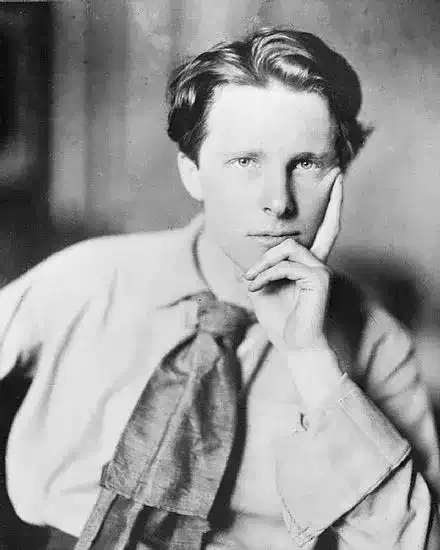
Rupert Brooke
Desertion
So light we were, so right we were, so fair faith shone,
And the way was laid so certainly, that, when I'd gone,
What dumb thing looked up at you? Was it something heard,
Or a sudden cry, that meekly and without a word
You broke the faith, and strangely, weakly, slipped apart.
You gave in -- you, the proud of heart, unbowed of heart!
Was this, friend, the end of all that we could do?
And have you found the best for you, the rest for you?
Did you learn so suddenly (and I not by!)
Some whispered story, that stole the glory from the sky,
And ended all the splendid dream, and made you go
So dully from the fight we know, the light we know?
O faithless! the faith remains, and I must pass
Gay down the way, and on alone. Under the grass
You wait; the breeze moves in the trees, and stirs, and calls,
And covers you with white petals, with light petals.
There it shall crumble, frail and fair, under the sun,
O little heart, your brittle heart; till day be done,
And the shadows gather, falling light, and, white with dew,
Whisper, and weep; and creep to you. Good sleep to you!
Read more →
203
Emily Dickinson
By a flower—By a letter
By a flower—By a letter—
By a nimble love—
If I weld the Rivet faster—
Final fast—above—
Never mind my breathless Anvil!
Never mind Repose!
Never mind the sooty faces
Tugging at the Forge!
Read more →
202
D.H. Lawrence
A Spiritual Woman
Close your eyes, my love, let me make you blind;
They have taught you to see
Only a mean arithmetic on the face of things,
A cunning algebra in the faces of men,
And God like geometry
Completing his circles, and working cleverly.
I’ll kiss you over the eyes till I kiss you blind;
If I can—if any one could.
Then perhaps in the dark you’ll have got what you want to find.
You’ve discovered so many bits, with your clever eyes,
And I’m a kaleidoscope
That you shake and shake, and yet it won’t come to your mind.
Now stop carping at me.—But God, how I hate you!
Do you fear I shall swindle you?
Do you think if you take me as I am, that that will abate you
Somehow?—so sad, so intrinsic, so spiritual, yet so cautious, you
Must have me all in your will and your consciousness—
I hate you.
Read more →
203
Robert W. Service
The Trapper's Christmas Eve
It's mighty lonesome-like and drear.
Above the Wild the moon rides high,
And shows up sharp and needle-clear
The emptiness of earth and sky;
No happy homes with love a-glow;
No Santa Claus to make believe:
Just snow and snow, and then more snow;
It's Christmas Eve, it's Christmas Eve.
And here am I where all things end,
And Undesirables are hurled;
A poor old man without a friend,
Forgot and dead to all the world;
Clean out of sight and out of mind . . .
Well, maybe it is better so;
We all in life our level find,
And mine, I guess, is pretty low.
Yet as I sit with pipe alight
Beside the cabin-fir
take to-night
The backward trail of fifty year.
The school-house and the Christmas tree;
The children with their cheeks a-glow;
Two bright blue eyes that smile on me . . .
Just half a century ago.
Again (it's maybe forty years),
With faith and trust almost divine,
These same blue eyes, abrim with tears,
Through depths of love look into mine.
A parting, tender, soft and low,
With arms that cling and lips that cleave . . .
Ah me! it's all so long ago,
Yet seems so sweet this Christmas Eve.
Just thirty years ago, again . . .
We say a bitter, last good-bye;
Our lips are white with wrath and pain;
Our little children cling and cry.
Whose was the fault? it matters not,
For man and woman both deceive;
It's buried now and all forgot,
Forgiven, too, this Christmas Eve.
And she (God pity me) is dead;
Our children men and women grown.
I like to think that they are wed,
With little children of their own,
That crowd around their Christmas tree . . .
I would not ever have them grieve,
Or shed a single tear for me,
To mar their joy this Christmas Eve.
Stripped to the buff and gaunt and still
Lies all the land in grim distress.
Like lost soul wailing, long and shrill,
A wolf-howl cleaves the emptiness.
Then hushed as Death is everything.
The moon rides haggard and forlorn . . .
"O hark the herald angels sing!"
God bless all men -- it's Christmas morn.
Read more →
205

Wilfred Owen
Insensibility
I
Happy are men who yet before they are killed
Can let their veins run cold.
Whom no compassion fleers
Or makes their feet
Sore on the alleys cobbled with their brothers.
The front line withers,
But they are troops who fade, not flowers
For poets' tearful fooling:
Men, gaps for filling
Losses who might have fought
Longer; but no one bothers.
II
And some cease feeling
Even themselves or for themselves.
Dullness best solves
The tease and doubt of shelling,
And Chance's strange arithmetic
Comes simpler than the reckoning of their shilling.
They keep no check on Armies' decimation.
III
Happy are these who lose imagination:
They have enough to carry with ammunition.
Their spirit drags no pack.
Their old wounds save with cold can not more ache.
Having seen all things red,
Their eyes are rid
Of the hurt of the colour of blood for ever.
And terror's first constriction over,
Their hearts remain small drawn.
Their senses in some scorching cautery of battle
Now long since ironed,
Can laugh among the dying, unconcerned.
IV
Happy the soldier home, with not a notion
How somewhere, every dawn, some men attack,
And many sighs are drained.
Happy the lad whose mind was never trained:
His days are worth forgetting more than not.
He sings along the march
Which we march taciturn, because of dusk,
The long, forlorn, relentless trend
From larger day to huger night.
V
We wise, who with a thought besmirch
Blood over all our soul,
How should we see our task
But through his blunt and lashless eyes?
Alive, he is not vital overmuch;
Dying, not mortal overmuch;
Nor sad, nor proud,
Nor curious at all.
He cannot tell
Old men's placidity from his.
VI
But cursed are dullards whom no cannon stuns,
That they should be as stones.
Wretched are they, and mean
With paucity that never was simplicity.
By choice they made themselves immune
To pity and whatever mourns in man
Before the last sea and the hapless stars;
Whatever mourns when many leave these shores;
Whatever shares
The eternal reciprocity of tears.
Read more →
204
Rupert Brooke
Sonnet
(Suggested by some of the Proceedings of the Society for Psychical Research)
Not with vain tears, when we’re beyond the sun,
We’ll beat on the substantial doors, nor tread
Those dusty high-roads of the aimless dead
Plaintive for Earth; but rather turn and run
Down some close-covered by-way of the air,
Some low sweet alley between wind and wind,
Stoop under faint gleams, thread the shadows, find
Some whispering ghost-forgotten nook, and there
Spend in pure converse our eternal day;
Think each in each, immediately wise;
Learn all we lacked before; hear, know, and say
What this tumultuous body now denies;
And feel, who have laid our groping hands away;
And see, no longer blinded by our eyes.
Read more →
203
Emily Dickinson
Undue Significance a starving man attaches
Undue Significance a starving man attaches
To Food-
Far off-He sighs-and therefore-Hopeless-
And therefore-Good
Partaken-it relieves-indeed-
But proves us
That Spices fly
In the Receipt-It was the Distance-
Was Savory-
Read more →
205
Christina Rossetti
Dost Thou Not Care?
I love and love not: Lord, it breaks my heart
To love and not to love.
Thou veiled within Thy glory, gone apart
Into Thy shrine, which is above,
Dost Thou not love me, Lord, or care
For this mine ill?—
I love thee here or there,
I will accept thy broken heart, lie still.
Lord, it was well with me in time gone by
That cometh not again,
When I was fresh and cheerful, who but I?
I fresh, I cheerful: worn with pain
Now, out of sight and out of heart;
O Lord, how long?—
I watch thee as thou art,
I will accept thy fainting heart, be strong.
'Lie still,' 'be strong,' to-day; but, Lord, to-morrow,
What of to-morrow, Lord?
Shall there be rest from toil, be truce from sorrow,
Be living green upon the sward
Now but a barren grave to me,
Be joy for sorrow?—
Did I not die for thee?
Did I not live for thee? Leave Me to-morrow.
Read more →
203

Phillis Wheatley
And veil her charms around.
X.
Why, Phoebus, moves thy car so slow?
So slow thy rising ray?
Give us the famous town to view,
Thou glorious king of day!
XI.
For thee, Britannia, I resign
New-England's smiling fields;
To view again her charms divine,
What joy the prospect yields!
XII.
But thou! Temptation hence away,
With all thy fatal train,
Nor once seduce my soul away,
By thine enchanting strain.
XIII.
Thrice happy they, whose heav'nly shield
Secures their souls from harms,
And fell Temptation on the field
Of all its pow'r disarms!
Read more →
203

John Greenleaf Whittier
The River Path
No bird-song floated down the hill,
The tangled bank below was still;
No rustle from the birchen stem,
No ripple from the water's hem.
The dusk of twilight round us grew,
We felt the falling of the dew;
For, from us, ere the day was done,
The wooded hills shut out the sun.
But on the river's farther side
We saw the hill-tops glorified,-
A tender glow, exceeding fair,
A dream of day without its glare.
With us the damp, the chill, the gloom
With them the sunset's rosy bloom;
While dark, through willowy vistas seen,
The river rolled in shade between.
From out the darkness where we trod,
We gazed upon those bills of God,
Whose light seemed not of moon or sun.
We spake not, but our thought was one.
We paused, as if from that bright shore
Beckoned our dear ones gone before;
And stilled our beating hearts to hear
The voices lost to mortal ear!
Sudden our pathway turned from night;
The hills swung open to the light;
Through their green gates the sunshine showed,
A long, slant splendor downward flowed.
Down glade and glen and bank it rolled;
It bridged the shaded stream with gold;
And, borne on piers of mist, allied
The shadowy with the sunlit side!
'So,' prayed we, 'when our feet draw near
The river dark, with mortal fear,
'And the night cometh chill with dew,
O Father! let Thy light break through!
'So let the hills of doubt divide,
So bridge with faith the sunless tide!
'So let the eyes that fail on earth
On Thy eternal hills look forth;
'And in Thy beckoning angels know
The dear ones whom we loved below!'
Read more →
203
Christina Rossetti
What do the stars do
What do the stars do
Up in the sky,
Higher than the wind can blow,
Or the clouds can fly?
Each star in its own glory
Circles, circles still;
As it was lit to shine and set,
And do its Maker's will.
Read more →
203
Emily Dickinson
One and One—are One
One and One—are One—
Two—be finished using—
Well enough for Schools—
But for Minor Choosing—
Life—just—or Death—
Or the Everlasting—
More—would be too vast
For the Soul's Comprising—
Read more →
205
Robert W. Service
Old David Smail
He dreamed away his hours in school;
He sat with such an absent air,
The master reckoned him a fool,
And gave him up in dull despair.
When other lads were making hay
You'd find him loafing by the stream;
He'd take a book and slip away,
And just pretend to fish . . . and dream.
His brothers passed him in the race;
They climbed the hill and clutched the prize.
He did not seem to heed, his face
Was tranquil as the evening skies.
He lived apart, he spoke with few;
Abstractedly through life he went;
Oh, what he dreamed of no one knew,
And yet he seemed to be content.
I see him now, so old and gray,
His eyes with inward vision dim;
And though he faltered on the way,
Somehow I almost envied him.
At last beside his bed I stood:
"And is Life done so soon?" he sighed;
"It's been so rich, so full, so good,
I've loved it all . . ." -- and so he died.
Read more →
205
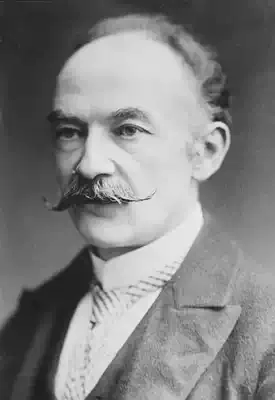
Thomas Hardy
Heredity
I am the family face;
Flesh perishes, I live on,
Projecting trait and trace
Through time to times anon,
And leaping from place to place
Over oblivion.
The years-heired feature that can
In curve and voice and eye
Despise the human span
Of durance -- that is I;
The eternal thing in man,
That heeds no call to die
Read more →
205
Thomas Moore
Wreath the Bowl
Wreath the bowl
With flowers of soul,
The brightest Wit can find us,
We'll take a flight
Towards heaven to-night,
And leave dull earth behind us.
Should Love amid
The wreaths be hid
That Joy, the enchanter, brings us,
No danger fear,
While wine is near --
We'll drown him if he stings us.
Then, wreath the bowl
With flowers of soul,
The brightest Wit can find us.
We'll take a flight
Towards heaven to-night,
And leave dull earth behind us.
'Twas nectar fed
Of old, 'tis said,
Their Junos, Joves, Apollos,
And man may brew
His nectar too,
The rich receipt's as follows:
Take wine like this,
Let looks of bliss
Around it well be blended,
Then bring Wit's beam
To warm the stream,
And there's your nectar, splendid!
So, wreath the bowl,
With flowers of soul,
The brightest Wit can find us,
We'll take a flight
Towards heaven to-night,
And leave dull earth behind us.
Say, why did Time
His glass sublime
Fill up with sands unsightly,
When wine, he knew,
Runs brisker through,
And sparkles far more brightly?
Oh, lend it us,
And, smiling thus,
The glass in two we'll sever,
Make pleasure glide
In double tide,
And fill both ends for ever!
Then, wreath the bowl
With flowers of soul
The brightest Wit can find us;
We'll take a flight
Towards heaven to-night,
And leave dull earth behind us.
Read more →
205