
Soul

Ella Wheeler Wilcox
Courage
There is a courage, a majestic thing
That springs forth from the brow of pain, full-grown,
Minerva-like, and dares all dangers known,
And all the threatening future yet may bring;
Crowned with the helmet of great suffering;
Serene with that grand strength by martyrs shown,
When at the stake they die and make no moan,
And even as the flames leap up are heard to sing:
A courage so sublime and unafraid,
It wears its sorrows like a coat of mail;
And Fate, the archer, passes by dismayed,
Knowing his best barbed arrows needs must fail
To pierce a soul so armored and arrayed
That Death himself might look on it and quail.
Read more →
427

Emily Dickinson
To love thee Year by Year
To love thee Year by Year-
May less appear
Than sacrifice, and cease-
However, dear,
Forever might be short, I thought to show-
And so I pieced it, with a flower, now.
Read more →
425

John Donne
Holy Sonnet XVII: Since She Whom I Loved
Since she whom I loved hath paid her last debt
To Nature, and to hers, and my good is dead,
And her soul early into heaven ravished,
Wholly on heavenly things my mind is set.
here the admiring her my mind did whet
To seek thee, God; so streams do show the head;
But though I have found thee, and thou my thirst hast fed,
a holy thristy dropsy melts me yet.
But why should I beg more love, whenas thou
Dost woo my soul, for hers offering all thine:
And dost not only fear lest I allow
My love to saints and angels, things divine,
but in they tender jealousy dost doubt
lest the world, flesh, yea, devil put thee out.
Read more →
426

William Butler Yeats
Meditations In Time Of Civil War
I
Ancestral Houses
SURELY among a rich man s flowering lawns,
Amid the rustle of his planted hills,
Life overflows without ambitious pains;
And rains down life until the basin spills,
And mounts more dizzy high the more it rains
As though to choose whatever shape it wills
And never stoop to a mechanical
Or servile shape, at others' beck and call.
Mere dreams, mere dreams! Yet Homer had not Sung
Had he not found it certain beyond dreams
That out of life's own self-delight had sprung
The abounding glittering jet; though now it seems
As if some marvellous empty sea-shell flung
Out of the obscure dark of the rich streams,
And not a fountain, were the symbol which
Shadows the inherited glory of the rich.
Some violent bitter man, some powerful man
Called architect and artist in, that they,
Bitter and violent men, might rear in stone
The sweetness that all longed for night and day,
The gentleness none there had ever known;
But when the master's buried mice can play.
And maybe the great-grandson of that house,
For all its bronze and marble, 's but a mouse.
O what if gardens where the peacock strays
With delicate feet upon old terraces,
Or else all Juno from an urn displays
Before the indifferent garden deities;
O what if levelled lawns and gravelled ways
Where slippered Contemplation finds his ease
And Childhood a delight for every sense,
But take our greatness with our violence?
What if the glory of escutcheoned doors,
And buildings that a haughtier age designed,
The pacing to and fro on polished floors
Amid great chambers and long galleries, lined
With famous portraits of our ancestors;
What if those things the greatest of mankind
Consider most to magnify, or to bless,
But take our greatness with our bitterness?
II
My House
An ancient bridge, and a more ancient tower,
A farmhouse that is sheltered by its wall,
An acre of stony ground,
Where the symbolic rose can break in flower,
Old ragged elms, old thorns innumerable,
The sound of the rain or sound
Of every wind that blows;
The stilted water-hen
Crossing Stream again
Scared by the splashing of a dozen cows;
A winding stair, a chamber arched with stone,
A grey stone fireplace with an open hearth,
A candle and written page.
Il Penseroso's Platonist toiled on
In some like chamber, shadowing forth
How the daemonic rage
Imagined everything.
Benighted travellers
From markets and from fairs
Have seen his midnight candle glimmering.
Two men have founded here. A man-at-arms
Gathered a score of horse and spent his days
In this tumultuous spot,
Where through long wars and sudden night alarms
His dwinding score and he seemed castaways
Forgetting and forgot;
And I, that after me
My bodily heirs may find,
To exalt a lonely mind,
Befitting emblems of adversity.
III
My Table
Two heavy trestles, and a board
Where Sato's gift, a changeless sword,
By pen and paper lies,
That it may moralise
My days out of their aimlessness.
A bit of an embroidered dress
Covers its wooden sheath.
Chaucer had not drawn breath
When it was forged. In Sato's house,
Curved like new moon, moon-luminous
It lay five hundred years.
Yet if no change appears
No moon; only an aching heart
Conceives a changeless work of art.
Our learned men have urged
That when and where 'twas forged
A marvellous accomplishment,
In painting or in pottery, went
From father unto son
And through the centuries ran
And seemed unchanging like the sword.
Soul's beauty being most adored,
Men and their business took
Me soul's unchanging look;
For the most rich inheritor,
Knowing that none could pass Heaven's door,
That loved inferior art,
Had such an aching heart
That he, although a country's talk
For silken clothes and stately walk.
Had waking wits; it seemed
Juno's peacock screamed.
IV
My Descendants
Having inherited a vigorous mind
From my old fathers, I must nourish dreams
And leave a woman and a man behind
As vigorous of mind, and yet it seems
Life scarce can cast a fragrance on the wind,
Scarce spread a glory to the morning beams,
But the torn petals strew the garden plot;
And there's but common greenness after that.
And what if my descendants lose the flower
Through natural declension of the soul,
Through too much business with the passing hour,
Through too much play, or marriage with a fool?
May this laborious stair and this stark tower
Become a roofless min that the owl
May build in the cracked masonry and cry
Her desolation to the desolate sky.
The primum Mobile that fashioned us
Has made the very owls in circles move;
And I, that count myself most prosperous,
Seeing that love and friendship are enough,
For an old neighbour's friendship chose the house
And decked and altered it for a girl's love,
And know whatever flourish and decline
These stones remain their monument and mine.
V
The Road at My Door
An affable Irregular,
A heavily-built Falstaffian man,
Comes cracking jokes of civil war
As though to die by gunshot were
The finest play under the sun.
A brown Lieutenant and his men,
Half dressed in national uniform,
Stand at my door, and I complain
Of the foul weather, hail and rain,
A pear-tree broken by the storm.
I count those feathered balls of soot
The moor-hen guides upon the stream.
To silence the envy in my thought;
And turn towards my chamber, caught
In the cold snows of a dream.
VI
The Stare's Nest by My Window
The bees build in the crevices
Of loosening masonry, and there
The mother birds bring grubs and flies.
My wall is loosening; honey-bees,
Come build in the empty house of the state.
We are closed in, and the key is turned
On our uncertainty; somewhere
A man is killed, or a house burned,
Yet no cleat fact to be discerned:
Come build in he empty house of the stare.
A barricade of stone or of wood;
Some fourteen days of civil war;
Last night they trundled down the road
That dead young soldier in his blood:
Come build in the empty house of the stare.
We had fed the heart on fantasies,
The heart's grown brutal from the fare;
More Substance in our enmities
Than in our love; O honey-bees,
Come build in the empty house of the stare.
VII
I see Phantoms of Hatred and of the Heart's
Fullness and of the Coming Emptiness
I climb to the tower-top and lean upon broken stone,
A mist that is like blown snow is sweeping over all,
Valley, river, and elms, under the light of a moon
That seems unlike itself, that seems unchangeable,
A glittering sword out of the east. A puff of wind
And those white glimmering fragments of the mist sweep by.
Frenzies bewilder, reveries perturb the mind;
Monstrous familiar images swim to the mind's eye.
'Vengeance upon the murderers,' the cry goes up,
'Vengeance for Jacques Molay.' In cloud-pale rags, or in lace,
The rage-driven, rage-tormented, and rage-hungry troop,
Trooper belabouring trooper, biting at arm or at face,
Plunges towards nothing, arms and fingers spreading wide
For the embrace of nothing; and I, my wits astray
Because of all that senseless tumult, all but cried
For vengeance on the murderers of Jacques Molay.
Their legs long, delicate and slender, aquamarine their eyes,
Magical unicorns bear ladies on their backs.
The ladies close their musing eyes. No prophecies,
Remembered out of Babylonian almanacs,
Have closed the ladies' eyes, their minds are but a pool
Where even longing drowns under its own excess;
Nothing but stillness can remain when hearts are full
Of their own sweetness, bodies of their loveliness.
The cloud-pale unicorns, the eyes of aquamarine,
The quivering half-closed eyelids, the rags of cloud or of lace,
Or eyes that rage has brightened, arms it has made lean,
Give place to an indifferent multitude, give place
To brazen hawks. Nor self-delighting reverie,
Nor hate of what's to come, nor pity for what's gone,
Nothing but grip of claw, and the eye's complacency,
The innumerable clanging wings that have put out the moon.
I turn away and shut the door, and on the stair
Wonder how many times I could have proved my worth
In something that all others understand or share;
But O! ambitious heart, had such a proof drawn forth
A company of friends, a conscience set at ease,
It had but made us pine the more. The abstract joy,
The half-read wisdom of daemonic images,
Suffice the ageing man as once the growing boy.
Read more →
427
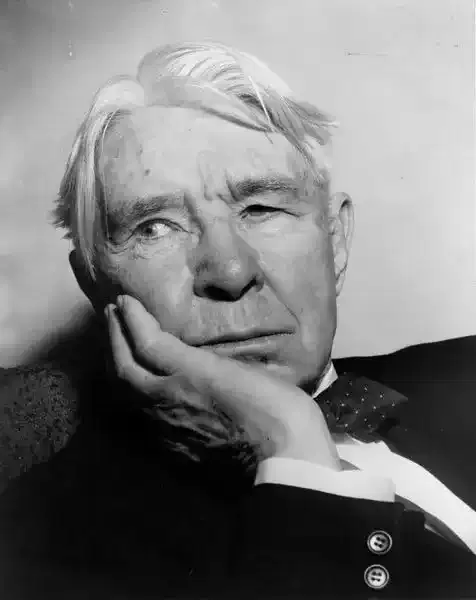
Carl Sandburg
Joy
Let a joy keep you.
Reach out your hands
And take it when it runs by,
As the Apache dancer
Clutches his woman.
I have seen them
Live long and laugh loud,
Sent on singing, singing,
Smashed to the heart
Under the ribs
With a terrible love.
Joy always,
Joy everywhere--
Let joy kill you!
Keep away from the little deaths.
Read more →
424
William Butler Yeats
News For The Delphic Oracle
THERE all the golden codgers lay,
There the silver dew,
And the great water sighed for love,
And the wind sighed too.
Man-picker Niamh leant and sighed
By Oisin on the grass;
There sighed amid his choir of love
Tall pythagoras.
plotinus came and looked about,
The salt-flakes on his breast,
And having stretched and yawned awhile
Lay sighing like the rest.
Straddling each a dolphin's back
And steadied by a fin,
Those Innocents re-live their death,
Their wounds open again.
The ecstatic waters laugh because
Their cries are sweet and strange,
Through their ancestral patterns dance,
And the brute dolphins plunge
Until, in some cliff-sheltered bay
Where wades the choir of love
Proffering its sacred laurel crowns,
They pitch their burdens off.
Read more →
427

Kabir
I Played day and night
I played day and night with my comrades,
and now I am greatly afraid.
So high is my Lord's palace,
my heart trembles to mount its stairs:
yet I must not be shy, if I would enjoy His love.
My heart must cleave to my Lover;
I must withdraw my veil,
and meet Him with all my body:
Mine eyes must perform the ceremony of the lamps of love.
Kabîr says: 'Listen to me, friend:
he understands who loves.
If you feel not love's longing for your Beloved One,
it is vain to adorn your body,
vain to put unguent on your eyelids.'
Read more →
427

Johann Wolfgang von Goethe
The Wedding Night
WITHIN the chamber, far away
From the glad feast, sits Love in dread
Lest guests disturb, in wanton play,
The silence of the bridal bed.
His torch's pale flame serves to gild
The scene with mystic sacred glow;
The room with incense-clouds is fil'd,
That ye may perfect rapture know.
How beats thy heart, when thou dost hear
The chime that warns thy guests to fly!
How glow'st thou for those lips so dear,
That soon are mute, and nought deny!
With her into the holy place
Thou hast'nest then, to perfect all;
The fire the warder's hands embrace,
Grows, like a night-light, dim and small.
How heaves her bosom, and how burns
Her face at every fervent kiss!
Her coldness now to trembling turns,
Thy daring now a duty is.
Love helps thee to undress her fast,
But thou art twice as fast as he;
And then he shuts both eye at last,
With sly and roguish modesty.
Read more →
426

Robert Browning
In A Gondola
He sings_.
I send my heart up to thee, all my heart
In this my singing.
For the stars help me, and the sea bears part;
The very night is clinging
Closer to Venice' streets to leave one space
Above me, whence thy face
May light my joyous heart to thee its dwelling-place.
_She speaks_.
Say after me, and try to say
My very words, as if each word
Came from you of your own accord,
In your own voice, in your own way:
``This woman's heart and soul and brain
``Are mine as much as this gold chain
``She bids me wear; which'' (say again)
``I choose to make by cherishing
``A precious thing, or choose to fling
``Over the boat-side, ring by ring.''
And yet once more say ... no word more!
Since words are only words. Give o'er!
Unless you call me, all the same,
Familiarly by my pet name,
Which if the Three should hear you call,
And me reply to, would proclaim
At once our secret to them all.
Ask of me, too, command me, blame---
Do, break down the partition-wall
'Twixt us, the daylight world beholds
Curtained in dusk and splendid folds!
What's left but---all of me to take?
I am the Three's: prevent them, slake
Your thirst! 'Tis said, the Arab sage,
In practising with gems, can loose
Their subtle spirit in his cruce
And leave but ashes: so, sweet mage,
Leave them my ashes when thy use
Sucks out my soul, thy heritage!
_He sings_.
I.
Past we glide, and past, and past!
What's that poor Agnese doing
Where they make the shutters fast?
Grey Zanobi's just a-wooing
To his couch the purchased bride:
Past we glide!
II.
Past we glide, and past, and past!
Why's the Pucci Palace flaring
Like a beacon to the blast?
Guests by hundreds, not one caring
If the dear host's neck were wried:
Past we glide!
_She sings_.
I.
The moth's kiss, first!
Kiss me as if you made believe
You were not sure, this eve,
How my face, your flower, had pursed
Its petals up; so, here and there
You brush it, till I grow aware
Who wants me, and wide ope I burst.
II.
The bee's kiss, now!
Kiss me as if you entered gay
My heart at some noonday,
A bud that dares not disallow
The claim, so all is rendered up,
And passively its shattered cup
Over your head to sleep I bow.
_He sings_.
I.
What are we two?
I am a Jew,
And carry thee, farther than friends can pursue,
To a feast of our tribe;
Where they need thee to bribe
The devil that blasts them unless he imbibe
Thy ... Scatter the vision for ever! And now,
As of old, I am I, thou art thou!
II.
Say again, what we are?
The sprite of a star,
I lure thee above where the destinies bar
My plumes their full play
Till a ruddier ray
Than my pale one announce there is withering away
Some ... Scatter the vision for ever! And now,
As of old, I am I, thou art thou!
_He muses_.
Oh, which were best, to roam or rest?
The land's lap or the water's breast?
To sleep on yellow millet-sheaves,
Or swim in lucid shallows just
Eluding water-lily leaves,
An inch from Death's black fingers, thrust
To lock you, whom release he must;
Which life were best on Summer eves?
_He speaks, musing_.
Lie back; could thought of mine improve you?
From this shoulder let there spring
A wing; from this, another wing;
Wings, not legs and feet, shall move you!
Snow-white must they spring, to blend
With your flesh, but I intend
They shall deepen to the end,
Broader, into burning gold,
Till both wings crescent-wise enfold
Your perfect self, from 'neath your feet
To o'er your head, where, lo, they meet
As if a million sword-blades hurled
Defiance from you to the world!
Rescue me thou, the only real!
And scare away this mad ideal
That came, nor motions to depart!
Thanks! Now, stay ever as thou art!
_Still he muses_.
I.
What if the Three should catch at last
Thy serenader? While there's cast
Paul's cloak about my head, and fast
Gian pinions me, himself has past
His stylet thro' my back; I reel;
And ... is it thou I feel?
II.
They trail me, these three godless knaves,
Past every church that saints and saves,
Nor stop till, where the cold sea raves
By Lido's wet accursed graves,
They scoop mine, roll me to its brink,
And ... on thy breast I sink
_She replies, musing_.
Dip your arm o'er the boat-side, elbow-deep,
As I do: thus: were death so unlike sleep,
Caught this way? Death's to fear from flame or steel,
Or poison doubtless; but from water---feel!
Go find the bottom! Would you stay me? There!
Now pluck a great blade of that ribbon-grass
To plait in where the foolish jewel was,
I flung away: since you have praised my hair,
'Tis proper to be choice in what I wear.
_He speaks_.
Row home? must we row home? Too surely
Know I where its front's demurely
Over the Giudecca piled;
Window just with window mating,
Door on door exactly waiting,
All's the set face of a child:
But behind it, where's a trace
Of the staidness and reserve,
And formal lines without a curve,
In the same child's playing-face?
No two windows look one way
O'er the small sea-water thread
Below them. Ah, the autumn day
I, passing, saw you overhead!
First, out a cloud of curtain blew,
Then a sweet cry, and last came you---
To catch your lory that must needs
Escape just then, of all times then,
To peck a tall plant's fleecy seeds,
And make me happiest of men.
I scarce could breathe to see you reach
So far back o'er the balcony
To catch him ere he climbed too high
Above you in the Smyrna peach
That quick the round smooth cord of gold,
This coiled hair on your head, unrolled,
Fell down you like a gorgeous snake
The Roman girls were wont, of old,
When Rome there was, for coolness' sake
To let lie curling o'er their bosoms.
Dear lory,* may his beak retain
Ever its delicate rose stain
As if the wounded lotus-blossoms
Had marked their thief to know again!
Stay longer yet, for others' sake
Than mine! What should your chamber do?
---With all its rarities that ache
In silence while day lasts, but wake
At night-time and their life renew,
Suspended just to pleasure you
Who brought against their will together
These objects, and, while day lasts, weave
Around them such a magic tether
That dumb they look: your harp, believe,
With all the sensitive tight strings
Which dare not speak, now to itself
Breathes slumberously, as if some elf
Went in and out the chords, his wings
Make murmur wheresoe'er they graze,
As an angel may, between the maze
Of midnight palace-pillars, on
And on, to sow God's plagues, have gone
Through guilty glorious Babylon.
And while such murmurs flow, the nymph
Bends o'er the harp-top from her shell
As the dry limpet for the lymph
Come with a tune be knows so well.
And how your statues' hearts must swell!
And how your pictures must descend
To see each other, friend with friend!
Oh, could you take them by surprise,
You'd find Schidone's eager Duke
Doing the quaintest courtesies
To that prim saint by Haste-thee-Luke!
And, deeper into her rock den,
Bold Castelfranco's Magdalen
You'd find retreated from the ken
Of that robed counsel-keeping Ser---
As if the Tizian thinks of her,
And is not, rather, gravely bent
On seeing for himself what toys
Are these, his progeny invent,
What litter now the board employs
Whereon he signed a document
That got him murdered! Each enjoys
Its night so well, you cannot break
The sport up, so, indeed must make
More stay with me, for others' sake.
_She speaks_.
I.
To-morrow, if a harp-string, say,
Is used to tie the jasmine back
That overfloods my room with sweets,
Contrive your Zorzi somehow meets
My Zanze! If the ribbon's black,
The Three are watching: keep away!
II.
Your gondola---let Zorzi wreathe
A mesh of water-weeds about
its prow, as if he unaware
Had struck some quay or bridge-foot stair!
That I may throw a paper out
As you and he go underneath.
There's Zanze's vigilant taper; safe are we.
Only one minute more to-night with me?
Resume your past self of a month ago!
Be you the bashful gallant, I will be
The lady with the colder breast than snow.
Now bow you, as becomes, nor touch my hand
More than I touch yours when I step to land,
And say, ``All thanks, Siora!''---
Heart to heart
And lips to lips! Yet once more, ere we part,
Clasp me and make me thine, as mine thou art!
[_He is surprised, and stabbed_.
It was ordained to be so, sweet!---and best
Comes now, beneath thine eyes, upon thy breast.
Still kiss me! Care not for the cowards! Care
Only to put aside thy beauteous hair
My blood will hurt! The Three, I do not scorn
To death, because they never lived: but I
Have lived indeed, and so---(yet one more kiss)---can die!
Read more →
425
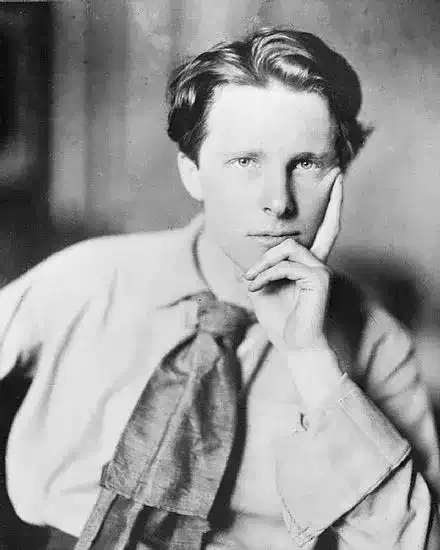
Rupert Brooke
IV: The Dead
These hearts were woven of human joys and cares,
Washed marvellously with sorrow, swift to mirth.
The years had given them kindness. Dawn was theirs,
And sunset, and the colours of the earth.
These had seen movement, and heard music; known
Slumber and waking; loved; gone proudly friended;
Felt the quick stir of wonder; sat alone;
Touched flowers and furs and cheeks. All this is ended.
There are waters blown by changing winds to laughter
And lit by the rich skies, all day. And after,
Frost, with a gesture, stays the waves that dance
And wandering loveliness. He leaves a white
Unbroken glory, a gathered radiance,
A width, a shining peace, under the night.
Read more →
425
Johann Wolfgang von Goethe
Genial Impulse
THUS roll I, never taking ease,
My tub, like Saint Diogenes,
Now serious am, now seek to please;
Now love and hate in turn one sees;
The motives now are those, now these;
Now nothings, now realities.
Thus roll I, never taking ease,
My tub, like Saint Diogenes.
Read more →
426
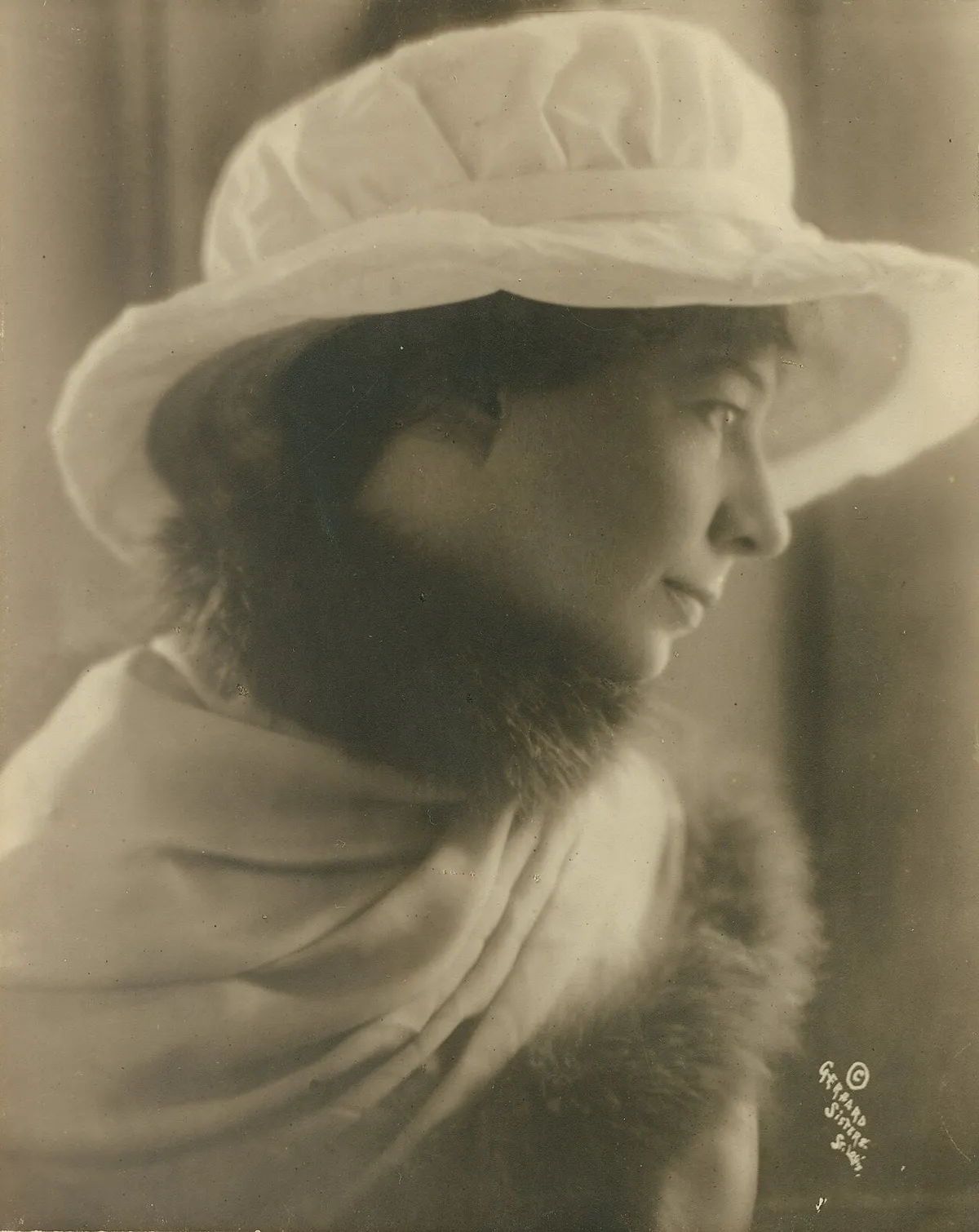
Sara Teasdale
Embers
I said, "My youth is gone
Like a fire beaten out by the rain,
That will never sway and sing
Or play with the wind again."
I said, "It is no great sorrow
That quenched my youth in me,
But only little sorrows
Beating ceaselessly."
I thought my youth was gone,
But you returned --
Like a flame at the call of the wind
It leaped and burned;
Threw off its ashen cloak,
And gowned anew
Gave itself like a bride
Once more to you.
Read more →
425
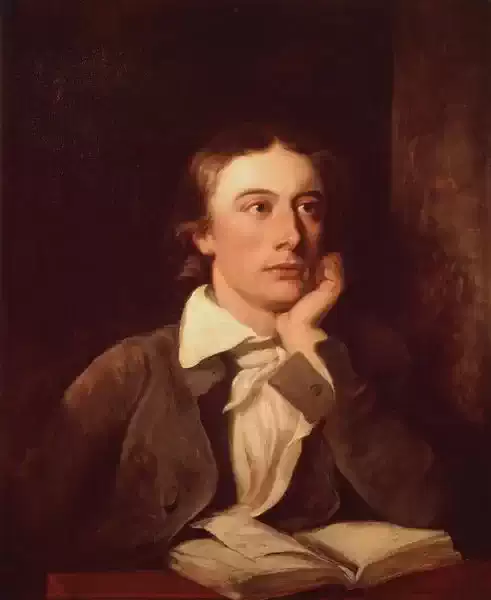
John Keats
To one who has been long in city pent
To one who has been long in city pent,
'Tis very sweet to look into the fair
And open face of heaven,--to breathe a prayer
Full in the smile of the blue firmament.
Who is more happy, when, with heart's content,
Fatigued he sinks into some pleasant lair
Of wavy grass, and reads a debonair
And gentle tale of love and languishment?
Returning home at evening, with an ear
Catching the notes of Philomel,--an eye
Watching the sailing cloudlet's bright career,
He mourns that day so soon has glided by:
E'en like the passage of an angel's tear
That falls through the clear ether silently.
Read more →
424

Nazim Hikmet
Angina Pectoris
If half my heart is here, doctor,
the other half is in China
with the army flowing
toward the Yellow River.
And, every morning, doctor,
every morning at sunrise my heart
is shot in Greece.
And every night,c doctor,
when the prisoners are asleep and the infirmary is deserted,
my heart stops at a run-down old house
in Istanbul.
And then after ten years
all i have to offer my poor people
is this apple in my hand, doctor,
one read apple:
my heart.
And that, doctor, that is the reason
for this angina pectoris--
not nicotine, prison, or arteriosclerosis.
I look at the night through the bars,
and despite the weight on my chest
my heart still beats with the most distant stars.
Trans. by Randy Blasing and Mutlu Konuk ()
Read more →
424
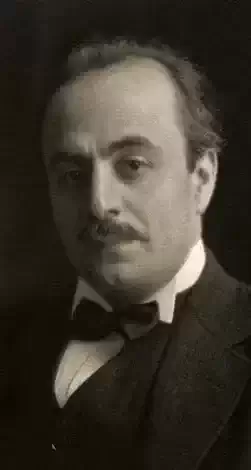
Khalil Gibran
The Life of Love XVI
Spring
Come, my beloved; let us walk amidst the knolls,
For the snow is water, and Life is alive from its
Slumber and is roaming the hills and valleys.
Let us follow the footprints of Spring into the
Distant fields, and mount the hilltops to draw
Inspiration high above the cool green plains.
Dawn of Spring has unfolded her winter-kept garment
And placed it on the peach and citrus trees; and
They appear as brides in the ceremonial custom of
the Night of Kedre.
The sprigs of grapevine embrace each other like
Sweethearts, and the brooks burst out in dance
Between the rocks, repeating the song of joy;
And the flowers bud suddenly from the heart of
Nature, like foam from the rich heart of the sea.
Come, my beloved; let us drink the last of Winter's
Tears from the cupped lilies, and soothe our spirits
With the shower of notes from the birds, and wander
In exhilaration through the intoxicating breeze.
Let us sit by that rock, where violets hide; let us
Pursue their exchange of the sweetness of kisses.
Summer
Let us go into the fields, my beloved, for the
Time of harvest approaches, and the sun's eyes
Are ripening the grain.
Let us tend the fruit of the earth, as the
Spirit nourishes the grains of Joy from the
Seeds of Love, sowed deep in our hearts.
Let us fill our bins with the products of
Nature, as life fills so abundantly the
Domain of our hearts with her endless bounty.
Let us make the flowers our bed, and the
Sky our blanket, and rest our heads together
Upon pillows of soft hay.
Let us relax after the day's toil, and listen
To the provoking murmur of the brook.
Autumn
Let us go and gather grapes in the vineyard
For the winepress, and keep the wine in old
Vases, as the spirit keeps Knowledge of the
Ages in eternal vessels.
Let us return to our dwelling, for the wind has
Caused the yellow leaves to fall and shroud the
Withering flowers that whisper elegy to Summer.
Come home, my eternal sweetheart, for the birds
Have made pilgrimage to warmth and lest the chilled
Prairies suffering pangs of solitude. The jasmine
And myrtle have no more tears.
Let us retreat, for the tired brook has
Ceased its song; and the bubblesome springs
Are drained of their copious weeping; and
Their cautious old hills have stored away
Their colorful garments.
Come, my beloved; Nature is justly weary
And is bidding her enthusiasm farewell
With quiet and contented melody.
Winter
Come close to me, oh companion of my full life;
Come close to me and let not Winter's touch
Enter between us. Sit by me before the hearth,
For fire is the only fruit of Winter.
Speak to me of the glory of your heart, for
That is greater than the shrieking elements
Beyond our door.
Bind the door and seal the transoms, for the
Angry countenance of the heaven depresses my
Spirit, and the face of our snow-laden fields
Makes my soul cry.
Feed the lamp with oil and let it not dim, and
Place it by you, so I can read with tears what
Your life with me has written upon your face.
Bring Autumn's wine. Let us drink and sing the
Song of remembrance to Spring's carefree sowing,
And Summer's watchful tending, and Autumn's
Reward in harvest.
Come close to me, oh beloved of my soul; the
Fire is cooling and fleeing under the ashes.
Embrace me, for I fear loneliness; the lamp is
Dim, and the wine which we pressed is closing
Our eyes. Let us look upon each other before
They are shut.
Find me with your arms and embrace me; let
Slumber then embrace our souls as one.
Kiss me, my beloved, for Winter has stolen
All but our moving lips.
You are close by me, My Forever.
How deep and wide will be the ocean of Slumber,
And how recent was the dawn!
Read more →
424
Ella Wheeler Wilcox
Our Lives
Our lives are songs. God writes the words,
And we set them to music at pleasure;
And the song grows glad, or sweet, or sad,
As we choose to fashion the measure.
We must write the music, whatever the song,
Whatever its rhyme, or metre;
And if it is sad, we can make it glad,
Or if sweet, we can make it sweeter.
One has a song that is free and strong;
But the music he writes is minor;
And the sad, sad strain is replete with pain,
And the singer becomes a repiner.
And he thinks God gave him a dirge-like lay,
Nor knows that the words are cheery;
And the song seems lonely and solemn-only
Because the music is dreary.
And the song of another has through the words
An under current of sadness;
But he sets it to music of ringing chords,
And makes it a pean of gladness.
So whether our songs are sad or not,
We can give the world more pleasure,
And better ourselves, by setting the words
To a glad, triumphant measure.
1872
Read more →
423
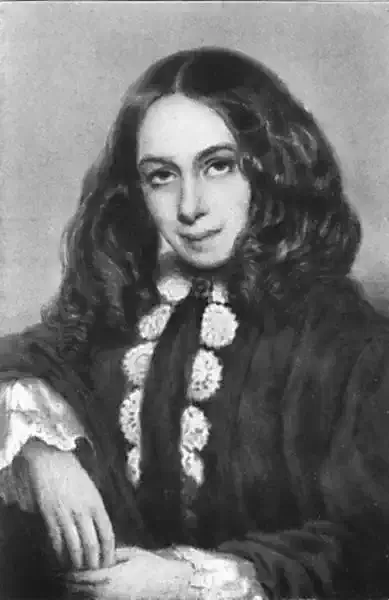
Elizabeth Barrett Browning
Sonnet XXXIX: Because Thou Hast the Power
Because thou hast the power and own'st the grace
To look through and behind this mask of me
(Against which years have beat thus blanchingly
With their rains), and behold my soul's true face,
The dim and weary witness of life's race,
Because thou hast the faith and love to see,
Through that same soul's distracting lethargy,
The patient angel waiting for a place
In the new Heavens,--because nor sin nor woe,
Nor God's infliction, nor death's neighbourhood,
Nor all which others viewing, turn to go,
Nor all of which makes me tired of all, self-viewed,--
Nothing repels thee,...Dearest, teach me so
To pour out gratitude, as thou dost, good!
Read more →
421

Christina Rossetti
Monna Innominata: A Sonnet of Sonnets
Lo dì che han detto a' dolci amici addio. - Dante
Amor, con quanto sforzo oggi mi vinci! - Petrarca
Come back to me, who wait and watch for you:--
Or come not yet, for it is over then,
And long it is before you come again,
So far between my pleasures are and few.
While, when you come not, what I do I do
Thinking "Now when he comes," my sweetest when:"
For one man is my world of all the men
This wide world holds; O love, my world is you.
Howbeit, to meet you grows almost a pang
Because the pang of parting comes so soon;
My hope hangs waning, waxing, like a moon
Between the heavenly days on which we meet:
Ah me, but where are now the songs I sang
When life was sweet because you call'd them sweet?
2
Era già 1'ora che volge il desio. - Dante
Ricorro al tempo ch' io vi vidi prima. - Petrarca
I wish I could remember that first day,
First hour, first moment of your meeting me,
If bright or dim the season, it might be
Summer or winter for aught I can say;
So unrecorded did it slip away,
So blind was I to see and to foresee,
So dull to mark the budding of my tree
That would not blossom yet for many a May.
If only I could recollect it, such
A day of days! I let it come and go
As traceless as a thaw of bygone snow;
It seem'd to mean so little, meant so much;
If only now I could recall that touch,
First touch of hand in hand--Did one but know!
3
O ombre vane, fuor che ne l'aspetto! - Dante
Immaginata guida la conduce. - Petrarca
I dream of you to wake: would that I might
Dream of you and not wake but slumber on;
Nor find with dreams the dear companion gone,
As summer ended summer birds take flight.
In happy dreams I hold you full in sight,
I blush again who waking look so wan;
Brighter than sunniest day that ever shone,
In happy dreams your smile makes day of night.
Thus only in a dream we are at one,
Thus only in a dream we give and take
The faith that maketh rich who take or give;
If thus to sleep is sweeter than to wake,
To die were surely sweeter than to live,
Though there be nothing new beneath the sun.
4
Poca favilla gran fliamma seconda. - Dante
Ogni altra cosa, ogni pensier va fore,
E sol ivi con voi rimansi amore. - Petrarca
I lov'd you first: but afterwards your love
Outsoaring mine, sang such a loftier song
As drown'd the friendly cooings of my dove.
Which owes the other most? my love was long,
And yours one moment seem'd to wax more strong;
I lov'd and guess'd at you, you construed me--
And lov'd me for what might or might not be
Nay, weights and measures do us both a wrong.
For verily love knows not "mine" or "thine;"
With separate "I" and "thou" free love has done,
For one is both and both are one in love:
Rich love knows nought of "thine that is not mine;"
Both have the strength and both the length thereof,
Both of us, of the love which makes us one.
5
Amor che a nullo amato amar perdona. - Dante
Amor m'addusse in sì gioiosa spene. - Petrarca
O my heart's heart, and you who are to me
More than myself myself, God be with you,
Keep you in strong obedience leal and true
To Him whose noble service setteth free,
Give you all good we see or can foresee,
Make your joys many and your sorrows few,
Bless you in what you bear and what you do,
Yea, perfect you as He would have you be.
So much for you; but what for me, dear friend?
To love you without stint and all I can
Today, tomorrow, world without an end;
To love you much and yet to love you more,
As Jordan at his flood sweeps either shore;
Since woman is the helpmeet made for man.
6
Or puoi la quantitate
Comprender de l'amor che a te mi scalda. - Dante
Non vo' che da tal nodo mi scioglia. - Petrarca
Trust me, I have not earn'd your dear rebuke,
I love, as you would have me, God the most;
Would lose not Him, but you, must one be lost,
Nor with Lot's wife cast back a faithless look
Unready to forego what I forsook;
This say I, having counted up the cost,
This, though I be the feeblest of God's host,
The sorriest sheep Christ shepherds with His crook.
Yet while I love my God the most, I deem
That I can never love you overmuch;
I love Him more, so let me love you too;
Yea, as I apprehend it, love is such
I cannot love you if I love not Him,
I cannot love Him if I love not you.
7
Qui primavera sempre ed ogni frutto. - Dante
Ragionando con meco ed io con lui. - Petrarca
"Love me, for I love you"--and answer me,
"Love me, for I love you"--so shall we stand
As happy equals in the flowering land
Of love, that knows not a dividing sea.
Love builds the house on rock and not on sand,
Love laughs what while the winds rave desperately;
And who hath found love's citadel unmann'd?
And who hath held in bonds love's liberty?
My heart's a coward though my words are brave
We meet so seldom, yet we surely part
So often; there's a problem for your art!
Still I find comfort in his Book, who saith,
Though jealousy be cruel as the grave,
And death be strong, yet love is strong as death.
8
Come dicesse a Dio: D'altro non calme. - Dante
Spero trovar pietà non che perdono. - Petrarca
"I, if I perish, perish"--Esther spake:
And bride of life or death she made her fair
In all the lustre of her perfum'd hair
And smiles that kindle longing but to slake.
She put on pomp of loveliness, to take
Her husband through his eyes at unaware;
She spread abroad her beauty for a snare,
Harmless as doves and subtle as a snake.
She trapp'd him with one mesh of silken hair,
She vanquish'd him by wisdom of her wit,
And built her people's house that it should stand:--
If I might take my life so in my hand,
And for my love to Love put up my prayer,
And for love's sake by Love be granted it!
9
O dignitosa coscienza e netta! - Dante
Spirto più acceso di virtuti ardenti. - Petrarca
Thinking of you, and all that was, and all
That might have been and now can never be,
I feel your honour'd excellence, and see
Myself unworthy of the happier call:
For woe is me who walk so apt to fall,
So apt to shrink afraid, so apt to flee,
Apt to lie down and die (ah, woe is me!)
Faithless and hopeless turning to the wall.
And yet not hopeless quite nor faithless quite,
Because not loveless; love may toil all night,
But take at morning; wrestle till the break
Of day, but then wield power with God and man:--
So take I heart of grace as best I can,
Ready to spend and be spent for your sake.
10
Con miglior corso e con migliore stella. - Dante
La vita fugge e non s'arresta un' ora. - Petrarca
Time flies, hope flags, life plies a wearied wing;
Death following hard on life gains ground apace;
Faith runs with each and rears an eager face,
Outruns the rest, makes light of everything,
Spurns earth, and still finds breath to pray and sing;
While love ahead of all uplifts his praise,
Still asks for grace and still gives thanks for grace,
Content with all day brings and night will bring.
Life wanes; and when love folds his wings above
Tired hope, and less we feel his conscious pulse,
Let us go fall asleep, dear friend, in peace:
A little while, and age and sorrow cease;
A little while, and life reborn annuls
Loss and decay and death, and all is love.
11
Vien dietro a me e lascia dir le genti. - Dante
Contando i casi della vita nostra. - Petrarca
Many in aftertimes will say of you
"He lov'd her"--while of me what will they say?
Not that I lov'd you more than just in play,
For fashion's sake as idle women do.
Even let them prate; who know not what we knew
Of love and parting in exceeding pain,
Of parting hopeless here to meet again,
Hopeless on earth, and heaven is out of view.
But by my heart of love laid bare to you,
My love that you can make not void nor vain,
Love that foregoes you but to claim anew
Beyond this passage of the gate of death,
I charge you at the Judgment make it plain
My love of you was life and not a breath.
12
Amor, che ne la mente mi ragiona. - Dante
Amor vien nel bel viso di costei. - Petrarca
If there be any one can take my place
And make you happy whom I grieve to grieve,
Think not that I can grudge it, but believe
I do commend you to that nobler grace,
That readier wit than mine, that sweeter face;
Yea, since your riches make me rich, conceive
I too am crown'd, while bridal crowns I weave,
And thread the bridal dance with jocund pace.
For if I did not love you, it might be
That I should grudge you some one dear delight;
But since the heart is yours that was mine own,
Your pleasure is my pleasure, right my right,
Your honourable freedom makes me free,
And you companion'd I am not alone.
13
E drizzeremo gli occhi al Primo Amore. - Dante
Ma trovo peso non da le mie braccia. - Petrarca
If I could trust mine own self with your fate,
Shall I not rather trust it in God's hand?
Without Whose Will one lily doth not stand,
Nor sparrow fall at his appointed date;
Who numbereth the innumerable sand,
Who weighs the wind and water with a weight,
To Whom the world is neither small nor great,
Whose knowledge foreknew every plan we plann'd.
Searching my heart for all that touches you,
I find there only love and love's goodwill
Helpless to help and impotent to do,
Of understanding dull, of sight most dim;
And therefore I commend you back to Him
Whose love your love's capacity can fill.
14
E la Sua Volontade è nostra pace. - Dante
Sol con questi pensier, con altre chiome. - Petrarca
Youth gone, and beauty gone if ever there
Dwelt beauty in so poor a face as this;
Youth gone and beauty, what remains of bliss?
I will not bind fresh roses in my hair,
To shame a cheek at best but little fair,--
Leave youth his roses, who can bear a thorn,--
I will not seek for blossoms anywhere,
Except such common flowers as blow with corn.
Youth gone and beauty gone, what doth remain?
The longing of a heart pent up forlorn,
A silent heart whose silence loves and longs;
The silence of a heart which sang its songs
While youth and beauty made a summer morn,
Silence of love that cannot sing again.
Read more →
422
Ella Wheeler Wilcox
Sestina
I wandered o'er the vast green plains of youth,
And searched for Pleasure. On a distant height
Fame's silhouette stood sharp against the skies.
Beyond vast crowds that thronged a broad highway
I caught the glimmer of a golden goal,
While from a blooming bower smiled siren Love.
Straight gazing in her eyes, I laughed at Love,
With all the haughty insolence of youth,
As past her bower I strode to seek my goal.
'Now will I climb to glory's dizzy height, '
I said, ' for there above the common way
Doth pleasure dwell companioned by the skies.'
But when I reached that summit near the skies,
So far from man I seemed, so far from Love'
Not here, ' I cried, 'doth Pleasure find her way, '
Seen from the distant borderland of youth.
Fame smiles upon us from her sun-kissed height,
But frowns in shadows when we reach the goal.
Then were mine eyes fixed on that glittering goal,
Dear to all sense-sunk souls beneath the skies.
Gold tempts the artist from the lofty height,
Gold lures the maiden from the arms of Love,
Gold buys the fresh ingenuous heart of youth,
'And gold, ' I said, 'will show me Pleasure's way.'
But ah! the soil and discord of that way,
Where savage hordes rushed headlong to the goal,
Dead to the best impulses of their youth,
Blind to the azure beauty of the skies;
Dulled to the voice of conscience and of love,
They wandered far from Truth's eternal height.
Then Truth spoke to me from that noble height,
Saying: 'Thou didst pass Pleasure on the way,
She with the yearning eyes so full of Love,
Whom thou disdained to seek for glory's goal.'
Two blending paths beneath God's arching skies
Lead straight to Pleasure. Ah, blind heart of youth,
Not up fame's height, not toward the base god's goal,
Doth Pleasure make her way, but 'neath calm skies
Where Duty walks with Love in endless youth.
Read more →
423
John Keats
Sonnet To George Keats: Written In Sickness
Brother belov'd if health shall smile again,
Upon this wasted form and fever'd cheek:
If e'er returning vigour bid these weak
And languid limbs their gladsome strength regain,
Well may thy brow the placid glow retain
Of sweet content and thy pleas'd eye may speak
The conscious self applause, but should I seek
To utter what this heart can feel, Ah! vain
Were the attempt! Yet kindest friends while o'er
My couch ye bend, and watch with tenderness
The being whom your cares could e'en restore,
From the cold grasp of Death, say can you guess
The feelings which these lips can ne'er express;
Feelings, deep fix'd in grateful memory's store.
Read more →
423
Ella Wheeler Wilcox
Response
I said this morning, as I leaned and threw
My shutters open to the Spring's surprise,
'Tell me, O Earth, how is it that in you
Year after year the same fresh feelings rise?
How do you keep your young exultant glee?
No more those sweet emotions come to me.
'I note through all your fissures how the tide
Of healthful life goes leaping as of old;
Your royal dawns retain their pomp and pride;
Your sunsets lose no atom of their gold.
How can this wonder be?' My soul's fine ear
Leaned, listening, till a small voice answered near:
'My days lapse never over into night;
My nights encroach not on the rights of dawn.
I rush not breathless after some delight;
I waste no grief for any pleasure gone.
My July noons burn not the entire year.
Heart, hearken well!' 'Yes, yes; go on; I hear.'
'I do not strive to make my sunsets' gold
Pave all the dim and distant realms of space.
I do not bid my crimson dawns unfold
To lend the midnight a fictitious grace.
I break no law, for all God's laws are good.
Heart, hast thou heard?' 'Yes, yes; and understood.'
Read more →
422
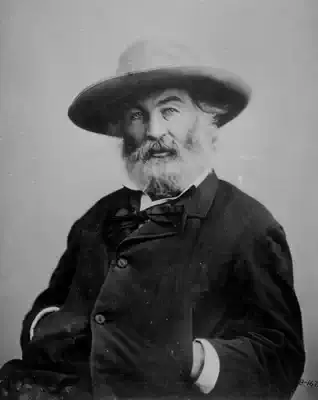
Walt Whitman
Eidólons
I MET a Seer,
Passing the hues and objects of the world,
The fields of art and learning, pleasure, sense,
To glean Eidólons.
Put in thy chants, said he,
No more the puzzling hour, nor day--nor segments, parts, put in,
Put first before the rest, as light for all, and entrance-song of
all,
That of Eidólons.
Ever the dim beginning;
Ever the growth, the rounding of the circle;
Ever the summit, and the merge at last, (to surely start again,)
Eidólons! Eidólons!
Ever the mutable!
Ever materials, changing, crumbling, re-cohering;
Ever the ateliers, the factories divine,
Issuing Eidólons!
Lo! I or you!
Or woman, man, or State, known or unknown,
We seeming solid wealth, strength, beauty build,
But really build Eidólons.
The ostent evanescent;
The substance of an artist's mood, or savan's studies long,
Or warrior's, martyr's, hero's toils,
To fashion his Eidólon.
Of every human life,
(The units gather'd, posted--not a thought, emotion, deed, left out;)
The whole, or large or small, summ'd, added up,
In its Eidólon.
The old, old urge;
Based on the ancient pinnacles, lo! newer, higher pinnacles;
From Science and the Modern still impell'd,
The old, old urge, Eidólons.
The present, now and here,
America's busy, teeming, intricate whirl,
Of aggregate and segregate, for only thence releasing,
To-day's Eidólons.
These, with the past,
Of vanish'd lands--of all the reigns of kings across the sea,
Old conquerors, old campaigns, old sailors' voyages,
Joining Eidólons.
Densities, growth, façades,
Strata of mountains, soils, rocks, giant trees,
Far-born, far-dying, living long, to leave,
Eidólons everlasting.
Exaltè, rapt, extatic,
The visible but their womb of birth,
Of orbic tendencies to shape, and shape, and shape,
The mighty Earth-Eidólon.
All space, all time,
(The stars, the terrible perturbations of the suns,
Swelling, collapsing, ending--serving their longer, shorter use,)
Fill'd with Eidólons only.
The noiseless myriads!
The infinite oceans where the rivers empty!
The separate, countless free identities, like eyesight;
The true realities, Eidólons.
Not this the World,
Nor these the Universes--they the Universes,
Purport and end--ever the permanent life of life,
Eidólons, Eidólons.
Beyond thy lectures, learn'd professor,
Beyond thy telescope or spectroscope, observer keen--beyond all
mathematics,
Beyond the doctor's surgery, anatomy--beyond the chemist with his
chemistry,
The entities of entities, Eidólons.
Unfix'd, yet fix'd;
Ever shall be--ever have been, and are,
Sweeping the present to the infinite future,
Eidólons, Eidólons, Eidólons.
The prophet and the bard,
Shall yet maintain themselves--in higher stages yet,
Shall mediate to the Modern, to Democracy--interpret yet to them,
God, and Eidólons.
And thee, My Soul!
Joys, ceaseless exercises, exaltations!
Thy yearning amply fed at last, prepared to meet,
Thy mates, Eidólons.
Thy Body permanent,
The Body lurking there within thy Body,
The only purport of the Form thou art--the real I myself,
An image, an Eidólon.
Thy very songs, not in thy songs;
No special strains to sing--none for itself;
But from the whole resulting, rising at last and floating,
A round, full-orb'd Eidólon.
Read more →
424
William Butler Yeats
Fergus And The Druid
Fergus. This whole day have I followed in the rocks,
And you have changed and flowed from shape to shape,
First as a raven on whose ancient wings
Scarcely a feather lingered, then you seemed
A weasel moving on from stone to stone,
And now at last you wear a human shape,
A thin grey man half lost in gathering night.
Druid. What would you, king of the proud Red Branch kings?
Fergus. This would I Say, most wise of living souls:
Young subtle Conchubar sat close by me
When I gave judgment, and his words were wise,
And what to me was burden without end,
To him seemed easy, So I laid the crown
Upon his head to cast away my sorrow.
Druid. What would you, king of the proud Red Branch kings?
Fergus. A king and proud! and that is my despair.
I feast amid my people on the hill,
And pace the woods, and drive my chariot-wheels
In the white border of the murmuring sea;
And still I feel the crown upon my head
Druid. What would you, Fergus?
Fergus. Be no more a king
But learn the dreaming wisdom that is yours.
Druid. Look on my thin grey hair and hollow cheeks
And on these hands that may not lift the sword,
This body trembling like a wind-blown reed.
No woman's loved me, no man sought my help.
Fergus. A king is but a foolish labourer
Who wastes his blood to be another's dream.
Druid. Take, if you must, this little bag of dreams;
Unloose the cord, and they will wrap you round.
Fergus. I See my life go drifting like a river
From change to change; I have been many things --
A green drop in the surge, a gleam of light
Upon a sword, a fir-tree on a hill,
An old slave grinding at a heavy quern,
A king sitting upon a chair of gold --
And all these things were wonderful and great;
But now I have grown nothing, knowing all.
Ah! Druid, Druid, how great webs of sorrow
Lay hidden in the small slate-coloured thing!
Read more →
424
Ella Wheeler Wilcox
Fading*
She sits beside the window. All who pass
Turn once again to gaze on her sweet face.
She is so fair; but soon, too soon, alas,
To lie down in her last resting-place.
No gems are brighter than her sparkling eyes,
Her brow like polished marble, white and fair -
Her cheeks are glowing as the sunset skies You
would not dream that Death was lurking there.
But, Oh! he lingers closely at her side,
And when the forest dons her Autumn dress,
We know that he will claim her as his bride,
And earth will number one fair spirit less.
She sees the meadow robed in richest green The
laughing stream - the willows bending o'er.
With tear-dimmed eyes she views each sylvan scene,
And thinks earth never was so fair before.
We do not sigh for heaven, till we have known
Something of sorrow, something of grief and woe,
And as a summer day her life has flown.
Oh, can we wonder she is loth to go?
She has no friends in heaven: all are here.
No lost one waits her in that unknown land,
And life grows doubly, trebly sweet and dear
As day by day she nears the mystic strand.
We love her and we grieve to see her go.
But it is Christ who calls her to His breast,
And He shall greet her, and she soon shall know
The joys of souls that dwell among the blest.
Read more →
421