
Soul

Henry Wadsworth Longfellow
In The Harbour: Memories
Oft I remember those I have known
In other days, to whom my heart was lead
As by a magnet, and who are not dead,
But absent, and their memories overgrown
With other thoughts and troubles of my own,
As graves with grasses are, and at their head
The stone with moss and lichens so o'er spread,
Nothing is legible but the name alone.
And is it so with them? After long years.
Do they remember me in the same way,
And is the memory pleasant as to me?
I fear to ask; yet wherefore are my fears?
Pleasures, like flowers, may wither and decay,
And yet the root perennial may be.
Read more →
430
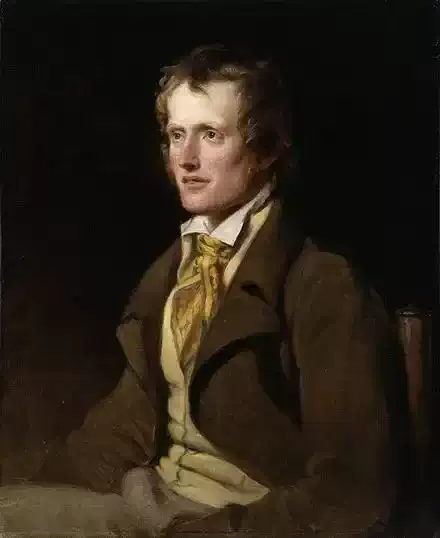
John Clare
Summer Images
Now swarthy Summer, by rude health embrowned,
Precedence takes of rosy fingered Spring;
And laughing Joy, with wild flowers prank'd, and crown'd,
A wild and giddy thing,
And Health robust, from every care unbound,
Come on the zephyr's wing,
And cheer the toiling clown.
Happy as holiday-enjoying face,
Loud tongued, and "merry as a marriage bell,"
Thy lightsome step sheds joy in every place;
And where the troubled dwell,
Thy witching charms wean them of half their cares;
And from thy sunny spell,
They greet joy unawares.
Then with thy sultry locks all loose and rude,
And mantle laced with gems of garish light,
Come as of wont; for I would fain intrude,
And in the world's despite,
Share the rude wealth that thy own heart beguiles;
If haply so I might
Win pleasure from thy smiles.
Me not the noise of brawling pleasure cheers,
In nightly revels or in city streets;
But joys which soothe, and not distract the ears,
That one at leisure meets
In the green woods, and meadows summer-shorn,
Or fields, where bee-fly greets
The ear with mellow horn.
The green-swathed grasshopper, on treble pipe,
Sings there, and dances, in mad-hearted pranks;
There bees go courting every flower that's ripe,
On baulks and sunny banks;
And droning dragon-fly, on rude bassoon,
Attempts to give God thanks
In no discordant tune.
The speckled thrush, by self-delight embued,
There sings unto himself for joy's amends,
And drinks the honey dew of solitude.
There Happiness attends
With inbred Joy until the heart o'erflow,
Of which the world's rude friends,
Nought heeding, nothing know.
There the gay river, laughing as it goes,
Plashes with easy wave its flaggy sides,
And to the calm of heart, in calmness shows
What pleasure there abides,
To trace its sedgy banks, from trouble free:
Spots Solitude provides
To muse, and happy be.
There ruminating 'neath some pleasant bush,
On sweet silk grass I stretch me at mine ease,
Where I can pillow on the yielding rush;
And, acting as I please,
Drop into pleasant dreams; or musing lie,
Mark the wind-shaken trees,
And cloud-betravelled sky.
There think me how some barter joy for care,
And waste life's summer-health in riot rude,
Of nature, nor of nature's sweets aware.
When passions vain intrude,
These, by calm musings, softened are and still;
And the heart's better mood
Feels sick of doing ill.
There I can live, and at my leisure seek
Joys far from cold restraints--not fearing pride--
Free as the winds, that breathe upon my cheek
Rude health, so long denied.
Here poor Integrity can sit at ease,
And list self-satisfied
The song of honey-bees.
The green lane now I traverse, where it goes
Nought guessing, till some sudden turn espies
Rude batter'd finger post, that stooping shows
Where the snug mystery lies;
And then a mossy spire, with ivy crown,
Cheers up the short surprise,
And shows a peeping town.
I see the wild flowers, in their summer morn
Of beauty, feeding on joy's luscious hours;
The gay convolvulus, wreathing round the thorn,
Agape for honey showers;
And slender kingcup, burnished with the dew
Of morning's early hours,
Like gold yminted new.
And mark by rustic bridge, o'er shallow stream,
Cow-tending boy, to toil unreconciled,
Absorbed as in some vagrant summer dream;
Who now, in gestures wild,
Starts dancing to his shadow on the wall,
Feeling self-gratified,
Nor fearing human thrall.
Or thread the sunny valley laced with streams,
Or forests rude, and the o'ershadow'd brims
Of simple ponds, where idle shepherd dreams,
Stretching his listless limbs;
Or trace hay-scented meadows, smooth and long,
Where joy's wild impulse swims
In one continued song.
I love at early morn, from new mown swath,
To see the startled frog his route pursue;
To mark while, leaping o'er the dripping path,
His bright sides scatter dew,
The early lark that from its bustle flies,
To hail his matin new;
And watch him to the skies.
To note on hedgerow baulks, in moisture sprent,
The jetty snail creep from the mossy thorn,
With earnest heed, and tremulous intent,
Frail brother of the morn,
That from the tiny bent's dew-misted leaves
Withdraws his timid horn,
And fearful vision weaves.
Or swallow heed on smoke-tanned chimney top,
Wont to be first unsealing Morning's eye,
Ere yet the bee hath gleaned one wayward drop
Of honey on his thigh;
To see him seek morn's airy couch to sing,
Until the golden sky
Bepaint his russet wing.
Or sauntering boy by tanning corn to spy,
With clapping noise to startle birds away,
And hear him bawl to every passer by
To know the hour of day;
While the uncradled breezes, fresh and strong,
With waking blossoms play,
And breathe Æolian song.
I love the south-west wind, or low or loud,
And not the less when sudden drops of rain
Moisten my glowing cheek from ebon cloud,
Threatening soft showers again,
That over lands new ploughed and meadow grounds,
Summer's sweet breath unchain,
And wake harmonious sounds.
Rich music breathes in Summer's every sound;
And in her harmony of varied greens,
Woods, meadows, hedge-rows, corn-fields, all around
Much beauty intervenes,
Filling with harmony the ear and eye;
While o'er the mingling scenes
Far spreads the laughing sky.
See, how the wind-enamoured aspen leaves
Turn up their silver lining to the sun!
And hark! the rustling noise, that oft deceives,
And makes the sheep-boy run:
The sound so mimics fast-approaching showers,
He thinks the rain's begun,
And hastes to sheltering bowers.
But now the evening curdles dank and grey,
Changing her watchet hue for sombre weed;
And moping owls, to close the lids of day,
On drowsy wing proceed;
While chickering crickets, tremulous and long,
Light's farewell inly heed,
And give it parting song.
The pranking bat its flighty circlet makes;
The glow-worm burnishes its lamp anew;
O'er meadows dew-besprent, the beetle wakes
Inquiries ever new,
Teazing each passing ear with murmurs vain,
As wanting to pursue
His homeward path again.
Hark! 'tis the melody of distant bells
That on the wind with pleasing hum rebounds
By fitful starts, then musically swells
O'er the dim stilly grounds;
While on the meadow-bridge the pausing boy
Listens the mellow sounds,
And hums in vacant joy.
Now homeward-bound, the hedger bundles round
His evening faggot, and with every stride
His leathern doublet leaves a rustling sound,
Till silly sheep beside
His path start tremulous, and once again
Look back dissatisfied,
And scour the dewy plain.
How sweet the soothing calmness that distills
O'er the heart's every sense its opiate dews,
In meek-eyed moods and ever balmy trills!
That softens and subdues,
With gentle Quiet's bland and sober train,
Which dreamy eve renews
In many a mellow strain!
I love to walk the fields, they are to me
A legacy no evil can destroy;
They, like a spell, set every rapture free
That cheer'd me when a boy.
Play--pastime--all Time's blotting pen conceal'd,
Comes like a new-born joy,
To greet me in the field.
For Nature's objects ever harmonize
With emulous Taste, that vulgar deed annoys;
Which loves in pensive moods to sympathize,
And meet vibrating joys
O'er Nature's pleasing things; nor slighting, deems
Pastimes, the Muse employs,
Vain and obtrusive themes.
Read more →
429
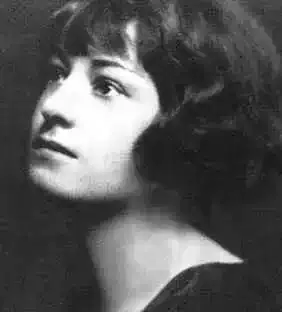
Dorothy Parker
The Satin Dress
Needle, needle, dip and dart,
Thrusting up and down,
Where's the man could ease a heart
Like a satin gown?
See the stitches curve and crawl
Round the cunning seams-
Patterns thin and sweet and small
As a lady's dreams.
Wantons go in bright brocade;
Brides in organdie;
Gingham's for the plighted maid;
Satin's for the free!
Wool's to line a miser's chest;
Crepe's to calm the old;
Velvet hides an empty breast
Satin's for the bold!
Lawn is for a bishop's yoke;
Linen's for a nun;
Satin is for wiser folk-
Would the dress were done!
Satin glows in candlelight
Satin's
for the proud!
They will say who watch at night,
"What a fine shroud!"
Read more →
428
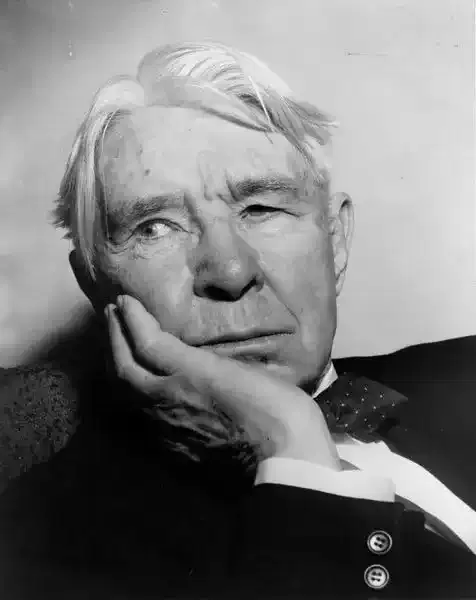
Carl Sandburg
Aprons of Silence
Many things I might have said today.
And I kept my mouth shut.
So many times I was asked
To come and say the same things
Everybody was saying, no end
To the yes-yes, yes-yes,
me-too, me-too.
The aprons of silence covered me.
A wire and hatch held my tongue.
I spit nails into an abyss and listened.
I shut off the gable of Jones, Johnson, Smith,
All whose names take pages in the city directory.
I fixed up a padded cell and lugged it around.
I locked myself in and nobody knew it.
Only the keeper and the kept in the hoosegow
Knew it--on the streets, in the post office,
On the cars, into the railroad station
Where the caller was calling, "All a-board,
All a-board for . . . Blaa-blaa . . . Blaa-blaa,
Blaa-blaa . . . and all points northwest . . .all a-board."
Here I took along my own hoosegow
And did business with my own thoughts.
Do you see? It must be the aprons of silence.
Read more →
429

Claude Mckay
My Mother
I
Reg wished me to go with him to the field,
I paused because I did not want to go;
But in her quiet way she made me yield
Reluctantly, for she was breathing low.
Her hand she slowly lifted from her lap
And, smiling sadly in the old sweet way,
She pointed to the nail where hung my cap.
Her eyes said: I shall last another day.
But scarcely had we reached the distant place,
When o'er the hills we heard a faint bell ringing;
A boy came running up with frightened face;
We knew the fatal news that he was bringing.
I heard him listlessly, without a moan,
Although the only one I loved was gone.
II
The dawn departs, the morning is begun,
The trades come whispering from off the seas,
The fields of corn are golden in the sun,
The dark-brown tassels fluttering in the breeze;
The bell is sounding and the children pass,
Frog-leaping, skipping, shouting, laughing shrill,
Down the red road, over the pasture-grass,
Up to the school-house crumbling on the hill.
The older folk are at their peaceful toil,
Some pulling up the weeds, some plucking corn,
And others breaking up the sun-baked soil.
Float, faintly-scented breeze, at early morn
Over the earth where mortals sow and reap--
Beneath its breast my mother lies asleep.
Read more →
429

Ella Wheeler Wilcox
Worldly Wisdom
If it were in my dead Past’s power
To let my Present bask
In some lost pleasure for an hour,
This is the boon I’d ask:
Re-pedestal from out the dust
Where long ago ‘twas hurled,
My beautiful incautious trust
In this unworthy world.
The symbol of my souls own truth –
I saw it go with tears –
The sweet unwisdom of my youth –
That vanished with the years.
Since knowledge brings us only grief,
I would return again
To happy ignorance and belief
In motives and in men.
For worldly wisdom learned in pain
Is in itself a cross,
Significant mayhap of gain,
Yet sign of saddest loss.
Read more →
429
Ella Wheeler Wilcox
The Times
The times are not degenerate. Man’s faith
Mounts higher than of old. No crumbling creed
Can take from the immortal soul the need
Of that supreme Creator, God. The wraith
Of dead beliefs we cherished in our youth
Fades but to let us welcome new-born Truth.
Man may not worship at the ancient shrine
Prone on his face, in self-accusing scorn.
That night is past. He hails a fairer morn,
And knows himself a something all divine;
No humble worm whose heritage is sin,
But, born of God, he feels the Christ within.
Not loud his prayers, as in the olden time,
But deep his reverence for that mighty force,
That occult working of the great all Source,
Which makes the present era so sublime.
Religion now means something high and broad,
And man stood never half so near to God.
Read more →
429
Ella Wheeler Wilcox
The Creed
Whoever was begotten by pure love,
And came desired and welcome into life,
Is of immaculate conception. He
Whose heart is full of tenderness and truth,
Who loves mankind more than he loves himself,
And cannot find room in his heart for hate,
May be another Christ. We all may be
The Saviours of the world if we believe
In the Divinity which dwells in us
And worship it, and nail our grosser selves,
Our tempers, greeds, and our unworthy aims,
Upon the cross. Who giveth love to all;
Pays kindness for unkindness, smiles for frowns;
And lends new courage to each fainting heart,
And strengthens hope and scatters joy abroad—
He, too, is a Redeemer, Son of God.
Read more →
429
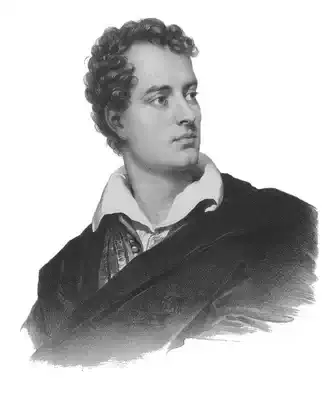
Lord Byron
Impromptu, In Reply To A Friend
When, from the heart where Sorrow sits,
Her dusky shadow mounts too high,
And o'er the changing aspect flits,
And clouds the brow, or fills the eye;
Heed not that gloom, which soon shall sink:
My thoughts their dungeon know too well;
Back to my breast the wanderers shrink,
And droop within their silent cell.
Read more →
428
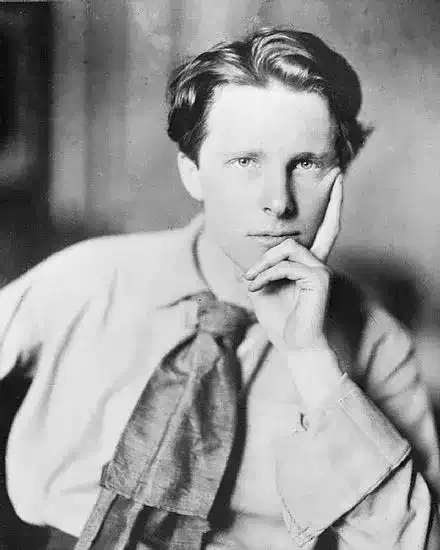
Rupert Brooke
The Vision of the Archangels
Slowly up silent peaks, the white edge of the world,
Trod four archangels, clear against the unheeding sky,
Bearing, with quiet even steps, and great wings furled,
A little dingy coffin; where a child must lie,
It was so tiny. (Yet, you had fancied, God could never
Have bidden a child turn from the spring and the sunlight,
And shut him in that lonely shell, to drop for ever
Into the emptiness and silence, into the night.…)
They then from the sheer summit cast, and watched it fall,
Through unknown glooms, that frail black coffin—and therein
God’s little pitiful Body lying, worn and thin,
And curled up like some crumpled, lonely flower petal—
Till it was no more visible; then turned again
With sorrowful quiet faces downward to the plain.
Read more →
428

Phillis Wheatley
A Farewell to America
I.
Adieu, New-England's smiling meads,
Adieu, the flow'ry plain:
I leave thine op'ning charms, O spring,
And tempt the roaring main.
II.
In vain for me the flow'rets rise,
And boast their gaudy pride,
While here beneath the northern skies
I mourn for health deny'd.
III.
Celestial maid of rosy hue,
O let me feel thy reign!
I languish till thy face I view,
Thy vanish'd joys regain.
IV.
Susanna mourns, nor can I bear
To see the crystal show'r,
Or mark the tender falling tear
At sad departure's hour;
V.
Not unregarding can I see
Her soul with grief opprest:
But let no sighs, no groans for me,
Steal from her pensive breast.
VI.
In vain the feather'd warblers sing,
In vain the garden blooms,
And on the bosom of the spring
Breathes out her sweet perfumes.
VII.
While for Britannia's distant shore
We sweep the liquid plain,
And with astonish'd eyes explore
The wide-extended main.
VIII.
Lo! Health appears! celestial dame!
Complacent and serene,
With Hebe's mantle o'er her Frame,
With soul-delighting mien.
IX.
To mark the vale where London lies
With misty vapours crown'd,
Which cloud Aurora's thousand dyes,
And veil her charms around.
X.
Why, Phoebus, moves thy car so slow?
So slow thy rising ray?
Give us the famous town to view,
Thou glorious king of day!
XI.
For thee, Britannia, I resign
New-England's smiling fields;
To view again her charms divine,
What joy the prospect yields!
XII.
But thou! Temptation hence away,
With all thy fatal train,
Nor once seduce my soul away,
By thine enchanting strain.
XIII.
Thrice happy they, whose heav'nly shield
Secures their souls from harms,
And fell Temptation on the field
Of all its pow'r disarms!
Read more →
429

William Butler Yeats
The Withering Of The Boughs
I CRIED when the moon was mutmuring to the birds:
'Let peewit call and curlew cry where they will,
I long for your merry and tender and pitiful words,
For the roads are unending, and there is no place to my mind.'
The honey-pale moon lay low on the sleepy hill,
And I fell asleep upon lonely Echtge of streams.
No boughs have withered because of the wintry wind;
The boughs have withered because I have told them my dreams.
I know of the leafy paths that the witches take
Who come with their crowns of pearl and their spindles of wool,
And their secret smile, out of the depths of the lake;
I know where a dim moon drifts, where the Danaan kind
Wind and unwind their dances when the light grows cool
On the island lawns, their feet where the pale foam gleams.
No boughs have withered because of the wintry wind;
The boughs have withered because I have told them my dreams.
I know of the sleepy country, where swans fly round
Coupled with golden chains, and sing as they fly.
A king and a queen are wandering there, and the sound
Has made them so happy and hopeless, so deaf and so blind
With wisdom, they wander till all the years have gone by;
I know, and the curlew and peewit on Echtge of streams.
No boughs have withered because of the wintry wind;
The boughs have withered because I have told them my dreams.
Read more →
428
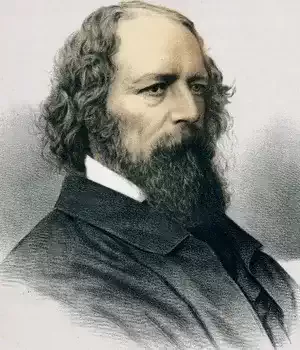
Alfred Lord Tennyson
In Memoriam A. H. H.: 96. You say, but with no touch of sco
You say, but with no touch of scorn,
Sweet-hearted, you, whose light-blue eyes
Are tender over drowning flies,
You tell me, doubt is Devil-born.
I know not: one indeed I knew
In many a subtle question versed,
Who touch'd a jarring lyre at first,
But ever strove to make it true:
Perplext in faith, but pure in deeds,
At last he beat his music out.
There lives more faith in honest doubt,
Believe me, than in half the creeds.
He fought his doubts and gather'd strength,
He would not make his judgment blind,
He faced the spectres of the mind
And laid them: thus he came at length
To find a stronger faith his own;
And Power was with him in the night,
Which makes the darkness and the light,
And dwells not in the light alone,
But in the darkness and the cloud,
As over Sinaï's peaks of old,
While Israel made their gods of gold,
Altho' the trumpet blew so loud.
Read more →
428
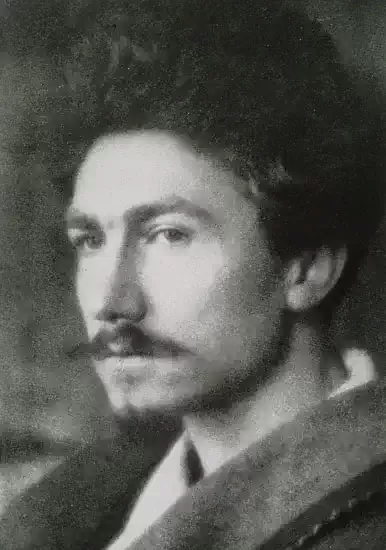
Ezra Pound
Speech For Psyche In The Golden Book Of Apuleius
All night, and as the wind lieth among
The cypress trees, he lay,
Nor held me save as air that brusheth by one
Close, and as the petals of flowers in falling
Waver and seem not drawn to earth, so he
Seemed over me to hover light as leaves
And closer me than air,
And music flowing through me seemed to open
Mine eyes upon new colours.
O winds, what wind can match the weight of him!
Read more →
425

Kazi Nazrul Islam
The Thorn of the Lotus
In my lotus-lake there remains only the
thorn of the lotus.
When did arise the tremendous noise,
Who did tear off the red lotus of my
bosom?
the lake from time to time maketh
the queries.
Why goeth not the thorn along with
the lotus?
I am now constantly covered with the cures
only of the bathing Nymph.
Will the wandering girls ever come to me?
Ever wear a garland made of my
lotus thread?
Will the pain of my thorn ever remain
only in my mind?
If the flower is gone, who will ever
entwine her bangle with the lotus-thorn?
[Translation: Abdul Hakim]
Read more →
426
Ella Wheeler Wilcox
One Woman's History
'The maiden free, the maiden wed.
Can never, never be the same,
A new life springs from out the dead.
And with the speaking of a name-
A breath upon the marriage bed,
She finds herself a something new.
'Where lay the shallows of the maid
No plummet line the wife can sound;
Where round the sunny islands played
The pulses of the great profound
Lies low the treacherous everglade.
'A wife is like an unknown sea,
Least known to him who thinks he knows
Where all the shores of Promise be,
And where the islands of Repose-
And where the rocks that he must flee.'
Read more →
426
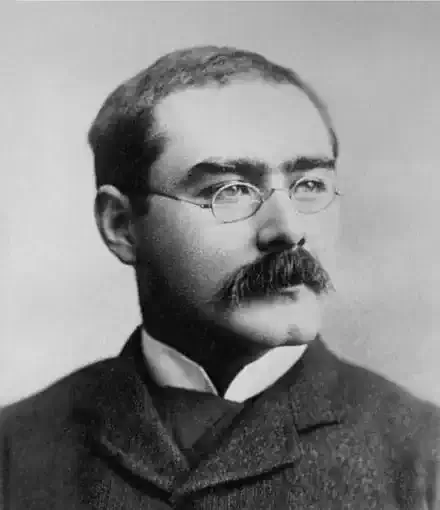
Rudyard Kipling
Tiger--Tiger!
What of the hunting, hunter bold?
Brother, the watch was long and cold.
What of the quarry ye went to kill?
Brother, he crops in the jungle still.
Where is the power that made your pride?
Brother, it ebbs from my flank and side.
Where is the haste that ye hurry by?
Brother, I go to my lair to die!
Read more →
426

Robert Browning
The Boy And the Angel
Morning, evening, noon and night,
``Praise God!; sang Theocrite.
Then to his poor trade he turned,
Whereby the daily meal was earned.
Hard he laboured, long and well;
O'er his work the boy's curls fell.
But ever, at each period,
He stopped and sang, ``Praise God!''
Then back again his curls he threw,
And cheerful turned to work anew.
Said Blaise, the listening monk, ``Well done;
``I doubt not thou art heard, my son:
``As well as if thy voice to-day
``Were praising God, the Pope's great way.
``This Easter Day, the Pope at Rome
``Praises God from Peter's dome.''
Said Theocrite, ``Would God that I
``Might praise him, that great way, and die!''
Night passed, day shone,
And Theocrite was gone.
With God a day endures alway,
A thousand years are but a day.
God said in heaven, ``Nor day nor night
``Now brings the voice of my delight.''
Then Gabriel, like a rainbow's birth,
Spread his wings and sank to earth;
Entered, in flesh, the empty cell,
Lived there, and played the craftsman well;
And morning, evening, noon and night,
Praised God in place of Theocrite.
And from a boy, to youth he grew:
The man put off the stripling's hue:
The man matured and fell away
Into the season of decay:
And ever o'er the trade he bent,
And ever lived on earth content.
(He did God's will; to him, all one
If on the earth or in the sun.)
God said, ``A praise is in mine ear;
``There is no doubt in it, no fear:
``So sing old worlds, and so
``New worlds that from my footstool go.
``Clearer loves sound other ways:
``I miss my little human praise.''
Then forth sprang Gabriel's wings, off fell
The flesh disguise, remained the cell.
'Twas Easter Day: he flew to Rome,
And paused above Saint Peter's dome.
In the tiring-room close by
The great outer gallery,
With his holy vestments dight,
Stood the new Pope, Theocrite:
And all his past career
Came back upon him clear,
Since when, a boy, he plied his trade,
Till on his life the sickness weighed;
And in his cell, when death drew near,
An angel in a dream brought cheer:
And rising from the sickness drear
He grew a priest, and now stood here.
To the East with praise he turned,
And on his sight the angel burned.
``I bore thee from thy craftsman's cell
``And set thee here; I did not well.
``Vainly I left my angel-sphere,
``Vain was thy dream of many a year.
``Thy voice's praise seemed weak; it dropped---
``Creation's chorus stopped!
``Go back and praise again
``The early way, while I remain.
``With that weak voice of our disdain,
``Take up creation's pausing strain.
``Back to the cell and poor employ:
``Resume the craftsman and the boy!''
Theocrite grew old at home;
A new Pope dwelt in Peter's dome.
One vanished as the other died:
They sought God side by side.
Read more →
426
Rudyard Kipling
The First Chantey
Mine was the woman to me, darkling I found her;
Haling her dumb from the camp, took her and bound her.
Hot rose her tribe on our track ere I had proved her;
Hearing her laugh in the gloom, greatly I loved her.
Swift through the forest we ran; none stood to guard us,
Few were my people and far; then the flood barred us --
Him we call Son of the Sea, sullen and swollen.
Panting we waited the death, stealer and stolen.
Yet ere they came to my lance laid for the slaughter,
Lightly she leaped to a log lapped in the water;
Holding on high and apart skins that arrayed her,
Called she the God of the Wind that He should aid her.
Life had the tree at that word (Praise we the Giver!)
Otter-like left he the bank for the full river.
Far fell their axes behind, flashing and ringing,
Wonder was on me and fear -- yet she was singing!
Low lay the land we had left. Now the blue bound us,
Even the Floor of the Gods level around us.
Whisper there was not, nor word, shadow nor showing,
Till the light stirred on the deep, glowing and growing.
Then did He leap to His place flaring from under,
He the Compeller, the Sun, bared to our wonder.
Nay, not a league from our eyes blinded with gazing,
Cleared He the gate of the world, huge and amazing!
This we beheld (and we live) -- the Pit of the Burning!
Then the God spoke to the tree for our returning;
Back to the beach of our flight, fearless and slowly,
Back to our slayers went he: but we were holy.
Men that were hot in that hunt, women that followed,
Babes that were promised our bones, trembled and wallowed:
Over the necks of the Tribe crouching and fawning --
Prophet and priestess we came back from the dawning!
Read more →
425

Johann Wolfgang von Goethe
Three Palinodias - 03 Rain And Rainbow
DURING a heavy storm it chanced
That from his room a cockney glanced
At the fierce tempest as it broke,
While to his neighbour thus he spoke:
"The thunder has our awe inspired,
Our barns by lightning have been fired,--
Our sins to punish, I suppose;
But in return, to soothe our woes,
See how the rain in torrents fell,
Making the harvest promise well!
But it's a rainbow that I spy
Extending o'er the dark-grey sky?
With it I'm sure we may dispense,
The colour'd cheat! The vain pretence!"
Dame Iris straightway thus replied:
"Dost dare my beauty to deride?
In realms of space God station'd me
A type of better worlds to be
To eyes that from life's sorrows rove
In cheerful hope to Heav'n above,
And, through the mists that hover here
God and his precepts blest revere.
Do thou, then, grovel like the swine,
And to the ground thy snout confine,
But suffer the enlighten'd eye
To feast upon my majesty."
Read more →
425
Rudyard Kipling
The Miracle of Purun Bhagat
The night we felt the earth would move
We stole and plucked him by the hand,
Because we loved him with the love
That knows but cannot understand.
And when the roaring hillside broke,
And all our world fell down in rain,
We saved him, we the Little Folk;
But lo! he does not come again!
Mourn now, we saved him for the sake
Of such poor love as wild ones may.
Mourn ye! Our brother will not wake,
And his own kind drive us away!
Read more →
427
Lord Byron
Damætas
In law an infant, and in years a boy,
In mind a slave to every vicious joy;
From every sense of shame and virtue wean'd;
In lies an adept, in deceit a fiend;
Versed in hypocrisy, while yet a child;
Fickle as wind, of inclinations wild;
Women his dupe, his heedless friend a tool;
Old in the world, though scarcely broke from school;
Damætas ran through all the maze of sin,
And found the goal when others just begin:
Even still conflicting passions shake his soul,
And bid him drain the dregs of pleasure's bowl;
But, pall'd with vice, he breaks his former chain,
And what was once his bliss appears his bane.
Read more →
427

Emily Dickinson
The Angle of a Landscape
The Angle of a Landscape-
That every time I wake-
Between my Curtain and the Wall
Upon an ample Crack-
Like a Venetian-waiting-
Accosts my open eye-
Is just a Bough of Apples-
Held slanting, in the Sky-
The Pattern of a Chimney-
The Forehead of a HillSometimes-
a Vane's Forefinger-
But that's-Occasional-
The Seasons-shift-my Picture-
Upon my Emerald Bough,
I wake-to find no-EmeraldsThen-
Diamonds-which the Snow
From Polar Caskets-fetched me-
The Chimney-and the Hill-
And just the Steeple's finger
These-
never stir at all-
Read more →
427
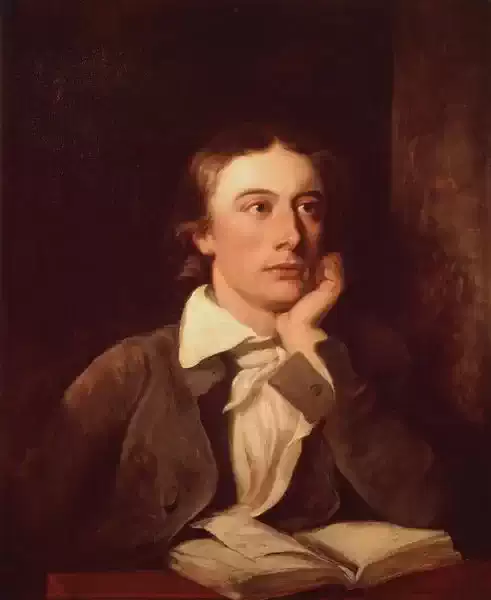
John Keats
Lines On Seeing A Lock Of Milton's Hair
Chief of organic Numbers!
Old Scholar of the Spheres!
Thy spirit never slumbers,
But rolls about our ears
For ever and for ever.
O, what a mad endeavour
Worketh he
Who, to thy sacred and ennobled hearse,
Would offer a burnt sacrifice of verse
And Melody!
How heavenward thou soundedst
Live Temple of sweet noise;
And discord unconfoundedst:
Giving delight new joys,
And Pleasure nobler pinions--
O where are thy Dominions!
Lend thine ear
To a young delian oath--aye, by thy soul,
By all that from thy mortal Lips did roll;
And by the Kernel of thine earthly Love,
Beauty, in things on earth and things above,
When every childish fashion
Has vanish'd from my rhyme
Will I grey-gone in passion
Give to an after-time
Hymning and harmony
Of thee, and of thy Words and of thy Life:
But vain is now the bruning and the strife--
Pangs are in vain -- until I grow high-rife
With Old Philosophy
And mad with glimpses at futurity!
For many years my offerings must be hush'd:
When I do speak I'll think upon this hour,
Because I feel my forehead hot and flush'd,
Even at the simplest vassal of thy Power,--
A Lock of thy bright hair!
Sudden it came,
And I was startled when I heard thy name
Coupled so unaware--
Yet, at the moment, temperate was my blood:
Methought I had beheld it from the flood.
Read more →
425